
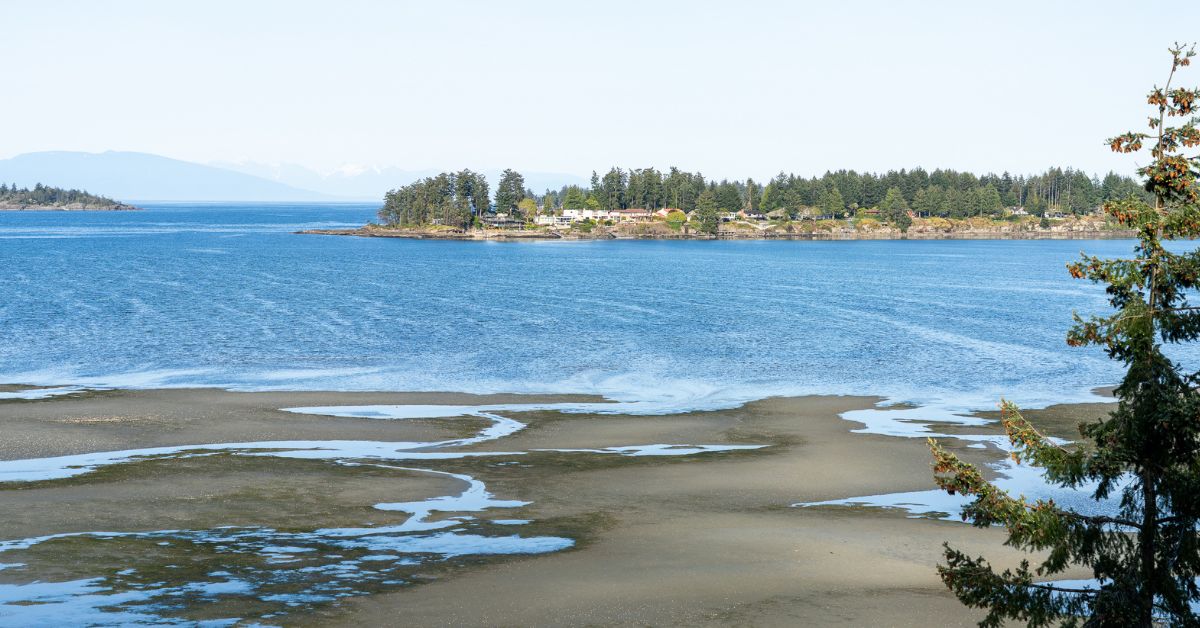
Nanaimo to Port Hardy Road Trip Stops: Highway 19 (EV-Friendly)
I may earn income from affiliate links or partnerships in this post. I spend time to curate tours or products that align with my values. Thanks for supporting my work, at no additional cost to you. All words and images on this website are created by real people.
Are you planning a road trip from Nanaimo to Port Hardy and looking for the best stops along the way? Even as one of the more scenic drives in British Columbia, the road trip from Nanaimo to Port Hardy is a less-traveled route that winds along the coast past charming towns and inland through provincial parks and forests. There are many great stops on the road trip from Nanaimo to Port Hardy, and this guide covers everything you need to know to plan the perfect road trip.
Many rush to Port Hardy to catch the Inside Passage ferry, but the real allure lies in slowing down and exploring the coastal route, small towns, beaches, and provincial parks along Highway 19.
This guide focuses on a sustainable road trip with EV-friendly stops, highlighting the best places to charge your vehicle while you recharge your own batteries in nature. From the sandy beaches of Parksville and Qualicum to the agricultural towns of the Comox Valley, to the remote nature of the north, this itinerary is all about mindful exploration and supporting local communities.
Quick Look: Best Road Trip Stops Nanaimo to Port Hardy
| Place | Must-See Stops | Timeline |
|---|---|---|
| Nanaimo to Parksville | Neck Point Park, Lantzville Lookout | Drive day. 37 km. |
| Parksville | Rathtrevor Beach, Englishman River, Old Country Market, Parksville Boardwalk | 1–2 Nights. Tlgh-Na-Mara Seaside Resort and Spa |
| Parksville to Comox Valley | Milner Gardens, Qualicum National Wildlife Area | Drive day. 75 km. |
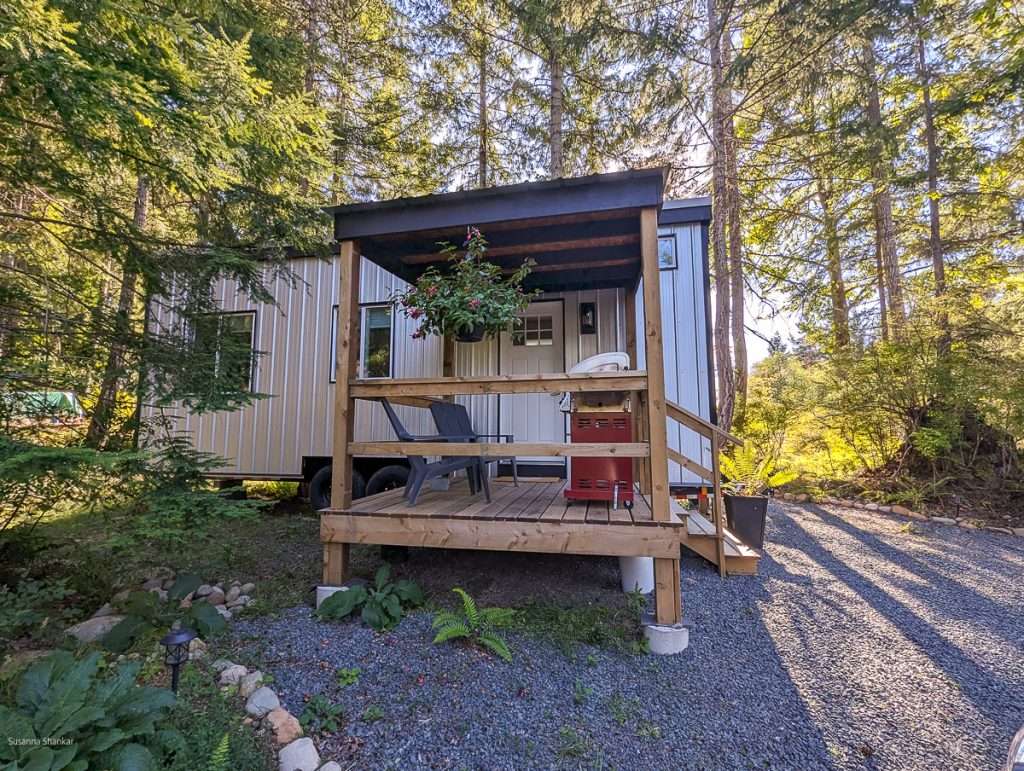
| Comox Valley | Farm Stands, Wineries, Nymph Falls, MARS Wildlife Rescue | 2–3 Nights. Tiny Home |
| Comox Valley to Campbell River | Crow’s Nest Artist Collective, Fogg Dukkers Cafe | Drive day. 50 km |
| Campbell River | Elk Falls Provincial Park, Homalco Wildlife Tours, Seawalk, Discovery Passage | 1–2 Nights. Dolphins Resort |
| Campbell River to Port Hardy | Telegraph Cove, Port McNeill, Burl, and Fort Rupert | Long drive day. 285 km |
| Port Hardy | Carrot Park, Quatse Hatchery, Cape Scott | 1-2 Nights at Kwa’lilas Hotel |
Ferry from West Vancouver to Nanaimo
Your road trip will start very early in the morning, ideally taking one of the first ferries from Horseshoe Bay, West Vancouver, to Nanaimo. Reservations are required, and sailings can be booked up to more than a month in advance during the peak summer season. So, as soon as you have dates, reserve your ferry! Leaving mid-week can go a long way to ensure you get a spot.
I know this makes planning challenging. I am a spontaneous person, and I feel your pain. But, unfortunately, this is a popular route used by residents and tourists, and planning, especially in summer, is key.
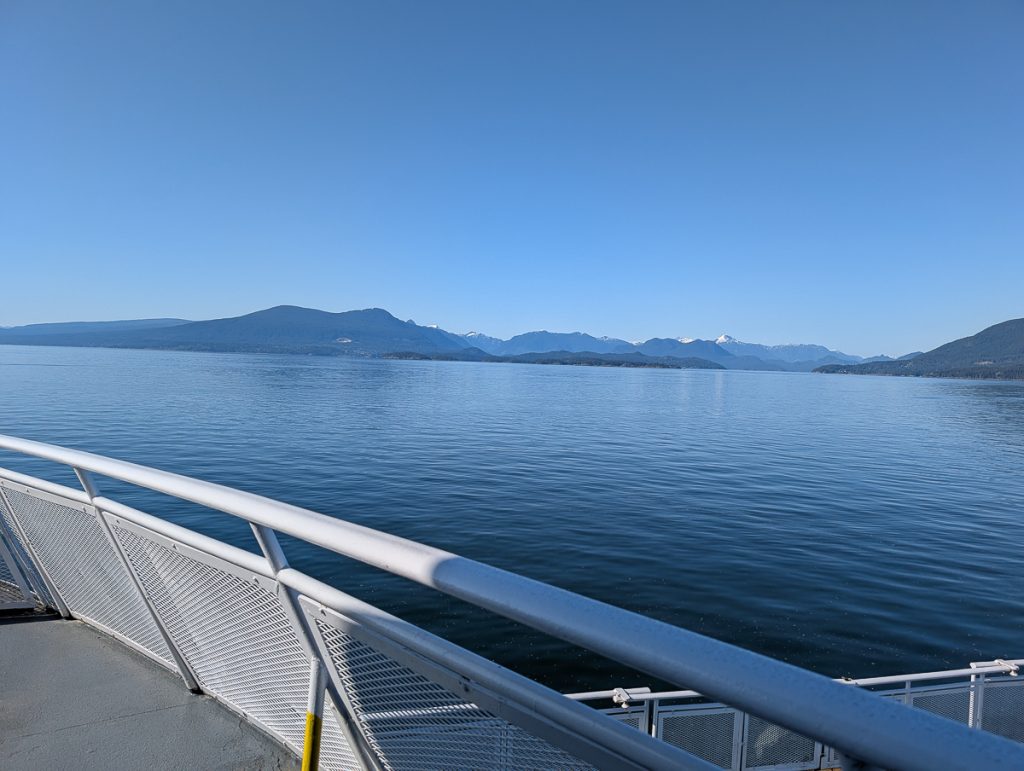
The BC Ferry sailing to Nanaimo is pleasant and easy to drive on with your car. Enjoy the onboard amenities, hopefully catch some sun on the sundeck, and keep an eye out for porpoises and whales.
Nanaimo: Quick Pit Stop
Nanaimo is a polarizing city for Canadians. Some love it, some loathe it, many – like myself – enjoy its certain charms, but don’t have a particular call to stay overnight and spend a lot of time here. There are certainly a lot of nice things to do in Nanaimo, but honestly, there are better things to do around Nanaimo.
This is why I recommend starting your road trip shortly after you disembark from the ferry.
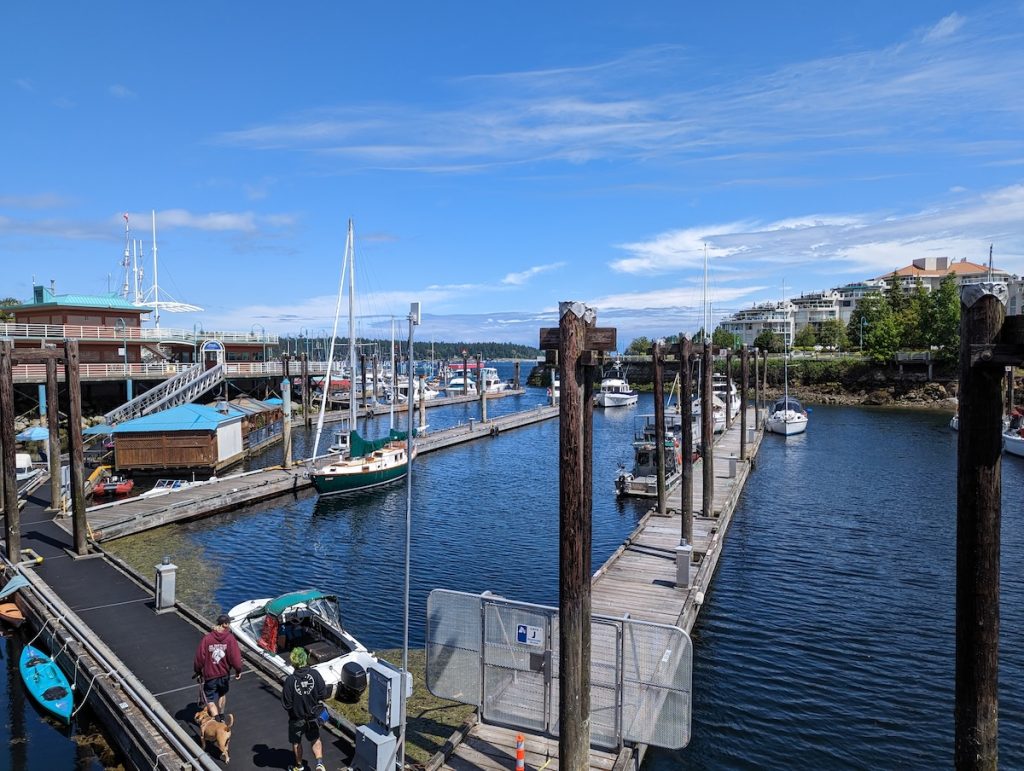
So, for us, Nanaimo is usually just a quick lunch stop and a chance to stretch our legs on the Harbourfront Walkway. Our favorites for lunch are Gabriel’s Cafe, Le Brunch Cafe, and Black Rabbit Kitchen. We always make sure to stop at Drip Coffee to properly fuel up before getting on Highway 19. It won’t be long before we turn off, though, especially if you are taking the slow route.
If you want to spend more time in Nanaimo, then check out The Bastion for daily cannon firings, visit the Nanaimo Museum, or take a photo at the Nanaimo Sign in Maffeo Park.
Drive: Nanaimo to Parksville Stops
Right out the gate, this road trip is already shaping up to be epic! There are lots of options for road trip stops on the way from Nanaimo to Parksville, but I’ll share a few of my favorites.
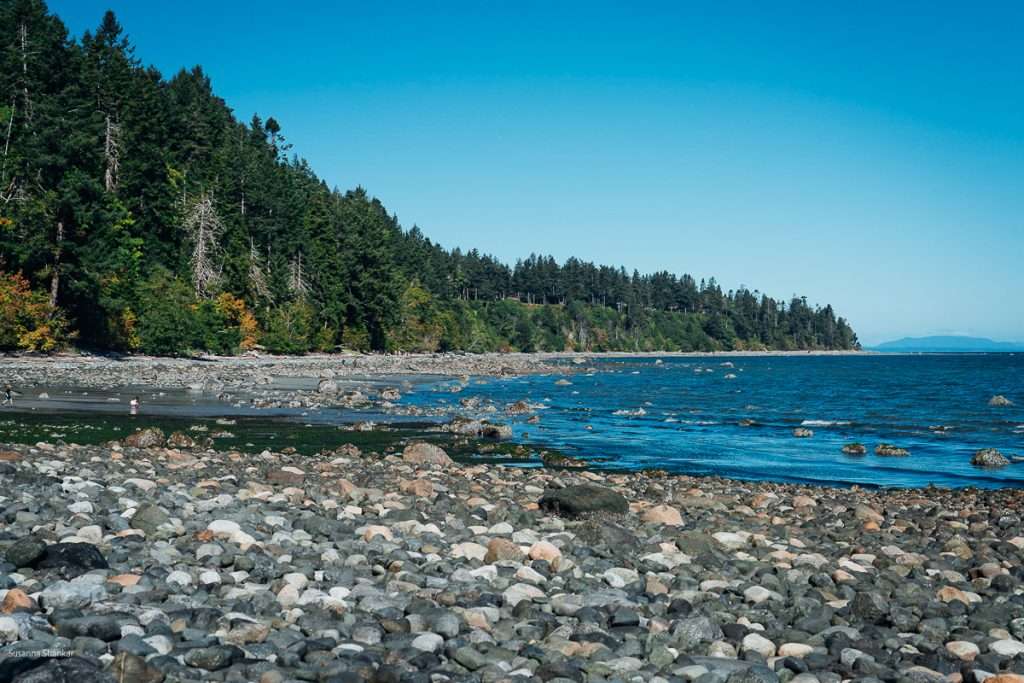
Neck Point Park is a fantastic place to enjoy extensive naturalized walking trails along the coast. Park your car and circumnavigate the point. As you go, you can read interpretative signs to learn about the history and ecology of the park.
Don’t miss the views of Shack Island, potential whale sightings, stunning ocean views, and diverse coastal systems.
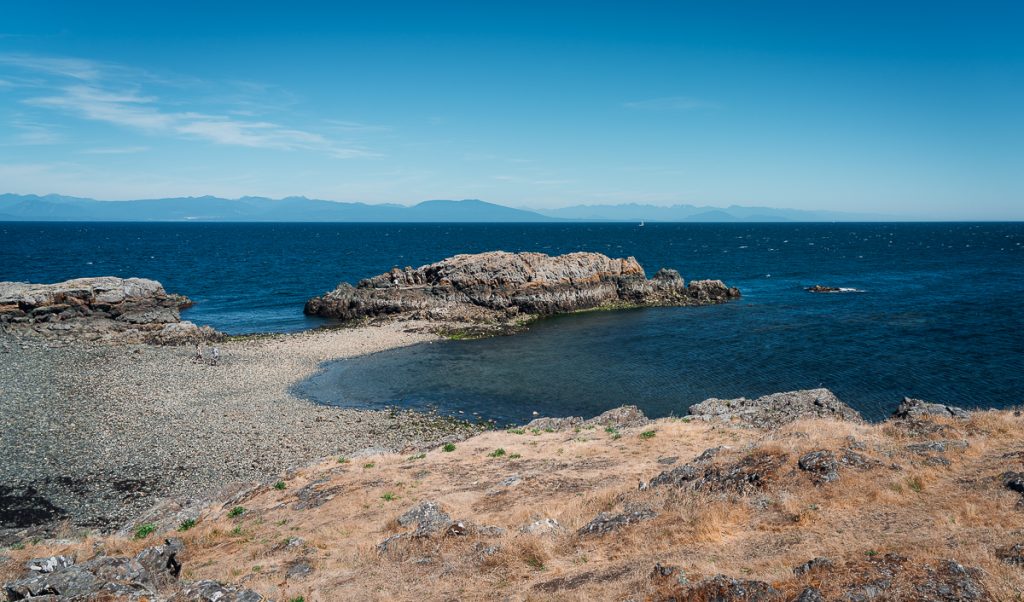
We spent about an hour here, but you could do just a quick stop to take in the view, or spend a longer time visiting both this park and Piper’s Lagoon Park just next door.
Lantzville is perfect if you’re on this road trip to see small towns. We typically drive past this, but it is known for beach access to several pebbly beaches. Lantzville also has a few galleries, restaurants, and cafes.
Lantzville Lookout: My favorite part about Lantzville, though, is hiking up to Lantzville Lookout. This relatively short but steep hike offers stunning views of the Strait of Georgia and the surrounding area. It is a great bang-for-your-buck hike that gets your blood pumping, gets you out of the car, and offers stunning views.
You will need about 2 hours, so budget accordingly if you decide to tackle this hike.
There are many additional stops you can make if you want alternatives or different choices for walking trails, regional parks, or beaches. Follow signs for points of interest that appeal to you.
Otherwise, head to Parksville if you’re staying here overnight, or continue onward to the Comox Valley.
Stop and Stay: Parksville
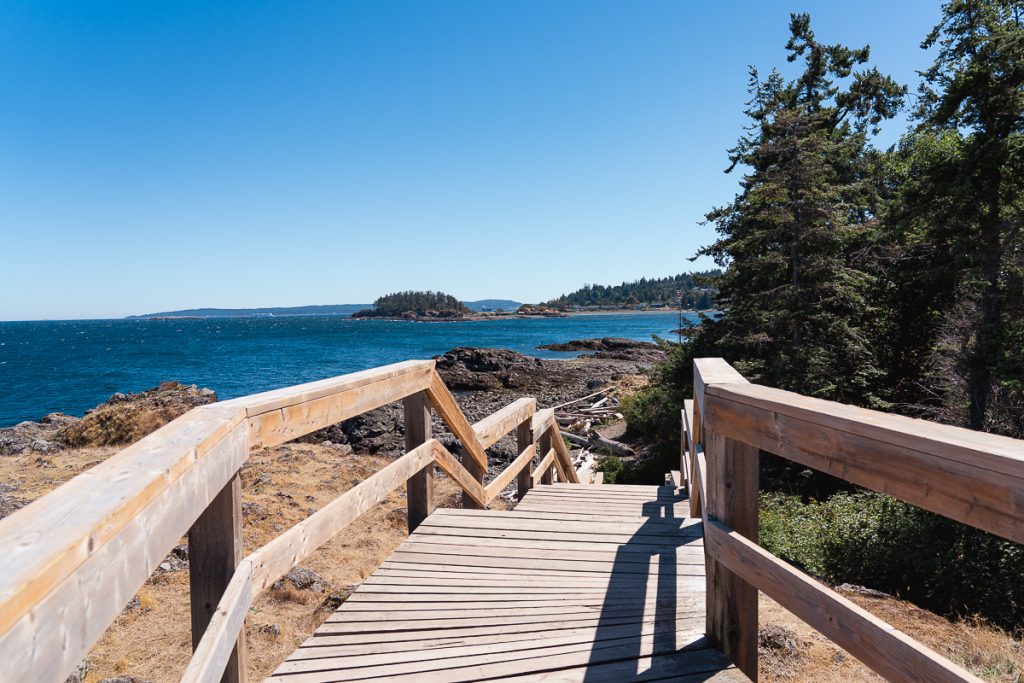
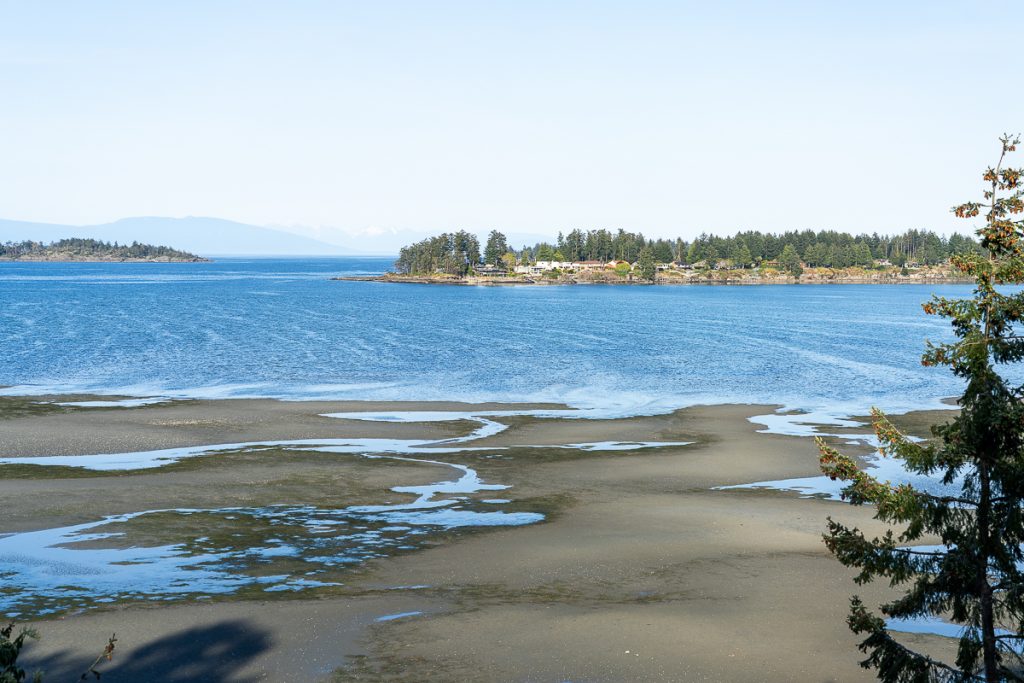
Parksville is the perfect stop for those who want to combine a wild beach escape with a bit of self-pampering. It is known to have some of the best beaches on Vancouver Island, stunning intertidal zones, coastal walks, and nature. It is also home to the Grotto Spa, so if you want to add a little bit of pampering to your road trip, this is the perfect stop.
This is the ideal stop and stay for those who want a relaxing coastal experience with just enough activity to keep you moving.
Parksville and Qualicum are home to the Snaw-naw-as and Qualicum First Nations.
Where to Stay in Parksville
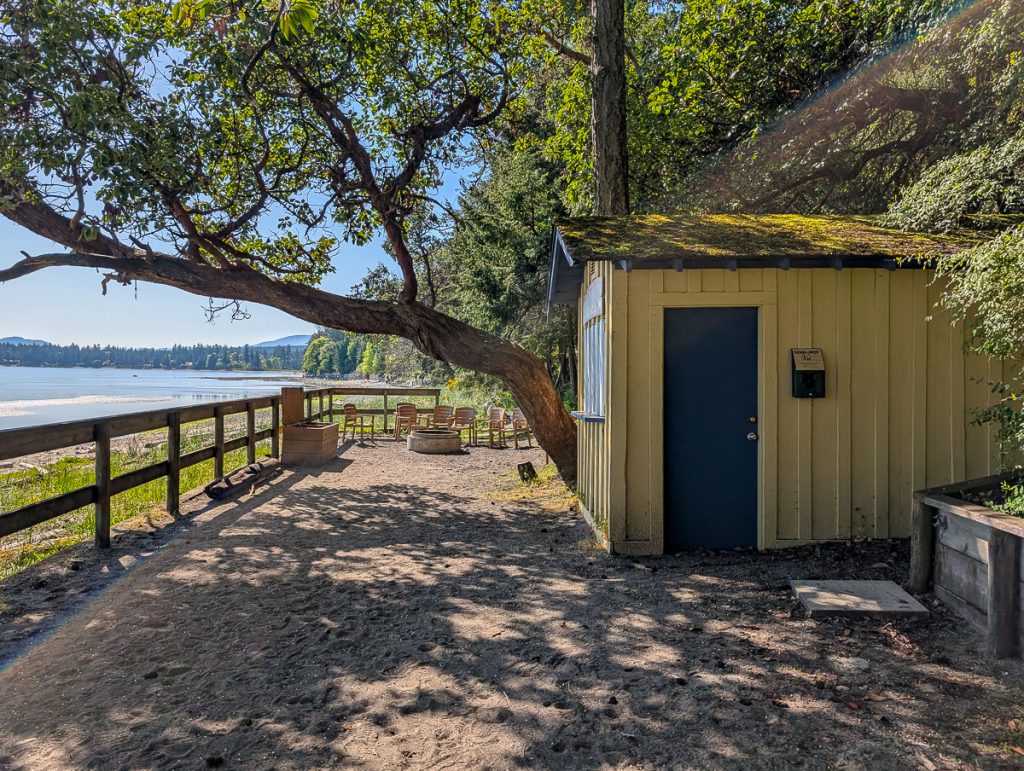
I’ve only ever stayed in one place in Parksville, and it is great for a road trip. The Tlgh-Na-Mara Seaside Resort and Spa is a wonderful choice. The property offers a variety of room options, from rustic log cabins for large or small groups to more standard studio rooms with ocean views.
Make sure you book their Grotto Spa experience for a mineral pool, hot tub, sauna, and outdoor fire pits!
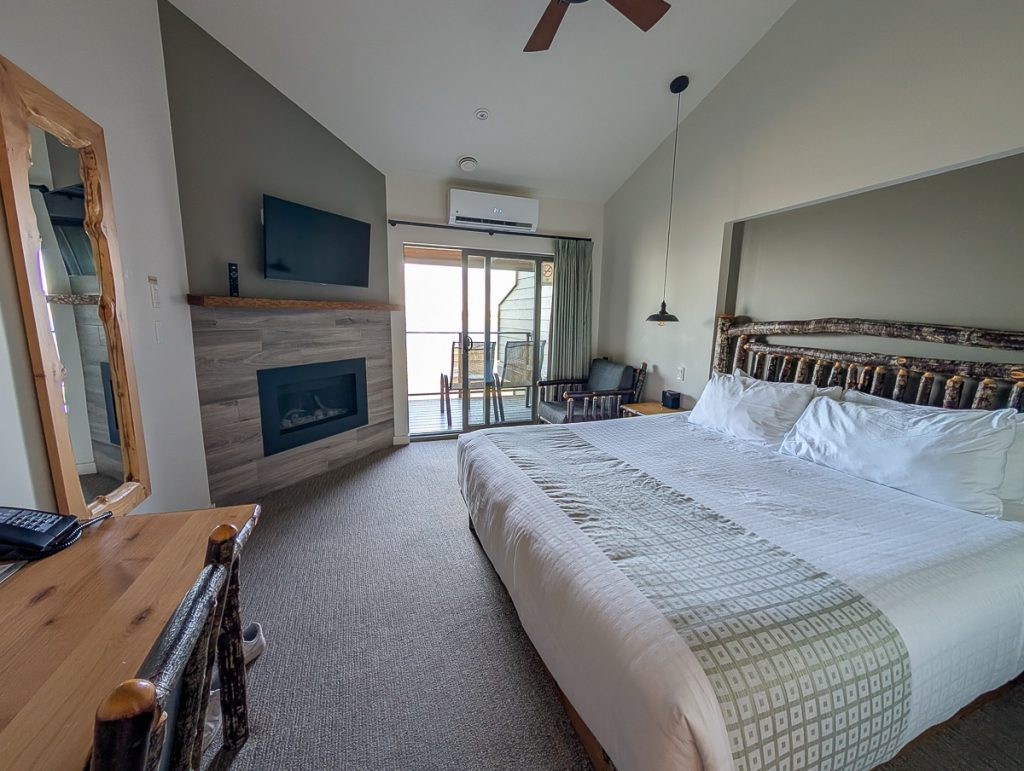
No matter which room you choose, you’ll have access to tennis and pickleball courts, a swimming pool, an on-site restaurant, and private beach access. Spend the evening walking along the beach into Rathtrevor Beach Provincial Park.
Alternative Stays
The other two places I have on the top of my list for the next time I’m in the area are:
- Sea Edge Beachside Hotel for an intimate seaside stay.
- The Beach Club Resort for all your outdoor activities with a little luxury.
Things to Do in Parksville
You could easily spend a night or two and never leave the Tlgh-Na-Mara Seaside Resort. Enjoy the spa, on-site dining, walks on the beach, and amenities. But, if you have a longer stay or are looking for more adventure, then head out and check out all the area has to offer.
Little Mountain Lookout is a great hike nearby. This quick and easy hike gets you up to a nice view. I think the Lantzville Lookout is better, but this is a good choice if you missed the hike earlier.
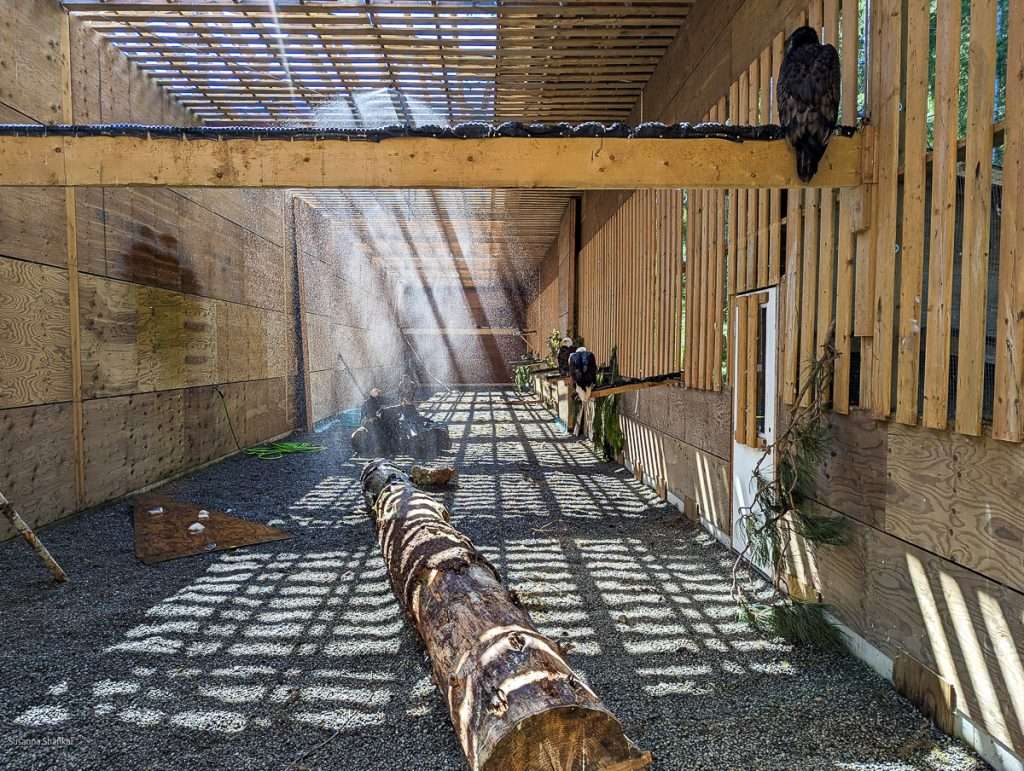
North Island Wildlife Recovery Center is a great stop for ethical wildlife observation. North Island rescues and rehabilitates large raptors like eagles and other birds of prey. Stop by to see their patients and animals living out their days as ambassadors and foster parents.
Parksville Boardwalk is a long boardwalk following the coast for a sand-free way to enjoy stunning ocean views.
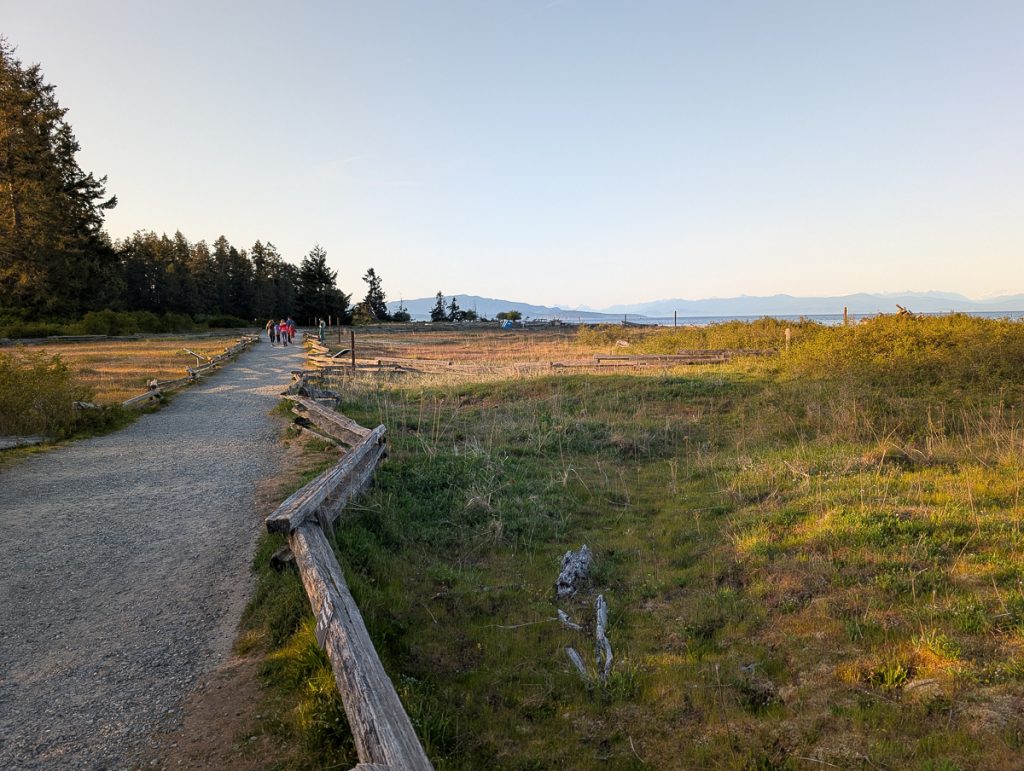
Englishman River Regional Park is the perfect place to escape into nature. The Englishman River has carved out unique geological features, making for interesting nature walks, swimming holes in the river, and a suspension bridge.
Old Country Market is an eclectic country market with local and imported goods. But the real reason to visit is to see the goats (yes, real live goats) on the grassy knoll and roof.
Where to Eat in Parksville
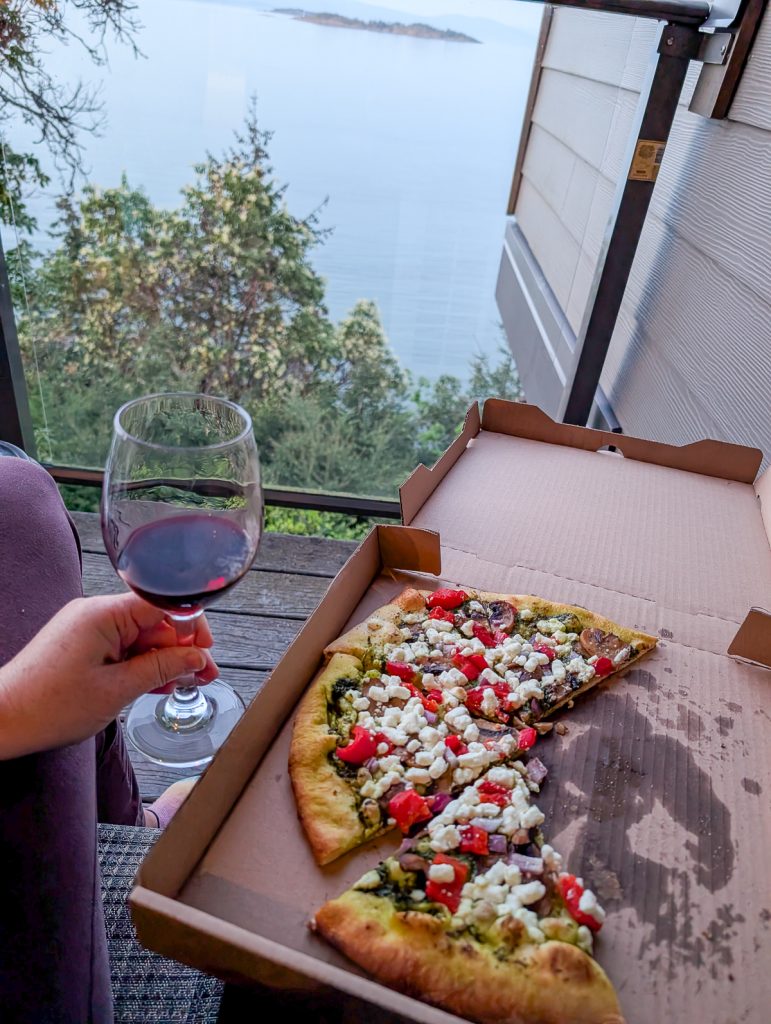
The dining in Parksville isn’t that great, to be honest. We primarily ate at the on-site restaurant at Tlgh-Na-Mara Seaside Resort with take-outpizza. But there are a few gems tucked away.
- Café Floresta for coffee, savory and sweet brunch, and breakfast
- Realm Food Co. for Canadian fusion
- Cedars Restaurant & Lounge for upscale pub food
- Mt. Arrowsmith Brewery for a local brewpub
- Black Goose Inn for British pub food
Where to Charge in Parksville
The chargers at Tigh-Na-Mara Seaside Resort are the most convenient.
- Parksville Civic and Technology Centre
- Parksville Community Park
- The Beach Club Resort
- Tigh-Na-Mara Seaside Spa Resort
Drive: Parksville to Comox Valley Stops
As you leave Parksville, you will definitely want to stick to Highway 19A for the best stops along the way and coastal views. You will likely only pick one or two of these stops, but try to balance some outdoor options with cultural stops.
Milner Garden & Woodland is perfect for those who like a stroll in a curated garden with native rhododendrons, other bright flowers, towering trees, and benches with views. This volunteer-run garden is the perfect accessible area to stop and smell the flowers.
The Heritage Forest is a small pocket of old and second-growth Douglas fir forest. There are 50 acres where you can enjoy forest bathing.
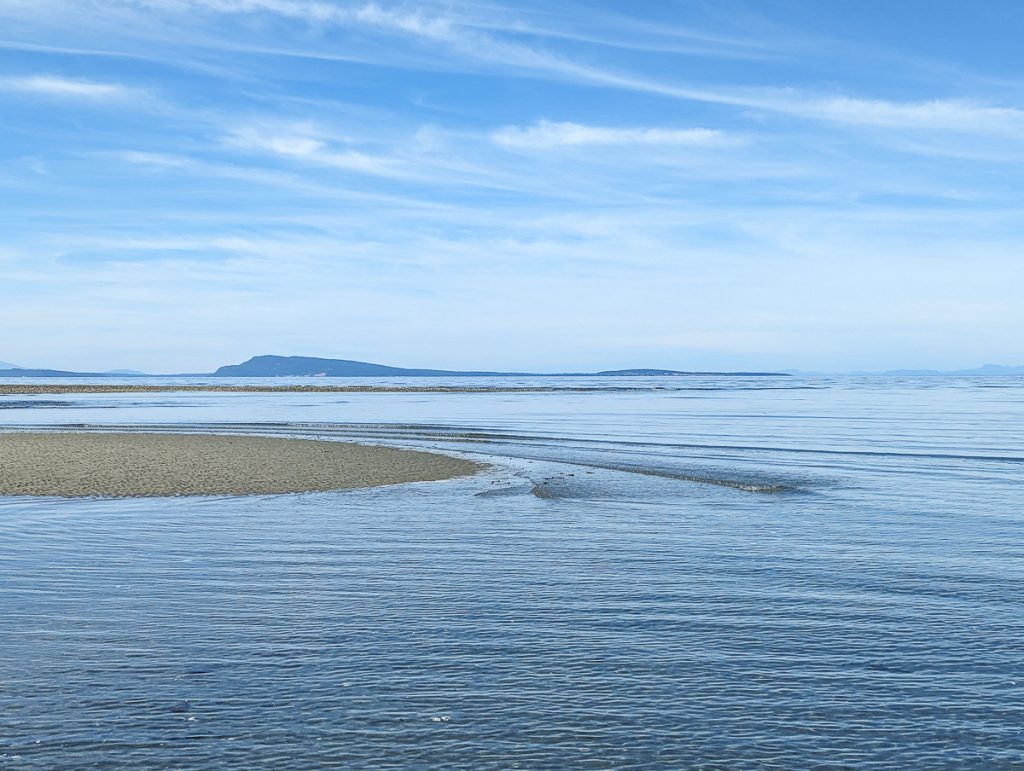
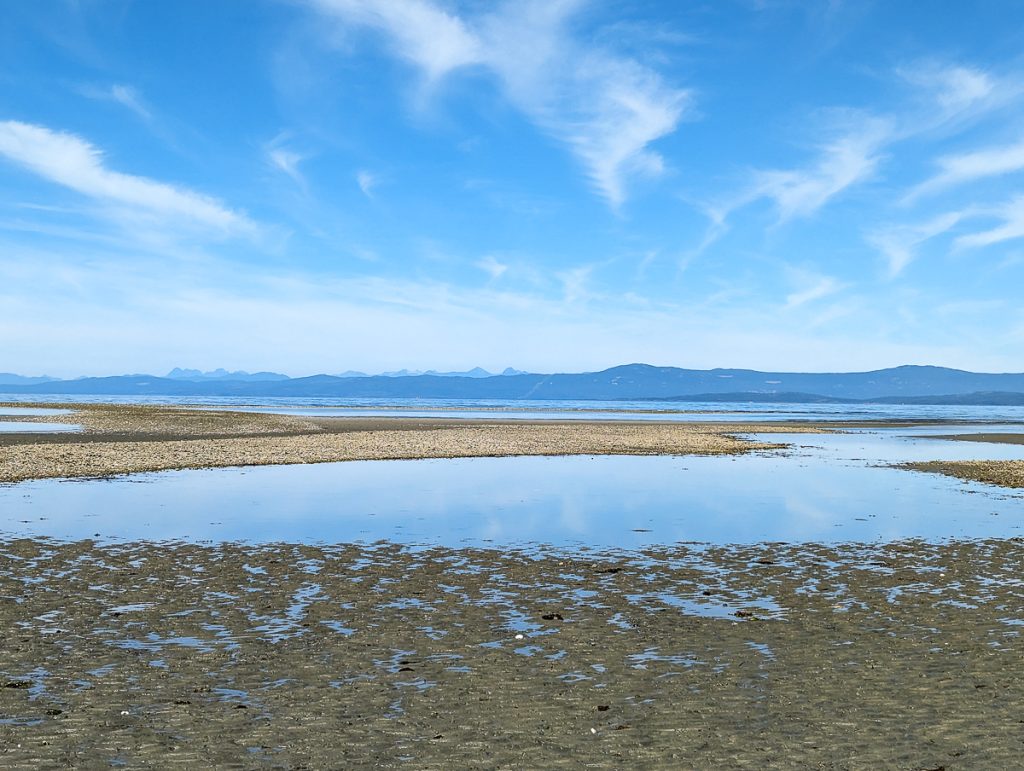
Qualicum National Wildlife Area is arguably the best stop, though. This was the beach that made me question whether eastern or western Vancouver Island has the best beaches. Take some time here to kick off your shoes and socks and wade out. Hopefully, it is low tide so you can walk along the sandbar, but keep an eye on where you step, as there are lots of vulnerable crabs, snails, and small fish.
Lighthouse Country Regional Trail is another great place to get out in nature and stretch your legs. This is a wonderfully accessible trail with periods of flat, wide, compact gravel and boardwalks. There is even a guideline for the visually impaired.
Salish Sea Market is the best place to get a meaningful souvenir, with a wonderful selection of local art and decor. Go home with Indigenous art, local fine art, pottery, jewelry, soaps, and statement pieces for your home. All goods are local, from small independent artists.
As you continue along Highway 19A, enjoy the coastal views and small towns on the way from Fanny Bay to Royston with a seaside walk and Trestle.
Driving Highway 19?
If you drove the faster, higher highway, then there are a few stops for you too!
- Little Qualicum Falls Provincial Park for waterfalls, walking trails, and more.
- Spider Lake Provincial Park is the perfect break to bust out to SUP or kayak if you’re traveling with one, or enjoy a picnic lunch.
- Cumberland Brewing Co. is also easily accessible from Highway 19 and well worth the stop. But if you are staying in the Comox Valley area, you might make it here during your time anyway.
Stop and Stay: Comox Valley
The Comox Valley was our primary overnight stop during our big road trip across British Columbia. We stayed for 3 full nights, enjoying the best of the Comox Valley.
The Valley is known for its agritourism, so this is the ideal stop for anyone who enjoys farm-to-table dining, U-pick farms, sustainable wineries, roadside farm stands, farmer’s markets, and small boutique businesses selling local treats and goodies.
But the Comox Valley is more than agriculture. A place with prehistoric dinosaur fossils, Indigenous culture, WWII history, and incredible nature, there is something for everyone here.
Explore museums, take walks along the beaches, hike through the forest, and eat your heart out. There was plenty to do to occupy 3 nights in the area, and even then, we felt like we just scratched the surface.
The Comox Valley is home to the K’omoks First Nation.
Where to Stay, Eat, and Things to Do in the Comox Valley
I wrote a complete guide to the Comox Valley, including where we stayed, where we ate, our favorite winery, and all the things to do, including museums, fossil sites, and nature. I also cover history, Indigenous culture, and where to find all the best agritourism.
Head over and save my detailed guide for everything you need to know to make the most of your time in the Comox Valley.
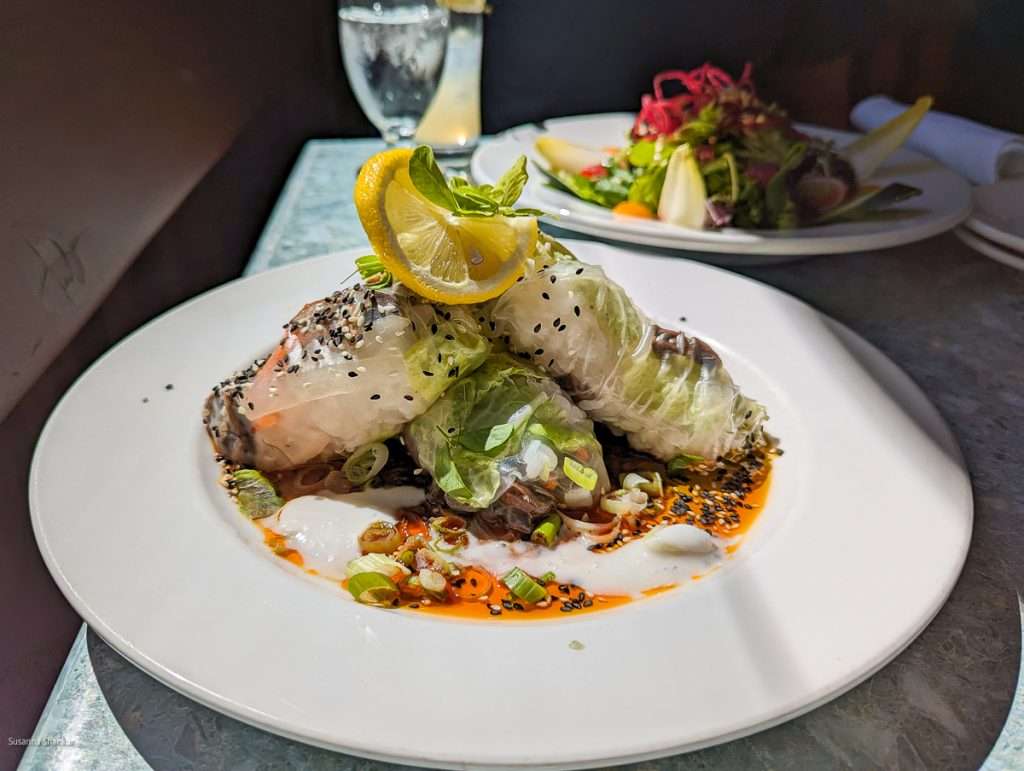
To highlight my favorite experiences in the Comox Valley:
- 40 Knots Winery for sustainable and organic wine
- Farm stands and U-Pick Farms
- MARS Wildlife Rescue for an ethical rescue and rehabilitation animal center
- Seal Bay Park for forest and beach trails
- Goose Spit for views and birding
- Downtown Courtenay for local small businesses
- Nymph Falls for scenic trails and waterfalls

Where to Charge in Comox Valley
There are dozens of chargers in Comox Valley.
- BC Hydro 505 Crown Isle Blvd, Courtenay, BC V9N 9W1
- Lewis Park
- Wayward Distillery
Drive: Comox Valley to Campbell River Stops
We were sad to leave the Comox Valley, but excited for more stops along the way. Once again, we stuck with the slower coastal route, Highway 19A. Several of the major highlights we visited during our 3 nights in Comox Valley, like Miracle Beach and MARS, are located here, so do make sure you read that dedicated guide.
The Crow’s Nest Artist Collective should be your first stop. There is a small gift shop here with some local art and goodies that make for a great souvenir. They also run art workshops here, but the gift store is worth the stop.
Fogg Dukkers caffeine pick-me-up. This is a cute little roadside café with fun seaside seating.
Sea Walk is the perfect place to enjoy a stroll. This coastal walk runs for kilometres along the water’s edge. Enjoy art installations and stunning views along the path. If you stay in Campbell River, this is a great way to spend a few hours.
Stop and Stay: Campbell River
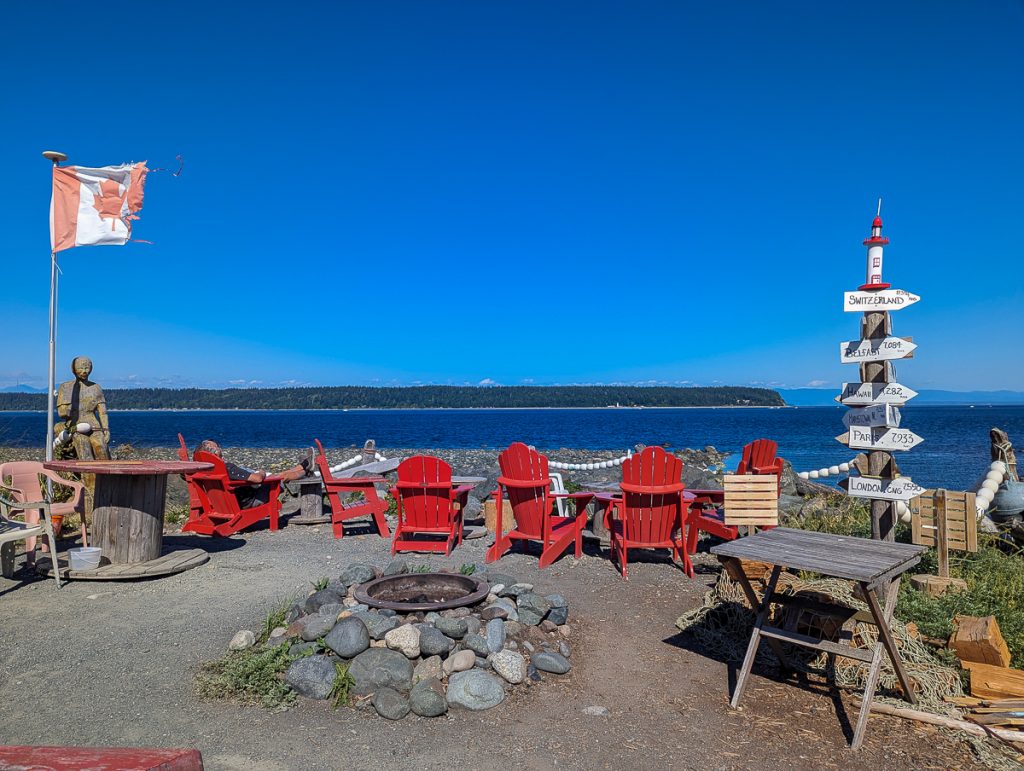
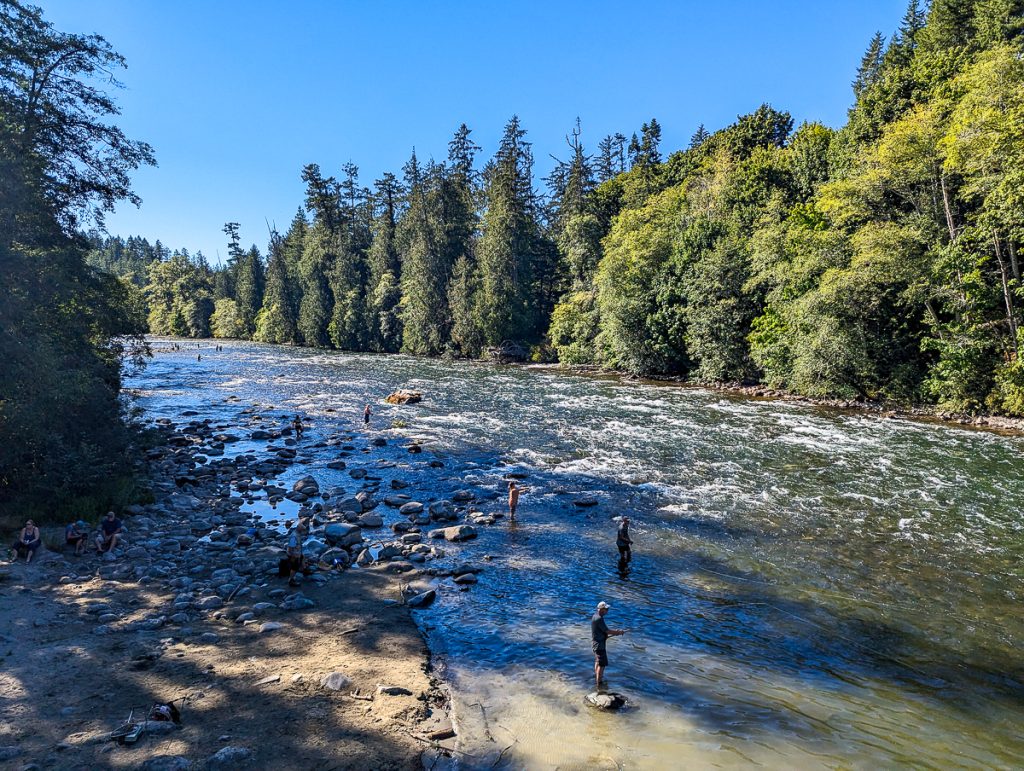
Campbell River is the 3rd largest city on Vancouver Island. It is known as the Salmon Capital of the World, but honestly, as someone born and raised in Alaska who now lives in British Columbia, I have, umm… notes. But I’ll give them credit; they are a great hub for fishing.
But, as someone who hung up my fishing pole for vegetarian food and ethical no-harm wildlife tourism, Campbell River is a fantastic stop for those who love wild and rugged adventures. Located between incredible forests and the Discovery Passage coastal area, there’s no shortage of things to do.
Stay here if you’re interested in Indigenous-led ethical wildlife tours (whale watching and grizzly bear tours), hiking in provincial parks, canyon waterfalls, accessible nature, and a plethora of small businesses.
Campbell River is home to the Wei Wai Kum First Nation.
Where to Stay in Campbell River
As a central hub, there is no shortage of places to stay in Campbell River.
- Dolphins Resort is a cozy and rustic ocean-side getaway with historic and modern cabins. We actually tried to book the Dolphins Resort, but they were totally booked by the time I looked. So, if you have your heart set on the Dolphins, book early.
- Naturally Pacific Resort is a luxury boutique stay. Enjoy modern rooms, an indoor mineral pool, a top-tier wellness spa, and outdoor fire pits.
- Driftwood by the Sea is a highly rated option if you want direct beach access with a charming, laid-back feel. This lovely beachfront inn and RV park offers comfortable rooms with balconies facing the water, RV hookups, a peaceful garden, and outdoor BBQ facilities.
Things to Do in Campbell River
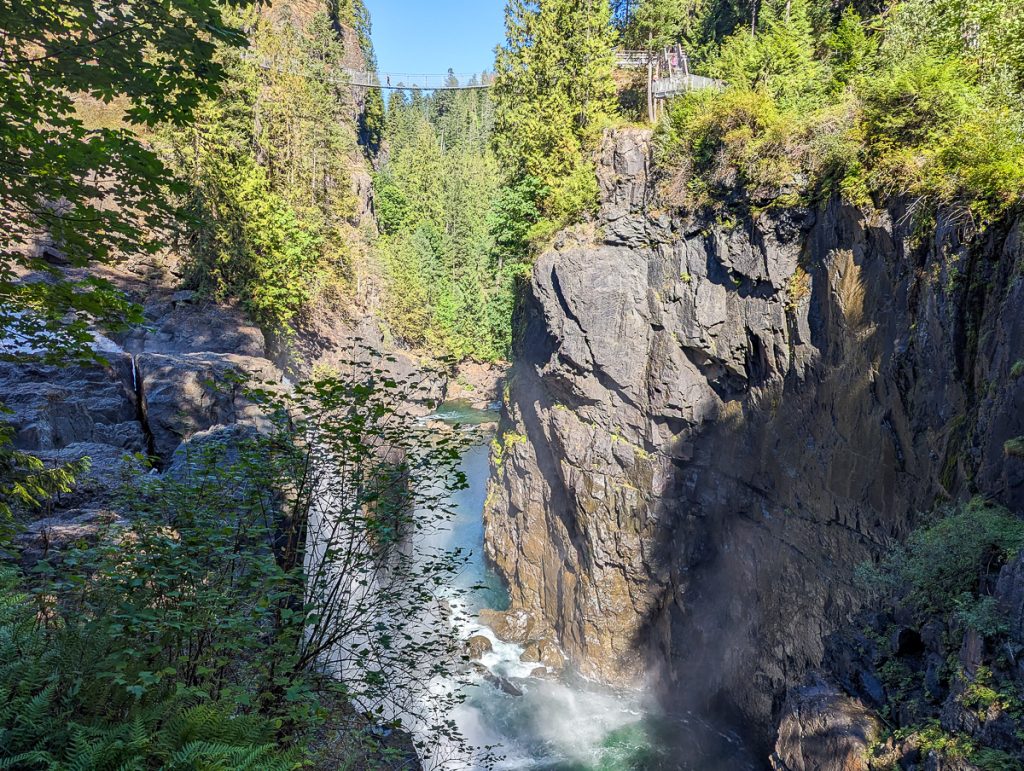
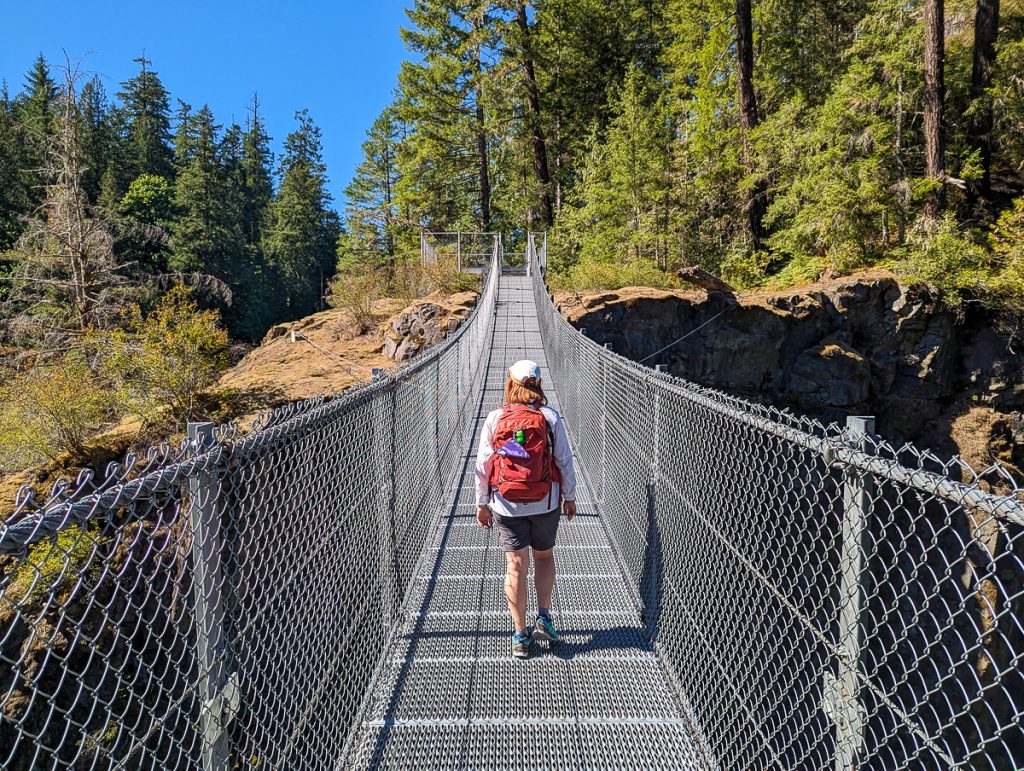
Elk Falls Provincial Park is a must-stop and one of our favorite BC provincial parks. You can follow the Canyon View Trail pretty much from downtown all the way to Elk Falls Suspension Bridge, but if you’re short on time, park at the Elk Falls parking lot.
There are lots of chances to see brown bears fishing in the Campbell River. Bring your bear spray, bells, and a buddy!
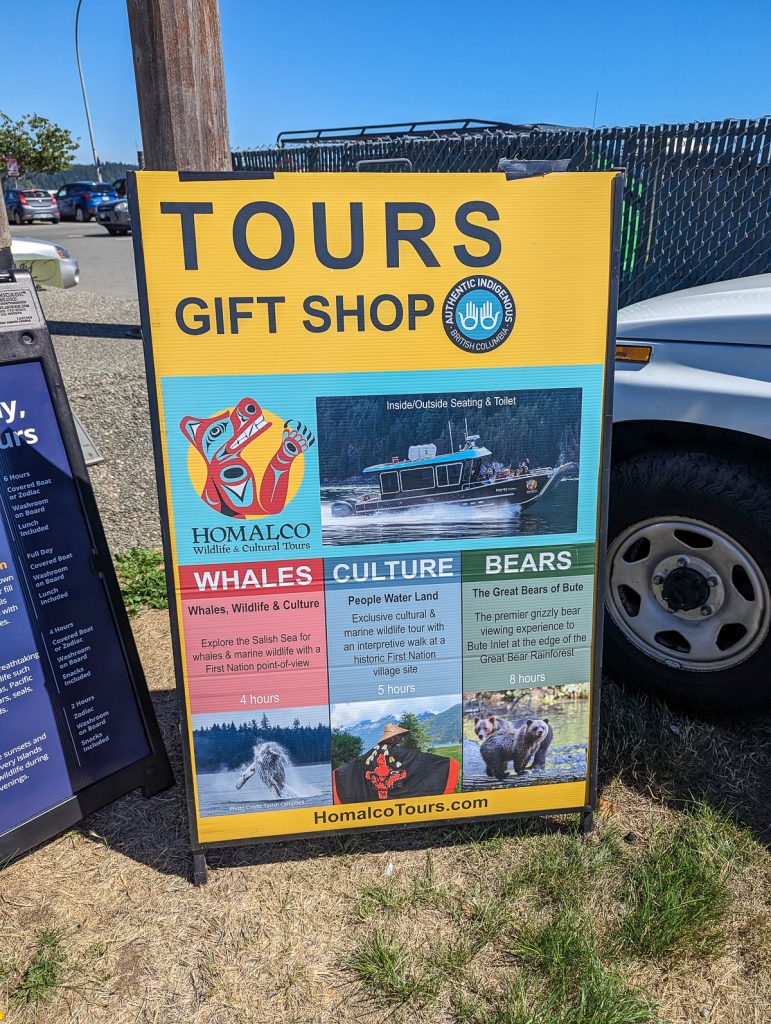
Homalco Tours offers world-class, 100% Indigenous-owned wildlife and cultural excursions. They will take you by boat across the water into Bute Inlet on the traditional territory of the Homalco First Nation. Your chances of seeing whales, bears, and wildlife are high while learning about the nation.
The Museum at Campbell River is one of the best regional museums on the island. The permanent and special exhibits highlight First Nations culture, the history of local logging and fishing, and the 1958 Ripple Rock underwater explosion.
Campbell River Estuary is a peaceful sanctuary where fresh river water meets the sea, making it a haven for local wildlife. Renting a kayak or taking a guided paddling tour through the calm, hidden marsh channels is the best way to see wildlife.
The Maritime Heritage Centre is a must-visit for history buffs and maritime fans. Situated right on the waterfront, don’t miss the BCP45, a historic wooden fishing seiner that was famously featured on the Canadian five-dollar bill.
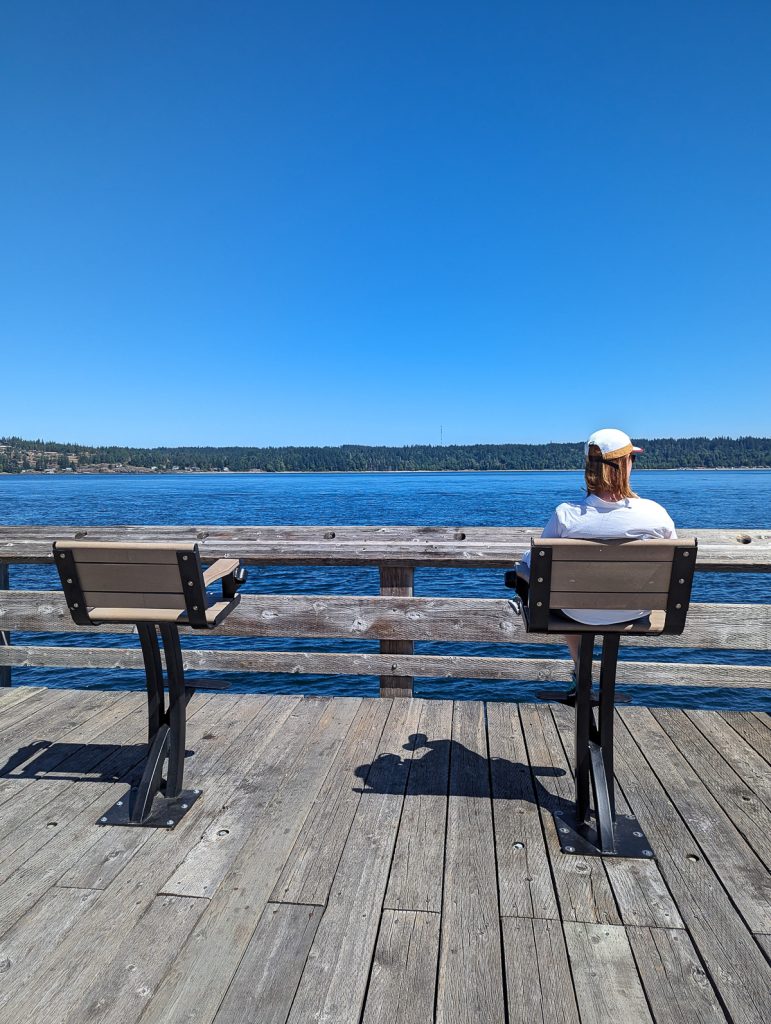
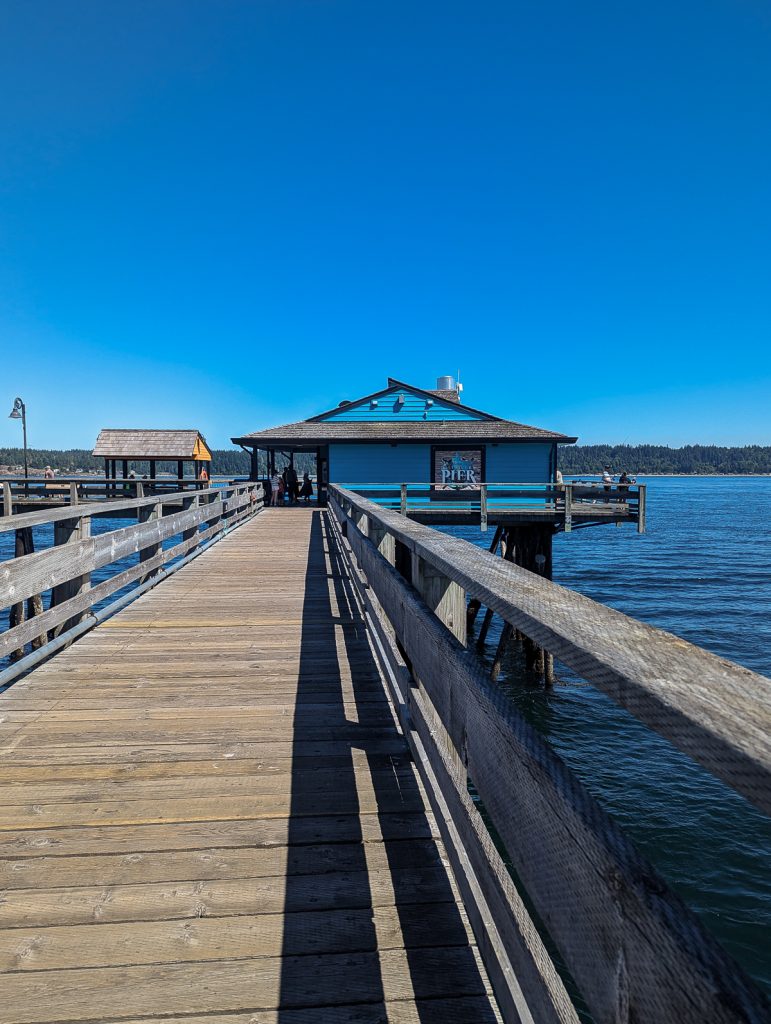
Discovery Passage is the breathtaking body of water that defines Campbell River’s dramatic landscape. Walk out along the Discovery Fishing Pier to look for whales and watch people fishing from the pier. There is a small and ethical aquarium at the start of the pier; don’t miss it!
Where to Eat in Campbell River
Campbell River has some fantastic local culinary gems. There is no shortage of great restaurants and food
- Freya Nordic Baking & Kaffe: A Scandinavian-inspired spot with incredible artisan sourdough baking, cardamom knots, and great morning coffee.
- Fifty Parallel: A waterfront tap and grill with a spacious patio that is perfect for casual comfort food and watching cruise ships pass by.
- Beach Fire Brewing Company: The heart of the local craft beer scene, serving up small-batch brews and a great scratch-made menu.
- Nhau Vietnamese Kitchen & Bar: A modern, flavor-packed stop offering rich, slow-simmered pho and fresh, loaded bánh mì baguettes.
- Carve Kitchen & Meatery: Located inside the Naturally Pacific Resort, this is your go-to for an upscale meal focusing on premium cuts of beef and local seafood.
Where to Charge in Campbell River
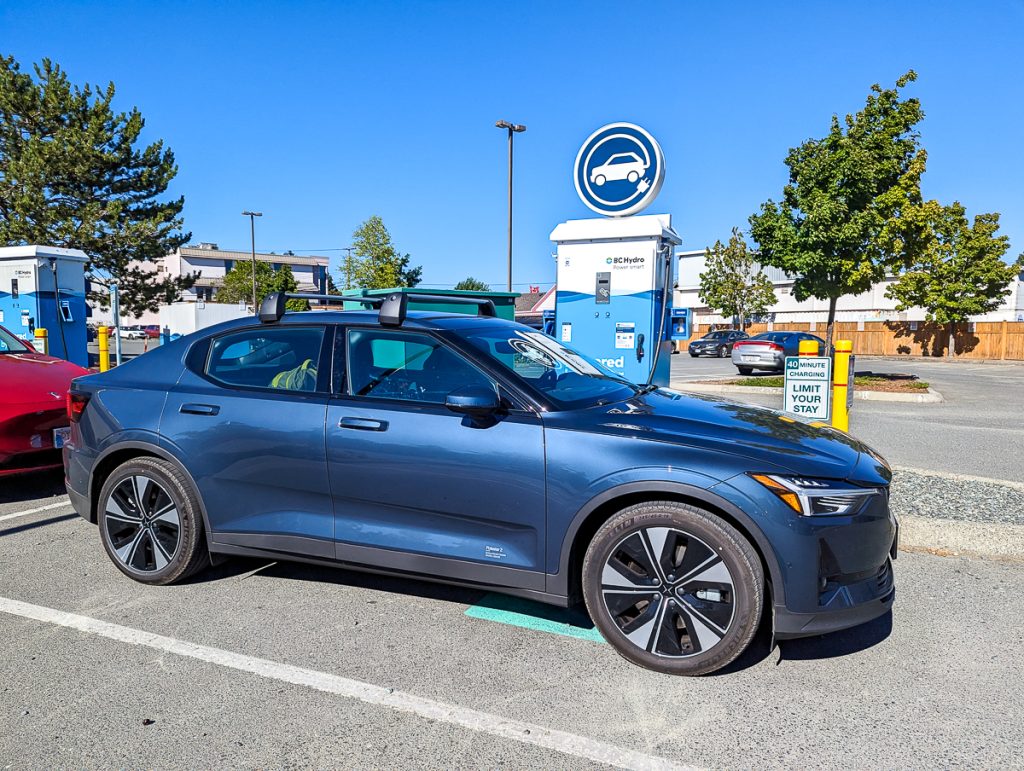
As a big city, there are plenty of chargers.
- Campbell River Visitor Information Centre
- Discovery Harbour Shopping Centre Gas Bar
- Campbell River Community Centre (401 – 11th Avenue)
- Island Owl Mazda in Campbell River (2280 N Island Highway)
Drive: Campbell River to Port Hardy Stops
Buckle in for a long drive. This will be the longest stretch, and there are the fewest stops. You’ll be on Highway 19 as you leave the coast and head inland. A lot of this drive is through logged forest, which is a bit unfortunate to see, but one of the realities of most of the island being historically logged in the 1800s.
Telegraph Cove is a must-visit if you have time to spare and a full EV charge, as it requires a detour off the main highway. This historic, colorful boardwalk community built entirely on stilts is world-famous for whale watching and eco-tourism to Alert Bay and the U’mista Cultural Centre. It suffered from a horrible fire recently and is still in recovery, but it’s still worth the stop.
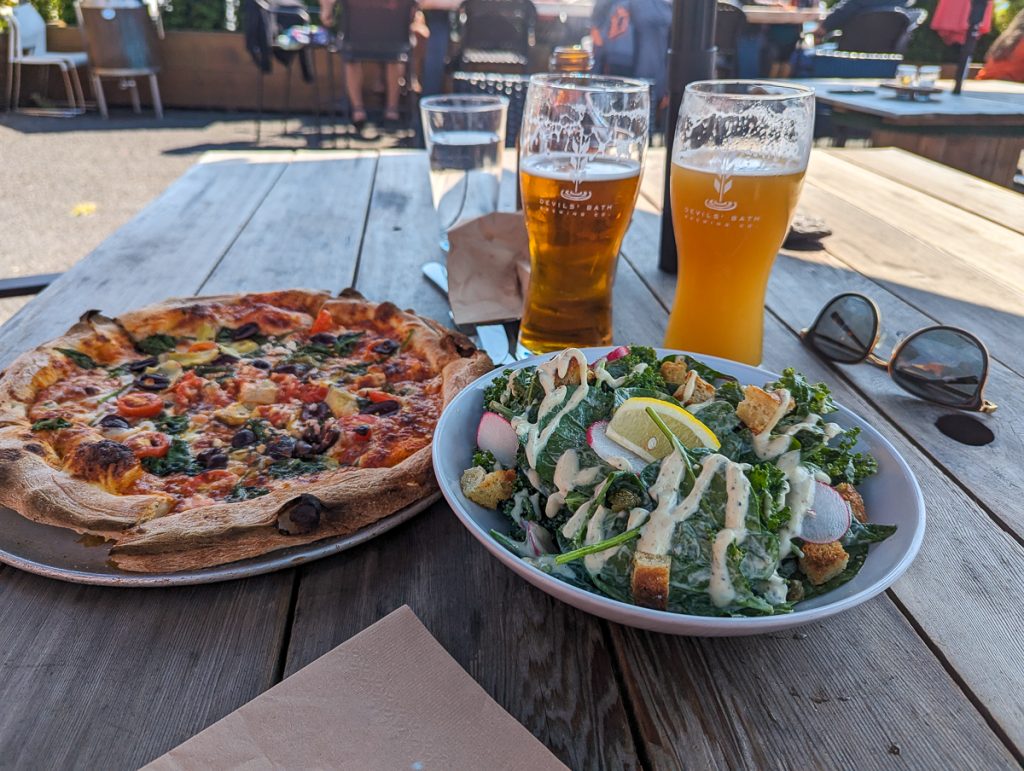
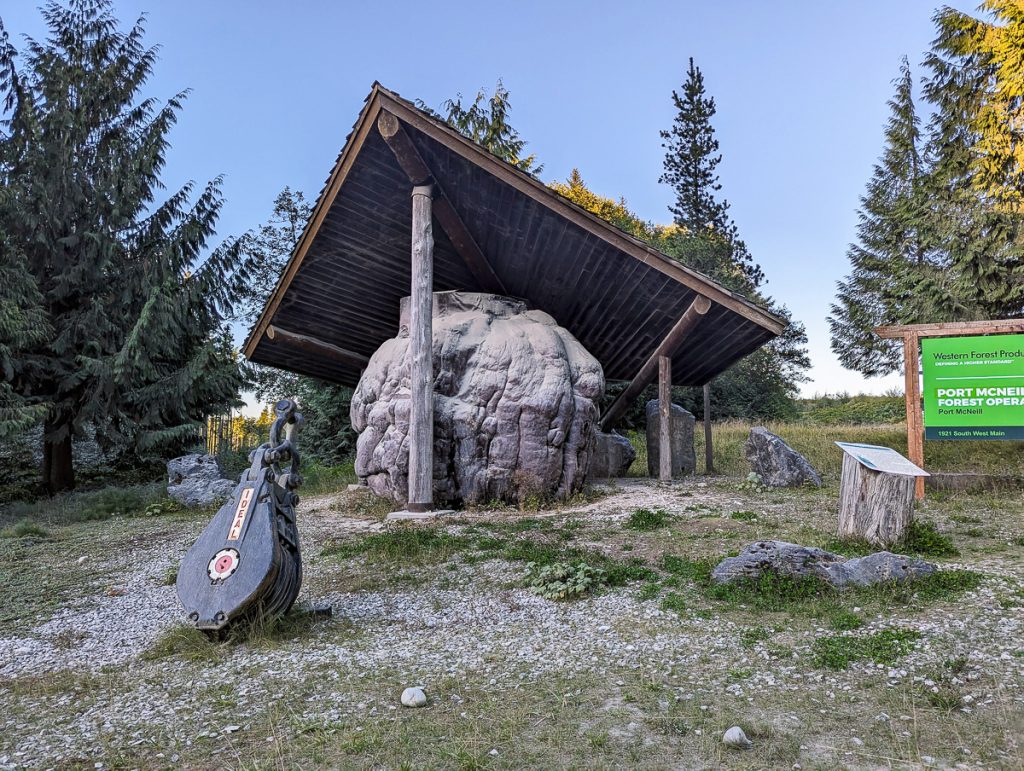
Port McNeill is the perfect pit stop to stretch your legs. Depending on the day, you might catch their lovely local Saturday Farmer’s Market, or you can head over to grab a pint and a bite at Devil’s Bath Brewing Co. Don’t miss the world’s largest burl.
World’s Largest Burl x2? Another one of the world’s largest burls is down the road from Port McNeill. It is encased in fiberglass and is a reminder of the massive old-growth trees we cut down in devastating losses for our planet. It’s unclear why there are two world’s largest burls, but whatever.
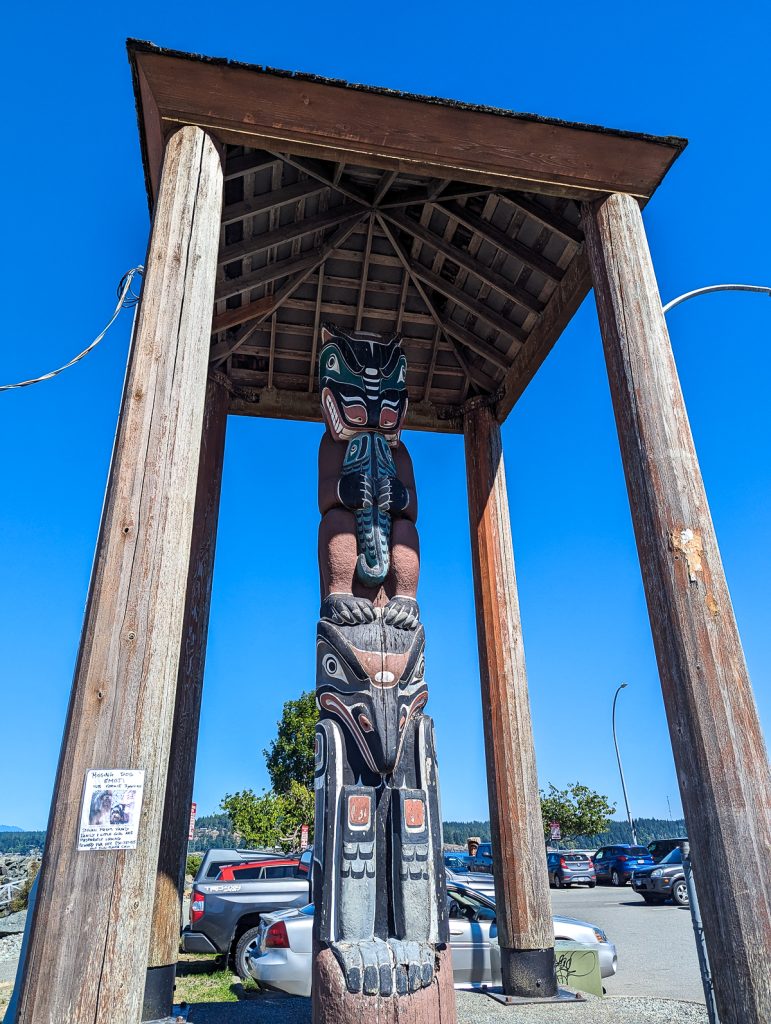
Fort Rupert is a historic Kwakiutl (Kwakwaka’wakw) village. It is small, but stop to see some totem poles and the Fort Rupert walking trail (bring bear spray).
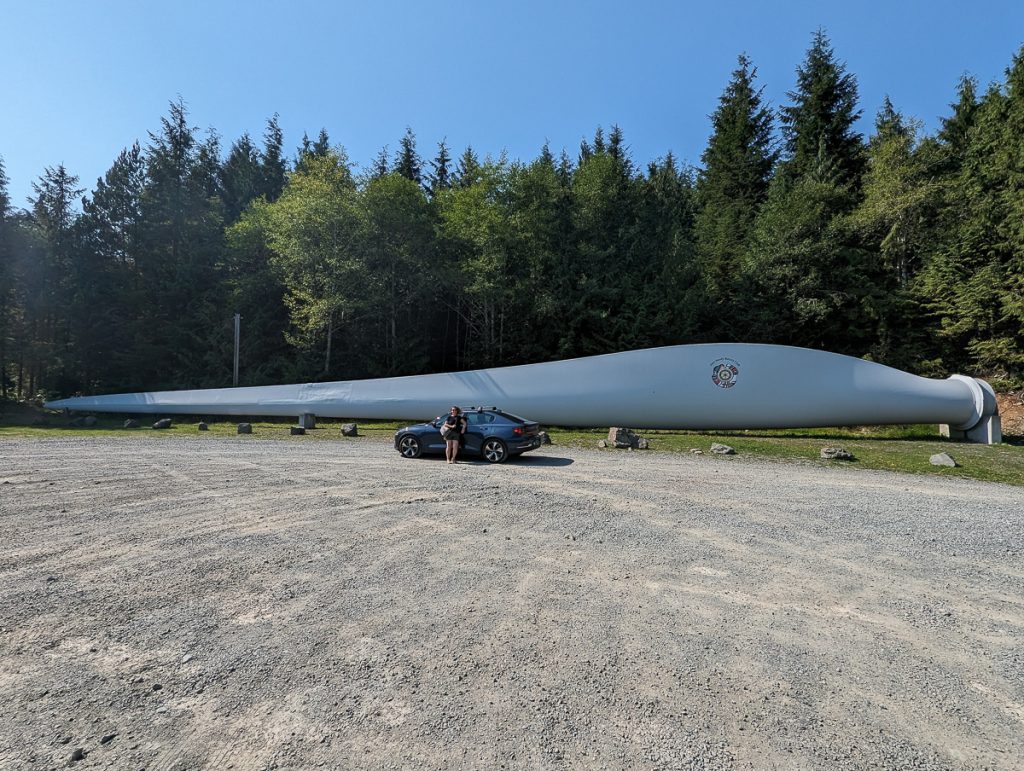
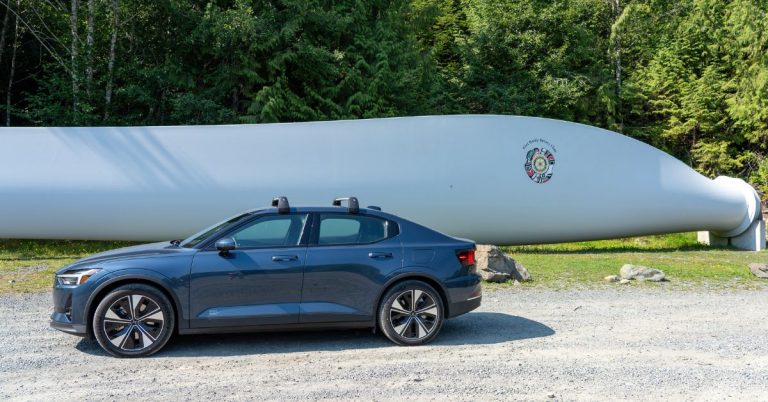
Wind Turbine Blade is a cool, quick roadside photo-op just as you near Port Hardy. Sponsored by the local Rotary Club, this massive, real-life wind turbine blade sits on display to commemorate the nearby Cape Scott Wind Farm and green energy transition.
Stop and Stay: Port Hardy
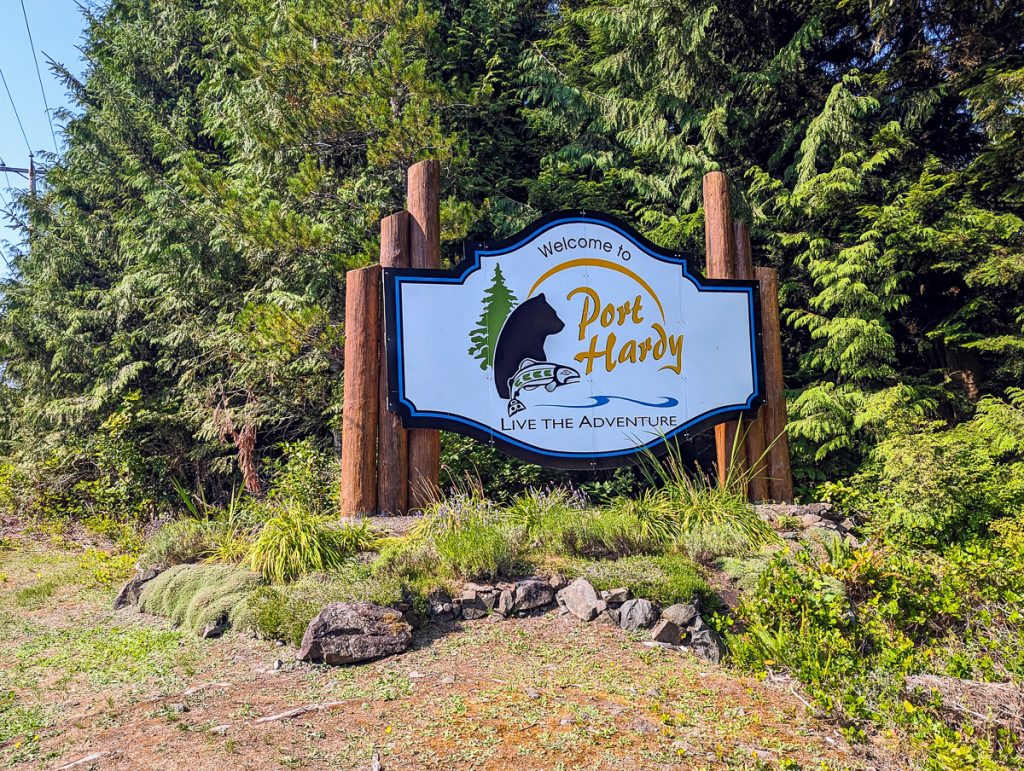
Port Hardy is about as far north on Vancouver Island as most intrepid travelers will go, but the quiet port town is well worth the drive! While Port Hardy has its charms with walks along the waterfront and community-focused small businesses, the allure is everything the wider North Vancouver Island region has to offer.
Port Hardy makes a great base for the long adventure to Cape Scott Provincial Park, heading out on an epic wildlife adventure, or many use it as a stopover before beginning the Inside Passage ferry that takes them up to Prince Rupert over 17 hours.
We only used Port Hardy for the latter and had 2 nights here before we embarked on the Inside Passage. We would have loved more time to explore.
Nevertheless, Port Hardy is great for those seeking more immersive, rustic, and rugged outdoor adventures off the grid, or just as a shorter stopover to enjoy the small town charm before catching your ferry.
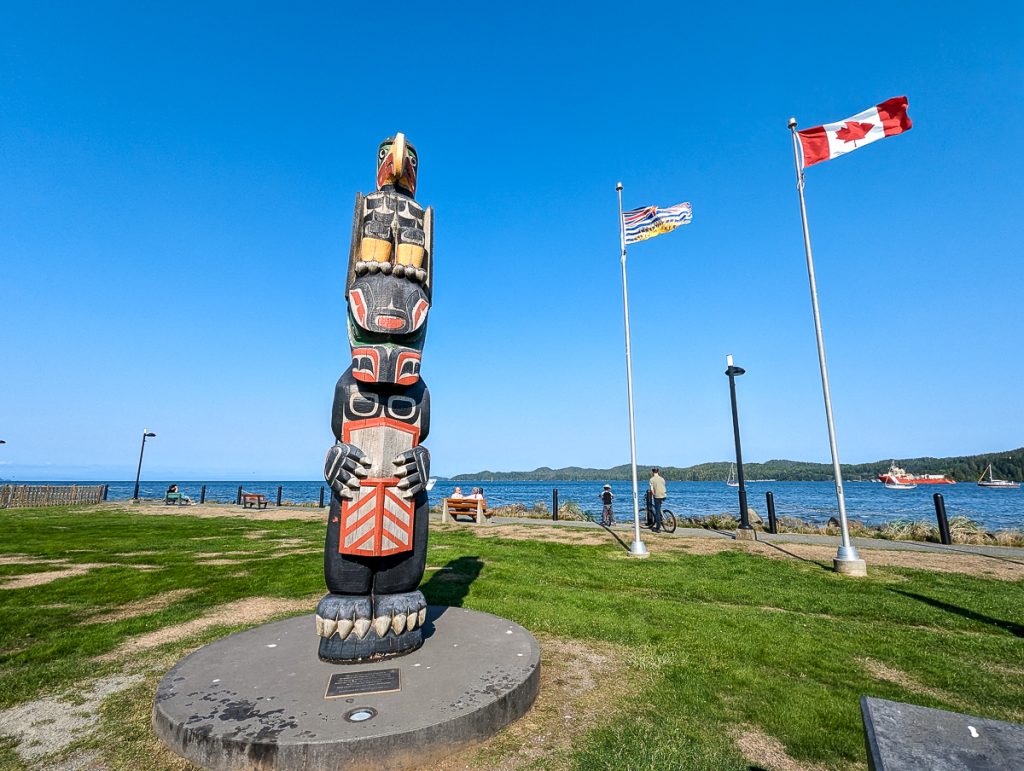
Port Hardy is home to the Kwakiutl people as well as influence from the Gwa’sala-’Nakwaxda’xw, Quatsino, and Tlatlasikwala Nations.
Where to Stay in Port Hardy
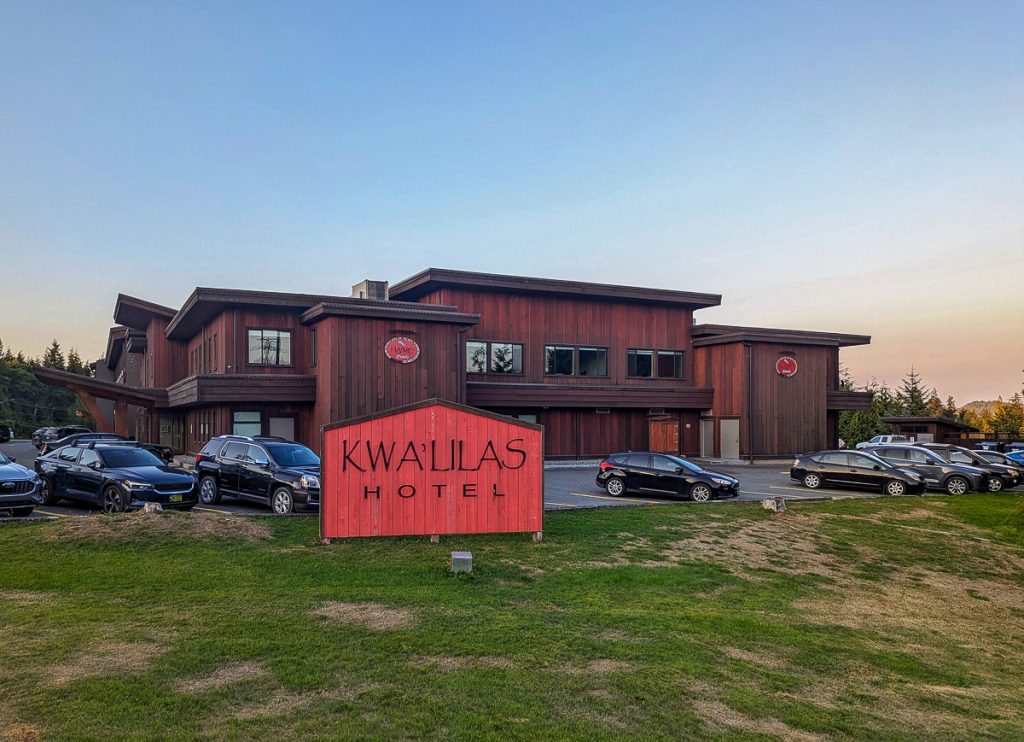
We stayed in the Kwa’lilas Hotel, and it was the perfect spot. Owned by the Gwa’sala-‘Nakwaxda’xw First Nation, Kwa’lilas combines Indigenous hospitality and design for a modern and comfortable stay.
It is one of the area’s finest hotels with comfort and amenities, as well as on-site dining. They are used to the early morning checkouts for the ferry.
Things to Do in Port Hardy
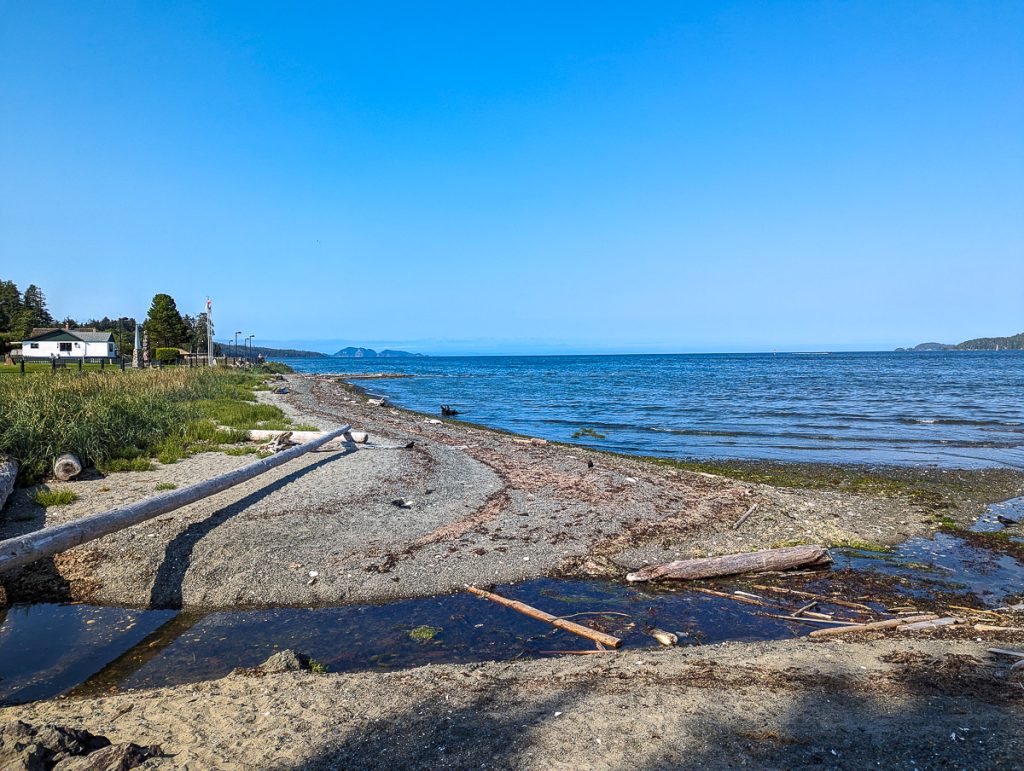
Walk along the Water on the town’s seawalk to take in the dramatic views of Hardy Bay. It’s a peaceful, flat stroll where you can watch bald eagles hunting, see floatplanes landing, and maybe even spot an orca if you’re lucky.
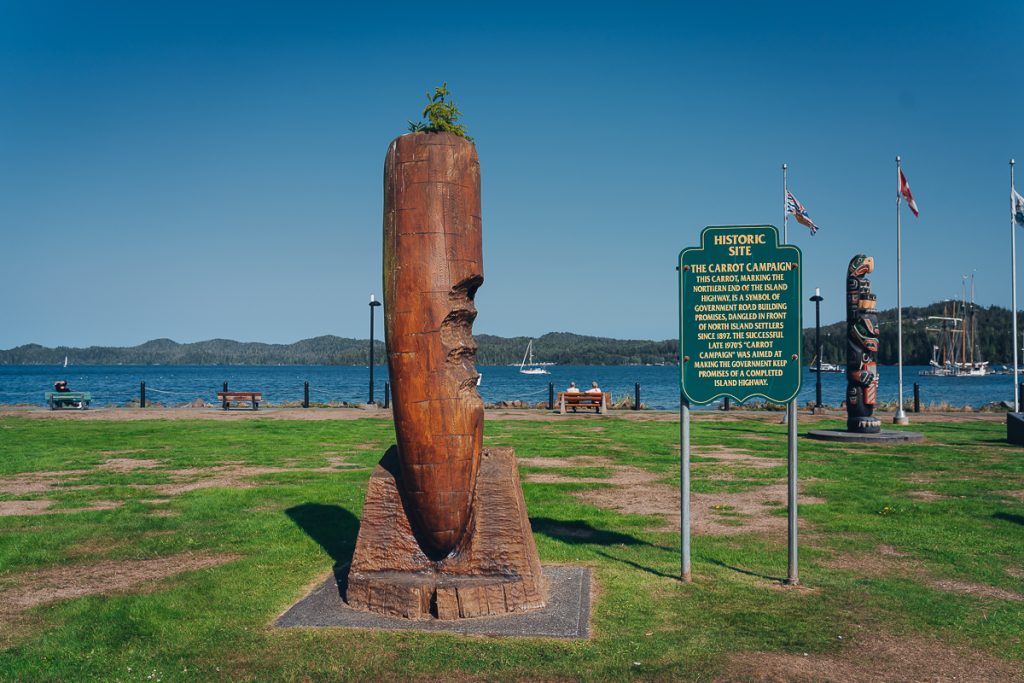
Carrot Park is a waterfront park right in the heart of downtown Port Hardy. It gets its name from a large wooden carrot monument erected to celebrate the completion of the road connecting the town to the rest of the island. Make sure you read the sign; it is rather silly.
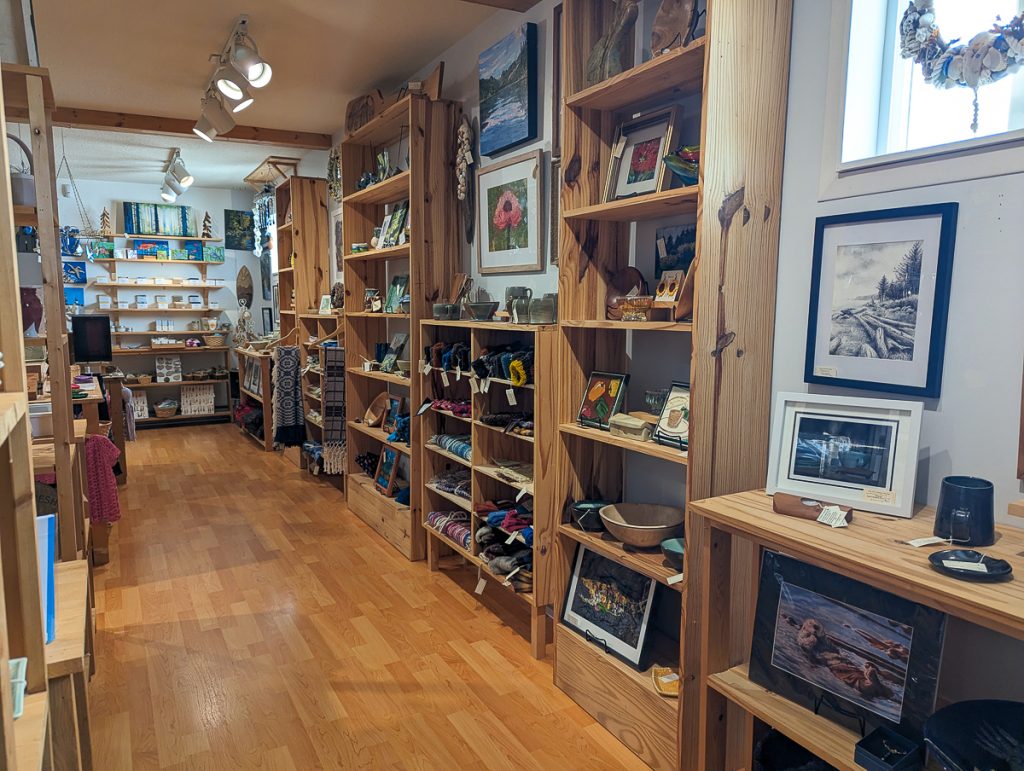
West Coast Community Craft Shop is a great place to spend some time shopping for a local gift. This cozy shop showcases the works of over 100 local artists and artisans on consignment, making it a fantastic spot to pick up everything from handmade pottery and jewelry to unique local art prints.
Northern Vancouver Island Salmon Hatchery (Quatse Hatchery) is a wonderful, educational stop for families and nature lovers alike. You can learn all about the lifecycle of Pacific salmon, tour the rearing ponds, and see how the facility works to conserve and rebuild local salmon populations.
Don’t miss spinning the salmon wheel; will you survive or die?
Cape Scott Provincial Park is one of Canada’s best backcountry parks and the end of the West Coast Trail. It is not an accessible park, though, and you should only visit if you have a properly equipped vehicle (high clearance, 4×4; spare tire kit), enough time, and enough gas/charge.
The road out to the trailhead is a rough, unpaved road. Once at the parking lot, it is another 24km to Cape Scott, though San Josef Bay is closer. THIS IS NOT AN EASY DAY TRIP.
Where to Eat in Port Hardy
The food in Port Hardy isn’t anything to write home about. Think cheap and cheerful places. Here are just a few of the places we ate.
- Café Guido & Co: A cozy, local favorite that is absolutely perfect for your morning latte, fresh baked goods, or a hearty lunch sandwich while browsing their attached bookstore.
- Kwa’lilas Restaurant: Located right inside the hotel, serving up delicious upscale West Coast fare with traditional Indigenous elements and locally sourced ingredients.
- Mo’s Pizza: The ultimate place for comfort food, offering thick, cheesy, and incredibly satisfying classic pizzas that hit the spot after an outdoor adventure.
- Market Street Cafe: A casual diner serving up big portions of classic breakfast staples, burgers, and comfort food with friendly, small-town service.
Where to Charge in Port Hardy
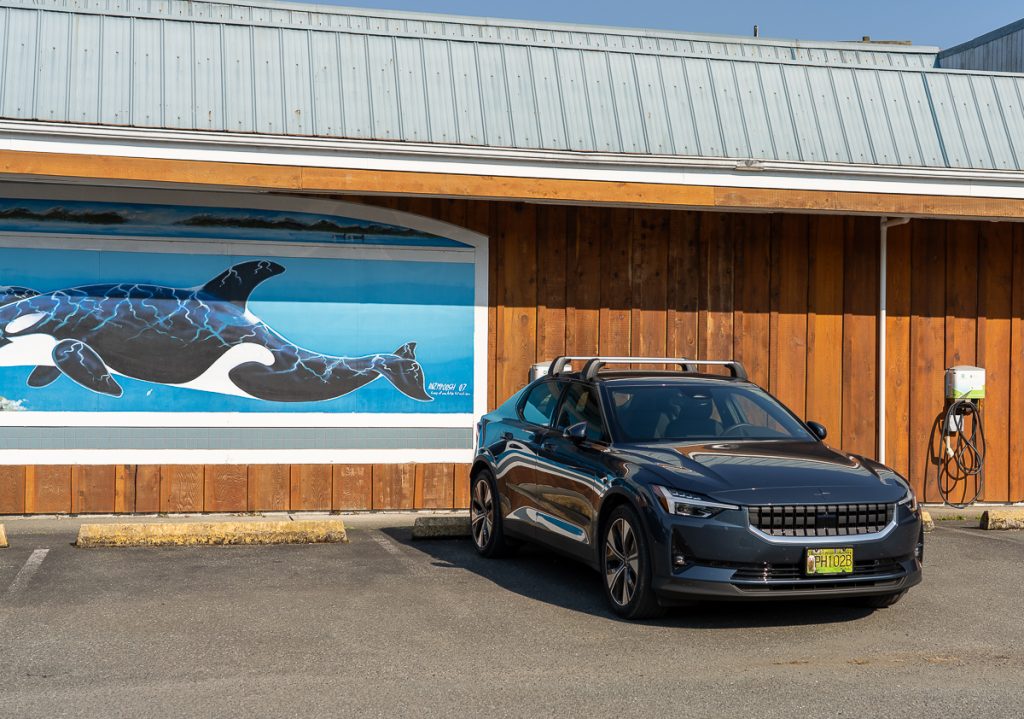
There are only a few chargers in Port Hardy. If you are taking the Inside Passage, there is a charger waiting in Prince Rupert as well.
- Salter Holdings Parking Lot
- Port Hardy Visitor Information Centre
- North Coast Trail Backpackers Hostel
Onward Across Canada’s Inside Passage
You certainly could just drive from Nanaimo to Port Hardy on a smaller road trip. In fact, a lot of BC locals may prefer to just do that. However, with Port Hardy situated at the port of the BC Ferries route to Prince Rupert, you would be missing out if you didn’t take advantage of this option.
Ensure you are in Port Hardy at least a full 24-48 hours before your scheduled sailing. This route unlocks so much potential for an epic circular road trip back to Vancouver.
Don’t miss all my guides to help you complete this route:
- Inside Passage Port Hardy to Prince Rupert
- 24-Hours in Prince Rupert
- How to Get to Haida Gwaii
- Regenerative itinerary for Haida Gwaii
- Highway 16, Prince Rupert to Mt. Robson

How to Use This Guide
I’ve driven sections of this road many times, including smaller sections on long weekends away from Vancouver. That means I’ve stayed at a few of these towns over the years. However, during a month-long road trip across British Columbia, we drove this route from Nanaimo to Port Hardy start to finish in one go.
That being said, there are a few ways to tackle this route.
Flexible Itinerary
I’ve created this guide to be flexible and adaptive. It is unlikely you will stay overnight in all the places I recommend, but as someone who has stayed in these towns on different occasions, I’ll recommend why you might want to stay overnight in different towns.
Pick the towns that appeal to your interests or hotel availability. You may only stay in two places over a few nights, or more towns over a longer and slower road trip. Totally up to you.
Express Version
If you want to follow in our exact footsteps (tire tracks?), then you’ll want to choose only one place to overnight along with Port Hardy.
Personally, we stayed in the Comox Valley for 3 nights before driving onward to Port Hardy, where we stayed 2 nights before departing on the Inside Passage Ferry.
If you’re in a hurry, you may drive along Highway 19, the faster route for most of the way. However, you will miss some of the smaller, more charming coastal towns and ocean views.
Slow Travel Version
As someone who has stayed in Parksville on another trip and spent some time around Campbell River, they are great options too. So, if you have more time or want to tailor your trip to stay in Comox Valley, Parksville, and Port Hardy, then take a little more time to enjoy this beautiful region more purposefully.
For this route, I suggest driving Highway 19A, which follows Highway 19, but is a smaller road that winds along the coast.
Tips For Driving Highway 19
As with any remote Canadian destination in peak summer tourism season, advanced planning and reservations are critical! Don’t miss out on the trip of a lifetime because you weren’t prepared and missed out on reservations. These few quick tips will go a long way to make sure you have a smooth ride!
When to Travel
Normally, I’m an advocate for shoulder and off-season travel, but this road trip route really is ideal for most travelers between June 1 and September 30. That is the window that the Inside Passage ferry is running; plus, most businesses, restaurants, and hotels are open.
Additionally, some of the road conditions for smaller side and logging roads off the main highway can be rather dangerous off-season.
But it is also the busiest… meaning more competition for accommodation and more people anywhere you go.
Make Ferry Reservations Early
All your ferry reservations must be made in advance. Nearly every ferry route now requires reservations to sail. Some, like the Horseshoe Bay to Nanaimo and the Inside Passage, require reservations; others may have you waiting an entire day without reservations.
I suggest you actually book your ferry reservations first, then look at accommodation, as whether or not you can get to Vancouver Island may depend on sailing availability.
Book Hotels Early
A lot of the popular campsites, hotels, and guesthouses can book up well in advance, like 30+ days. So, as soon as you know your travel days, start booking your accommodation.
Local Rates for Off-Season
That being said, there are often local off-season discounts for BC residents. So, if you are just doing Highway 19 as a local looking to enjoy a long weekend or week seeing more of Vancouver Island, then take advantage of those local rates in between October and April!
Limited Amenities
The further north you travel, the fewer amenities and luxuries you’ll find. Always carry road trip snacks and diet-friendly foods if you have restrictions. Download offline music, podcasts, maps, and documents, and get ready for periods without internet and connections.
Traveling with an EV
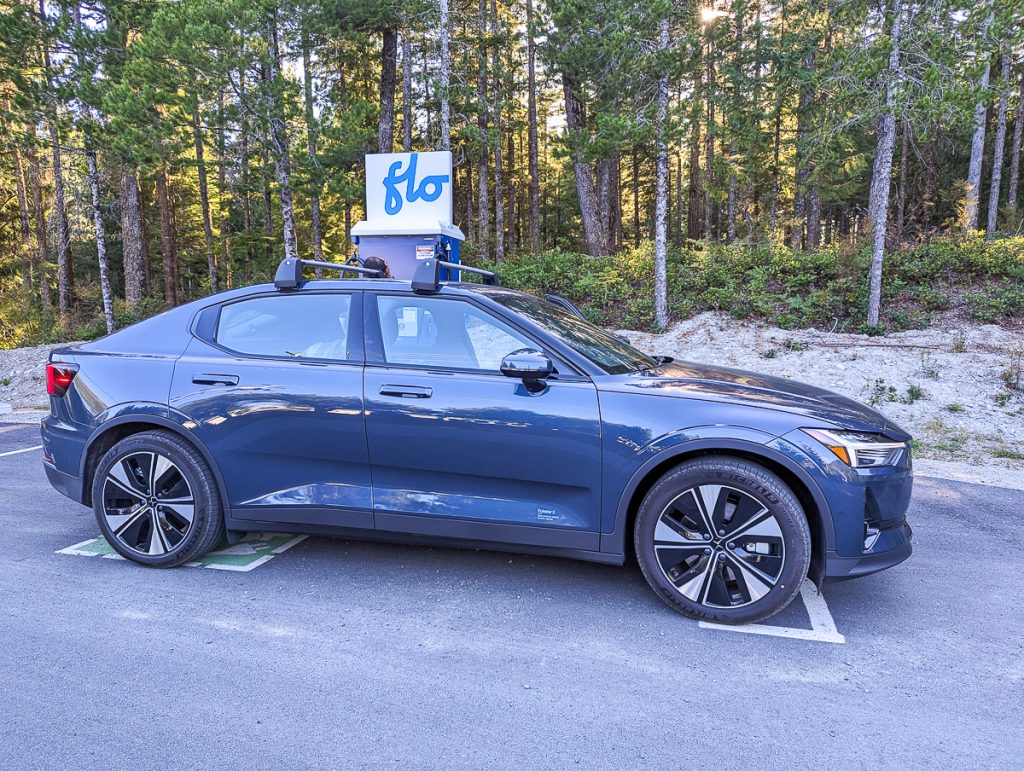
This route is 100% EV-friendly. Make sure you download A Better Route Planner and PlugShare to find all the convenient chargers located along the highway and in smaller towns.
Map from Nanaimo to Port Hardy
Don’t miss my custom map with all these stops outlined!
Related Posts
- Things to do in the Comox Valley
- Inside Passage Ferry Port Hardy to Prince Rupert
- Epic Slow Road Trip Itinerary for British Columbia
Comment and Share Best Stops Nanaimo to Port Hardy
The road trip from Nanaimo to Port Hardy is on a seriously underrated part of Vancouver Island. While many people drive through quickly to catch their ferry sailing, there are so many great stops along Highway 19 worth seeing.
By slowing your pace and choosing to explore mindfully along the historic coastal highway, you can see the side of British Columbia that many fast travellers completely miss. From the incredible beaches of Parksville and Qualicum, to the rich agricultural heart of the Comox Valley, the salmon-filled Campbell River, and the wild northernmost point, this route has so many great stops.
By driving this EV-friendly route, bringing your sense of adventure, and choosing to spend your dollars at independent First Nations hotels, local artisan markets, and small-town bakeries, you can play an active role in keeping these coastal communities vibrant.
Have you driven Highway 19 before? What would you add? If you’re planning this route over the summer, let me know which stops from Nanaimo to Port Hardy you’re most looking forward to!
Curiosity Saves Travel Recommends
Accommodation: Booking.com to find accommodation with a Genius Discount and clear third-party sustainable certifications like Green Key. Look for local hotels.
Tours and Excursions: GetYourGuide and Viator for tours, excursions, and tickets. Never book wildlife experiences through these vendors.
Travel: Omio for booking buses and trains in English across Europe. After reducing the number of flights I take annually, I use Google Flights’ carbon comparison tool.
Car Rental: Rentalcars for the best rates in English globally. It is easy to find hybrids and EVs, and there are resources for finding chargers.
Packing Essentials: REI or your local Co-op has great essentials like reusable water bottles and cutlery sets. Patagonia for regenerative clothing. Farm to Feet for socks made with regenerative practices! Pistil Designs for cold-weather essentials. Osprey for bags that last 10+ years, like the day bag for hiking or my favorite carry-on.
eSIM: Airalo eSIM. Reduces waste from single-use SIMs. A total game-changer.
For Bloggers and Content Creators
Earn Ad Revenue with Journey by Mediavine
Earn with Stay22 Travel Partnership (my biggest source of income!)
Earn with TravelPayouts recommending tours and activities.




Wow, what a fabulous road trip this is. I’m so looking forward to visiting Canada.
There are so many great road trip options in British Columbia, I hope you are able to visit us someday.