

How to Get to Haida Gwaii: Ferry From Prince Rupert with BC Ferries
I may earn income from affiliate links or partnerships in this post. I spend time to curate tours or products that align with my values. Thanks for supporting my work, at no additional cost to you. All words and images on this website are created by real people.
Are you planning your epic adventure to Haida Gwaii and curious about the best way to reach this archipelago in British Columbia? While many advocate for flying to Haida Gwaii from Prince Rupert or Vancouver, I’m partial to taking the ferry. BC Ferries runs a route from Prince Rupert to Haida Gwaii, and it is the perfect option for anyone on a road trip across BC.
After taking the incredible 16-hour ferry from Vancouver Island to Prince Rupert, we spent 24 hours in Rainbow City before continuing our road trip on Haida Gwaii. It was a bold move, as we brought our Polestar EV to an island with only two slow chargers. But it was so worth it! We took the night sailing to Haida Gwaii and booked a cabin. After a decent-ish night’s rest, we arrived on Haida Gwaii with our car and ready for a full day of exploration.
Taking the BC Ferry to Skidegate with our car allowed us to plan a fully independent itinerary for Haida Gwaii, going wherever we wanted, on our own time. We didn’t have to rent a car or plan complicated logistics. Even if you aren’t on a road trip, you can still take the ferry as a foot passenger for a novel experience and a local way to get to Haida Gwaii.
This is a great slow travel option for those seeking a more sustainable and local experience to reach Haida Gwaii. This guide will cover everything you need to ensure a smooth sailing trip. We will cover all the details of this BC Ferry route, what to expect, how to prepare, and everything, down to the booking cost and securing your reservation.
Trip Overview
Taking the ferry is the best way to get to Haida Gwaii. The route leaves from Prince Rupert. We took a night sailing to take advantage of the onboard cabins.
- 7-8 hour sailing
- Night sailing (10 pm departure) or day sailing (10:35 am departure)
- Book a private cabin with a bathroom (or sleep on the floor)
- Sailing on the Northern Adventure
- Departs Prince Rupert and arrives at Skidegate
- Restaurant and amenities on board
- Sail as a foot passenger or with a car/RV
Why Take the Ferry?
As a slow travel advocate, taking the longer ferry just makes sense. But, for those who aren’t convinced because flying is faster, here are all the reasons why we loved sailing with BC Ferries.
Great for road trips
Haida Gwaii is a remote archipelago. Getting around the main island, Kiis Gwaay (Graham Island), is challenging without a car. So, unless you’re planning to rent a car from one of the costly and poorly rated car rental agencies or book a multi-day package from The Haida House at Tllaal, bringing your car is the best way to go.
Of course, this is best combined with a drive from Vancouver to Prince Rupert or Vancouver Island on the Inside Passage Ferry.
You’ll arrive on Haida Gwaii ready for adventures!
Sustainable, Slow Travel
Ferries emit less carbon per passenger than planes. Additionally, the route from Prince Rupert to Haida Gwaii would require a short flight, emitting high levels of carbon.
BC Ferries has won a Green Wave Award for reducing noise, air pollution, and emissions and for using clean fuels and onshore power.
In addition, I recommend:
- You could drive or rent a hybrid for your road trip.
- You could also try an EV—we brought ours. Haida Gwaii has a few limited slow chargers, so plan accordingly.
- Sign the Haida Gwaii Pledge before visiting.
- Engage in regenerative ecotourism while there.
- Support local, small, and sustainable businesses.
Unique Local Experience
Part of the charm of this sailing is being around the locals who use this ferry route to reunite with family, return from errands on the mainland, or head over for seasonal work.
On our sailing, we were joined by Haida, who were returning to their homeland from the mainland. We were also joined by kids going to grandma’s for the summer and cargo haulers bringing supplies to this remote community.
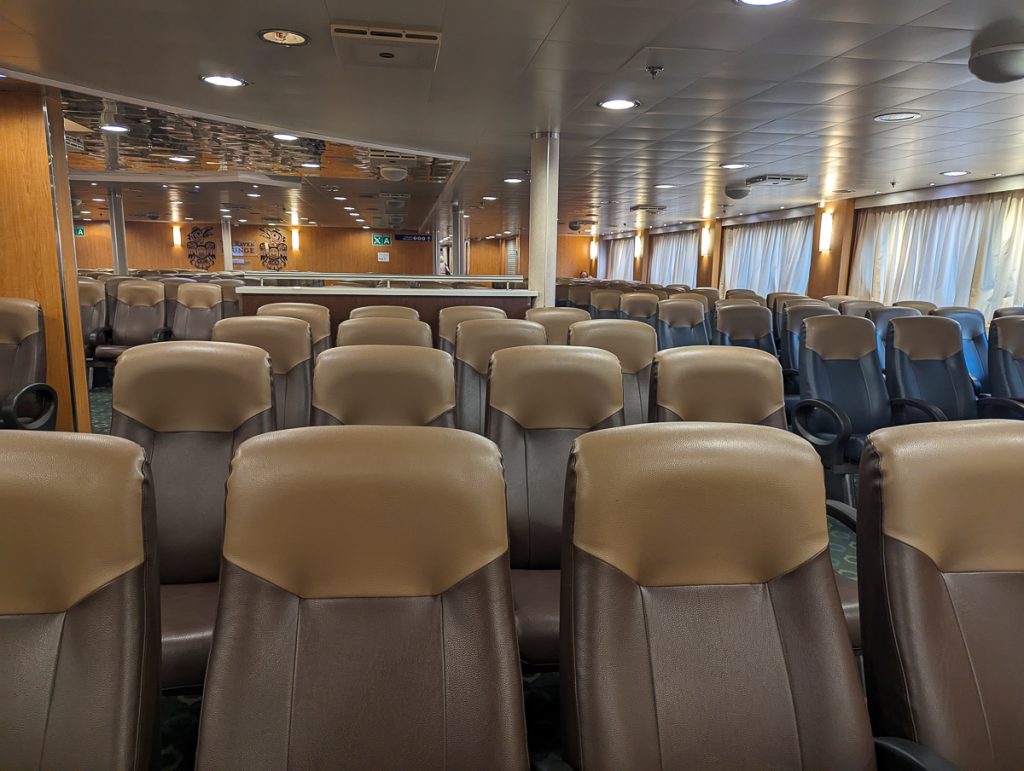
Seasonal workers sprawled out on the floors to catch some shut-eye. Even though I had lived in British Columbia for a few years, this was one of my most special, unique experiences.
How to Book
As with most BC Ferries routes, booking a reservation in advance is essential. The Prince Rupert to Haida Gwaii route has infrequent sailings. While Haida Gwaii is not a popular tourist destination, these sailings sell out to locals who use them to connect to the mainland, and larger RVs and campervans embark on a journey to Haida Gwaii.
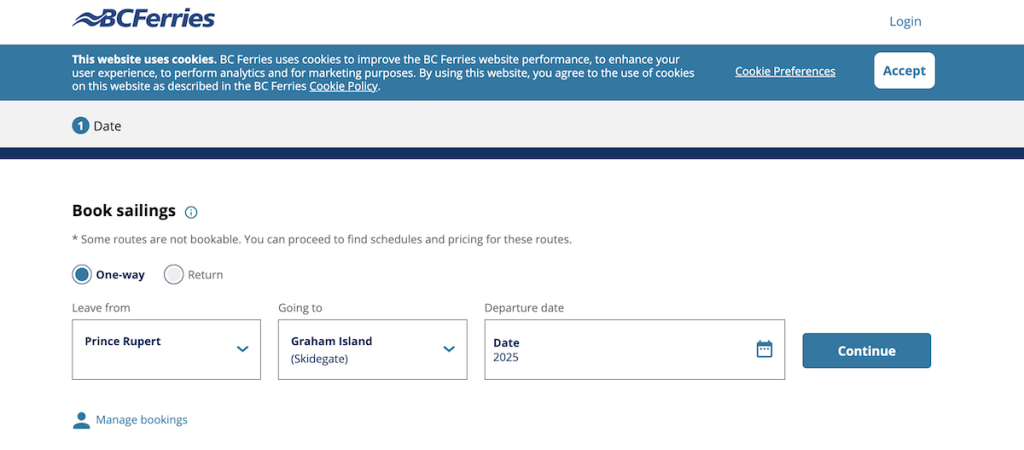
You can only reserve your sailing through the official BC Ferries website. Select your departure as Prince Rupert sailing to Graham Island (Skidegate).
Select the number of passengers, vehicle details, and a day for departure.
You will likely be given one option, as there is typically only one sailing on the selected day, which also tells you the departure time.
Depending on the day of the week or season you sail, it will either be a nighttime or a daytime sailing. Schedules and pricing depend on when you travel. More on that below.
The Cost of Prince Rupert to Haida Gwaii
The cost of the ferry from Prince Rupert to Haida Gwaii depends on when you travel, what size car you bring, whether you get a cabin, and if you travel in the summer, shoulder, or winter season, and other such particulars.
Bringing a car or RV will likely be most of your cost for this sailing. While the cost of being just a foot passenger may look appealing, first consider how you get to/from the ports and the rest of your logistics, such as car rentals, additional flights, or tour excursions, which would add up on their own.
Renting a car on Haida Gwaii is costly, and the companies’ reviews aren’t great. Your alternative is to pre-book a multi-day package with one of the few certified operators on the island.
But, you will likely be bringing a car, so budget accordingly.
Prices for 2025 Summer Sailings
Always check the latest prices on the BC Ferries website, as they are subject to change seasonally, annually, and based on conditional circumstances.
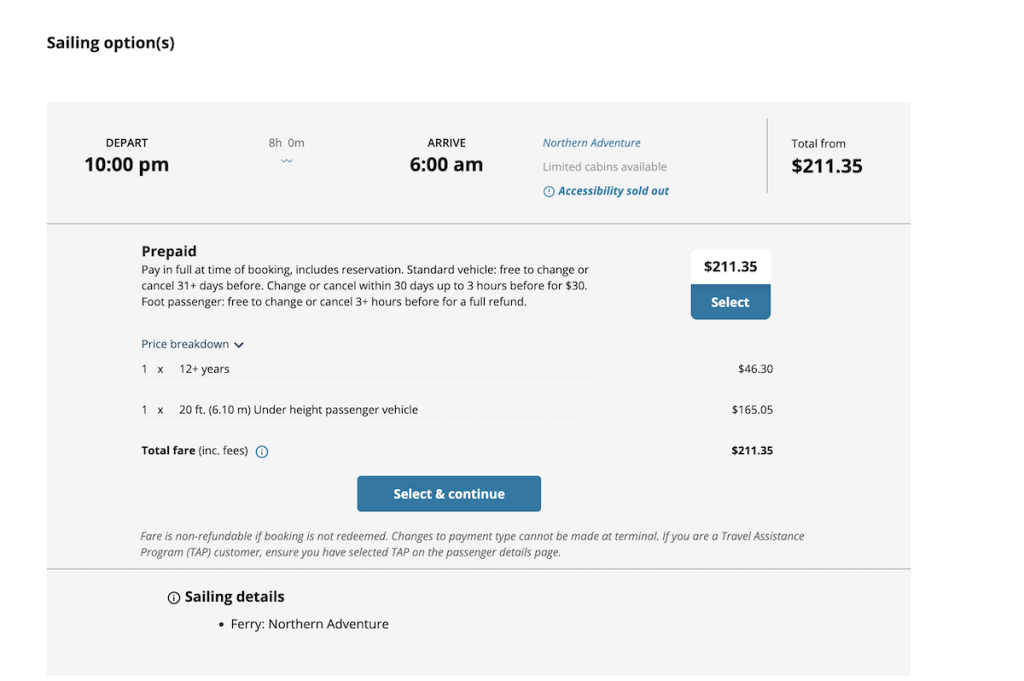
The cost for the day vs night sailing is the same.
Foot Passenger
- The cost for a single foot passenger is $46.30
- It is free to bring a bicycle
Standard Size Vehicle
- A standard-size car, van, SUV, or truck costs $165.05
- So, a single passenger plus a standard vehicle is $211.35
Motorcycle
- A standard motorcycle costs $82.55
- A motorcycle with a trailer is $123.75
Oversize Vehicle
- An oversized vehicle, such as a motorhome or truck pulling an RV, costs $394.85
- So, a single passenger plus a large RV is $441.15
There is limited room for large RVs and oversized vehicles; these sailings can sell out months in advance.
Cabins
Depending on the day you sail, you will traverse the Hecate Strait during the day or night.
We sailed at night because we departed on a Tuesday, which was the only choice. We were happy with this option, though.
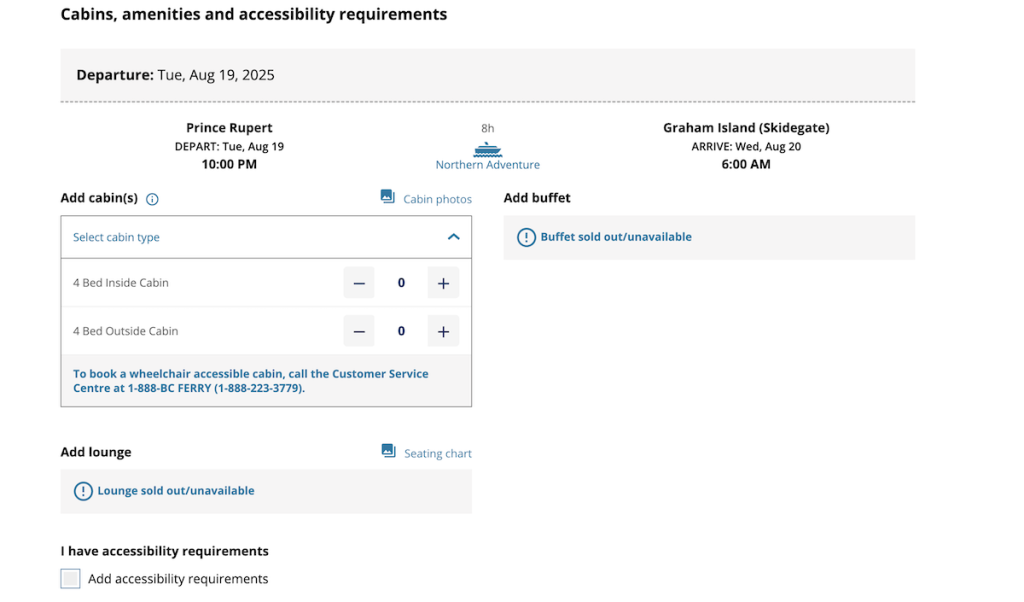
We booked a cabin, which gave us a safe and comfortable place to sleep for the night, cheaper than most hotels. When we landed on Haida Gwaii, it was 6 am, and we had a full day of exploring before checking into the Haida House Cabins for our Indigenous-owned eco stay.
Either way, you can’t make the wrong choice, but it may impact you choice when it comes to booking a cabin.
- Inboard Cabins (meaning no windows) are $145.
- Outboard Cabins (with windows) are $165.
- Premium Cabin (with windows and only 2 beds) is $250.00
Now, you certainly don’t need a cabin for the night sailing. If you’re the type that can sleep on airport floors for 6 hours, curl up in a seat for a snooze, or you’re planning on camping on Haida Gwaii and brought your sleeping bag and blow-up mattress, you’ll fit right in.
Many people want to save money on this ferry and sleep on the floor instead of booking a cabin. Do what is best for you, your budget, and your comfort. Once we arrived at the islands, we planned a long day of travel and wanted to hit the ground running, so the cabin was a no-brainer.
Winter Pricing 2025*
Winter pricing is slightly lower than summer pricing:
- A foot passenger is $37.70
- A Standard vehicle is $135.80
- *See the BC Ferries website for more winter pricing
Summer vs Winter Schedule
The peak summer season is from June 1 to September 30
- Daily sailings except Wednesday
- Mon – Tue: 10 pm evening departure
- Thur – Sun: 10:30 am morning departure
- Limited schedule last half of September with no sailings Tue/Wed
The winter schedule starts October 1 – February
- Sailings every Sunday, Monday, and Thursday
*Shoulder season from March to June TBD
Logistics and Planning
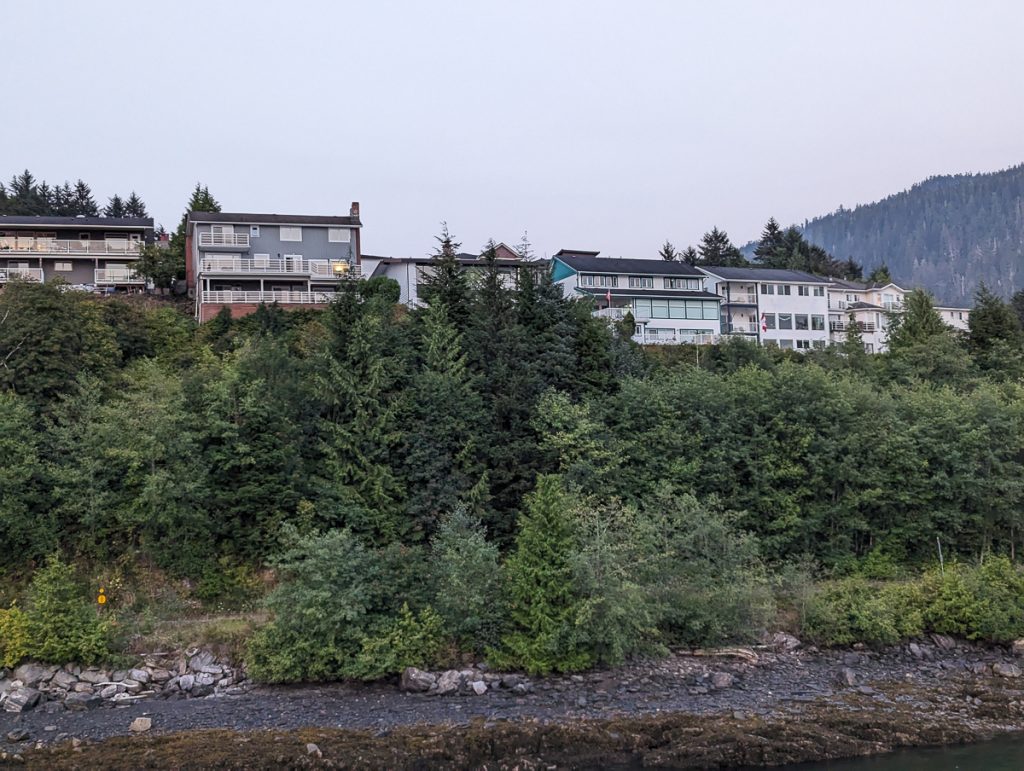
Haida Gwaii is a very rural and isolated region off the coast of Western British Columbia. Planning a trip can be challenging because getting to and from the ports and deciding when to sail can be the most challenging part.
When to sail? Summer or Winter?
You can undoubtedly visit Haida Gwaii in winter, but as a tourist, I generally don’t recommend this option. It is stormy, and many things are closed or have limited operating hours.
Of course, there are options at the Haida House and sleepy cottages along the shores. However, I only recommend winter travel for experienced and self-sufficient travelers who are prepared to cook for themselves, embrace a slow life, and endure stormy weather.
Otherwise, summer travel is the way to go, when you can take tours to Gwaii Haanas National Park, enjoy restaurants and art galleries, and the islands are more lively.
We visited in August, and it was a lovely time to enjoy hiking, beach walks, cultural sites, Indigenous-led experiences, and more.
Choosing a Date and Getting to The Ports
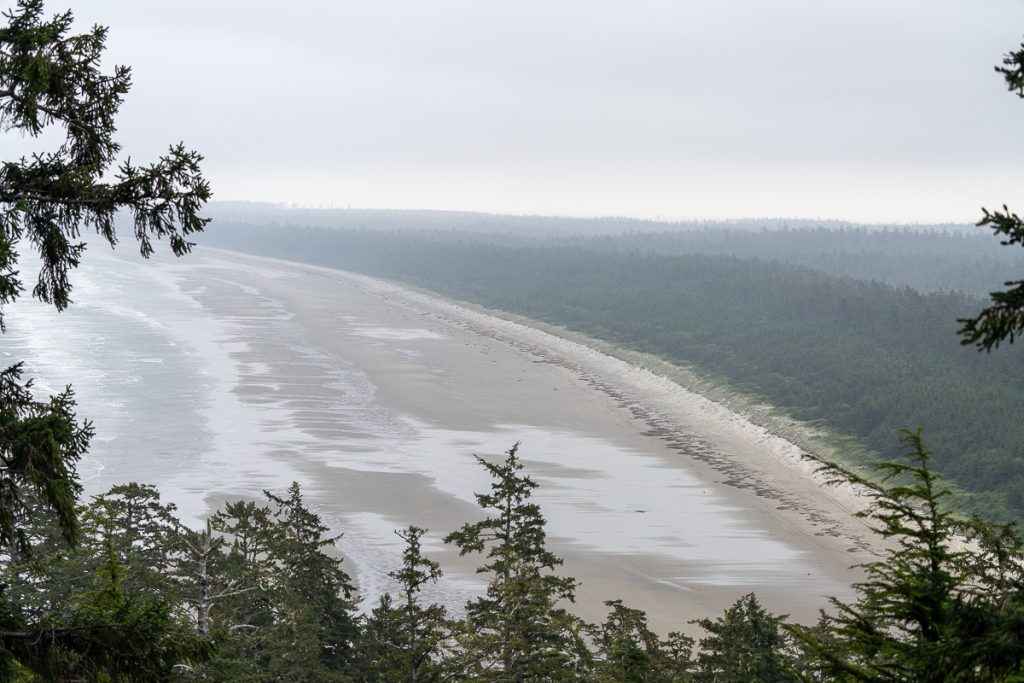
When picking a date to reserve our sailing, we devised a loose itinerary for our entire road trip, starting in Vancouver. From our home in Vancouver, we traveled to Vancouver Island and slowly drove up the East Coast. From there, we made it to Port Hardy and had reserved a sailing on the Inside Passage ferry route.
Based on our arrival in Prince Rupert, we gave ourselves 24 hours in Rainbow City before sailing to Haida Gwaii. For us, that meant sailing out at night on a Tuesday in August. We were then able to book accommodation in Haida Gwaii.
Alternatively, you might be driving northbound from Vancouver to Prince Rupert. Follow a similar pattern to work out when you arrive in Prince Rupert and book a sailing trip at least 24 hours after you arrive to enjoy this charming coastal town.
Embrace Island Time
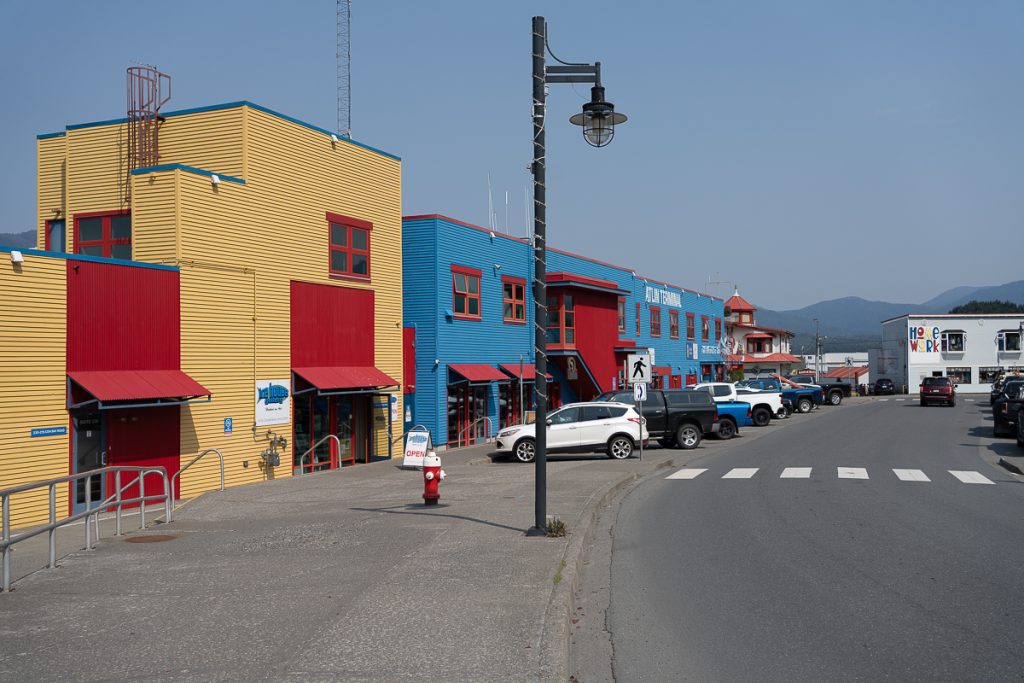
The Hecate Strait is prone to storms and rough seas. Additionally, the ferries running these routes may occasionally need service. That contributes to frequent delays, disruptions, and even cancellations.
Be ready to go with the flow, travel with insurance, and enjoy the slow travel mentality.
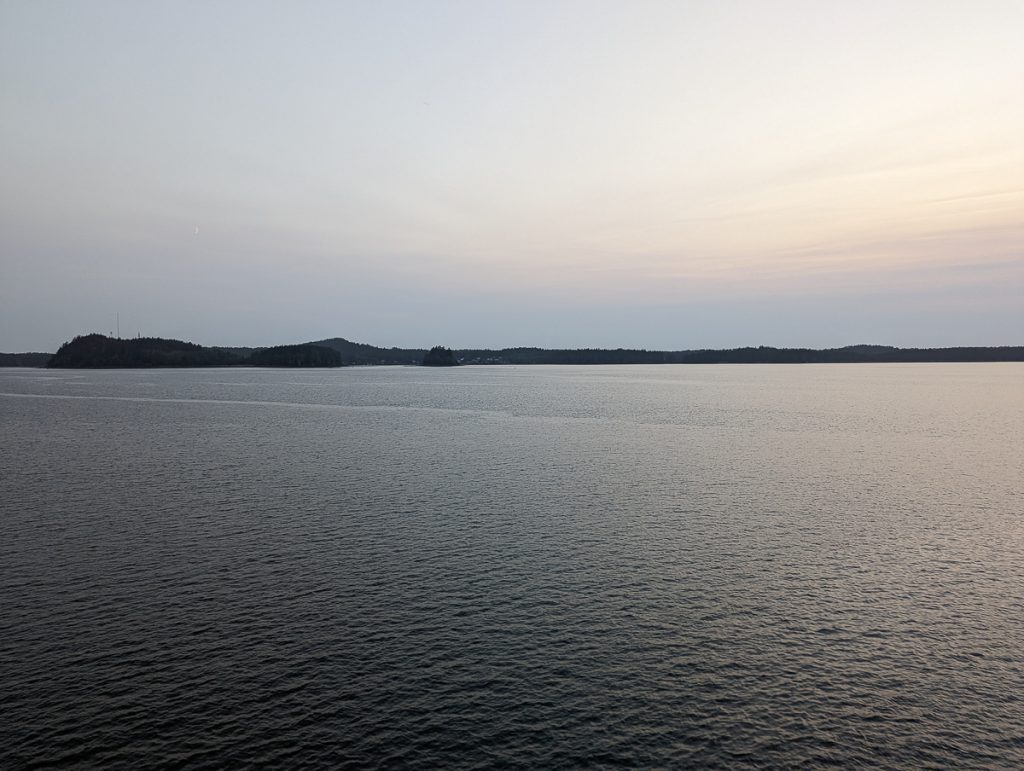
Checking In For Prince Rupert to Haida Gwaii Ferry
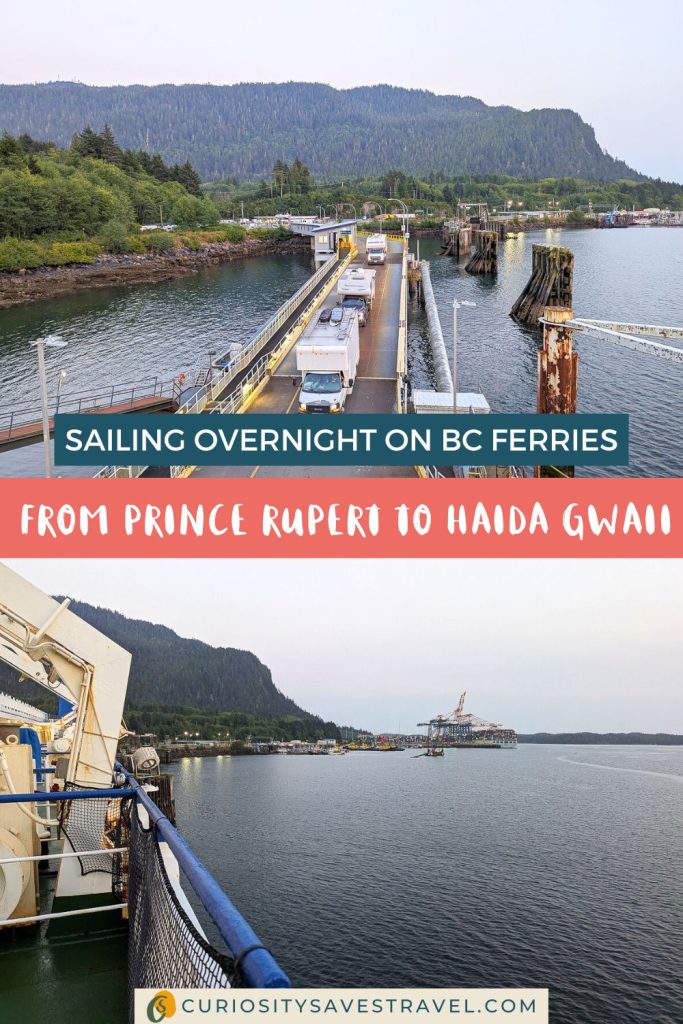
Whether departing at 10 pm or 10:35 am, you must be checked in and in line on time.
- BC Ferries asks that you arrive at the terminal 90 – 120 minutes before departure.
- You should not arrive any later than 90 minutes, as that is when check-in closes.
If you are not traveling with a reservation, it is first-come, first-served.
To check in, you will drive through a gate with an agent verifying your reservation. Have your booking and ID ready to show.
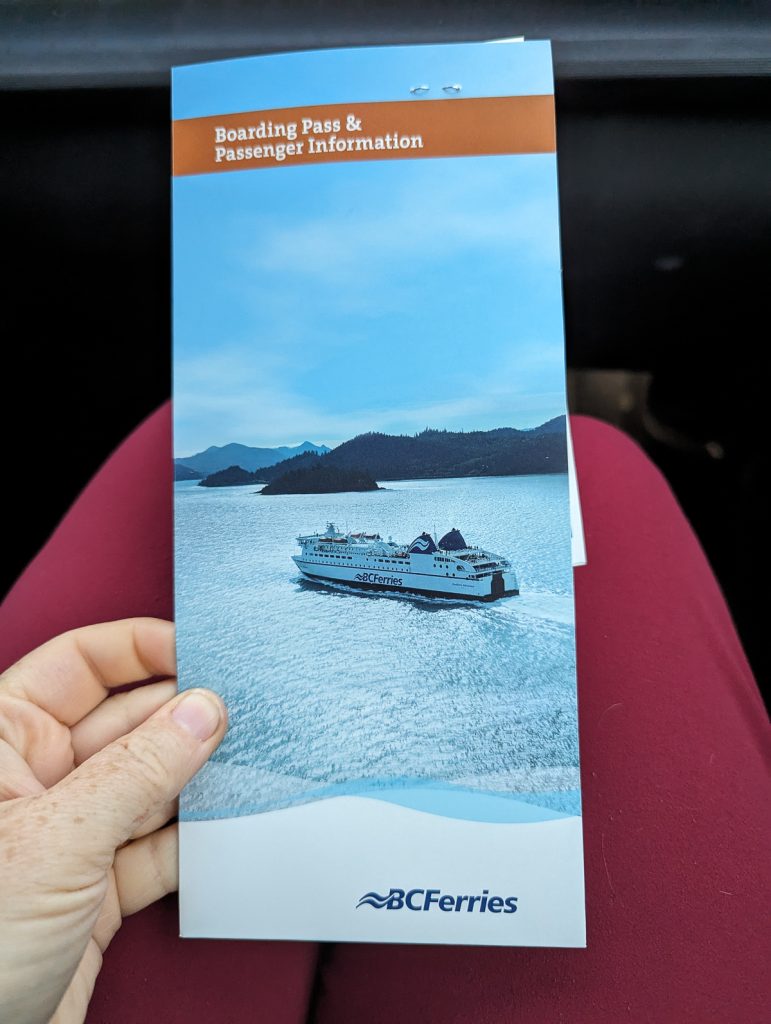
You must show your ID when you check in; Transport Canada requires this, and you cannot board without a valid ID. Keep your ID on hand, as you will show it twice during check-in and boarding. You’ll get a passenger information packet where you can keep your ID when you check in.
Bringing Your Car on Board
As you check in, you will get directions on where to drive and queue.
Once you’re in the line, you must wait until the cars in front of you move, or you are told to drive onto the ferry. Follow the guidance of the BC Ferry employees.
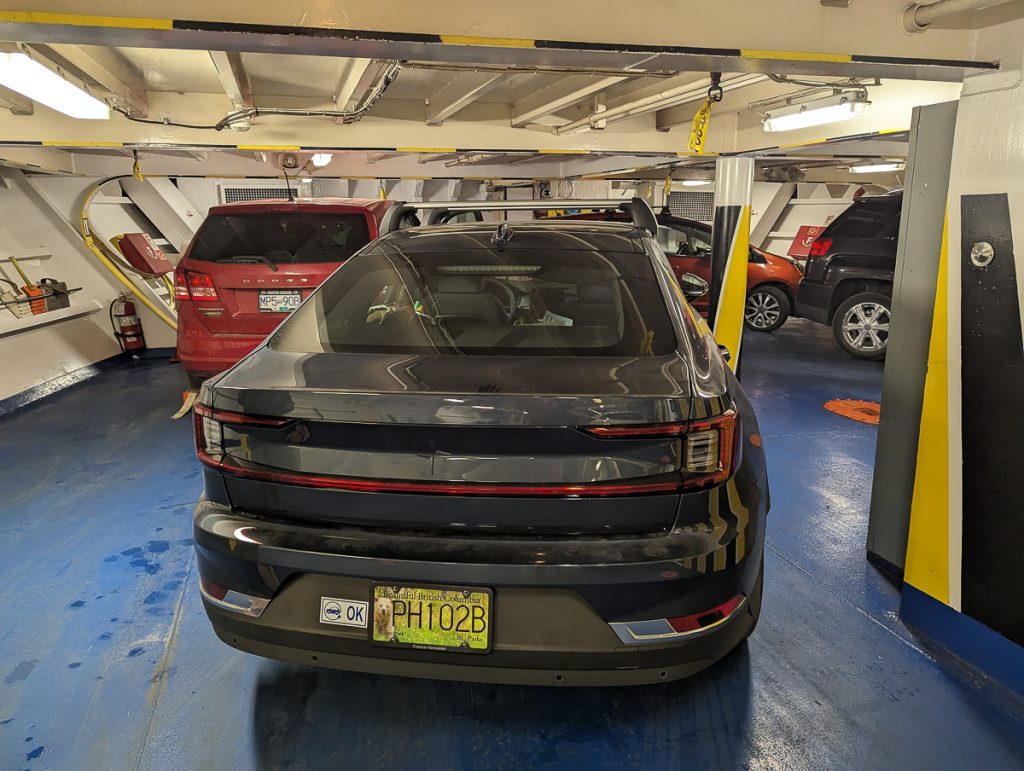
We have been on many ferries with cars in our lives, including Greece, Sweden, Germany, Norway, Croatia, and more. This was one of the most challenging parking jobs we’ve had to do on a ferry. Parking is tight to fit as many cars as possible.
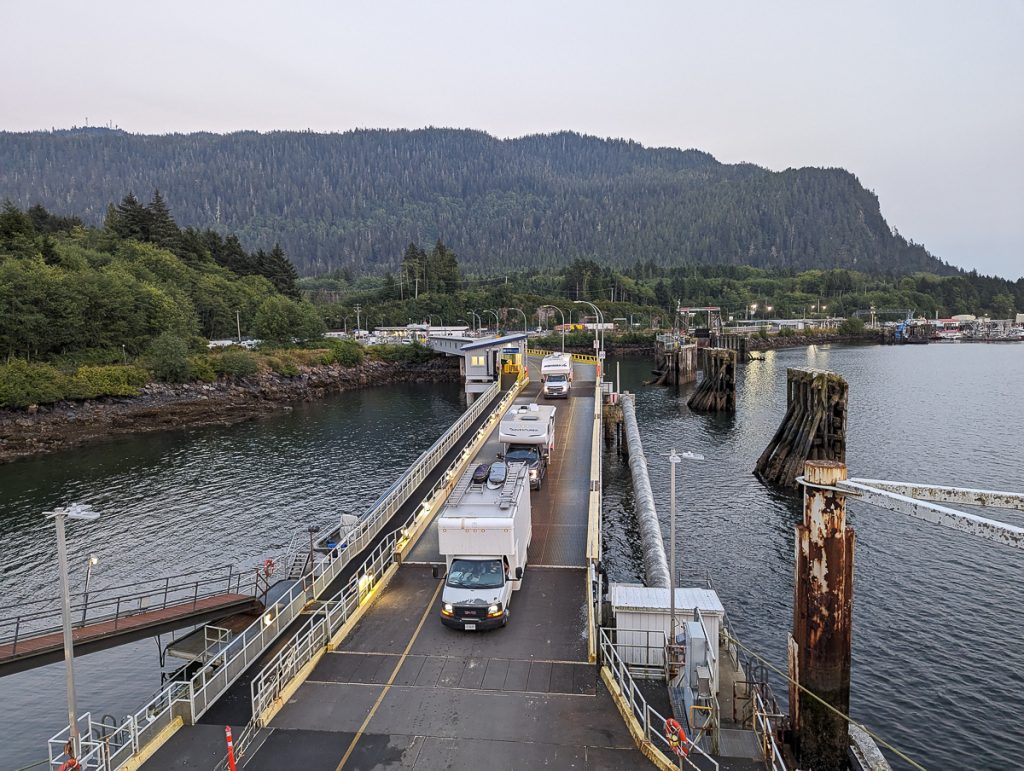
If you are driving a large RV, you must back in down the ramp. You should be comfortable driving your RV in reverse and in tight spaces.
Staff will block your wheels to avoid movement during the trip.
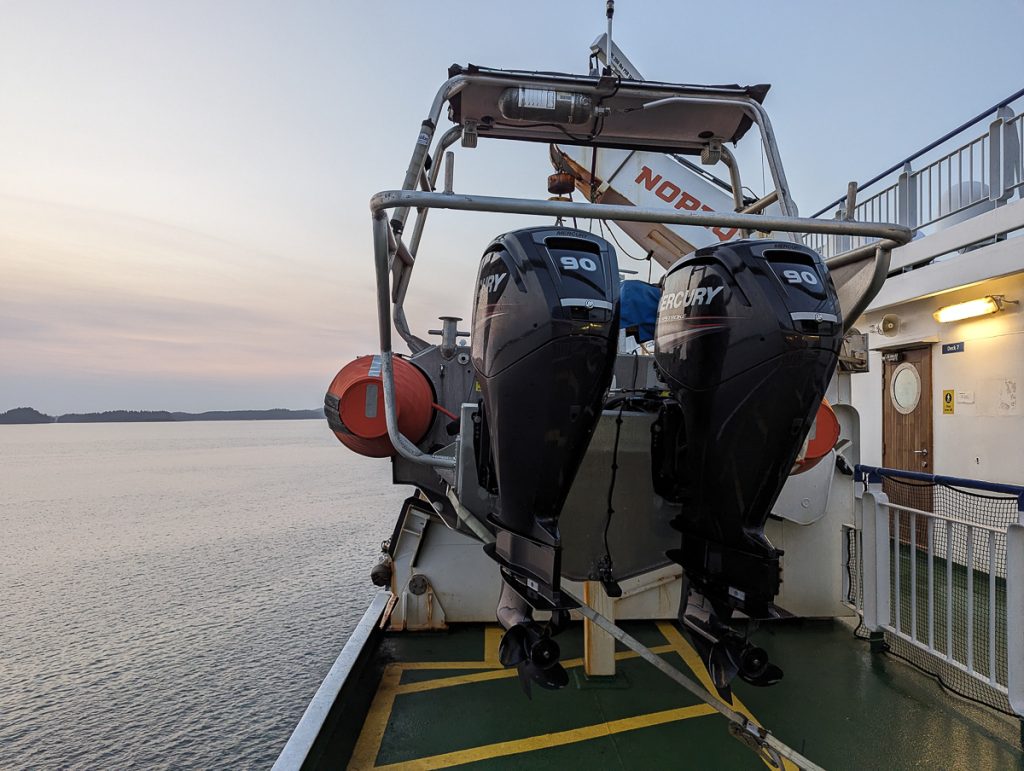
Ensure you turn off your car alarm—seriously. We woke up to someone’s car alarm and lost precious sleep. You can’t easily access the deck, so do it before you head up.
After you park, take a few minutes to gather your belongings, including anything you need to sleep or spend the day. It helps to have a dedicated ferry bag set aside and ready to go. Before entering the passenger area, note the level and location where you are parked.
You are not allowed to sit in your car while sailing. Due to the weather, you can only access your vehicle for specific periods. So, ensure you have everything for the next 6-8 hours.
Welcome Aboard The Northern Adventure – What to Expect
You are likely sailing on the Northern Adventure, though occasionally other ferries are used.
- Built in 2004
- 87 car capacity
- 500 passenger and crew capacity
- 151 m long
- Max speed 20.5 knots
- Elevators, accessible bathrooms and features
The Northern Adventure is a charming ferry that has a lot of personality. It is comforting and welcoming, but very 2000s.
Getting Your Cabin – Checking in with the Purser
During our night sailing, we first checked in with the Purser to get assigned our cabin. After leaving our car, we got in line to check with the Purser, which you might want to do, even if you don’t have a cabin, to get a lay of the land.
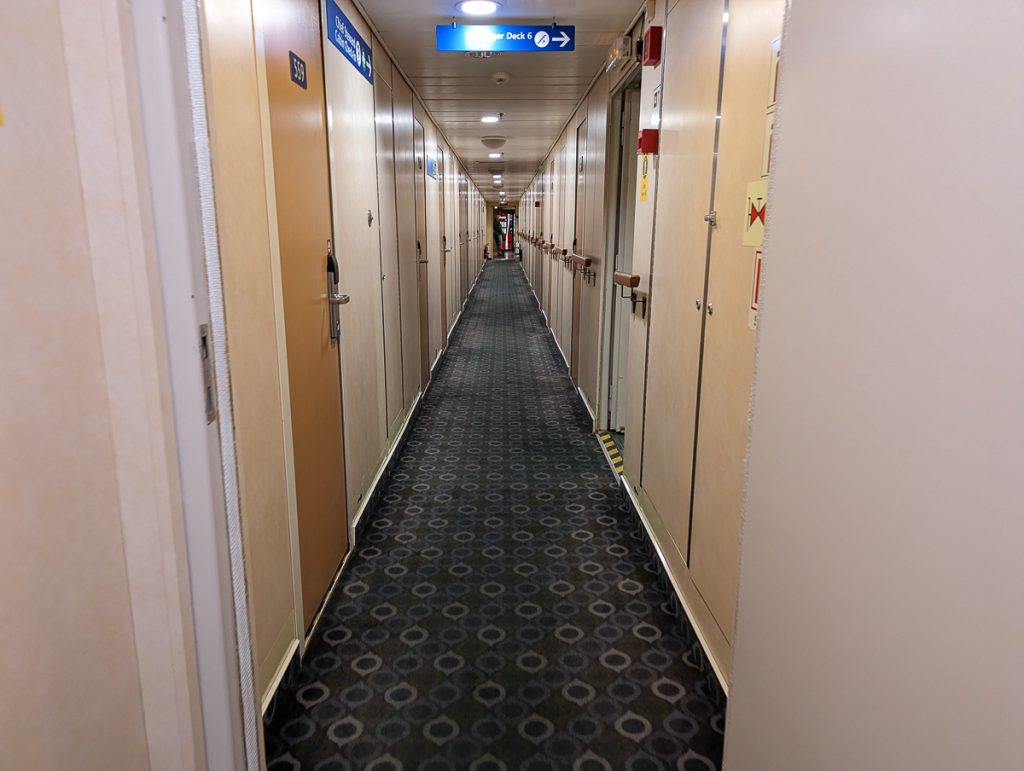
Here we got access and keys to our cabin. We immediately went and dropped off all our belongings.
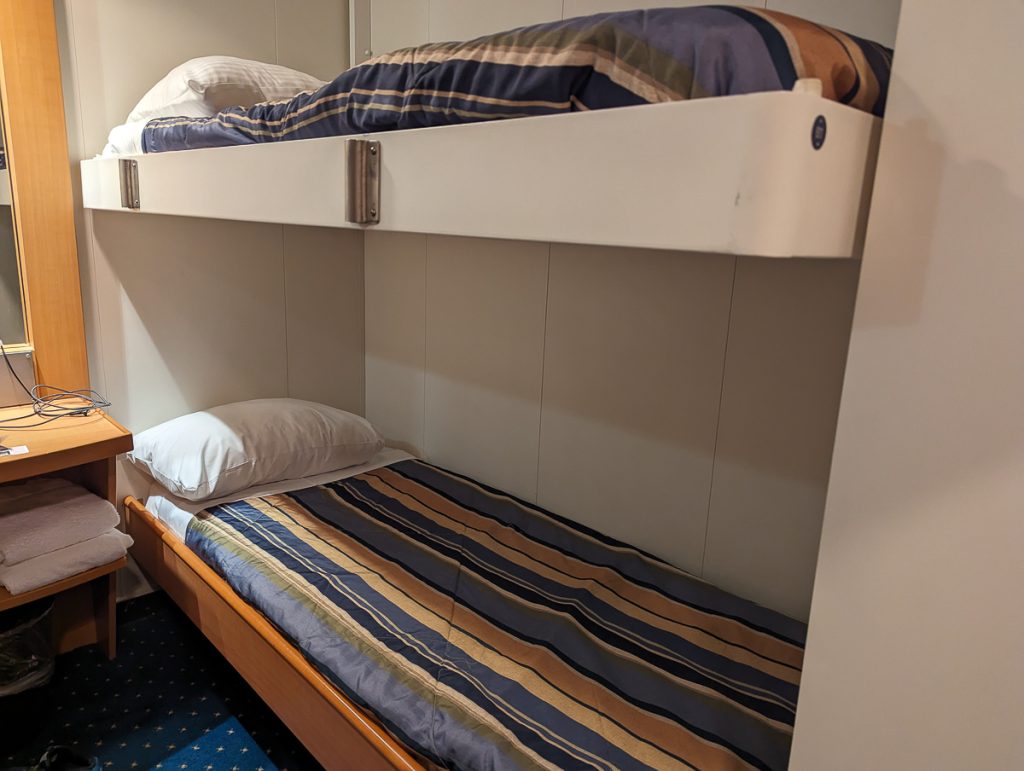
The cabins are four bunks, but you don’t share them with strangers. We only made up the two bottom bunks and got settled. We had a private toilet and shower. The rooms have nightstands and lighting.
After that, we ventured off to explore the ferry and get some food.
Note: If you didn’t book a cabin, The Northern Adventure has coin-operated showers, and pillow and blanket rentals. See Purser for details.
Coastal Café and Dining
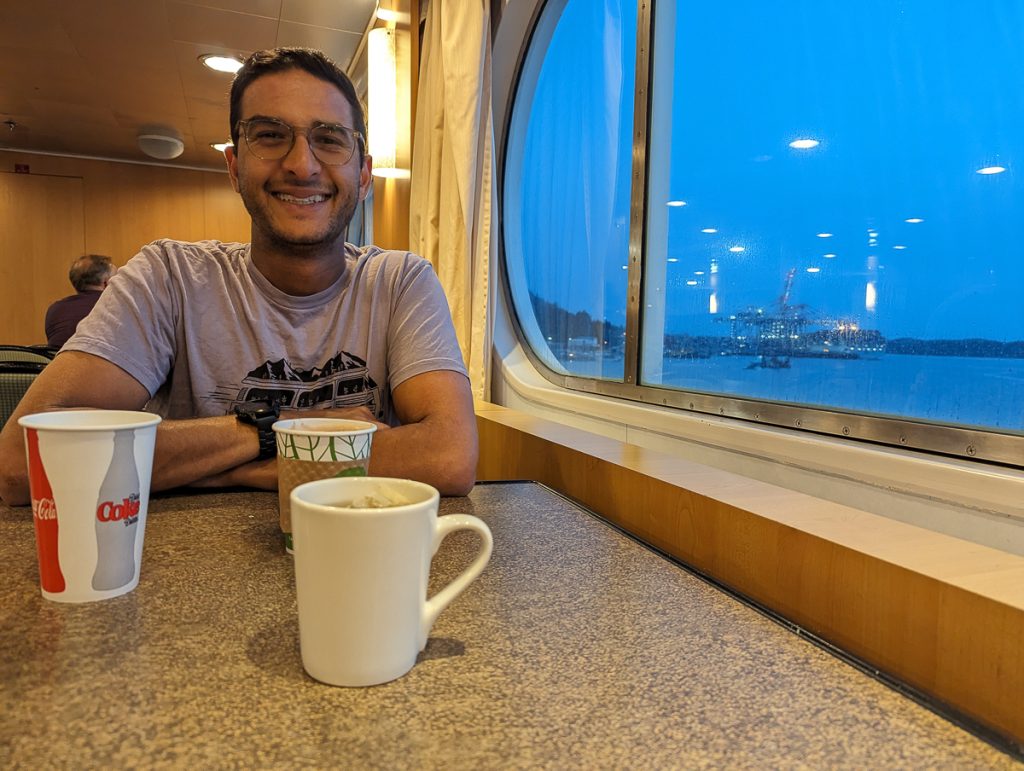
If you are looking for food or drinks, the Coastal Café is the spot. Serving breakfast, lunch, and dinner, it offers waffles, sandwiches, eggs, burgers, spaghetti, and more.
This is not a super vegetarian or vegan-friendly ferry route. If you have dietary restrictions or allergies, pack your food.
We boarded at 10 pm and already had dinner. As vegetarians, we just got a glass of wine and some French fries to relax and enjoy the café.
Pets
Dogs, cats, ferrets, birds, hamsters, and other small pets are welcome on board for free! However, they are not allowed outside designated pet areas and must remain in your car. The only exception to this rule is for certified service animals.
Designed pet areas are equipped with garbage bins, waste bags, water bowls, seating for you, and some areas are heated with kennels. BC Ferries has some tips to ensure smooth sailing when traveling with a pet.
Kids Area
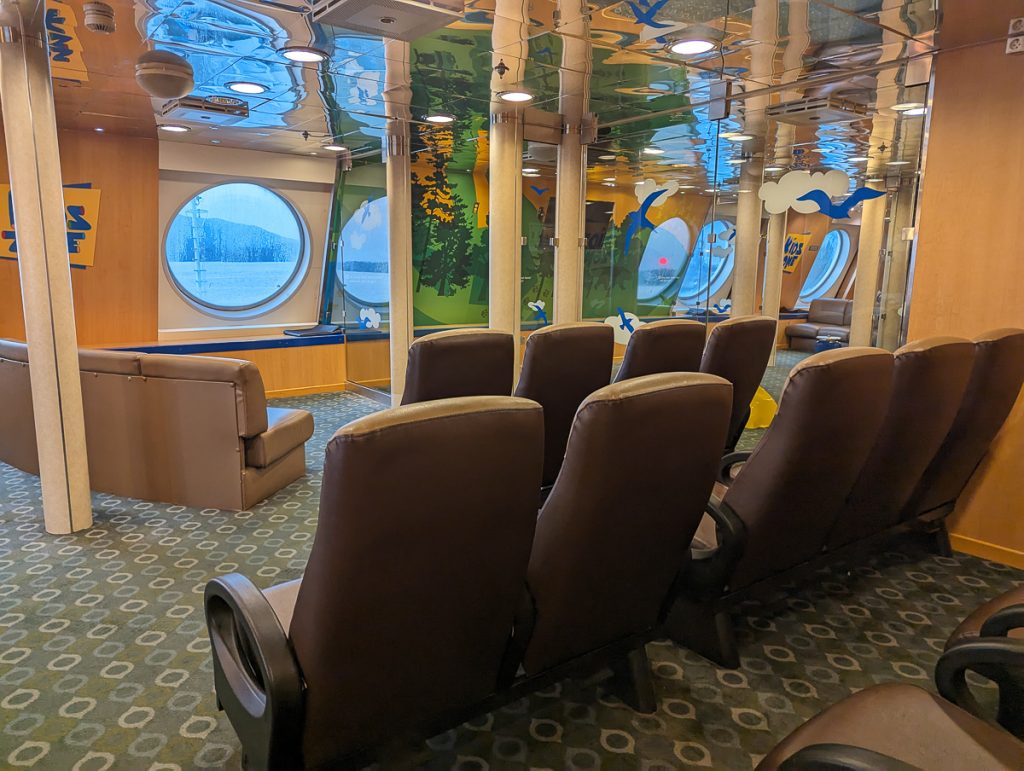
There is a kid’s play area. These typically have a few interactive playground-like experiences, and sometimes, a movie or cartoon is playing.
Passages
Passages is the BC Ferries curated shop. They have a great selection of Pacific Northwest and Canadian products.
They have a local Canadian sustainable fashion brand, TenTree, Native Northwest for Indigenous-owned design, jewelry, books, and toys.
Raven Lounge
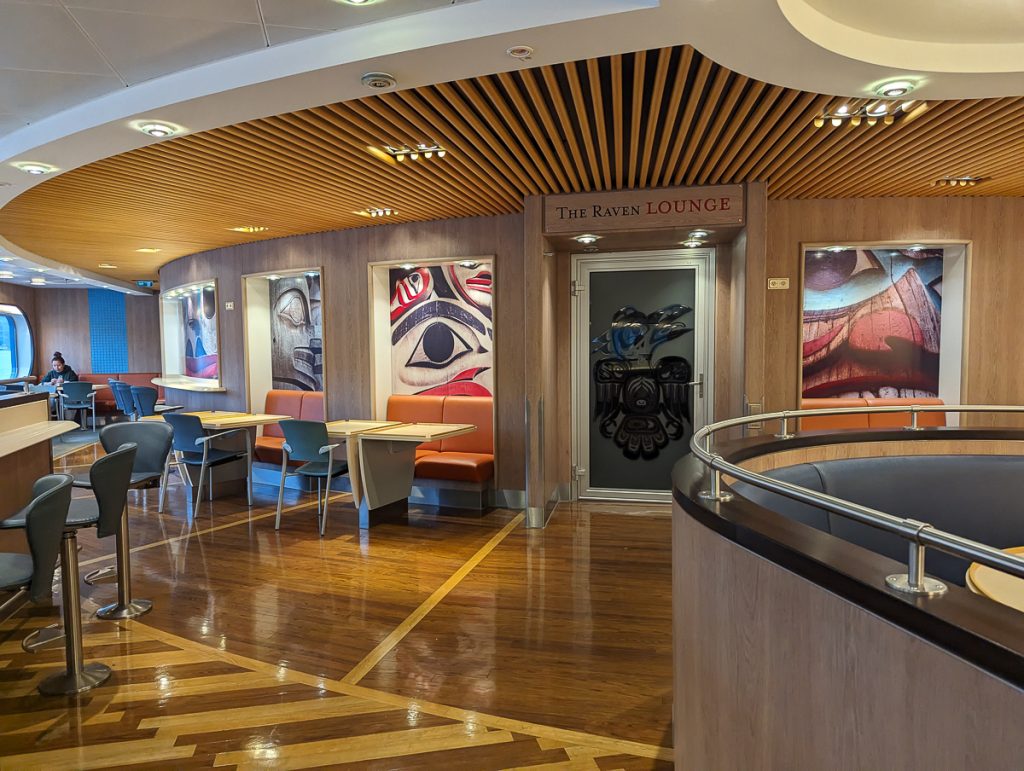
Check out the Raven Lounge for a movie-theater-like experience. During certain sailings, the Lounge will play family-friendly movies and shows.
Internet and WiFi
No WiFi is on board, and you’ll lose internet early on.
Charge everything to the max and download offline movies, music, documents, and anything else you might need for a long voyage.
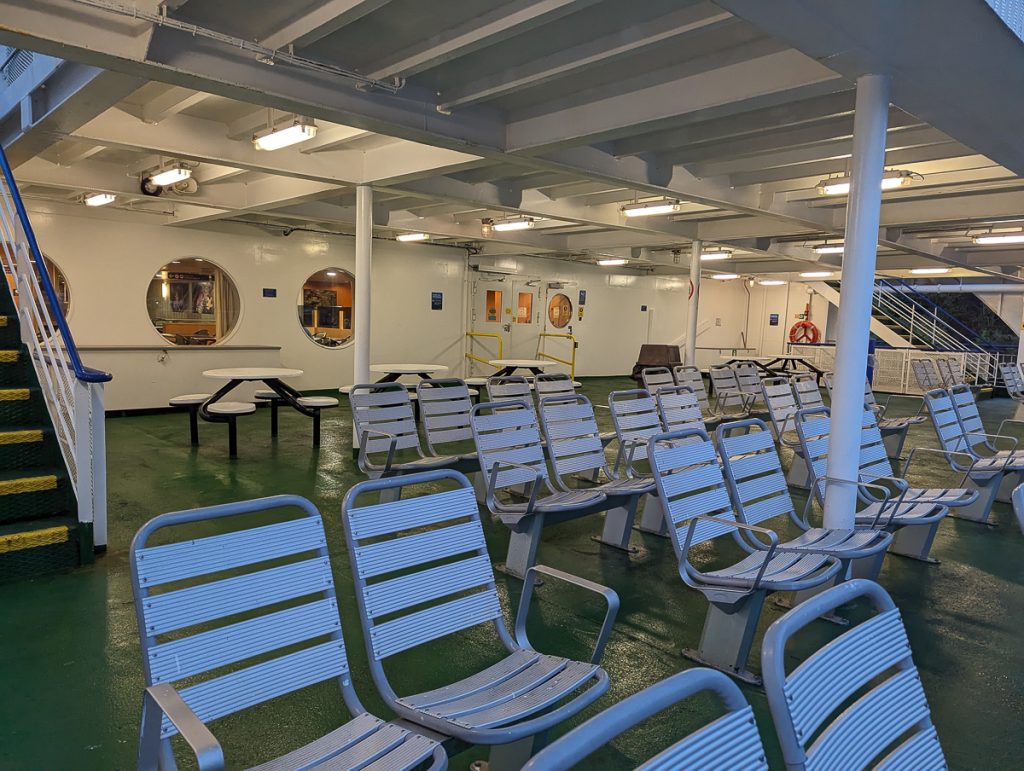
Seating/Deck Overview
There are three main decks you can explore.
Deck 5 – Lobby and Cabins
You will check in with the Purser on Deck 5 to get assigned to your cabin, which may be on this same deck.
Deck 6 – Shop, Food, Seating, and Kids Area
This is the main life of the ferry. You can shop at Passages and eat at the café on this deck. There is also the kids’ and theater area.
Deck 7 – Premium Cabins and Outdoor Seating
More cabins and outdoor seating are on this deck.
Plenty of places exist to sit, relax, and enjoy the view. Take time to explore!
What to Pack
- Headphones
- Offline work, music, TV
- Pillow and blanket
- Comfortable clothing, warm layers, and rain/wind gear
- Snacks (diet-friendly if you need)
- Binoculars
- Camera
- Reusable coffee mug and water bottle
- Charger/charging pack
- E-reader/book
- Nintendo Switch, card games, or activities
- Tote bag with everything ready to go from the car
- Eye mask/earplugs
- Sea sickness medication
- PJs and a toiletry kit for overnight sailings
Our Experience
Since we boarded at night, we didn’t spend much time outside as it was dark. There is much to see through this open body of water in the dark or even during the day.
After we ate at the café and explored, we returned to the cabins to sleep.
We set an alarm, but as the sailing time may vary, an announcement goes off in your room. I sleep with earplugs, but still woke up to the arrival announcement.
We woke up, showered, brushed our teeth, and got coffee.
From there, we returned to our car to start our Haida Gwaii adventure!
Comment and Share
Taking the ferry to Haida Gwaii in British Columbia is a unique local way to travel. From Prince Rupert, you can catch a 6-8 hour ferry to this beautiful archipelago and the Haida Homeland.
This guide has covered everything you need to know to ensure smooth sailing. Save or pin this post to know how to reserve your tickets, logistics, what to expect, and everything else you need to know to take the ferry from Prince Rupert to Haida Gwaii.
Are you thinking of doing this trip with BC Ferries? Let me know in the comments.
Related Posts:
- Sustainable 24-Hours in Prince Rupert
- Haida Gwaii Travel Tips
- Canada’s Inside Passage with BC Ferries
- Haida Gwaii Regenerative Itinerary
- Haida House at Tllaal Review
- Epic Slow Road Trip Itinerary for British Columbia
Curiosity Saves Travel Recommends
Accommodation: Booking.com to find accommodation with a Genius Discount and clear third-party sustainable certifications like Green Key. Look for local hotels.
Tours and Excursions: GetYourGuide and Viator for tours, excursions, and tickets. Never book wildlife experiences through these vendors.
Travel: Omio for booking buses and trains in English across Europe. After reducing the number of flights I take annually, I use Google Flights’ carbon comparison tool.
Car Rental: Rentalcars for the best rates in English globally. It is easy to find hybrids and EVs, and there are resources for finding chargers.
Packing Essentials: REI or your local Co-op has great essentials like reusable water bottles and cutlery sets. Patagonia for regenerative clothing. Farm to Feet for socks made with regenerative practices! Pistil Designs for cold-weather essentials. Osprey for bags that last 10+ years, like the day bag for hiking or my favorite carry-on.
eSIM: Airalo eSIM. Reduces waste from single-use SIMs. A total game-changer.
For Bloggers and Content Creators
Earn Ad Revenue with Journey by Mediavine
Earn with Stay22 Travel Partnership (my biggest source of income!)
Earn with TravelPayouts recommending tours and activities.






What a great article. It is so clear & really helpful. Thank you.
Thanks, hope you have a great time on Haida Gwaii! I have lots of guides coming soon.
This is a great help in detailing a lot of information that I will use. Not sure if my son and I will make the drive to Vancouver, Vancouver Island, Port Hardy or Prince Rupert to catch the Ferry. It all depends on the scenery on the ferry. We will be traveling from Pittsburgh, Pennsylvania. Thank you very much.
Hey Bill, that sounds like an incredible road trip with your son! We took both routes, on the way to Haida Gwaii we went Vancouver – Vancouver Island – Ferry – Prince Rupert – Haida Gwaii. Then, on the return we drove back from Prince Rupert to where we live in Vancouver. If that is an option for you all I highly recommend it, as Vancouver Island is fantastic and I really do love that Inside Passage Ferry. Of course, the mainland route offers some stunning views as well.
I have lots of resources on this route if you need some more details.
https://curiositysavestravel.com/bc-ferries-inside-passage-canada-travel-guide/
https://curiositysavestravel.com/haida-gwaii-travel-tips-things-to-know-before-visiting/
https://curiositysavestravel.com/24-hours-prince-rupert-bc-things-to-do-itinerary/
I have a full itinerary for Haida Gwaii coming and more posts on the drive from Prince Rupert to Vancouver coming as well. So, keep an eye out for those.
I hope you have the best time. When are you planning on making this trip?
– Susanna
Dear Bill, I am just back from a wonderful road trip to northern British Columbia (B.C.), Haida Gwaii, & northern Vancouver Island. I drove from Vancouver Island to Prince Rupert on the way up & took the ferry over to Skidegate from Rupert. I returned to Vancouver Island via the Inside Passage ferry to Port Hardy. It was an extraordinary circuit & I highly recommend the Prince Rupert to Port Hardy ferry trip, if you take the ferry that leaves Rupert early in the morning, as the scenery along the Central Coast is spectacular (this from a British Columbian who has seen a lot of extraordinary coastal scenery ). I also recommend reserving an outside cabin on the ferry. While the weather was amazing (it can be rainy or overcast, but we had fabulous weather the whole trip) & we spent a good deal of time on the outer decks, it was nice to have a cabin to return to from time to time & look at the beautiful views through the large picture window, as 17 hours is a long time. I was initially uncertain about the extra cost of a cabin, but it was absolutely worth it, in my opinion. If you drive to Prince Rupert via Prince George, I recommend stopping briefly at Witset Canyon (formerly Moricetown) on the Bulkley River to watch the dip net fishing if the fishers are out. As well, if you like historic sites, Gitwangak Battle Hill, a short, 10 minute detour off highway 16, is fascinating & the surrounding scenery is beautiful. North Vancouver Island is beautiful & less visited than the south part of the Island & there is lots to see & do. For example, Alert Bay (a small island off of Port McNeill) & the U’mista Cultural Centre is a fantastic place for a day (or even 1/2 day) visit. Finally, as Susanna says in her post, I too strongly encourage you read & take the Haida Pledge: https://haidagwaiipledge.ca/.
Hey again, Helen. I am so glad to see that you had such a great time on your trip. We did a similar circuit to what we did on our road trip and that you had a great time. We visited many of the historical and cultural sites you recommend and I agree with your suggestions to visit and thanks for the extra tips for Bill! Happy travels.
-Susanna