
Reasons Why Electric Vehicles Are Good for Road Trips (And A Few Challenges to Know)
I may earn income from affiliate links or partnerships in this post. I spend time to curate tours or products that align with my values. Thanks for supporting my work, at no additional cost to you. All words and images on this website are created by real people.

Are you curious about whether electric vehicles are good for road trips? The short answer is yes, EVs are a fantastic choice for road trips. If you love the open road and are on the fence about buying an EV, or if you just purchased one and are unsure if you can still enjoy the same type of road trip experience with your new car, this guide is for you!
I love taking my EV on road trips, but driving long distances is a different experience than with a gas car. Most of these differences are positive, meaning electric vehicles can make your road trip even better, but there are also some new challenges you will likely encounter. Knowing what to expect and preparing for any unexpected situations can ensure you have the best experience on the road.

While questions about range and charging infrastructure may have you hesitating, embracing the joys of an EV road trip offers incredible benefits, from dramatically lower operating costs and reduced emissions to a renewed appreciation for slow travel. This post will prove that for the true road trip lover, an EV isn’t just a sustainable choice; it’s a more enjoyable one.
In this comprehensive guide, I’m sharing compelling reasons why an EV is great for road trips, dispelling common myths, and giving you practical information to help you covercome the challenges.
If you’re a passionate road tripper looking for a more mindful, cost-effective, and enjoyable way to explore, then an EV road trip might be perfect for you. We will cover everything you need to understand why driving an electric vehicle on your next adventure is the ideal fit.

This post complements my EV road trip planning guide. Once you’ve read this article and are thoroughly excited about your next EV road trip, then head over and get all my tips for planning road trips with an EV!
Why Trust Me on EVs and Road Trips?
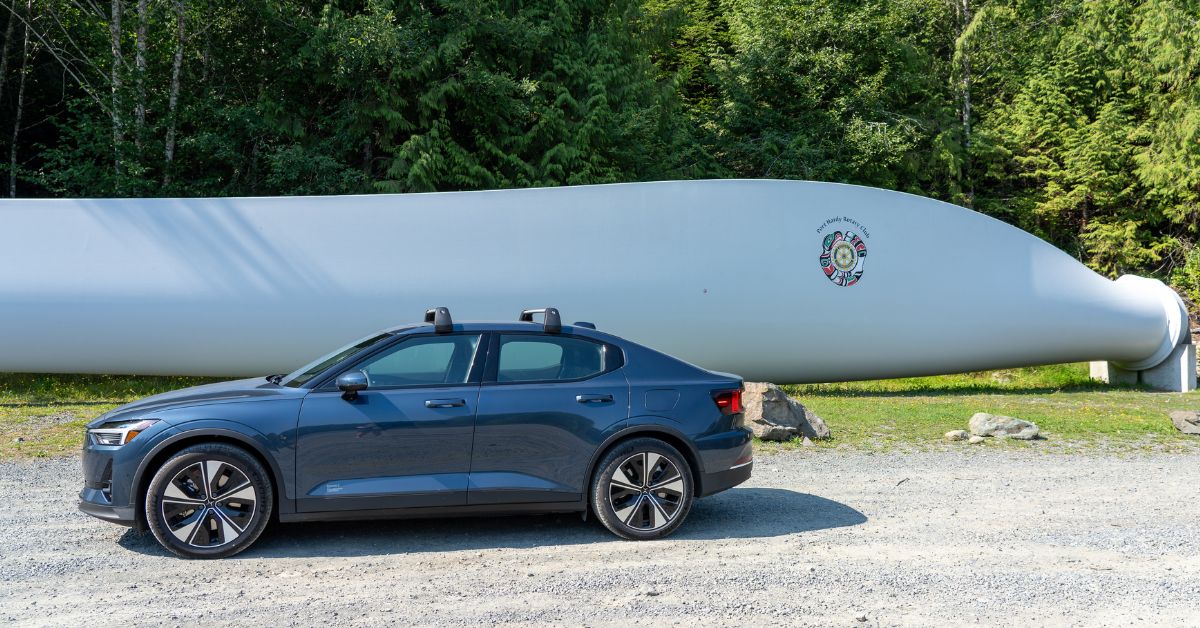
Since I bought my Polestar 2, a fully electric vehicle, over two years ago, I have taken it on many road trips. I’ve ventured into rural areas, up mountains, through forests, on ferries, down smooth highways, and to off-the-beaten-path locations with limited charging infrastructure. I’ve used an extension cord to plug my car into a home outlet, and found plenty of DC fast chargers. I’ve even towed a camper!
I also have an environmental science degree (MSc in Biodiversity). My content is grounded in science and peer-reviewed research, and I sift through misinformation to bring you the most reliable information.
I’ve been on road trips in Canada and the United States with my EV, and even tried renting one abroad! Sure, I’ve had to change the way I plan and execute road trips, but none of it has been a negative trade-off.

I’m an early adopter of sustainable EVs, and I’ve ironed out the kinks, perfected my planning strategy, and been in just about every situation imaginable.
Now I’m passing along everything I’ve learned along the way —the good, the challenges, and the resources — to help you set your anxiety aside and hit the road with confidence.
Quick Look: What Makes EVs Great for Road Trips
Are Electric Vehicles (EVs) food for a road trip? Yes, they are a great choice for road trips compared to traditional gas cars (ICV). They offer a more enjoyable, cost-effective, and sustainable way to travel, turning the journey itself into the destination.
- A great choice for long or short road trips
- Minimal maintenance (no oil changes!)
- Affordable charging, making them a budget-savvy choice!
- A sustainable choice to reduce emissions and air pollution
EVs also promote slow travel, transforming charging stops into mindful opportunities to explore and support small, rural economies.
I also dispel common concerns like:
- Range anxiety
- Charging time
- Infrastructure availability
- EVs are worse than gas cars for the environment
I cover why these are outdated myths. Fast-charging technology and a rapidly expanding charging network make long-distance travel easy to plan.
While minor challenges exist (e.g., cold weather reducing range, occasional broken chargers), these are easily managed with proactive planning.
Why EVs are Great for Road Trips
I grew up in Alaska on good old-fashioned road trips. My family’s idea of a vacation was hitting the road and driving to the lower-48 for a holiday. I also rented a campervan on a two-year lease while living in Germany and road-tripped around Europe.
It is safe to say, I love road trips.
But there was a 5-year period in my life when I was carless. With both the public transit accessibility of living in Europe and in my effort to pursue a lower-carbon lifestyle, I didn’t see the need.
However, as much as I am an advocate for public transportation and reducing the need for everyone to own individual cars (gas or EV), sometimes a road trip enables you to visit rural areas and revitalize their economies through tourism, especially in places without a great plubic transit network.
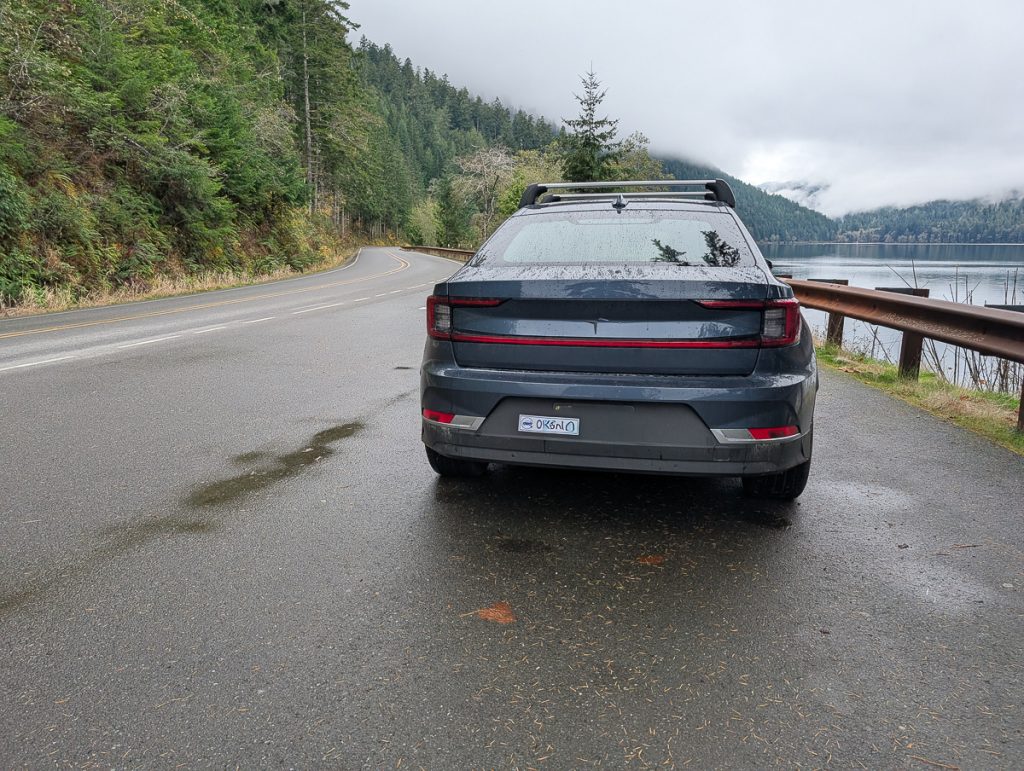
When I moved back to North America and settled in Canada, I realized that to truly see and appreciate my new home province, I would need a car. After weighing options, I decided that a small Polestar EV was the right choice. As soon as I took it out on my first road trip, it reignited my love for slow road trips and added an element of sustainability that is important to me.
Over time, I’ve found that EV road trips are more enjoyable than those with internal combustion engines (ICV). I find they are fun to plan, and they help me slow down to spend more time in places I otherwise wouldn’t.
Slow Travel with EVs
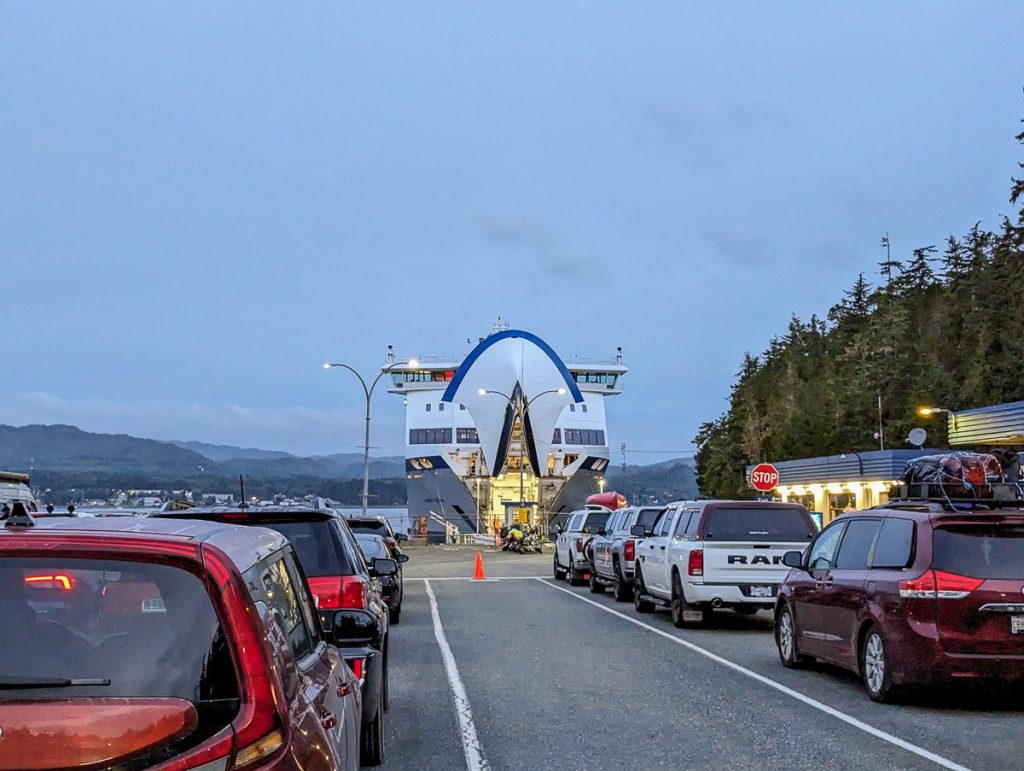
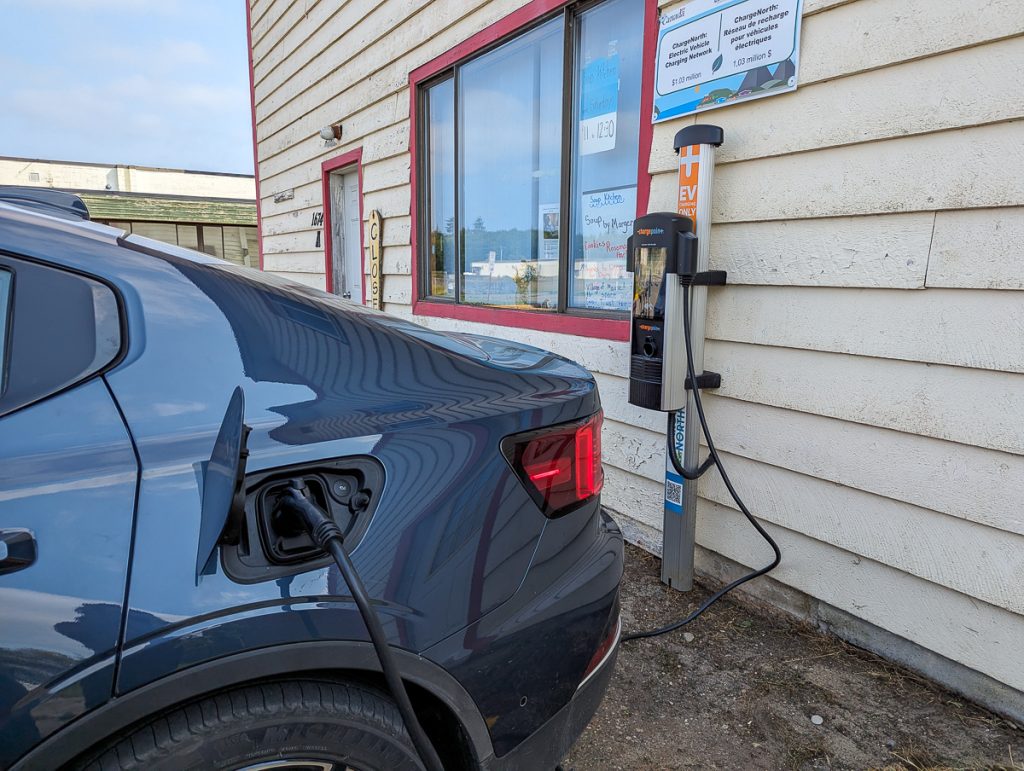
I’ve been an advocate for slow travel for years. But it wasn’t until I plugged into a rural, slow charger on Haida Gwaii, in Canada, that I truly understood what it meant to fully embrace slow travel. I had about 6 hours in a town of 300 with not a lot to do. Taking the time to stroll and allow for serendipitous encounters led me to some of the most incredible cultural experiences. Without an EV, I would have driven through like everyone else, visiting two leading tourist shops, taking a few photos, and moving on.
And before you stress, this was a rare occasion; most chargers are much faster, and it is unlikely you will find yourself in this situation often, or ever. However, if you do, you can experience some pretty incredible things.

Slow travel is a mindset. You can have a slow travel experience over a long weekend or a day. All it takes is making the effort to connect deeply with the places you visit, to learn, and to engage in mindful, meaningful experiences.
Electric vehicles help you slow down. Once you view charging—whether a fast 20-minute charge or a super slow 6-hour charge—as an opportunity to see, feel, experience, and support local places, your mindset shifts to a slow-travel mentality.


EVs, A Sustainable Road Trip Choice
Contrary to much misinformation and disinformation out there, fueled by the fossil fuel industry, EVs are the best choice, especially in places lacking public transit, for those looking to minimize emissions and pollution.
Emission Reduction Through EVs
Considering only emissions from production and use, EVs are a clear environmental winner. While producing an EV battery creates more emissions upfront, EVs have zero tailpipe emissions and still have a significantly lower carbon footprint over their lifetime.
Several studies show that within 1-2 years, a smaller EV begin to have lower lifetime emissions than a small ICV. For larger EVs (trucks and SUVs), that number can reach 5 years. The difference in zero-tailpipe emissions is so significant that switching to an EV sooner rather than later is more beneficial than waiting until the end of your gas car’s life.
Batteries last 8-10 years, are replaceable, and can be recycled in a circular system. This means that for most of your EV’s life, you’ll have a lower carbon footprint, even if you swap your battery once.
As battery technology continues to improve, making batteries more efficient and easier to recycle, we are only just beginning to explore their full potential. They are quickly outpacing ICVs.
Reduced Pollution from EVs
Health Canada, the EPA, and the EU Environment Program all recognize that pollution from gas cars contributes to smog, lung disease, asthma, and is directly linked to premature death and other health issues.
About 7 million people die each year from causes related to air pollution, according to the World Health Organization, which cites motor vehicles as a top contributor.
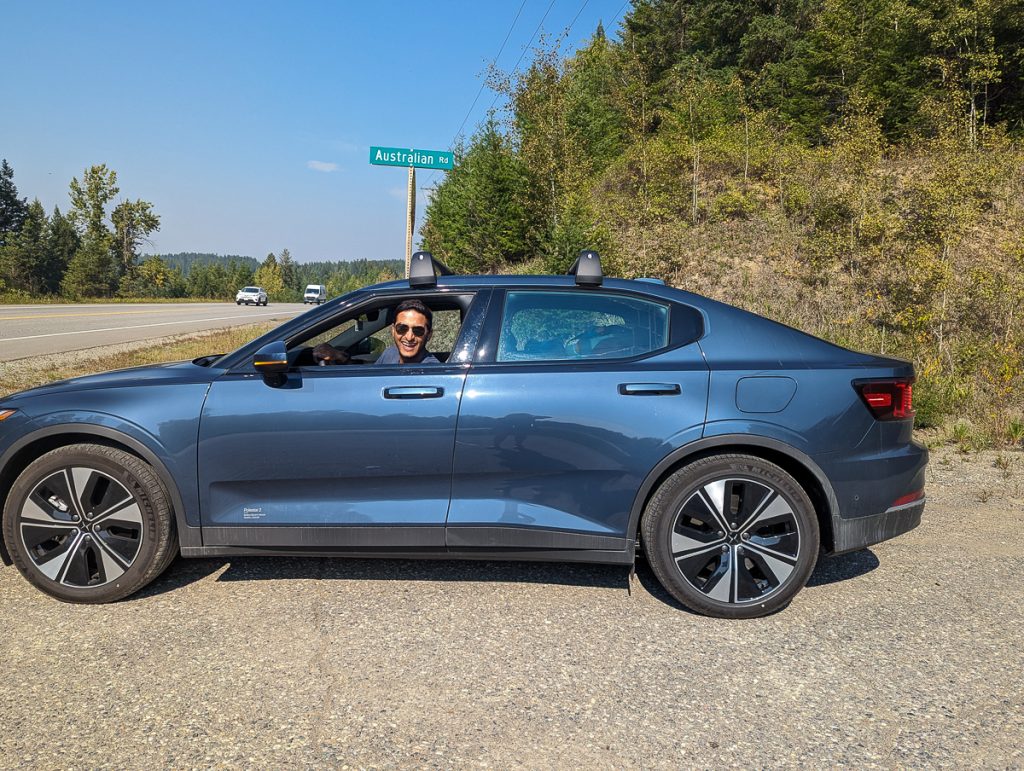
Driving an EV can help reduce harmful pollutants in your community and the communities you visit on road trips.
But, what about the impact of mining?
There’s no denying that mining for critical minerals has an environmental impact, including intense water use, environmental degradation, human rights violations, child labor, and the release of toxic fumes.
These issues are serious, but they are not unique to EVs; ALL technology requires mining, including phones, computer chips, and infrastructure for AI.
The oil and gas industry also has a long history of environmental and human rights violations; it is often just better at covering them up. From fracking, offshore drilling, oil spills like the Exxon Valdez, and the Niger Delta (we will not forget that, Shell!), gas-powered cars require daily mining and extraction of fossil fuels that are incredibly harmful to our planet and people.
But of course, we can’t just swap one bad industry for the other.

So, how do we reconcile impacts with zero-tailpipe emissions?
EVs do require daily electricity, which in some places still relies on fossil fuels. However, for the first time, renewable energy has surpassed coal and is expected to continue growing, making energy sources for EVs more efficient and environmentally friendly.
There are also numerous promising advancements in battery and mining technology, along with increased efficiency and circular battery systems. Things are looking quite promising!
Things that give me hope as an environmental scientist:
Most mines have implemented safety measures to mitigate pollution. This, along with improved mining regulations and greater awareness of the human and ecological impacts, means EVs have significant potential to continue harm reduction.
- New mining technologies, such as direct lithium extraction, significantly help reduce emissions and water use in mining.
- Battery innovation:
- Sodium-ion batteries that don’t need lithium.
- LFP batteries that don’t need cobalt.
- Solid-state batteries can increase range and reduce the risk of fires.
- Car battery recycling is excellent; the same lithium and nickel can be used for generations of cars.
- Companies like Polestar utilize blockchain technology to enhance their supply chain and prevent involvement with mines linked to human rights violations and child labor.
Gas cars are getting more fuel-efficient, but we aren’t seeing the exact rapid change from the oil and gas industry.
As we adopt more electric vehicles, we must proceed with opening mines only after careful regulations and thorough environmental impact assessments. We cannot be hasty, focusing only on the economic promise of mines and critical resources. On Indigenous lands, we must tread carefully and ensure they are beneficiaries and partners.
The science is very clear: we must lower emissions rapidly, and move away from supporting the fossil fuel industry, though EVs are just a small part of this. The University of Toronto published an excellent article citing that there is no future without electrification, but that alone will not get us where we need to go. We need better electric/low-emission public transit, changes in how we deliver, lower consumption, and EVs working as part of a larger solution.
For those questioning any of this, Engineering Today published an easy-to-follow, honest, and transparent review of the environmental impact of EVs compared to ICVs, drawing on peer-reviewed data and scientific studies.

Still not sure if an EV is the best environmental choice? Plug-in hybrids are a great middle choice for those looking for a more responsible road trip vehicle. The Alternative Fuels Data Center offers a practical look at the best option for US Americans, based on where most of their electricity comes from.
Free and Lower Cost EV Chargers
I still can’t believe how much I have saved on gas during some of my longest road trips. The money-saving aspect wasn’t the reason I switched to an EV. After realizing the cost savings, I’ve found it to be one of the biggest reasons why I think electric vehicles are so great for long-distance road trips.
Low-Cost Charging
During my entire month on the road across British Columbia, I drove about 2,500 km. How much did I pay in charging fees?
Less than 150 CAD!!
Can you believe it! Filling up a single tank of gas for a smaller car with current gas prices in Metro Vancouver, British Columbia, is about 90 CAD.
For 30 days, across 2,500km, I paid only 150. I still can’t believe it. Imagine how much you can save to spend on hotels, excursions, or going out to eat!
And yes, a considerable part of that is where I live. Here in British Columbia, our electricity is all hydro-powered and affordable.
But, no matter which Canadian province or US state you live in, electricity is almost always cheaper per kilometer or mile than gasoline.
According to the Canadian government, charging an EV battery can cost 5 to 10 times less than filling up on gas or diesel for the same driving distance. While gas prices fluctuate, electricity rates are generally more stable and lower in cost, making budgeting for your road trip much easier.
In some states and provinces, the government subsidizes fuel due to lobbying by the oil and gas industry. This can make fuel very cheap and tempting to stick with an ICV. To help offset costs, installing a charger at home is the most cost-effective way to own an EV, and you can always leave your house with a full charge before heading out on a road trip.
Free Chargers? No way?!
As an added cherry on top, there are so many FREE chargers. Looking at our charging spreadsheet for that one road trip in British Columbia, 9 of our chargers were completely free.
Imagine getting free gas on your road trip… as if!
Why are some chargers free? Many hotels, provincial parks, visitor centers, museums, and community centers offer free charging to incentivize you to book a stay at their hotel or visit their town with eco-friendly options.
Some of the best free chargers we have found on our road trips have been in United States National Parks, Provincial Parks in Canada, hotels, visitor centers, and restaurants.
We got to paddleboard at a lake in a provincial park, enjoying the experience while charging the car for free. We also did a cider tasting at a cidery, and they let us use their charger for free. We’ve slept to the sounds of rain in a rustic cabin while charging for free in Olympic National Park.
Multi-task Charging Revitalizes Rural Economies
With the modernization of highway infrastructure, superhighways make connecting cities on road trips super convenient. However, it killed many small towns that used to rely on road trippers taking the slow route.
Today, most drivers blast through on a highway, stopping for minutes to fill up gas, buy a gas station lunch, and then hit the road, eager to reach their final destination.
But, as the age-old saying goes, it is about the journey, not the destination.
Stopping to charge has brought back the allure of the rural road trip. With many small towns hosting free chargers and considering we need about 20 minutes to charge, it makes sense to plug in and visit a small town for a short break.
On my many road trips, one of my favorite parts has been stopping in small towns and taking advantage of free or cheap chargers at visitor centers. We would plug in, head downtown, grab coffee, have lunch, and enjoy a nature walk. We received free charging, and local small businesses in more rural areas benefited from our extended stop to charge.


Oil Changes, Radiators, Check Engine Light … Never Again!
One of my favorite things about owning an EV is that I don’t have to check my oil, worry about a check engine light, or do standard maintenance on a road trip.
When I moved from Alaska to Las Vegas 12 years ago, I drove my Subaru. As a solo female road tripper in rural Canada, Alaska, and beyond, I was constantly worried about mechanical issues. And, well, they happened. I got stuck in a small town in Nevada for 3 days until I could get a mechanic to help me out.
EVs aren’t 100% maintenance-free, but they generally require only a software update (which can be done at home) every few months and a check-up every two years or so. That’s it!
A lot of people talk about range anxiety with EVs. Still, honestly, with a gas car, I had mechanical anxiety, and even gas anxiety in some rural parts of the Yukon!
Myth-Busting EVs and Road Trips
I’ve heard just about every excuse as to why EVs aren’t great for road trips. Some of these are rooted in fear and a lack of awareness, while others are simply misinformation, spread by the fossil fuel industry. Most come from people who haven’t taken a road trip with an EV or adjusted their mindset to a new way of traveling.
Let’s cover some of the common myths and misconceptions about electric vehicles and road trips.
Myth: You’ll Run Out of Charge
Reality
As someone who has run out of gas many times, I have never run out of charge. Your EV isn’t going to just up and die on you unexpectedly. Most modern EVs come with built-in technology that helps you understand your range, charge, and where to find a charger.
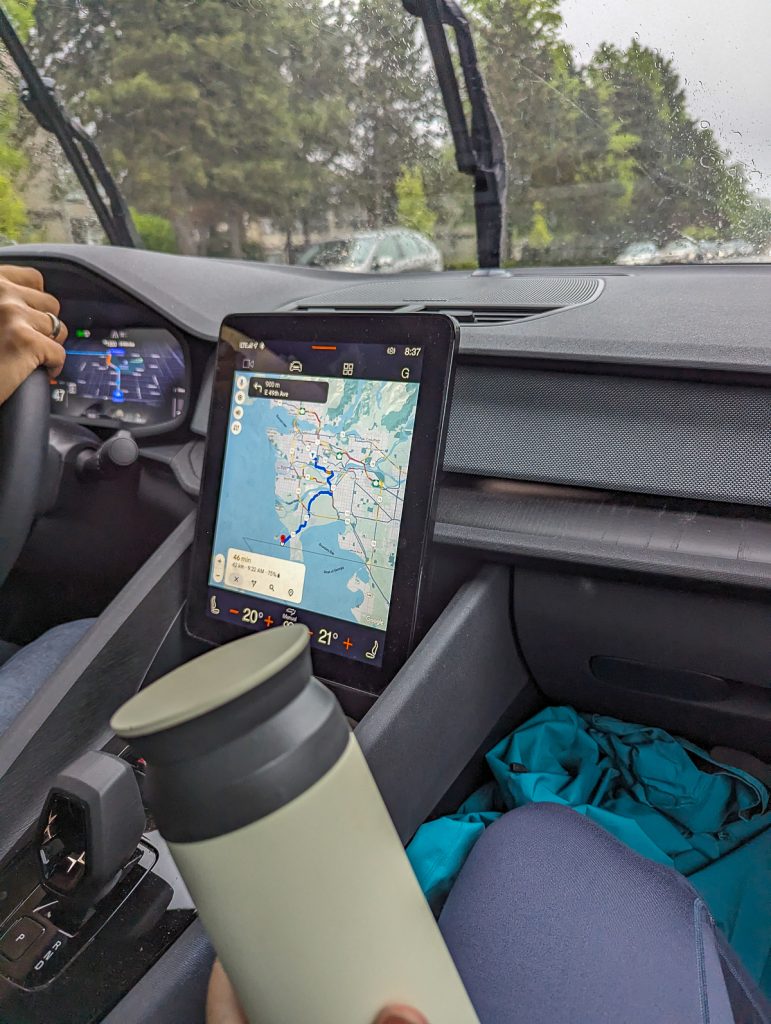
In our Polestar, the tablet interface displays the exact amount of charge remaining, accounting for the route programmed into our guidance system and external environmental factors. Our Polestar will even account for cold temperatures and historical driving trends to provide a more realistic outlook.
It often overcompensates to be on the safe side, and there is an easy option to find nearby chargers that suit our needs, among other things.
All this, plus regenerative braking that works wonders in traffic and on downhill grades, and rewards for staying within the speed limit, makes it an excellent choice. EVs use less power when “idling” than gas cars, so the chances of you running out of battery are very, very low.
I think this fear stems from people who have never taken an EV on a road trip and are unaware of how many chargers there really are, the long-distance range of most cars, and how the technology in these cars is built to keep them within range of a charger.
Trust me, your vehicle will tell you if you can’t make it to your destination, so you can plan to find an alternate route or where to stop to charge along the way.
Myth: Charging Takes Too Long
Reality
If my story about a 6-hour slow-charging experience scared you, let me put your mind at ease —but with a dose of reality.
Yes, charging does take longer than filling up a gas tank in 2 minutes at a gas station. However, fast chargers, such as DC fast chargers, can charge most smaller cars to 80% in about 20 minutes or less, making them perfect for grabbing a cup of coffee, stocking up on road trip snacks, or taking a rest stop.
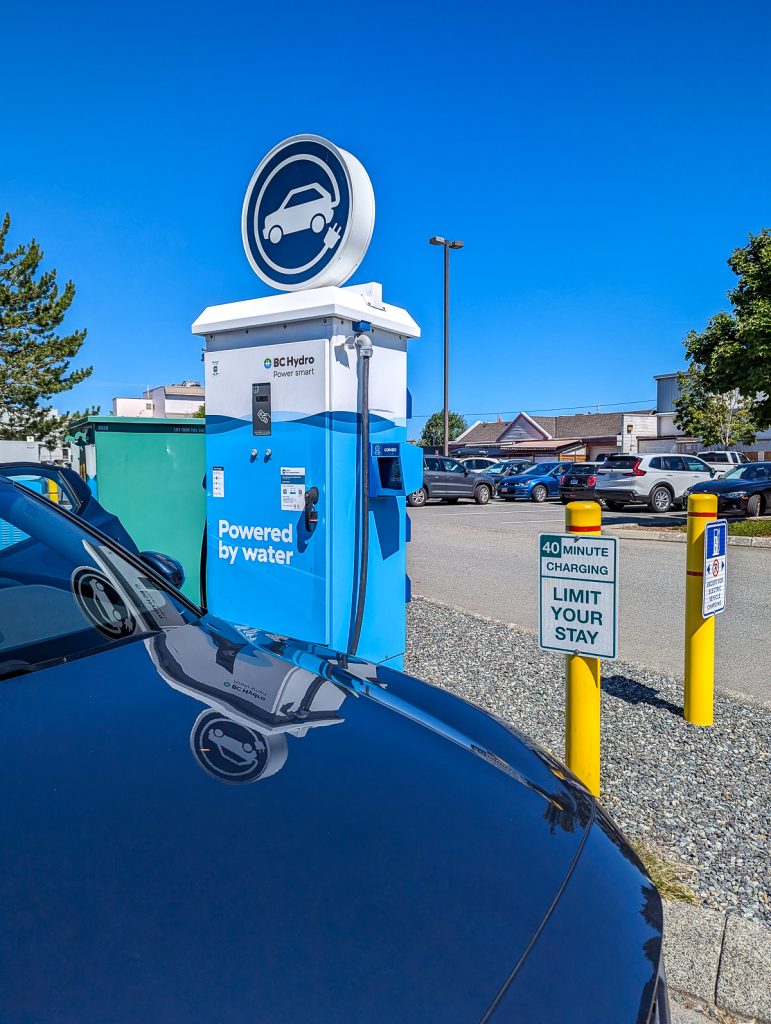
On longer road trips, you can easily plan a route to charge at fast chargers like those provided by BC Hydro in British Columbia, Electrify America in the United States, and Flow Chargers. On top of that, you will very rarely let your charge get so low that it takes 20 minutes to charge.
When driving, I typically top up here and there in increments of 10-15 minutes in places with excellent charging infrastructure.
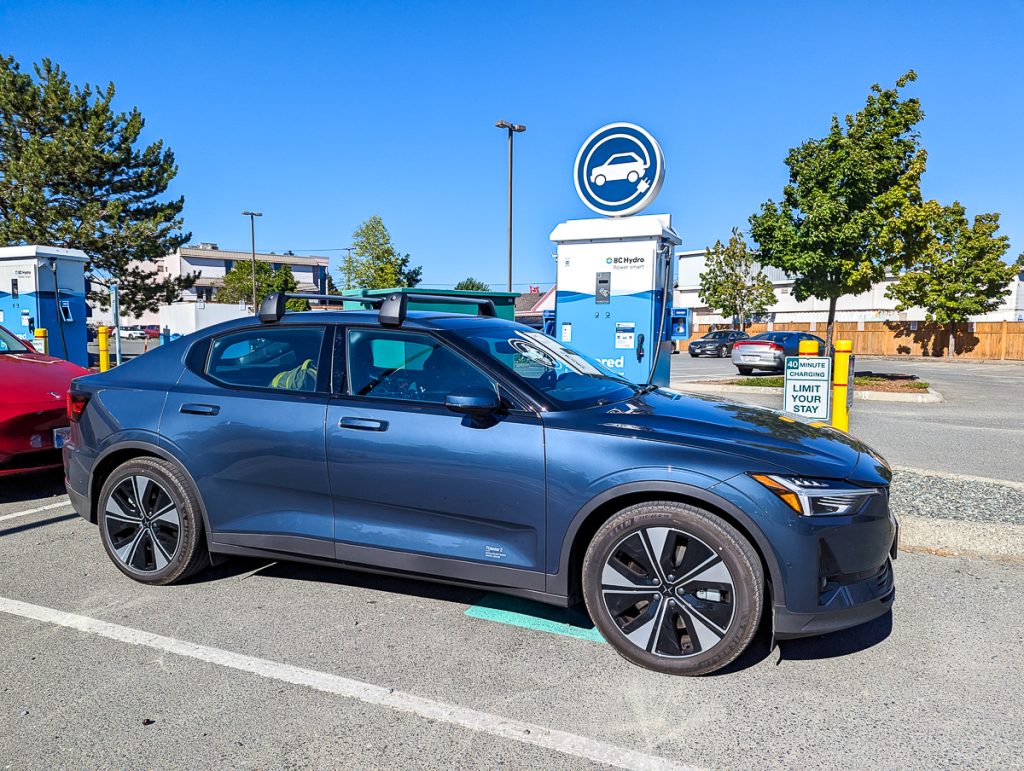
Though when traveling to rural areas or pushing the range of your car, it will take the full 20-30 minutes to charge on a DC charger. In some cases, you may not have access to a fast charger and will need to spend more time charging your car.
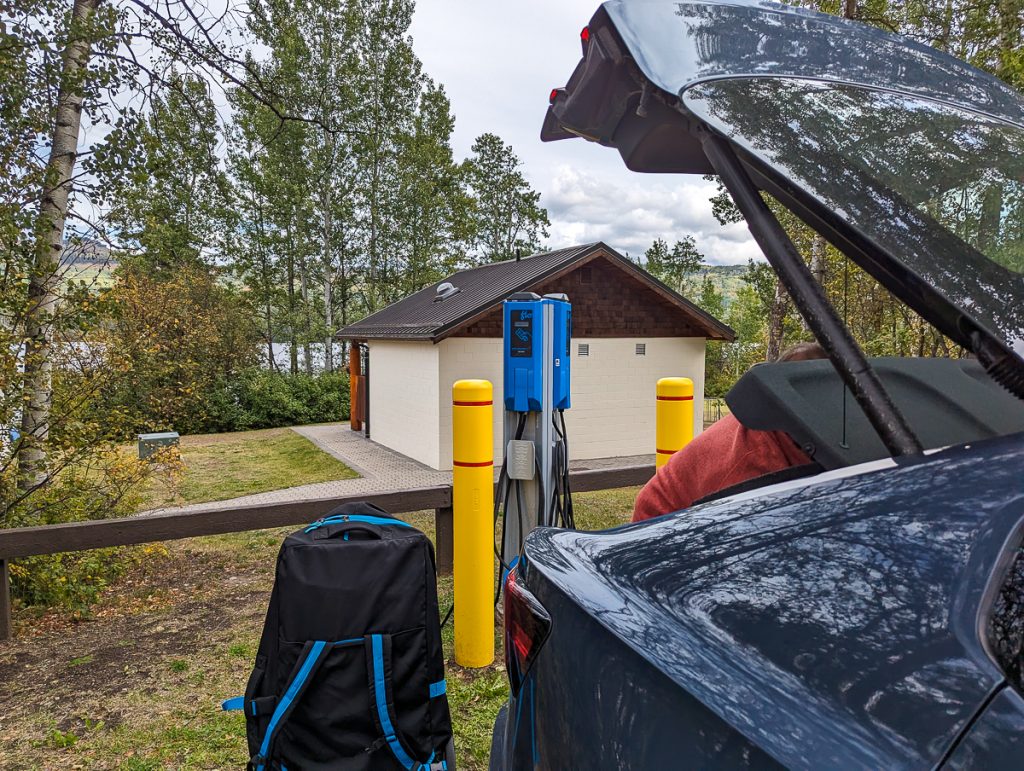
In very extreme cases, like on rural Haida Gwaii, you might even get by on a Level 1 charger (a standard household 120V outlet), but it is a worthwhile trade-off to visit such an incredible place.
A more representative daily experience is a Level 2 medium charger, which can fully charge most EVs in about 4–10 hours, a process that can easily be done while you sleep at a hotel. This is why booking an overnight hotel that can fully charge your car in 4-6 hours is a great choice.
The key is shifting the mindset from the fossil-fuel stop-and-fill model to a simple “plug-in when parked” routine. The growing network of high-speed DC fast chargers is designed to make longer road trips feasible and quick, ensuring your time on the road is maximized.
Myth: Not Enough Charging Infrastructure
Reality
While it’s true that the number of gas stations still far outpaces public charging stations, the charging infrastructure across Europe, North America, and Asia is growing rapidly.
Fast charging stations in the United States have increased from 1,000 10 years ago, to at least 12,000 in 2025. Two thousand new chargers have been installed this year alone, connecting places like Alaska, major cities, and towns along major highways.
We are seeing a similar shift here in Canada, where the federal government budgeted $1 billion to install tens of thousands of charging ports, aiming to dramatically increase the network’s reach by 2029 to support growing EV adoption.
Norway, Germany, Japan, the Netherlands, China, France, South Korea, Canada, Sweden, and the UK top the world ranking for charging infrastructure, making EV road trips more accessible.
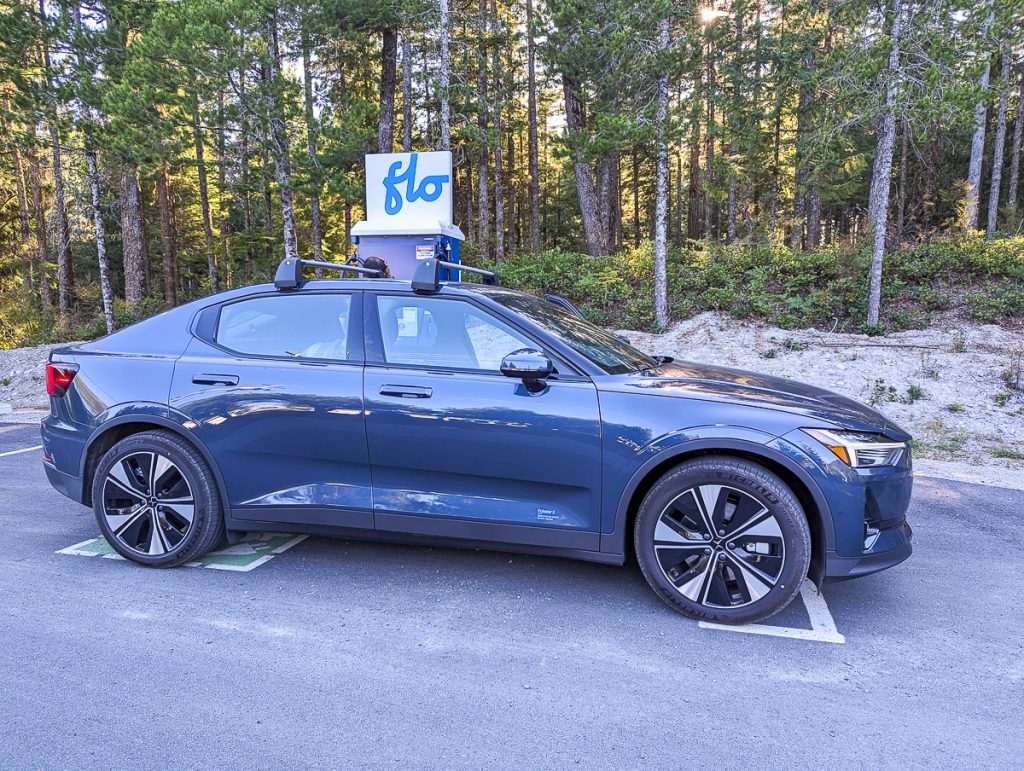
Hotels, restaurants, visitor centers, spas, and national and provincial parks are all installing chargers, expanding your charging options.
Plus, as major automakers adopt the North American Charging Standard (NACS) and gain access to Tesla’s extensive Supercharger network, the number of charging stations available to non-Tesla drivers increases dramatically.
I think most people are genuinely unaware of how many chargers there are. Apps like PlugShare and your EV’s computer panel help you find reliable ones within your range.
Myth: Chargers Won’t Be Available / Long Wait Times
Reality
Now you might be saying, well, if there are more chargers, there are also more EVs on the road, but what about their reliability and accessibility? To address this, many charging network providers are focusing on better real-time data sharing and improved maintenance to ensure that the chargers you find are operational and provide clear communication regarding real-time use.
The myth of endless queues at public charging stations is often based on worst-case scenarios and images of early infrastructure. While an occasional wait can occur at a popular fast-charging location during peak holiday travel, it is not the typical daily experience.
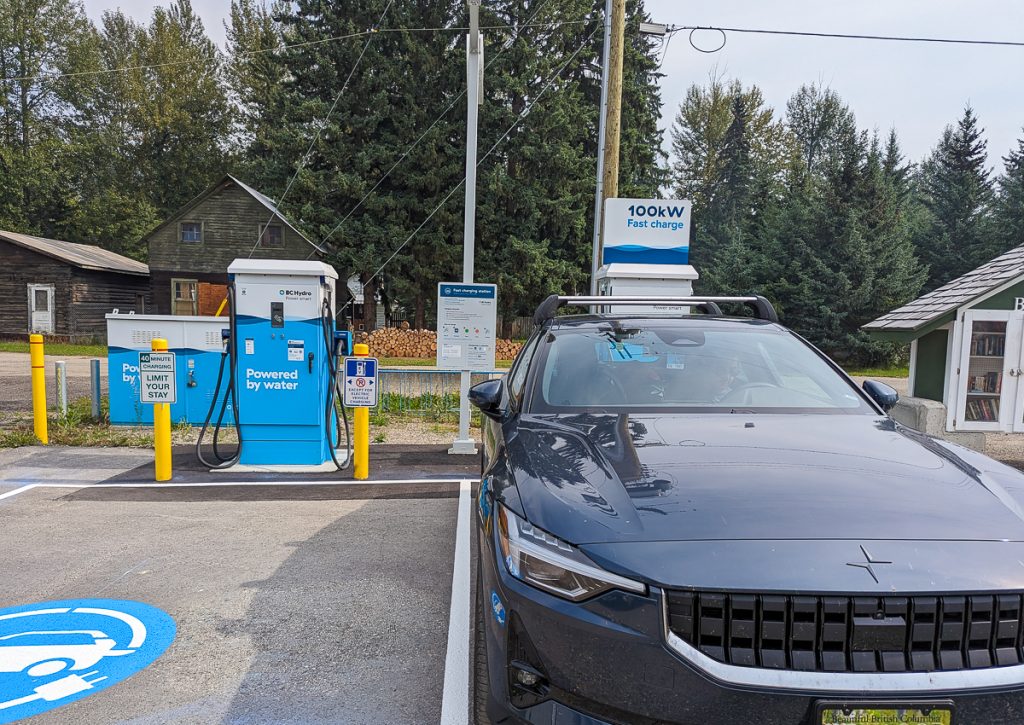
During our month-long BC road trip, we only had to wait in line to charge once.
Apps like Plug Share, BC Hydro, and in-car navigation systems often provide real-time data on charger availability, allowing drivers to check if a station is busy before they even arrive. This technology helps to disperse demand across the network, reducing the chance of long waits. As battery technology advances, the time needed for a quick charge continues to fall, increasing the throughput of each fast-charging stall.
Myth: Grid Can’t Handle More EVs
Reality
The fear that a massive surge in EV adoption will overload the electrical grid is a common, but vastly exaggerated, concern. Utility companies have been planning for increased electrical demand for years.
Most estimates show that even if every gas car were replaced by an EV overnight, the overall demand on the grid would increase by only around 10%, a figure well within the capacity and planning models of most energy operators.
As renewable energy surpasses fossil fuels globally, our access to clean, reliable energy to meet demand is increasing.
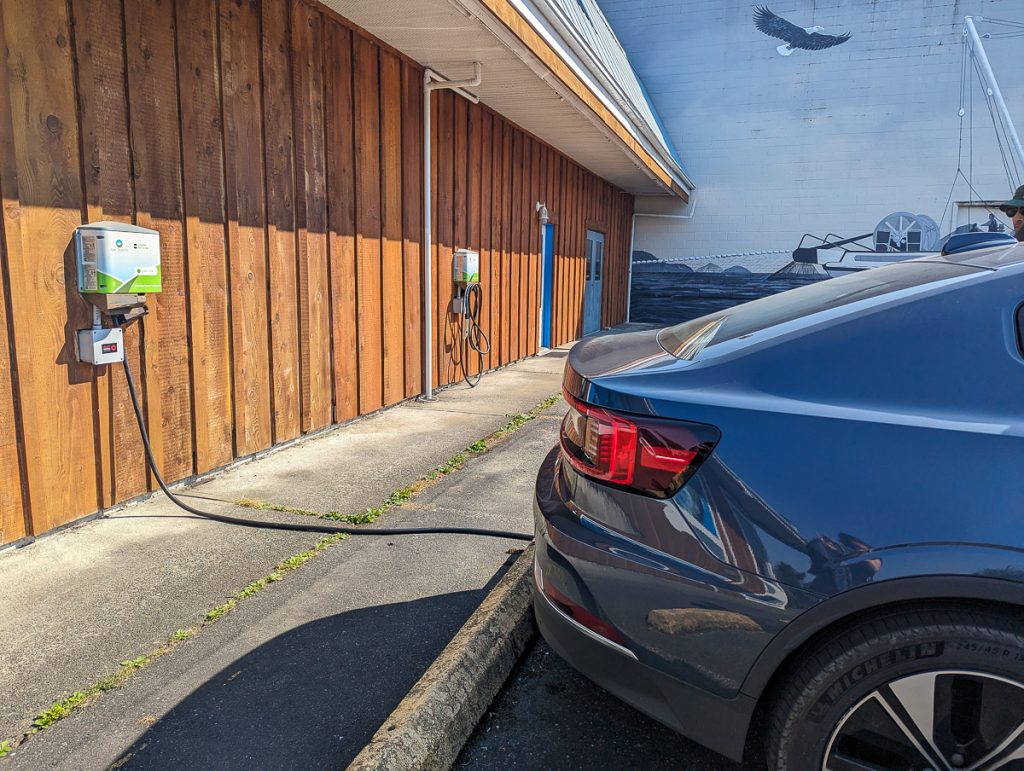
Myth: EVs Are Too Expensive
Reality
EVs can sometimes have a higher up-front cost. Many countries, including Canada, offer tax credits or rebates, making the purchase and charging of cars much cheaper. Sadly, that incentive was removed in the US in September, making some of the more expensive EVs less accessible to people on a budget.
Overall, the Canadian government estimates you can save up to $33,500 CAD over 10 years by switching to an EV. The long-term savings come from significantly reducing fuel costs and from minimal maintenance requirements. EVs have fewer moving parts than ICVs, all of which cuts down on service bills over the vehicle’s lifespan.
As more EVs enter the market, the used EV market is also growing, providing more affordable options for budget-conscious buyers. We are seeing more affordable cars, such as the Nissan Leaf and Chevy Bolt, entering the market, so people can still buy cars even without a tax credit.
We are also seeing the cost of EV batteries, the most expensive component, continue to fall year over year due to manufacturing efficiencies and scale, further reducing expenses.
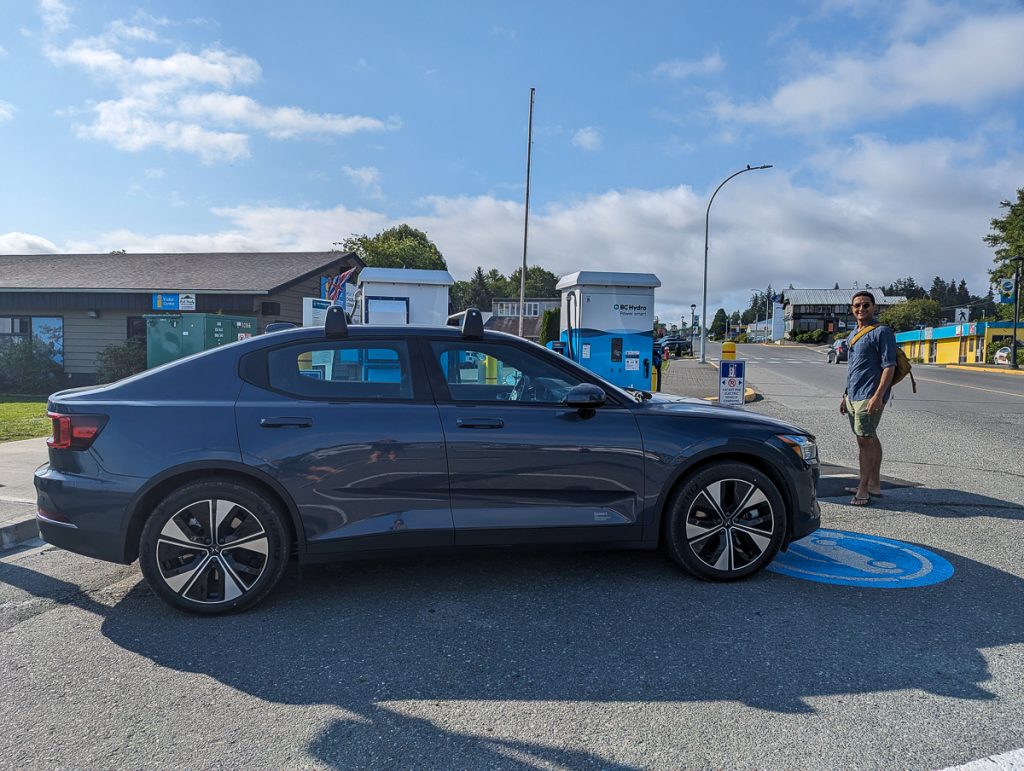
Myth: You can’t go to Rural Areas
Reality
Well, I am living proof that you can go to rural areas! I’ve been deep in the forest of Olympic National Park, Haida Gwaii, a rural archipelago off Western British Columbia and beyond.
My next trip is traveling from my current home in Vancouver to my childhood home state, Alaska. Alaska and the Yukon have very little charging infrastructure, but there are lots of options to “fill in the gaps.”
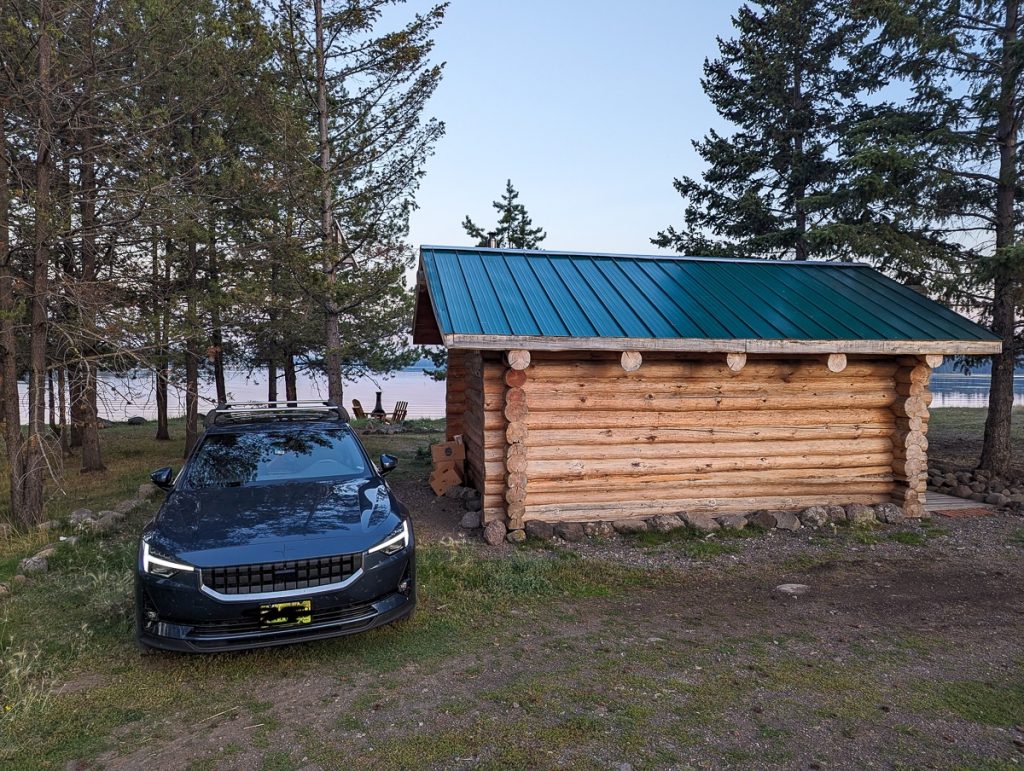
One of the best ways to fill in these gaps is to book an RV-powered campsite to charge overnight. Of course, this means you will be camping, but just pack a tent, pull a teardrop trailer, or book a cabin at a campground.
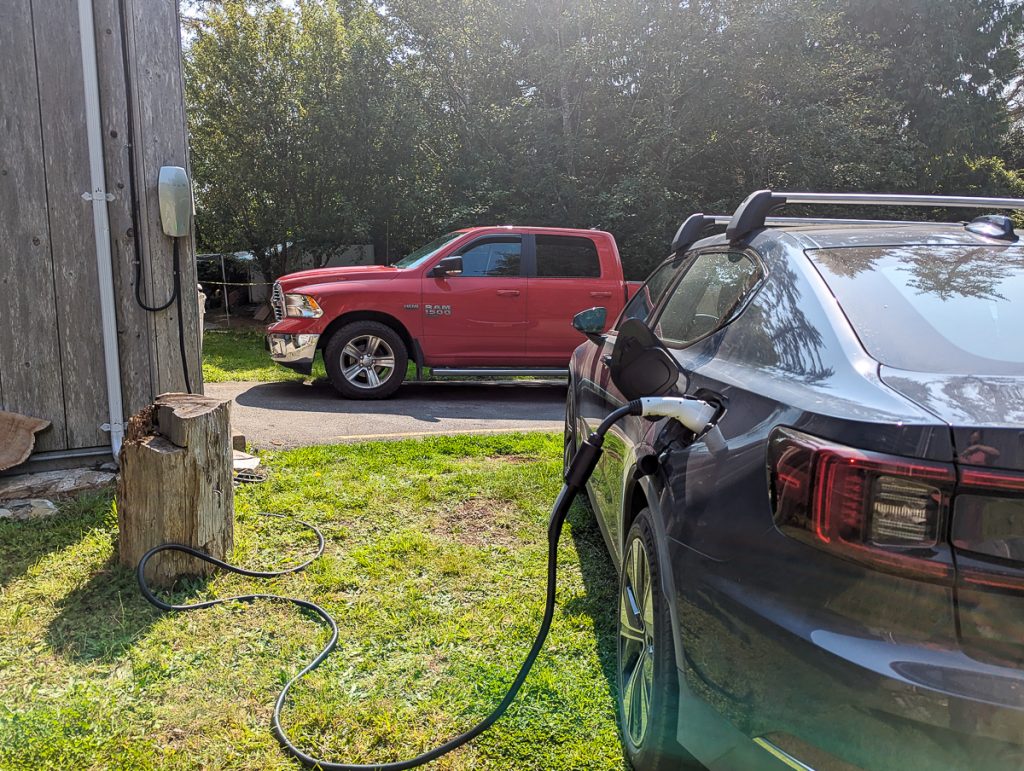
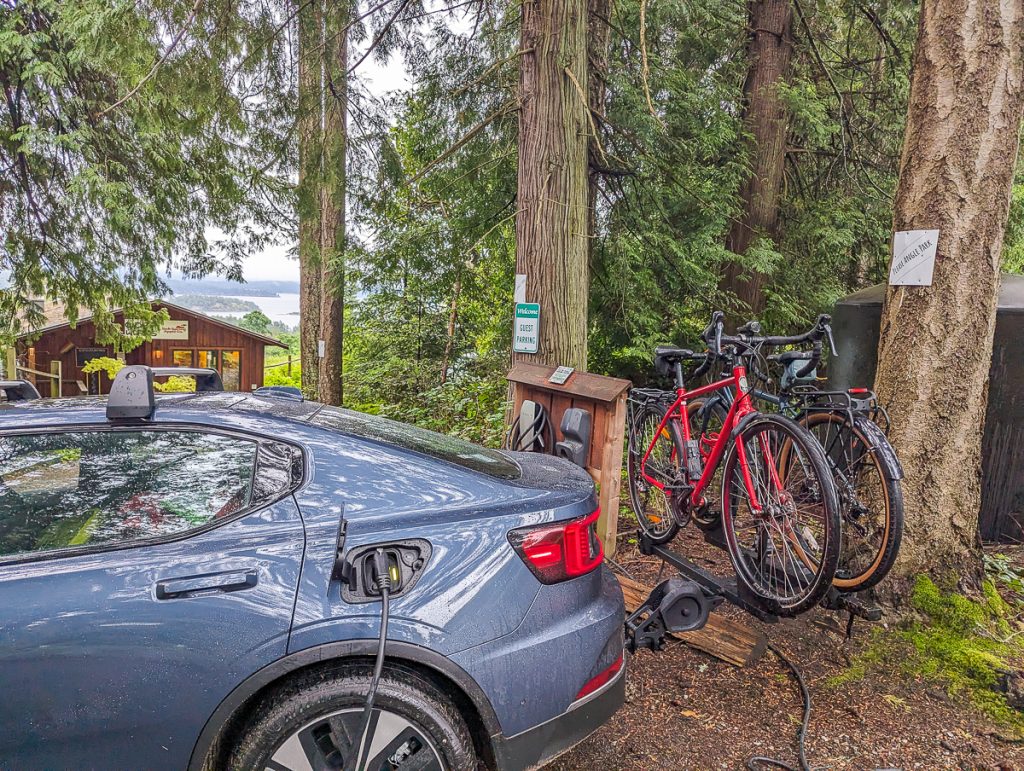
We have even run an extension cord out of a hotel room window to charge our car on a Level 1 power outlet (with permission and help from the hotel).
You can also fill the gap by booking hotels with on-site charging.
Modern EVs also have impressive ranges; most models have more than 400km. Contrary to the belief that rural areas lack charging access, we noticed many smaller rural towns installing chargers at community centers to incentivize people to visit, spend money, and stay awhile.
For the longer trips typical of rural life, public charging infrastructure is following major traffic corridors, just as gas stations once did. Government and private investment programs are specifically targeting the expansion of charging into more rural areas.
Myth: You Can’t Tow
Reality
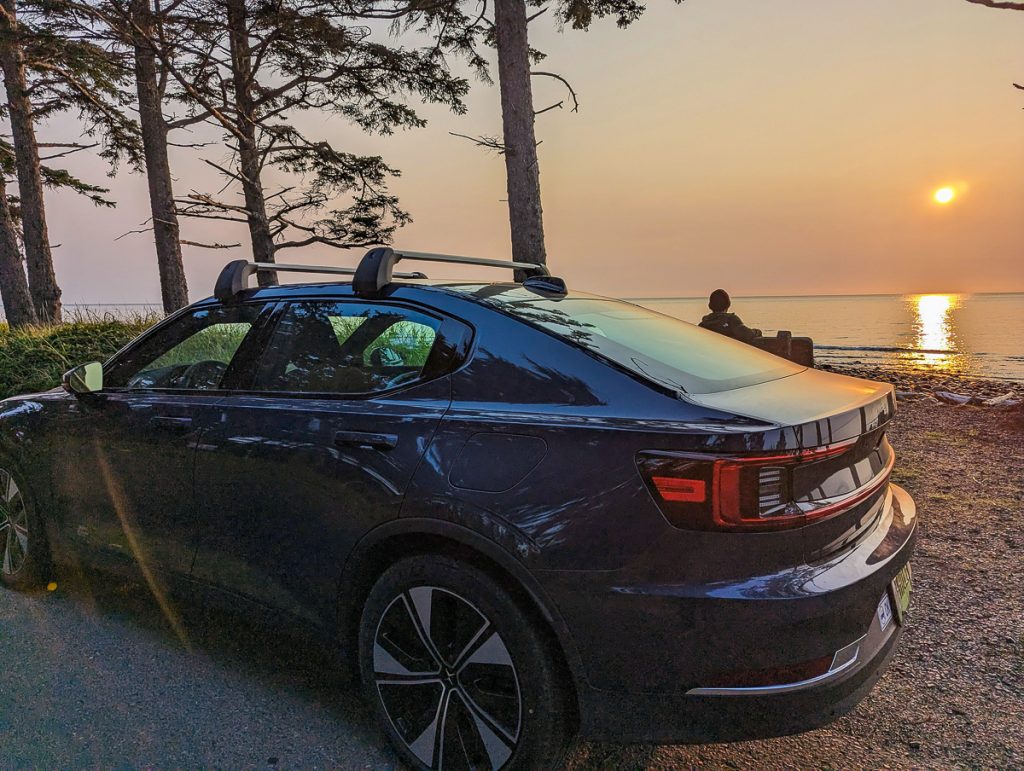
We didn’t install a tow hitch on our Polestar for no reason. We can easily hook up a bike trailer and bring our bikes on road trips. This also helps reduce our need to drive and charge in bikeable areas.
We also have a small, lightweight teardrop trailer that can easily be towed. The reality is that towing with an EV, just as with a gas vehicle, will reduce the driving range due to the added weight. However, for most everyday towing needs, like a utility trailer or a camper, modern EV towing capacity is more than enough.
For those who tow long distances, the solution is to plan charging stops more frequently. You may stick to a popular camping route to take advantage of RV-powered sites, but you can do otherwise.
As charging speeds increase and more high-powered charging stations are built near common towing routes, the temporary inconvenience of reduced range while towing will continue to diminish.
The Challenges of Taking an EV on a Road Trip
Of course, it is not all roses and sunshine. There are some challenges you will need to navigate. Some can be eased with advanced planning and preparations. Others will require quick thinking and problem-solving while on the go.
Cold Weather and Range Reduction
Dealing with cold weather is a challenge for EV road trips because it directly affects the battery’s efficiency. Lithium-ion batteries perform less effectively at low temperatures, which can reduce your vehicle’s overall driving range by 30% to 60% in freezing conditions.
Beyond a reduced range, cold temperatures also slow the charging process. When the battery is cold, the car’s thermal management system must use energy to warm it to an optimal temperature before it can accept a high power rate. This “preconditioning” takes time and further drains your available energy, extending the time you spend plugged into a DC fast charger. For road trips where time is of the essence, these extended charging periods can quickly become frustrating.
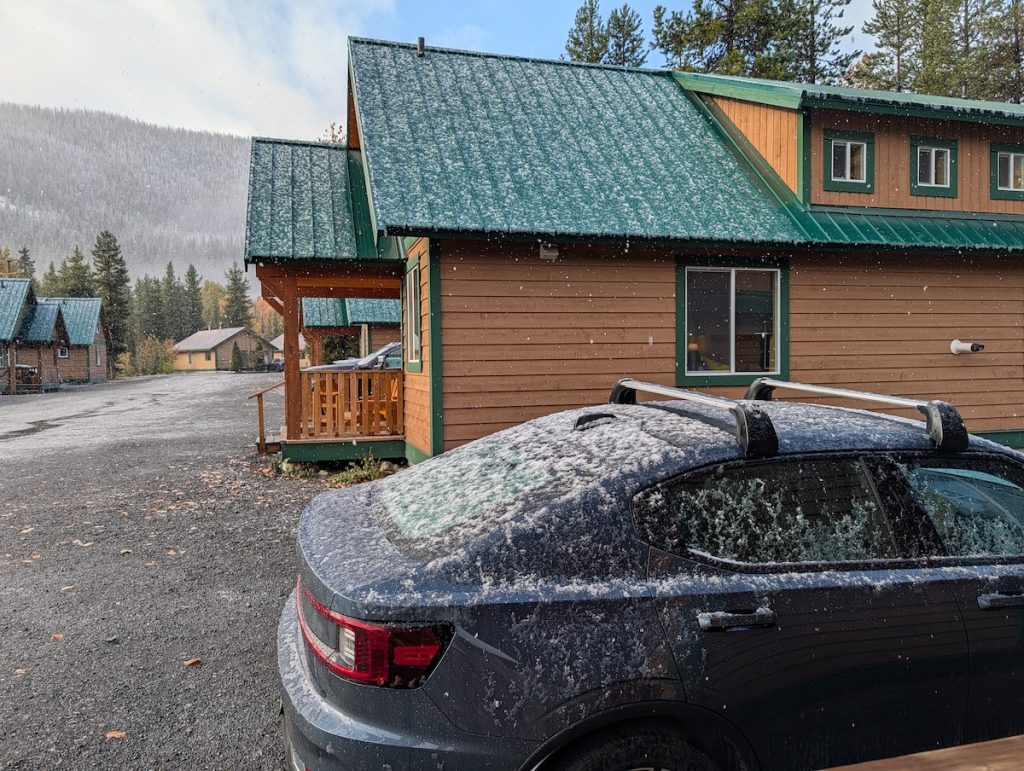
Finally, the need for cabin heating in cold weather adds another layer of energy consumption, reducing your available range. Running the heater, especially on high or for long durations, can consume a considerable amount of charge, compounding the range loss already caused by the battery’s chemical limitations in the cold.
The good thing is that most of us don’t take off on long road trips in sub-zero temperatures across Saskatchewan. But, even living in cold Canada, we can still enjoy road trips to the ski slopes without any stress or anxiety.
Some ways to manage this are:
- Always to keep your car warm
- Plan short stops
- Book accommodation with garages
- Plan more charging stops
- Stick to highways closer to urban areas with lots of chargers

Increased Gas Consumption is Also a Thing…
Did you know that gas cars (ICVs) are also affected by factors such as driving speed, strong headwinds, towing, and cold temperatures?
Yes, your gas car is less efficient in cold weather, when driving up mountains, and when speeding, which means you have to stop for gas more often over time. We tend not to notice it as much, though, because they don’t have as much technology built in to provide us with visual data points and reminders.
I personally take more comfort in having more information on an EV to understand how it impacts my driving, so that I can plan. I think for any long road trip, whether with an EV or ICV, planning, preparing, and charging as often as possible is key.
Unexpected Disasters and Change of Course
One of the most stressful events during our longer road trip across BC was when an out-of-control forest fire threatened to close the main highway we were taking. Thankfully, that didn’t happen, but if it had, we would have been in a tough pickle.
The alternative driving route was a rural mountain highway with no EV charging infrastructure. We would have had to book an RV-powered site along the way at the last minute (if any were available), or sit it out and wait for the highway to reopen.
Our meticulously planned EV road trip could have quickly unraveled if a fire had forced a significant detour. Such a change of course would have been stressful for us, given our original charging plan, precisely calculated energy consumption, and range to the next station, tossed to the wayside.
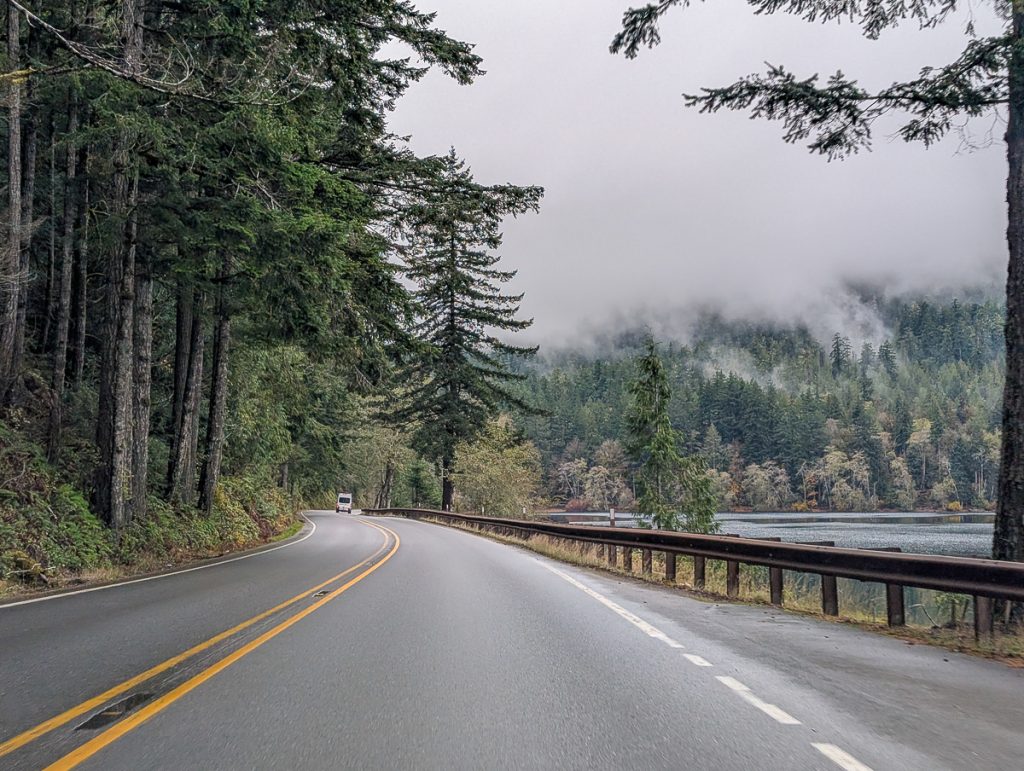
If this happens to you, the new route may be longer, involve more challenging terrain (like a mountain pass), or lead to areas with little to no charging infrastructure.
Broken Chargers / Charging Errors
I have, on several occasions, called my partner from a charger in a panic, confused about why my car isn’t charging. The reality is that some chargers don’t work, and it is not always obvious why. This is something that you’d really never see at a gas station.
One of the most disruptive challenges on an EV road trip is arriving at a planned charging station only to find the unit is broken, out of service, or simply refusing to communicate with your vehicle.
Troubleshooting can be stressful, but I have yet to get stranded, totally high and dry. Most chargers have a customer service line, and apps can help you understand if something isn’t working. Other times, I have found solutions in Poletstar forums.
Other times, a charger is just broken, and you need to try the next one in the row or down the road.
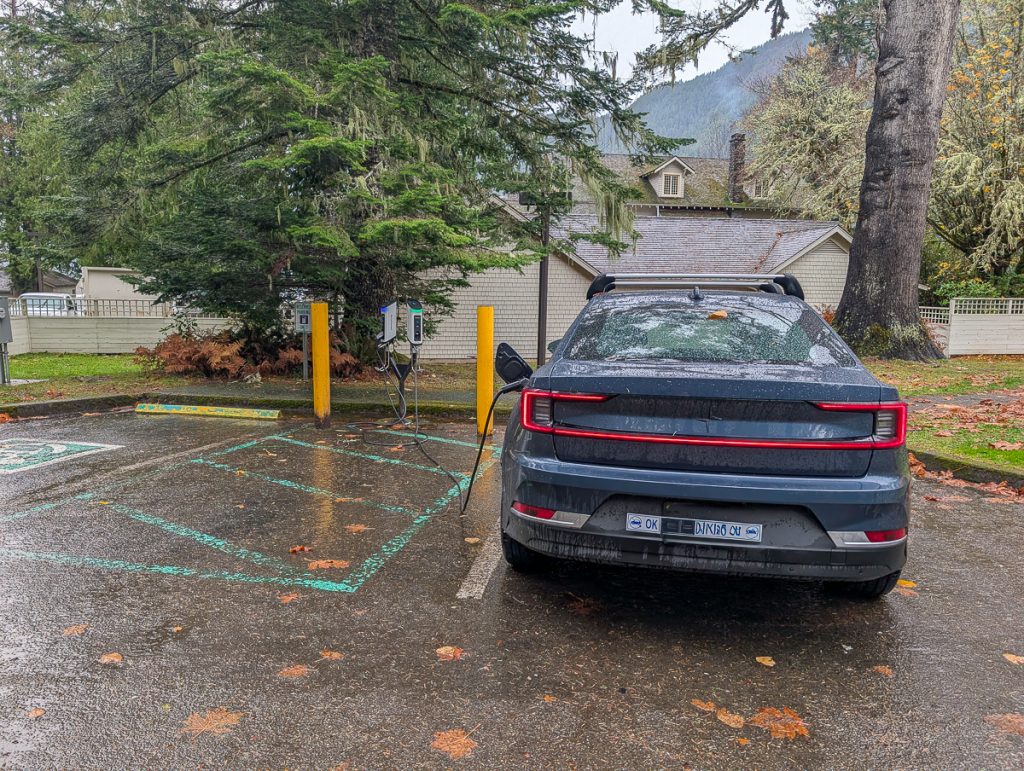
The problem is worse in less-populated areas, where charging options are sparse. If the single planned DC Fast Charger in a remote town is broken, the nearest alternative might be kilometers away. In this case, you will need to calculate your new range to find a functional charger.
Advanced Planning and Some Compromises
If you think you can just hit the open road without any advanced planning and turn down whatever dusty road catches your eye, you might want to rethink your adventures.
EV road trips do require advanced planning. I married a type A travel planner who likes to make spreadsheets, but they can be helpful! You will need to plan your daily driving route based on your range and available chargers. Beyond that, you need to understand which charger level is available on your route—fast or slow? All this helps ensure you stick to your schedule and things go smoothly.

There are times you will need to make compromises. Our compromise was in the Nass Valley, during an Auto Tour by the Nisga’a Nation. The Nisga’a Nation was in the middle of installing its charger, and it wasn’t operational when we visited.
We had to cut short #18 from our tour and turn around early due to limited range. The Nass Valley had two gas stations, but no charger at the time. We got to see some of it, but not all, and that was a compromise we made.
Thankfully, the Nass Valley now has an operational charger, so hopefully we can return someday and finish the tour.
Challenging in Foreign Countries
While we have rented EVs abroad before, understanding the charging infrastructure in a foreign country is challenging. We debated renting one in Japan, but ultimately decided not to because that was further out of our comfort zone than we were willing to go.
In hindsight, I wish we had taken a road trip to Nikkō National Park and Ainokura Gassho Village to see how many chargers there were, but it is harder to know that in advance.
Renting a hybrid or plug-in hybrid is an excellent alternative if you’re uncomfortable renting in a foreign country!
You’re Still An Early Adopter of New Tech
Mechanical issues may be a thing of the past, but there are times when you need to debug or think on your feet. There may be additional technical issues with your car’s software, or you might find yourself without the right charging adapter.
It helps to join forums. We use the Polestar Forum and Reddit to help resolve charging errors. Always keep your car updated. Ensure you have roadside assistance.
The Type of EV You Have Matters.
The type of EV you have matters. Smaller EVs are much more efficient and environmentally friendly. They charge faster, are lighter, and have significantly lower emissions during battery production than larger EVs. The best cars for road trips, in my opinion, are smaller 4-door sedans or crossovers.
The company you support also matters. I’ll say there is a reason we didn’t buy a Tesla and went with a Polestar even 3 years ago… Polestar operates with transparency, a strong commitment to anti-slavery and child labor in their mines, and circular systems for their batteries.
Finally, some of the most eco-friendly EVs —the Nissan Leaf and Chevy Bolt —aren’t great for longer road trips in areas with limited charging infrastructure. These vehicles are better suited to urban commuting, but can work for road trips if you are well prepared.
Please spend some time researching the company, looking for environmental and human rights commitments, and their ideal range and charging speed to choose one that is right for you!
Comment, Share Why EVs are Great for Road Trips
Electric vehicles are a fantastic choice for your next road trip. Hitting the open road with an EV fundamentally shifts the journey into an intentional, sustainable, and surprisingly cost-effective adventure. The financial savings are undeniable, with electricity costs drastically undercutting gasoline prices, often allowing road-trippers to take advantage of free charging at parks, hotels, and visitor centers.
Opting for an EV can help you reduce your emissions and air pollutants in the communities you visit. For the genuine lover of the open road, EVs provide a more mindful, enjoyable, and financially savvy way to travel.
Despite the overwhelmingly positive outlook, an EV road trip requires a new mindset and realistic preparation to overcome its unique challenges. But with advanced planning and awareness, these inconveniences become manageable parts of the journey rather than trip-ending disasters. For road trippers who value both the planet and their pocketbook, the EVs can show us that it really is about the journey.
- Have you taken an EV on a road trip?
- Are you curious to try?
- Are you nervous or skeptical? Why?
Curiosity Saves Travel Recommends
Accommodation: Booking.com to find accommodation with a Genius Discount and clear third-party sustainable certifications like Green Key. Look for local hotels.
Tours and Excursions: GetYourGuide and Viator for tours, excursions, and tickets. Never book wildlife experiences through these vendors.
Travel: Omio for booking buses and trains in English across Europe. After reducing the number of flights I take annually, I use Google Flights’ carbon comparison tool.
Car Rental: Rentalcars for the best rates in English globally. It is easy to find hybrids and EVs, and there are resources for finding chargers.
Packing Essentials: REI or your local Co-op has great essentials like reusable water bottles and cutlery sets. Patagonia for regenerative clothing. Farm to Feet for socks made with regenerative practices! Pistil Designs for cold-weather essentials. Osprey for bags that last 10+ years, like the day bag for hiking or my favorite carry-on.
eSIM: Airalo eSIM. Reduces waste from single-use SIMs. A total game-changer.
For Bloggers and Content Creators
Earn Ad Revenue with Journey by Mediavine
Earn with Stay22 Travel Partnership (my biggest source of income!)
Earn with TravelPayouts recommending tours and activities.







We’ve had some very interesting (and stressful) experiences doing long drives with an EV, including one where we rolled into town with just 5 miles left of charge. Cold temperatures reduce battery efficiency, as do strong headwinds, which we hadn’t properly factored in to our travel plans. We still see EV road trips as a good idea for many situations, as long as you plan for the extra charging time.
That’s awesome you took an EV on a longer trip! I can certainly relate to the first time nerves and stress! I’ve also rolled into a gas station with barely anything left in my tank in some rural areas. Gas cars are also impacted by things such as driving speed, strong headwinds, towing, and cold temperatures. We tend to not notice it as much though, as they don’t have as much technology built in to give us those visual data points and reminders. I personally take more comfort in having more information on an EV to understand how that is impacting my driving so I can plan ahead. I think for any long road trip, as you said planning, preparing, and charging as often as possible is key. Thanks for sharing your experience!
This was SUCH and interesting read! I’ve definitely heard all of the myths before and you honestly did a great job of breaking them down. I absolutely love road tripping, but I had never really thought that an EV would be a good choice for someone who road trips as much as I do. I can see that clearly I was very wrong. I also love that it lets you slow travel in places you might not have otherwise. I love exploring random towns I come across. It’s one of my favorite parts about driving to destinations.
I am so happy to hear that you think I did a good job breaking down the myths. That was really important for me to communicate with transparency both the highs and the challenges and cut through misinformation. If you are interested in trying an EV road trip, I suggest renting one from a local dealer and trying a local weekend trip not far from home. It can help build confidence without straying too far from home.