
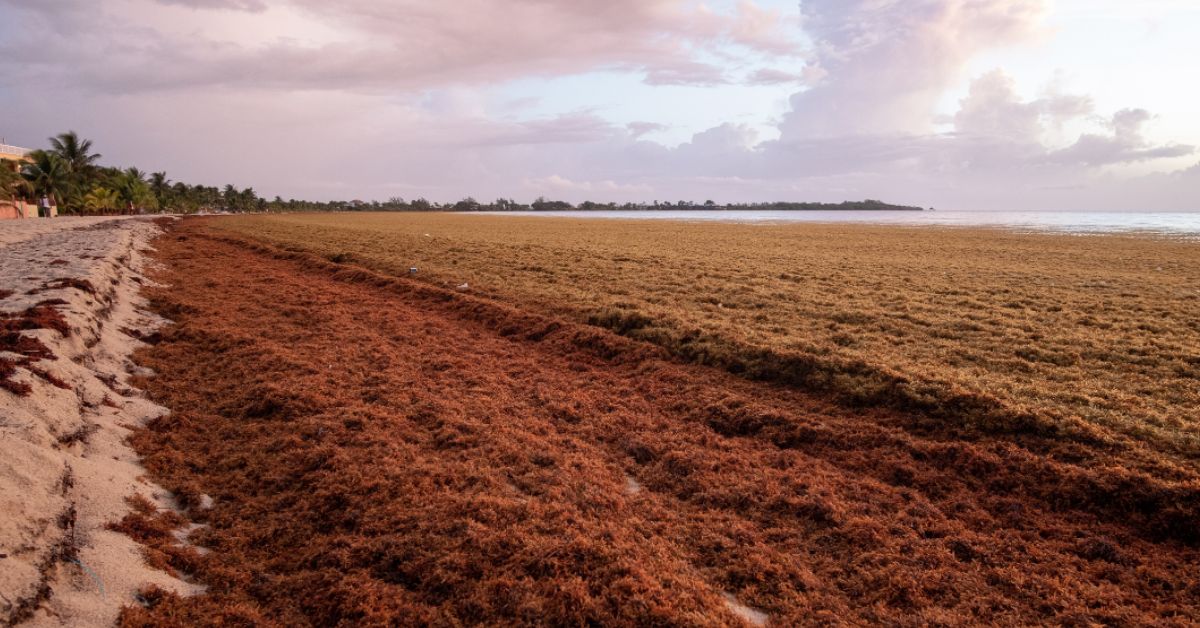
The Sargassum Crisis: How Seaweed Is Changing Atlantic Coasts & Beach Holidays
I may earn income from affiliate links or partnerships in this post. I spend time to curate tours or products that align with my values. Thanks for supporting my work, at no additional cost to you. All words and images on this website are created by real people.
Unprecedented amounts of Sargassum have been washing ashore on beaches and affecting holiday-goers across the Atlantic. Sargassum on beaches in Mexico, Florida, and the Caribbean Islands has been making headlines and dominating travel forum discussions as travellers wonder how piles and piles of Sargassum are going to impact their holiday.
2026 was one of the worst years for Sargassum in the Atlantic. If you’re curious about what Sargassum is, why it matters for coastal health, and how it might affect your upcoming holiday in the Mexican Riviera, or beaches across the Atlantic, this guide will answer all your questions about Sargassum.
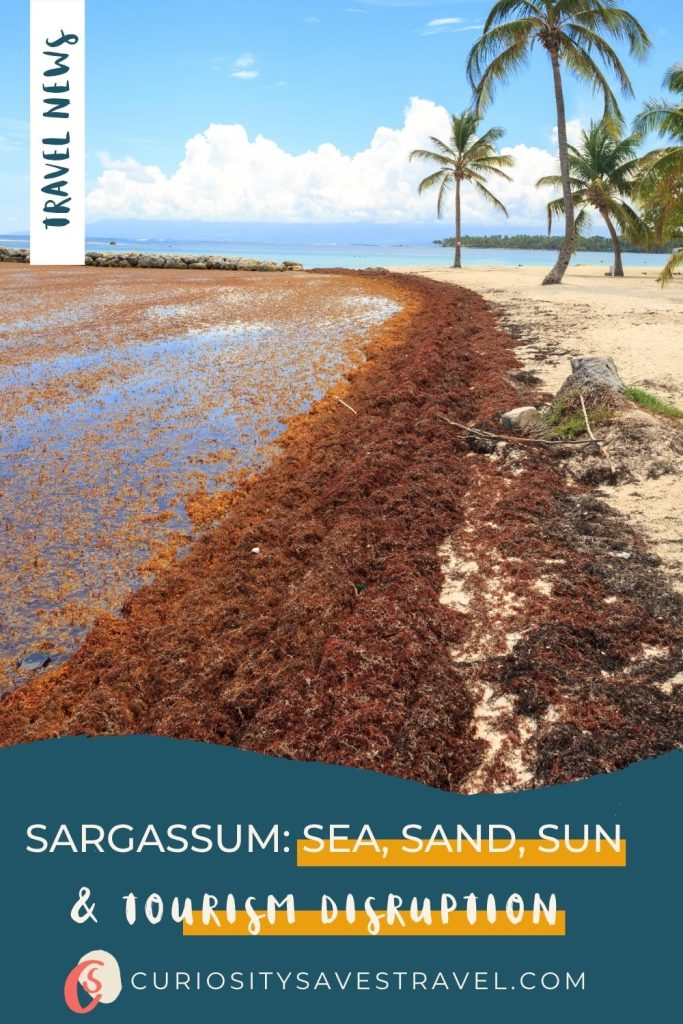
Large amounts of Sargassum, which is typically not native to these coastal systems, are washing ashore on Atlantic beaches, from Mexico and the Caribbean Islands to Brazil and West Africa. This brown macroalgae, or seaweed, is keeping coastal communities and travellers on their toes, as they try to navigate the colossal piles washing up.
Sargassum is more than a stinky and disruptive eyesore threatening to rain on your beach and ocean holiday. It is a relatively new natural phenomenon that continues to grow in size, threatening marine health and biodiversity, as well as the health of both residents and travellers in long Atlantic coastal regions.
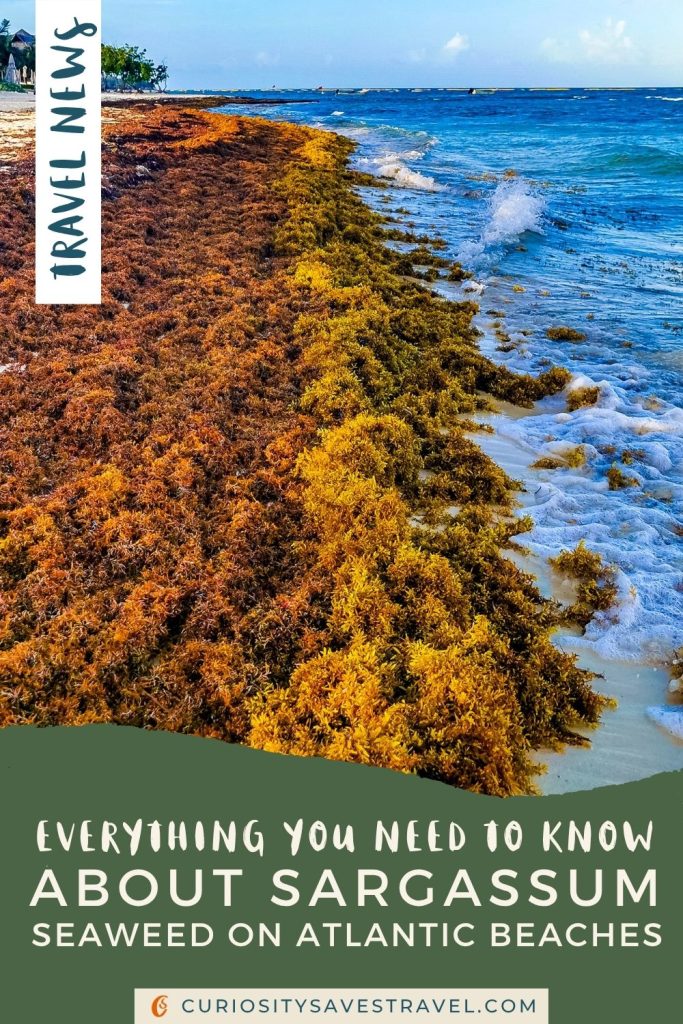
When I visited the Mexican Riviera in March 2026, the early signs of Sargassum were starting to wash up on beaches. Already in this early Sargassum season, we were seeing enough to create large piles in need of management. When I first arrived, I felt like I was surrounded by white foreigners complaining at the pool, bar, and forums about the unsightly seaweed ruining their beach time.
Naively, I thought Sargassum was a natural and native occurrence that was just part of a normal ecological cycle. I assumed these people were just complaining to complain, without fully understanding the environmental role of seaweed.
Well, my friends… it was I who was wrong… I went deep into research mode and quickly learned that the Sargassum landings are a new phenomenon that is wreaking havoc not only for holiday-goers but also on the environment, local economies, and human health.
Sargassum is one of the most significant environmental threats for coastal communities across the Atlantic, especially small islands in the Caribbean and the Mexican coast. But what is it? Why does it matter? How does it affect your holiday and coastal communities, and what on earth can we do about it?
Here is everything travellers need to know about Sargassum ahead of their Atlantic beachside holiday, from Brazil to Florida, Mexico, the Caribbean, and Western Africa.
Watch on YouTube
And if you’re new here, I’m Sooz. I have an MSc in biodiversity science and study the intersection of tourism and the natural environment, including the impacts of tourism on coastal communities.
What is Sargassum?
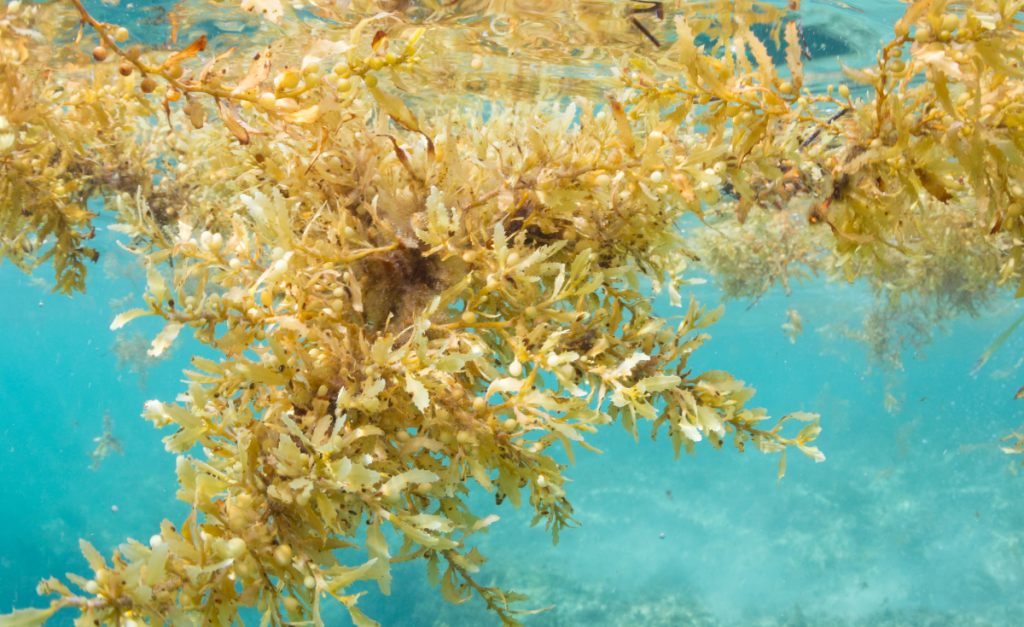
Sargassum is a free-floating brown macroalgae (seaweed), primarily found in the Sargasso Sea, where it is a native and healthy species with many ecological benefits to marine health and biodiversity.
The Sargasso Sea is a region within the North Atlantic Ocean that’s surrounded by ocean currents, rather than any land. Covering an area of around 2 million square miles (5 million square kilometres), it’s the only named sea in the world that doesn’t directly touch any coastlines.
The sea was named for the Sargassum, which creates a unique open-ocean habitat. The benefits that it provides here in the Sargasso Sea include food, protection, and resources, making it a breeding ground for thousands of marine species, like the threatened loggerhead turtle, green sea turtles, seabirds, fish, eels, and more.
The National Oceanic and Atmospheric Administration (or NOAA) “designates areas of Sargassum as Essential Fish Habitat for several species, including gray triggerfish, amberjacks, and mahi mahi.” It also serves as the only known breeding and spawning ground for both endangered European and American eels.
Sargassum has been contained to the Sargasso Sea in a circular ocean current.
However, in 2011, satellite imagery showed a new population fundamentally altering Atlantic sargassum population dynamics.
Changes in ocean oscillation patterns, wind, and currents have brought a growing population of Sargassum, the Atlantic Sargassum Belt, across the Atlantic, which is not contained like the Sargasso Sea population.
The annual bloom of the Sargassum in the Atlantic Belt is its own distinct population. The Atlantic Belt stretches from Florida to Brazil to West Africa, Eastern Mexico, and the Caribbean Islands, leading to beach landings everywhere, which is a relatively new issue.
With literal mountains of Sargassum building up on beaches and coastal areas, there are catastrophic impacts on tourism, marine and coastal health, human health and well-being, while creating a huge financial burden for local communities.
But there are also a few opportunities to use Sargassum as a natural resource, in what some might call making lemonade from lemons.
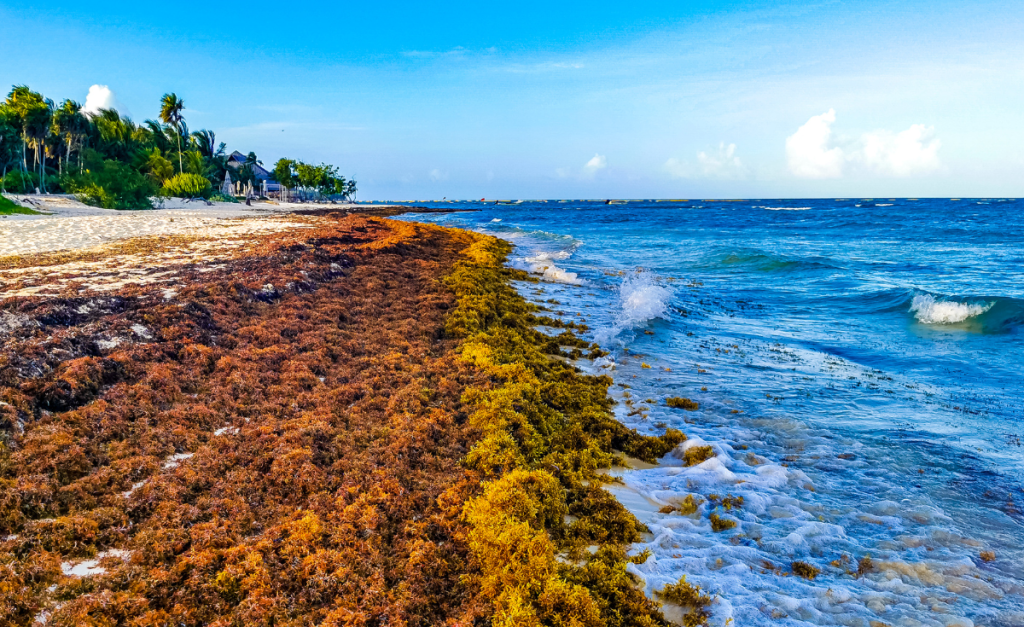
Why is Sargassum on beaches a bad thing?
If Sargassum is so good in its native Sargasso Sea, why is it such a bad thing that so much of it is washing up?
In the last decade, the amount of Sargassum rafts landing ashore outside its native range has increased by 600%.
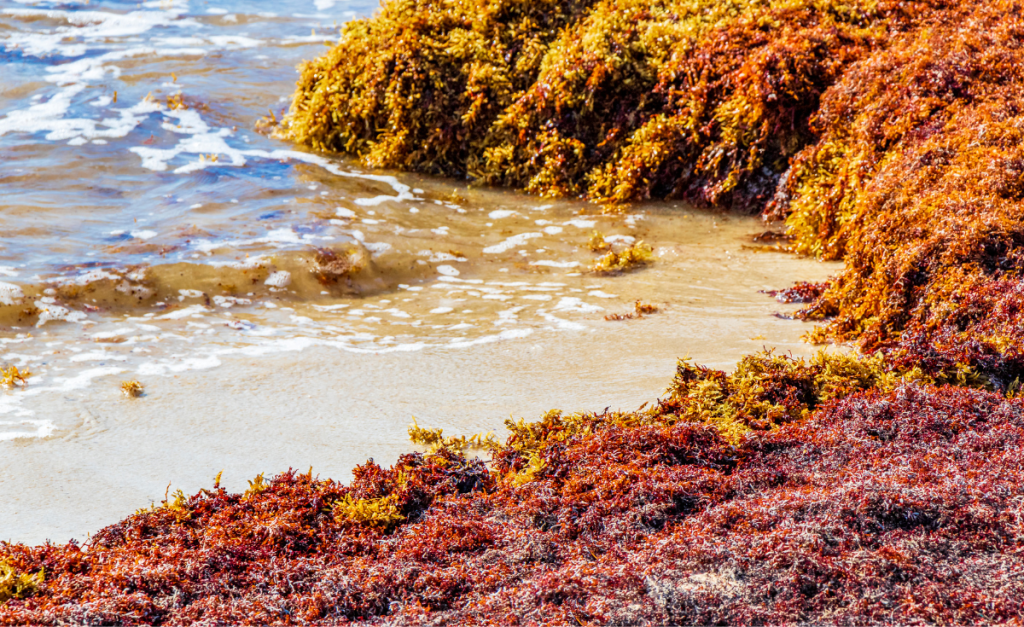
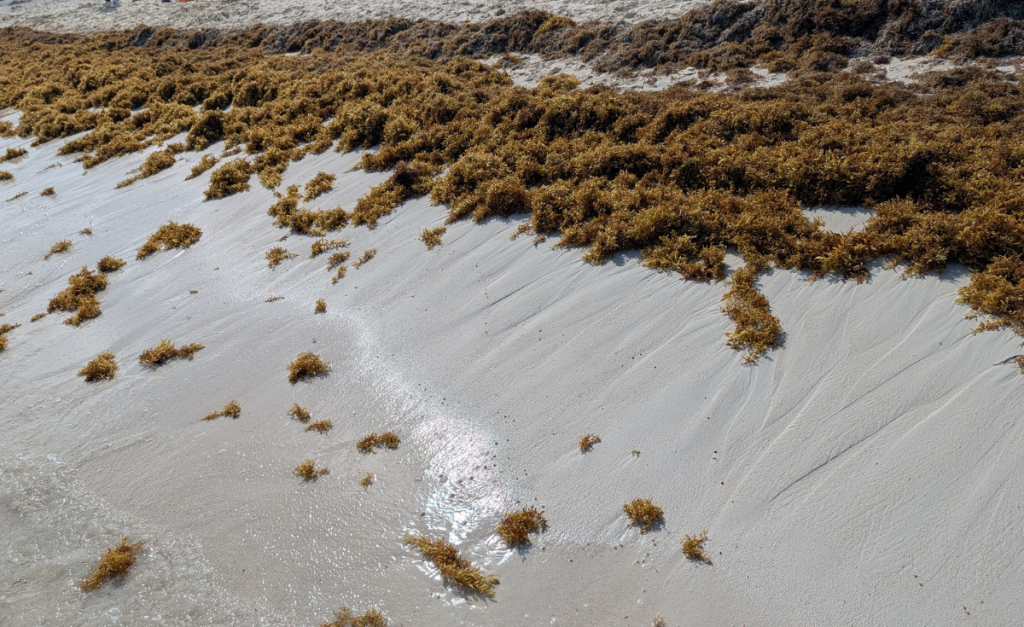
Before 2011, most beaches never really saw more than a few wayward pieces of Sargassum landing. This species is not part of the native beach and coastal systems here. Suddenly, within 15 years, tens of millions of metric tons built up in the belt. When it lands, it chokes out marine life that has not evolved alongside the phenomenon.
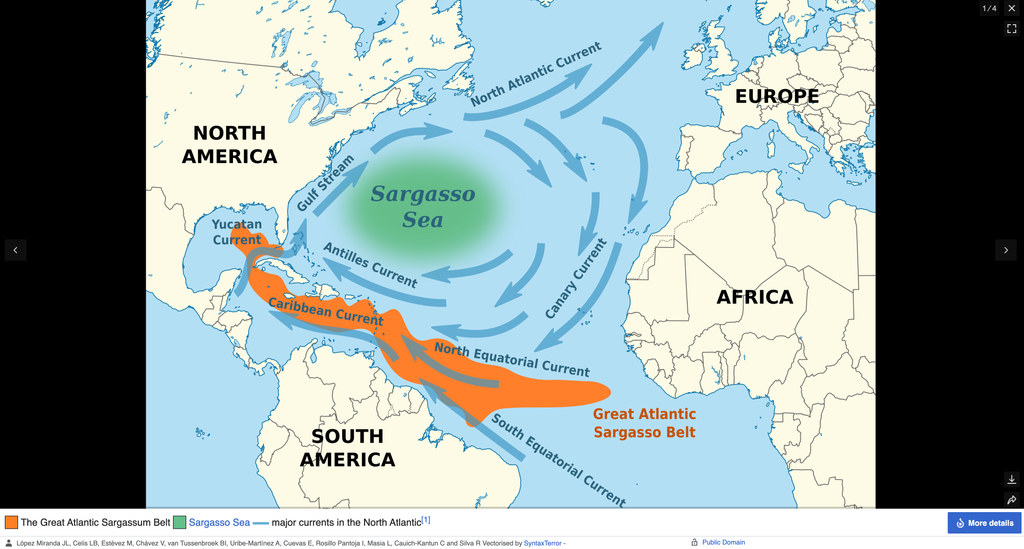
The ecological and human impacts are so concerning that the UN Climate Change Conference held a special regional meeting about it at the last COP in Brazil. Now the EU is also partnering to help with solutions.
Impacts of Sargassum on Atlantic Beaches
Sargassum landings (also called Sargassum Inundation Events or SIEs) present serious ecological, human health, infrastructure, and economic challenges for small coastal communities across the Atlantic.
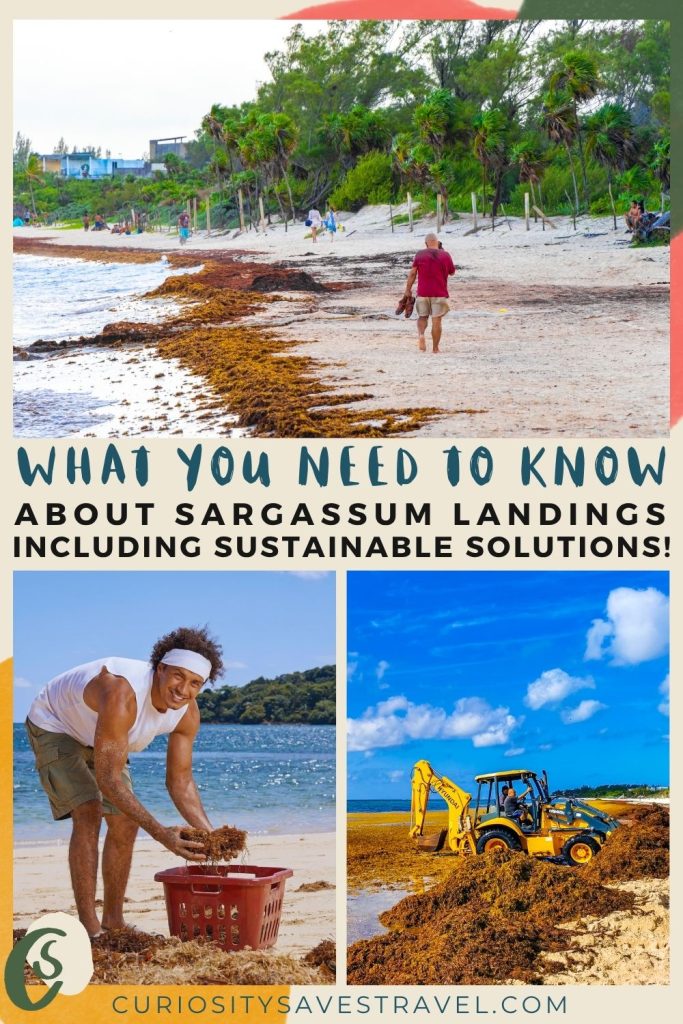
Sargassum in Mexico is causing all sorts of issues for tourists and residents alike.
Ecological Impacts of Sargassum
1. Large Sargassum rafts float near the shoreline and block the sunlight that should be reaching coral reefs and seagrass. This can contribute to coral bleaching and block photosynthesis of a key food source: seagrass.
2. Sargassum depletes oxygen in the marine system while decomposing. Decomposers like bacteria and fungi use oxygen to break down dead organic matter and release carbon dioxide while altering pH levels. All this causes eutrophication and leads to mass marine die-offs of fish, crustaceans, and turtles.
Both Tobago and Mexico have had recent devastating marine die-offs due to Sargassum Inundation Events.
3. The build-up of decomposing Sargassum on beaches creates a physical barrier. This wall of Sargassum can make it harder for turtles to access sand to lay their eggs. Once hatched, turtle hatchlings encounter more physical barriers when trying to get back to sea.
4. Sargassum decomposition also alters the temperature of sand, releasing heat. The temperature of the sand changes the sex ratio of turtles, with more females hatching in warmer temperatures, which in turn alters breeding patterns.
5. In its native habitat, Sargassum is a living ecosystem that sequesters carbon, but when it lands, it releases massive amounts of methane, the worst greenhouse gas.
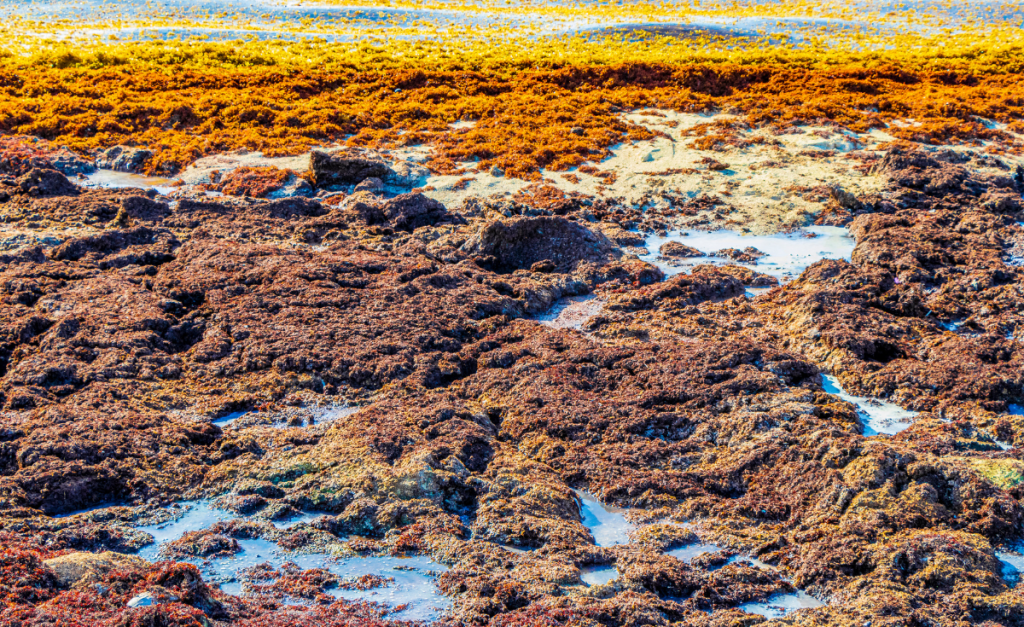
Human Health and Economic Impacts of Sargassum
1. Decomposing Sargassum releases hydrogen sulphide gas and ammonia, which are very unpleasant to smell. These gases can cause respiratory issues, nausea, vomiting, and headaches. Not great for residents or tourists.
2. Sargassum can clog intake systems for desalination. This hurts critical infrastructure needed for access to clean drinking water for coastal communities. With limited water resources, this can push resorts and local communities into severe water restrictions.
3. Sargassum Inundation Events cause economic losses for tourism. There is an 18-30% decline in tourism spending in areas with Sargassum. Tourists don’t want to holiday among the smell of rotten eggs!
4. Getting rid of Sargassum is very costly to manage. Tens of thousands of dollars are needed to clean up the tons of seaweed from the beaches. In fact, 11% of Quintana Roo’s (Mexican Riviera state) GDP goes toward costs for managing Sargassum.
5. Decomposing Sargassum is full of heavy metals and other pollutants. Sargassum can leach arsenic, aluminum, copper, pesticides, and microplastics that have been collected along the way into the food web and groundwater.
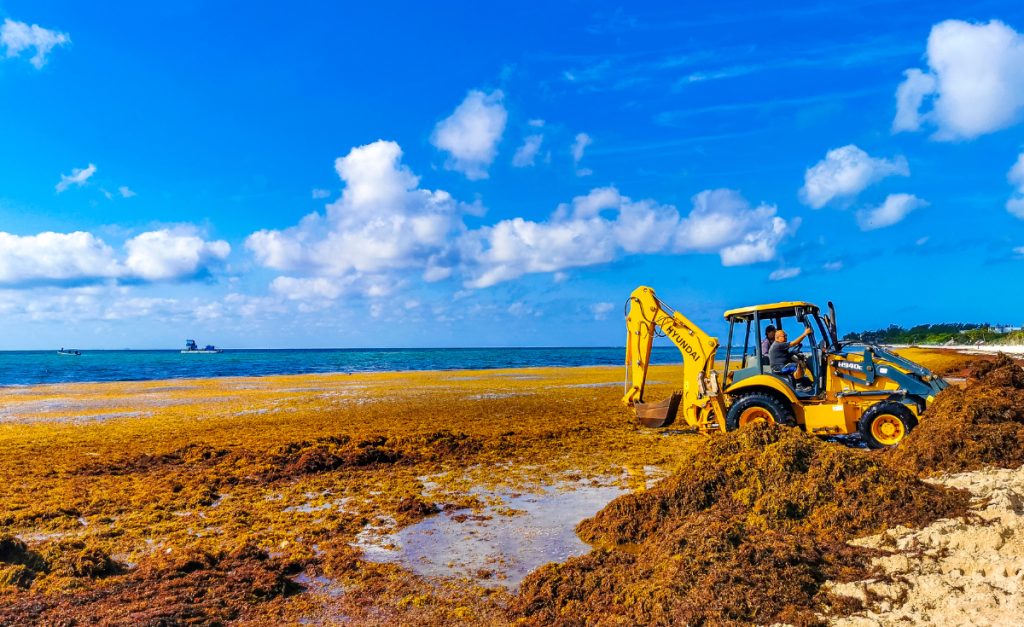
How Sargassum is changing beach holidays
The Sargassum landings are, unfortunately, an annual event now. While some years are worse than others, many coastal communities are moving forward with permanent management plans to try and handle the situation.
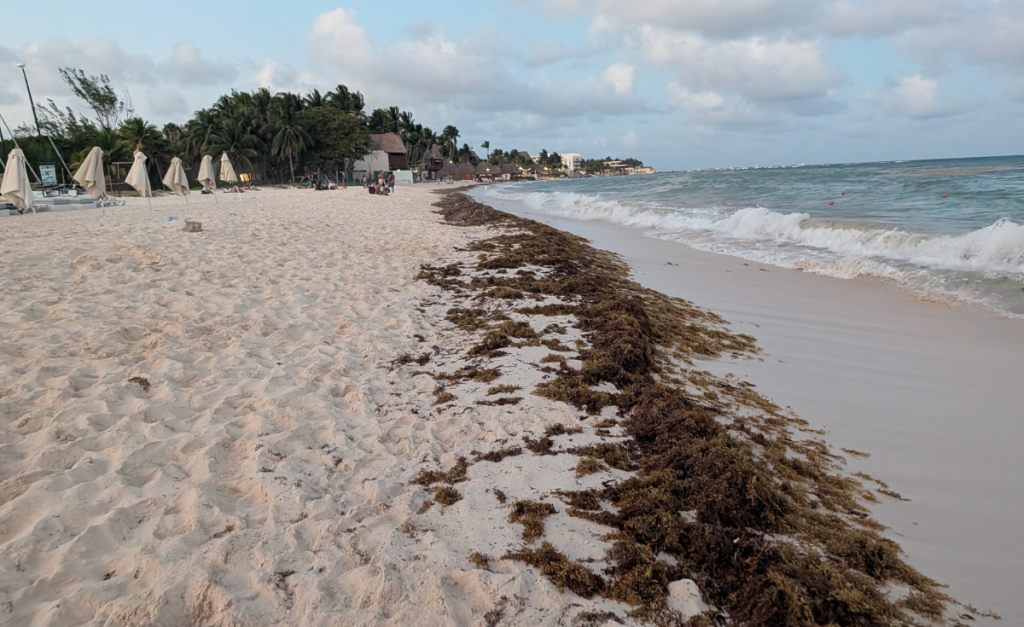
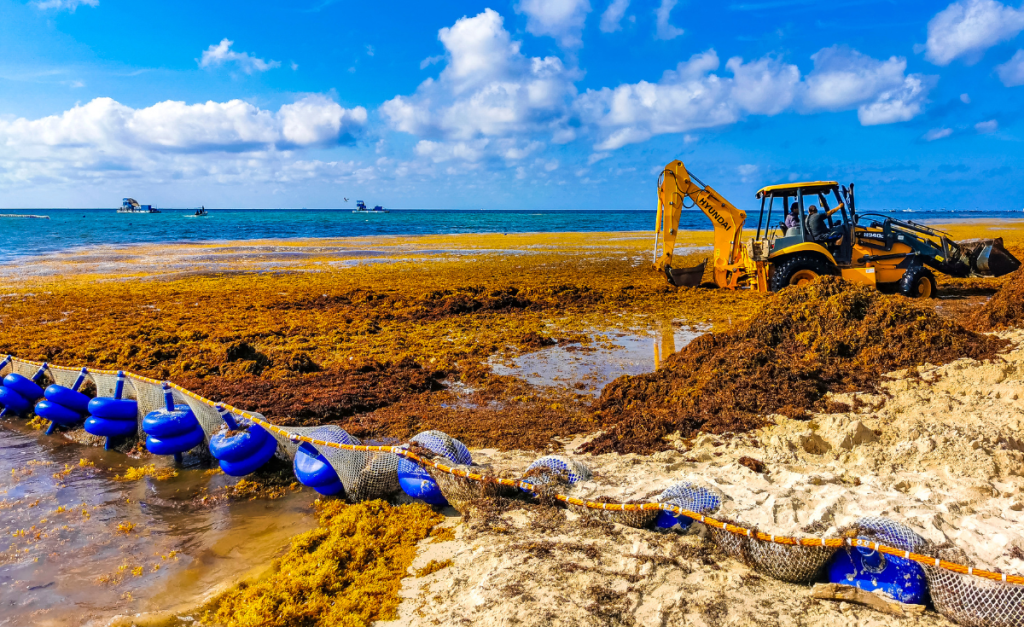
While I am not typically one to let a little natural “event” deter me from having a good time, when I was in the Mexican Riviera in late February/early March, the Sargassum was already building. I went to check out one of Playa del Carmen’s Blue Flag Beaches, and when I arrived, I encountered a row of large Sargassum piles between me and the beach.
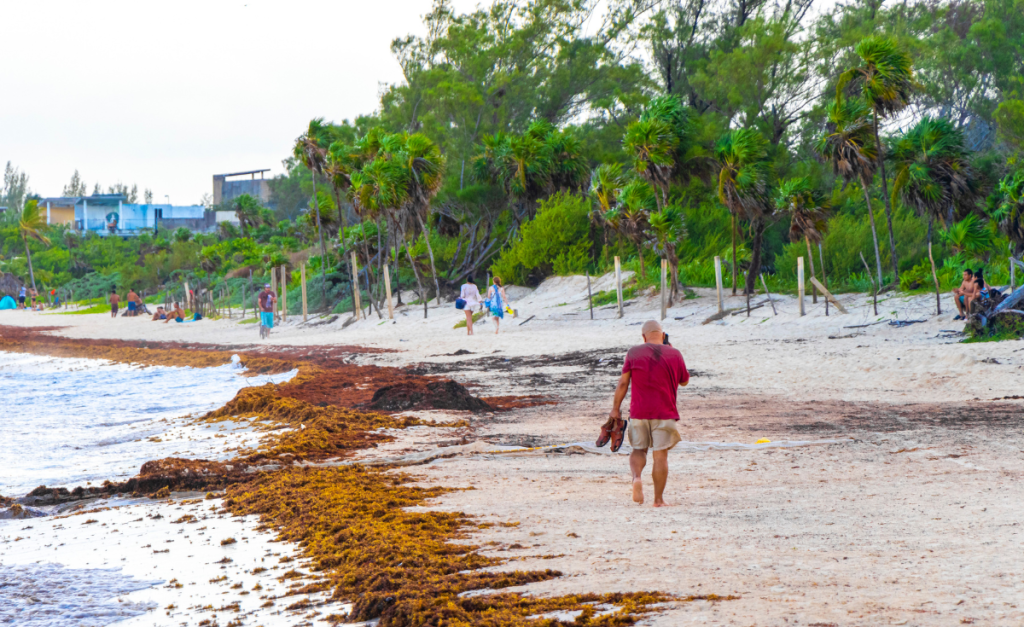
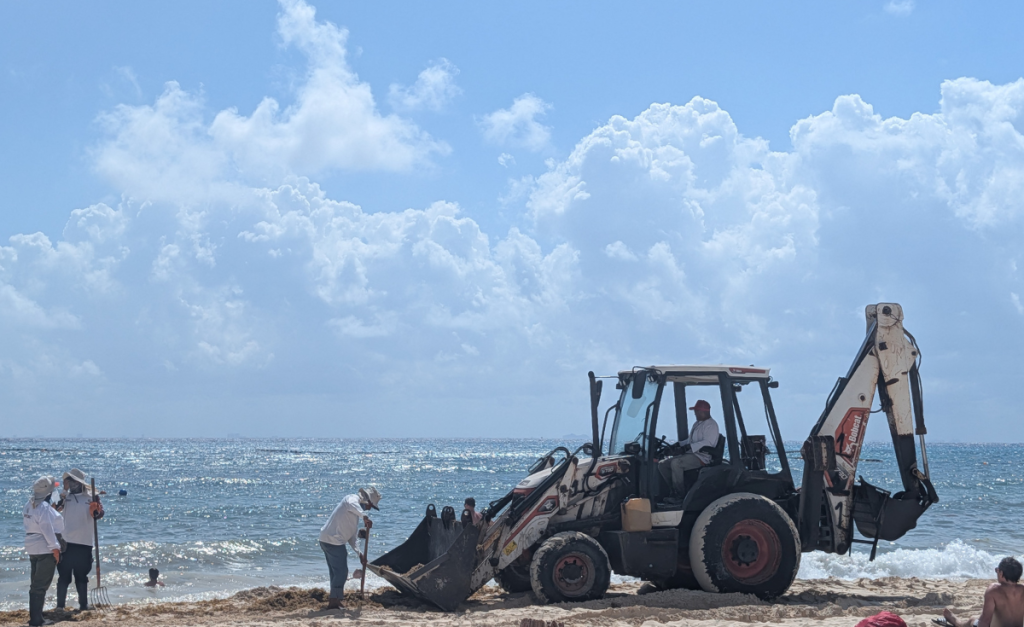
At first I thought, “A little seaweed never hurt anyone; I can still swim here,” but with the smell, ammonia release, and tractors driving up and down the beach to collect piles, it was a little off-putting for a day at the beach.
So, rather than complain, we decided to head to our pool for a day of reading. Other days, we pivoted entirely and went to visit ruins. We were able to return to the beach at another time and enjoy the experience, and there were plenty of beaches elsewhere that were Sargassum-free. So, it didn’t ruin our trip by any means.
Public beaches and private resort beaches are all in the same boat trying to manage this issue. Their efforts are to help ensure hotel guests and residents alike can experience the beaches without the overwhelming mounds of Sargassum.
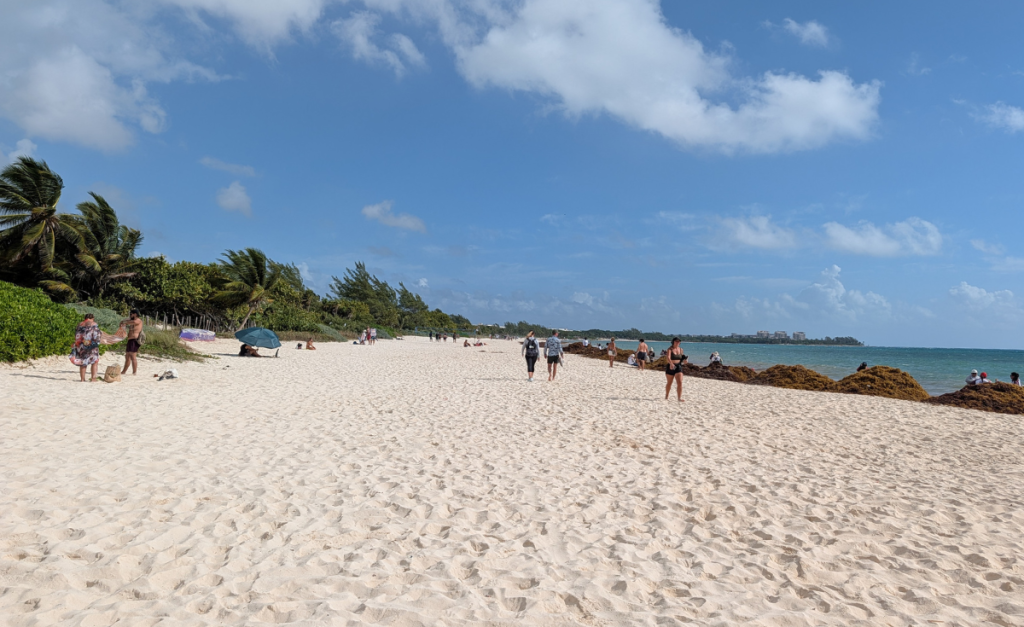
Tourism across the Riviera Maya in Mexico has plummeted in recent years. Sargassum isn’t the only thing to blame, though. With poorly regulated tourism contributing to inflated prices and gentrification that is now outpricing the everyday traveller as well as residents, the Riviera is a ghost of its former self in many ways.
Many people come and have come to Mexico for a cheap holiday, so when that started to change, they left. Couple this with Sargassum, and many people say they don’t find the same value in visiting the Riviera.
Some hotels are dropping rates to attract travellers, hoping to sweeten the deal as tourists choose alternative destinations.
Sargassum is very challenging for tourism-reliant communities. If tourists are staying away because of Sargassum, these communities have no funds for managing Sargassum, and it is a vicious cycle.
Mexico has put forward a sustainable tourism plan to help attract more respinsible travellers and is actively trying to manage its Sargassum. If there is one thing I hope, it is that this post doesn’t deter you from visiting, but encourages you to set your expectations and engage in more sustainable travel.
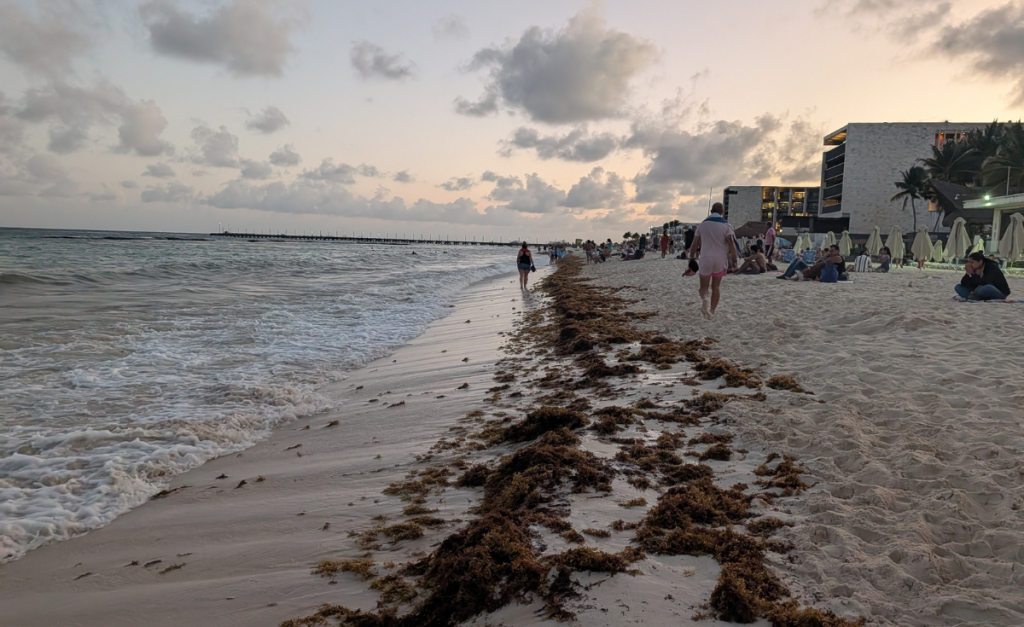
Tips for Travelling During Sargassum Season
Find ways to support the communities while still enjoying your holiday. Be sensitive to the people battling this new phenomenon and the challenges they face. They live with this day in and day out, and it isn’t just your holiday that is impacted; real people are struggling.
Don’t Let It Ruin Your Holiday
First, don’t panic and cancel your holiday because of Sargassum. Sargassum doesn’t affect all beaches in an area for the whole season. No matter where you go, you’ll be able to find a beach or area that has minimal Sargassum at some point during your stay.
Places Are More Than The Beach
No matter where you go, whether it is Mexico or Florida, hitting the beach is only one activity. If you are there on a day with a strong SIE, consider skipping the beach and head out to explore somewhere else. Visit smaller local communities, cultural sites, or enjoy other activities.
Book a cooking class, join a walking tour, hire a local guide for the day to show you some cool local sights, or read by the pool!
When I was in Mexico, some days were worse than others with Sargassum. I used the days when there was a lot of active Sargassum management to explore more of the area. I went to see the Coba Ruins, visited a Cenote, went to a small town and enjoyed lunch.
There are so many activities to keep in mind that allow you to pivot.
Getting away from the beach and into the more local communities helps spread the economic benefits of tourism outside of big beach resorts. This can in turn help the community financially manage the burdens of Sargassum.
Consider Visiting Outside Sargassum Season
The Sargassum events typically start in March and last all the way to October. The peak season is June, July, and August.
Consider visiting an Atlantic community from October to March. You will not only be visiting outside of Hurricane Season, but you’ll miss the worst of the Sargassum on beaches.
This also helps spread tourism dollars outside the peak spring break season and summer school holidays.
Another thing to consider is that the ABC islands (Aruba, Bonaire, and Curaçau) are more southern and tend to have less Sargassum. Planning a responsible trip to one of these islands could also be a good choice.
Check the Sargassum Trackers
There are many Sargassum trackers available. While I generally want us to support communities battling Sargassum by staying and spending money, it is also understandable that this can impact your health and well-being.
These trackers can help you find beaches in real time to visit.
So, care for yourself, track the Sargassum, and make the best choice for you and your health while supporting local communities.
Sargassum Trackers
Be Kind, Patient, and Respectful
Remember, the community is the one left cleaning up the mess, carrying the financial burden of managing Sargassum. Leaving negative reviews for hotels or beach clubs that have Sargassum outside is not helpful or kind.
Sargassum is a challenge for everyone and impacts the lives of everyday people. Remember to have a positive attitude. You can still enjoy your vacation and manage your expectations.
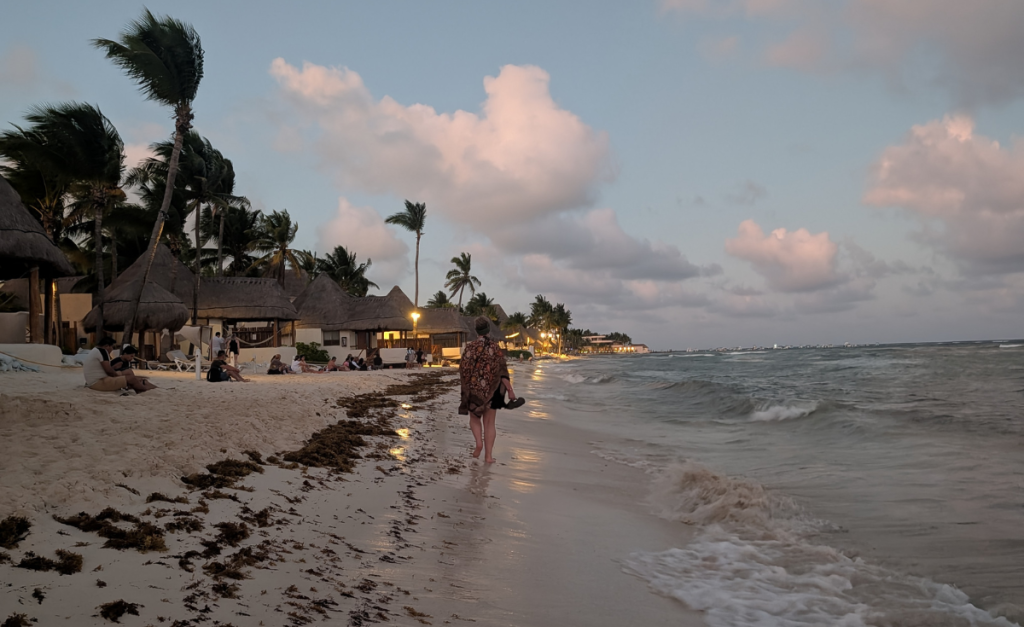
Sustainable Beach Behaviours
When you visit the beach, remember not to leave any trash behind that can easily get tangled in Sargassum. Wear reef-safe sunscreen, or cover up with SPF clothing, and respect local beach closures and turtle habitats.
To learn more about sustainable behaviours at the beach, head over and read:
If You Book An All-inclusive …
If you do choose to book an all-inclusive that promises to manage Sargassum, keep a few things in mind.
- Learn about economic tourism leakage, which is higher at the resorts. Use this knowledge to book one that perhaps does more to support the local economy with local management and local products, and offers quality jobs to the community.
- Get out of the resort; take days to get out and away from the resort, visit smaller local communities for lunch, or visit Coba ruins and hire a local guide.
Managing Sargassum: Innovative and challenging solutions
So, what is being done to manage the Sargassum? A lot, actually!
Considering the devastating ecological and human impacts, Sargassum must be managed. It is unfortunately costly, but many communities, scientists, and politicians are coming together for innovative solutions.
But, first, we need to collect the seaweed and get it off the beach and away from the coast.
During my latest visit to Mexico, it was a common sight to see dozens of local workers out on the beach shovelling piles of Sargassum into dump trucks. These dump trucks can compress sand and harm burrowing sand species, but it is a far better alternative to leaving Sargassum on the beach.
To collect Sargassum before it lands, some communities have installed floating barriers, called mesh booms. These sit on the surface and, in ideal conditions, can stop Sargassum before it lands.
Now, these mesh booms require Sargassum to be collected before it is too heavy and stormy conditions make them less effective. It is costly and not always efficient.
However, there are some critics of the boom mesh approach. In Curaçao, foreign groups are placing these barriers, but the local community widely sees them as ineffective and problematic.
While these nets are designed to allow marine life to swim safely below, there is not enough data to prove they don’t impact the movement of marine life on the surface, and some turtle advocates are calling for more research into their impact on marine life.
In Curaçao, the local community is pushing for indigenous management practices, similar to creating shell middens, to historically protect seagrasses.
Once the seaweed is collected, it is moved to a large lot, where it is then processed for use in R&D. The goal is to make use of this new natural resource with circular systems and better approaches to prevent seaweed from rotting in landfills.
Sargassum has tough cell walls and is very hard to break down. Additionally, it contains heavy metals that can leak into the ecosystem and even agricultural systems if not managed properly. So, it can be a tough natural material to use. Thankfully, a lot of smart people are coming up with ways to use this natural material.
1. Using Sargassum for biofuel
One of the main problems when using Sargassum is that it needs to have the saltwater removed and be dried before it can be used, which is an expensive process.
However, scientists have recently tested a new and inexpensive process of turning Sargassum into oils or biofuels by adding catalysts to vats of the seaweed still within saltwater.
These vats are processed to get an end result of bio-oil, “that can be further processed into fuels, along with what is described as a high-quality, low-cost fertilizer.” (quote)
2. Organic fertilizer for regenerative farming initiatives
Sargassum is already being used to create organic fertilizer, particularly by a company called Carbonwave. They extract the nutrients from the Sargassum in a chemical-free process, which is great, as they are contributing to sustainable agriculture while also helping to remove the Sargassum from beaches!
3. Bioplastics and building materials
Another option being tested is the use of Sargassum to make “plastic wood” by blending it with other materials for the construction industry.
A team of scientists from multiple universities has created a product called a Sargapanel, which has “mechanical strength comparable to that of conventional panels, along with thermal and acoustic insulation properties. It also has a flame-retardant effect, which enhances safety in the event of a fire.” (quote)
4. Sargassum in cosmetics
Companies such as SeaBalance (an offshoot of CarbonWave) are also upcycling Sargassum from beaches into natural emulsifiers, which are used in the cosmetic industry.
An emulsifier is an ingredient that helps keep unlike ingredients (such as oil and water) from separating in an emulsion, such as hair or body creams. Some emulsifiers are animal-based (gelatin, Lysozyme, etc.) This is a great natural plant-based solution that makes use of waste products.
5. Sargassum as a water filter
Research is also being conducted into developing “a cost-effective, sustainable water filter that takes advantage of sargassum’s natural ability to absorb pollutants.” (quote)
If Sargassum is collected while still in the water (before washing up on beaches) and then dried, it can be used almost like a sponge to filter contaminants out of water, rather than leaking those things onto beaches – it’s a win-win!
6. Other uses for Sargassum
CarbonWave has also been experimenting with using Sargassum to create vegan leather and other textiles for the fashion industry, although this idea is still under development.
But there’s hope that Sargassum can also be upcycled into more sustainable fashion in the future, which will be wonderful considering the havoc that the fashion industry currently wreaks on the environment.
Other possible future uses of Sargassum include foams, hydrogels, and alginate capsules for medication.
Comment and Share: Sargassum and Beach Holidays
Sargassum is more than a threat to your beach vacation that ruins the aesthetic and your ability to swim. It is a real global issue that threatens ecological integrity and human health. As climate and ocean currents change, the issue is only getting worse.
Sargassum is now one of the biggest environmental challenges for Atlantic coastal communities. One that threatens their health and well-being, threatens biodiversity, and, of course, impacts our beach holidays. People are coming together globally to find answers and turn this ecological nightmare into a regenerative solution, from agriculture to cosmetics.
Let’s make sure we are responsible travellers who support Atlantic communities and practices that keep us safe.
- Have you ever been at the beach during a Sargassum event? What was your experience?
- Is this something you are worried about for your next holiday?
Curiosity Saves Travel Recommends
Accommodation: Booking.com to find accommodation with a Genius Discount and clear third-party sustainable certifications like Green Key. Look for local hotels.
Tours and Excursions: GetYourGuide and Viator for tours, excursions, and tickets. Never book wildlife experiences through these vendors.
Travel: Omio for booking buses and trains in English across Europe. After reducing the number of flights I take annually, I use Google Flights’ carbon comparison tool.
Car Rental: Rentalcars for the best rates in English globally. It is easy to find hybrids and EVs, and there are resources for finding chargers.
Packing Essentials: REI or your local Co-op has great essentials like reusable water bottles and cutlery sets. Patagonia for regenerative clothing. Farm to Feet for socks made with regenerative practices! Pistil Designs for cold-weather essentials. Osprey for bags that last 10+ years, like the day bag for hiking or my favorite carry-on.
eSIM: Airalo eSIM. Reduces waste from single-use SIMs. A total game-changer.
For Bloggers and Content Creators
Earn Ad Revenue with Journey by Mediavine
Earn with Stay22 Travel Partnership (my biggest source of income!)
Earn with TravelPayouts recommending tours and activities.

Thank you for this post – it was a very interesting read, and I learnt a lot! I was travelling in the Caribbean and in Mexico a lot this year and saw Sargassum on many occasions. I was wondering about it as I had not seen that before. What you wrote explains why i had not previously seen that and I am also glad to hear that there are different innovative solutions that are tried out.
I am so glad you learned something, especially after seeing Sargassum firsthand during your time in the Caribbean and Mexico. I know the solutions can be costly and challenging, but it is good to see some exciting innovations in plant-based cosmetics, fertilizers, and biofuels coming from it.
Very interesting post! I think I would be disappointed if I went for a beach holiday and had this. Travelling to the Americas from Europe is very costly, but Mexico (mostly Yucatan) beach holidays are very popular – but no one highlights the problem over here. I’d certainly read up more on it if I were considering travelling to the Americas.