
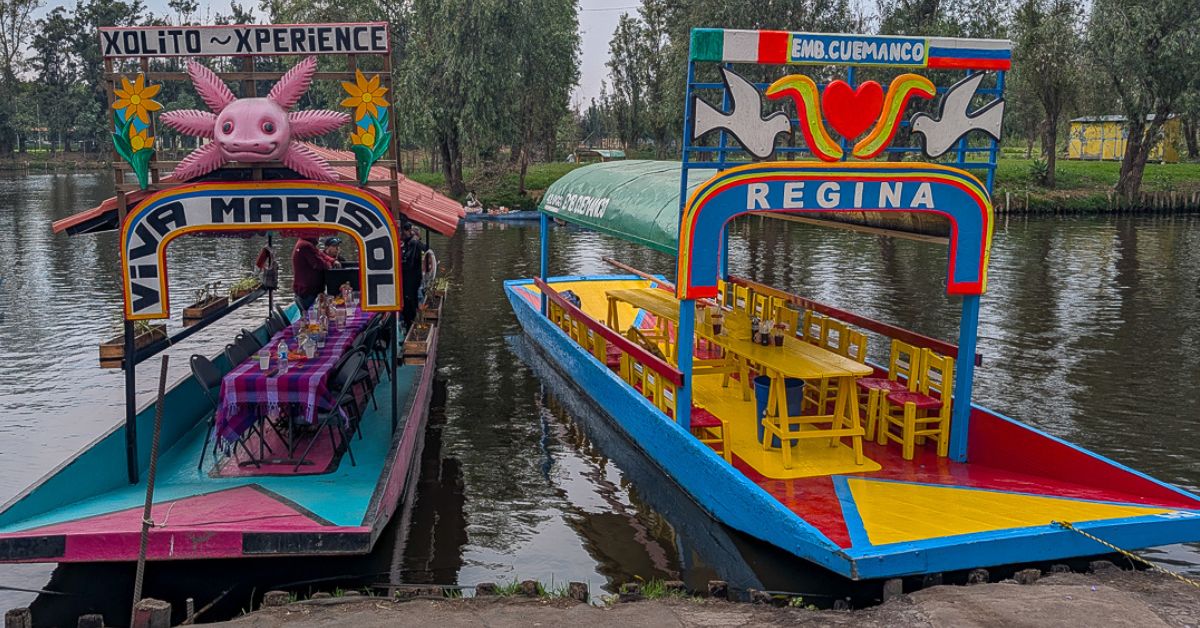
Xochimilco Axolotl Boat and Conservation Eco-Tour from Mexico City
I may earn income from affiliate links or partnerships in this post. I spend time to curate tours or products that align with my values. Thanks for supporting my work, at no additional cost to you. All words and images on this website are created by real people.
Are you curious about the best way to see Xochimilco as a day trip from Mexico City? Xochimilco is an incredible UNESCO World Heritage Site, recognized for its significant historical and ecological importance to the Nahua and Mexica indigenous peoples of the region. Known for its impressive human-made islands called chinampas, trajineras (colorful boats), canals, and the famous axolotl, Xochimilco is best experienced on a half-day boat and canal tour from Mexico City.
However, most people book a boat tour that focuses on surface-level drinking and partying. But my readers are not most people. You, curious traveler, are looking for a way to dig deeper. That is why an indigenous-led conservation-based eco-tour of Xochimilco that directly helps fund and bring awareness to axolotl conservation and research is my top choice for exploring this incredible ecosystem.
This guide covers everything you need to know about booking the most meaningful boat tour of Xochimilco and how to get there from Mexico City. I’ll cover the exact ethical tour company I booked with for a day of conservation, sightseeing, and cultural fun on the canals of Xochimilco. Like all my guides, we don’t stop there. I’ll cover the history and ecology of the region and the importance of protecting the axolotls and these valuable wetlands.
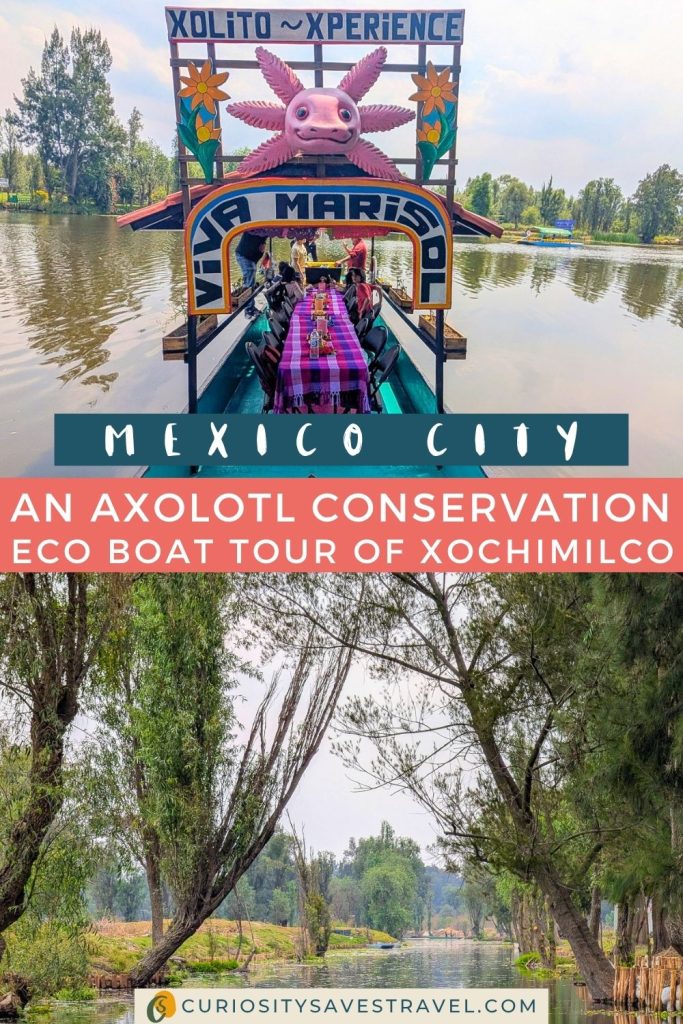
Overview of Xochimilco Eco Boat and Canal Tour
When I started planning my trip to Mexico City, I was so excited to see the UNESCO World Heritage Sites like Teotihuacan and Xochimilco. But, I started second-guessing a trip to Xochimilco when I read through blog posts and forums describing Xochimilco as touristy and overrun by day drinkers in party boats.
The vibe I was reading was not what I was looking for. I wanted an Xochimilco experience that focused more on the ecology, culture, history, and conservation of the endangered axolotl. Christina from Happy to Wander and I did a ton of research, and we finally found a local Indigenous-led tour that focused on conservation and purpose-led eco tours in the area. The tour takes you to conservation sites and a sanctuary run by the only family certified by the Mexican Government to save axolotls from extinction.
Our day started in Mexico City, where we found our own transportation to Xochimilco. Our guide, Alan, and his boat crew took us out on the water, where we spent a few hours at three stops. First, we visited the Island of the Dolls, then a university research site in the wetlands, and finally a family-run conservation center for axolotls.
Throughout the tour, Alan shared traditional knowledge regarding the ecology and culture of Xochimilco, bringing the place to life beyond the colorful party boats. Don’t worry, though, there is still a mezcal tasting!
As an environmental scientist who is also a tourism expert, this was one of the best tours I’ve done. It perfectly balances education, conservation, local and social impact, but we still had such a fun day on the historic canals.
If you want to book the exact tour we took, then see below, and keep reading for my full, detailed guide to the best eco boat and canal tour in Xochimilco.
History of Xochimilco
Xochimilco is on the traditional lands of the Xochimilcas people, who are part of the Nahua tribe. The name Xochimilco translates from the Nahuatl language to “the place where flowers grow.”
The Nahu people arrived before the Mexica (Aztec people) built Tenochtitlán (Pre-Colonial Mexico City). Before the Spanish invaded, the area known as the Valley of Mexico was a series of 5 lakes with connected canals and wetlands.
The Nahu people were engineers and agriculturalists, working with the natural ecosystem to farm without pesticides or harming the environment. They created artificial islands called chinampas to grow flowers, corn, beans, and squash. As the Mexica people expanded their waterways, the great historic city of Tenochtitlán and Xochimilco were connected. Xochimilco became the most important source of food for the Mexica and Nahuatl, growing more than 60% of the food in this area.
Xochimilco is the last remnant of the pre-colonial wetland system. It is home to 11% of all of Mexico’s biodiversity.
The Culture of the Nahua People
The heart and soul of the Xochimilcas live in the traditions of the Nahua people today, the indigenous stewards who have inhabited this region for over a millennium. For the Nahua, the wetlands and canals are not just a tourist site; they are a sacred landscape woven into their identity.
Their culture is unique from that of the Mexica people or the Spanish colonizers. They are defined by a profound, reciprocal relationship with the canals and agricultural systems here. The endemic axolotl is sacred to them as a food source and spiritual being. They have their own language, seasonal festivals, and traditional culinary practices.
Even as the Spanish drained the lakes of the Valley of Mexico to build modern-day Mexico City, and as urbanization threatens the future of the wetlands, the Nahua community continues to preserve its ancestral knowledge. They pass down the art of chinampa farming.
Our guide for the day, Alan, and his family, are Nuhua, and they take a modern stewardship approach, working with the government and universities to protect and save the axolotls and foster ecotourism in the region.
The culture is at risk, though. While there are 15,000 chinampas, only 3% are actively used for agriculture. Some lie in ruins, others are taken over by trash, or are polluted.
Ecology of Xochimilco
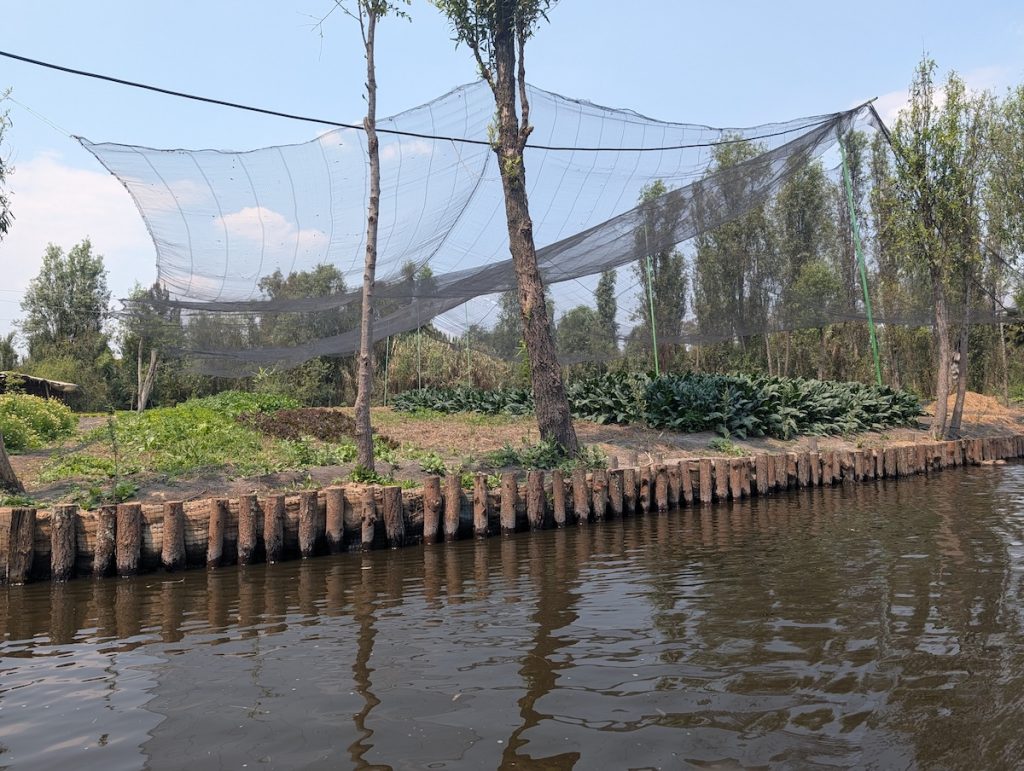
The chinampas, or floating gardens, created by the Nahua are anchored to the lake-bed by the roots of willow trees. This, combined with the natural volcanic rock in the area, creates a micro-ecosystem that filters water and provides a nutrient-rich habitat for diverse wildlife.
This unique environment is the only place on Earth where you can find the axolotl in the wild. This prehistoric salamander, famed for its ability to regenerate limbs and organs and its permanent larval state, is a keystone species whose health directly reflects the health of the entire wetland.
When Spain colonized Mexico and drained the lakes around Mexico. This had devastating impacts on not only the indigenous Mexica and Nahua people but also the ecology. All that remains of the once vast wetland and canals is found here at Xochimilco.
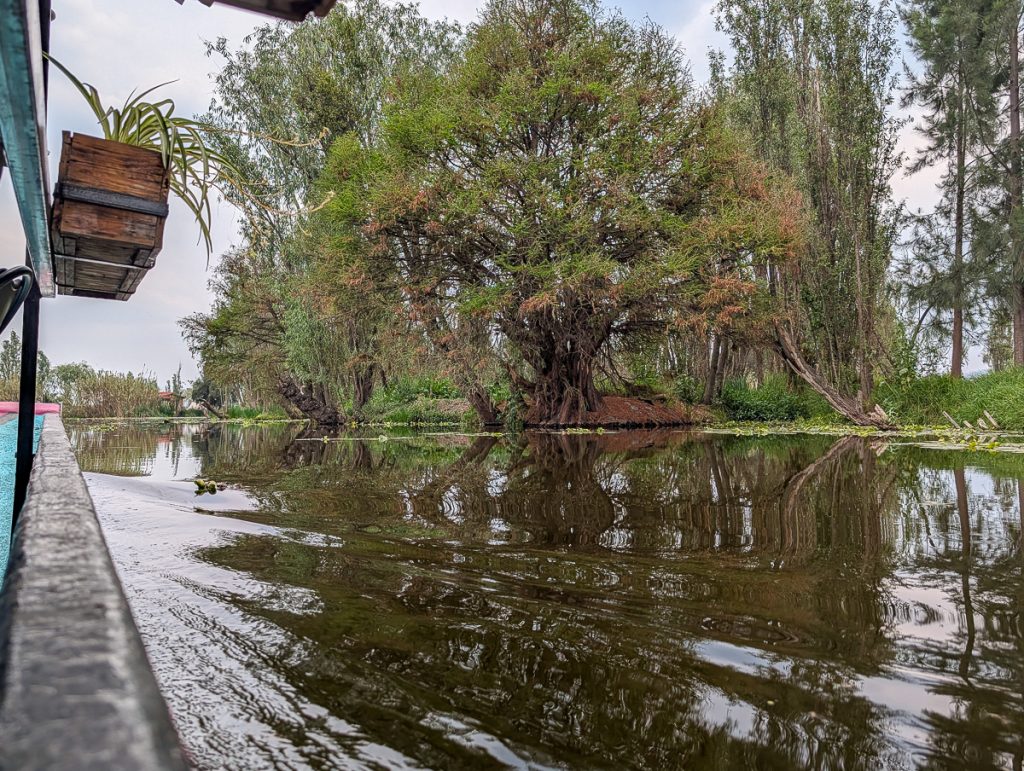
Unfortunately, the health of the environment continues to decline. The water levels in the area are dropping rapidly. Despite conservation and protection measures, it is predicted that Xochimilco, including the wetlands, axolotls, and canals, will completely disappear.
Water loss isn’t the only threat to the area. Pollution from pesticides used in modern farming caused the axolotl numbers to decline rapidly. In response, invasive water lilies and carp were introduced to help clean up the pollution, with unintended consequences. Water lilies depleted oxygen and took over, so no sunlight enters the water, and carp consume the axolotl larvae.
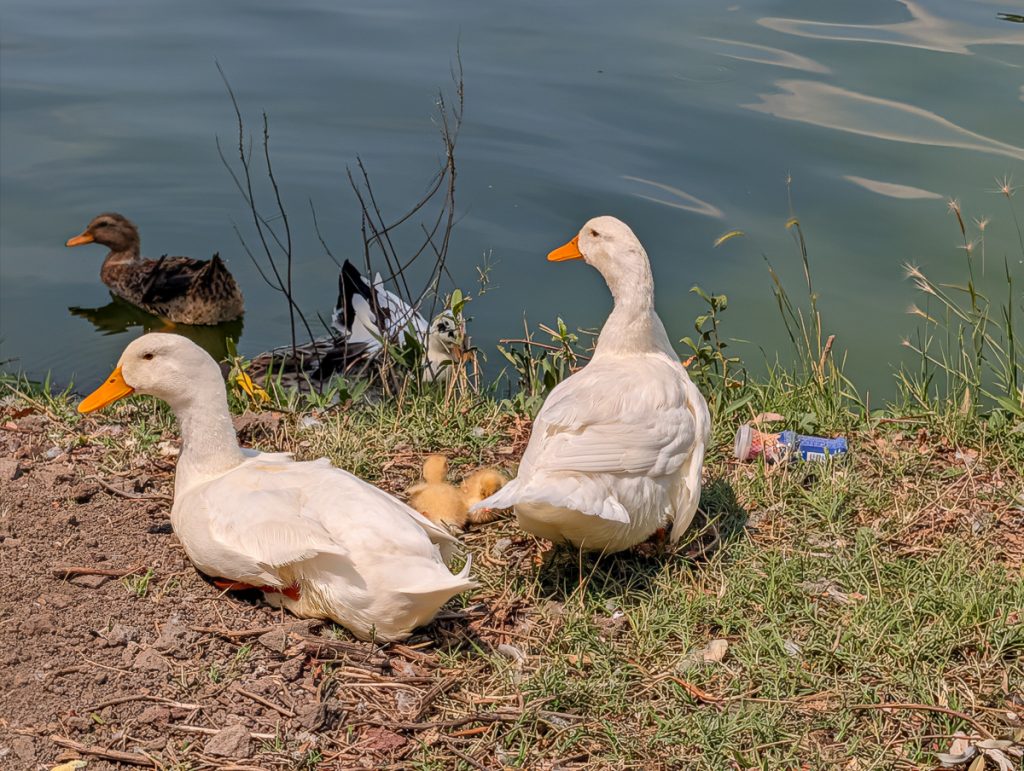
Did You Know? Axolotl Edition.
The axolotl is a large black juvenile salamander in its natural habitat. The species never fully evolved due to a lack of certain nutrients in the canals of Xochimilco. However, they developed the ability to breed as their own species.
They are only found in the wild in Xochimilco and are a very important part of Nahua culture and diet.
Conservation of this species now relies on partnerships between local families, known as chinamperos, and academic institutions like the National Autonomous University of Mexico (UNAM). Through the Chinampa Refugio project, local farmers are returning to traditional, chemical-free agricultural methods to create protected sanctuaries within the canal system. However, our guide Alan said it is difficult to get many to return as they don’t make a lot of money, and the future of the ecosystem is dire.
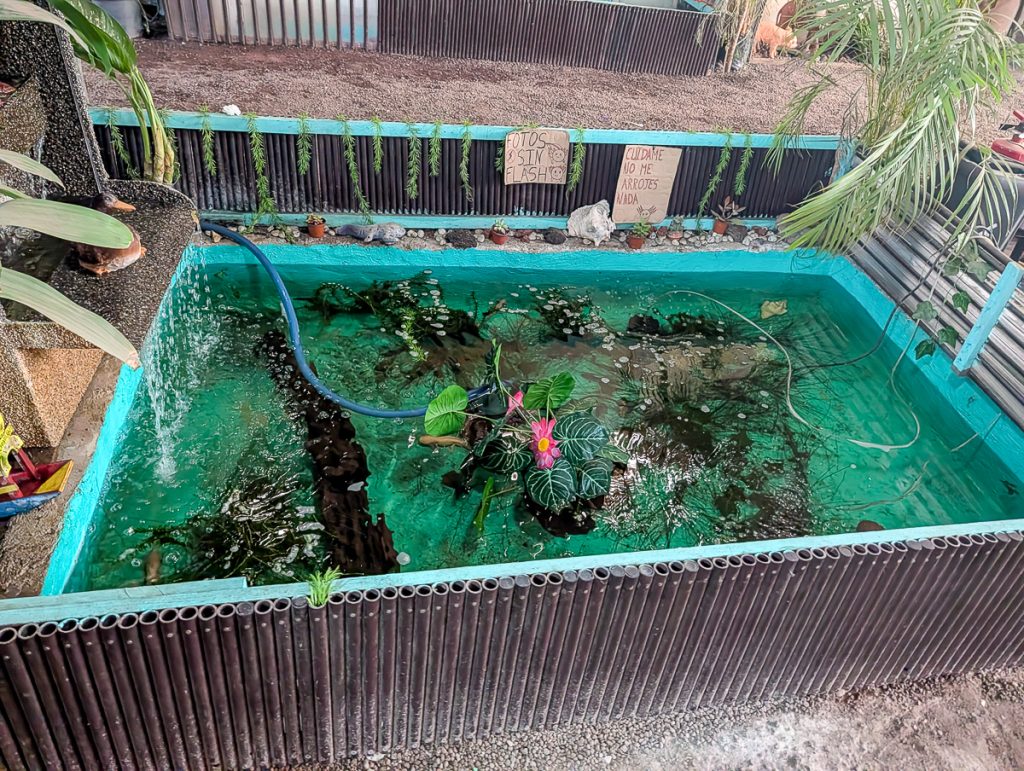
Captive breeding programs at universities are for release, but primarily exist to ensure the species won’t go extinct and are kept for research purposes. The local family you visit on your tour is fighting to keep the species alive in the wild.
In 1998, surveys estimated roughly 6,000 axolotls per square kilometer; by 2014, that number had plummeted to a haunting 36 per square kilometer.
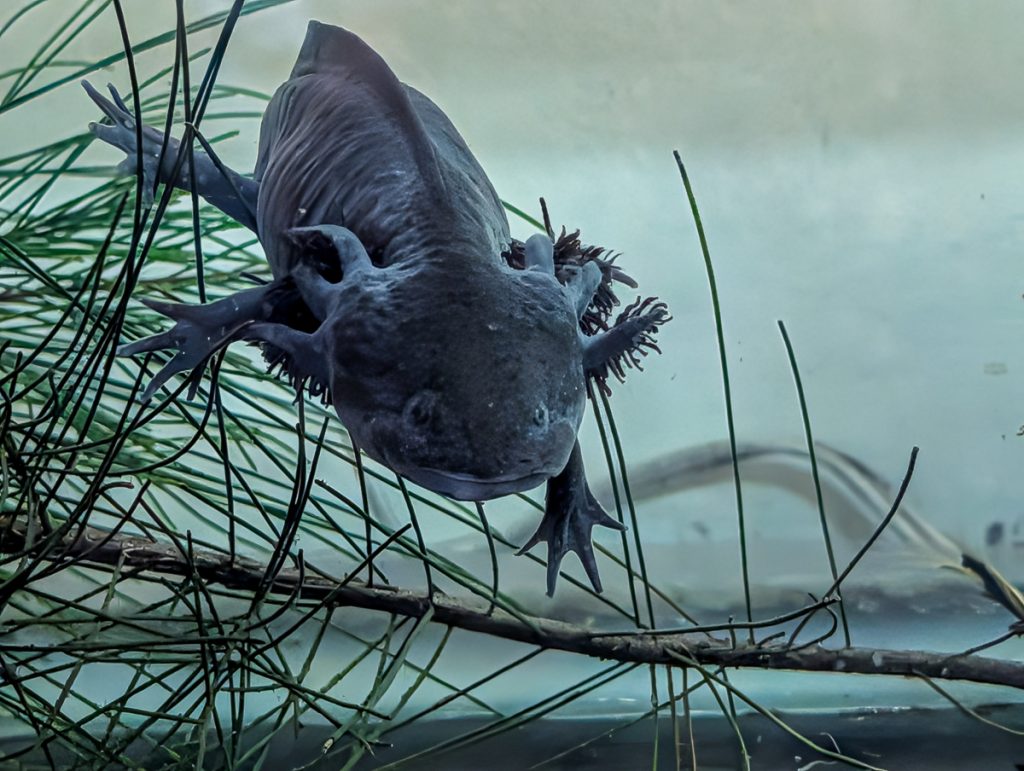
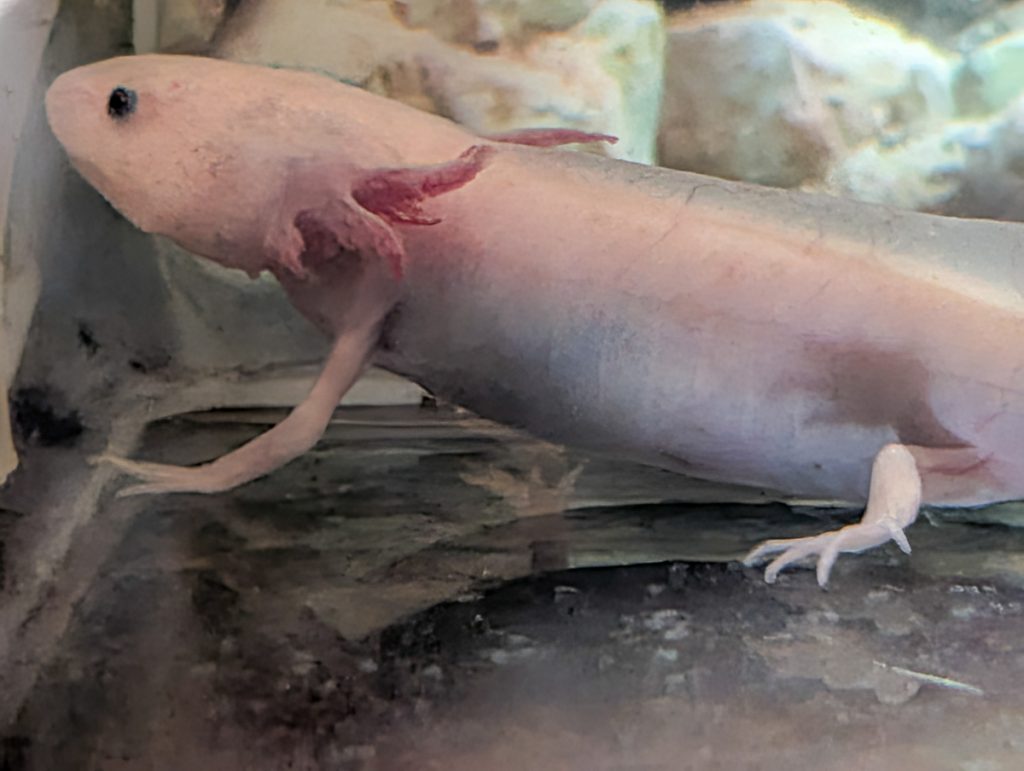
Wait, aren’t they supposed to be pink?
The pink variety that dominates public perception is actually a genetic mutation that rarely survives in the wild due to a lack of camouflage in the murky waters of Xochimilco. These pink populations thrive primarily in captivity, where they have been selectively bred and inbred for decades.
Unfortunately, that means the world recognizes the axolotl by a color that effectively signals its low genetic diversity and life in captivity.
Tourism: Part of the Problem Or a Solution?
Unfortunately, mass tourism is not helping.
In recent decades, Xochimilco’s global reputation has shifted toward the party crowd. For many travelers, a trip to the canals means boarding a brightly painted trajinera (flat-bottomed boat) primarily to indulge in heavy drinking, loud music, and party tourism. While this brings a surge of visitors and money to the embarcaderos, it often results in significant noise pollution, litter in the waterways, and a disconnect from the area’s true significance. The financial benefits don’t reach the farmer, so many leave farming to invest in party-tourism.
This surface-level experience treats Xochimilco as a place to party rather than a delicate, living ecosystem that requires our respect and protection.
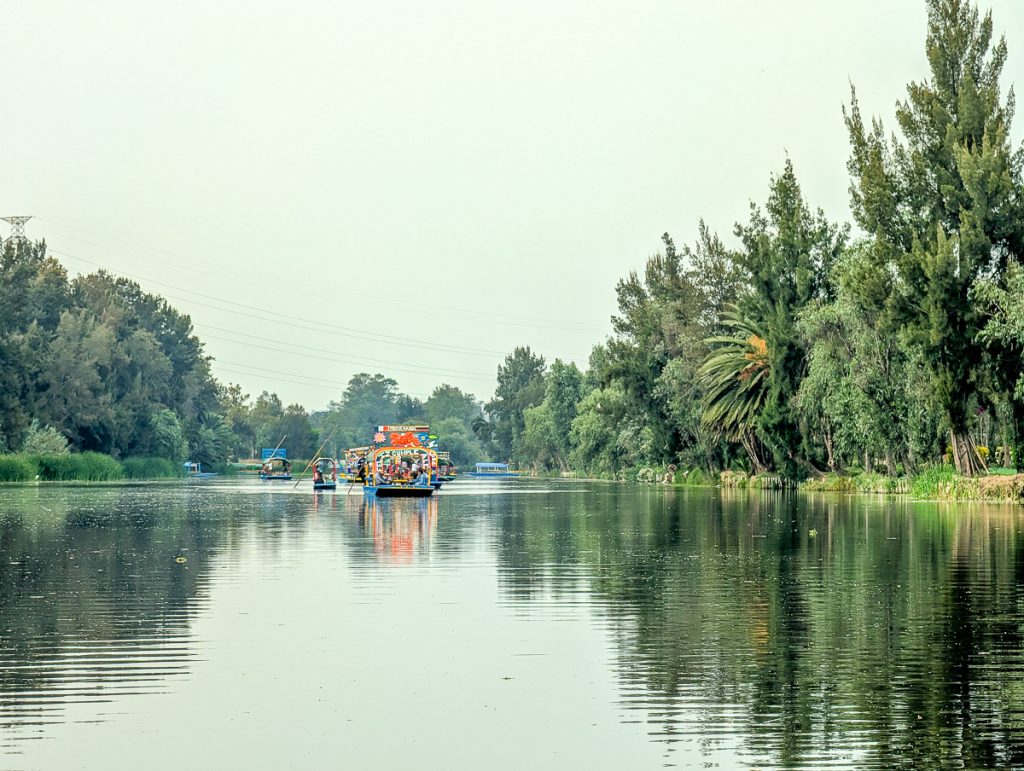
Tourism is critical to the region. Residents can make money and share their culture with visitors, but they need active and engaged tourists. By opting for a specialized tour led by the local indigenous community that supports axolotl conservation or chinampa farmers, you can actively help restore and protect these lands.
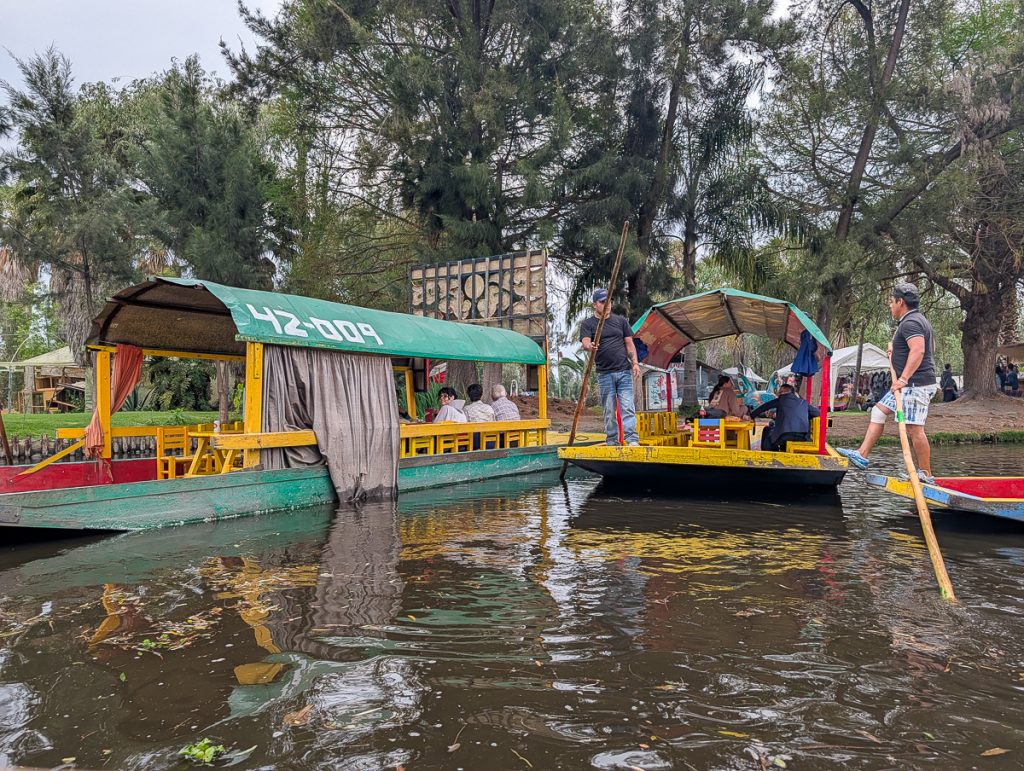
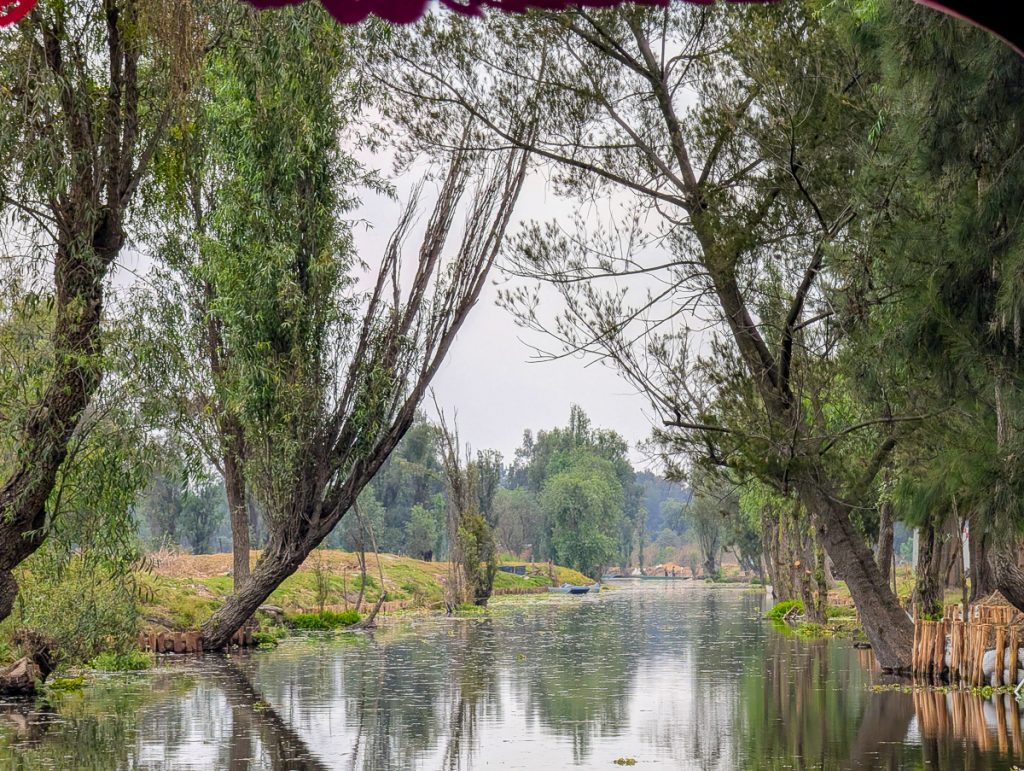
These more responsible tours take you deep into the quiet, ecological reserve zones, far from the party crowds, where you can see active restoration projects in action.
You’ll have the opportunity to visit traditional chinampas, learn about the reintroduction of the axolotl, and support the local families who are fighting to keep this ancient ecosystem alive.
There are a few ethical tours to choose from, but I’m going to highlight the company we booked with, as I have first-hand experience with them!
In general, though, when visiting Xochimilco, look for tours that focus on conservation or farming. Avoid the superficial party-boat tours.
Book with Xolito Xperience Tours
I suggest booking with Xolito Xperience Tours. They are locally and indigenous-run. You can still get the experience of riding a colorful trajinera boat and tasting mezcal, but their tours are different. Xolito operates purpose-driven tours that not only educate guests on conservation but also directly support family-led axolotl conservation financially.
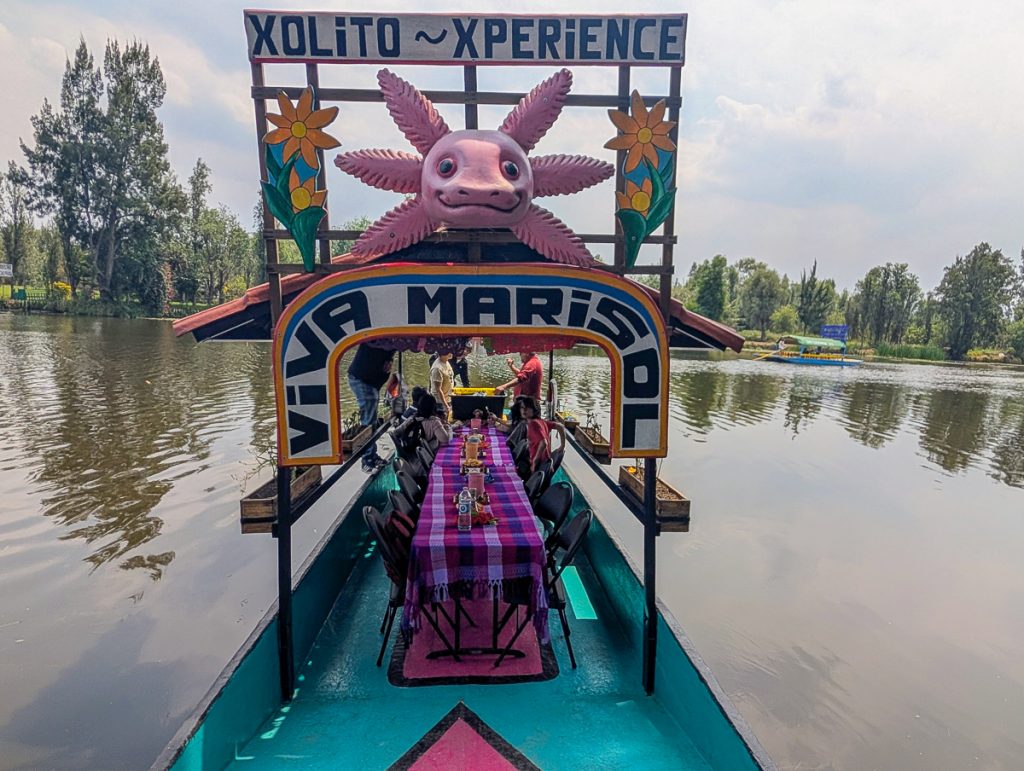
They run two different tours: a quiet morning kayak experience through the canals, and the conservation-focused trajinera boat tour to learn about conservation and see axolotls.
To book the kayak tour, you will need to message them on social media, as they don’t have a website. However, the tour I booked is available with convenient booking through my favorite platform, Get Your Guide, at no additional cost to you. Get Your Guide is safe and trusted, and you can cancel at any time. It is the first tour that pops up when you click the link.
Xochimilco Eco-Tour Start to Finish
Now that you’ve booked, what can you expect? I’ll cover everything you need to know to have a great day and set expectations.
Getting to the Meeting Point
When you book on Get Your Guide (book the first tour), you will be given a meeting point. Your first hurdle is getting out there before the start of your tour. You will want to arrive about 15-20 minutes early, just to be on the safe side. There is a lovely canal you can walk along, and birding opportunities if you arrive early.
Most people we talked to took an Uber or a taxi to the starting point. This is a convenient and fast way to ensure you are dropped off at the starting point.
We did this and honestly were happy with our choice. We got picked up at our accommodation and dropped off right at the tour location. We traveled on a public holiday with no traffic, but Mexico City is known for bad traffic, so keep an eye on the drive time with Google Maps and PLAN AHEAD, giving yourself plenty of time. The drive can take anywhere from 40 minutes to 1.5 hours.
Public transportation is possible, and Google Maps will help you. It takes about 2+ hours, depending on the route you take.
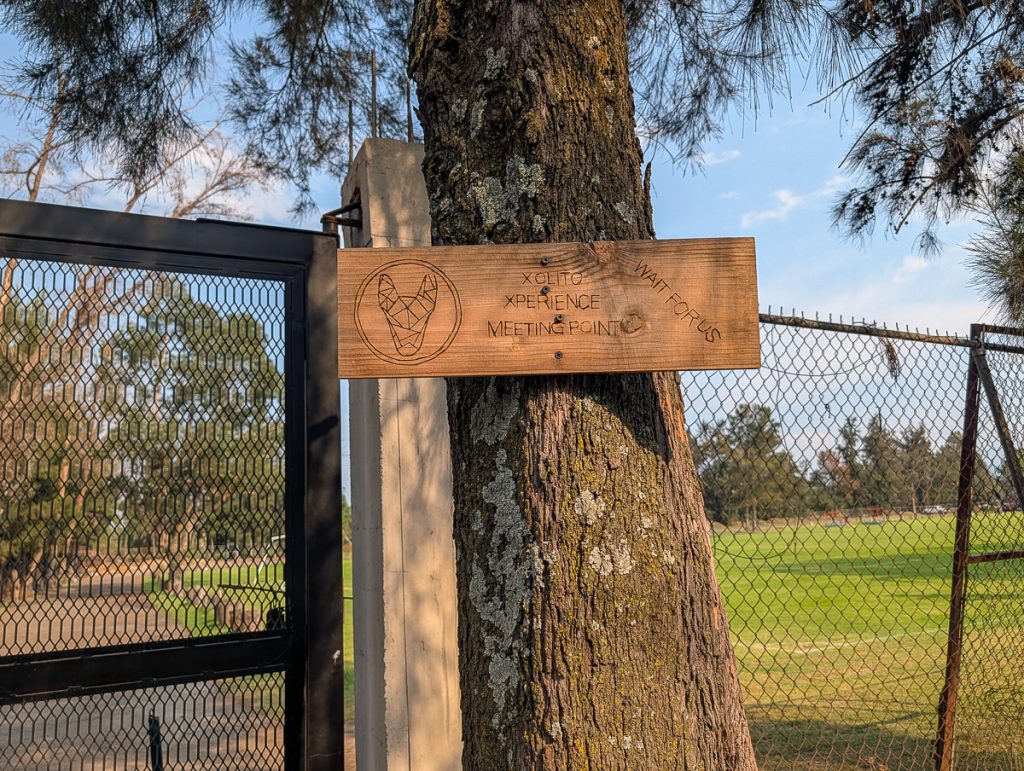
What to Expect: The Best Xochimilco Eco Boat Tour
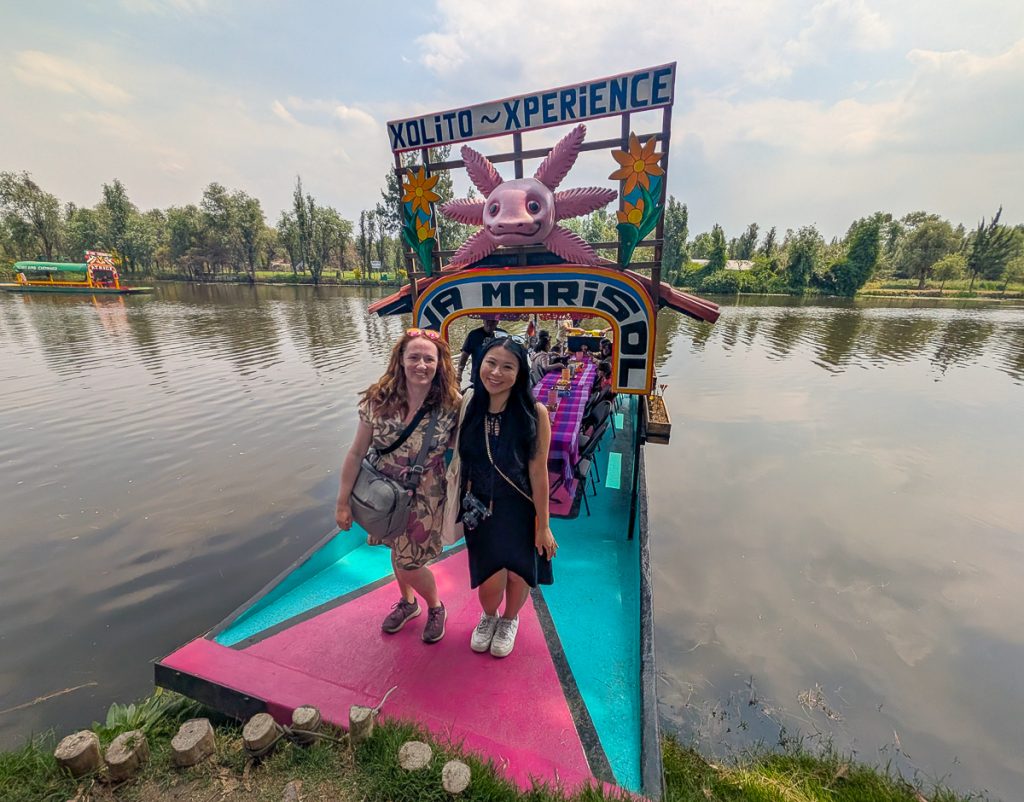
Around the start of the tour, Alan will come and get the group gathered at the meeting point. He will bring you out to the colorful traditional boat. There is a brief option for a bathroom break. But without running water, it is a pit stop, for sure.
Once you are loaded up on the boat, you can meet the other guests and enjoy some light snacks (peanuts and chips). The boat’s driver will get things moving as Alan talks about the day ahead.
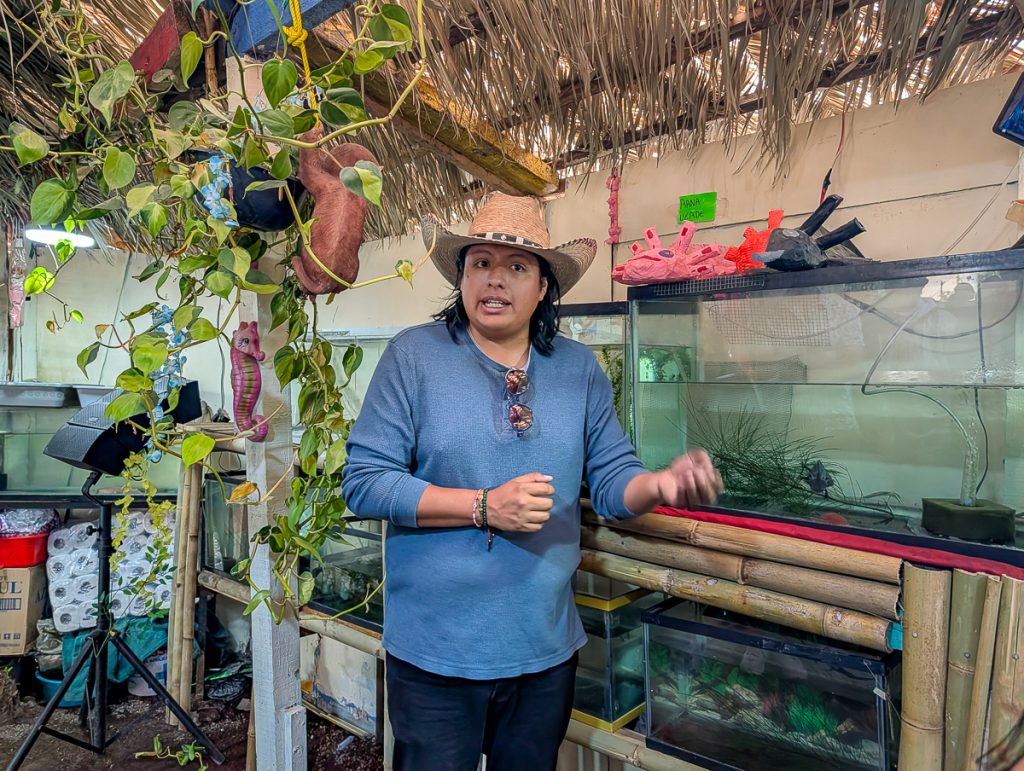
Once you are on the canal and moving, there will be an introduction to the ecology of the canals. Alan is an excellent science communicator and knowledge keeper. He shares detailed information about pollution, tourism, agriculture, culture, and the species found in the waterways.
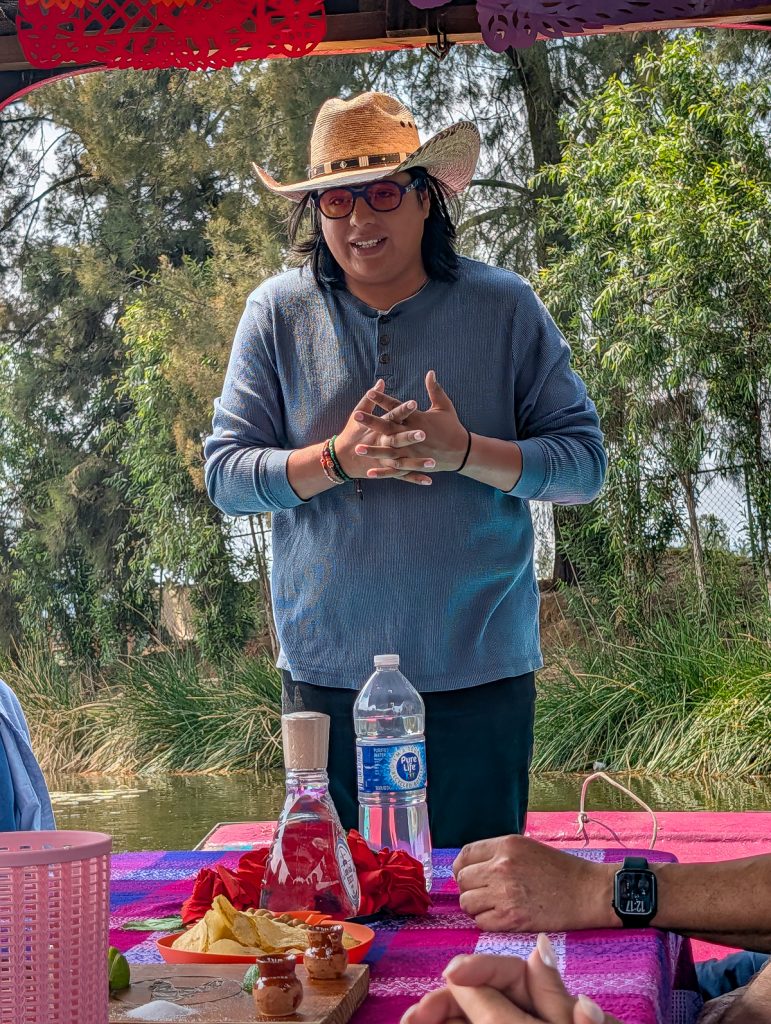
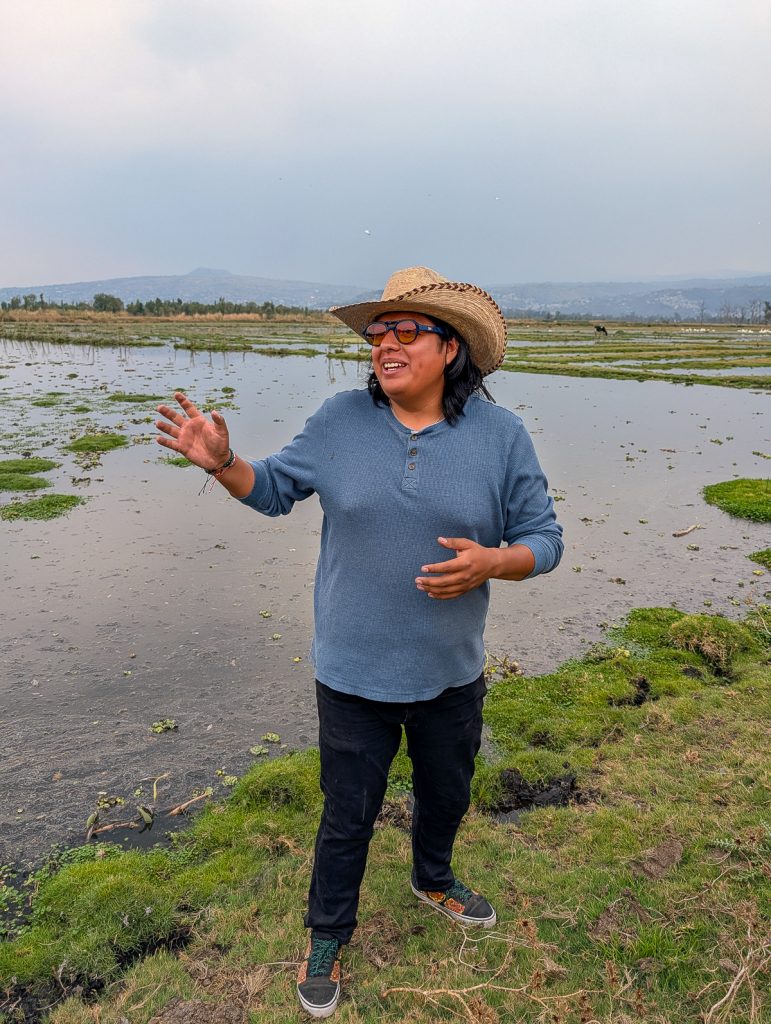
Honestly, Alan was a highlight of the tour. We were so grateful to have him as our guide. His dad was even on tour with us! Alan’s dad works at the NAUM as a researcher working on axolotl conservation, while Alan holds down the fort with an ethical tourism experience. What a great family!
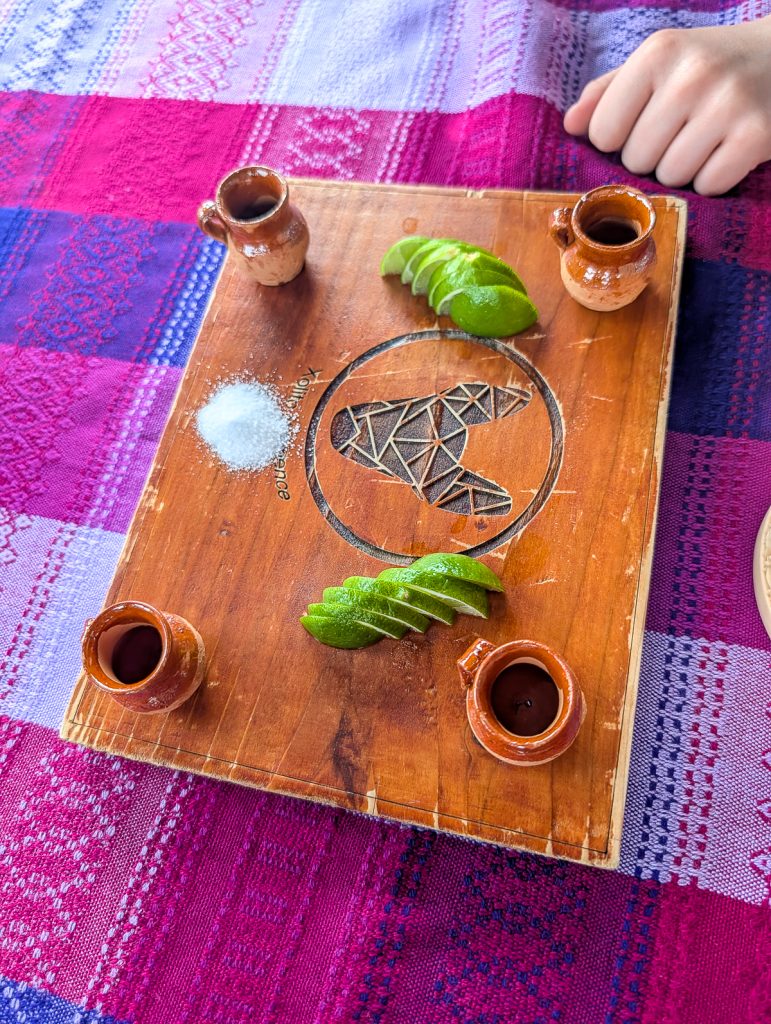
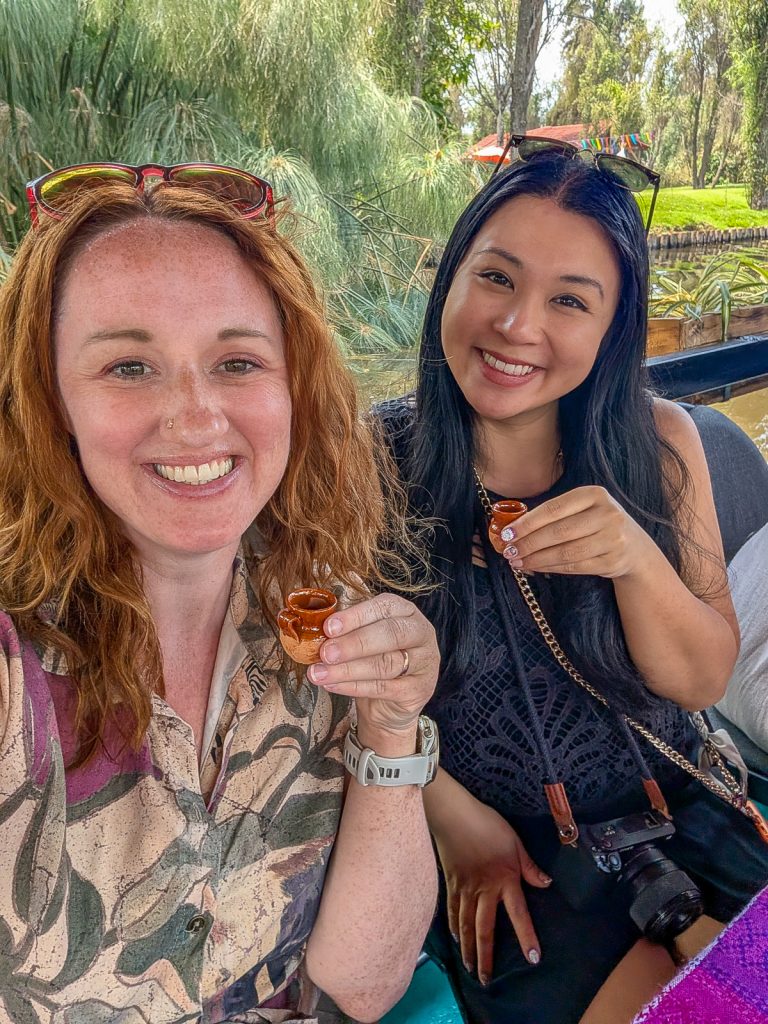
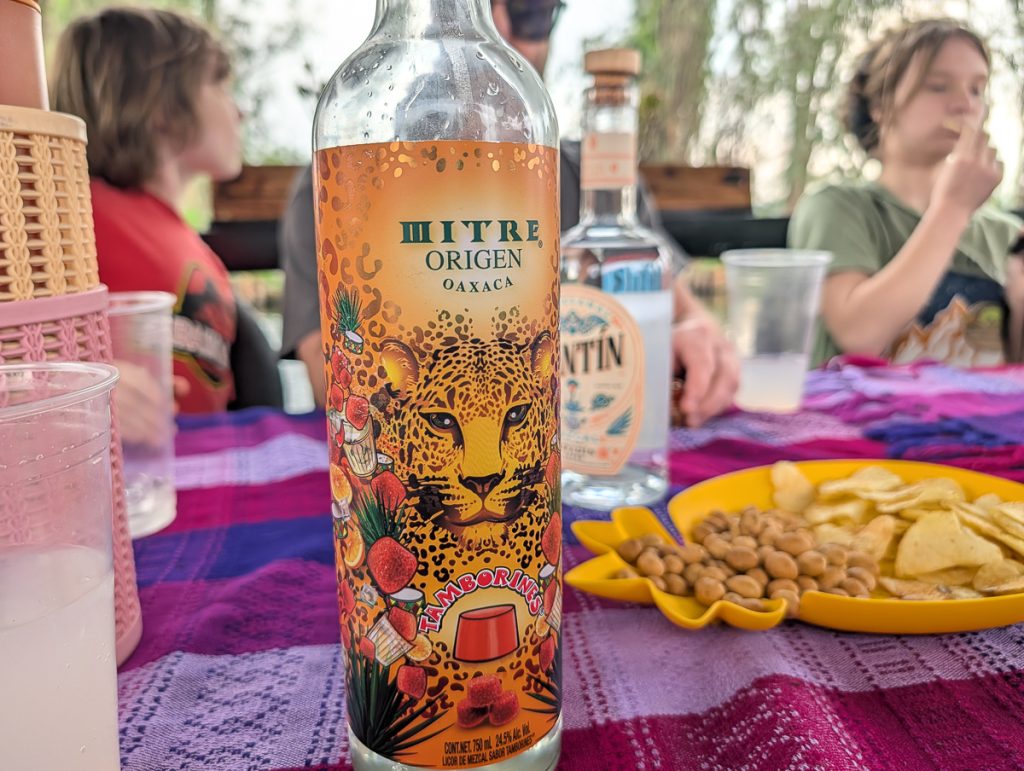
At some point, a bottle of tequila and mezcal will circulate, allowing you to try some artisanal mezcal. This isn’t a party boat, but you do get to try some fine mezcal in a relaxed and educational setting. I joked that my favorite way to engage in ecotourism is conservation, science communication, and fine mezcal.
Stop 1: Island of the Dolls
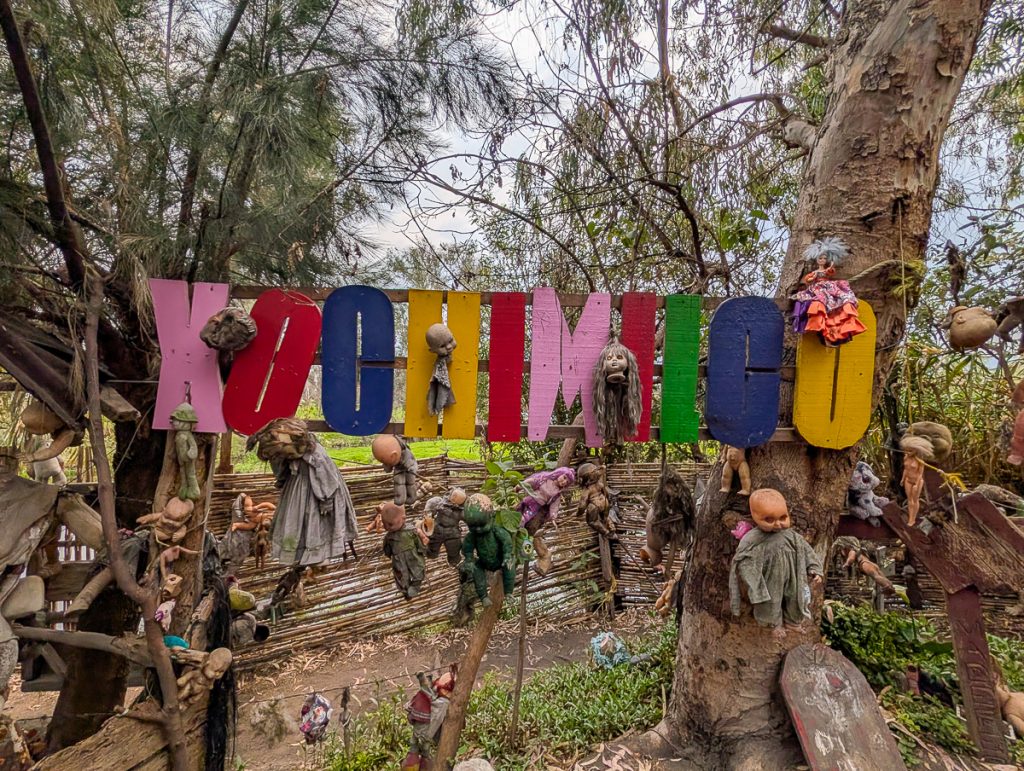
The first stop of our tour was the Island of the Dolls. This might not be on every tour, depending on timing and the situation; other tours may visit a farm. The Island of the Dolls is a spiritual site.
Unfortunately, it has become a popular spot for Instagram tourism, but Alan, as a certified guide, can take you to a private area where you will learn about the resident farmer who lived and worked here until he found the body of a girl in the canals. The rest of his life was spent making peace with her spirit and curating dolls to keep her happy.
Whether you believe the story or not, it is asked that you be respectful of the site.
Stop 2: University Research Site
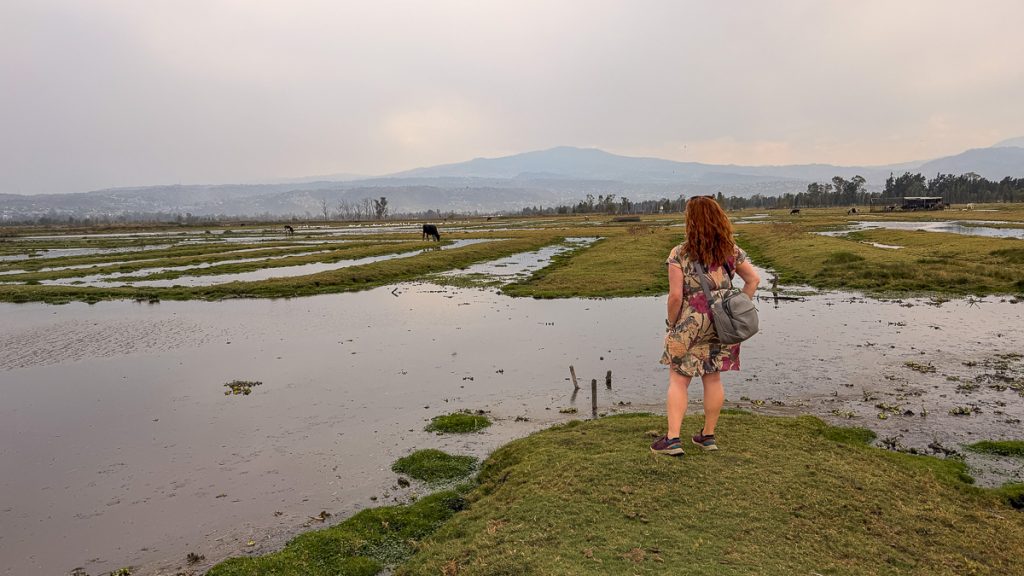
On the boat ride to the next stop, enjoy talking about conservation and learning all about axolotls with your local guides. On this leg, Alan talked about invasive species and the impacts of colonization on cultural agriculture practices.
The next stop is a site managed by the National Autonomous University of Mexico and a local family. Here you will learn about the difference between the wetlands and canals, and how the university is using natural predator-free pens to breed and reintroduce the axolotl to the wild.
Intermission: Games!
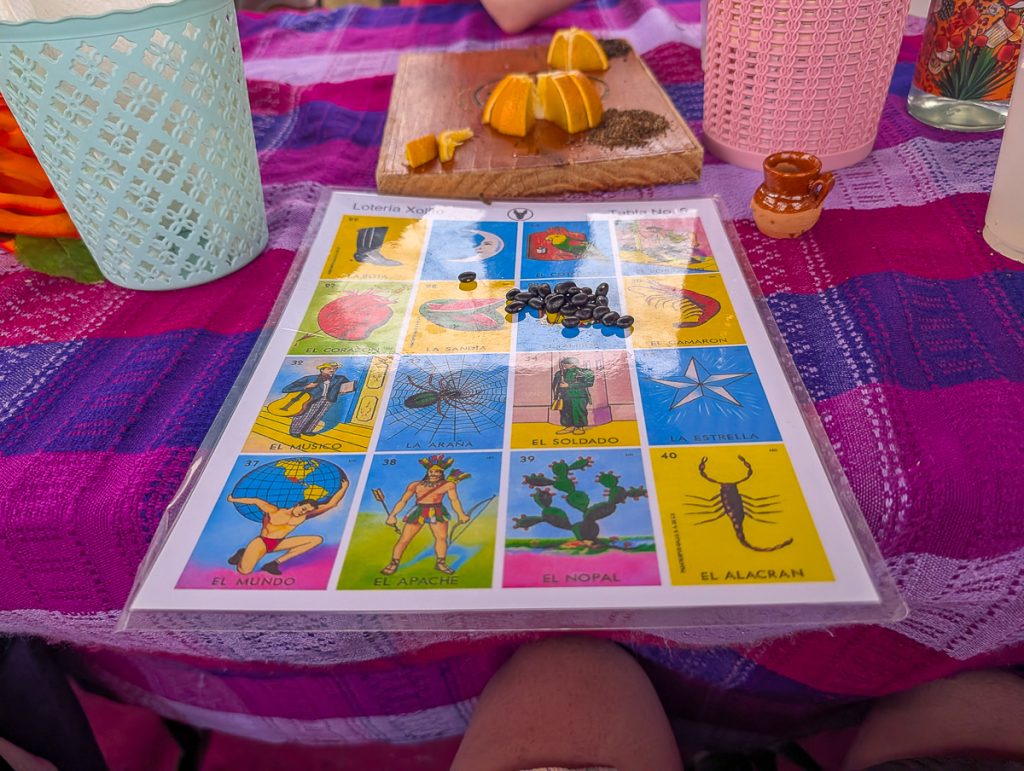
The next section of the canal tour is long. Your guides keep it entertaining by getting you to play some local games. Don’t worry, it’s not hard. Play a traditional Mexican bingo to learn Spanish phrases.
If you win, you can choose to spin a dice (to drink) or sing karaoke.
Another game was a prank game to see who pays the “bill”. It is a great time to learn about the other travelers in your group and have some laughs.
Stop 3: Family-led Axolotl Conservation Center
One of the benefits of booking with Xolito Xperience Tours is that they take you to the only family working directly with the Mexican government to breed and reintroduce axolotls.
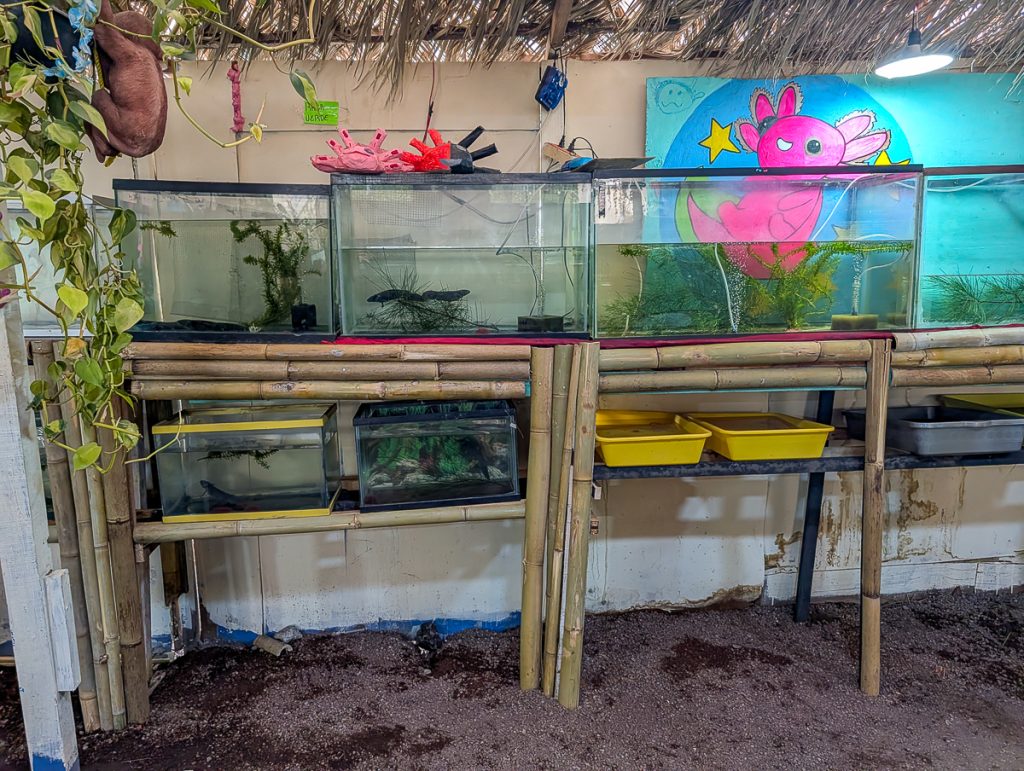
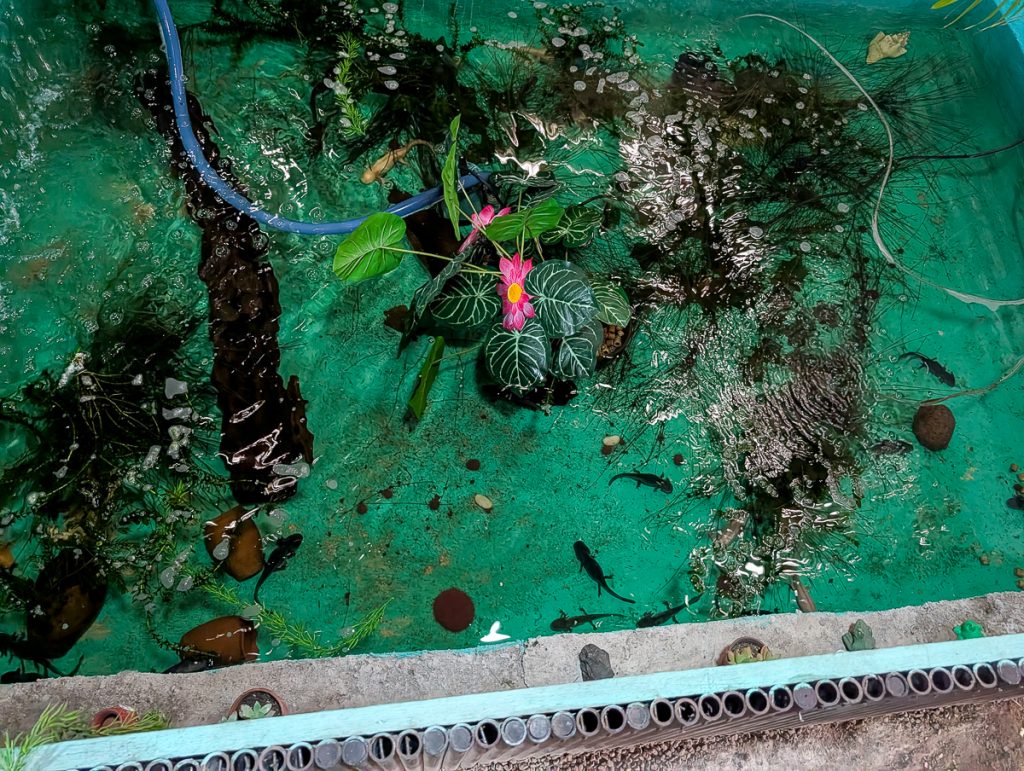
This is your chance to see the species and learn about the difference between the pink and black ones, and all about breeding and reintroduction. The axolotl are captive in tanks as the family works directly with researchers and governments to breed them.
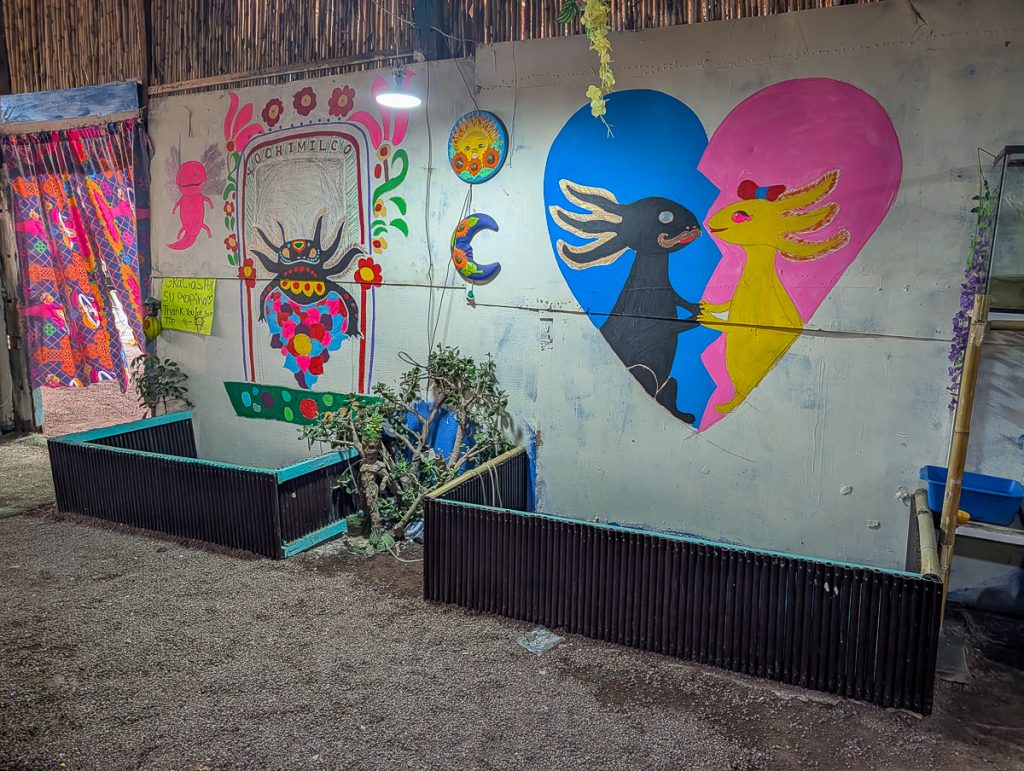
Other tours take you to see axolotl, but this is the only family actively certified in conservation work. The others are just captive axolotls in tanks and are no different from seeing them in the zoo. Alan spent some time talking about the facility with us before we had time on our own.
A couple of things to note here. While this family is doing amazing work to save a species, it is still rural Mexico. This isn’t a high-end facility. The tanks are small and simple, and there are a few other animals, like chickens in cages, that the family uses for agriculture.
You get some time here to see and learn about conservation, grab some street food, and use the loo.
Don’t forget to donate to the family if you have some extra cash on hand.
What to Pack
We had average weather. It wasn’t bad, but it was chilly on the water, and the air pollution was quite bad.
- You’ll want some layers to keep warm if it is chilly
- Good walking shoes, as you will be on and off the islands
- Camera and phone
- Snacks if you need
- Toilet paper and hand sanitizer
- Sunnies and eco sunscreen
- Reusable water bottle
- Mask or inhaler if you have asthma and breathing difficulties
Things to Know About Your Axolotl Tour
Toilets: There are 2 toilet breaks on your tour. These toilets are bucket flush without running water. Bring your own toilet paper and hand sanitizer.
Tipping and cash: Bring some cash to tip your guide and boat driver. We gave about 200 pesos each. We also had some cash on hand to buy a few snacks and souvenirs from vendors.
Food: The tour is during lunch hours, so eat a big breakfast before or plan to get an early dinner after. I also grabbed a cheese quesadilla from the family conservation center. They provide snacks on the tour, which include peanuts and chips.
Family-friendly: The tour was family-friendly. There were older kids (6-12 years) on our tour, excited to see the axolotls. They have non-alcoholic drinks for kids and those who don’t drink. It is not recommended for super young kids or people with wheelchairs.
Timing: While advertised as 2 hours, our tour was closer to the 3-hour mark. We were happy as we got to see and learn more, but I would suggest not booking anything right after the tour in case yours runs longer.
Cost and Booking: The tour is about 1,400 pesos. For us, it was about $106 CAD per person. Book through Get Your Guide for clear communication, transactions in your currency, and protection.
You can also reach out to them on social media to book directly. They will offer you a slight discount.
Plastic pollution: As stunning as the waterways are, they are littered with plastic pollution. This is a direct result of poorly managed tourism, colonization, and urbanization. Booking an eco tour is one of the best ways to combat this, but also ensure you keep all your belongings close to you on the boat.
You are given the chance to have a cocktail in a plastic single-use cup. If you choose this, don’t let it blow away in the wind after you finish.
Comment and Share Xochimilco Eco Boat Tour
Xochimilco is a vulnerable and sacred ecosystem. Long before the Spanish arrived, the indigenous Nahua People cared for the land, farming in a symbiotic relationship with the land. Colonization dramatically changed the landscape and livelihood of the people here. The threats to Xochimilco are so serious that many fear these wetlands, farms, canals, and axolotls will not be around in 50 years.
Party tourism is part of the problem, but there is a more responsible way to visit the Xochimilco UNESCO World Heritage Site. Book a tour with indigenous guides to learn about and support local axolotl conservation, and learn about the environment.
Don’t worry, you still get to try mezcal and play games, but these tours give back and have more meaning and impact.
Make sure you save and pin this guide to make sure you support eco tours and responsible tourism in Xochimilco as a day trip from Mexico City.
Curiosity Saves Travel Recommends
Accommodation: Booking.com to find accommodation with a Genius Discount and clear third-party sustainable certifications like Green Key. Look for local hotels.
Tours and Excursions: GetYourGuide and Viator for tours, excursions, and tickets. Never book wildlife experiences through these vendors.
Travel: Omio for booking buses and trains in English across Europe. After reducing the number of flights I take annually, I use Google Flights’ carbon comparison tool.
Car Rental: Rentalcars for the best rates in English globally. It is easy to find hybrids and EVs, and there are resources for finding chargers.
Packing Essentials: REI or your local Co-op has great essentials like reusable water bottles and cutlery sets. Patagonia for regenerative clothing. Farm to Feet for socks made with regenerative practices! Pistil Designs for cold-weather essentials. Osprey for bags that last 10+ years, like the day bag for hiking or my favorite carry-on.
eSIM: Airalo eSIM. Reduces waste from single-use SIMs. A total game-changer.
For Bloggers and Content Creators
Earn Ad Revenue with Journey by Mediavine
Earn with Stay22 Travel Partnership (my biggest source of income!)
Earn with TravelPayouts recommending tours and activities.



Thank you for sharing this indigenous led Xochimilco boat tour. It can be hard to find authentic and conservation focused tours amidst the many guided tours in the area.
Yeah, we really had to work to weed out the more extractive tours. I’m so happy we found an ethical and indigenous-led tour in Xochimilco.