
Visiting Kitselas Canyon National Historic Site in BC
I may earn income from affiliate links or partnerships in this post. I spend time to curate tours or products that align with my values. Thanks for supporting my work, at no additional cost to you. All words and images on this website are created by real people.
Are you curious about visiting Kitselas Canyon, a prehistoric Indigenous site in Northern British Columbia? For those traveling the scenic stretches of Highway 16, this National Historic Site of Canada is the perfect stop. It is a step back in time, where the Gitselasu people have lived along the banks of the Skeena River for over 5,000 years.
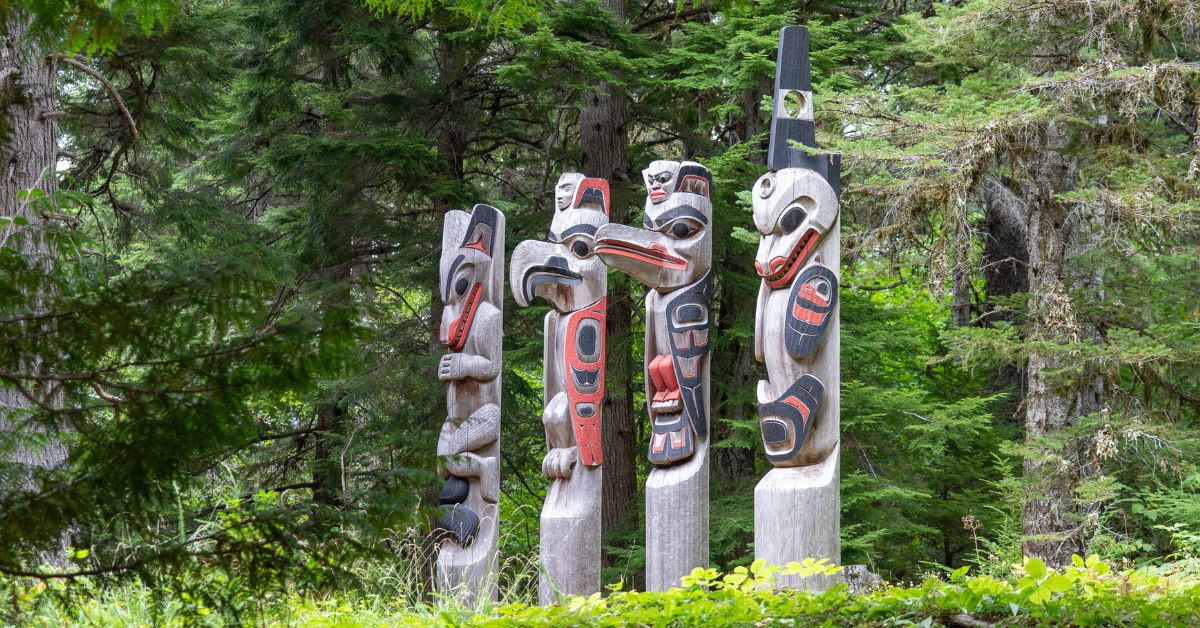
A visit to Kitselas Canyon offers a rare opportunity to connect with one of the oldest continuously inhabited areas in North America. Visit four small museums and walk through a moss-draped forest, past prehistoric village sites, to see preserved artifacts and newly raised Pts’aan (clan crest poles, or what you might know as totem poles), then to the banks of the Skeena.
There is something for everyone here. For those drawn to the calm, peaceful nature and cultural heritage, this guide covers everything you need to know to experience the magic of Kitselas Canyon.
I also share practical essentials, such as how to get here from Terrace, entrance fees, and choosing between an independent or an immersive guided tour, to ensure your visit to this sacred canyon is purposeful and seamless. Of course, as always here at Curiosity Saves Travel, we will also explore the area’s cultural and natural history to create more purpose-driven experiences.
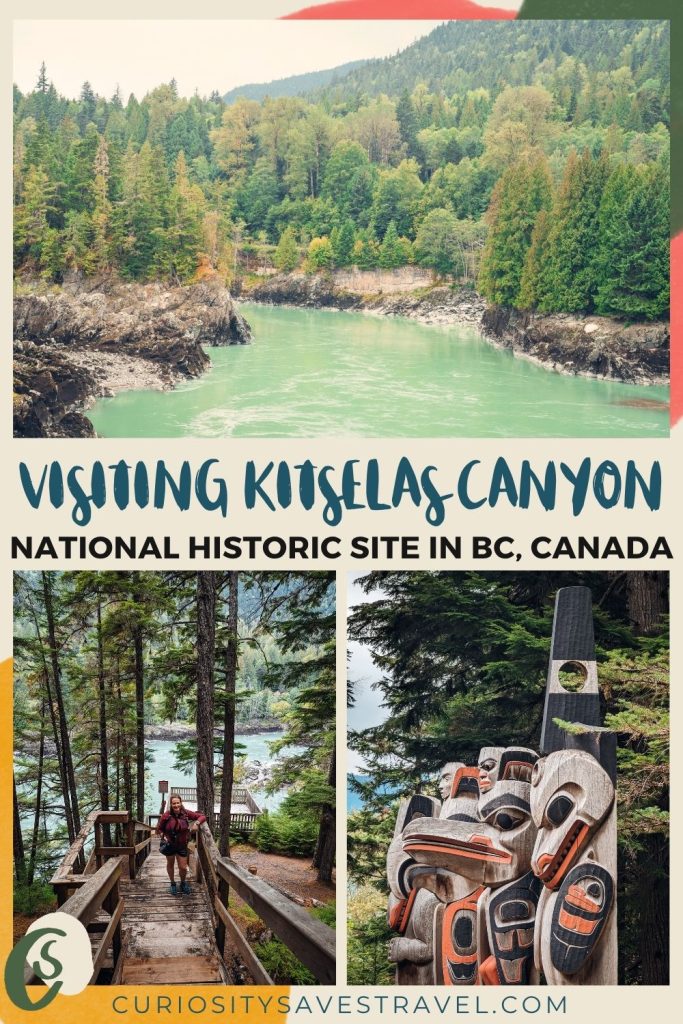
During our month-long road trip across our home province, British Columbia, the Kitselas Canyon was a highlight. The perfect road trip stop, we spent a little over an hour here exploring this beautiful and ancient site. We got to learn about the Gitselasu People as we explored the national historic site.
In fact, this site is part of a list of 20 incredible Indigenous experiences to have in British Columbia. Visiting here is a meaningful way to support regenerative tourism in action and uplift Canada’s First Nations.
About Gitselasu People
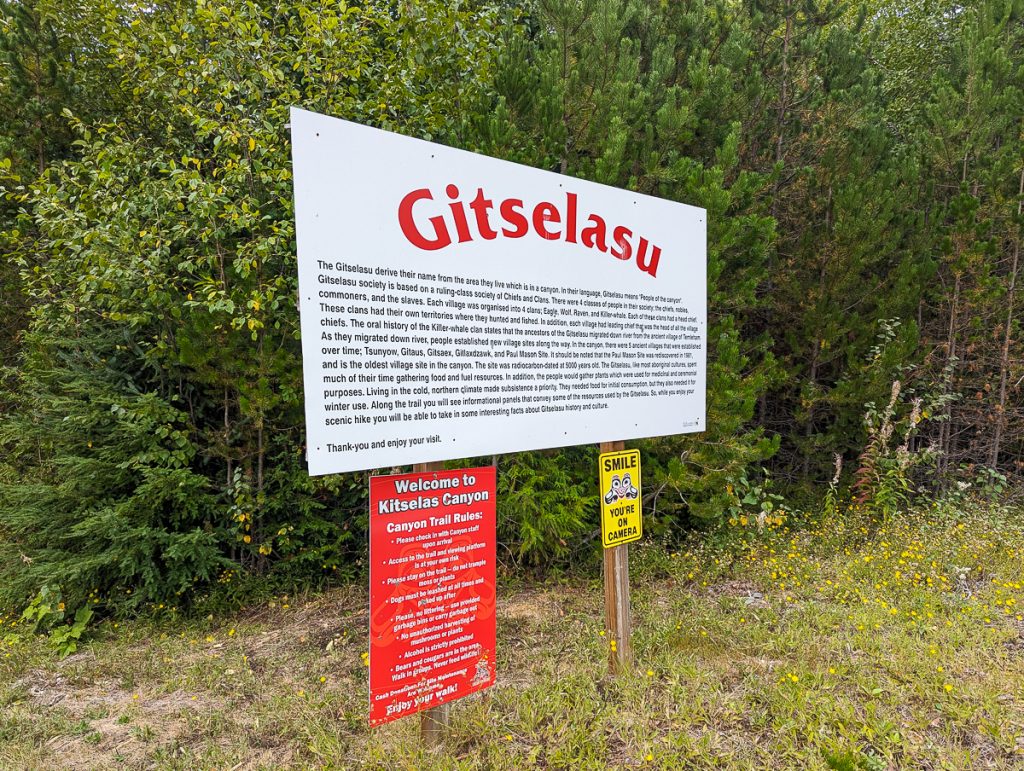
Kitselas Canyon is the home of the Gitselasu people, who are part of the Ts’msyen First Nation. Gitselasu, which means “People of the Canyon,” inhabited this region for time immemorial, but they established permanent villages along the Skeena River at least 5,000 years ago.
The Gitselasu People had deep cultural traditions shaped by nature, including Halayt (shamans). These leaders would enter caves along the Skeena River. Here, connecting with spiritual and earthly forces, they would imbue their “medicine sticks” with stones from the earth.
For this reason, the Skeena’s geology and the landscape along its banks are sacred as well as practical for hunting, fishing, and regulating trade and commerce.
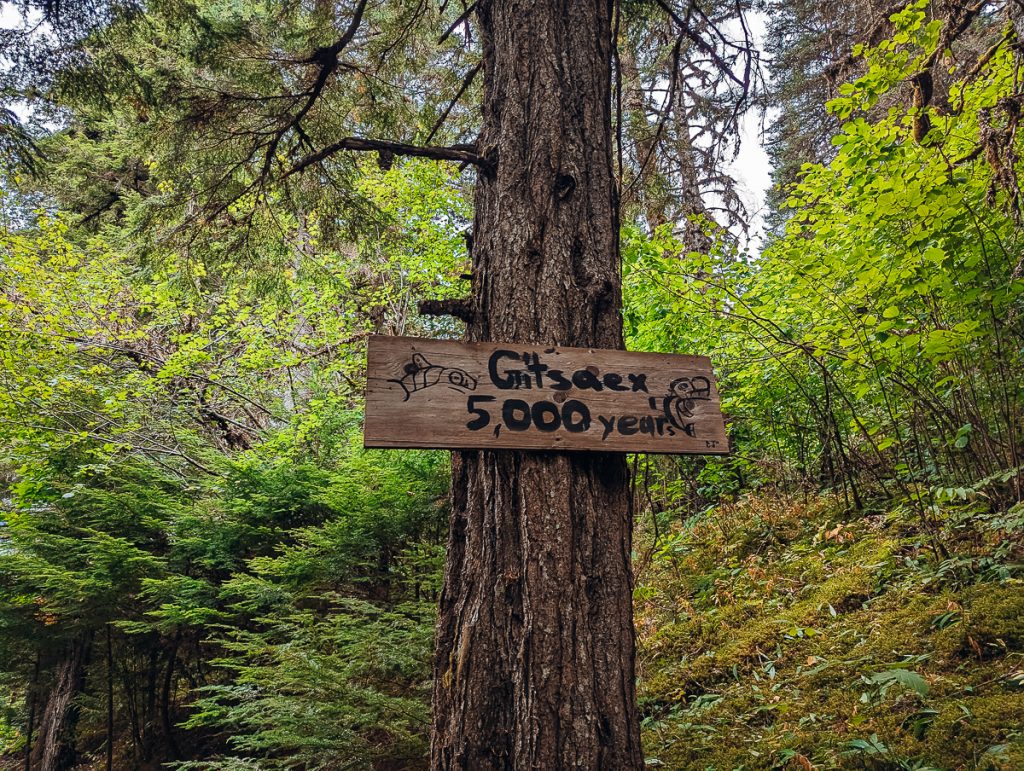
Six Gitselasu villages were founded along the Skeena’s Kitselas Canyon. One of these was a large, relatively modern fortified compound of Gitseax and Gitlaxdazwak. These villages were inhabited and occupied well into the late 19th century.
The large fortified village site that remained until the 1850s is what makes this area particularly unique. It was here that the Gitselasu people controlled commerce and trade with colonial occupiers along the Skeena. They were able to control and manage trade, charging people, including the Hudson Bay Company, for passage along the Skeena.
To suppress Indigenous land rights and force economic control in favor of colonial powers, many discriminatory laws, now considered acts of genocide, were passed. These laws, such as the Indian Act and the Constitution Act, reduced the size of land and rights, and forced many nations onto reservations. In 1872, the British Empire fully took control of the Skeena River from the First Nations.
Even with pushback and advocacy from the Chiefs who traveled to Victoria to fight for their land and rights, Canada and Commonwealth powers continued to reduce the size of the Giselasu People’s land and their rights.
With smallpox and other influenza pandemics killing most of the Gitselasu elders, leaders, and knowledge keepers, it wasn’t until the 1990s that a working treaty for the Gitselasu People gained traction.
The Gitselasu People lost so much, but with progress on the treaty, they have slowly regained land autonomy. Kitselas Canyon is integral to reconciliation. They can share their history and culture with visitors in ways that benefit their community. We, as visitors, benefit from this in a more culturally immersive and engaging way, which also benefits the nation.
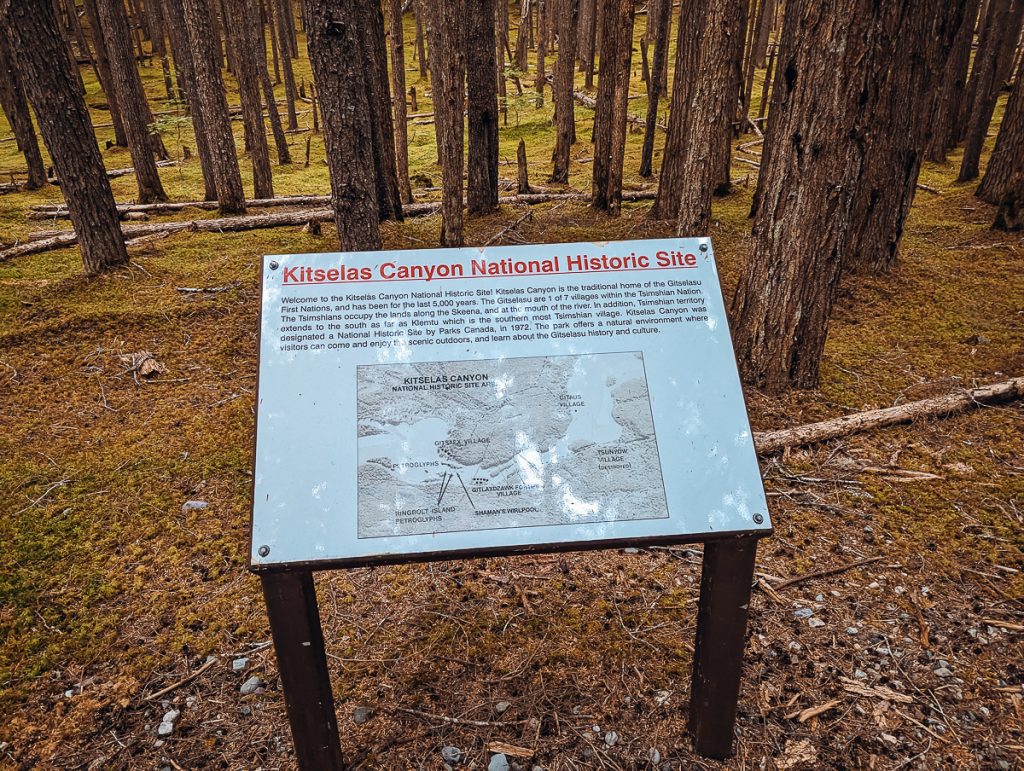
About Kitselas Canyon
Just a 10-minute drive from Terrace, BC, this canyon is home to ancient village sites dating back thousands of years, and to 4 museums to explore.
Physical remains of the six ancient village sites are non-existent. Sadly, the loss of land rights and forced displacement meant that these villages and fortified sites were completely destroyed. But a long history remains, and you can still visit the places where these villages once stood.
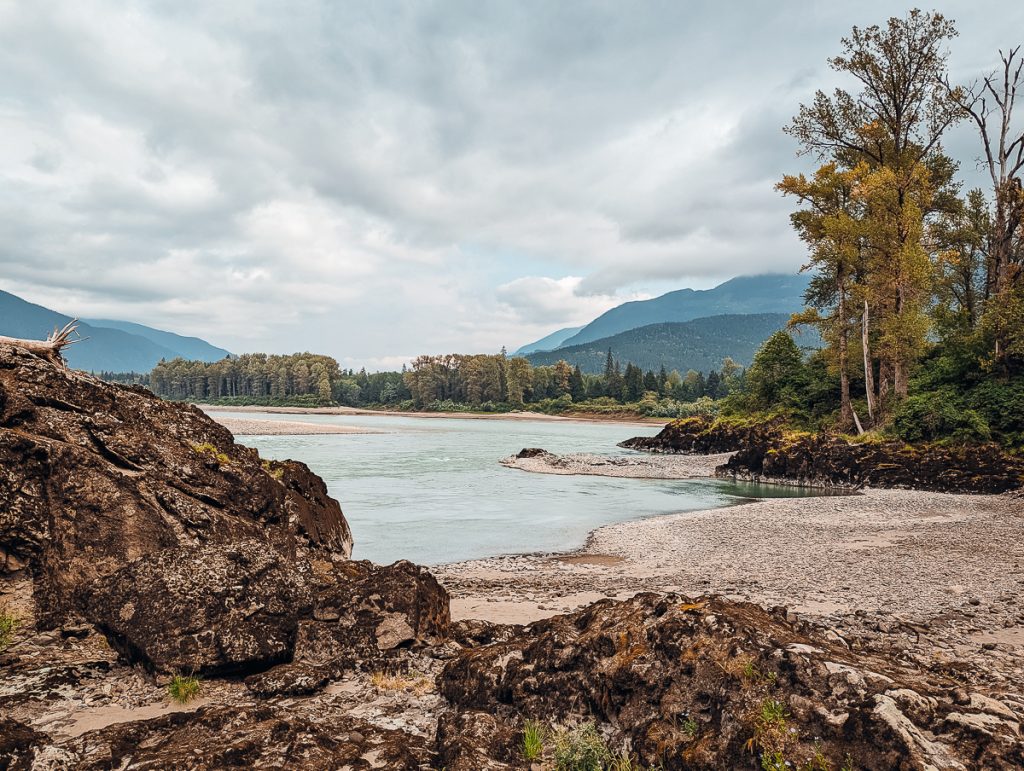
It was in caves along the river that the notable petroglyphs were found carved into the stone. You can see replicas of the petroglyphs in museums, but the location of the original cave is kept secret by the Gitselasu to protect their sacred site.
When we visited, the Gitselasu band had only just recently overtaken as the primary land stewards of this site, managing it for tourism. They are working hard to manage the historic site in ways that benefit their nation, align with their culture, and offer us, as visitors, a more enriching experience.
They have carved new ts’aan, curated new museums, and offer a more culturally immersive experience.
Visiting Kitselas Canyon
We visited Kitselas Canyon during the shoulder season. It was quiet, and the Gitselasu land keeper was doing maintenance on the four museums and the trail infrastructure. They weren’t running guided tours at the time because it was outside the peak summer hours.
We were more than happy to take the self-guided option. At the visitor center and gift shop, we paid our $12 entrance fee. We took some time to browse the gift shop, which has a wonderful selection of local products.
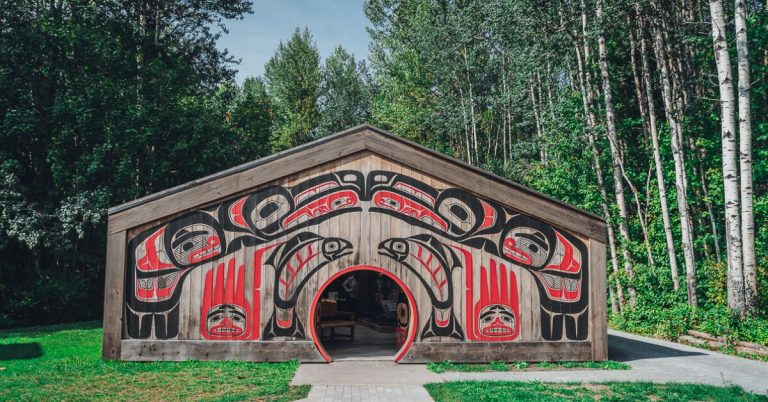
We first stopped at all four museums, each designed like a longhouse. These museums are small, single-room spaces, so you can easily visit all four before departing on your nature walk.
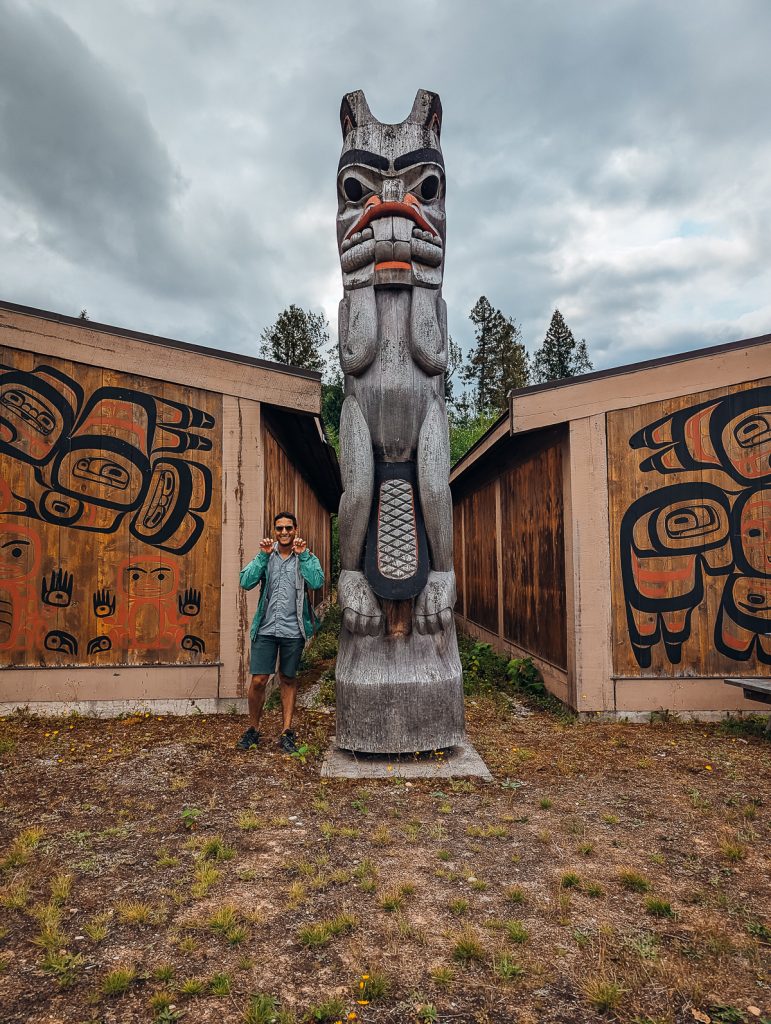
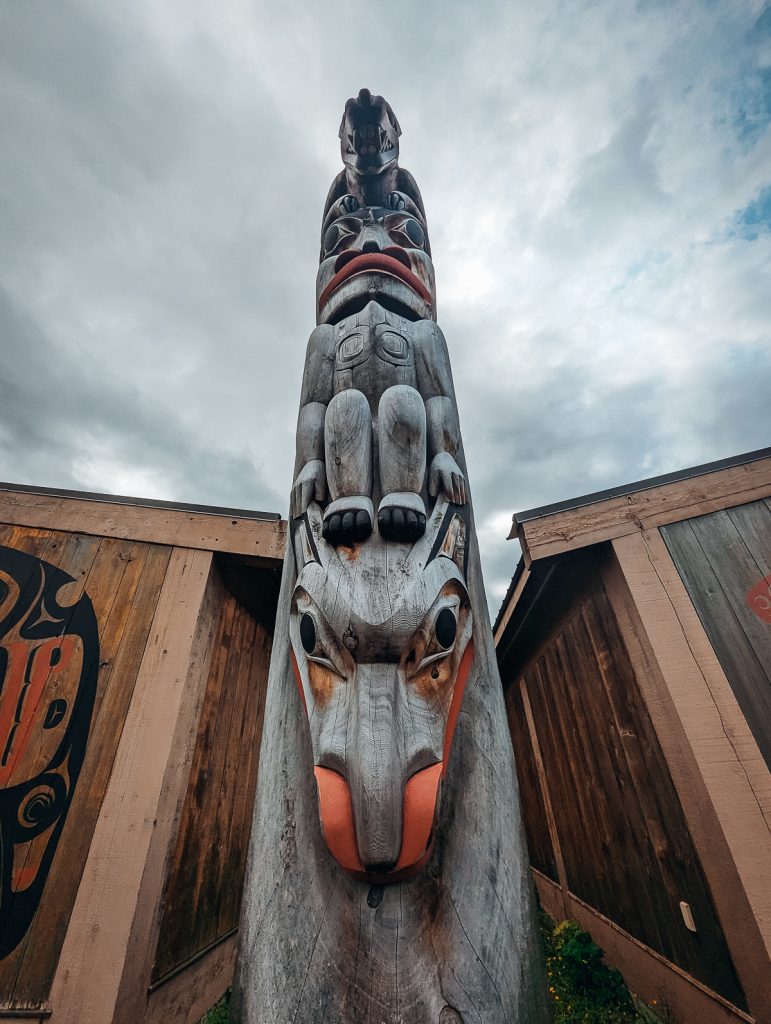
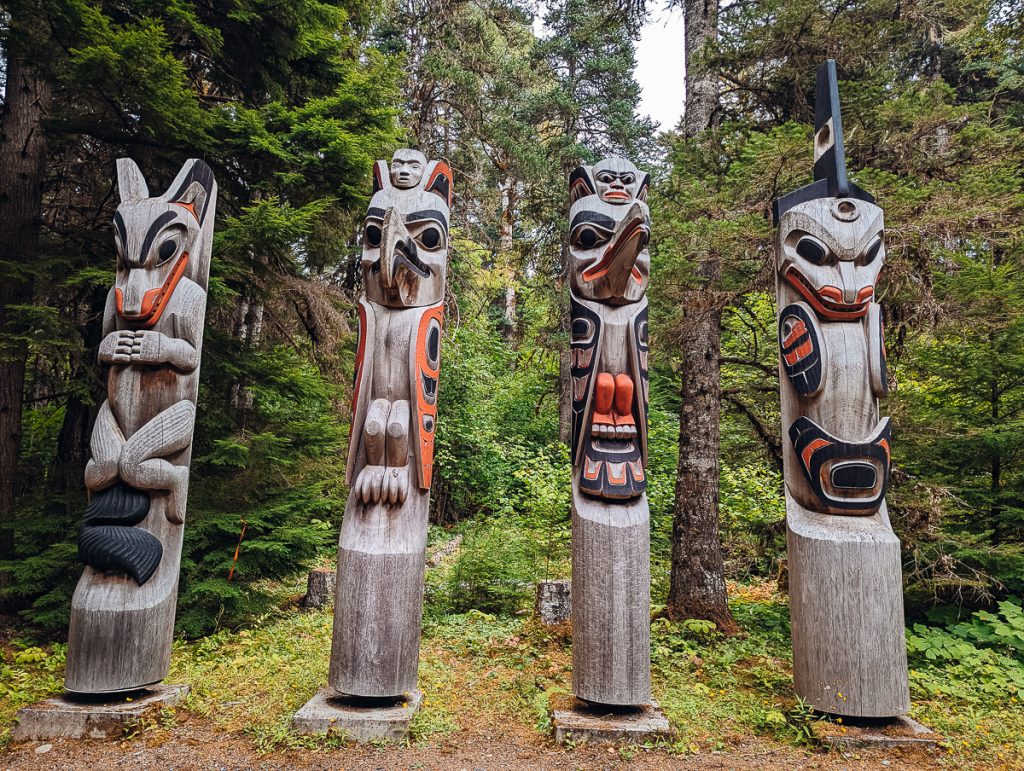
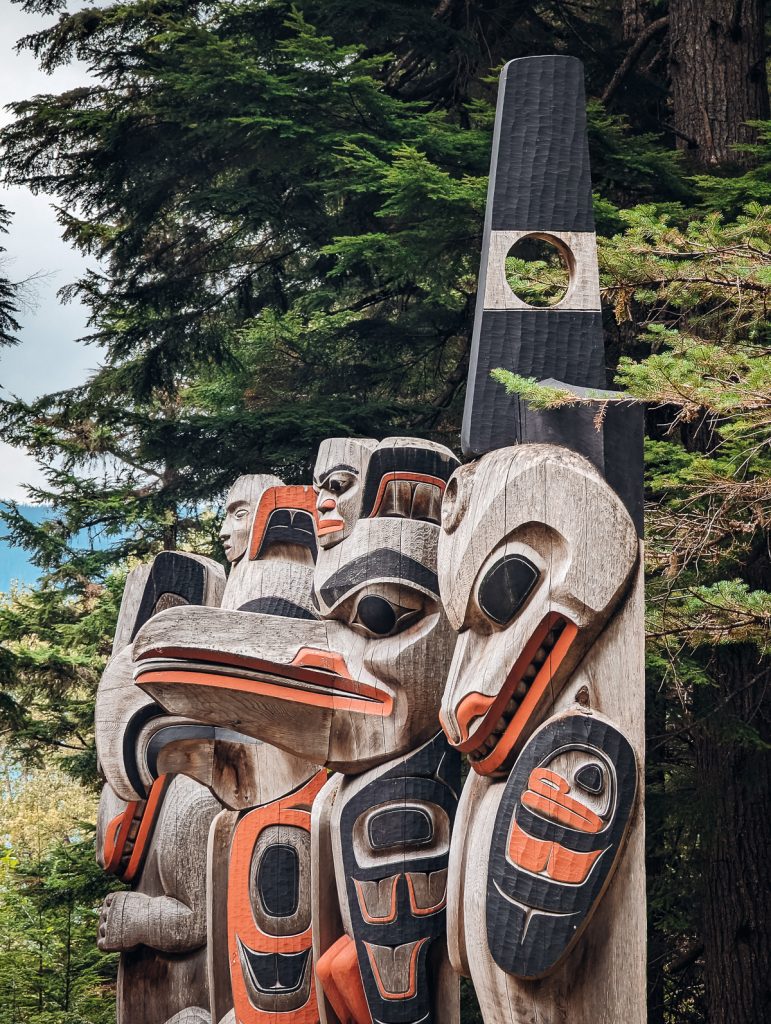
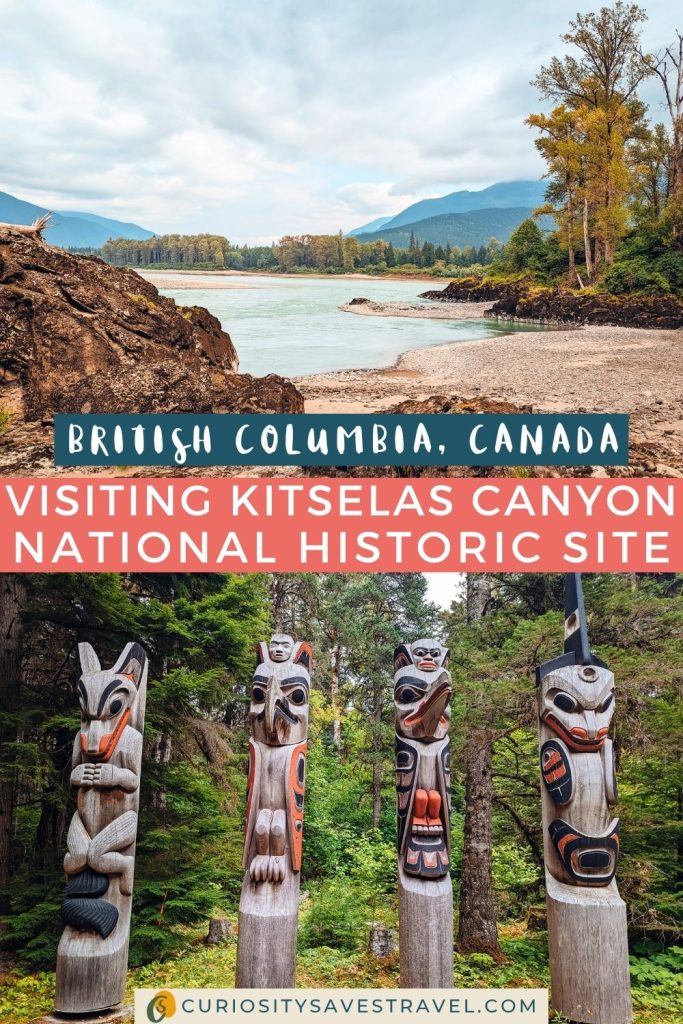
Each pts’aan outside a museum represents the four Gitselasu clans.
- Wolf — Laxgibuu
- Eagle — Laxgiik
- Raven — Ganhada
- Orca — Gispudwada
The Eagle museum housed the petroglyph cast. Here you can see an imprint of the original petroglyphs found on this site. They were carved during spiritual ceremonies. The most famous of these became the mascot for Kitselas Canyon.
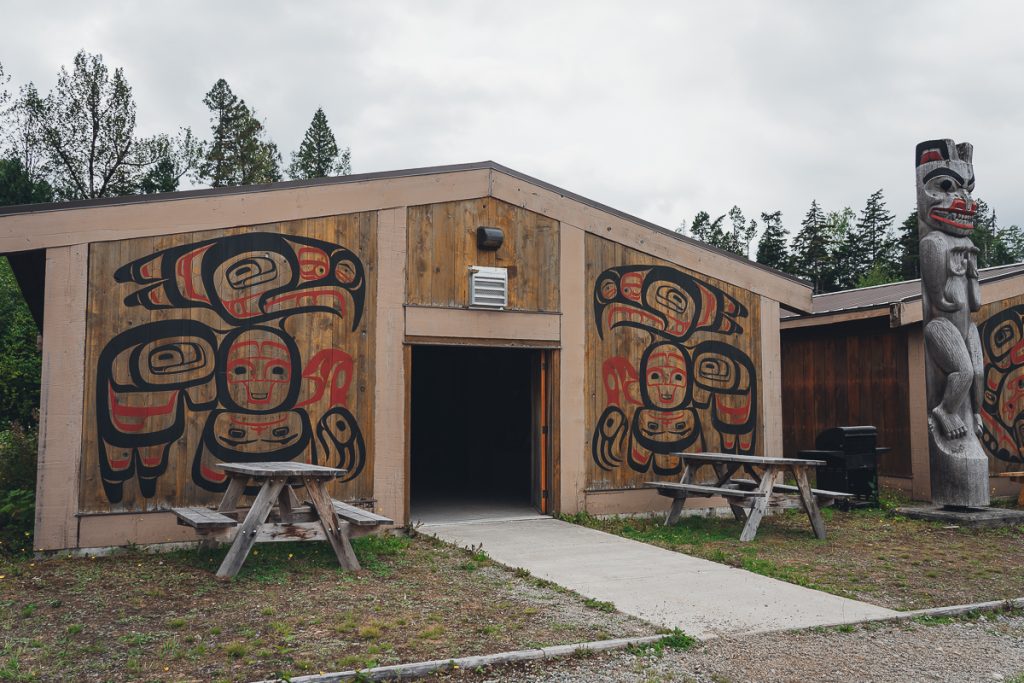
Inside the Wolf museum were some artifacts from the colonial era. Here you’ll see replicas of the ships that traveled along the Skeena and some of the items traded.
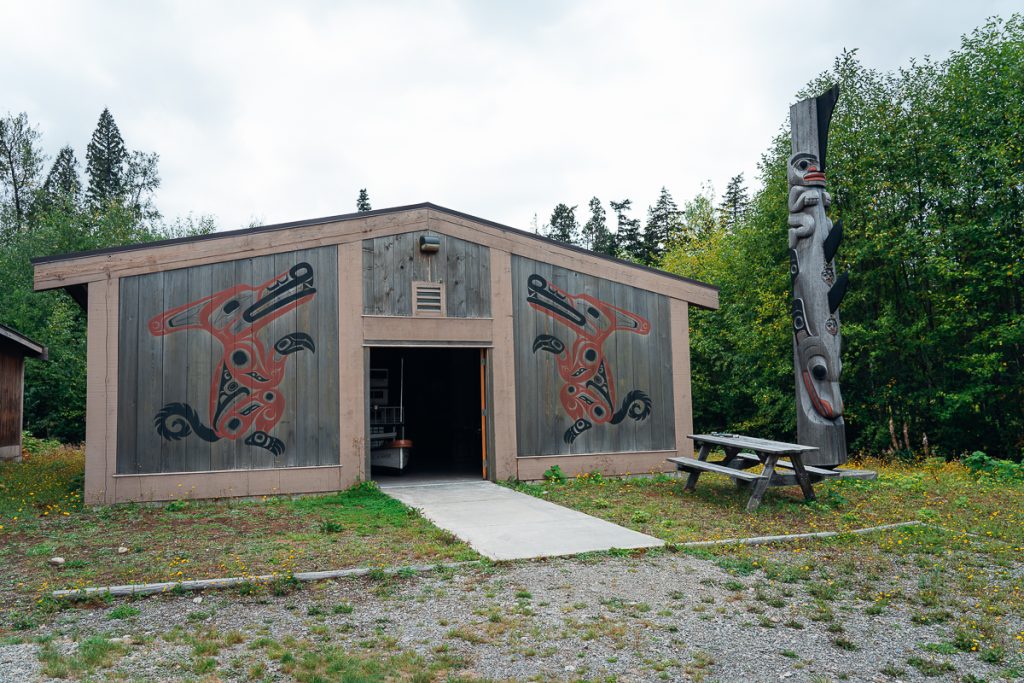
The Orca museum houses beautiful pieces of art and cultural items, such as clothing, drums, and carvings. These pieces are all in the traditional style of the Gitselasu people, and while they have some commonalities with other nations, they have their own unique patterns and motifs.
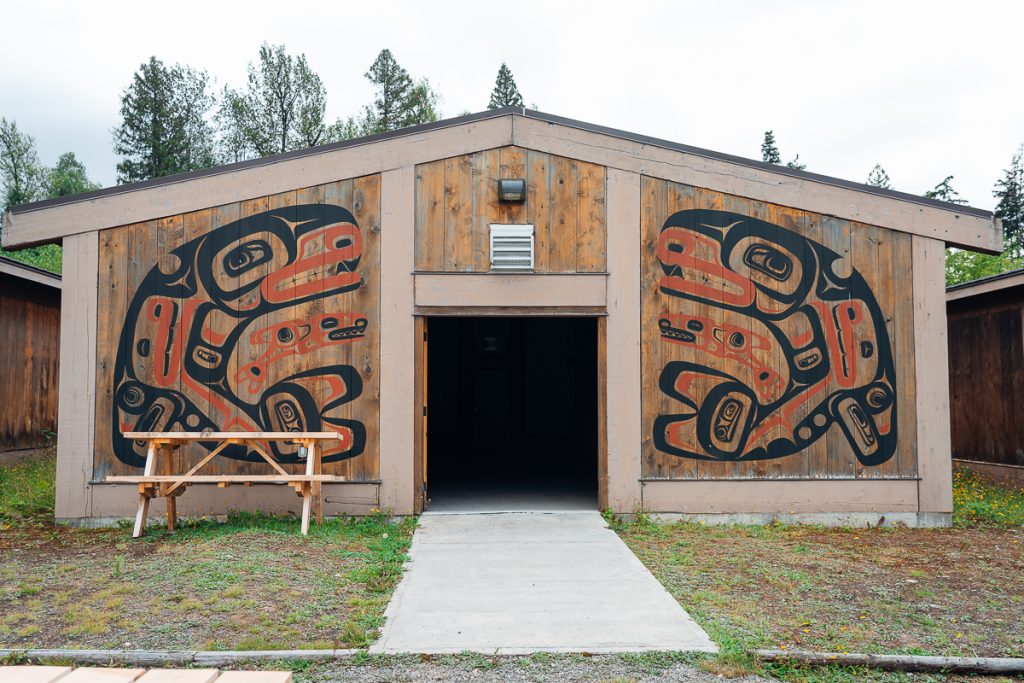
The Raven Museum was undergoing maintenance when we visited, so we were unable to go in. We just admired it from the outside.
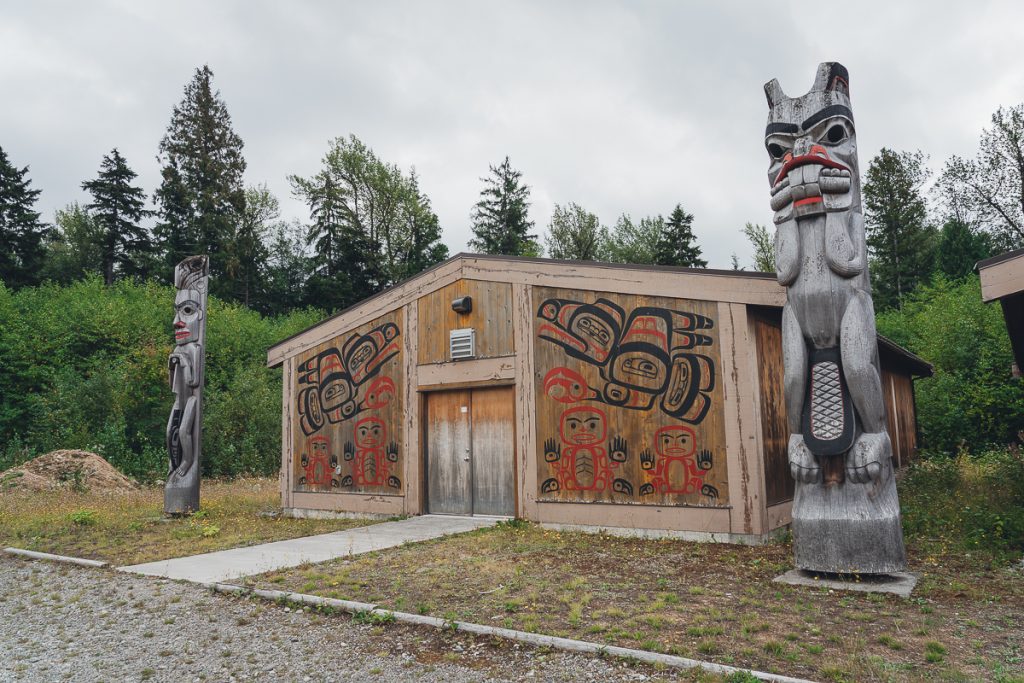
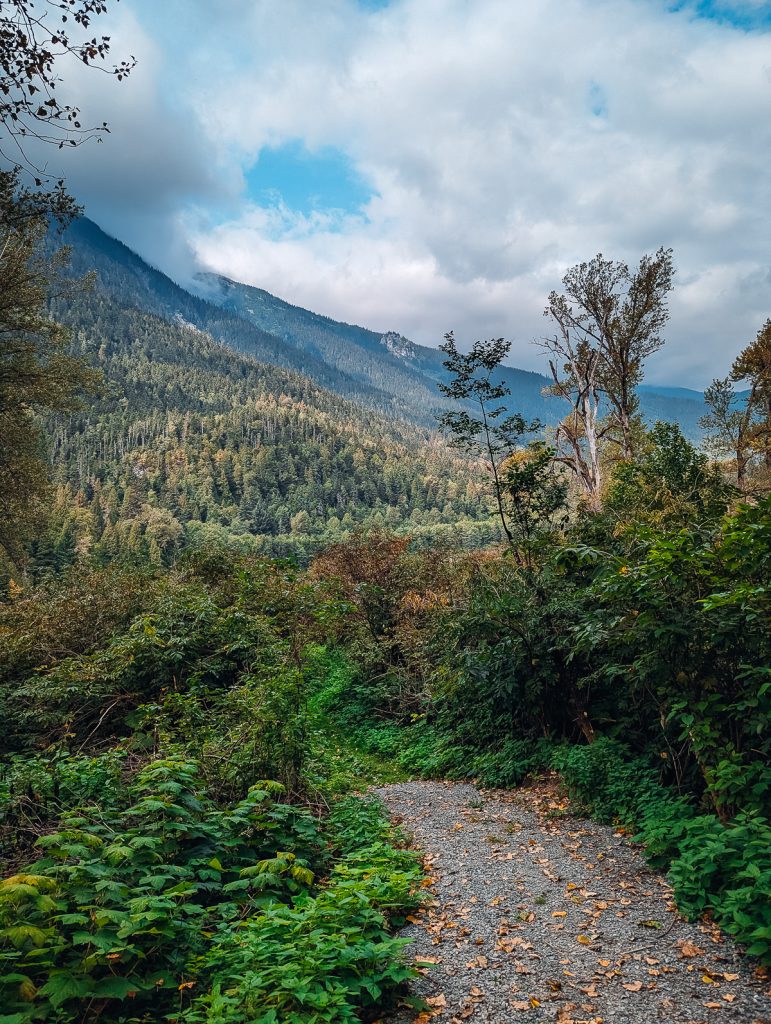
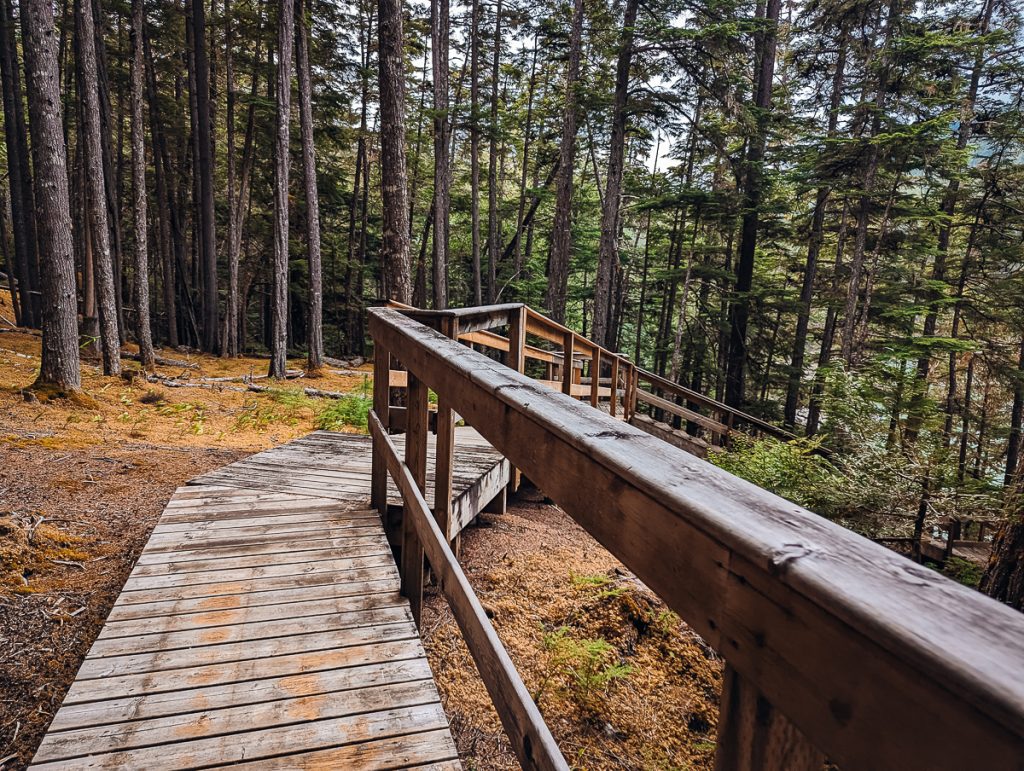
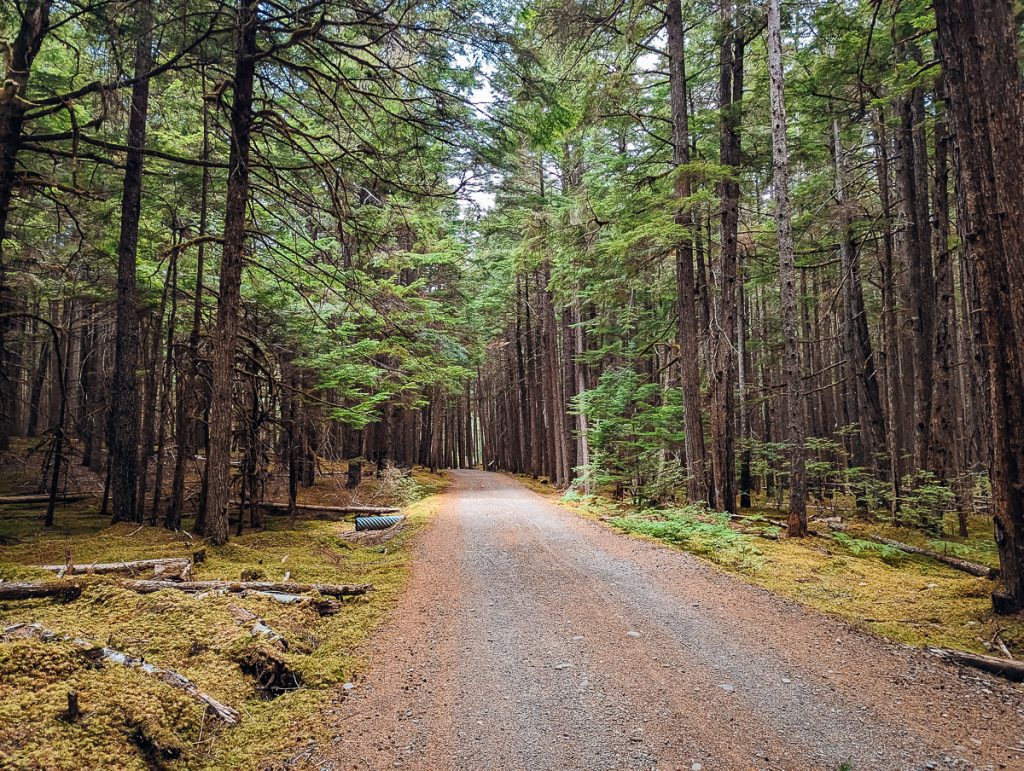
We began our walk through the lush, moss-draped forest. The first portion is along a quiet path. Take time to read the forest interpretation signs to learn about the surrounding ecology.
The path led us past an ancient dugout canoe that was used for transportation on the Skeena. Look closely for the adze marks on the canoe, signs of complex tool use by First Nation carvers.
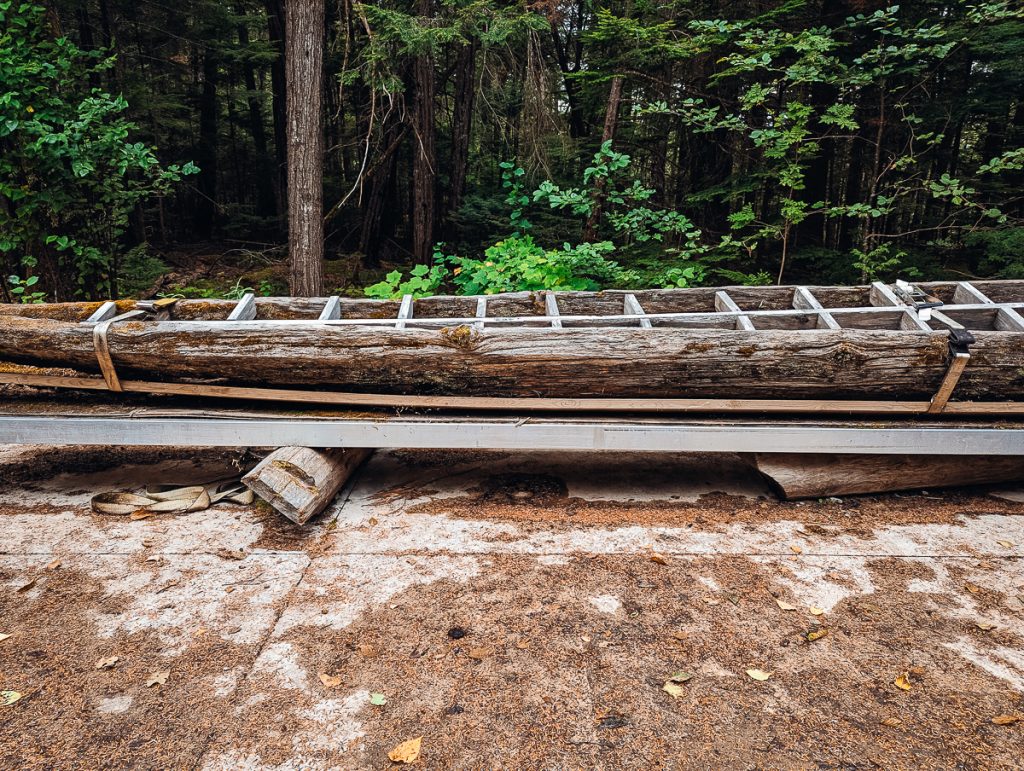
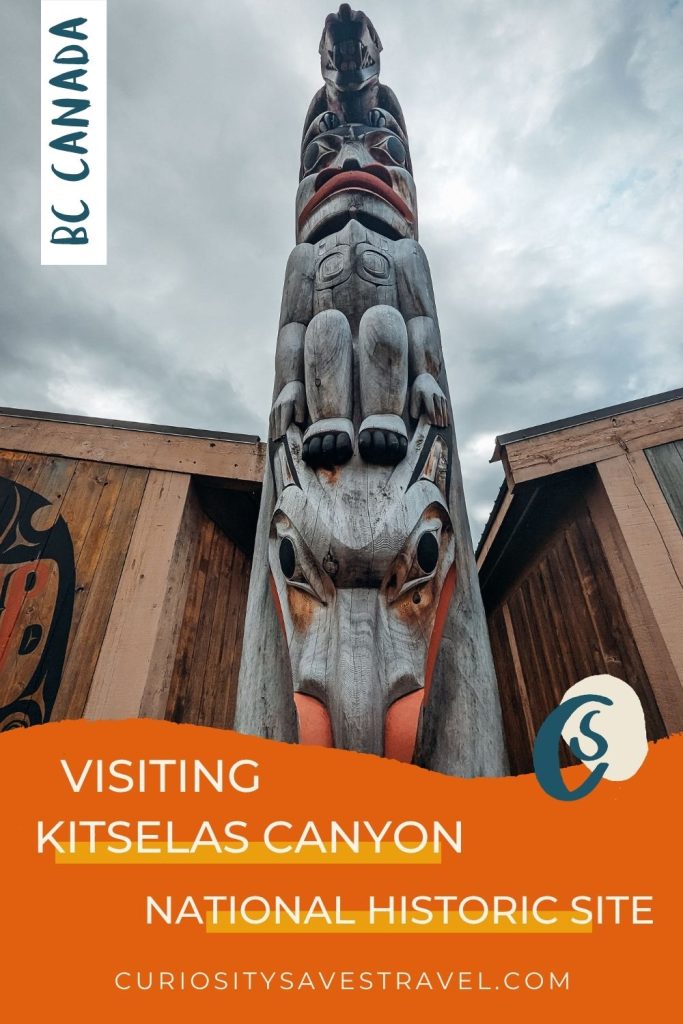
The canoe stands in stark contrast to the vibrant, newly raised pts’aan, otherwise known as clan crest poles. The contrast signals an ancient culture in active, proud resurgence. These poles are intrinsically carved to represent the four clans. To me, seeing these beautiful poles is a highlight of visiting Kitselas Canyon.
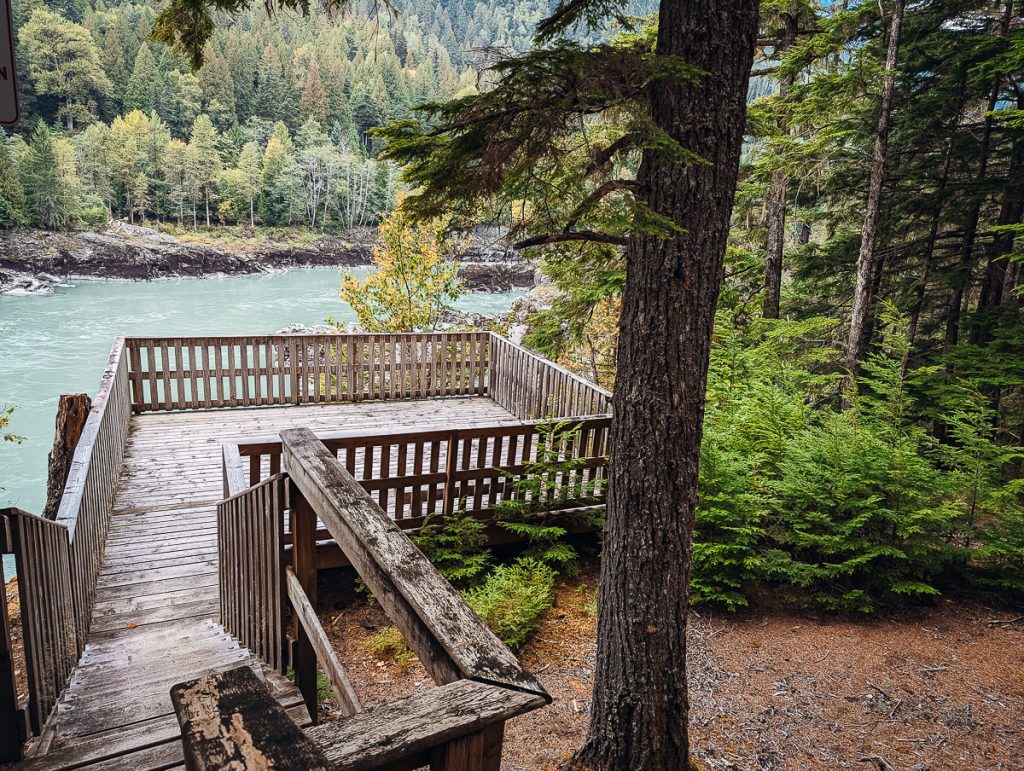
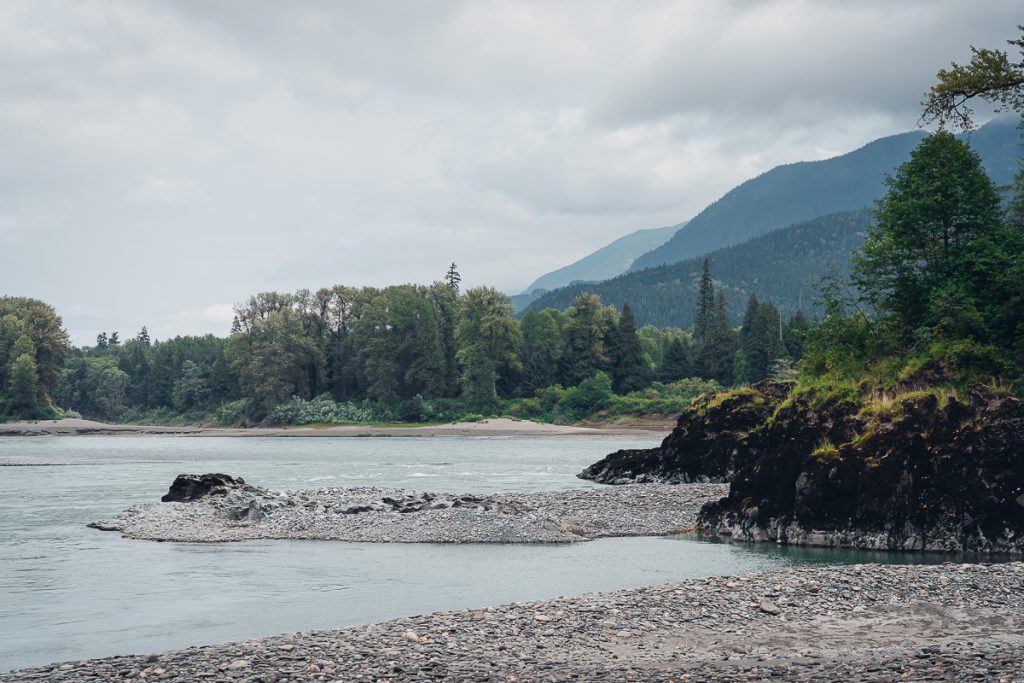
The path diverges here; most will take the left branch to reach the boardwalk over the Skeena. We went right first, which took us down to the ancient site of Gitseax. We spent some time taking in the powerful view of the landscape and the water, using our imagination to bring the ancient village to life.
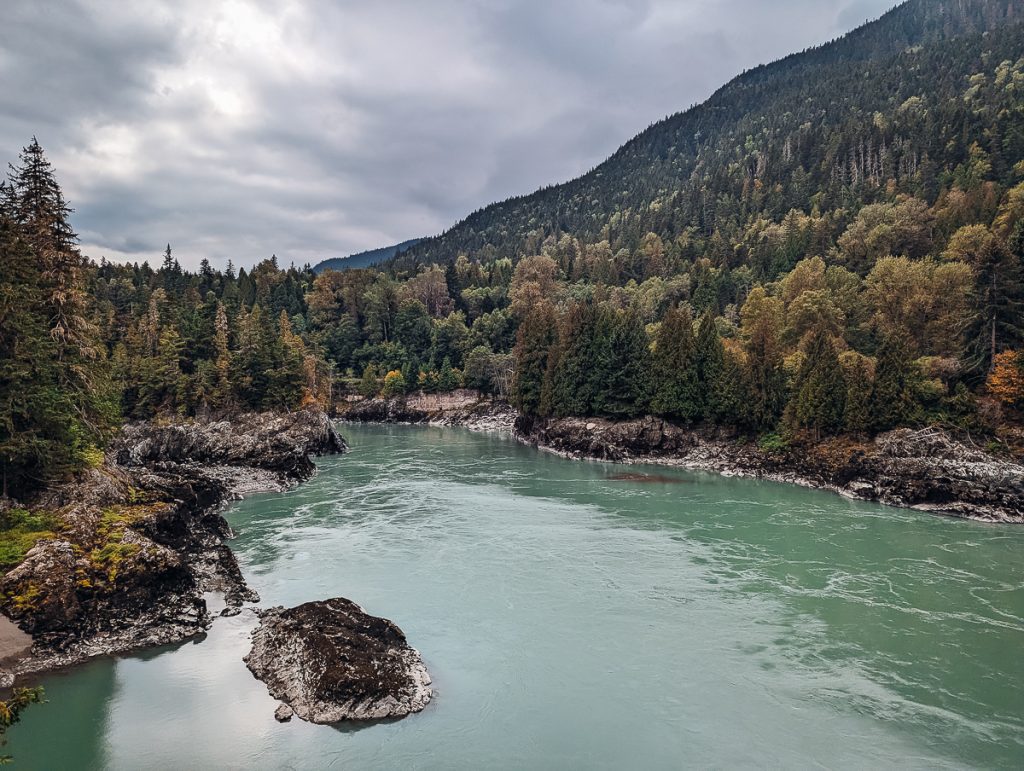
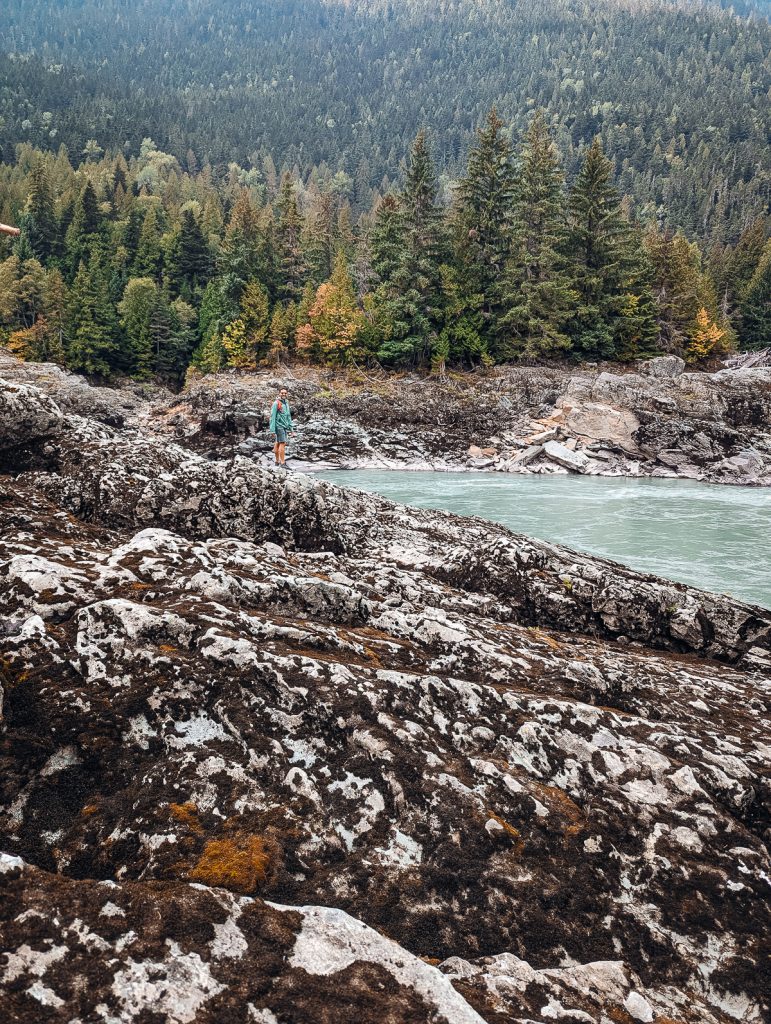
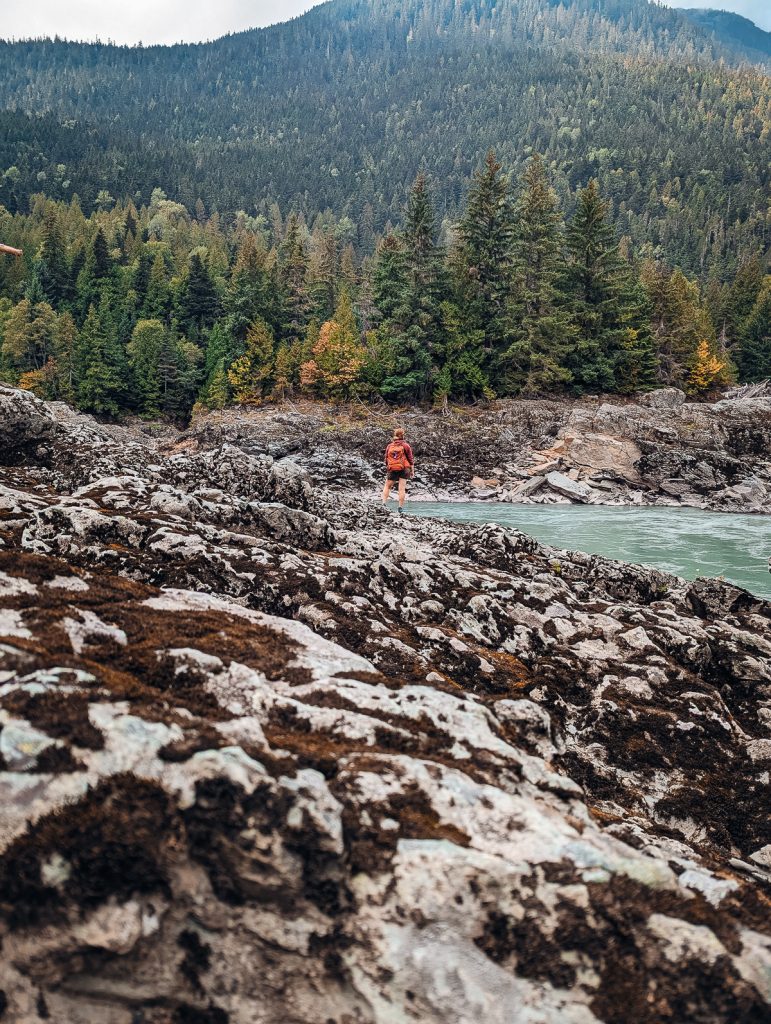
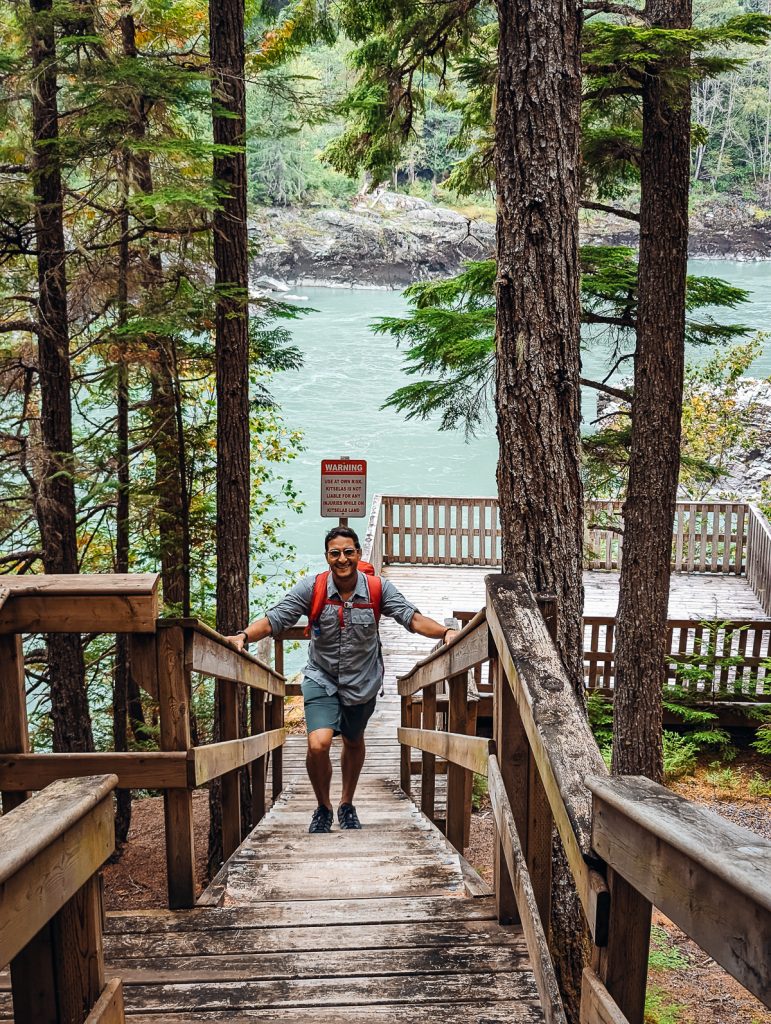
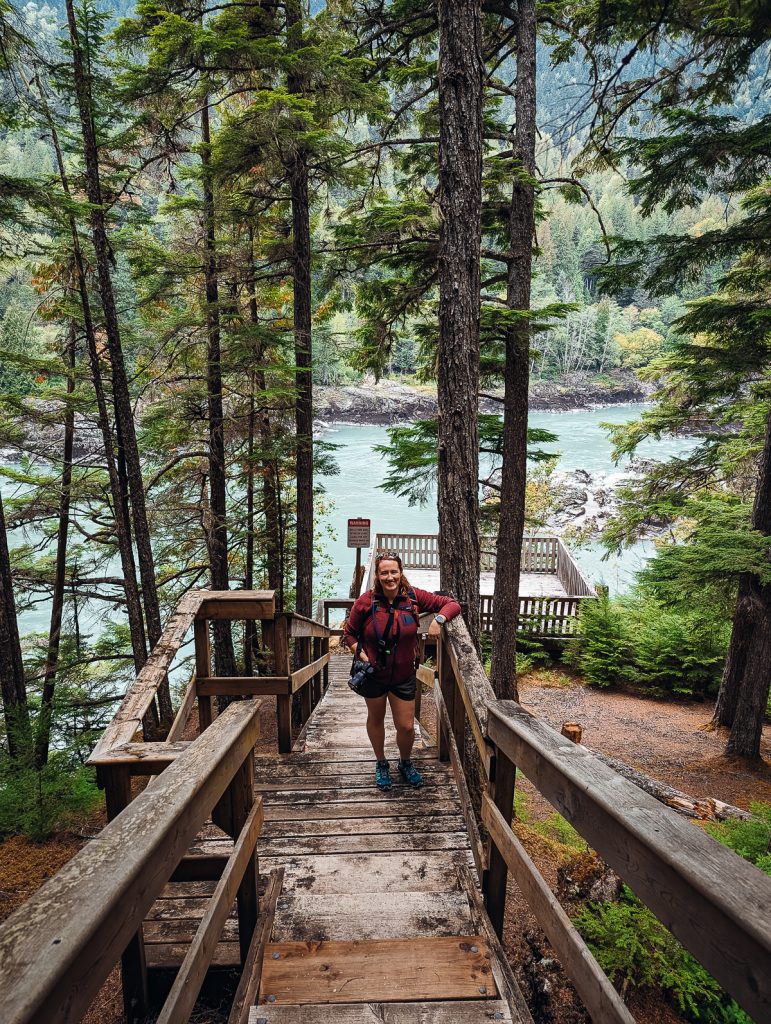
Returning the way we came, we took the main trail to the boardwalk. The journey culminates where the forest opens to the dramatic rush of the Skeena River, where the canyon walls narrow and the water churns with the same intensity that has shaped this landscape for millennia.
If you arrive during a guided season (May – August), do choose that! Having a local guide and knowledge keeper bring this place to life would be incredibly valuable. Otherwise, on a self-guided tour, ensure you read the signs and envision the caves along the river where Halayt (Shamans) entered trance-like states to bestow power upon themselves and carved the petroglyphs for which the area is known.
Important Information About Visiting Kitselas Canyon
Opening Hours
The Kitselas Canyon is not open year-round. From May to October, you can book in advance or just drop by to enjoy this special place.
Spring Season
- May 19 – June 26
- Open Monday – Friday
- 9 am – 4 pm
Summer Season
- June 29 – Sept 12
- Open Monday – Saturday
- 9 am – 5 pm
Fall Season
- Sept 14 – Oct 9
- Open Monday – Friday
- 9 am – 4 pm
Tours and Admission Prices
There are two ways to visit: self-guided or guided.
Guided tours are only available during May – August for the peak summer season. Guides will share their knowledge at the four different museums and stories about the cultural, historic, and economic importance of Kitselas Canyon.
- Tickets for self-guided tours cost $12 for adults, $10 for youth aged 8-17, and $8 for seniors.
- Tickets for guided tours cost $18 for adults, $16 for youth aged between 8-17, and $14 for seniors ($50 for a family of two adults and two children).
Is this covered in my Parks Canada annual pass?
Unlike other national historic sites, your Parks Pass will not cover the entrance fee for Kitselas. Now managed by the Kitselas band, they collect their own admission and reinvest it into the site’s management and their community’s betterment.
How Long to Spend
We spent a little over an hour here on a self-guided experience. The walk down to the Skeena viewing platform is on accessible gravel and mostly flat. It is a short walk, no more than 1km one way.
The museum is small, and there isn’t much context without a guide. It can be visited relatively quickly. I do not know how long the guided tours last, but I suspect they would be around 2 hours.
What to Wear
As always with the weather in British Columbia, prepare for rain or shine. While the walk isn’t long, bring some layers as it is much cooler in the first part and along the river.
Wear good walking shoes that are suited to gravel trails.
How to Get to Kitselas Canyon
Kitselas Canyon is located off Highway 16. It is just a 10-minute drive east of Terrace. We got a bit lost on our first attempt to find it and ended up in the modern village of Gitaus. A lovely woman in their tribal services building helped us find our way.
The key is to turn onto Gitaus Road from Highway 16, then take a left at the second turn onto Kitnayakwa St. There should be a sign indicating where to go, and eventually, you will come to the parking lot for the national historic site.
Share and Comment Kitselas Canyon
Exploring Kitselas Canyon is a great stop on your Highway 16 road trip. This National Historic Site in Northern British Columbia is a wonderful place to learn about culture and history while connecting with nature. Visit four clan museums, see newly carved clan poles alongside an ancient canoe, and learn about the incredible Gitselasu people.
This is an easily accessible way to learn about Indigenous culture in British Columbia, as well as trade and commerce in pre-colonial times. This is a must-visit in the spring, summer, or autumn, and take advantage of the guided tour if you can.
Would you like to visit here? Don’t forget to save and pin this to your Canadian summer road trip boards!
Related Posts
- Things to do in Prince Rupert
- Yellowhead Highway 16 from Haida Gwaii to Mt. Robson
- Nass Valley Auto Tour
- Prince George to Vancouver road trip stops
- Epic Slow Road Trip Itinerary for British Columbia
Curiosity Saves Travel Recommends
Accommodation: Booking.com to find accommodation with a Genius Discount and clear third-party sustainable certifications like Green Key. Look for local hotels.
Tours and Excursions: GetYourGuide and Viator for tours, excursions, and tickets. Never book wildlife experiences through these vendors.
Travel: Omio for booking buses and trains in English across Europe. After reducing the number of flights I take annually, I use Google Flights’ carbon comparison tool.
Car Rental: Rentalcars for the best rates in English globally. It is easy to find hybrids and EVs, and there are resources for finding chargers.
Packing Essentials: REI or your local Co-op has great essentials like reusable water bottles and cutlery sets. Patagonia for regenerative clothing. Farm to Feet for socks made with regenerative practices! Pistil Designs for cold-weather essentials. Osprey for bags that last 10+ years, like the day bag for hiking or my favorite carry-on.
eSIM: Airalo eSIM. Reduces waste from single-use SIMs. A total game-changer.
For Bloggers and Content Creators
Earn Ad Revenue with Journey by Mediavine
Earn with Stay22 Travel Partnership (my biggest source of income!)
Earn with TravelPayouts recommending tours and activities.


I’d love to visit if I lived here. I’ve always wanted to see a totem pole!
There are so many great totem poles across BC, and the new ones at Kitselas Canyon are stunning. I hope you can see one someday.