
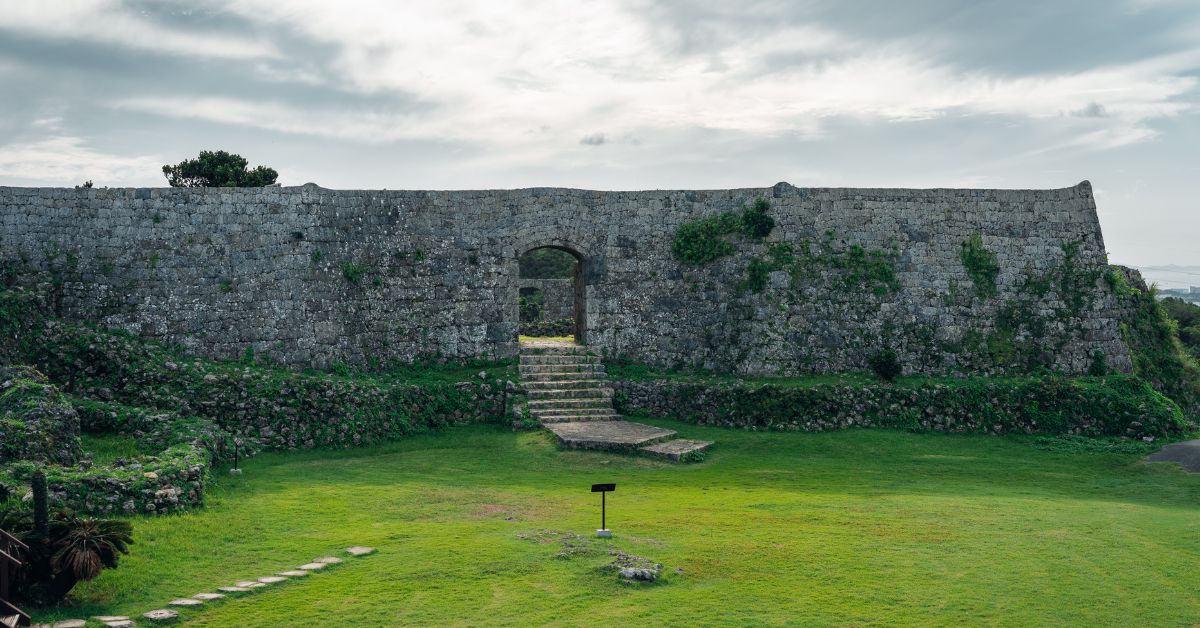
Nakagusuku Castle Ruins in Okinawa, UNESCO World Heritage Site
I may earn income from affiliate links or partnerships in this post. I spend time to curate tours or products that align with my values. Thanks for supporting my work, at no additional cost to you. All words and images on this website are created by real people.
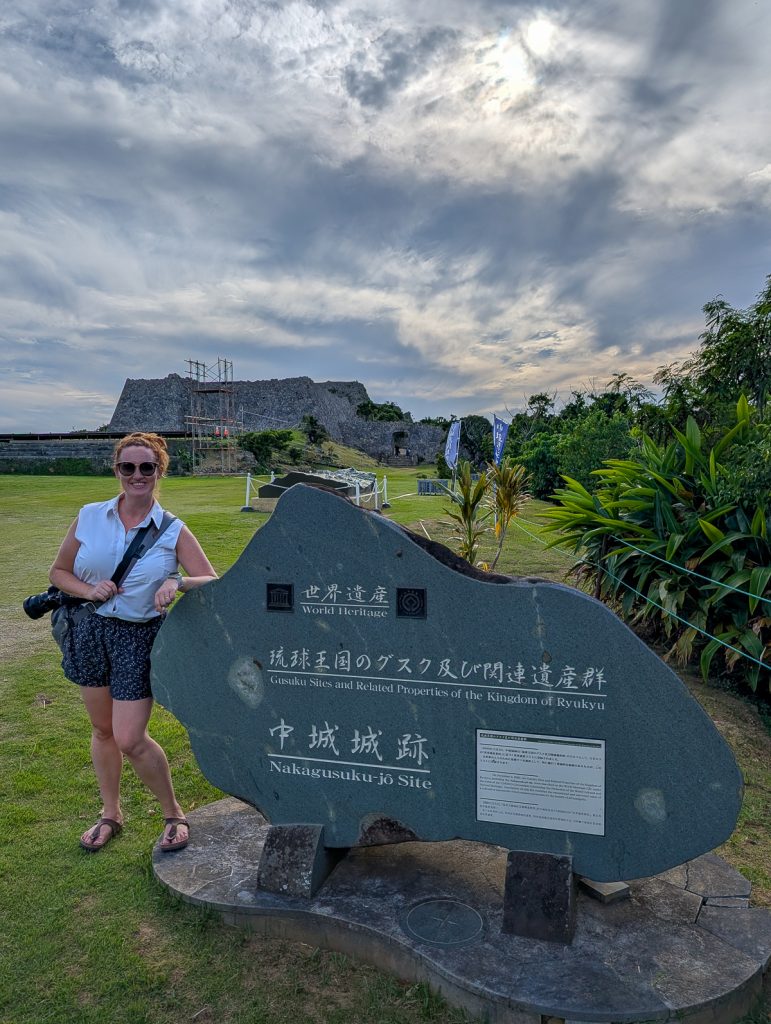
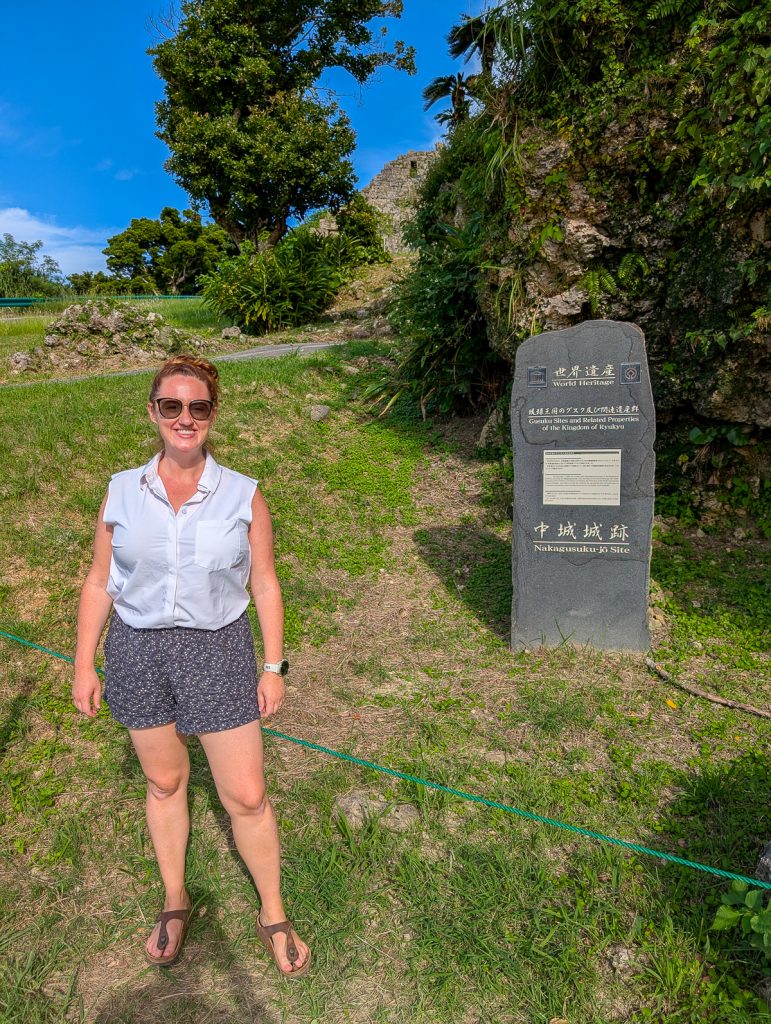
Are you curious about how to see the Nakagusuku Castle Ruins in Okinawa, Japan? Throughout the Okinawan Islands, the Indigenous people of the Ryukyuan Kingdom left stone monuments, castles (such as Nakagusuku), and other cultural sites.
Together, these are all part of the UNESCO World Heritage designation, the Gusuku Sites and Related Properties of the Kingdom of Ryukyu. One of the most impressive and accessible to visit is the Nakagusuku Castle Ruins.
Nakagusuku is a great stop in Okinawa for a step back in time. As one of Okinawa’s top cultural and historical attractions, it is well worth visiting. This guide covers everything you need to know about the site, tickets, getting there, what to expect, some history, and more. So, if you’re in Okinawa and looking for a few hours of education at a historical site, make sure you check it out!
About the Ryukyu Kingdom
Before it was known as the Okinawa Prefecture, this group of islands between Taiwan and Japan was the Ryukyu Kingdom. The Ryukyu people are the islands’ Indigenous inhabitants, with a distinct culture, language, and spiritual life that sets them apart from mainland Japan. One example is shimi, a large family festival centered on cleaning ancestral graves and sharing a meal with the departed.
The Kingdom began as smaller warring territories that eventually came together to build their capital in what is now Urasoe (just north of Naha), constructing a massive castle complex that served as the center of religion, housing, and government.
For nearly 200 years, the Ryukyu Kingdom thrived by managing trade routes connecting China, Japan, and Southeast Asia, creating a wealthy, cosmopolitan society. They maintained a tributary status to the Ming and Qing Dynasties in China.
Everything changed in the late 1800s when the Meiji Government of Japan abolished the Kingdom and formed the Okinawa Prefecture. While the Ryukyuan royals were given Japanese titles, the population was pushed to assimilate, often at the cost of their native traditions and identity.
Today, while you’ll see Ryukyuan culture in the local food and festivals, there is still a significant struggle for recognition. While the international community recognizes the Ryukyu people as a distinct Indigenous group, they still face a lack of formal recognition and ongoing challenges within Japan.
Visiting their sites may seem like a step back in time, to a culture and history that no longer exists, but the Ryukyuan People are still very much here on Okinawa.
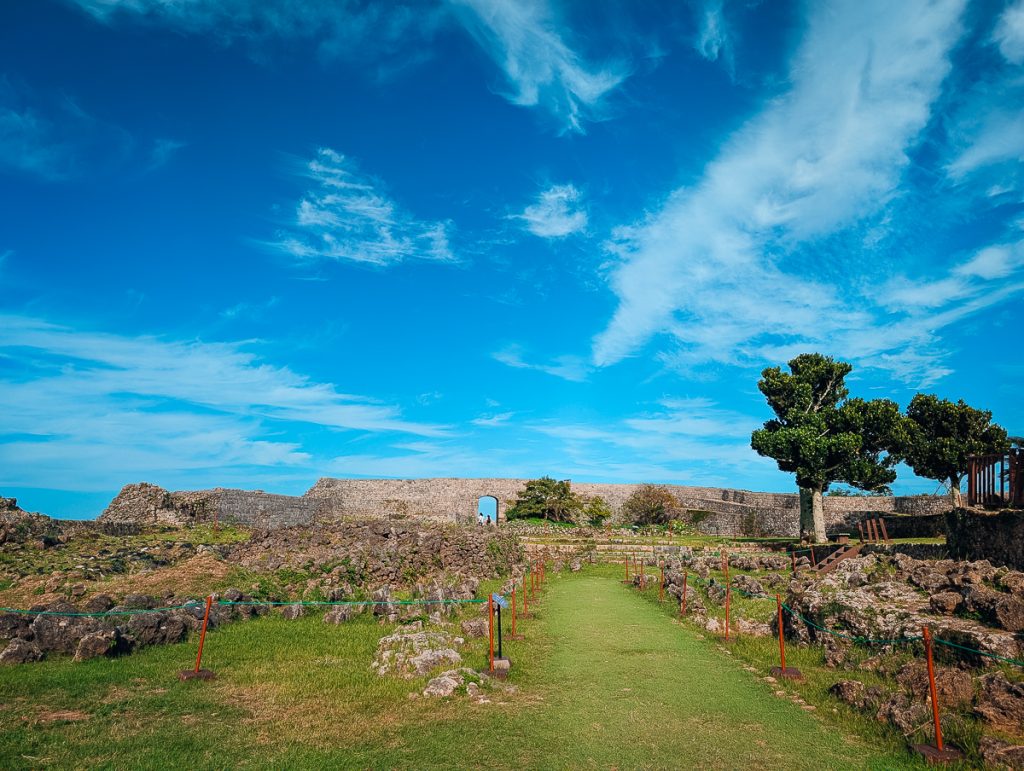
About Nakagusuku Castle Ruins
The settlement at Nakagusuku was created by the first generation of Ryukyuan Lords, who established it as a fortification and residence. Over the generations, the Ryukyuan Lords added to Nakagusuku Castle, adding the numerous enclosures, or citadels, you will see as you explore.
It is unknown who exactly built the first stone Nakagusuku Castle, but the most prominent figure to rule Nakagusuku Castle was the legendary Ryukyuan Commander Gosamaru, who completed its construction in the form we see today. The mascot of Nakagusuku Castle is Gosamaru himself, so you’ll see his caricature on flags and merch.
The castle was attacked by outsiders who questioned Gosamaru’s loyalty to the head royal court of the Ryukyuan Kingdom. Gosamaru died by suicide in his defeat.
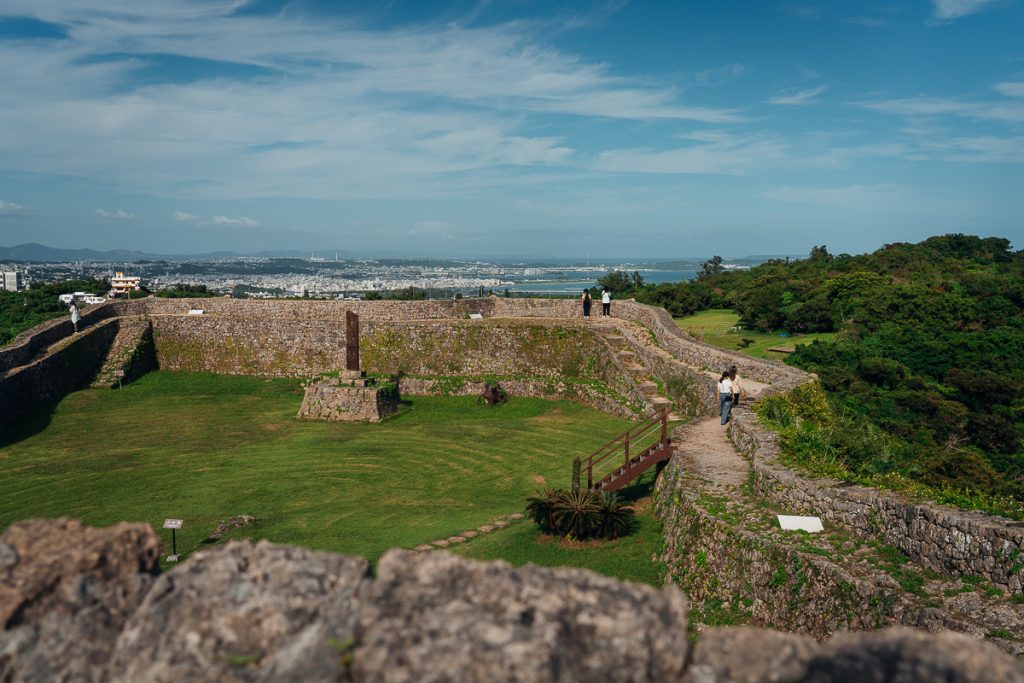
The castle served both as the seat of the Prince of Nakagusuku and as an important site in the China-Ryukyuan Kingdom’s tributary relationship.
After the Meiji government passed the “Ryukyu Disposal Act” in 1879, dissolving the kingdom, the castle was repurposed into a school and eventually a village office. The castle remained a village office until 1845, when the bloody Battle of Okinawa in WWII left it in ruins.
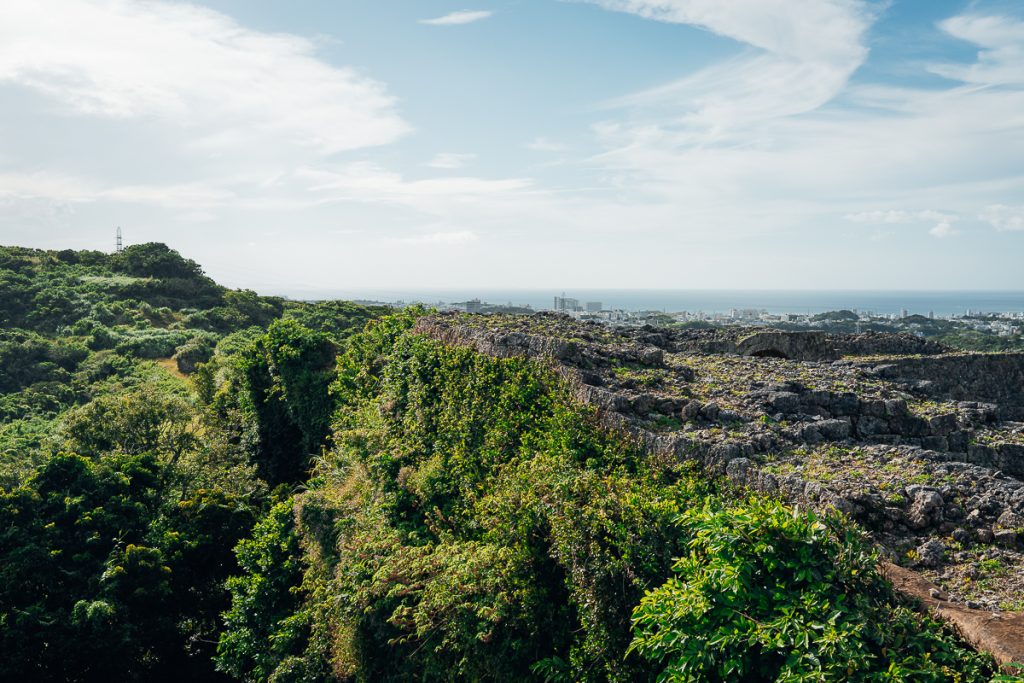
Modern use of the area was as a public park, before it was designated a special historic site by the Japanese government, and restoration of the walls and structures began. Finally, in the 2000s, it was added to the UNESCO World Heritage listing that encompasses many Ryukyu sites across Okinawa Prefecture. It is also included in the list of 100 famous castles across Japan.
The Nakagusuku ruins are one of the best-preserved fortresses of the Ryukyuan Kingdom in Okinawa, as this site suffered the least damage from the wars. This is what makes it such an impressive site to visit.
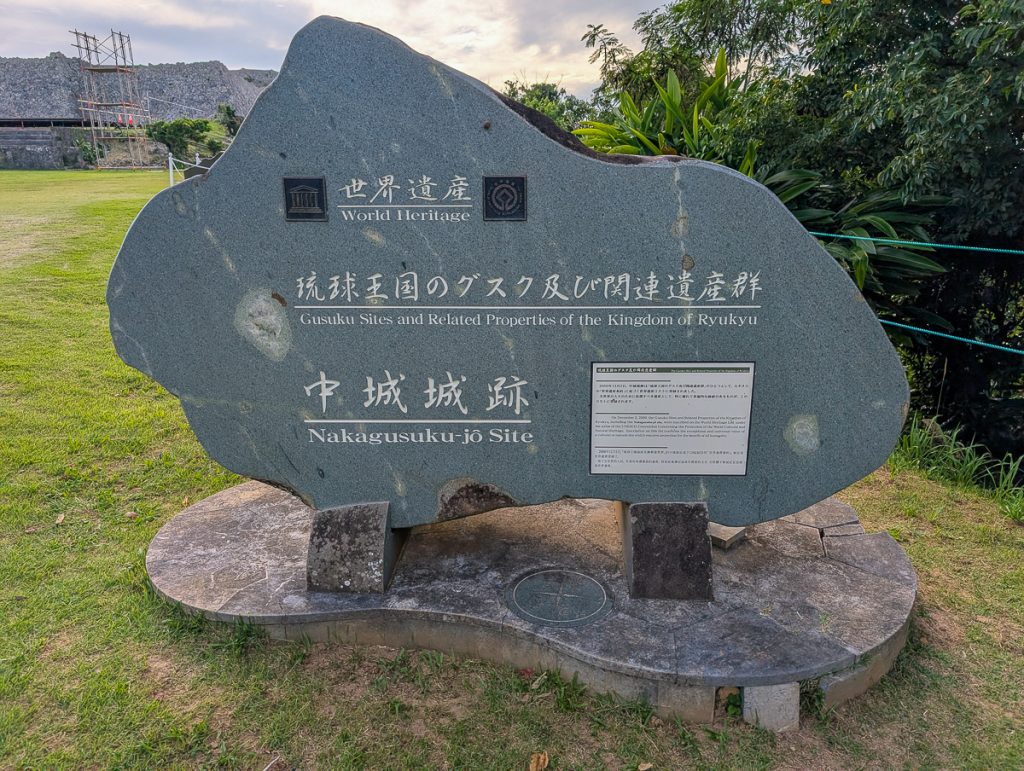
Visiting the Castle Ruins
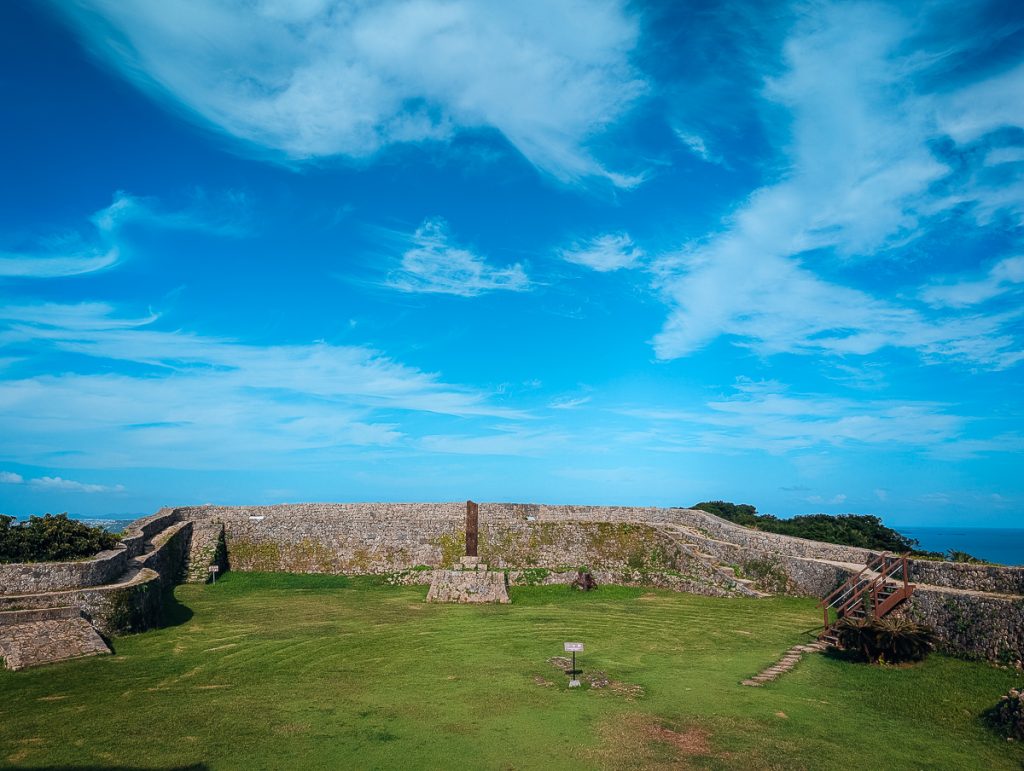
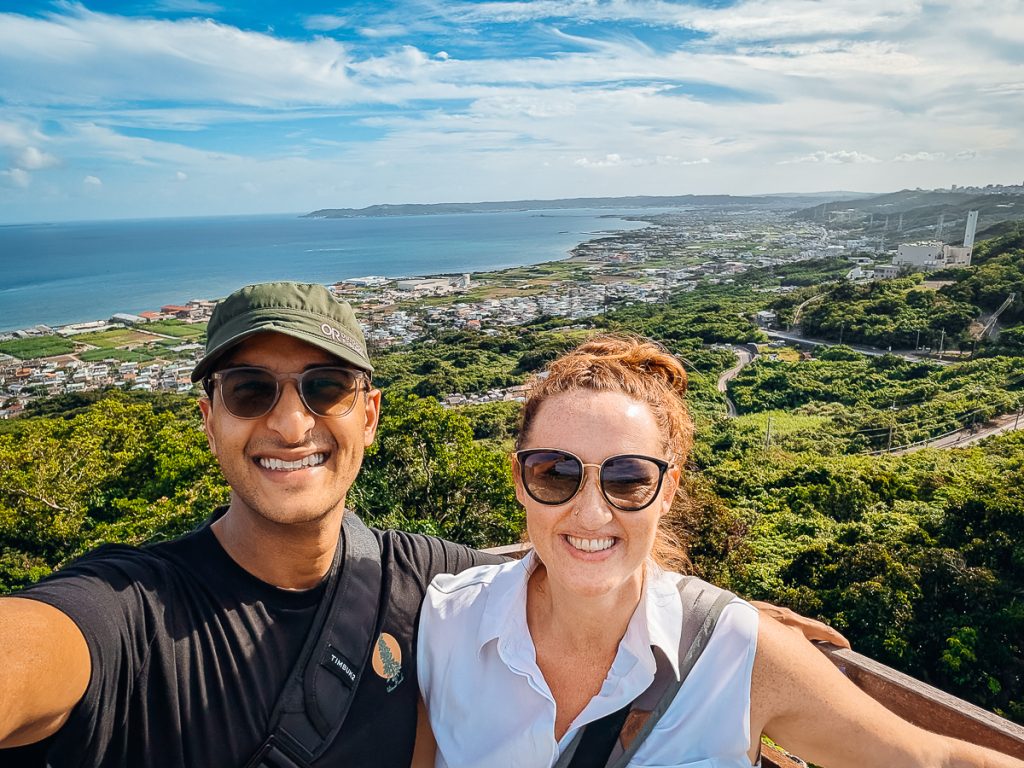
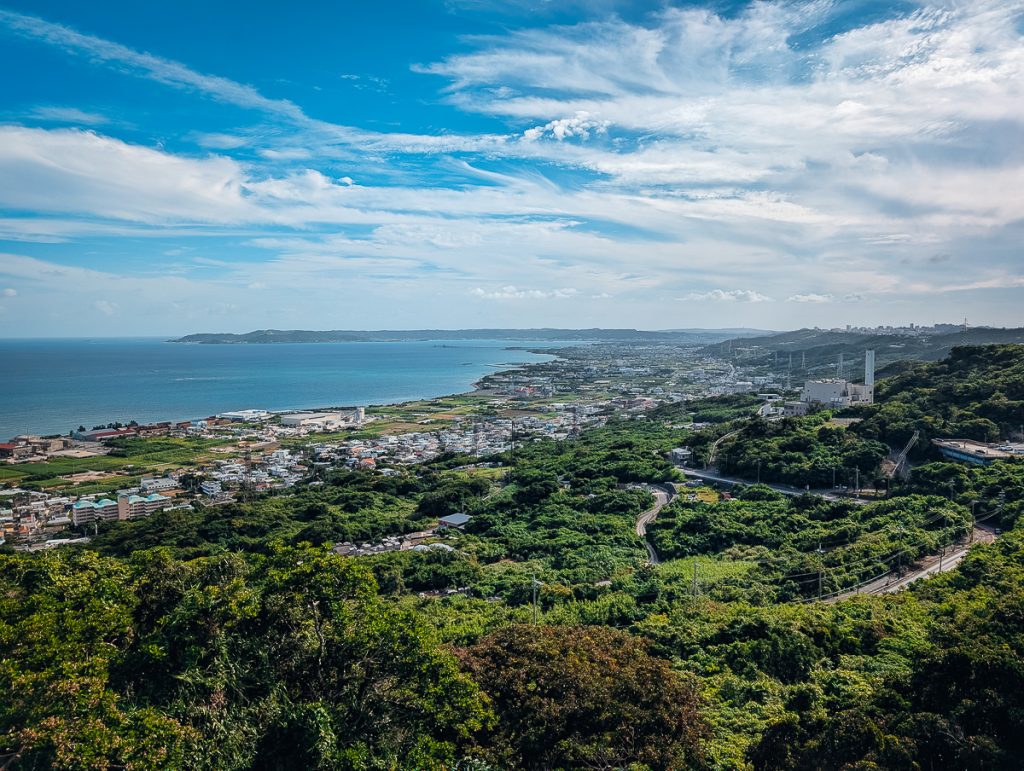
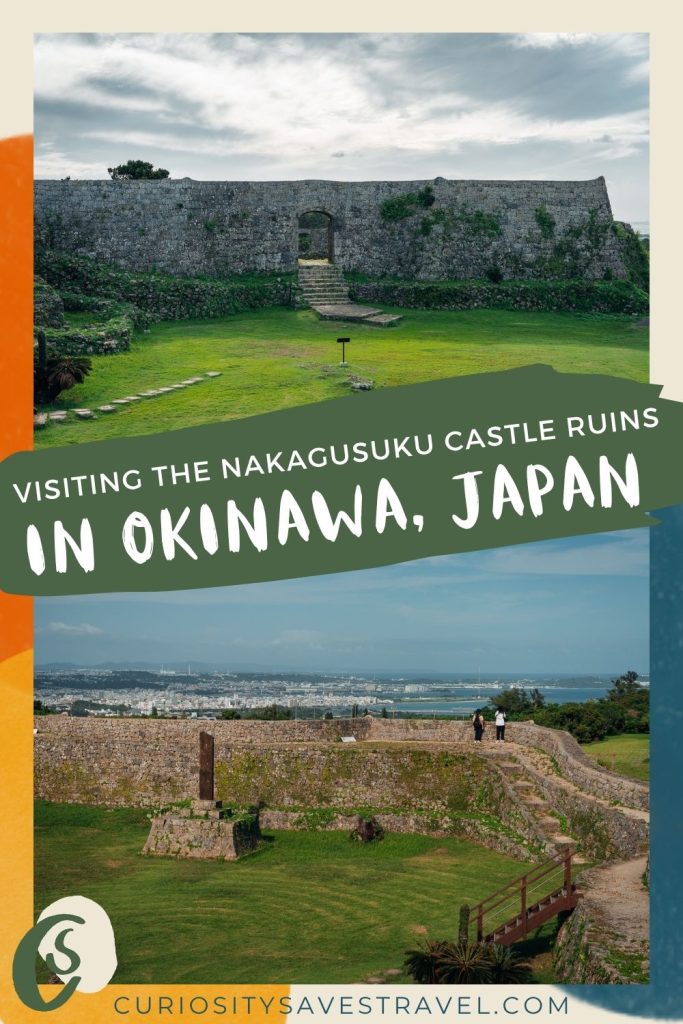
Visiting the Nakagusuku Castle Ruins in Okinawa is a great way to spend a few hours exploring this extensive national historic and UNESCO World Heritage site. Not only do you get to wander around the ancient ruins, but there are also impressive sweeping views of the Okinawa coastline, including Nakagusuku Bay.
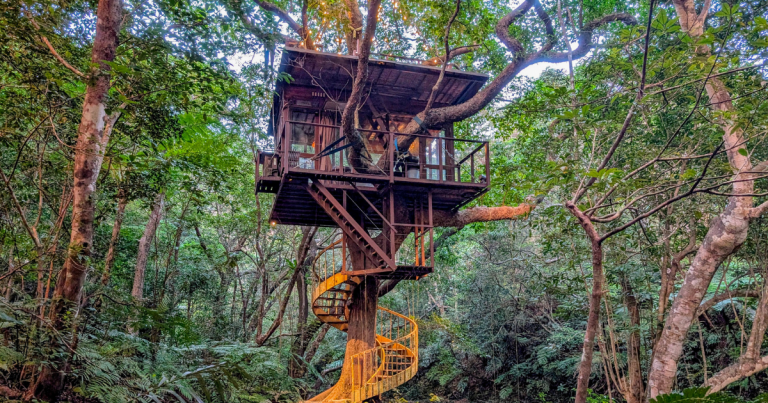
We had rented a car in Okinawa to explore the island with ease and get to Treeful Treehouse, our secluded eco-accommodation. We navigated to the parking lot of Nakagusuku Castle Ruins, which, confusingly enough, isn’t listed on Google Maps. So, we followed road signs once we were close enough to find parking.
Thankfully, I did all the heavy lifting for you, and you’ll essentially park in a field right about here. I cover more details on how to get there, including with public transit, in the section below.
Once we were parked, we walked up to the tourist center to purchase tickets. Each ticket was 500 yen. Once we had our tickets, there was some general confusion and communication challenges about what to do next. We figured out we were to wait for a small shuttle to take us up the large hill where the castle ruins start. You can, of course, walk this on your own, but I recommend you take advantage of the shuttle.
Some people also seemed to enter from the lower exit of the UNESCO site. Meaning they walked uphill back in time. But to do this, you have to double back the same way you came. The site really was meant to be walked from the oldest section to the newest, so take the shuttle if you can!
There is a bathroom at the ticket counter. Use them if you need to, as there are no toilets in the historical site. Make sure the shuttle doesn’t leave without you, though!
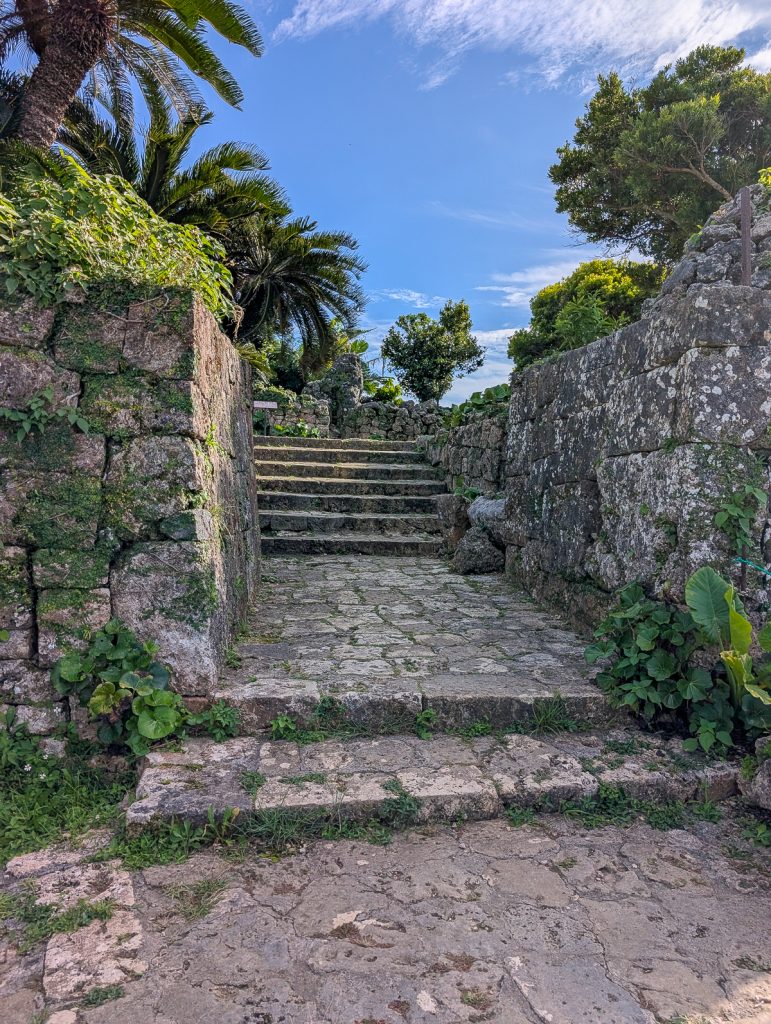
Once you are at the top, you will walk your way through the castle ruin enclosures, heading downhill until you complete a loop ending back at the tourist center.
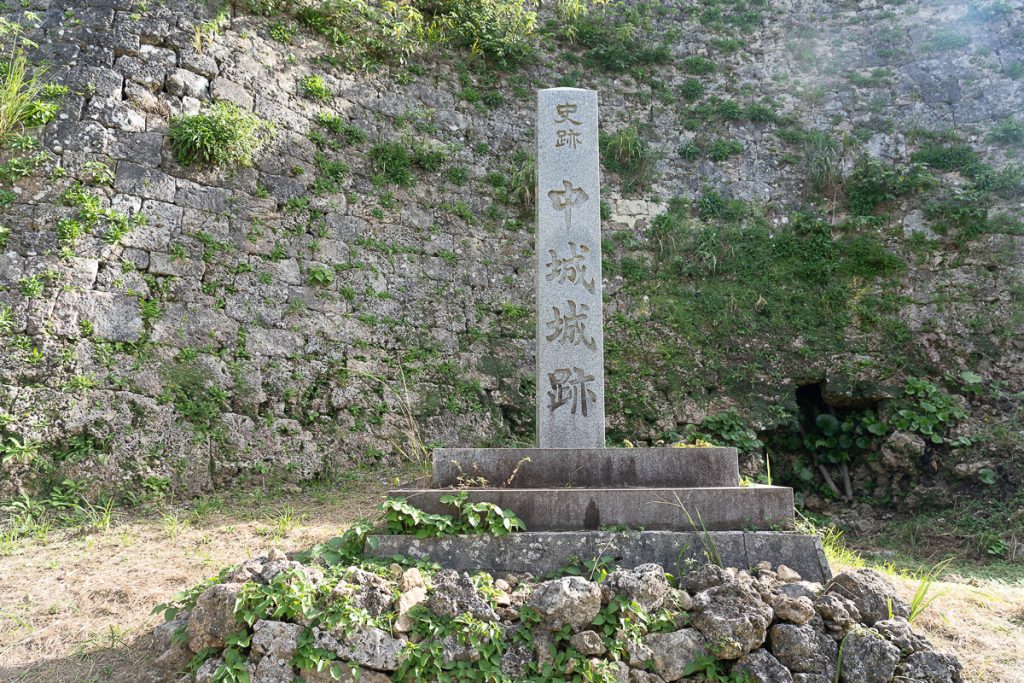
After the shuttle dropped us off, we were on our own to explore. There are some signs and context explaining the different enclosures built over the years, and some descriptions labeling the religious sites, wells, and other features, but there isn’t much detailed information.
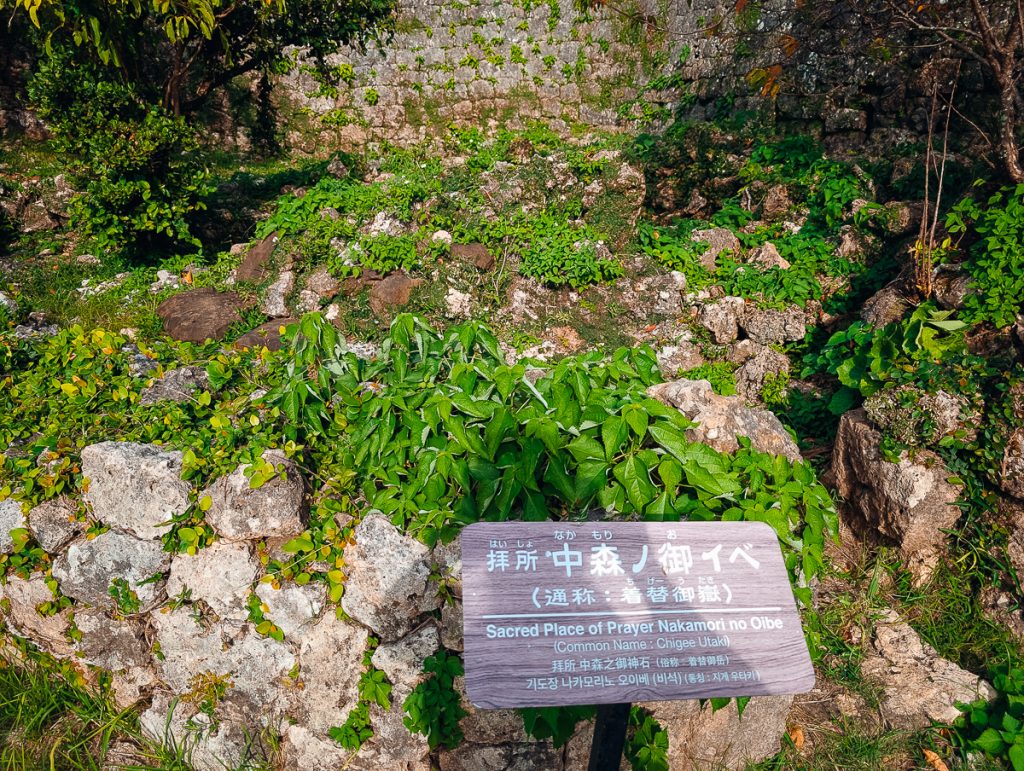
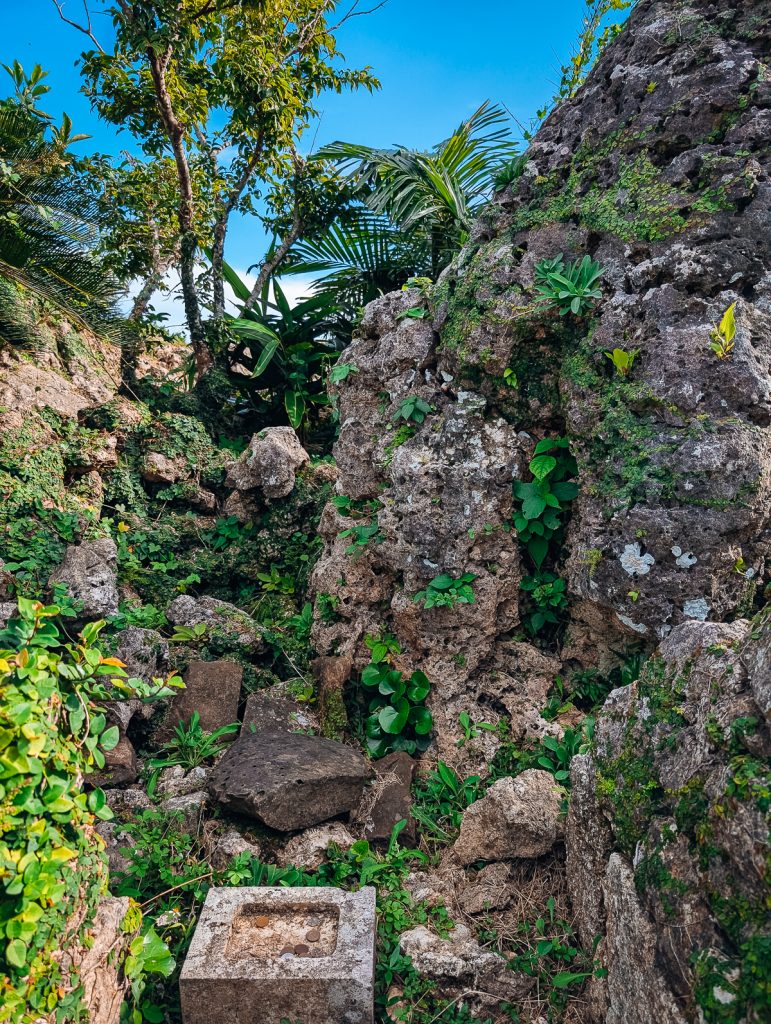
We used our imagination to bring this place to life, as we explored thoroughly. A highlight was enjoying the epic view of the stunning towns and coastlines below the castle fortification.
If you want more context for this site, I suggest booking a guided tour. Note: this tour does not include transportation to and from the site.
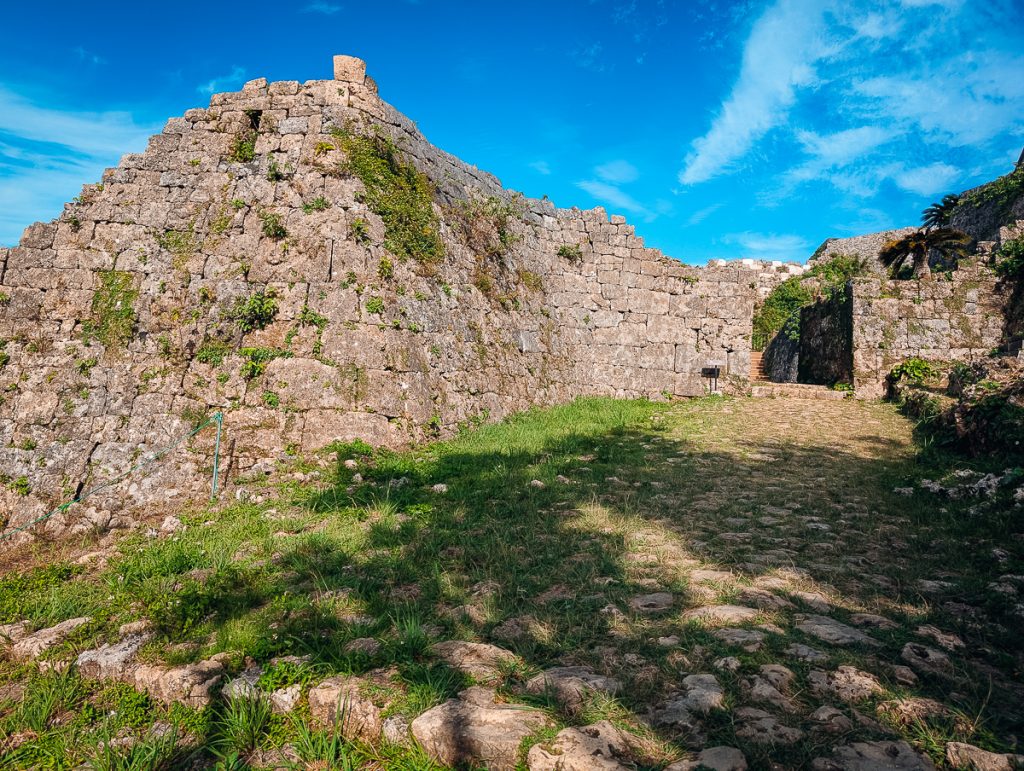
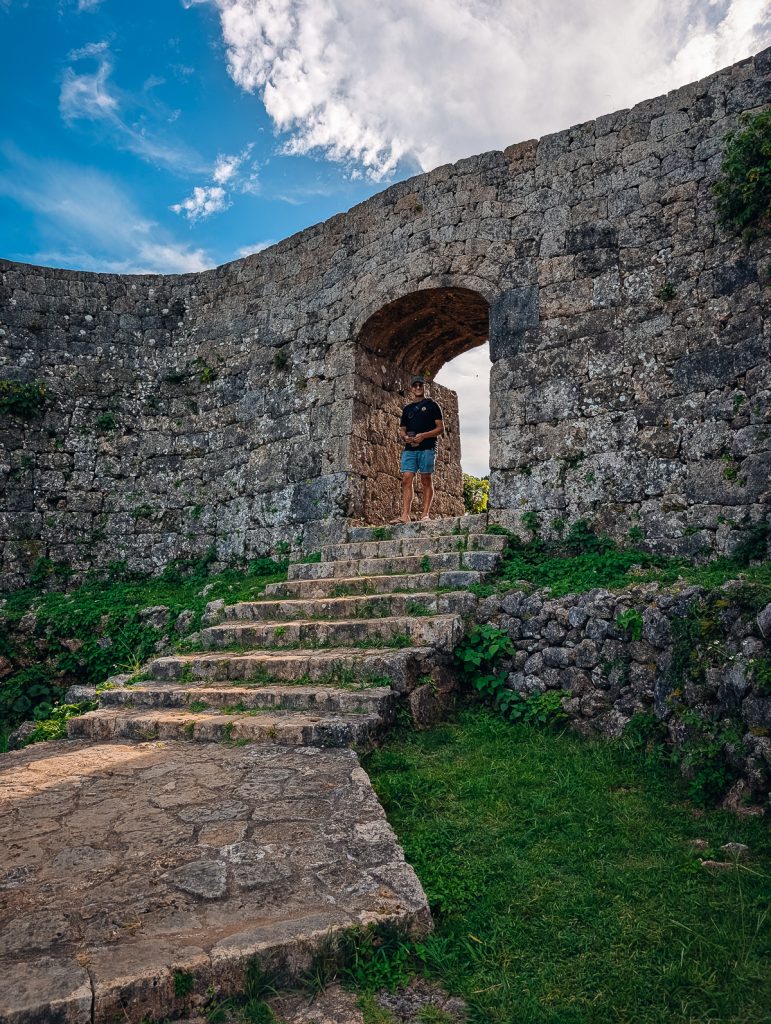
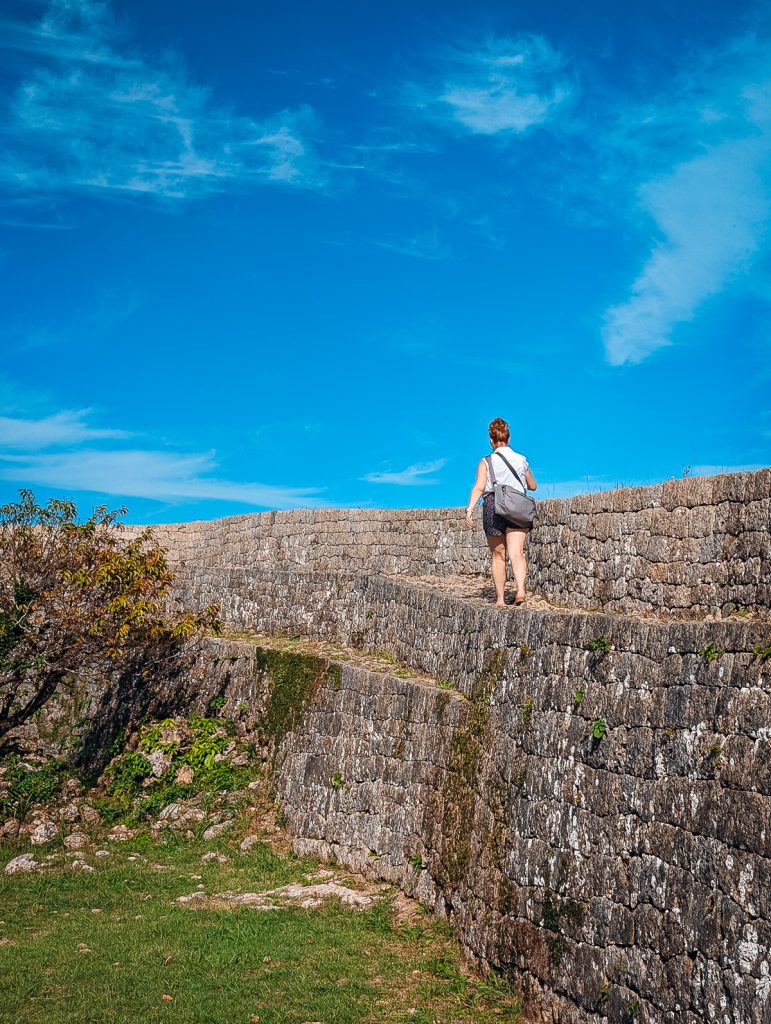
The different generations of Ryukyuan lords built this castle compound in different enclosures over time as they expanded. For this, you’ll notice the clearly defined enclosures and walled entrances and exits. You can see how the architectural style and construction skills developed and improved over the centuries.
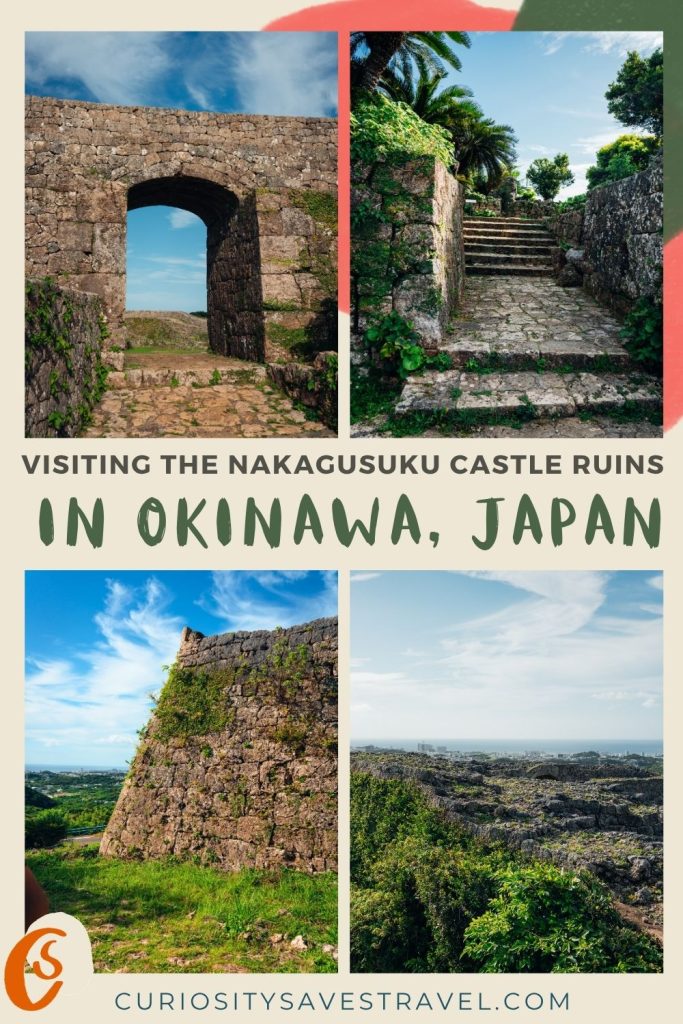
As you explore the six enclosures, with limestone walls showcasing an impressive architectural style with curved lines, see if you can notice the different types of building techniques used. Look closely at the stones to notice more primitive stacking and more refined stacking.
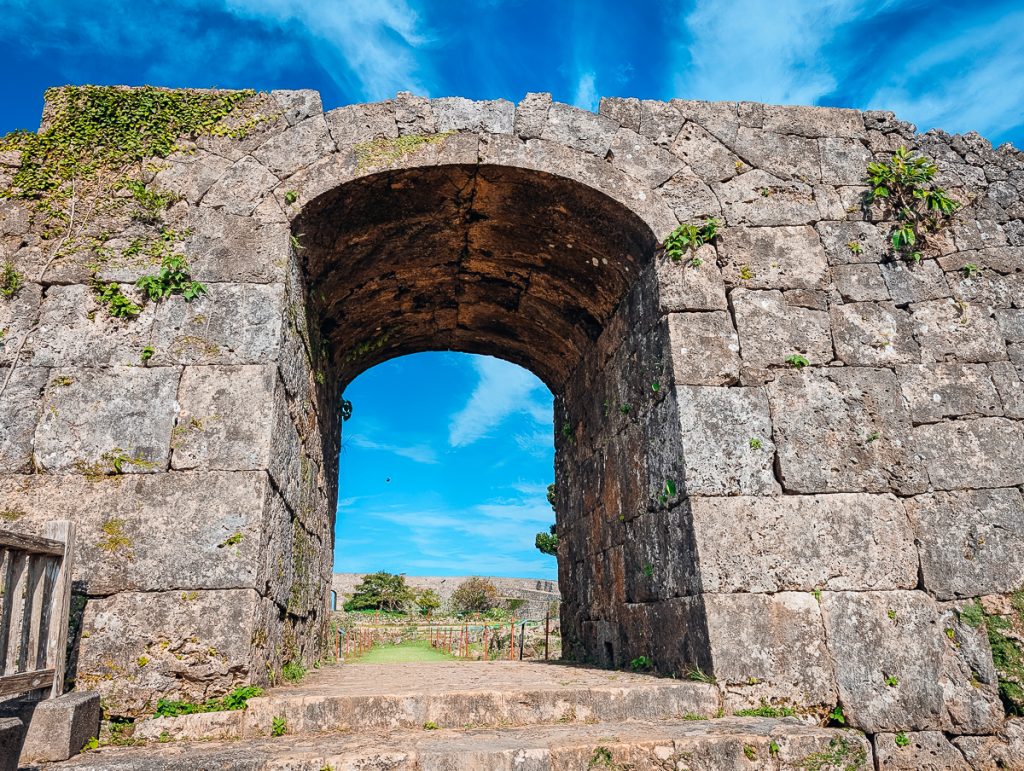
You don’t need a ton of time here, but after an hour or so, you’ll eventually find yourself back at the entrance. If you need a pick up, don’t miss the Gusuku Rock Cafe.
If you’re driving, as you leave, don’t miss the Nakamurake Residence. This is a traditional historical Ryukyuan-style house. The entrance is 500 yen. The home is a pristine example of what a wealthy Okinawan farmer’s residence looks like, with Shisa statues and red roof tiles.
Important Information About Nakagusuku Castle Ruins
Cost and Tickets
- Tickets are 500 yen per adult.
- There are discounts for groups and children.
- It is helpful to have cash on hand.
Hours of Operation
- The Nakagusuku Castle Ruins are open Monday-Sunday, every day of the year.
- Their winter hours are from 8:30 – 17:00.
- Summer hours, from May 1st to September 30th, are from 8:30 to 18:00.
How Long to Spend
Most people typically spend 30 minutes to an hour here. We were on the longer side and probably spent a little over an hour. We explored the area in full, reading all signs, visiting every enclosure, and enjoying the scenic views.
If you skip the shuttle service, you can expect to walk uphill for part of your journey, then return the way you came. Therefore, I recommend you take the shuttle.
How to Get to Nakagusuku Castle Ruins
The best way to reach the Nakagusuku Castle Ruins is by car. It is easily reached from Naha Airport or downtown Naha. There is a paid expressway or a toll-free route. Navigate to the parking lot in Google Maps and choose your preferred option.
There are some public transit options, though I don’t recommend this option. The closest bus stop is a fair bit away from the ruins. You can catch bus 30 from Naha Bus Terminal. Get off at Ishado. From there, it is a 30-minute uphill walk.
Tours to Nakagusuku Castle Ruins
If you didn’t rent a car or are unable to do so without an international driver’s license, there is a tour that will take you to Nakagusuku and other UNESCO World Heritage sites across Okinawa.
Share and Comment on Visiting Nakagusuku Castle Ruins
We loved visiting the Nakagusuku Castle Ruins and UNESCO World Heritage Site. It brought Okinawa’s history and Indigenous culture to life as we explored the impressive castle ruins. If you are visiting Okinawa, I recommend this historic site as a top activity. It is a great way to spend an hour or two on your road trip across the island.
History buffs and view-seekers will equally love this historical site.
Make sure you pin and share this guide to your Japan planning trip!
Curiosity Saves Travel Recommends
Accommodation: Booking.com to find accommodation with a Genius Discount and clear third-party sustainable certifications like Green Key. Look for local hotels.
Tours and Excursions: GetYourGuide and Viator for tours, excursions, and tickets. Never book wildlife experiences through these vendors.
Travel: Omio for booking buses and trains in English across Europe. After reducing the number of flights I take annually, I use Google Flights’ carbon comparison tool.
Car Rental: Rentalcars for the best rates in English globally. It is easy to find hybrids and EVs, and there are resources for finding chargers.
Packing Essentials: REI or your local Co-op has great essentials like reusable water bottles and cutlery sets. Patagonia for regenerative clothing. Farm to Feet for socks made with regenerative practices! Pistil Designs for cold-weather essentials. Osprey for bags that last 10+ years, like the day bag for hiking or my favorite carry-on.
eSIM: Airalo eSIM. Reduces waste from single-use SIMs. A total game-changer.
For Bloggers and Content Creators
Earn Ad Revenue with Journey by Mediavine
Earn with Stay22 Travel Partnership (my biggest source of income!)
Earn with TravelPayouts recommending tours and activities.




Wow, this places looks amazing. I am heading to Japan next year and hadn’t considered visiting Okinawa, but this has be thinking about making time. I would love to learn more about the Ryukyu People and see these UNESCO ruins.
I am so excited for you to visit Japan. Okinawa is a great choice for adding onto to your itinerary. Have the best time in Japan.