
Sustainable Travel Tips for Japan: 15 Things to Know Before Visiting Japan
I may earn income from affiliate links or partnerships in this post. I spend time to curate tours or products that align with my values. Thanks for supporting my work, at no additional cost to you. All words and images on this website are created by real people.
Are you curious about how to visit Japan in a responsible and sustainable way? Whether you are planning your first trip to Japan or are a returning traveler seeking to make your next visit more in line with your values, these 15 ridiculously detailed essential travel tips for Japan, the sustainable travel edition, are just what you need to plan a mindful and enjoyable trip.
Japan is an incredible country that is on just about everyone’s dream travel list. For those who have experienced it, the allure is so strong that it consistently ranks among travelers’ favorite destinations, compelling visitors to return time and time again.
Most travelers sing its praises, making Japan seem like a perfect and idyllic place. But like every country, Japan is complex, offering two sides of a coin — on one side, incredible culture, food, traditions, craftsmanship, public transportation, innovation, respect, and things that make us all go, “This just makes sense. Why don’t we have it in my home country?”
On the other hand, the darker side is a deeply concerning relationship with captive animals, plastic waste, over-consumption, mass tourism, an extractive fishing industry, imperial erasure of Indigenous minorities, and gender parity.
Balancing these two sides as a traveler is challenging, at least for me, and I’m an expert on sustainable travel!
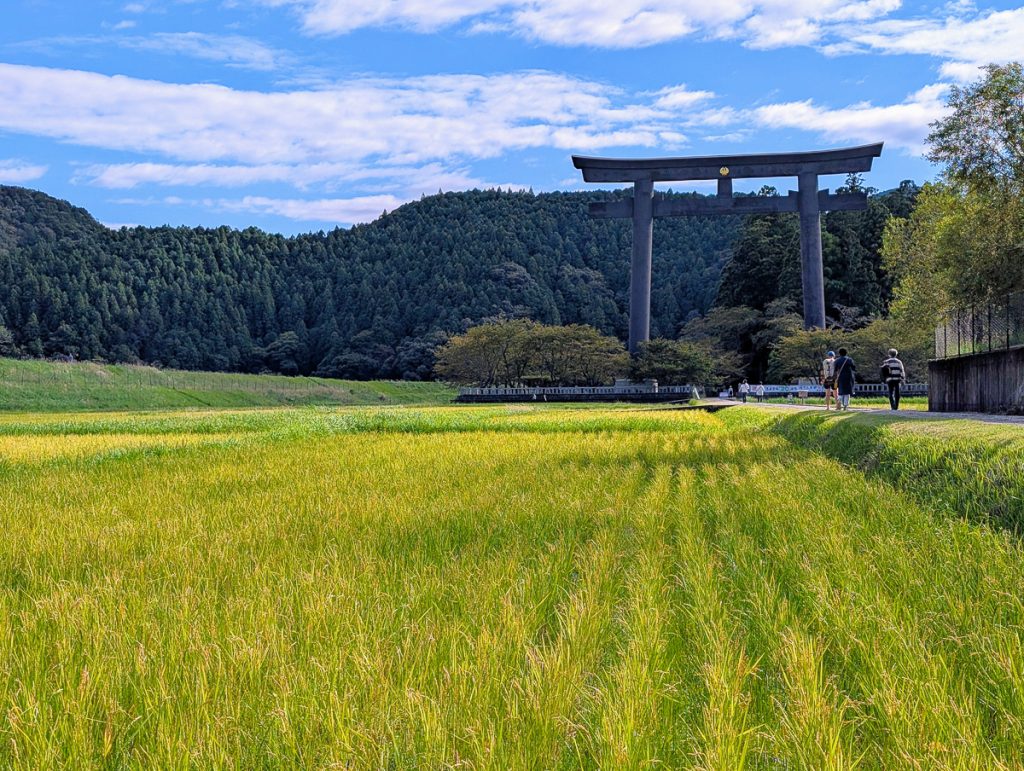
During my slow travel journey in Japan, I prioritized sustainability and ethical travel while honouring and respecting Japanese culture with appreciation, understanding, and sensitivity. I read books and policy documents, reviewed history, read through zoo certification documents, and discovered NGOs.
I also learned about Japan’s relationship with plastic, cultural norms around waste, and captive animal experiences. I tried to focus on Japanese documents and voices.
With countless guides offering “top tips for visiting Japan” or “things you need to know before visiting Japan,” all covering the same generic advice — like how to use the Suica card or reminding you not to blow your nose in public — this guide offers something different.
I’m passing along everything I learned, along with additional resources for you. Being more aware of these topics will help you know when to establish boundaries, engage in open dialogue sensitively, and reject extractive practices while respectfully appreciating Japan’s unique and rich culture.
These 15 essential tips for visiting Japan as a responsible traveler will help you navigate Japan thoughtfully and equip you with the tools to plan a fantastic, sustainable trip.
With each tip, I’ll cover the background of this topic in Japan, including why it matters, and offer actionable steps you can take. This is another of my in-depth, long dives — so make sure you bookmark and pin this for future reference.
Sustainable Travel in Japan
One challenge to sustainable travel in Japan is that well-known green initiatives and certifications are less obvious. Green Key certification, for example, has just emerged in Japan in the last year or two.
That’s not to say sustainable travel doesn’t exist in Japan; it’s quite the opposite, really— Japan has some incredible sustainable experiences. Sustainability just looks different and can be more challenging to find than what you are used to when traveling.
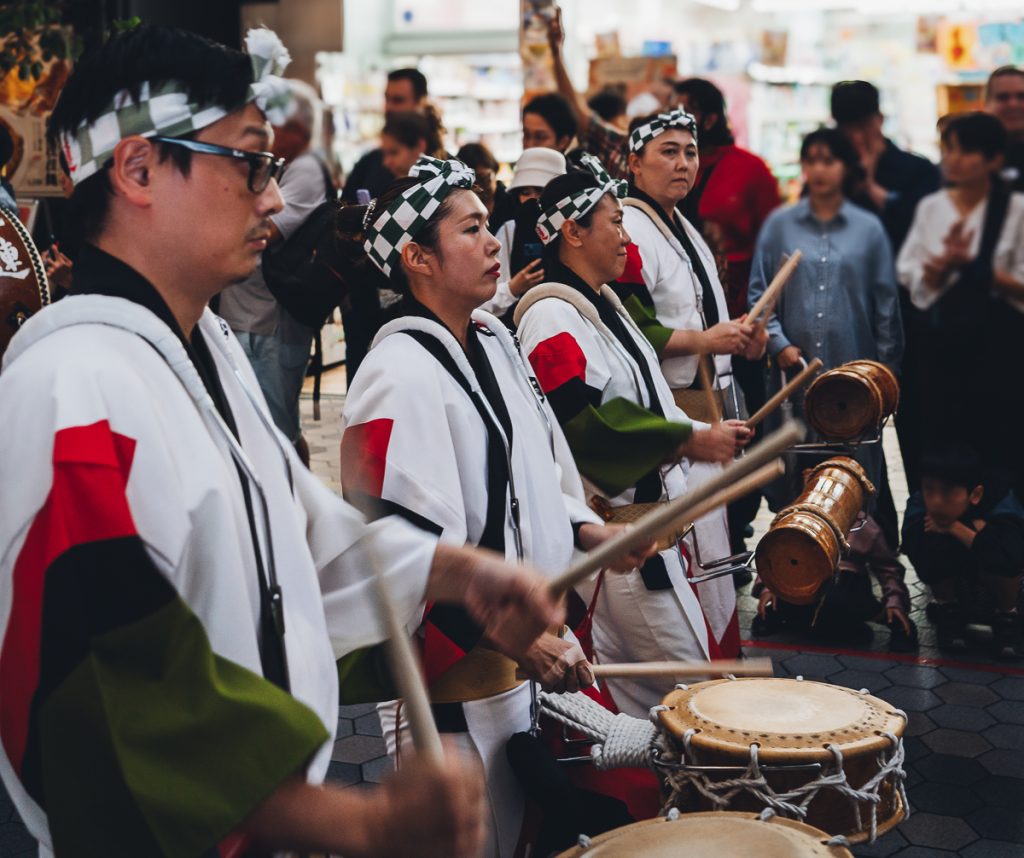
When viewed through the lens of the three pillars of sustainability, searches for sustainable travel and tourism experiences in Japan often focus on just one of these pillars, cultural experiences. It is rather easy to find information on tea ceremonies, immersing yourself in cultural heritage, behavior expectations, and visiting religious sites.
Cultural exchange is a great place to start. However, it is just one piece of the pie; other aspects, such as animal welfare, waste reduction, environmental conservation, gender equity, and responsible travel behaviors, are often overlooked in the discourse.
Green-hushing, or companies that fail to advertise sustainability work was something I noticed. Meaning, there were many examples of inherently sustainable homestays in Japan, but none of them labeled themselves as such.
Furthermore, I found numerous examples of misguided ethics and greenwashing. (So, yes, we are dealing with both greenwashing AND greenhushing). For example I noticed many animal sanctuaries, claiming to rescue animals, operated with exploitative practices, sourced animals from pet store breeding schemes, and lacked basic animal welfare.
15 Responsible Travel Tips for Japan
As a sustainable travel expert with 15 years of experience in travel and tourism, and a Master’s degree in environmental science, researching and planning a balanced, sustainably focused trip to Japan was a challenge, but one that was worth it, making my trip to Japan all the more enjoyable. I can’t wait to share these sustainable travel tips that made my trip to Japan one of the most rewarding and enlightening experiences.
1. Be Mindful of What You Eat
Choosing to eat less meat and seafood in Japan is a fantastic way to address both ethical and environmental concerns. Sadly, Japan is one of the few remaining countries still engaged in commercial whaling and dolphin hunting. Its fishing practices are generally extractive, unsustainable, and unethical, as they take more from the ocean than is being replenished.
Many of us are familiar with Japan’s renowned Kobe and Wagyu beef; however, producing this type of beef raises more ethical concerns than cattle farming in other developed nations.
Contrary to common myth, Japanese cows aren’t massaged. However, due to limited land, they cannot roam freely, graze on grass, or exercise, which contributes to the marbled look. Most Japanese cattle live indoors in confined spaces. They are overfed and lack a nutritional diet, which can cause vitamin deficiencies, vision problems, and other health issues.
If you’re not vegetarian or vegan, hear me out before you write this one off. After spending a month in Japan, I now rank it among my top destinations for vegetarian cuisine! I know; I’m shocked as well.
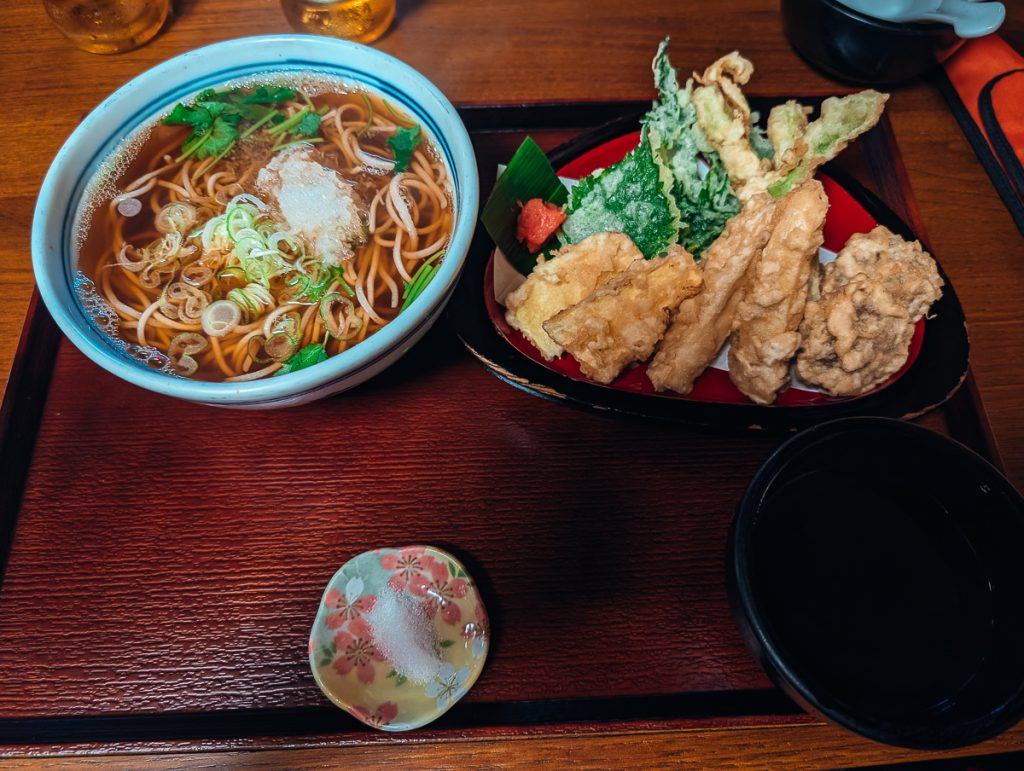
We ate something different for almost every meal. From the bustling streets of Tokyo to traditional ryokans and rustic mountain homestays, I was constantly surprised by the diverse and delicious vegetarian offerings. I savoured 11 courses inspired by shojin ryori, the vegan cuisine of Buddhist temples. I even indulged in vegan versions of iconic Japanese street food, such as takoyaki. So, you don’t need to eat meat to sample delicious cuisine.
READ: 18 tips for plant-based travels in Japan for my complete guide to navigating Japan as a vegetarian with vegan tips.
Tips for Mindful Eating in Japan
I get it; many of us come to Japan to eat and enjoy its rich cultural heritage, which is deeply intertwined with food. But, reducing your consumption of meat and seafood during your travels in Japan enables you to try traditional Japanese cuisine while protecting marine ecosystems and promoting animal welfare.
Until the 1800s, Japan was primarily a meatless or low-meat-consuming country, due to Buddhist practices and beliefs. Vegan foods are in many ways more traditional than meat.
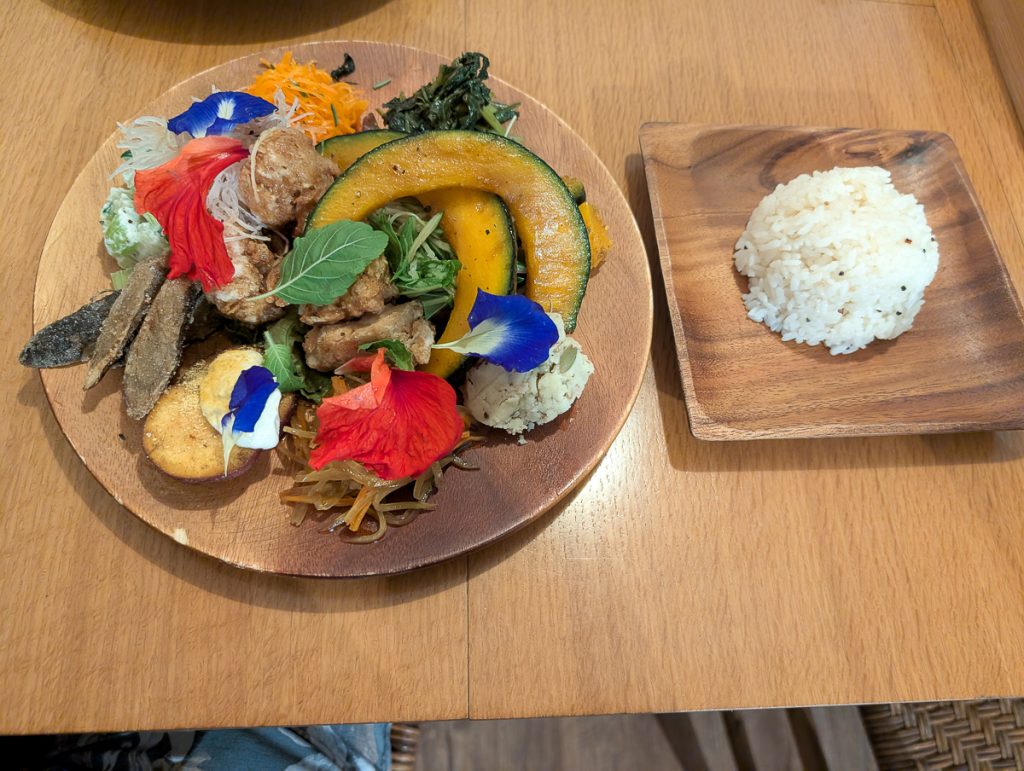
I have an entire guide for vegetarians, vegans, and those looking to cut back on meat and seafood in Japan, including 20 tips. These are just a few of them!
Book Accommodation that Includes Plant-based Meals
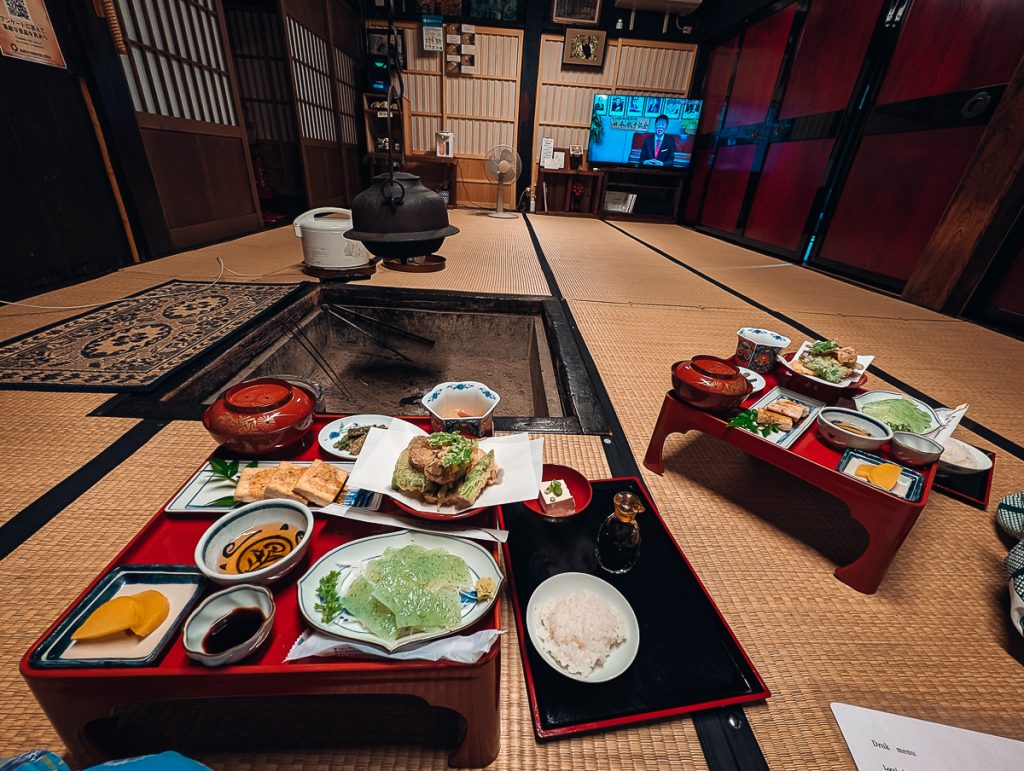
Take the choice out of the equation and pre-book plant-based traditional meals at your ryokan or homestay. Not all hotels are accommodating to vegetarians or vegans, but we found many that were.
Just make sure to contact your host in advance to request dietary meals (some require more than 10 days’ notice), as they will need special ingredients and preparation for your meals.
Once confirmed, you can enjoy plant-based breakfast and dinner at traditional stays. Our favourites were:
- A traditional Ryokan in Nikkō
- A luxury eco resort in Okinawa
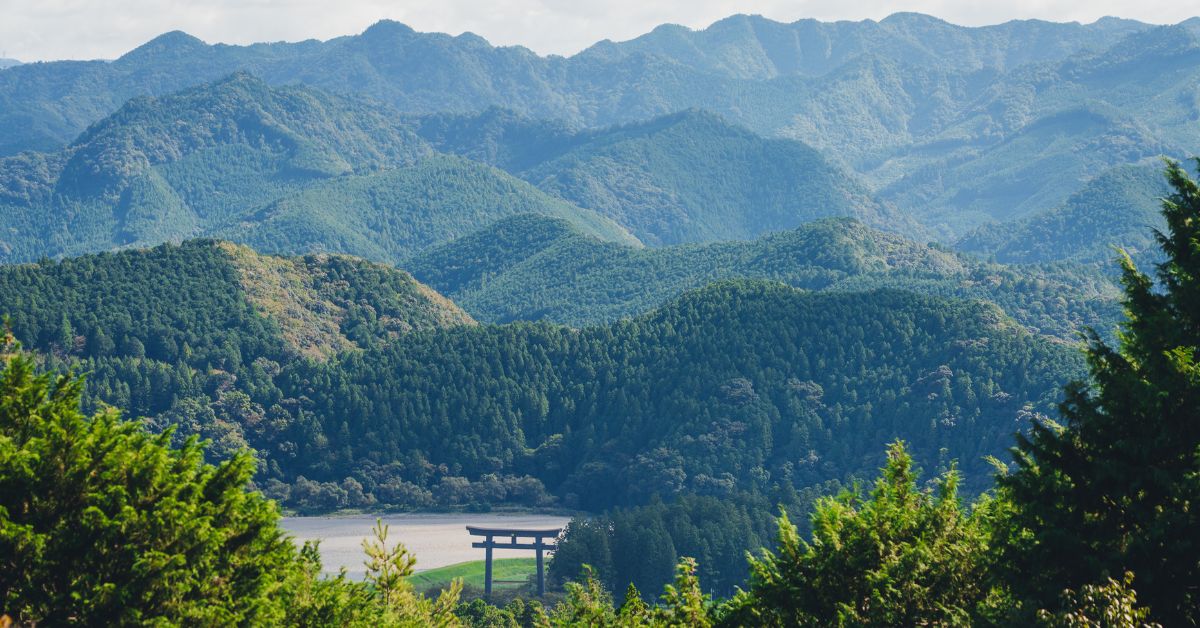
- A rustic homestay in a cozy UNESCO village
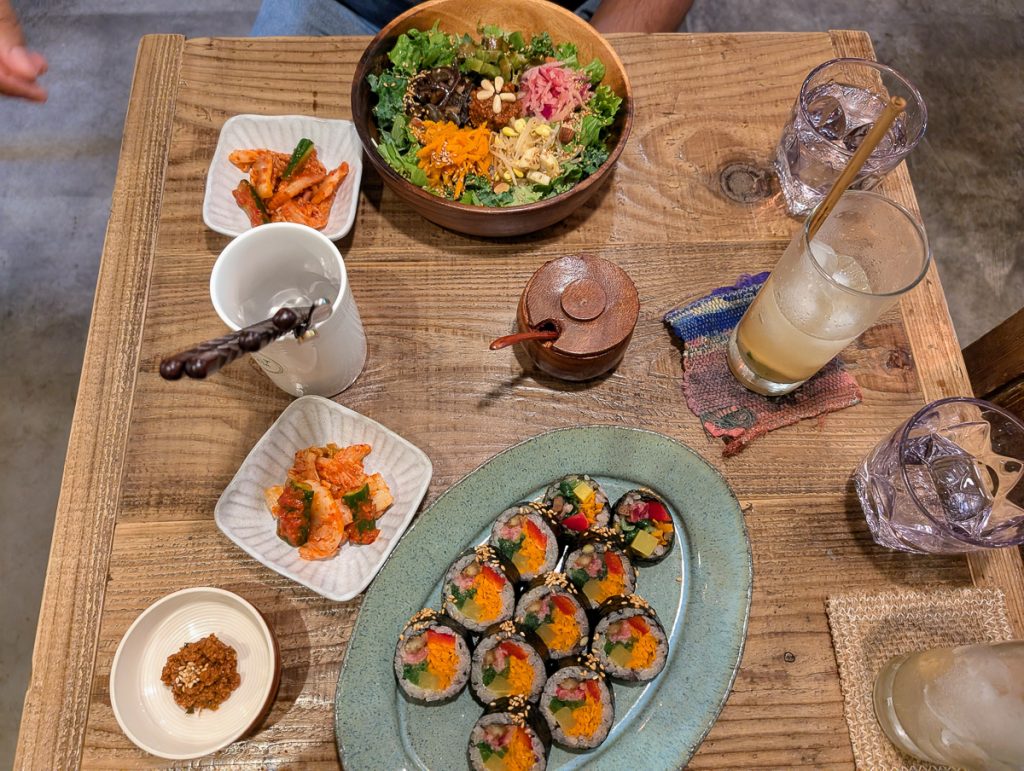
Look for Traditional Vegetarian Options
Many traditional dishes are naturally vegetarian, stemming from a time when meat consumption was frowned upon.
- Yuba is a traditional dish made by heating soy milk to create sheets of tofu.
- Shojin ryori is a plant-based cuisine style consumed by Buddhist monks.
- Sansai are “mountain vegetables” that have been foraged and consumed for centuries.
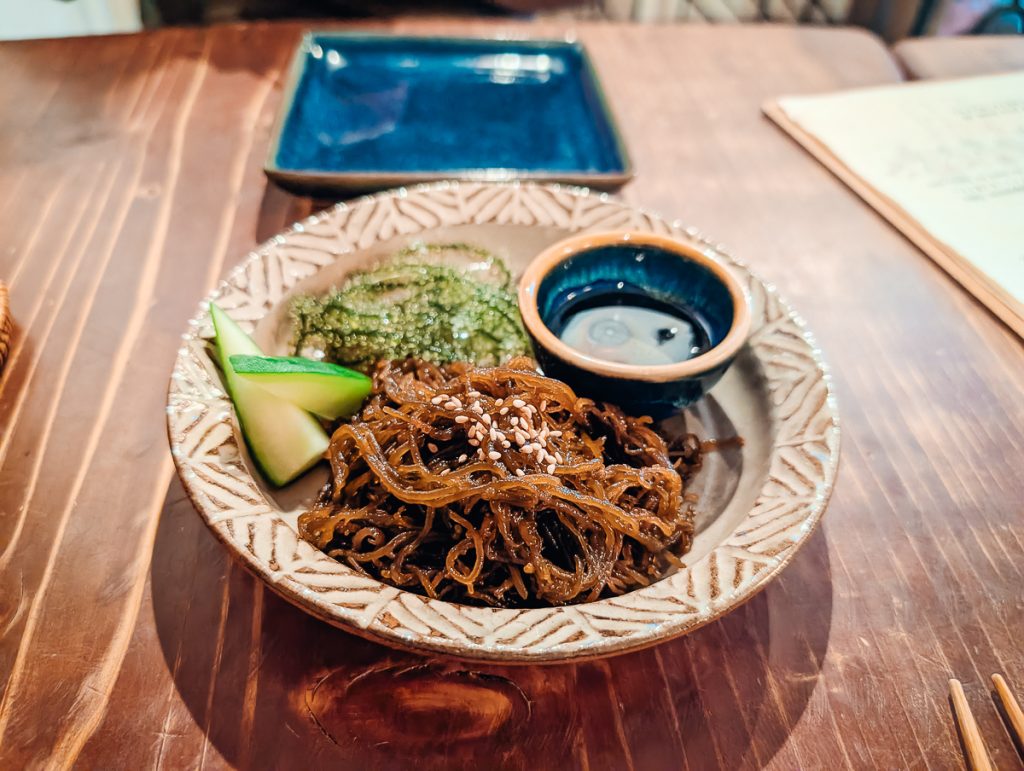
- Mozuku is the traditional type of seaweed consumed in Okinawa.
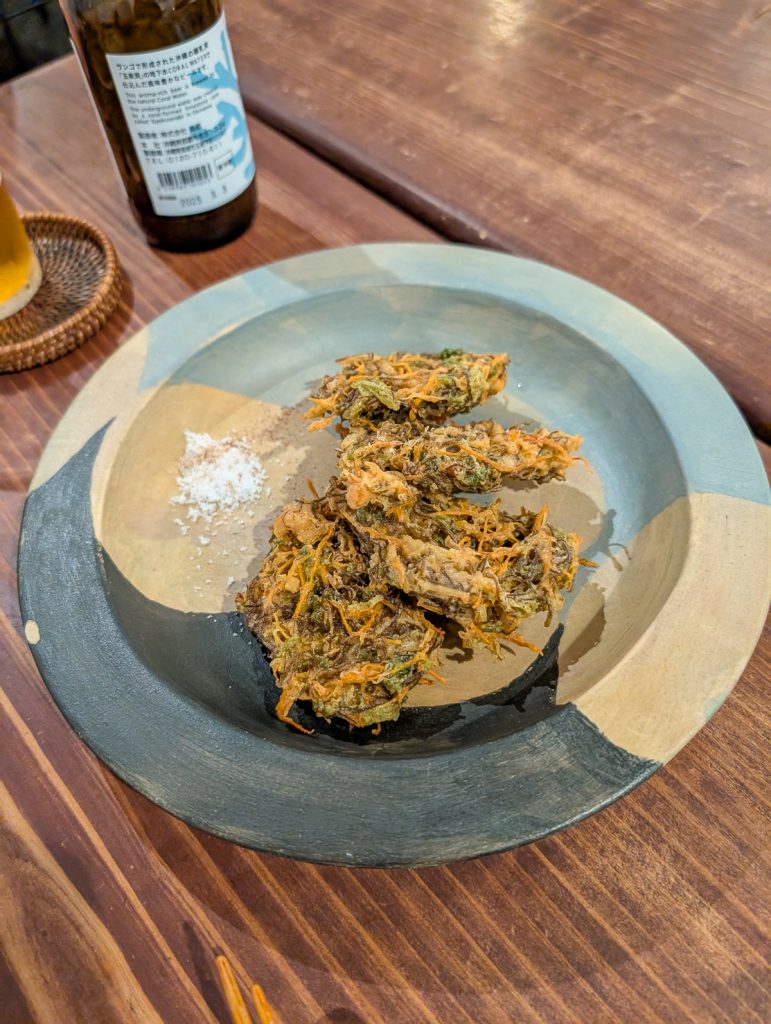
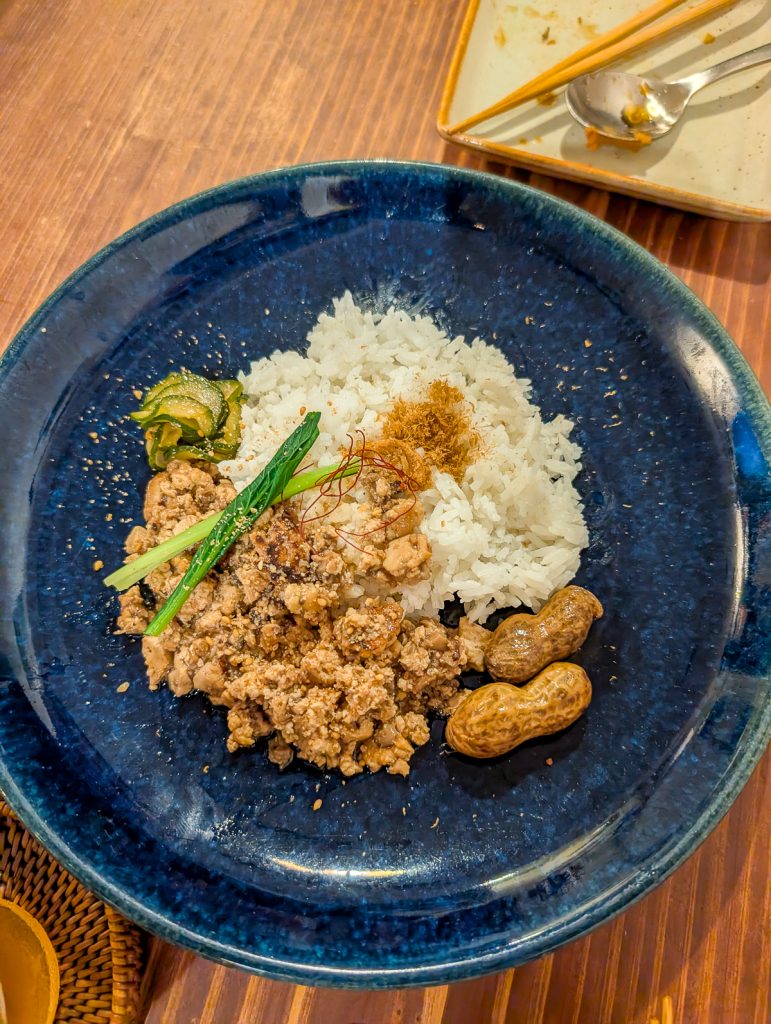
Try the Alternatives
Japan takes great pride in food quality, and vegetarian options are no exception. Flavour, texture, and local ingredients are the heart and soul of plant-based options in the country.
Vegan sashimi? It’s just as slippery and savory as the real thing. Vegan karaage? It’s just as crunchy and juicy as the real thing. These aren’t sad excuses for alternatives, so indulge and enjoy!
Make Smart Meat and Seafood Choices
If you want to try Japan’s meat and seafood, make wise choices. Avoid Bluefin Tuna, any whale or dolphin, octopus, pork, and wagyu beef. Consider eating smaller, lower on the food chain options, such as anchovies/sardines, egg dishes, or chicken.
2. Rethink Captive Animal Experiences – Cafés, Zoos, and Aquariums
One of the most disturbing aspects of Japan is its troubling relationship with captive animal experiences, which are inhumane and contribute to the loss of biodiversity of wild animals.
Japan’s animal welfare ethics are seriously lacking, and many animals suffer unnecessary premature death, live life in a cage, are taken from the wild, are forced into breeding mills, or are forced to perform or interact with humans.
If you plan to visit a zoo, aquarium, aqua park, animal café, fox village, Wan Wan Land, or any other place with captive animals, please reconsider. Putting the well-being of animals above your own enjoyment or a cute photo op is key when visiting Japan. Let’s get into the grim details.

Aquariums and Aqua Parks in Japan
While many countries are coming around to letting go of captive cetaceans, Japan is doubling down, increasing its stock of wild dolphins, and holding second place for countries with the most captive dolphins.
Japan is home to the wild dolphin hunt in Taiji, where dolphins are separated from their pods in the wild, enduring significant stress and trauma during capture and transportation. Many are killed for meat in a bloody show; others are sold to aquariums in Japan, Russia, China, and the UAE, which all still accept wild-caught dolphins to live a life of captivity.
Once in captivity, these intelligent creatures are confined to small, artificial pools, far removed from their natural ocean environment. This restricted lifestyle can lead to various health issues, including stress-related illnesses, psychological distress, and premature death.
Moreover, capturing dolphins and orcas for captivity contributes to the depletion of marine biodiversity.

The way Japan captures and keeps dolphins is so problematic that the World Association of Zoos and Aquariums (WAZA), one of the strictest global certifications for zoo quality, revoked the membership of all Japanese aquariums in 2015.
Some Japanese aquariums were eventually allowed back in, provided they promised to stop sourcing dolphins from the wild in the Taiji dolphin drive. While this was a first step, only 40 of Japan’s 100 aquariums followed this guideline; the others continue to capture wild dolphins.
This also does nothing to limit the inhumane treatment in captive dolphin experiences. Most aquariums in Japan, even if certified, still keep the animals in confined, inhumane spaces with captive breeding programs. This is similar to keeping humans in solitary confinement for committing no crime.
Zoos in Japan
The zoos in Japan aren’t much better. Many Japanese zoos, including those accredited by the Japanese Association of Zoos and Aquariums (JAZA), have been criticized for poor welfare standards.
The concepts of animal welfare and enrichment are still emerging in Japan. WAZA has issued urgent statements requiring JAZA members to undergo welfare training with their staff. WAZA is facilitating welfare training and helping Japan invest in enclosure updates.
Still, as it stands today, concrete, small enclosures, and unhappy and unhealthy animals fill Japan’s zoos.
Photos in reviews and websites reveal gorillas in small concrete enclosures and incompatible animals in small spaces. animals well as animals kept primarily for human entertainment rather than research, conservation, or education, with a complete disregard for their welfare.

Animal Cafés – MiPig, Owl Forest, etc.
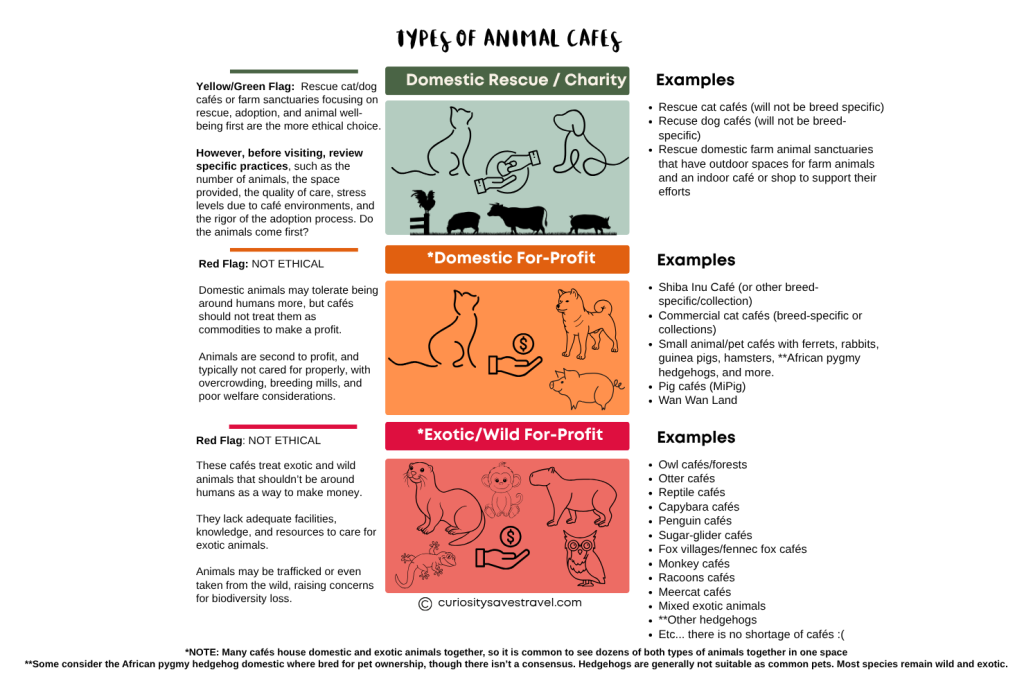
The rise of commercial and for-profit animal cafés raises serious ethical questions. These establishments often prioritize profit over animal welfare. The animals come from mass breeding mills or are trafficked, only to live their life confined to small, unsanitary cages and subjected to constant human interaction.
Such practices can cause significant stress and harm to animals. Many die prematurely, get sick, or fight amongst themselves.
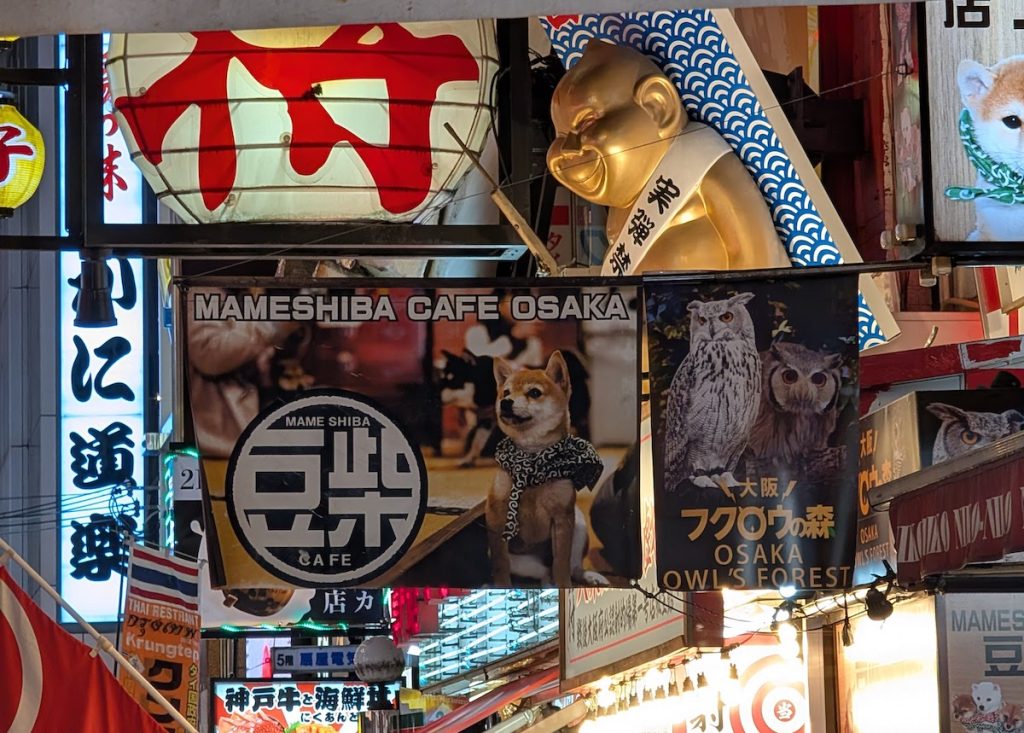
Cafés often house either domestic or exotic animals, and it is not uncommon to see Shiba Inu cafés, otter cafés, owl forests, small-animal cafés featuring hedgehogs and ferrets, and mixed-animal cafés.
Even if animals appear friendly, exotic animals, such as otters and capybaras, are not meant to be around humans. Even domestic animals, such as dogs and pigs, bred in mills are not adequately cared for, suffering immensely behind the scenes in these establishments.

These cafés excel at ethics-washing; many unsuspecting tourists wander in and leave truly horrified at what they’ve seen. Please read this well-researched guide on the ethics of animal cafés, and save it for a complete look at the horrors of these cafés. To summarize a few points as to why these cafés are so concerning:
Animal Welfare
- Animals are abused, restricted access to food, kept in cages in the back of the house, tied down, and subject to loud music and forced human interaction.
- They are bred in mass breeding mills.
- Many fight, exhibit stress-related behaviours, and get sick.
- Many die prematurely.
Biodiversity Loss
- Cafés house endangered and threatened animal species, which are commonly trafficked.
- Some animals are taken from the wild.
- Cafés are linked with animal trafficking
- Cafés increase the number of exotic, wild pets kept at home.
Human Health
- The risk of human/animal disease transmission includes zoonotic diseases such as salmonella and roundworms, which can be fatal to humans.
- There have been reports of cross-contamination between the café and animal supplies, indicating unhygienic conditions.
- There is a strong odour, and animals have been seen relieving themselves in cafés.

Read: My complete guide to understanding and navigating animal cafès in Japan.
Tips For More Ethical Animal Experiences
I get it; as a fellow animal lover, the urge to interact with an exotic species, such as an otter, is strong. When you see these animals on social media, cuddling people in a café, looking happy and social, you think there’s nothing wrong. Or perhaps you’ve never seen a dolphin, and the thought of seeing one up close is exciting.
We must resist these urges and remember that our isolated moment of joy cannot come at the expense of the cruel treatment of animals.
For those who are true animal-lovers, you know to put welfare over brief personal enjoyment.
Skip the Captive Animal Experiences
By avoiding captive dolphin parks, zoos, and animal cafés, individuals can make a significant impact on animal welfare in Japan. Vetting these experiences requires extensive research and critical thinking. The easiest way to make a good choice is to avoid them altogether.
I personally went as far as to avoid any hotel that listed dolphin shows on its website as a recommended activity. When hiking the Kumano Kodo, we intentionally skipped Taiji to avoid supporting any business in a town linked to the dolphin-hunting industry.
In my expert opinion, as a traveller, you should avoid all captive-animal experiences in Japan unless you’ve conducted thorough research and found a genuine rescue that operates transparently and prioritizes animal welfare over profit.

De-influence Unethical Experiences
Avoid engaging with or supporting social media posts that glamorize animal cafés in Japan. Reach out to travel bloggers you feel comfortable striking up a conversation with and send them a message or leave a polite comment if they visit a café and post about it online.
Start a Conversation
A few private guides or tourist information centers recommended aquariums, cafés, or zoos. I politely declined and followed up with my reasons for not visiting these places.
One guide asked me why, and I replied that, as a biodiversity expert, I believe these places are unethical and harm animals. I prefer to see animals in their natural habitats. He completely understood and afterward provided me with numerous alternatives to support ethical encounters.
Locals want to recommend things that appeal to you, but often start with generic suggestions. Feel free to tell them what you are actually interested in and why.

3. Ditch the Single-Use Plastics and Reduce Waste
Japan ranks second in the world in plastic waste generation per capita (right behind… can you guess it?….. The United States).
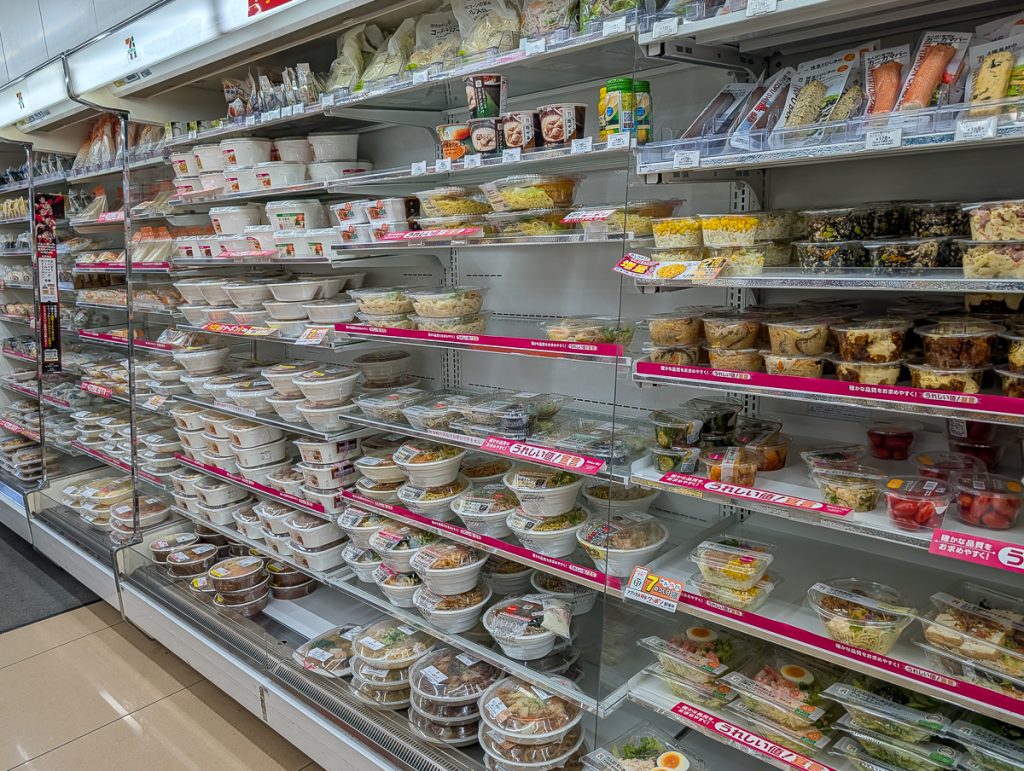
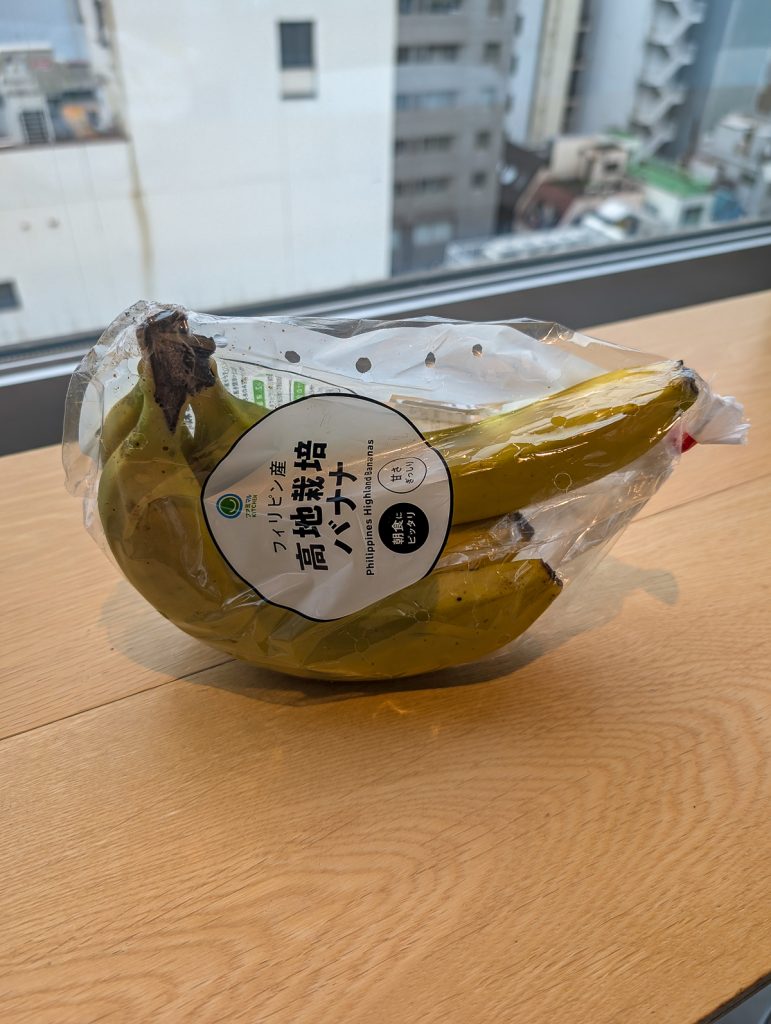
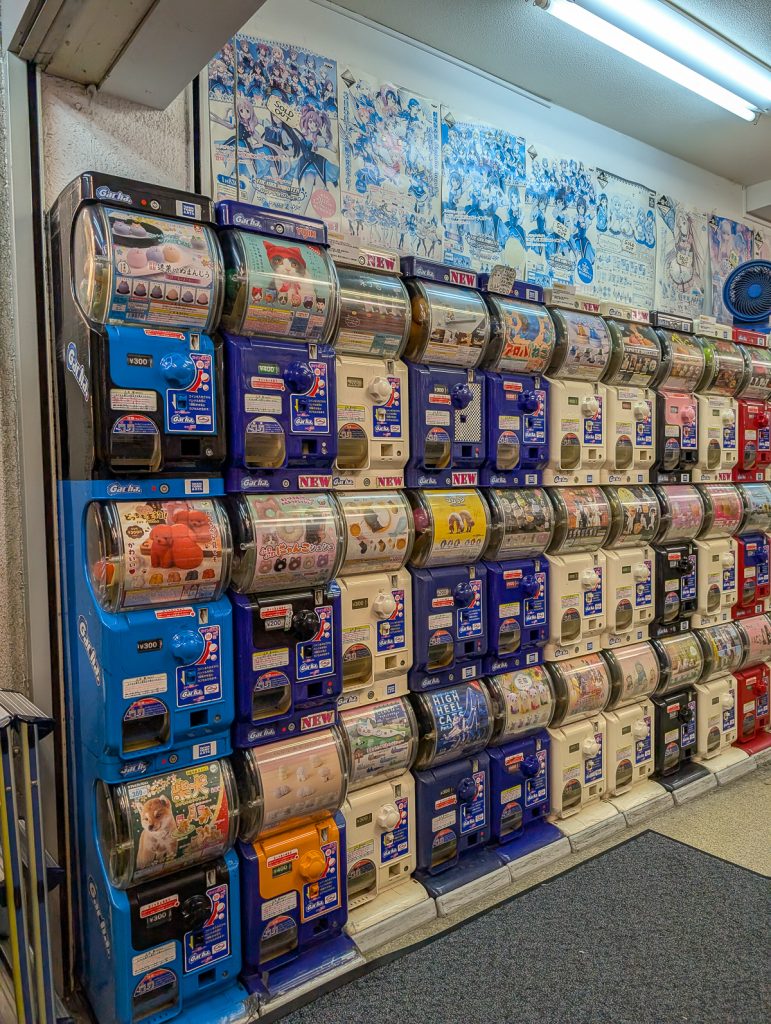
All it takes is a step into 7-Eleven to see walls and walls of individual onigiri wrapped in layers of single-use plastic, three bananas wrapped in plastic, and walls of plastic beverage bottles. Capsule vending machines dispense millions of tiny plastic toys in small plastic balls.
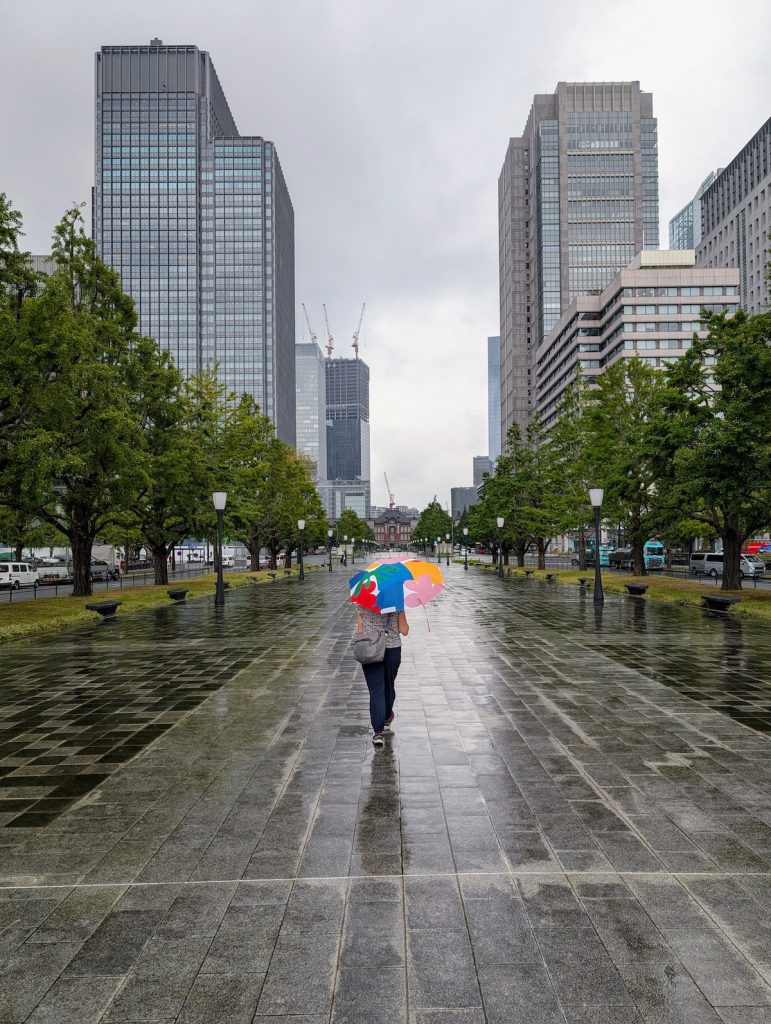
On rainy days, I noticed people in Tokyo using single-use umbrella covers at store entrances. Shopping bags come with single-use plastic covers. People would take these items and dispose of them without hesitation.
The reality of Japan’s plastic crisis is that:
- Japan’s production of plastic bottles has increased from 14 billion to 23.2 billion bottles per year (2004-2022).
- Japan is Asia’s most prominent producer of packaging waste and the 2nd globally.
- The average Japanese person uses 450 plastic shopping bags per year.
- Single-use plastic accounts for ¾ of Japan’s total waste.
- Coastal areas of Tsushima and Okinawa are littered with plastic.
Japan does incinerate its waste and is considered a leader in global waste management, which is worthy of applause. However, this overlooks the fact that Japan exports 46% of its plastic waste to countries with less developed economies, such as Malaysia, where it is not recycled, and it does little to curb the production of virgin plastics.
Japan has a long road ahead to tackle its problems, but it is making efforts. In 2019, the Japanese government established the Plastic Resource Circulation Strategy, focusing on the four Rs (reduce, reuse, recycle, and renewables) as a pathway toward a more circular plastic and waste system.

Tips for Reducing Plastic and Waste in Japan
Avoiding single-use plastic in Japan entirely is impossible. So the goal here isn’t perfection; it is reduction. I think reducing plastic was one of the biggest challenges for me in Japan. But with a bit of self-control, proper packing and planning, and practicing the art of going without, I think I did pretty well!
Bring Your Reusables
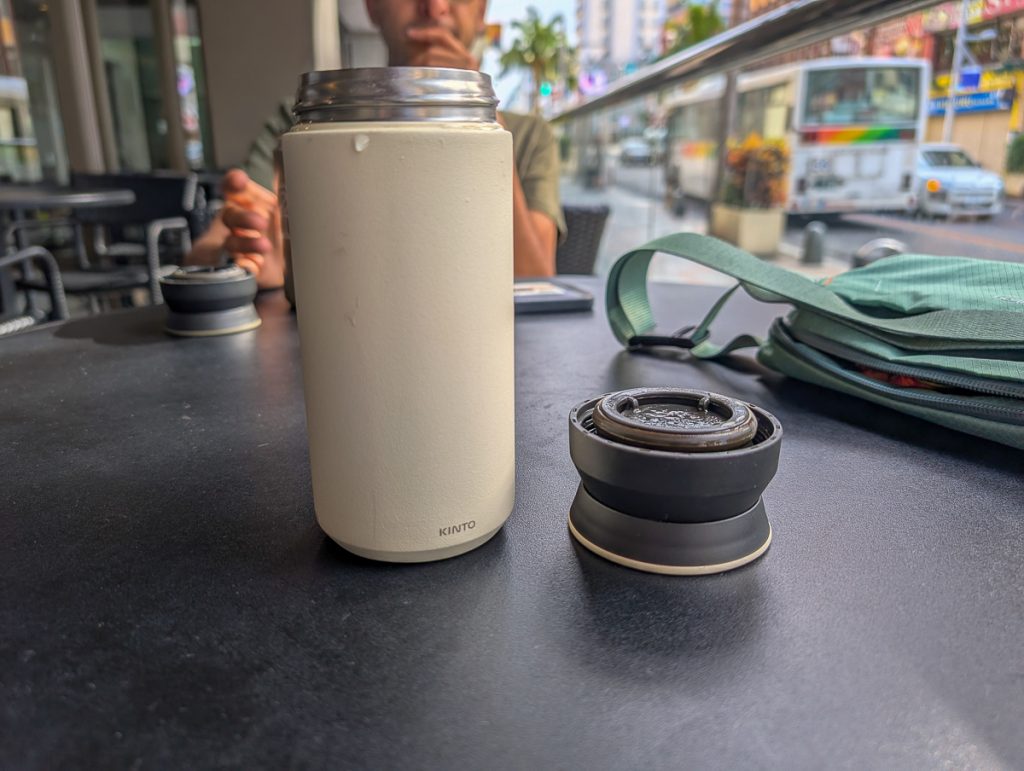
Japan was surprisingly an excellent place for reusable water bottles and coffee cups. Although many people drink from plastic bottles and single-use coffee cups, there are numerous opportunities to refill water bottles throughout the country.
My Mizu is a fantastic resource for finding refill water stations. We were always able to refill our bottles from the hotel sinks. Then we went out exploring and found fountains in both urban and rural areas.
Every coffee shop I visited accepted my reusable coffee cup without hesitation.
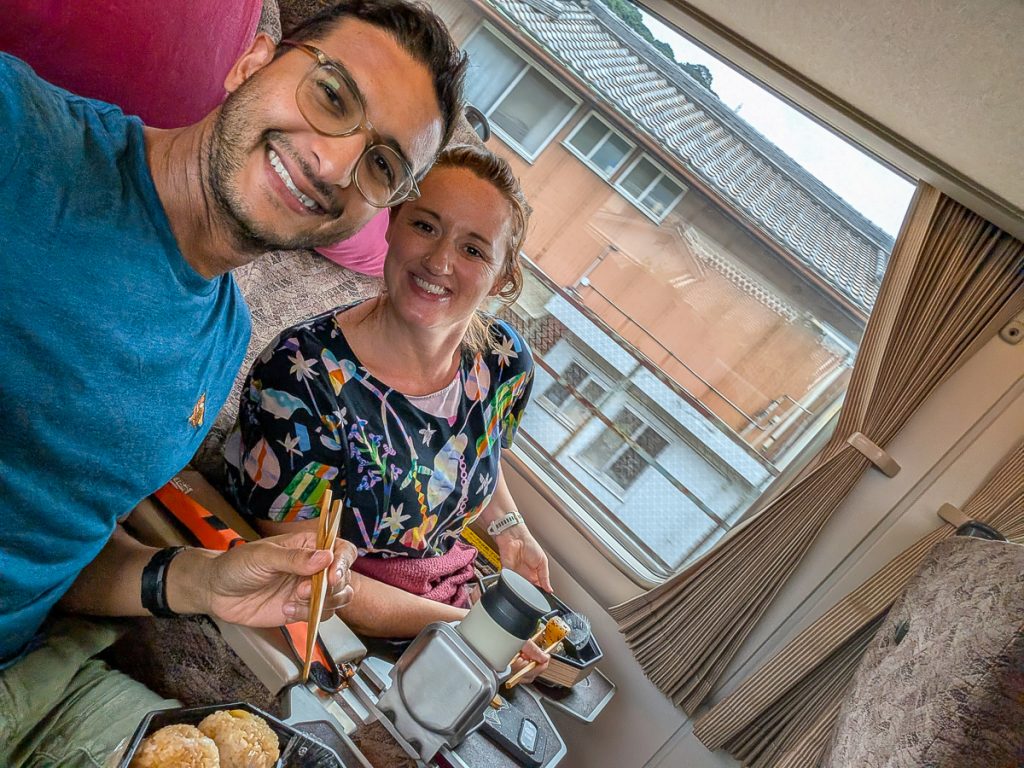
Did you know that Japan discards 2 billion single-use chopsticks each year? We brought our reusable chopsticks everywhere without any friction or awkward moments.
Japan now charges for single-use plastic shopping bags. Bring your own tote to avoid paying extra and adding plastic waste.
Practice Self-Control
As novel and fun as vending and capsule machines are — and they may feel like a “must-experience” in Japan — ask yourself if you really need a small plastic trinket. Practice the art of saying no, self-control, and consider why you want something and whether you truly need it.
If you do buy a vending machine drink, opt for one that’s not made of plastic. Instead, choose aluminum cans or tetra packs. We used these iconic vending machines a few times when we needed a quick coffee or drink, but always skipped anything in plastic.
Do you really need a Boba drink in a single-use plastic cup, or can you find a refreshing alternative that’s not in a single-use plastic cup?
Opt to Dine In
As fun and exciting as 7-Eleven is, most of the food there is just wrapped in plastic. Try to minimize your convenience store meals and go for something local and made fresh in-house.
Of course, you don’t need to be perfect all the time. We made a few exceptions for long road-trip days, purchased bananas even when wrapped in plastic to increase our fruit and fibre intake, and tried a veggie onigiri or two, but we really made an effort to minimize the convenience-store food.
We always felt that supporting small, local restaurants over big convenience store chains was a better choice to support the local economy, and this helped us minimize our plastic footprint.
Be Prepared for Rain and Weather
Don’t be caught out in the rain so desperate for an umbrella that you cave and buy a cheap, clear plastic umbrella only to toss it before you head home.
Many stores understandably won’t let you come in with a dripping-wet umbrella, so a small, stashable umbrella with a cover is key to reducing waste. I packed my bright original Duckhead umbrella, which dries quickly, is light, and is easy to stash.
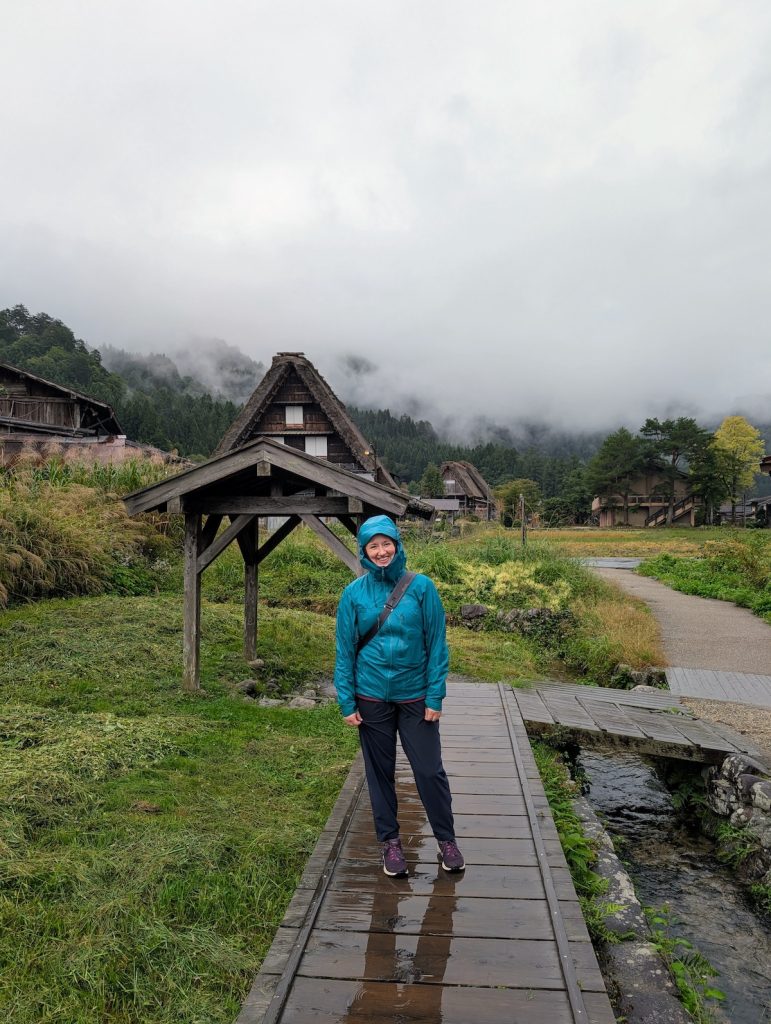
Japan is a rainy country; come prepared with a small umbrella, proper rain gear, waterproof shoes, a waterproof purse or bag, and at least one outfit that is quick-drying or rain-resistant, such as Merino wool.
Slippers, Gifts, and Novelty Items
As you travel through Japan, you will often see single-use slippers wrapped in plastic, receive gifts offered as a gesture of kindness, and find single-use toiletries.
It helps to travel with your own pair of slippers, which you wear only inside when appropriate, to avoid having to open new ones from the hotel or spa.
Do your best to decline cheap gifts with grace and dignity. The excuses of “not having enough room in your bag” or that you “don’t have a home base” are good ones.
4. Practice Mindful Consumerism
On that note, consumerism in Japan, especially in its urban centers, is nothing short of mind-blowing. Many people come to Japan with the intention of shopping, and shop they do.
The trend of stocking up in Japan is growing, and many tourists are now irresponsibly ditching their suitcases to upgrade to a larger one to fit all their shopping. They are abandoning working suitcases in hotel rooms, on the streets, in airports and train stations as they buy a newer and larger one. During Expo, Osaka reached its breaking point.
While it is all well and good to want to spend a little money on your holiday and support economic stimulus, we need to be more thoughtful about how much we are buying, what we are buying, and how much room we have to take things home.
While many of us associate Japan with consumerism, much of this is a modern Western Influence. We can look to traditional Japanese principles for solutions. One such concept is called the Mottainai Spirit.
The concept of mottainai essentially translates to “it is a shame to waste,” or “one has consumed too much,” or “waste is disrespectful.” Another way to look at this is to view objects beyond their intrinsic value; traditionally, many objects, such as pots and pans, were thought to have spirits, discouraging unnecessary waste.
Despite the modern consumer trends in urban areas, the mottainai spirit remains strong in many rural areas.
Tips for Mindful Consumption in Japan
I get it; Japan is full of amazing things! As an avid gamer, there is always a part of me that craves nerdy trinkets and swag, but I came to terms with the fact years ago that I can be a fan without “the stuff.”
Some things in Japan are absolutely worth investing in and taking home. Take a moment to think critically and buy:
- What you will use
- What you need
- What will last
- What is made locally
- What you have room for
- What is made with sustainable, high-quality materials
Pack the Right-Size Suitcase—and stick to it!
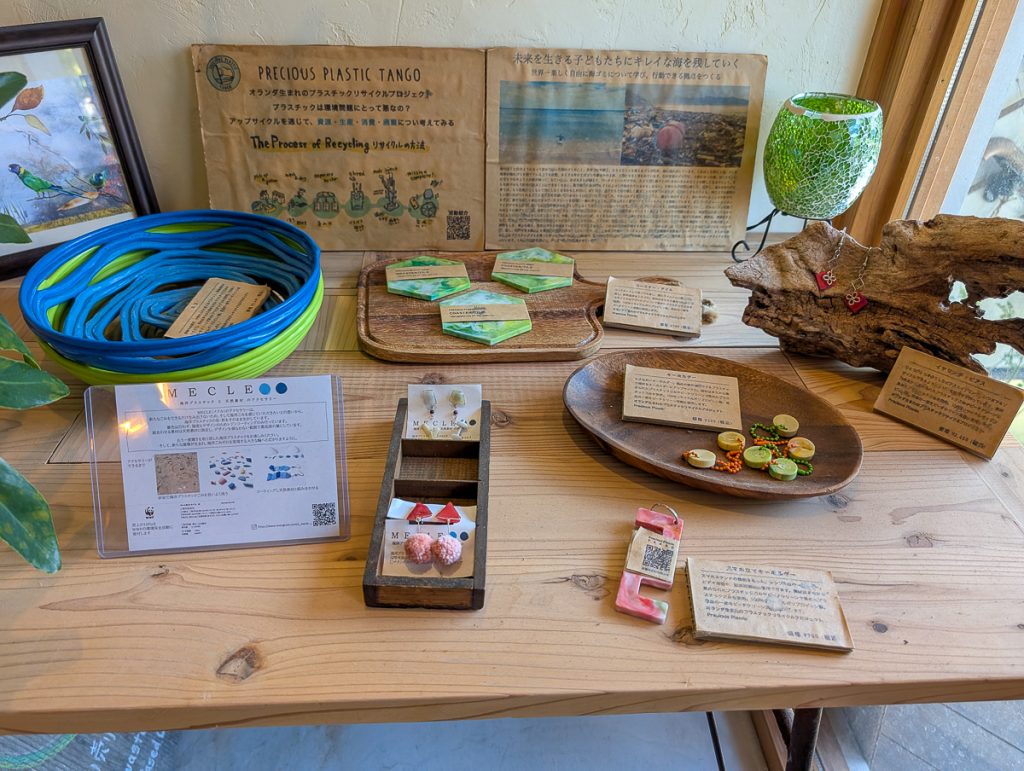
It’s perfectly fine to want to engage in mindful shopping in Japan! We did. However, we made sure to bring a reasonably sized suitcase with a little extra room and filled it only with sustainable and artisanal souvenirs that hit all the points above.
If you are running out of room, use this as an opportunity to buy only what you genuinely need and think twice before over-consuming. Don’t just ditch the suitcase in the middle of the street to buy a larger one to take home capsule trinkets.
Embrace the Mottainai Spirit
Before buying something similar to what you already have at home, consider honouring the spirit of your existing clothing, gadgets, and items, rather than discarding them before their end of life.
Don’t waste your money on overconsumption, unnecessary trinkets, or single-use items. Being thoughtful and intentional with your purchases aligns with this traditional Japanese practice.
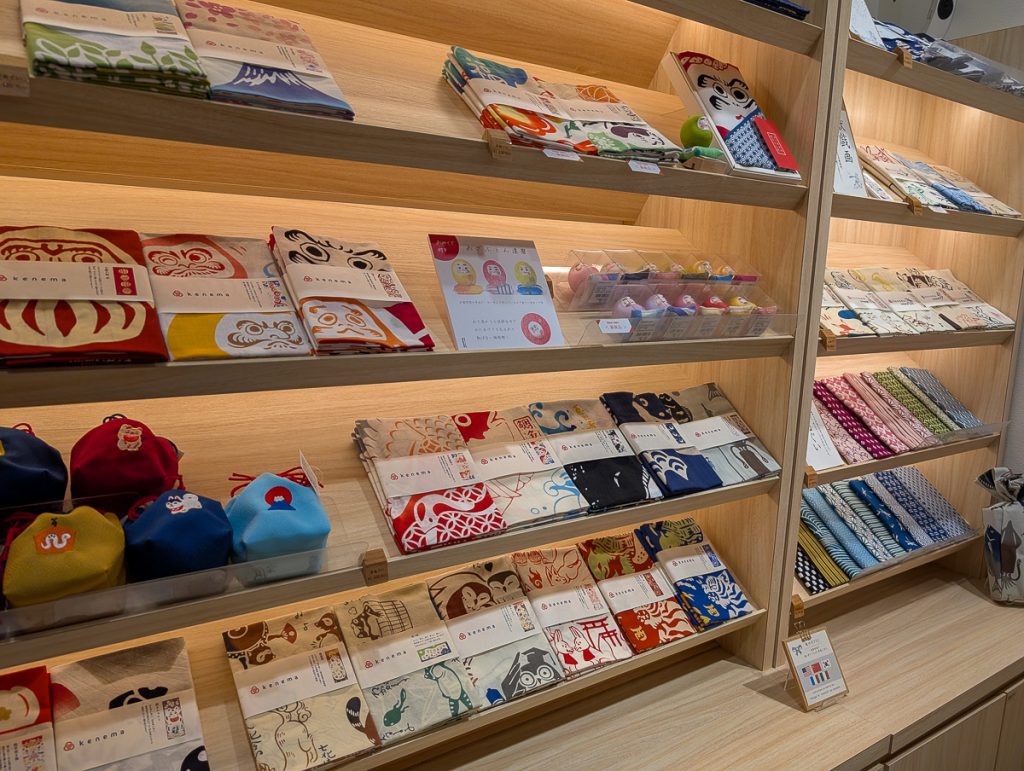
Save For Handicrafts and Artisanal Souvenirs
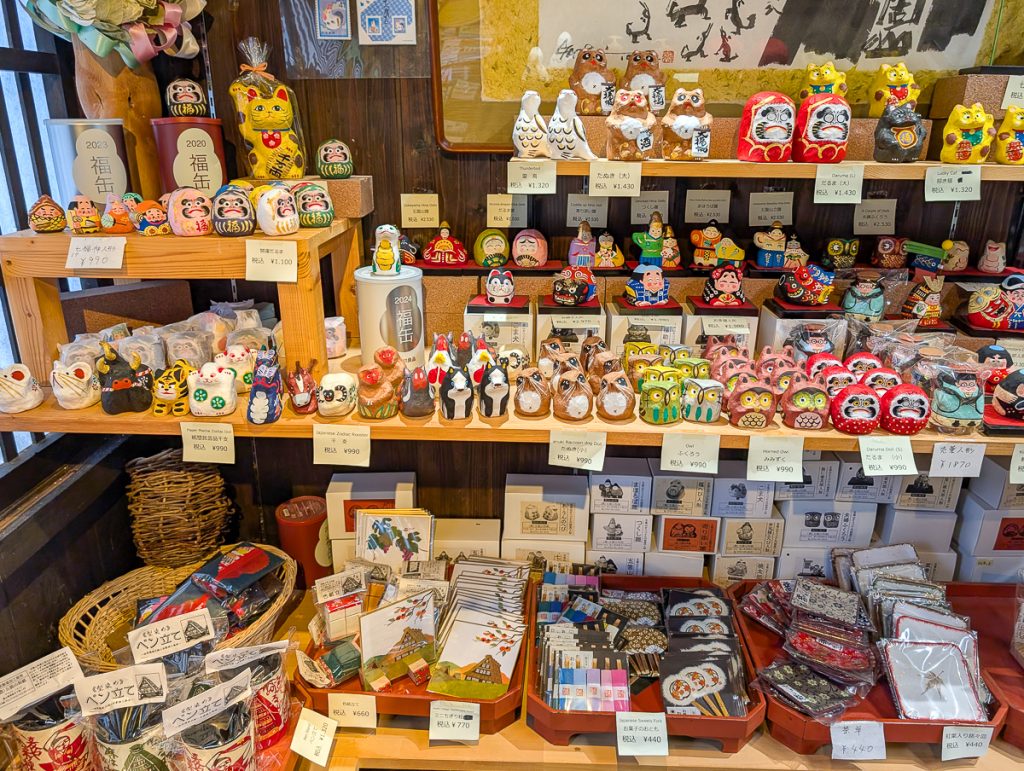
One of the best ways you can spend your dollars for good is by buying from small, local, and traditional vendors. Japan has many amazing products of high quality that will last you forever, keeping those mottainai spirits alive for years to come.
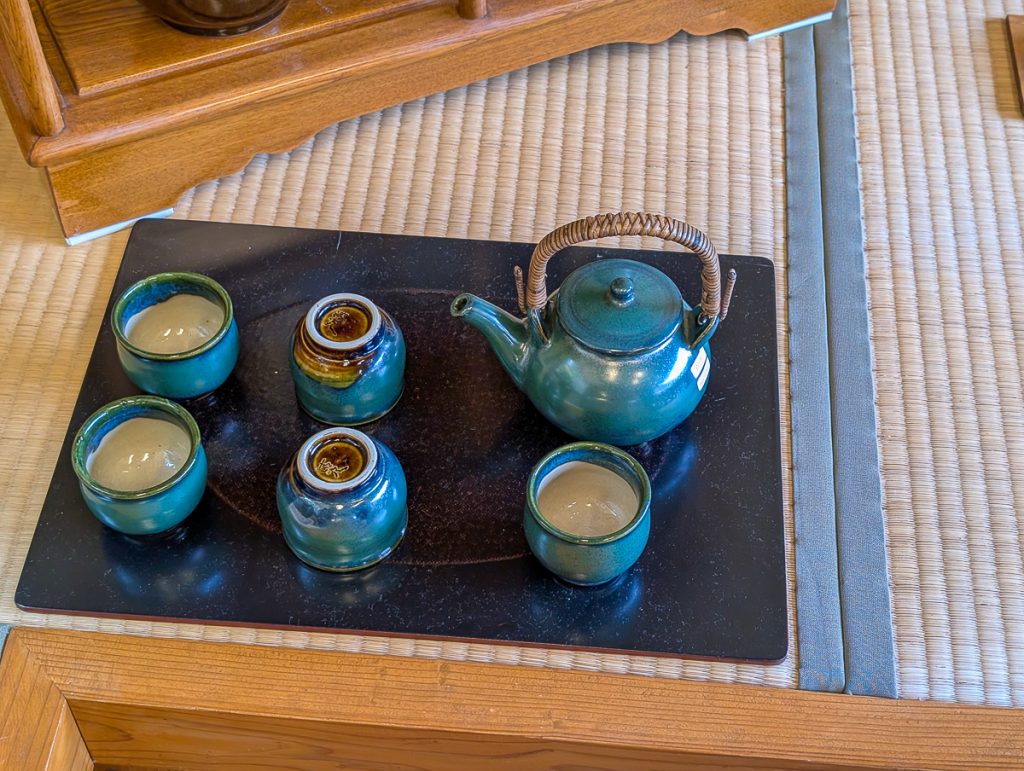
We invested in a handmade, locally made teapot and tea set, a traditional, locally made wind chime for our garden, and artisanal chopsticks to help us reduce takeout waste at home.
We focused on things that were functional, practical, and well-made locally, but not on things we already had at home.
5. Do Venture Off The Tourist Trail (Be Intentional with Itinerary)
Japan receives a large number of tourists, and international arrivals are increasing year over year, with 2024 expected to be a record-breaking year. However, most international travelers tend to visit the same few places.
According to Rough Guides, based on pre-pandemic levels (2019):
- 50% of international tourists visited the Tokyo Prefecture
- 38% made it as far as Osaka
- 28% made it to Kyoto
Only 1% of international visitors reached Kagawa or Toyama.
Most people naturally stick to the Shinkansen Golden Route, visiting Tokyo, Osaka, and Kyoto, and taking day trips from those hubs. The concentration of tourism to only a few prefectures means that many, such as Kyoto, are buckling under the weight of overtourism.
This tourism boom has put pressure on housing, hotels, resources, cultural norms, food supply, and waste management, making it challenging to manage cultural expectations.
Tips for Getting Off the Tourist Trail
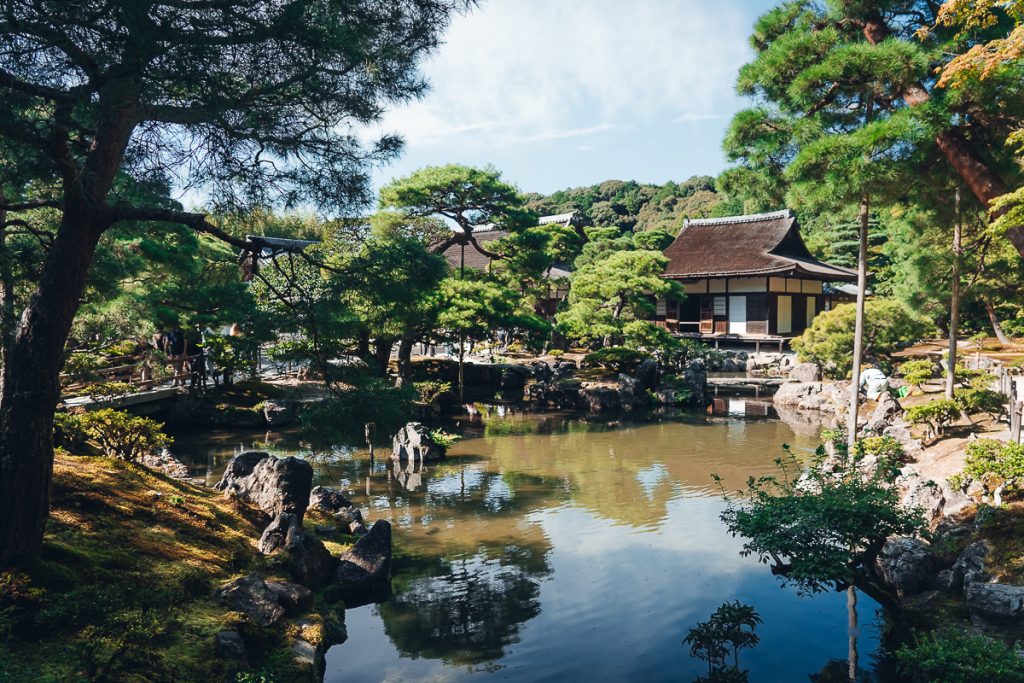
While it is perfectly fine to travel the Golden Route visiting Tokyo, Kyoto, and Osaka, it is essential to make an effort to see these places more responsibly and as part of a balanced itinerary.
This helps spread both the burden of overtourism and the benefits of tourism beyond major hotspots.
Hokuriku Arch Pass – Or Alternative Passes
You’ve heard of the classic route on the Shinkansen that follows the Golden Route: Tokyo, Mt. Fuji, Kyoto, and Osaka. But what about the Hokuriku Arch Pass?
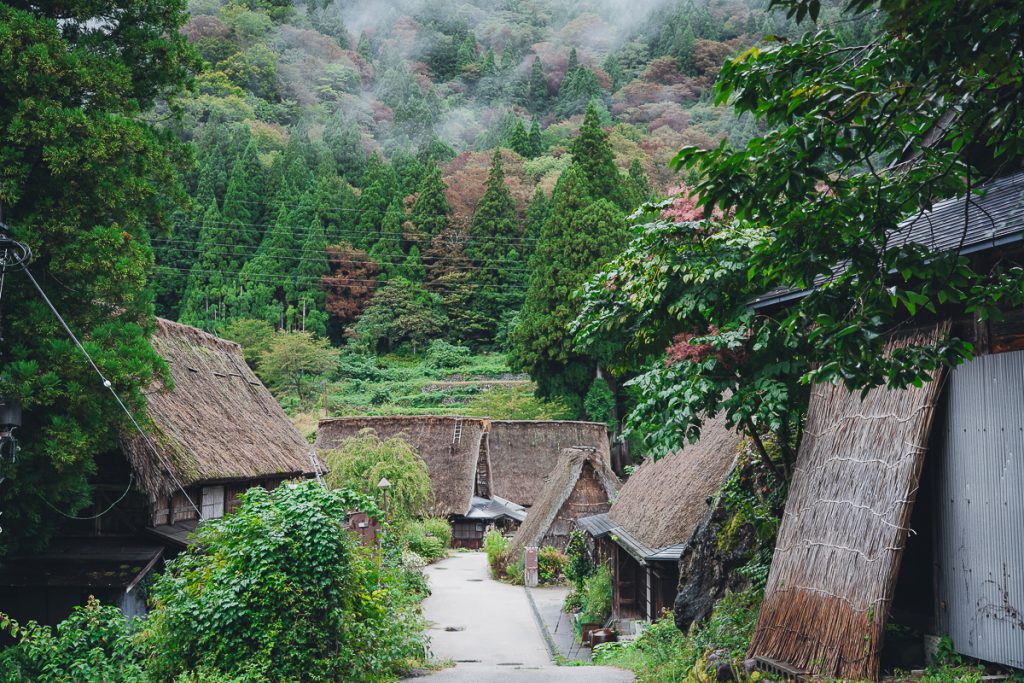
An alternative way to get from Tokyo to Kyoto and to Osaka, this pass is for trains across the Japanese Alps. Along the way, it connects with lesser-visited areas such as Takasaki, Nagano, Toyama, and Kanazawa, offering numerous regional connections to even more rural areas. We followed a similar route by car, and the scenery was incredible!
Other train passes include the West Pass connecting Kansai and Hiroshima and the Hokkaido Pass connecting Japan’s northernmost islands.

Ditch the Day Trip
Many people take a day trip to places like Nikkō National Park, Nara, Takayama, or Ainokura. Most day trippers arrive by large bus at the same time of day and tend to congregate on weekends. This contributes to mass crowds all visiting the same places at the same time.
Staying overnight at some of Japan’s popular day-trip spots allowed us to visit sites outside peak times, dine at quieter local restaurants, explore the surrounding region more in-depth, and ultimately contribute to a calm and relaxing experience for us.
In one situation, we were the only people who had booked a rustic heritage homestay and had the whole house to ourselves in a sleepy village.
Visit Somewhere Less Popular
It can be challenging to find a place to visit in Japan that isn’t already well-known. Our preconceived notions of the best places to visit are shaped by where most travellers gather. When most people encounter three cities, finding alternatives can be challenging.
Pick up a guidebook like Rough Guides or Lonely Planet at your local library and spend time looking through the regions and sections you don’t know to find a town that piques your interest. Look through Google Maps and find cities or towns unfamiliar to you.
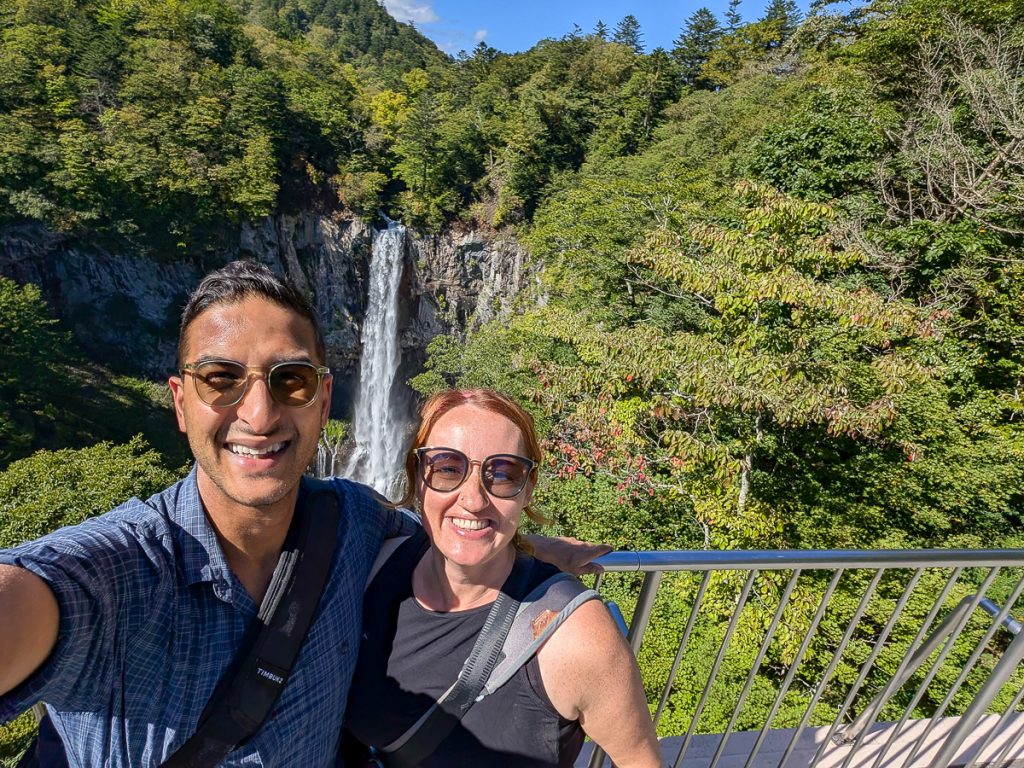
We loved visiting Okinawa, the Kumano Kodo, and Takayama, all lesser-visited areas, inspired by the Rough Guides book!
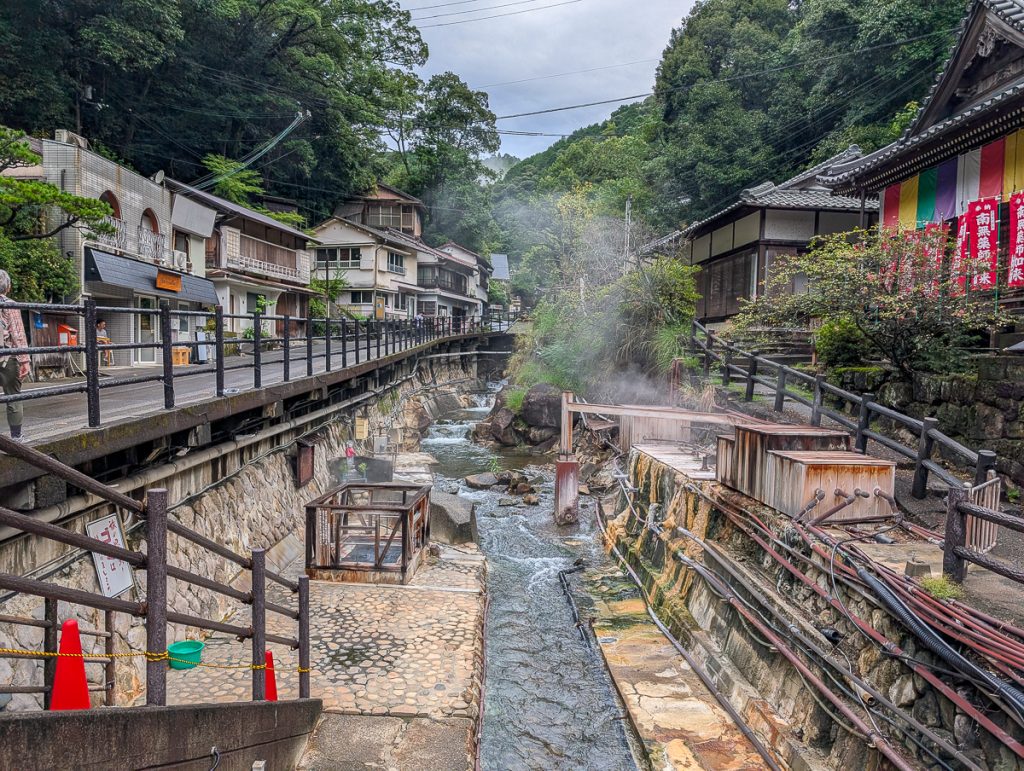
See Popular Places More Responsibly
Kyoto and Tokyo are popular for a reason and very much worth visiting. I almost skipped out on Kyoto because I heard horror stories about crowds and troubles with over-tourism, but I am so glad I visited!
There are several meaningful actions you can take to enjoy the top sights in Japan while making a positive impact.
When planning the Kyoto portion of our Japan trip, I intentionally considered the impact of mass tourism in Kyoto and took a few deliberate actions.
- Ditched the day trip and stayed longer
- Visited off-season
- Skipped some major sites
- At popular sites, I went beyond the isolated photo op, learning about the history and culture behind them
- Supported small local businesses
- Left buses for local commuters
- Visited smaller rural areas along the way
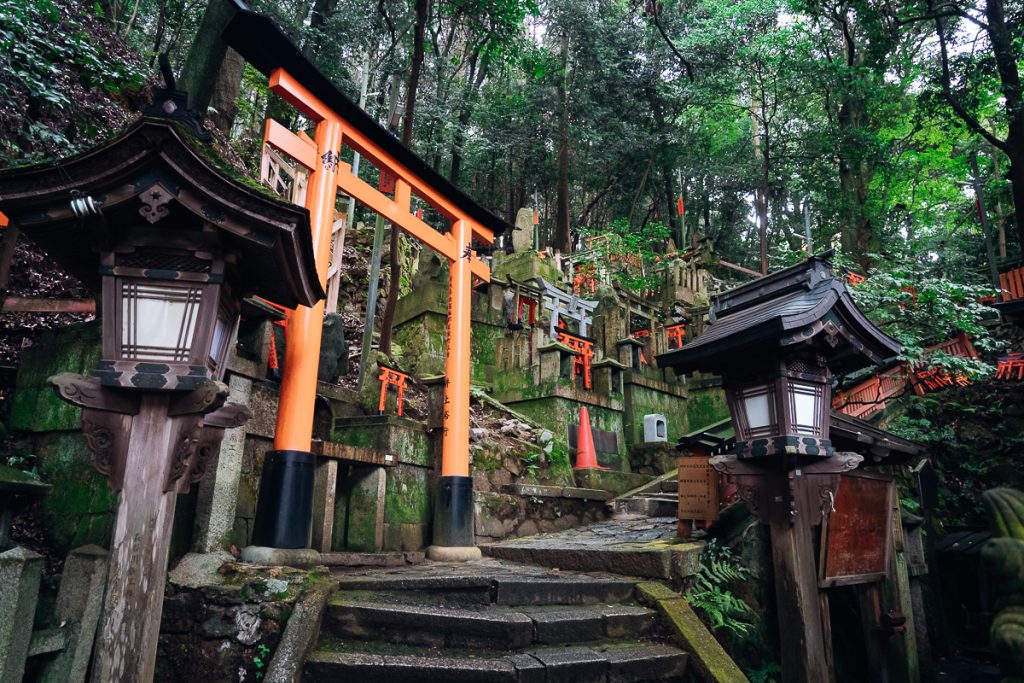
6. Visit National Parks
Considering Japan’s relationship with captive animals and extractive fishing practices, I didn’t expect much from their national parks if I am being completely honest.
I was pleasantly surprised! In Japan’s national parks, I found decent conservation practices, wildlife guidelines, and well-managed ecosystems that strike a balance between recreation and conservation.
As we explored Nikkō National Park, I learned about the conservation of wild black bears and efforts to save the serow (a furry goat) from extinction, both of which are found within the park. I saw educational signs that informed and enforced the no-contact and no-feeding rules for wild animals, such as Japanese macaques. We also visited a few educational ecology centers to learn about the national park, conservation, and Japanese biodiversity.
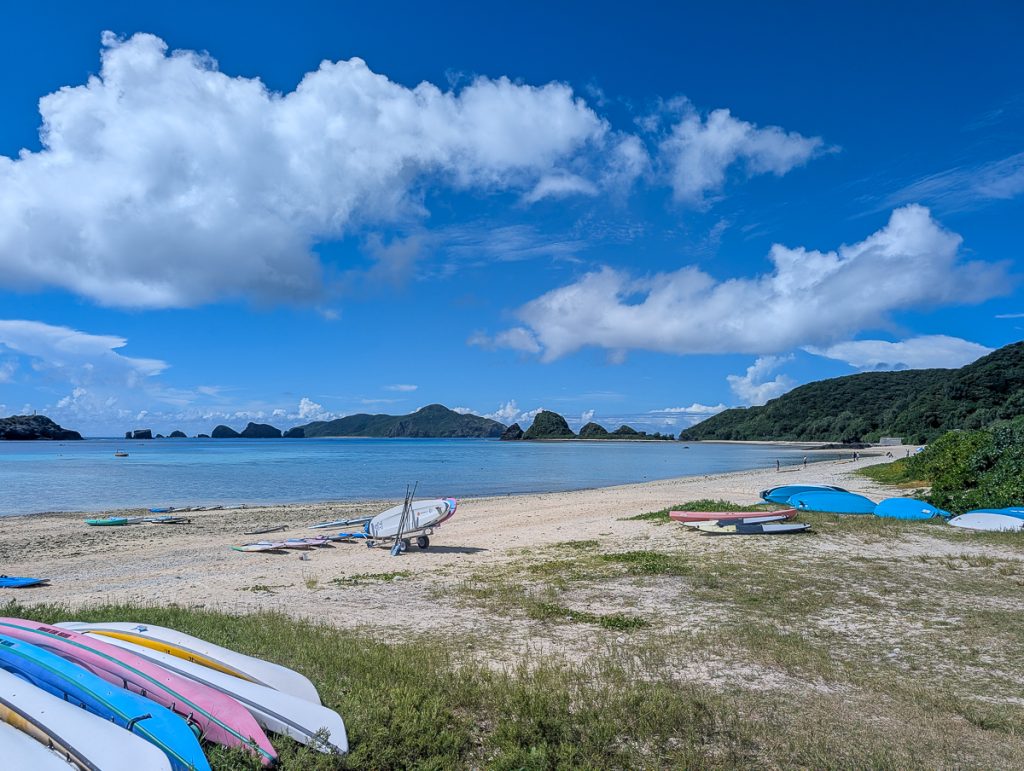
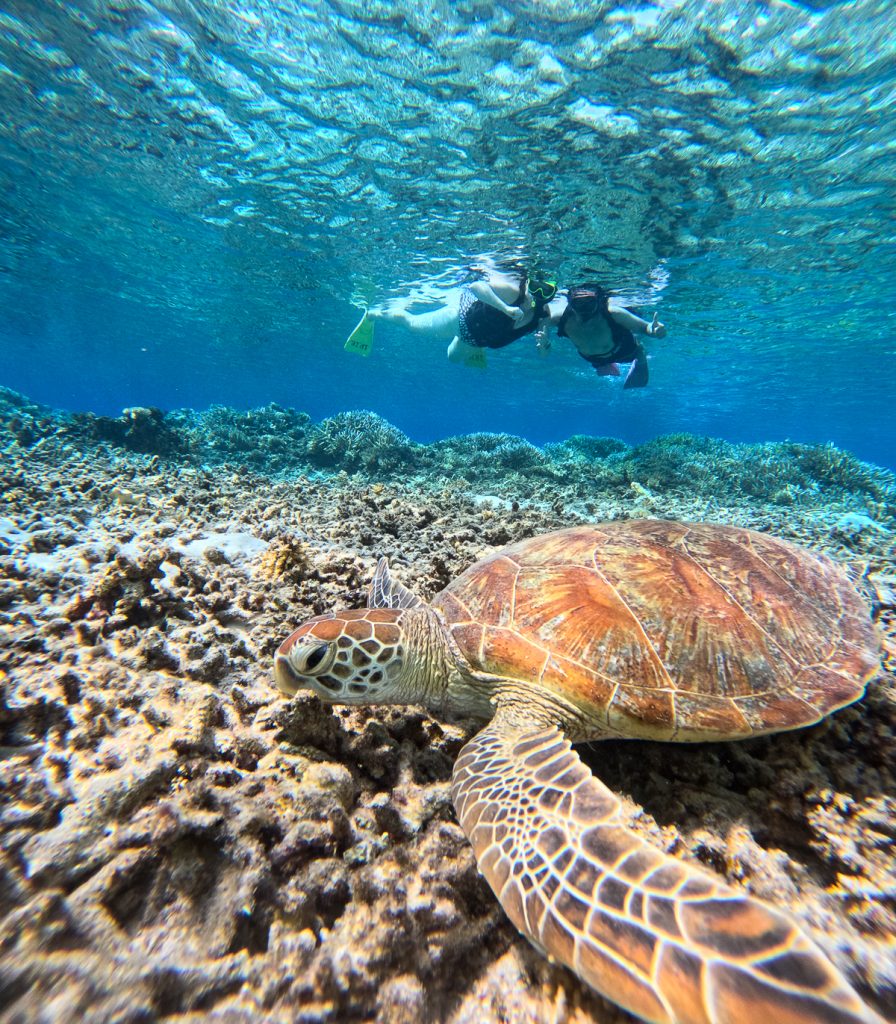
Another National Park we visited was Keramashoto National Park in Okinawa, where I found excellent educational resources for tourists on how to behave around marine life, protect coral, and avoid littering. We did an ethical snorkelling tour with a local company and learned all about the endangered sea turtle conservation efforts.
All of this was balanced with excellent infrastructure, allowing us to enjoy hikes, scenic views, traditional accommodations, and support more rural economies.


Tips for Visiting National Parks
Japan has 35 National Parks, each offering incredibly diverse natural landscapes and opportunities for ethical wildlife viewing. From remote islands in Hokkaido to national parks easily accessible from Tokyo, and from the Alps to the pristine beaches of Okinawa, exploring Japan’s national parks is a great sustainable travel choice.
Find a National Park
To find a national park, visit the National Parks of Japan official travel website. You can find a range of national parks across the country. Build them into your itinerary, just as we did, based on where you’re already planning to travel. Or, you can go out of your way to visit one of these incredible natural spaces.
Follow the Rules
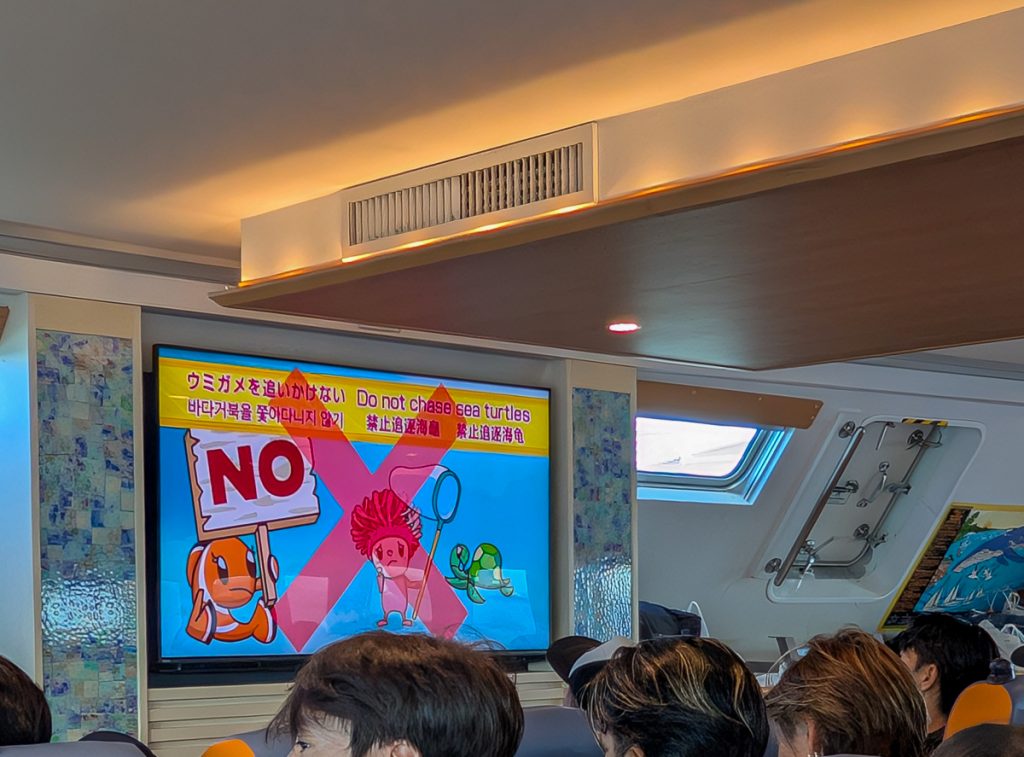
One thing that makes Japan’s national parks so special is the rules and regulations. All messages are in English or have easy-to-understand images.
When we took the boat out to Keramashoto, an orientation video was playing on the ship. It informed us not to touch or chase sea turtles, to always wear a life jacket to avoid damaging coral, to refrain from littering, not to feed any wildlife, and to engage in other responsible activities.
Read, watch, and listen to all messages. Visit the visitor centers to learn more about the area.
7. Respect and Learn About Culture
When I began this blog post, I discussed how sustainable travel in Japan often focuses on the cultural pillar. Japan really excels in fostering meaningful cultural exchange. Lean into this!
One of the most disappointing side effects of mass over-tourism in Japan is that foreigners are not showing proper respect and failing to adhere to local cultural norms. This behaviour is highly disrespectful.
Over time, unruly tourists in places like Kyoto contribute to cultural degradation and stress for residents. Certain areas, like the Gion district, have banned tourists after residents have expressed frustration with being harassed by foreign tourists.
Major cities like Tokyo are struggling with rude behaviour on the metro, making daily commuting a challenge.
All of these behaviours build up and create tension between locals and tourists. In some areas, such as the Golden Gai in Tokyo, bars have begun implementing “no foreigners” policies, either restricting access to only Japanese nationals or charging foreigners a hefty table tax.
Travellers who fail to respect Japanese culture can ruin the entire experience for locals who want to enjoy an after-work drink or connect with people in their neighbourhood.
We want to avoid a tipping point as we have seen in some of Spain’s cities.
Remember, you are a guest in Japan. Act like it.
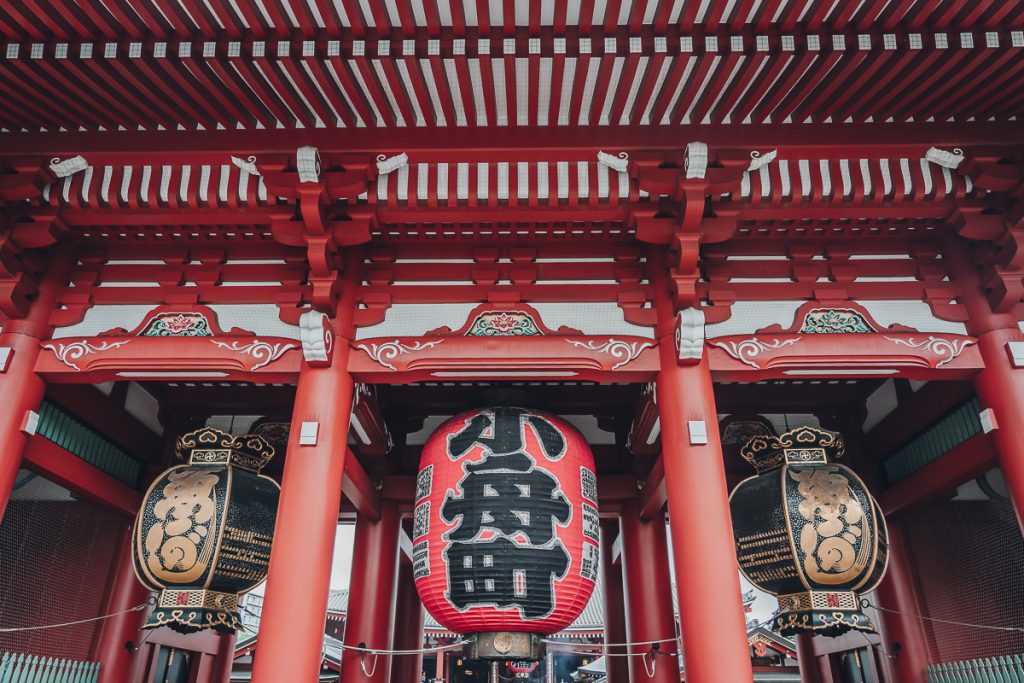
Tips for Engaging in Meaningful Cultural Appreciation
Make an effort to learn about their cultural norms and expectations. Do your best to be respectful and follow etiquette, even if it means respecting places that have banned foreigners from entry. Give locals space and privacy and refrain from cultural taboos.
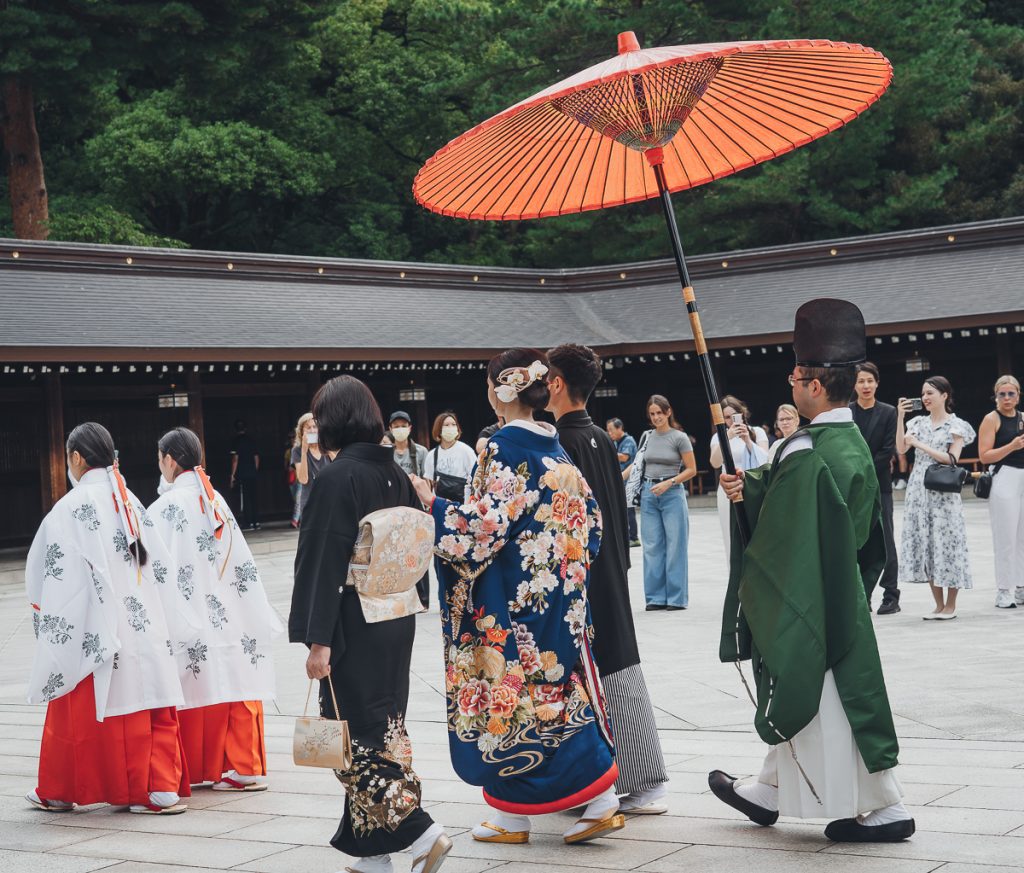
Visit places as an active participant in two-way cultural connections. Don’t just show up, dress up in a Kimono, and take photos. Make an effort to learn about the kimono and its history. Dressing up in costume is a way to honour and learn about culture.
Japanese culture, traditions, and history are among the reasons travel in Japan is so rewarding and fulfilling. You would be remiss not to invest in cultural education.
Book a Homestay
Striking up a meaningful conversation with locals in Japan is challenging. Many of my interactions were built on the foundation of politeness and superficial niceties.
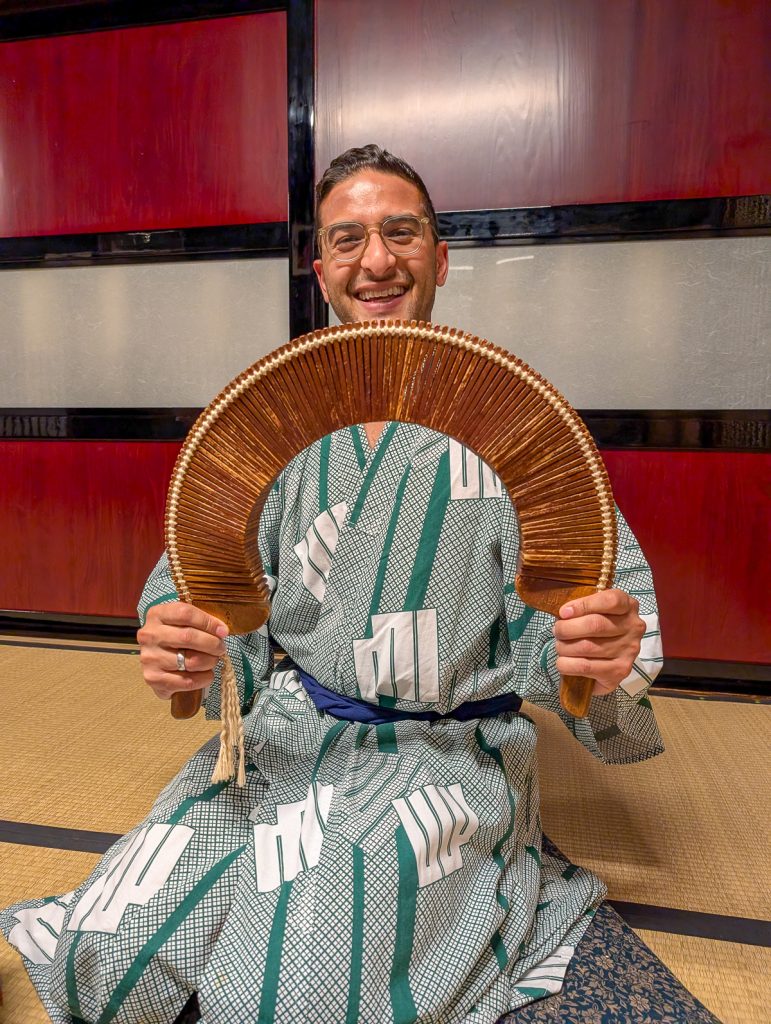
However, the homestays we did allowed us to engage in more meaningful cultural connections. We gained a behind-the-scenes glimpse into life in rural Japan, set in traditional homes. Our hosts shared information about cultural expectations regarding shoes, yukatas, and dining etiquette.
It was the perfect blend of learning about traditional art, culture, and music, and seeing a more modern approach to life.

Book a Tea Ceremony
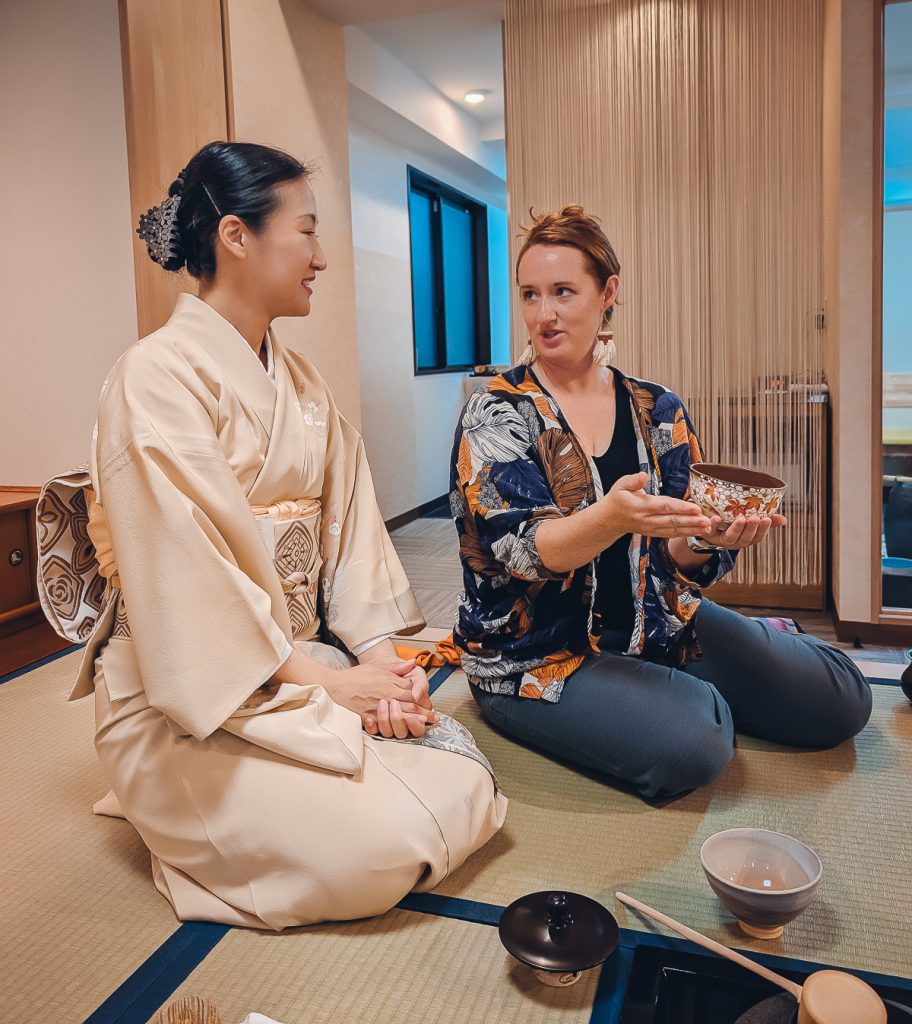
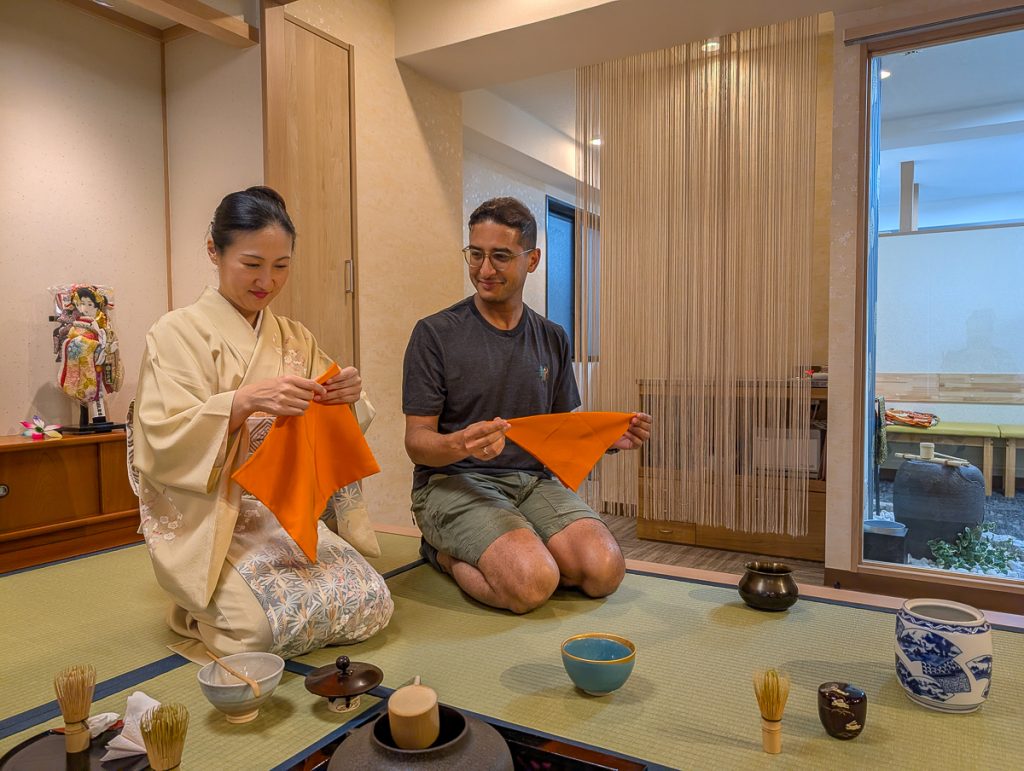
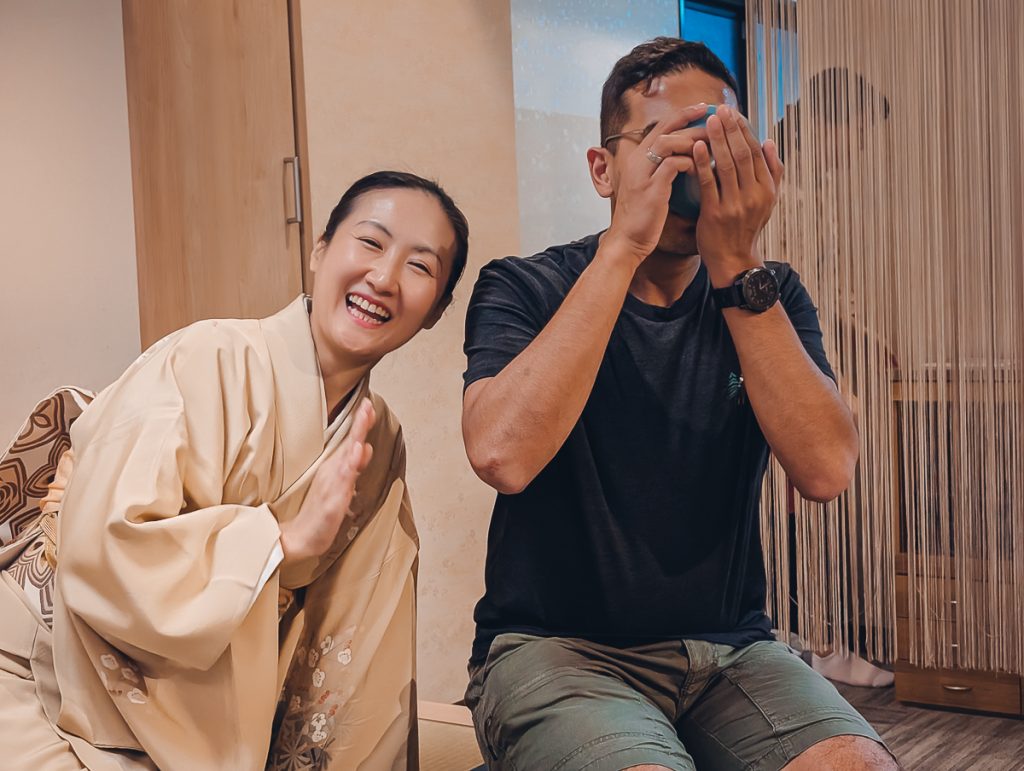
We did a local tea ceremony in Tokyo. We had a great time talking with Ryouko-san and our other two hosts about matcha and tea culture.
The most important takeaway was learning how to sip matcha and properly select a matcha bowl. I was able to take those lessons with me as I travelled around Japan, impressing everyone at all the matcha shops!
Tea ceremonies are structured cultural experiences that teach respect and the importance of tradition in Japan.
Hire a Local Guide
Hire certified local guides, especially in rural areas or for specific activities, as they offer context and history you cannot get from a guidebook. This is one of the best ways to ensure your money directly supports the local community and enriches your understanding of the places you visit.
Local guides are also among the most approachable for discussing deeper topics.
Workshops and Classes
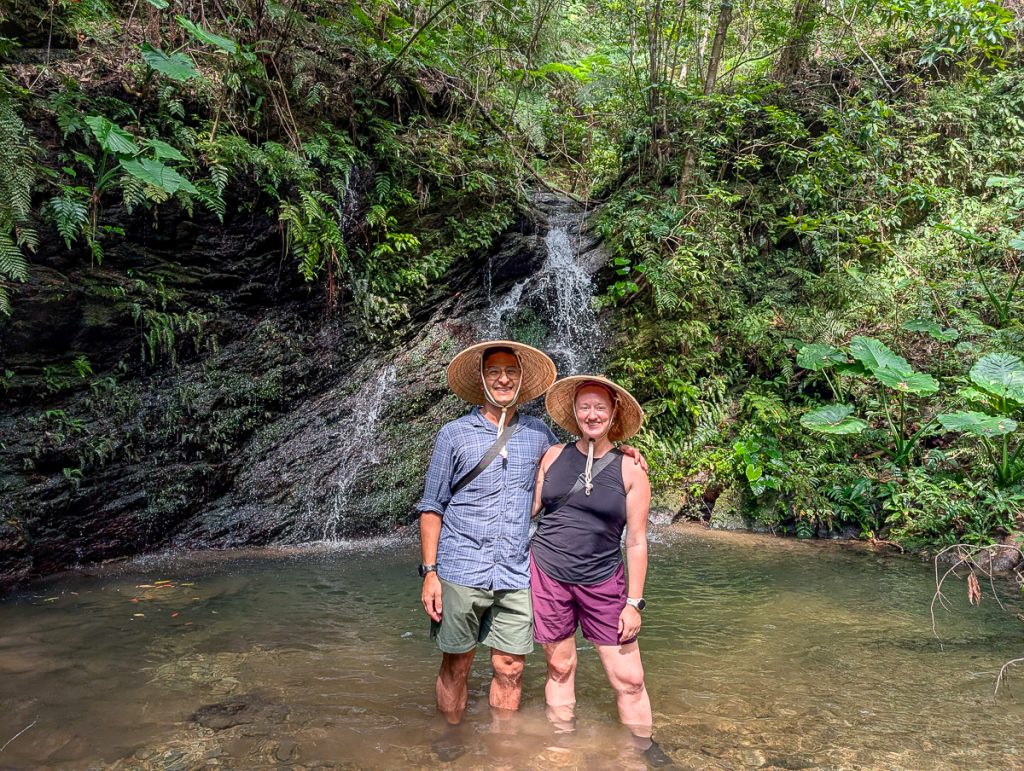
Workshops and classes are great connection points to meet locals while enjoying the art of learning a new skill. Seek out hands-on workshops and classes—like Shodo (calligraphy), wagashi (traditional Japanese sweets) making, or Washi paper-making, or bento box making—to learn about culture and traditions in a way that is well-managed and respectful.
Hands-on experiences allow you to leave with a new skill or appreciation for art, while also learning about the stories and people behind Japan’s long-standing traditions.
Get Your Guide is a great resource for finding activities in Japan that can connect you to the culture. Avoid tours that involve animals.
Learn About Cultural Norms
Cultural norms in Japan should be taken very seriously. Making the effort to be a respectful guest can be instrumental in shaping your reputation as an international guest.
Don’t litter, don’t walk and eat at the same time, don’t bathe in public with tattoos, always respect the shoe rule, and wear slippers or socks on your tatami mat. Pick up a guidebook and make an effort to learn important etiquette and behaviours.
8. Visit Shoulder or Off-Season
If you follow me on social media, you know I’m a huge advocate for travelling during the shoulder seasons or off-season. You’ll also see that I discuss Japan’s emerging four peak seasons. Navigating these peak seasons is key to alleviating mass tourism and ensuring a more enjoyable experience.
Japan is great at tourism marketing. Tourism boards and destinations find creative and quirky ways to incentivize seasonal travel, often through mascots, festivals, and themed events. For every season, there is a reason to visit.
- Spring – peak for sakura blossoms, spring flowers, and Golden Week festivals
- Summer – peak travel for families and kids out of school
- Autumn – peak travel for autumn colors in places like Nikko
- Winter – popular for ski tourism (primarily in the Alps and Hokkaido), though quiet in other places
The peak tourist months in Japan are March, April, May, July, and August. Most of these months visitor numbers, can exceed 3 million travelers per day, primarily driven by the allure of sakura (cherry blossoms), national festivals during Golden Week, and summer holidays.
By comparison, the quieter months, such as October, January and February, often see significantly lower numbers, offering a much more peaceful travel experience. Travelling during a shoulder or off-season midweek can help you avoid the largest crowds.
Tips for Off-Peak Travel
Between each busy season is a short shoulder season. Capitalizing on these small windows and being intentional with your itinerary can significantly enhance your entire experience. We travelled in October, after the summer and before the autumn colours. This was intentional, and I never once felt overly crowded or overwhelmed, even in Kyoto.
We also planned our itinerary to be in popular places like Kyoto during the week. We found so many places quiet, and even UNESCO World Heritage sites were relatively visitor-free. Sure, I missed some “once-in-a-lifetime” photo ops, but our peace of mind made it all worth it.
Shoulder season and mid-week travel, as well as venturing off the beaten path, can drastically reduce the pressure of overtourism, allowing you to experience a less crowded Japan.
Embrace FOMO
Accept that you can and will miss out on things. As amazing as sakura blossoms are, it is ok to visit outside of the spring season. Every day in Japan offers something unique; find the beauty in the time outside of peak seasons.
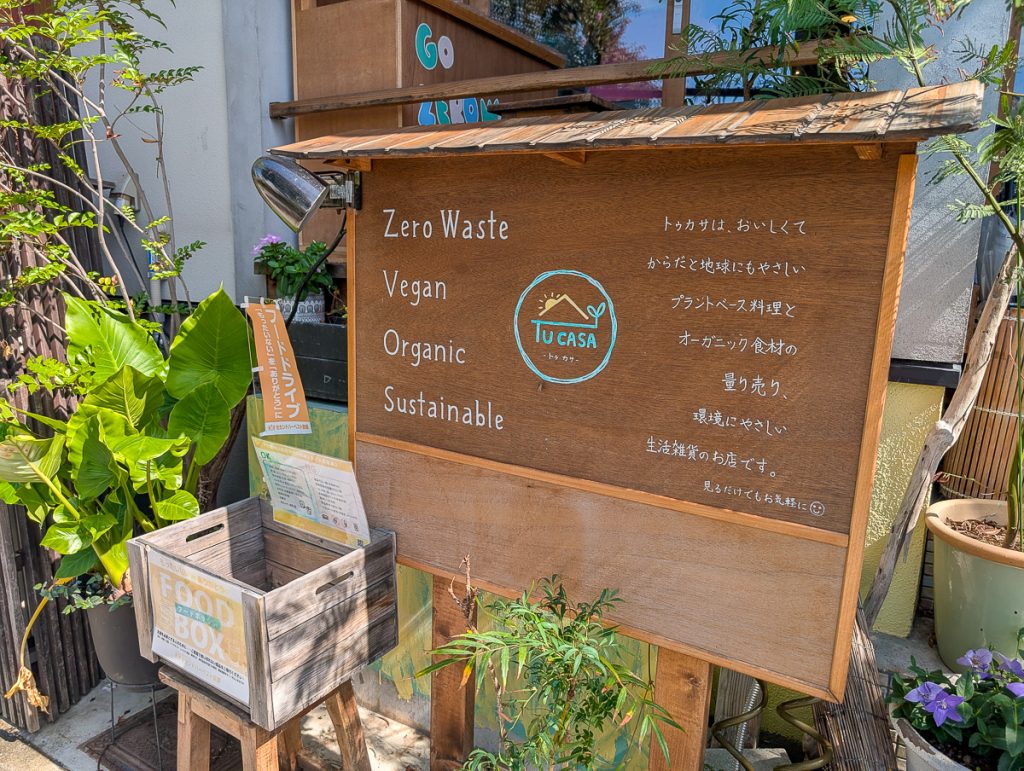
We also skipped specific sites like the bamboo forest in Kyoto, knowing they would be crowded, but that’s ok. Instead, we walked the Philosopher’s Path, did a wine tasting at a local wine bar, and shopped at a zero-waste co-op.
If you must see the cherry blossoms, consider a place outside the Golden Route, like Toyama.
Book Mid-Week and Early
If you’re visiting popular sites like Kiyomizu-dera Temple or Fushimi Inari Shrine in Kyoto, consider staying on a weekday during the shoulder season and arriving early in the morning to avoid crowds. This allows you to experience tranquillity before the day trippers arrive.
Carefully planning your itinerary and choosing intentional dates can go a long way in ensuring a successful trip. Maximize midweek experiences and shoulder-season travel.
9. Book Eco Accommodation
Making eco-friendly choices for accommodation and hotels in Japan differs from the same set of guidelines we see for other countries around the world.
To my knowledge, based on the research I did, Japan doesn’t have a glaring problem with Airbnb and short-term rentals contributing to a housing crisis, yet. At least, it isn’t making headlines on the same scale as those seen in Spain, Canada, and Mexico City.
Unfortunately, the rise in tourism in Japan means that there is intense pressure put on the existing hotel infrastructure. Japan has a long history of domestic and regional tourism, but the sudden surge in foreign tourism has led to a new level of hotel bookings.
With hotel demand skyrocketing and supply slowly following, the worst parts about the hotel industry are the sky-high prices for you, the traveler, and the limited choices available at different price points. This is pushing people toward short-term rentals, and I sense a looming disaster on the horizon.
Many hotels in Japan are making efforts to adopt standard sustainable hospitality measures, including reducing waste and energy consumption, as well as incorporating environmental considerations.
However, many hotels are actually green-hushing, meaning they were unsuccessfully marketing their sustainable measures to a foreign audience. This made vetting and verifying hotels more challenging for me.
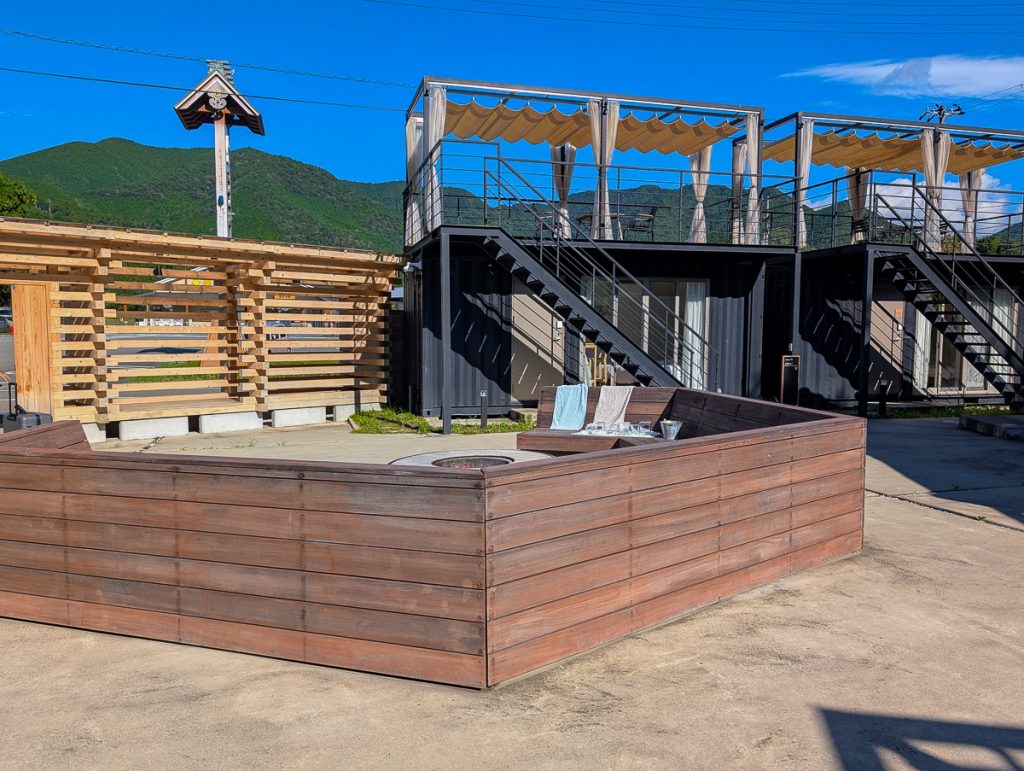
Tips for Booking Sustainable Stays in Japan
While it was challenging to find hotels that were excelling, it was equally difficult to find any glaring issues in the broader hospitality space. This can make finding both good choices and avoiding bad ones similarly difficult. However, I developed some basic vetting guidelines to book some truly exceptional sustainable stays in Japan.
As lovely as it is to follow our moral compass to the best and most eco-friendly hotels, the reality is that many times, you may be limited to what is available and what you can afford. And that is ok. There aren’t many bad options!

Prioritize Traditional Stays
Some of the most sustainable hotels do not advertise themselves as sustainable, nor do they hold sustainability certificates.
One of the easiest and most enjoyable ways to book a sustainable accommodation in Japan is to find a traditional inn or ryokan. These are the ryokans and homestays you’ll find throughout the country, often in smaller towns, mountain villages, and rural areas.
We stayed in a few, and they excelled in all three pillars of sustainability.
Small, local, or residential homes embrace the mottainai spirit. I was never offered a single-use toiletry, gifts wrapped in plastic, single-use slipper, or a yukata in plastic packaging. Instead, I was offered a freshly cleaned but reused yukata on my bed, reusable house slippers that had been sanitized between guests, home-cooked food sourced locally, and water- and energy-saving measures that just made sense.
These sustainable efforts were cost-saving for the host and also utilized local supplies and resources in areas where waste management and sourcing new items are challenging.
If you want something inherently sustainable, consider opting for a homestay or ryokan over a short-term rental.
The great thing about homestays and ryokans is that they offer a more budget-friendly price point for sustainable travelers and meals such as breakfast and dinner are often included.
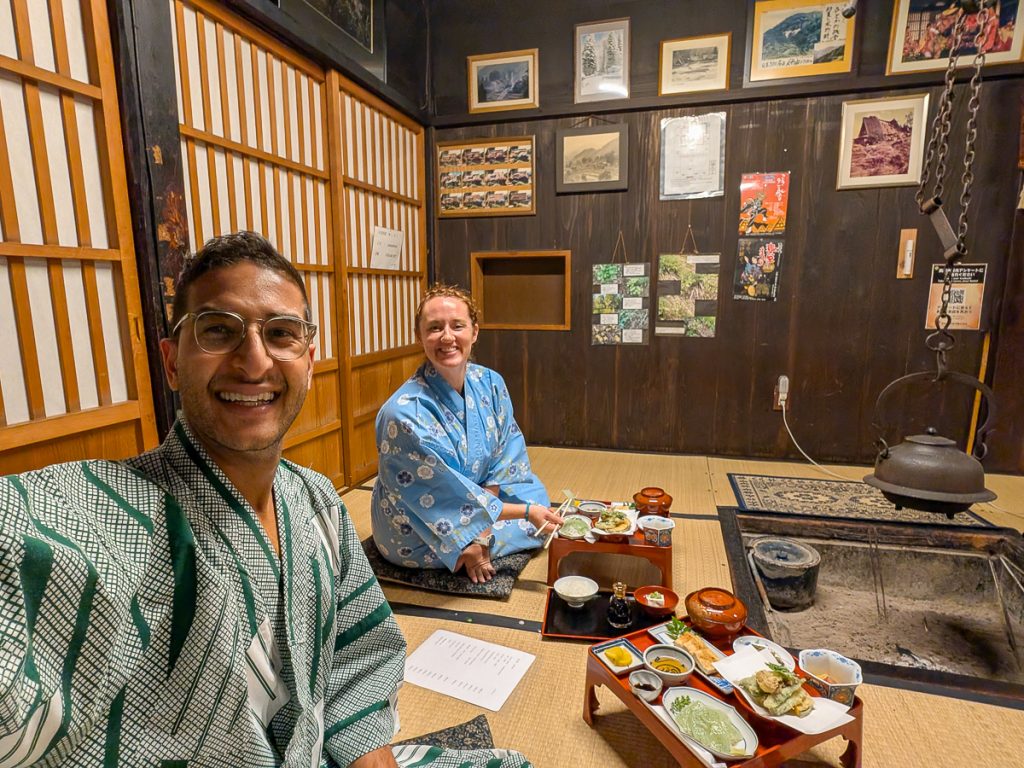
Many homestays and ryokans are not on large sites like booking. I used a combination of Google Maps, local Japanese travel guides and websites.
Use Booking Filters
As I mentioned earlier, the well-known Green Key and Biosphere certifications are still relatively new concepts in Japan. Instead, there are certifications unique to Japan that can be found.
Booking.com offers a filter to find hotels based on local certifications. Through booking.com, I learned about the Sakura as an ESG practice certification.
This certification is specifically tailored to Japanese hospitality standards for hotels, as approved by the Global Sustainable Tourism Council (GSTC). This certification recognizes hotels in Japan that strive to meet the Sustainable Development Goals’ initiatives, with a focus on community engagement, cultural preservation, and environmental practices within the hospitality industry.
This filter helps you find certifications you aren’t familiar with and that are specific to the region where you are looking.
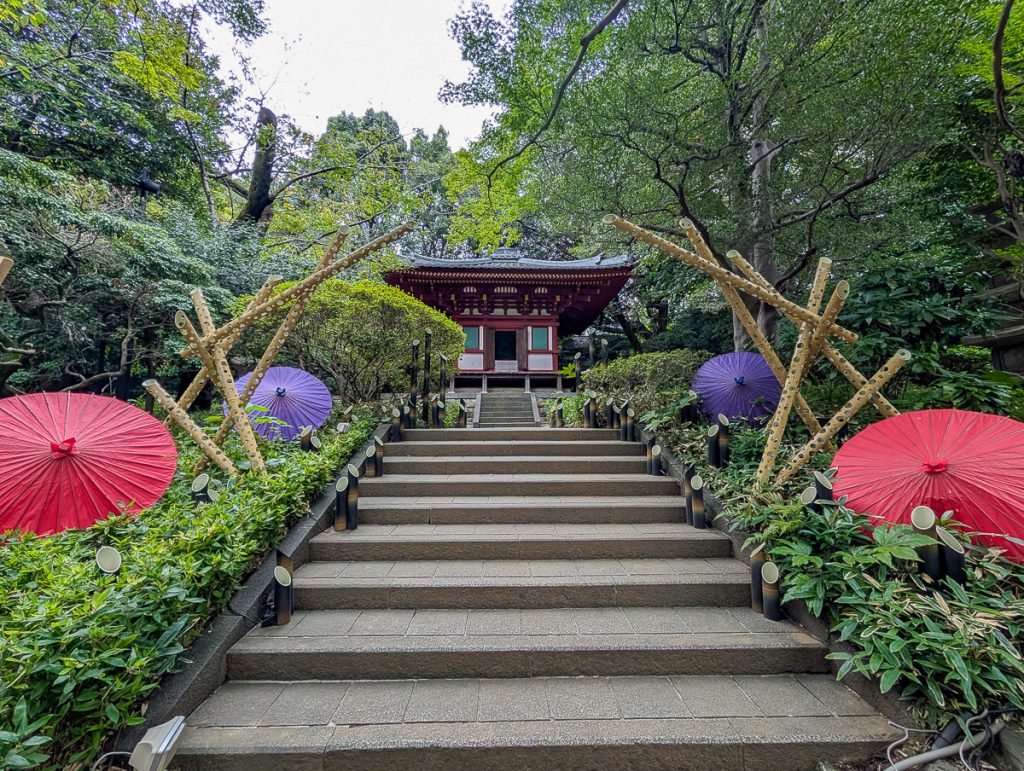
Remember, certifications alone aren’t a 100% guarantee that hotels are sustainable. Use this as a starting point or guideline for more research. It is also important to note that some of the most sustainable hotels in Japan may be small, independent ryokans that are not available for booking and lack certification.
I found booking’s filters the most helpful in larger cities where more traditional and small boutique ryokans were not as common.
Splurge on Exceptional Hidden Gems
Japan has a few outliers that are going above and beyond in sustainability, focusing on regenerative practices. But, these come with a pricy room rate. It helps to set aside some in your budget for a few nights at exceptional hotels.
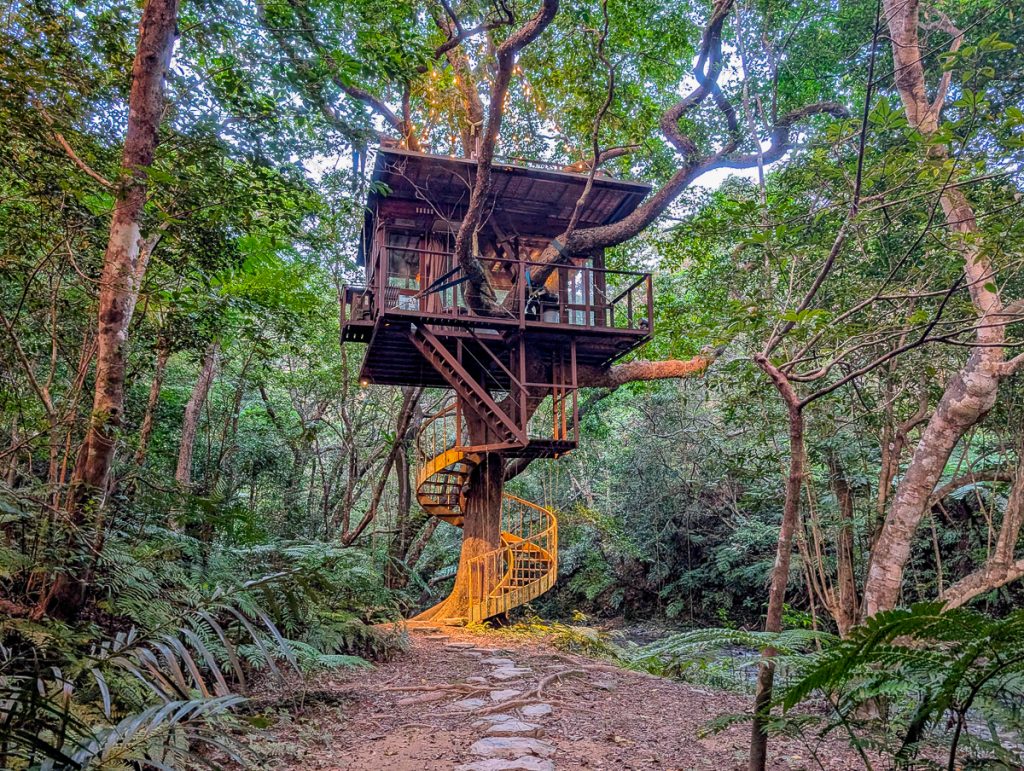
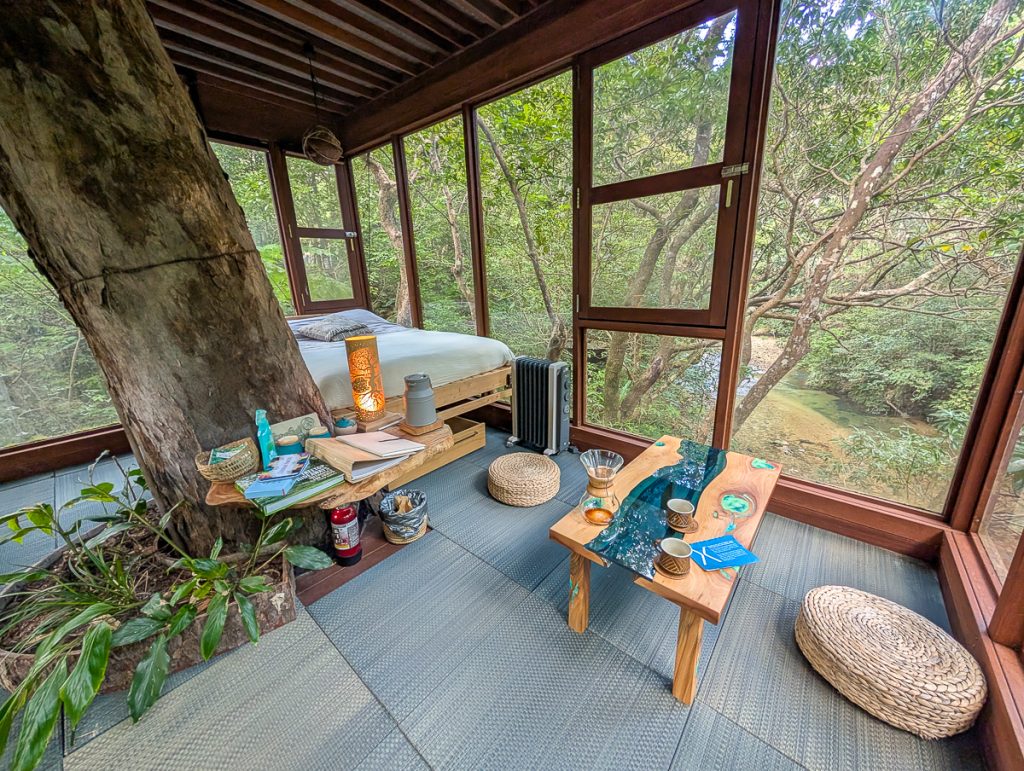
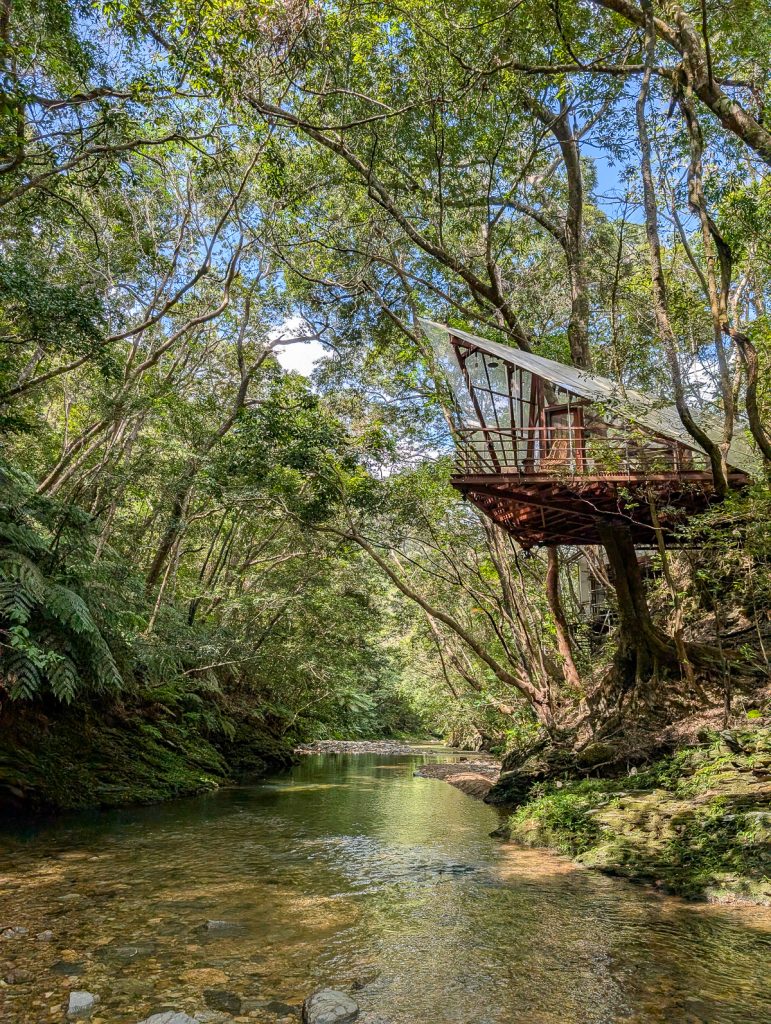
We stayed at one, Treeful Treehouse in Okinawa. This was the most expensive accommodation I have ever splurged on in my 15 years of travel, but I would do it again and pay more in a heartbeat. In the forest of Okinawa, Treeful is fully committed to a net-positive, carbon-negative, immersive, and regenerative experience.
Treefuls ha protects the rainforest down to the soil biome; they offer exclusive luxury hospitality and exceptional vegan food. Their energy, water, and waste management system is a global leader.
Other gems include the world’s first hydrogen-powered hotel, which runs entirely on waste. Hydrogen power is generated from plastic waste, delivering a one-two punch for reducing plastic pollution and carbon emissions.
The Bettei Senjuan was one of Japan’s first hotels to receive the Green Key certification. Tucked away in a secluded mountain forest, this retreat seamlessly blends natural conservation with traditional luxury.
READ: My full honest review of Treeful Treehouse in Okinawa.
10. Save for Sustainability
You will hear me saying that sustainability doesn’t need to cost more on your travels, over and over again. I still hold steady on the belief that there is an avenue and a budget point for all types of travellers to enjoy sustainable experiences. However, the reality is that sustainability in Japan can be the more expensive choice.
I try to avoid using words like ‘budget-friendly’ as everyone’s perspective on affordability is different based on socio-economic realities. Still, Japan is widely regarded as not a place to travel for those on a really tight budget. It is already a relatively expensive country for food, drink, and hotels.
Unfortunately, the cheapest options in Japan include plastic-wrapped food at 7-Eleven, capsule hotels that generate a lot of disposable single-use plastic, and poorly made plastic souvenirs.
Furthermore, the problem is exacerbated by the fact that vegetarian and vegan dining choices are often more expensive. Because our ryokans and homestay hosts had to purchase specific foods and prepare special soup stock for us, we had to pay a slightly higher price.
Tips for Budgeting within Your Values
The truth is, sometimes you have to save a little extra to make the choices that align with your values. Think of it as a “Green Tax”—an investment that ensures your travel leaves a positive footprint. Factor this cost into your savings goal before you travel to avoid an internal tug-of-war between your values and your wallet.
The best way to manage this is to be prepared, plan, and save for choices you feel good about. Of course, never feel guilty for eating at 7-Eleven or staying in a capsule hotel if that is what your budget allows. We did both of these things!
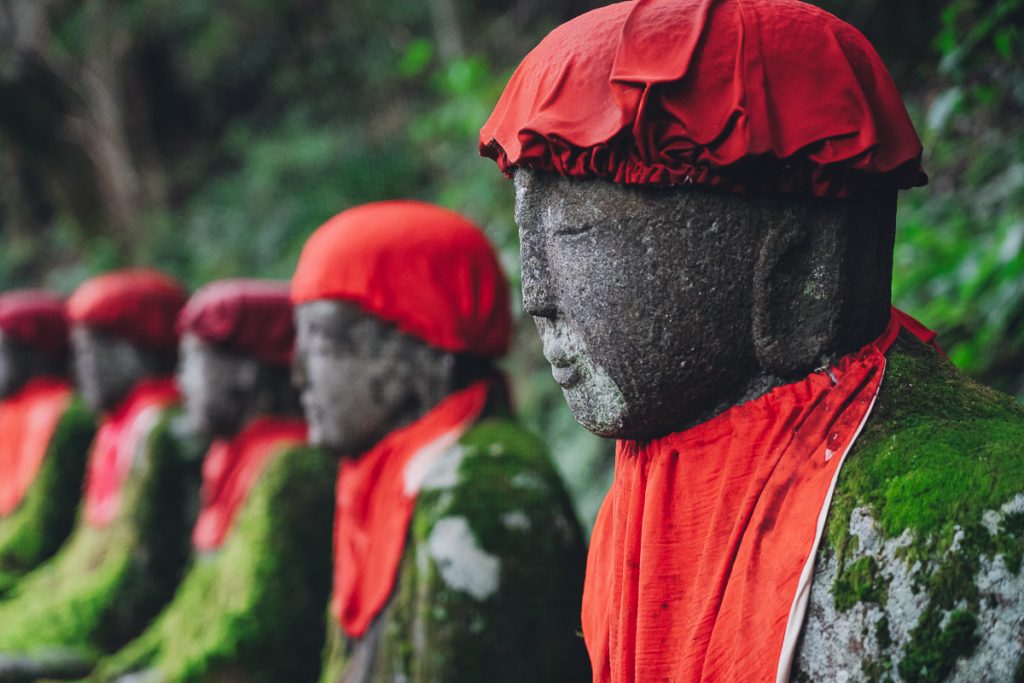
You are just one person in a system of overwhelming plastic waste in a country that really needs to manage its plastic production and recycling efforts more effectively. Do what you can with what you can. But if sustainability is important to you, ensure you can budget to make a few meaningful choices.
Quality Over Quantity
Rather than spending your money on numerous inexpensive and cute souvenirs as you go, focus on selecting a few high-quality souvenirs. Little, cheap purchases can add up, with $5 here and $5 there. You’d be surprised at the benefit of investing in just a few meaningful souvenirs to take home that are practical and useful.
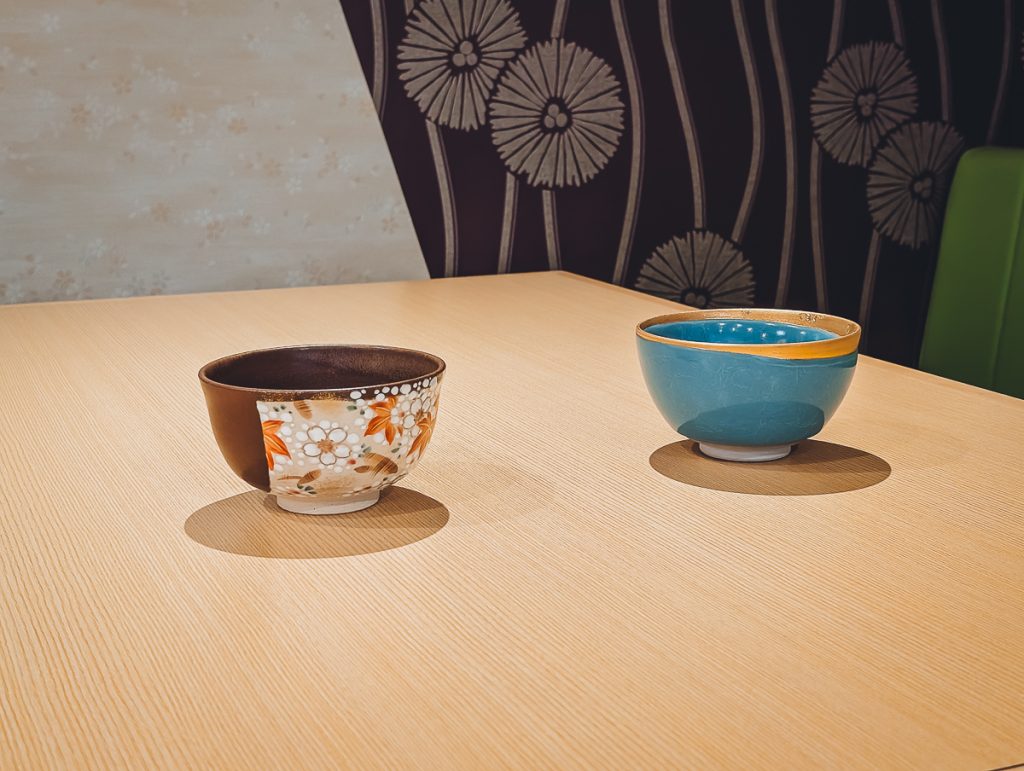
One of the things I loved about investing in local craftwork was learning about the people and stories behind the products. This was far more meaningful than the short-lived dopamine hit from a vending machine.
Many of our sustainable stays included meals, allowing us to save a little on other food-related expenses by having two large meals included.
Prioritize Experiences
Consider what truly aligns with your core values for your trip and dedicate your funds there. Is it supporting local artisans, eating farm-to-table cuisine, or investing in community-based tourism? You don’t have to spread yourself too thin trying to do everything all at once.
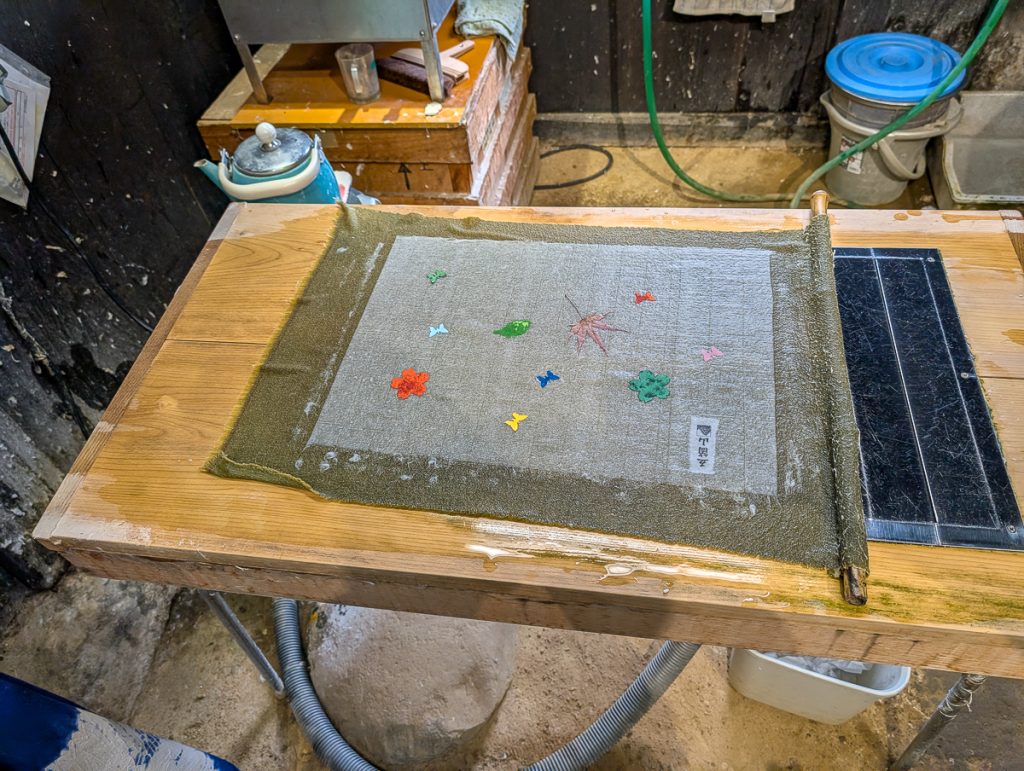
Maybe you can choose to spend more on a few memorable cultural experiences—such as a traditional indigo dyeing workshop or a multi-day hike with a local guide—but save on booking a capsule hotel.
Experiences create memories, while cheap plastic items often create clutter. Choose to invest in the connection to the place and the people.
Create a Balanced Itinerary
To be fully transparent, a month of traveling in Japan, prioritizing sustainable stays, experiences, and foods, was one of the most expensive trips I’ve taken.
However, I tried to create diversity in my experiences, opting for some expensive eco-luxury accommodations alongside more affordable homestays to align with my personal budget and values while creating an itinerary I loved and felt good about.
And if you want, cut out the expensive stays and focus on the rustic traditional options to save more money.
11. Rural Access: Train, Bus, Drive, Ferry, or Fly?
Visiting more rural areas, ditching the day trip, and prioritizing visits to places outside the main international tourist hotspots was incredibly worthwhile.
It is admittedly challenging to get around when you stray off the classic Shinkansen Golden Route from Tokyo to Kyoto. The reasons for the challenges are:
- Slower travel options outside this route, such as slower trains and local mountain buses, require more time to reach your destination.
- More confusing ticketing and logistics, with minimal English support.
- Renting a car requires an international driver’s license.
Honestly, with these barriers, I can’t blame anyone for sticking to the easy-to-travel Golden Route. It is easy, affordable, and fast.
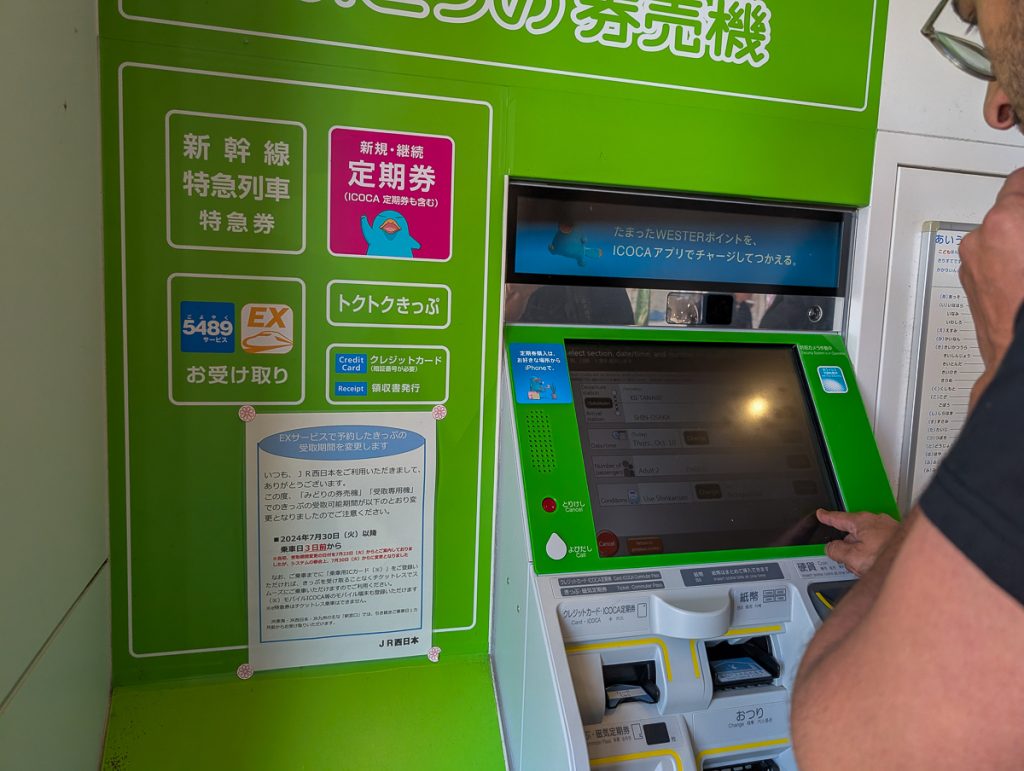
In response, Japan has launched an initiative offering free national flights to help tourists reach more remote areas. There are, naturally pros and cons to this.
- Cons: Short, domestic flights are some of the most carbon-intensive methods of transit.
- Pros: Easily get off the tourist path.
Tips for Sustainable Transportation
As tempting as a free flight may be, I recommend it only in situations where alternatives are not viable for you. Really think about your transit options before booking short-hopper flights around mainland Japan.
Look for alternatives, and rest easy: you can get around mainland Japan, even to more rural areas, with public transportation.

We took several buses, trains, and rented a car. In the end, we had only one flight in Japan, from Osaka to Okinawa. This wasn’t a choice we made lightly, and we considered the alternative of a few trains and a 2-day ferry. Ultimately, we decided to save time and cut emissions elsewhere from our itinerary.
The goal here is to be intentional, consider your alternative, and make the best choice you can.
Embrace Public Transit
You can get everywhere from Hokkaido to Okinawa using buses, trains, and ferries. We travelled from Kyoto to the start of the Kumano Kodo, utilizing a series of slow trains and mountain buses. It was a long day of travel, but we got to see fantastic scenery and didn’t need to book a flight.
The local buses and slower trains aren’t always as well-advertised, but spend some time looking at transit maps, Google Maps, and tourist websites to get familiar with your options beyond flying.
Take some time to also learn about the importance of booking Limited Express train fares and how to pay the correct bus fare in places like the Kumano Kodo.
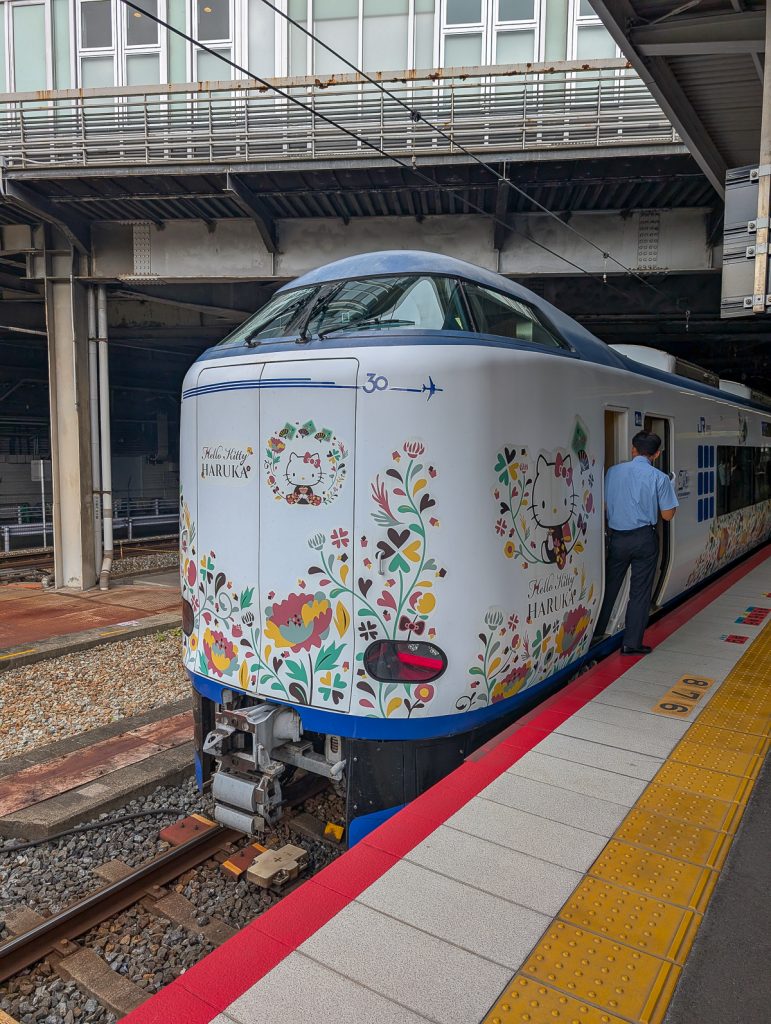
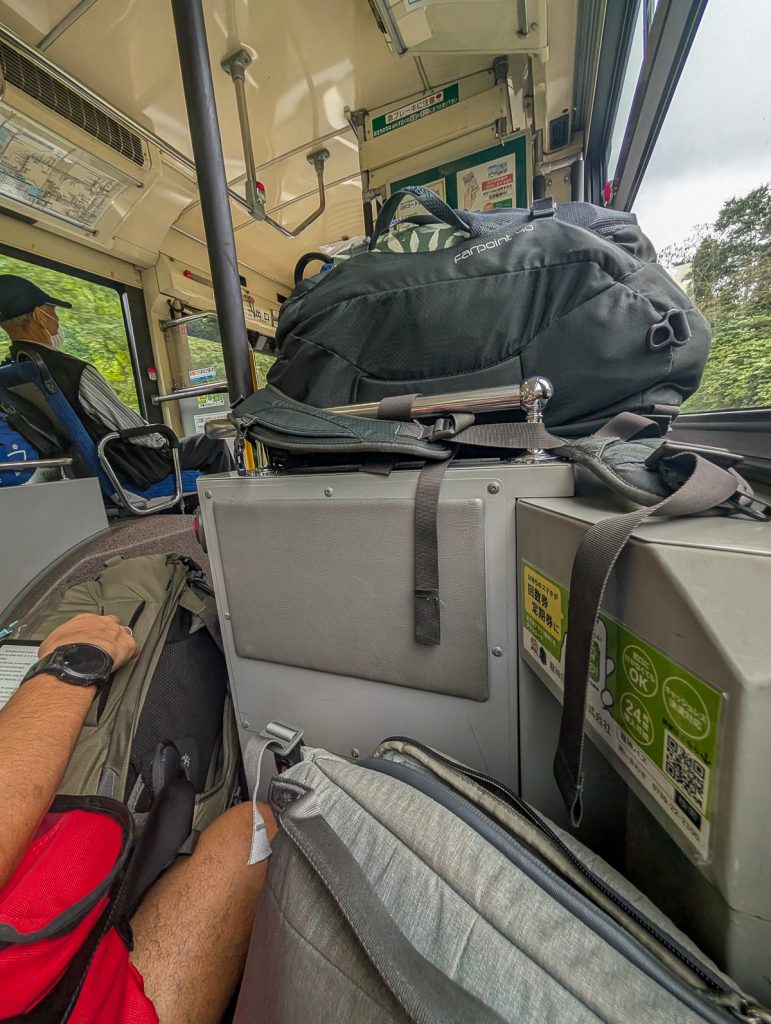
With this in mind, be sure to budget more time for slower travel experiences and include them in your itinerary, rather than viewing them as a negative trade-off.
Drive to Rural Access
There were a few routes where we didn’t want to spend a lot of time travelling the slow route with buses and trains, involving several changes. Rather than flying, we rented a car. We arrived with international driver’s licenses and rented a hybrid car to reduce emissions.
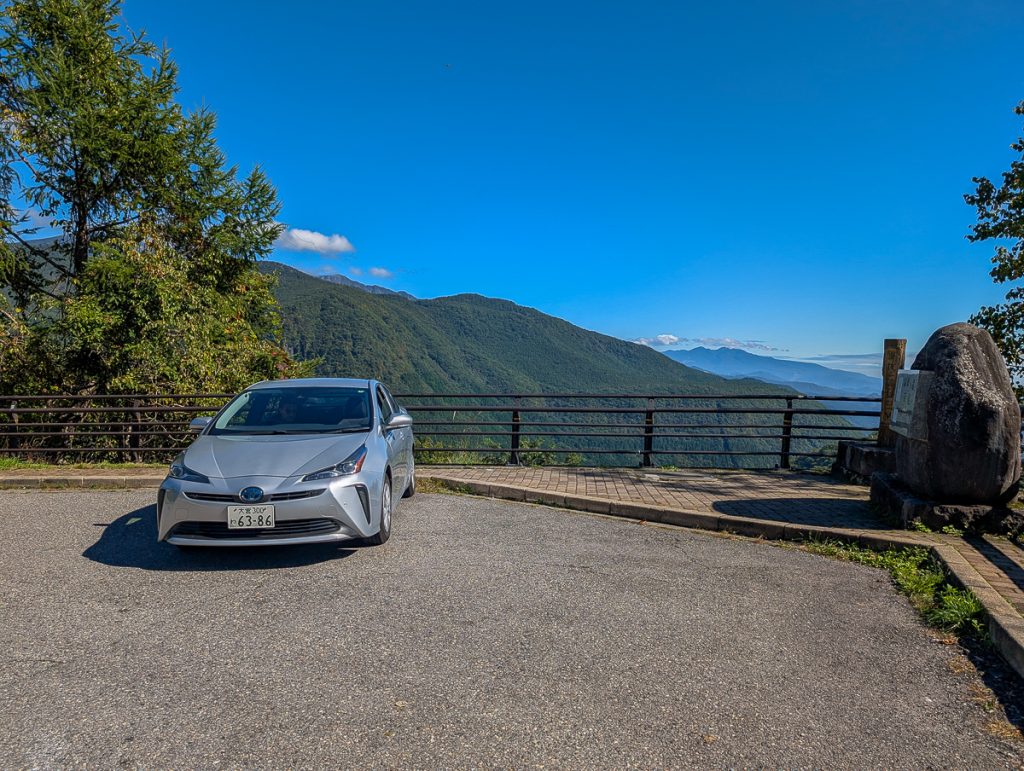
With a car rental, we were able to stop at some incredible roadside attractions, scenic vistas, and see small towns. It allowed us to explore Nikkō National Park at our own pace, stopping for hikes, visiting nature centers, and spending more time at the waterfalls and natural sites.
We also used it to enjoy an overnight stay at a local homestay in a town where most people come as a day trip on a large tour bus. We liked the flexibility and freedom.
12. Mind Your Food Waste – Portion Sizes Can Be Big
Even as a vegetarian, the food experiences I had in Japan were simply unparalleled. The country is renowned for its world-class dining and hospitality, offering a unique experience for both residents and international visitors alike.
One thing I did notice, though, was that a lot of food was put before me, meal after meal, and some of it surprised me!
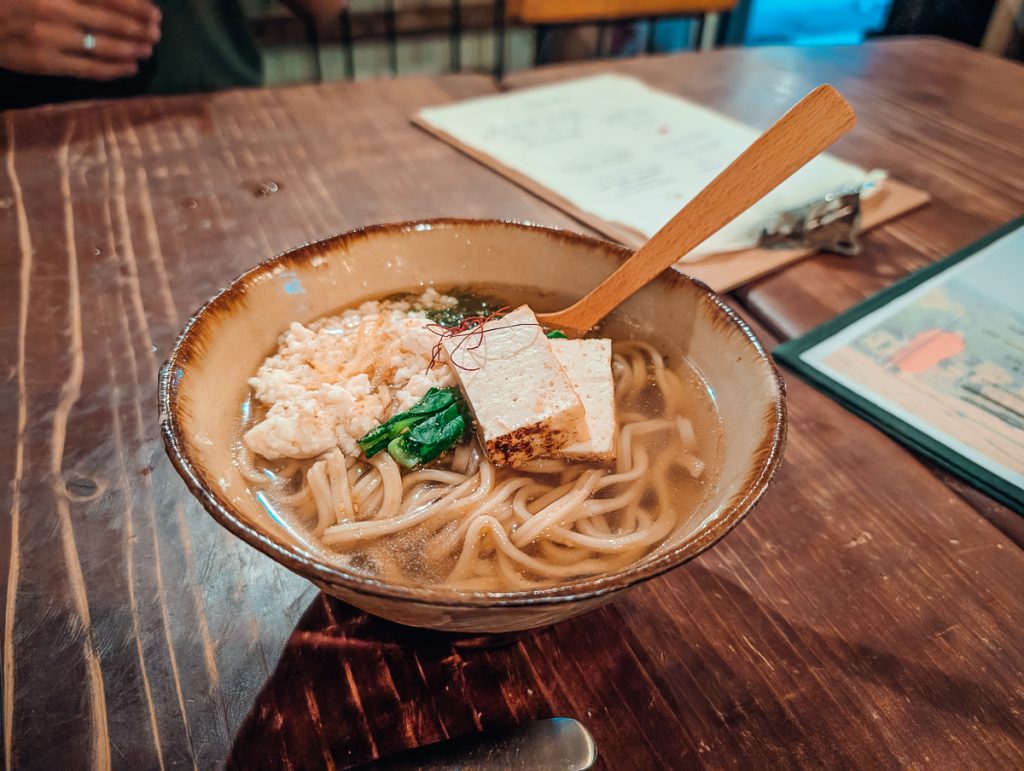
All countries struggle with food waste, but Japan faces a particularly challenging path to reducing it. In 2022, Japan was one of the leading contributors to global food waste, with 6.12 million tonnes of food wasted.
Food waste contributes to high methane emissions, a greenhouse gas that is over 80 times more potent than carbon dioxide. Rotting food in landfills is a significant source of this methane, highlighting the critical environmental cost of uneaten meals.
The food waste in Japan comes from strict standards and evolving consumer behaviour.
- Japan’s commitment to freshness and quality is both a blessing and a curse. The “one-third rule” mandated that food manufacturers or wholesalers deliver products to retailers within the first one-third of the product’s total shelf life. Items delivered past this point were often returned or discarded, despite remaining perfectly safe to eat.
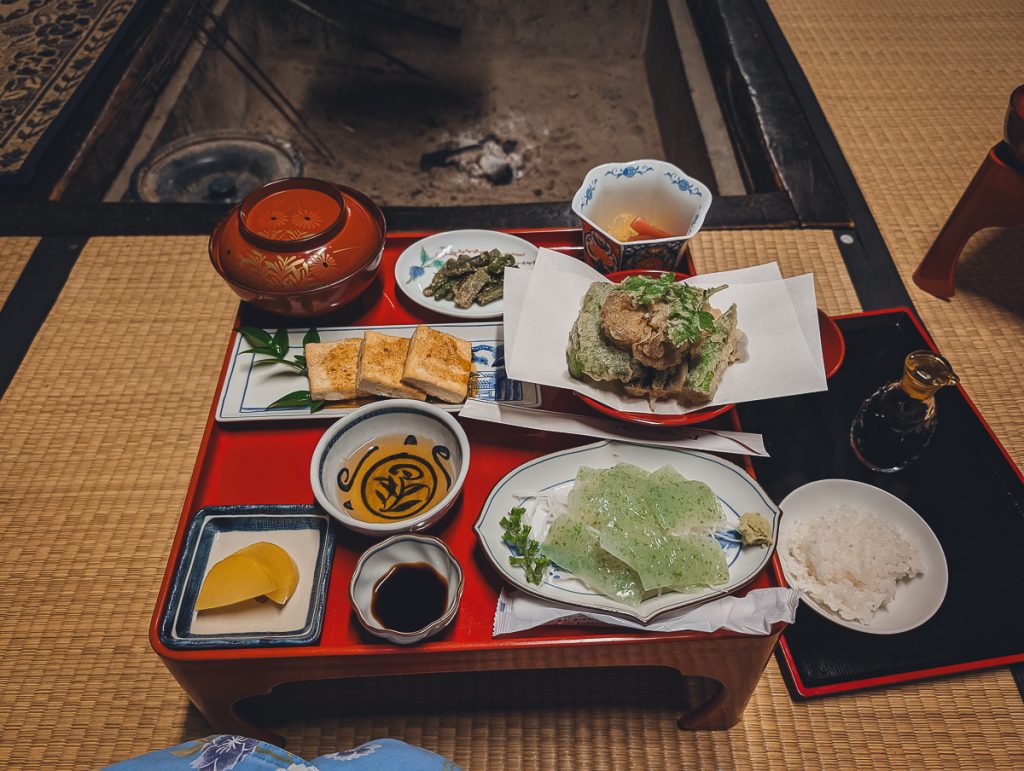
- Tourists not accustomed to Japanese foods and dining traditions = waste: The multi-course nature of traditional meals, such as kaiseki or shojin ryori, usually surprises international visitors. With so many small dishes served in one meal, often accompanied by a substantial amount of rice and broth, it is easy to feel full quickly.
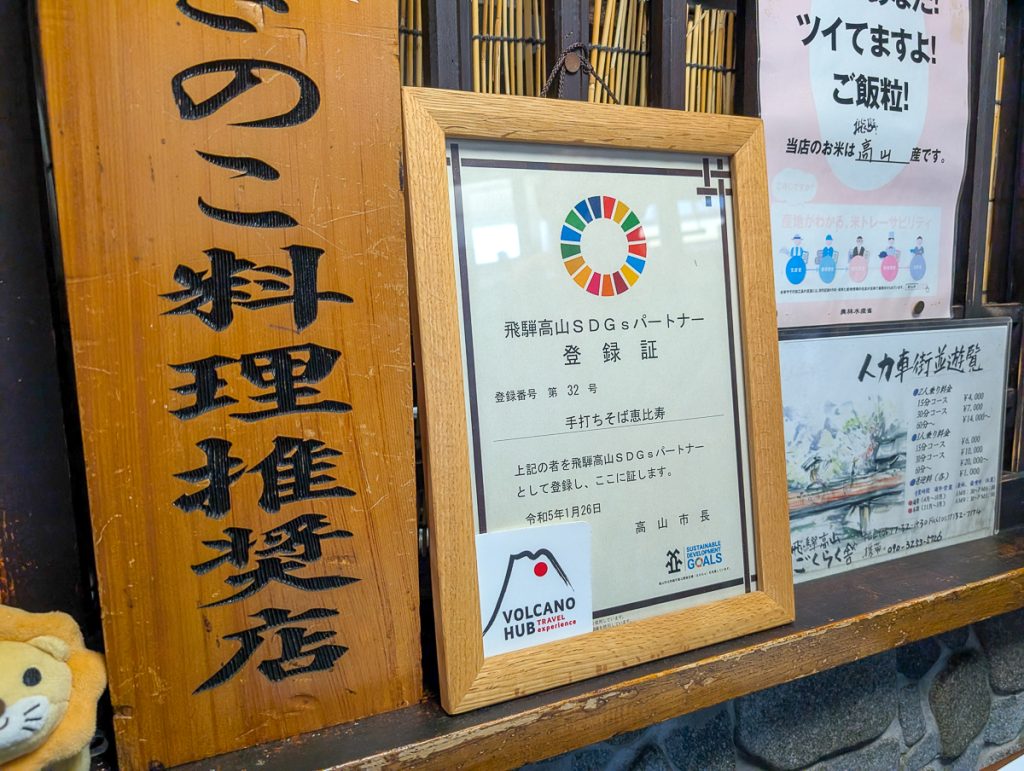
The good news is Japan is trying to tackle food waste by changing the perceptions around what is fresh and relaxing the one-third rule. Certain supermarkets and convenience stores are also featuring “ugly fruits and veggies.”
While the one-third rule is being relaxed, the cultural expectation of freshness persists, making changes challenging. Other innovative companies and apps are connecting locals with food before it goes to waste.
Tips for Minimizing Food Waste
One of our dining experiences was an 11-course shojin ryori meal in Tokyo, which included several dishes featuring soups, broths, and rice—all of which were filling. One of the ryokans we stayed at served us a large breakfast and dinner every day, featuring multiple dishes, including various types of tofu, rice, soups, and broths. It was a struggle to finish some of my meals.
Nothing went to waste, but I left the table uncomfortably full a few times.
Over time, I became more adept at managing my hunger levels, including occasionally skipping lunch or breakfast.
Practice Mottainai for Food
Mottainai is a widely applicable concept regarding sustainability. One way I noticed it was used was that wasting food is a shame, whether in terms of wasted money or environmental costs.
Start Small; Skip a Meal; Work Up An Appetite
In restaurants where you are in charge of ordering, like izakaya bars, start small with a few dishes shared among your travelling partners. Always consider how much rice and broth will be at the table, as these are filling. If you are still hungry, you can always order more at izakaya bars.
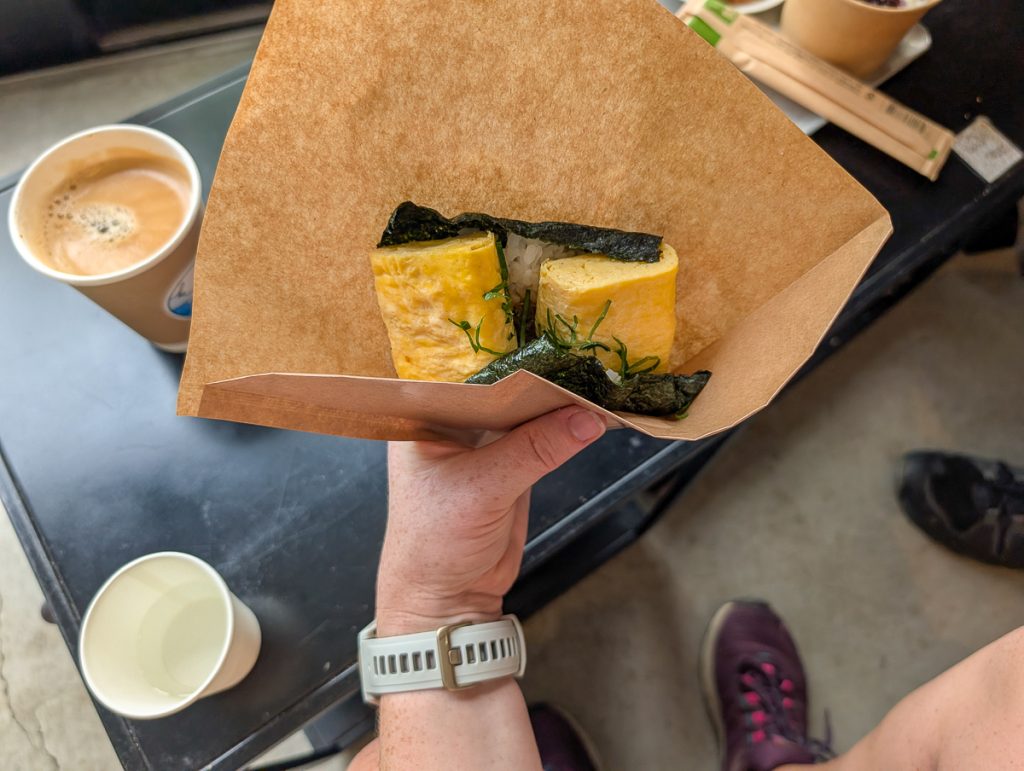
When we were on our own for all our meals, such as staying at a large hotel in Tokyo without meal services, I would eat a very light breakfast. When we booked accommodations that included breakfast and dinner, we would sometimes opt for a light lunch.
Of course, getting 20,000 steps a day exploring and the excitement of incredible food often worked up our appetite enough to enjoy three full meals!
The mottECO Movement
Unlike in North America, the concept of a “doggy bag” is not traditionally common in Japan. Typically, if you can’t finish your meal and ask for a to-go box, you would get stares of confusion. This is because it was thought the food wouldn’t last and is considered unhygienic.
However, the Japanese initiative mottECO is focusing on raising awareness about food waste and empowering people to take food home. Popularized at Expo 2025 in Osaka, many restaurants now offer paper to-go bags for food that cannot be eaten. Look for participating restaurants!
Hotels and Food Waste
As always, look for hotels that are making an effort to reduce food waste. Many of the eco-certified hotels in Japan, which participate in the Sakura ESG initiative, are leading the way. They reduce food waste in their in-house restaurants.
13. Learn about the Indigenous Ethnic Groups
Confession time: before planning and travelling to Japan, I had no idea Japan had Indigenous ethnic groups. I thought there were just Japanese People who all shared a common lineage. My time in Okinawa certainly opened my eyes to Japan’s two Indigenous groups.
Like most Indigenous peoples around the world, the Ryūkyūans of Okinawa and the Ainu of Hokkaido have experienced marginalization and cultural erasure that persists today. Japan has formally signed the United Nations Declaration on the Rights of indigenous Peoples, but it does not recognize the Ainu and Ryūkyūans’ right to self-determination.
While Japan officially recognizes the Ainu as an indigenous ethnic group, it does not recognize the Ryūkyūans as such.
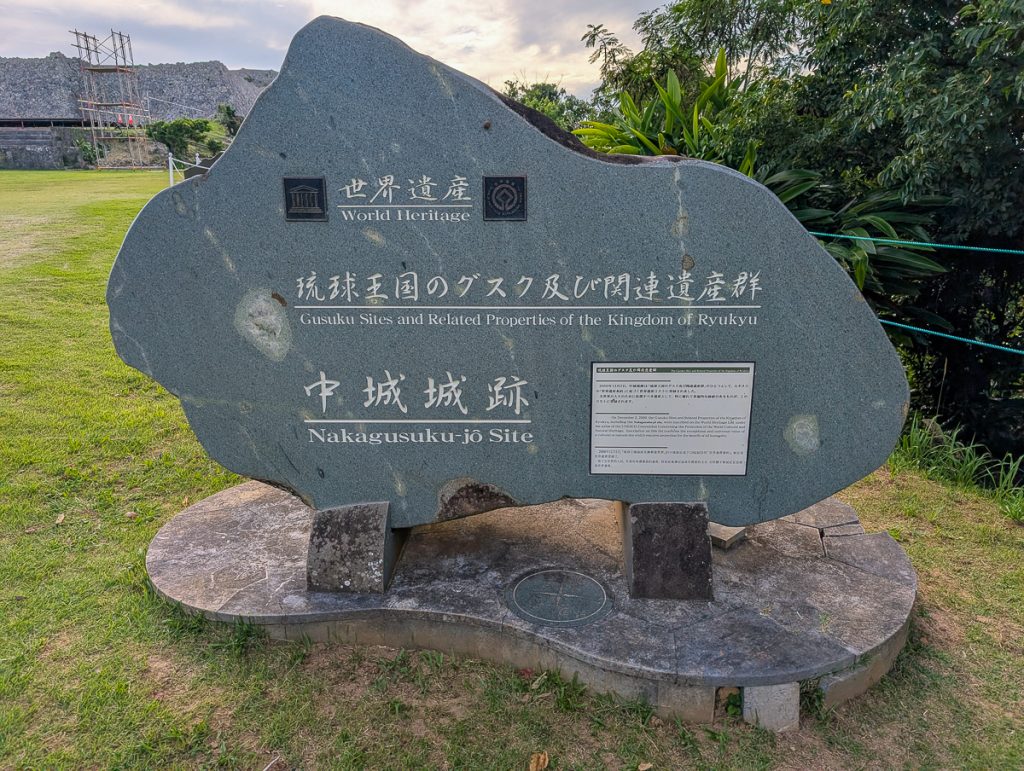
Much of the Ryūkyūans’ traditional territory was overtaken by US military bases coming out of WWII, and a continued military presence threatens their land rights and traditional lifestyle.
The Ainu had their land colonized by the Japanese during the Meiji period and were displaced from the bountiful traditional lands to the barren interior of Hokkaido.
Both the Ryūkyūans and Ainu have, until recent years, been somewhat hidden from national and international recognition, experiencing cultural erasure, racism, and discrimination.
Tips for Honouring Indigenous Cultures
The first step is to inform yourself about the Ryūkyūans and Ainu, and their historical and ongoing struggle for recognition. The BBC wrote an excellent article about the Ainu.
It is more challenging to learn about the people of Okinawa, as they are not yet formally recognized in Japan, although the UN does acknowledge them.
Visit Hokkaido
Head to the homeland of the Ainu people to engage in Indigenous-led tourism experiences. Lake Akan is their largest settlement, and there are numerous opportunities to learn about the Ainu culture from them.
Go forest bathing to learn about their spirituality, make a traditional instrument, or try your hand at stitching their traditional clothing patterns.
Visit Okinawa
Okinawa has Ryūkyūan culture blended throughout the prefecture. Much of the art and cuisine is influenced by the Indigenous people in this region.
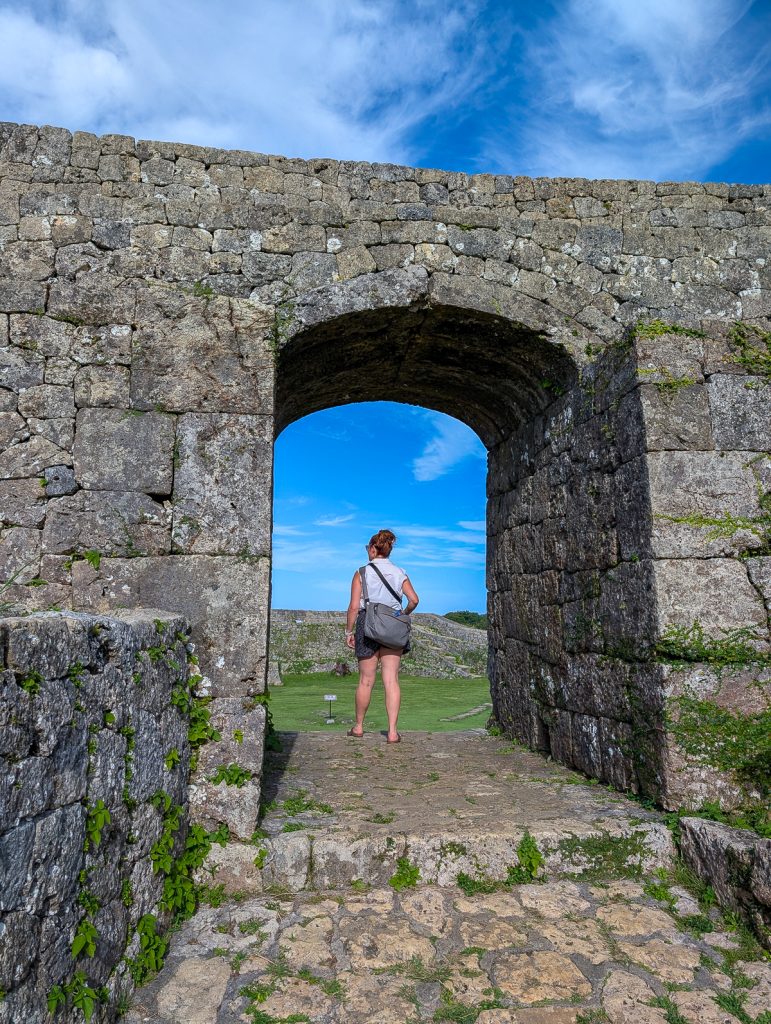
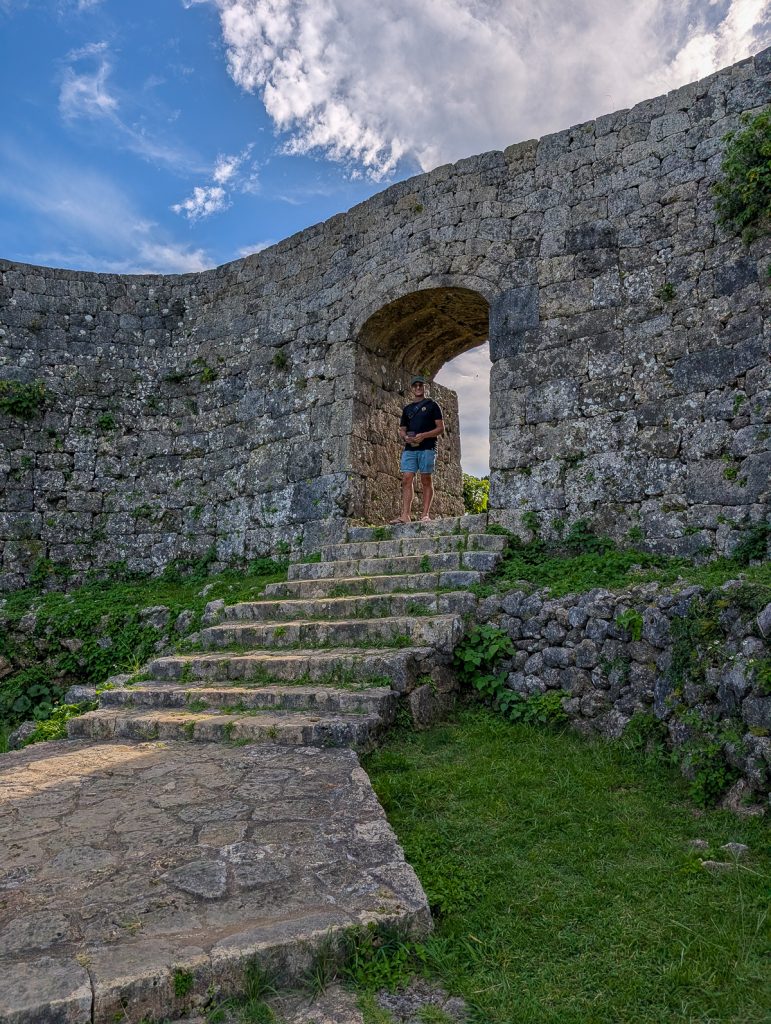
A great starting point is to visit the UNESCO World Heritage Sites across the main island to see the ruins. Visit the Urasoe Museum on the main island to learn more about its history. Try traditional foods and shop in the pottery district for traditional lion-dog statues.
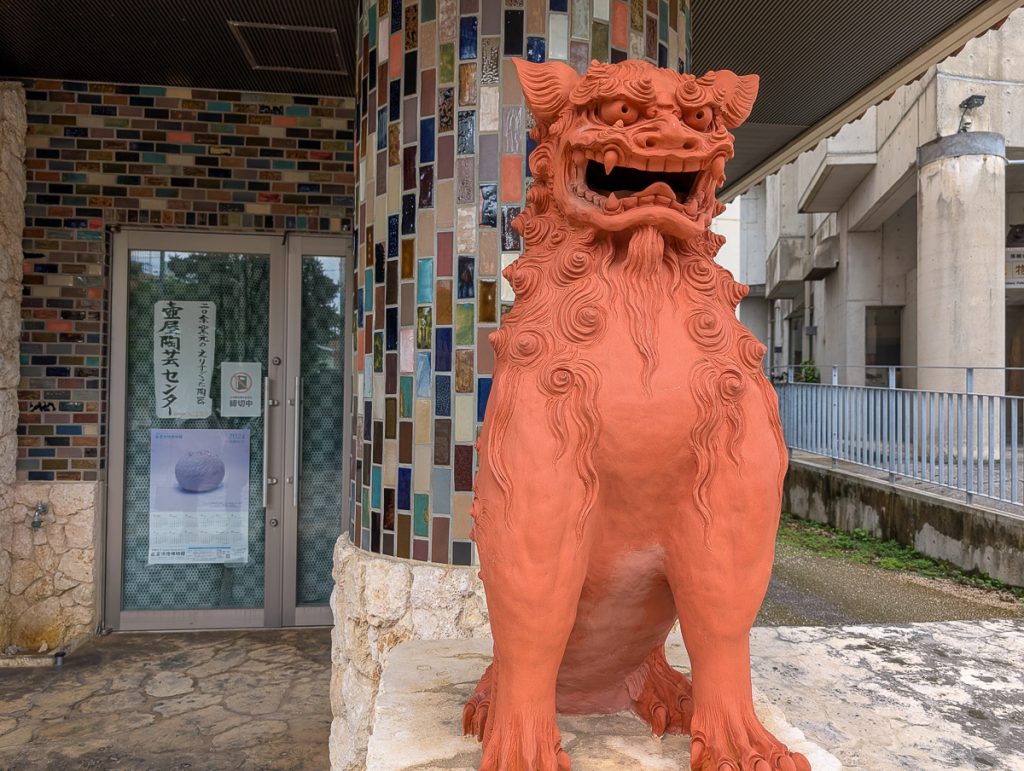
14. Support Women / Diversity in Tourism
Despite recently electing Sanae Takaichi, the first woman to hold the top political role in Japan, the country upholds a misogynistic system. Even Takaichi reflects regressive and traditional gender role division.
Japan ranks 111th out of 144 countries in gender equity. The reasons for this abysmal ranking are the very few women in leadership positions in business or politics.
Sexual harassment is very problematic in the country, and the sexualization and abuse of women play out in anime and video games.
These issues are rarely addressed head-on and instead swept under the rug.
I think this Reddit thread is particularly eye-opening regarding the discussion of how misogyny plays out in Japan. The BBC also wrote an excellent article on why Japan seems unable to shake off sexism.
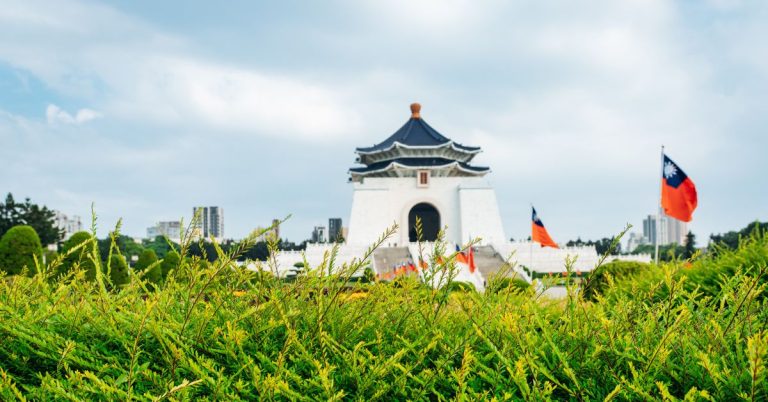
To add to the gender discrimination mix, Japan is the only G7 country not formally recognize gay marriage. I remember travelling to Taiwan after a month in Japan. As soon as I landed in Taipei, it was as if everyone breathed a collective sigh of relief, with gay couples holding hands and expressing themselves. I immediately noticed a greater presence of women in the workforce. Japan felt stifling in comparison.
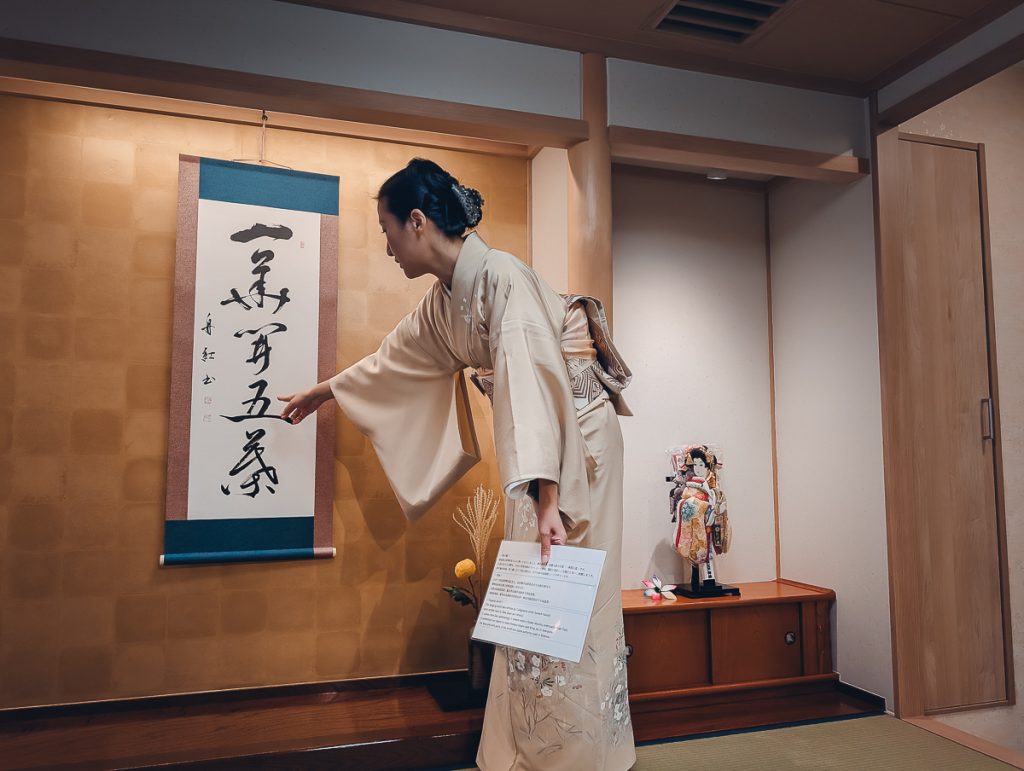
Tips for Supporting Women
Due to Japan’s culture, change needs to come from within the country. However, as travellers, we can make a collective effort to seek out and support women and gender-diverse people working in tourism.
Seek Out Women-Owned Businesses
Women make up more than 50% of the global tourism workforce, which is higher than the global average for other industries, which is closer to 30%. You really notice this in Japan’s tourism industry, and there are thankfully many opportunities to support women in tourism.
I made a point to seek out women-owned businesses and companies that hired women as guides. A few of my memorable highlights were:
Wasako Tea Ceremony
Wasako Tea Ceremony is in the heart of Tokyo, owned, operated, and managed by three hilarious and kind women. We enjoyed a 2-hour ceremony led by Ryouko-san, where we learned about the art of matcha and savoured delicious sweets. The three women were approachable and relaxed, so we enjoyed a great conversation with them.
Wine Bar Noéli
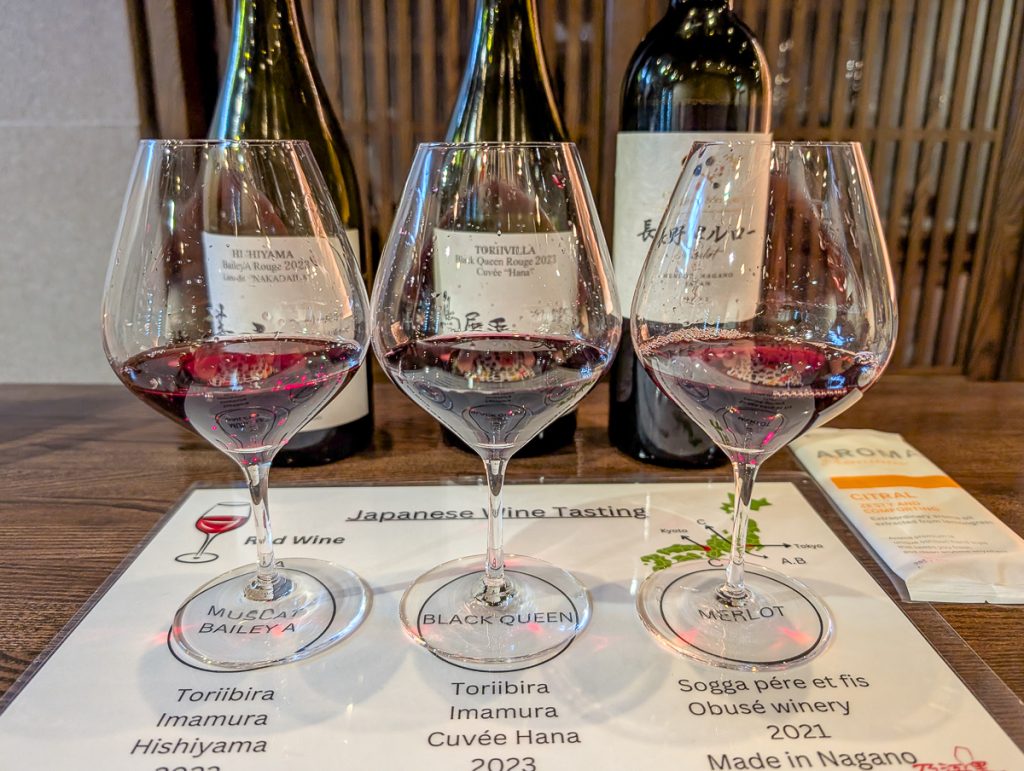
Noéli is an inspiring woman who grew up in Kyoto. She moved to Tokyo and worked a corporate job. She dreamed of returning home to open a wine bar and create a community space for people to enjoy good food and wine together.
She works with local partners to curate a fantastic wine list, and we sampled 6 Japanese wines! She is a lovely host and has an inspiring story of transitioning from a corporate life to becoming a business owner.
Treeful and Irie Zamami
Okinawa has many incredible women working in tourism. We stayed at Treeful, which had primarily women guides and hosts who took us hiking and acted as our concierge.
The guide for our snorkelling trip, Irie Zamami, was also a local woman who was passionate about tourism and sea turtles!
Ask About Company Policies
If you want to be vocal about supporting women in tourism, it never hurts to email hotels or tour operators and ask them about their diversity and inclusion policies. Request women tour guides when available, and let people know it is important to you!
15. Start a Respectful Dialogue
All of this sounds great on paper, but incorporating it into your itinerary and striking a balance between respect and values is challenging. There are times we can only do so much as travellers.
During our homestay, we unfortunately mostly interacted with the “man of the house.” The “woman of the house” occasionally popped her head out from the kitchen window to ask how the food was. This was difficult for me to somewhat ignore an entire person in the house, but I knew, as a guest in someone’s home in rural Japan, it wasn’t my place to force an interaction. Instead, I found other ways to support women more openly when I could.
At other times, we can truly make a difference by creating a meaningful dialogue with people.
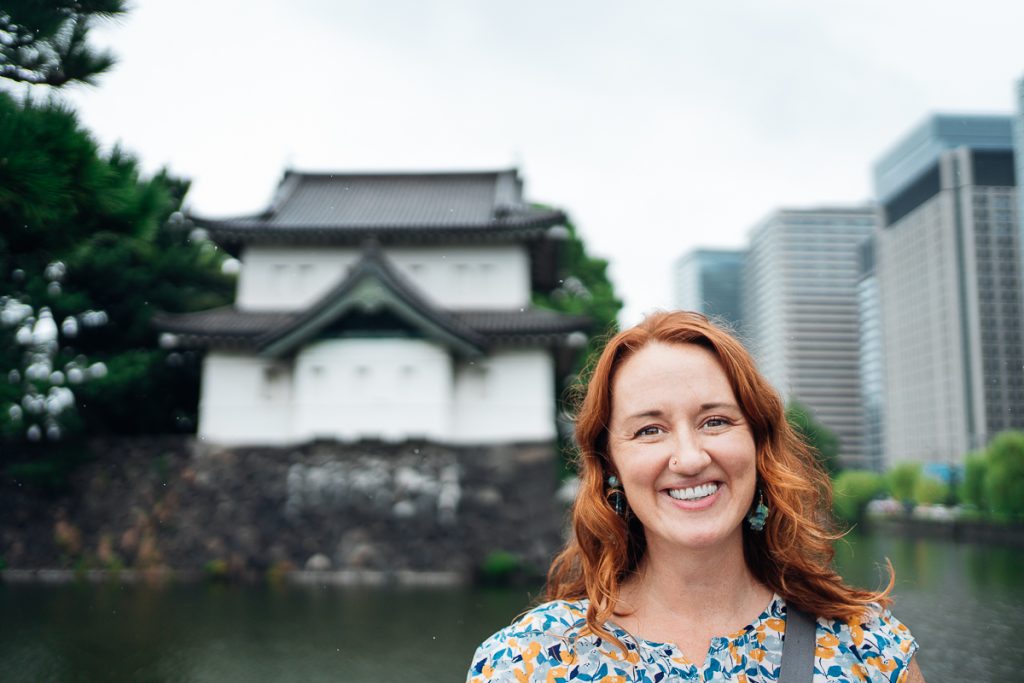
Interestingly, I found that locals often asked me questions about my behavior. At one Okonomiyaki restaurant, not known for its plant-based offerings, the server asked me straight up, “Why are you a vegetarian?” I gave him an honest answer regarding animal welfare and environmental impact. He said, “Cool, I never thought of that. It’s not for me, but we will take care of your dietary needs.”
Another time, a tourism board asked me why I didn’t want to see dolphins in captivity. I told them honestly. None of these were disrespectful or awkward conversations. I found that more often than not, people were curious, somewhat open-minded, and willing to make alternative suggestions for things I might enjoy instead.
Tips for Constructive Conversation
Of course, there are ways to be respectful and effective in these moments, ensuring you’re opening doors, not shutting them. Being a sustainable traveler isn’t about shaming or lecturing; it’s about sharing a different perspective gently.
Be Polite and Humble
Remember, you are a guest in Japan, and their customs and practices predate your visit. Frame your questions or your explanations as something you are learning about, rather than something you are teaching.
Phrases like, “I’m trying to travel in a way that respects the environment, and I was wondering if there’s an alternative to seeing animals at the zoo…” go a lot further than, “You shouldn’t recommend seeing animals in a zoo.”
Humility is key to unlocking a genuine exchange.
Share the “Why”
Simply saying “no” to a practice can come across as judgmental or dismissive. When asked about a choice you’re making, such as declining a plastic bag or requesting a vegetarian option, briefly explain your motivation. As I found with the Okonomiyaki chef, people are often simply curious about the reasoning behind an action they haven’t considered.
This turns your personal choice into a conversation framed by your values (such as animal welfare, waste reduction, or supporting local artisans) and without judgment of the other person’s values.
Ask for Alternatives
Instead of focusing on what you don’t want, shift the focus to what you can do. If you’re faced with a choice that conflicts with your sustainable values, don’t just refuse; ask for an alternative.
For example, ask “Could I get that coffee in my reusable cup instead of a disposable one?” or “I prefer not to see wildlife in a show; is there a local conservation project I could visit or support instead?”
This demonstrates that you are engaged and still interested in supporting their business and community, just in a different way.
Comment and Share Sustainable Travel Tips Japan
If you are planning a trip to Japan, whether it is your first or a return visit, and are looking to adopt more responsible travel behaviours, this guide is for you. These 15 in-depth sustainable travel tips for Japan cover all three pillars of sustainability, from social and cultural aspects to environmental and animal welfare, as well as ways to enhance your economic impact responsibly.
We covered the reasons why sustainable travel in Japan matters and actionable tips to be a better and more responsible traveller in Japan. Whether you are looking to reduce your plastic waste, try plant-based foods, find sustainable accommodation, or engage in ethical wildlife experiences in Japan, I hope you found this guide helpful.
Are you planning a trip to Japan and curious about how you can be a more sustainable traveller? Comment below which of these 15 sustainable travel tips was most surprising?
Have you been to Japan before? Which of these responsible travel behaviours did you find most challenging?
Curiosity Saves Travel Recommends
Accommodation: Booking.com to find accommodation with a Genius Discount and clear third-party sustainable certifications like Green Key. Look for local hotels.
Tours and Excursions: GetYourGuide and Viator for tours, excursions, and tickets. Never book wildlife experiences through these vendors.
Travel: Omio for booking buses and trains in English across Europe. After reducing the number of flights I take annually, I use Google Flights’ carbon comparison tool.
Car Rental: Rentalcars for the best rates in English globally. It is easy to find hybrids and EVs, and there are resources for finding chargers.
Packing Essentials: REI or your local Co-op has great essentials like reusable water bottles and cutlery sets. Patagonia for regenerative clothing. Farm to Feet for socks made with regenerative practices! Pistil Designs for cold-weather essentials. Osprey for bags that last 10+ years, like the day bag for hiking or my favorite carry-on.
eSIM: Airalo eSIM. Reduces waste from single-use SIMs. A total game-changer.
For Bloggers and Content Creators
Earn Ad Revenue with Journey by Mediavine
Earn with Stay22 Travel Partnership (my biggest source of income!)
Earn with TravelPayouts recommending tours and activities.




This is such a thoughtful post highlighting responsible travel tips for Japan — I loved how you emphasized using public transportation, choosing locally crafted meaningful souvenirs, and eating mindfully as ways we can explore Japan with more intention. I really appreciate all the thought and effort you put into this post.
Thank you! Yes, it is incredibly important for travelers visiting Japan to put in the effort to be responsible travelers while building connections and not crossing any cultural lines.
I love this article! It offers such a new insight into a country that most people simply present as cool or perfect. Personally, during my (albeit touristic) 10 days trip there in December 2023 I didn’t really like it because I found people to be very sad/lonely, tied to their jobs and consumerism. I’m talking about the bigger cities, as I’ve only been there. I think exploring Japan as you suggest adds a new whole level and I’ll keep this information with me for my next trip there, that I’ll do some time in the future in order to give the country a second chance.
Yeah I can certainly see that. I traveled to Taiwan after Japan and it felt like people there almost collectively breathed a sigh of relief as soon as we landed in the airport. I think as responsible travelers, we can help build bridges without crossing any lines to foster more two-way cultural connections with travel that can benefit us as well as Japan’s nature and ecology.