

2 Day Itinerary for Nikko National Park and UNESCO World Heritage Site, Japan
I may earn income from affiliate links or partnerships in this post. I spend time to curate tours or products that align with my values. Thanks for supporting my work, at no additional cost to you. All words and images on this website are created by real people.

Are you curious about visiting Nikkō National Park in Japan? Nikkō is an amazing national park with waterfalls, stunning vistas, hiking and nature trails, cultural sites, and cozy traditional ryokans. Nikkō, Japan, is also home to an outstanding UNESCO World Heritage Site, the Shrines and Temples of Nikkō, a sacred place protected by nature in the mountains.
Although Nikkō is popular for day trips, it’s best explored over several days to enjoy the unique things to do without large crowds while experiencing the rich culture and natural heritage.

Nikkō is easily accessible from Tokyo. Most people come for the day to see the main attraction, the historical and cultural complex of Shinto Shrines and Buddhist Temples. Unfortunately, this often means they overlook the surrounding national park’s incredible natural wonders and highlights. We stayed for a few nights during the low season and enjoyed minimal crowds and a slower pace, which allowed us to experience a more intimate side of Nikkō.
This two-day itinerary, including the best things to do in Nikkō National Park and how to visit the Nikkō UNESCO World Heritage site, is perfect for travelers who enjoy staying longer at popular day trip sites for a slower pace. Make the most of nature and enjoy a more culturally immersive experience.

Over two nights, we will cover everything you need to know to visit Nikkō, including how to get there, where to stay, sights to see in the national park, tickets for the UNESCO site, responsible travel tips, and much more!
Is Nikko Worth Visiting? About Nikkō National Park and UNESCO Site
The Nikkō region has two main attractions that make it worth visiting: the national park’s natural wonders and the UNESCO World Heritage Site. Our time in Nikkō was the highlight of our month in Japan! So, yes, it is worth visiting!


We really enjoyed the slower pace in Nikkō, having left the bustle of Tokyo behind for more reflective cultural experiences and natural wonders. So, what can you expect?
The Shrines and Temples of Nikko UNESCO World Heritage Site
The UNESCO site comprises 103 religious buildings in a large complex, including two Shinto Shrines and one Buddhist Temple. This area is surrounded by the stunning nature of Nikko National Park, with towering trees and distant mountains, making it ideal for a reflective escape.
The cultural significance of this site dates back to the 8th century, when a Buddhist monk constructed the first holy places in the Nikko mountains. Today, most of what you see was built in the 17th century during the life of Shoguns, such as the Tokugawa Leyasu.
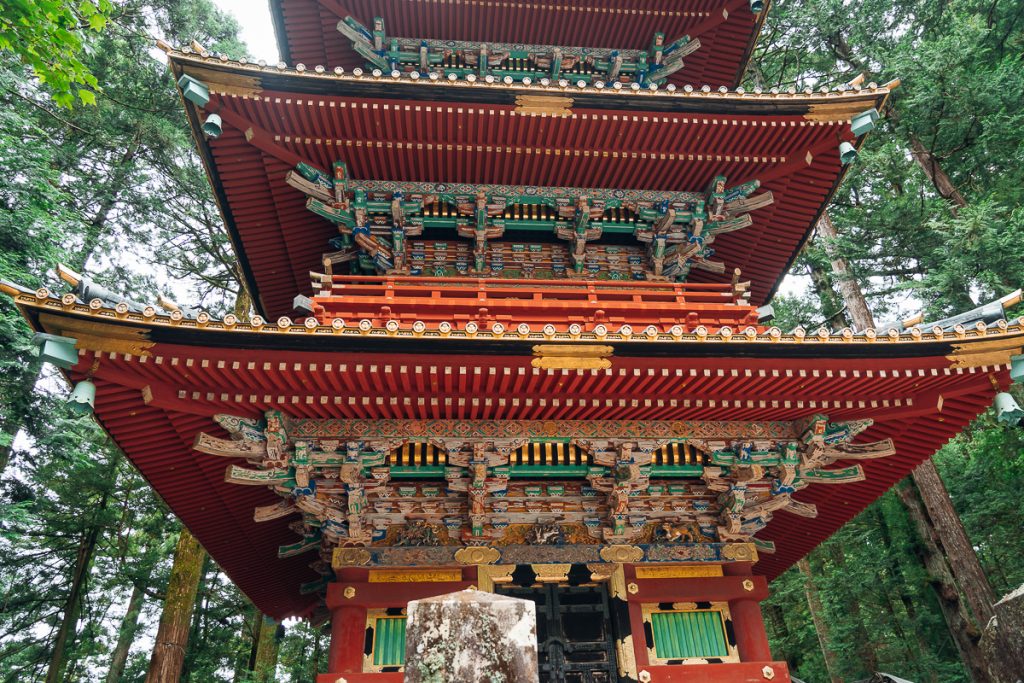
Some areas are closed to the public as they are still used for traditional events today.
Nikkō National Park
Japan impressed me with its national park management. Nikko National Park balances conservation, culture, and recreation, offering many hiking trails, opportunities to spot wildlife, and fascinating ecosystems.
In the park’s lower elevations, you’ll find lovely broadleaf deciduous forests of Japanese beech. At higher elevations are native oak and coniferous forests of fir and thuja trees, and eventually shrubby alpine brush. There are also boggy marshlands in the national park.
Whether you want a challenging hike up Mount Nantai, a flat trek through the marshlands, or just to pop out and enjoy a waterfall quickly, there is something for you.
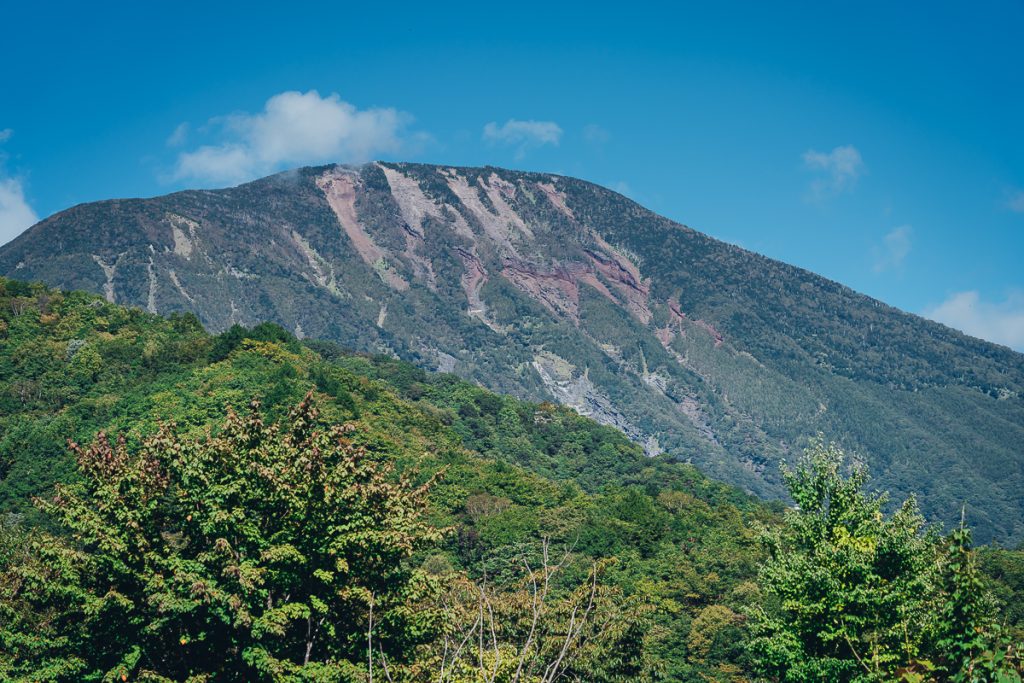
Watch for native wild animals such as the Japanese Macaque, Asiatic Blackbear, and Serow. The park also has an endemic and rare alpine flower, the Shirane Aoi. We saw many macaques but no bears or serows.
This is bear country, and we hiked with a bear bell and practiced safe, ethical wildlife viewing.
- Never feed, touch, or approach wild animals.
- Never leave trash or food on the ground; pack everything you bring.
- Do not collect or pick wildflowers or plants.
- Visit the visitor center to learn more about ecology and responsible behaviors.
- Always stay on the designated trail.
How to Get to Nikkō from Tokyo
Nikkō is well-connected and very easy to reach from Tokyo. You can reach it by car, bus, or train.
Renting a Car and Driving
While I typically advocate taking the train, especially in a country like Japan, there are times when a good old-fashioned road trip is better.
We chose to drive a hybrid car from Tokyo for several reasons.
- We wanted the flexibility to drive around the National Park, stopping wherever we pleased to take photos, visit a waterfall, do a short hike, or get off the main tourist route.
- It was part of an extended road trip to visit some more rural parts of Japan, away from the main tourist routes and crowded tour buses.
- Driving in Japan is easy, with nearly all street signs in English and safe and logical highways.
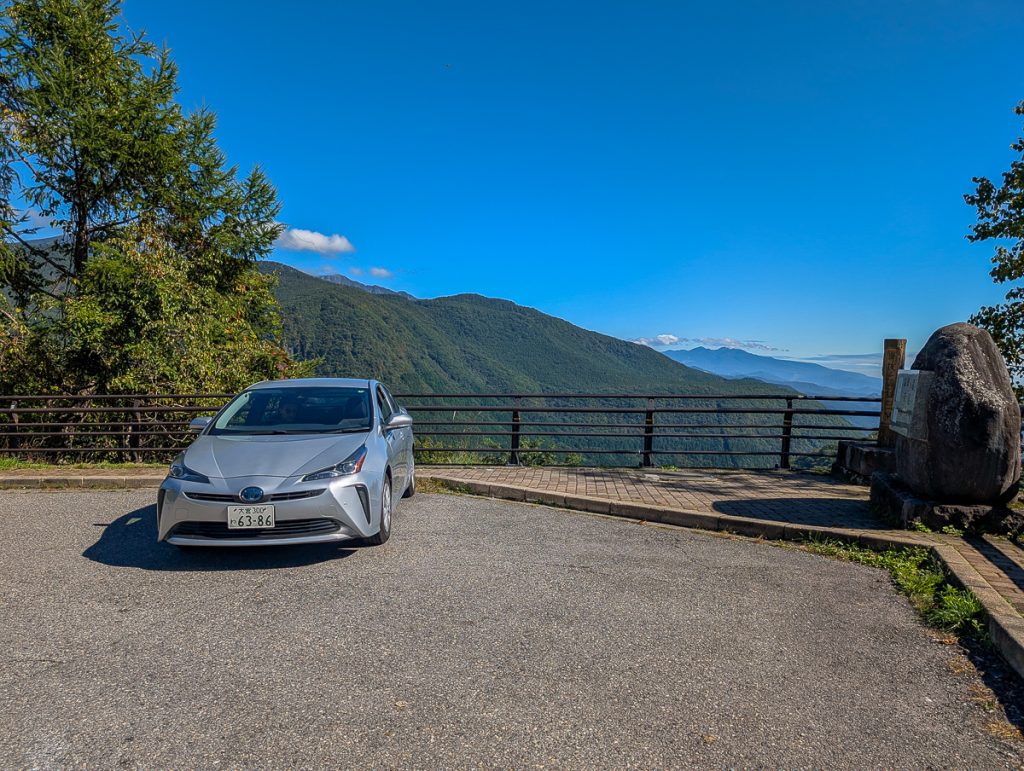
However, there are a couple of things to consider when renting a car in Japan.
- You must have an international driver’s license, regardless of your country of origin.
- Driving can be expensive. Japan has many toll roads that can cost up to 8000¥, depending on the toll length. Budget correctly.
Always rent a hybrid or EV to reduce emissions. We chose a hybrid and only had to fill the tank 1.5 times. However, as Japan’s charging infrastructure improves, we will try an EV upon return.
We rented from Booking.com’s Rental Car Platform and had a seamless and comfortable experience.
Public Transportation from Tokyo
Nikkō is well-connected by train from Tokyo, whether you are a JR rail pass holder or looking for connections with the private limited express Tobu Line. Since I didn’t take the train, I’ll hand you over to the experts for details about getting to Nikkō by train.
Join a Group Tour of Nikko
Of course, for those who are uncomfortable driving, have limited time, or want some local context, you can book a guided tour to Nikkō. I suggest a private tour for a more intimate experience, and small groups have less environmental impact. While I recommend staying longer, these day trips to Nikkō are a great alternative.
Essential Tips and Info for Visiting Nikkō
Before we get into our two-day itinerary, I’ll share some essential information about visiting Nikkō to ensure you have a great time.
Where to Stay in Nikkō National Park
When researching where to stay in Nikko, we wanted a traditional, locally owned option. Traditional ryokans in Japan often offer breakfast and dinner packages that can be added to a booking. In a smaller town like Nikkō, this is a fantastic way to ensure you always have a proper meal first thing in the morning.
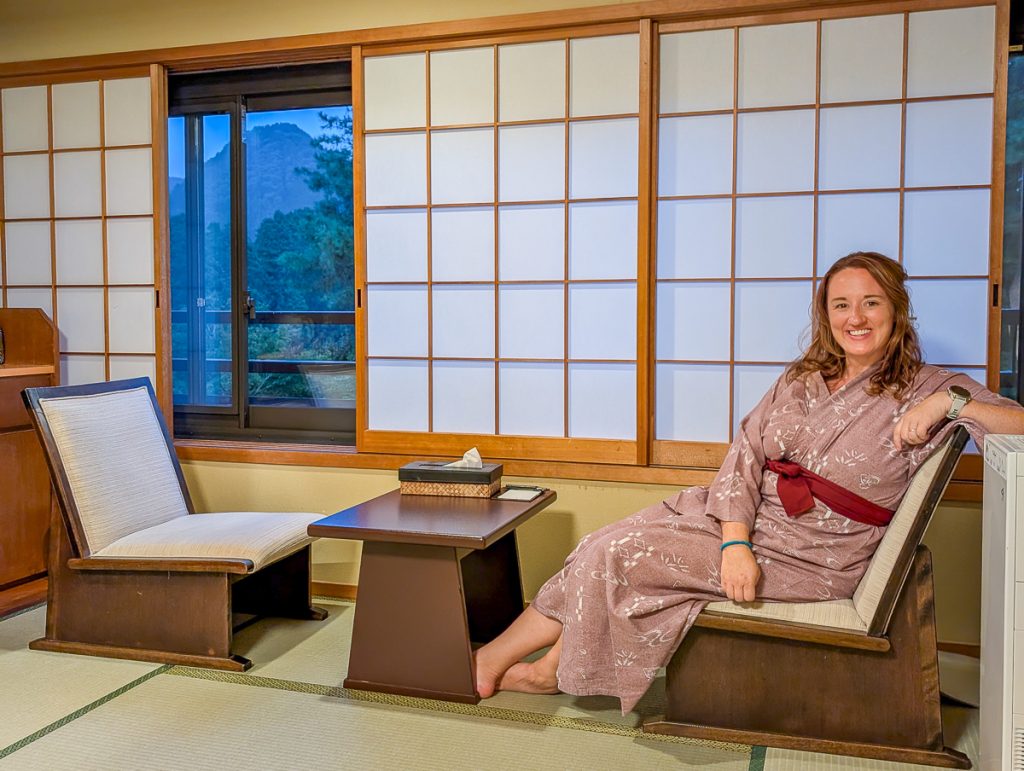
As vegetarians, our options were a bit more limited.
Thankfully, we found a cozy, rustic ryokan that catered to vegetarians and vegans, with an excellent dining package included in our stay.
We stayed at Nikko Hoshinoyado, an older ryokan within walking distance of the UNESCO site and a small downtown area with shops and restaurants. Although it is a bit dated, I thought it was cozy and quaint—perfect for a mountain stay. The futon was the most comfortable in Japan, and I slept like a baby!


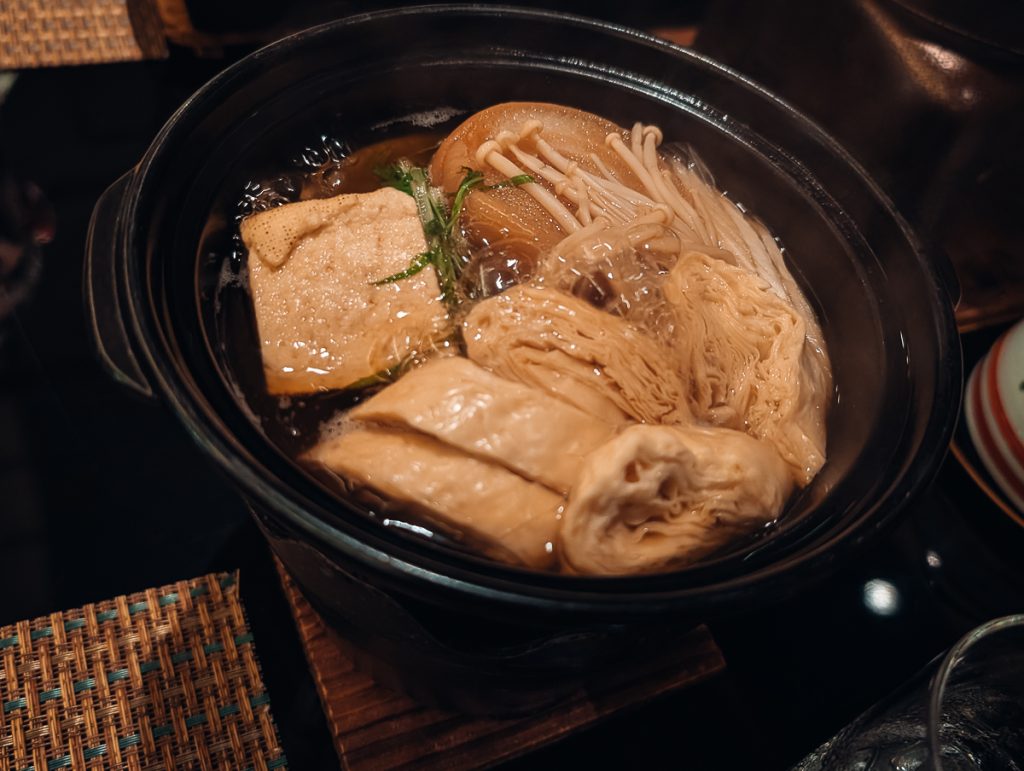
We pre-booked a vegetarian meal package in their fancier dining room, and the food experience was incredible. There are two dining areas: a classic, more affordable option and a premium dining room. We picked the premium, and the vegetarian options were diverse, flavorful, and satisfying!
I would return to eat here again!
Our room only had toilets, so we bathed in the scenic onsen. It is communal and divided between men and women. Since I have tattoos, we booked the private onsen for my partner and me for an additional charge.
However, they have a variety of rooms, including more modern rooms with private showers and western-inspired rooms that still feel traditional.
How Long to Stay in Nikkō
Most travelers to Japan stick to The Golden Route, including Tokyo, Kyoto, and Osaka. This means Japan’s most popular attractions struggle with mass tourism and crowds. While Nikkō is gaining popularity as a travel destination, most people only visit as a day trip from Tokyo.
Most arrive together on large tour buses to see the UNESCO site. If you visit on a day trip, you will likely encounter bigger crowds and have little free time to enjoy the charm of the Nikkō region.
The UNESCO site can be seen fully on a day trip, but doing so would be a disservice to the surrounding region and national park.
We spent two nights and two full days in Nikkō and could have easily added a third night and day to explore some of what we missed. Staying longer meant we could avoid peak times and dates when visiting and plan a flexible schedule that worked for us.
When To Visit Nikkō
One of the challenges of visiting Japan is that there isn’t really an off-season anymore—spring for blossoms and cooler weather, summer to take advantage of summer holidays, autumn for crisp air and autumn colors, and winter for snowy landscapes and winter activities.
The key is to plan your trip to Nikkō in the small window between these four peak seasons. We visited Nikkō in mid-October, before the autumn colors but after the busy summer. We had great weather, low crowds, and a delightful experience.
Sure, we didn’t see the autumn colors in the rolling mountains of Nikkō, but we were happy with our decision.
Nikkō has a relatively low winter season, so I bet winter would be a good time to visit the UNESCO site with minimal crowds, see icy waterfalls, and go snowshoeing. However, hiking and driving the winding mountain roads would be challenging.
If you visit during the shoulder seasons, on a weekday, and stay longer, Nikkō, as a town, UNESCO site, and National Park, is cozy, charming, and relaxing. I’ve heard from others who felt chaos, overwhelmed, and rushed.
Nikkō National Park 2-day Itinerary and Things to Do
Day 1 – UNESCO World Heritage Site and Kanmangafuchi Abyss
Drive from Tokyo to Nikko and Visit the UNESCO World Heritage Site and Kanmangafuchi Abyss. Today is a long day full of driving. Expect to be on your feet for hours at the UNESCO site and on a short nature walk along the river.
Wear comfortable, breathable clothing and good walking shoes, and have your reusable water and snacks on hand.
- Car rental
- Drive to Nikko
- Lunch/brunch at Meguri
- Temples and Shrines of Nikko
- Coffee/Cheesecake Break
- Kanmangafuchi Abyss
- Craft Beer
- Veggie dinner at Ryokan
- Onsen


Car Rental and Driving from Tokyo
We enjoyed our last morning in Tokyo, waking up to a vegan Japanese breakfast from the fantastic Prince Sakura Hotel. I recommend this hotel for its comfort, service, and location, as well as its light, sustainable initiatives and vegetarian/vegan dining options.
Once we picked up the car and got acquainted with driving in Japan, we hit the highway. After exiting the city and paying our tolls, it was nearly a straight shot to Nikko. We arrived by about 11 a.m., leaving plenty of time to explore.
Lunch and Coffee at Meguri
The first order of business is an early lunch at the vegan café Meguri, nestled in a cozy historic building just off the main strip. Meguri is a slow café specializing in coffee and offering a limited selection of vegan crepes. If you’re looking for a quick meal or something besides crepes, there are a few soba and traditional restaurants nearby.
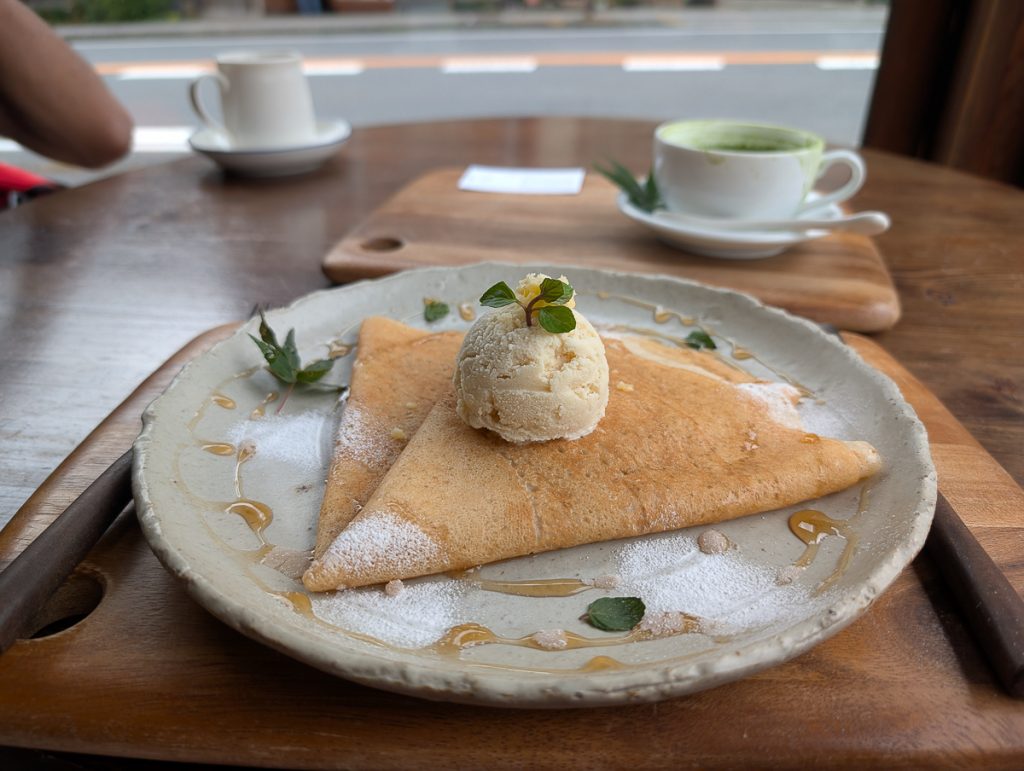
Sipping my oat milk matcha on the tatami mat at this sleepy cafe with big windows, I watched the world go by. I felt transported to an ambient LoFi cafe video. The crepes topped with vegan ice cream and the coffee were fantastic.
You might want to leave your bags at the ryokan if you didn’t drive.
UNESCO World Heritage Site
The highlight of Nikkō is just a short walk away, and it’s time for the UNESCO World Heritage Site – The Shrines and Temples of Nikkō. I am a big fan of UNESCO sites and was excited to visit, but I had little clue what to expect. But wow, was I blown away! This UNESCO site is massive, well-managed, and fantastic!!
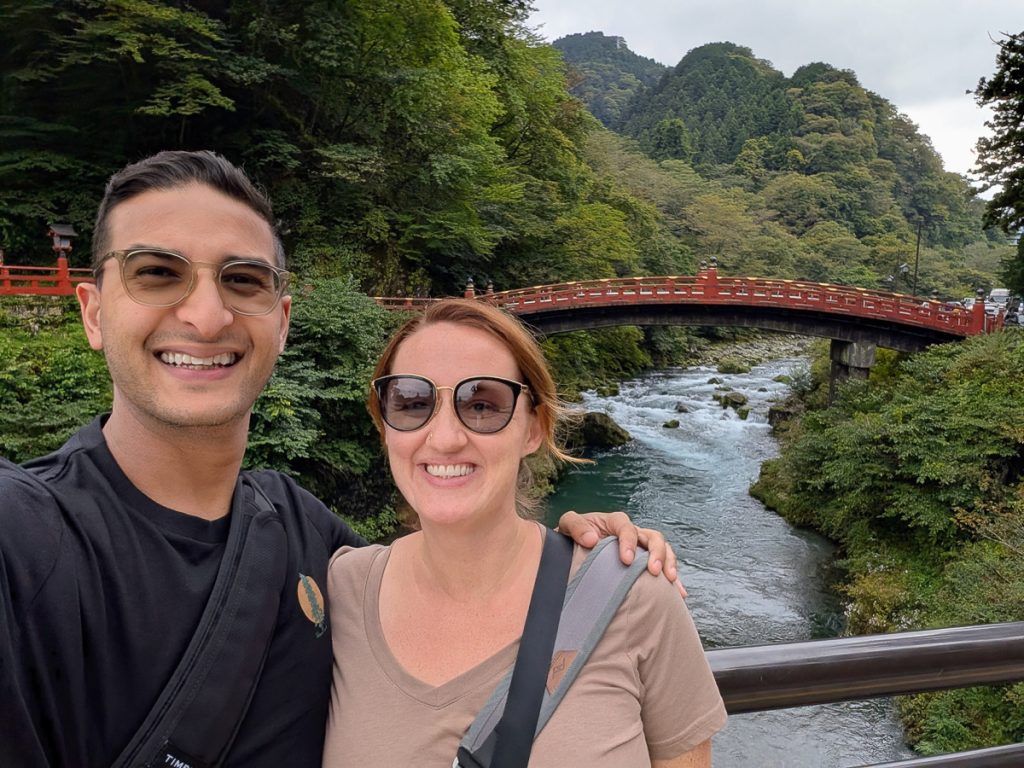
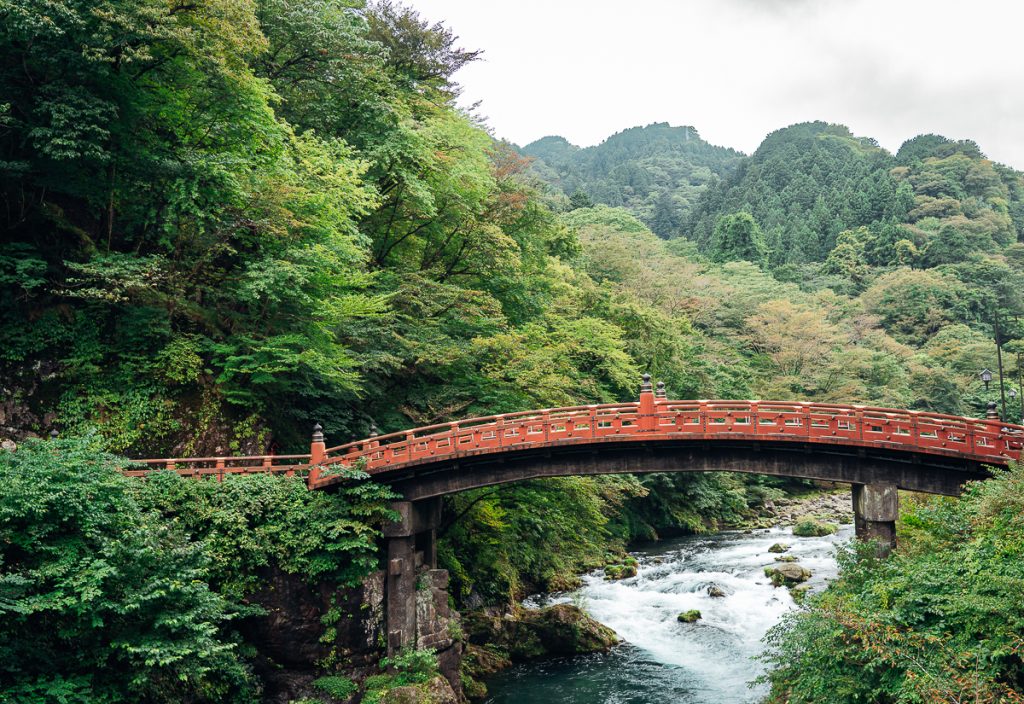
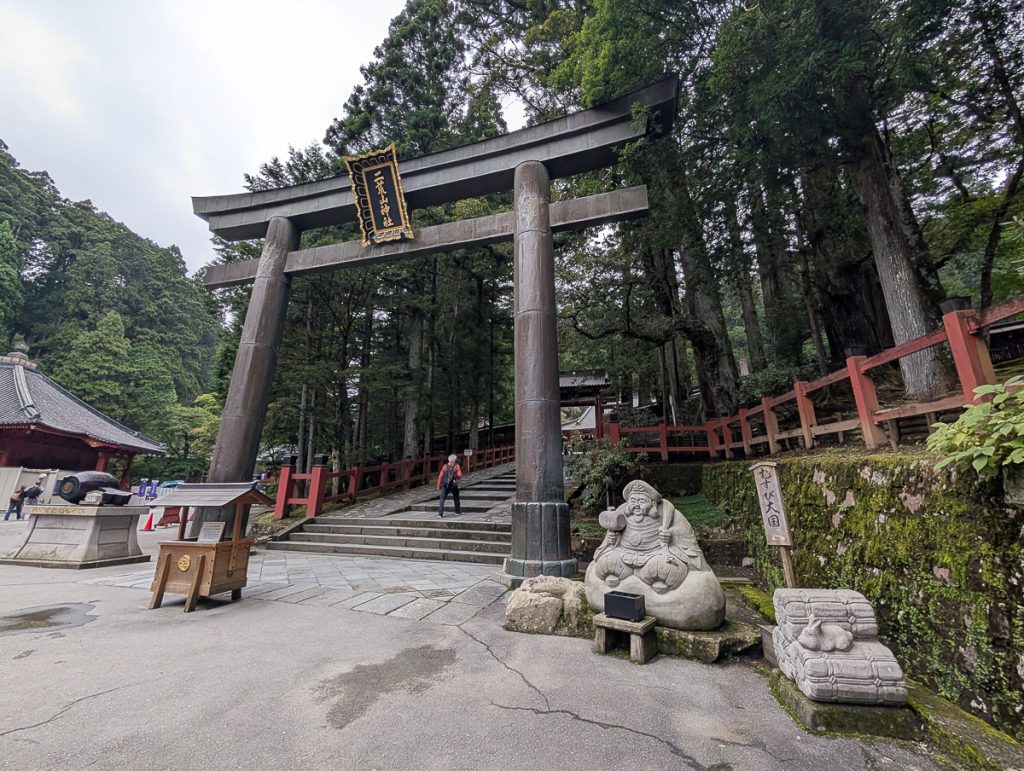
You’ll want to slowly walk up to the site, enjoying views of the charming, iconic red Shinkyō Bridge and the lush green mountains in the background. We entered from the stone stairs, climbing past the UNESCO sign into the forest.
The complex of Shrines and Temples in Nikkō can be confusing to navigate. We passed the Rin’nōji Houmotsuden treasure house and mistakenly thought it was part of the UNESCO site; however, it is separate and has different ticketing options. So, keep going onward and upward until you reach the courtyard, where you’ll get tickets for the UNESCO site.
We visited mid-week and mid-October, before autumn colors and after the summer chaos, and there were very few crowds and no lines. However, this place can get packed during summer, weekends, and peak seasons. I recommend visiting outside of peak times/days.
No matter when you visit, get your tickets in advance from Kkday to avoid standing in the ticket line. There is a separate booth next to the ticketing station for Kkday ticket holders. Just purchase your ticket online ahead of time and walk up to exchange it. This process is quick and can save you significant time waiting in line.
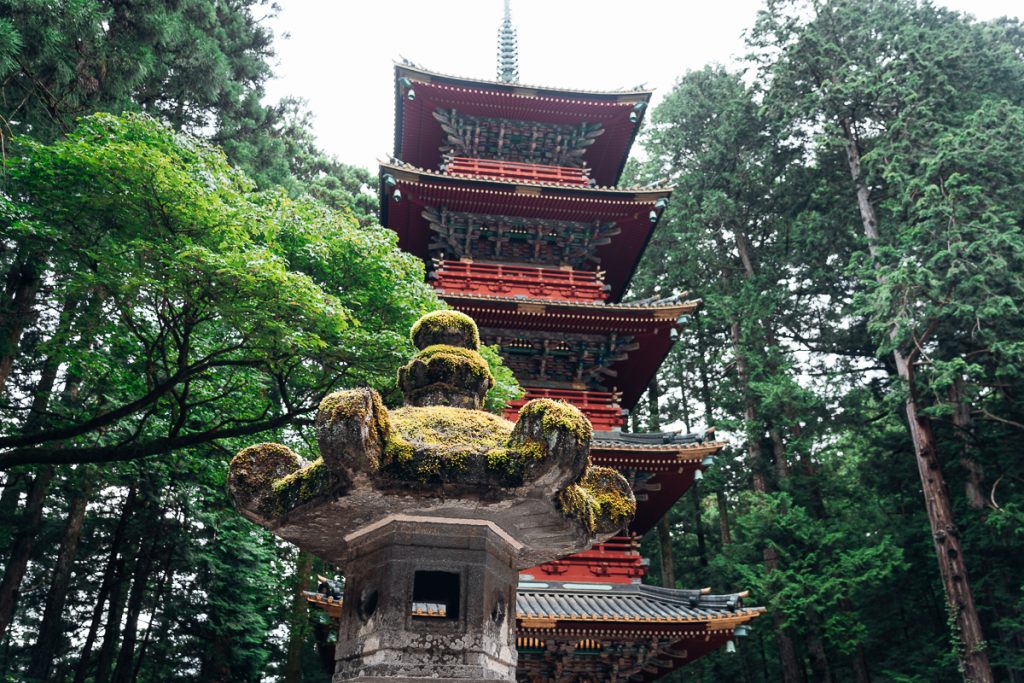
Enter near the five-storey pagoda. Once inside, take your time and enjoy exploring. We slowly meandered along the path, taking photos, spotting the “monkey see no evil, hear no evil, and speak no evil” motif, the sleeping cat, and soaking in all the intricate architecture.
The larger tour groups tend to hover around the monkey motif and sleeping cat, but honestly, those were my least favorite parts of this UNESCO site. Just take the time to follow your gaze wherever it leads and enjoy the incredible design of these sacred sites.


Remember to take the steps up to the Shinto Shrine, Okumiya Haiden. Trust me, it is well worth the climb! At the top is the burial and final resting place of one of Japan’s great Shoguns. They rest on a quiet hill surrounded by ancient forest.
On your way back down, you’ll take off your shoes to enter a holy place. I chose not to take photos of the inner area.
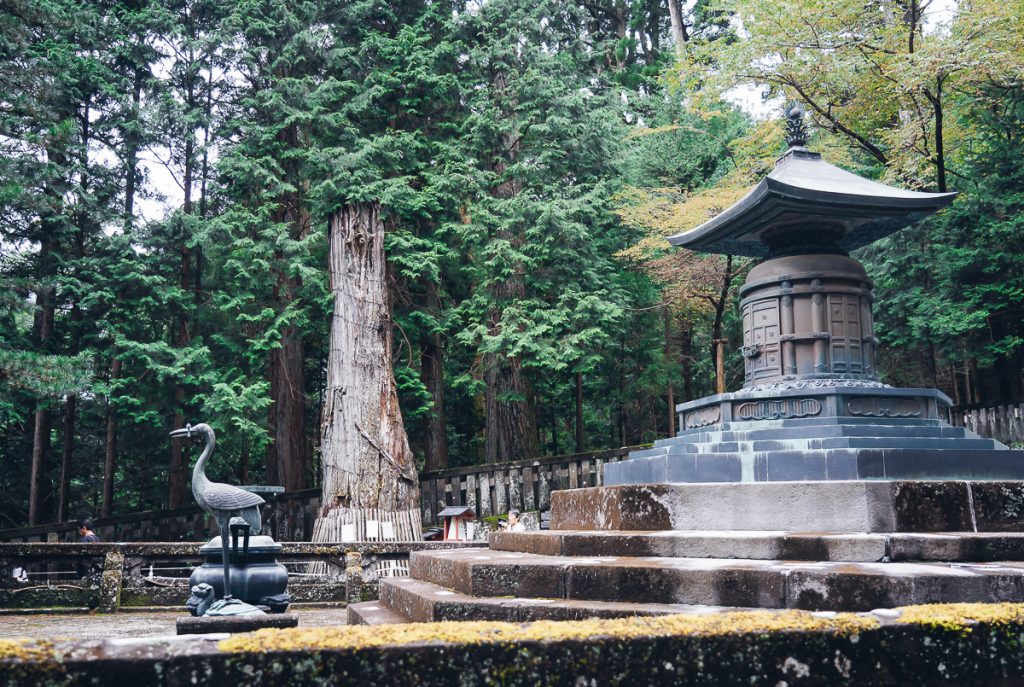
Once you’ve fully explored the main complex and exited the same gate you entered, make sure you walk down Kamishinmichi Street to another area with shrines.
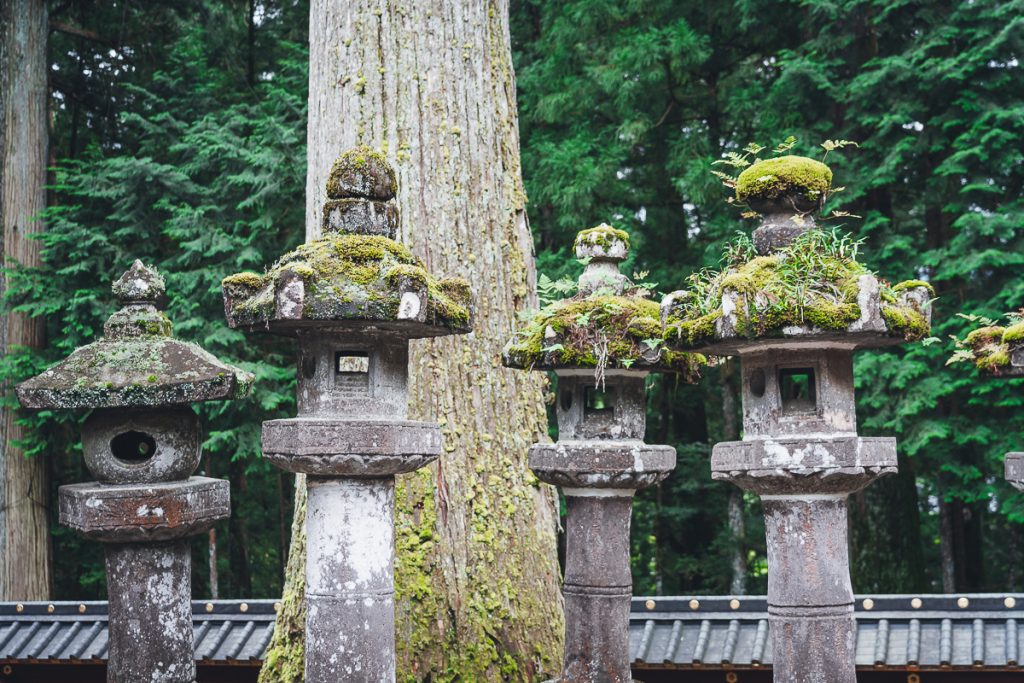
I love the stone lanterns lining this street, and I kept wishing I were in a Zelda game and could light them all with a fire arrow.
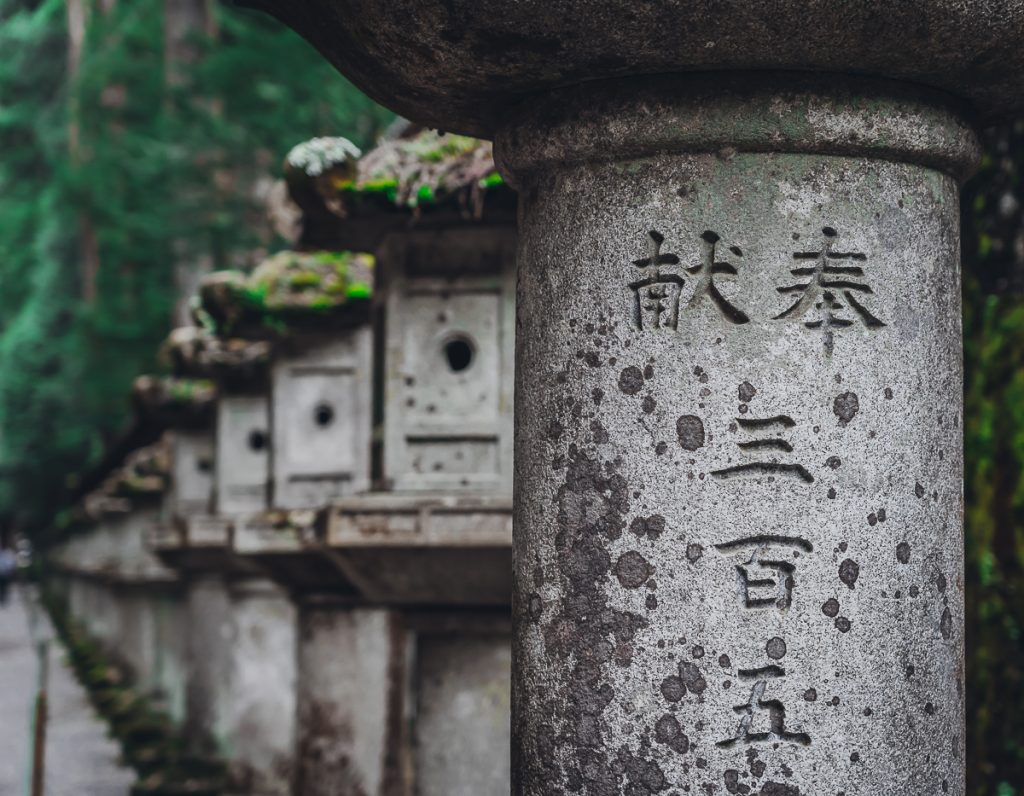
The highlight for us here was the Rin’nōji Taiyū-in, the grand Mausoleum of Lemitsu.
Coffee and Cheesecake Break
We finished at the UNESCO site in just a few hours. Not far from the Mausoleum, we walked along a long road that led to a charming café and a local souvenir shop. If you’re like us and in dire need of an afternoon caffeine boost, I recommend visiting Saryo NICHI-RIN. They serve Nikkō coffee, and the shop is adorable. While waiting for our coffee, I picked up some local, sustainable souvenirs.
During a tea ceremony in Tokyo, our host said Nikkō cheesecake was a must-try for visitors. There’s a cheesecake shop called Nikkō Castella Honpo across the road, so you can try this local Nikkō treat.
Kanmangafuchi Abyss
Riding off that sugar and caffeine high, it is time for a nature and cultural walk along a river. As you head toward the Kammangafuchi Abyss, enjoy a slow and respectful walk through a residential neighborhood.
We found lots of cute side streets and tucked-away forest shrines. Remember that people live here, so be respectful and stay off private property. Continue your walk toward the Google Map point Kanmangafuchi Abyss.
You’ll cross the Daiya River over a red bridge and enter a quieter part of Nikkō. Eventually, you’ll see the Jizo statues appearing as you pass a burial place and a field. But, this is just the start!
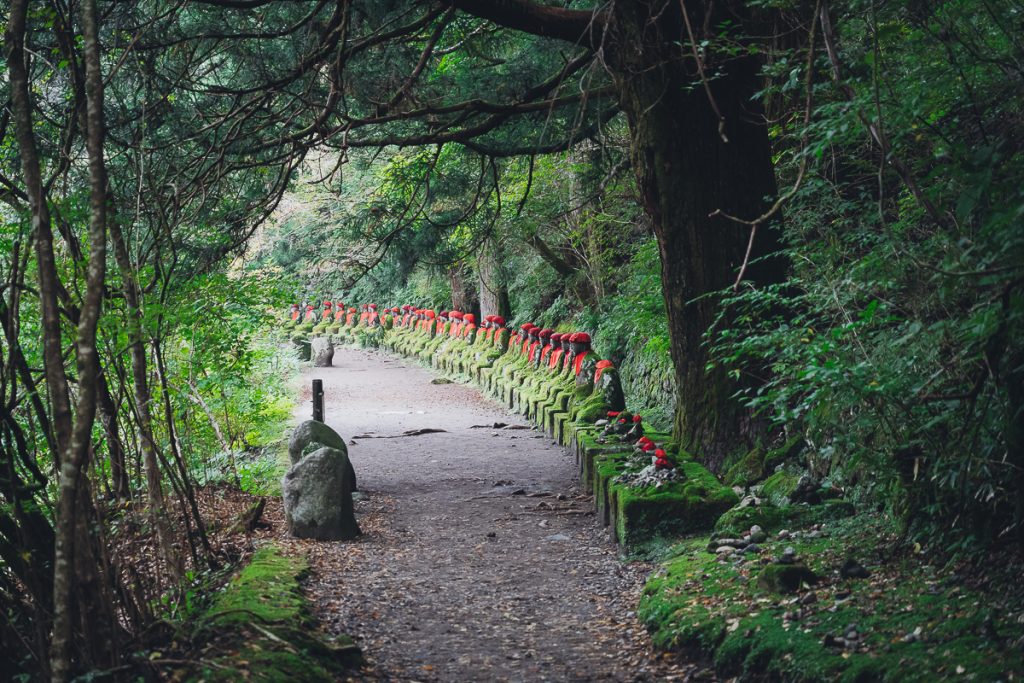
Kanmangafuchi Abyss is a very short nature trail that takes you along the river and through the gorge. You can’t get lost here; just keep following the trail
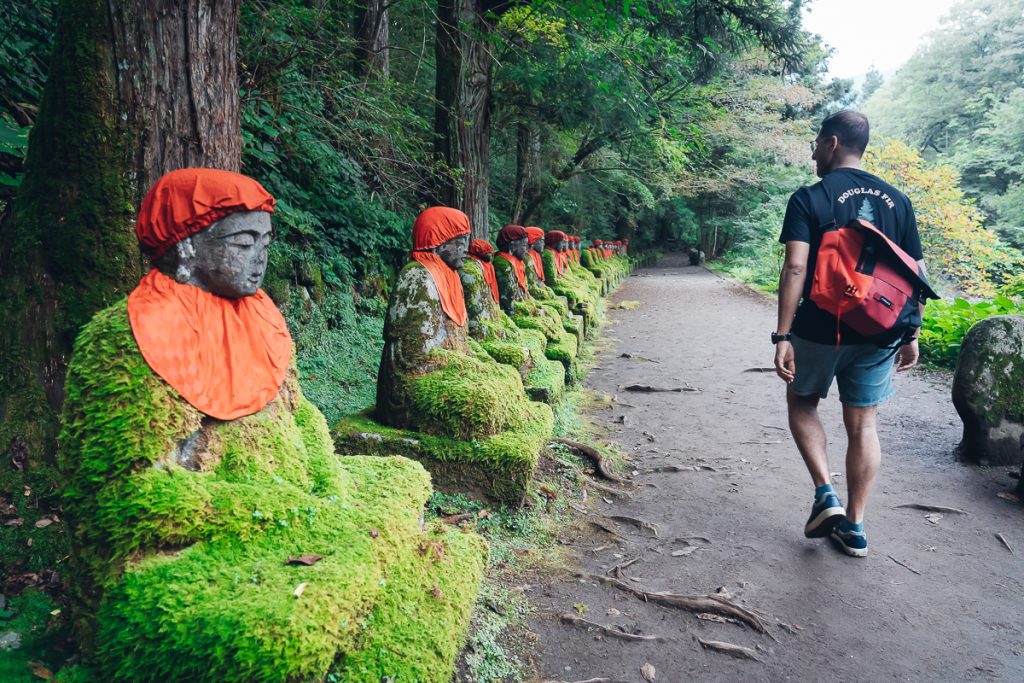
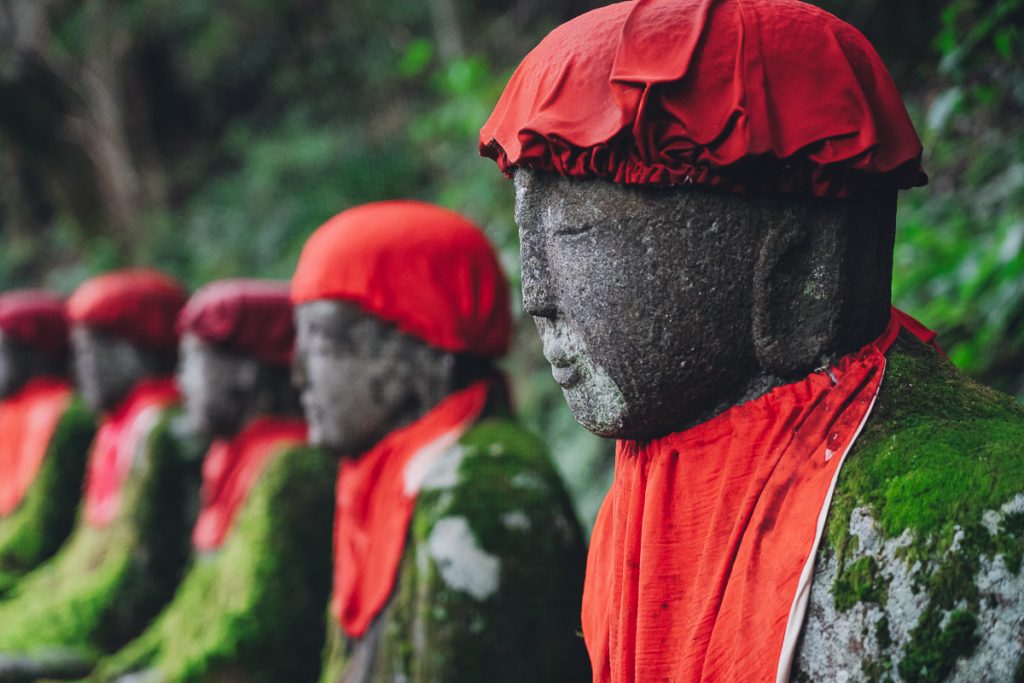
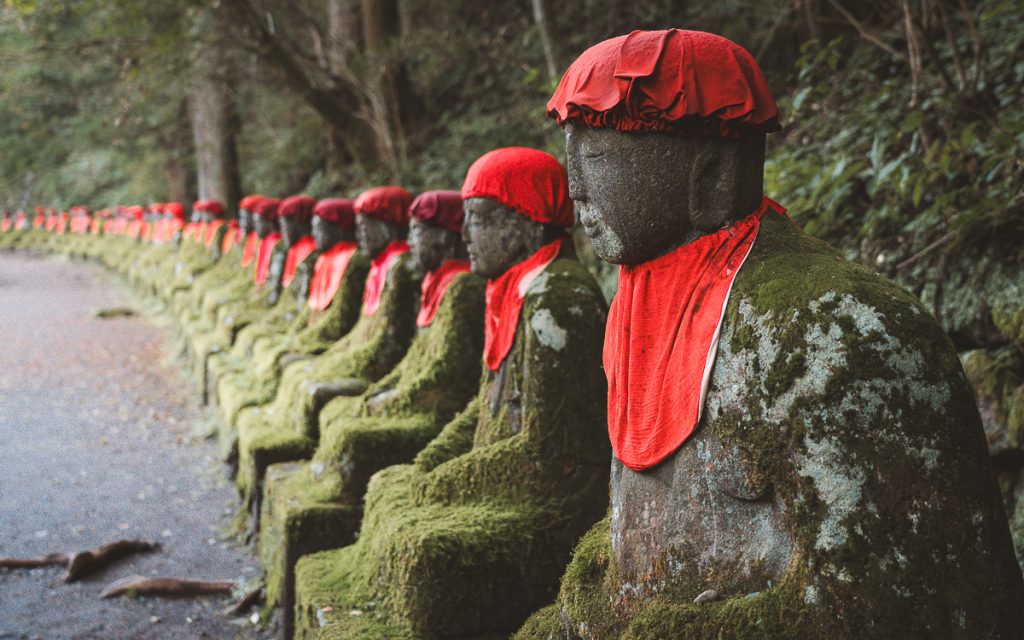
Enjoy the rushing alpine river, the waterfalls, and the historical ruins. While nature is stunning, the highlight is the more than 100 Jizo Buddha statues lining the path.
Jizo Buddha is the guardian of children and travelers, especially of those unborn children or those who have died before their parents. These statues, in their likeness, wear red to ward off evil. Jizo opted out of enlightenment and vowed to remain on earth to help and guide mortals.
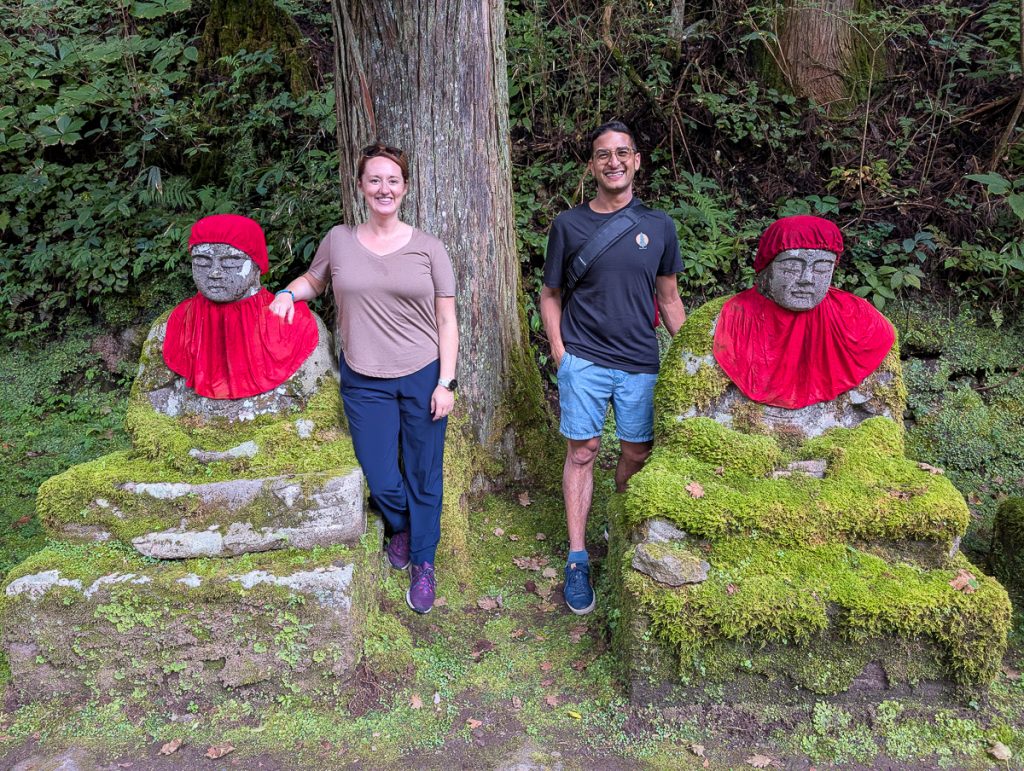
P.S. We were traveling with our new Google Pixels and loved the “Add Me” feature, which lets us stitch two photos together with a single button click. We only upgrade our phones every few years to reduce e-waste, so this was a big upgrade for us!
Checking in at Hoshino Yado Ryokan
Enjoy the statues and scenic gorge before returning the way you came. Then, continue along the Daiya River to check in at your ryokan.
While checking in, if you have tattoos or want a private onsen experience, make sure you book this with the front desk. We opted for a private onsen after dinner, but you can choose a time that suits you. The private onsen is expensive, so I only recommend it to tattooed people or those willing to pay to avoid public nudity—but that is just part of the cultural experience!
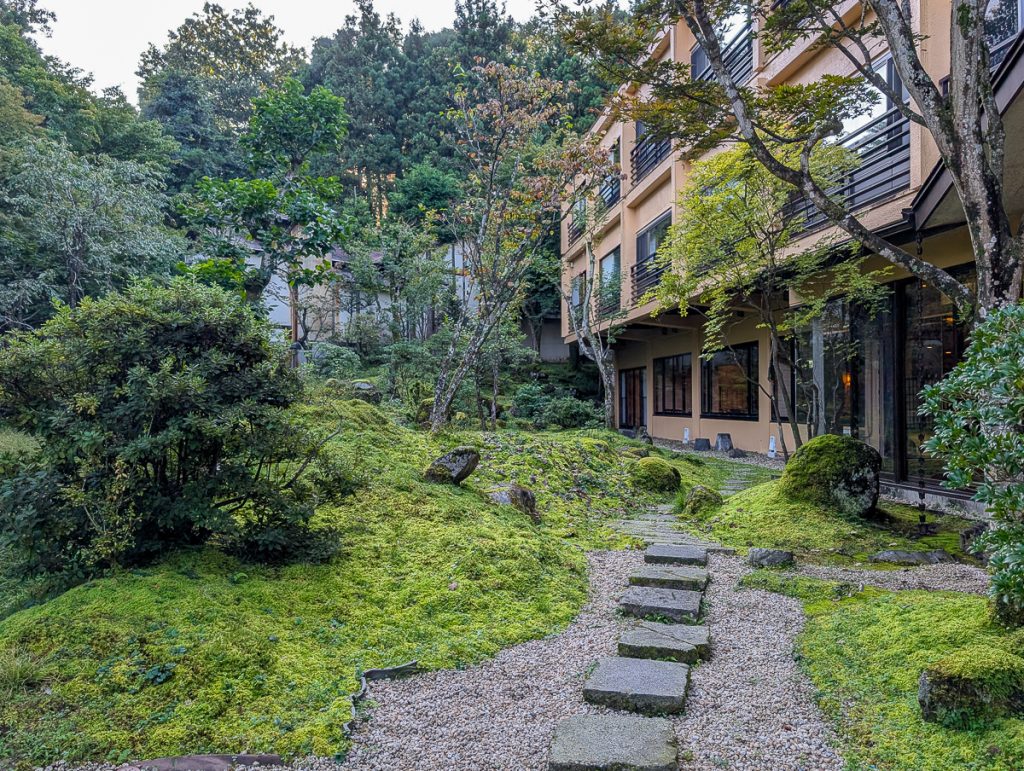
Once you check into Nikko Hoshino Yado, you can rest and enjoy your room until dinner, but if you have the energy, you can explore some of the shops along Nikko-Kaido.
I suggest visiting Murmur Biiru Stand for a refreshing craft beer! This cute little kiosk is a great place to try a local beer after a long day on your feet. If you continue down, you’ll encounter lots of confectionery shops and a few little souvenir stores. We just enjoyed a beer before heading back ot the ryokan for dinner.
Dinner at Hoshino Yado
We booked the premium dinner package and pre-requested vegetarian meals weeks in advance. Arriving at dinner in our yukatas, our hosts seated us near a large window overlooking the Japanese garden.
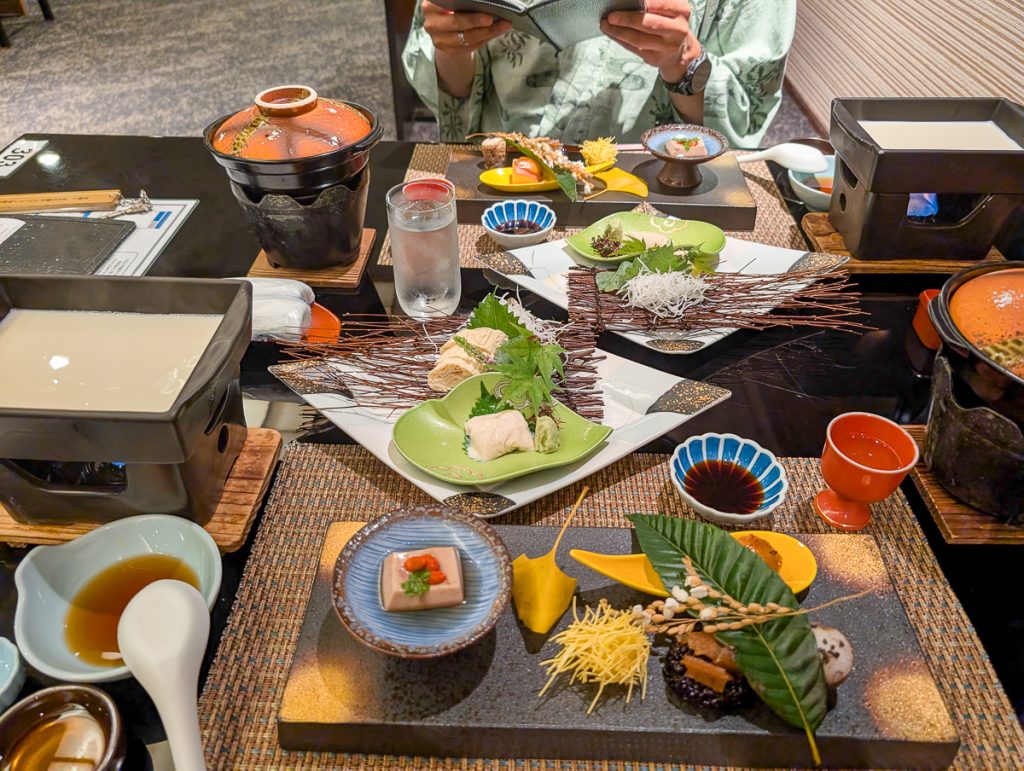
Dinner was certainly a highlight of the day. We made our yuba tofu sheets and soft tofu in an interactive meal during the fully vegan meal. We feasted on simmering local mushroom soups, vegan sashimi, marinated tofu slices, pickled veggies, and more!
While at dinner, the staff transformed our room from day to night, putting out the futon beds for us.
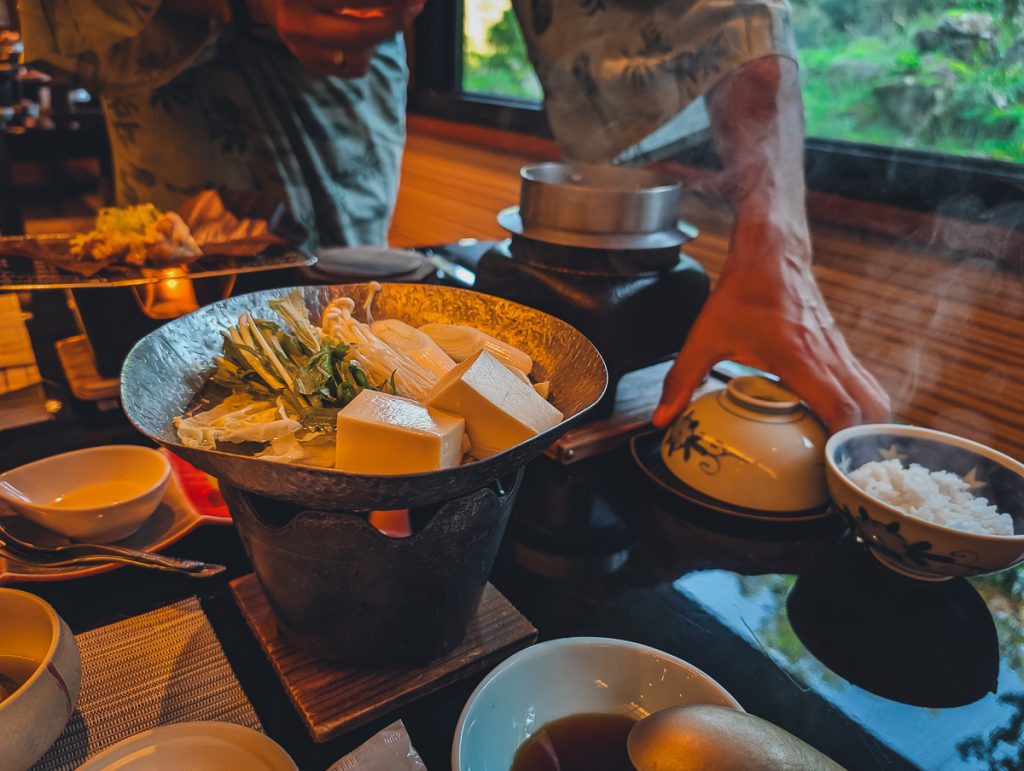
After a refreshing, hot, private onsen, we retired to prepare for a day exploring the national park and get a good night’s sleep.
Day 2 – Exploring Nilkkō National Park
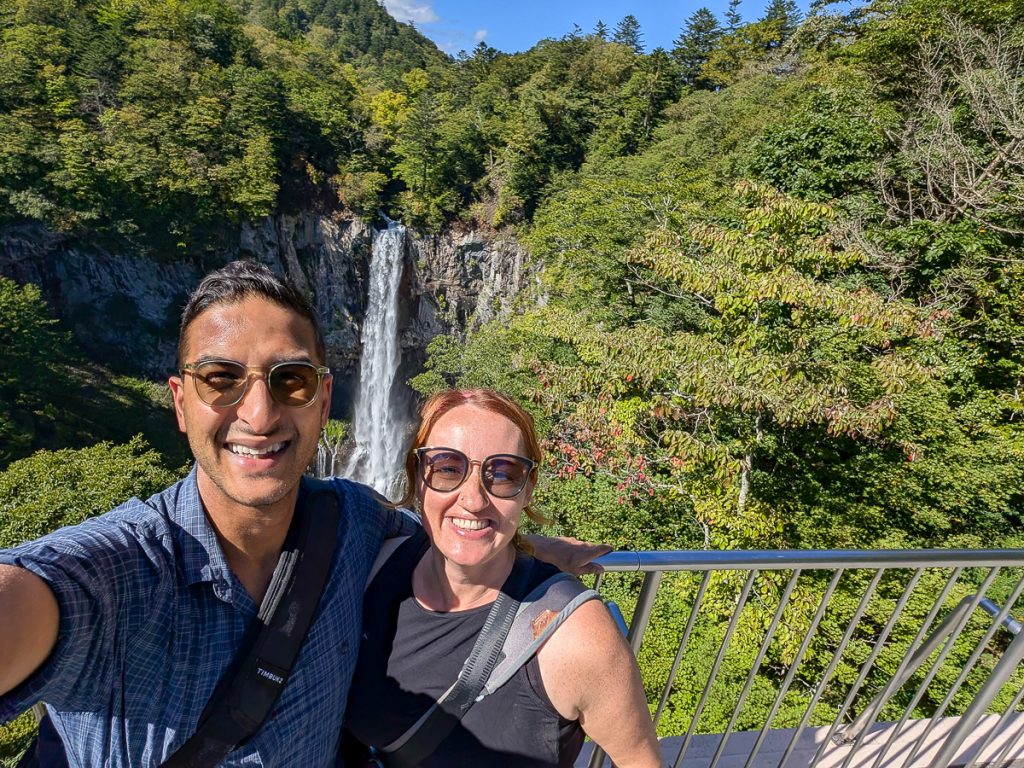
Day 2 is a great day to explore Nikko National Park by car. This classic day road trip features plenty of stops to enjoy waterfalls and scenic viewpoints. We’ll finish the afternoon with an easy 7-10 km flat nature walk through the park’s marshland. Wear tennis shoes or hiking shoes, and bring a backpack filled with water, a camera, and snacks.
If you didn’t rent a car or opt for a pre-booked tour, you might consider taking public transportation. The Tobu bus line will take you from the Nikkō train station to major sights like Kegon Waterfall and the Marshland. The visitor center recommends precise timing, but it is doable.
- Breakfast/Coffee
- Scenic mountain drive
- Kegon Waterfalls
- Ryuzu Cascades
- Lunch
- Akanuma Nature Information Center
- Nature Walk Senjōgahara Marshland and Forest
- Yudaki Cascades
- Dinner
Breakfast and Coffee
Breakfast at our ryokan was another incredible meal! It was a filling, nutritious vegetarian option featuring local and regional dishes.
Before heading out, we stopped for coffee again. You can revisit Meguri for vegan coffee or try something new. PICNIKKO is a cute and sustainable little cafe. It is an excellent alternative for those who didn’t get breakfast at the ryokan, as it serves food and is open in the morning.
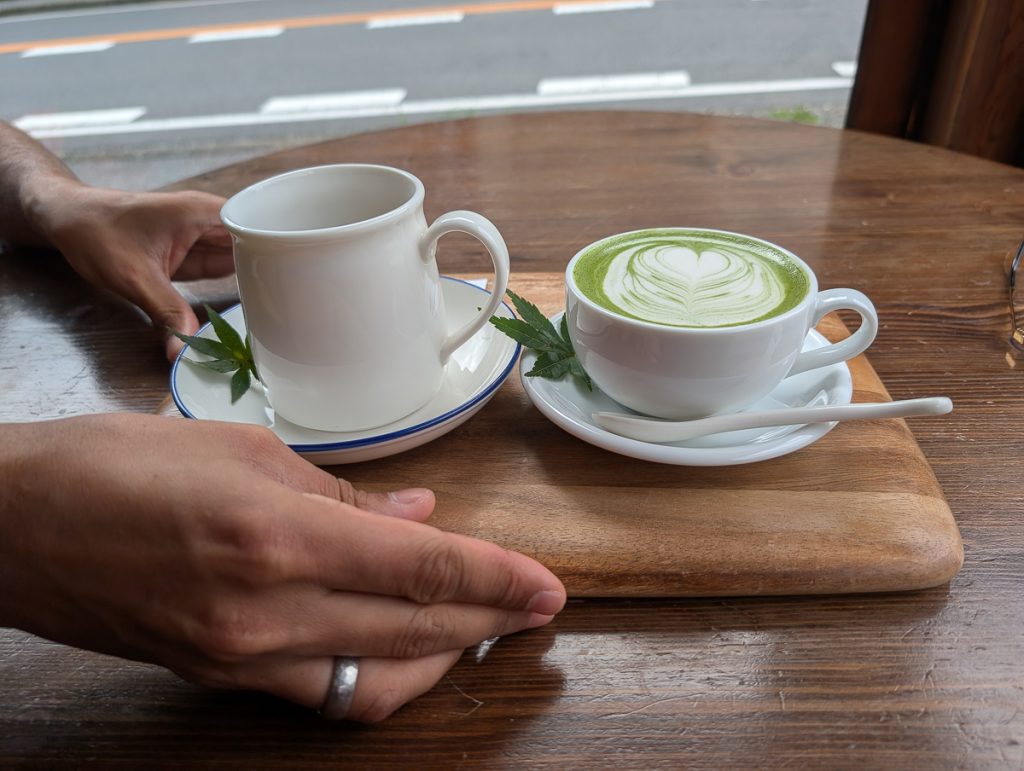
Otherwise, grab your coffee and maybe even one of their picnic options for your day trip out!
Stunning Mountain Drive
Driving from the townsite to the first stop, Kegon Falls, is breathtaking. Hairpin switchbacks take you up into the mountains. At the top is a pull-out with views over the hills, so wait to pull over until it’s safe to do so. There is a sightseeing gondola called Akechidaira Ropeway. We didn’t do this, but it might be up someone’s alley.
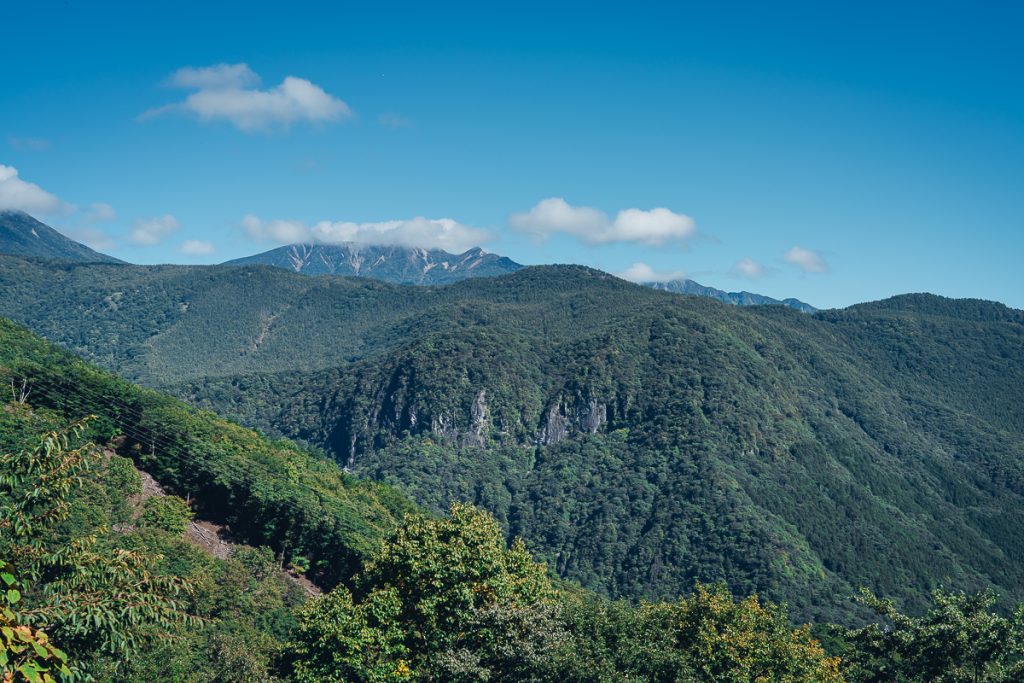
Continuing down the other side of the mountain, you’ll eventually come to a T in the road. Head left, and you’ll find the parking for Kegon Falls immediately after.
Kegon Falls
Kegon Falls is an impressive multi-tier waterfall. You can certainly see it just from the upper level, but an elevator takes you down through the mountain to a lower viewpoint. I was skeptical if it was worth it, but with no line and crowds during the shoulder season, we paid ¥600 per person and rode the elevator down.
It was worth it! The waterfall is much more scenic from the lower view.


We loaded back into the car and continued to the next stop on the day’s route toward Ryuzu Falls.
If you enjoy small ecology centers, there are two along the way that might interest you: the Amphibian Laboratory highlights the conservation of the region’s amphibians, and the Natural Science Museum will give you context regarding Nikkō’s history and ecology.
Ryuzu Falls
Ryuzu Falls is your next big stop. Parking and public toilets are available near the falls. A staircase follows the Ryuzu Falls up the Yu River. Take this staircase for a fantastic view of the lake and the falls.
If you want to add several kilometers to your next walk, you can start the marshland hike from the top of the stairs. We didn’t do this and started at the Akanuma Nature Center, but it’s an option.
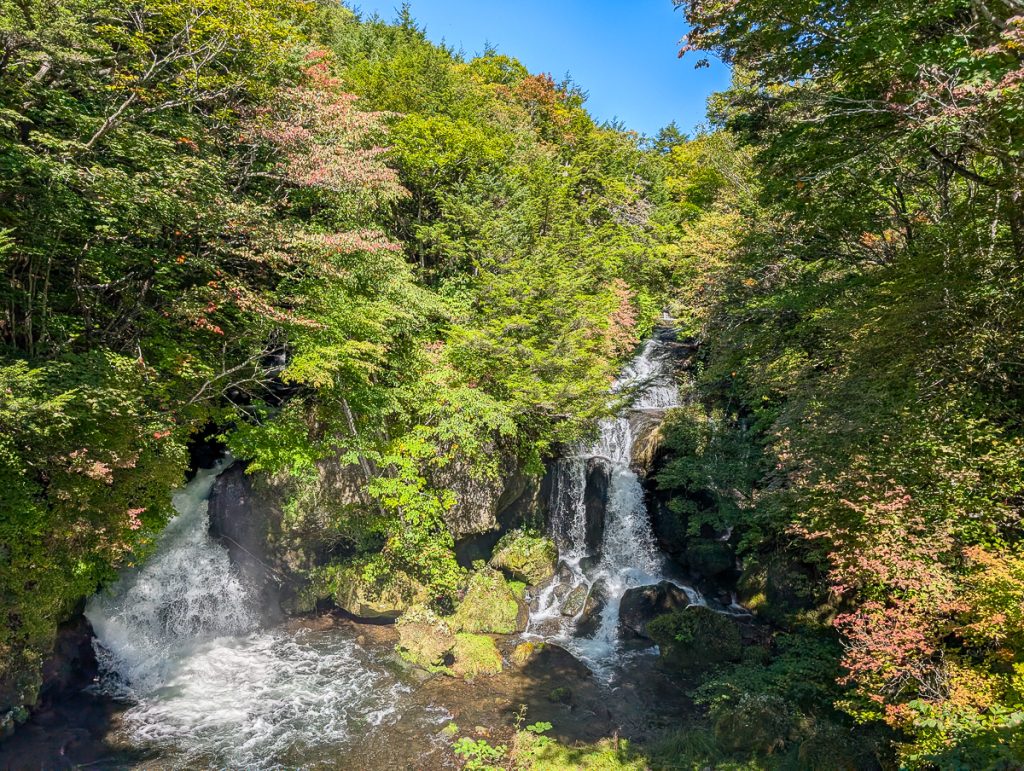
If you’re hungry, a cafe at the bottom of Ryuzu Falls serves vegetarian food. We packed a lunch sourced from a previous 7-Eleven stop and ate later on the trail, but this is the ideal lunch spot if you didn’t pack one.
After Ryuzu Falls, we loaded back into the car and drove to Akanuma Nature Center, where we parked for a few hours before taking the big walk of the day.
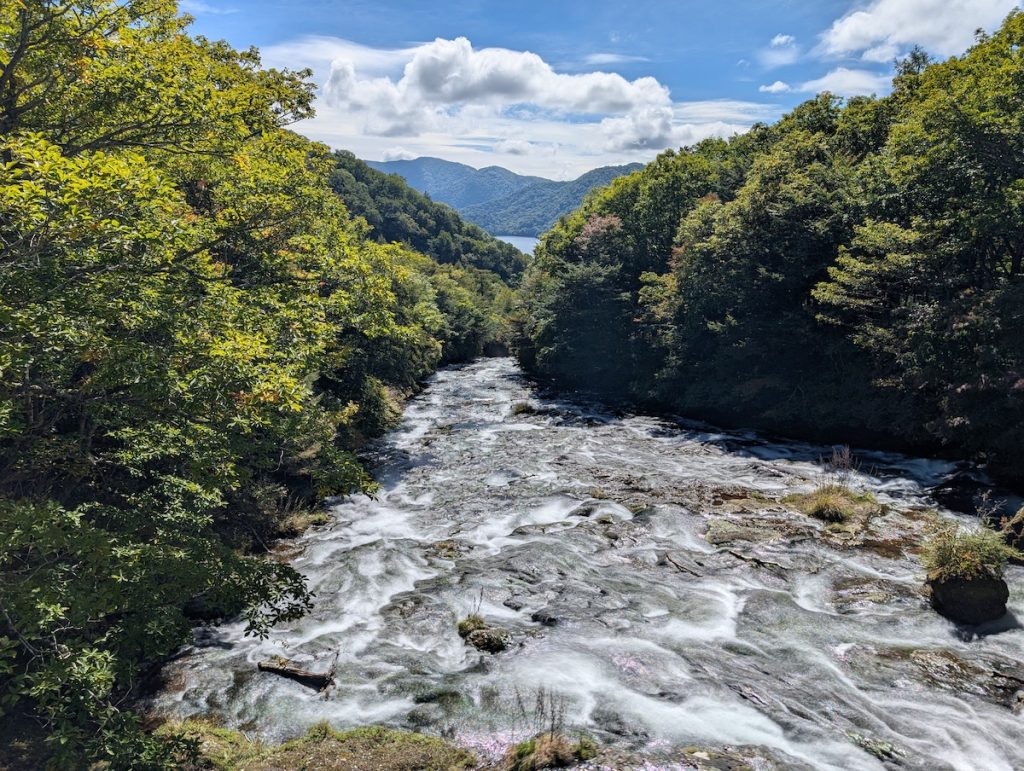
Senjōgahara Marshland
After Ryuzu Falls, we loaded back into the car and drove to Akanuma Nature Center, where we parked for a few hours to take the long day walk.
Although the nature center is small and lacks extensive information, visitors can get acquainted with the marshland for free and use the public toilets.
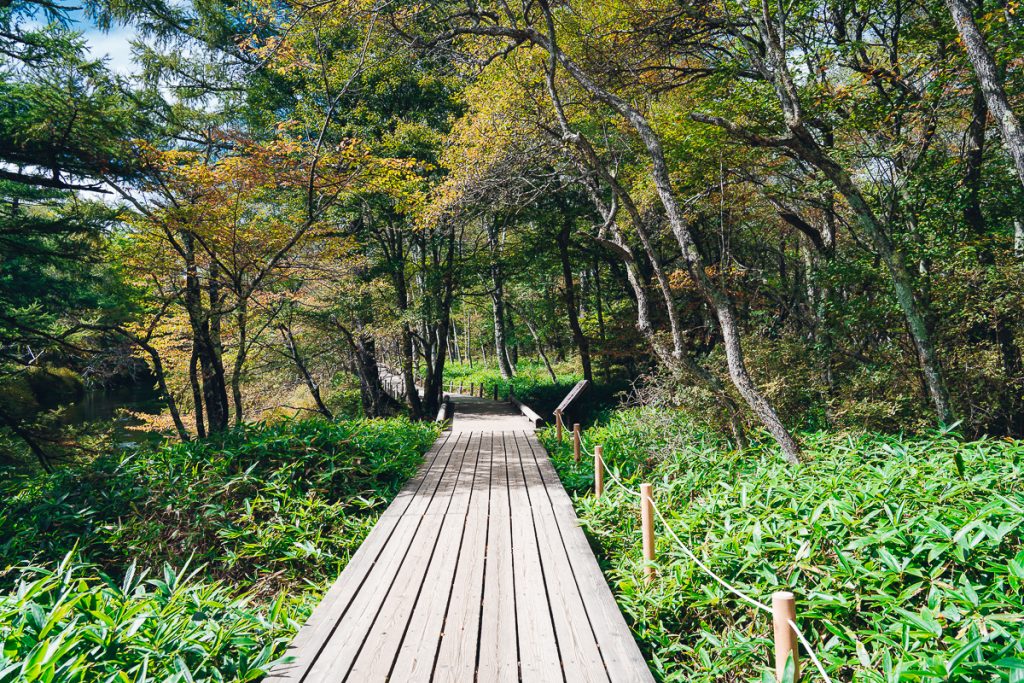
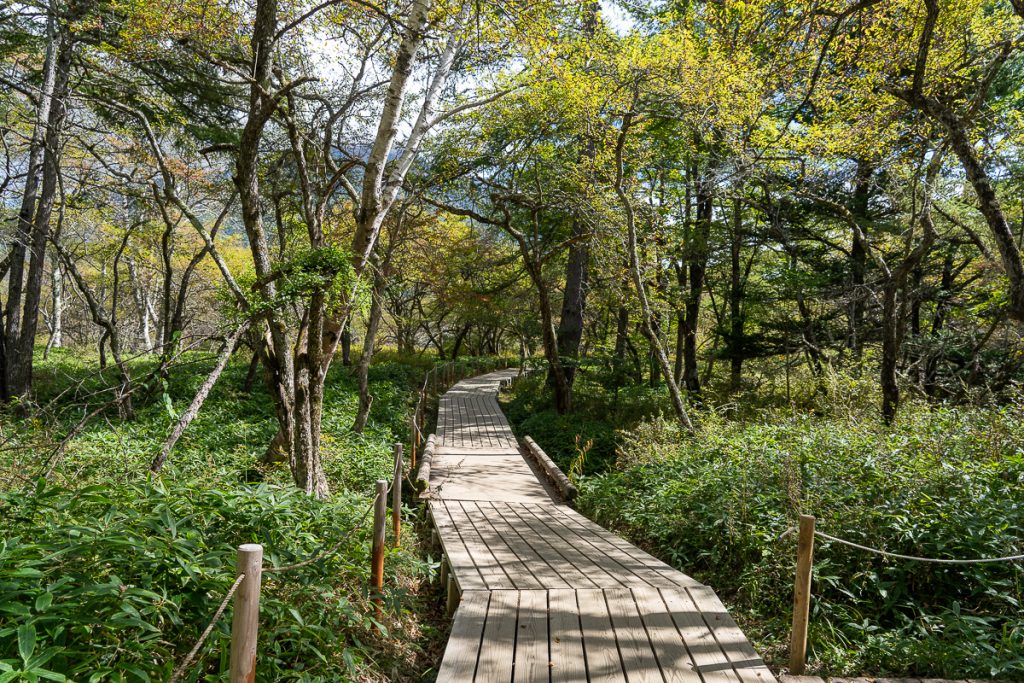
From the parking lot, start your walk through the Marshland! This super cool walk takes you through a quiet forest boardwalk along the Yu River. Eventually, the trail opens into a marshy area, offering opportunities to see birds and wildlife!
You’ll eventually enter a Japanese Oak forest, which is bear territory, so make sure you have a bear bell or a friend to chat with. Look for signs of bear caches. The Asian black bear loves to feast on the acorns in this forest and store them in tree caches – they look like large bird nests!
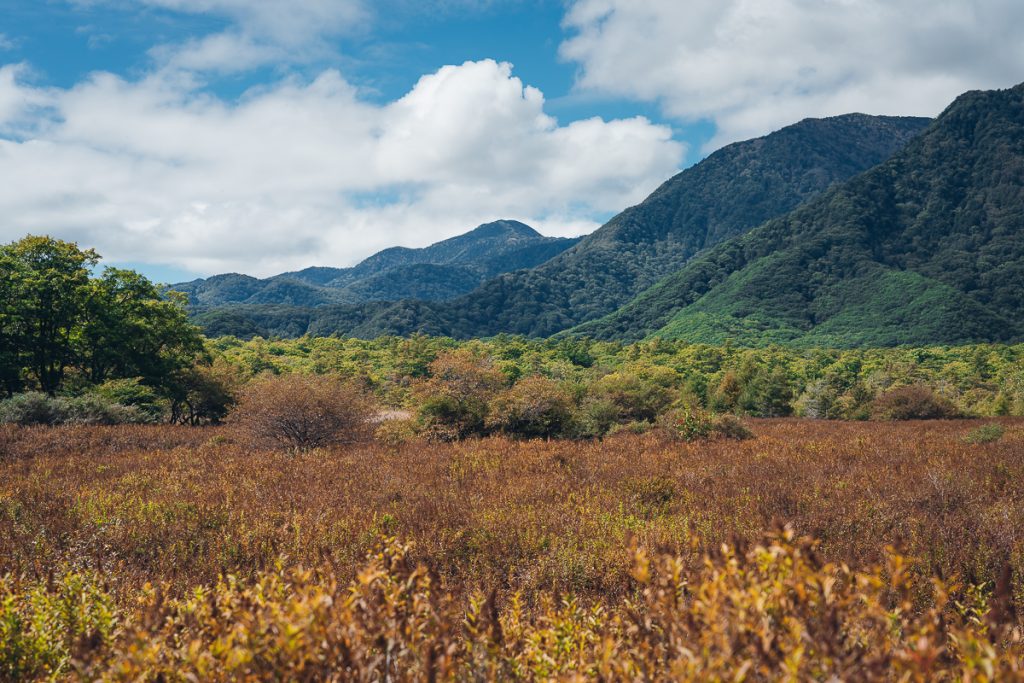
After about 5km, you’ll find yourself at another impressive waterfall—The Yudaki Cascades! Enjoy the cool fall mist, and grab a snack at the cafe. They have vegan-friendly dango skewers, the perfect energy boost before the 5km walk back the way you came.
After our long walk, we returned to the townsite near our ryokan and were super tired!


The drive back over the mountains is slightly different, as it is one-way and has many hairpin turns.
Don’t miss the magical music road on the way back. If you drive at the speed limit, it will compose a song. Growing up in Asia, Ganesh knew the song from a famous Monkey Magic TV show, but I had never heard it!
Dinner Back at the Ryokan
Back at our ryokan, we freshened up in the onsen and dressed in our Yukata for dinner.
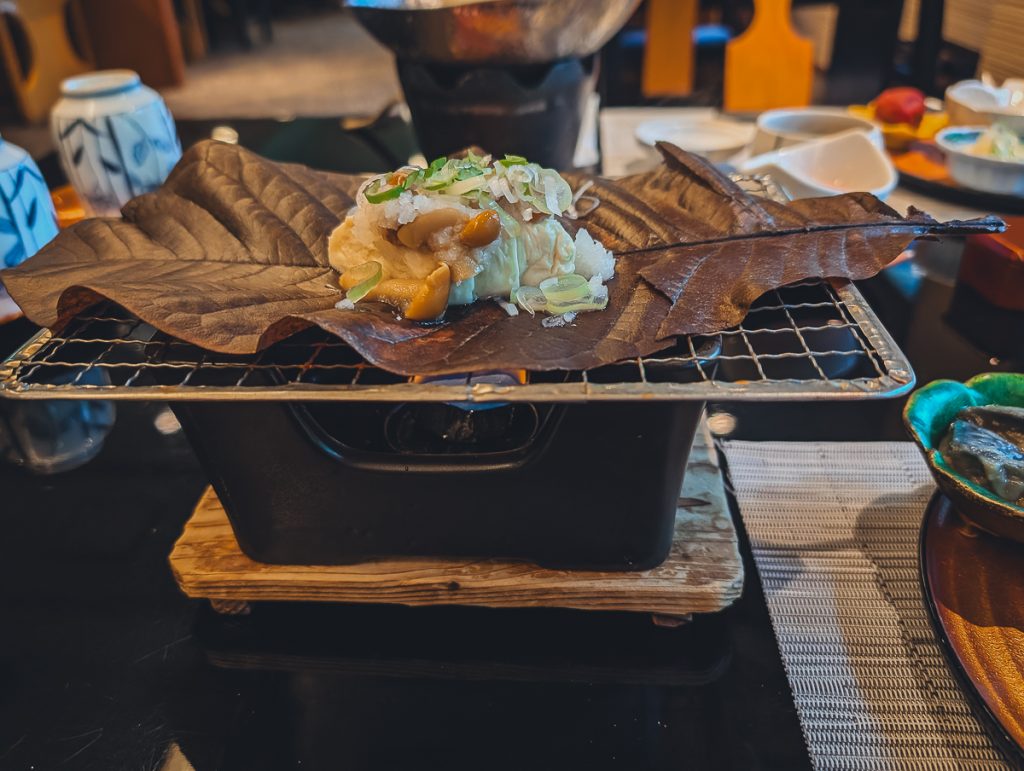
Dinner was another lavish vegan meal. Our dining options were different from the day before, highlighting the variety and quality of Japan’s vegan foods! We enjoyed plenty of sake with our dinner and retired to our room for another night’s rest.
More Things to Do in Nikko National Park
We left Nikko the following morning to drive across Central Honshu to a cozy, rustic homestay in Ainokura. Yes, it was a long drive!
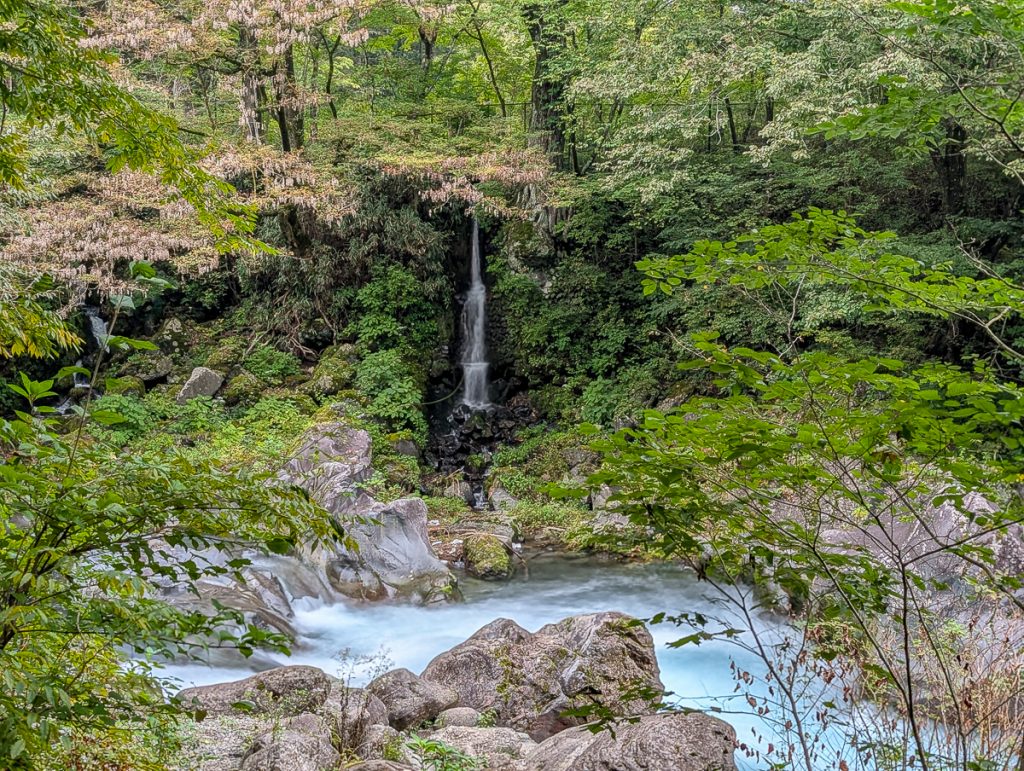
But if you have extra time in the morning, you can stop at Jakko Falls on your way out. It’s only about 500 m from the parking lot.
Alternatively, if you have a full third day in Nikko and it is in the hiking season (late April to nearly November), we would love to return to hike Mount Nantai. This is a 5-6 hour hike, and you’ll climb 1,180 m in about 7.5 km.
Nantai is still an active stratovolcano. If you make this hike, have hiking boots, food, and water, download AllTrails, and let your hotel know where you’ll be.
If you have a 3rd day or prefer to swap out some of our road trip stops or walks for these activities, you can customize this two-day Nikko itinerary.
- Slow morning exploring the downtown shop
- Visiting the botanical gardens
- Jakko Falls
- Urami Falls
- Lake Chūzenji for a walk around the lake or swimming
- Driving to Lake Chūzenji Observation Deck
Comment and Share Nikkō Itinerary
With this responsible two-day itinerary, you’ll love visiting Nikkō at a slower pace. Discover one of Japan’s best UNESCO World Heritage Sites, The Shrines and Temples of Nikkō, and walk a forest trail lined with Jizo statues.
The next day, I set out to see the waterfalls and walk through the marshland’s unique ecosystems.
Nikkō has plenty of things to do for nature and culture lovers, making it an excellent escape for a few nights outside of the urban sprawl of Tokyo,


Curiosity Saves Travel Recommends
Accommodation: Booking.com to find accommodation with a Genius Discount and clear third-party sustainable certifications like Green Key. Look for local hotels.
Tours and Excursions: GetYourGuide and Viator for tours, excursions, and tickets. Never book wildlife experiences through these vendors.
Travel: Omio for booking buses and trains in English across Europe. After reducing the number of flights I take annually, I use Google Flights’ carbon comparison tool.
Car Rental: Rentalcars for the best rates in English globally. It is easy to find hybrids and EVs, and there are resources for finding chargers.
Packing Essentials: REI or your local Co-op has great essentials like reusable water bottles and cutlery sets. Patagonia for regenerative clothing. Farm to Feet for socks made with regenerative practices! Pistil Designs for cold-weather essentials. Osprey for bags that last 10+ years, like the day bag for hiking or my favorite carry-on.
eSIM: Airalo eSIM. Reduces waste from single-use SIMs. A total game-changer.
For Bloggers and Content Creators
Earn Ad Revenue with Journey by Mediavine
Earn with Stay22 Travel Partnership (my biggest source of income!)
Earn with TravelPayouts recommending tours and activities.



Oh my gosh I MUST visit Nikko! Between the waterfalls, the cheesecake, vegan food, and magical sound road it all just sounds amazing. Plus I like to visit national parks when I travel :) Thanks for sharing this, I never would’ve known about it if you hadn’t.
Visiting National Parks is always a must for me when I travel! I hope you get to make it to Nikkō
This looks lovely. I want to visit Tohoku on my next trip, and am definitely pinning this. I will also struggle a bit finding vegetarian food, so I am often resorting to desserts, and cheesecake will be just fine!
We stayed in a vegan friendly ryokan and ate at a vegan cafe, so Nikkō has lots of options for plant-based food in Japan!