

Regenerative Haida Gwaii Itinerary and Things to Do
I may earn income from affiliate links or partnerships in this post. I spend time to curate tours or products that align with my values. Thanks for supporting my work, at no additional cost to you. All words and images on this website are created by real people.
Are you curious about visiting Haida Gwaii, the homeland of the Haida people— a rugged, rural archipelago off the coast of mainland British Columbia? Haida Gwaii is a place that steals your heart and a bit of your soul. Here, where the Haida people have lived in harmony with the land for at least 12,000 years (likely more), one feels a deep connection to both the people and the place upon visiting. That deep connection makes visiting Haida Gwaii with an immersive and meaningful itinerary truly a once-in-a-lifetime experience.
Planning an independent itinerary for Haida Gwaii takes some effort, but my time on the islands was regenerative, restorative, and healing, making all the logistical planning challenges worth it. I put a lot of effort into curating an incredible week itinerary for Haida Gwaii that supported regenerative tourism. I’m here to share all the best things to do so that you can have an equally fantastic experience.
There are two ways to visit Haida Gwaii: either with a guided multi-day experience provided by a certified operator, or with an all-inclusive package from Haida House. Alternatively, you can also visit independently, exploring on your own and booking a few tours with local guides as needed.
We did the latter, so this Haida Gwaii travel guide is primarily an independent itinerary that follows in almost our exact footsteps. I suggest just a few modifications based on what I would do differently if I were able to return.
My partner and I visited for nearly a week in August as part of our mission to get to know the people, culture, and nature of our new home province. This mission led us to embark on a month-long EV road trip that took us across Canada’s Inside Passage and beyond to Haida Gwaii.

This guide to exploring Haida Gwaii embraces a slow-travel mentality, regenerative cultural tourism, and nature-based experiences. For me, it is a perfectly balanced itinerary.
As with all my regenerative guides and itineraries, this is not just a simple list of things to do; this is a comprehensive guide to exploring and learning about Haida Gwaii. However, Haida Gwaii deserved enough respect and attention for two complete posts.
This itinerary complements my tips for responsible travel on Haida Gwaii, covering everything you need to know about the Haida people and culture, what to expect, how to get around, and how to plan and prepare for your trip. It is the essential foundation for putting this itinerary together. Save both posts and use them to help you plan.
About Haida Gwaii
People talk about the awe and wonder of seeing ancient monuments like the Pyramids of Giza. But there is something even more awe-inspiring about seeing the birthplace of a prehistoric Indigenous people.
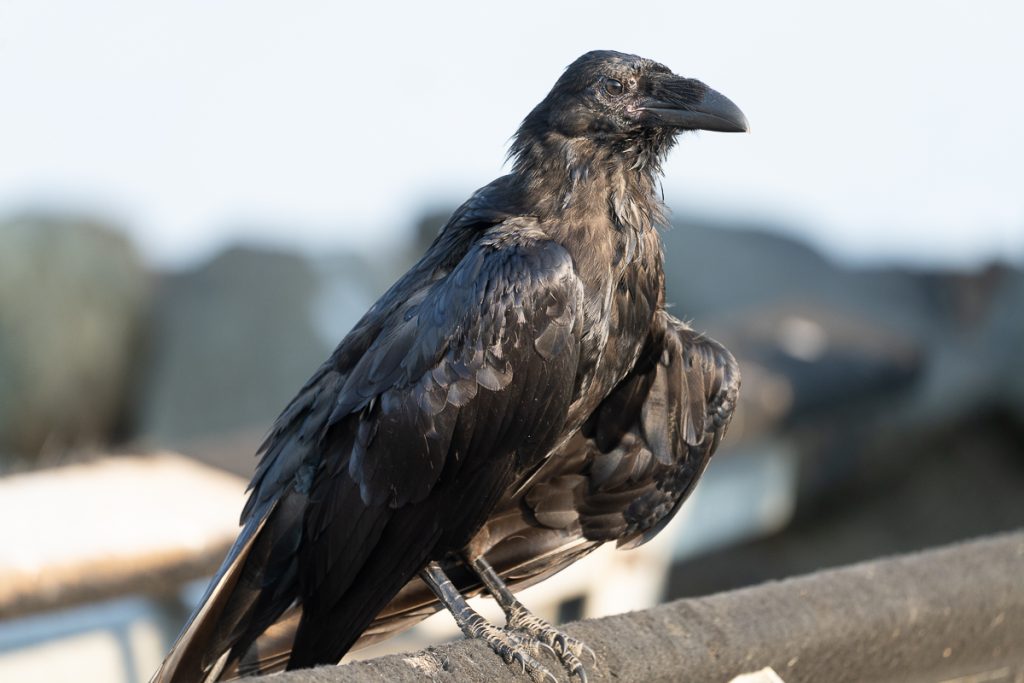
Here, where raven plucked the Haida from a clamshell on the rugged shores, the Haida left few tangible monuments, just the signs of their relationship with the land over the millennia.
Yet, standing looking out over their homeland, you can feel the heartbeat of the land, and that is more special than seeing towering monuments.
Haida Gwaii is a remote archipelago in British Columbia, Canada. Its two main islands are Kiis Gwaay (Graham Island) in the north, and Gwaii Haanas (Moresby Island) to the south, with dozens of smaller islands scattered throughout.
The Islands of Haida Gwaii
The North and South Islands are very different. Kiis Gwaay in the North is perfect for independent travel. This is where you will spend most of your time during this independent travel itinerary, exploring the numerous hiking trails, cultural sites and centers, supporting local small businesses, visiting incredible beaches and provincial parks, and enjoying downtime at the Haida House, or wherever you stay.
You can take a short ferry across to access part of the South Island to reach the airport at K’il Kun (Sandspit). Otherwise, most of the southern islands are roadless protected areas.
Gwaii Haanas National Park and Reserve in the south requires a permit as it is a Canadian national park and reserve as well as a UNESCO World Heritage Cultural and Natural Site. As a culturally and ecologically sensitive area, you can only reach the park reserve by boat or plane.
Some with expert-level backcountry and survival skills may obtain a permit to explore independently. For 99.9% of us, we can visit these ancient old-growth forests, hot springs, and abandoned Haida Villages with a tour operator.
Prefer Video? Watch on YouTube
I have this complete guide in video format, so you can follow along on our adventures, visualizing the places we go and the amazing things we saw.
Take the Haida Gwaii Pledge
This pledge and all the steps are covered in full on my Haida Gwaii Travel Tips post. Please visit that post for important information. But, for now, it is essential to know that the very first thing you should do BEFORE you travel to Haida Gwaii is take the Haida Gwaii Pledge.
- Learn about Haida culture, history, language, and practices. There is a document to read and a video to watch. I recommend both.
- Take and sign the pledge that walks you through 4 critical principles and beliefs for responsible travel led by Haida culture.
- Donate 1% of your total trip cost to the Haida Stewardship Fund. Money goes toward Haida-led infrastructure to support tourism.
- Learn more. Vow to learn more as you travel, by visiting the Haida Cultural Center, listening to Haida voices, and supporting local Haida businesses.
Regenerative Tourism on Haida Gwaii
Haida Gwaii is a culturally and environmentally sensitive place that demands the very best of us as humans when exploring. Setting foot on these shores requires responsible travel from everyone, whether you think that is your thing or not.
By visiting, we agree to adopt and embrace the Haida way of being. It is not a place for those unwilling to open their hearts and minds to learning and growing.

The Haida Way of Being
The Haida Way of Being is a fundamental principle of Haida culture that everything is connected. As humans, we are part of the living ecosystems, just as any animal, plant, fungi, or rock. Each being, whether alive or an element such as air and water, plays a critical role in the health and well-being of our planet.
To adopt this way of being is to honor and respect all life. As travelers, that means:
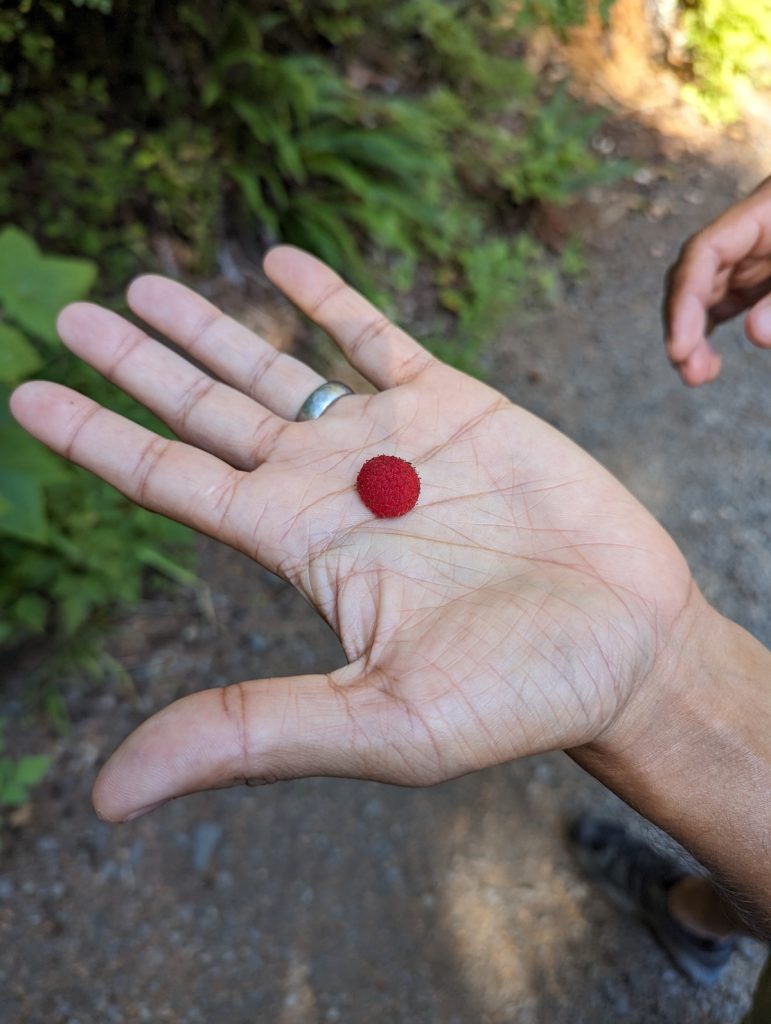
- Never cut, collect, or harvest anything (including agates, but tasty native berries are ok to pick).
- Leave everything better than when you arrived.
- Don’t disrespect the Haida people or culture, or any local.
- Respect all laws, tribal and provincial.
- Do not get too close to animals.
- Minimize air, water, and solid waste pollution.
While many guides will encourage you to collect agates as part of their itinerary, this fundamentally goes against the Haida Way of Being and disregards a direct request from the Haida people to not take from their land.
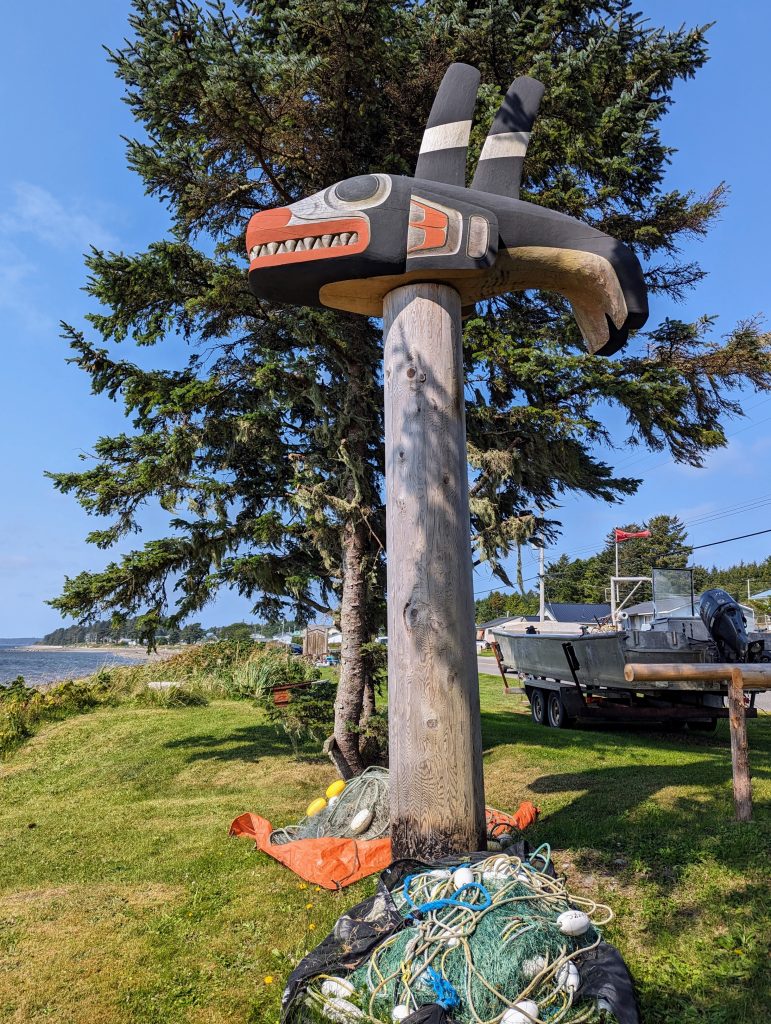
Haida Gwaii is a regenerative tourism destination. This means that every part of Haida Gwaii tourism works within the broader systems of governance and land management on Haida Gwaii to benefit the community with equity, support local conservation efforts, and help the Haida people revitalize their culture.
Hawa’a to the Haida People for welcoming us to this place, educating us, and sharing their culture and hospitality.

5+ Day Itinerary for Haida Gwaii
This itinerary follows in our footsteps and will likely require some modifications on your end, based on your circumstances.
We took the ferry over from Prince Rupert on a Monday night sailing at 10 pm. That means we slept on the ferry in a cabin and arrived at Haida Gwaii on a Tuesday around 5:30/6 am.
There is also a morning sailing later in the week. If you take a morning sailing later in the week, you’ll be coming in the evening and will need to adjust your itinerary accordingly.
Additionally, many restaurants, shops, and businesses are open only a few days a week. While our itinerary started on a Tuesday morning and we left on Saturday night, arriving or departing on a different schedule means certain restaurants are closed/open.
If you arrive in the evening after the day’s sailing, you can check into your accommodation immediately. In that case, start this itinerary the following day, or fill in gaps based on what works for you.
For this reason, at the start of each day, I summarize a list of all our favorite restaurants, small businesses, and shops. That way, you can fill in your itinerary based on what’s open when you are exploring the islands.
I also have a free Google Map embedded at the very end, including some additional stops and extras for those who want to customize their itinerary. Make sure you stick around and save this post.
Day 1: Hiking, Haida Village, Cultural Tourism
Our first day on Haida Gwaii was a Tuesday. It started with a 5 am wakeup on the ferry. Our first stop was to watch the sunrise at Balance Rock. After we drove to the very top of the island, making a few stops along the way, at Jungle Beach, Pure Lake, or anywhere else that caught our eye.
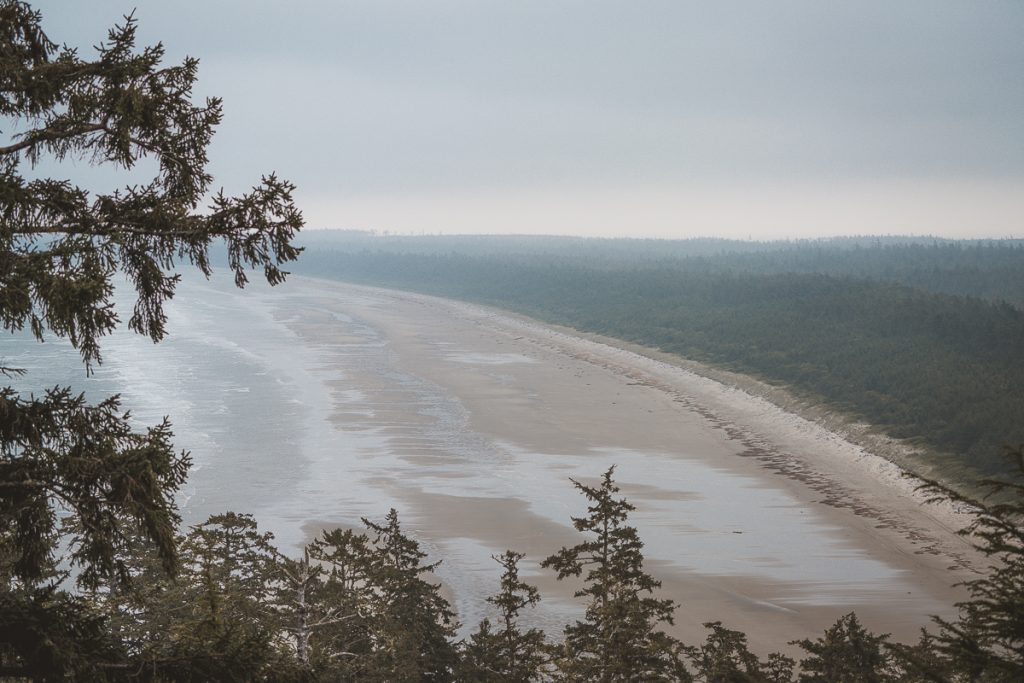
After breakfast and coffee at the Haida Gwaii Beach Shop, we hiked Taaw Tldáaw (Tow Hill). From there, we stopped for several hours in the Masset region, venturing into the Haida Village, Gaw Tlagée, to shop for Haida art and view traditional longhouses and monument poles. Masset was great for coffee, lunch, and birding.
When it was time to check in, we drove back down to the Haida House at Tll.aal for rest, dinner, and a slow evening.
Overview of Day 1
- Arrive off the ferry
- See: Sunrise at Balance Rock
- Eat: Breakfast at Haida Gwaii Beach Shop
- Do: Hike Taaw Tldáaw (Tow Hill)
- See: Agate Beach (Don’t collect agates)
- Do: Visit Gaw Tlagée (Old Masset), a Haida Village for art and culture
- Do: Visit Masset for lunch, coffee, and other activities
- Do: Birding at Delkatla Wildlife Sanctuary
- Stay: Check into an Indigenous-owned lodge (Pre-book)
- Do: Relax on the beach
- Eat: Dinner at Haida House (Pre-book)
Sunrise at the Beach
An announcement came over the speaker on the ferry from Prince Rupert, rousing us from sleep—we will be arriving in Haida Gwaii within the next half hour. Collecting our things, we had just enough time to get a coffee at the café before loading up into the car.
Thankfully, during the ferry we had taken up Canada’s Inside Passage, we had met a local who recommended spending sunrise at the beach.
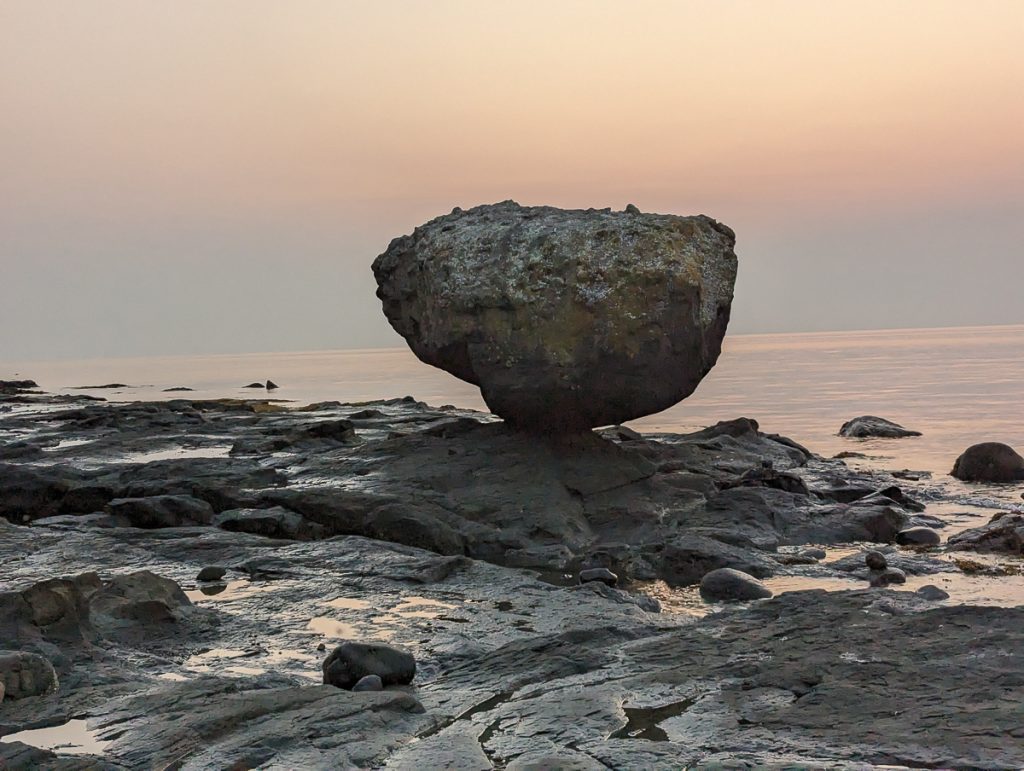
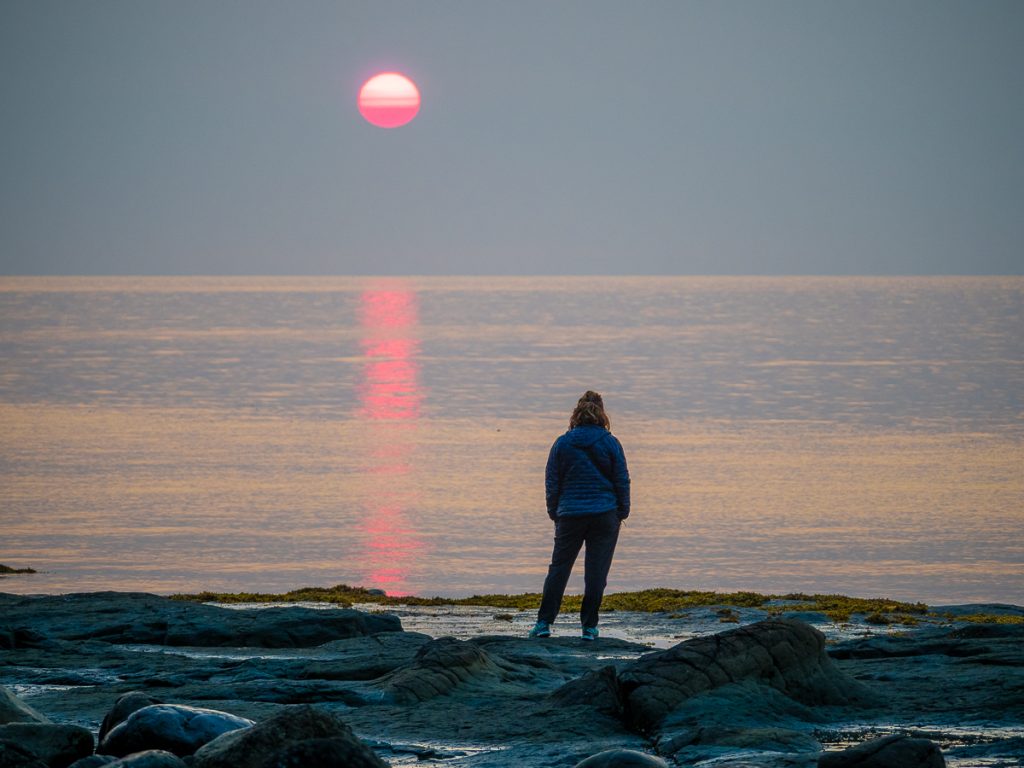
With an entire day to explore and nothing open in the small community at 5:30 am, we sleepily took ourselves to Balance Rock to watch the sunrise. A burning, deep red sun slowly rose over the pink, flat, and hazy horizon, a tragic sign of the rampant wildfires burning across mainland British Columbia at the time we visited.
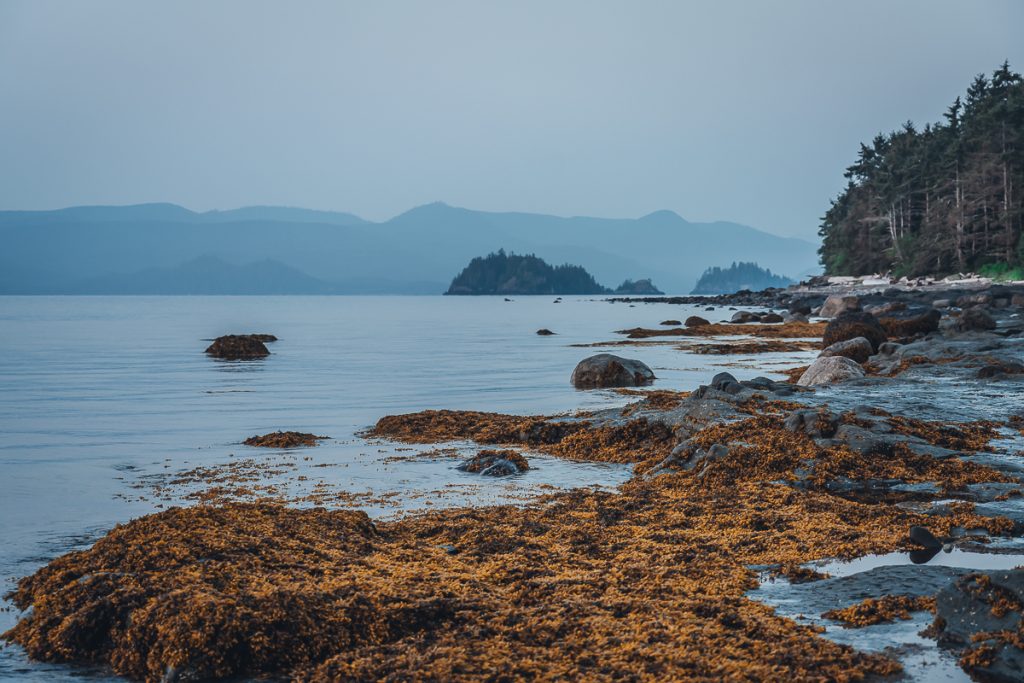
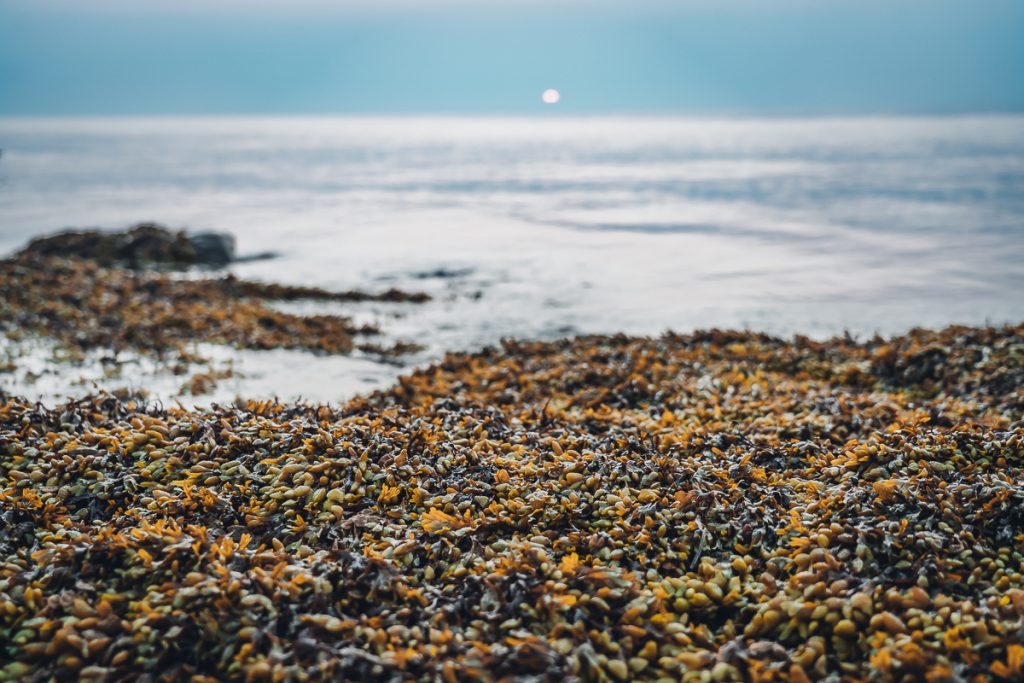
The pinkish water lapped at the lush bladderwrack on the rocky shores. Two eagles, a mating pair, emerged from the thick Sitka spruce forest to begin their morning hunt.
We spent nearly 2 hours here, exploring the tide pools without harming any animals or collecting any shells or rocks, and watching the sun change the sky and landscape.
This slow, mindful morning set the tone for our entire trip, and it was here, watching the slow sunrise, that I knew Haida Gwaii was a special place and I was fortunate to be welcomed here as a guest in the Haida Homeland.
Breakfast, Hiking Taaw Tldáaw and Naikoon Provincial Park
Perhaps it was because we still had 8 hours until we could check into our accommodation at 4 pm, but we decided today would be a good day to drive to the top of Kiis Gwaay. Our destination— hiking Taaw Tldáaw (Tow Hill) on the rugged shores of Naikoon Provincial Park, where the origin story of the Haida people begins, and geology and mythology blend.
The drive took us about an hour and a half from Balance Rock. If you take your time, enjoy the views, and make a few stops, such as Jungle Beach or Gantl Gadaas (Pure Lake), the Haida Gwaii Beach Shop should be open at 9 am.
Note: Pure Lake Provincial Park can easily be skipped. It is only a three-minute walk to the lake from the parking lot, but other than a nice view of the lake, there isn’t much to do here unless you have a SUP or a kayak.
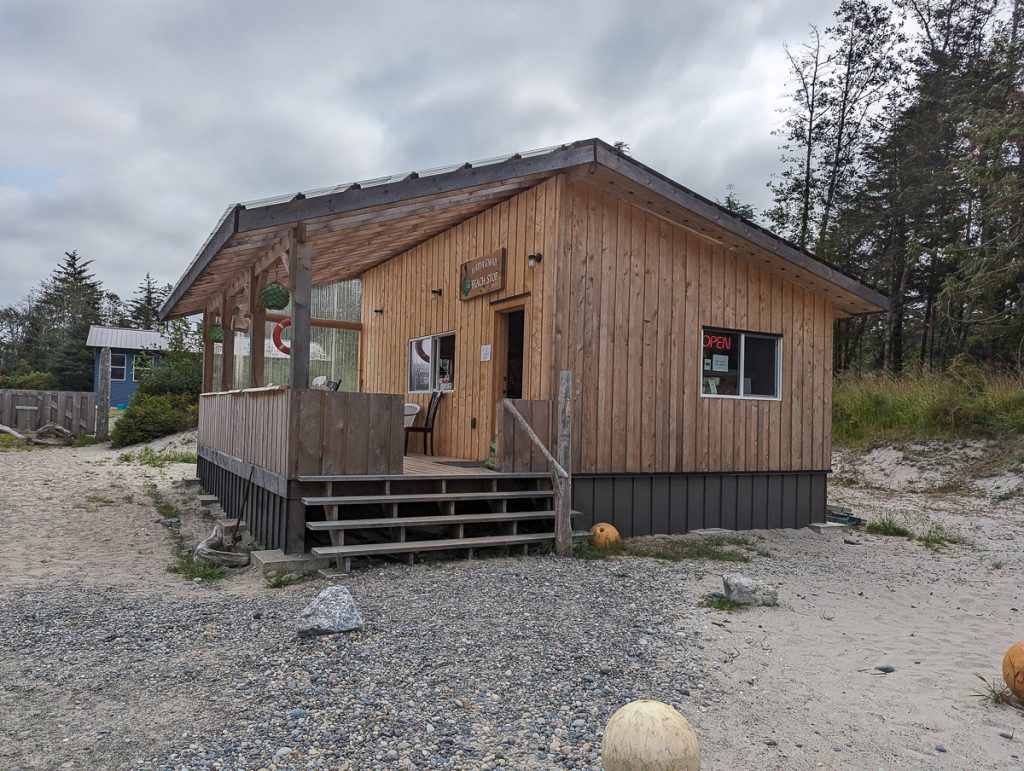
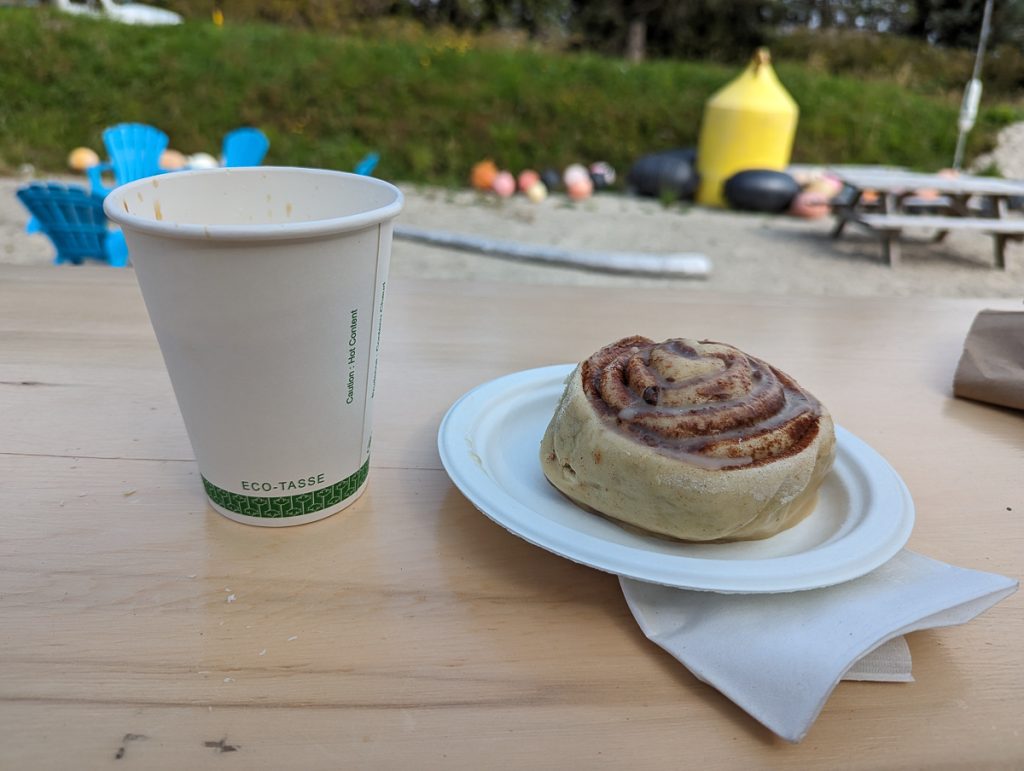
We were so grateful to pop into the Haida Gwaii Beach Shop for a hot coffee and a bite for breakfast. They have a few savory and sweet baked goods, local snacks, and gifts. We made sure to stock up on plenty of extra snacks.
Caffeinated and ready for hiking, we left the Beach Shop. Eventually, pavement yielded to a dusty dirt road. Neon green lichen blanketed the massive trees overhead. The overgrown masses appeared large enough to fell the great trees.
We parked at the end of the road and began our hike up Taaw Tldáaw. We were alone, save for a Haida land steward maintaining the boardwalk, which protected the delicate ecosystem below. We followed the trail up and through the dense forest.
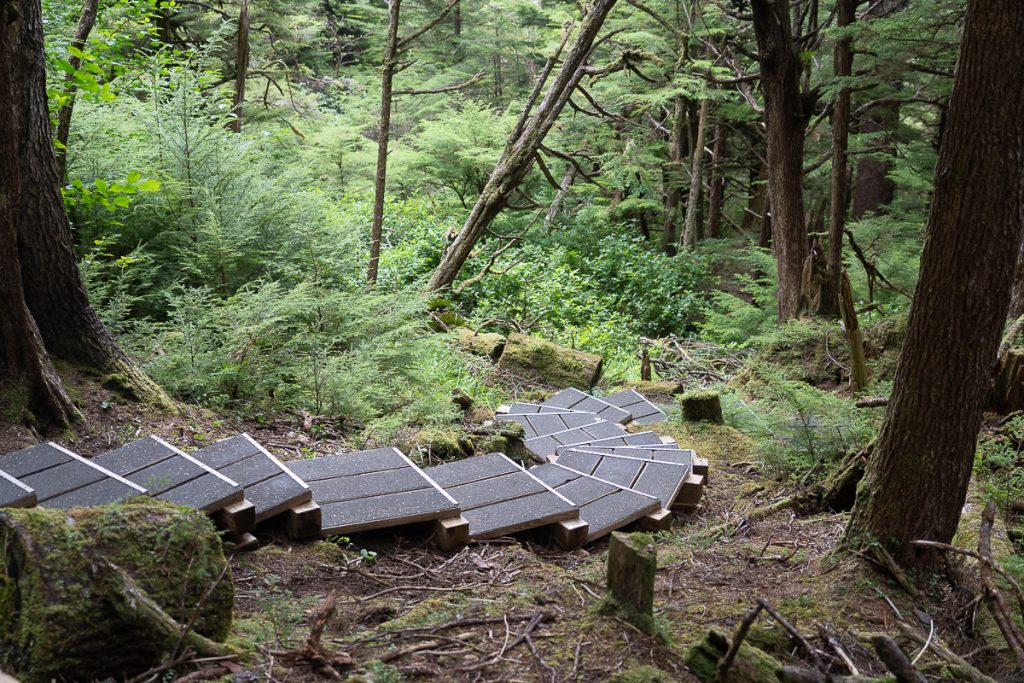
Hiking Taaw Tldáaw was one of our top favorite things we did on Haida Gwaii. The hike was short, but long enough to get a taste for the area. The infrastructure and trails were well-maintained by the Haida Nation, and the educational signs complemented the hike, allowing us to learn of the origins and stories of the Haida People.
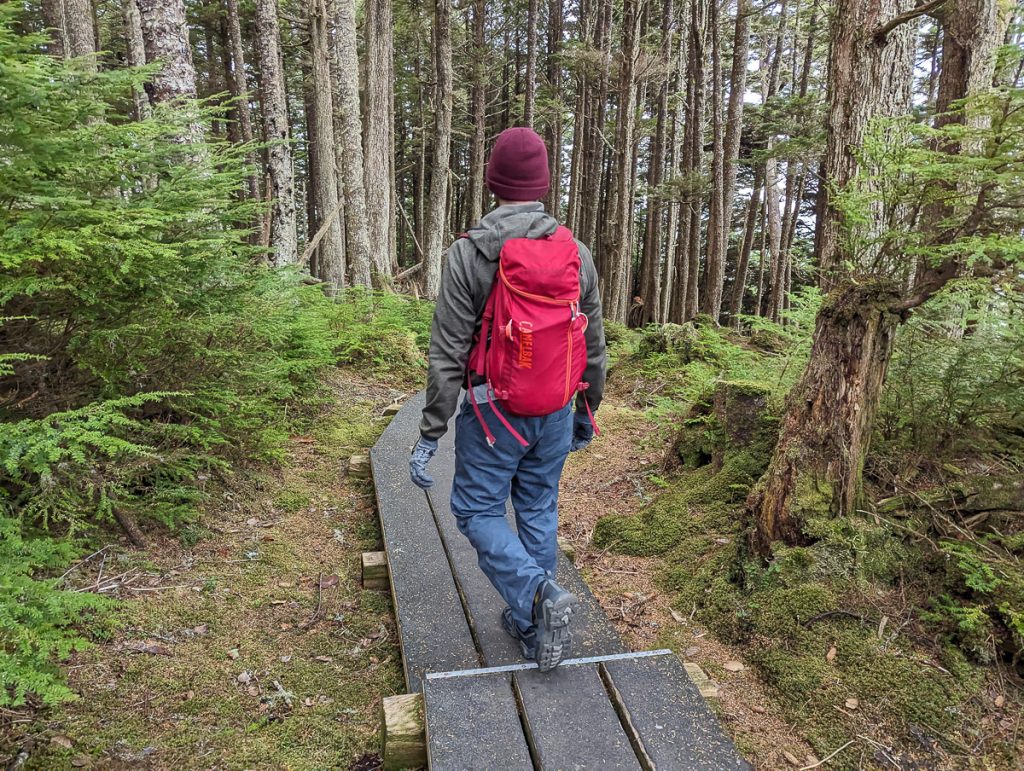
Curious where your 1% goes? Donating 1% of your total trip costs to the Haida Nation helps fund and support Haida-led land management initiatives, such as trail infrastructure.
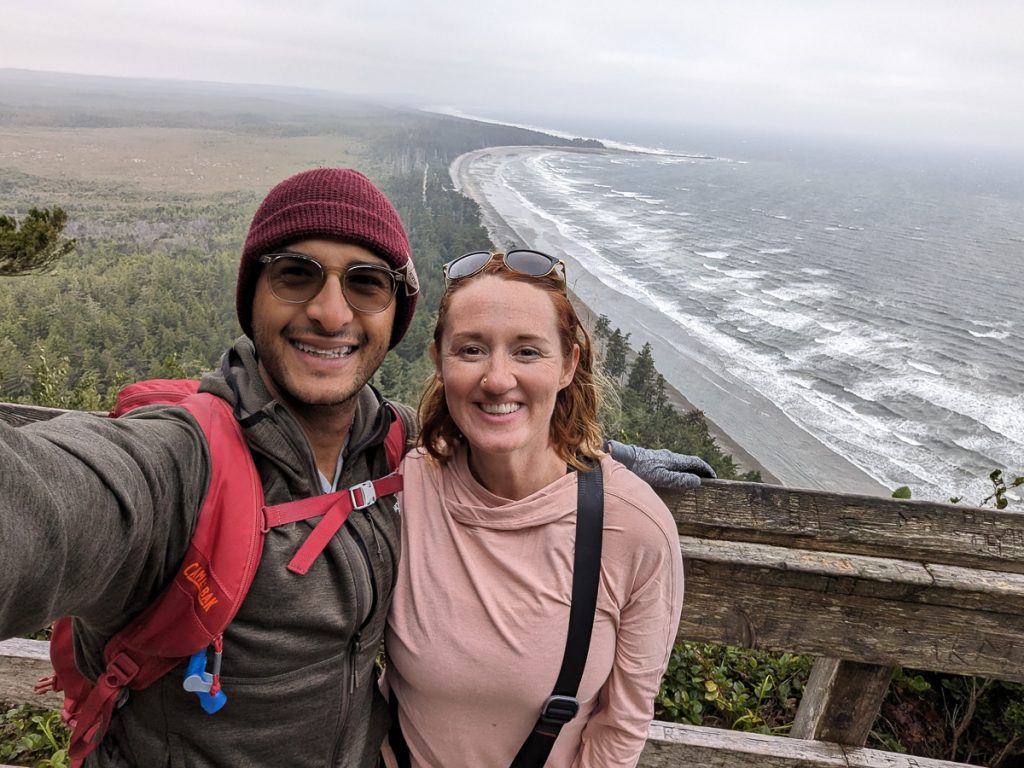
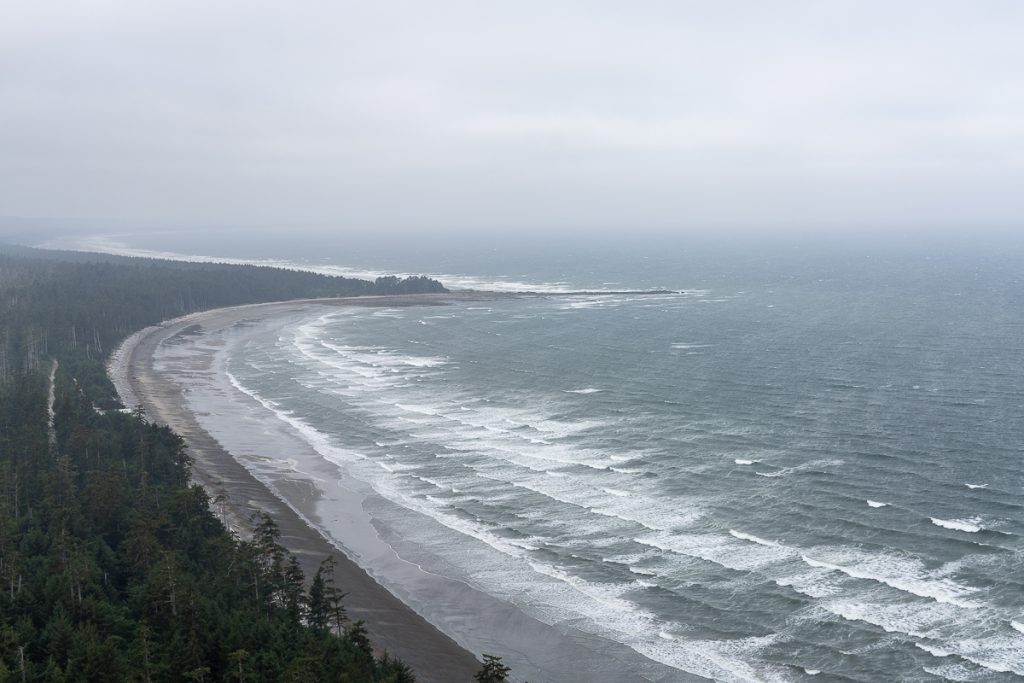
The first viewpoint was of Nai-Kun (Rosespit Beach) from the Haida origin story. Raven, a powerful creator, flew over the beach—lonely. He heard cries from a clamshell, and as he pried it open, he found small creatures between the shells.
He convinced them to come out and join him in his new world. So, the story of the Haida People begins.
I’ve traveled to many ancient sites, neolithic sites, and ancient Greek ruins, but something was just as—if not more—moving about this stretch of beach—even without any visible ruins.
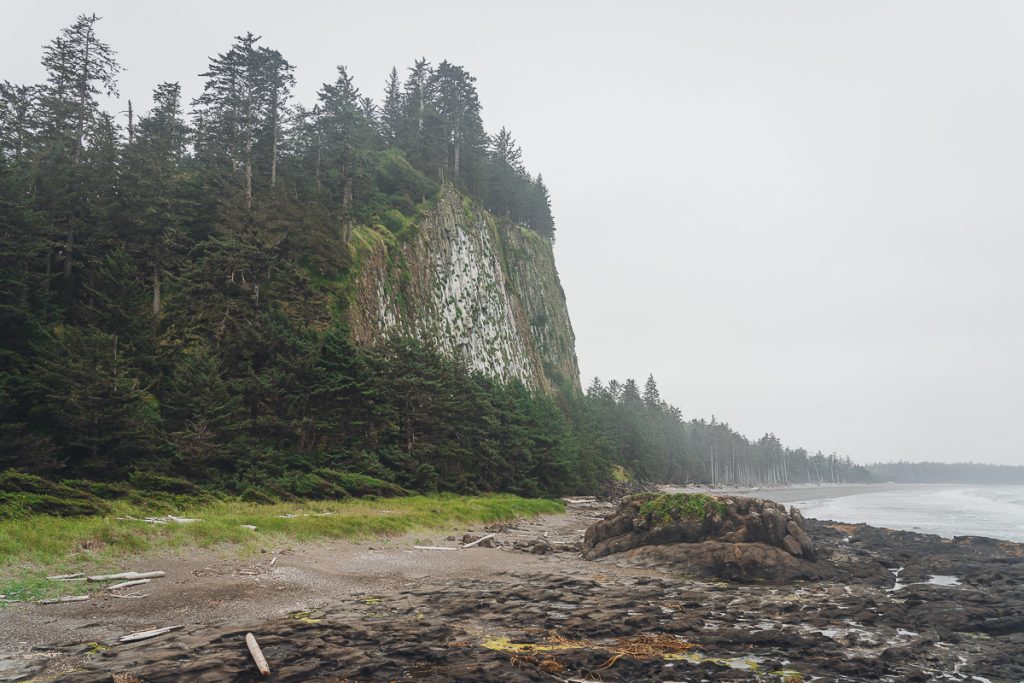
On the descent, the forest gave way to an angry beach (North Beach) with howling wind and a dramatic geological site, offering views of Taaw Tldáaw, where we had just descended from.
According to Haida legend, Taaw Tldáaw was created by Taaw, who traveled the lands looking for a suitable place to live. He settled on this beach, turning to stone to remain forever. His brother sent an Eagle and Whale after him, and they slammed into Taaw, also turning to stone.
Can you see the shape of an eagle in the left photo below?
When the waves crash against the lava rocks pictured below right, they appear to come from a blowhole.
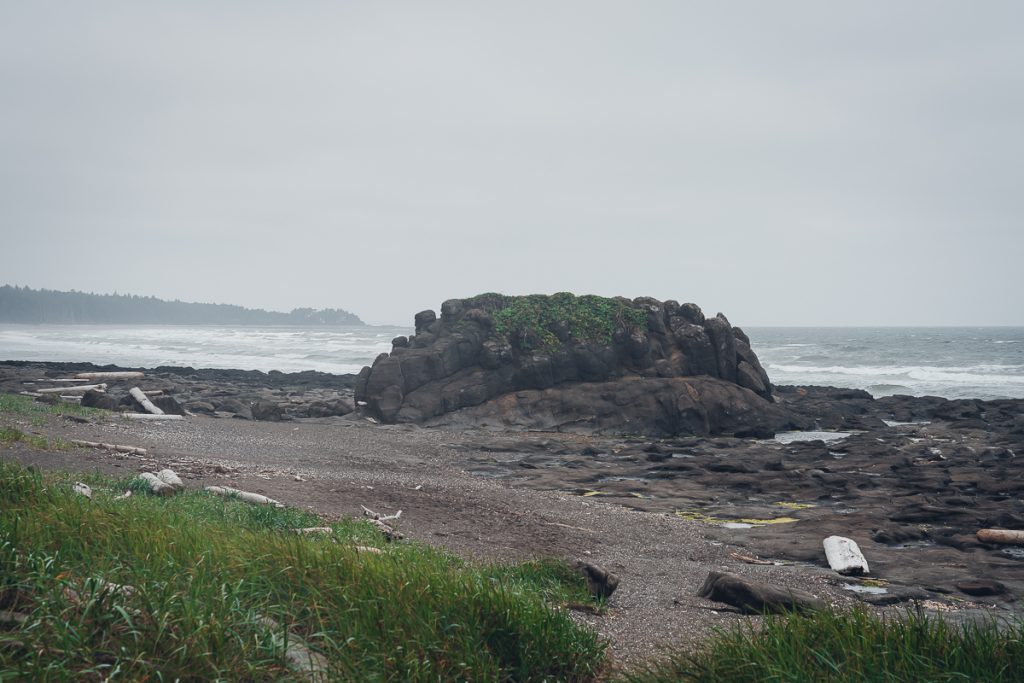
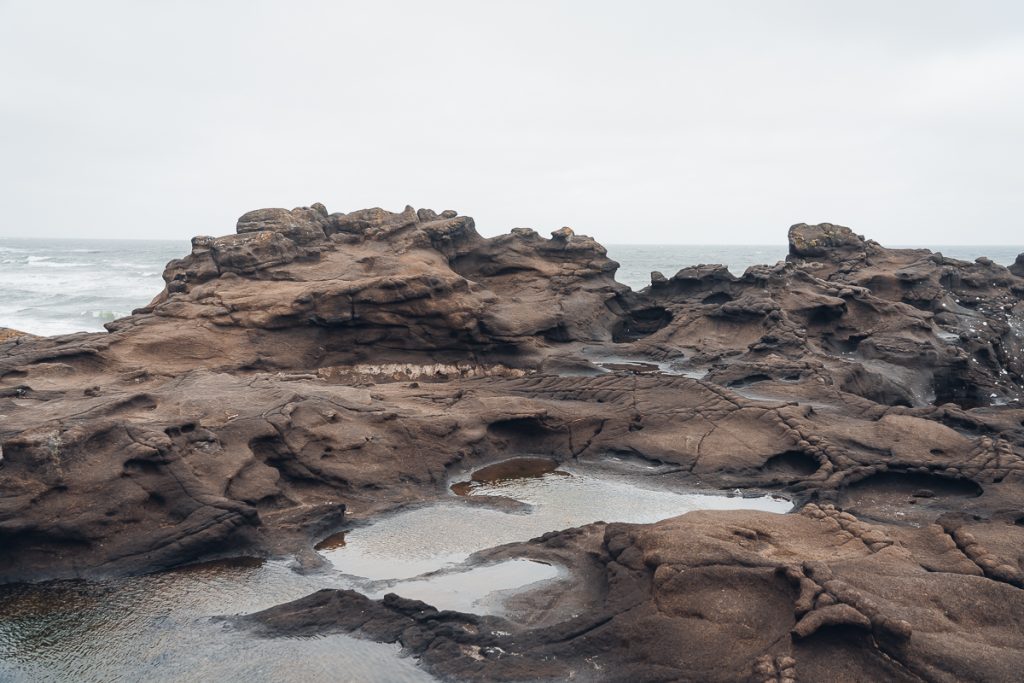
Geologic forces have shaped the land, where molten lava bubbled from earthen tubes two million years ago, creating Taaw Tldáaw. As you look at the formation, you’ll see these tubes, making the rocks appear as if in straight lines.
Millennia later, glaciers dramatically reshaped it, eventually receding to reveal what we see today.
As you leave, you will notice a stunning monumental pole, hidden among the trees. This is part of Hiellen Village, another option for an Indigenous-owned accommodation.
Driving back toward Masset, you may choose to visit Agate Beach. We had very stormy weather this morning, so we opted for a quick trip, but people spend a lot of time here exploring.
If you visit, DO NOT COLLECT AGATES. It is disrespectful to the Haida people, who have asked visitors to leave the items where they are. Over the decades, people have removed agates, and there are few remaining, yet the Haida see them as an essential part of the ecosystem.
Masset, Gaw Tlagée, Delkatla Wildlife Sanctuary
Since we drove our electric vehicle to Haida Gwaii, we plugged into one of Canada’s most rural slow chargers and pondered how to spend the rest of our time before check-in, in a town of less than 800. The answer led us to a pivotal decision—we started walking in a place most drive through, setting the stage for a serendipitous cultural experience.

Even if you don’t have an electric vehicle you’re waiting to charge, there is still plenty to see and do around Masset and the Haida Village of Gaw Tlagée (Old Masset)—whether you drive, cycle, or walk from site to site.
Since we had a 5 am start, our first order of business was yet another coffee at The Ground Gallery and Coffee House, a cute local coffee shop with lots of unique gifts sourced from the island.
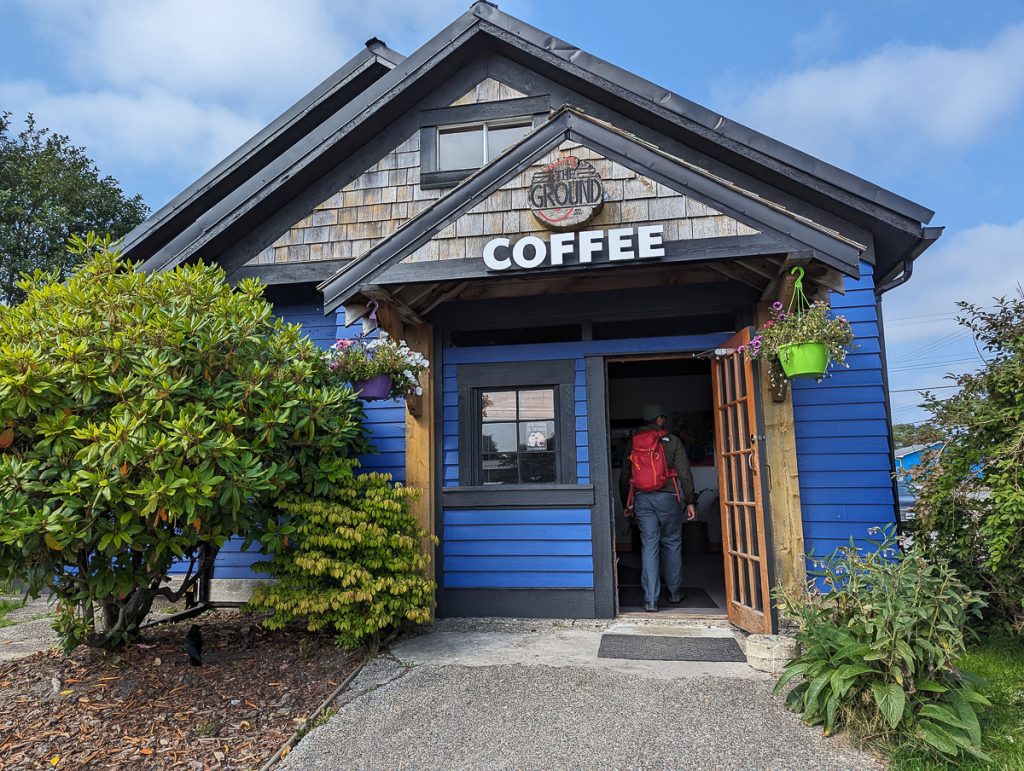
From there, we decided to head into the old Haida village, Gaw Tlagée. Most people with gas cars will opt to drive to the town to visit shops and take photos, as there is parking. The city is open and welcoming visitors, but follow the Haida Pledge and be respectful.
We, however, were waiting for our car to charge, so we padded along the multi-use path used by locals to reach our destination. Some would greet us, “Gasanuu dang Giiydang” or “How are you?” We replied, “Hej,” or hello.
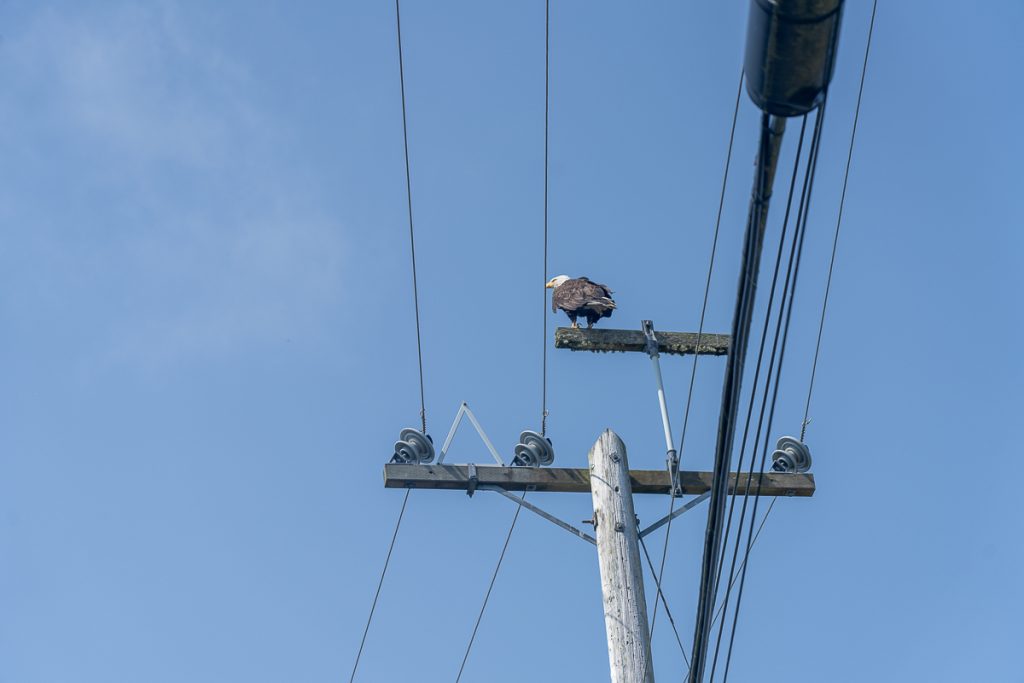
A red dress stuck to a telephone, a dark reminder of the missing and murdered Indigenous women taken from these lands too soon. I rested on a bench with a hand-carved skaana (orca). Eagles perched above us on modified telephone poles designed just for them to prevent electrocution.
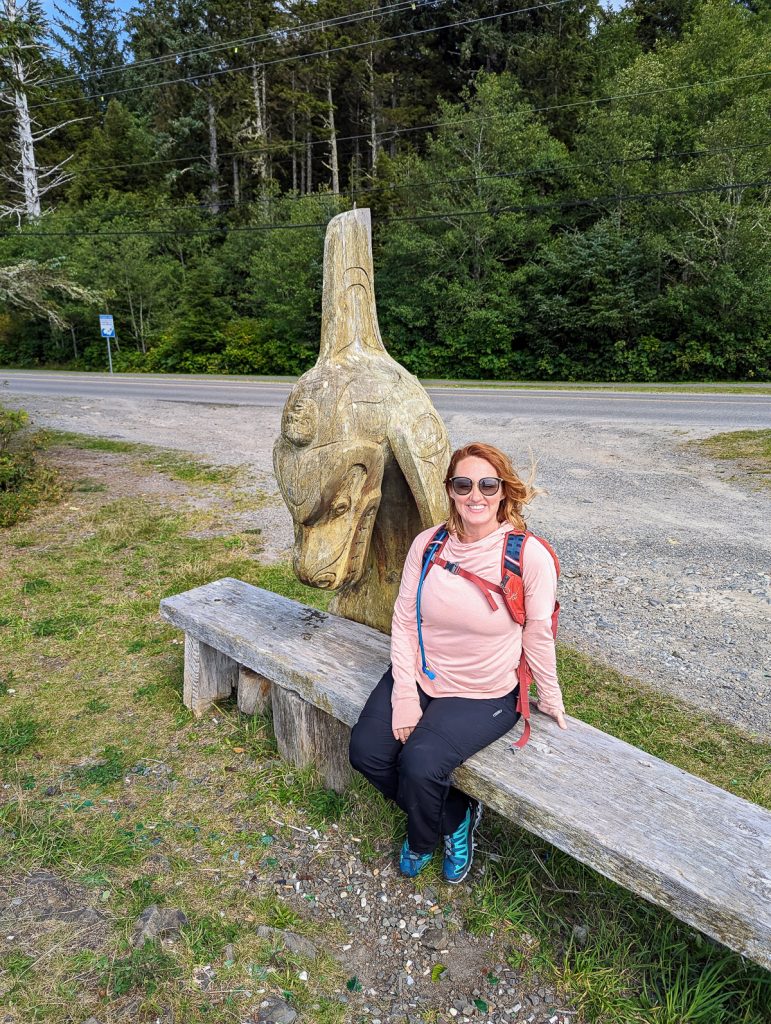
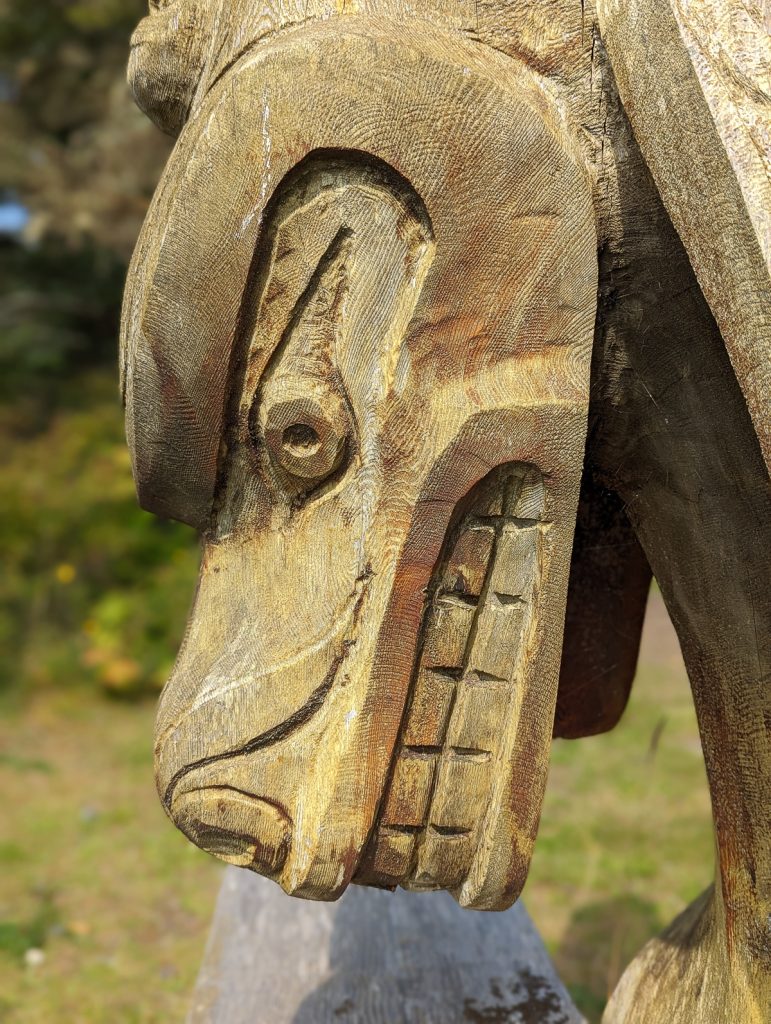
When we finally entered the village, we saw a sign in a driveway for a local home gallery, “April’s White Raven House.”
We stepped up hesitantly— my hand hovering by the doorbell, wondering why we were the only ones there. “Was it open to the public?” I finally rang. The door opened, and we were welcomed into the private gallery and home of April White, an Indigenous Haida artist and scientist.
She sat at a desk, busy with work, but encouraged us to ask questions. Art covered the walls. We chatted with her about ecology, geology, and Haida Gwaii, learning she was a geologist and artist expressing Haida cultural beliefs and scientific principles through art.
She depicted predatory animals in the stomachs of their prey—a harbor seal inside a herring. When I asked why, she said, “Most view predators eating the prey, but we Haida see the prey giving life (like birth) to the predator.” For me, as an ecologist with a more Western way of thinking, that concept flipped my perspectives around, and I deeply appreciated that cultural exchange.
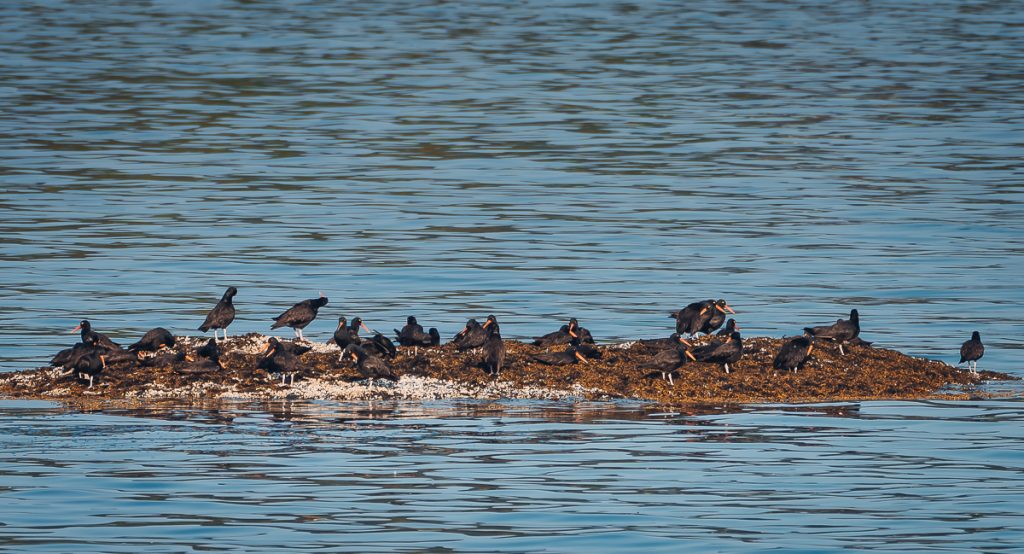
I finally found a piece that spoke to me, one depicting oyster catches, and bought it to support her endeavors, and thanked her for her hospitality.
I later learned that April White’s house is also a bed and breakfast.
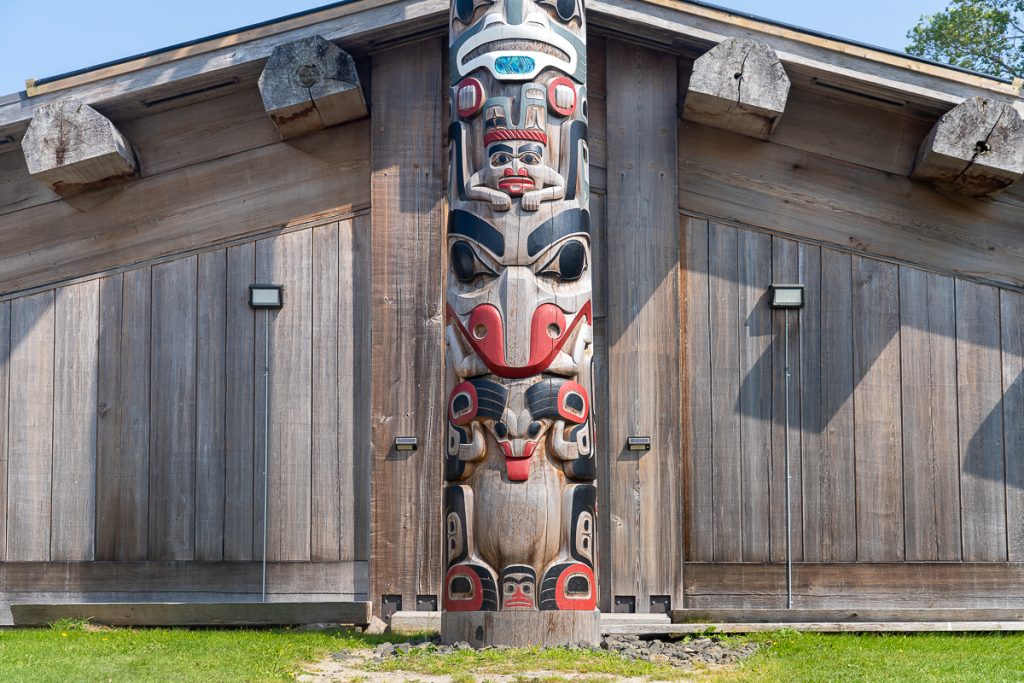
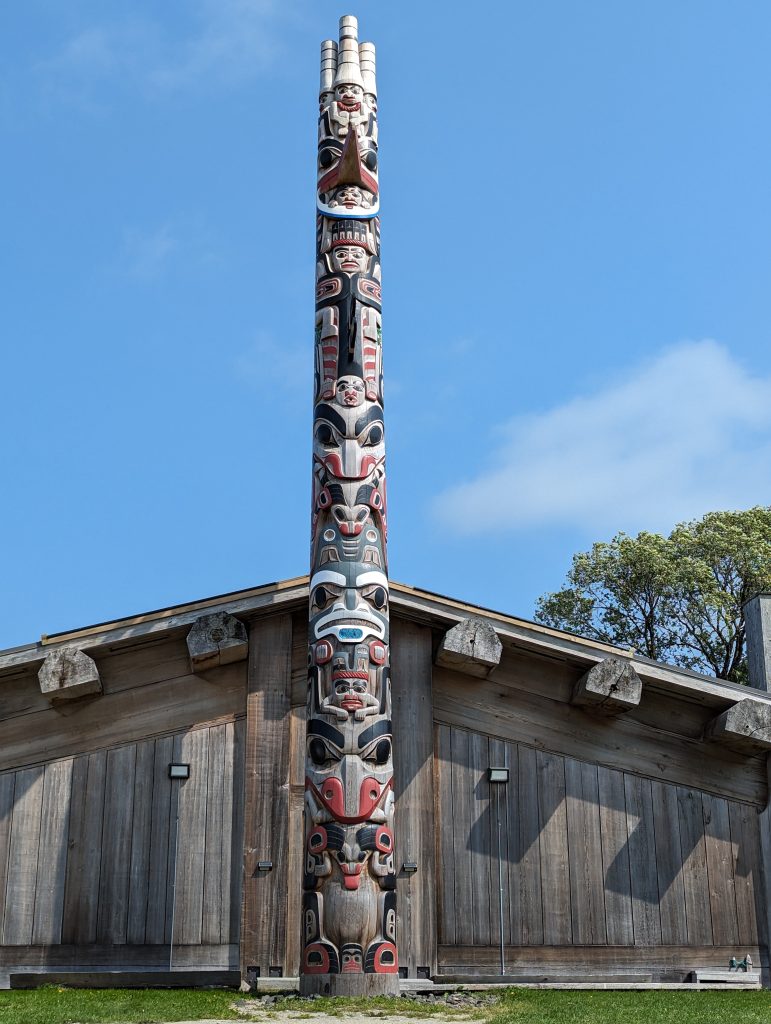
We continued our walk along the water, eventually coming to The Haida Chief’s Traditional Longhouse with three monument (totem) poles telling stories of his clan, the village, and his late son. You are allowed to take photos of these, but be mindful of where you park and don’t be too obstructive to any activities.
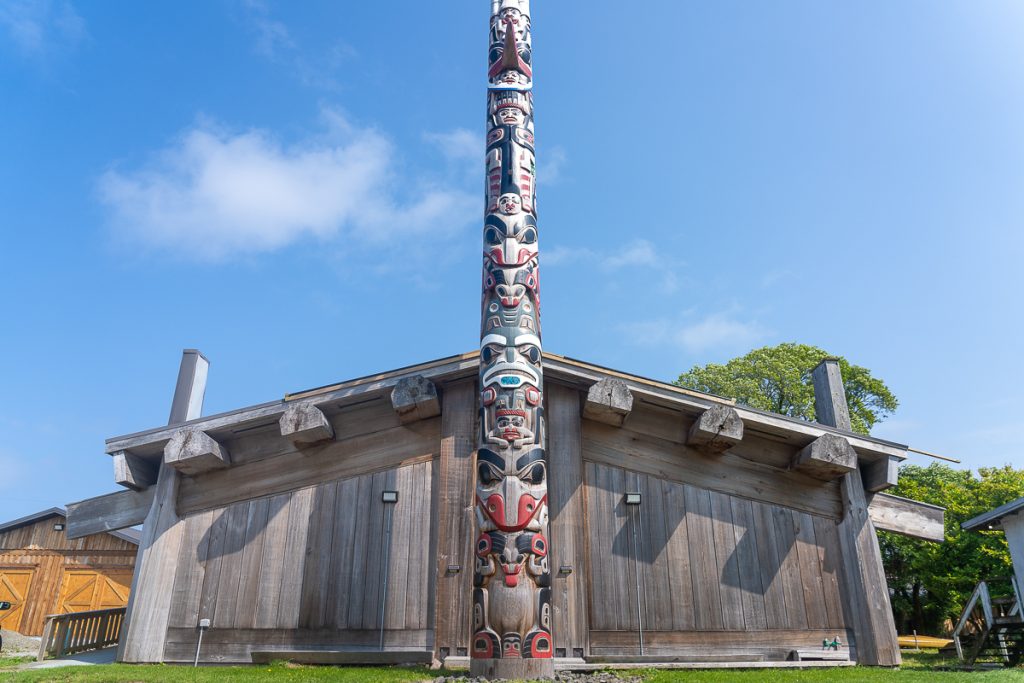
Note: The Haida people refer to what we know as totem poles as monument poles. Each one tells a complete story of a person, clan, or village, honoring them in a monument.
There are several other artists, souvenir shops, and galleries worth supporting here as well. Pop into Gin Kuyaas Haida Art, Sarah’s Haida Art and Jewelry, and any others that catch your eye.
I noticed most cars drove right past April’s gallery, and I encourage everyone to visit. Her art is thoughtful and simply beautiful. I left Gaw Tlagée clinging to my new art, thankful that walking on foot allowed me to enjoy a unique cultural experience.
With plenty of time left to go before our car was charged, we returned to Masset and visited the Nature Center at Delkatla.
The nature center is a small ecology space dedicated to the conservation and protection of the wetlands, even as changing colonial development threatens migrating birds. The wetlands are most magical during the spring and autumn migrations, where you’ll spot thousands of birds, such as swans, buffleheads, cranes, ducks, and many songbirds.
We made a small donation to keep them afloat, and even though we were outside the migration season, we spotted a few birds.
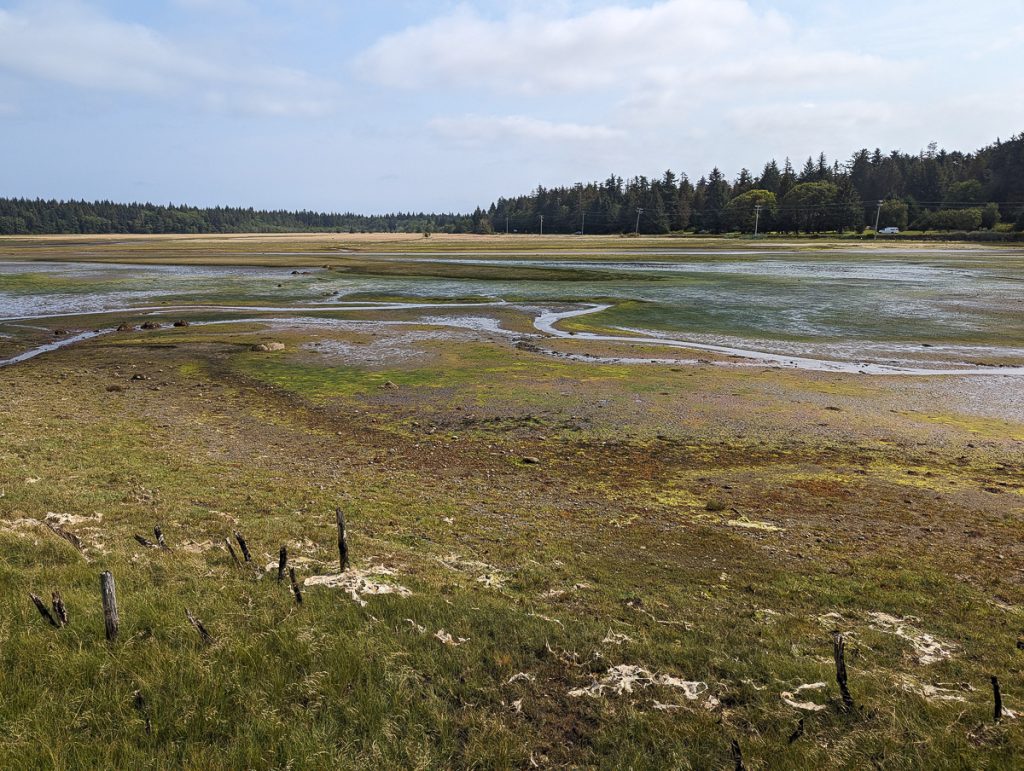
Masset is a small town, but if you have the time and interest, you can also visit the Dixon Entrance Maritime Museum. A bike rental from Masset Cycles is another excellent choice.
There are quite a few food options for lunch in Masset. You’ll find several food trucks and some small dining options. We ordered an extra-large vegetarian pizza from 626 Pizza for lunch. It was nice to have leftovers in a more rural area.

Charter’s Food Truck, right next door, is another popular choice for lunch.
The drive down to our accommodation took over an hour, so we timed our departure from Masset to coincide with check-in.
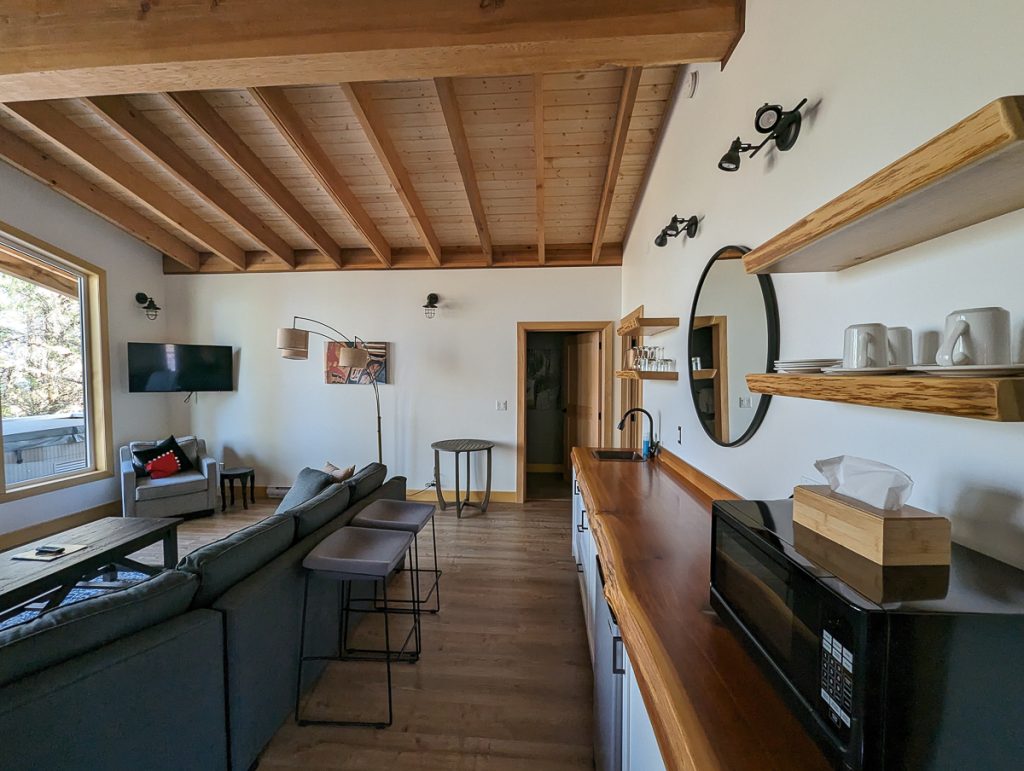
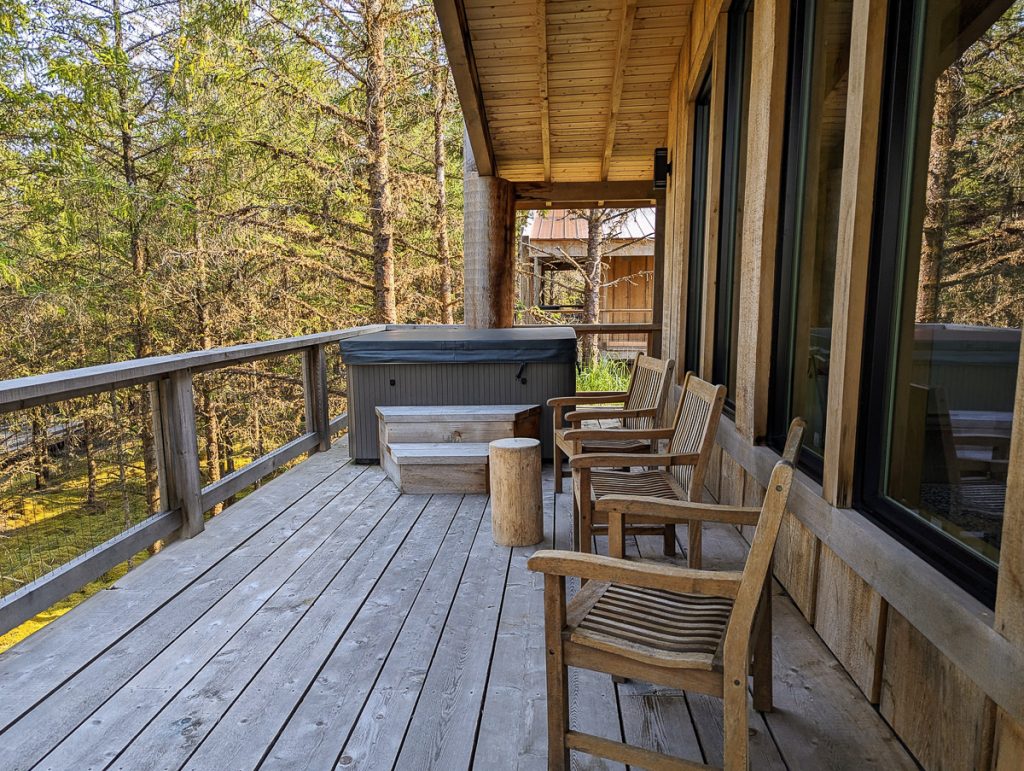
Our accommodation, Indigenous-owned Haida House at Tll.aal, had just finished building a new set of private cabins on their property. We were fortunate enough to secure a booking a few months in advance. They also have a main lodge with rooms.
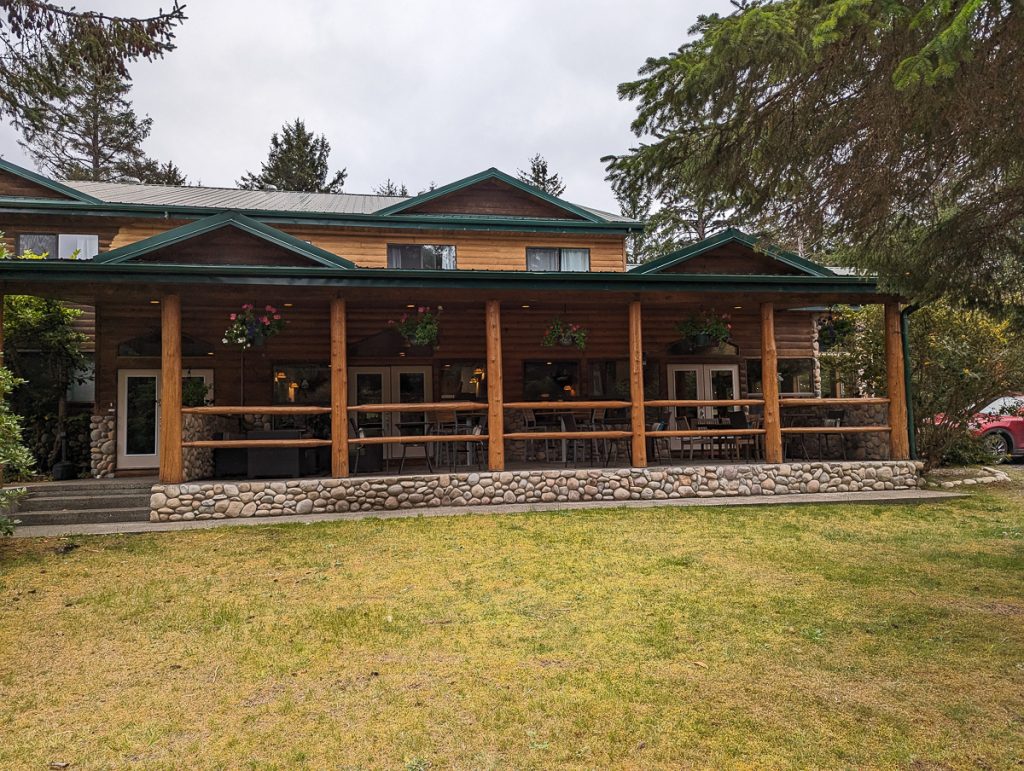
Haida House – Best Place to Stay
The Haida House offers the best of Haida hospitality. Owned and operated by the Haida Nation, they employ servers, tour guides, and maintenance people from the Haida Nation.
Haida House was once a colonial-owned bear hunting lodge. But the Haida Nation was able to purchase the lodge. Under their stewardship, it has transformed from an extractive bear hunting lodge to a regenerative experience.
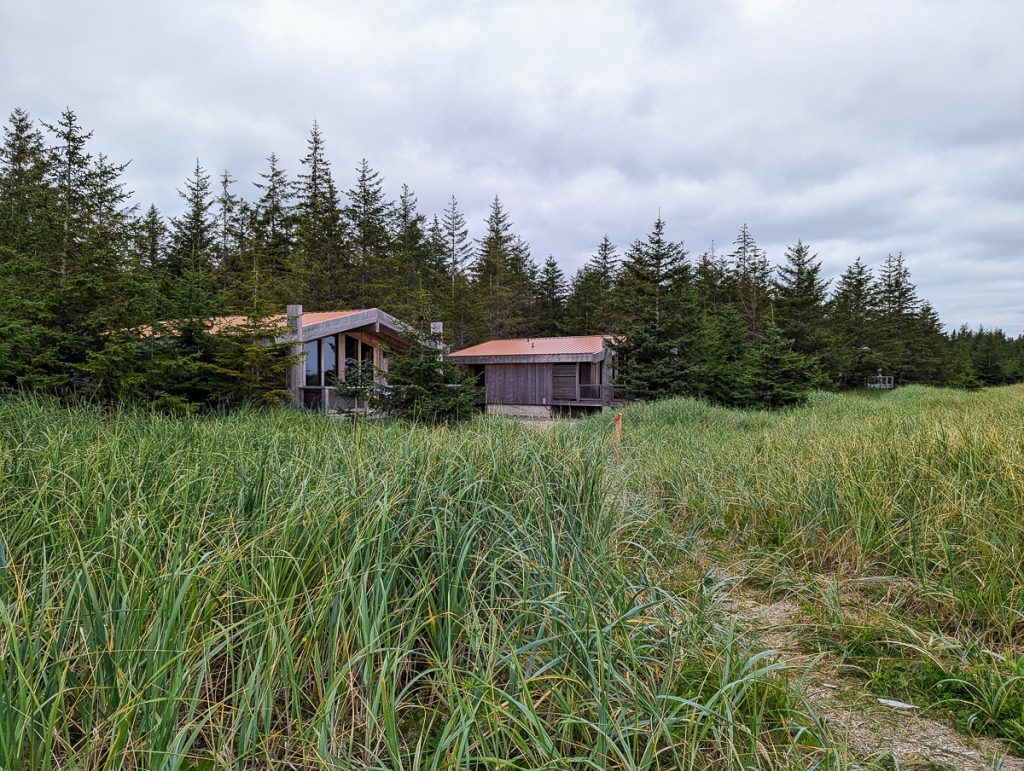
Whether you stay in the main lodge or the longhouse inspired cabins, you’ll be supporting Indigenous employment, beach and ocean conservation, and have a unique cultural experience, all with comfort and privacy.
There is a bar and restaurant on site, serving Indigenous-inspired foods, where reservations are encouraged.
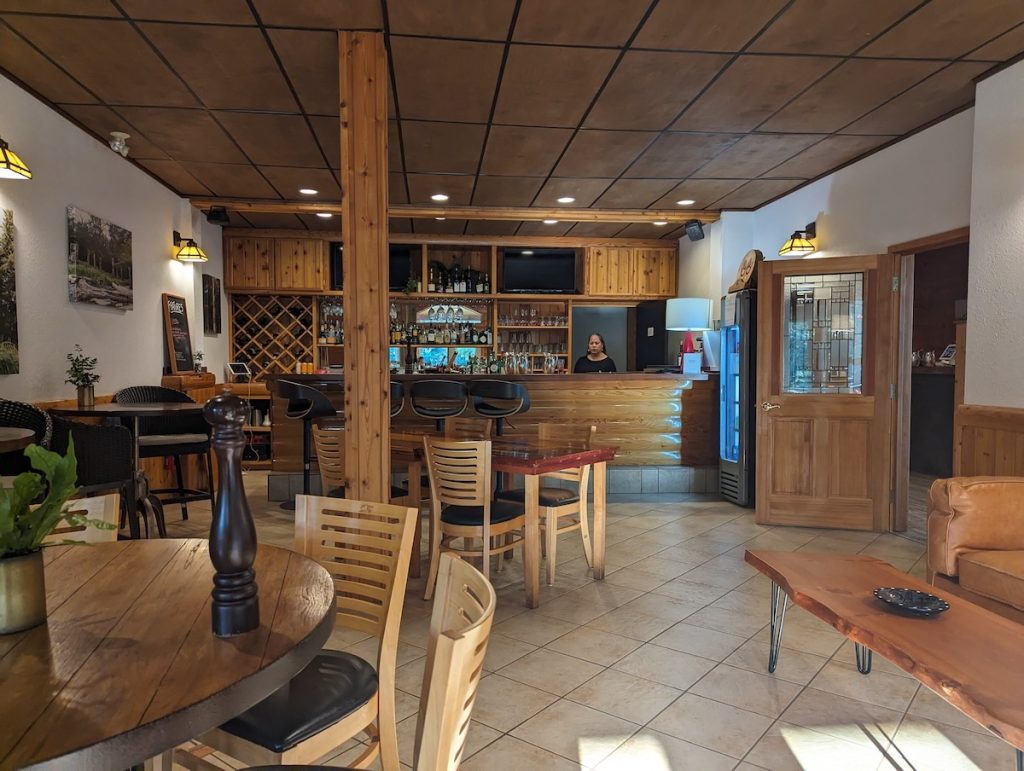
Breakfast is served daily in the dining room. We enjoyed hearty meals from Eggs Benedict to waffles that were a great start to our day.
The staff at Haida House assisted us in setting up our EV charging, using their very slow plug. We had to get creative with an extension cord, but we managed to get some power overnight.
If the Haida House isn’t available, the Haida Nation also owns a newly opened The Ocean House at Tlaga Gawtlaas. It embodies the same regenerative principles as the Haida House.
You can also check out:
- April’s Whites Raven House (Indigenous-owned)
- Hiellen Village Longhouses (Indigenous-owned)
- Haida Gwaii Glamping
- JAGS Guest Houses
- Campgrounds and RV sites are also popular
Dinner at Haida House
If you’re staying at the Haida House, their in-house restaurant is an excellent choice for dinner on your first night. Make sure you have reservations in advance.
Before dinner, we spent time recharging and walking along the beach. From our cabins, we could reach the beach via a small forest trail. Eventually, the forest opens up into a healthy, natural beach.
The Haida House is such a great example of coastal tourism done right.
By keeping the cabins away from the beach and not developing or altering the beach, the dunes and the coastal ecosystem remain intact. This not only helps ocean biodiversity, but also keeps us safe in the cabins from wind and intense storms.
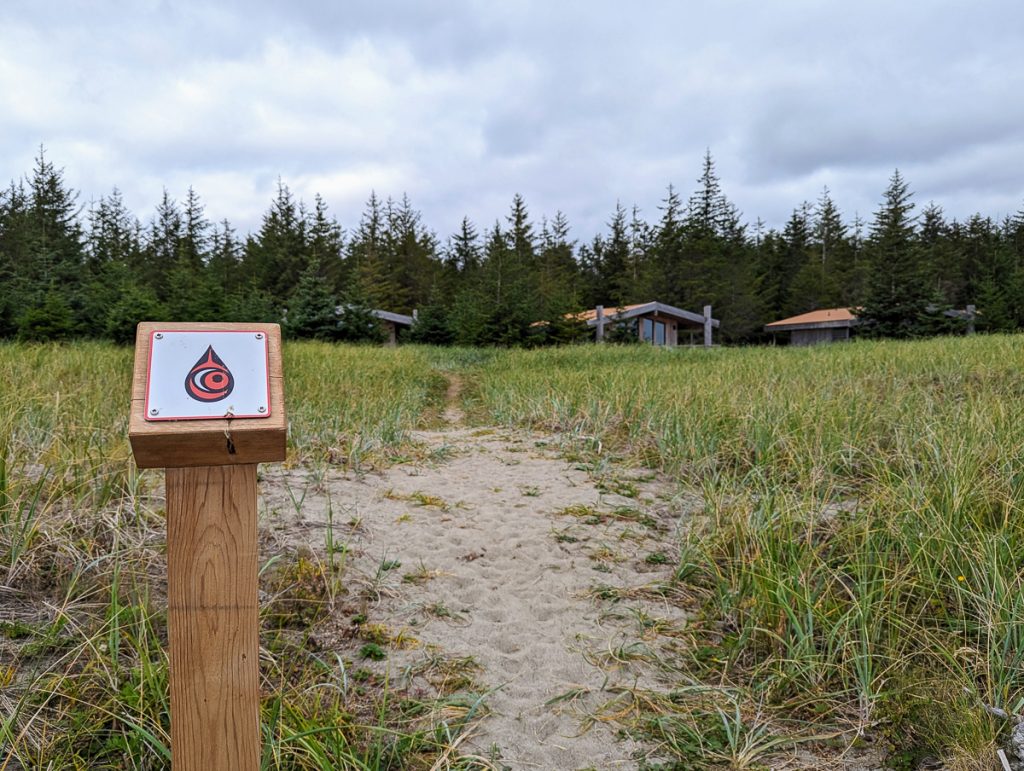
Can you notice the difference in the wind and storm breaks when you are behind the dunes? If you were to remove those for beachfront properties, we would lose that natural protection.
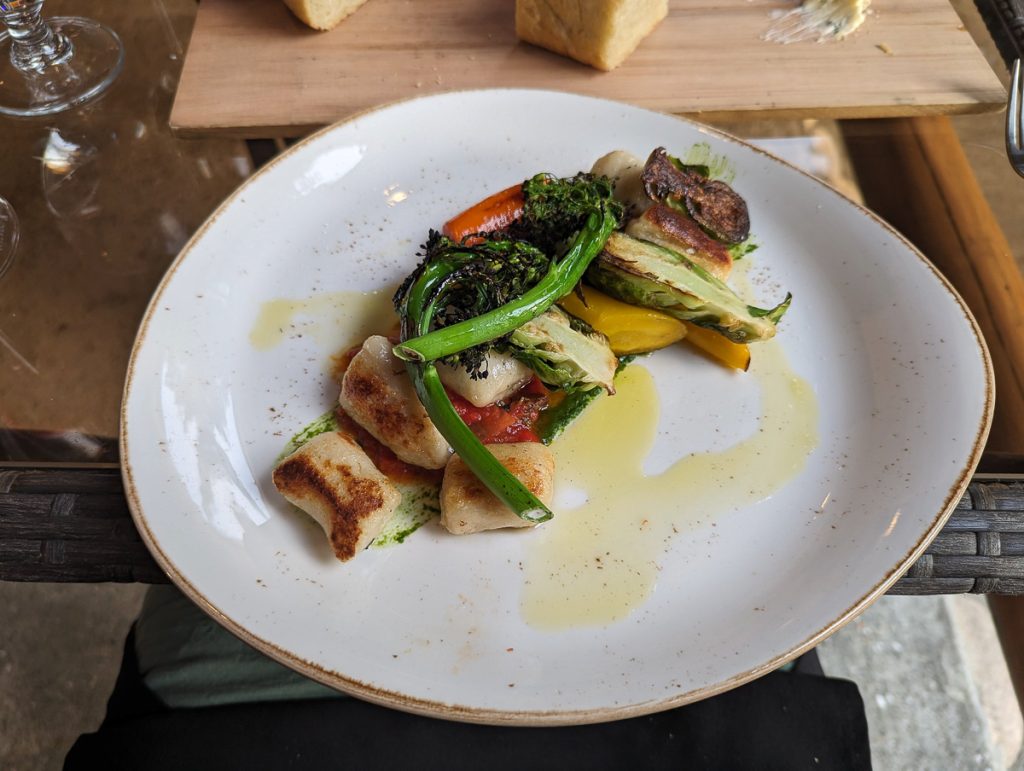
Dinner at the Haida House restaurant was incredible. We enjoyed their one vegetarian dish, gnocchi with seasonal vegetables. We got to try cocktails with local Haida berries, and our server, a young Haida woman, gave us lots of local tips for our week’s adventures.
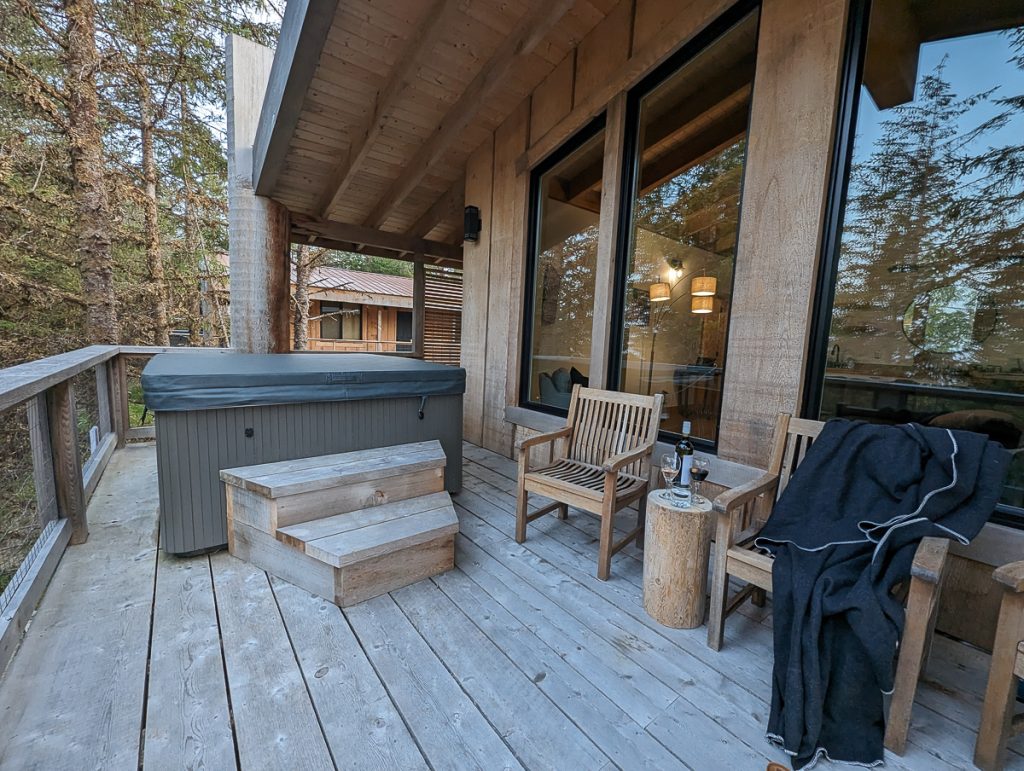
Rest. Relax. We spent the evening in the hot tub at our cabin, enjoying a bottle of wine, listening to the sounds of the forest and beach.
Day 2 (or more): Gwaii Haanas Tour Day
Day 2 is an excellent day to pre-book a tour of Gwaii Haanas UNESCO World Heritage Site and National Park. This will be a full 12 hour day, with an early morning start, lunch out on tour, and a return around dinner time.
This is one of the modifications I suggest to our itinerary. We had booked this later in the week, and due to a severe multi-day storm, we had to cancel. We had only 2 days to rebook, but the weather just didn’t cooperate.
I was devastated. If you plan your tour early enough in your week, you’ll have more chances to rebook in case of bad weather.
Day 2 Overview
- Do: Gwaii Haanas National Park tour (booked in advance)
- Eat: Dinner in Daajing Giids
Gwaii Haanas Day Trip
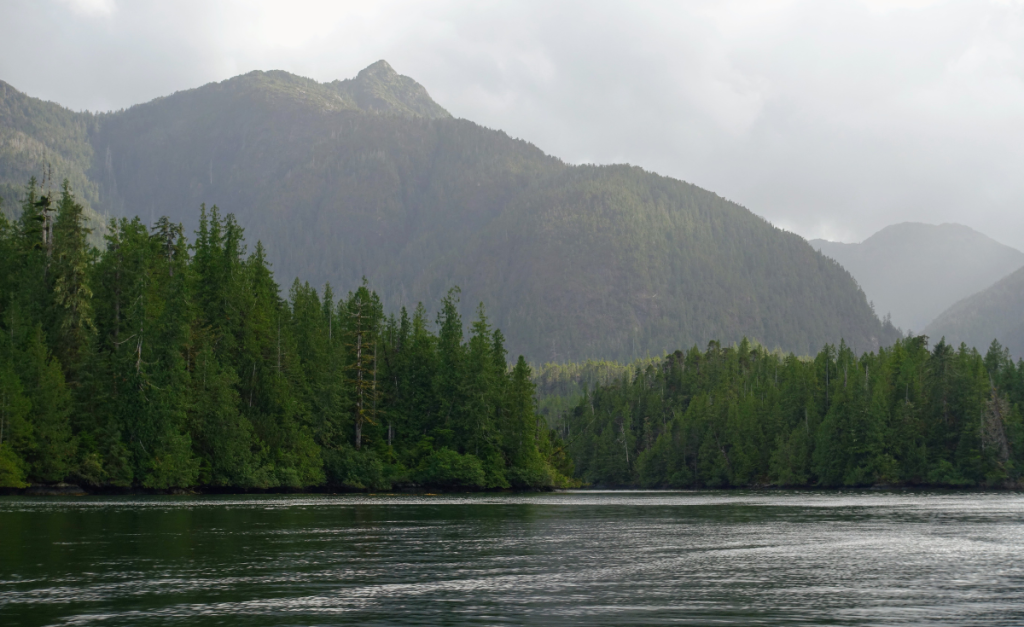
To visit Gwaii Haanas National Park, you need a permit and access by boat. The easiest way for most visitors to see this incredible cultural and natural heritage site is with a licensed guide.
There are a limited number of licensed guides. We had booked our tour with Haida Style Expeditions. Even though our tour didn’t go as planned due to bad weather, Haida Style tried everything they could, keeping our safety in mind and communicating everything with transparency and in advance.
Why we chose Haida Style Expeditions:
- A local family and Haida-owned and operated company
- A strong commitment to regenerative cultural and eco-tourism
- Employ and support Haida youth guides to help the next generation secure quality employment in tourism
- Fosters a sense of community and network among small businesses across Haida.
I would 100% recommend Haida Style for anyone interested in a day trip down to Gwaii Haanas.

What to Do If Your Tour Is Canceled?
If your tour gets canceled or moved due to weather, embrace that island time and slow travel mentality. Don’t get mad at the guides; they are doing this for your safety.
If your tour is moved to another day, swap out day 3 (or 4) with day 2 of my Haida Gwaii itinerary and go with the flow.
If your tour is completely canceled, check the end of the post for more things to do that we didn’t have time for. With the extra day, there is plenty more to see and do.
Gwaii Haanas Multi-Day Trips
If you’re interested in a multi-day kayak or boat tour, you can select from a small group of licensed tour operators.
Dinner in Daajing Giids
If you managed to make it on your tour (fingers crossed), you’ll be back in Daajing Giids around dinner time.
The timing is an excellent opportunity to check out any of the restaurants open.
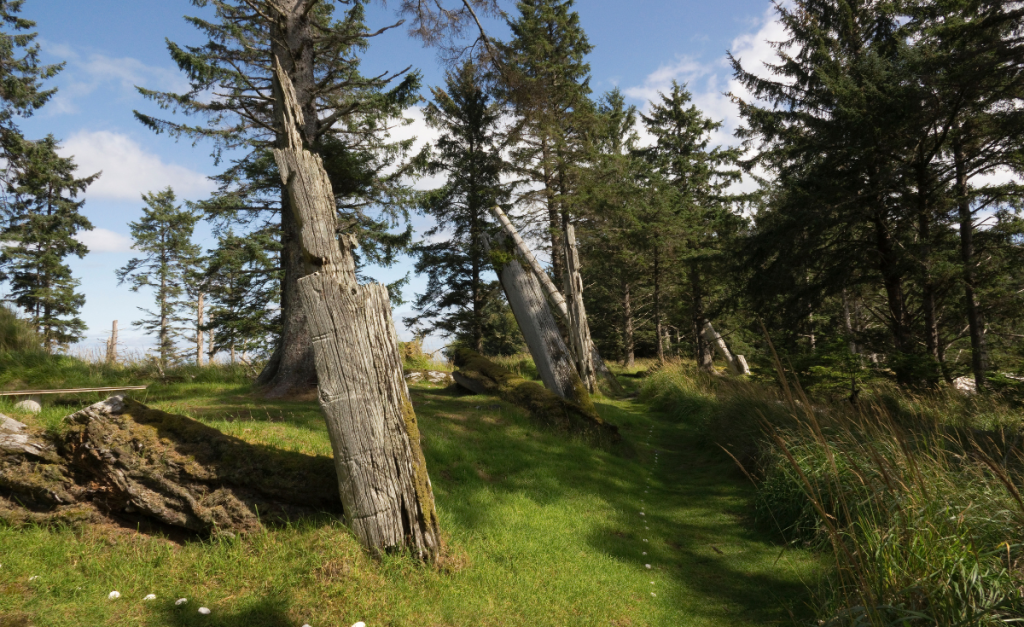
We ate at Blacktail Restaurant twice; we loved it so much (lots of vegetarian options). Blacktail is one of the main island’s most popular restaurants, and there will be a line out the front door before they even open at 5 pm.
Tables and seatings move quickly, but if the stars don’t align for you tonight, consider trying another restaurant if you get back from your tour after 6 pm.
- Gather
- The Jackal
- Sapporo
Day 3: Hike Spirit Trail, Heritage Center, and Dinner
Our third day on Haida Gwaii was a slow morning at our accommodation, where we enjoyed sleeping in and breakfast at the Haida House.
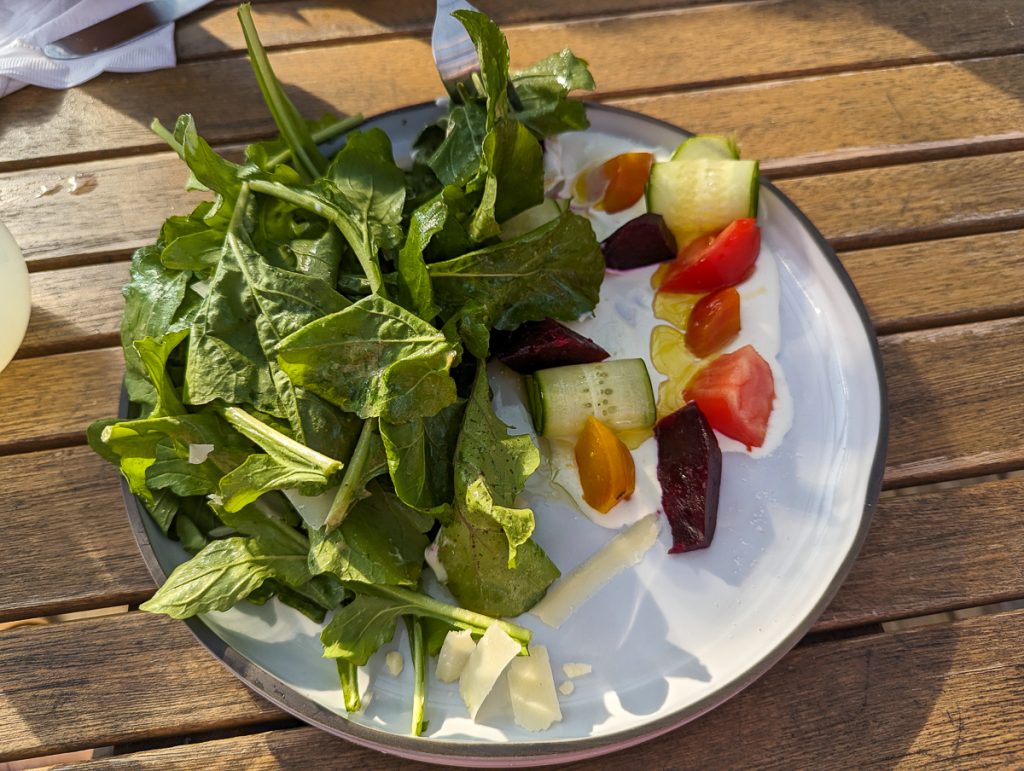
I recommend planning not to get out of bed too too late, as you’ll want plenty of time to hike the Spirit Lake Trail (2 hours), visit the cultural center (2-3 hours), and make it to your dinner reservation.
The Spirit Lake Trail is a relatively easy and flat nature trail with cultural elements. After that, we ate a convenience store/packed lunch before heading to the Haida Heritage Center for an enriching and emotional experience with a guided tour.
Rounding out the day is dinner at Keenawaii’s Kitchen, which is a fantastic spot for dinner, as long as you book ahead and eat meat; otherwise, another dinner at the Haida House restaurant might be in store for you.
Day 3 Overview
- Eat: Breakfast at your accommodation
- Do: Slow morning
- Do: Hike Spirit Lake Trail
- Eat: Co-Op, Crow’s Nest or packed lunch
- Visit: Haida Heritage Center
- Eat: Dinner in Keenawaii’s Kitchen / alternative dining
Slow Mornings at the Haida House
My favorite part about staying at the Haida House was the days we were able to indulge in a slow morning. We would wake up in our cabin and make a fresh pot of coffee to savor on the balcony. The sun rising over the ocean would peek through the branches in the forest.
The morning was perfect for meaningful conversations between my partner and me, and an even better space for him to decompress from his stressful job. Here, where the island time and the Haida way of life seep into your very soul, you find yourself slowing down. The relentless waves in the distance are the only way to tell the passing of time here.
Breakfast at the Haida House is served in their main dining room, don’t miss it!
Hike the Spirit Trail
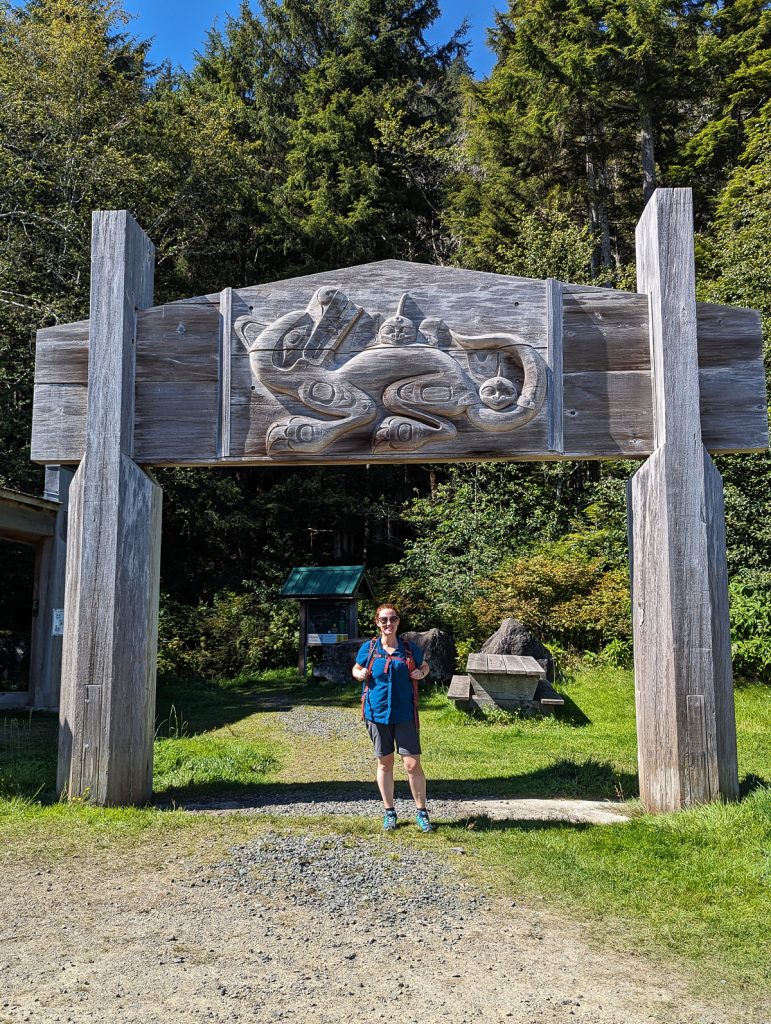
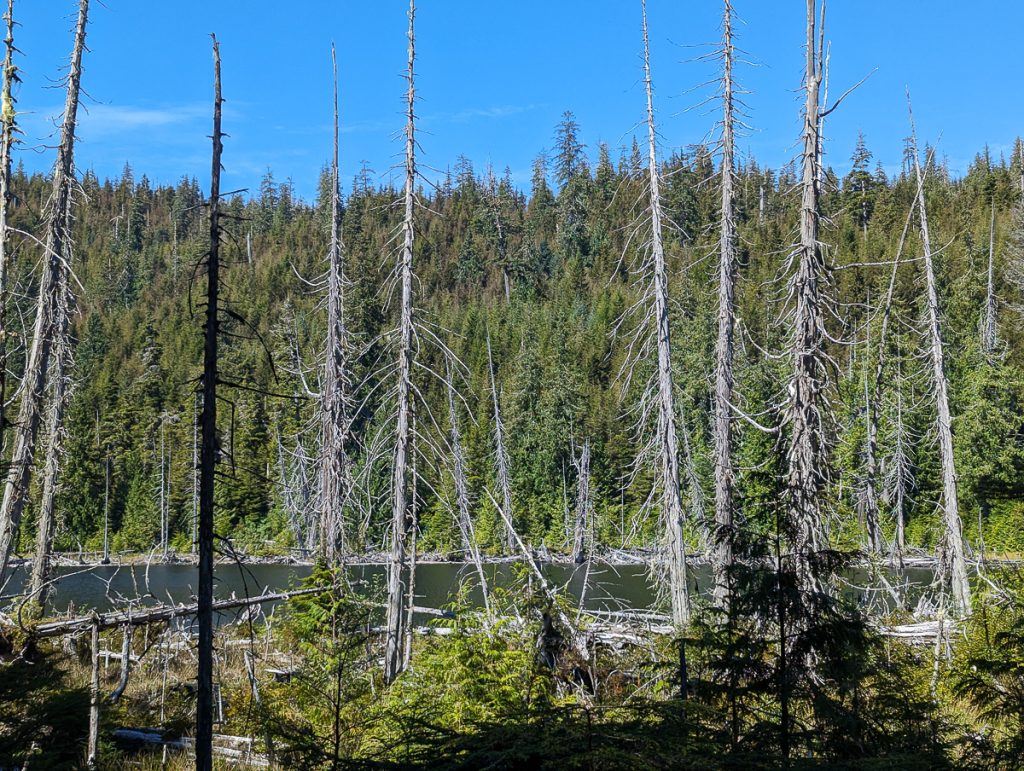
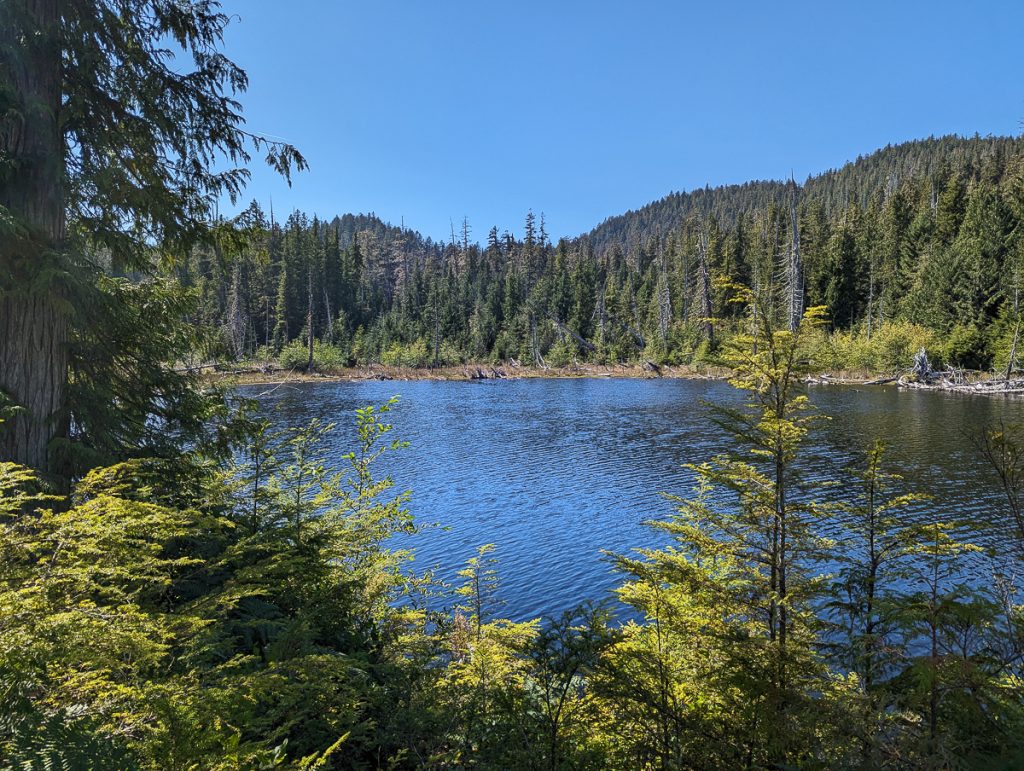
On our way down to the Haida Heritage Center, we stopped for a lovely nature walk. The Spirit Lake Trail is a network of approximately 5 kilometers of trails that took us around two hours to enjoy.
I love the trails on Haida Gwaii, as they always remind me to slow down and engage all my senses, fully connecting me to nature and the place. The Spirit Lake Trail is a sacred place for the Haida People, where their supernaturals were at work creating mischief.

Before starting the trail, we took time to read the educational signage, telling the story of WaasGuu, a supernatural with fins, a tail, and bear-like ears.
This supernatural hunted whales, but also other things, like children who wandered off, including an entire family of young brothers. Their eldest brother, Sacred One Standing and Moving, worked with Mouse Woman to slay the evil supernatural and free his brothers from its stomach.
All this happened here at Spirit Lake.
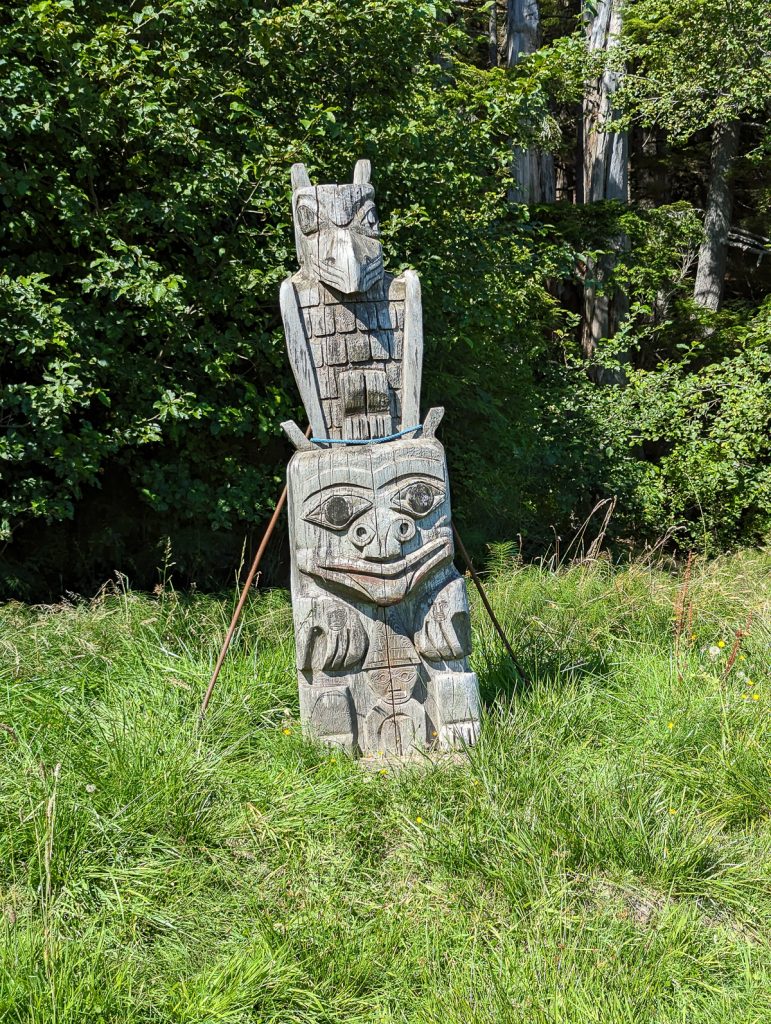
Starting the trail, you will walk below a carved archway. This was carved by the famous Haida carver Bill Reid. Bill Reid has created some of Canada’s best artworks depicting the Haida origin story, some of our best monumental poles, and has galleries and landmarks in his name. It felt special to see something of his in an unpretentious setting.
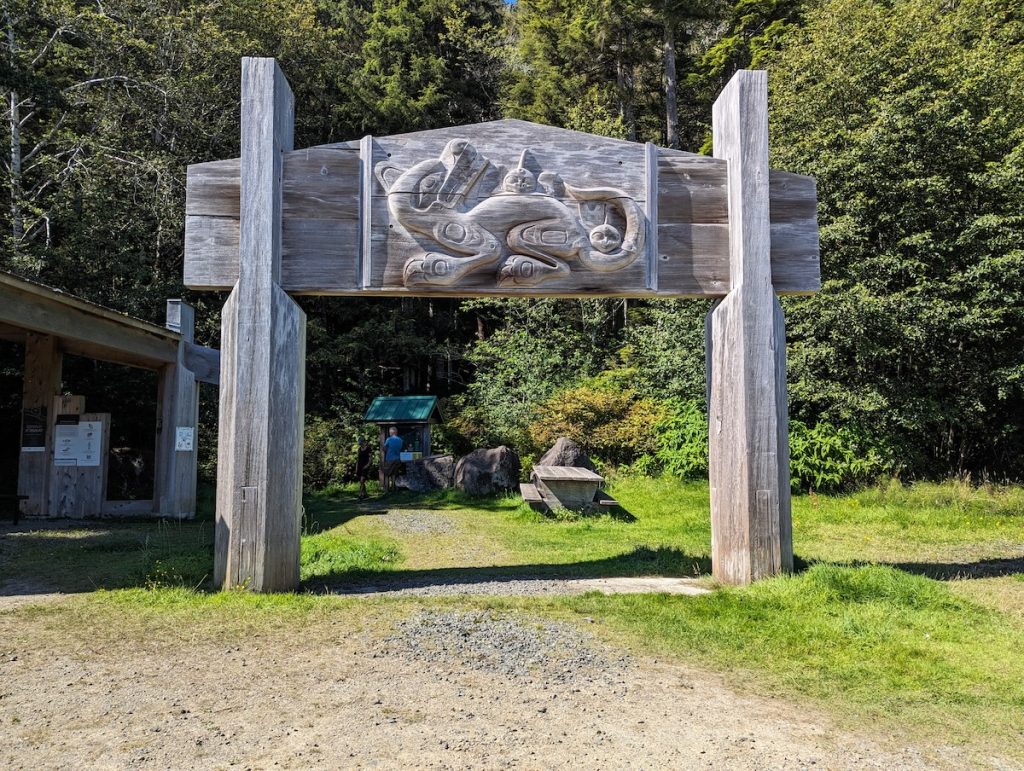
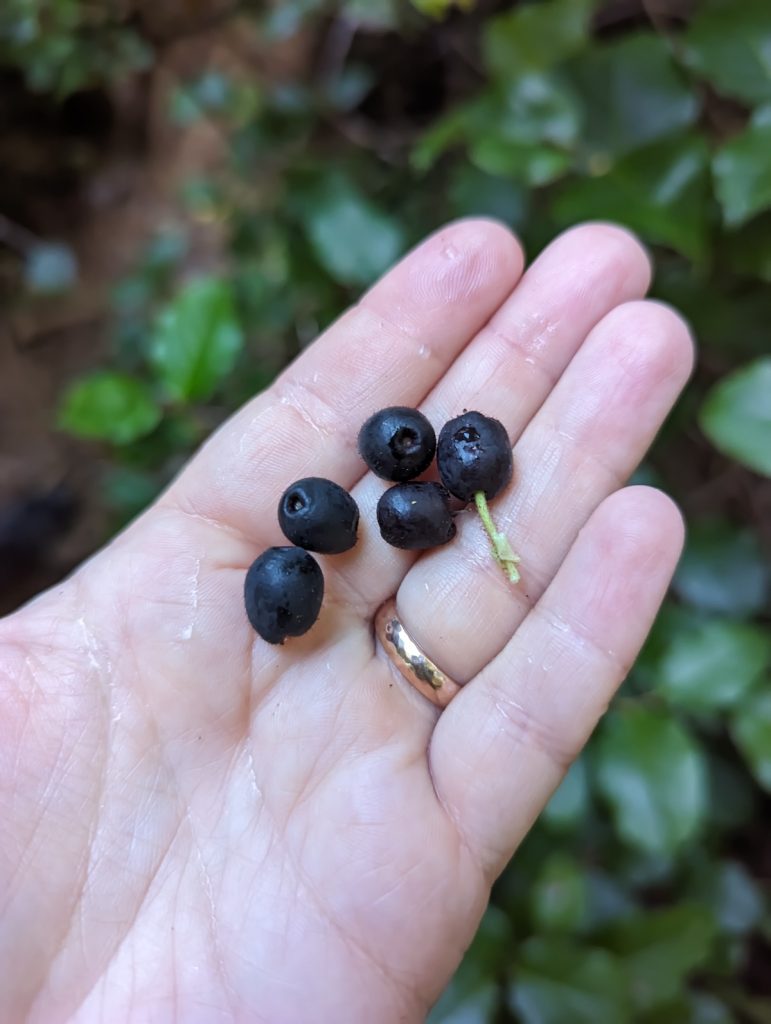
As we walked the trail, we enjoyed learning more about the supernaturals, snacking on native edible berries, and soaking in the quiet nature of Haida Gwaii.
Lunch – Quick Convenience
With very minimal dining options in this area, you can pick between a few choices. Swing by Crow’s Nest Café and Convenience (under new management, so disregard the negative reviews from years ago). Grab one of their savory baked goods for lunch, or just put together whatever smattering of food you get from the attached convenience store.
There’s a Co-Op Grocery nearby as well that has fresh produce and convenience items. You may also want to pack a snack lunch from food you picked up earlier in the week.
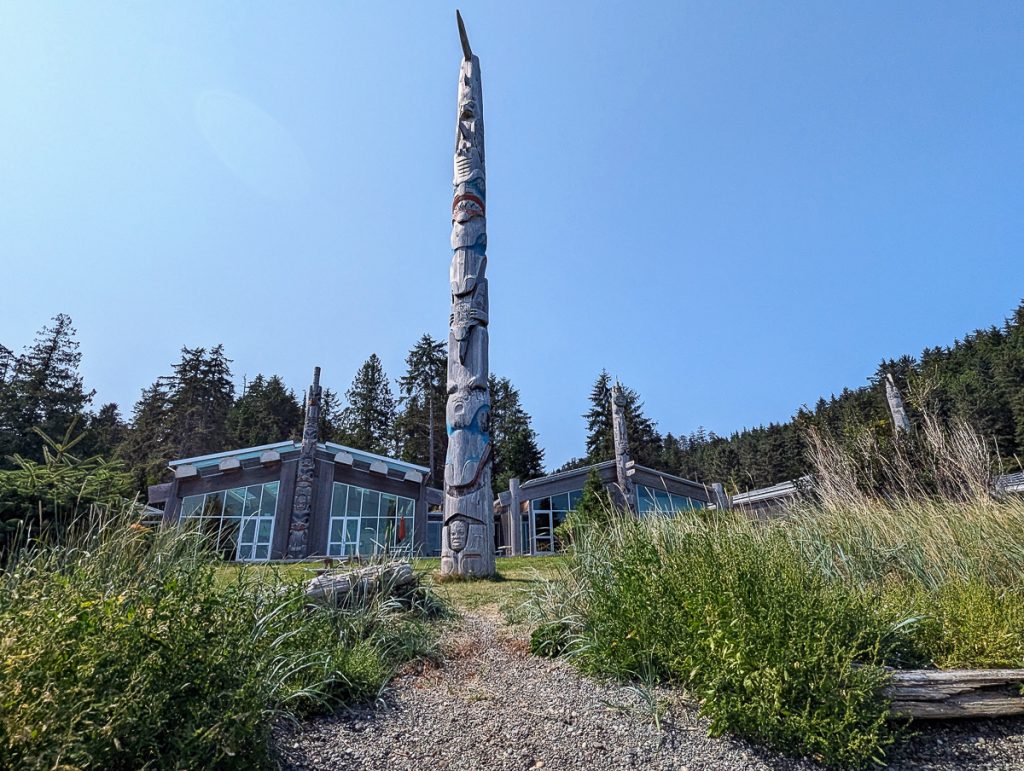
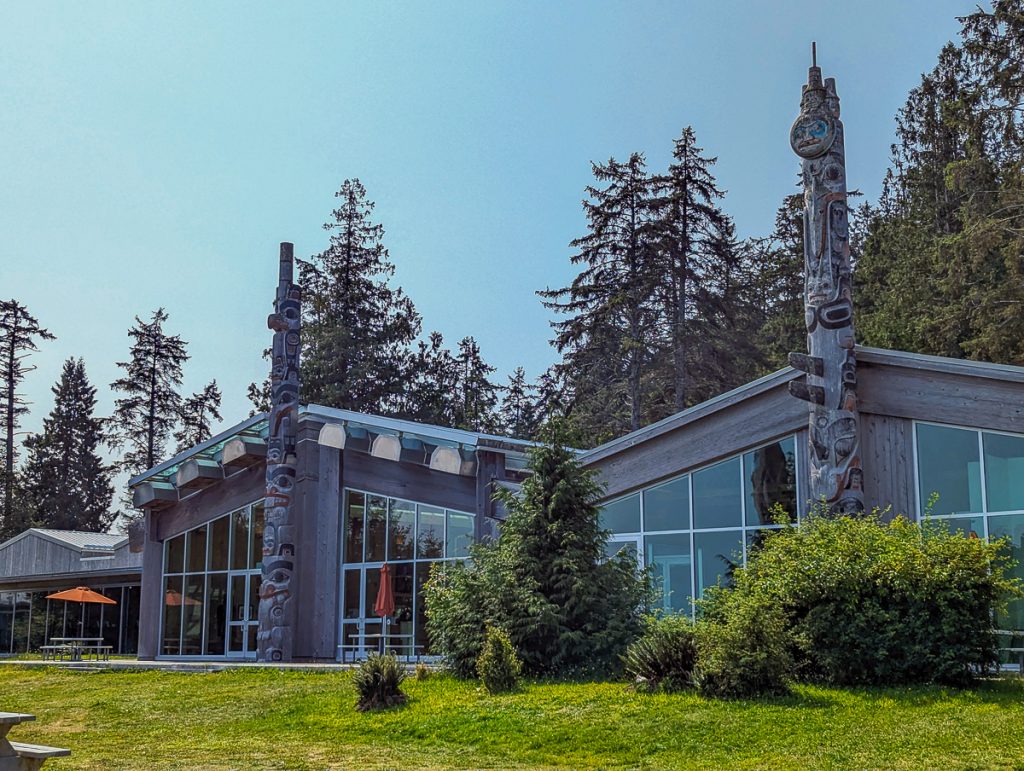
Haida Heritage Center
The Haida Heritage Center was the most profound cultural travel experience I have had in my tenure of travel—and that is saying a lot.
This is a must-do experience on Haida Gwaii and non-negotiable in any Haida Gwaii itinerary. We plugged our car in to charge, another one of the island’s official chargers, and entered the cultural center. Visiting earlier in the week gives you more context for traveling on Haida Gwaii.
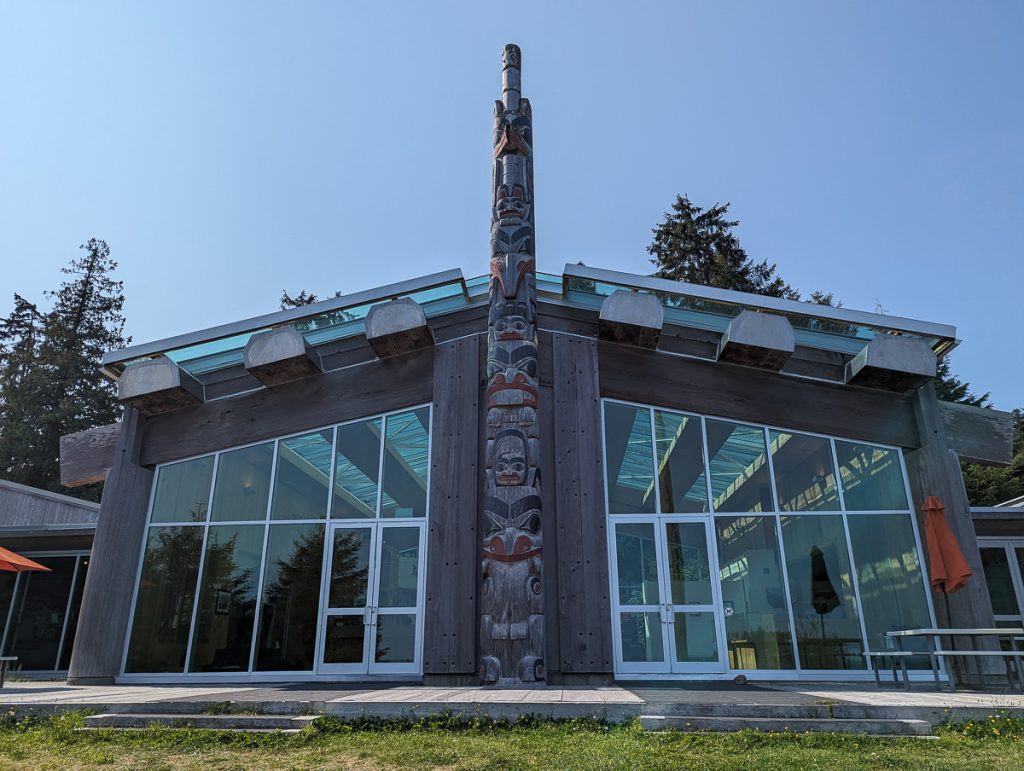
We paid extra for a longer guided tour. Our guide was a younger Haida woman who was studying to revitalize her culture. She approached complex topics directly yet kindly to ensure we learned Haida culture and history through their lens without rose-colored glasses.
We started with prehistory—the Haida origin stories and supernatural creators. Massive, colorful masks and carvings of these beings adorned the walls, encapsulating entire stories in a single piece of art. We learned about their villages, clans, matriarchal structure, subsistence life, and monumental poles.
Our guide’s Indigenous knowledge regarding ecology was very different from mine. I enjoyed listening to her perspectives about the loss of otters and the introduction of beavers to Haida Gwaii.
We explored the path to colonization and observed how clothing and art evolved through trade. However, it wasn’t long until their autonomous trade options were taken away.
Clear written records indicate intentional spreading of smallpox for “the extirpation of this execrable race.” Colonial armies had been inoculated, but the Haida people were offered no treatment.
The archipelago went from a bustling and thriving cultural center with many villages and cultural sites to a nearly 95% population loss over the years. The loss of cultural knowledge during this time was akin to burning 30,000 books.
Other survivors were shipped off to residential schools. At the end of the tour, one piece of art hung on a wall was created by children from residential schools. A vivid and dark image evoking the trauma, torment, and pain of children.
Our time with Mackenzie, our guide, was up. She left me crying, but with a message of resilience for the Haida people and culture as they rebuilt.
Raw and emotional, we stuck around and explored more of the Heritage Center with Mackenzie’s words and lessons etched on our souls. We gained a new perspective on our home in Canada, including colonization and the country’s long journey to reconciliation.
Dinner at Keenawaii’s Kitchen – or alternative
Keenawaii’s Kitchen is a Haida dining experience in the private home of Haida Elder, Roberta. Advanced reservations are a must, as there are only a select number of seats around the shared table.
Keenawaii’s Kitchen serves Indigenous foods, including salmon, herring roe, venison, seaweed, halibut, and local vegetables. Dinner starts with a Haida prayer, and there are cultural elements such as traditional songs.
Keenawaii’s Kitchen is a highly praised experience, but it is very different from what you might be used to coming from a Western culture.
Setting your expectations will help ensure you have a great dinner.
- Haida hospitality is not Western hospitality. Things operate differently from scheduling to service expectations. Leave your expectations and preconceived notions at home.
- Food portions are on the small side, allowing you to “sample” a variety of Indigenous foods.
- This isn’t a restaurant; it’s like someone’s grandma cooking up all their favorite foods for you in their home.
- Dining is in a shared capacity. You’ll be sitting next to strangers and other travelers.
- Roberta is your host for dinner, but she is not at your disposal. Access to her time is limited, so if you want to learn more about the Haida people, consider visiting the cultural center.
Full disclosure, numerous locals recommended Keenawaii’s Kitchen to us, but we didn’t eat here, as we are vegetarians. I have always said, especially during my regenerative travels in Kakadu, that Indigenous cuisine is one of the most sustainable and ethical foods. Having grown up on subsistence hunting and fishing in Alaska, these foods are sourced with care and connection. There is no judgment from me, even if you, as a vegetarian, decide to eat these foods.
That just wasn’t on the books for me this trip.
Alternatives for vegetarian dining are:
- Haida House / wherever you are staying
- Restaurants in Daajing Giids
- Port Clements restaurants
Enjoy the evening back at your accommodation. If you’re at the Haida House cabins, like us, you can spend your evening in the hot tub or at the lodge bar.
Day 4: Provincial Parks, Port Clements, and Golden Spruce Trail
Enjoy another slow morning, or an optional bushwacking hike, The Anvil Trail, that takes you through the stages of forest recovery. No matter how you choose to spend your morning, stop by Mayer Lake in Naikoon Provincial Park for some ecology information.
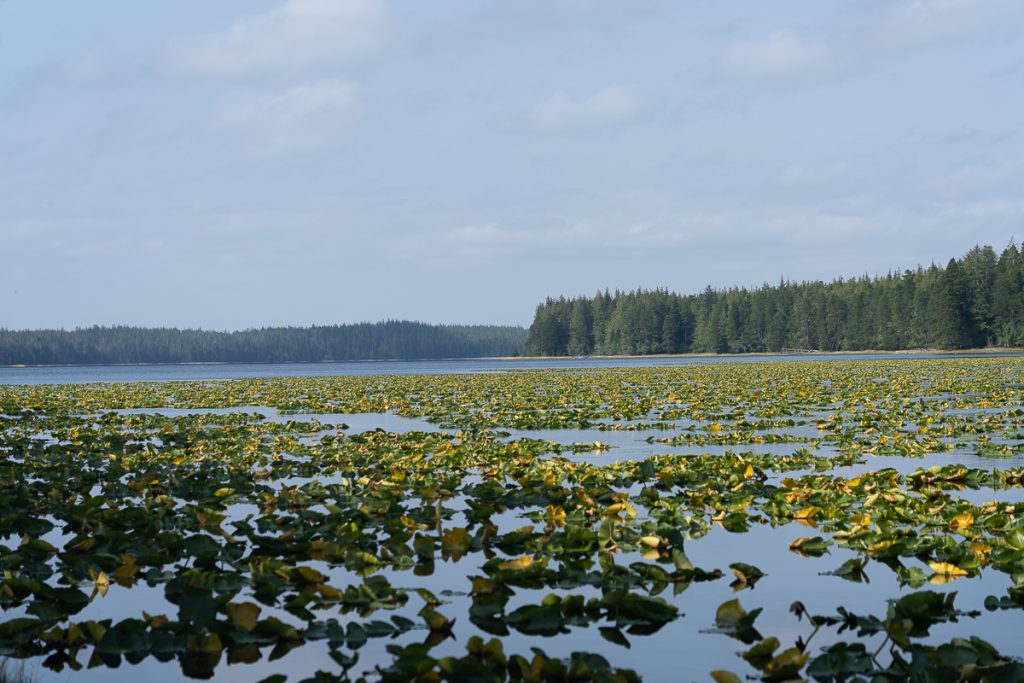
You’ll eventually work your way to the region around Wáan Kun (Port Clements). Here you can explore a small colonial village with historical sites, a nature walk to the culturally important Golden Spruce, and end the day with a sunset dinner at Axe & Anchor.
Day 4 Overview
- Eat: Breakfast at your accommodation
- Do: Slow morning / or Hike Anvil Trail
- See: Kwiid Suu (Mayer Lake)
- Eat: Fork in Port food truck
- Do: Walk the Kiidk’yaas (Golden Spruce) trail
- Visit: Wáan Kun (Port Clements)
- Eat: Sunset dinner at Axe & Anchor
Slow Morning and/or Hike Anvil Trail
Slow mornings aren’t just for sleeping in; sometimes, they are for waking up with the sunrise. Staying at the Haida House, we felt like we had a private beach, so we found ourselves down at the ocean, watching the sky transform from night blue to a dusty rose pink, marking a new day.
If you want a more relaxed day, enjoy lounging about, beach walking, reading, writing, or whatever creative outlet you wish to pursue.
For active adventurers, this is a great time to hike the Anvil Trail. This trail is about 5-6km and took us under 2 hours to walk.
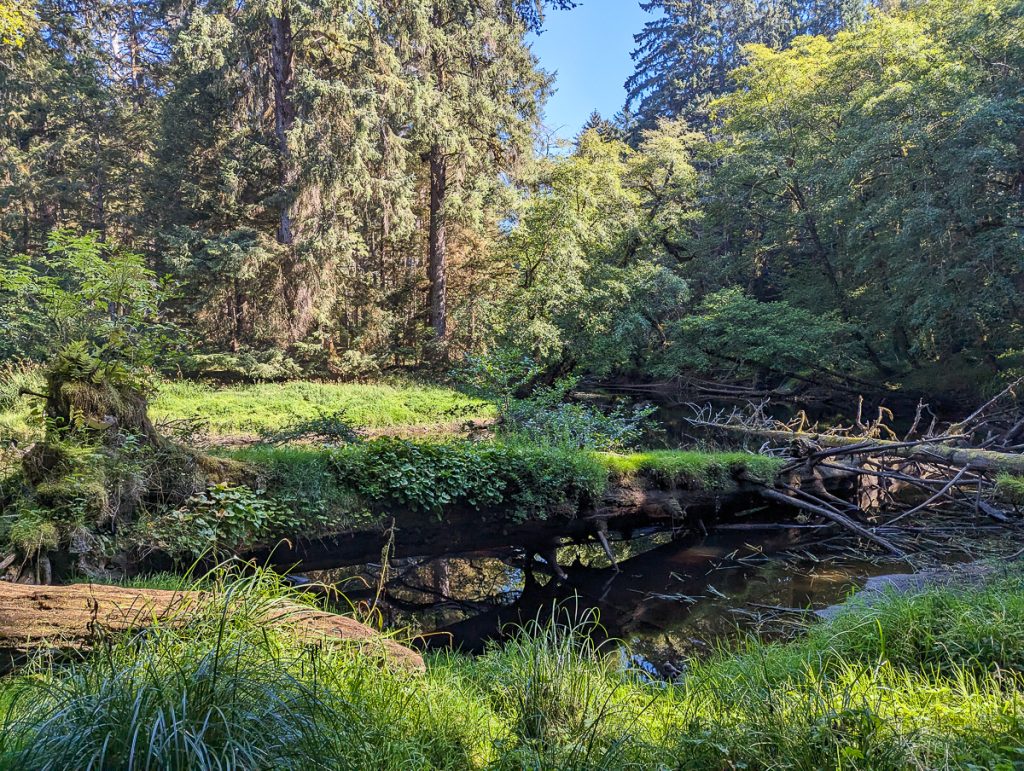
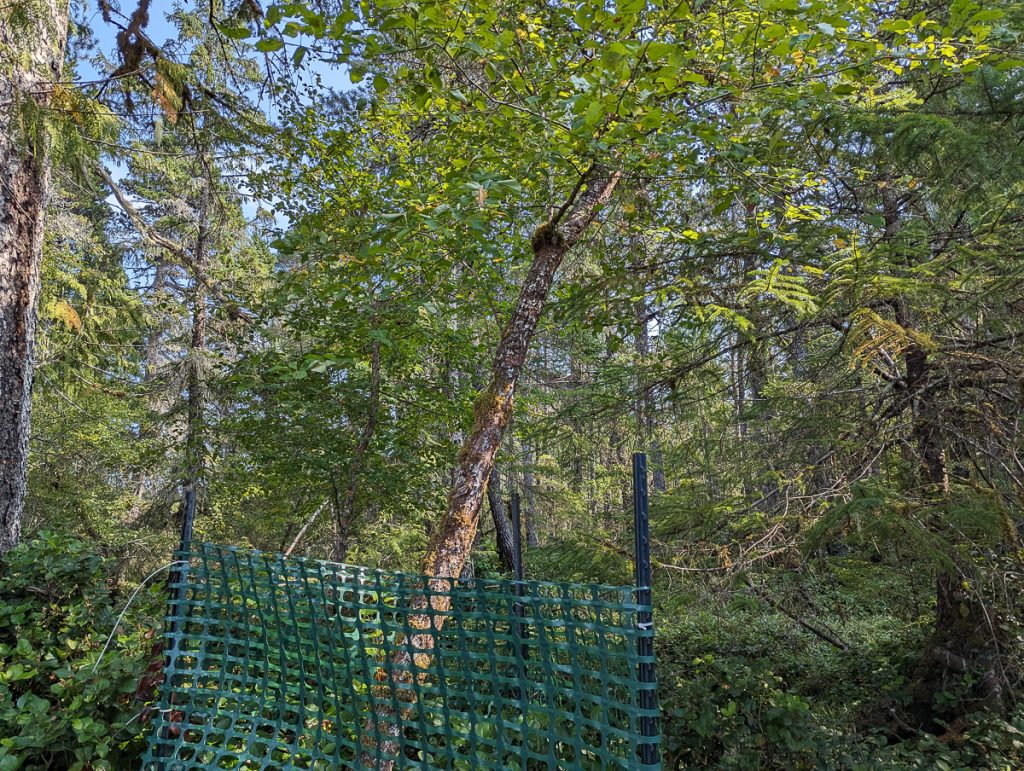
Note: Most of the trails in the area are well-maintained; the Anvil Trail is an exception. The Anvil Trail isn’t challenging, but it is overgrown at times and requires a keen sense of trail navigation, hopping over logs, hiking safely in bear territory, and trudging through overgrown parts, mud, and slippery logs.
We loved this trail, but it might not be for everyone.
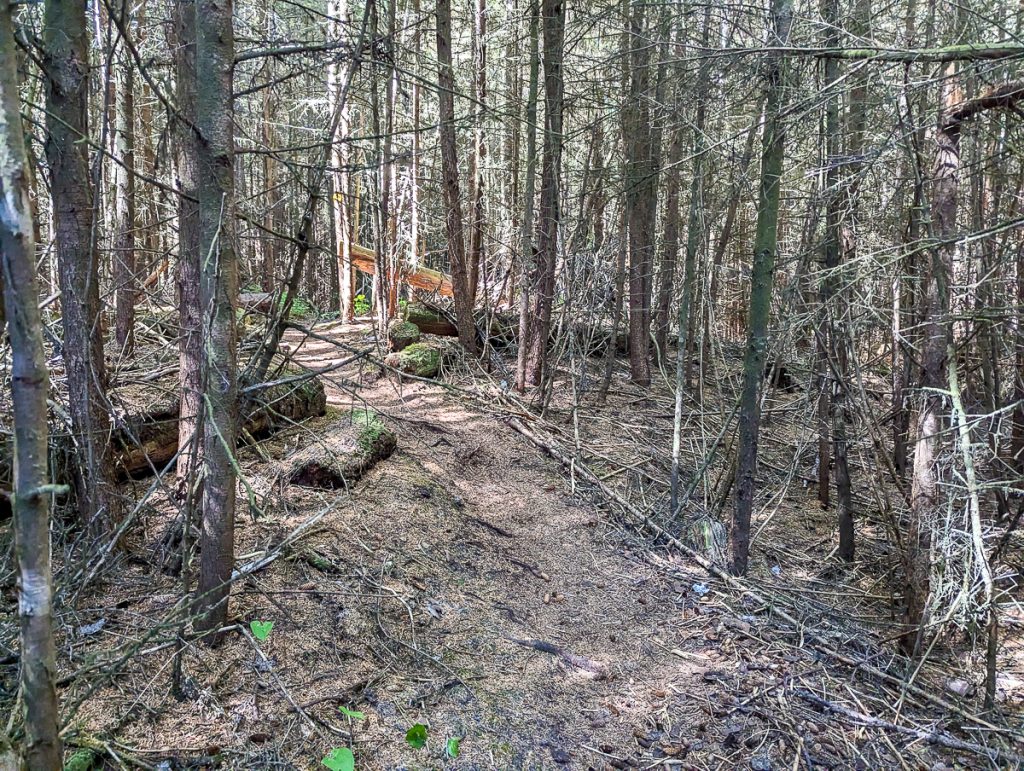
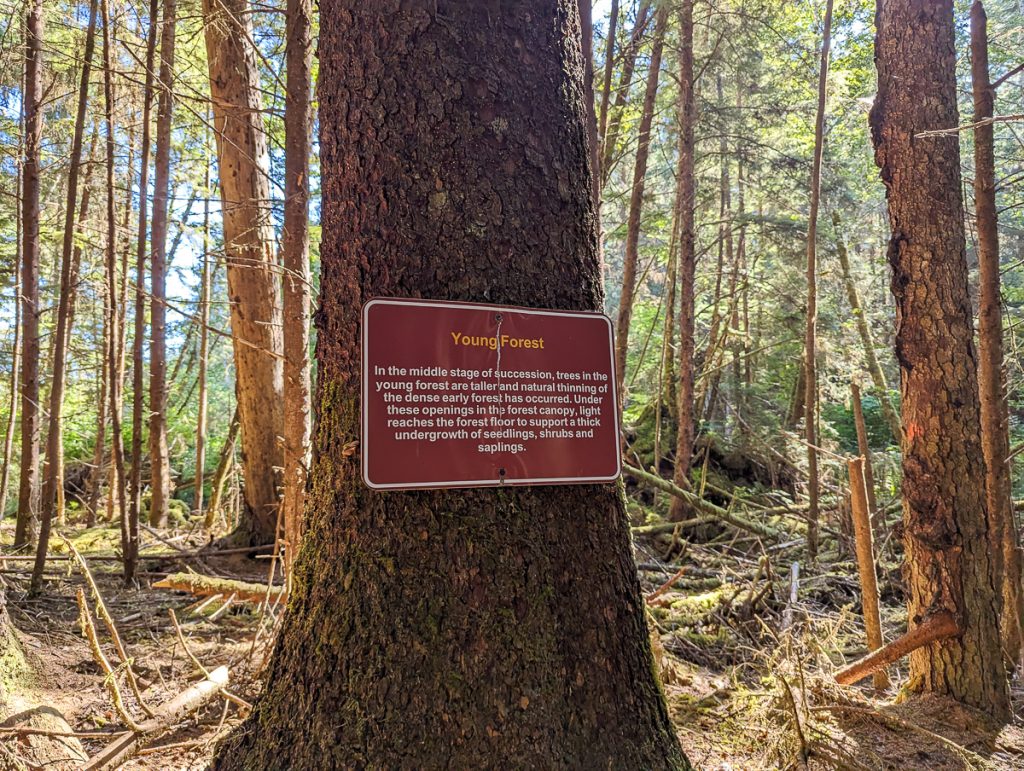
The trail takes you from a dead forest to the early stages of a forest in recovery, and you progress until you reach a proper old-growth forest.
The ecologist in me was fascinated by the changing ecosystem. It was both depressing to see the dead forest (logging and natural disaster), but hopeful to see the recovery and signs of life deeper into the forest.
We started in what felt like a dystopian movie. I felt a sense of panic as I looked ahead at the barren and dead trees that seemed to stretch on forever. Was there any life here?
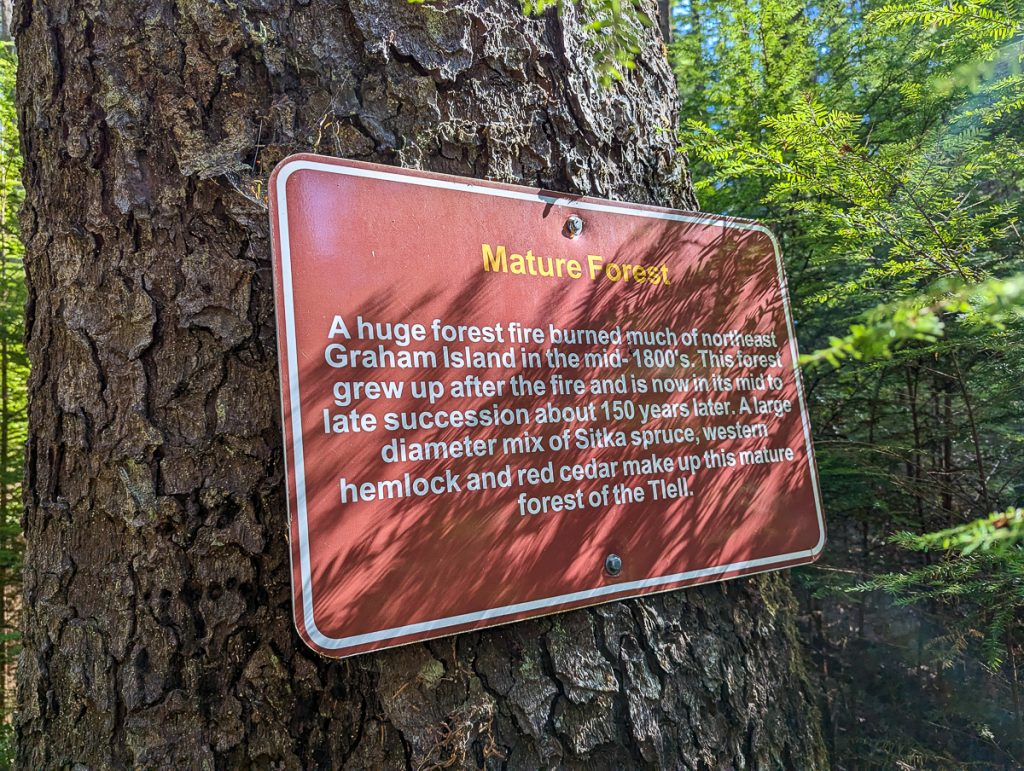
Over time, my anxiety subsided. Educational signs about the stages of forest recovery were helpful in understanding what was happening around us.
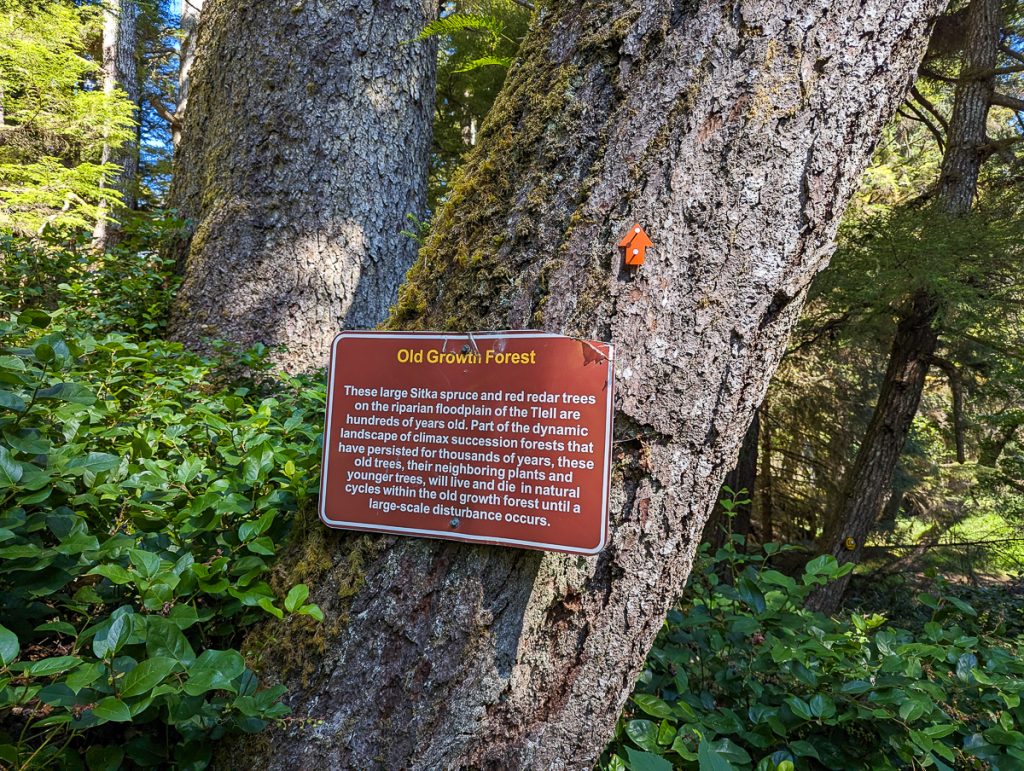
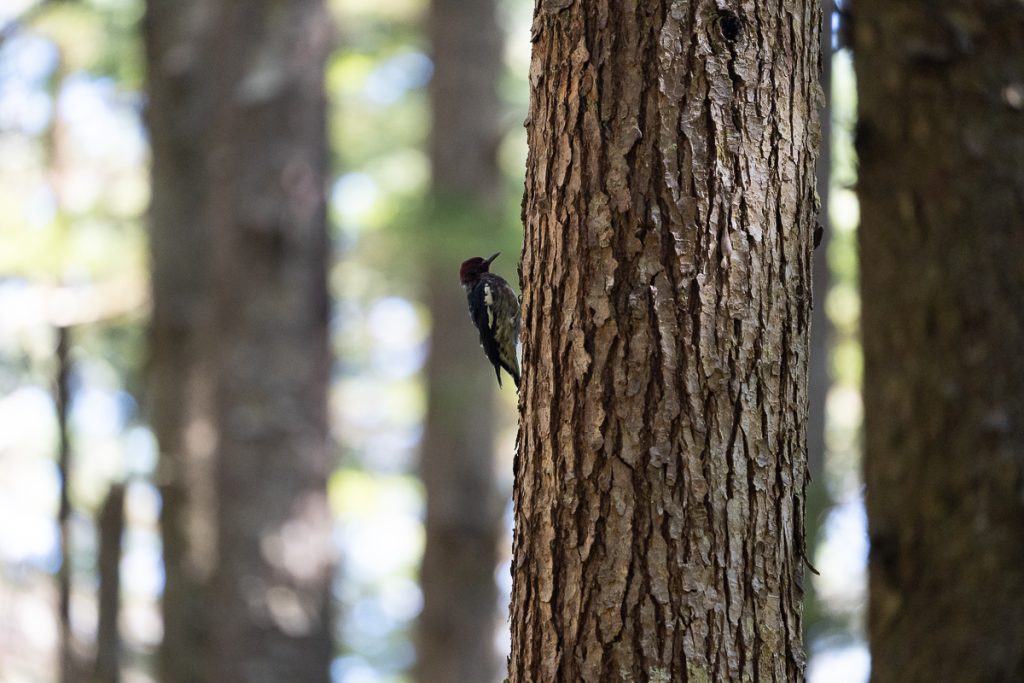
Life returned to the forest, and we saw woodpeckers and squirrels. As we entered the old-growth forest, it was bursting with life as if we had found the heartbeat of the forest. Eagles perched high, looking into the river for fish to catch. Ancient trees stood tall, and felled logs blocked our path.
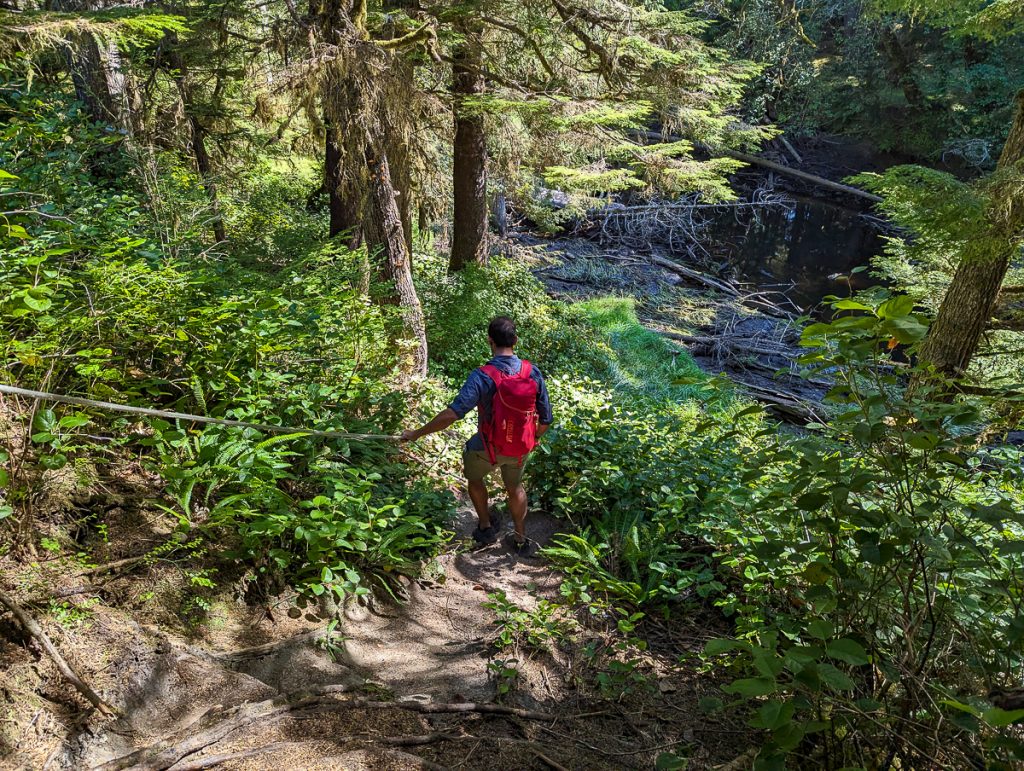
We munched on native salal berries and kept an eye out for bears. We got lost once or twice on the way back, but always managed to find our way back to the trail and eventually to our car.
Kwiid Suu (Mayer Lake)
We already had a great taste of Naikoon Provincial Park while hiking Taaw Tldáaw and the Pesuta Shipwreck, but we wanted a bit more, so we stopped at Kwiid Suu (Mayer Lake).
Kwiid Suu is a day-use site. You can spend as much or as little time as you want here. There’s a short walk around part of the lake, which you can take to learn about the state of the ecosystem. There’s some information about native crabapple restoration and the impacts of invasive species.
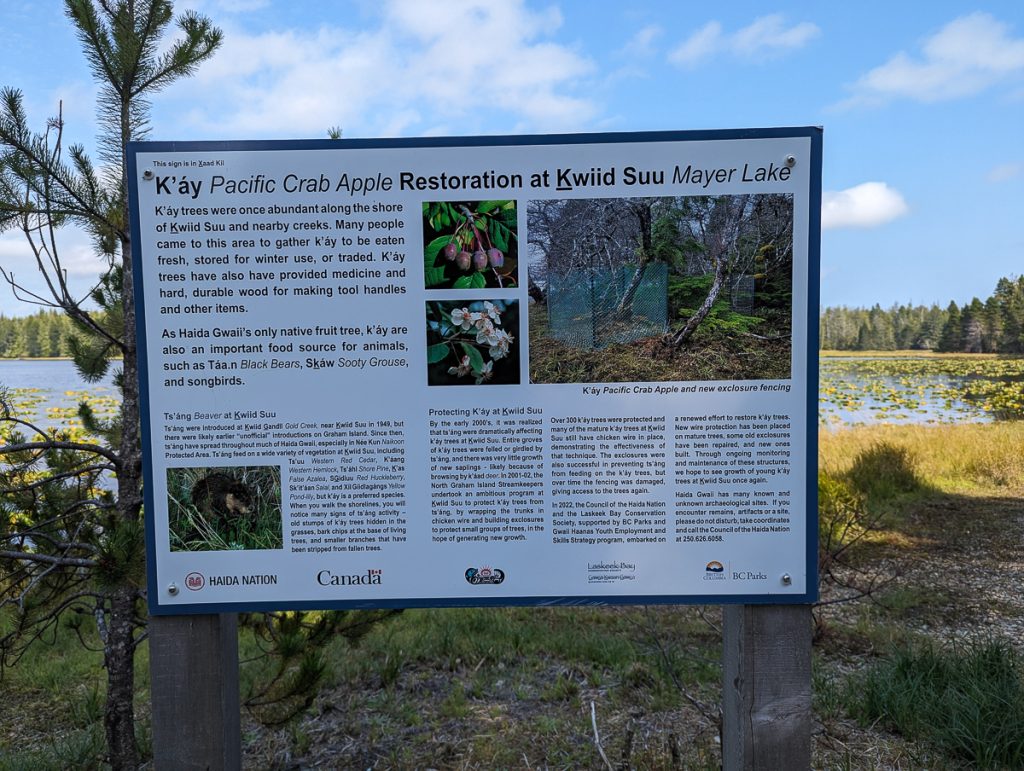
The Pacific crabapple is Haida Gwaii’s only native fruit, and is an important food source for Haida people and native animals across the islands. Unfortunately, when the beaver was introduced, their population grew without predators.
Beavers felled most of the crabapples, and the introduced deer consumed any new shoots. The crabapple was almost entirely extirpated. A Haida-led conservation program engaging youth has taken the initiative to protect the trees along this lake, some of the last few left, and encased them for protection from deer and beaver.
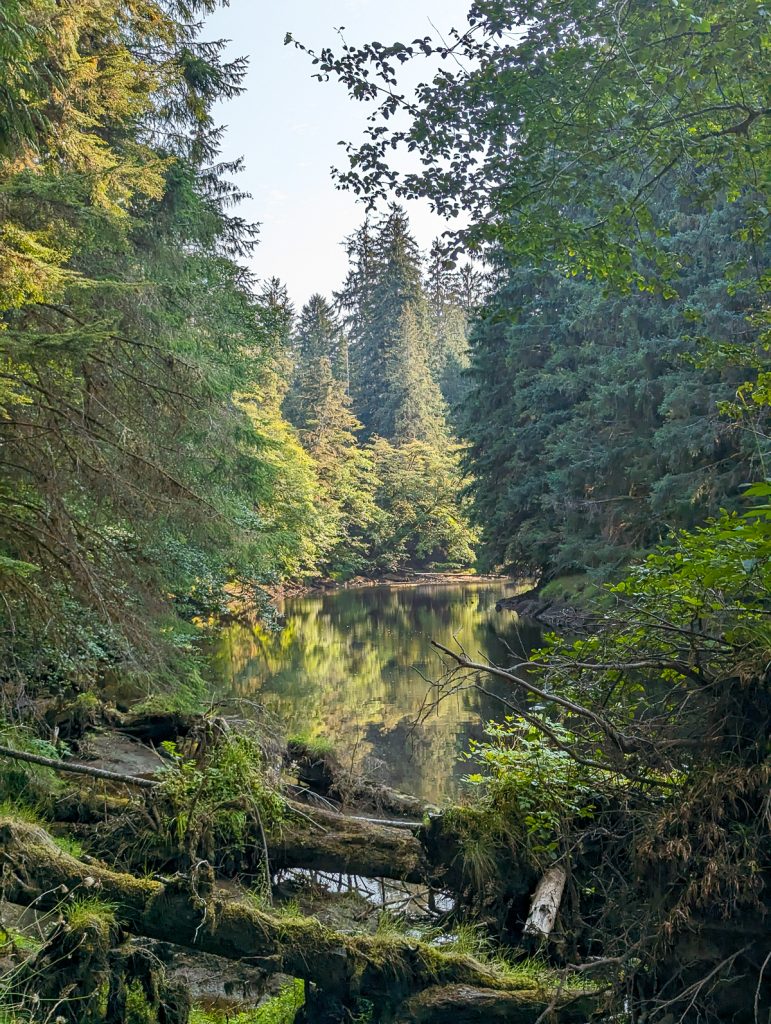
If you brought your SUP or kayak with you on a road trip, bring it to this lake, as it is the perfect place for a peaceful paddle among lilies.
If you don’t walk the whole trail, enjoy the view before heading off.
Lunch at Fork in Port
If it is Thursday to Sunday, stop by the Fork in Port food truck just outside of Wáan Kun. Grab hot dogs, burgers (with a vegetarian option), fries, baked goods, wraps, and more from this locally owned food truck. Enjoy eating with other island locals and supporting small businesses.
Here on a different day? Check out the Buck Snort Café in Port Clements.
Kiidk’yaas Trail (Golden Spruce)
From the food truck, we went on to the town of Wáan Kun (Port Clements), but we’re not stopping here yet. We decided to work off our lunch by walking the Golden Spruce Trail.
This might be your first time on a proper logging road, but don’t worry, it is not a far drive to the trailhead. When driving on a logging road, always:
- Have your headlights on
- Be prepared to pull aside for logging trucks
- Have a spare tire and know how to change a tire
- Have a GPS phone or a way to reach someone in an emergency.
The Golden Spruce Trail is a short and flat trail through the forest. You are walking to the point where Kiidk’yaas once stood. The story of the Golden Spruce is baffling and wild. It has a tragic ending where the tree was cut down in a brutal act of defiance.
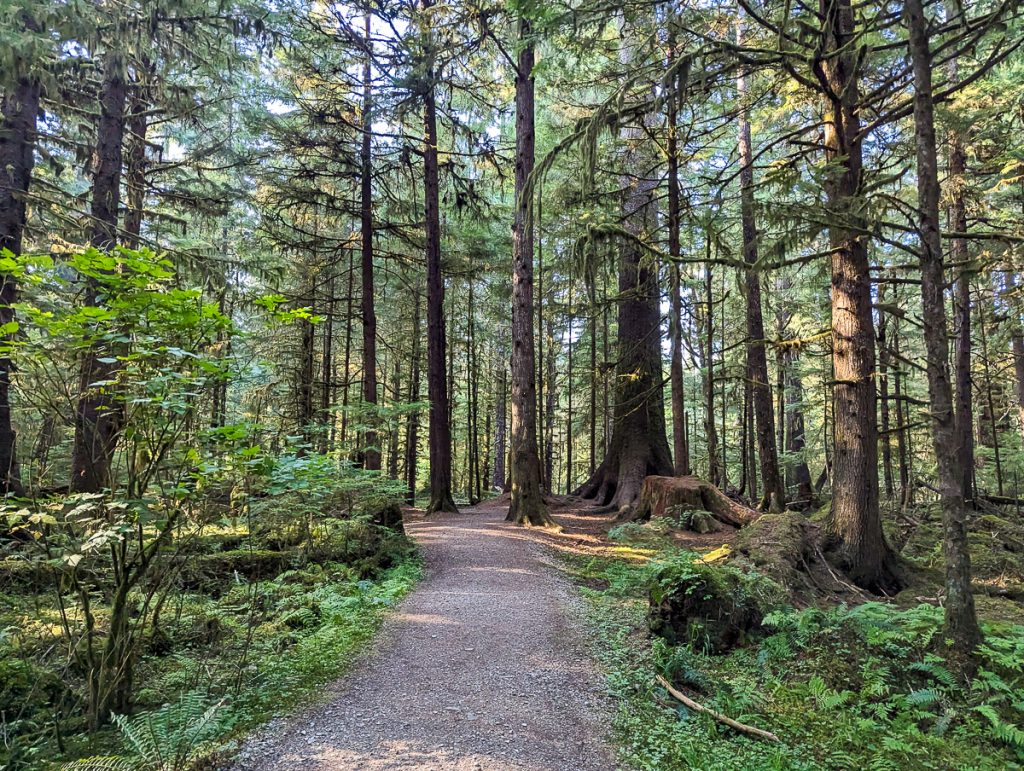
However, long before it was cut down, the tree lived a long, prosperous life and remains an important part of Haida culture.
The story tells of a young boy and his grandfather who left their village during a violent winter storm. The grandfather told his grandson never to look back, for if he did, he would go on to the next world.
The boy eventually disobeyed and looked back. He became the Golden Spruce. A part of him remained for over 300 years for people to look at and remember his story.
The Golden Spruce had a genetic mutation that contributes to a warm golden yellow color that appears as if it is glowing when the light hits it just right.
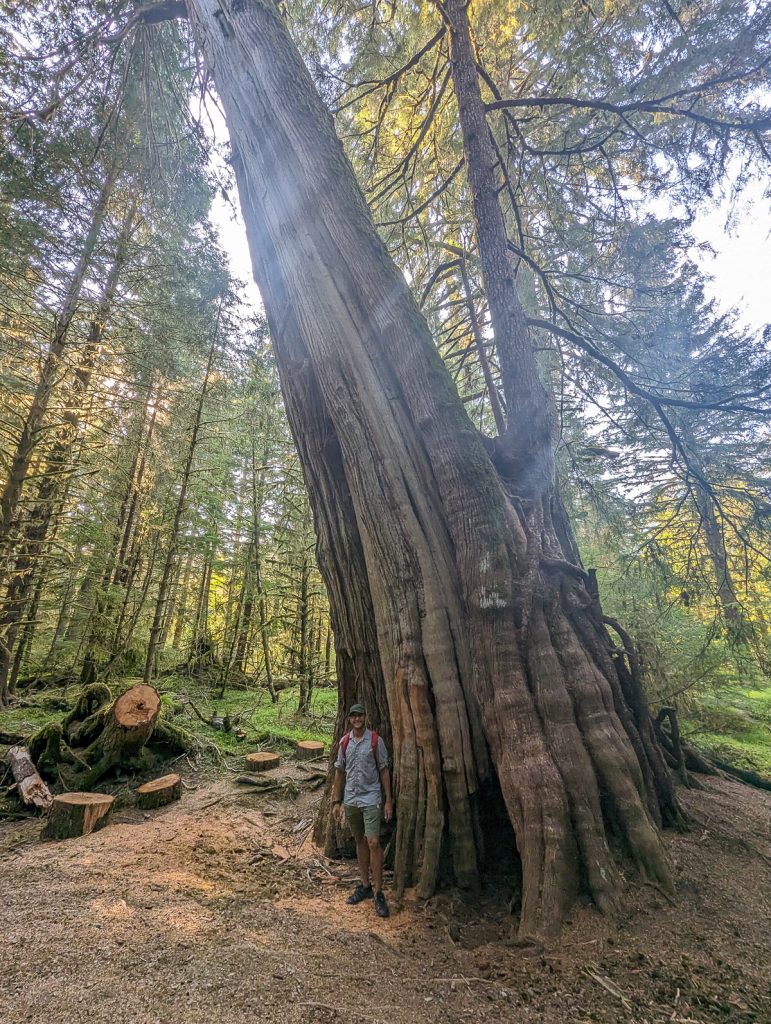
One night in 1997, a deeply troubled forest engineer cut down the Golden Spruce in a misguided protest. The Haida People described a sense of loss in losing one of their ancestors.
The man was arrested, but escaped and was last seen kayaking toward Alaska; his fate has never been revealed, though his kayak was eventually found.
You’ll learn of this story as you walk to the place where the Golden Spruce once stood.
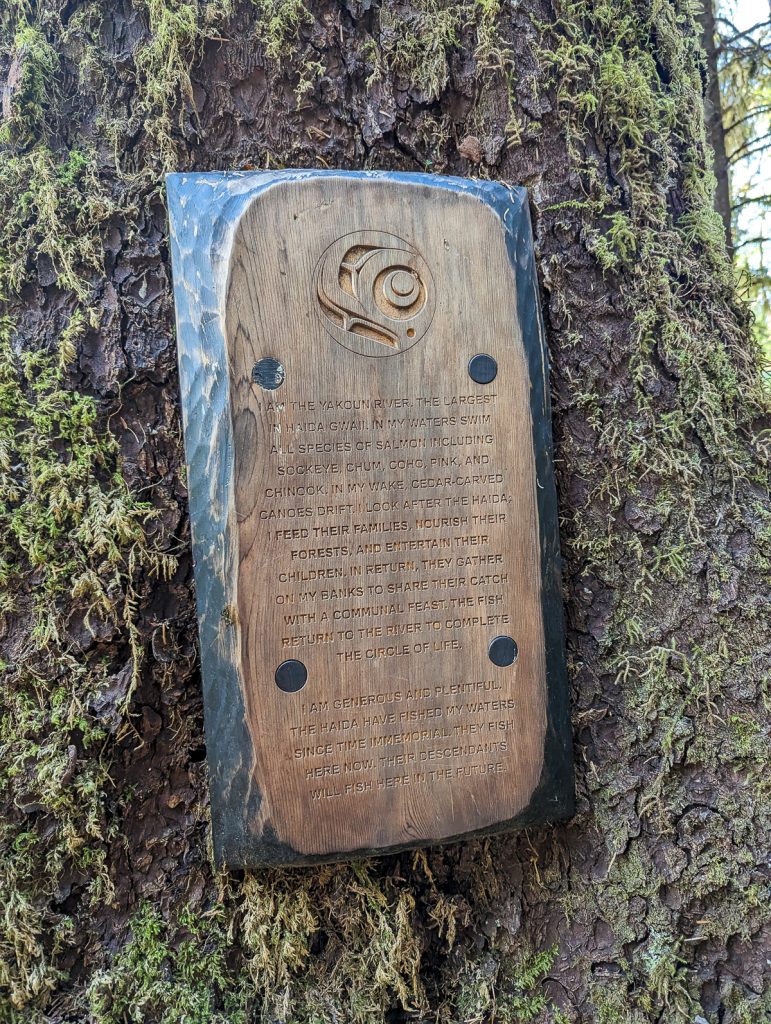
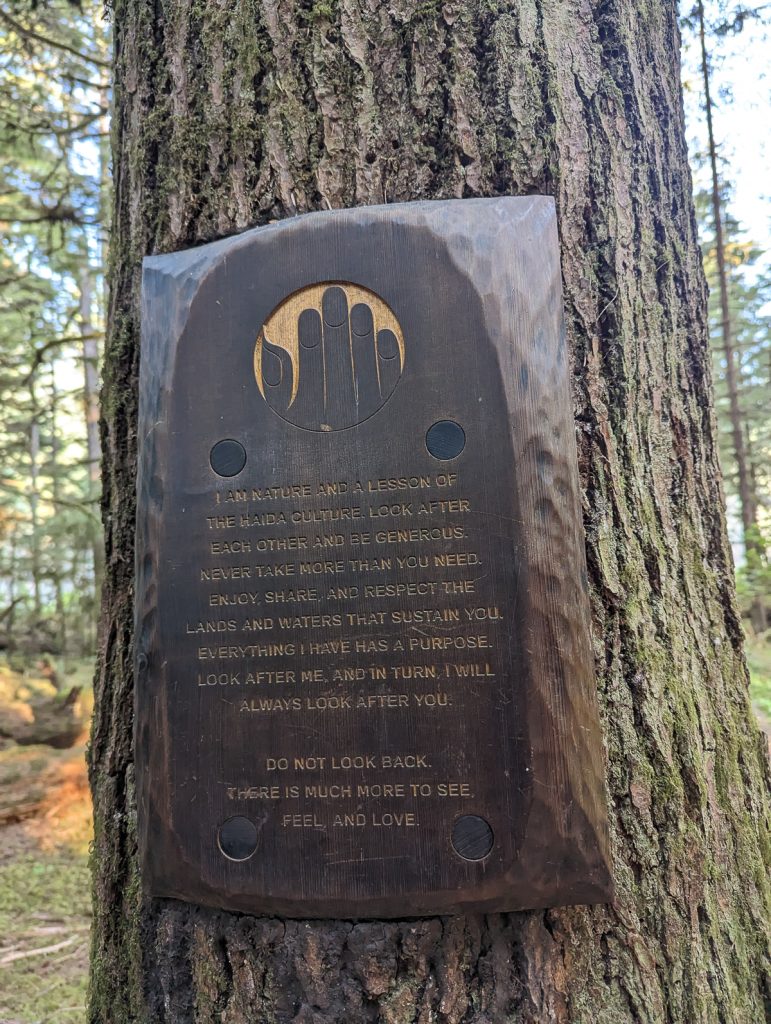
Explore Wáan Kun (Port Clements)
The spruce is not forever gone, though; it lives on. A team of researchers at UBC was able to save a genetic sampling of the tree. They have successfully regrown the tree. A new sapling grows at the Port Clements Community Park. Make sure you visit to see the tree born again.
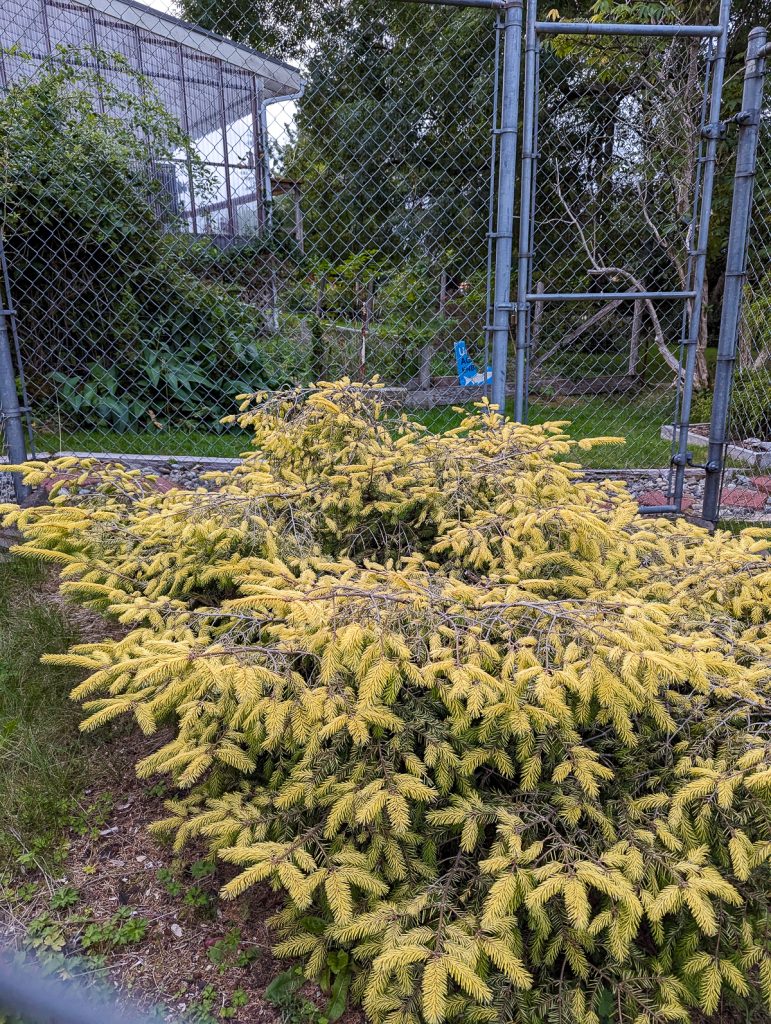
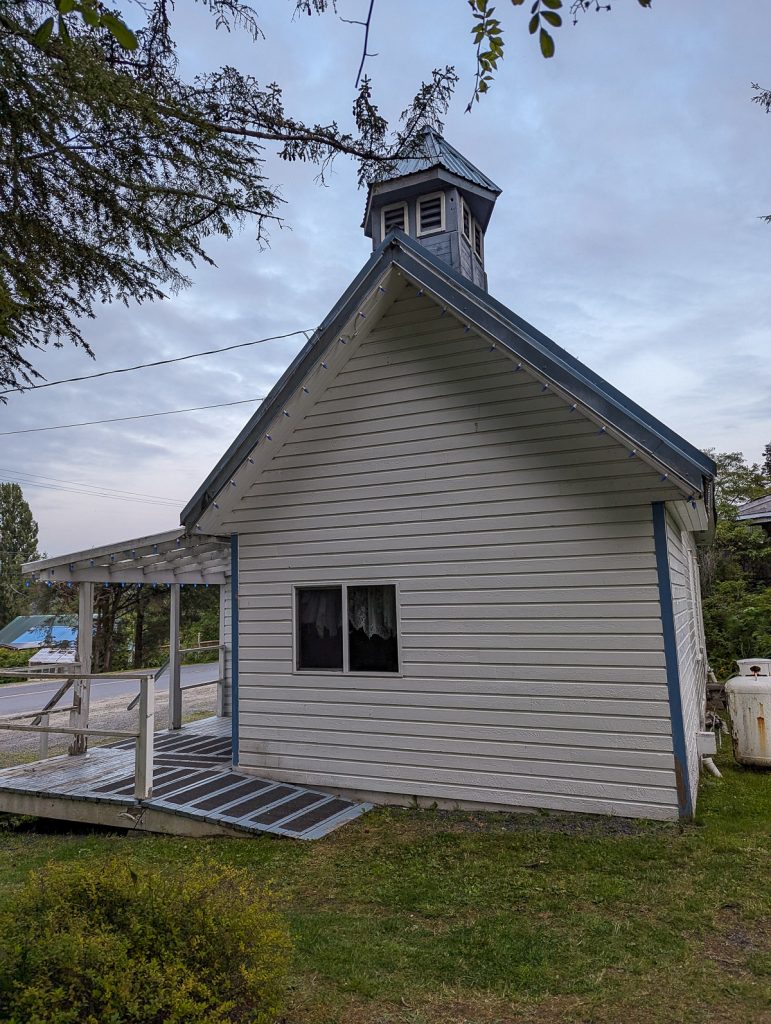
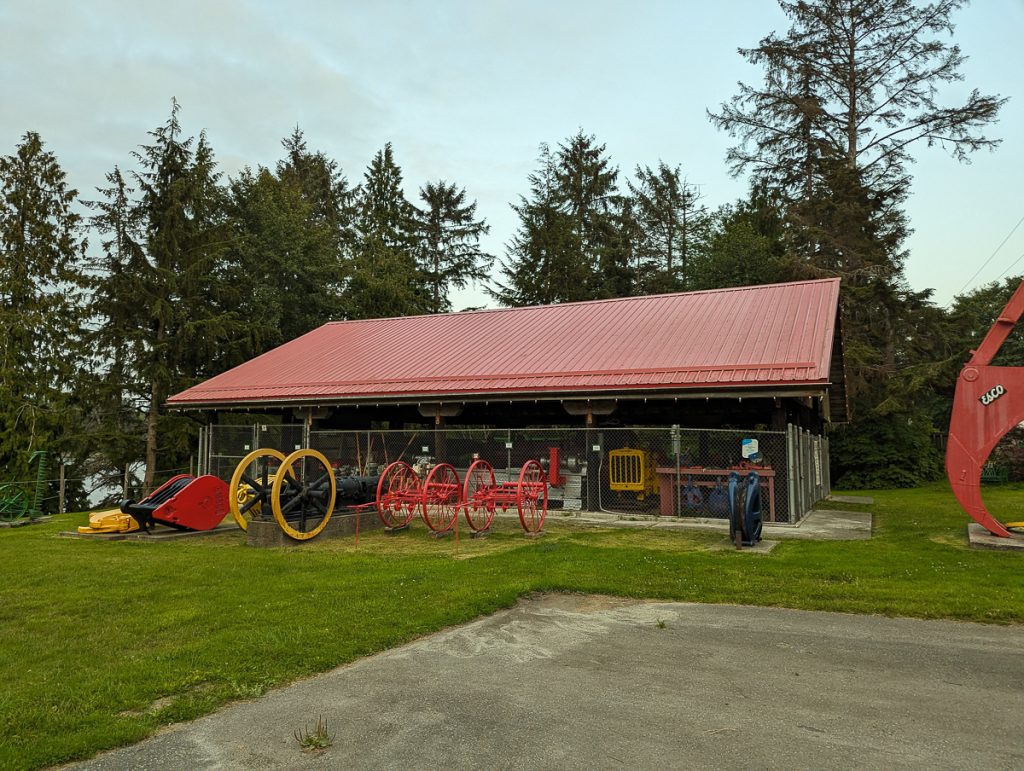
With more time in your day, explore the rest of Port Clements. There’s a Historical Museum that tells the story of colonial logging across Haida Gwaii.
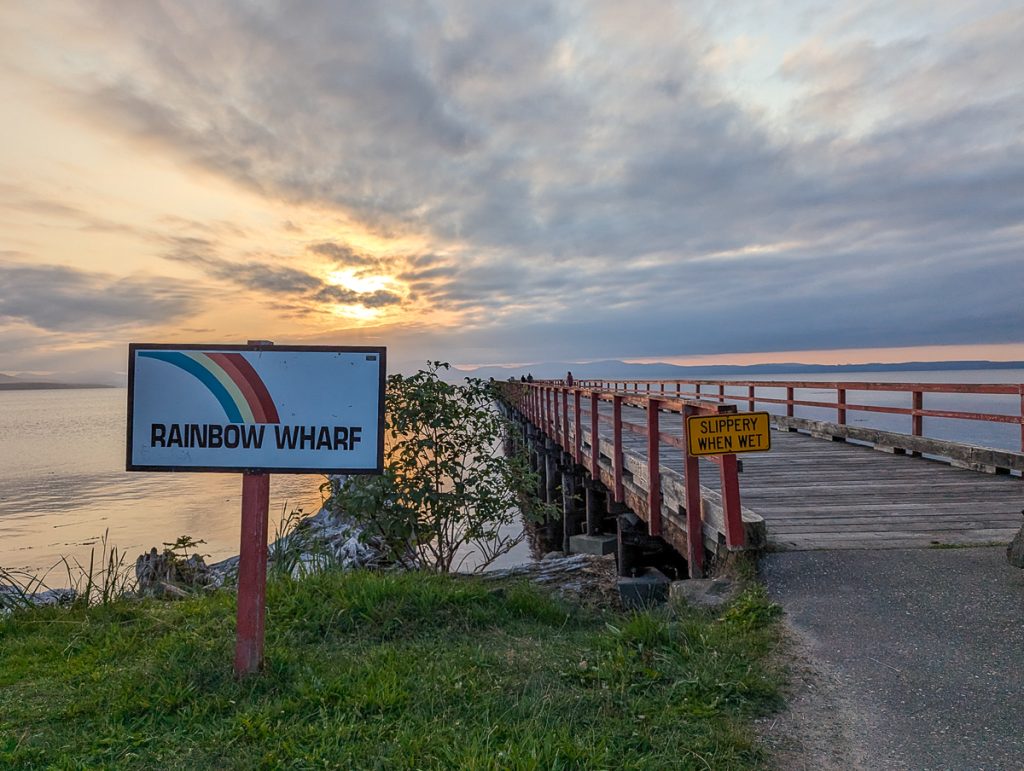
Rainbow Wharf is perfect for a short stroll with stunning views over the inlet.
Dinner at Axe and Anchor
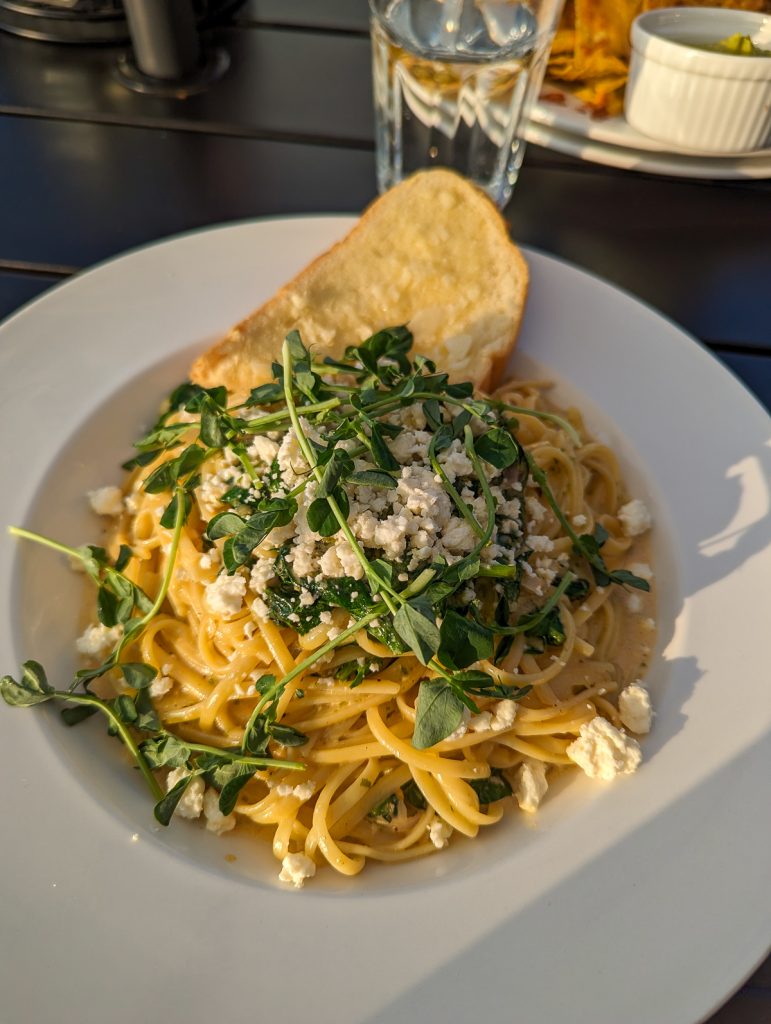
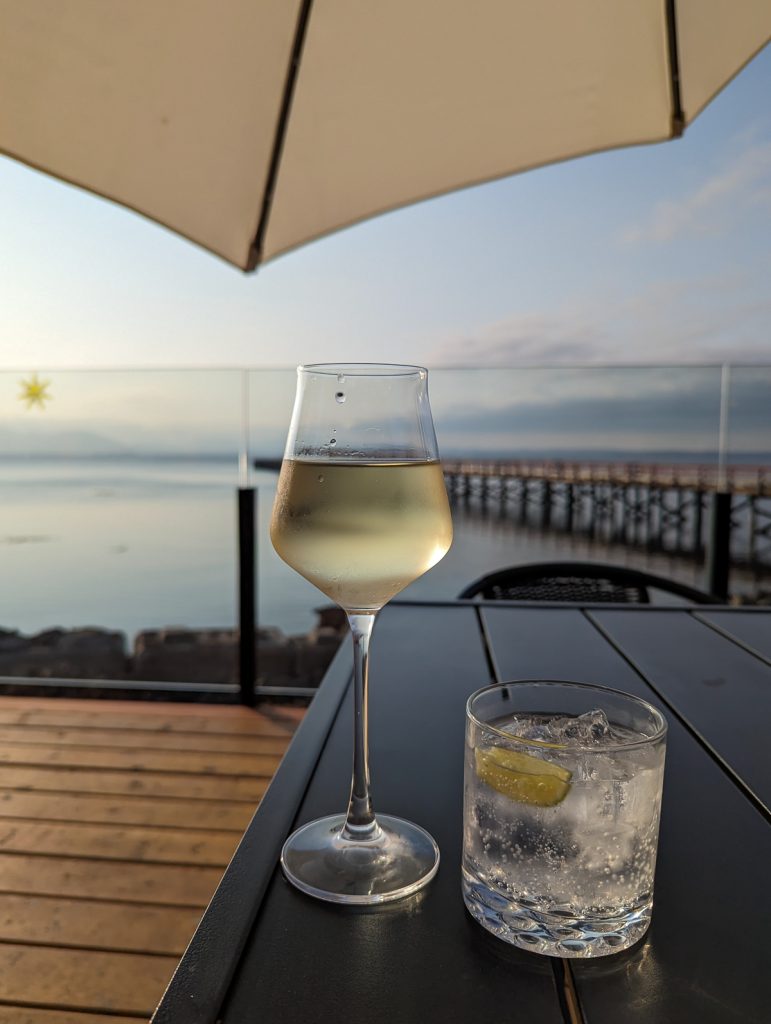
Once we were hungry, we headed to the Axe and Anchor. This is a fun, modern pub with waterfront dining. Arriving early helps you get a good table. We enjoyed sipping wine and watching the slow sunset before eventually returning to the Haida House.
Day 5: Pesuta Shipwreck, Shopping, and Daajing Giids
Today is a great day for the Pesuta Shipwreck Trail. Plan this hike around the tides, and depending on how you play your cards, you may get up early and hike it before check out, or check out of Haida House and leave your car on site to do the hike.
After, head to JAGS Coffee House for lunch. From there, you can visit a few small businesses and shops before an early dinner at Blacktail in Daajing Giids, and then load up on the ferry back to Prince Rupert.
Day 5 Overview
- Do: Check out
- Do: Hike Pesuta Trail
- Eat: JAGS Coffee House for lunch
- Do: Shopping – to support local small businesses
- Eat: Dinner at Blacktail – arrive early
- See: Downtown Daajing Giids
- Board the ferry for the night sailing back to Prince Rupert
Hiking the Pesuta Shipwreck Trail
The Pesuta Shipwreck Trail is one of the most popular hikes on Haida Gwaii. The great thing about staying at the Haida House is that you can connect with the main hiking trail right from the Haida House’s beachfront.
This trail, done as a loop, is about 12 kilometers and can take anywhere from 3.5-4 hours. If the tides are in your favor and you have enough time, you can hike this early in the morning before checking out. Otherwise, you should first check out and then hit the trail. The tides will dictate your choice.
Before leaving the Haida House, we checked the tide timetable to ensure the tide was receding. This was a later morning/afternoon hike for us, so we would check out first.
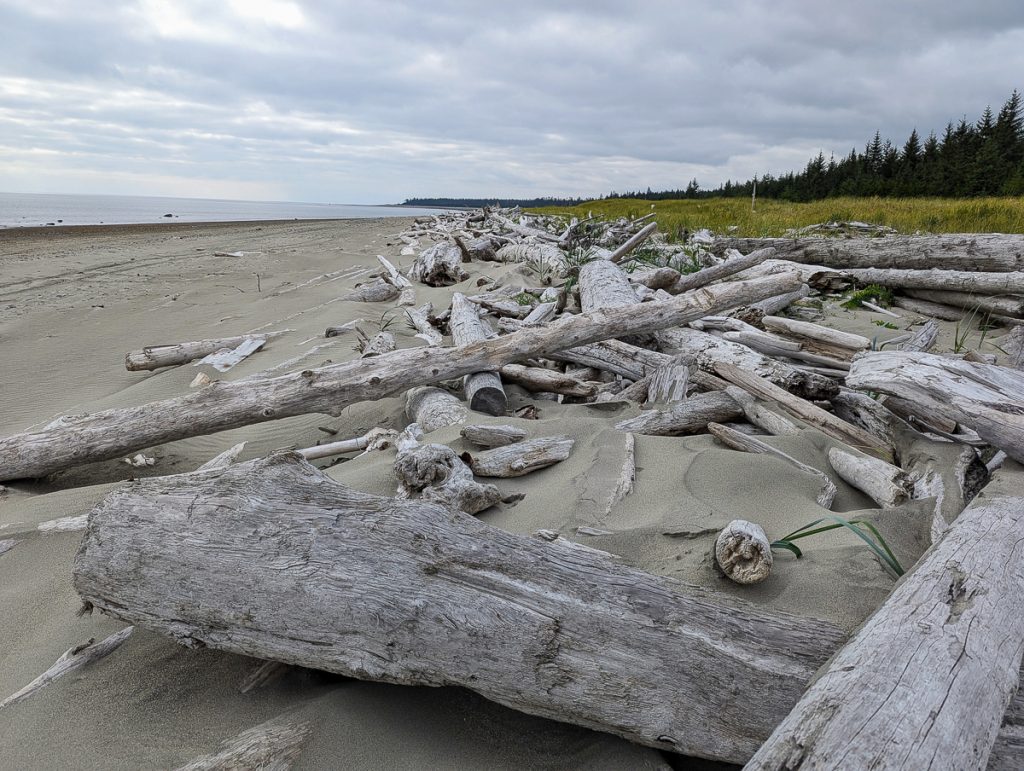
From the Haida House, we started on the beach and trudged along several kilometers of flat but strenuous terrain across the beach.
IMPORTANT: This beach portion of this trail is not safe unless you check the tides. You can only access during a receding to low tide. If the tides are not in your favor and you still want to do the hike, you can start and end on the East Beach Trail as a there and back hike.
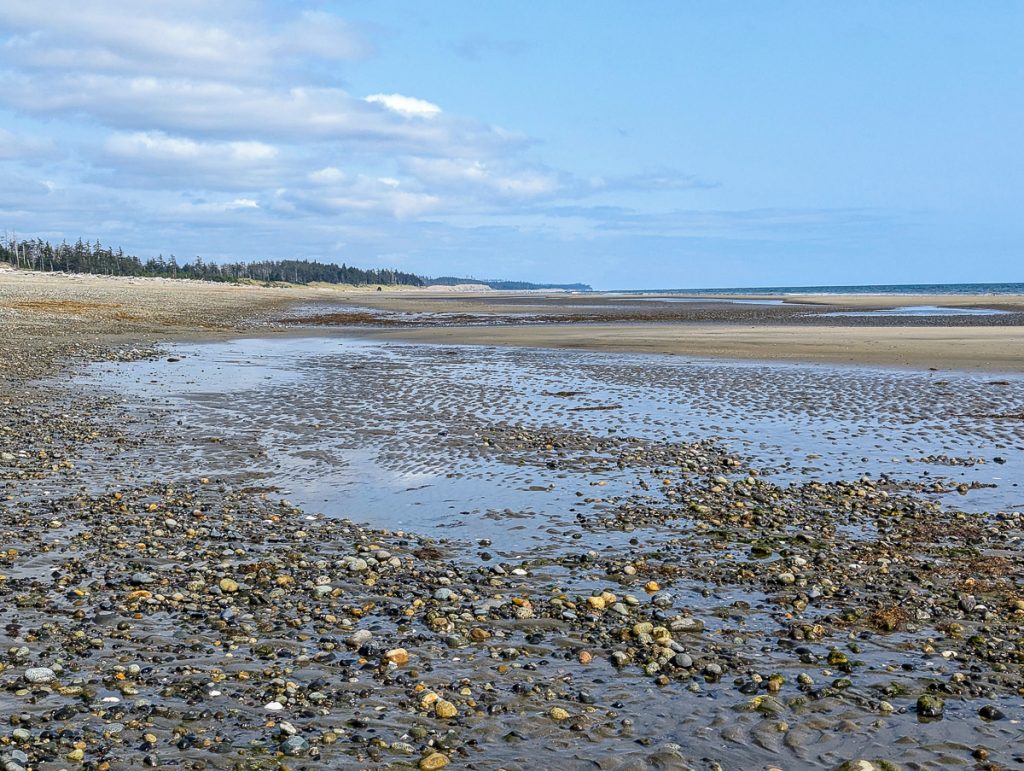
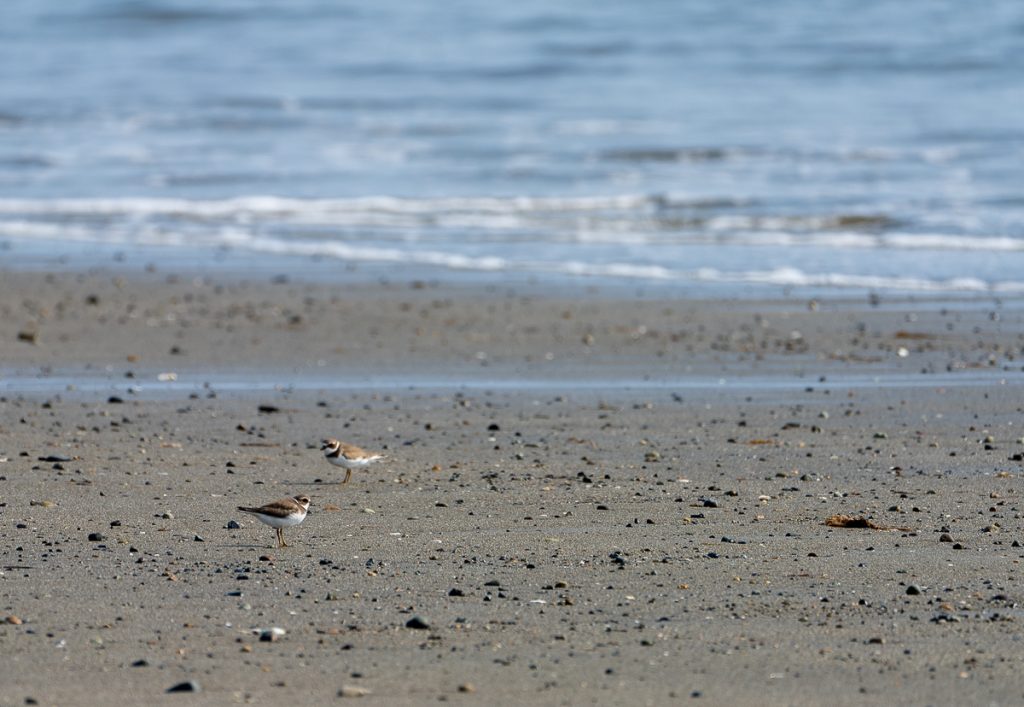
Shorebirds hunted with the cadence of the waves, while large black albatross bobbed out in the ocean alongside the occasional seal. Many unfortunate jellyfish were left behind to dry out in the sun.
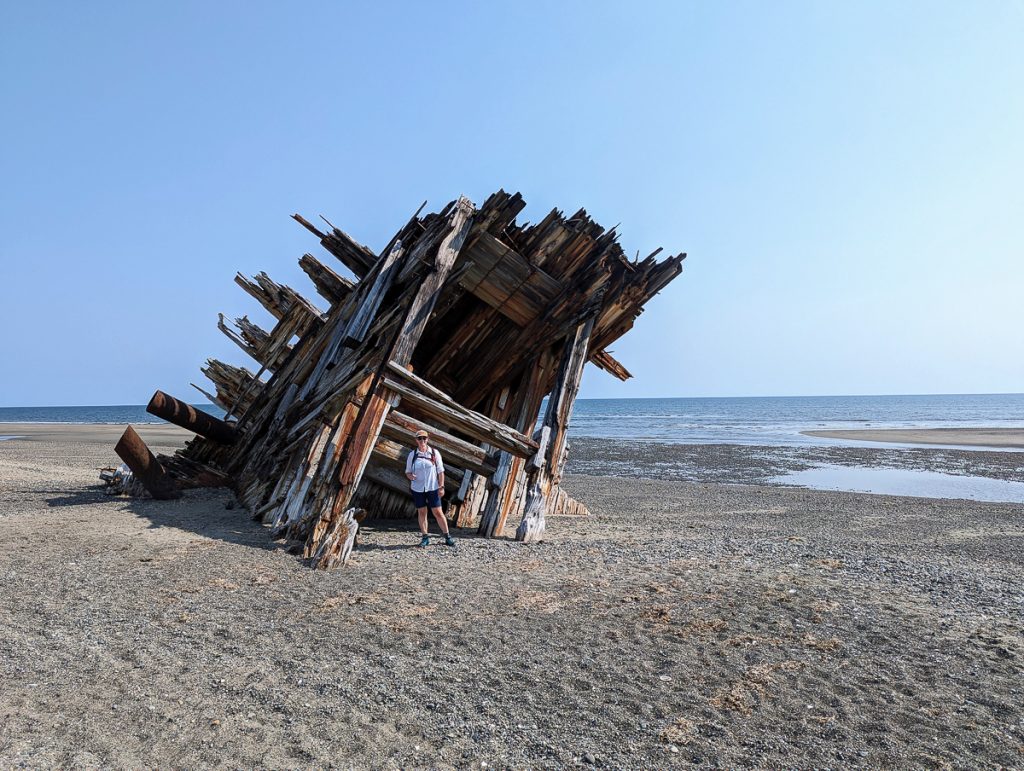
Five kilometers felt more like 10 in the sand, but finally, the shipwreck appeared before us. A few other hikers were leaving, and we had the place to ourselves.
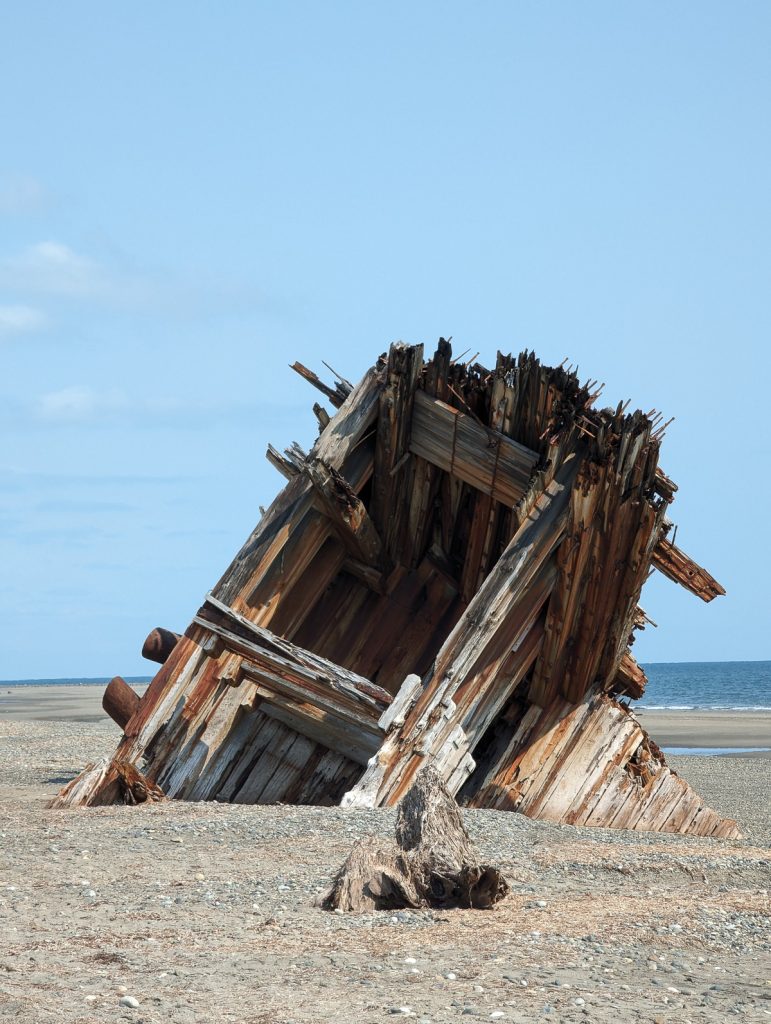
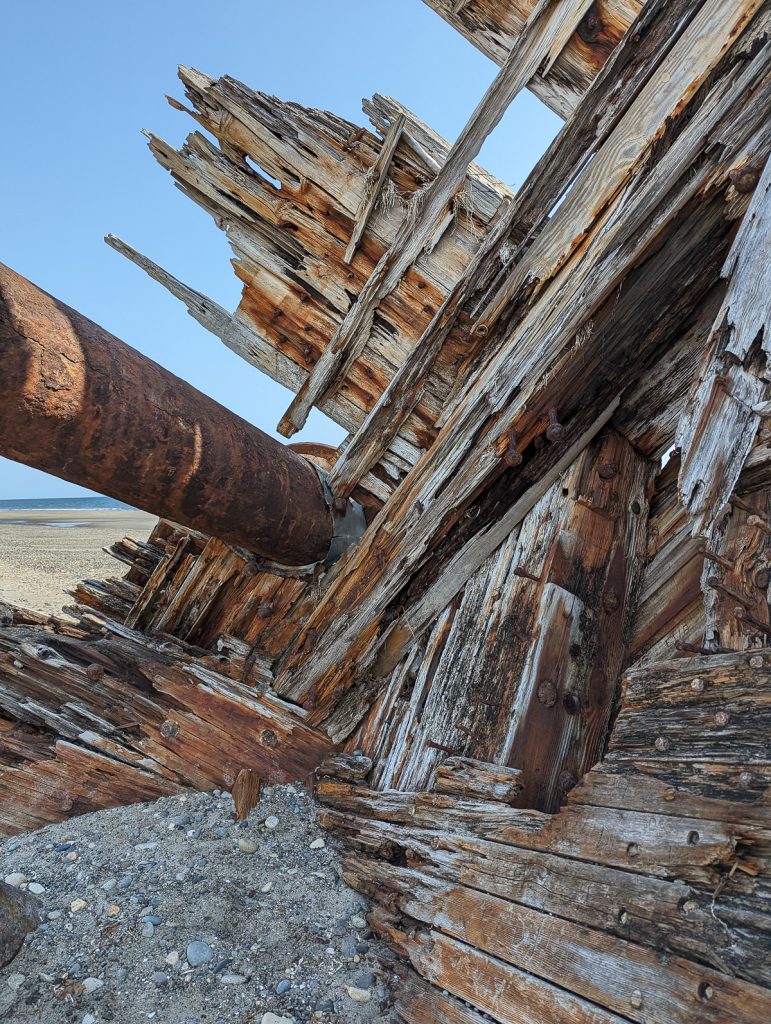
The Pesuta was built for WWI as part of the emergency shipbuilding program. When it retired, it made its way to Haida Gwaii, where it was retrofitted as a log hauler for the logging industry on the Haida’s traditional lands. It didn’t last long, as the stormy weather that the area is notorious for ran it aground.
Here it has remained for nearly 100 years.
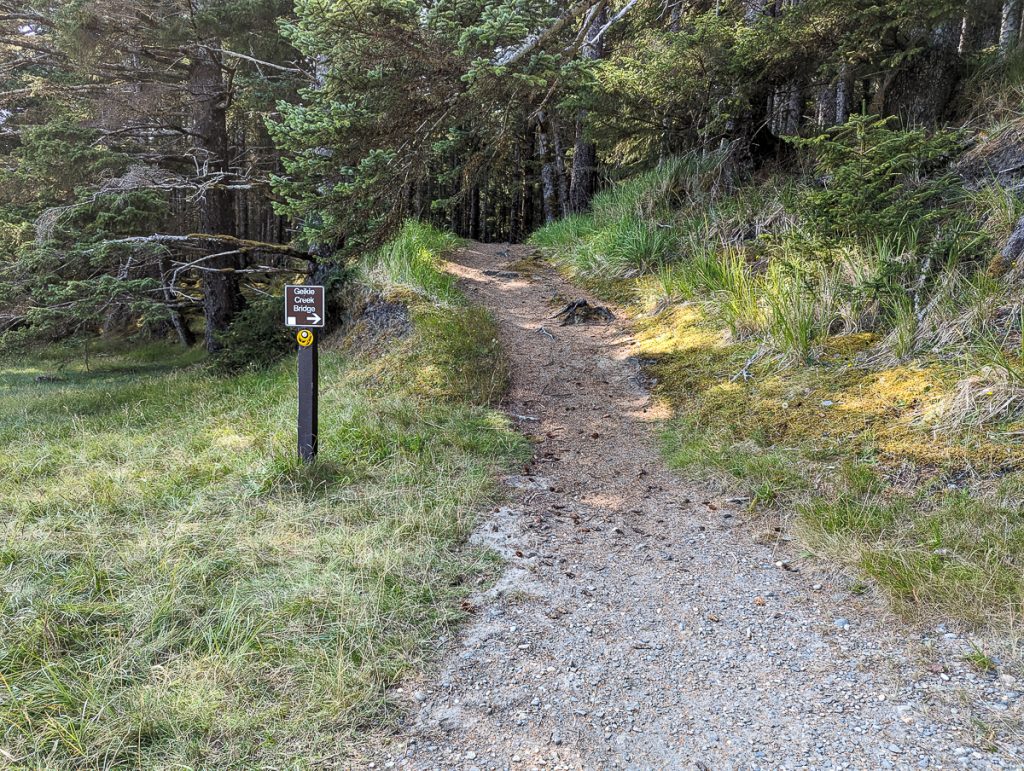
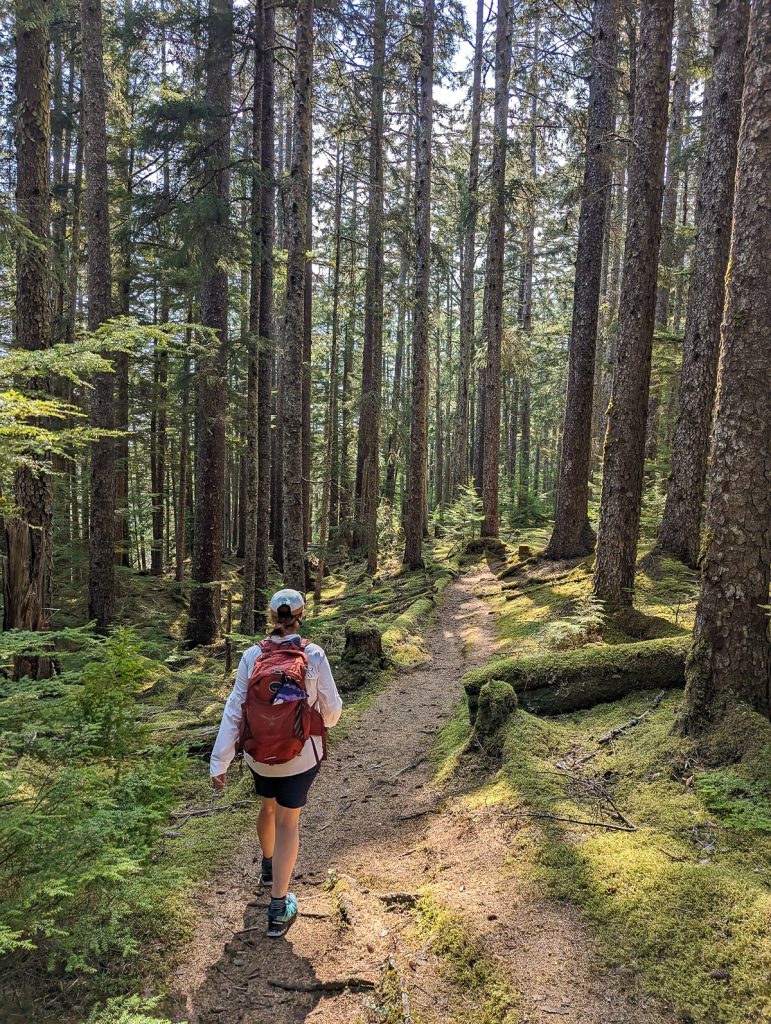
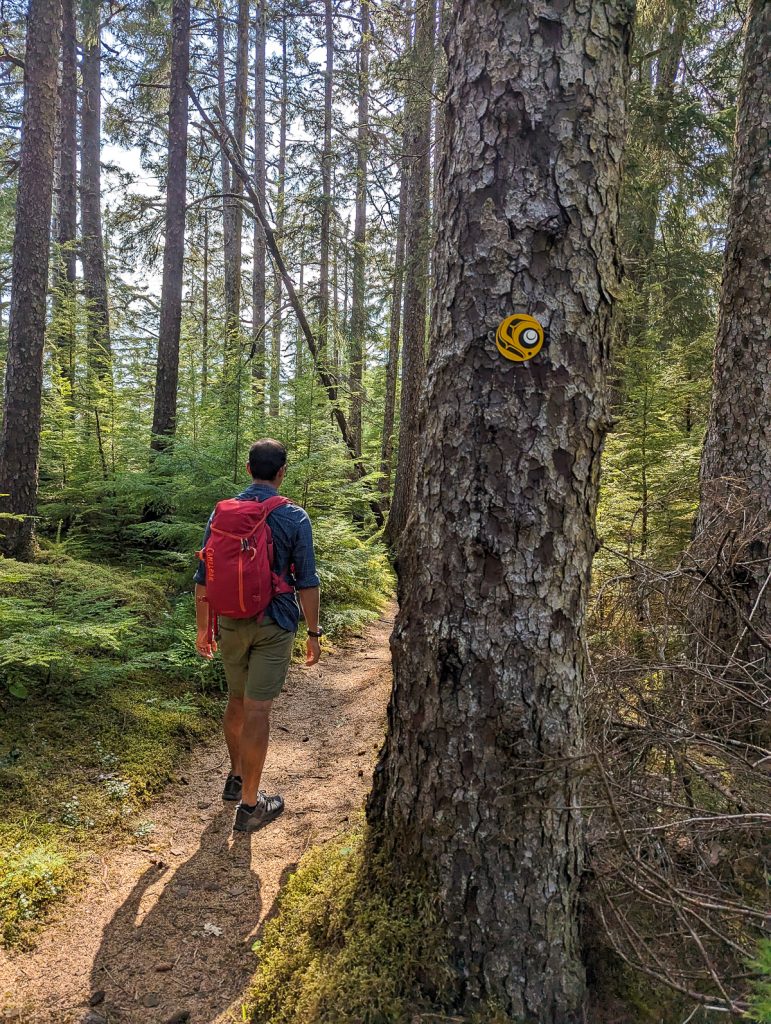
The way back was another 6-7 km and took us away from the beach and into the forest into the Nee Kun Protected Area, co-managed by the Haida Nation and BC Parks, combining Indigenous knowledge and stewardship with BC Parks research and science. We followed the trail markers that resembled salmon done in Haida-style art.
The protected area is home to an intertidal river with protected and sensitive plants, swans, salmon, trout, bats, black bears, shorebirds, and more.
We arrived at the East Beach Trailhead, where you can start or end the trail if you’re not staying at the Haida House.
JAGS Coffee House
After saying our goodbyes to the Haida House team, we departed and stopped at JAGS Coffee House for lunch and coffee. The food and coffee here were top-notch. It was a Saturday, and they were super busy, so we practiced our patience and embraced slow island time.
Shopping and Boutiques
With lots of time before dinner or your ferry back, visit some of the island’s local gift shops and boutiques.
My favorite was the Funk It store in Daajing Giids, but there are so many great choices.
- Longhouse Giftshop – Indigenous gifts
- Crystal Cabin Gallery – a well-curated selection of jewelry and local art
- Sitka Studio – art gallery featuring local artists
- Haida Gwaii Gift Shop – A Haida-owned art and gift store. Get your Argillite boxes here!
- Funk It – a cute design store featuring local goodies, products, art, homewares, and more
- Surf + Sky – a small beach and ocean-themed shop
Dinner at Blacktail
If you missed Blacktail, or are as obsessed as I am, and are planning to eat here twice, today is your chance to arrive before they open and line up!
We arrived about 4:45 and had about a 30-minute wait before we were seated. It was worth it, though. With so many vegetarian options, we ate here twice, without many repeats.
Enjoy cocktails or local beer, with fresh, seasonal, and creative local dishes. It is a cultural institution, and we found ourselves on the last night chatting with other travelers whom we would encounter later on the ferry back to Prince Rupert.
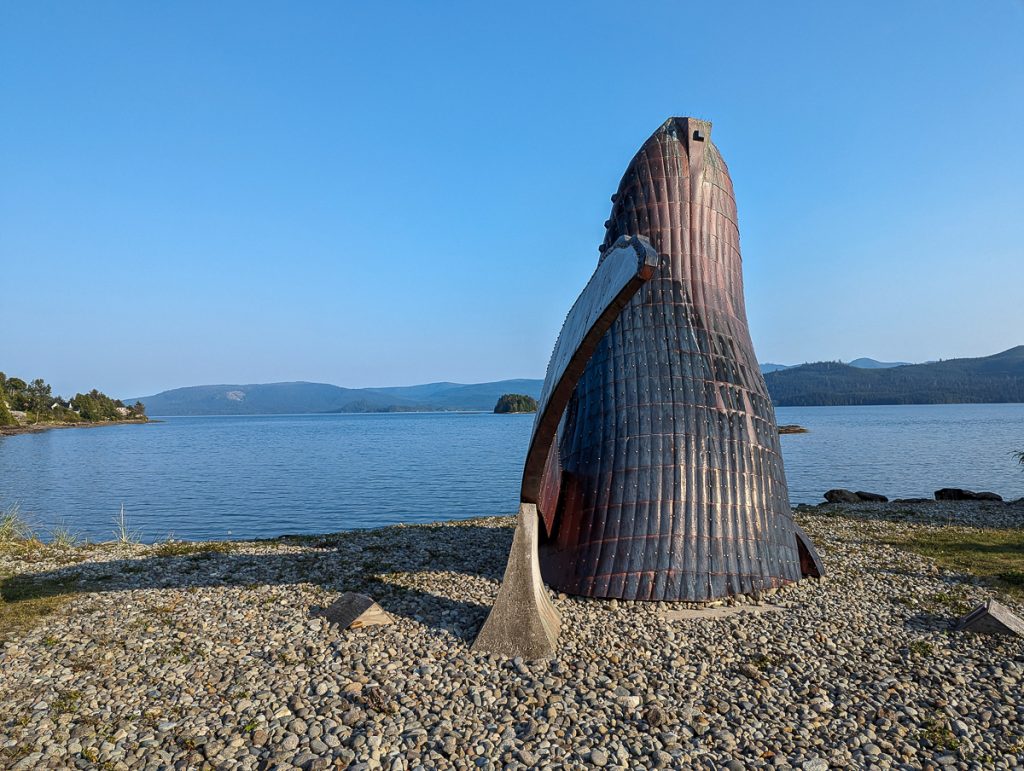
After dinner, we still had some time to kill, so we walked along the waterfront in Daajing Giids, visited the harbor, grabbed ice cream, and stopped by the Visitor Center.
Ferry back to Prince Rupert
Finally, the time had come for us to say goodbye to this incredible land. We joined the slow line of cars waiting to drive onto the ferry.
We booked a cabin once again, and once we were settled, we headed to bed, anticipating an early morning arrival in Prince Rupert.
Extra Time?: Tarundl Trail, Remote Areas, Multi-Day Packages
If you have more time on the islands and are traveling with a 4×4 off-road ready vehicle, you might want to:
- Hike the Tarundl Trail, a challenging and steep mountain trail
- Drive the full length of the Queen Charlotte Mainline logging road
- Visit Kagan Bay Recreation Site
- Rent bikes to ride along the beach
- Check out kayak rentals
- Take the small local ferry to K’il Kun (Sandspit)

You can also book multi-day packages with the Haida House. They offer 3, 5, and 7-day packages, each including lodging, breakfast, dinner, guided activities led by a Haida guide, and free time. Many of the other guests at the Haida House had booked a package and seemed to be making great connections with the in-house Haida guide.
If planning a full independent itinerary isn’t for you, then that is a great option!
Free Map of Things to Do on Haida Gwaii!
Check out my personally curated map of Haida Gwaii. This guide includes everything we did, where we are, and my recommendations for regenerative experiences on Haida Gwaii.
Comment and Share This Regenerative Haida Gwaii Itinerary
I arrived in Haida Gwaii bright-eyed and bushy-tailed with so few expectations. This regenerative itinerary left me a new woman, raw and with open eyes. My experience on Haida Gwaii was enlightening, exciting, meaningful, emotional, and truly a once-in-a-lifetime experience.
If you are planning to visit Haida Gwaii, I hope you find this heartfelt itinerary helpful. Let me know in the comments if you’ve been to Haida Gwaii and what your favorite thing to do was, or if it is on your dream list of places to visit.
Related Posts:
- Sustainable 24-Hours in Prince Rupert
- Haida Gwaii Travel Tips
- Canada’s Inside Passage with BC Ferries
- Prince Rupert to Haida Gwaii with BC Ferries
- Driving Yellowhead Highway 16 from Haida Gwaii to Mt. Robson
- Haida House at Tllaal: A Review
- Nanaimo to Port Hardy road trip stops
Curiosity Saves Travel Recommends
Accommodation: Booking.com to find accommodation with a Genius Discount and clear third-party sustainable certifications like Green Key. Look for local hotels.
Tours and Excursions: GetYourGuide and Viator for tours, excursions, and tickets. Never book wildlife experiences through these vendors.
Travel: Omio for booking buses and trains in English across Europe. After reducing the number of flights I take annually, I use Google Flights’ carbon comparison tool.
Car Rental: Rentalcars for the best rates in English globally. It is easy to find hybrids and EVs, and there are resources for finding chargers.
Packing Essentials: REI or your local Co-op has great essentials like reusable water bottles and cutlery sets. Patagonia for regenerative clothing. Farm to Feet for socks made with regenerative practices! Pistil Designs for cold-weather essentials. Osprey for bags that last 10+ years, like the day bag for hiking or my favorite carry-on.
eSIM: Airalo eSIM. Reduces waste from single-use SIMs. A total game-changer.
For Bloggers and Content Creators
Earn Ad Revenue with Journey by Mediavine
Earn with Stay22 Travel Partnership (my biggest source of income!)
Earn with TravelPayouts recommending tours and activities.





Wow. I did not know Haida Gwaii existed but it is now on my list of places to go. I love the history and definitely planning a trip here.
Haida Gwaii is truly a special place to visit, I do hope you make it there and get to enjoy the incredible regenerative tourism experiences.
I have never heard of these islands but what a gorgeous and unspoilt place to visit. I love the philosophy of the islands.
Yes, the Haida Indigenous People of Canada have such a beautiful philosophy that lends itself so wonderfully to regenerative tourism on Haida Gwaii.