
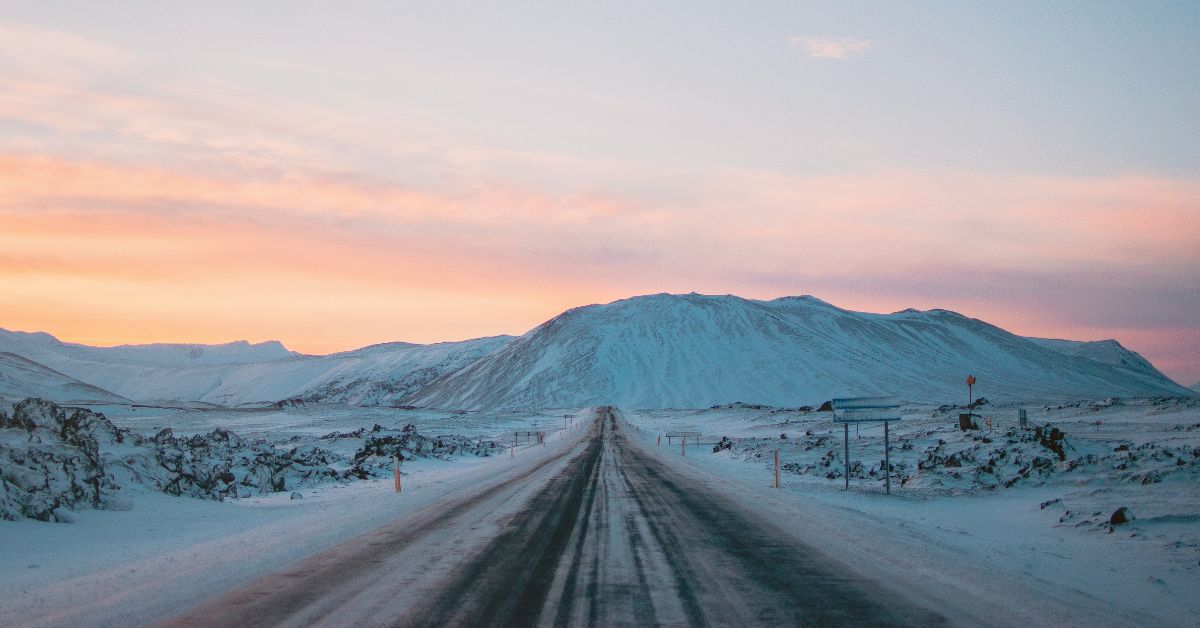
Iceland 5-day Winter Road Trip and Campervan Itinerary
I may earn income from affiliate links or partnerships in this post. I spend time to curate tours or products that align with my values. Thanks for supporting my work, at no additional cost to you. All words and images on this website are created by real people.
Are you curious about visiting Iceland in winter? Do you think you’re bold enough to embark on an independent campervan or road trip in winter?
Perhaps you’ve heard about overcrowding and the impacts of overtourism in Iceland and think visiting in the off-season is a great way to address them. Or maybe you’re drawn to the chance to see the Northern Lights. Roadtripping in Iceland in winter can help reduce the burden of tourism, you’ll get to enjoy sites with fewer crowds, and try winter experiences that few travelers to Iceland do. But to be fully transparent, it is not for the faint-hearted, those without winter driving experience, or beginner travelers.
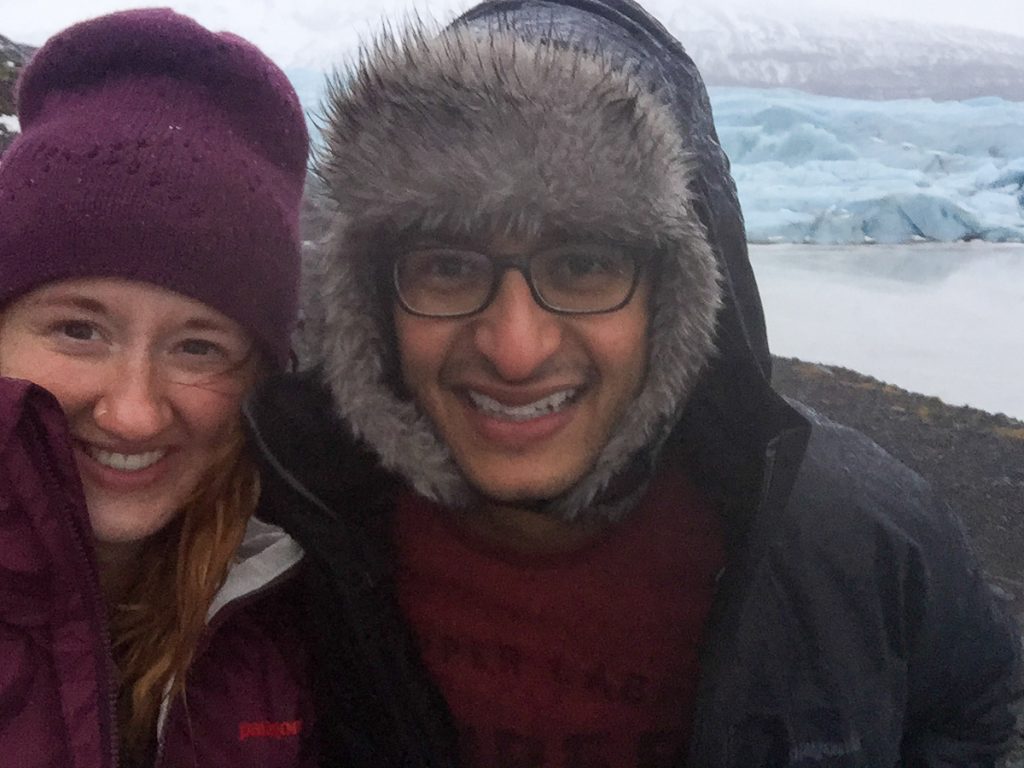
Iceland in winter is characterized by very short days, long nights, icy roads, extreme weather, and limited business operations, which makes sightseeing challenging. On the flip side though, when I visited in January, my partner were often with few others at major tourist sites.
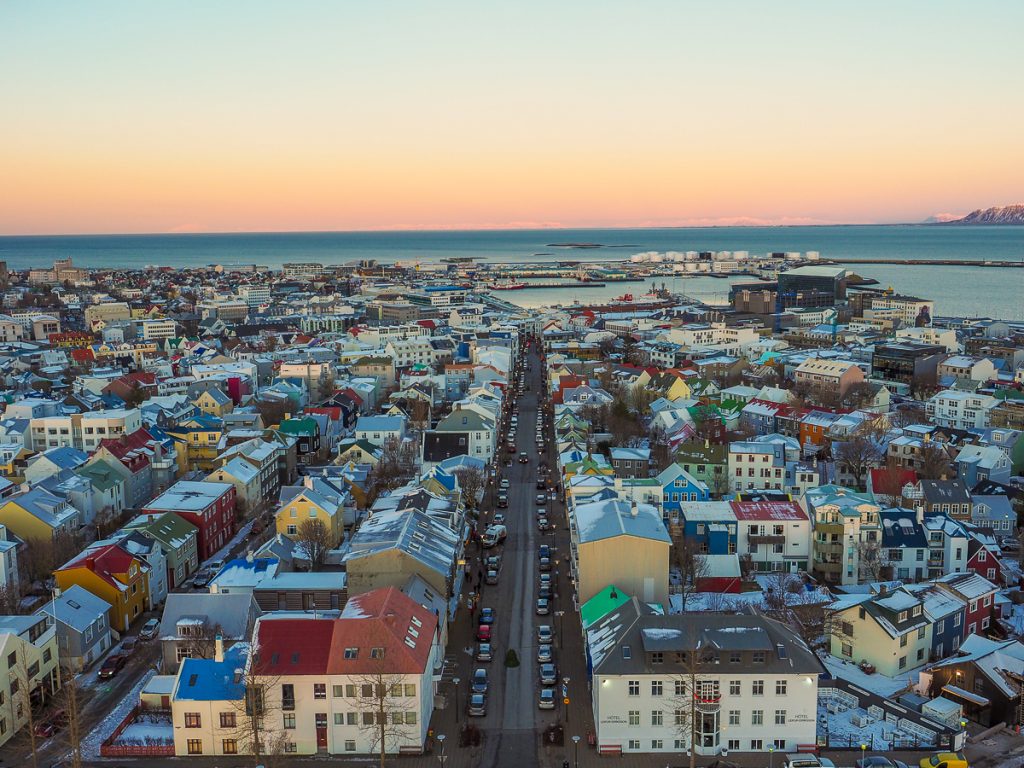
For intrepid and bold travelers, taking to the open road allows you to witness the raw, unfiltered power of Iceland’s winter with frozen lava fields, crystalized falls, and the possibility of seeing the Northern Lights paint the sky above your campsite.
However, this isn’t a trip you can wing. Campervanning Iceland in winter requires advanced planning, flexibility, and a mindset to go with the flow. Putting together an Iceland winter itinerary for road tripping or campervanning can be challenging.
This guide covers everything you need to plan a road trip or campervan trip in Iceland in winter and navigate those challenges. Learn about the pros and cons of traveling to Iceland in winter, winter safety, driving and packing, and a 5-day Iceland winter itinerary.
In 2016, I left the United States to move to Germany. It was a life-changing leap of faith that brought me across the Atlantic.
On my way from North America to Europe, I decided to take advantage of Icelandair’s stopover program and spend 5 days seeing the highlights. My move was during the cold, icy month of January, and my new boyfriend at the time (spoiler: he’s now my husband) and I thought, “Why not visit Iceland in January?”
We rented a campervan and embarked on one of the wildest adventures of a lifetime. Road-tripping in Iceland in a campervan in winter remains one of the most challenging trips I’ve taken to date. Extreme weather, cold temperatures, icy roads, and limited daylight hours kept us on our toes.
I certainly don’t recommend this trip for everyone, but for the right people, road tripping or campervanning in Iceland in winter is truly an adventure. While I made this trip years ago, when campervan parking in parking lots was still legal, I have refreshed and updated this guide to reflect recent rules and regulations for campervanning.
Note* This guide focuses on an independent campervan or road trip experience. I do suggest some packages at the end for those who still want to travel to Iceland in winter, but need a little help.
Part 1: Information About Campervanning Iceland in Winter
Should You Road Trip Iceland in Winter?
Traveling in Iceland in winter, especially on an independent road or campervan trip, is rewarding but challenging. Deciding whether winter or off-season travel in Iceland is right for you depends on the experience you are looking for and your tolerance for discomfort.
Pros of Winter Travel in Iceland
Fewer Crowds
One of the biggest advantages of traveling to Iceland in winter is fewer crowds. Since Icelandair’s renowned marketing ploy to attract more visitors to Iceland through its stopover program, the country had buckled under the weight of crowds and overtourism.
Iceland’s most famous landmarks, like the Seljalandsfoss waterfall or The Golden Circle, can be uncomfortably crowded in the summer. In winter, the crowds dissipate, leaving you with a much more intimate connection to the landscape.
I visited on the cusp of this tourism boom, so my experience is especially unique, factoring in off-season travel before overcrowding. Winter tourism is growing in popularity, with more people interested in seeing the Northern Lights and escaping the European summer heat. However, the crowds are still considerably less than in summer.
Winter-Only Experiences
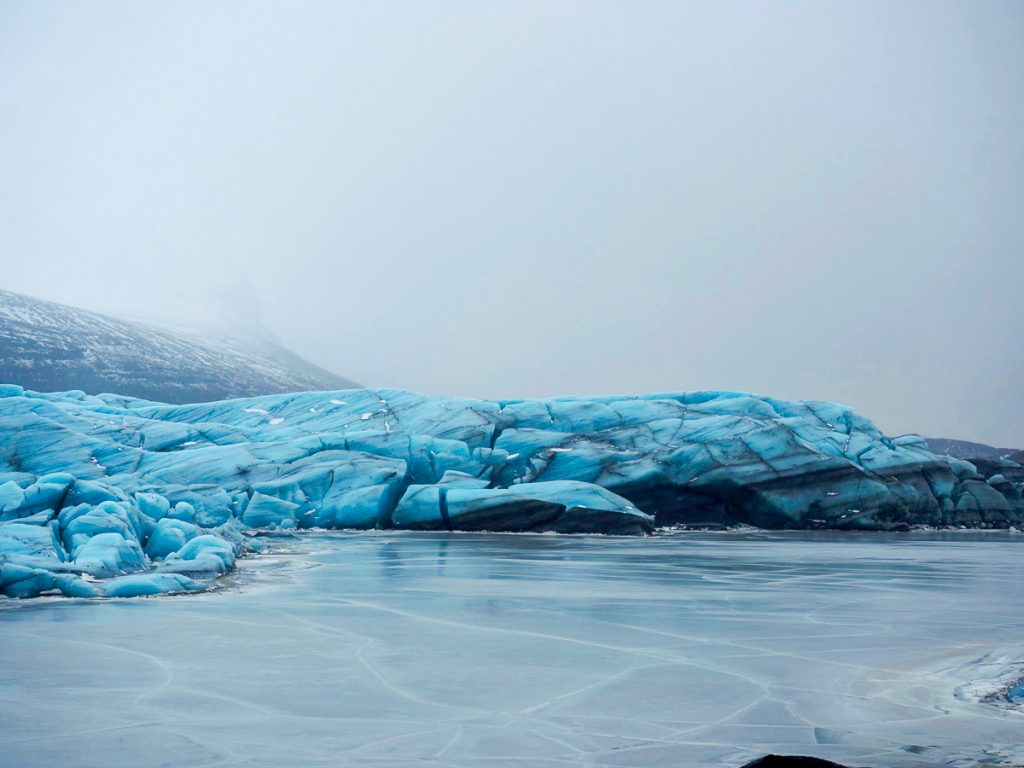
Speaking of increasing interest in winter tourism, Iceland is a great place for “winter-only” bucket list experiences. You can explore vibrant blue natural ice caves, snowmachine across a glacier, or roll the dice on seeing the Northern Lights.
You will want to hire a local guide to take you safely on excursions and provide the equipment for snowmachening and cave tours, which you can add to your campervan trip.
Still, even on your own, there is a cozy solitude that comes with these harsh winters. Enjoy a few hours of daylight to see iconic sights like Gysir and Gullfoss, then slip into a cozy hot spring like the Secret Lagoon before turning in early to read books in your campervan or sit by the fire in your cabin.
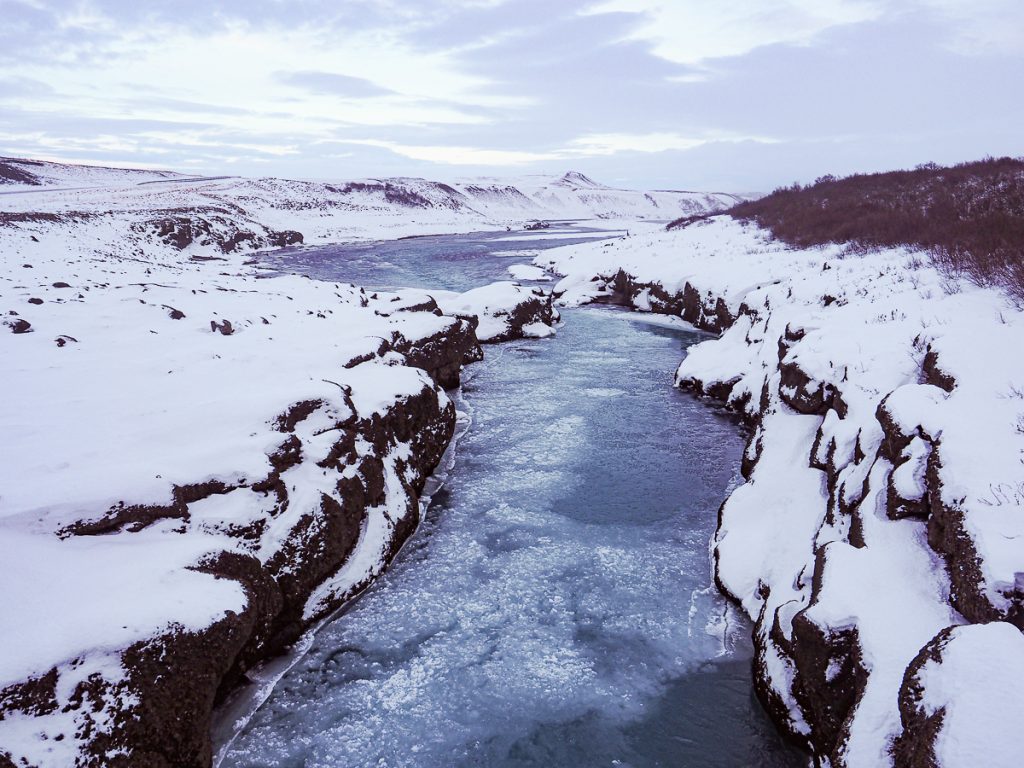
If you are keen to see the Northern Lights, use the NOAA Northern Lights forecast. If there is a high chance for aurora, and the weather is clear, you might want to set an alarm for 2 or 3 am and look up!
Makes Economic Sense
Car companies and campervan providers typically offer rentals at lower rates in winter. Hotels, campsites, and other accommodations will also typically offer off-season rates.
Iceland is notoriously one of the most expensive countries to travel to, with high prices for food, hotels, and tours. Renting a campervan and going on an independent camping or road trip can save you money, even during peak summer. The money-saving aspect is even better in winter.
It is also good for Iceland’s economy. Boom-and-bust cycles in places with extreme seasonal tourism create a range of issues, particularly related to economic tourism leakage. Visiting in winter can keep residents employed in stable year-round jobs compared to volatile seasonal tourism work for a more sustainable economy.
Christmas Market Stopover
The only reason I traveled to Iceland in winter was the Icelandair stopover program. Since I was moving to Europe in January, I thought, why not! This program runs year-round, and it is a great incentive to visit Iceland on your way to or from Europe’s Christmas markets.
The Christmas markets in Europe offer a festive, fun atmosphere. It is nice to break up all the Glühwein drinking with some adventure in Iceland!
Challenges of Winter Travel in Iceland
Short Days; Long Dark Nights
Depending on when you visit you will only have 4-5 hours of daylight. This limits your sightseeing window and means you’ll spend significant time driving or relaxing in your van or preferred accommodation in total darkness.
This can be cozy for some who enjoy downtime, reading, writing, and playing games. But for some, it could be boring or unsafe, especially for those not used to driving on ice at night.
Plan to make the most of the limited daylight in your itinerary. Come prepared with books to read, card games to play in the campervan, headlamps, and other “cozy” activities.
We typically camped near a tourist attraction so we could see it at first light, then worked our way to a few more sites before hunkering down at dark near another site. Alternatively you can take advantage of dark mornings to drive to your next site before sunrise.
Cold, Extreme Weather
The weather in Iceland is notoriously extreme. It is one thing to deal with wind in summer; it is another when strong winds push you across the ice, causing you to lose your balance and fall!
The extreme wind, icy conditions, and cold, wet weather are certainly a unique experience. If you are a fair-weather person and prefer warm beaches to harsh conditions, the weather could certainly be challenging.
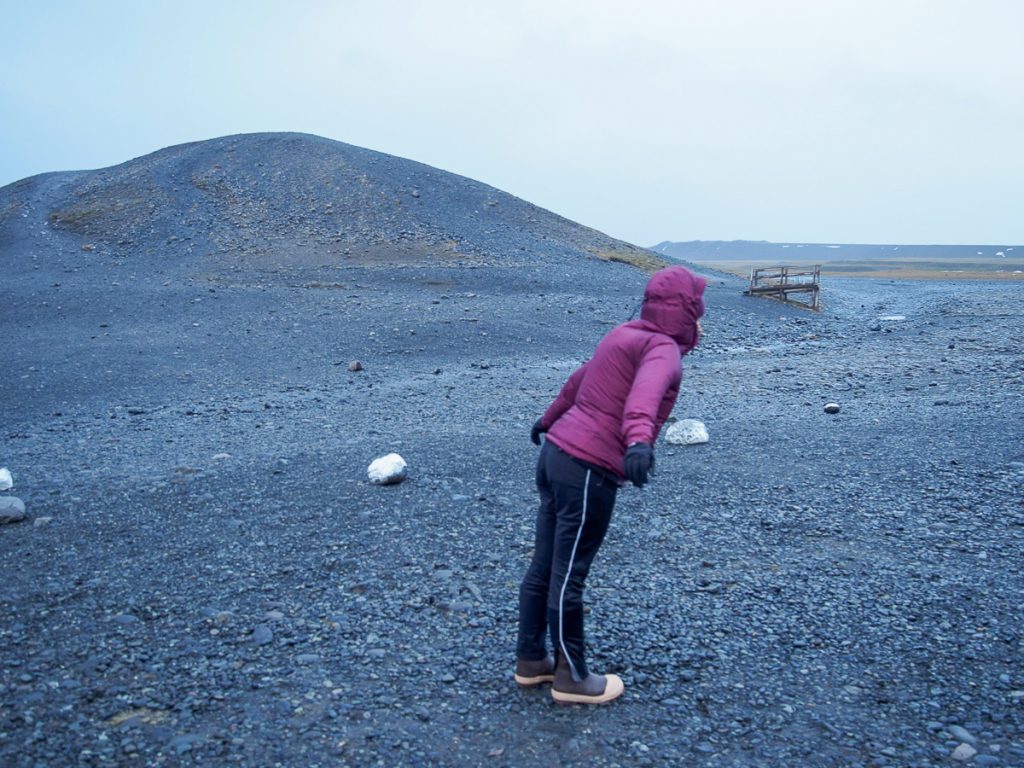
The weather is also unpredictable and can turn at the drop of a dime, bring a sudden blizzard. Have a plan for an emergency, whether it is staying an extra night at a campsite, or delaying your departure.
Limited Road Access
Many side roads and off-roads are closed in winter. Even seasoned winter drivers can not stray far from the main highways and sites. So, while the main attractions have fewer crowds, it is more challenging to get off-the-beaten-path.
Average Photos
I visited Iceland in 2016, so my photos will look inferior to those from someone who recently traveled with a high-end camera. But the reality is that Iceland’s winter aesthetic is not what you see on Instagram in summer.
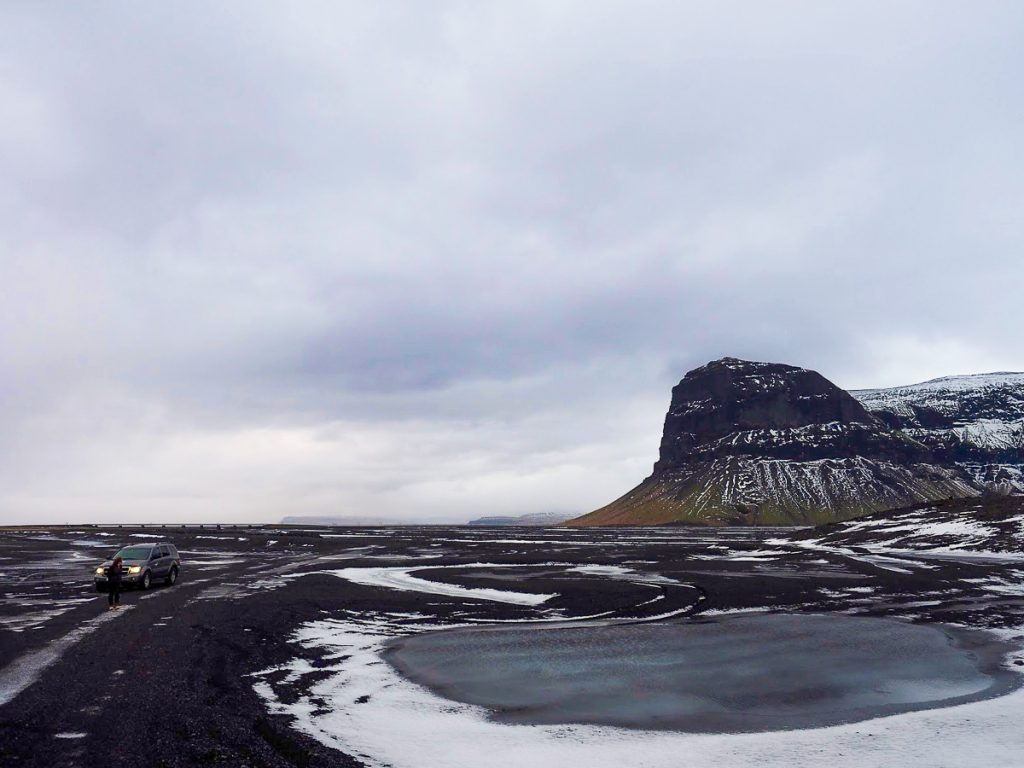
Those lush green expanses from summer are brown and dull. With 4-5 hours of dull daylight, the lighting is challenging. Plus, you might camp next to an epic waterfall and only see it in total darkness. Frequent windy conditions, clouds, and ice all make it very challenging for photographers.
Winter Weather in Iceland – What to Expect
Icelandic winter weather is best described as hostile and volatile.
In a completely deforested country, wind speeds are significantly higher because trees provide no shelter. The wind is strong enough to rip a car door off its hinges. This is not a joke. When we rented our car, we received training on how to open the door into the wind to avoid this. I didn’t take it seriously until we saw another vehicle in the parking lot with its door hanging off the hinges.
The wind is also strong enough to knock you over. Add a layer of ice to the ground and that wind will push you across the ice.
During windy nights, I had to step out of the van and walk to the toilet in this weather. Water for washing your hands and showering at these sites isn’t always warm either.
The wind is just one challenge; cold temperatures are another. When you book a guided tour, these companies will offer you proper glacier gear, but when you’re on your own in a campervan, you’d better have quality layers and warm clothing. See my packing list further down for more ideas.
What to Pack for Winter in Iceland
Packing for Iceland requires precision in technical layering. Laying only works when all three layers work together to keep you warm and dry in cold, windy, and rainy conditions.
Base Layers
Base layers stay close to your body, keeping you warm and dry while wicking sweat.
Your base layer should be Merino wool; it stays warm even when damp from sweat or rain, and you can wear it for days. I always wear Smartwool baselayers on my top and bottom. You’ll want about two sets of base layers in case one gets wet. Smartwool is one of the best names in the industry.
Icebreaker is also good choice, and it’s slightly more affordable.
Men’s Base Layers
Avoid cotton at all costs, as it absorbs moisture and will make you freeze.
Mid-Layer
Mid layers insulate and keep you warm. You’ll want a waffle fleece (the waffle traps air) and an insulated jacket (synthetic or ethical down). In very cold weather, I will go for both, starting with my fleece/waffle and laying my micropuff.
My Patagonia waffle is my go-to mid-layer; it sometimes keeps me too warm. I am surprised at a few of the negative reviews. I’ve had mine for years without any pilling, and it’s been around the world and back with me, including cold climates.
My down layer is Patagonia’s recycled synthetic down. I had one for 10 years, and Patagonia repaired it once before finally replacing it in year 10. This thing is fantastic.
For mid-layer pants, choose a warm, water-resistant option. I avoid jeans and opt for fleece or pants designed for Nordic adventures. Pair this with an insulated skirt for more protection.
Having some warm sweaters packed for cozy pubs and nights in the van or cabin is ideal too!
Men’s Mid-Layers
Outer-Layer
The final outer layer will be your windproof and waterproof layer. Depending on your cold tolerance, this can be as simple as a shell worn over your mid-layers, so make sure you size appropriately.
Your outer layer may also be a full-down parka. In Alaska, I wear this exact North Face when temperatures reach -20 (I also utilize layering underneath!).
3-1 Jackets are also great because they serve as both your mid and outer layers.
Always look for Gore-Tex products for your wind and waterproof layer.
Men’s Outer-Layers
Winter Accessories
You’ll also need warm accessories to keep you snug and safe.
- Crampons and spikes – these will keep you safe from dangerous falls on the ice
- Winter boots for men and women
- Camp (slippers) for men and women – when you want to use the toilet at night and don’t want to put on your big winter boots
- Wool socks (long ones that offer more calf protection are a great idea)
- Hat
- Gloves, liners, and mittens
- Hand warmers
- Headlamp
- Moisturizer and lip balm
- Sunnies (the sun can be bright when reflecting off snow)
- Swimmers (bring a swimsuit and towel for hot springs)
- Underwear, bra, etc. I wear merino undies and a cami.
- Camera and tripod for astrophotography
- Daypack, water bottle, and thermos
Other than one night in Reykjavik, we didn’t dress up once. Stick to warm, casual, and comfortable clothing, think sweater, joggers, or warmer pants. You can rewear technical layers, so for a 5-day stopover, you really just need two base layers, a sweater and pants, one mid-layer combo, and one outer layer, plus one normal outfit.
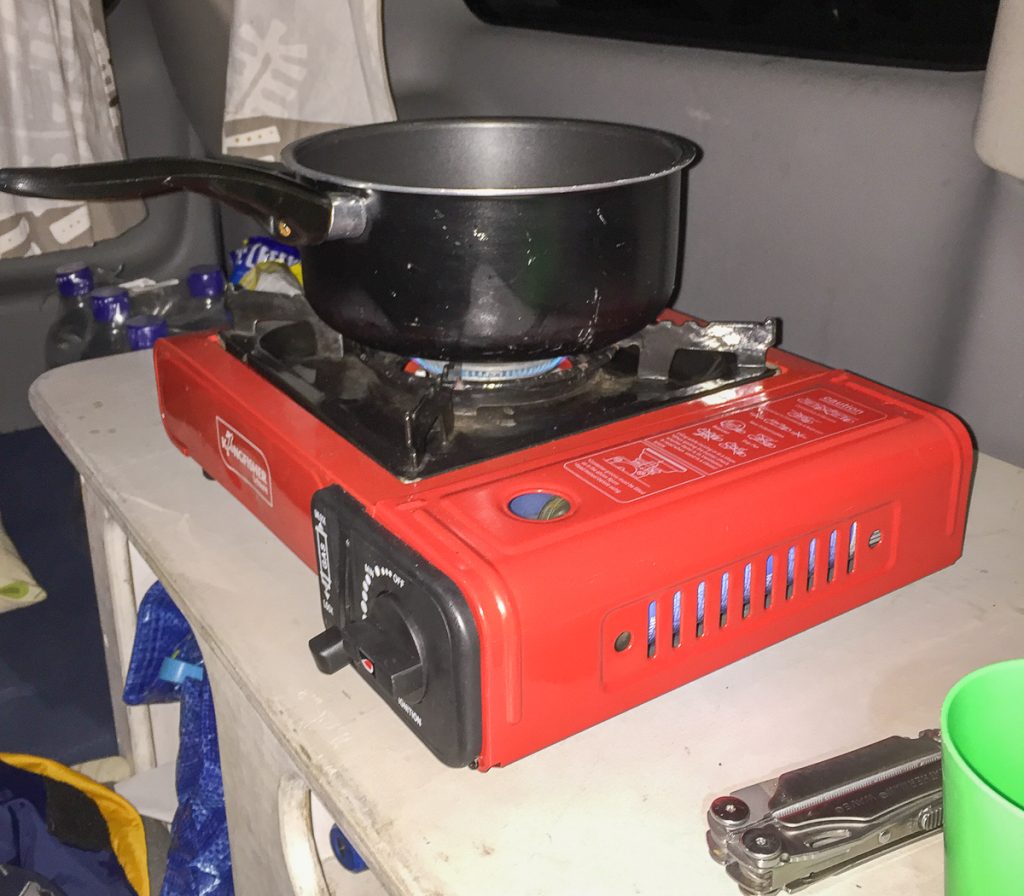
Campervans typically include basic amenities such as bedding or sleeping bags. They will also have a kitchen and cookware.
Of course, pack all other essentials like medication, toiletries, etc.
Campervanning vs. Road Tripping (Car + Accommodation)
There are two ways to road trip in Iceland in winter. A campervan where you sleep in the van, or a 4×4 car rental and booking hostels, cottages, cabins, or another type of accommodation along the way.
Choosing between a campervan and a car + cabin combo comes down to a trade-off between independence and comfort. The campervan wins at adventure and independence, but the car + cabins combo wins for physical comfort and convenience.
Campervanning
A campervan offers flexibility, freedom, and independence in Iceland. You will always need to camp at a designated campsite, but many sites have free space in winter, allowing you to book on short notice.
You can head wherever to the best weather forecast and find a suitable campsite. Modern winter campers come with diesel heaters that keep the interior surprisingly warm all night. They have a fridge and storage, but will have limited room.
Most campgrounds have designated kitchenette areas, showers, electricity, and basic services, while others offer a few extra perks such as washing machines, BBQs, and even pools.
Showers and electricity are often an additional charge, and showers are timed to save water.
In winter, some campsites are minimally maintained and offer limited services (pools may not be open).
Campervan from KuKu Campers (Campervan Option)
If you go the campervan route, Kuku Campers is my recommended local choice, especially for winter builds. Their vans are specifically modified for the Icelandic climate, featuring a sturdy build, winter tires, and heaters.
They also provide “winter kits” including extra-thick sleeping bags. Their staff are also very honest about road conditions and wind, which is the kind of honesty you need before heading out into a January frost.
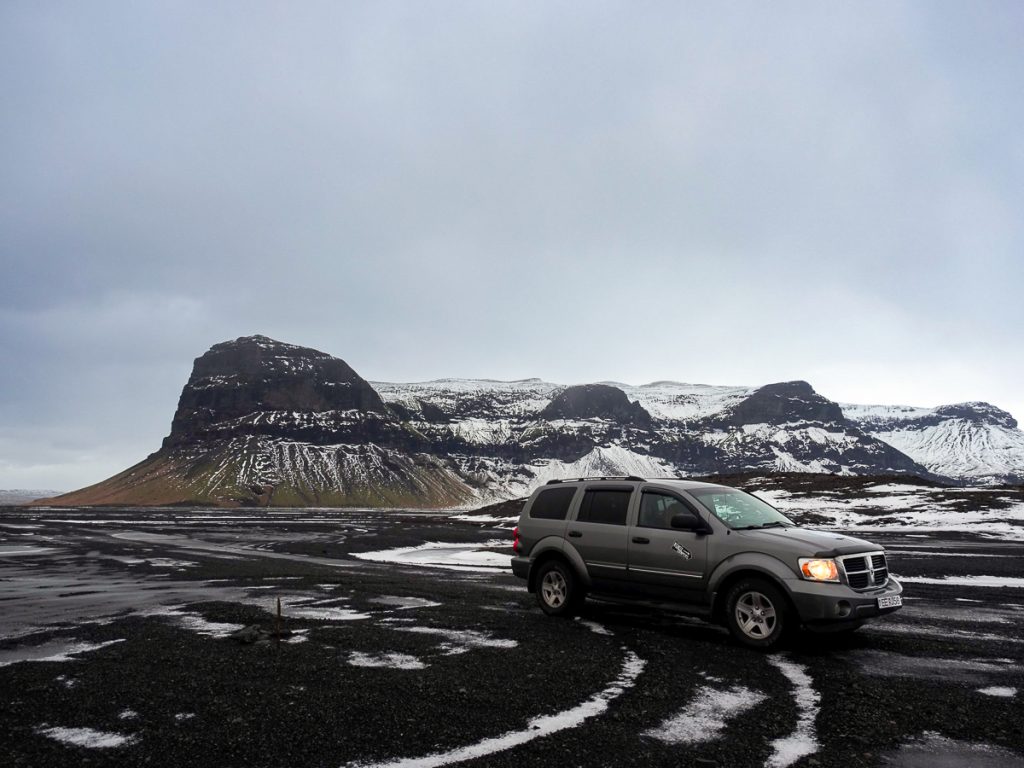
We rented from KuKu Campers and were in excellent hands with on-site locals who really know Icelandic winters, driving, and camping through and through.
You can read my entire guide to renting from KuKu Campers here!
Motorhomes are NOT recommended for winter camping and road tripping in Iceland. This is because they are not sufficiently stable to navigate snowy, icy, or windy conditions and rarely offer a 4×4 option.
Road Trip + Accommodation
On the other hand, road tripping with a 4×4 car and staying in cabins, hotels, or guesthouses offers comfort and convenience. You get a hot shower, a place to dry out your wet gear, and a break from the cramped quarters of a van. In winter, this can be a huge morale booster.
However, it can be more expensive, some places close for the off-season, and this requires reaching a specific destination by nightfall.
Rent a 4×4 with Snow Tires
Regardless of your choice, rent a 4×4 in winter. Do not try to save money by renting a 2WD compact car in winter.
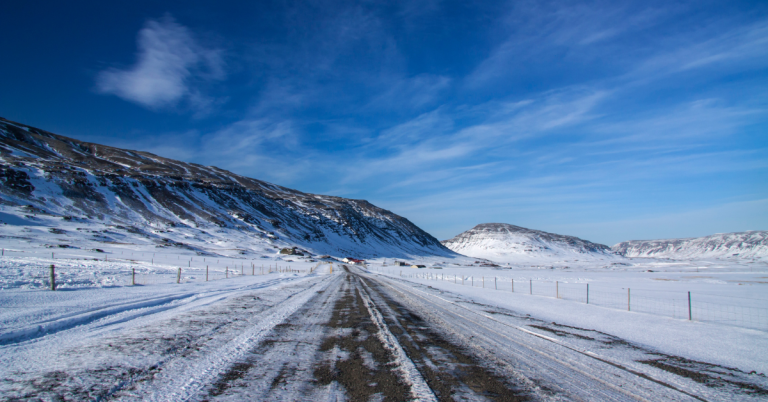
Even if the roads look clear in Reykjavik, they can be covered with ice, slush, or snowdrifts anywhere along the Ring Road.
A 4×4 vehicle (as opposed to an AWD) provides the necessary clearance to get through snowdrifts and the traction needed for icy inclines. They also have the power to get you out of the ditch in a worst-case scenario.
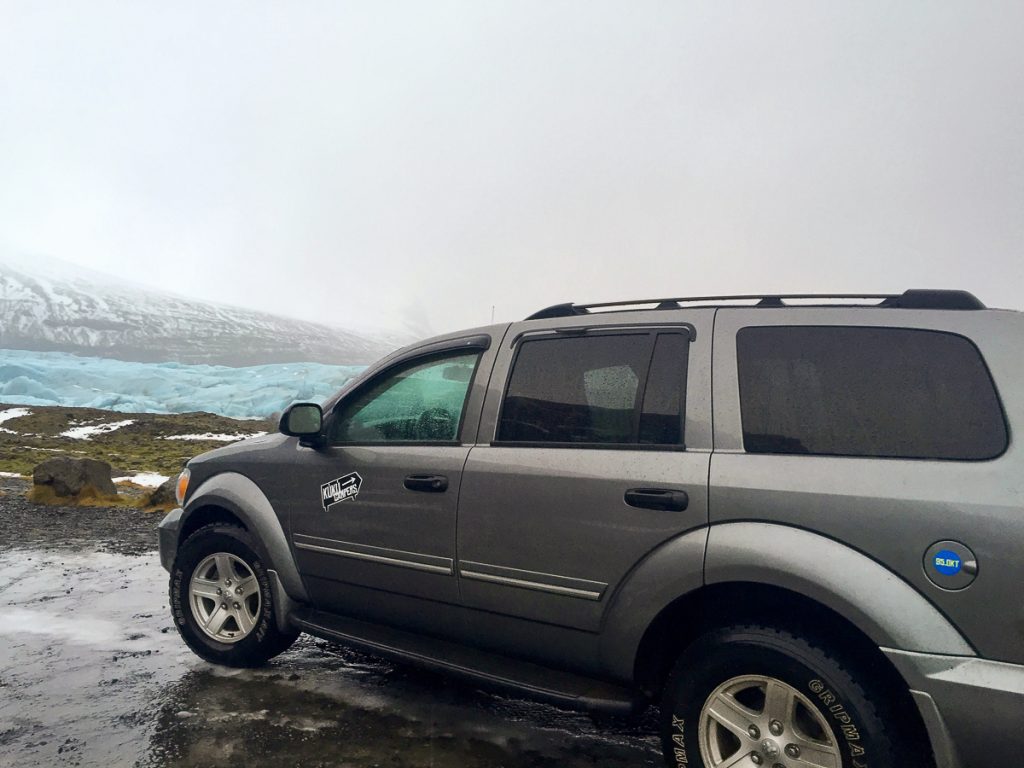
Most importantly, ensure your rental is equipped with winter tires. They are necessary for grip on the icy roads. Studs are the best on ice and are permitted from November to April.
Another benefit of a 4×4 (we rented a 4×4 campervan) is that it is heavy! When the strong winds came at night, and we thought we would be blown away, the sturdy and heavy weight of the 4×4 SUV were reassuring. Don’t miss my guide on the importance of knowing how to drive safely in winter.
How to Plan a Route in Winter: Logistics and Planning
When planning your stopover winter route, you will need to embrace the joys of missing out (JOMO) and put aside any ambition to drive the entire ring road.
Driving the entire 1,332 km ring road circle on a 7-day layover is possible in July, when there are nearly 20 hours of daylight. But winter is another story. With icy roads and limited daylight, it’s just not ideal.
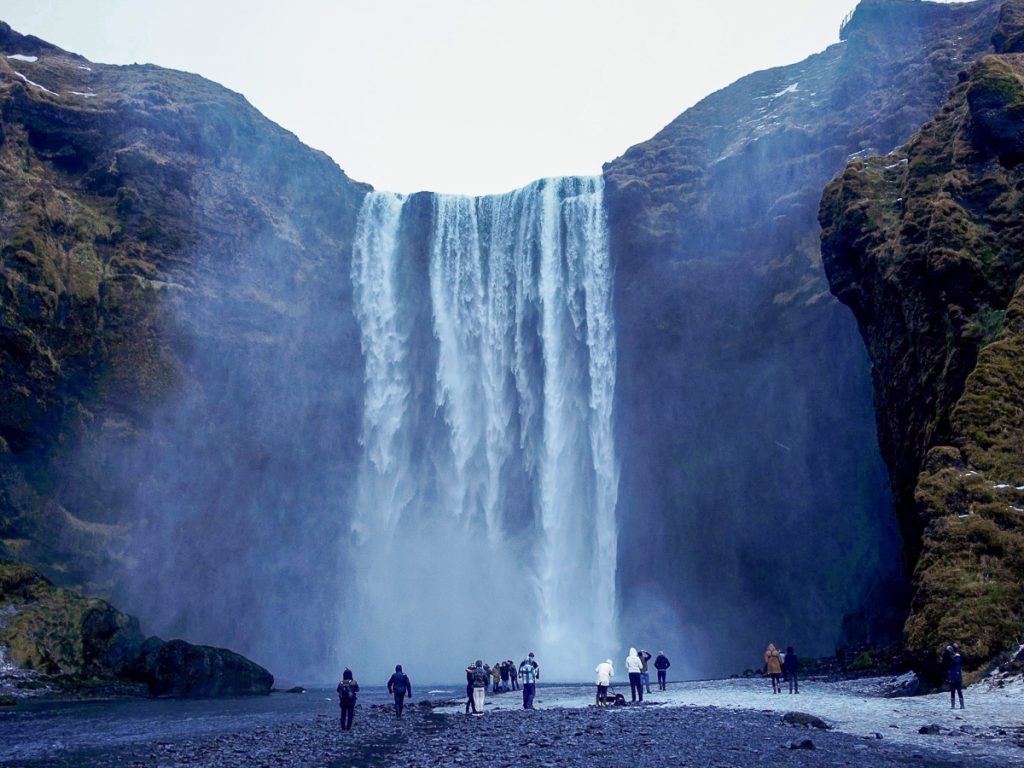
I would focus on exploring and enjoying only a few areas.
Option 1: Recommended in this itinerary, which includes our 5-day stopover. We visited Reykjavík, the Golden Circle, the South Coast, and the Southeast region up to Höfn.
Option 2: With only 3 days, you could see Reykjavik, the Golden Circle, and the South Coast highlights.
Option 3: With 5-7 days you could see Reykjavik, the Golden Circle, South Coasta and the Snæfellsnes peninsula. Only recommended if you are staying on the Snæfellsnes Peninsula and have significant flexibility. The weather is the worst in this area, and it is not a day trip in winter.
Check the Winter Weather and Conditions
Always have a “Plan B” and “Plan C,” and check road conditions, road closures, and weather before leaving.
We checked both sites hourly while driving.
- Icelandic Meteorological Office for all updates on weather, geological events, and safety warnings.
- IRCA Traffic Site for easy-to-understand real-time road conditions. This includes which roads are closed, which have ice and snow drifts, and which are easily passable.
Rules of the Road – Driving Laws in Iceland
Driving in Iceland has unique rules of the road that are strictly enforced. This is to protect you and the delicate ecosystems from overtourism.
Your headlights must be on at all times, day or night, to improve visibility in snow, rain, and dim conditions. There will be many 1-lane bridges to cross in the snow.
Off-road driving is strictly illegal and carries fines that can exceed $3,000 USD. Even if the ground is covered in snow and appears to be just a snow field, the underlying volcanic soil is highly fragile and supports a unique ecosystem.
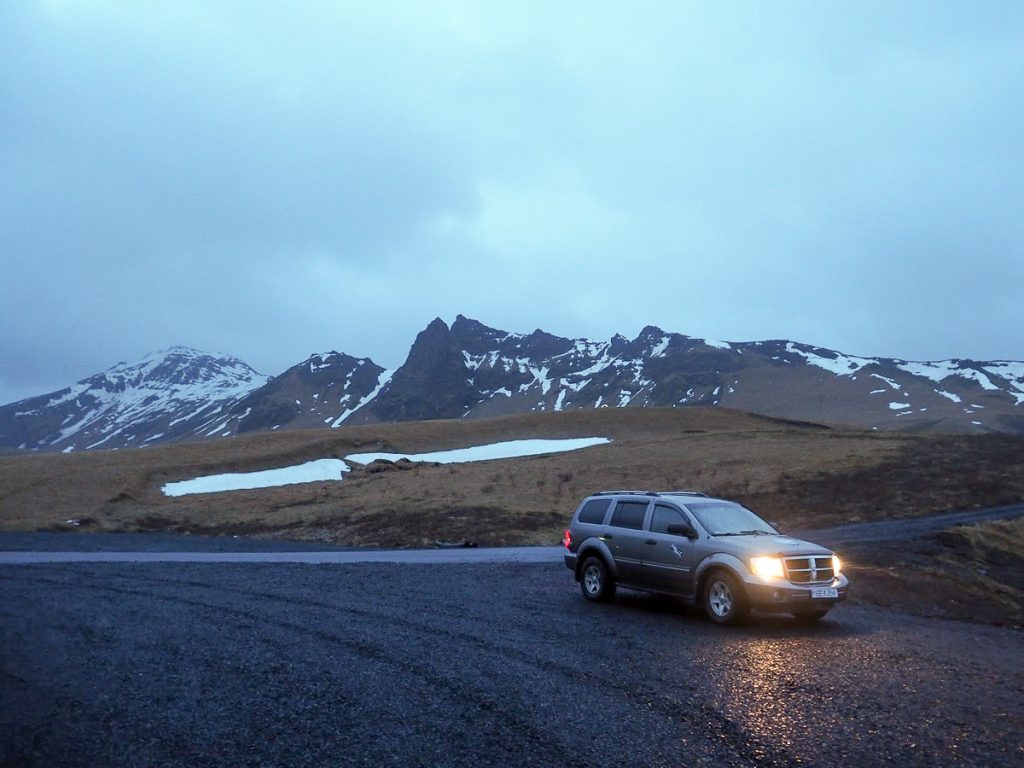
Iceland also offers unique insurance options for things like collisions with sheep, or wind damage. You will want to familiarize yourself with these before you visit.
For more essential winter driving tips, don’t miss my driving in Iceland post.
Rules of the Camp – Camping Regulations in Iceland
Gone are the days when you could pull your van over into any scenic turnout and sleep for the night. The year after I visited, Iceland implemented strict laws regarding camping.
Today, you must stay at a designated campsite. You cannot simply park at the tourist day lot for a waterfall. Doing so can result in a heavy fine. Camping at a designated site is not just about compliance with the law; it is also about safety. These sites are usually located in areas slightly more sheltered from the wind and have life-saving facilities.
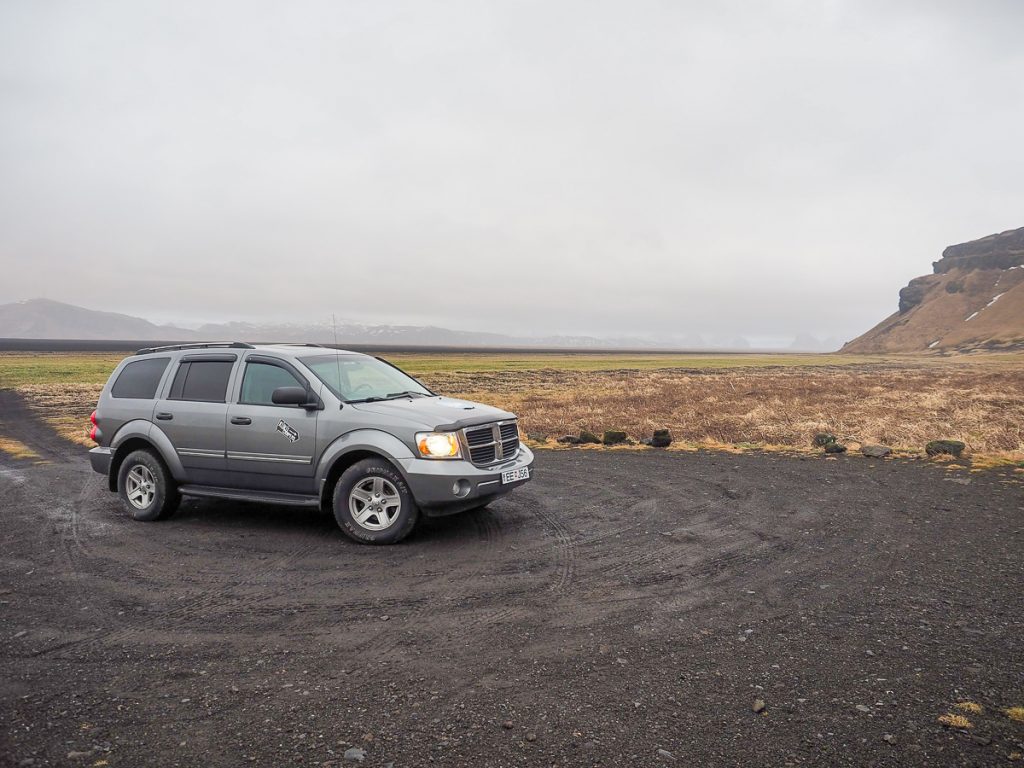
You can, however, in an emergency or snow storm, pull over in a designated lot off the road and wait out a storm. The difference between illegal camping and stopping for the night for your safety, is that in one situation, you are taking shelter from weather for your safety. In safe conditions you can’t just park and hang out, outside your campervan sipping wine and enjoying the scenic wateralls.
Finding Campsites and Accommodation Open Year-Round
Not all campsites are open year-round, especially since so many roads close for the season. But there are still plenty of great campsites to choose from.
Tjalda is the best site for finding campsites and quickly assessing essential information, such as the types of amenities, services, and whether they are open in winter. The map feature lets you find campsites along your planned route.
Many of the campsites listed on Tjalda also offer basic accommodation options for those interested in a road trip without a campervan, including cottages, cabins, and remote hostels.
If you are interested in guesthouses, bed-and-breakfasts, hotels, or more standard accommodations, Booking.com offers many options open year-round in Reykjavik, the Golden Circle, and the South Coast.
Sustainable Winter Travel
Iceland is one of the most unique countries in terms of geology and ecology. Most of Iceland was tragically deforested by Vikings, contributing to the harsh climate and high winds we experience today.
Unfortunately the conditions aren’t ideal for reforesting or protecting fragile ecology. From slow growing moss that takes hundreds of years to recover, to winds that known down young trees, Iceland has difficult challenges in conservation. We can help by never driving off road or walking off trail.
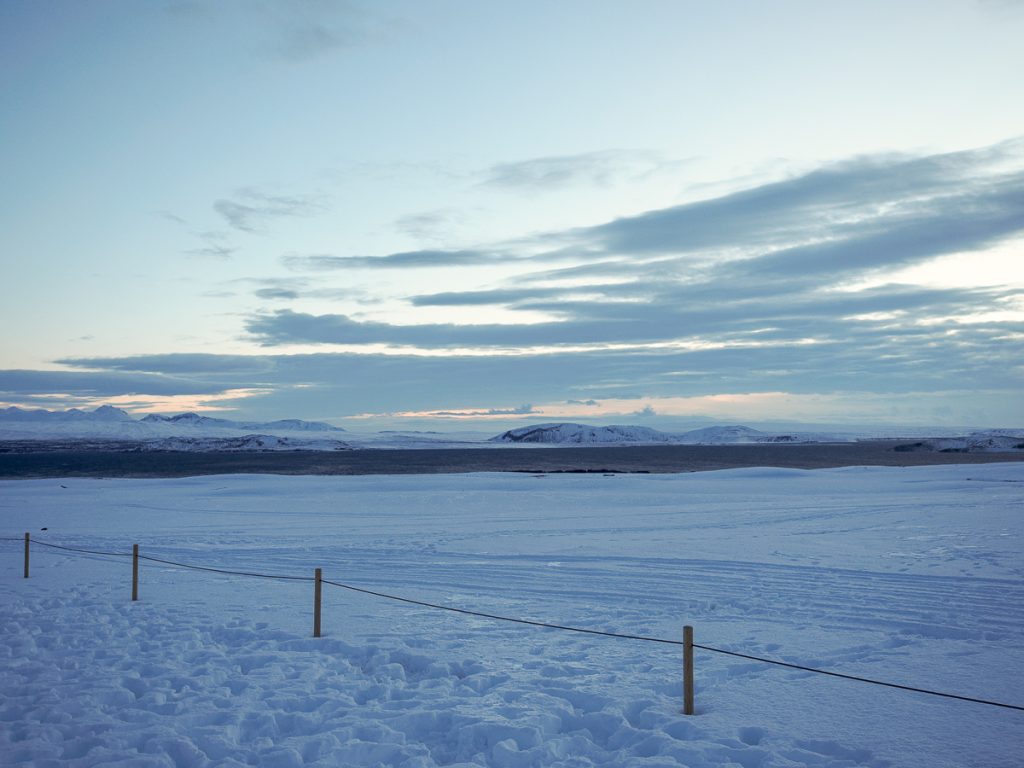
Always follow signs and road closures. This is for your safety as much as it is for delicate mossy ecosystems and reforestation efforts.
Iceland has also grappled with unsustainable tourism growth, that happened rapidly. The country’s resources and infrastructure couldn’t keep up, and before long, tour buses were bringing people by the thousands to natural sites, degrading the roads, and making everyone’s experience chaotic. One of the simplest ways to mitigate the effects of overcrowding is to visit during the off-season.
Part 2: Iceland 5-Day Winter Itinerary
This itinerary follows pretty much in our exact footsteps. However, I should note that you will need to embrace flexibility and a go with the flow attitude. Your itinerary will vary greatly depending on the daylight hours you have and where you choose to camp.
For example, we passed Vik and the Black Sand Beach as we drove through in the evening after dark. Instead we visited on our way back during daylight hours. You may, however, be driving through Vik during the daylight and will opt to visit earlier than we did in our itinerary.
Stop where you can, when you can taking advantage of longer drives in the dark, and optimizing for daylight at scenic stops when you’re able.
Day 1: Arrival and Exploring Reykjavik
The first day is all about exploring Reykjavik. I have an entire guide to how we spent our 24 hours in Reykjavik optimized for winter. It includes all the sites we saw, specific names for coffee shops, boutiques, bars, and restaurants we visited. Follow this guide for a detailed breakdown of how to spend your first day and night in this incredible city.
We arrived on a 5 am flight coming from my home state, Alaska. This allowed us plenty of time to explore Reykjavik over a 24-hour period.
We rented our campervan for the week from Kuku Campers. Thankfully Kuku Campers has moved their rental hub from the city to the airport! You can now easily pick up your camper from their airport location and get get local insider tips for campervanning Iceland in winter.
With a campervan you will want to take some time to visit a local supermarket to to get plenty of food and supplies for your upcoming road trip adventure. This is very important to do near the city, as there aren’t as many supermarkets and amenities in more rural areas especially in winter. We ate most of our meals in the campervan, so we made sure to buy oatmeal, pasta, soup, fruit, and other essentials.
Once we had the campervan stocked up and ready for our morning departure, we parked it and dropped off our bags at our accommodation until check in time. We stayed at Loft – HI Eco Hostel which was the perfect place for us as an independent couple. The hostel has private rooms and bathrooms for couples and a great environment for social interaction, local travel planning, and cozy Nordic design.
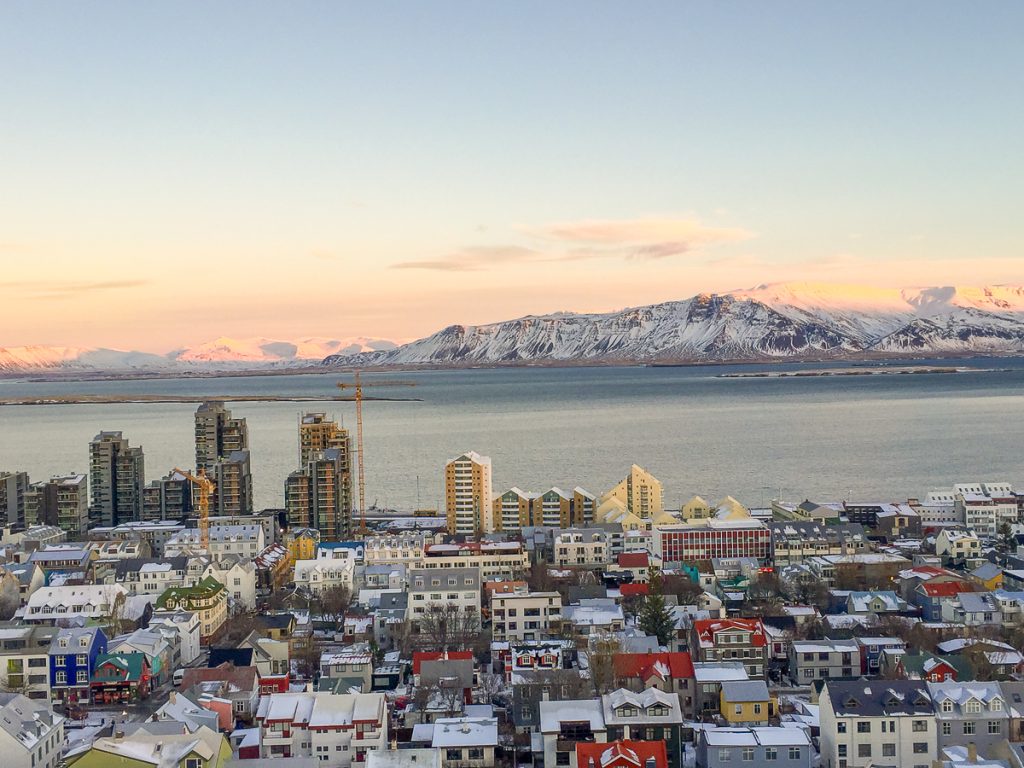
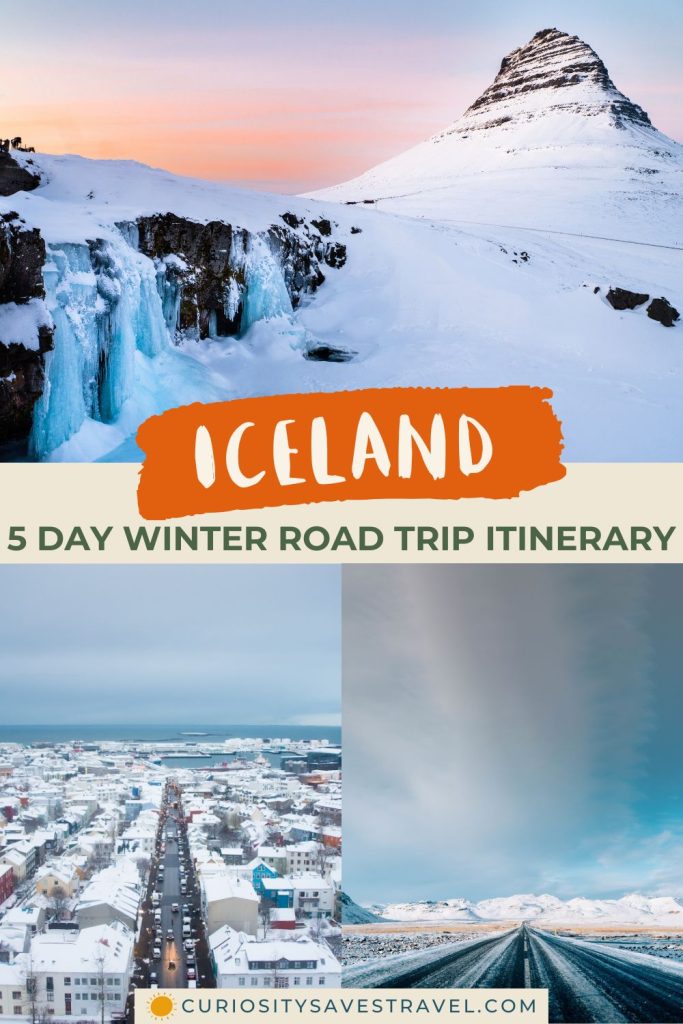
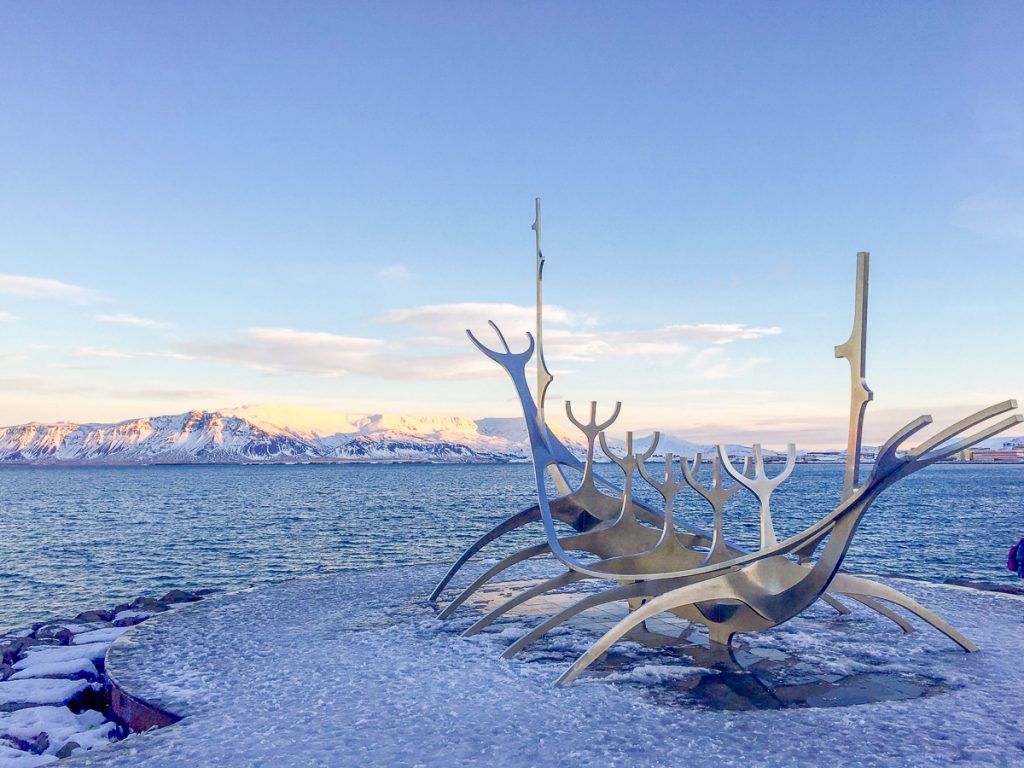
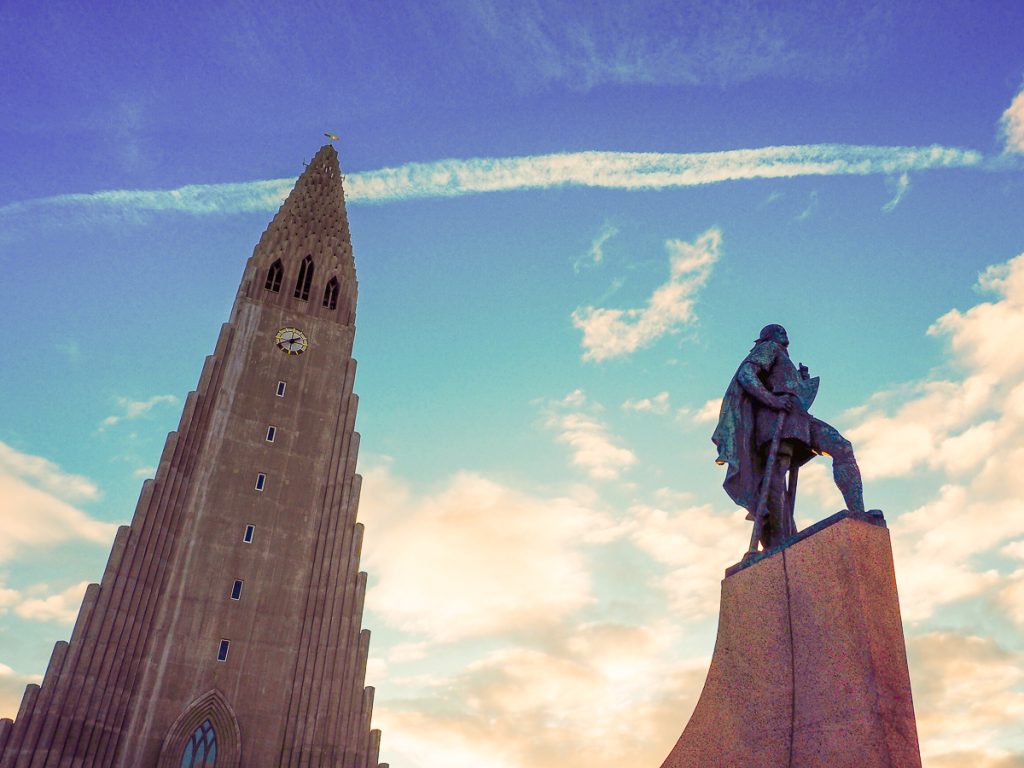
Taking advantage of the limited daylight, we then spent as much time as we could exploring the city. We managed to see most of the highlights on foot, including a walk along the water and a beautiful mid-day sunset from the top of Hallgrimskirkja .
As darkness engulfed the city, we headed indoors to enjoy Reykjavik’s bar and restaurant scene before retiring to our hostel, ready to hit the road in the morning.
Day 2: The Golden Circle
The second day is a driving tour of the Golden Circle highlights. Whether you have a campervan and are staying in a campsite or rented a 4×4 and booked accommodation, your journey will be mostly the same.
I have an entire guide covering driving and touring Iceland’s Golden Circle in winter, including a map with all our stops and timing your departure from Reykjavik. Reference this guide for specific stops, timing, and driving tips!
We departed from Reykjavik when it was still dark out. That way we would arrive at Thingvellir National Park at first light. This allowed us to optimize for about 5 hours of daylight enjoying the Golden Circle.
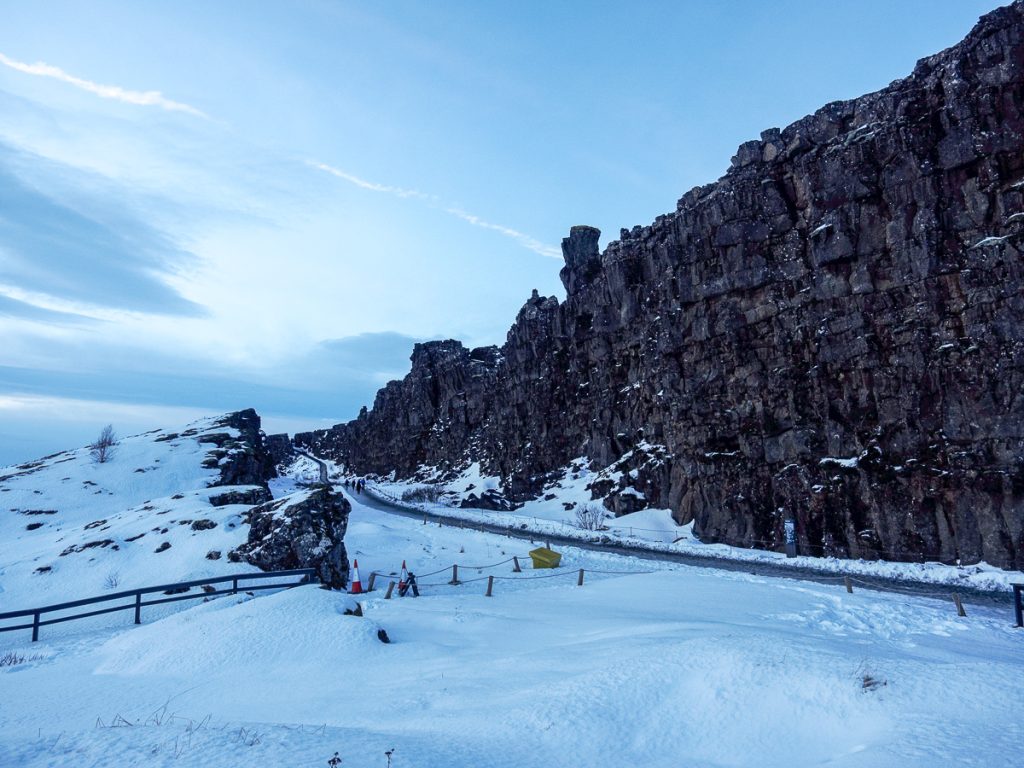
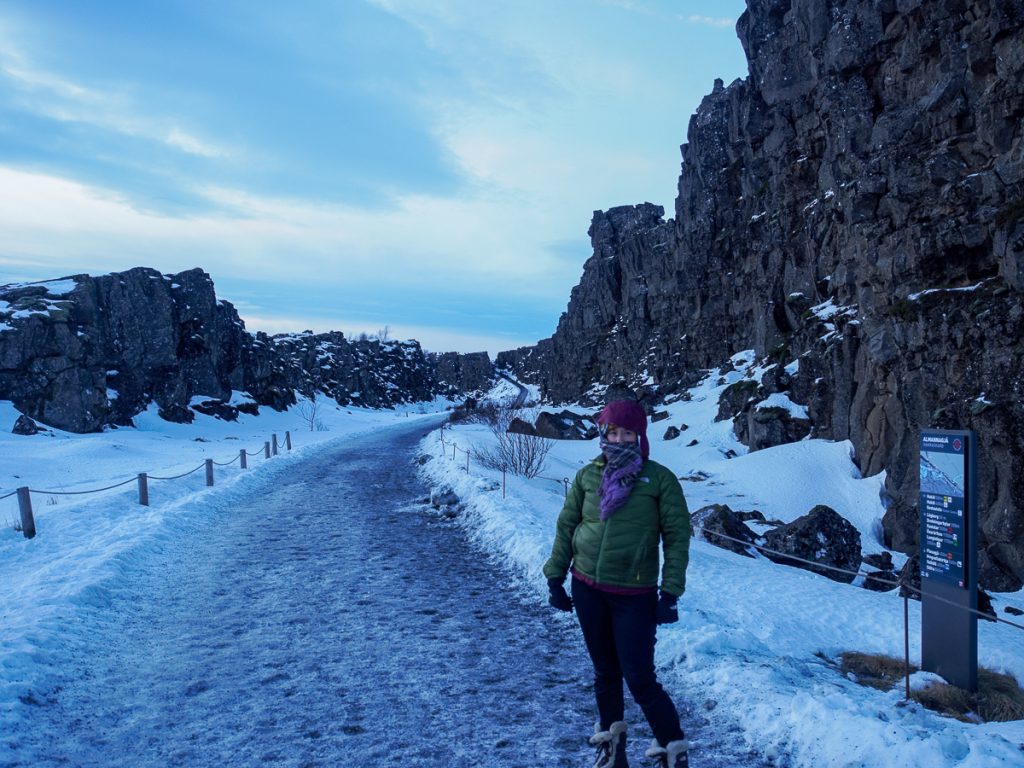
Your first stop will be Thingvellir National Park. Here you can enjoy a scenic walk (in winter bring your micro spikes) through the Silfra tectonic fissure. This is a place in Iceland where two tectonic plates are separating.
Your walk will take you to Law Rock, where the Icelandic government was first formed. People from all over Iceland would make the trek to this place to exchange information and get updates on new laws.
Don’t miss the gift shop and visitor center to learn more about the National Park!
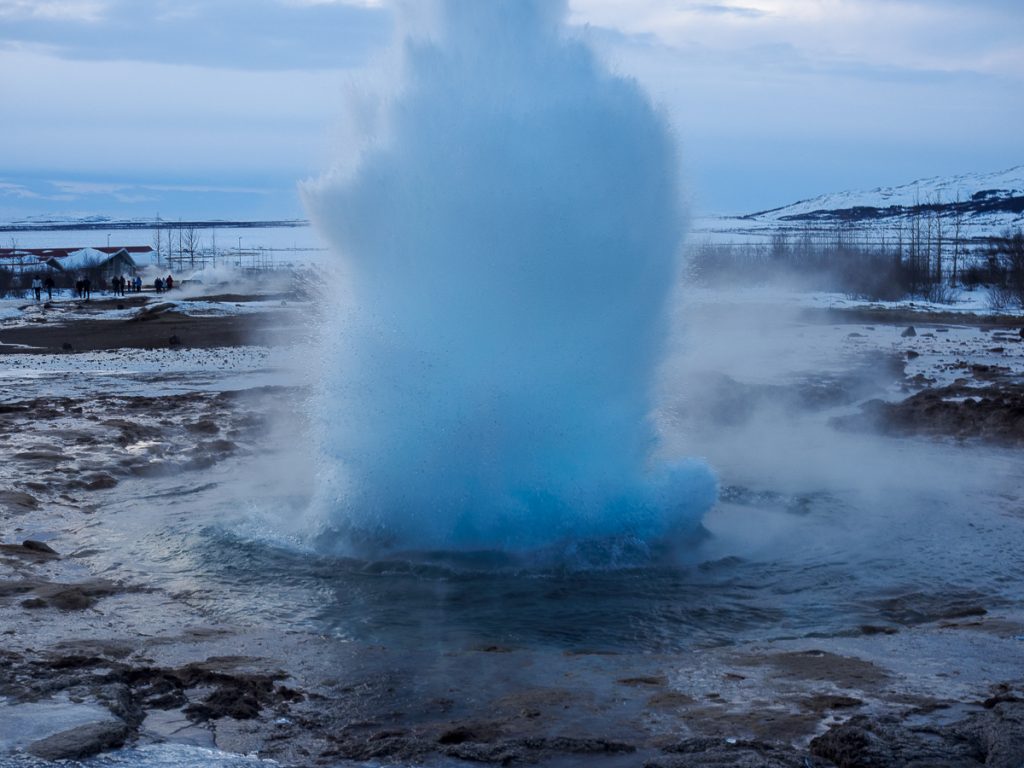
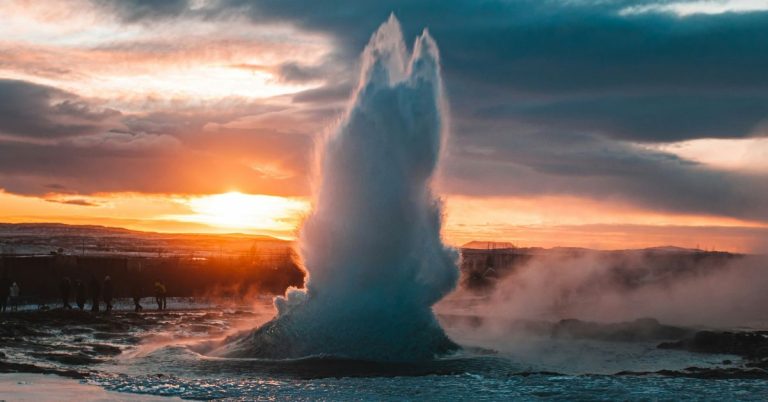
Your second stop will be the famous Geysers. While the OG Geyser, Geysir is now dormant, the Stokkur Geyser is active and reliable as ever, erupting every 5-10 minutes. No matter how many times we watched it seeing that bubble build and then launch water into the air was always so exciting!
Take some time here to enjoy and learn about the Geysers and Iceland’s Geothermal activity.
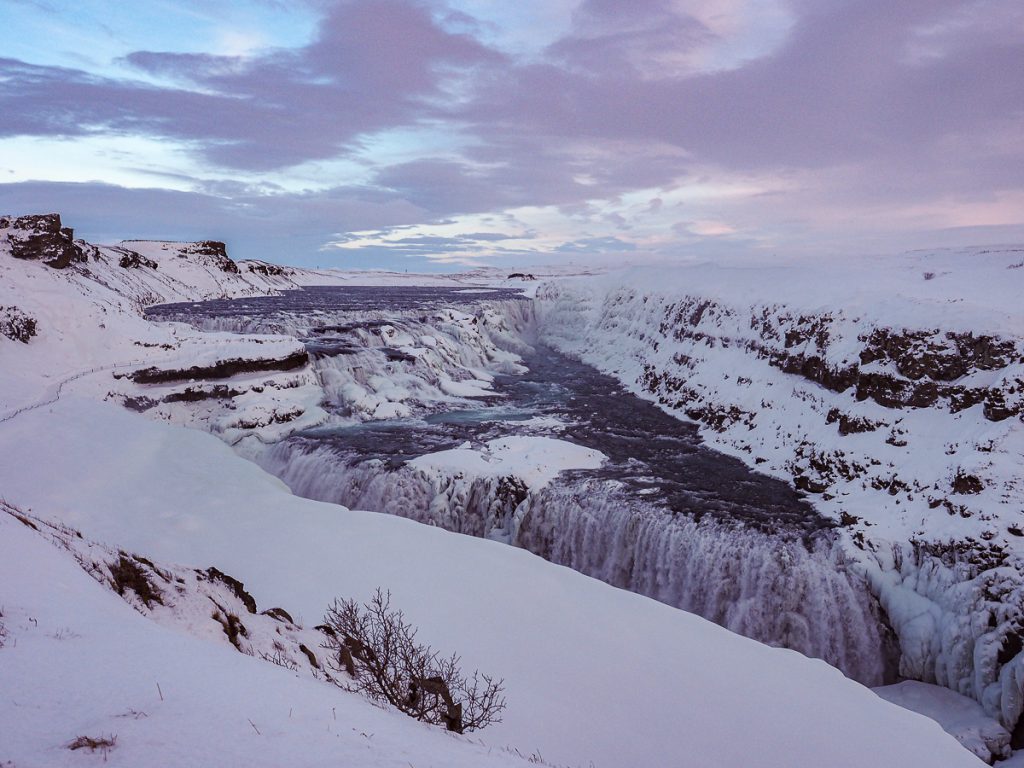
The third stop is Gulfoss. Gulfoss is one of Iceland’s best waterfalls. This cascading river is so incredible to see in winter. When we visited it was so windy and icy that we didn’t stay as long as we would have liked, but with micro-spikes it is manageable. There are several trails and observation decks for different views.
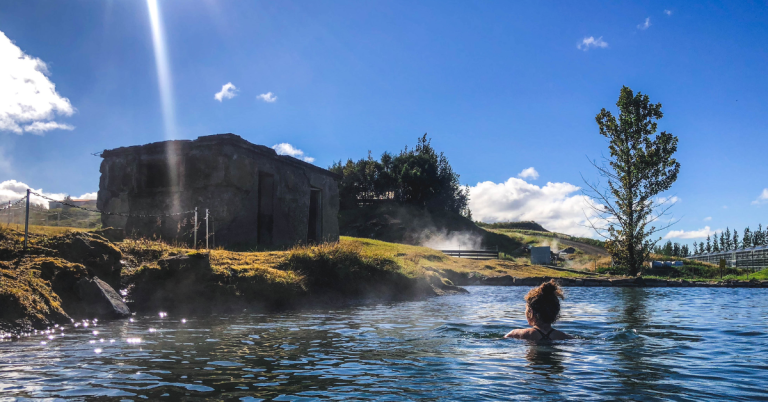
From there, I suggest stopping at Secret Lagoon. We arrived just as the sun was starting to set. Secret Lagoon, is Iceland’s oldest geothermal lagoon, and it is rustic, but relaxing. Order a beer or wine to enjoy in the pool as you warm up from a day exploring in the cold.
For details on everything you need to know to enjoy Secret Lagoon, check out my guide.
After your soak in the Secret Lagoon, it is time to head to your campsite or accommodation. Since we did this itinerary in 2016, we were legally allowed to camp anywhere. We parked near Seljandsfoss, however, you will need to book a designated campsite or accommodation.
If you’re in a campervan, there is Flúðir campground, but I suggest moving toward the South Coast and staying in Tjaldsvæðið við Skógafoss, campsites to make the most use driving during the dark evening.
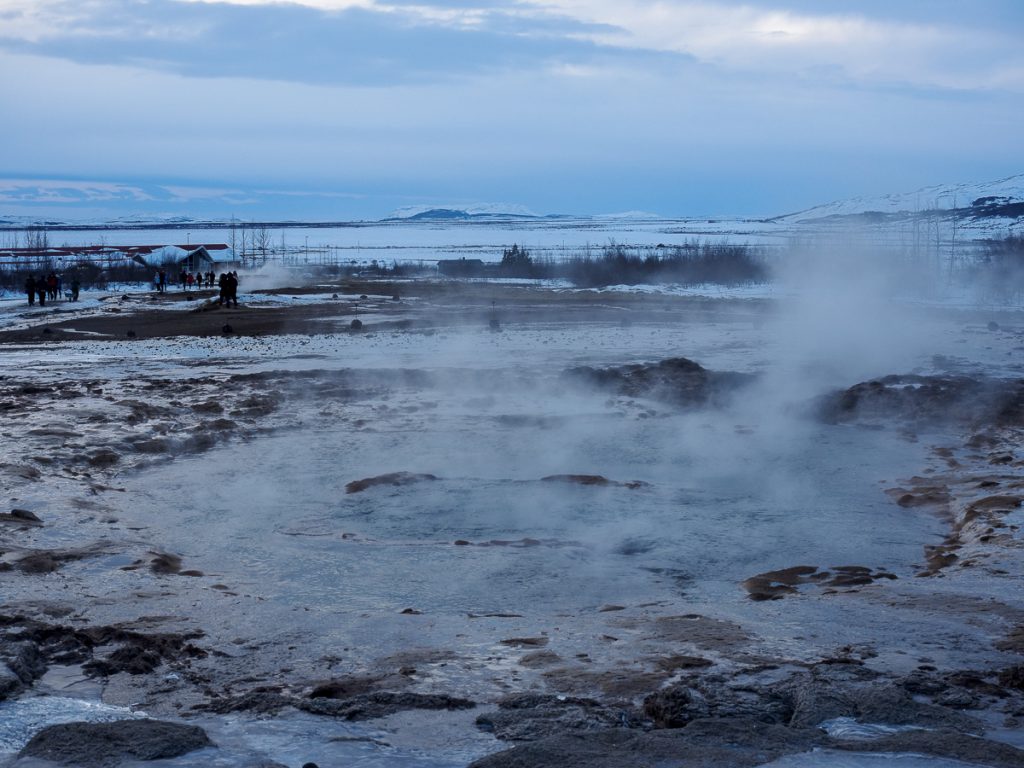
If you are booking accommodation, I suggest driving toward the South Coast and finding a cozy cottage anywhere around Skogafoss or Vik to make the most of driving in the dark.
Day 3: Jökulsárlón Glacier Lagoon and Höfn
For day three, we drove as far as Höfn, which is an adorable small fishing town. We skipped past some iconic sights on this day, including Vik and the Black Sand Beach. This was to optimize our time at the Glacial Lagoon during daylight hours. We would visit Vik on our return drive the following day.
Depending on where you camped or stayed and what time you head out, you’ll begin the drive toward Höfn before sunrise.
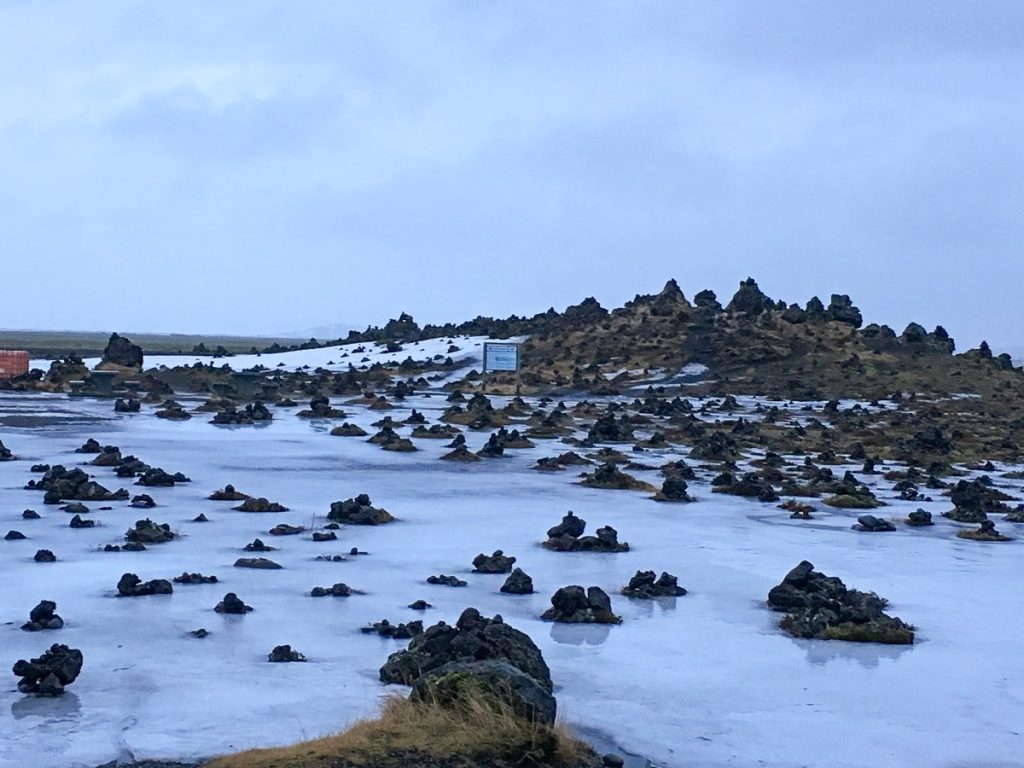
Just as dawn was breaking over the horizon, we made a very quick stop to see the stone cairns at Laufskálavarða. The cairns cover a vast glacial plain. They were created by travelers crossing this area as a way to bring them luck on their journey. There is a viewing platform here where if lucky you can see Katla, the volcano responsible for the landscaoe.
I want to remind everyone that you should never create cairns. Cairns are traditionally used as trail markets and creating them disrupts trail navigation systems. While these Icelandic ones were meant to bring luck, they aren’t something for you to add to. Just enjoy the view and avoid walking on the fragile ecosystem.
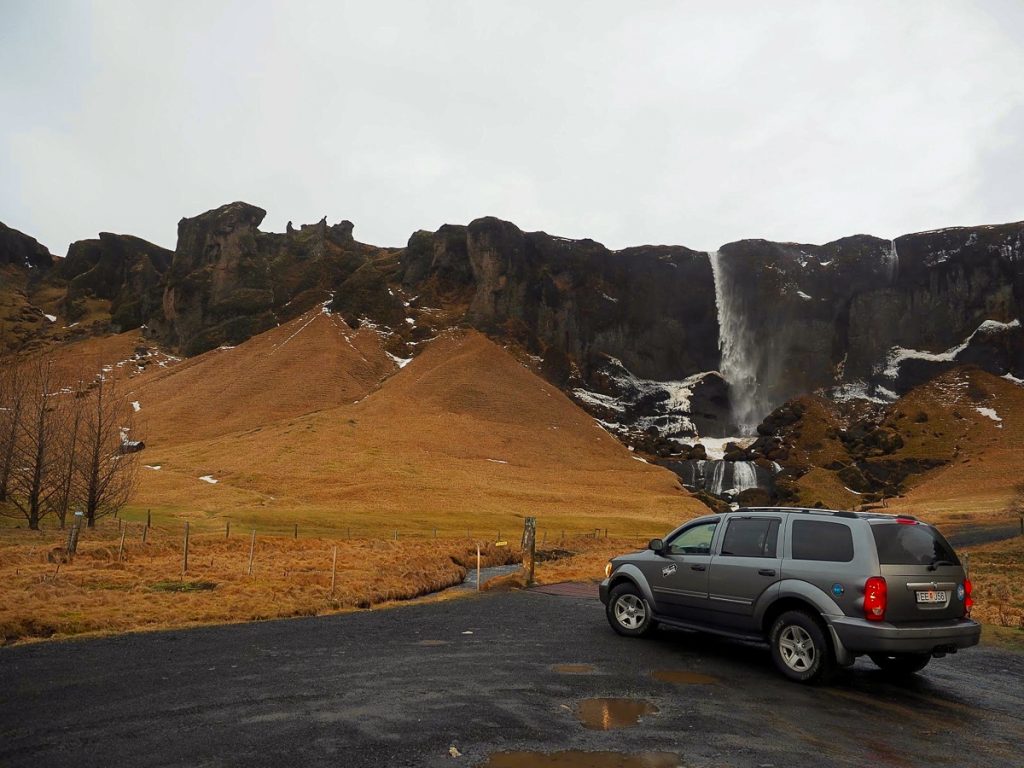
Don’s miss the scenic Hamrafoss and unique geological features like Dverghamrar on your way to Höfn.
Once you’re at Jökulsárlón Glacier Lagoon, you have a few options. You can enjoy the famous Diamond Beach and views of Jökulsárlón Glacier Lagoon on your own. Don’t miss the café where you can warm up with coffee, or soup.
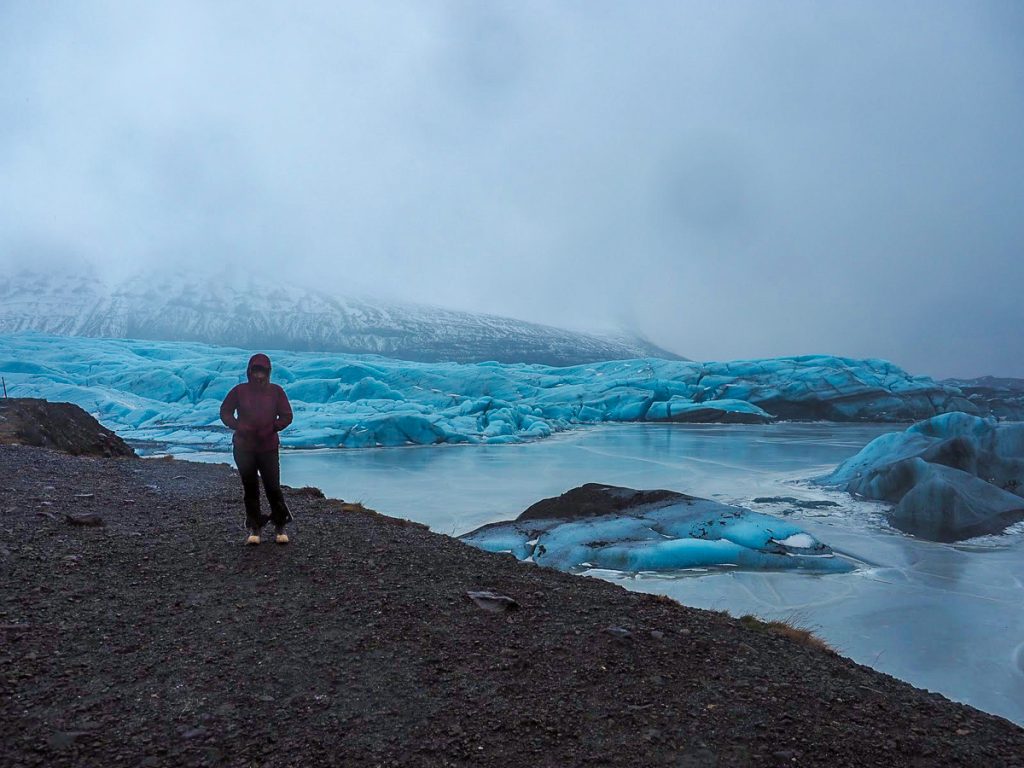
To enhance your experience, I recommend booking a glacier tour. This is one of the few areas where tours depart from this location, so no need to be in Reykjavik—perfect for independent campervan or road trip tours. All of these tours depart from the Glacier Lagoon.
If you book one of the following tours, you will need to plan your day around the timing of your tour!
There are also zodiac tours, you can book directly to explore the lagoon by boat.
After your tour, if you still have the time and energy, you can check out Höfn. We didn’t do much here, other than see the town and cute harbor, and we grabbed our first hot meal outside the campervan.
We thought about staying near Höfn for the night, but decided to spend the evening dark hours driving back so we could see Fjaðrárgljúfu first thing in the morning and then have a full 5 hours to explore the sights around Vik, which we very much needed.
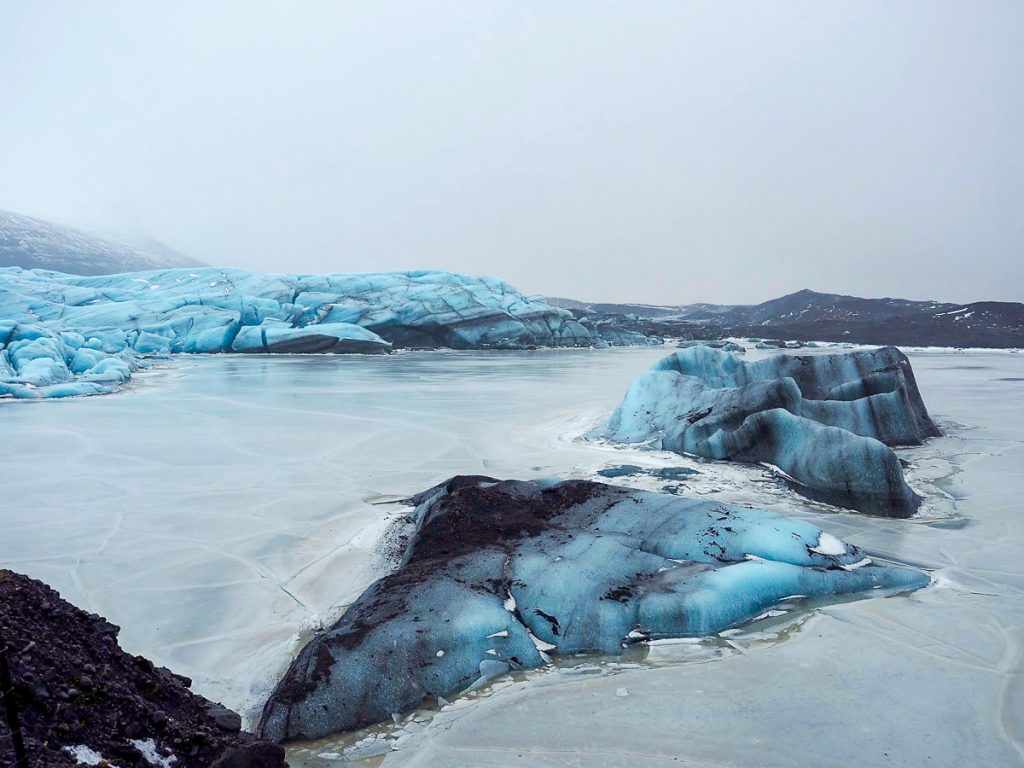
We camped near Fjaðrárgljúfu. Kirkjubæjarklaustur is the perfect campground, as it is in a small village. So, you can stock up on any supplies you might need before settling in for the night.
Day 4: Fjaðrárgljúfur, Vik, and Black Sand Beach
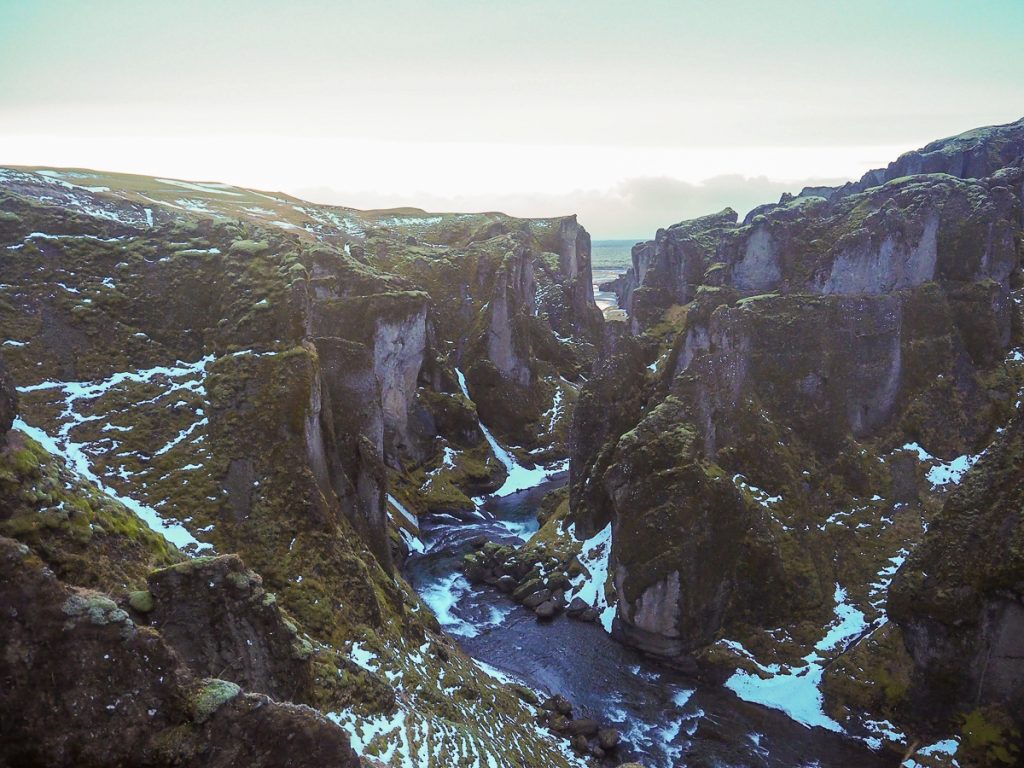
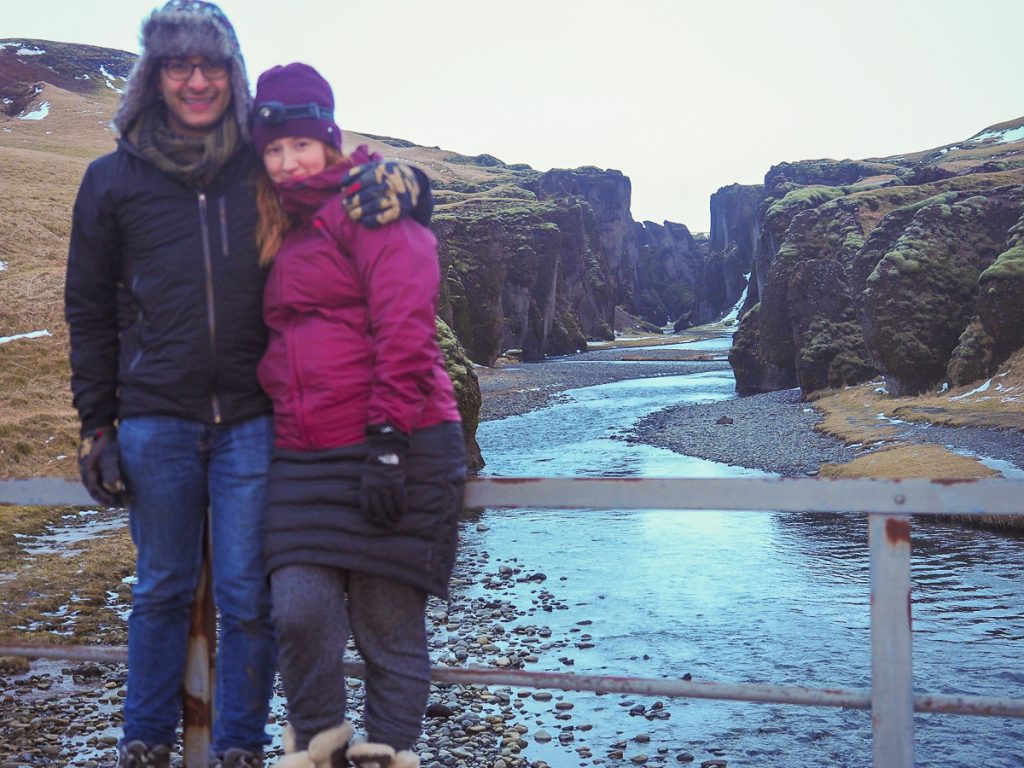
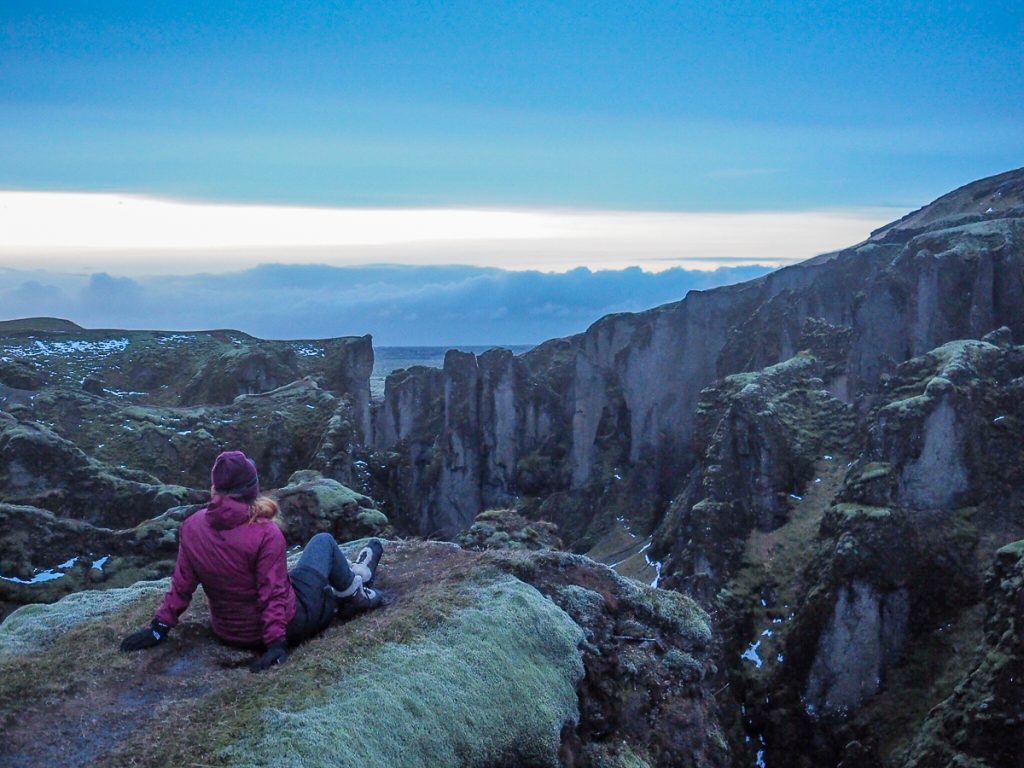
We enjoyed a bit of a sleep in, since we camped so close to Fjaðrárgljúfur. We got ourselves up and ready to leave, starting the hike up the Fjaðrárgljúfur canyon just before dawn. We enjoyed the stunning canyon views and a light hike of about 2km to the top. Make sure you are dressed and outfitted for the cold, windy weather!
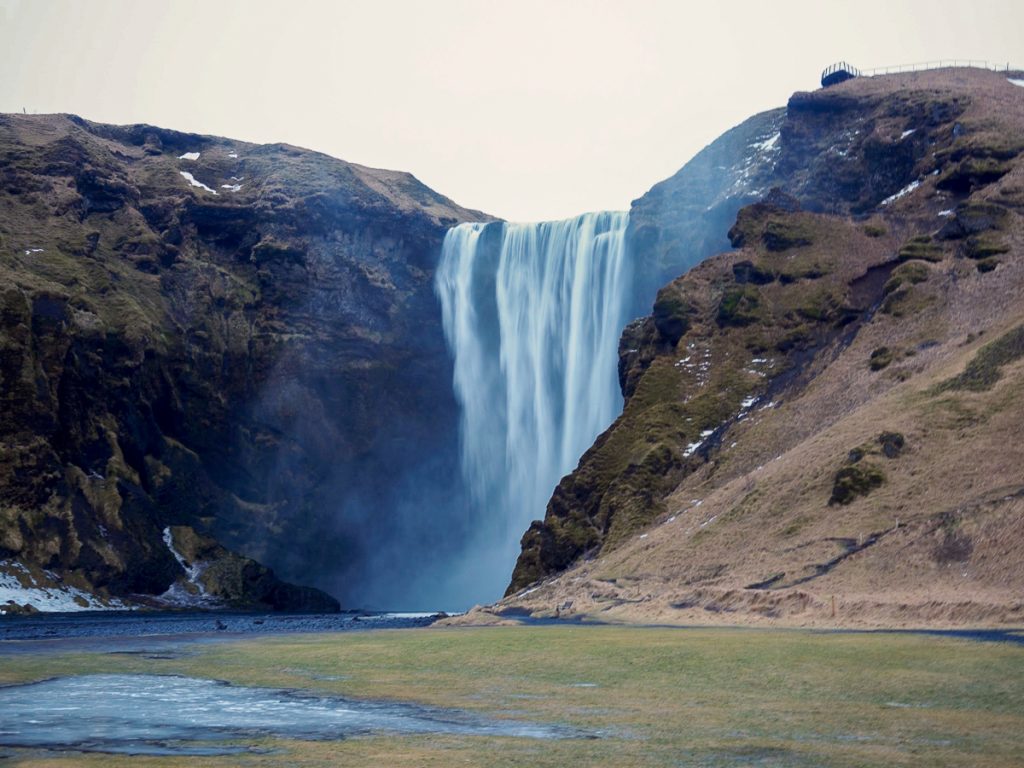
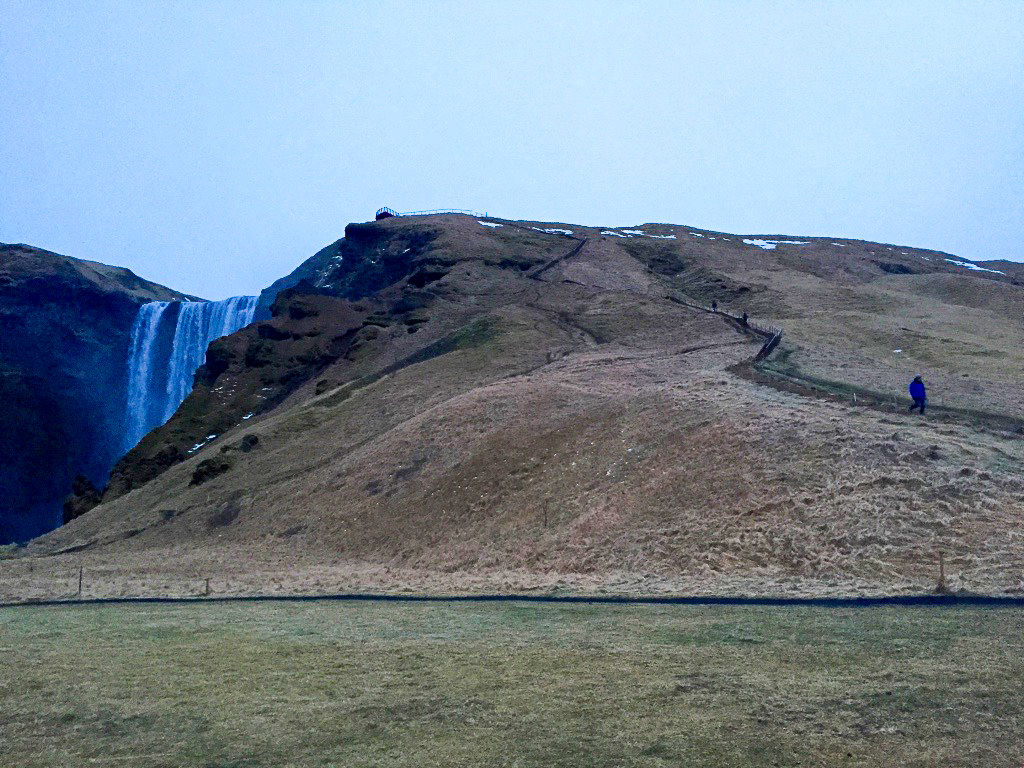
After we started the drive toward Vik. We stopped at Skogafoss, as we didn’t see it, earlier in the trip. So, if you haven’t seen this waterfall yet, make sure to stop and enjoy a quick climb up the stairs!
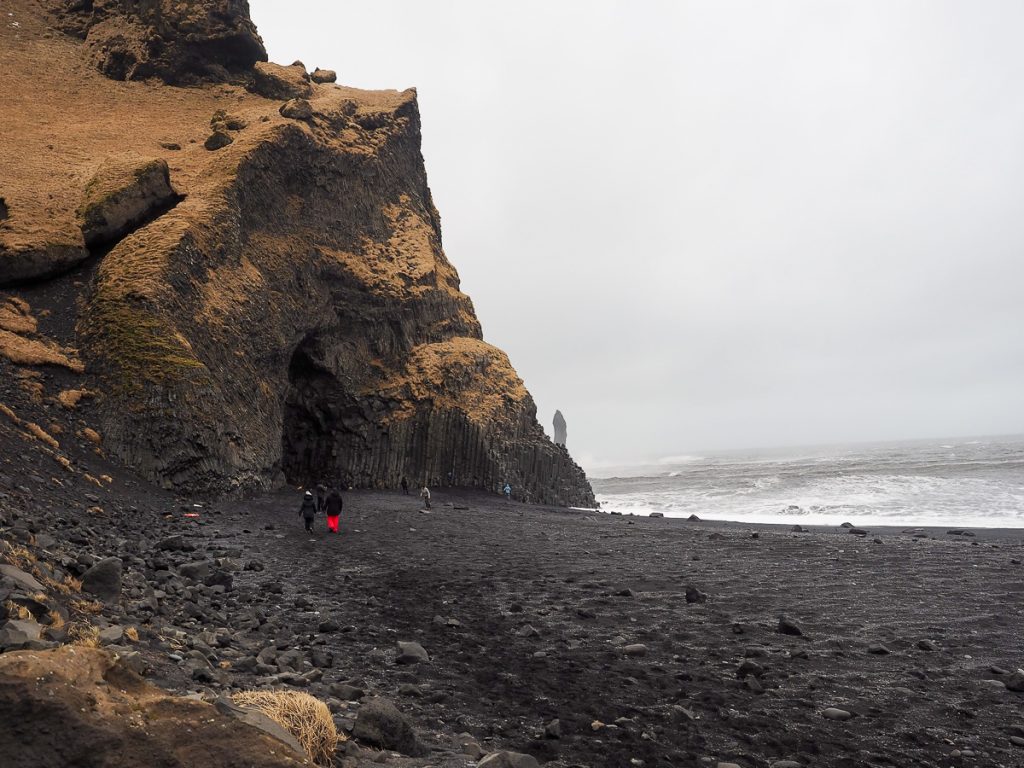
Next up, enjoy the incredible Black Sand Beach! We parked and explored the beach for a short visit, as we would also be heading up to the Cliff Walk and Lighthouse. Be very careful here as the waves are incredible dangerous and deadly. Your phots are not worth your personal safety or life. Stay far away from the surf!
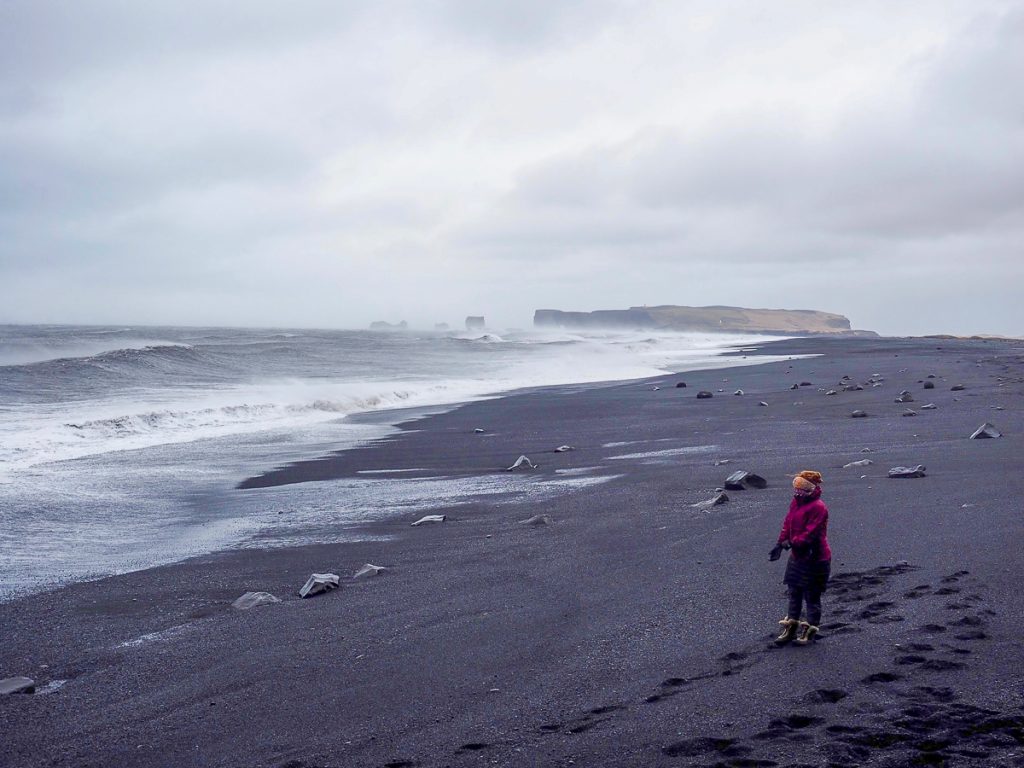
If you are an outdoorsy person, take time to enjoy the Cliff Walk for incredible views over the Black Sand Beaches. This is a bit more of a strenuous hike with switchbacks. Again make sure you have the proper gear and micro spikes if needed. This is a 5km hike, and can easily take up most of the rest of your daylight hours. Plan accordingly.
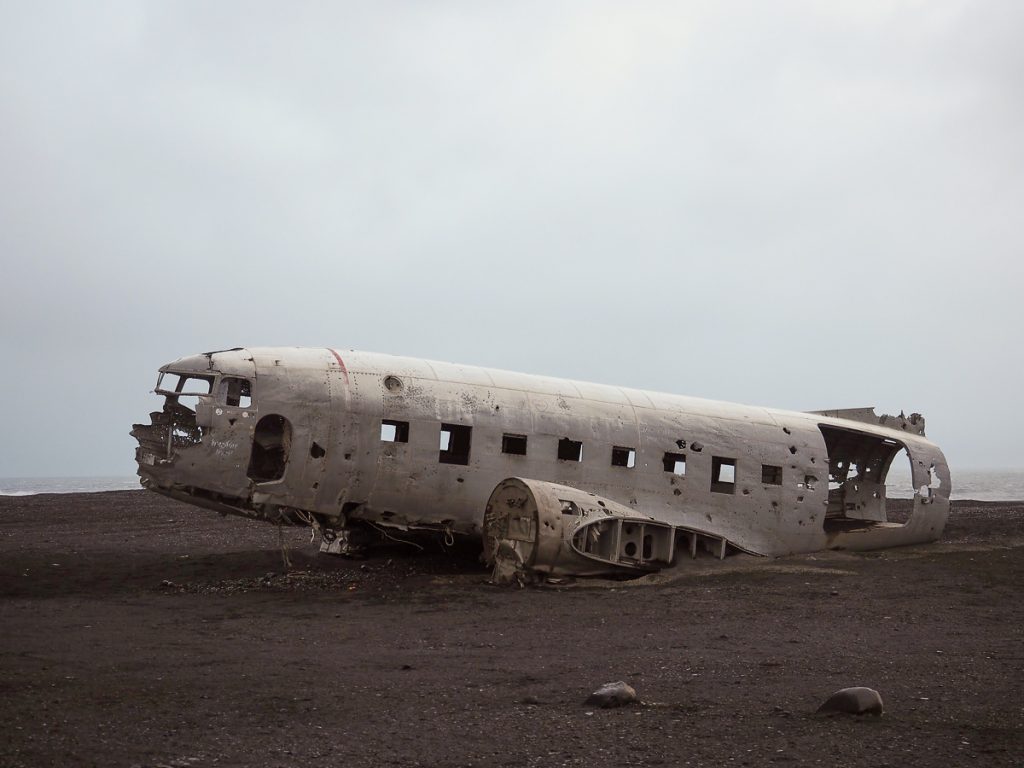
*Alternate is the hike to the plane crash. While we visited when you could legally drive out to the plane crash, we were able to fit it into our itinerary. However, it now requires a 4km hike or precise timing with a bus. The plane crash isn’t worth it, IMHO, and the Cliff Walk is a better use of your time for amazing views!
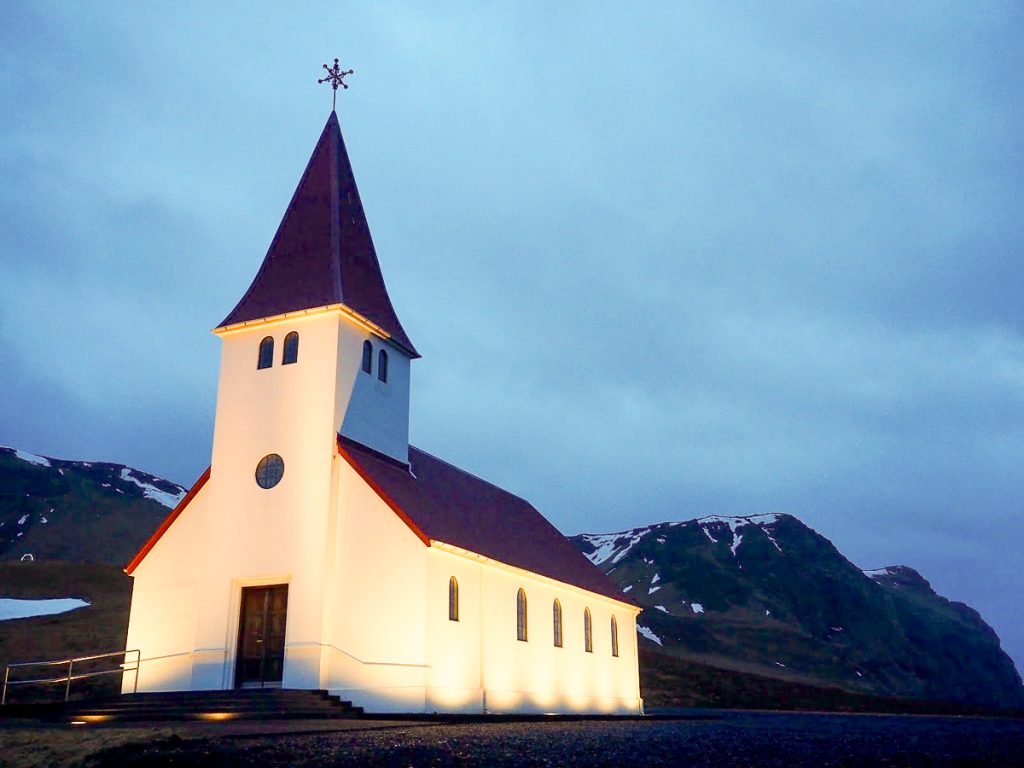
If you are not interested in spending more time outdoors in the winter, check out some of the highlights in Vik, from the Lava Show, grabbing a bit to eat, or checking out the museum and white church. (We did not visit Vik, we just hightailed it to Dyrhólaey).
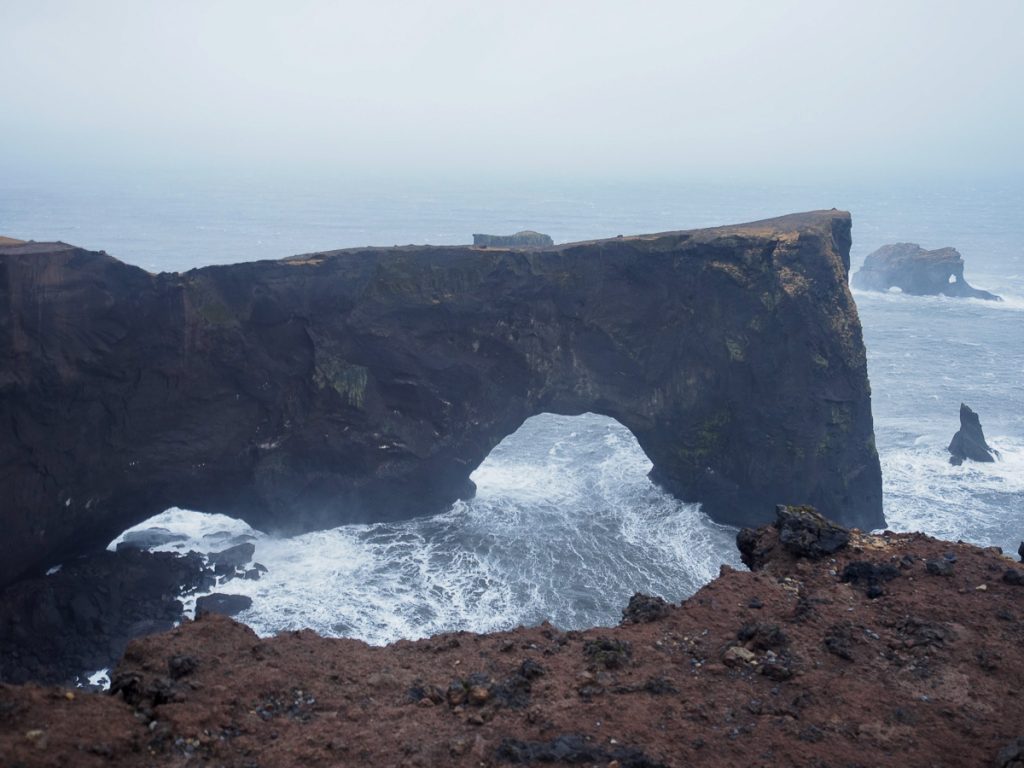
Finally, if you still have daylight hours and time, visit the Dyrhólaey Viewpoint and Lighthouse. This is an easy pull out stop for more amazing views. Note: It is incredibly windy here, and we just jumped out of the car, took some photos and continued to our campsite for the night.
Camping Selfoss is the perfect spot for winter camping. There is also a winter campsite in Vik, if you are not interested in more driving.
Day 5: Kerið Crater, Raufarholshellir Lava Cave, Reykjavik
If you are interested in seeing the Kerið Crater now, is the time do drive there and see it at dawn. A lot of people don’t think seeing Kerið in winter is worth it, covered with snow. But, I think it is still worth a stop if you have time!
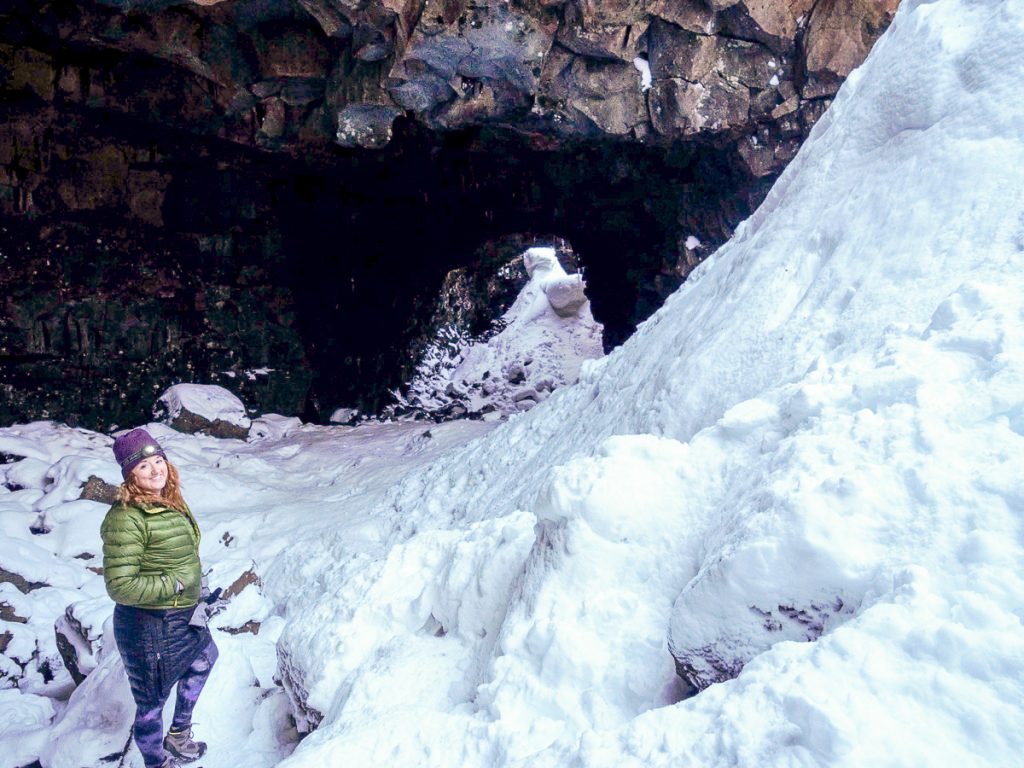
After that, you’ll continue to Raufarhólshellir the Lava Tunnel. This is super cool in winter with icy formations and snow! When we visited, you could independently go into the cave.
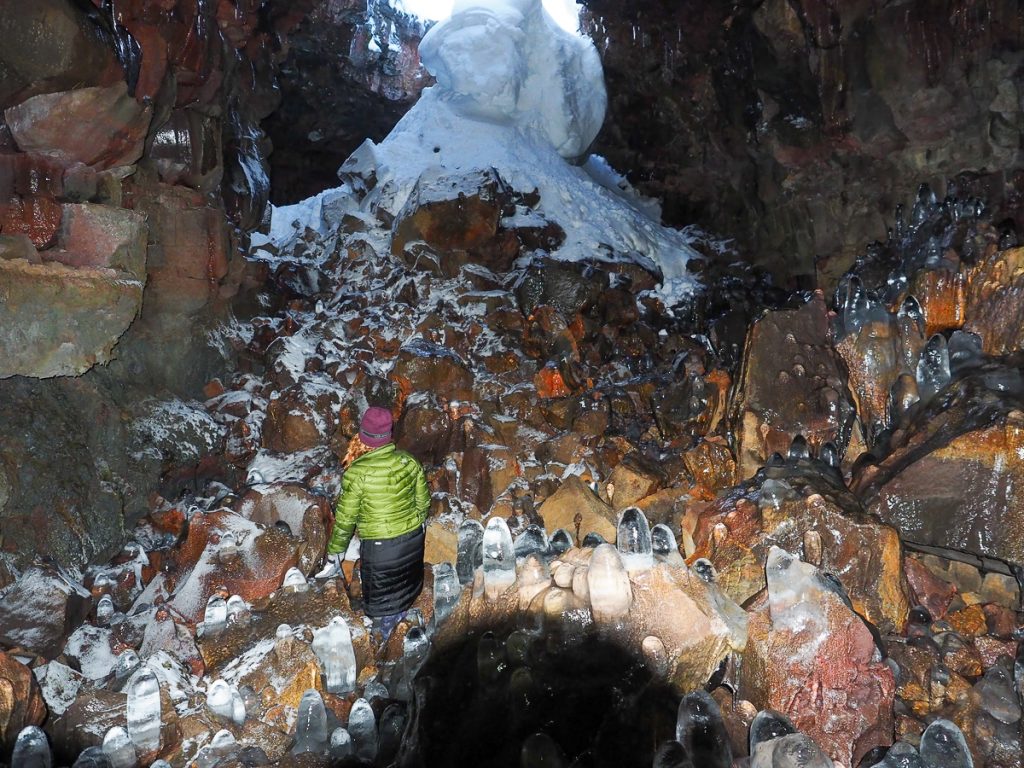
Today, you have to book a tour, due to safety and ecosystem health. I suggest booking your 1-hour tour in advance, and timing your day around the ticket slots you get.
After your tour it is a straight shot back to Reykjavik. We checked back into Loft – HI Eco Hostel for a final night. You will need to return the campervan, whether you wait until your departure the next day, or take that care of tonight is up to you!
This would be the perfect time to check out the new Sky Lagoon in Reykjavik to warm up after that campervan trip of Iceland in winter. We enjoyed another nice dinner in the city and cozy bars.
Day 6: Fly Out
We left early the next day and just had time for one last morning coffee and pasty in the city. As I was moving to Munich, so we flew from Iceland to Germany to start a new life chapter!
Planning a trip to Iceland in winter? I’ve got you covered!
- Driving Golden Circle in Winter
- Renting and Driving a car/camper in Iceland in Winter
- Iceland’s Secret Lagoon
- Kuku Camper Campervan Rental Review
- 24-Hours in Reykjavik in Winter
Book a Guided Tour
Curious about visiting Iceland in winter, but don’t want the stress and hassle of driving on icy roads. If you prefer an expert handling the logistics and giving you the best chance to see the Northern Lights or book your excursions, than a multi-day tour is probably right for you!
Free Map
Don’t miss my free map to help you plan your driving route for campervanning Iceland in winter. This includes map locations for campsites and highlights!
Share Iceland Winter Road Trip and Campervan 5-day Itinerary
If you are brave enough to visit Iceland in winter, it is truly a once-in-a-life time experience. The chance to see the Northern Lights
Curiosity Saves Travel Recommends
Accommodation: Booking.com to find accommodation with a Genius Discount and clear third-party sustainable certifications like Green Key. Look for local hotels.
Tours and Excursions: GetYourGuide and Viator for tours, excursions, and tickets. Never book wildlife experiences through these vendors.
Travel: Omio for booking buses and trains in English across Europe. After reducing the number of flights I take annually, I use Google Flights’ carbon comparison tool.
Car Rental: Rentalcars for the best rates in English globally. It is easy to find hybrids and EVs, and there are resources for finding chargers.
Packing Essentials: REI or your local Co-op has great essentials like reusable water bottles and cutlery sets. Patagonia for regenerative clothing. Farm to Feet for socks made with regenerative practices! Pistil Designs for cold-weather essentials. Osprey for bags that last 10+ years, like the day bag for hiking or my favorite carry-on.
eSIM: Airalo eSIM. Reduces waste from single-use SIMs. A total game-changer.
For Bloggers and Content Creators
Earn Ad Revenue with Journey by Mediavine
Earn with Stay22 Travel Partnership (my biggest source of income!)
Earn with TravelPayouts recommending tours and activities.

I travelled Iceland in 2014 and really agree with your route! Taking the southern part of the ring road hits all the best stops!
The road to the DC10 is closed to cars. You need to walk in if you want to see it. The path is well marked.
Thanks Vanessa! Last I heard that was a rumor, I will update my post to reflect the closure!
Great itinerary! I actually made the drive all the way across the bottom to the glacier and back in one day! It was a long one… but amazing!!!! I wish I’d had more time to camp around there.
That is a LONG drive! I’m always ok doing drives like that, but I am scared to put them in my guides as most other people want to keep it at a reasonable drive. When you’re on a time crunch though you gotta do what you gotta do!
Great guide to Iceland and detailed roadtrip advice. Vik in particular looks amazing! I would love to do a horse riding tour that passed through there. I’m sending this page to a friend who’s making the trip soon :) Ahem, after I swallow my jealousy first.
Thank you for sharing. If you friend has any questions, they can always reach out to me with any questions. We’ll try not to make you too jealous. :-p
I went to Iceland years ago and found it very pricey. However I love your budget breakdown, this would be really useful if I ever go back. I’m desperate to see the northern lights!
Yea, it’s not the cheapest place. We set aside a decent amount for out budget and while we splurged some on nice dinners here and there we tried to save in other areas. I hope you see them soon!
This looks like an awesome guide and helpful tips for a trip to Iceland. It’s on my list to get to very soon! I want to do lots of hiking when I go. The Lava Tube Cave looks really amazing to explore!
If you want to do lots of hiking and go deep in the lava cave you’ll definitely want to go in the peak of summer, like July. Some of the hiking can still be restricted due to mud and snow in early June. Hope you make it soon and have fun!
Wow it’s like you read my mind. I’m going this December and I’m stoked to have all these great tips! Can’t wait to go read all your other guides that were linked here
Glad I could help! The driving guide is probably the most important! Feel free to reach out to many any time if you have any questions or want someone to bounce ideas off.
Sounds like a great itinerary. I visited for 14 days in July so missed out on all the winter awesomeness. When I go back, it will definitely be in winter time.
I did Iceland in February this year, was absolutely freezing but beautiful! Unfortunately being broke students and with no car a lot on this list wasn’t possible but still had an amazing time!
Great itinerary! I would love to visit Iceland one day so I’ve got this bookmarked!
Super detailed and helpful, thanks! The map is really useful.
This is a bit of an odd comment but I really love the layout of this post with the tabs. It’s very tidy and this pleases me haha. Also very helpful information set out in a clear way. We went to Reykjavik in May this year and had mixed feelings about it – we don’t drive so just did it as a city break. But from the little bit of the rest of Iceland we saw, we loved, and we would have really liked to get out and see more.
Hahah it’s not an odd comment! Thank you! I spent a lot of time working on getting the tabs, so I’m glad you found it helpful. I really enjoyed Reykjavik, but I could see how someone could have differing opinions, it’s a very quirky city. I hope you can make it back as I do think the highlight of Iceland is the nature outside the city. There’s lots of tour options you can look at to help plan a trip if you don’t drive!
This is probably the most comprehensive guide to travelling Iceland i’ve ever read! On ya and thanks for providing us with so much useful information. I really would love to visit Iceland but I always thought it wouldn’t be great in winter especially if I plan on road tripping and hiking. Looks like I was wrong :)
Also – great tips on driving on winter roads. A lot of people underestimate driving in those conditions!
Thank you so much! I really appreciate the good words. I worked very hard on this guide after I felt so many were lacking information. I’m glad it helped you out!
That guide you have is so nifty, as is the map! It looks like a LOT of driving but based off the photos I’ve seen of Iceland, it’s probably one of the best road trips in the world :). Thanks for providing such good information!
I really want to visit Iceland. It’s just that I think it takes much more preparation and planning than any other country. I hope to be able to make it soon! Thank you for the itinerary!
This is a really unique way of showing an itinerary – it’s really effective. I’m definitely sharing this and bookmarking for later!! Thank you! :-)
Thanks, Justine. I hope it helped you plan your trip. Let me know if you have any questions!
Hi there :) it’s shame this itinerary doesn’t work anymore… at least for me in my browser :/ any way to fix this?