
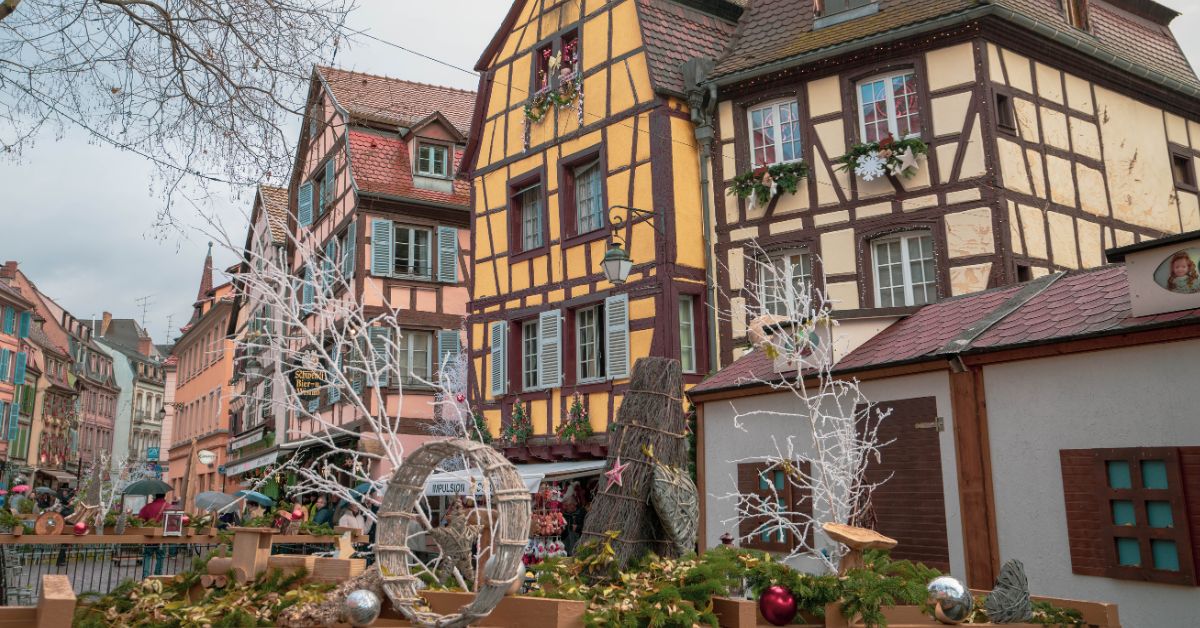
Sustainable Travel Tips for European Christmas Markets
I may earn income from affiliate links or partnerships in this post. I spend time to curate tours or products that align with my values. Thanks for supporting my work, at no additional cost to you. All words and images on this website are created by real people.
Are you curious about how you can make your European Christmas market trip more eco-friendly? The holidays are a time to give back to our communities and the planet while enjoying a bit of warm cheer. They shouldn’t be a time to engage in gross over-consumerism and waste, leaving a trail of glittery microplastics behind.
The European Christmas markets are an opportunity to indulge in cozy, cheerful bliss and to support small communities and local artisans on sustainable adventures. However, we still need to make conscious choices to maximize our positive impact and avoid more harmful actions.
Careful advanced planning and mindful consumption once you arrive are key to sustainable Christmas market adventures this year. These practical sustainable travel tips for European Christmas markets are easy to implement. They will go a long way toward ensuring you not only give back but also have a great time exploring iconic markets.
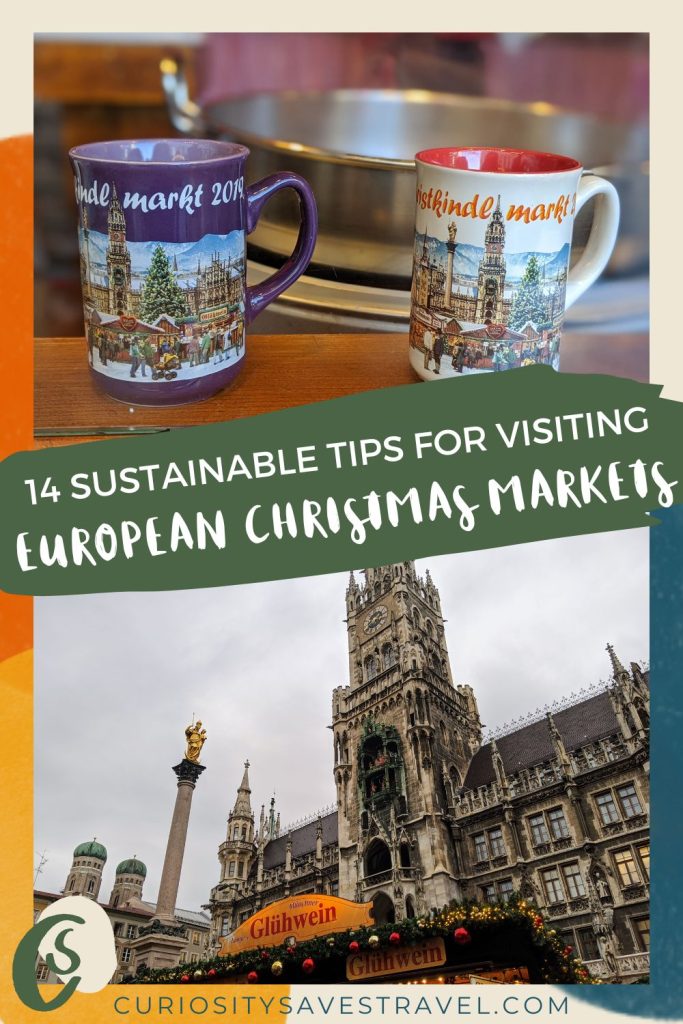
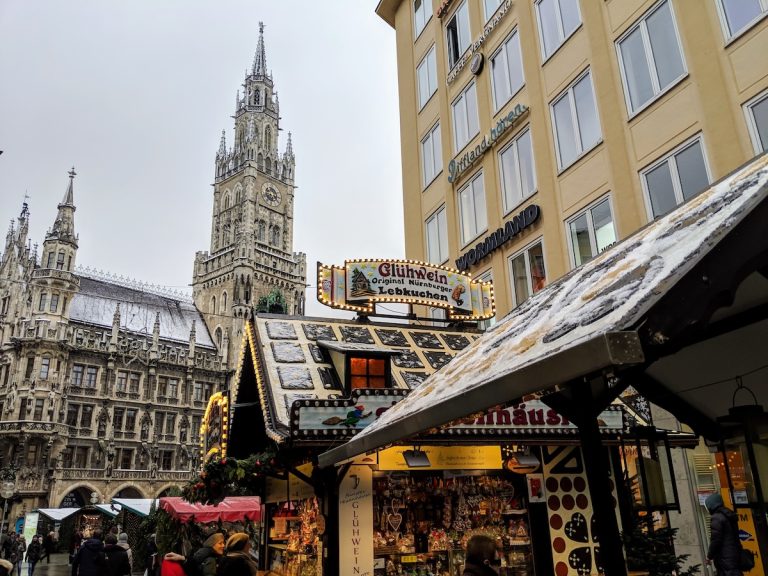
The European Christmas markets are magical, for lack of a better word. I lived in Munich for over 6 years. Every year, I made the most of the Advent season by visiting Christmas markets across Germany, Switzerland, Austria, France, the UK, and more!
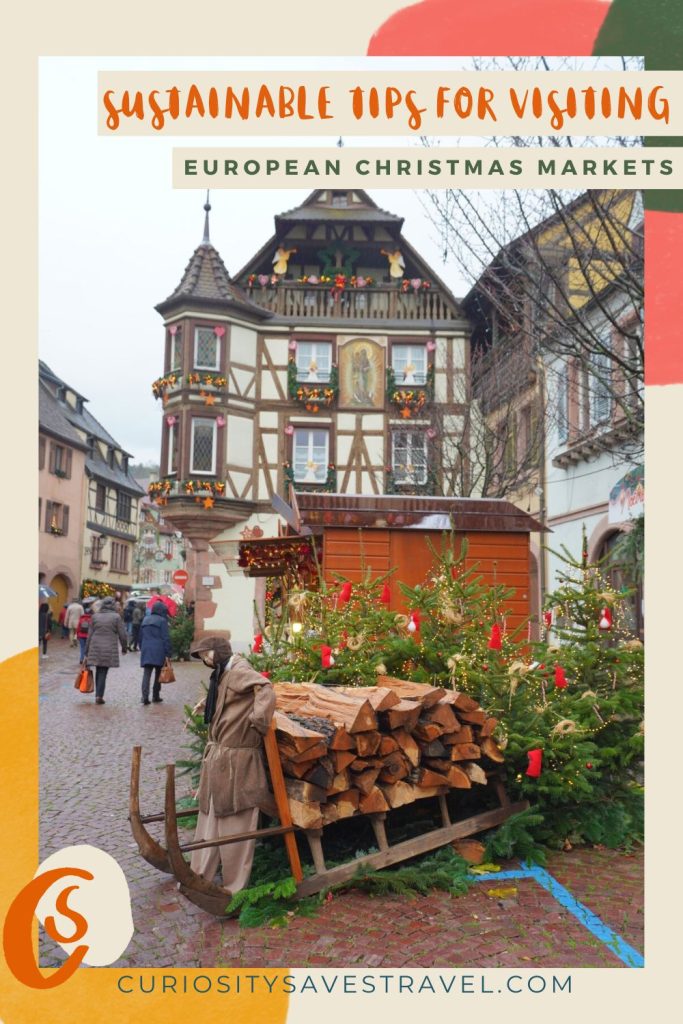
I loved the small villages with snow-topped wooden huts selling piping-hot mulled wine or locally crafted goods. Thankfully, most smaller European markets have firm commitments to sustainability and community. There were, however, times when cheap mass-produced plastic goods, glitter, and overcrowding could disrupt the magic of the holidays.
If you are heading to the European Christmas markets this year, embrace a more mindful approach with these sustainable Christmas market tips.
1. Ditch the Glitter and Plastic
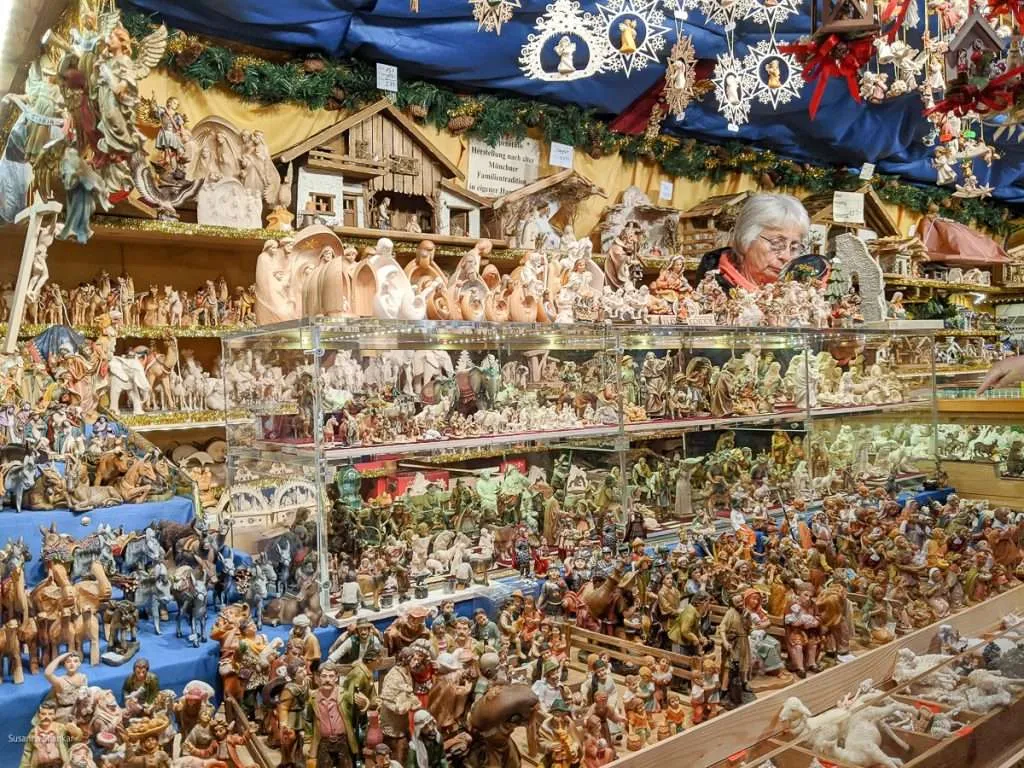
Glitter and cheap plastic trinkets are often the worst culprits for holiday pollution, and sadly, they’ve started creeping into some of the bigger European markets. When you’re strolling through the stalls, try to consciously pass over anything that looks like it was mass-produced or 3D printed with plastic materials. Skip cheaper trinkets made of plastic, even if they are locally made.
It always helps me remember that every plastic item you have ever purchased for Christmas, as a gift for a friend or for yourself, is still on this planet. Somewhere in a large landfill, it persists, or perhaps it made its way to the great garbage patch.
Unfortunately, glitter has become synonymous with Christmas over the last few decades. It is high time we shift. Remember that sparkle might look festive for a moment, but it’s often made from microplastics that pollute waterways.
Instead, look for decorations made from natural materials like wool, dried citrus, wood, consumable food (not wrapped in plastic), felt, or other traditional, beautiful items that are fully compostable or biodegradable.
This goes for packaging too! If you buy a small gift or ornament, politely decline the plastic bag or excessive packaging. Try to avoid things like cookies that come in plastic boxes. Stall owners will appreciate the gesture, and if you have your own reusable tote (more on bringing your reusables later), you can avoid most plastic.
Instead, Go Local, Handmade, and Natural Materials
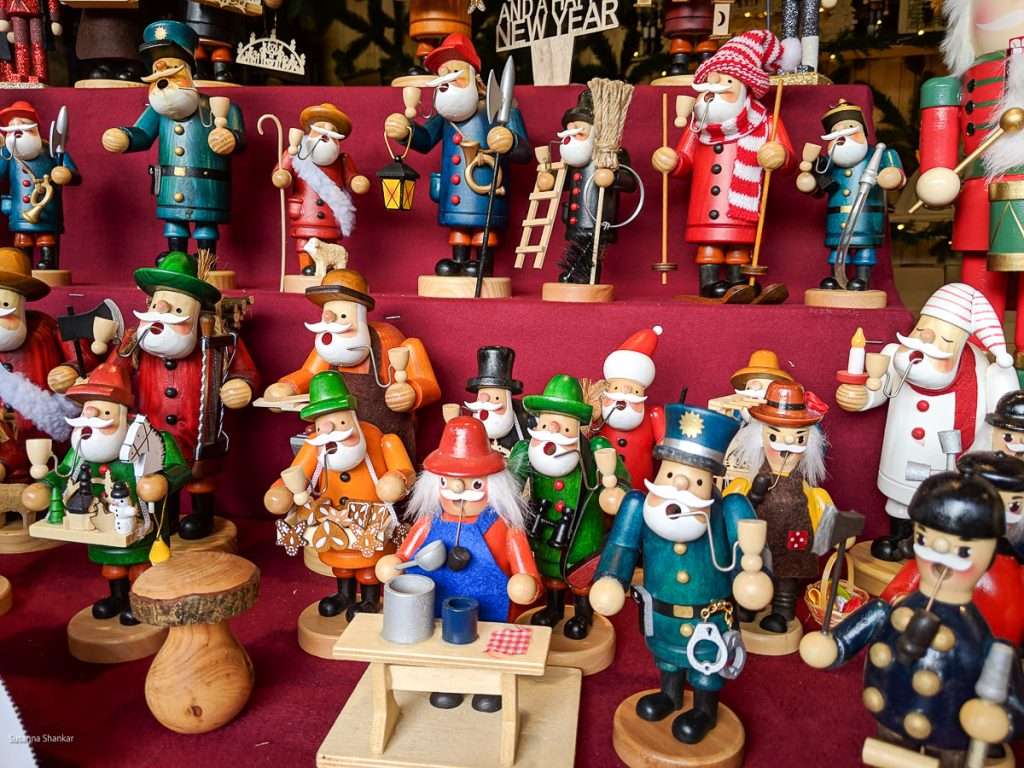
As you avoid the glitter and plastic, if you still want a special souvenir to take home, go for local, handmade, and natural materials. The German Christmas markets are famous for beautiful, traditional handicrafts, especially those made from wood and felt. My mom loves Christmas decorations. When she visited me in Munich, she stocked up on handcrafted wooden decorations that have lasted years!
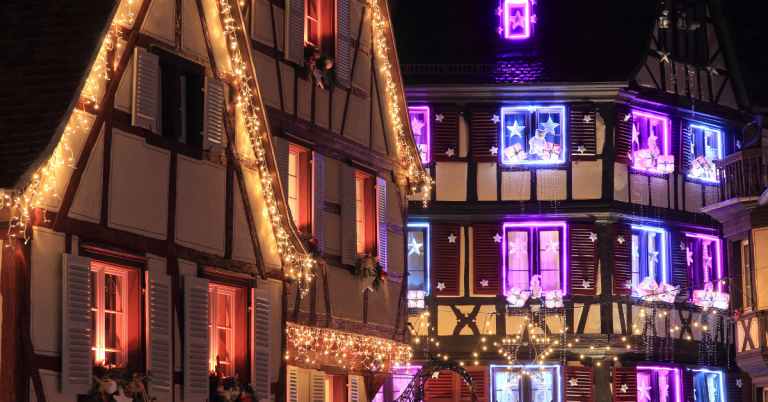
The Alsace markets are known for their reliable and well-crafted glassware.
Look for genuine wooden toys, hand-blown glass ornaments, and knitwear to keep you warm. Before buying, ask the vendor if they crafted the item or if it comes with a story. Not all products are local, and some come with a social impact story from abroad.
2. Practice Mindful Consumerism
With that being said, before you even step into the market, set your intentions with a shopping or wish list. Are you there to buy a specific, meaningful gift, or are you just browsing and soaking up the atmosphere?
If you are planning to shop, you may not know everything available, so leave your list vague and open. “Food,” “new knitwear for winter,” or things like that are a good starting point. Focus on things you need, will use year after year, and are made locally with sustainable materials.
Mindful consumerism means slowing down and asking yourself if you truly need something before you buy it. The markets are beautiful and it’s easy to get swept up in the urge to buy everything!
Instead of buying five small, mass-produced gifts, commit to purchasing one or two truly special, high-quality, and locally made items. Ask the vendor about the item’s origin, if there is a story or tradition behind the work.
By being present and intentional about your purchases, you’ll end up with more valuable, longer-lasting souvenirs and reduce the demand for cheap, disposable goods that flood some market aisles. Focus on quality over quantity as a key to sustainable shopping.
3. Travel Experiences Over Gifts
Instead of feeling pressured to buy a physical souvenir for everyone on your list, commit to gifting an experience during your market trip. This is not only more sustainable but often much more memorable! Buy a special ticket to a local Advent concert, book a guided walking tour focused on the city’s holiday history, go curling at the Englischergarten in Munich, or gift a round of drinks with your travel companions.
If you’re buying a gift for someone at home, consider an experience back home that is themed to the city or country you are in. Think of a German cooking class or host your own Swiss Raclette party with friends.

4. Book Local/Eco Accommodation
After a chilly evening outdoors, checking out different markets and sipping mulled wine, nothing beats sleeping in a traditional inn or local guesthouse. When I traveled across Alsace for an entire week of Christmas markets, my favorite stays were the cozy, locally owned and operated hotels, decorated with traditional charm. Hotel La Diligence in Obernai was one of my favorites and a great example.
While many small, traditional, and boutique hotels may not have global sustainability certifications, they are deeply ingrained in their communities, sourcing food and goods locally, employing locals, and making efforts to have a positive impact.
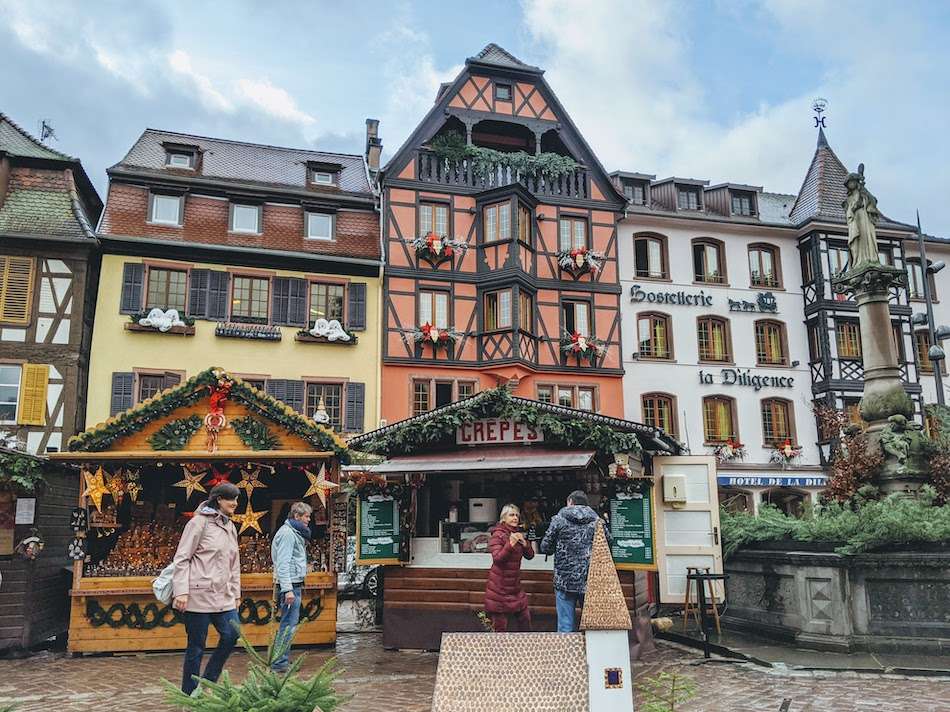
Choosing your accommodation wisely is one of the most significant sustainable impacts you can make. Skip the massive international hotel chains, which often have high energy consumption and don’t directly benefit the local economy as much. Instead, look for a family-run guesthouse (Pension or Gasthaus in German-speaking countries) or a boutique hotel that champions local suppliers.
Booking a smaller, local spot means your money goes directly to the community, helping the people who live and work there thrive during the festive season. Plus, you get a much more authentic experience and better local tips!
5. Bring Your Own Tote and Reusables
This is one of the easiest and most effective actions you can take. European Christmas markets are full of sustainable gifts and treats.
First, pack your reusable tote—no need to buy a new one, I know you already have one lying around. Once you are at the markets, make sure you have it before you leave your cozy hotel. I love the stashable totes that came with their own little bag.
When you’re buying a local handicraft or a jar of locally made jam, tell the vendor you have your own bag. Not only is this a great sustainable action, but it also makes carrying your purchases much easier and more comfortable when navigating busy market aisles.
There were a few markets in Alsace, France, like the food market in Colmar, that served food in compostable paper/bioplastics. Unfortunately, while these are better than petroleum-based plastic, they still require specialized composting and add to waste. It was handy to have a small, lightweight reusable utensil set on hand.
If there is a language barrier, hold up your cutlery so the vendor doesn’t automatically add it to your dish.
6. Use the Pfand System
If you are travelling in Germany, Austria, Switzerland, France, or many other central and Western European countries, the Pfand system is your best friend.
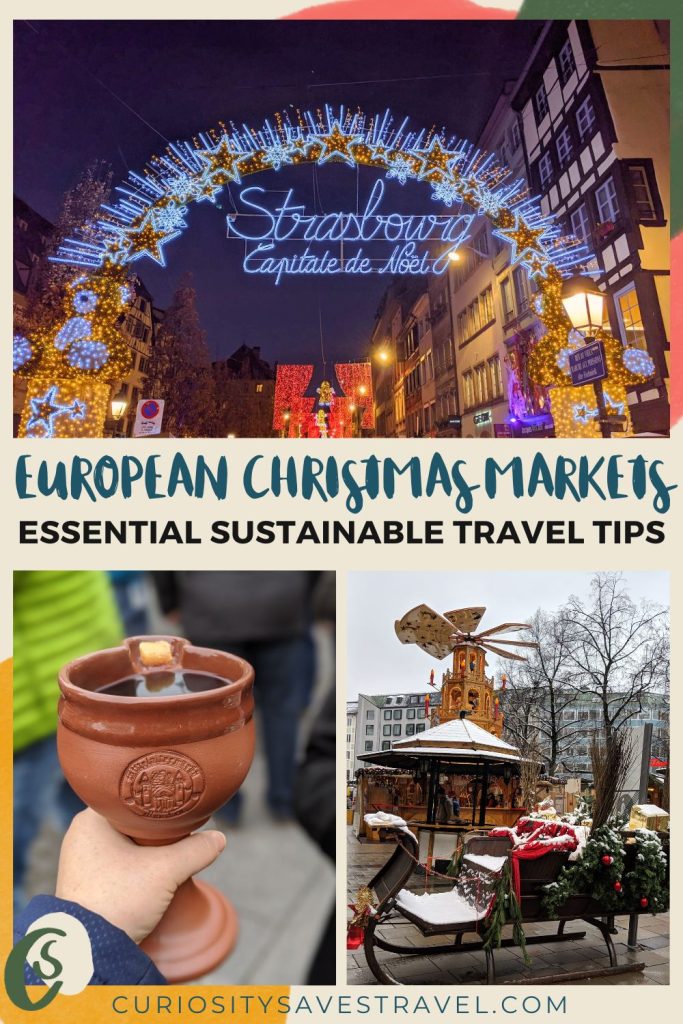
Pfand is the German word for a refundable deposit. Every cup of mulled wine you drink will likely come in a ceramic mug or reusable plastic cup, making sustainable behaviors super easy!
When you purchase your wine, you will pay an extra €1-€5 for your drink and receive a small token in return. Some Pfands, like at Munich’s medieval Christmas market, are up to €12. This is because you get Feuerzangebowle (flaming mulled wine with rum) in a handcrafted ceramic chalice. Do not throw away the mug or token.
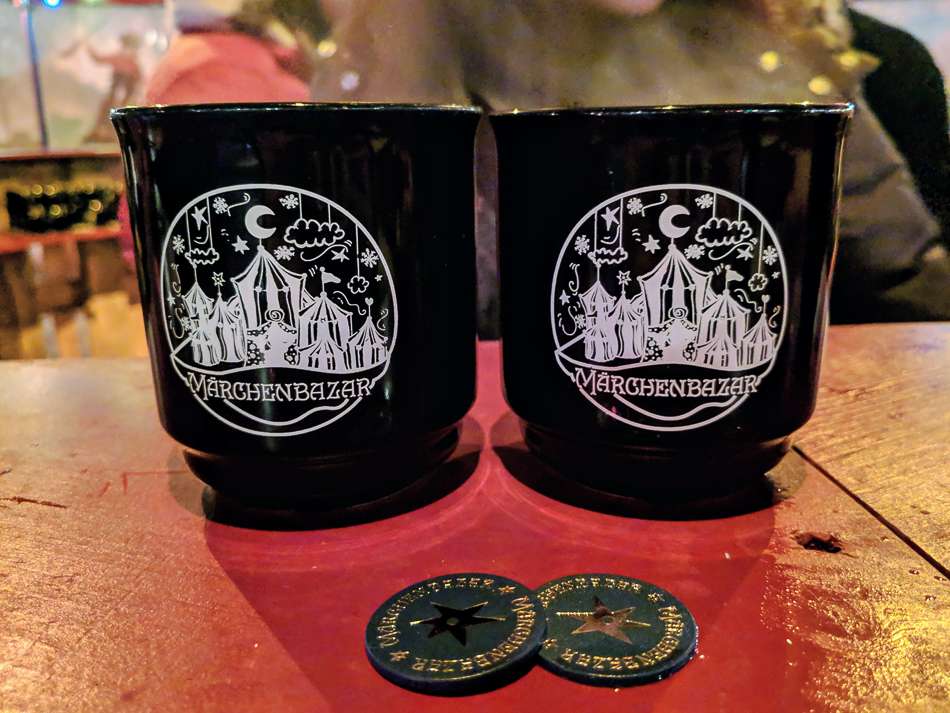
When you finish, return the mug to the stall with the token and get your deposit back. This system eliminates single-use waste from drinks, which is a major environmental win.
Many vendors in the same city, like Mulhouse, will use the same system, allowing you to return your mug to any stall, making it super convenient. However, in a city like Munich, with 25 different winter and Christmas markets, many privatized, each market has its own branded mug; it is important to return these mugs to the same market where you got them.
The Pfand isn’t just for drinks. At places like Tollwood Winter Festival in Munich, all your hot food and drink comes with reusable dishes and cutlery. You’ll get a full plate, fork, knife, and spoon. After enjoying your meal in the mess hall, return these dishes to a central return booth.
These initiatives allow major cities like Munich and Berlin, as well as small villages like Obernai and Mulhouse, to run Christmas markets with zero-waste or zero-plastic practices.
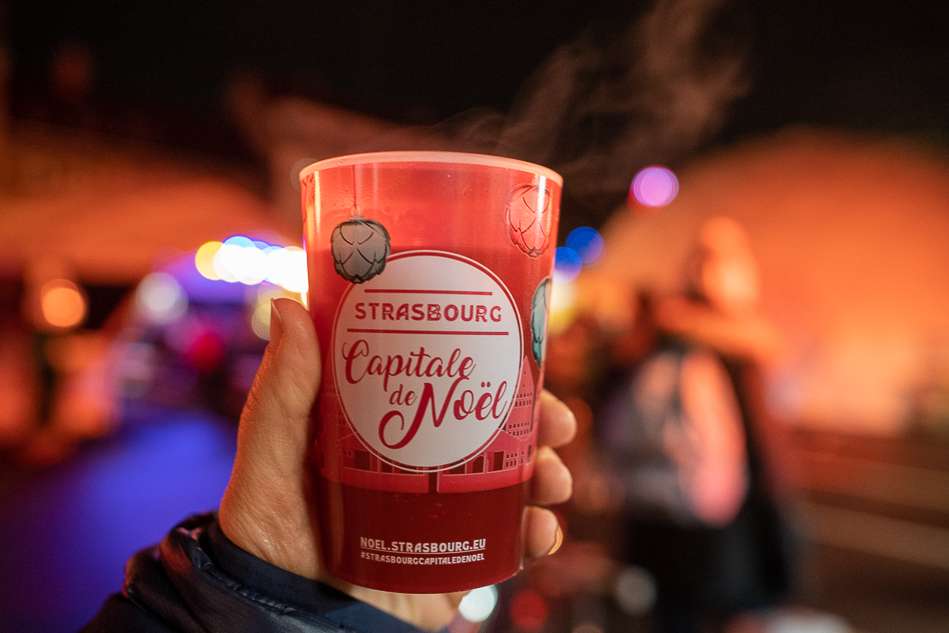
Pfand is the German word, but nearly every European market has their own version of this concept. The markets in Alsace tended to use reusable plastic cups that were standardized and easy to return. Embrace the Pfand system, or whatever it is called where you are traveling! It is an easy way to be sustainable without even thinking about it.
7. Do Visit Small Markets
While the massive, internationally famous markets in capital cities like Vienna, London, and Paris are renowned for their environmentally sustainable efforts, the real magic is found in smaller, local markets.
These village or neighbourhood markets are often where you find true local craftsmanship and a closer connection to the community. Many of these markets are hosted only on certain weekends during Advent or receive less recognition.
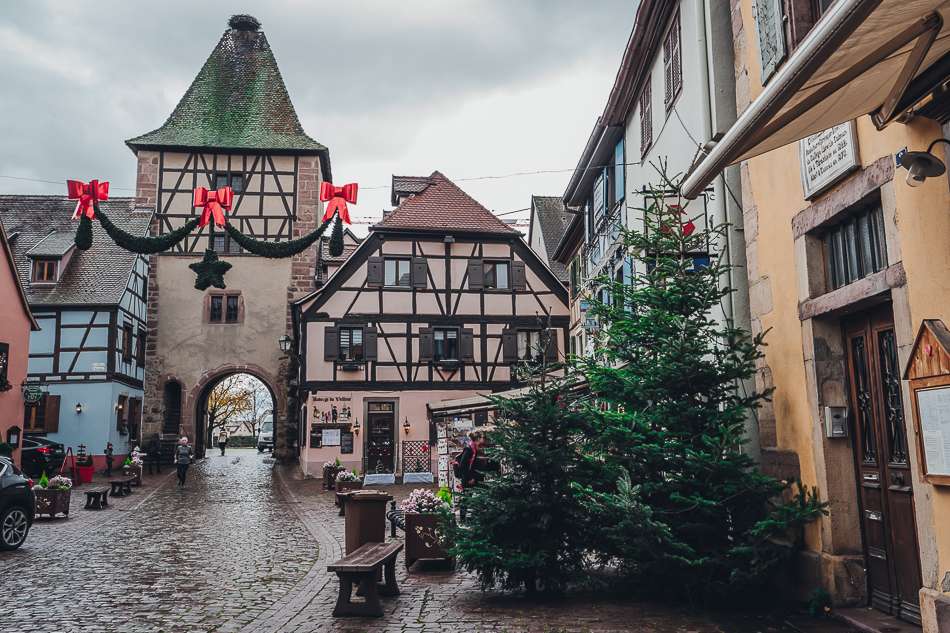
The small markets I visited, places like Turckheim, Pfaffstatt, both in France, Regensburg, and Tegernsee in Germany, were mainly full of local crowds. There were local charity initiatives, community events, games, and raffles. Most of the stalls were run by mom-and-pop vendors selling homemade soup or hand-knit mittens they had spent all year making.

Another great choice is to head to smaller markets in Eastern Europe. Head to the Baltics, small Polish or Czech towns for markets visited by fewer crowds.
Seek out the smaller markets that are a short train ride away from the major city centre, or tucked into a lesser-known square. They tend to have a stronger commitment to selling local, sustainable goods because they operate with a community-first mindset rather than just catering to international tourists.
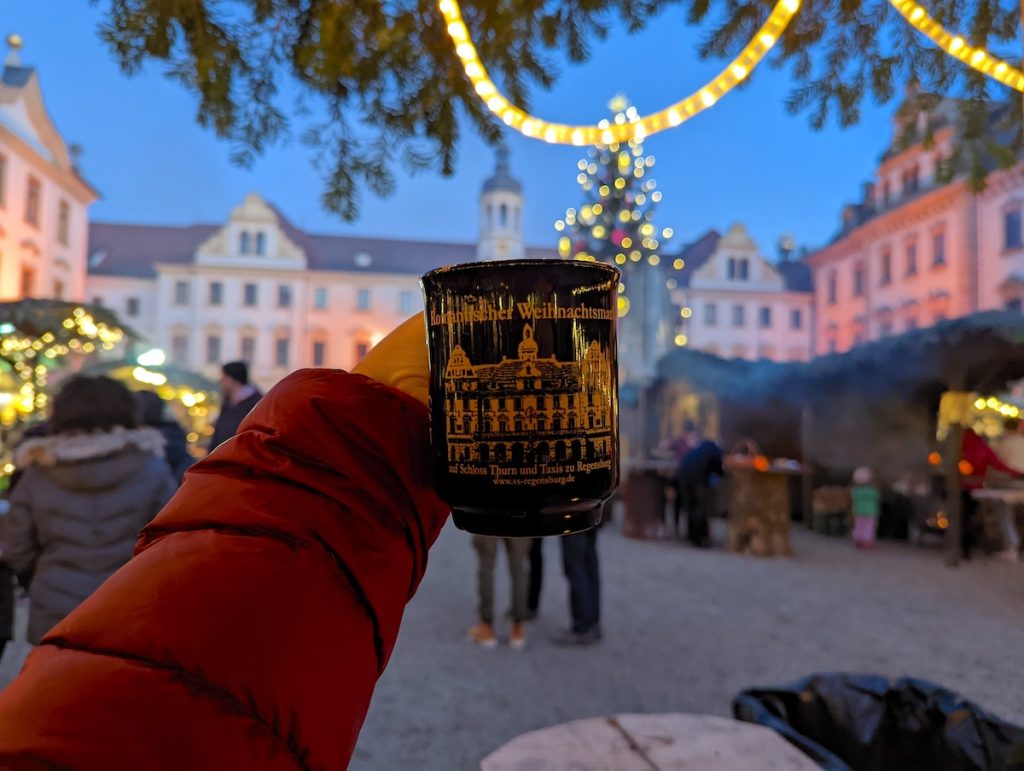
You also get a better feel for rural culture and traditions by visiting these markets. By visiting smaller markets in Alsace, I got to see local choirs sing, performances, and nightly lighting of street lights.
By visiting these smaller markets, you are helping diffuse mass tourism and crowding. You are also directly putting money into the hands of local artisans and small-scale farmers, ensuring the holiday cheer benefits the community where you are a guest.
8. Fly Direct; Catch the Train
If you are coming to the European continent from North / South America, Asia, Australia, or Africa, consider flying directly to a major capital or hub. Flying direct helps reduce take-off and landing emissions and costly short-hopper flights. Once you’ve arrived at your hub, feel free to check out the major Christmas Market there before hopping on a train to smaller towns and rural areas.
Once you are in Central, Western, or Eastern Europe, there is no reason to fly. Europe’s train network is fast and extensive. Choosing rail travel over flying makes a massive difference toward a lower-carbon Christmas market adventure.
Planning to hop between markets in different cities, from Munich to Strasbourg? Strasbourg to Mulhouse? Cologne to Berlin? Vienna to Salzburg? The train is by far the most relaxed, scenic, and eco-friendly option. A high-speed train journey produces significantly fewer emissions per person than a short-haul flight.
Depending on your itinerary, a rail pass like Interrail or Eurail might be a good way to save money.
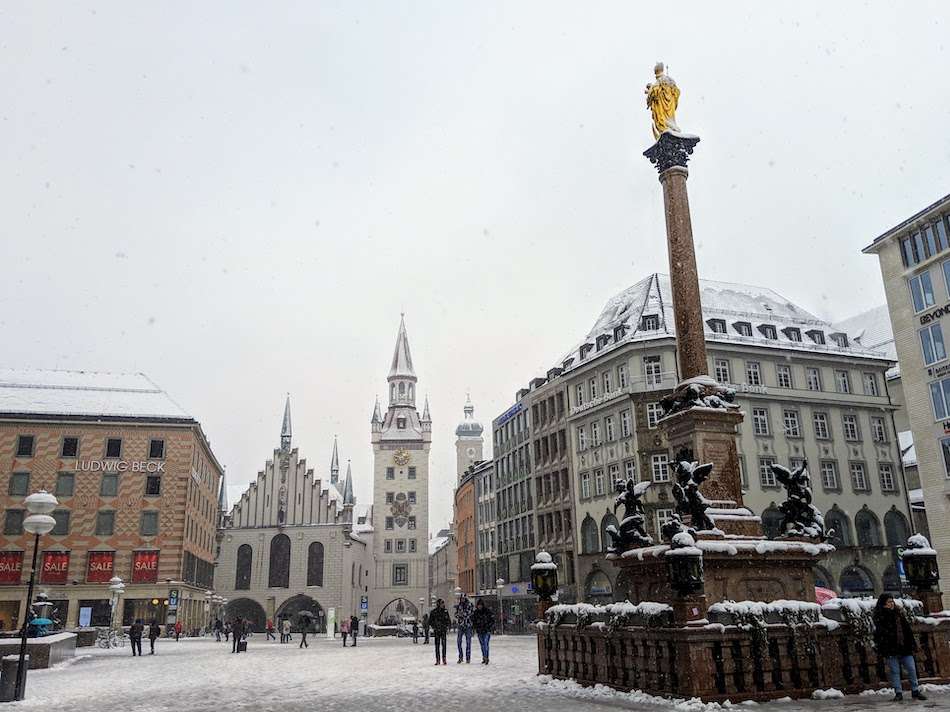
Once you arrive in a city, the markets are almost always centrally located and easily accessible by foot or by the city’s excellent public transport system (trams, buses, and metro). Take it from someone who took a road trip across Alsace, adding a car to your trip makes parking and traffic a nightmare. Use the public transit systems. If you did rent a car, there is no need to use it in small towns that are accessible by walking or public transit.
The train journey itself is incredible in winter. I love taking the train around Germany in winter, watching snow-covered landscapes. Train travel is a cozy and sustainable way to travel during the Advent season.
9. Focus on Food – this is your excuse to eat!
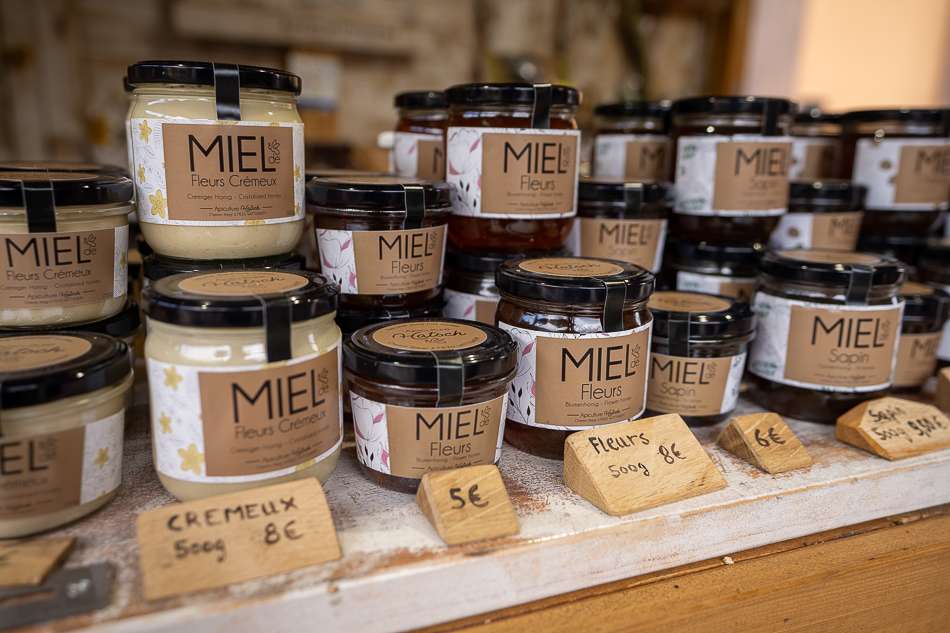
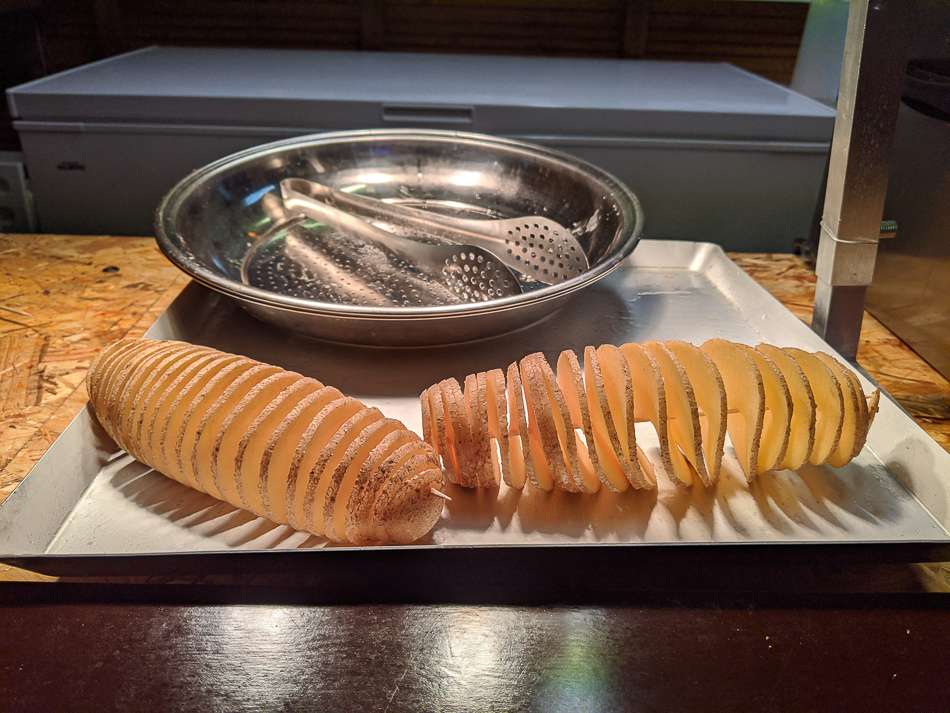
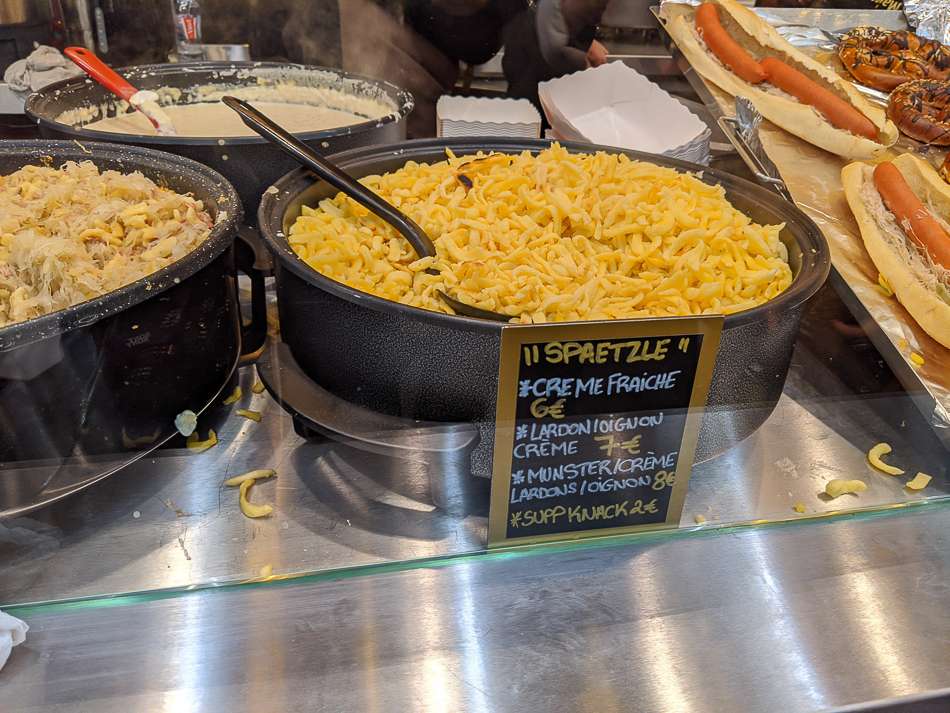
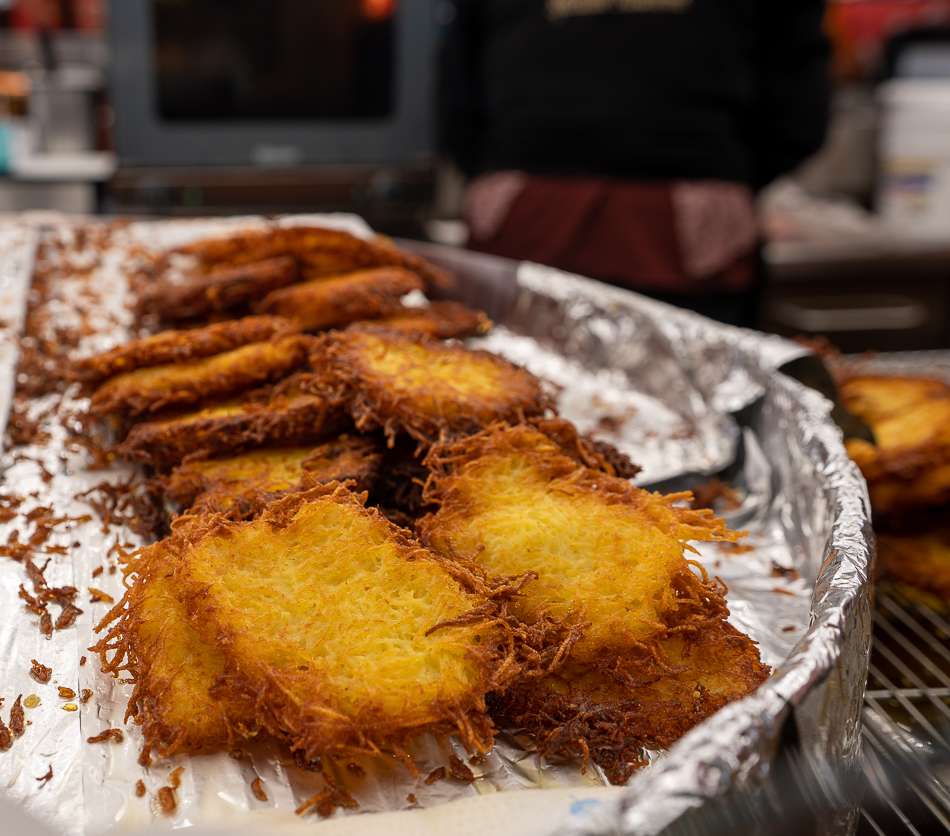
The food at European Christmas markets is THE highlight. Vendors sell freshly roasted chestnuts, potatoes cooked in all sorts of ways, mushrooms in a thick cream sauce, piping-hot Käsespatzle, flammkuchen, and so much more. You’ll also find lots of goodies you can take home with you as gifts or snacks, like local honey, schnapps, jams, baked goods, tapenades, etc.
By choosing to eat at the markets or purchase food as a souvenir, you are supporting local food vendors and reducing the need for packaged, mass-produced meals.
Look for the regional specialities, as these are most likely sourced from local farms and suppliers. For example, choose Käsespätzle in Bavaria, tarte flambee in Alsace, or Raclette in Switzerland.
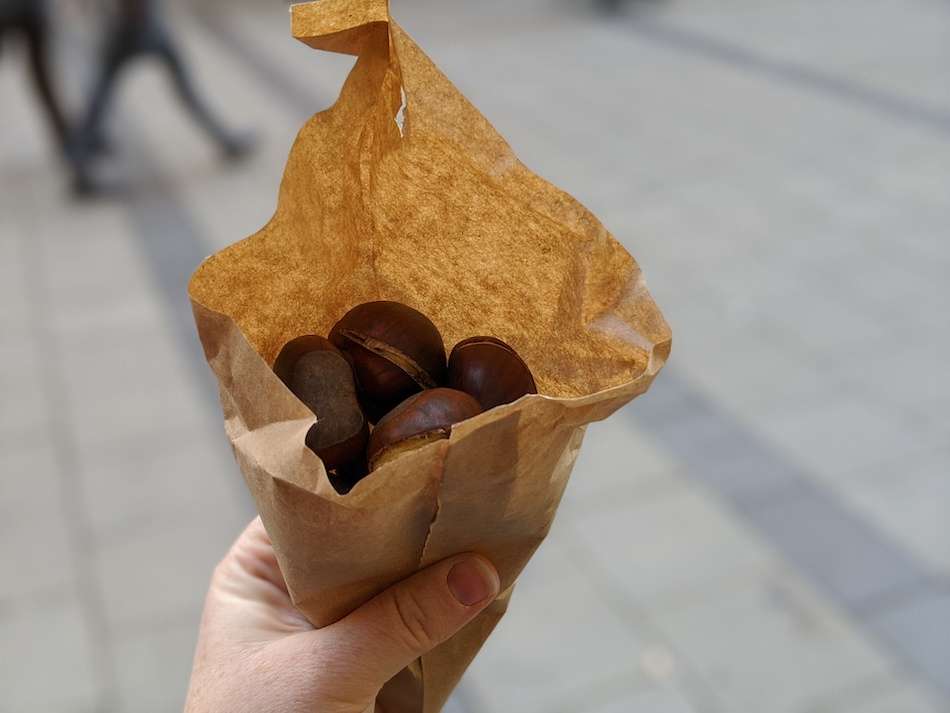
Focusing on market food is an inherently sustainable act, as you are consuming street food that generally minimizes waste with the Pfand system. By choosing to eat authentic, regional items prepared fresh, you get a taste of the local culture and reduce the carbon footprint associated with long-distance food transport.
When considering foods as souvenirs, look for products packaged in eco-friendly materials. It isn’t always possible, to be honest. Some of the goods do come in plastic packaging, so just consider the trade-off between taking home a nice consumable treat in packaging you can recycle, over more plastic clutter for your home.
But… Minimize Food Waste!
Don’t overorder food, and pace yourself. Food waste contributes to methane emissions, a gas worse than carbon. As exciting as it is to order a dish from every vendor you pass, only order one item at a time and go from there.
Food waste is a huge problem during the holidays, and Christmas markets are no exception. The best way to combat this is simple: only buy what you know you can finish. Portions can be large, so don’t be afraid to share an order with your travel companion. Christina from Happy to Wander is my favorite Christmas market buddy, and we love sharing our favorite dishes so that we can try more foods.
I always treat markets like a 3-course meal. I pick one snack to start. I go for potatoes, mushrooms, roasted chestnuts, or something similar. After exploring the market, I eat dinner, which is usually flammkuchen, Käsespätzle, or soup. Before I leave, I enjoy a sweet treat!
Of course, I make plenty of stops for Glühwein along the way :)

Try the Vegetarian Food!
Making a conscious choice to try a plant-based option helps to reduce the overall carbon footprint of your meal. Christmas markets might be known for their wurst (sausage) and hearty meat-based dishes, but Europe, especially Germany, is having its plant-based moment!
There are so many vegan and vegetarian dishes to try!
Look for stalls selling roasted nuts, candied almonds, hot vegetable soups, fresh pretzels, or even Bratkartoffeln (fried potatoes). In Berlin and other major cities, you’ll specifically find vendors promoting organic and vegan options. For example, some stalls offer organic chestnuts, organic fried potatoes, and even vegan wurst.
Check out my complete guide for DOZENS of vegan and vegetarian Christmas market foods. I also include some middle-ground tips for those looking to cut back or make better meat and seafood choices for you and the planet.
10. Stay Longer and Slow Down
Slower travel is almost always more sustainable travel, and it applies perfectly to Christmas markets. There are two avenues to slow travel.
1 – You can slow travel on a shorter itinerary. Rather than cram three or four major cities and markets into a quick four-day weekend, pick a central city as a hub. Use public transportation to visit rural small markets around the central hub, focusing on a small region. This allows you to see a bigger city highlight and smaller villages.
2 – If you have more time, create a balanced 2+ week itinerary. For those with more time, still focus on a smaller region or two. Consider spending a full week slowly traveling across Alsace, starting in Strasbourg and ending at the Mulhouse Christmas market, so you can see dozens of small and medium-sized markets.
From there, catch a train over to Bavaria for a week, visiting places like Munich, Regensburg, Nuremberg, and Bamberg.
Staying longer, and focusing on less allows you to explore the primary market, but also gives you time to seek out those smaller, more unique neighbourhood markets, and even take a day trip to a nearby village by regional train.
When you stay in one place for five or more nights, you also get to better connect with your local accommodation provider, try different local restaurants, and really get a feel for the city during Advent. It shifts the focus from ticking off a list to really immersing yourself in the festive atmosphere.
11. Visit Sustainable-Focused Markets
Every market has some level of sustainability built in, that is just the European way. But some markets have made public, clear statements outlining responsible practices and their commitment to being eco-friendly and community-focused.
This is where some of the bigger urban markets excel, and some have even received official öko certifications (eco-certifications in German-speaking regions).
These markets have made significant efforts to minimize energy consumption, have significant plant-based offerings, embrace the 4 Rs: “reduce, reuse, recycle, and regeneration,” total bans on plastic, focus on food waste reduction, and more! By visiting markets excelling at implementing eco-friendly efforts on a large scale, you can relax and rest easy knowing that many of the hard choices are being made for you.
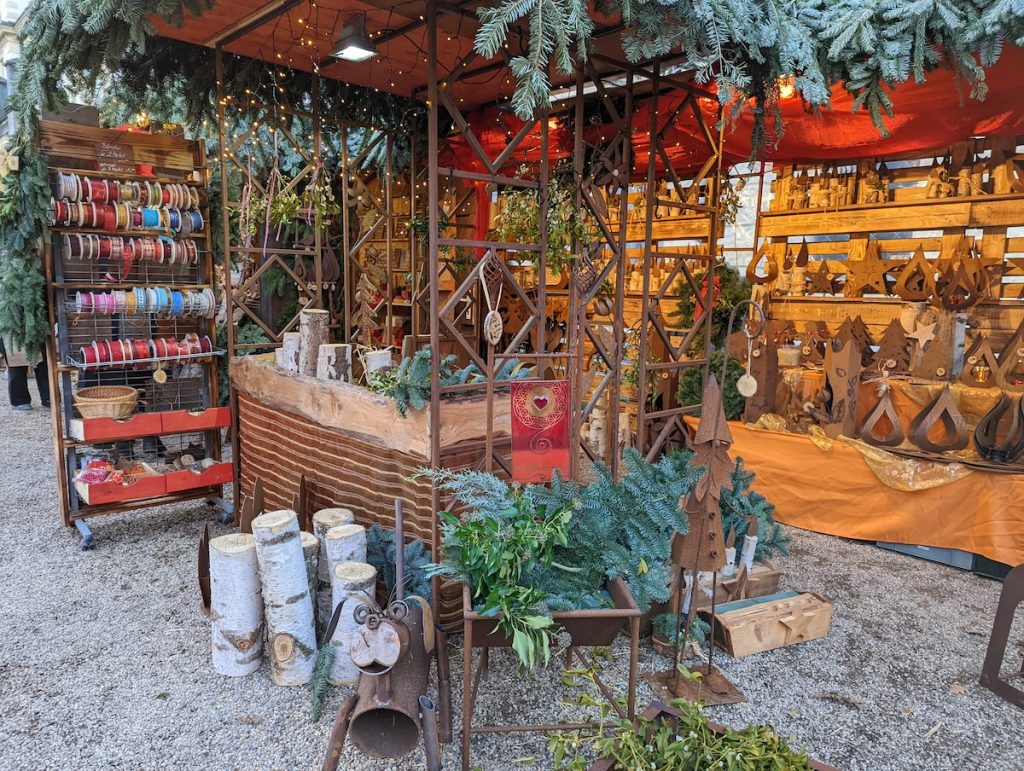
Some of the best European Christmas markets or cities I’ve been to over the years that are leading in eco efforts are:
Tollwood Winter Festival (Munich, Germany)
Tollwood is a winter cultural festival and Christmas market with a strong focus on environmental and social responsibility. As you explore this massive festival (hosted in the same place as Oktoberfest), you’ll notice all the art and decorations are made from recycled and repurposed materials, and there’s not a single-use plastic item in sight.
The food and mulled wine are organic and served in reusable containers. One year, the Christmas tree was even lit by human-powered bicycles and only shone when a group of people were cycling to create energy!
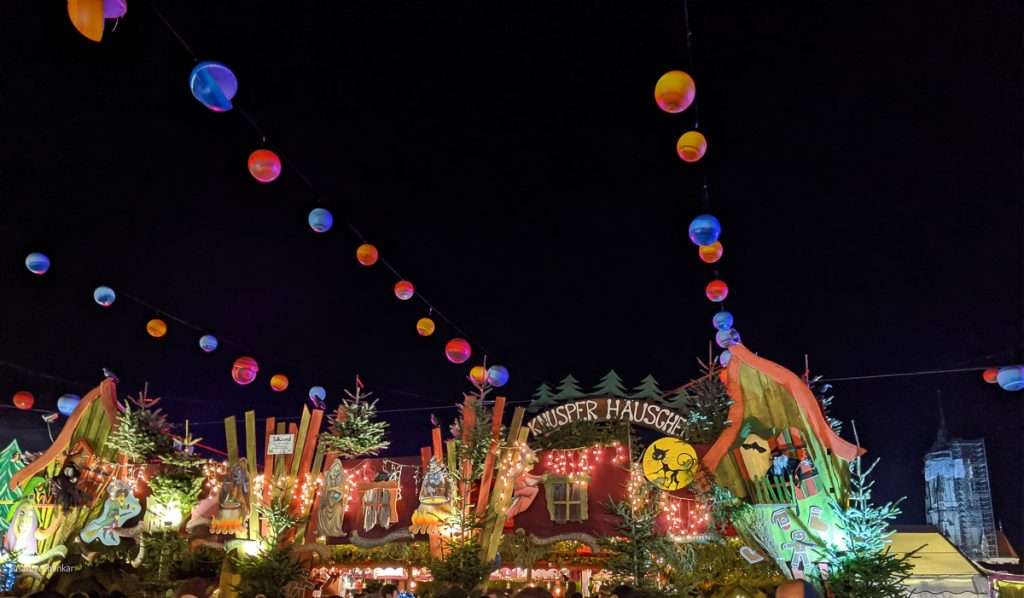
Vienna’s Christkindlmark (Vienna, Austria)
Vienna’s markets are known globally for their sustainable efforts. The city recognizes the central market at Rathausplatz as an öko-event (eco-friendly event). They’ve adopted measures to reduce environmental impact. Nearly 75% of all products are locally sourced, organic, and sustainable.
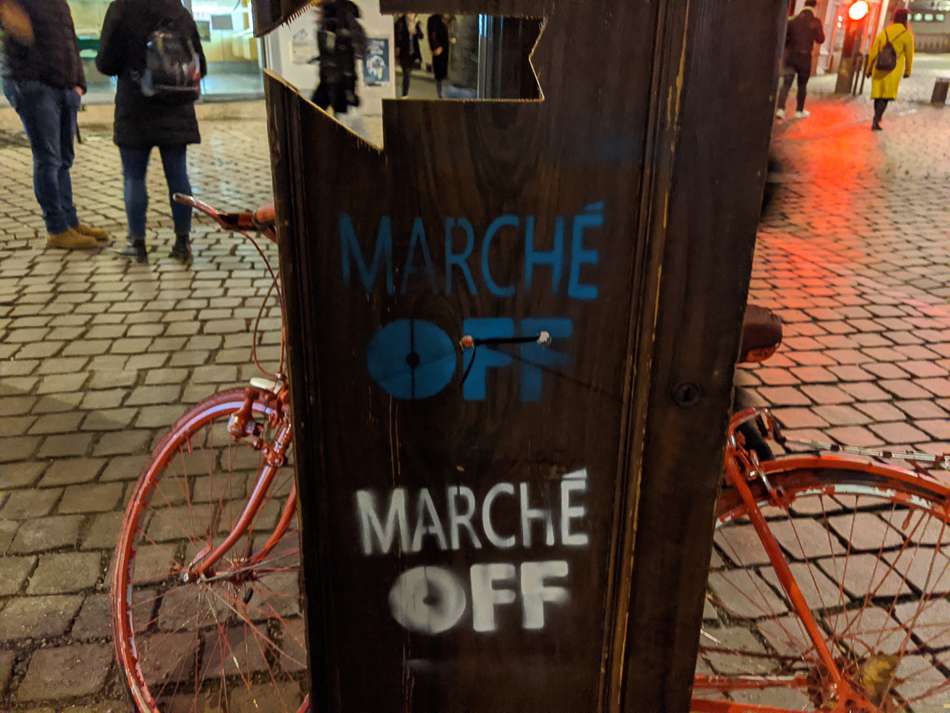
Marché Off (Strasbourg, France)
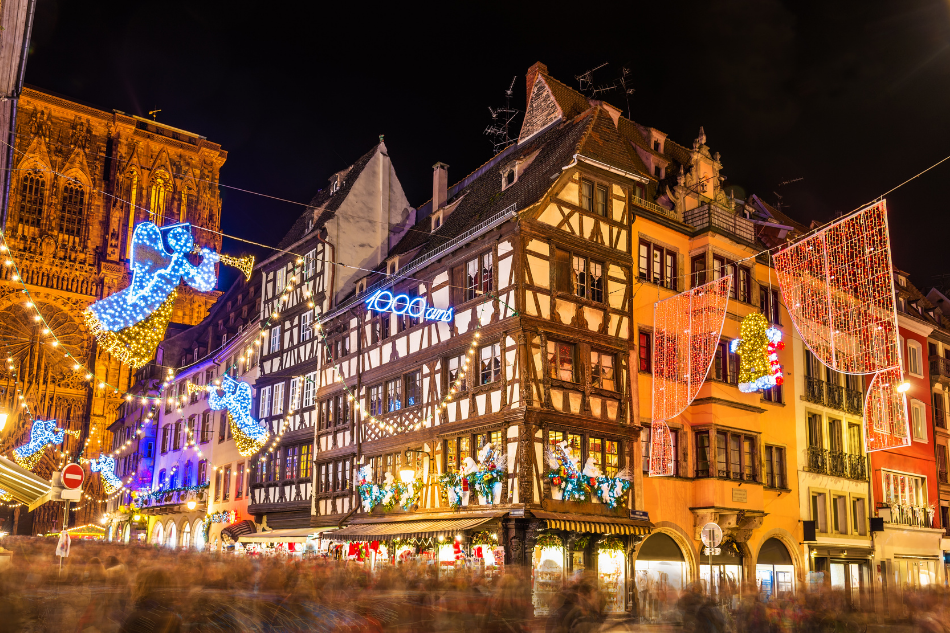
Strasbourg is the Alsatian Christmas Market Capital. While most markets throughout the city are exceptional for their eco-initiatives and local organic Alsatian goods, one in particular stands out.
The Marché Off or off-market is a Christmas market focused on second-hand gifts, recycling, and repurposing for the holidays. Find second-hand toys, sustainable gifts, bio-mulled wine, and a close-knit community feel through workshops and events.
Check out my complete guide to a sustainable Christmas market experience in Strasbourg including a handful of alternative eco markets.
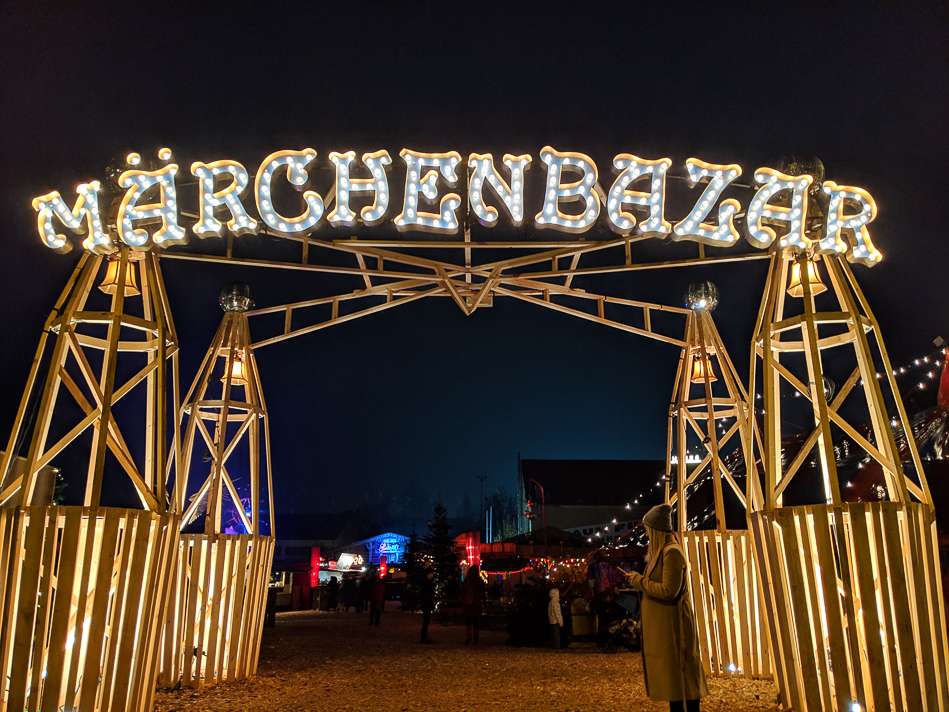
Märchenbazar (Munich, Germany)
This market focuses heavily on creating an alternative, artistic atmosphere. I’ve always described this market as Burning Man meets German Christmas. Here you’ll find a lovely blend of German immigrant culture.
Purchase goods that give back with social initiatives supporting working wages for clothing production in Kenya, among other things. There are plenty of vegan and vegetarian food stalls, international fair-trade goods, local sustainable goods, and creative up-cycled decorations.
Other notable eco markets (I haven’t been to, yet):
Visit Essen, Germany a previous winner of the European Green Capital Award. The Essen Christmas market has also been awarded the title of the best Sustainable Christmas Market in Europe for its commitment to green electricity, a ban on single-use plastics, and an organic and fair-trade selection of local, regional, and international goods.
Every weekend during Advent, Fehrbelliner Platz (Berlin, Germany) hosts Germany’s 100% vegan Christmas market. Find cosmetics, sustainable gifts, mulled wine, cookies, street food, and so much more that is ALL vegan, all the time!
Maribor, Slovenia, is known as one of Europe’s “Green Destinations,” and its Central Christmas Market embodies the city’s eco-friendliness. One highlight is the potted fir trees, replanted in farm plots at the end of the Christmas season. You won’t find any trees cut down for this market! Bring your reusable bag for local products and gastronomical delights, all with plastic-free packaging.
12. Pack Sustainably
What you pack has a huge impact on your trip’s sustainability. Pack smart for the cold weather. Pack thermal layers and one nice sweater, instead of multiple bulky sweaters. It is ok to re-wear warmer key items, and you need clothing that will keep you warm, look smart, and is both practical and functional.
The weather at most European Christmas markets will be cold and rainy. So make sure to pack your waterproofs. If you don’t have warm jackets, no need to buy new ones; look to rent or borrow from a friend. Second-hand stores are another great choice!
If you do want to invest in quality clothing, look for a nice 3-in-1 jacket. Patagonia and The North Face both have outstanding sustainability commitments and jackets that will last for more than a decade.
Read my complete packing guide to European Christmas Markets for everything from basics to outerwear.

13. Give Back to Charity
The holiday season is a time for giving, and you can make a meaningful contribution to the local community you are visiting. This wasn’t really something I had considered until I visited the Strasbourg Christmas Market in France. One of the booths at the central market was set up for charitable donations.
I started noticing something similar at other markets. These booths are great places to make a small donation to soup kitchens, donate toys for kids, or support other charitable endeavors. As you travel, look for market stalls or community-run booths that are clearly affiliated with a local charity, such as a food bank, homeless shelter, or children’s organization.
Instead of buying another gift for yourself, consider making a small monetary donation to a local organization. Donating is a little way to ensure that your visit has a tangible, positive impact on the lives of people in that community.
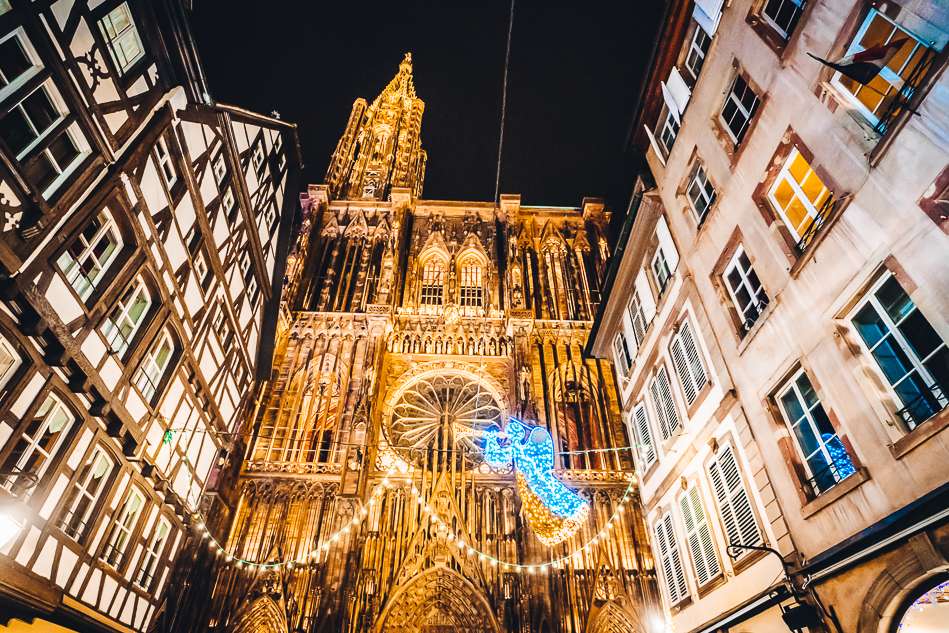
14. Learn About the Culture and History of Advent
Sustainability isn’t just about the environment; it’s about preserving culture and heritage. The European Christmas markets are deeply rooted in centuries of tradition related to the Advent season. Take some time before you go, or even when you arrive, to learn a little bit about the local customs.
I grew up in a religious Orthodox Christian household. Advent was a time for fasting and going to church. When I moved to Germany, I had the chance to learn about the cheerful historic traditions behind the season of Advent beyond fasting. For example in Germany, every Sunday, families come together to light a candle around a wreath and spend time together.
St. Nikolas’ Day on December 6th is when kids get chocolates and oranges in their shoes. Krampus is the dark, evil entity that haunts naughty children. The smaller markets will host parades, concerts, plays, and nightly lamp-lighting events throughout the season of Advent. All these are deeply rooted in culture and tradition.
Rather than just showing up and enjoying the Christmas market ambiance, learn about the history, culture, and traditions behind Christmas and Advent in the country or region you are visiting. It makes the whole experience more special.

Comment and Share Sustainable Christmas Market Tips
If a magical European Christmas market trip is on the books for you this year or even next, I am so excited for you! Nothing compares to these centuries-old markets in cozy old downtowns surrounded by Gothic buildings. While many already have excellent sustainable initiatives, we can do our part to go the extra kilometer.
Whether you are learning to navigate the pfand deposit system, packing your reusable tote, trying the vegetarian food, or ditching the plastic glitter, these 14 sustainable travel tips for European Christmas Markets have you covered.
Practice the art of truly giving back as you explore the world’s best Christmas markets with a mindful, thoughtful approach.
Looking for more festive European Christmas market guides?
- Complete guide to ALL of Munich’s Christmas markets
- Alsace road trip guide and week itinerary
- Christmas market guide to Colmar
- Sustainable Christmas market guide to Strasbourg
- Christmas market guide to Mulhouse
Curiosity Saves Travel Recommends
Accommodation: Booking.com to find accommodation with a Genius Discount and clear third-party sustainable certifications like Green Key. Look for local hotels.
Tours and Excursions: GetYourGuide and Viator for tours, excursions, and tickets. Never book wildlife experiences through these vendors.
Travel: Omio for booking buses and trains in English across Europe. After reducing the number of flights I take annually, I use Google Flights’ carbon comparison tool.
Car Rental: Rentalcars for the best rates in English globally. It is easy to find hybrids and EVs, and there are resources for finding chargers.
Packing Essentials: REI or your local Co-op has great essentials like reusable water bottles and cutlery sets. Patagonia for regenerative clothing. Farm to Feet for socks made with regenerative practices! Pistil Designs for cold-weather essentials. Osprey for bags that last 10+ years, like the day bag for hiking or my favorite carry-on.
eSIM: Airalo eSIM. Reduces waste from single-use SIMs. A total game-changer.
For Bloggers and Content Creators
Earn Ad Revenue with Journey by Mediavine
Earn with Stay22 Travel Partnership (my biggest source of income!)
Earn with TravelPayouts recommending tours and activities.




I wish more markets would implement tokens for the drinking mugs. This is such a simple way to improve sustainability.
I know! Germany really has been leading the way in throwing large low-waste events from Oktoberfest to the Christmas Markets. I always wish other places could work toward adopting their tactics. I did notice the the Banff Christmas Market in Canada is now doing something similar. So, maybe these sustainable Christmas market initiatives are spreading.
Great information. I would love to get back to the Christmas markets. I like your idea of visiting some of the smaller ones. I need to get this back on my travel list.
The smaller markets are some of my favorite. They really hit all the right notes for the sustainable pillar that focuses on community and social impact.