

How to Reduce Plastic Pollution and Waste While Traveling
I may earn income from affiliate links or partnerships in this post. I spend time to curate tours or products that align with my values. Thanks for supporting my work, at no additional cost to you. All words and images on this website are created by real people.

Are you curious how you can reduce your plastic consumption and waste to protect the planet?
I’m sure you’ve heard before that if you get rid of your straws, you’re an eco-friendly traveler. But I’ll be honest with you real quick: None of us really need a straw to suck down that wine spritzer we ordered at lunch; in fact, most of us welcome the idea of chugging it like heathens with our gaping mouths—or is that just me?
Straws are detrimental to the environment; in the U.S., we waste 500 million straws a year, but ridding the earth of straws won’t save it, especially if we swap them for soggy paper straws while other plastic pollution increases. Buying a reusable straw is a great starting point, but if you allow yourself to believe that this is all you need to do to be an eco-friendly person or traveler, you are mistaken.
Don’t worry, though. In this guide, I’m going to go over all the ways you can actually reduce your plastic pollution and waste while traveling. This goes beyond just ditching single-use plastics, like straws. It involves making eco-conscious choices from the moment you choose a destination to the souvenir you choose to bring home.
Doing so can significantly impact the amount of plastic pollution on our planet. Learn about the harms of plastic here.

Why listen to me about reducing plastic waste?
Hey, I’m Sooz, I have a Master’s degree in biodiversity. I studied nature-based solutions for tourism in grad school. I am a regenerative tourism expert with 15 years in the tourism field.
I’m not going to lie; making these choices in the beginning was quite hard. It took me a while to balance reducing my carbon footprint, using plastic in places where there were no alternatives, and still finding a way to enjoy meaningful travel. I would stress about it so much that I would get anxious about the damage I was adding to the planet, and it wasn’t healthy. I had to completely alter how I traveled and figure out a system that worked for me so I could enjoy traveling and make better choices.
I started with straws and water bottles, and as things became more manageable. I’ve now reduced my plastic waste by almost 80% in one year alone, and I have a system that works for me, so I can still enjoy traveling.
If you want to do the same, you will need to start making changes that affect yourself and the businesses from which you buy goods or services. As tourists and travelers, we travel to many places that rely on tourism to survive. SE Asia, for example, heavily relies on tourism, but this region is also named one of the worst areas for mismanaging plastic waste. Part of the problem is limited local access and money to purchase high-end items made sustainably, a lack of resources, economic issues, and water quality.
I fully understand some people and countries can not make these decisions right now, but we, as privileged travelers, can. If we can’t change the way we travel to improve the places we visit, then we should not be traveling at all.
If we start respecting destinations as much as we do our own homes, happily spend more money to make the right choices, put our money toward eco-tourism, and plan, we can finally go above and beyond chugging wine spritzers with our mouths to save the planet.

Sit down and buckle up because this isn’t the easy-peasy post most people write about reducing your plastic consumption, AKA four easy steps that are affiliate links to zero-waste Amazon products.
My tips will make you uncomfortable, but to make a change, you have to make yourself and those around you uncomfortable. We will start by preparing for your trip, continue with packing and traveling, and finish at your destination.

Part 1: Planning to Reduce Plastic Pollution While Traveling
Over the last few years, as I tried to move toward a zero-waste and sustainable lifestyle, I realized just how important planning ahead is. Now, I research accommodation, companies, and restaurants ahead of time and make sure I go to a location prepared to make the right choices.
When you don’t plan, you’ll wander the streets of a new city, hungry, thirsty, and jet-lagged. That’s when you have to buy a single-use bottle of water, or maybe you realize all the ethical tours are booked, so you miss out on a once-in-a-lifetime experience. Planning can make or break your new sustainable travel habits, so here’s how to do it well.
1. Choose Your Destination Wisely

You could look at this in one of two ways. One, you can choose a destination like Kenya or Denmark that has banned plastic bags to help make your travel a little more stress-free. Bans on plastic bags mean that you do not always have to fight the cashier at the store wanting to bag your items in plastic. When you tell someone you brought your own cup or don’t want a straw, they get it and are more likely to accommodate you. Additionally, you’re giving money to economies that support reducing plastic pollution.
Or, you can stick it to the man and travel to destinations like Thailand, which currently struggles with horrendous amounts of plastic waste. At destinations like this, you can aggressively refuse plastic products and make a display of bringing your reusable items. Who knows, the more businesses realize their customers don’t want plastic, the more they might move to plastic-free.
What do you think? Is it better to support economies that have bans on single-use plastics, or make a statement in a country that does not?
2. Research Hotels, Restaurants, and Activities
When it comes to accommodation and activities, don’t just book the cheapest hotel and the most affordable excursions. Sit down and do some research about a company’s ethics and sustainability. Email the front desk and ask them what steps they take to reduce plastic pollution or maintain a green property. Find a local hotel that recycles, doesn’t use mini shampoos, and sources its products locally.
A great example of this business model might be a small local bed and breakfast or the 25-hour Hotel chain in Germany. They don’t give you bottled water, their gift shop is full of local handmade oddities, and their shampoo is provided in bulk and refilled.
Look at photos of the hotel. Do you see plastic in the images? Read about the company on its website and in reviews. Does the breakfast buffet have single-use plastics? You can find more tips on booking ethical accommodation here.

When it comes to restaurants, try to find and save farm-to-table restaurants that have an ethical business model. Do they offer takeout? Is it in plastic?
Even if you don’t order takeout, giving your money to a company that gives out single-use plastics isn’t ideal. Instead of buying your food at a supermarket with plastic packaging, find fresh local markets you can visit. Is there a package-free store in the city?
If you star all these great restaurants and fresh markets, then use Google Maps offline, you’ll be able to find a sustainable location to eat near you at any time.
If you want to book an excursion, continue to do your research. If it involves animals, do double the research. You should look for business practices that align with sustainable methods. Email the tour operator and ask if they give lunch in single-use containers or what types of vehicles they drive. Give your money to a local company that cares about the local environment and strives to make a difference.
Avoid places like unethical zoos and SeaWorld that harm animals, and if you go somewhere like Disneyland or a theme park, make sure you have a game plan not to use their single-use plastics. You have reached your A Game if you can go to Disney without using plastic. I’m putting that on my bucket list because I love Disney.

3. Research Local Recycling Culture
I just returned from a month living on a Greek Island called Samos. This island made my skin CRAWL with the terrible single-use plastic consumption. Plastic filled the gutters and ditches. I made some progress having conversations with locals at coffee shops about reusable coffee cup and lunch box for to-go food.
However, I didn’t see any recycling options on the island until one day, one of my friends on the island told me about a specific trash bin in a particular area of the city.

The island tried implementing recycling, but the locals hadn’t developed the habit yet. I would have never known there were bins if my friend hadn’t been hunting for recycling options. While my hotel had no recycling container, I set up my system in the hotel and took my recycling out once a week to the proper bin.
The moral of the story is to do your research before you go. Once you arrive, you might not have time to figure out what the system is. Knowing how and where to recycle while traveling is essential. The easiest option is to book an eco-hotel, but if you can’t do that, know what the recycling situation is.
4. Research Local Water Concerns
Are you traveling to a place where water comes from a pristine glacier, or are you headed to a place where even looking at a tomato rinsed in local water will make you sick for days? If the former, bring a reusable bottle and fill up every day before you head out. If the latter, you might want to invest in a Life Straw, Steripen, or water bottle with a filter.

Or maybe you will need to prepare to buy bottled water. If this is the case, stop by a supermarket and get the largest container you can, then refill a smaller bottle and recycle that. You can also use a hotel water boiler right before bed and take that water to go in the morning.
5. Learn Local Phrases
I might be struggling to learn German, but you can rest assured that I can order my drink without a straw. Phrases to look up in the local language are “no plastic,” “no bag,” “without straw,” etc.
You won’t win every round, as many drinks still come out from the bar with a straw, but it helps to have your metal straw handy and show the server you already have one if your translation fails.
6. Find Local Brands
I grew up in Alaska, where we have a logo with a bear that says, “Made in Alaska.” Here in Germany, we have a thumb giving a thumbs up that says, “Kauf Lokal.” Knowing what brands and what signs reflect things that are locally made before you travel will help your brain look for and recognize them when you see them.

When you shop local, less plastic and energy is used in transportation, the packaging tends to use minimal plastic, and you support the local economy.
What is the Shop Local sign to look for in your country or city?
Part 2: How to Reduce Plastic Waste While Packing
I would say how and what you pack can be one of the most significant factors in how much you cut down your plastic pollution while traveling. If you arrive at your destination prepared with all your reusable items and don’t forget anything at home, you are setting yourself up for success.

7. Reduce Plastic Waste in Your Toiletries
When packing your toiletries, plastic is everywhere. Once you see it, you can’t unsee it. The last thing you should do is head to your local drug store and buy single-use carry-on-size minis every time.
You can use bar soap, shampoo, and conditioner from a store like Lush instead or learn to make your own. If you can’t commit to doing this, you can buy multi-use containers and refill them in bulk.
Get yourself a bamboo toothbrush and hairbrush.
To stop using hair sprays and gels, find a way to wear your hair naturally with a homemade sea salt spray.
8. Invest in a Metal Multi-use Razor
If you haven’t converted already, get a Diva Cup for your periods. They’re a plastic lifesaver and make packing for your period weeks that much easier. You can also invest in Thinx undies instead of pads.

You should be able to look in your toiletry kit and know that for every item of plastic in there, there is an alternative – you can even swap toothpaste for baking soda. When you’re rid of all the plastic, invest in a durable, clear vinyl zippered bag for carry-on. You should never use a single-use Ziploc bag again!
9. Sustainable Clothing Options
Need some last-minute outfits for your summer vacation? Do not head to H&M or a similar store. Not only does H&M promote terrible working conditions for women, but their clothing is also cheap.
What is wrong with affordable clothing? Well, for starters, it falls apart quickly and goes out of style even quicker. Therefore you have to throw it away not long after you buy it so it creates much more extra waste.
However, one of the most significant issues with cheap clothing are the materials used. Did you know that synthetic fabric releases microplastics into the water system every single time you wash your clothing? It doesn’t matter if you’re washing that summer dress in Thailand at a hostel laundromat or in Denmark, you are putting plastic into the water where tiny organisms eat it and thus larger animals eat it, and then we eat that… Ah, the circle of life.

Instead, wear what you have, rewear outfits.
You can also invest in a capsule wardrobe, hit the thrift store, or invest in ethical natural clothing made from hemp, bamboo, or cotton. I love the brand Mata Traders or check out these other organic brands with classic looks for traveling. These swimsuits made from old fishing line are fantastic too!
Let’s take a little pause. We travelers get a bad rep. How can someone be sustainable and travel so much? It’s no secret the airline industry is one of the largest contributors to emissions and has a negative impact on the environment, BUT did you know that the fashion and makeup industry creates MORE greenhouse pollution than the airline industry?
That is why one of the biggest lifestyle changes I have made is using less makeup and buying second-hand or ethical clothing that you rewear! Think about all the plastic packaging and containers they come in. Think how much energy it costs to make those cheap brands overseas in India or China and then ship them around the world.
Find a vegan makeup product with biodegradable packaging. Shop for clothing that is going to last you and is made from organic material. This is one of the most impactful changes you can make.
10. Pack Reusable Items
Finally, it’s time to talk about straws. I bet you had no idea how much there was to cover before we got to straws! Invest in a full set of reusable items. Things that make every trip with me are my coffee mug, water bottle, straw, utensils, lunch box set, a collapsible cup for to-go cocktails or wine in the park, and sometimes I even pack an iced drink option, for when I want iced tea.
How on earth do I fit all this in my carry-on? Well, I have an Osprey backpack with two bottle holders on either side. I pack my airplane food in my lunch box, and everything else is stuffable.
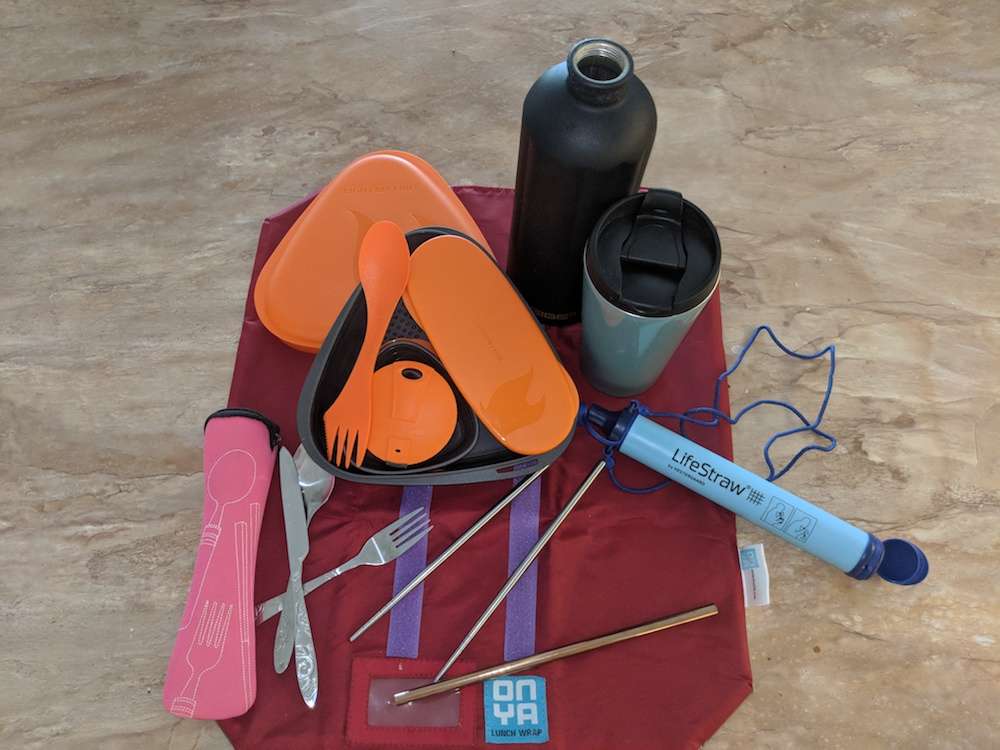
It is just as essential to be able to carry these items around during the day. My camera bag has space for my reusable water bottle and my straw and utensils. They are of no use to you sitting in the hotel. Coordinate your day bag and your water bottle size to ensure you are prepared for traveling.
Other reusable items I bring are shopping bags or a stuffable hemp backpack. You can even buy a souvenir bag from your destination to do all your shopping. I always have this bag stuffed in my camera bag in case I want to buy something I need to carry on a whim.
If you plan correctly, you will never again use a plastic fork, buy a water bottle, use a straw, or put food in styrofoam. It has been 1.5 years since I bought a plastic water bottle, even while traveling.
11. Make a List and Check it Twice
This goes with the above. If you plan correctly, you can minimize your plastic pollution, but ensuring you have everything you need for your trip is critical. Let’s say you forget your headphones – no big deal, right?
You can just grab some cheap ones for $10 at the airport. But these $10 phones are wrapped in plastic and cheaply made; you’ll just toss them when you get home. You see the problem if you forget stuff at home? Make a list and check it twice, just like Santa!

12. Plan Your Carry-On
Did you pack a reusable water bottle, but it is in your large suitcase? Did you pack your headphones, but they’re not easy to get to, so you take some from the airline? All these things just mean you’re taking more from the airline and creating more waste than you need. Ensure you have all your reusable items ready for the plane so that you receive nothing wrapped in plastic from the airline.
Part 3: Low Plastic in Transit And At Your Destination
Impossible, right? Well, mostly, yes. I just admitted that flying is the second most damaging industry to the planet, so the best way to solve this is to fly less, but when you have to fly, there are ways to cut down your carbon footprint.
13. Fly Sustainably
I understand it is a bit of an oxymoron, so the best title is How to Fly as Sustainably as Possible. I wrote a whole post on this topic, and it covers everything from paying the carbon tax to which airplanes are the most energy-efficient. You can read it by clicking this link.
14. Choose Eco-friendly Alternatives

Instead of spending your long weekend flying from Portugal to Estonia, try looking in your backyard for destinations reached by train. See if you can book an electric rental car or choose a train that isn’t coal-powered – if that is still a thing? A bicycle is a great way to see a city, so research the bike rental options in each town.
15. Reduce Plastic Pollution at Your Destination

That was a lot of effort, and we haven’t even reached our destination yet! Hang in there. We’re just warming up for the grand finale to showcase all your awesome sustainable new swag and lifestyle changes. Ensuring we, as travelers, aren’t leaving plastic waste behind for the animals and locals to clean up is essential to saving our planet. Here are ways to reduce your plastic pollution once you reach your destination.
16. Ditch the Pool Floaties
It is time to give up your dream of becoming an Insta-famous traveler with unicorn floaties and glitter covering your face. If you think straws are terrible for the planet, think about pool floaties. They are large and made from thick plastic that will be here long after you’re gone. They pop quickly, and hotels will have to keep replacing them.

The same goes for beach balls, plastic wine glasses for a beach picnic, glitter to make that photo shine, and that fantastic ice cream spot that serves in single-use plastic, but everyone is Instagramming. Unfortunately, Instagram trends often involve plastic, glitter, and greed. Think critically about all your items. Do you need these items, or are they just for a pretty picture?
17. Shop Smart
Are you buying a souvenir wrapped in plastic packaging made in China, but you’re in Greece? Think about all the energy it took to get that item to Greece and all the packaging. Buy souvenirs from local craft workers and tell them you have your bag. Look for that locally made sticker or sign you researched earlier, and you will be shopping locally and ethically in no time.
18. Buy the Right Food

You already starred those fresh markets, so let’s find some food! Bring your shopping bag and don’t buy fruits and veggies wrapped in plastic. If you do buy something, like hummus in a plastic container, reuse it as many times as you can on your trip. Think about buying seasonal food too. Buy what is in season and locally grown at your destination.
19. Recycle and Pick Up Trash

You already researched the destination’s recycling habits – now put them to use.
If you’re heading out for a day at the beach, bring an extra shopping bag for trash. It never hurts to collect anything you see at the beach or while hiking and dispose of it in a place where animals won’t try to eat it, choke and die.
Talk to your hotel about their recycling habits. Ideally, you’re staying somewhere that recycles, but maybe you notice there is recycling at your destination, but your hotel isn’t implementing it. Ask them to set up something to make it easier for the guests.
Last year, I stayed at a hotel with TONS of single-use plastics for their breakfast. In reviewing their property, I reduced their stars and called them out for not recycling and using too much plastic. If you can’t change their systems, you can at least let other travelers know before they also book a stay there.
20. Prepare Your Day
Every day before you head out to explore your new destination, make sure you are ready to go. Make a day packing list and check it twice, to ensure you have all your reusables and sustainable activities planned for the day. It is a lot easier to make good choices when you are prepared to do so.
21. It’s Ok To Say No

It is ok to say no. I know it’s hard, especially when immersing yourself in local culture and embracing hospitality. If your guide offers you water, they mean well and are trying to provide excellent customer service.
It is ok to say “no, thank you,” and show them your bottle. You might like to research local customs for polite ways to turn down offers that involve plastic or waste. If you’re in a situation where you can have an intelligent conversation with a local about plastic pollution, do so.
If you’re at a beach party and someone offers to buy you a drink, but you see all the plastic cups littering the beach already, it is okay to say “no, thank you” and get your drink in your to-go cup. It is also okay to say “no, thank you” if the pool staff offers floaties.
It is also ok to go without. You shouldn’t suck all the joy out of your trip, but deciding not to get an iced tea because you don’t have a to-go cup is an option. It is a hard choice, but it is a choice you have.
This is where I struggle. I’m okay saying no, but I have yet to find the perfect balance between ensuring I have all the necessary tools, not wasting anything, and still enjoying myself. It’s taken me a while, and there have been nights I don’t drink because everything is in plastic cups, and there have been nights I use too much plastic because I don’t want to miss out.
There have certainly been nights when bartenders think I am crazy for handing them my reusable cup. However, every time I travel, I do it a little better than last time, and I’m slowly making sure I don’t miss out, but I don’t waste too much either.
Final Thoughts

Remember, plastic pollution is more than just keeping straws off the beach. The simple act of creating plastic causes pollution. Negative consequences exist whether plastic ends up in the landfill, recycling bin, or the ocean. It is essential to make changes at home, but when we travel, we tend to have an out-of-mind, out-of-sight mentality. We must preserve every destination we visit and our home to have a better tomorrow.
I will be the first to admit it is not easy. There are still things I am working on myself, but it will be worth it. This guide covered many things we can do to reduce our plastic waste as we travel, but that doesn’t mean you have to do them all right away. Pick a handful of things you can realistically do on your next trip, and implement more every time you travel.
I hear so many people saying that one person can’t make a difference, but the amount of plastic pollution you can reduce on your next trip is much more than you think. As travelers, it is our job to educate, make decisions that push businesses to sustainable options, and leave our destinations cleaner than when we arrived.


Curiosity Saves Travel Recommends
Accommodation: Booking.com to find accommodation with a Genius Discount and clear third-party sustainable certifications like Green Key. Look for local hotels.
Tours and Excursions: GetYourGuide and Viator for tours, excursions, and tickets. Never book wildlife experiences through these vendors.
Travel: Omio for booking buses and trains in English across Europe. After reducing the number of flights I take annually, I use Google Flights’ carbon comparison tool.
Car Rental: Rentalcars for the best rates in English globally. It is easy to find hybrids and EVs, and there are resources for finding chargers.
Packing Essentials: REI or your local Co-op has great essentials like reusable water bottles and cutlery sets. Patagonia for regenerative clothing. Farm to Feet for socks made with regenerative practices! Pistil Designs for cold-weather essentials. Osprey for bags that last 10+ years, like the day bag for hiking or my favorite carry-on.
eSIM: Airalo eSIM. Reduces waste from single-use SIMs. A total game-changer.
For Bloggers and Content Creators
Earn Ad Revenue with Journey by Mediavine
Earn with Stay22 Travel Partnership (my biggest source of income!)
Earn with TravelPayouts recommending tours and activities.






I really loved this post and how you’re encouraging travelers to be thoughtful about their consumption abroad. Research in advance is everything!
Wow, such an in-depth guide – thanks for sharing! What I’m most shocked about is the microplastics from doing your laundry – I never really thought about that before so much (I knew it was the case with Fleece jumpers), but I’ll definitely pay even more attention to the materials of my clothes in the future!
Great post! I just did an Instagram series on the Great Barrier Reef and posted facts about plastic in the oceans. Which is awful. I am actually about to head to Thailand and Bali to dive and I have heard nothing but horror stories of plastic on the service at dive spots.
You list some more great tips and things to do as travelers. I made some changes in my life to more refuseable products and it amazed me how much plastic I was using originally. Sometimes you don’t realize it until you attempt to make the change
Thank you for the post! It was great.
Omg thanks for this. I’ve been trying to really reduce my use of plastic this year and it’s so hard here in Argentina! Salesmen actually run after you thinking you forgot to get a straw for your soda or water and think it’s so odd when I tell them it’s a waste of plastic. And when I bring my mesh bags to buy vegetables and fruit they always get so worried about how the bags will stain! I’m so tired of explaining they can be washed hahah *sigh*
So useful. The thing I find the hardest is carrying everything. I have a water bottle, cutlery set and want to get a straw next but nothing fits in my bag and I really hate carrying a rucksack! My other issues are that water bottles invariably leak and it’s so hot here in Mexico that I can’t even begin to carry enough water.
Also, Rwanda banned plastic bags on 2005 when I lived there. It was amazing. They have a monthly day where the entire country stops and cleans, called umuganda, and finally they realised one big issue was plastic bag use. Way ahead of the curve.
Ugh that sounds like you have a lot of barriers. I definitely had to change up the day bag that I use. I have a great camera bag that has a holder on the outside for a water bottle. I fit this great leak-proof SIGG Swiss made bottle, that is super light and thin. This bottle even fits in my normal purse, so when I am out on the town in Munich (my home) I can easily pit it in. I also sometimes carry a backpack and use a camelback. I suggest trying to find a fashionable camera bag or getting a slightly larger purse to fit a bottle. Does Mexico have water re-fill stations out and about? Sadly some of these changes require changes and inconveniences on our part. Good luck sticking with it, sounds like you’re on the right track!
I love how progressive certain countries in Africa are when it comes to plastics!
I have an amazing backpack that I love. I just need to get over myself. I am so enjoying not having to carry a rucksack of kid crap, that’s the main issue for me to overcome. As I said I do have everything ready and do sometimes use it. Just need to be consistent. Haven’t had a sigg bottle for years, interesting idea.
And no, not too many water stations…some but not many. We do take water out with us on day trips but just general day to day we forget sometimes.
These are all great tips! I once read a book by Sylvia Earle (an awesome oceanographer with National Geographic) who described her dives in detail every time she saw trash. She said something along the lines of our generation will be known for its plastic.
I hope, too, that we can make significant changes and reduce our impact on this planet.
I would love to read that book, it sounds like some great reading material for my next flight. It is up to people like me and you!
Really, really, really, great post!! I am currently doing a zero-waste challenge so this naturally article caught my eye. Thanks for this awesome article. I like the tip about calling ahead to the hotels and asking about recycling. That’s definitely an important factor for me!
That is awesome, how is the challenge going for you?
Such a useful post! I’m a bit of a greenie myself as well but you have taken it to a whole new level. Definitely will be putting these tips to use. In Thai, no plastic bag, please is “mai aow thung, kha” and if you don’t want a straw it’s “mai aow loot duut, kha”. Men use the polite particle krab and ladies kha at the end of a sentence.
This is such a thorough list, I LOVE it! I’m incorporating a lot of this into my travels and getting better about it every day. Thanks so much for speaking up about this issue! It’s really exciting to see travel bloggers taking a lead on this – hopefully other travelers will follow suit!
So glad you love it, thanks for reading and I hope others follow suit as well!
Loved this article, already commented on your instagram profile!
Thanks for sharing all this!
Wow wow wow – amazing post! I’ll be pinning and sharing on facebook. You’ve really given me food for thought and taken reduction of plastics to a whole new (doeable) level for us. Thank you
What a thoughtful and very practical post, and I think the fact that you can give examples of what you have done in certain situations, and in what ways it is hard is also very helpful. To be honest, a lot of this is good for people who are not travelling – I need to overhaul my day tripping bag for sure.
That is a great place to start. Smaller bags you can carry with you, that also have reusable items is a great kick start. It gets easier from there, trust me!
Ohh we all should do exactly what you have written here traveler or not! I wish I could say I am a good sustainable traveler! I try but I guess I dont try enough! I have to do more effort both when I travel and at home. I could do better on researching on the destination for an exemple, and stop buying water from a plastic bottle! Thats the easiet but I dont understand why I keep doing it! You post really reminds me of how important this issue is and that we need to take it more seriously!
Don’t beat yourself up, it is really important you don’t. I did that for a long time and I just felt so guilty. Just focus on one thing at a time and it gets easier as you go!
Excellent article, Sussana. Research is the key and travellers like us can implement many little changes all of them adding up to reduce plastic pollution in places we travel to. My backpack and travel bag both have a set of resuable items – water bottle, a small lunch box with cutlery etc. I hope to make more significant changes in the way I travel to help reduce plastic pollution.
It sounds like you are on the right track, keep it up!
SUCH an important post!!! We traveled through Asia a bunch and it was heartbreaking to see the pollution from tourists everywhere. We really do need to be so intentional about reducing our pollution.
It is so frustrating when people treat destinations worse than they would their own home!
A very engaging and thoughtful post. I should bring reusable stuff, really. And I should refuse to buy anything made of plastic. Thanks lots.
Although I think the first point, about picking up a destination that has banned plastics, is quite unrealistic, I agree with the rest of your points. Especially about taking care of what you pack, that is very much in our hands and easily doable! Also, its a good point about not using these large colourful floats as they might look good and seem like fun but they’re a major source of plastic pollution in the environment, especially in the water.
Great job on this, I think this is the most detailed guide I’ve seen on reducing pollution and waste while traveling! I for one definitely need to be a little more conscious of these things, especially in the process of planning ahead for a trip. I honestly thought it would be harder to make a difference, but these tips seem very easy to implement! Thanks again :)
Glad you found some of them useful and if you just focus on one thing at a time it is totally do-able!
Great tips on sustainability and reducing plastic waste during traveling. I prefer to carry reusable plates and spoons during road travel. I try to carry water bottle which I refill when empty. To reduce plastic from our lives is very important. Thanks for sharing awareness creating post.
Thanks for doing your part to help you, sounds like you’re on the right track!
The garbage worldwide is really disgusting and i am glad that we were taught how to reuse and recycle at the early of our childhood. Having an Asian mom helps, I mean she always yell on us each time we are caught not using it properly, until we grew up to have that notion like she is always behind our back, hahhaa. Its funny but helps a lot. Now it became our habit to reuse and recycle, and chopstick is always in our bags.
that is great, I was raised in a time in the U.S. where it was cool to be wasteful, so it was a really hard change for me, but it was worth all the struggle.
That is quite an Elaborate post. And a very good one too. It could get overwhelming to start all at once but a few small tips from these would be a good beginning. Love the passion with which you have written
It is quite hard to get started, but never fear, just do one thing at a time. I also add one more thing every time I travel, which is really helpful!
I love this post so, so much! I wish I read this earlier when I first got on the responsible travel train a year ago. So far, I’ve been doing most of the things on this list (yay) but wearing sustainable clothing is still something I struggle with every day. I had no idea that the fashion and makeup industry creates more greenhouse pollution than the airline industry. That fact shook me a little. I’ll definitely try to look out for more organic clothing.
It shocked me as well. I really struggle with guilt as a traveler, but I guess some of it balances as I try not to buy new clothing and buy local organic clothing.
This is a really helpful post, and full of practical ideas to be part of a solution. We went to Thailand for the first time in January and were shocked at the level of plastic use and waste, it’s clearly a huge issue. Another place we have struggled, though we adore the country, is Japan, where there seems to be an excessive use of plastic packaging for food, way beyond what we have at home in England (which is already much too much).
Japan is one of the worst countries, they really adore the plastic trinkets, but it is so harmful. We have a long way to go!
I had no idea that synthetic fabric releases microplastics into the water system when they are washed. There are so many things we are doing wrong on so many levels. I think the first step for us all to spread the word. Ps. We buy a lot of natural, organic clothing locally made here in India.
I was shocked when I heard that as well, and it is a great thing you buy organic clothing made locally in India!
We’ve been in many places mainly in Africa which were dumps and people lived on it. But the “western world” is much more of a problem, although the pollution is sometimes not visible. We still have to go a far way to make people aware of the problem. Your guide is great and I’m happy to take your advice and share it!
Yeah it depends, some western countries like Denmark don’t even produce enough waste to burn it all, but then the U.S. is a nightmare. We do have a long way to go, indeed!
Love, love, love your article and hope others will take the time to read it through. The photos of the ocean make me want to scream, and most people don’t realize how much the cosmetic industry contributes to this problem. Have you been to a country where they handed you a cup of coffee in a plastic bag with a straw sticking out of it? We now carry our own collapsible cups to avoid this. Well done.
I have and there are times they do that with cocktails as well. I would rather not drink than use that much plastic. People just focus on what they want, so they get rid of straws, but refuse to think the cosmetic industry does any harm.
This is a great post. The plastic waste in the ocean makes me feel sick every time I read about it. I carry a refillable water bottle as well as my own parachute shopping bags with me wherever I go. If everyone would just do one small thing it would make a world of difference.
That is so great your carry your own water bottle and shopping bags, that makes a huge difference.
It’s so refreshing to see so much attention being directed to reducing our addictive plastic consumption. Straws are the hot thing, but as you mention, there are so many areas where we can reduce our plastic in take and lower our impact on the environment!
I know straws are such a small amount of plastic that is used and it is so important to look at all the types of plastics we can reduce
I hate travel size toiletries. When you travel as much as I do, buying them constantly can really add up. And my usual brands that I use aren’t always available in travel size. That’s why I purchased a good set of travel toiletries bottles and I’ve been using that same set of bottles for over 10 years now. I refill them with my usual products and it means I haven’t been the cause of tiny travel size toiletry waste in many years.
I know they are the worst! That is so amazing you have been using the same ones for over 10 years! Keep it up!