
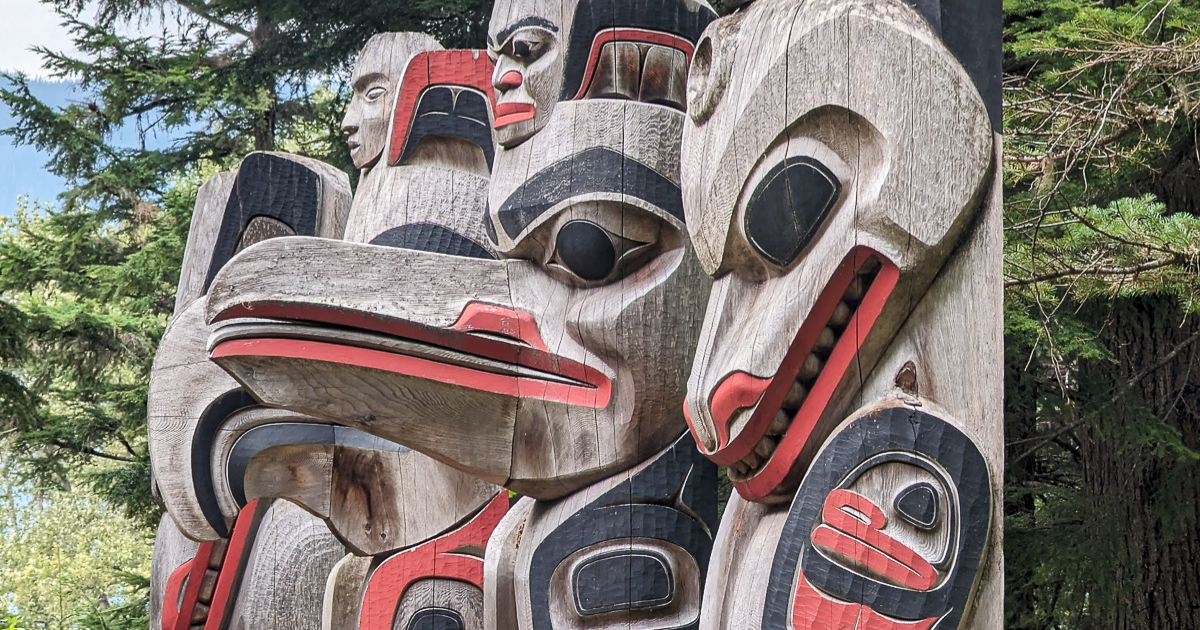
20+ Incredible Indigenous Tourism Experiences in British Columbia
I may earn income from affiliate links or partnerships in this post. I spend time to curate tours or products that align with my values. Thanks for supporting my work, at no additional cost to you. All words and images on this website are created by real people.
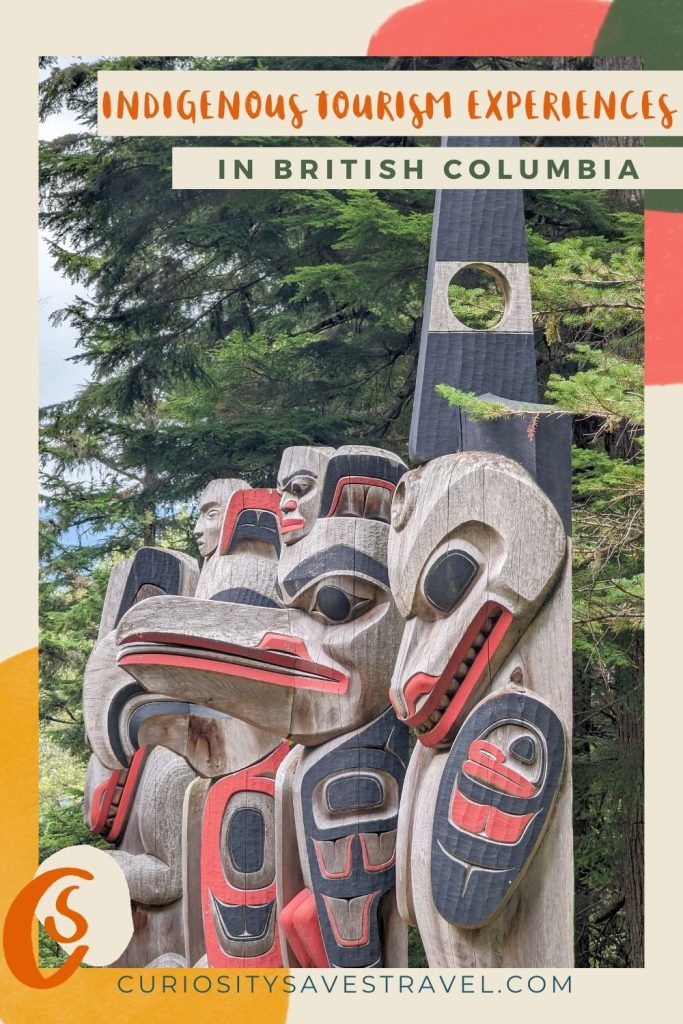
Are you curious about all the incredible Indigenous tourism experiences you can have in British Columbia? There are 204 Indigenous communities and more than 30 Indigenous languages within BC, as well as extensive, authentic Indigenous experiences for travelers to connect with the land and its people.
Indigenous-led, managed, owned, and facilitated tourism is inherently regenerative. Communities that dictate how tourism operates on their land and through their communities help revitalize their culture. It helps restore the land from colonial exploitation and enables us, as travelers, to learn and connect more deeply with the places we visit.
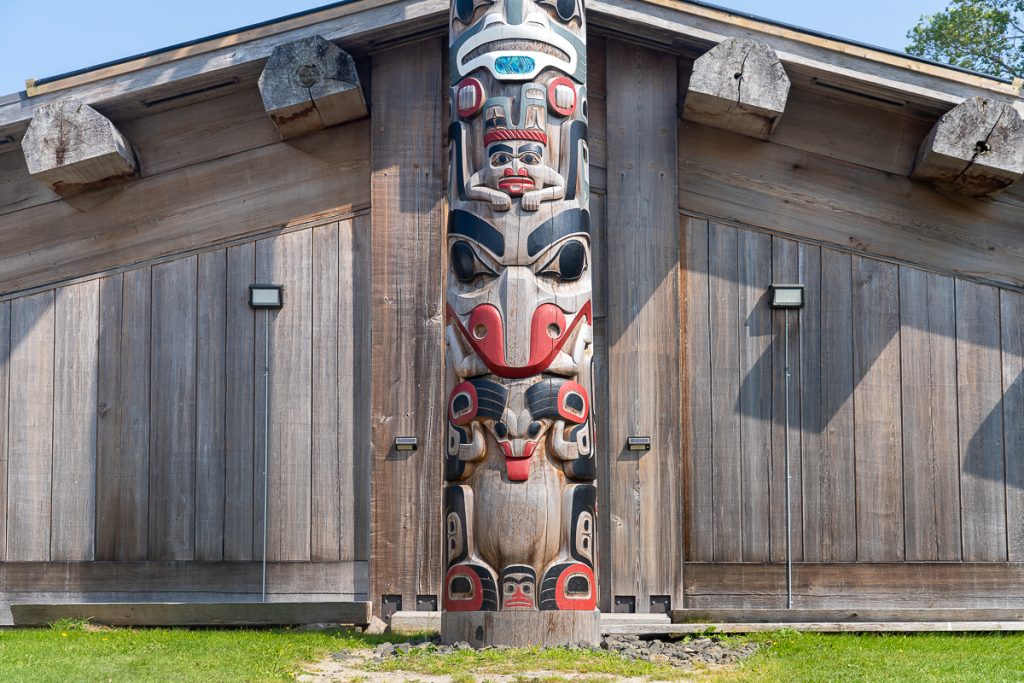
When I moved to British Columbia, one of the first things I did was embark on a road trip across my province to become better acquainted with the people, culture, places, and nature.
What I learned when prioritizing Indigenous-led, owned, and managed tourism experiences fundamentally changed my understanding of—well, really of everything from life, history, evolution, ecology, and human rights. Taking time to listen, learn, and support is an ongoing transformational and regenerative process.
Indigenous tourism across Canada has experienced a much slower recovery post-pandemic. We can help by supporting Indigenous tourism with an open heart and mind in a two-way, engaged relationship. It won’t erase centuries of injustice, but it is a start.
Visit the Indigenous Tourism Association of Canada to get started. This guide is just a sample of what you can find in BC, based on my personal experiences.
British Columbia’s First Nation Diversity
When most people think of Indigenous culture in British Columbia, they envision one homogeneous Pacific Northwest culture. However, British Columbia is home to 204 diverse and distinct Nations recognized by Canada. And while these nations have some shared commonalities, they are all unique. Each nation has its own language, traditions, social and clan structure, art style, diet, clothing, housing, and beliefs.
Simply grouping them into one culture is a disservice to the beautiful cultural diversity found across British Columbia. Viewing British Columbia’s Indigenous people through a single lens has sadly contributed to cultural degradation, as many nations have changed their art styles and handicrafts to appeal to Western tourists who expect them all to be the same.
As you travel across British Columbia, try to keep an open heart and mind, learning about the different nations on whose ancestral lands you’ll be visiting. From the coastal people like the Ahous of the Tofino area to the Haida in Haida Gwaii, and the inland ranchers like the Lil’wat, embrace what makes each nation unique.
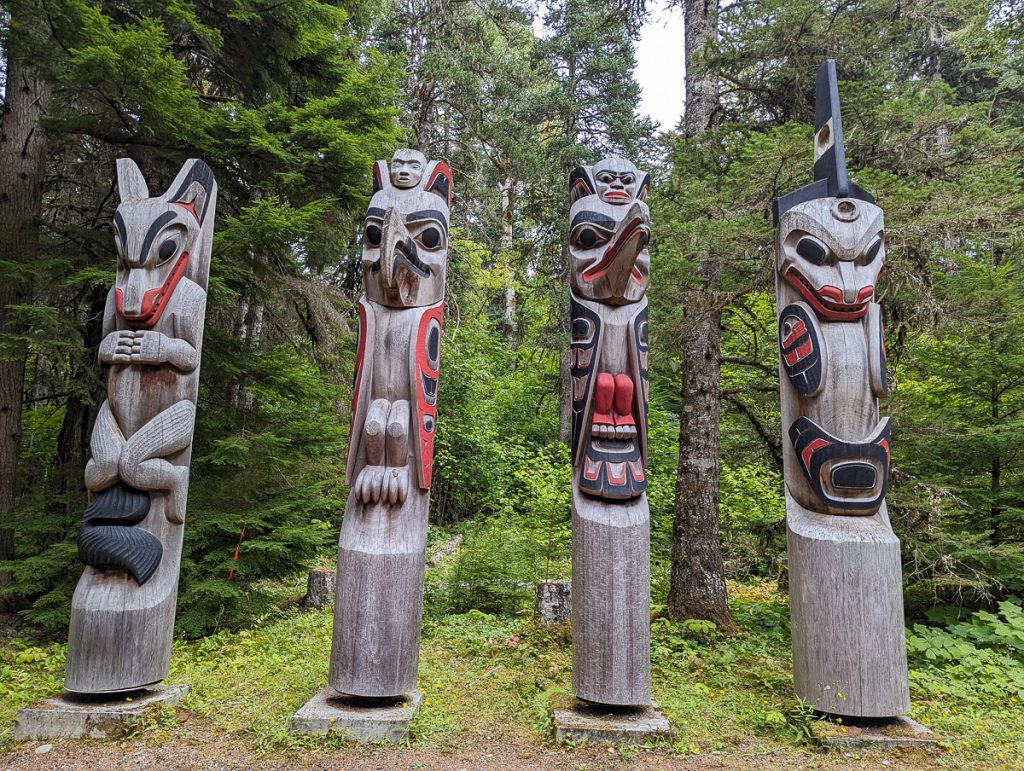
Why Book Indigenous Experiences in British Columbia?
Support a Viable Economy and Future for Indigenous Youth
I am not Indigenous, and do not want to speak for anyone. But through my many conversations with my friends, listening to speakers at conferences, and chats with family members (through marriage) who are Indigenous, many of them have described themselves as navigating and living between two worlds.
On the one hand, there is a Western colonial and capitalist economy in which they often feel they must engage. On the other is upholding tens of thousands of years of traditions and culture that are the opposite of everything capitalist.
Many have described tourism as a connecting vector that allows them to preserve and learn about their own culture, share it with guests, and make money. Supporting Indigenous tourism helps many youth gain viable customer service, management, and business skills while also enabling them to recreate and explore their ancestral lands in new ways.
The State of Indigenous Tourism
Unfortunately, though, Indigenous tourism, as a subsector of Canada’s tourism, is in crisis. I’ve had the honor of listening to Keith Henry, CEO of the Indigenous Tourism Association of Canada (ITAC), speak on several occasions. Each time he has stood before tourism stakeholders, he has delivered a dire message.
Many Indigenous communities were understandably closed to outsiders during the COVID-19 Pandemic. Having barely survived the smallpox pandemic, with some communities losing 90% of their population to the disease, they were cautious. They were slower to welcome back tourism.
Today, in 2026, with most communities having reopened to tourism, Indigneous businesses are struggling to survive and thrive and are facing steep funding cuts from the federal government.
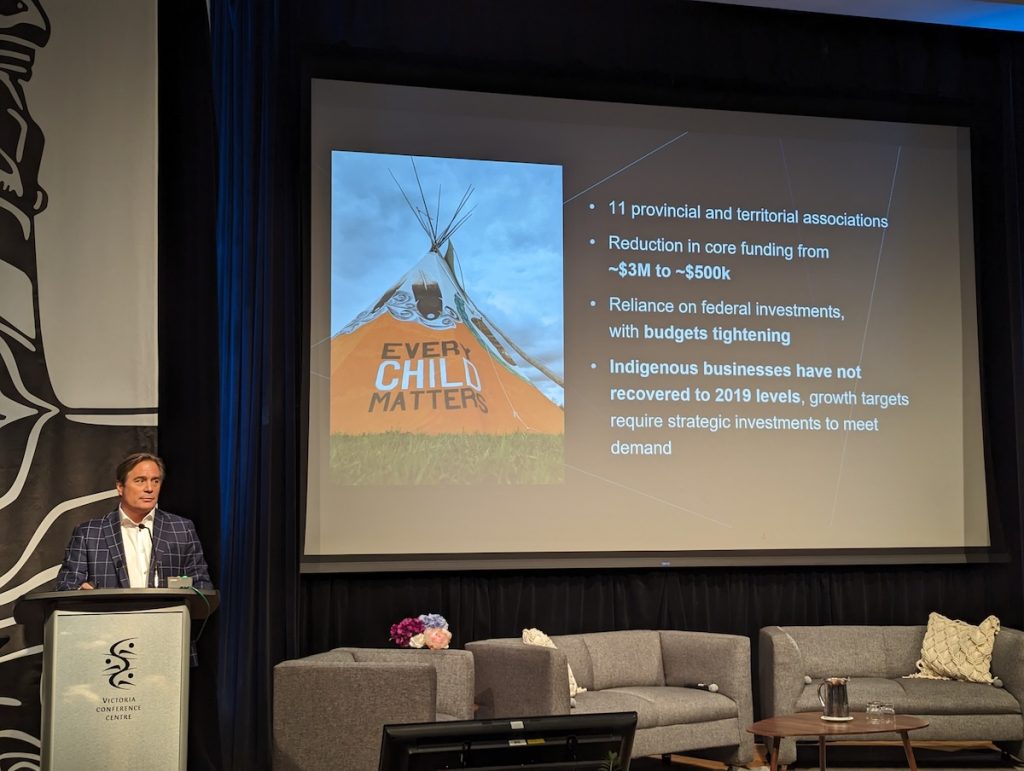
ITAC had its government funding support cut from $3 million CAD to $500,000 CAD annually. Indigenous businesses have closed, there’s less investment in the next generation, fewer grants, and fewer business loan opportunities.
There are glimmers of hope, though, with Tofino’s Tribal Park Ally program and many hotels in the Victoria area signing up to donate money to ITAC with each booked stay or tour. People like us who are supporting Indigenous tourism are keeping these critical businesses afloat!
Regenerative Experiences – helping land and people heal
Indigenous-led, managed, owned, and facilitated tourism is inherently regenerative. Communities that dictate how tourism operates on their land and through their communities help to revitalize their own culture.
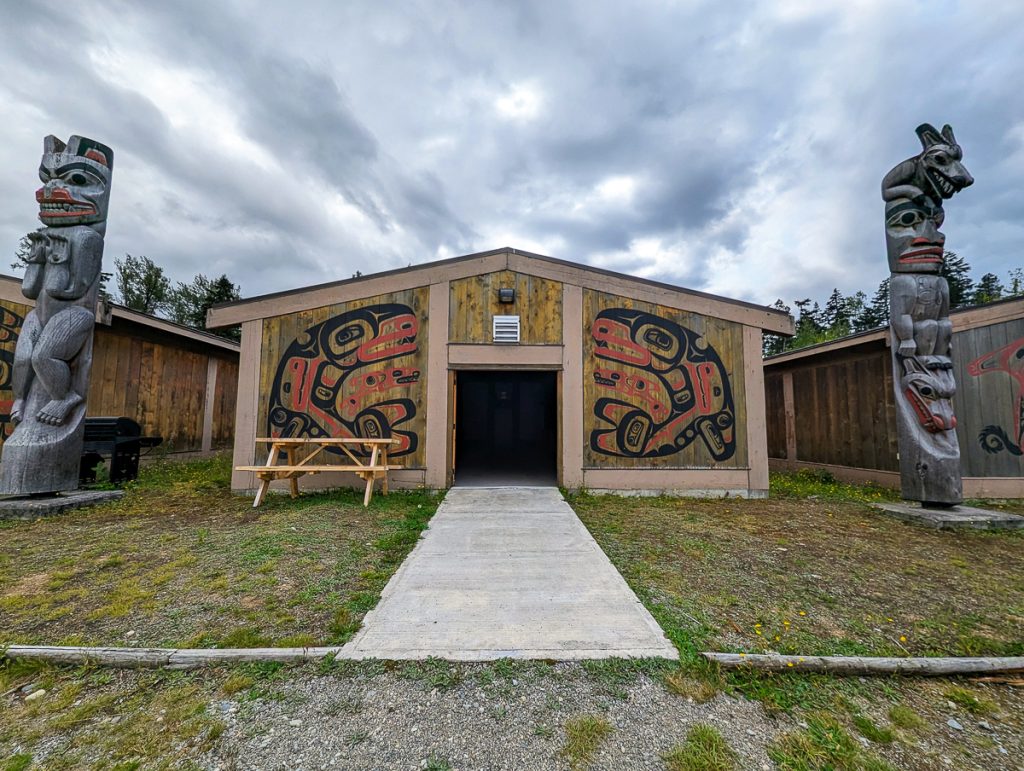
In places like Haida Gwaii, where the Haida Nation owns hotels and tour operators and manages their hiking trails and national park for tourism, the Haida people have found employment and land stewardship aligned with their values. They are openly able to share in their culture, which incentivizes youth to learn song and dance after a lost generation of knowledge keepers had these stories taken from them.
Indigenous tourism helps restore the land from colonial exploitation and enables us, as travelers, to learn and connect more deeply with the places we visit.
Learn more about regenerative tourism and the role of Indigenous experiences with my complete guide.
20+ Incredible Indigenous Tourism Experiences in British Columbia
So, without more delay, let’s get into the incredible Indigneous experience you can have across British Columbia.
1. Kitselas Canyon
Kitselas Canyon is a National Historic Site of Canada and the home of the Gitselasu people of the Ts’msyen Nation. Just a 10-minute drive from Terrace, BC, this canyon is home to ancient village sites dating back 5,000 years and 4 museums to explore.
We visited Kitselas Canyon in a bit of a shoulder season. It was quiet, and the Gitselasu land keeper was doing maintenance on the four museums and the trail infrastructure. So, they weren’t running guided tours at the time.
We had the option of a self-guided exploration, and after paying our way, we first stopped at each of the four museums, each designed to honor one of the four clans.
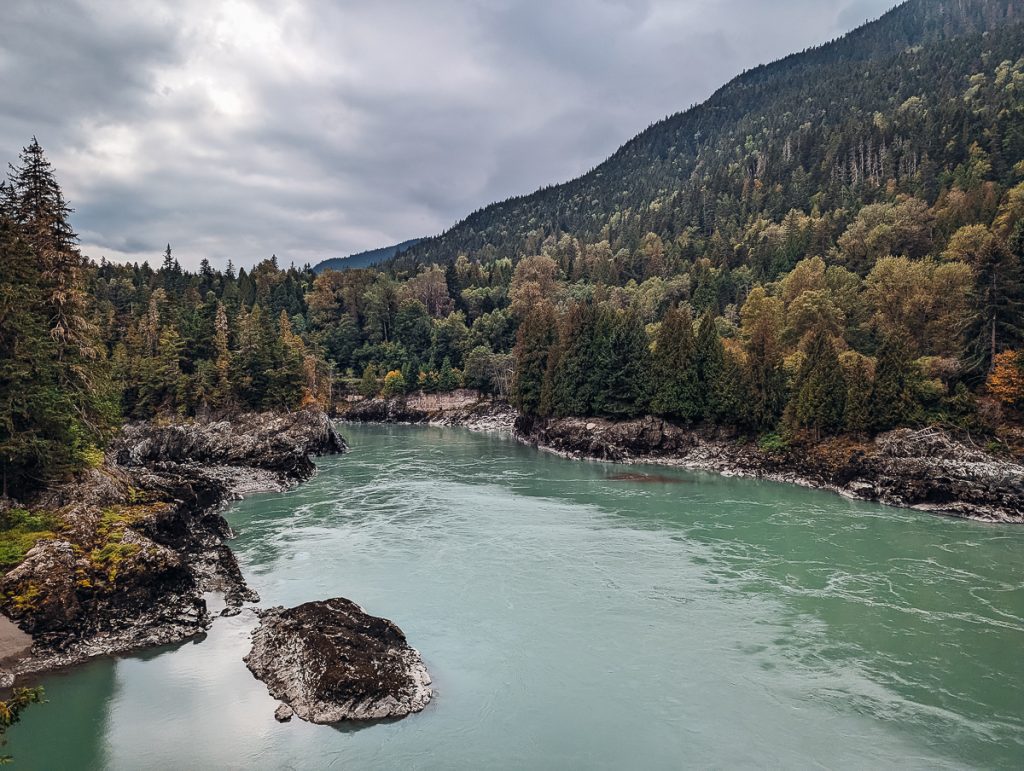
After, we began the walk through the quiet forest, reading signs along the way. We passed an ancient canoe, pts’aan (clan poles), and gazed out over the rushing river, imagining that here, 5,000 years ago, thriving villages were the hubs of commerce and trade.
If you arrive during a guided option, do choose that! Otherwise, you need a bit of imagination to bring this place to life, envisioning the caves along the river where Halayt (Shamans) entered trance-like states to bestow power upon themselves and carved the petroglyphs the area is known for.
Practical Details for Visiting:
- Tickets for self-guided tours cost $12 for adults, $10 for youth aged 8-17, and $8 for seniors.
- Tickets for guided tours cost $18 for adults, $16 for youth aged between 8-17, and $14 for seniors ($50 for a family of two adults and two children).
- The Kitselas Canyon National Historic Site is open:
- Spring season from May 12 – June 20, Monday to Friday from 9 am until 4 pm
- Summer season from June 23 – September 6, Monday to Saturday from 9 am until 5 pm;
- Fall season from September 8 – October 10, Monday to Friday from 9 am until 4 pm.
- In spring and fall, weekend visits need to be booked by appointment only.
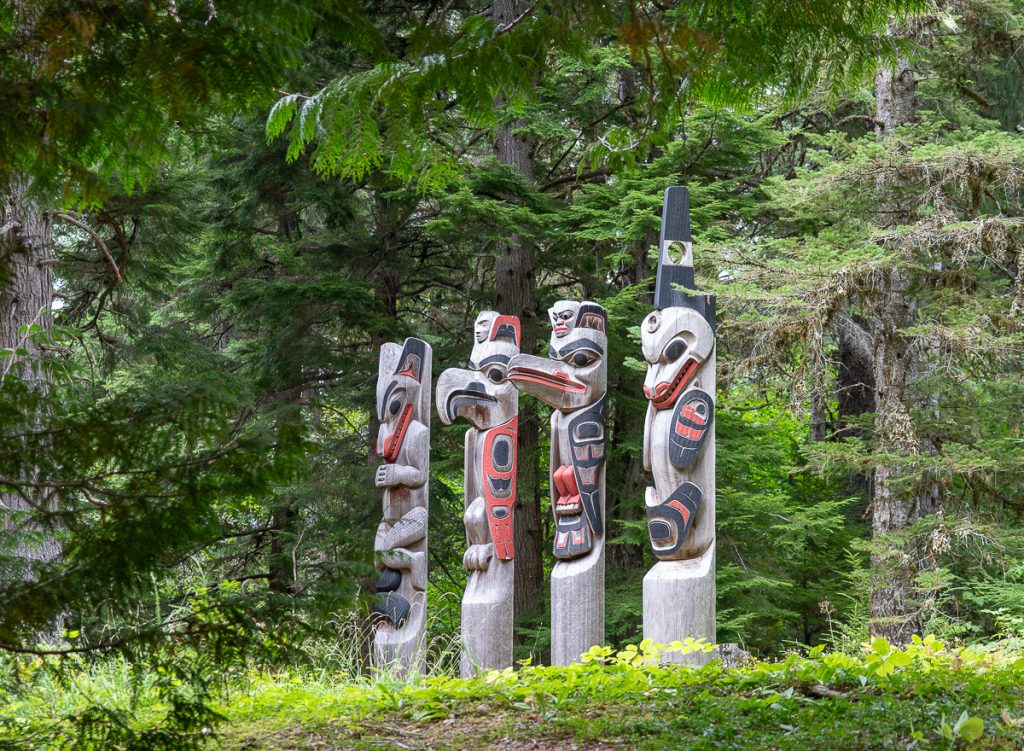
2. Nisga’a Nation Nass Valley Auto Tour
The Nass Valley Auto Tour is a self-guided driving tour organized by the Nisga’a People for visitors to explore and connect with them and their land. The Nisga’a have a first-of-its-kind “Land Back ” initiative, or self-governing treaty, and tourism plays a huge role in self-autonomy on their land.
The self-guided auto tour includes 13 cultural and natural stops, a perfect way to explore the Nisga’a Nation independently in a culturally sensitive way. The Nisga’a Museum, Visitor Center, and the provincial park are all co-managed with the Nisga’a People, and are absolutely fascinating to explore.
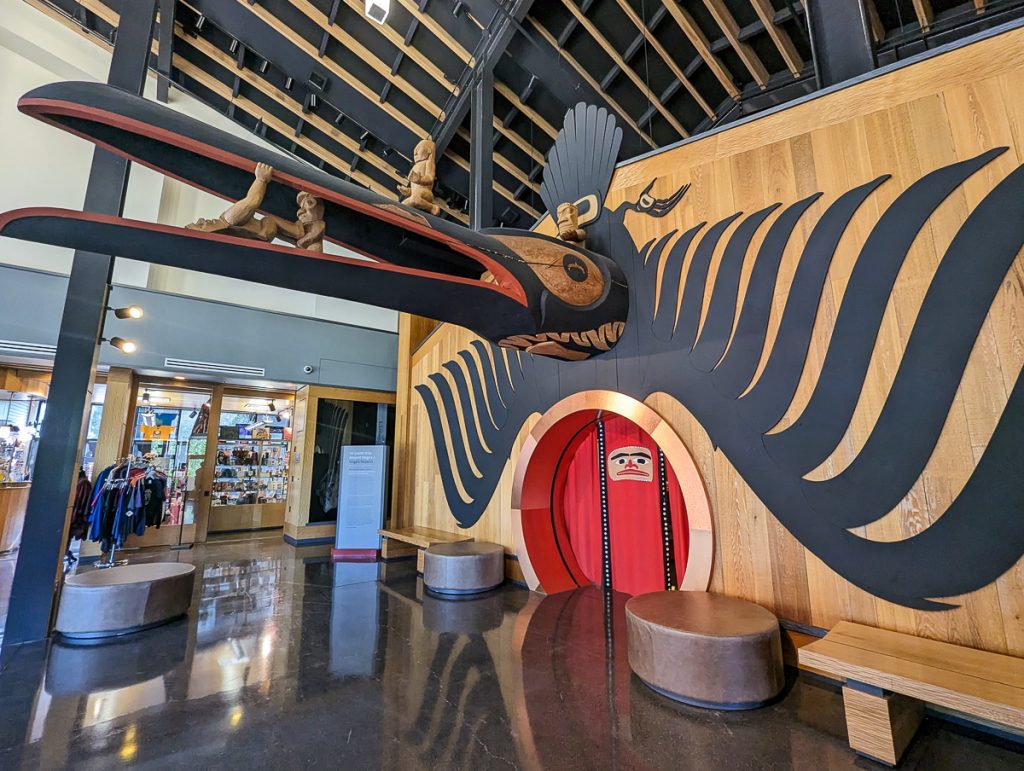
More stops worth noting include hiking among the lava-formed rock formations, visiting hot springs and local Nisga’a towns, and the amazing museum. You can read more about this drive in my full guide.
The Nass Valley Auto Tour was honestly one of the most incredible experiences I had in BC. I felt like we left British Columbia altogether as we drove through the extensive lava fields. Here, it really felt like the Nisga’a people were eager and excited to share their stories and their land with guests in their own way.
The Auto Tour was the perfect way to explore nature, culture, and natural history independently, while still being guided by Nisga’a stories throughout. We met wonderful Nisga’a people, including Sylas, at the visitor center, and our young Nisga’a guide at the museum. This is worth the detour.
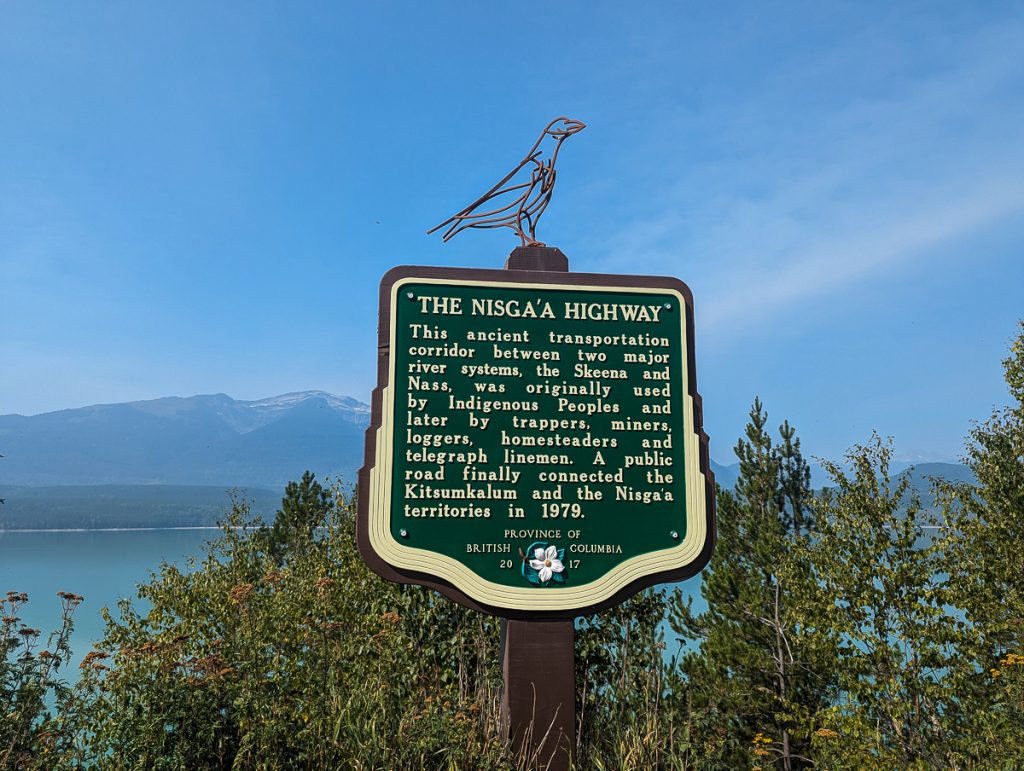
3. Visit Haida Gwaii – Haida Homeland
Visiting the Haida Homeland of Haida Gwaii is an incredible experience, not least because this entire destination is regenerative, helping the Haida in their transition to autonomy with a landmark treaty. Tourism here, led by them, is restoring culture and land after years of colonial extraction.
The Gwaii Haanas National Park is co-managed with the Haida from the bottom of the ocean to the tops of the mountains, and there’s just an overall blend of culture and nature through a Haida lens while traveling the area.
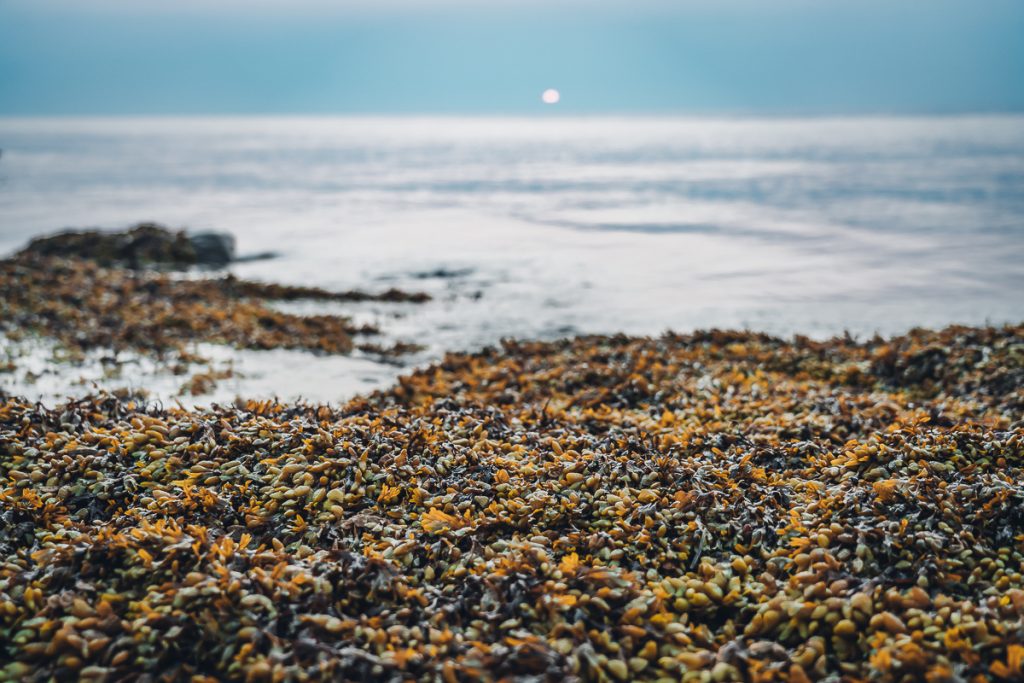
My time on Haida Gwaii was deeply transformational. The regenerative experiences I’ve had on Haida Gwaii and in Kakadu National Park in Australia have restored my faith in the tourism industry. This is what tourism is meant to be. Tourism is fully in the hands of the community, who share their stories, home, and culture with us in ways that work for them and enhance our experiences.
The Haida culture is seamlessly woven into everything across Haida Gwaii, from origin stories told along hiking trails to Haida Stewarship keeping those trails safe and sustainable for us as visitors.
I’ve always said I hope everyone can experience regenerative tourism at least once in their lives, and Haida Gwaii is a great choice!
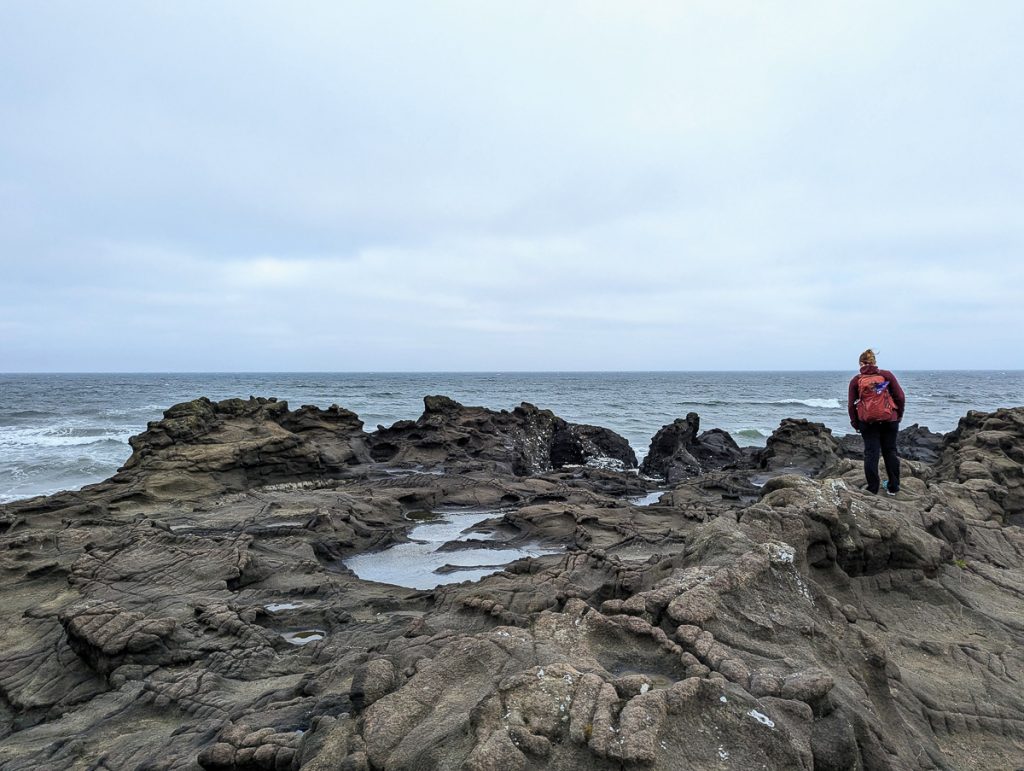
Haida House at Tll.all and Ocean House at Tlaga Gawtlaas
While visiting Haida Gwaii, staying in Haida-owned and operated accommodations is a must-do. Both Haida House and Ocean House are inherent to nature and integral to healthy breathing systems.
A stay at either property (or both!) is a wonderful way to support Haida in tourism jobs while experiencing local Haida hospitality and dining, as well as cultural tours.
Our stay in the newly opened Haida House cabins was restorative and intentional. Beach and coastal tourism development often kills the beach to offer “ocean-view rooms.” The Haida, however, have built cabins in a way that protects the ocean and the cabins. Waking up every morning, I would walk to the beach; my short walk took me through the forest, sedge grass, dunes, and then eventually to the squeaky sand of the beach.
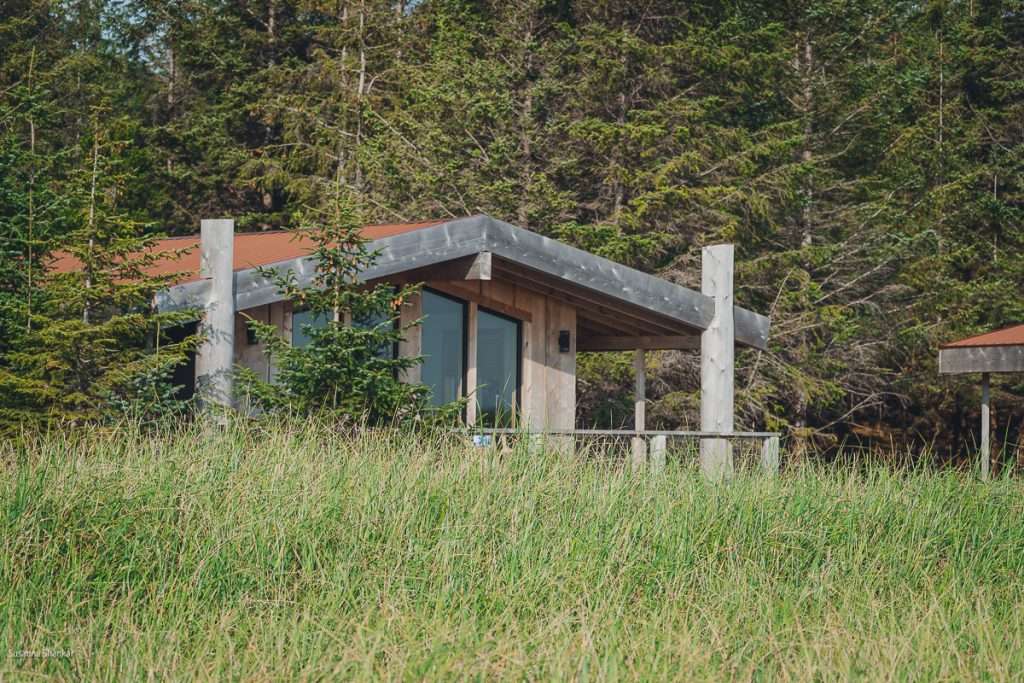
By keeping the forest, dunes, and grassy ecosystems intact, the beach remains healthy for seabirds, seals, whales, and clams, as well as for subsistence harvesting by the Haida people. During the intense storms Haida is known for, we were protected by the strong trees. Here, the Haida use nature for its benefits while protecting nature in return. Considering this property used to be an extractive bear-hunting lodge, it is amazing how far it’s come.
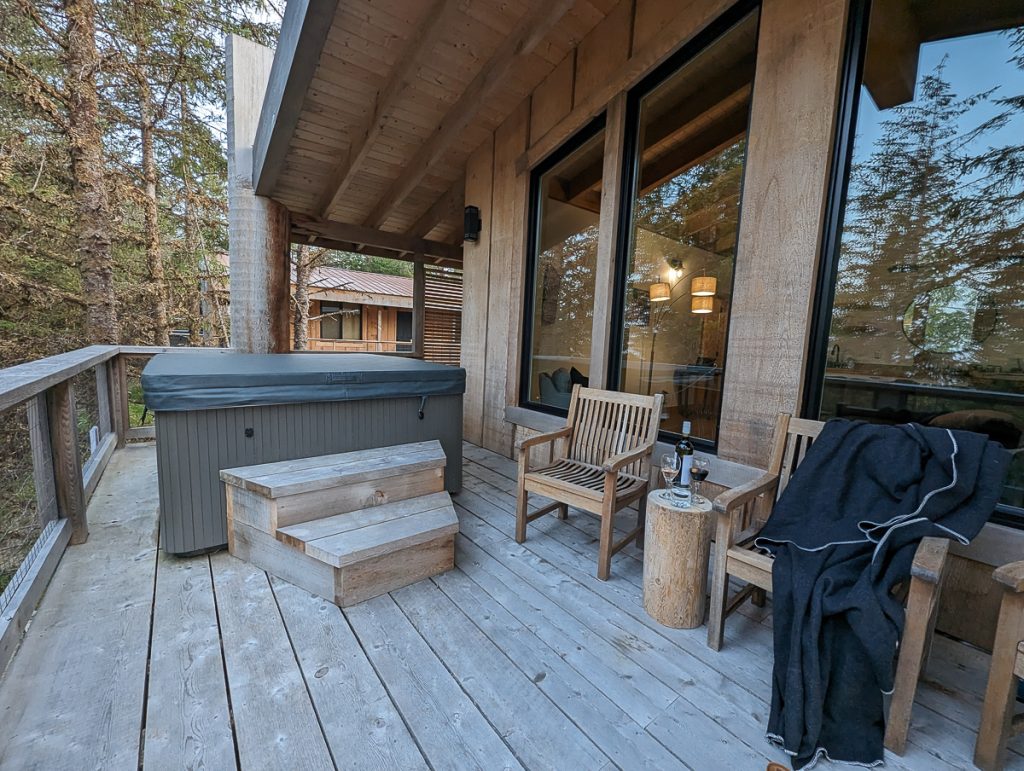
On top of our incredible beach access, we also had a private hot tub. We would soak nightly, after our Indigenous dinner on site, listening to the sounds of the ocean and forest.
Haida Style Expeditions
While you’re exploring Haida Gwaii, you will undoubtedly also want to visit Gwaii Haanas National Park. What makes Gwaii Haanas so special is its blend of ancient Haida Villages, old-growth rainforest, Haida Watchmen, and its co-management between Parks Canada and the Haida Nation.
This national park and reserve is also a UNESCO World Heritage Site, requiring a permit to enter, and you can only reach it by boat or plane. Once you get there, though, you can choose from a range of offerings, from cultural tours to wildlife watching.
When booking a tour to Gwaii Haanas, there are only a few certified guides. For us, it was an easy choice, the Haida and family-owned option of Haida Style Expeditions. We knew this choice would be inherently sustainable and include a blend of immersive cultural experiences alongside stunning natural wonders.
Unfortunately, we didn’t get to spend the day with Haida Style due to extreme weather that lasted for days, but they were always communicative and put our safety first. They would be the only team I would recommend for day trips into the area.
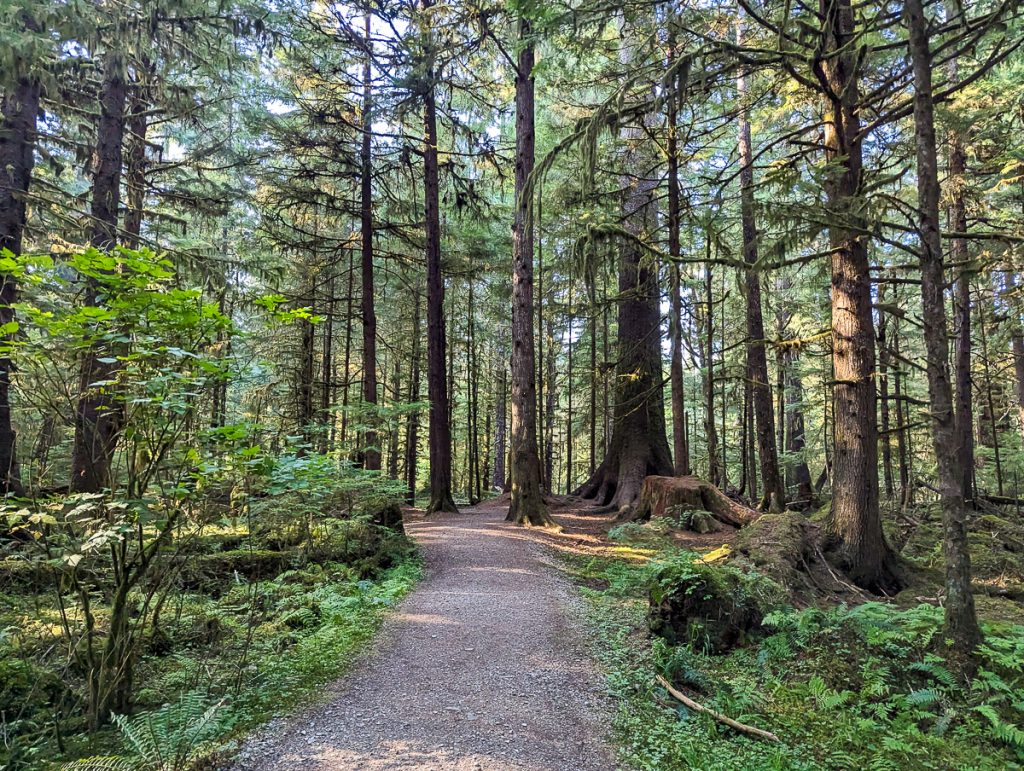
Haida Cultural Centre
Another stop to check out while on Haida Gwaii is the Haida Heritage Centre, a Haida-owned cultural center that’s part museum and art gallery, part workshop, and part performance space.
The Haida Heritage Centre is one of the best Indigenous museums and cultural centers I’ve been to! We were fortunate to have the option to book a guided tour with Mackenzie, a young Haida woman. Mackenzie was taking the time to learn about Haida art, culture, history, ecology, and languages from her elders.
As she took us through the centre, she shared stories of her people’s culture and history with us, the good and the dark. The tour started with the creation, mythology, and pre-history of the Haida people. Moving through pre-colonization, colonization, and modern culture, Mackenzie shared moving stories that brought laughs and deep sobbing tears. From the residential schools to the bright future of the Haida people, this tour was the most profound experience I’ve had at a museum.
This is a must-visit on Haida Gwaii and non-negotiable in my opinion.
Practical Details for Visiting:
- Tickets cost $18 for adults, $13 for seniors and students, and $6 for youth between 6 and 12. Children under 6 can visit for free.
- Daily tours are offered during the summer season for $15, with a Pole Tour at 11 am and a Museum Tour at 2 pm. You can also organize private tours at any time of year, which cost $250 for up to 30 people.
- The Haida Heritage Centre is open from October to April, Tuesday to Saturday, and from May to September, Monday to Saturday, from 10 am until 5 pm.
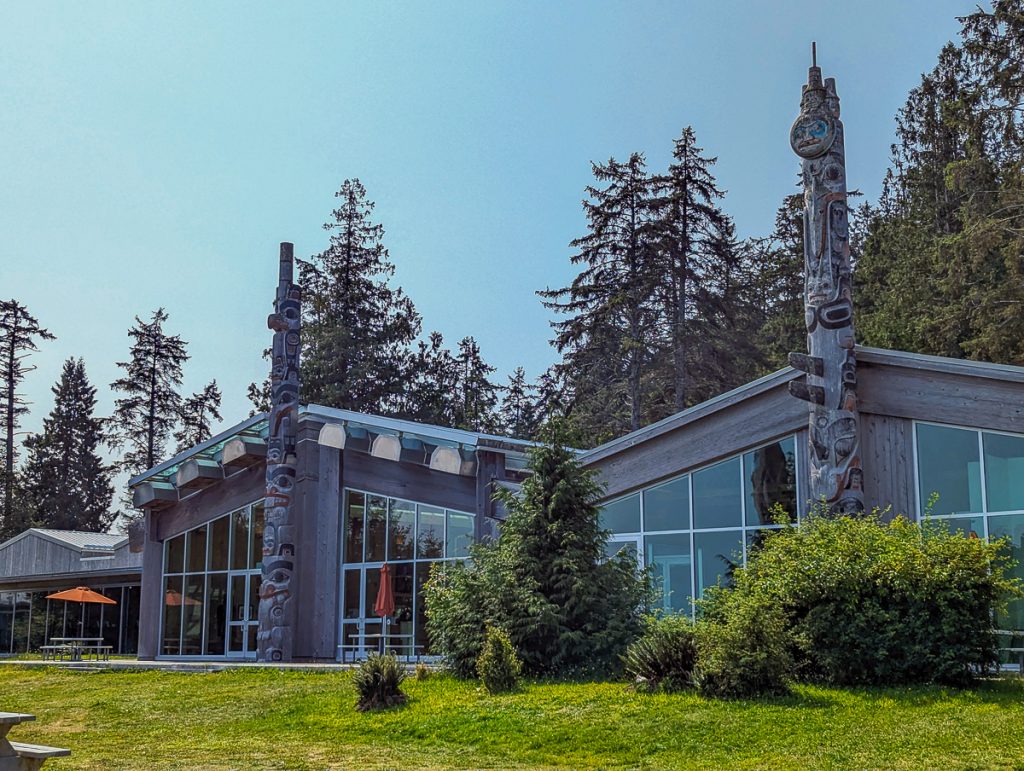
4. Squamish Lil’Wat Cultural Centre
The Squamish Lil’Wat Cultural Centre (SLCC) in Whistler was the first of its kind built in Canada, located on the shared territories of the Squamish and Lil’Wat Nations. Today, these two Nations share their culture and history with visitors to the center, while also providing employment for the people of both Nations.
This center is a combination of museum, art gallery, gift shop, and café, with regular craft workshops and changing exhibitions. While most people come to Whistler for the nature and outdoors, this spot shows that there are important cultural experiences on offer too!
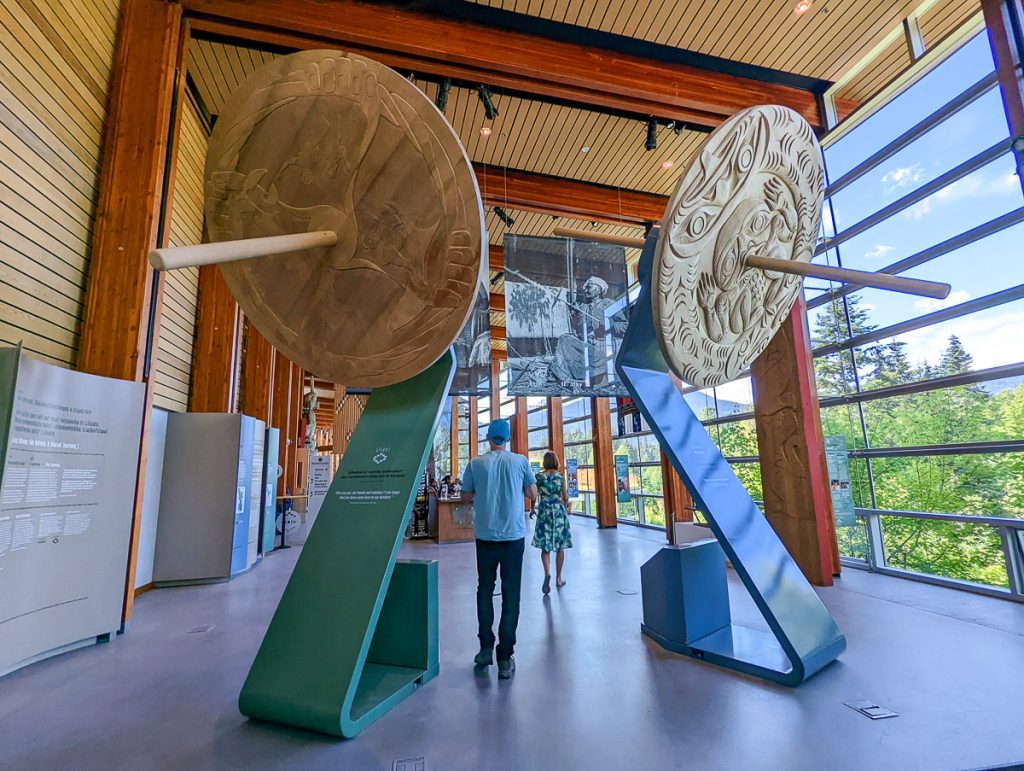
The Squamish and Lil’Wat Cultural Centre is somewhere I always bring my friends and family when they visit me here in Vancouver, and we head up to Whistler. There is always something new to see or learn, so I like to come a few times a year.
Last time I went there, a master canoe carver shared his skills with visitors to the center. We even got to take home some fresh cedar shavings! Keep an eye out for other fun workshops where you might be able to make your own medicine bag, dream catcher, drum, or other traditional craft.
Practical Details for Visiting:
- Tickets cost $25 for adults, $12 for children ages 6 to 18, and $50 for a Family Pass for two children and two adults. Children under the age of six visit for free, and you can also get annual passes.
- Hourly tours are offered from 10 am until 5 pm (last tour starts at 4 pm), unless there is an early closure or a featured tour in progress.
- The Squamish and Lil’Wat Cultural Centre is open Tuesday to Sunday from 10 am until 5 pm. The center is closed on Mondays except between June and August, when it is also open from 10 am until 5 pm.
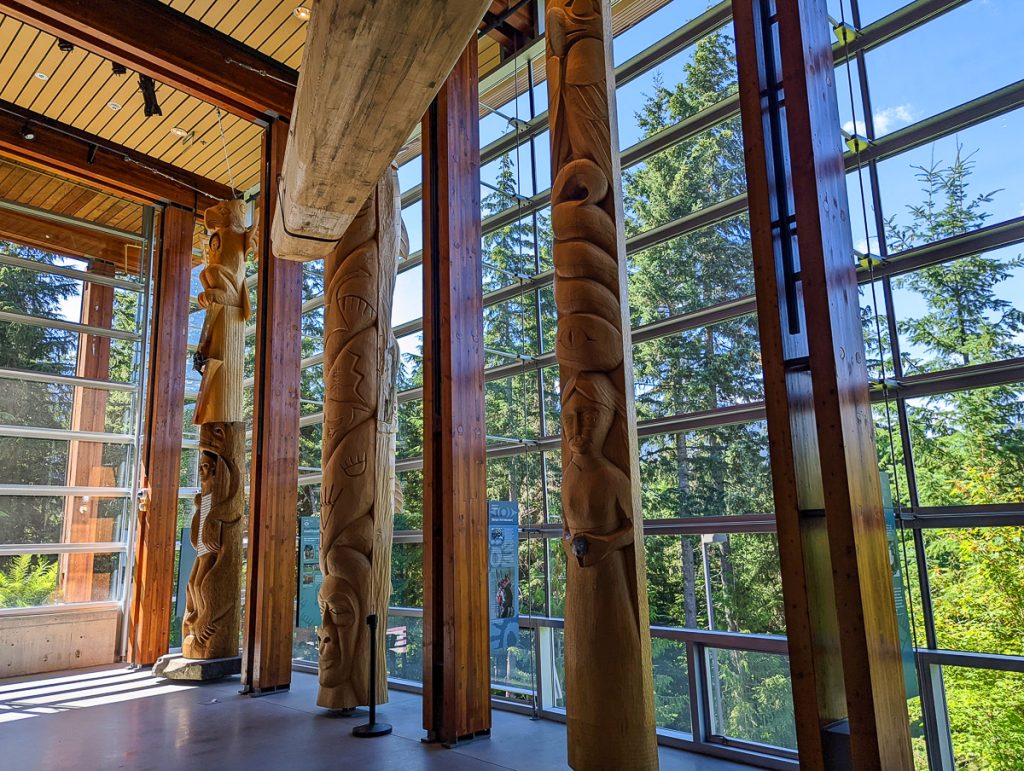
5. Ahous Adventures
Ahous Adventures is an eco- and cultural-adventure tour company owned and operated by the Ahousaht Nation, operating in the Pacific Rim National Park and the Clayoquot Biosphere Reserve on Vancouver Island.
They offer ethical tours on their traditional Indigenous lands where other tour companies can’t go. This makes them a great, culturally mindful option to visit one of British Columbia’s best National Parks, and to see some of the wildlife that lives in the area.
Tours offered include ethical bear and whale-watching cruises, as well as excursions to natural hot springs near Tofino and hikes to Lone Cone Peak for epic views over Clayoquot Sound.
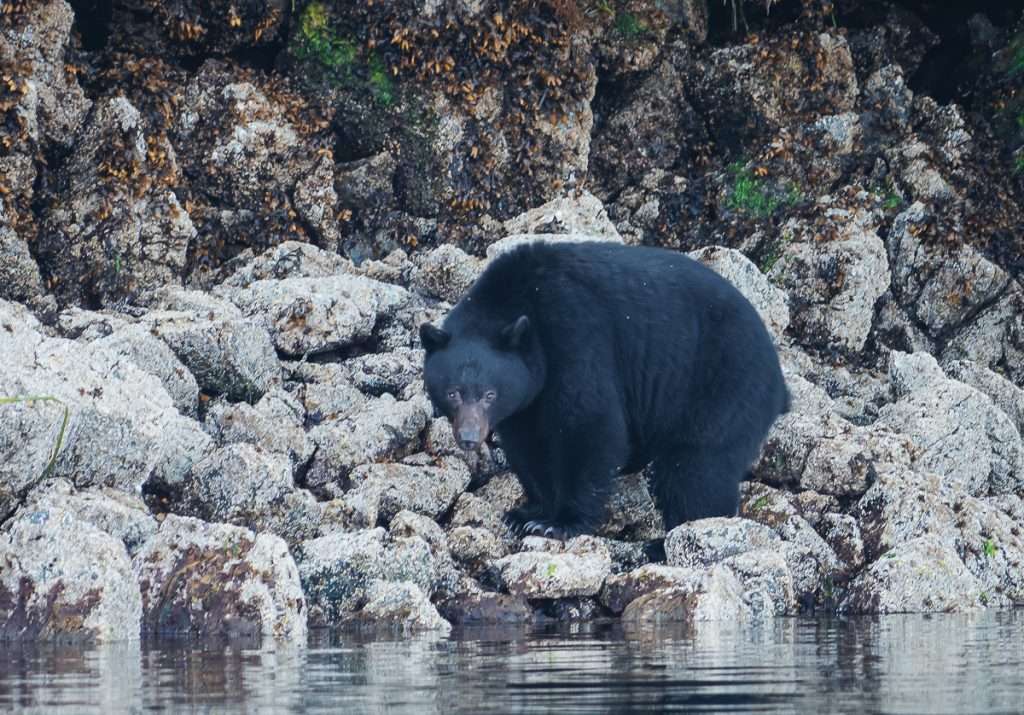
I actually met one of the owners, and they highlighted job opportunities for youth in their tribe, educational programs for youth guidance, and business ownership as being very important to the company. Community is the heart of Ahous Adventures, and their guides are just as eager to share their traditions as to show you around.
6. ʔapsčiik t̓ašii Trail
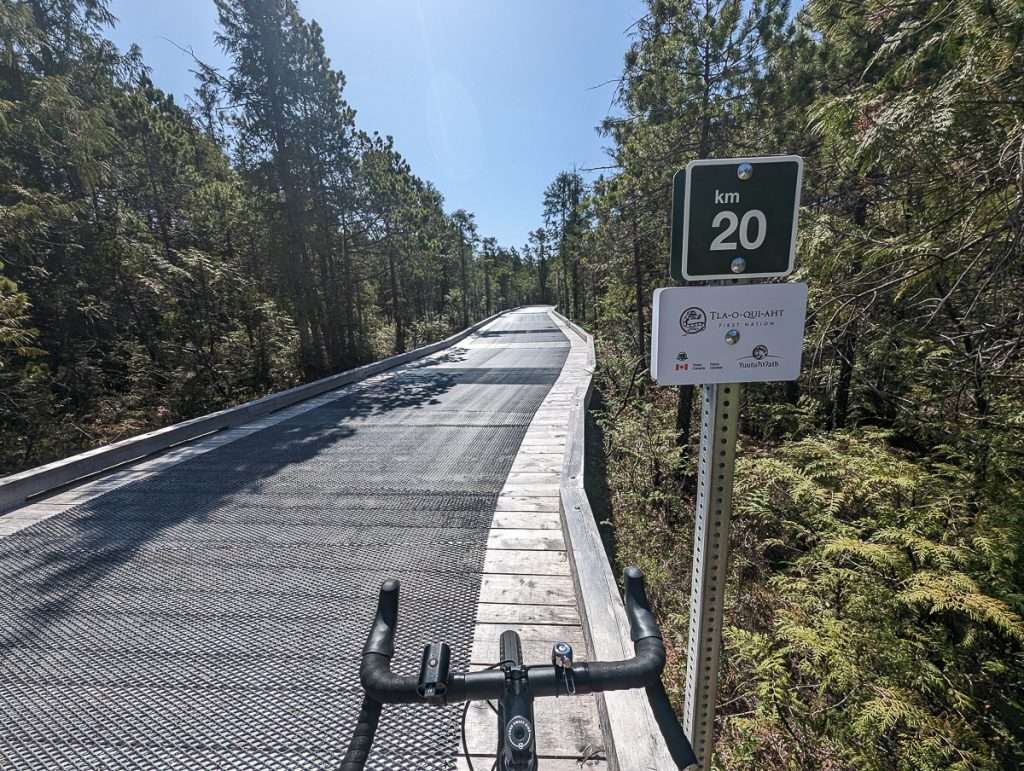
The ʔapsčiik t̓ašii (pronounced ups-cheek ta-shee) Trail is a newly developed bike and multi-use trail that runs from Tofino to Ucluelet on Vancouver Island, which enables visitors to ride through the entire Pacific Rim National Park, making stops along the way.
ʔapsčiik t̓ašii means “going on a path in the right direction,” which seems like an apt name for a bike path to explore natural sites in an eco-friendly way.
This trail was developed with the local Tla-o-qui-aht First Nations and Yuułuʔiłʔatḥ people in the area for a cultural and eco experience. It both protects salmon habitat and benefits the tribal community while you explore the park with 0 emissions!
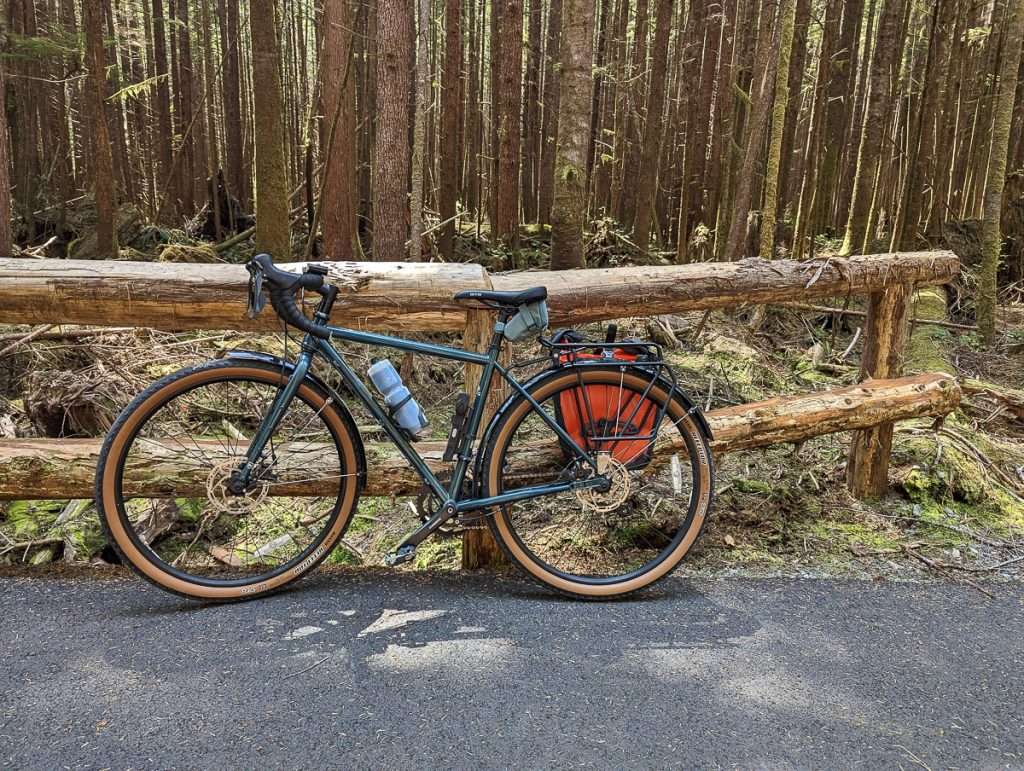
Every year for our anniversary, we like to visit a National Park or nature reserve. We picked Tofino and Pacific Rim National Park for our 6th anniversary. While we spent much of our time enjoying the slow travel experience in Tofino, we also had a few active days, taking in the park’s incredible nature.
For us, the best way to enjoy Pacific Rim was with a bike ride from end to end. It was a long day that left us with sore legs and butts afterwards, but it was so worth it. The trail is winding, rolling, and newly developed, making for a smooth ride.
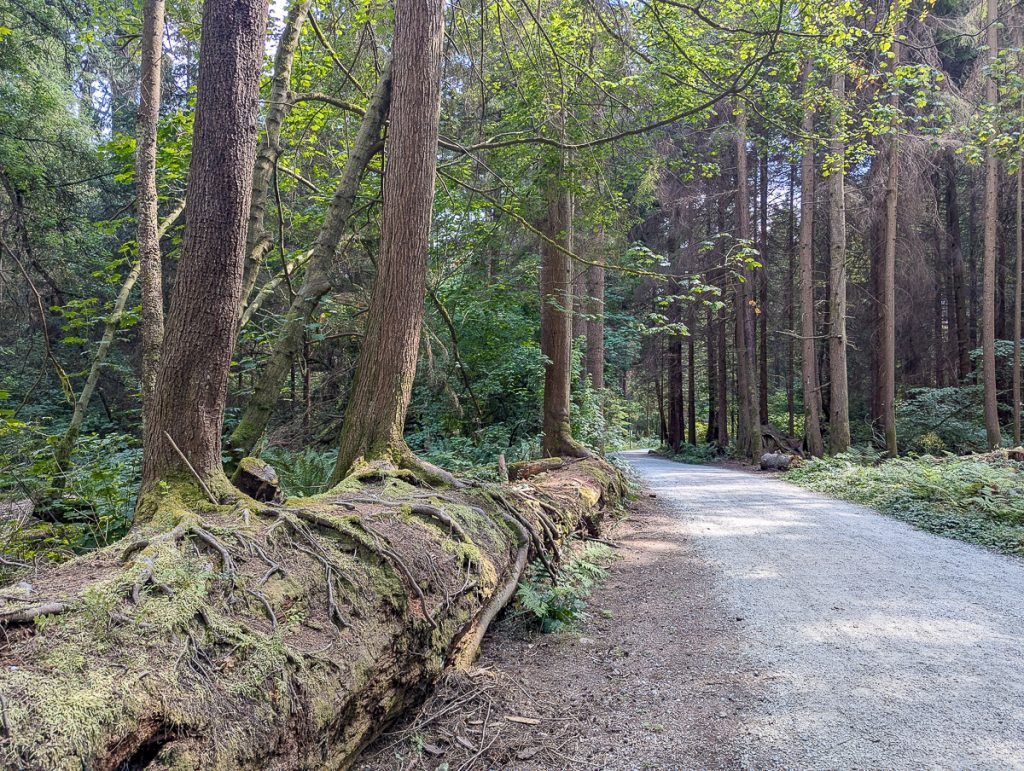
The best part was that we were able to get out and explore all the best stops in Pacific Rim, so we combined our bike ride with walks through rainforest, shorepine bog, and protected beaches teeming with coastal life.
Read more about our experience riding the ʔapsčiik t̓ašii Trail here.
7. Talaysay Tours
Another excellent Indigenous-owned tour company in BC is Talaysay Tours, which offers immersive and cultural tours through Vancouver’s own Stanley Park, the Sunshine Coast, Whistler, and Squamish.
Most people who visit Vancouver just pass through Stanley Park, but Talaysay Tours can help you connect with the park’s ecology and Indigenous history. On traditional Coast Salish lands, Stanley Park is more than just a park; it is a place to learn about cultural history, stewardship, and coastal ecosystems.
Talaysay Tours is a mother-and-daughter tour company with multiple guides now working alongside them to share their Indigenous culture with guests through cultural and environmental walking tours and guided canoeing. You can choose from multiple experiences to learn more about local Indigenous culture and history, a wonderful way to give back while embracing it.
8. Kwa’Lilas Hotel
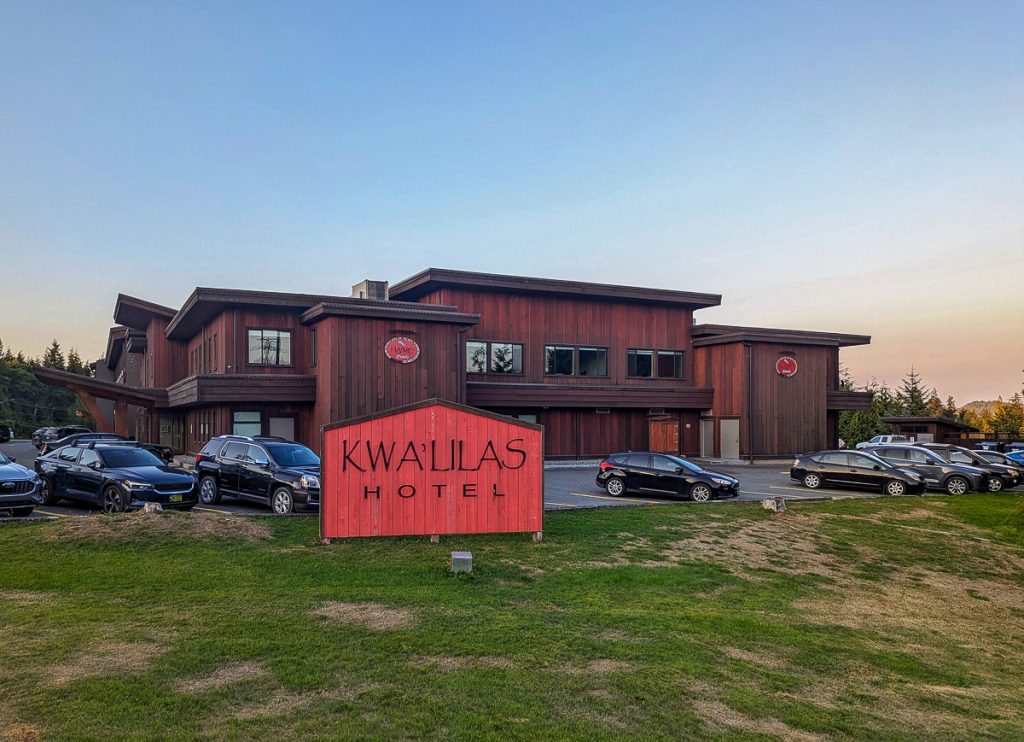
If you’re going to be in Port Hardy and want to support a local Indigenous-owned hotel, look no further than the Kwa’Lilas Hotel. This hotel was bought and developed by the Gwa’sala and the ‘Nakwaxda’xw peoples. Kwa’lilas is a kwak’wala word that means a place to sleep.
The hotel features beautiful Indigenous hospitality and design, making it a great spot to rest before taking the Inside Passage. There’s also an in-house restaurant and bar that serves delicious Indigenous-inspired foods, along with a gift shop/gallery where you can purchase some beautiful keepsakes.
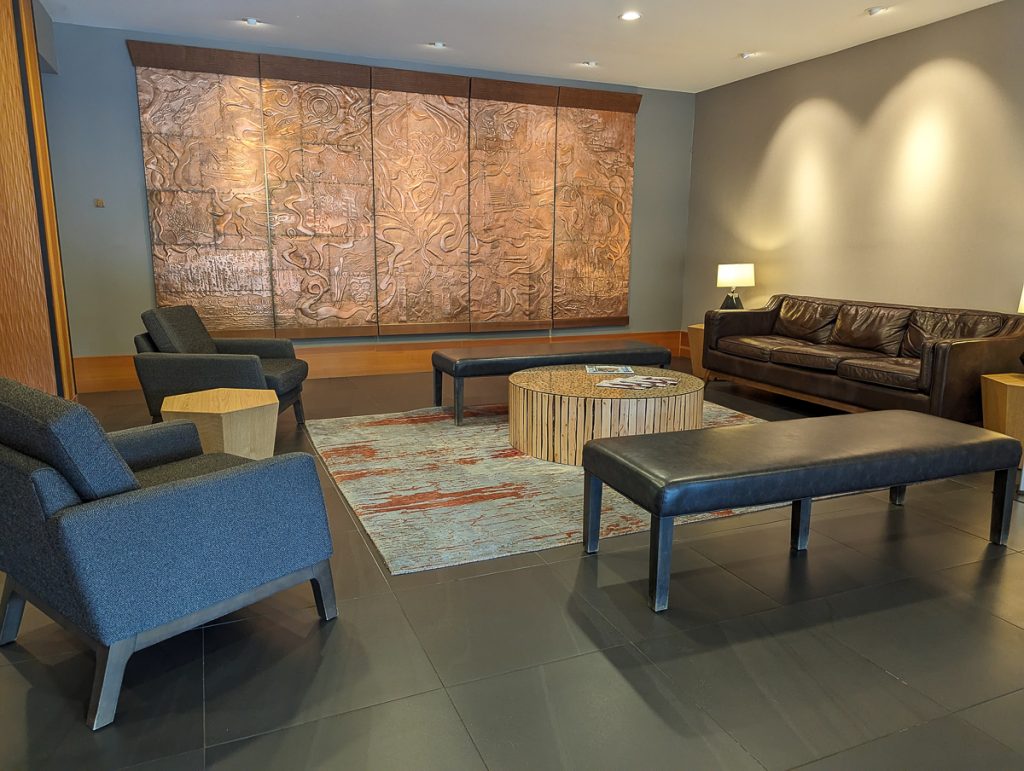
We didn’t have long in Port Hardy, so we wanted a nice place to rest and recover before boarding our 16.5-hour ferry across Canada’s Inside Passage. The Kwa’lilas Hotel was the perfect choice. We felt good about supporting an Indigenous-owned business, with its incredible design and art throughout. We were super happy with the rural-luxury feel, too, with big, comfortable beds and rooms.
Wanting an early night for our 5 am wake-up call, we enjoyed dinner at their in-house restaurant. The staff was around and ready for our early morning departure, which was such a great way to start the day.
9. Spirit Bear Lodge
An incredible experience in BC is the chance to spot a Spirit Bear, or Kermode, which is an American Black Bear subspecies with a genetic mutation that makes them appear ‘white.’
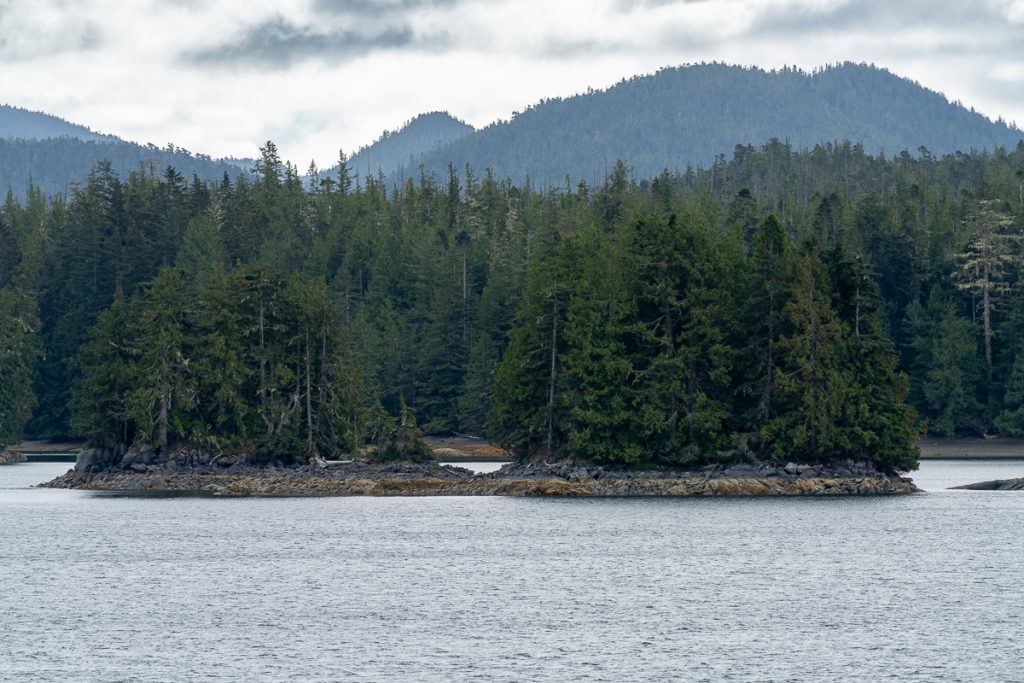
And there’s no better way to see them than by staying at Spirit Bear Lodge, which is owned by the Kitasoo Sai’xais First Nation, and located in the middle of one of the largest old-growth Coastal Rainforest systems in the world.

Staying here is the best way to enjoy the Great Bear Rainforest, with an inclusive Indigenous-led experience through the lands and waters that make up the Kitasoo Xai’xais People’s traditional territory.
Not only will you have the chance to spot grizzly or black bears (and perhaps the elusive Spirit Bear), but you may also get to see eagles, whales, coastal wolves, sea lions, otters, and many more, all while employing ethical viewing practices. You’ll also learn about the culture and language of the Kitasoo Sai’xais people, as well as how they steward the land here to ensure it remains protected.
Any stay at Spirit Bear Lodge is sure to be relaxing and transformative, making it a once-in-a-lifetime experience for many visitors.
Fun fact: While the mass model of carbon offsets is somewhat flawed, they can be a good thing when done right. Many of Air Canada’s carbon offsets go to protecting the Great Bear Rainforest!
10. Salmon N’ Bannock
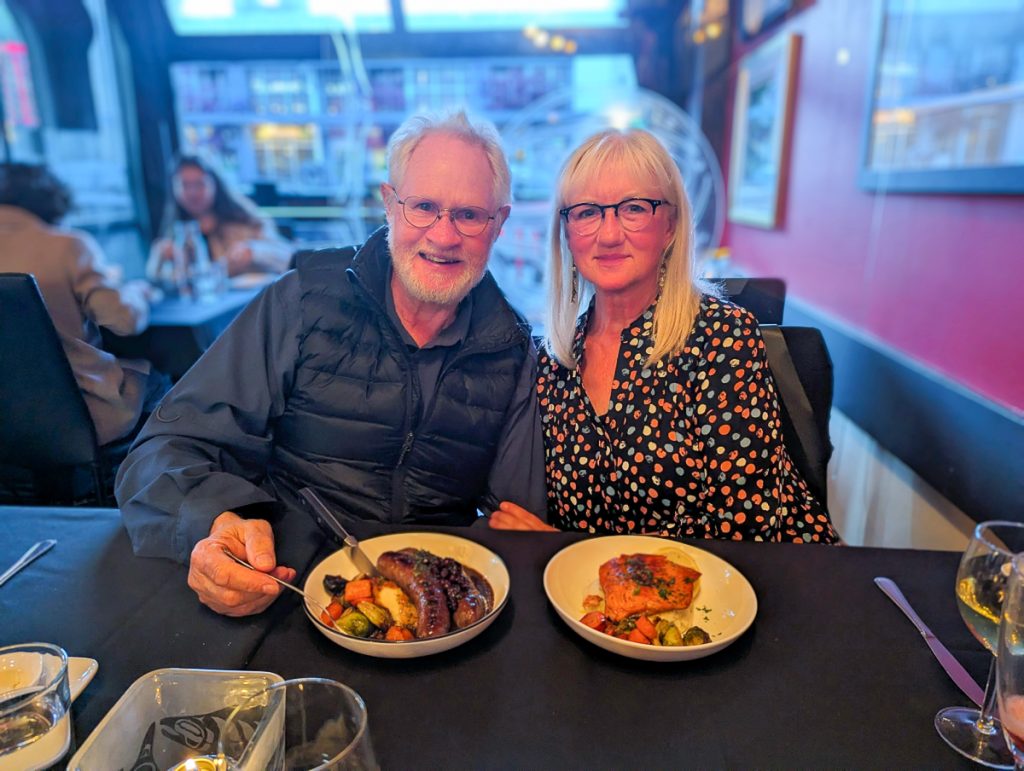
For those who want to experience something a little closer to home, Salmon n’ Bannock is a wonderful Indigenous-owned restaurant right in Vancouver, where the chefs and servers come from different Nations across BC and Canada.
Salmon n’ Bannock offers Indigenous food such as Bison steak, salmon, bannock, and foraged berries, with food and drinks sourced from Indigenous producers and suppliers where possible. This is a lovely upscale dining experience, with beautiful artwork on the walls, and your food comes served with a side of cultural elements.
I love coming to Salmon n’ Bannock to try their seasonal and rotating menu. They always have a creative veggie option on the menu. But I think my friends and family, whom I brought here, enjoy it even more to try the meat and seafood.
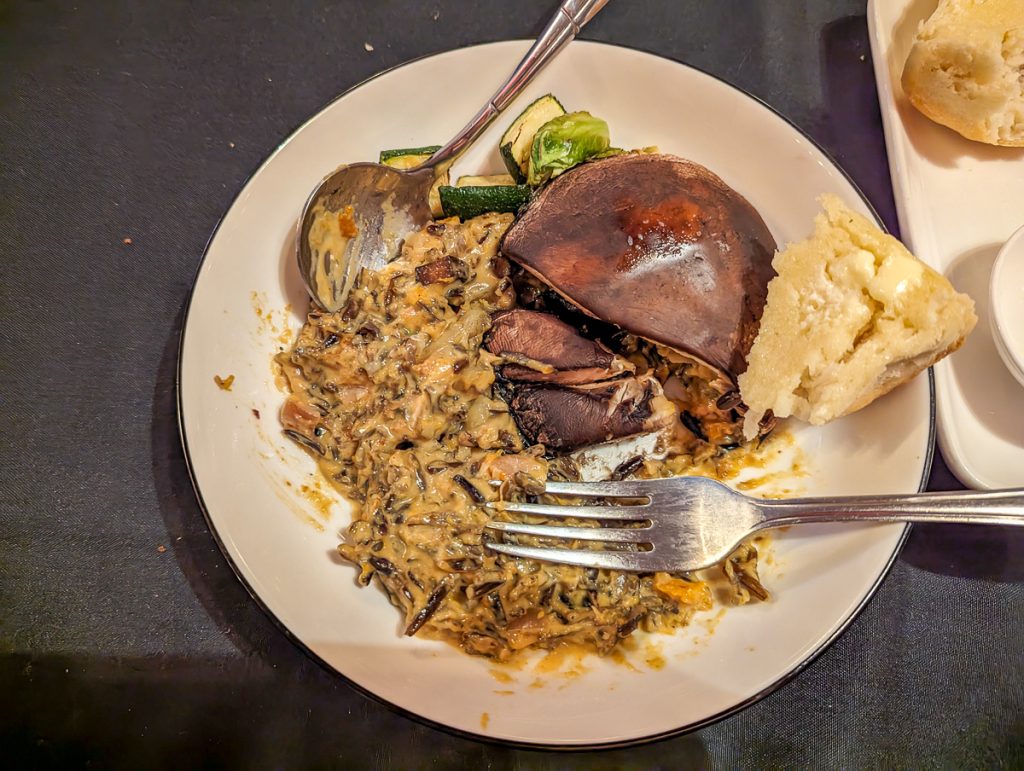
My parents love trying bison bannock tacos, or bannock covered in gooey camembert cheese and wild blueberries. I always order wine from our local Indigenous-owned vineyard, Ganesh goes for an Indigenous brew, and their cocktails are great, often infused with wild berries.
We always love hearing which nation our server belongs to and a little about their history and culture. If you’re looking for a unique cultural foodie experience in Vancouver, I highly recommend Salmon n’ Bannock.
There’s also a location at Vancouver Airport International departure gates called Salmon n’ Bannock On the Fly, if you don’t manage to get there while you’re in the city, or just want a last taste before you leave!
11. Homalco Wildlife and Cultural Tours
Homalco Wildlife and Cultural Tours, based in Campbell River on Vancouver Island, is an excellent tour company operated by the Xwémalhkwu (Homalco) First Nation. They offer ethical and sustainable Indigenous experiences on Vancouver Island and into their traditional territory of Bute Inlet.
Their tours are not just about wildlife viewing (although that is certainly part of them!) as they weave their ancestral knowledge, stories, language, and marine expertise into every tour they give. They’re also a Biosphere Committed organization, dedicated to ensuring that their tours leave minimal impact on the natural world.
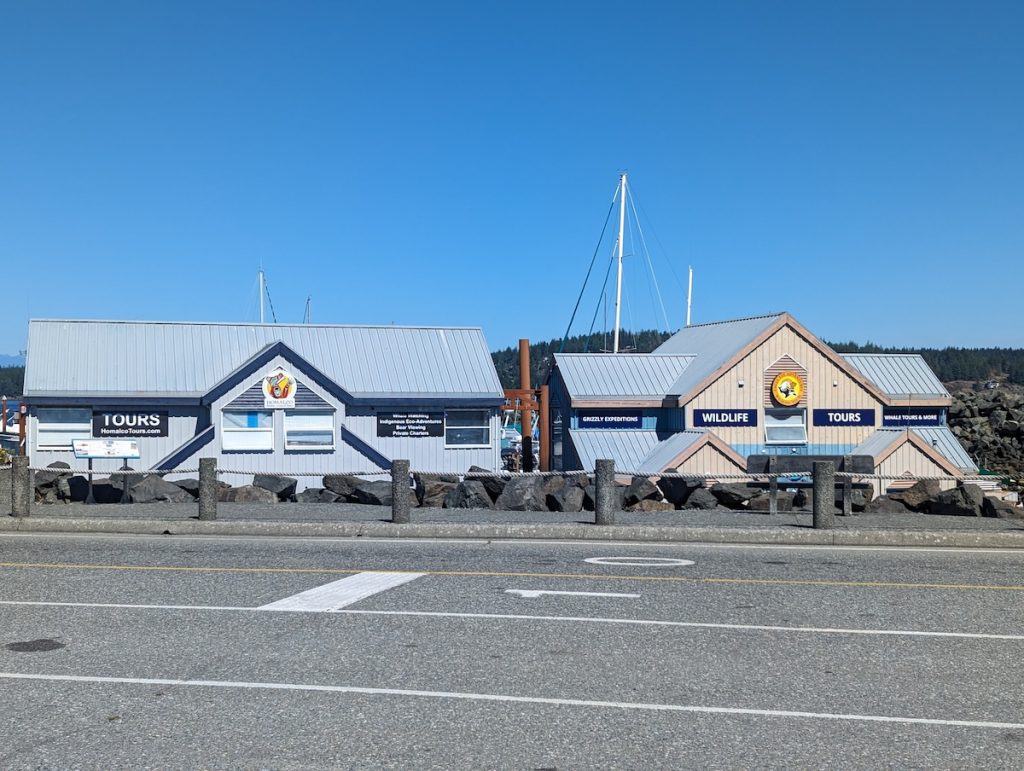
If you’re visiting Vancouver Island and want to explore more of the surrounding area, then Homalco Wildlife and Cultural Tours are a wonderful choice. There’s something for everyone in their tour offerings, including coastal cruises, land tours, and combined boat/land tours to see all the best landscapes and wildlife on offer.
12. ‘Ksan Historical Village
The ‘Ksan Historical Village is a replica village/museum located where the village of Gitanmaax existed for centuries. This area has been home to the Gitxsan Peoples for over 8000 years, and the village is now a place where visitors can see how the Gitxsan lived centuries ago.
While the main museum is quite small, it still manages to display around 600 items, including bent boxes, ceremonial masks, button blankets, shaman’s regalia, fishing gear, hunting utensils, and assorted lithic artifacts. The on-site Eagle House Café offers affordable Gitxsan First Nation’s cuisine if you need some refreshment.
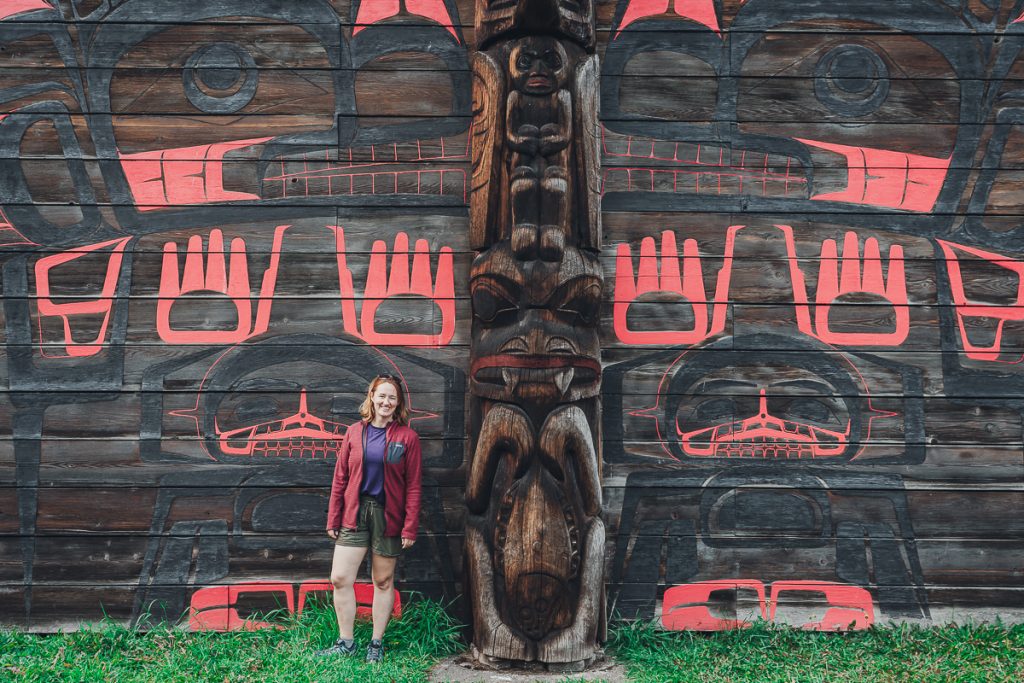
The village also contains several historic longhouse buildings, which can be visited as part of a tour if you call ahead to book. Otherwise, these buildings are locked, although visitors can still wander around to admire the decorated house fronts and totem poles.
Practical Details for Visiting:
- Make sure to call ahead to book a tour and get the most up-to-date ticket prices, as they are not listed on the website.
- The Ksan Historical Village is open seasonally, from May to October, seven days a week, from 10 am to 5 pm.
- The Eagle House Café is open from 10 am until 3 pm when the village is open.
13. Yaga Café Garden Co.
Located in Seal Cove, Prince Rupert, the Yaga Café Garden Co. is a wonderful business owned and run by the Gitmaxmak’ay Nisga’a Society – a community-owned non-profit organization. This business is a mix of a café, a garden center, and garden services, though the café is definitely our favorite part!
Not only is this an Indigenous-owned business, but it also operates on a “quadruple bottom line.” While a triple bottom line business usually focuses on profits, people, and the planet, Yaga additionally focuses on culture, ensuring that “all profits that are not re-invested in growing the business go towards language and culture revitalization initiatives for the 1600 Nisga’a citizens living in Prince Rupert and Port Edward, away from their traditional territory in the Nass Valley.”
Even though we sadly only had 24 hours in Prince Rupert, we still found time to hike the Rushbrook Trail. Before starting the trail, we grabbed ice cream at Indigenous-owned Bob’s on the Rocks and hiked the stunning trail to Seal Cove.
We were so happy to find Yaga Cafe for a healthy snack. We stocked up for our ferry to Haida Gwaii and felt good about supporting a company with a quadruple bottom line!
14. Nk’Mip Cellars
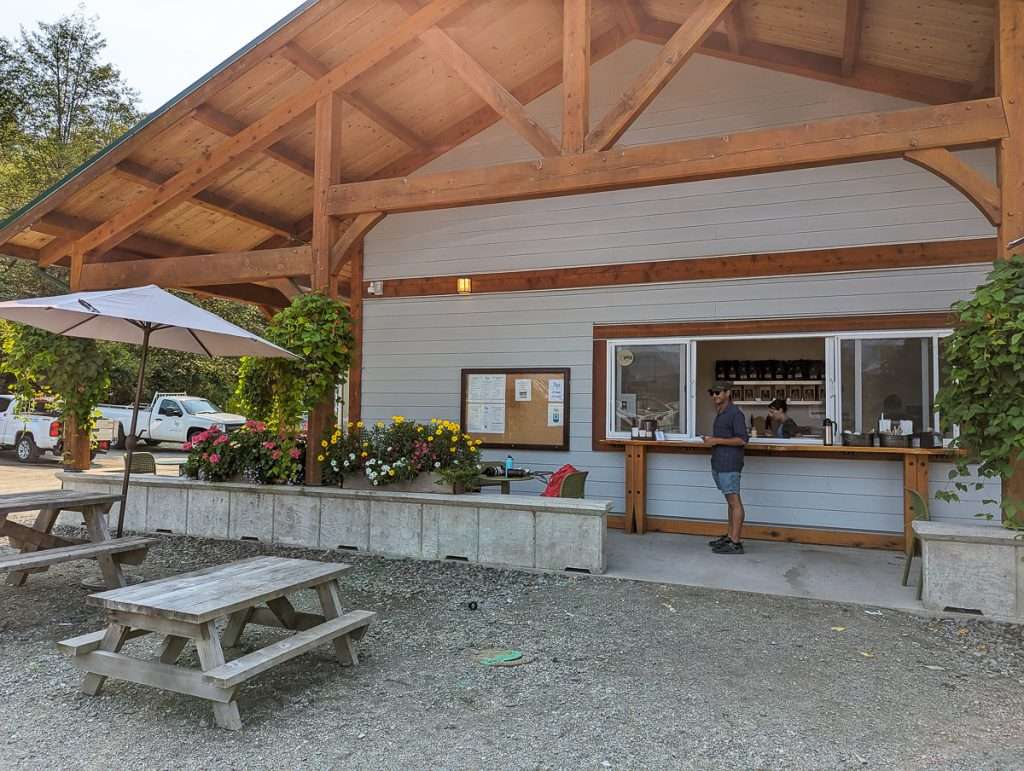
Nk’Mip Cellars is North America’s first Indigenous-owned and operated winery. This winery was created by the Osoyoos Indian Band, a First Nations government that’s part of the Okanagan Nation Alliance and controls about 32,000 acres of land in the Oliver-Osoyoos area.
The word Nk’Mip translates to “Bottomland” in English, and the winery was so named because it is located at the southern end of the Osoyoos reservation. Nk’Mip Cellars produces a variety of wines inspired by the region, including red wines such as Pinot Noir, Cabernet Sauvignon, Merlot, and Syrah, white wines such as Pinot Blanc, Chardonnay, and Riesling, and a Rosé.
If you manage to make it to the Nk’Mip vineyard overlooking Osoyoos, you can enjoy wine tastings in their vineyard shop or a delicious meal at their world-class restaurant: Sweetgrass. The menu offers dishes inspired by Indigenous and contemporary cuisine, made with locally sourced ingredients. The views from the patio are stunning as well.
This is a wonderful place to come for excellent wine while supporting Indigenous land stewardship.
Sadly, I haven’t been to Nk’Mip yet, but thankfully, I’ve had a lot of their wine! I used to think Canada’s reds really shone with lighter wines like Gamay and Pinot Noir, then I had Indigenous Merlot…. I’m not even a Merlot girl, but let me tell you, Nk’Mip’s Merlot is so good. I can’t wait to visit to try their wines at their beautiful vineyard and restaurant.
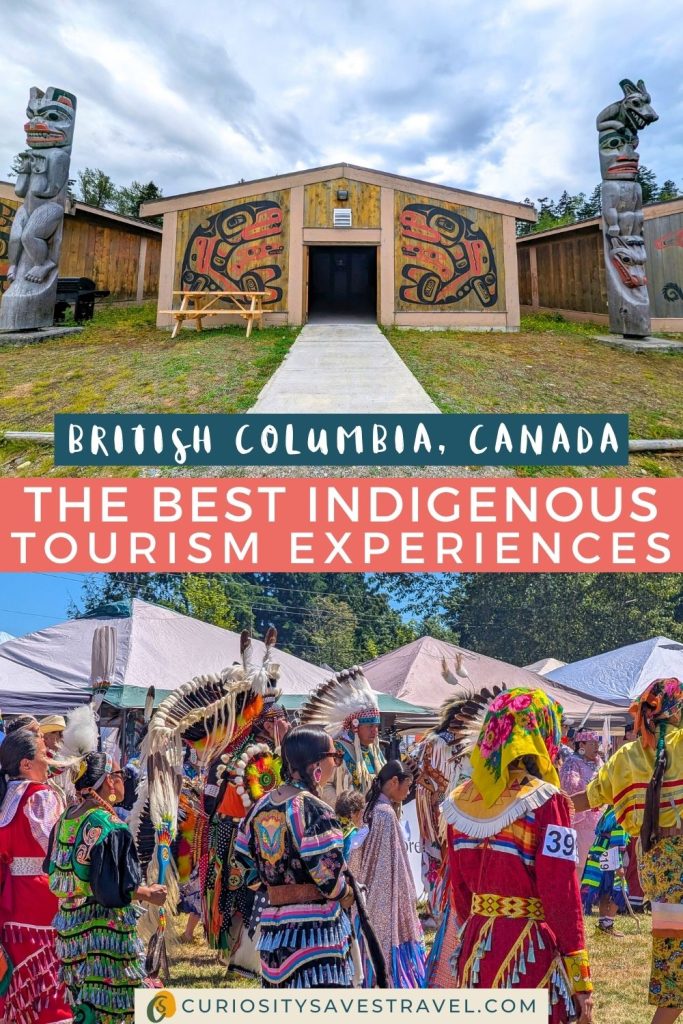
15. Community Pow-Wow
A powwow (also pow-wow or pow wow) is a celebration of Indigenous cultural heritage, often featuring music, dance, regalia, food, and crafts. Many Native American and Canadian First Nations communities come together at pow-wows to honor their Indigenous heritage and promote cultural respect.
Some community powwows are open to the general public, providing a great opportunity to learn more about the history and culture of local Indigenous people.
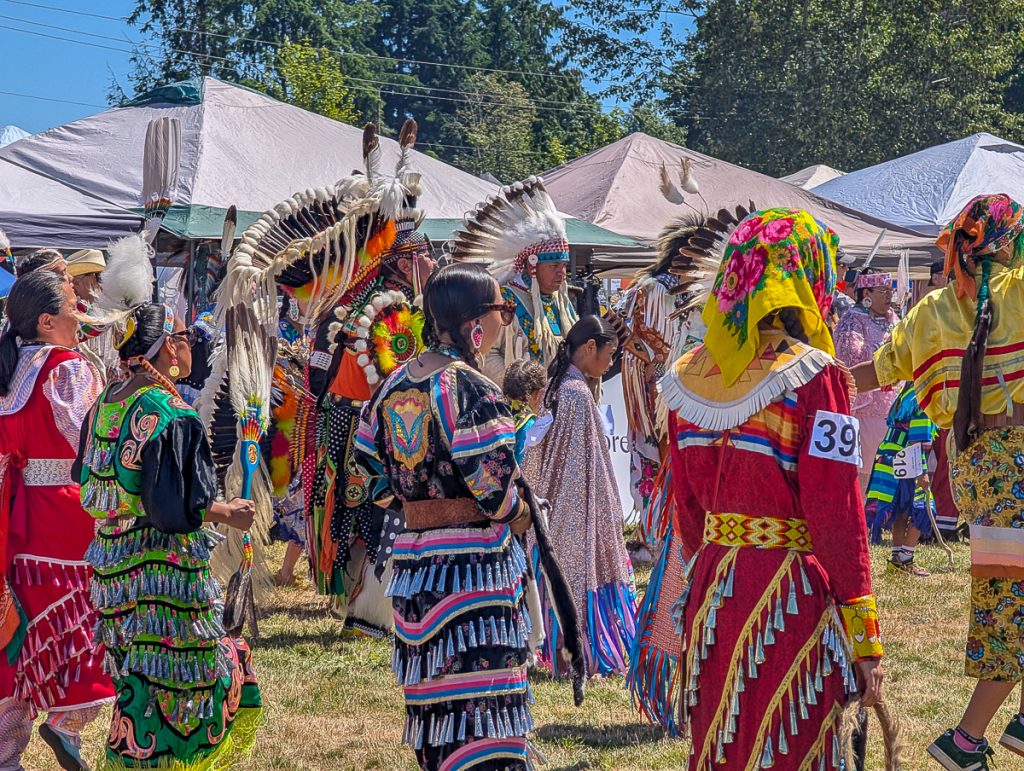
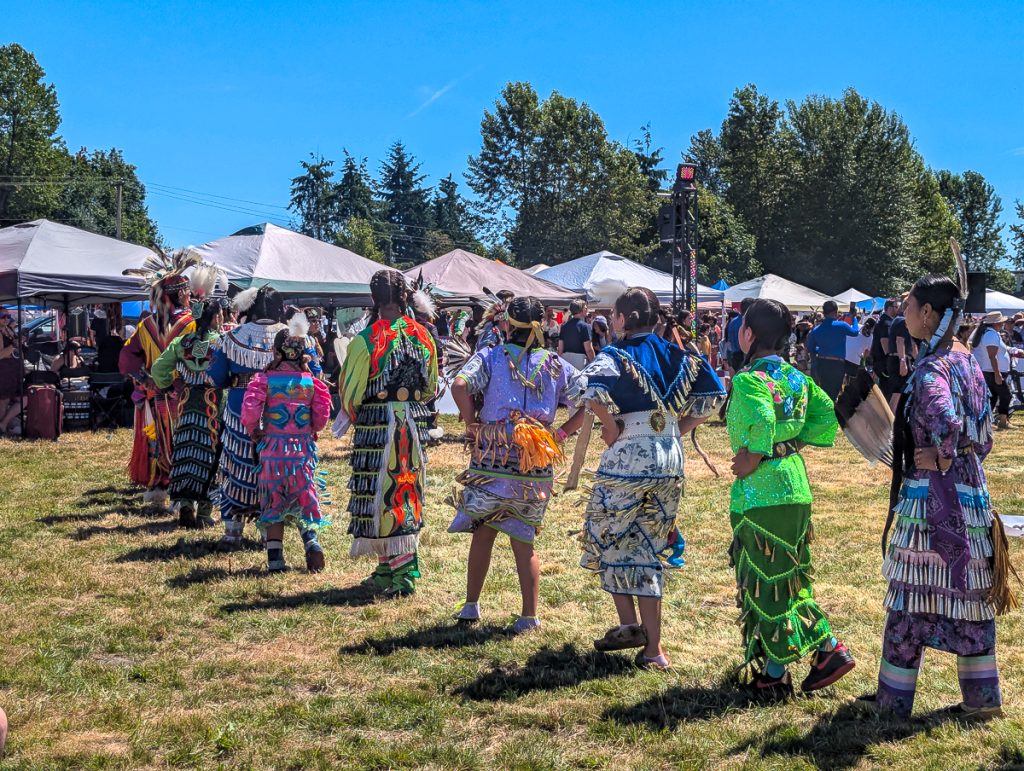
Since moving to Squamish Nation land, I’ve been wanting to go to the Squamish annual competitive powwow, and I finally found the time to attend this year. It was such a special experience. My whole family enjoyed eating Indigenous bannock and salmon, shopping from the dozens of vendors, and seeing the incredible show.
Dozens of dancers and performers from nations across Turtle Island gathered in one place to sing, dance, and celebrate. It was such a wonderful display of Indigenous diversity.
If you are interested, do some research to see if there is a powwow near you and whether it is open to the general public. If so, I definitely recommend going to experience the beautiful music and dance, or to shop at the vendors selling food, art, jewellery, and more.
Just make sure to follow all guidelines, especially if there are photo restrictions, etc. You can learn more about traditional Canadian powwows here.
16. Xatśūll Heritage Village
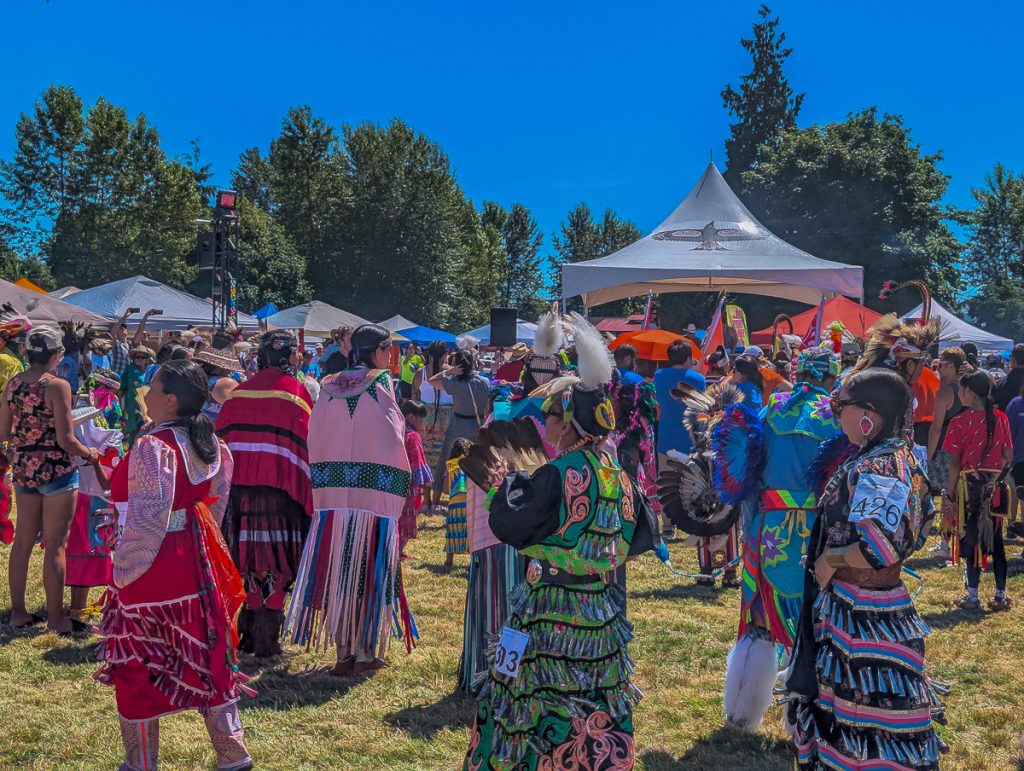
Between Whistler/Kamloops and Prince George is another Indigenous heritage village well worth a visit if you’re in the area: the Xatśūll Heritage Village. Located next to the Fraser River, the Xatśūll (pronounced hat-sooth) First Nation community invites visitors to learn about their spiritual, cultural, and traditional way of life.
Not only is this an open-air museum where you can look around and learn about the Xatśūll Nation, but you can also take part in activities and workshops, including storytelling by the elders or making a medicine pouch.
You can even stay overnight in a traditional teepee and have lunch or dinner on-site (if booked in advance), and take part in a pit-cooking demo. There’s also a new network of hiking and cycling trails (or snowshoeing in winter) around the area.
Practical Details for Visiting:
- Tickets to walk through the heritage village cost $5 per person or $15 for a family, although you will certainly get more out of a tour or workshop.
- Tours cost $20 for an adult, $14 for youth between 12 and 17, $8.50 for children under 5-11, and $18 for seniors.
- The Xatśūll Heritage Village is open seasonally from mid-May until mid-October, and you will need to contact them via the website to find the most up-to-date opening hours.
17. Bill Reid Gallery
If you’re in Vancouver and feel like perusing some beautiful Indigenous art, make sure you head to the Bill Reid Gallery of Northwest Coast Art. Named for the legendary Haida artist Bill Reid (1920-1998), this gallery displays many of his masterworks, as well as temporary exhibitions by other Indigenous artists from the Northwest Coast of Canada.
This is the only public gallery dedicated to contemporary Indigenous Northwest Coast Art in Canada, so it’s a very special place to come and experience a deeper understanding of Indigenous culture.
In addition to the varied exhibitions, the gallery also hosts interesting public programs, including panel discussions, arts and crafts workshops, fundraisers, storytelling, and artisan markets. The gift shop is a wonderful place to purchase Indigenous art, jewellery, books, and sculptures.
Practical Details for Visiting:
- Tickets cost $15 for adults, $12 for seniors, $10 for students, $8 for youth between 13-17, and $32 for a family of 2 adults and 2 youth. Indigenous peoples can visit for free, and there’s also free admission for all on the first Friday of the month from 2 pm to 5 pm.
- The Bill Reid Gallery has seasonal opening hours: in the winter, it is open from October to May, Tuesday to Saturday, 10 am to 5 pm. The summer season is May to October, when the gallery is open daily from 10 am to 5 pm.
18. Nemiah Valley Lodge
For a fantastic blend of adventure, wellness, and eco-friendly accommodation, head to the Nemiah Valley Lodge. This is an Indigenous-owned and operated off-grid lodge with log cabins in the spectacular Chilcotin region of BC.
They offer all-inclusive adventure and wellness packages, where you can learn from your Xeni Gwet’in hosts, go on excursions into the surrounding areas, play in the on-site lake, or just relax.
All meals and equipment for kayaking, fishing, or SUPing are provided, along with mountain bikes, so you can be as active as you like.
They even offer an Equine Wellness Program, since horses have been very important to the Xeni Gwet’in people since their introduction in the 18th century. Interacting with horses alongside a skilled trainer can provide many benefits, including stress reduction, emotional healing, and personal growth.
While I haven’t done this myself, taking part in such a mindful, eco-friendly, and Indigenous-led experience is high on my bucket list!
19. Sea Wolf Adventures
If you want to explore the wilderness around Vancouver Island, Sea Wolf Adventures is a fantastic Indigenous company operating in the Broughton Archipelago and the Great Bear Rainforest in Northern Vancouver Island.
You can join different excursions for grizzly bear tours, whale watching, and learning about the Kwakwaka’wakw peoples who have looked after this area for thousands of years. You’ll also gain insight into the Indigenous Protected and Conserved Areas established by First Nations to safeguard biodiversity, restore ecosystems, and uphold cultural practices tied to the land.
As well as day tours, Sea Wolf Adventures offers all-inclusive wilderness lodge packages in collaboration with Sointula Lodge, so you can enjoy cozy accommodations while you explore and learn. Meals are made using local ingredients while supporting sustainable practices.
20. Klahoose Wilderness Resort
Klahoose Wilderness Resort is an Indigenous-owned eco-resort in the heart of Desolation Sound, on the traditional territory of the ʔop qaymɩxʷ (Klahoose) People. Here, visitors can take part in guided wildlife tours, immersive storytelling, and meaningful cultural activities.
The resort operates during two main seasons: spring/summer is Discover Klahoose with whale-watching, spring bears, summer on the coast, and Klahoose culture sharing. Late summer/fall is Indigenous-led Grizzly Bear Viewing Adventures in Toba Inlet during the salmon run.
In between the excursions, you’ll get to stay in either cozy lodge rooms or oceanfront cabins, in a serene environment where the rainforest meets the sea. There’s also the opportunity to take part in photo tours, nature walks and hikes, kayaking, SUP, and swimming during your downtime.
Looking for More Indigenous Tourism Experiences in BC?
This list is really just scratching the surface of all the incredible Indigenous-led experiences you can have and Indigenous-owned businesses to support.
I encourage you to go beyond what I’ve curated here and discover a new experience or adventure with Indigenous Tourism BC. You can find campgrounds, art galleries, lodges, cultural centers, hotels, and tour operators highlighting the diversity of the province, as well as the many Nations that call the land home.
Comment and Share
Hopefully, this guide has given you a taste of the many wonderful Indigenous tourism experiences you can have in British Columbia!
From eco-friendly lodges and tour companies to cultural villages, art galleries, and even wineries, there are numerous opportunities to connect with Indigenous communities in BC for more meaningful travel experiences.
Tell me in the comments which of these experiences you are most excited to do yourself, or let me know of any other Indigenous tourism initiatives I’ve missed. Don’t forget to share this guide with others or pin one of these to your own BC planning boards!
Curiosity Saves Travel Recommends
Accommodation: Booking.com to find accommodation with a Genius Discount and clear third-party sustainable certifications like Green Key. Look for local hotels.
Tours and Excursions: GetYourGuide and Viator for tours, excursions, and tickets. Never book wildlife experiences through these vendors.
Travel: Omio for booking buses and trains in English across Europe. After reducing the number of flights I take annually, I use Google Flights’ carbon comparison tool.
Car Rental: Rentalcars for the best rates in English globally. It is easy to find hybrids and EVs, and there are resources for finding chargers.
Packing Essentials: REI or your local Co-op has great essentials like reusable water bottles and cutlery sets. Patagonia for regenerative clothing. Farm to Feet for socks made with regenerative practices! Pistil Designs for cold-weather essentials. Osprey for bags that last 10+ years, like the day bag for hiking or my favorite carry-on.
eSIM: Airalo eSIM. Reduces waste from single-use SIMs. A total game-changer.
For Bloggers and Content Creators
Earn Ad Revenue with Journey by Mediavine
Earn with Stay22 Travel Partnership (my biggest source of income!)
Earn with TravelPayouts recommending tours and activities.




Thank you for this great blog post! We were just a few weeks ago first time in Vancouver and loved it! Did not manage to do many indigenous led activities, but you post outlines many excellent ideas for our next trip.
I hope you had a great time in Vancouver. There’s so many great Indigenous experience you can have close to Vancouver, so I do hope you are able to make it back someday in the future to enjoy them!