

Things To Know Before Hiking the Kumano Kodo, Japan: Guide for Planning
I may earn income from affiliate links or partnerships in this post. I spend time to curate tours or products that align with my values. Thanks for supporting my work, at no additional cost to you. All words and images on this website are created by real people.
Are you headed to Japan and curious about hiking the Kumano Kodo? The Kumano Kodo is a UNESCO World Heritage pilgrimage route that seamlessly blends natural and cultural heritage. It is the perfect activity for those visiting Japan who are looking for something active, yet still highlights Japan’s ancient cultural traditions. While a well-known trek, it is a bit off the main tourist path, perfect for reflection in nature.
Hiking the Kumano Kodo offers an unparalleled experience in the shrine-filled forests and mountains of the Kii Peninsula. However, planning and logistics for hiking the Kumano are challenging.
If that sounds like a dream experience—whether you want to spend more than a week hiking the main Nakahechi route, venture off on a more adventurous hike up Mt. Kōya, or just spend a few days enjoying small hikes around the Hongū area, I’ve got a guide for you! I’ve curated a resource with everything you need to know to plan your own personalized Kumano experience.
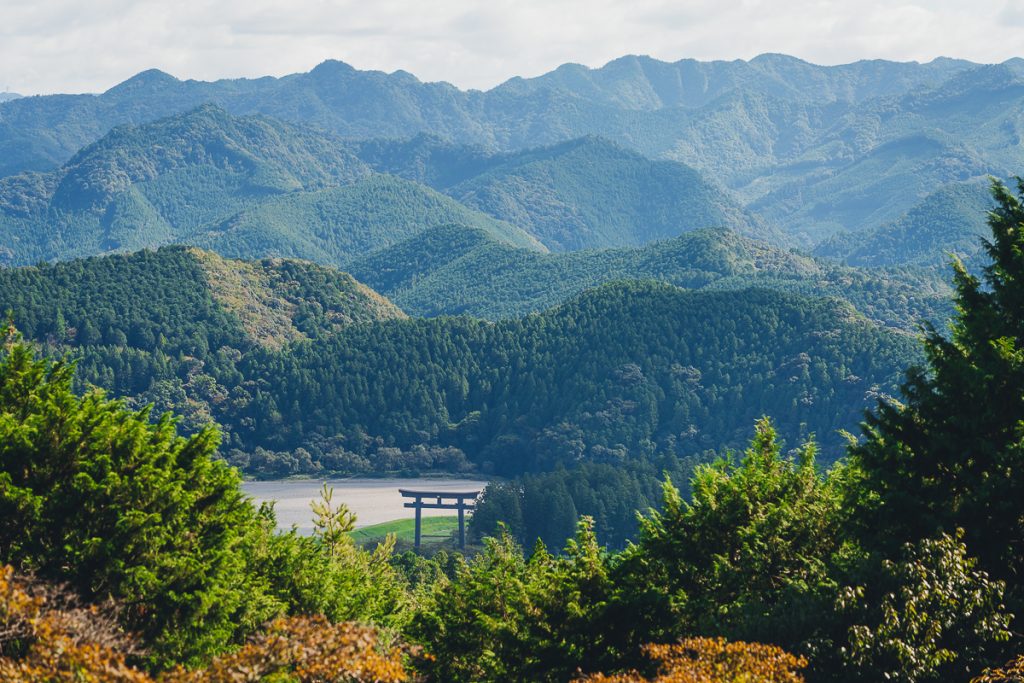
We will cover everything you need to know about hiking the Kumano Kodo pilgrimage, tips for planning, what to expect, accommodation, transportation to the trails, information about the different trails, and a first-hand account following our exact footsteps. Of course, we also cover social and environmental responsibility on the trail.
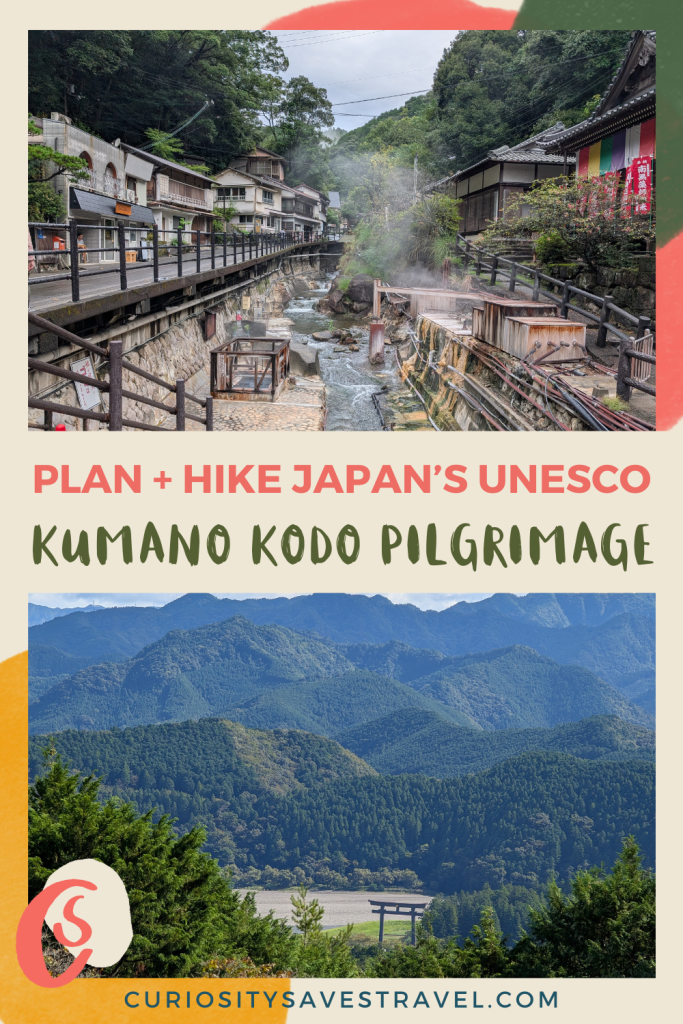
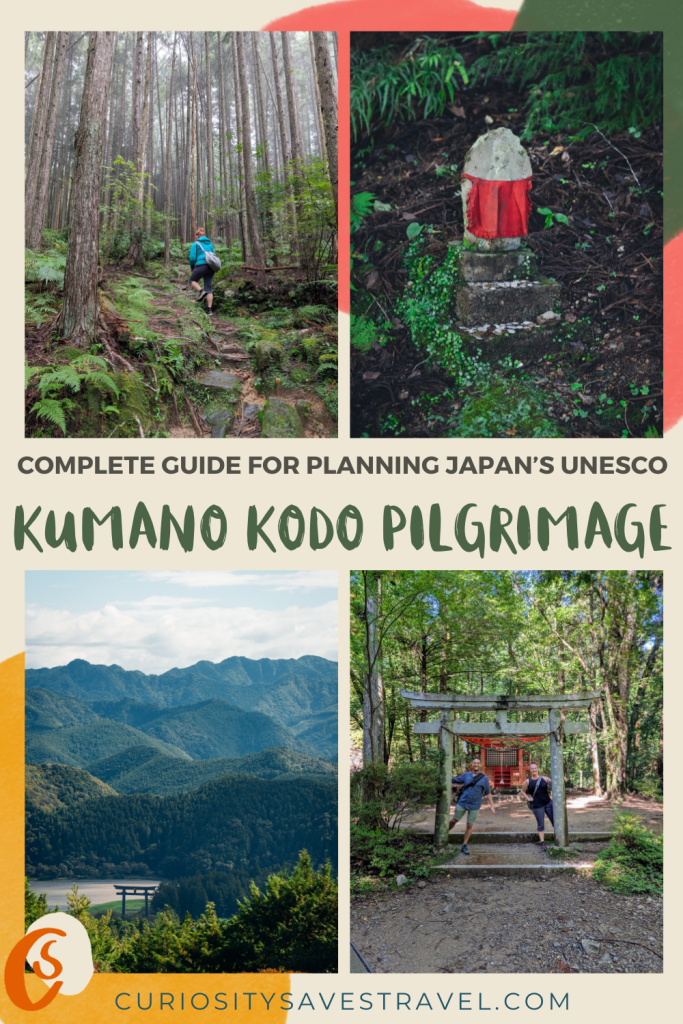
Make sure you pin this Kumano Kodo guide for planning and our itinerary.
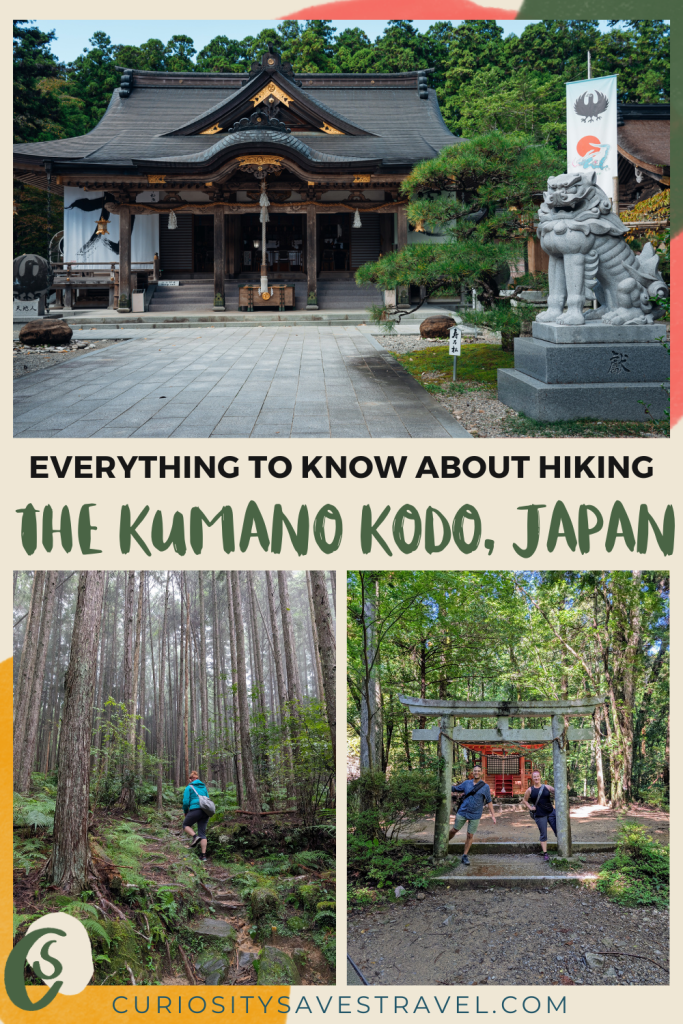
If you’ve been a follower of mine for a while, you’ll know that I am a UNESCO fanatic. Since visiting my first site at the age of two, I have been to just under 100. UNESCO sites are special places that allow us to connect deeply with our shared humanity in a way that transcends time. So when I heard there was a UNESCO-certified pilgrimage route in Japan, I knew I had to hike the Kumano Kodo!
But, when it came time to plan, we ran into a few issues:
First, the information out there was relatively scarce—a collection of hard-to-read/navigate websites, experiential travel blogs, or travel forums with a few nuggets, but nothing helpful for really planning from start to finish.
The second was that we realized, as important as hiking the Kumano Kodo was to include in our month-long itinerary, we didn’t really want to spend 5-7 days on a through-hike. We thought we could, instead, do some day hikes, taking advantage of a home base.
This made the first issue more challenging, as many of the Kumano Kodo resources, for planning, are intended for full through-hike experiences in which you stay in a different guesthouse every night.
We finally figured out how to cobble together an itinerary that let us hike a small portion while using one accommodation as a home base, so we didn’t need to hike with all our luggage. Our approach also lets us depart and return to Osaka easily, rather than hiking and ending up on the other side of the peninsula. I did a ridiculous amount of research before our trip, and I’m passing it all on to you.
- Curious about our experience hiking? Read my complete guide to trekking the Hongū Loop, including subroutes.
- Make sure you read my primer on responsible travel at UNESCO World Heritage Sites, so we can do our part to protect these incredible places for years to come.
What is the Kumano Kodo in Japan?
The Kumano Kodo is an ancient pilgrimage route in Japan. With origins dating back more than 1,200 years, the network of trails cutting across the Kii Peninsula led many faithful to shrines and temples deep in the forested mountains.
Today, the Kumano is a UNESCO World Heritage Site, one of only two on the planet—the other being the Camino de Santiago.
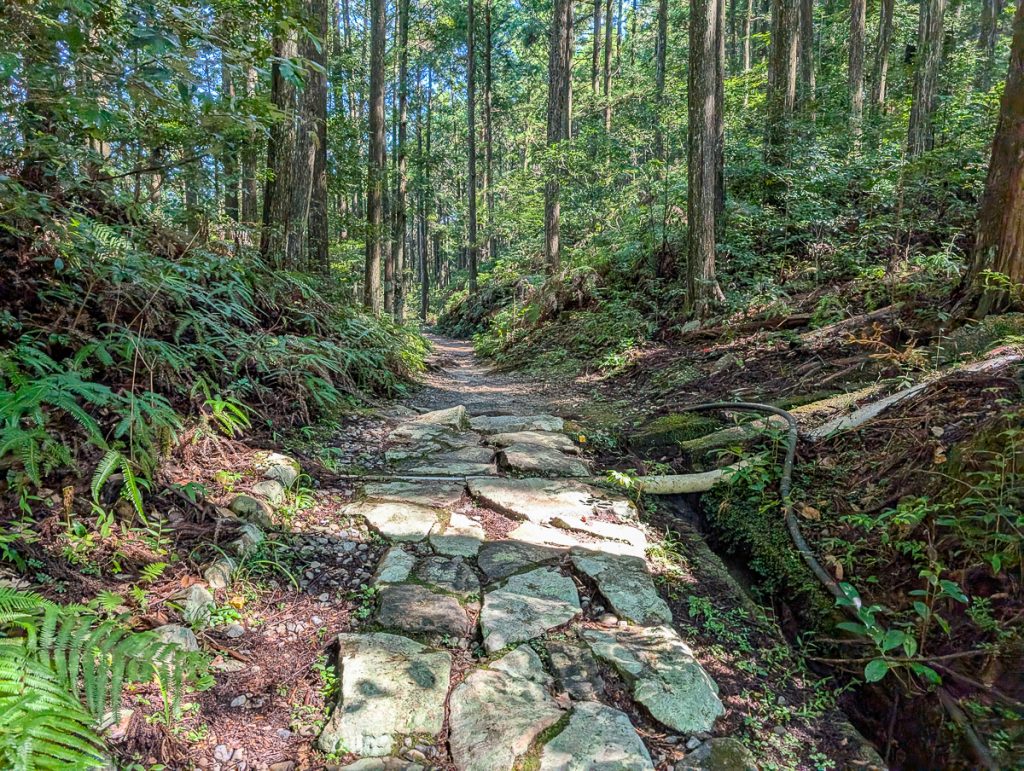
History of Japan’s Kumano Kodo
Thousands of years ago, the Kii Peninsula was a thickly forested mountain region with few inhabitants. Its beauty, with cascading waterfalls, dense forests, and hot springs, was so overwhelming mthat any believed it to be a holy place where deities dwelled.
In pursuit of this “heaven on Earth,” an Imperial noble during the Heian period (794-1185 CE) set out from Kyoto to the heart of the Kii Peninsula, establishing a pilgrimage route. Over the years, three grand Shinto shrines and the Buddhist temple of the Kumano were established.
The paths became well-trodden foot highways to the sacred sites. A unique Kumano faith proliferated, blending Buddhism and Shintoism, with deities inspired by the region’s nature. The Kumano faith was popular because, regardless of your gender, class, or physical abilities, you were welcome at the Kumano, a rarity at the time.
The insignia of the Kumano Kodo is a three-legged raven. You will find motifs and talismans of this raven called Yata-Garasu across the pilgrimage. It is said that the raven guided Japan’s first emperor, Jimmu, when he was lost on the Kumano.
With the modernization of highways in the 19th-20th centuries, the footpaths across the peninsula became overgrown—shrines and tea huts left to crumble. In recent decades, parts of the route have been lovingly restored, ushering in a new age of visitors.
Kumano Kodo UNESCO-Certification and Modern Use
Today, the Kumano Kodo attracts hikers and spiritual people from around the world who now come to embark on this trek.
It was officially recognized by UNESCO in 2004. Its designation acknowledges the blend of Shintism, an ancient Japanese belief rooted in nature-based faith, and Buddhism, introduced from China. Many of the shrines, the temple, and the paths that lead you are part of the UNESCO site. It is a well-managed UNESCO site balancing sustainable recreation and cultural preservation.
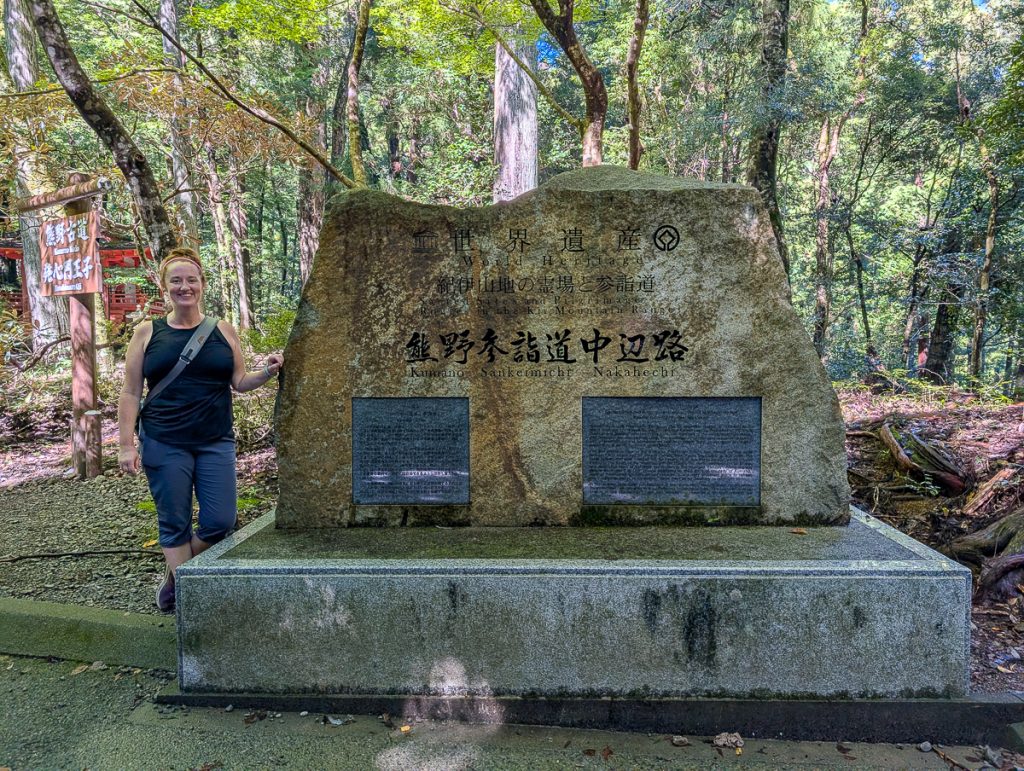
People come from around the world and across Japan to hike this pilgrimage. It is particularly popular among those who have completed the Camino de Santiago, in what is known as a dual pilgrimage.
Planning For the Kumano Kodo Pilgrimage Trek
No matter what route you choose, you will need to take the time for careful planning. Whether it is choosing the right trail and section for your ability, to making advanced reservations for accommodation, thorough packing, or navigating transportation.
Choosing a Route on the Kumano Kodo
There are 7 main routes of the Kumano Kodo.
Not all of them are commonly hiked today; some trails are now paved and part of highways, and others are difficult to reach. Not all have UNESCO status. Parts of the old Kumano routes remain hidden and overgrown.
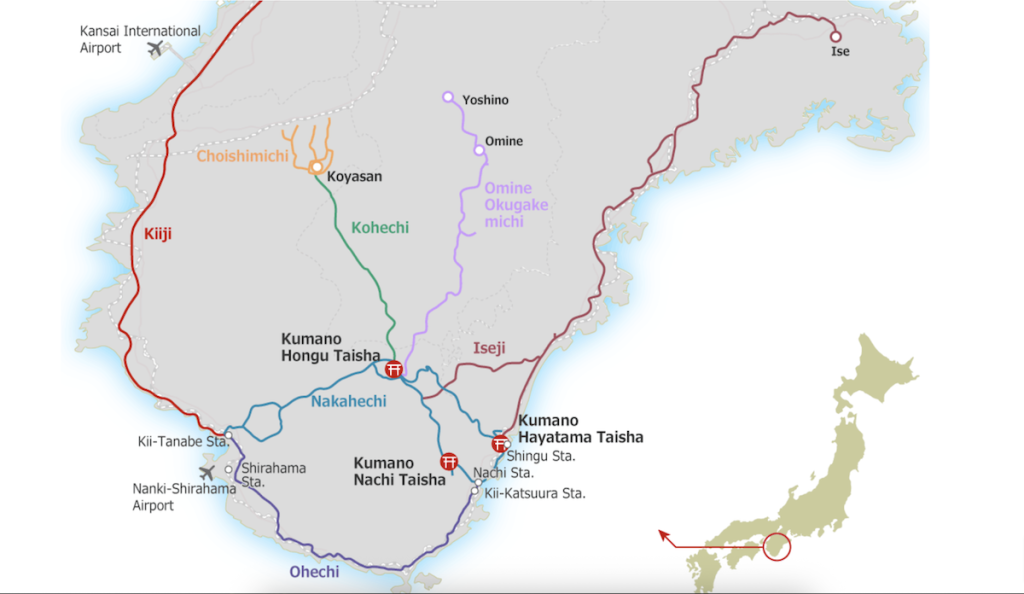
1. Nakahechi Kumano Trail (blue)
The Nakachechi Kumano route is the main ancient pilgrimage route is the most common for hikers today. The main route traverses the Kii Peninsula from Takijiri to Hongū, splitting to end at Nachi Taisha or Hayatama Taisha. It is the most developed and accessible route, with ample signage, maintained trails, tea huts, and minukushu (guesthouses).
The official UNESCO sacred trail starts at Takijiri-oji Shinto Shrine. From there, the trail continues to Hongū Taisha, one of the route’s main shrines. This leg is considered the main route.
From here, the trail forks. The most common route today follows the Kogumotori-goe and the Ogumotori-goe, ending at the Kumano Nachi Taisha (Shinto shrine) and the famous Seiganto-ji Buddhist Temple. Many continue to Shingu to end their trek.
The other branch follows the Kumano-gawa river, serviced by a seasonal boat to the Kumano Hayatama Taisha. This was typically taken by pilgrims via a boat, who would then double back to finally reach Nachi Taisha.
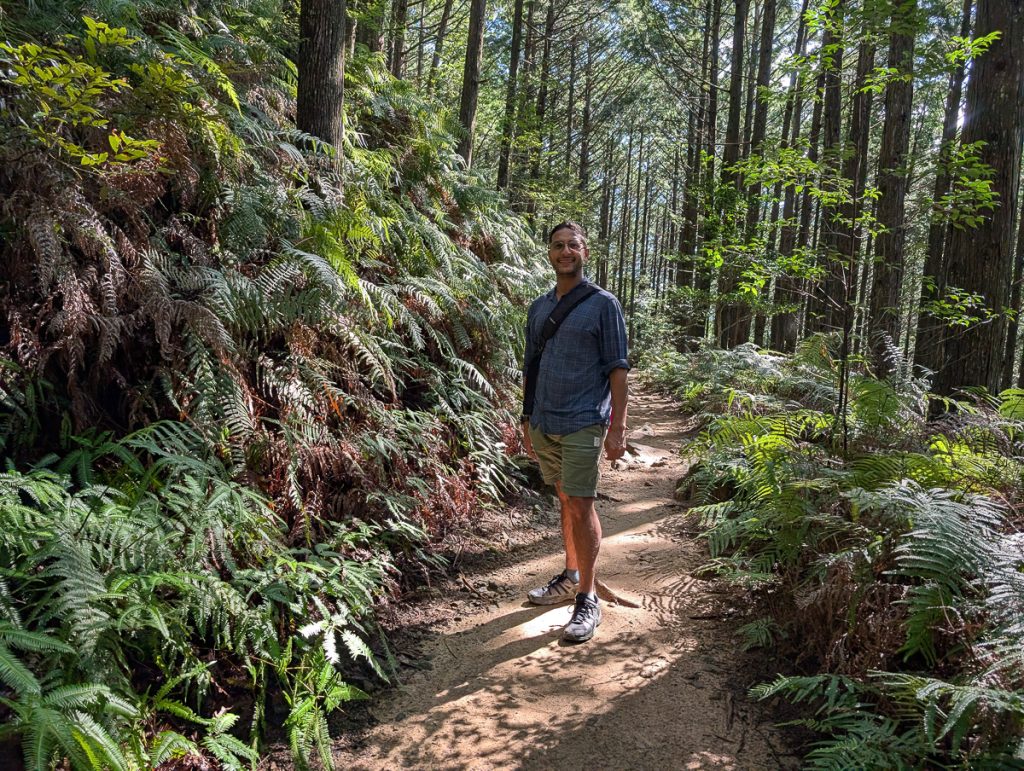
Subroutes
There are a few diversions along the main Nakachechi route. The Akagi-goe and Dainichi-goe sub-routes lead to or from the Yunomine Onsen. The onsen is where many pilgrims would do purification rites before entering the main Hongū Taisha shrine. To take these routes, you will likely take the Akagi-goe junction to visit Yunomine Onsen, before continuing the Dainichi-goe to Hongū Taisha.
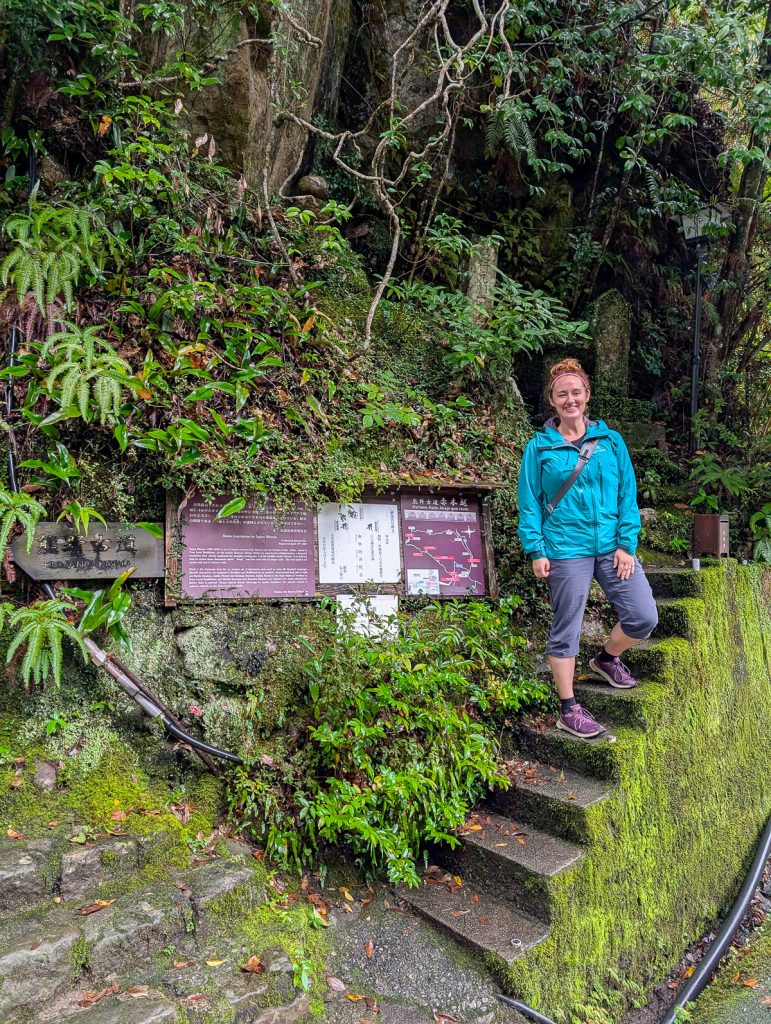
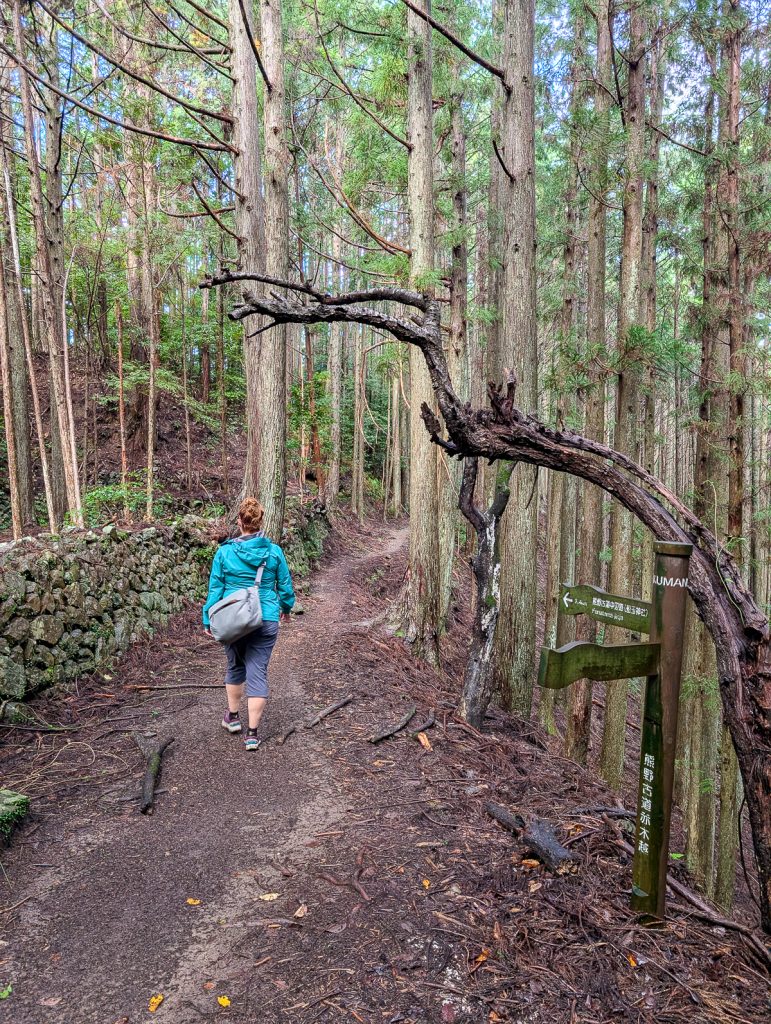
It is common to hike the entire route from Takihiri-oji to Nachi over 5 days, or to take segments of the trail, ranging from a day hike to 4 days to complete.
2. Kiiji Kumano Trail (red)
The Kiiji route was historically used by the imperial family to travel from the capital at the time, Kyoto, to the Kii Peninsula, where they would begin their sacred pilgrimage.
Today, it is mostly paved and rural roads. It is not common for visitors to hike this route, and it is NOT part of UNESCO.
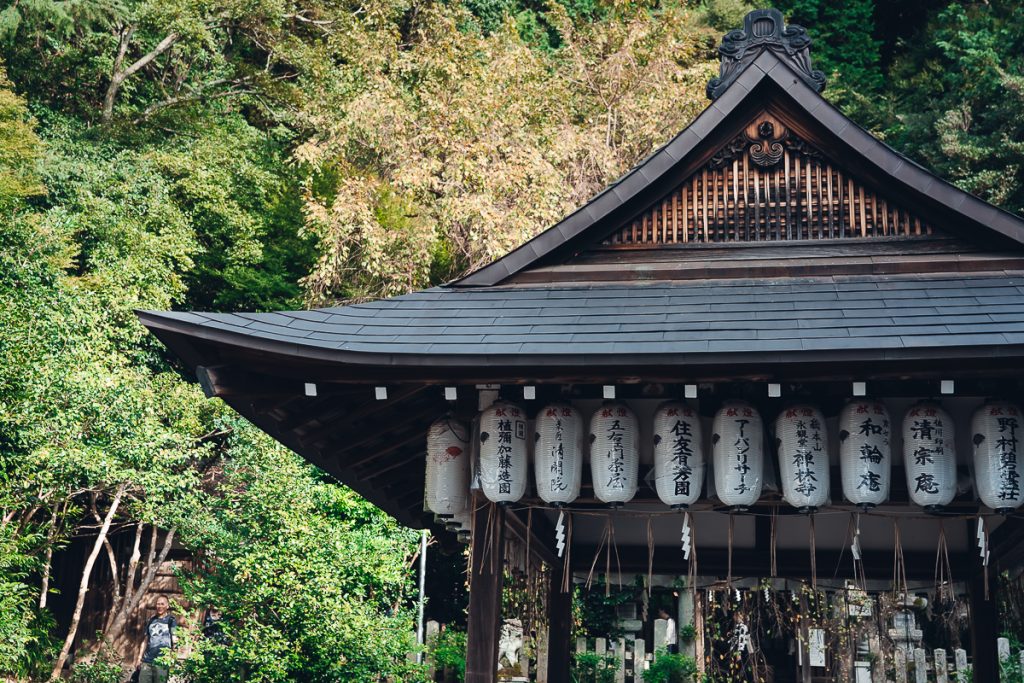
3. Ohechi Kumano Trail (dark purple)
The Ohechi route follows the southern coast. The trail is more of a modern development (like the 1500s) to avoid crossing the mountains. This route, while offering stunning ocean views, follows some paved roads and some stone and dirt walking paths through the forest.
Signage is limited, especially signage in English. You should only embark on this route if you have Japanese language and basic navigation skills.
4. Kohechi Kumano Trail (green)
The Kohechi route branches north from Hongū Taisha and takes pilgrims across four mountain passes, totaling 1000m in elevation, to Mt. Koya. This route is traditionally hiked by Buddhist monks on a sacred pilgrimage.
This hike can take 4 days and requires overnight stays with advanced reservations; it is ideal for experienced hikers and those comfortable with travel in Japan.
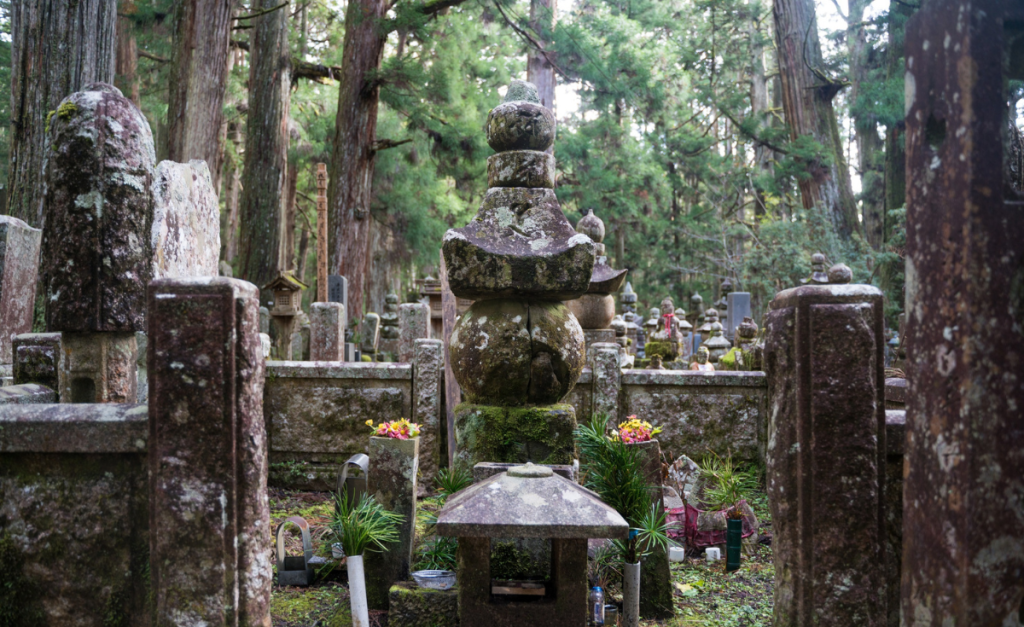
5. Choishimichi Kumano Trail (yellow)
An alternative way to reach Mt. Kōya is to approach from the North along one of the Koyasan routes, which includes Choishimichi. This route starts in Kudoyama and is another steep hike.
It can be easily connected to the Kohechi route to reach Hongū Taisha from Kudoyama.
6. Omine Okugakemichi Kumano Trail (light purple)
Another route departing from Hongū Taisha. The route climbs up to Mt. Ōmine, a high-elevation summit. There is heavy snowfall here in winter.
This pilgrimage is typically completed by the Shingon Buddhist sect, which performs many religious processes along the way. This mountain is sacred to Buddhist faithful. While the Kumano Shinto practice welcomes women, they should avoid the mountain itself, as they are not allowed to enter this Buddhist holy site.
This should only be completed by experienced mountaineers and those familiar with rural travel in Japan.
7. Iseji Kumano Trail (maroon)
Finally, the Iseji route connected Ise to the ancient pilgrimage route. This is the longest route and may take up to two weeks to complete. The route combines paved roads, stunning ocean views, moss-covered cobblestones, steep forested climbs, and other diverse terrain.
It is broken into sections, with a map for each leg of the long trek.
Which Kumano Kodo Route Should You Hike?
For foreigners and first-time visitors, I suggest hiking any part of the Nakahechi Route. This route has the most infrastructure, accommodation, signage, and some English resources.
You may choose to do the whole through-hike from the start at Takijiri-oji Shinto Shrine to the end at Kumanio Nachi Taisha over 5-6 days.
Alternatively, you may opt to complete only sections of the trail. Common ones include:
- Starting in Takijiri, ending at Hongū Taisha, over 3-4 days
- Bus to Hongū Taisha and hike from there to Kumano Nachi Taisha over 4 days.
- Day-hike from Takijiri to Chikatsuyu with one night in Chikatsuyu.
- Day-hike the Hongū Area, including the Akagi-goe and Dainichi-goe subroutes, with 2 nights in Chikatsuyu (this is what we did!).
- Experienced hikers and those comfortable with rural travel in Japan with language proficiency and backcountry experience may opt to summit Mt. Koya as an alternative to Hongū Taisha.
Kumano Sanzan (Sacred Sites)
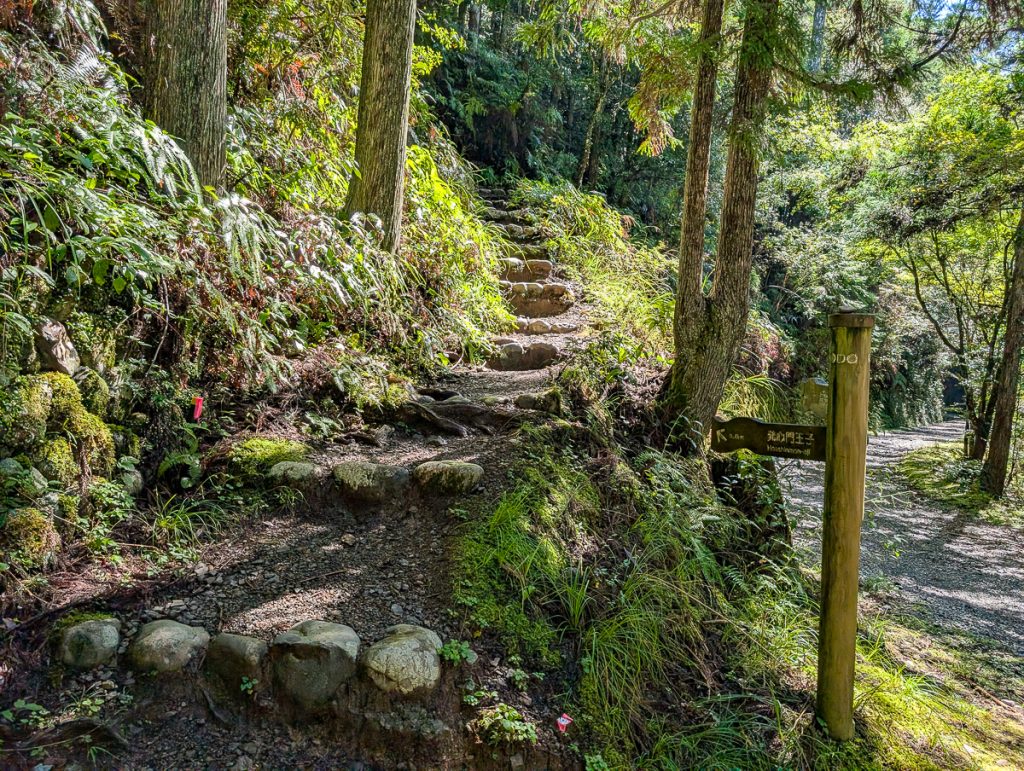
As part of the UNESCO pilgrimage route, there are a few major sites, shrines, and temples in the Kii Peninsula. Most of them can be reached from the Nakahechi Route. These are collectively known as the Kumano Sanzan.
- Takijiri-oji Shinto Shrine – The official start of the UNESCO sacred Kumano route. Many pilgrims start their journey from here.
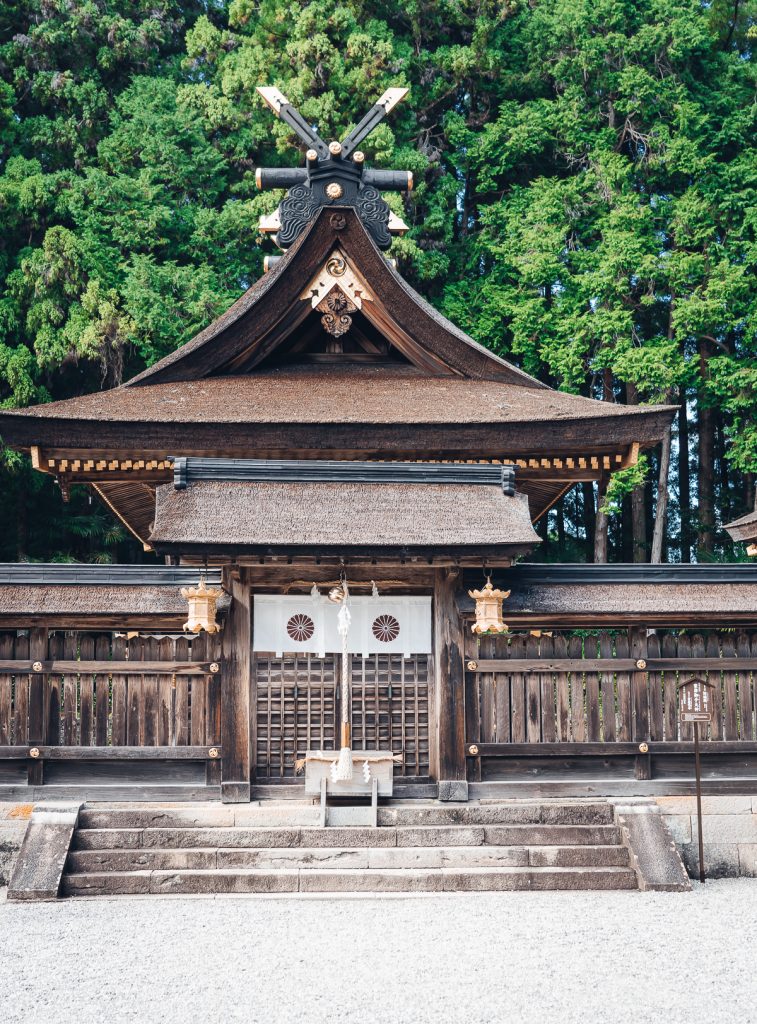
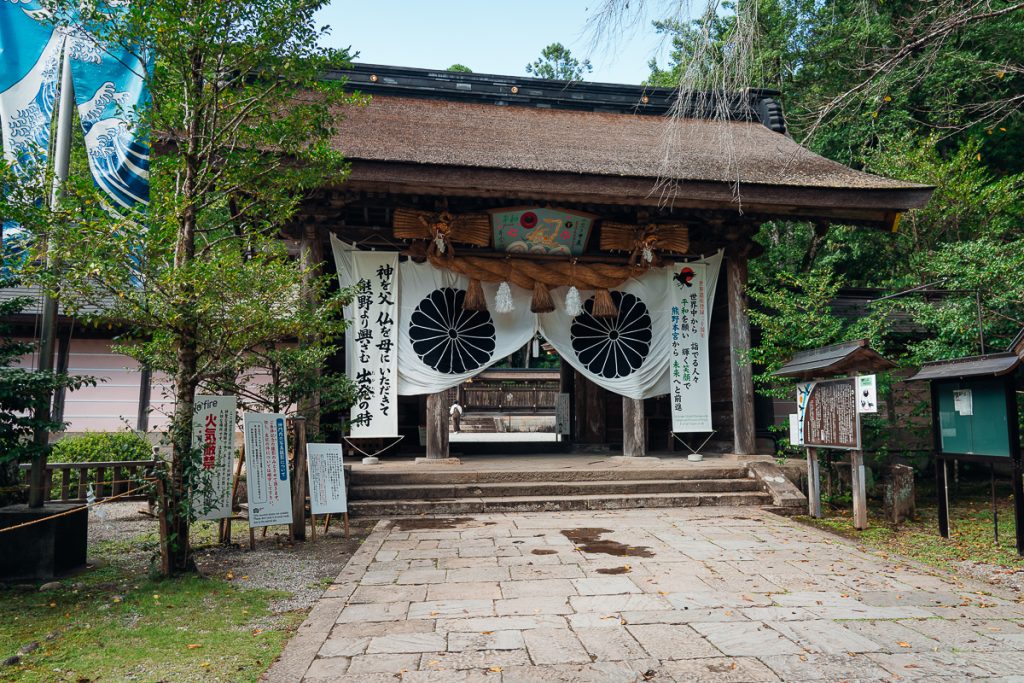
- Kumano Hongū Taisha – A main shrine complex and major UNESCO site. This is the first major Shinto Shrine along the Nakahechi.
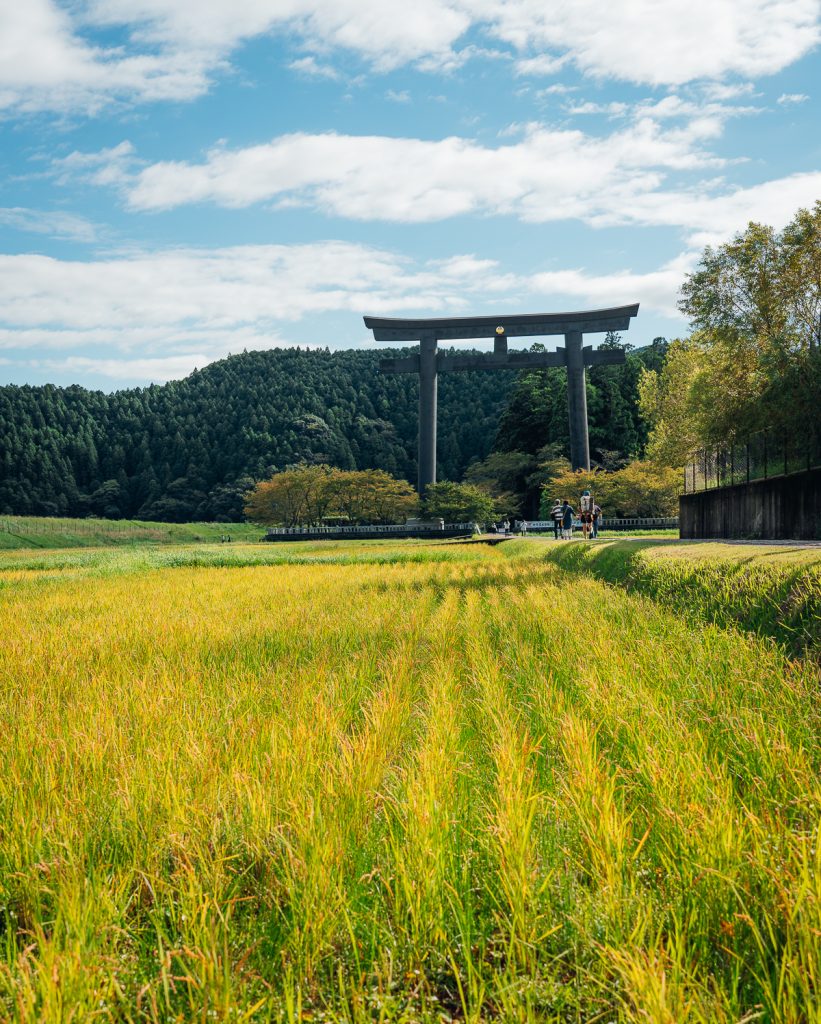
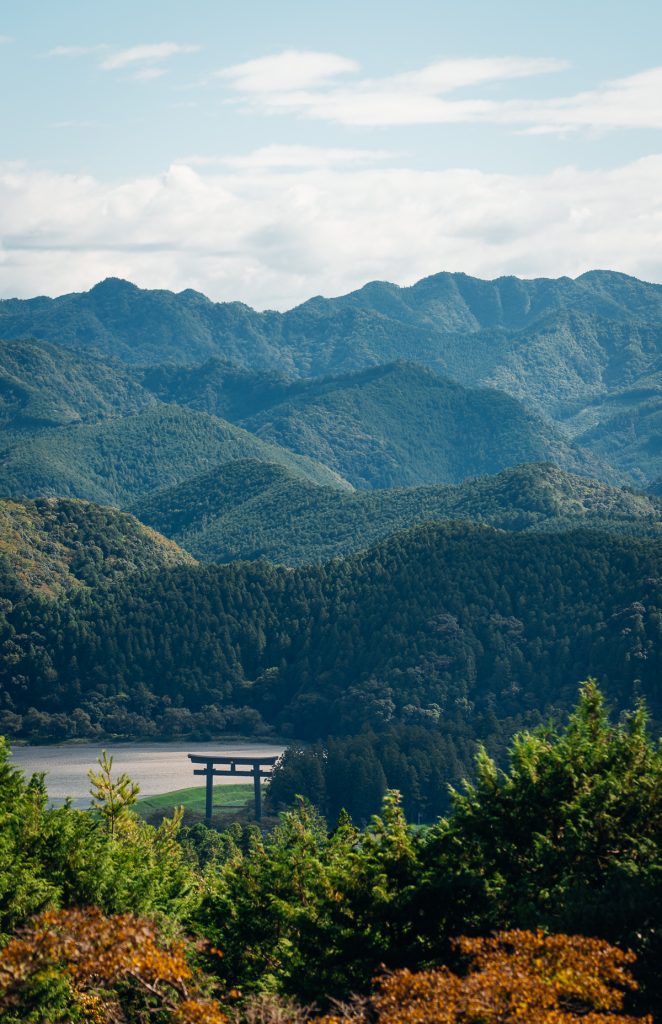
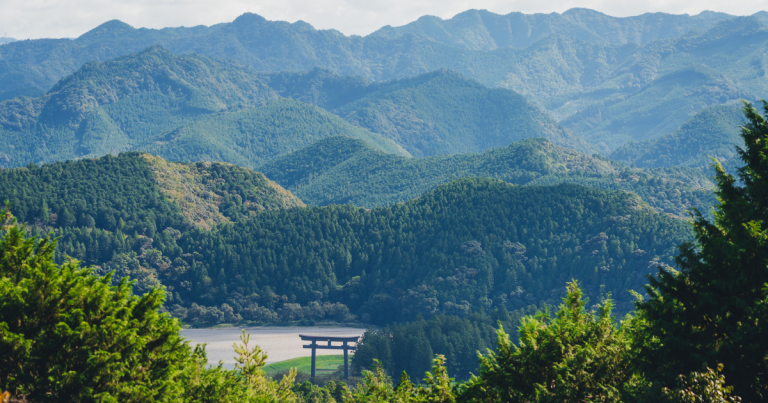
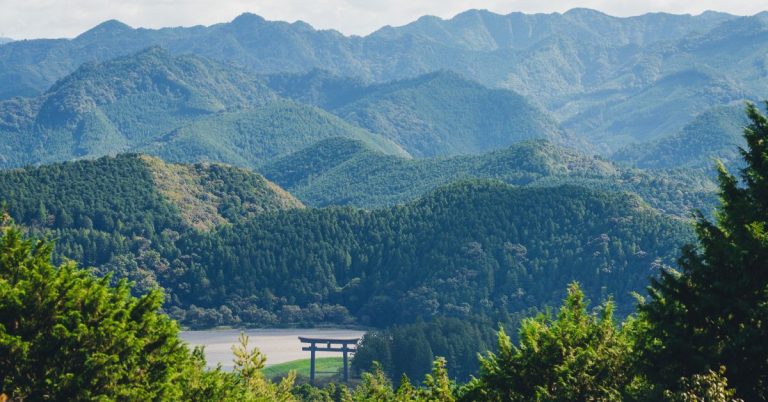
- Don’t miss the Oyunohara Gate – Japan’s and the World’s largest Torii Gate.
- Kumanio Nachi Taisha – Another Shinto shrine at the end of the Kogumotori-goe branch of the Nakahechi.
- Kumano Hayatama Taisha – A Shinto shrine at the end of the Kumano-gawa branch of the Nakahechi
- Seiganto-ji Buddhist Temple – In the same area as the Kumano Nachi Taisha, this temple features a 3-storey pagoda and a stunning waterfall.
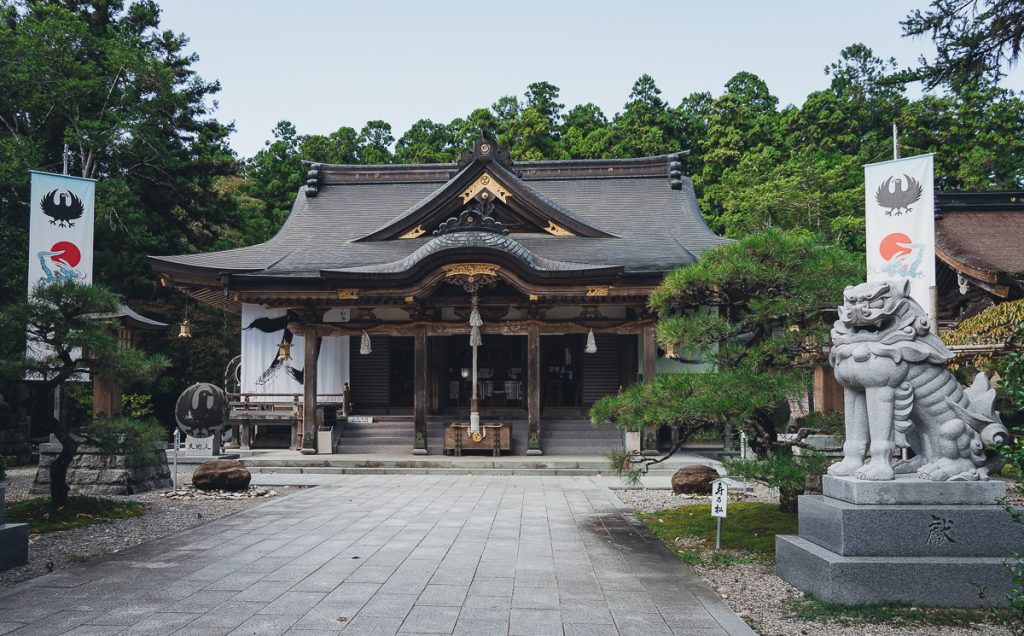
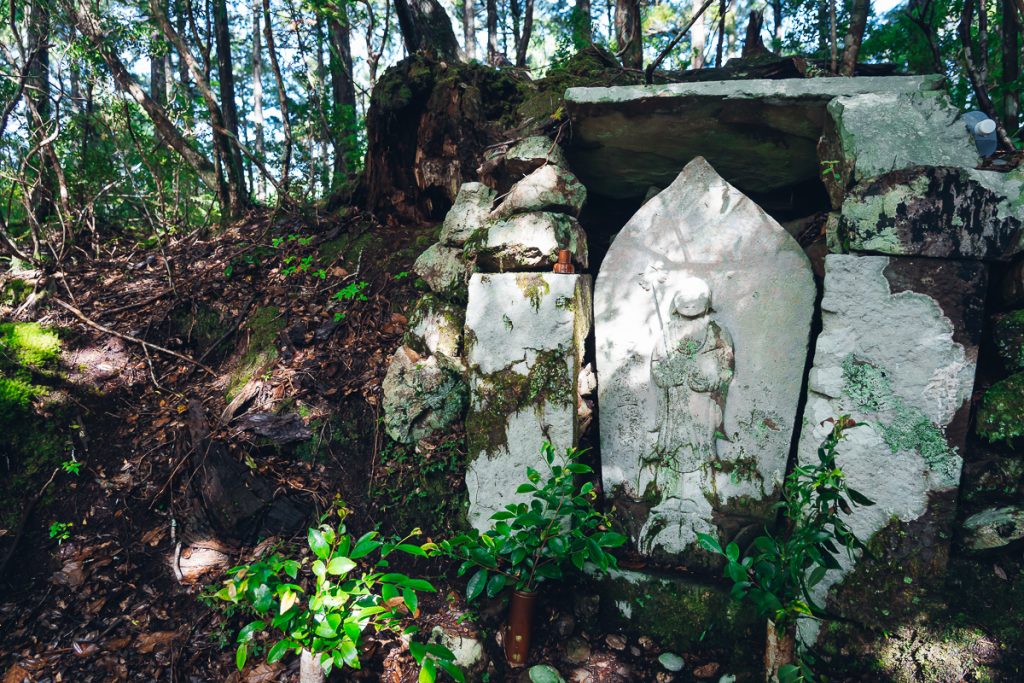
Along every route and hike, you will find Oji Shrines. We came across many small shrines for purification and reflection. They are typical of Shinto shrines across Japan, with the ropes, tassels, and Shide (lightning bolts).
Do You Need a Guide for the Kumano Kodo
There are three main ways to tackle a Kumano Kodo hike. Most people will hike this independently, relying on maps, help booking accommodations, and using suggested itineraries from Kumano Travel. Others will plan their own itinerary and make their own bookings.
However, there are some English-speaking guides and companies you can book if you want more personalized, local assistance.
1. Fully Independent
We planned our Kumano adventure 100% ourselves. We handled our route, itinerary, accommodation booking, food, logistics, and everything else. We did use Kumano maps, but that is about it!
I don’t know if I recommend this option for everyone, to be frank. It is a logistically challenging experience. This is ideal for those just doing a small section or day hikes, who are confident travelers and don’t mind a little extra stress!
2. Self-Guided, but Assisted with Kumano Travel
The Kumano Travel website is a great resource (it has even improved since we hiked the trail last year). Here you can find assistance with self-guided and recommended itineraries, accommodation, food, and luggage packages.
If you want the independence of walking on your own every day, but don’t want the stress of making sure you have a place to stay every night, carrying your own luggage, or finding food, this is for you.
You can choose from optimized routes for anywhere between 3 and 7 days!
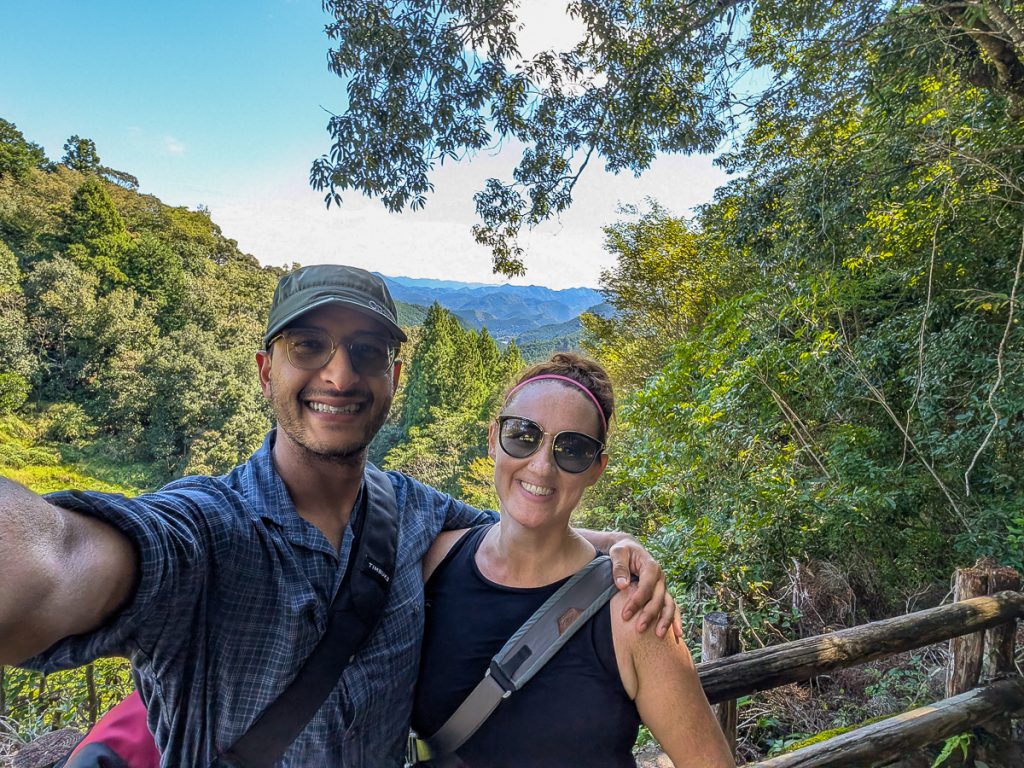
3. Guided Hike
A few companies offer certified guided experiences on the Kumano. With small groups, you can join a local guide on an epic pilgrimage across the entire Kii Peninsula!
Kumano Travel also has a few guided hikes with local guides.
Accommodation on the Kumano Kodo
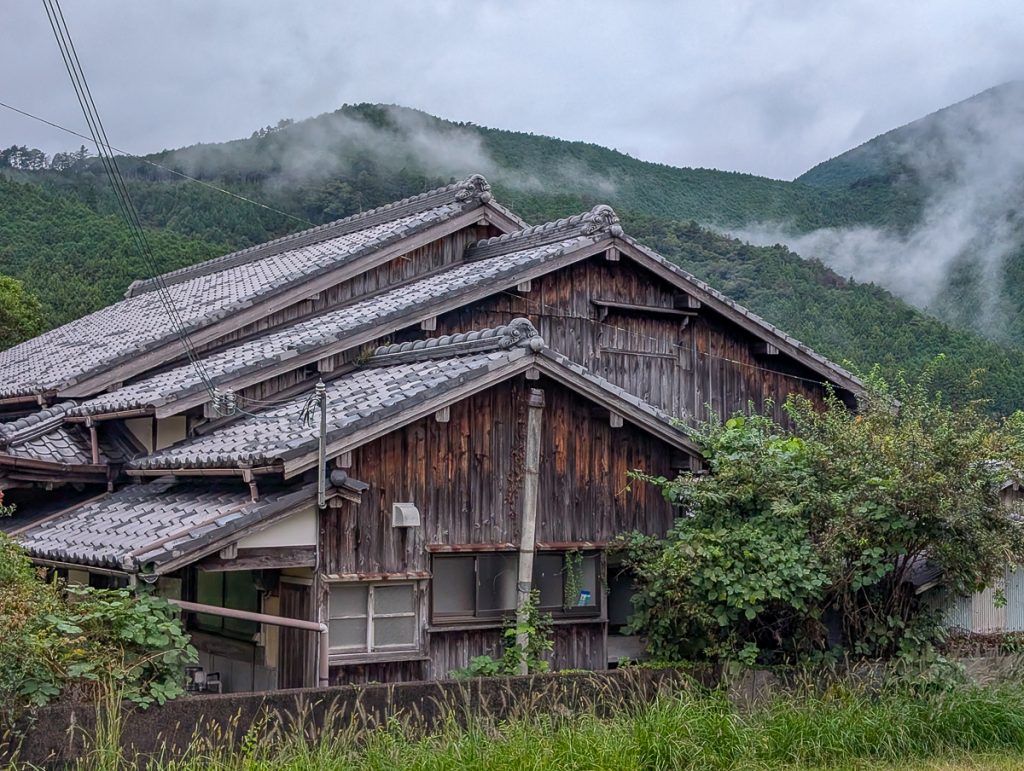
You cannot walk the Kumano Kodo without having pre-booked a Minshuku (local accommodation or homestay). The Kii Peninsula and the network of trails have limited hospitality options. You should not head out assuming you can hike and find a place to crash on a whim. This is considered rude in Japanese culture, and you are likely to find most places booked.
If you are hiking the trail independently, you will need to reserve your own accommodation in advance. Once you have an idea about the dates you wish to hike, you will make sure you can secure accommodation along the route, so you aren’t left high and dry.
There are two ways to make bookings.
- Use a booking platform: Booking.com is a great resource. We found our accommodation on Booking. Perfect for fully independent travelers.
- Use the Kumano Travel website, which offers a reservation system with more options available for booking. If you want luggage and food packages, you must book through this service.
In order to use the Kumano Travel website, you must first register for an account. From there, you can submit a request to book a Minshuku. It will take a few days to get a reply. Once you are confirmed, you can then pay and officially book your accommodation.
If you do not want to hike the trail independently and want more guided assistance, you can find more resources on Kumano Travel.
What are Accommodations Like?
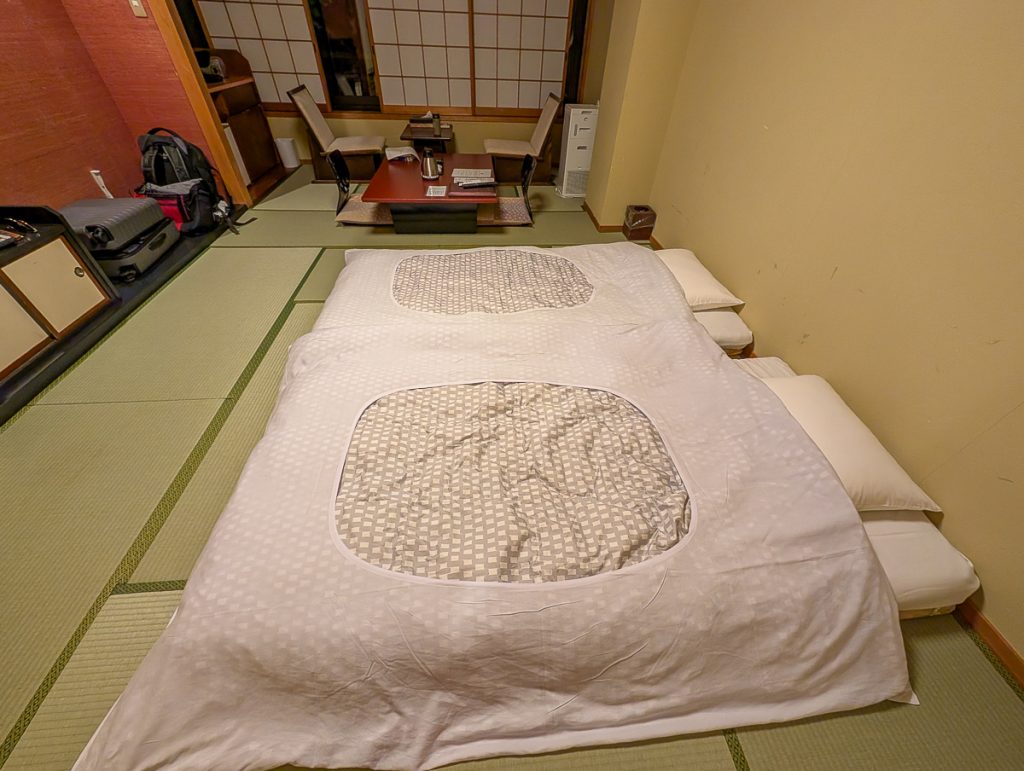
Minshuku are similar to guest houses or homestays in other rural mountain areas. You will typically sleep on a futon bed or a small single bed. While you will have your own private room, it is likely you may share common bathroom areas and meals.
It is customary for guest houses to serve dinner in a communal dining area, where you will eat your meals at 18:00.
If you have not booked a Minshuku, there are designated campsites for those carrying tents. You cannot wild camp, but there are designated campsites where you can pitch your own tents.
Some more modern accommodations include where we stayed, a mountain glamping site for modern, independent accommodation.
Where We Stayed on the Kumano Kodo
We considered booking through the Kumano Kodo Travel website. But, decided on an independent stay for a few reasons. We are vegetarians who wanted more independence regarding time restrictions, and wanted a single home base to do day hikes. So, we decided to find and book our own stay.
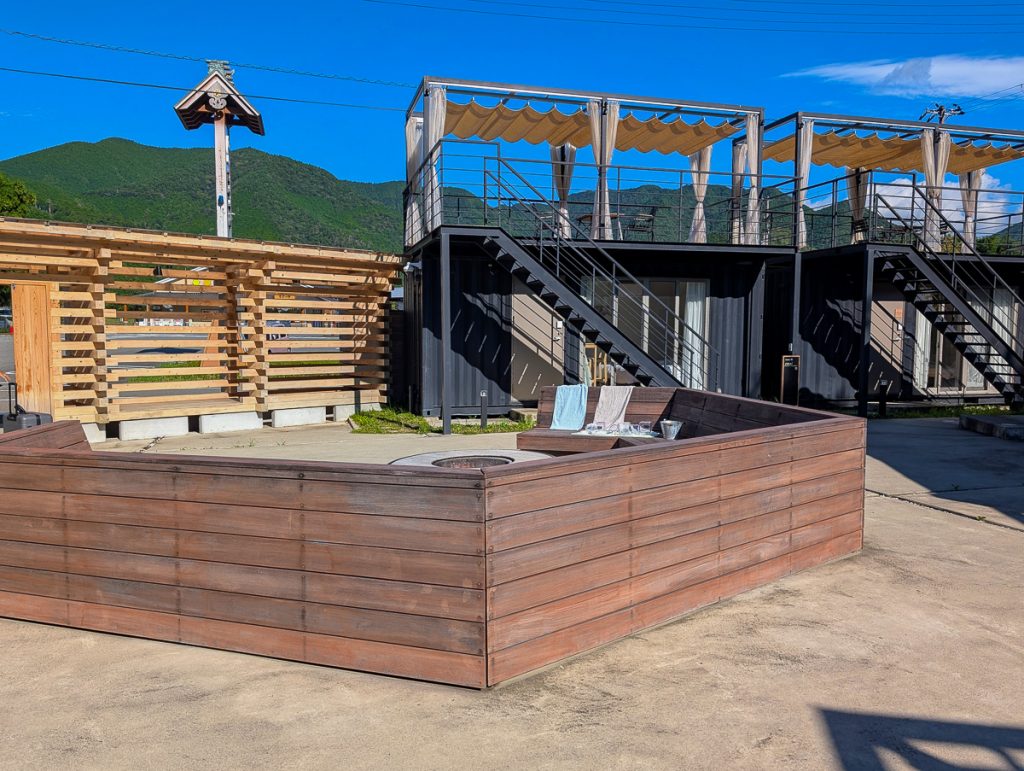
We settled on a new and modern accommodation called Sen. Retreat Chikatsuyu. This was a really cool concept, but as a new place, it still needs a bit of fine-tuning.
The owners have converted old shipping containers into little mountain retreats. These are modern, eco, clean, cozy, and cute! There are communal spaces including a fire pit, BBQ, pizza oven, and more.
What We Liked
In the small village of Chikatsuyu, there are amenities such as a bakery, a supermarket, and a bus stop. The cabins were well-stocked, including a small kitchen, a washer, a spacious sleeping area, and a nice shared outdoor space.
It was modern and perfect for independent travelers. Since we weren’t guests in anyone’s home, we could arrive and depart as needed for hiking on our own schedule. Food packages included vegetarian options for pizza, sandwiches, juice, and more.
We enjoyed hanging around the campfire with other travelers after a day of hiking, and the comfortable outdoor space.
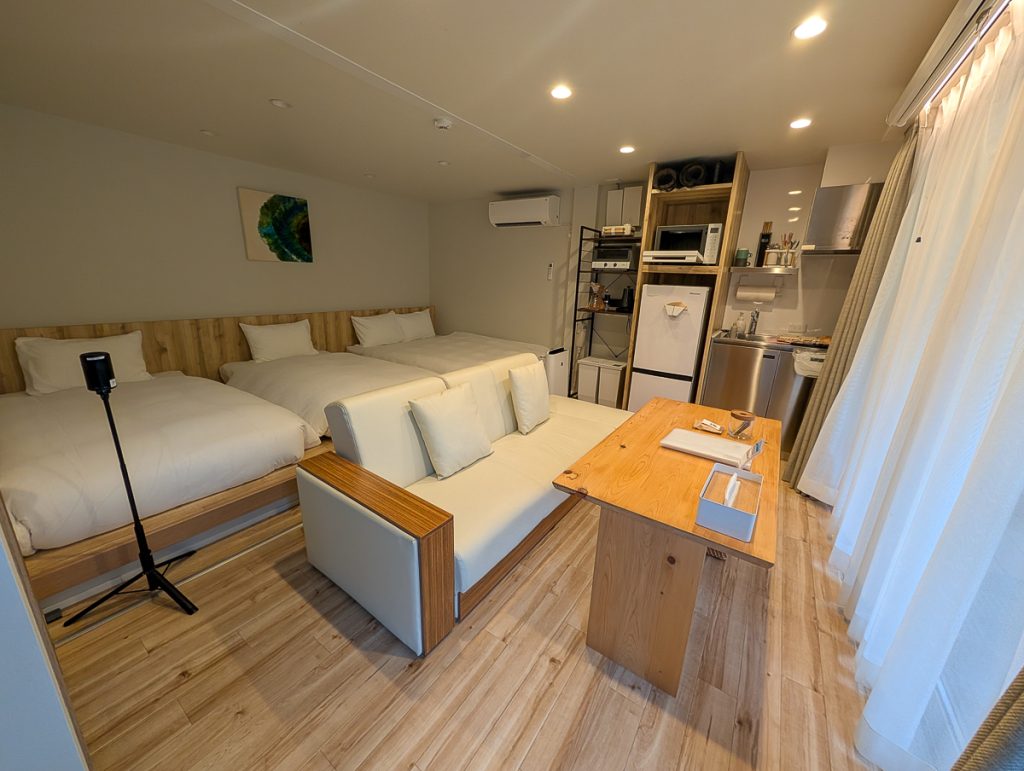
I recommend this for independent travelers who want a home base and use the central location to hike portions of the Kumano, catching a bus back to your retreat nightly.
Some of the Challenges
It is the ideal location for a slow mountain escape. The place is stocked with Chemex coffee gear; enjoy a slow morning making breakfast and making-your-own-pizza-oven pizza for dinner. Unfortunately, we had plans to wake up early, hike, and catch a bus, so making a Chemex or using a pizza oven was more involved than we wanted.
Check-in is done digitally on a tablet while video calling a representative. If you are not tech-savvy, this can be a little awkward. That also means staff isn’t on-site if you need anything.
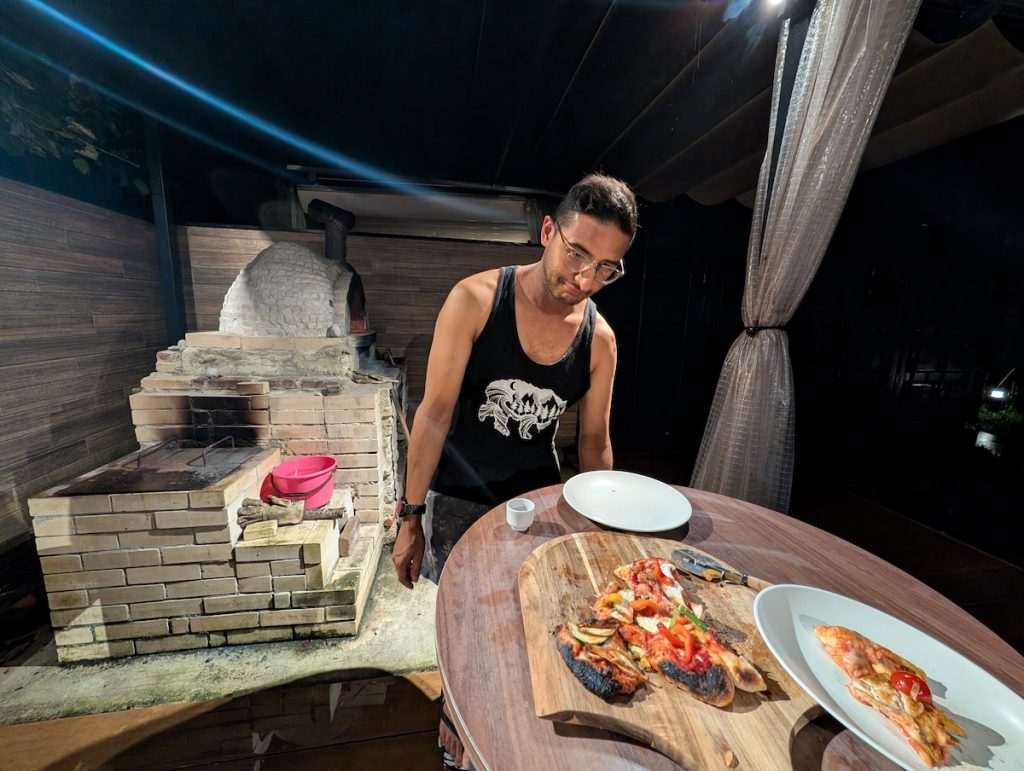
I do not recommend this for those who want a classic Kumano experience, staying in guest houses and moving daily.
How Far in Advance to Book Accommodation?
We booked over a month in advance, and already some of the accommodations were looking full, and it wasn’t even peak season. I would suggest making all your accommodation reservations over a month in advance, or earlier if possible.
If you are working on a longer itinerary, the availability of accommodation and certain dates at the Kumano may determine dates for other sections of your itinerary.
Luggage Transfers for the Kumano
Some people prefer to hike light and have a courier pick up their luggage from Minshuku, delivering it to their next Minshuku. In order to take advantage of the official Kumano luggage service, you must book your accommodation through Kumano Travel. Otherwise, you will have to carry all your belongings.
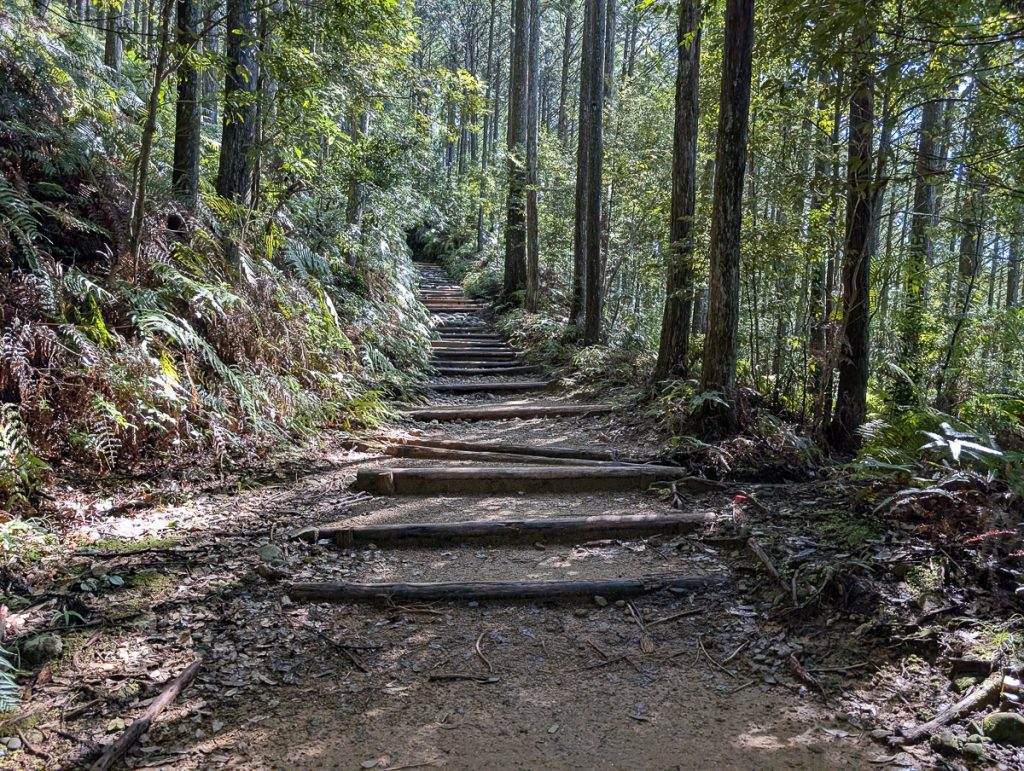
This was one of the main reasons we opted to do day hikes from a central home base. We were in Japan for a full month, and while some people come to Japan just to hike the Kumano with hiking packs and gear, we didn’t want to carry our luggage in travel backpacks. Or use the luggage transfer.
How to Get to and Around the Kumano Kodo
Getting to the start of the Kumano Kodo will depend on which route you have chosen to hike and which section of which route you choose. For example, if you are hiking the Choishimichi trail, you’ll head to Kodoyama from Osaka.
However, since most hike the Nakahechi Route or some section of it, I’ll talk about getting to the start of the main UNESCO sacred path at Takijiri-oji Shinto Shrine.
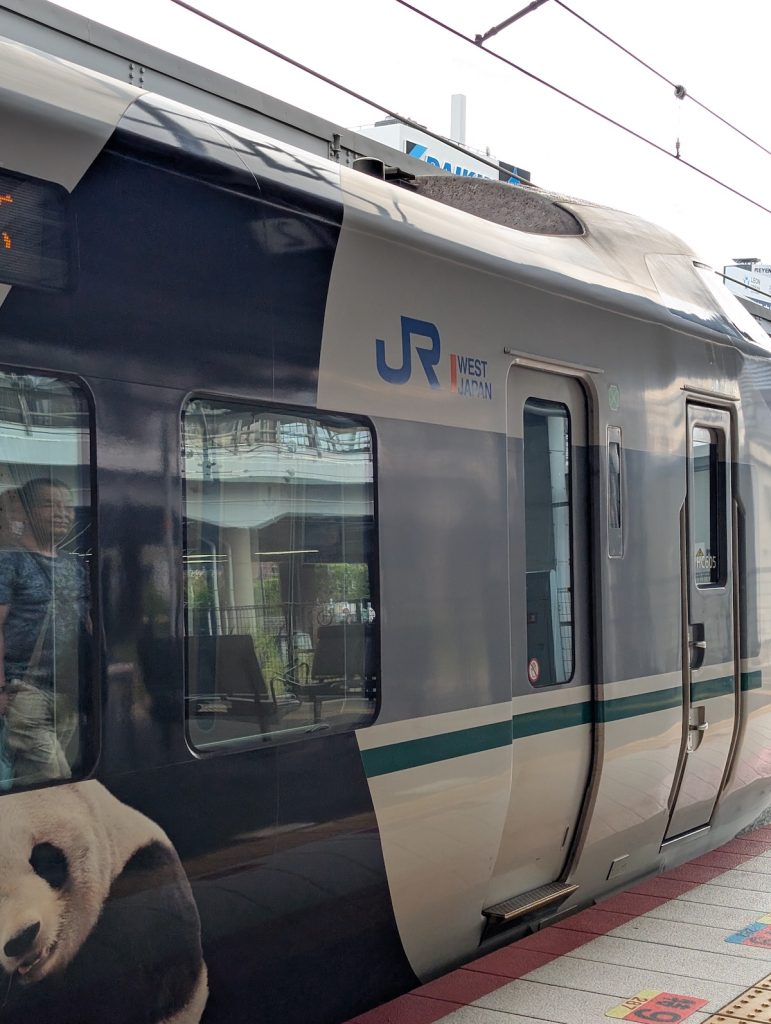
The main hubs for starting your Kumano adventure are Osaka or Kyoto. You will catch a train to Kii-Tanabe and then take the Kumano bus to your planned stop to start your hike.
Train Travel and Reservations
The first portion of your trip may be covered under the JR Rail Pass if you have it. However, it is very important that you ensure you have limited express tickets. This is not the same as having a basic fare ticket.
You must purchase your basic fare, and then a limited express. While they can be combined into a single ticket, you may sometimes have 2 tickets. Limited express is an additional, mandatory surcharge ticket required to ride fast, long-distance, and comfortable trains other than the Shinkansen.
Leg 1 (Train): Kyoto – > Osaka
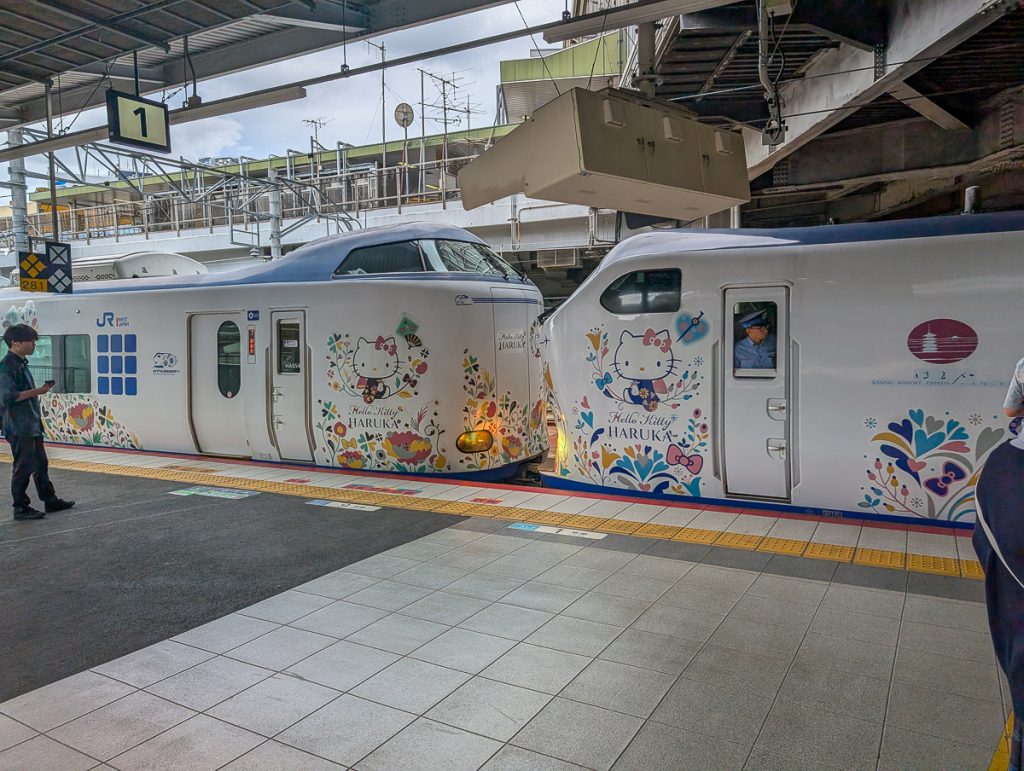
If you are starting in Kyoto like us, you’ll want to catch the first Shinkansen (the JR Haruka Limited Express is an alternate) to Shin-Osaka in the morning. This train is about 20 minutes. If you are starting in Osaka, skip to the next section.
Leg 2 (Train): Osaka – > Kii Tanabe
From Osaka, you will ride the limited express train Kuroshio until Kii Tanabe station. This is covered in the JR Rail Pass, but it is a limited express service. This is a fast train that snakes along the coast of the Kii Peninsula.
The train from Osaka to Kii-Tanabe takes about 2.5 hours. Once at Kii Tanabe, you will transfer to a bus system. There is a visitor center at Kii Tanabe if you need additional support or have questions about the local bus system.
*Note: Tanabe and Kii Tanabe are different stations.
Bus Fare and Rides Across Kii Peninsula
Once you arrive at the Kii-Tanabe station, exit the station and head directly to the bus depot to wait for your bus. Some suggested itineraries have you staying in Tanabe overnight. If that is the case, you will head to your accommodation and catch the bus the following day.
The local Kumano buses will connect you from Kii-Tanabe to the start of the trail or to your accommodation. It can also be used in a pinch if you are hiking a portion and want to give your legs a break, catching it at a few stops along the way.
To find the right bus number and the timetable, click here.
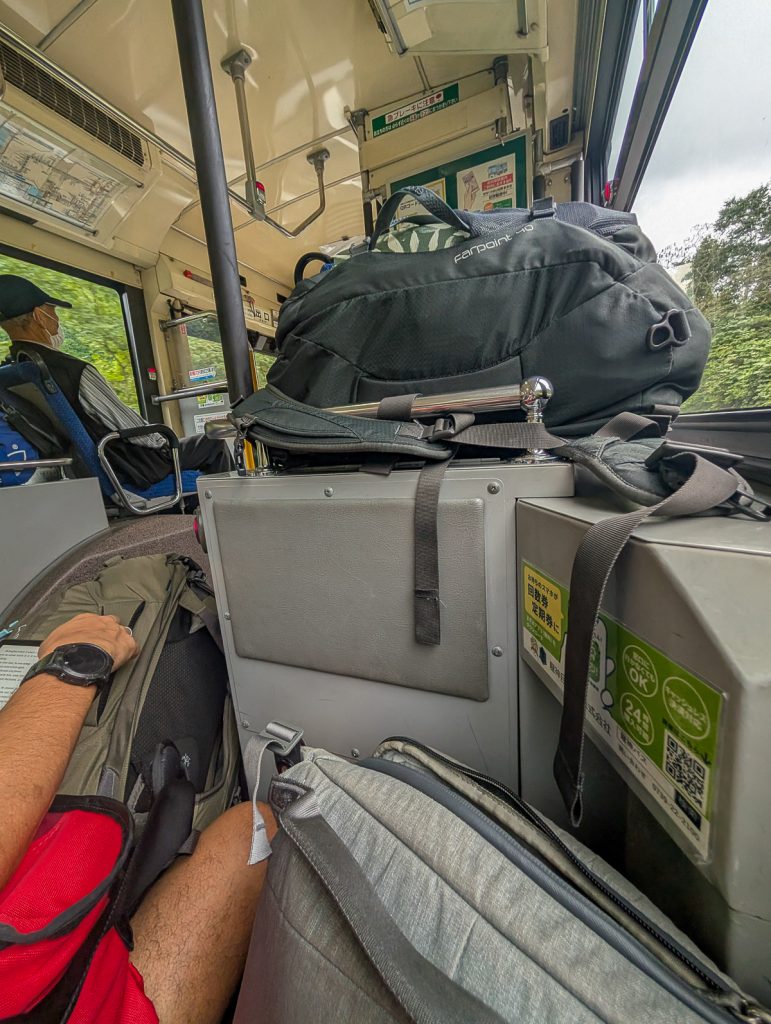
We used the local Kumano buses on several occasions to get to and from different trailheads and back to our accommodation. Because we were using it frequently, we bought a multi-day unlimited bus pass.
I am not going to lie: the single-passenger bus fare in this region is confusing and complicated. It requires you to pay in exact cash after doing math to calculate your own fare based on the number of stops you ride. If you still want single bus tickets, this guide might help. So many foreigners were holding up the local bus system as they frantically tried to figure out how to pay and how much exact cash to bring. Don’t be those people.
If you are going to use the bus more than once or over more than a day, I suggest you get the 4-day unlimited rides pass for the Ryujin Bus Kumano. Trust me, get the unlimited bus fare! Use your smartphone to show the driver your pass, ride, and relax.
The unlimited bus fare only covers the Kumano bus line. There is an alternative rapid bus that may be more convenient for reaching major sites. But it is not covered in the unlimited pass.
Leg 3 (Bus): Kii Tanabe -> Takijiri-oji
From the Kii Tanabe train station, you will board the right bus heading to Takijiri. You can find the bus timetable and route here.
The bus ride into the mountains is long, winding, and slow. Sit back and enjoy. If you are disembarking at Takijiri, the official start of the sacred Kumano route, you will get off at your stop! The Takijiri stop is worth a visit before heading out on your hike. Here, you will find one of the main shrines and the Kumano Pilgrimage Center. Don’t forget to get your stamp book here!
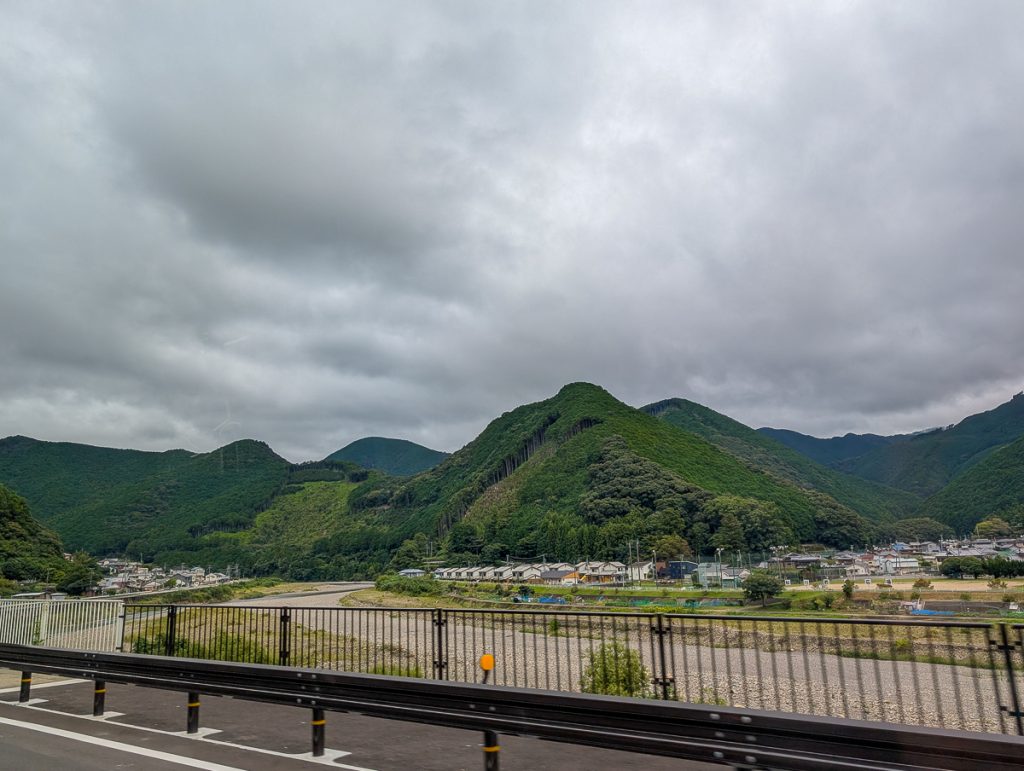
Many people will start their hike immediately after reaching Chikatsuyu in the afternoon.
When is the Best Time to Hike the Kumano Kodo?
We hiked the Hongū Area and subroutes of the Kumano Kodo in early October. While, of course, this is my only experience, it was pretty amazing! Early October is a shoulder-season lull in Japan, between the start of autumn colors and the end of summer school holidays.
We dealt with a bit of rain here and there, so you should have proper rain gear and hiking shoes for mud. But we also had sunny days! Overall, the weather wasn’t too hot, too cold, and the crowds were low! We were able to book an accommodation, and had many of the trails to ourselves.
Other times to visit would be a spring shoulder season, like May or June, after cherry blossom season. The weather shouldn’t be too hot, and hiking should be pleasant.
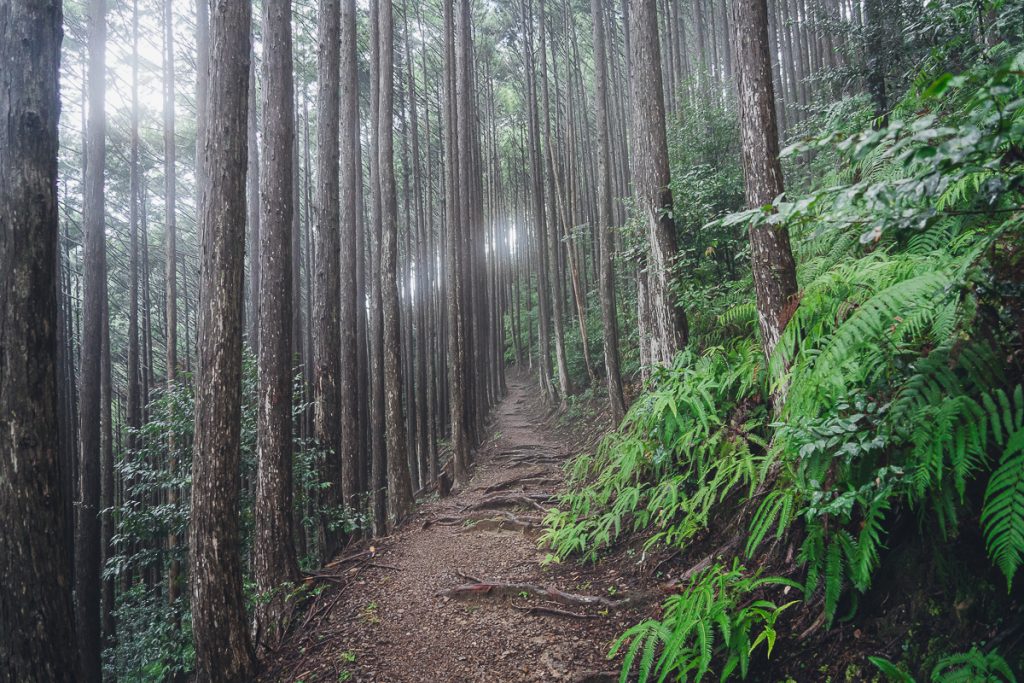
That being said, the only time not hike would be peak winter. In a mountain region, there is snow and ice, especially at higher elevations. In winter, buses run less frequently, and some tea huts may be closed. Unless you come equipped for winter hiking, I would suggest visiting from April 1st to November 30-th.
What to Pack for the Kumano Kodo?
What you pack depends on several things. If you are doing the full 5-day through-hike of the Nakahechi region, you will need different items than for day hikes along the route.
Also, if you are using the luggage service for a multi-day trek, what you pack will differ from what you would pack if you were carrying everything yourself.
We brought the day hiking essentials:
- Day backpack or a camera bag that can fit layers and water. Waterproof cover recommended.
- Water reservoir and reusable waterbottle – we each carry a Platypus.
- Hiking pants, SPF hiking hoodie, and a shirt for women. For our hike, I just wore my athletic tank top, layered with my hiking hoodie and rain jacket. I wore athletic, cropped pants.
- Hiking shoes, waterproof recommended
- Smartwool socks
- A good waterproof rain jacket. I have an Arc’teryx jacket for multi-day backpacking and hiking tours. It has never failed
- Camera
- Sunglasses
- Sunscreen
- Physical Map
- First Aid Kit
- Headlamp
- Hiking poles
- Hat/gloves in shoulder seasons
- Cash
- Phone charger
If you are hiking for several days with a backpack, you will be carrying all your hiking essentials for this route in a multi-day trekking bag, like a 50L Osprey pack. Your list of things to pack will be similar to ours, just with more clothing, your toiletries, and all other basics.
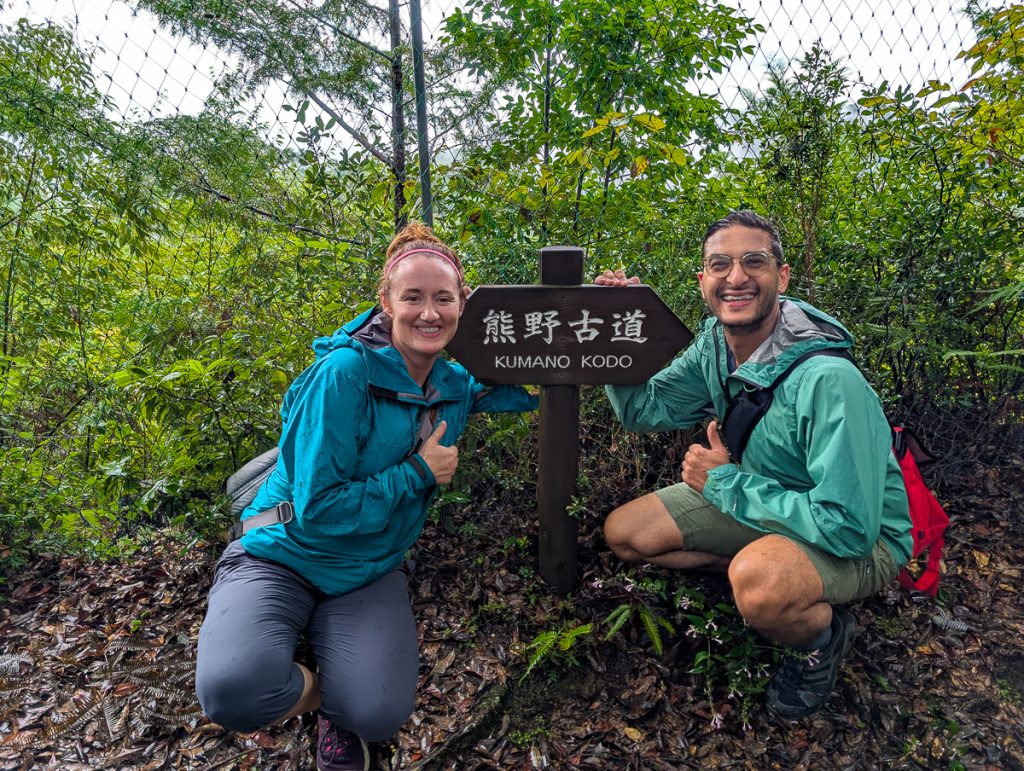
If you are using the luggage service, you will dress daily and head out with a day bag that includes my recommended packing list.
If you have booked campsites, you will also need to consider your tent, sleeping mat, and other camping essentials. However, all guesthouses have fresh bedding and linens; you only need these if camping.
Pack for Unpredictable Weather and Mountain Terrain
The weather on the trail varies significantly. Like all mountain systems, the weather can change on the drop of a dime. We started one morning in cold, mist, rain, and fog, and emerged from the mountains into hot, humid sunshine!
Pack layers and rain gear.
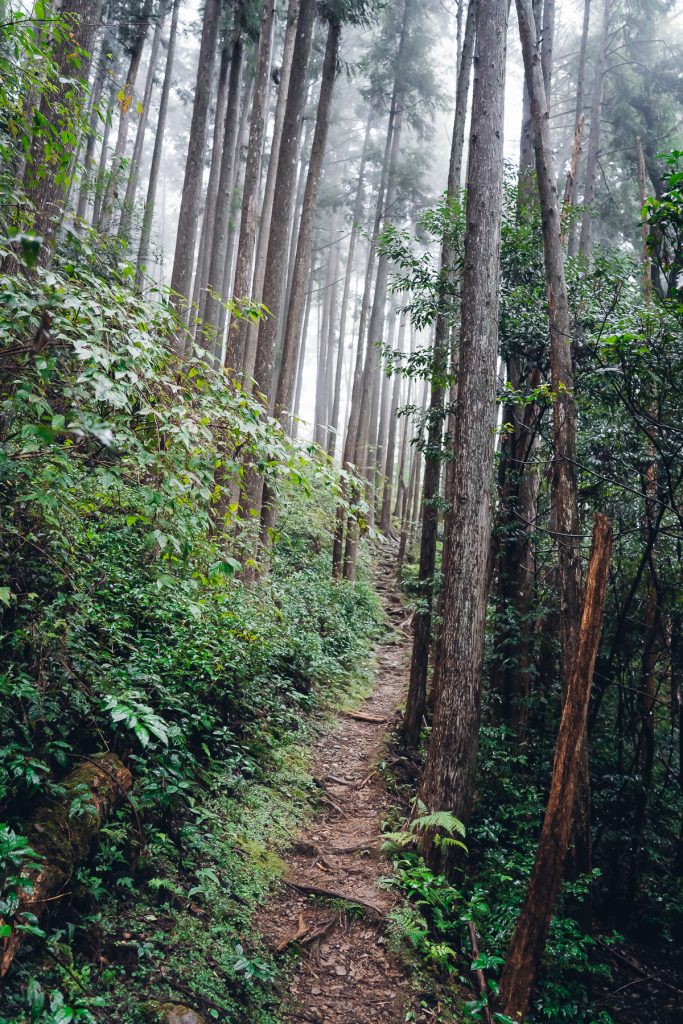
This is an all-mountain terrain. While some paths are paved and relatively easy, others are slippery cobblestones when wet, and others are straight-up hiking through a forested mountain with mud, rocks, and steep inclines.
Pack proper HIKING shoes, socks, and athletic wear. This is not a casual walk on a paved trail. Many injuries occur from people wearing improper shoes, cotton, and jeans, or taking this too casually.
Food and Where to Eat on the Kumano Kodo
For those doing a through hike and have booked standard accommodations using the Kumano Travel website or at Japanese guesthouses, you will typically receive accommodation that includes a light breakfast before your departure and dinner after you arrive and check in.
If you book through the Kumano Kodo travel service, you can request an additional add-on for lunch or a bento box. These can be take-away lunches.
Dinner at most guesthouses is at 18:00, and it is polite to arrive by 17:00 to bathe and change into a Yukata before the communal dinner. Most stretches of the trail are designed to be completed by 17:00 if you set out on time in the morning. You should ensure you can make it to your next destination by this time.
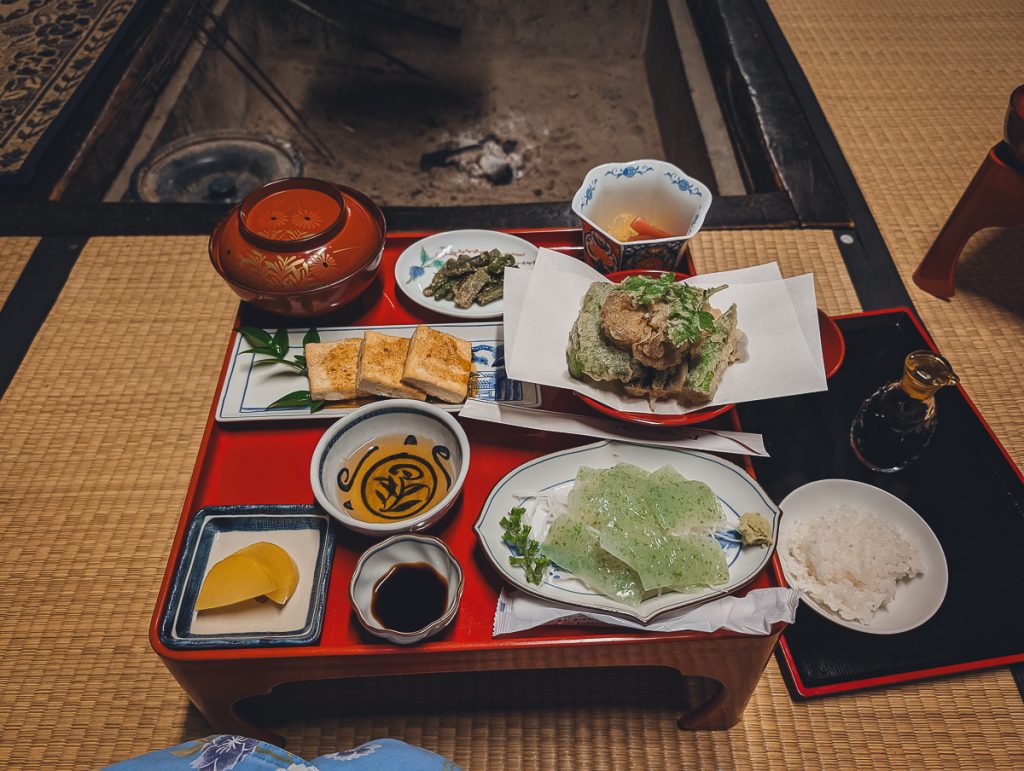
Not all accommodations have coffee; if you need caffeine, bring instant coffee to mix with their available hot water.
Is The Kumano Ok for Vegetarians, Vegans, and Celiacs?
Not all accommodations on the Kumano will cater to vegetarians or dietary needs.
Those who do need weeks’ advanced notice and confirmation of your dietary needs. If you have dietary restrictions, read my complete guide to traveling Japan as a vegetarian. This will give you tips on finding veg-friendly accommodations and on contacting them ahead of time.
Most guesthouses in the Kumano serve fish-broth-based soups even in what seem to be otherwise plant-based meals. Making vegan soups is time-consuming, costly, and requires your host to cook a separate broth with unique ingredients just for you. For this reason, advanced notice, communication, approval, and sometimes additional fees are added to vegan and fully vegetarian meals.
One reason we opted out of a guest house was our diet. Our mountain retreat in Chikatsuyu provided vegetarian make-your-own food packages for our stay, including breakfast and dinner, but we cooked them on-site. Because we stayed in a suite with a kitchenette and a pizza oven, we made toasties for breakfast and cooked pizza for dinner.
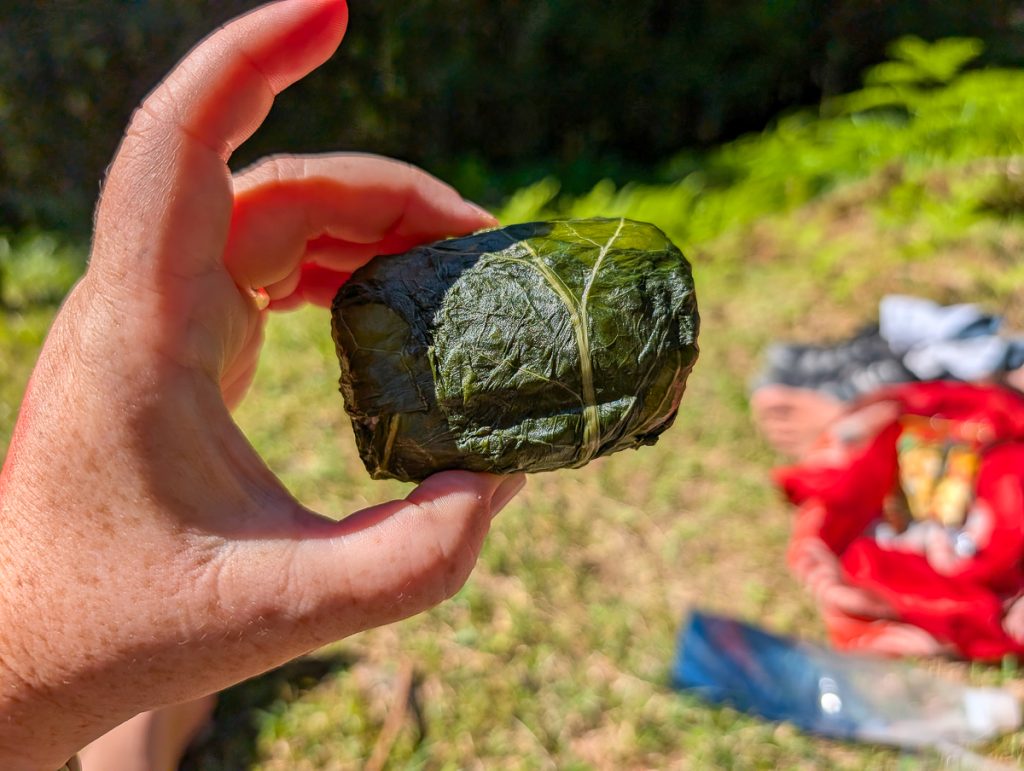
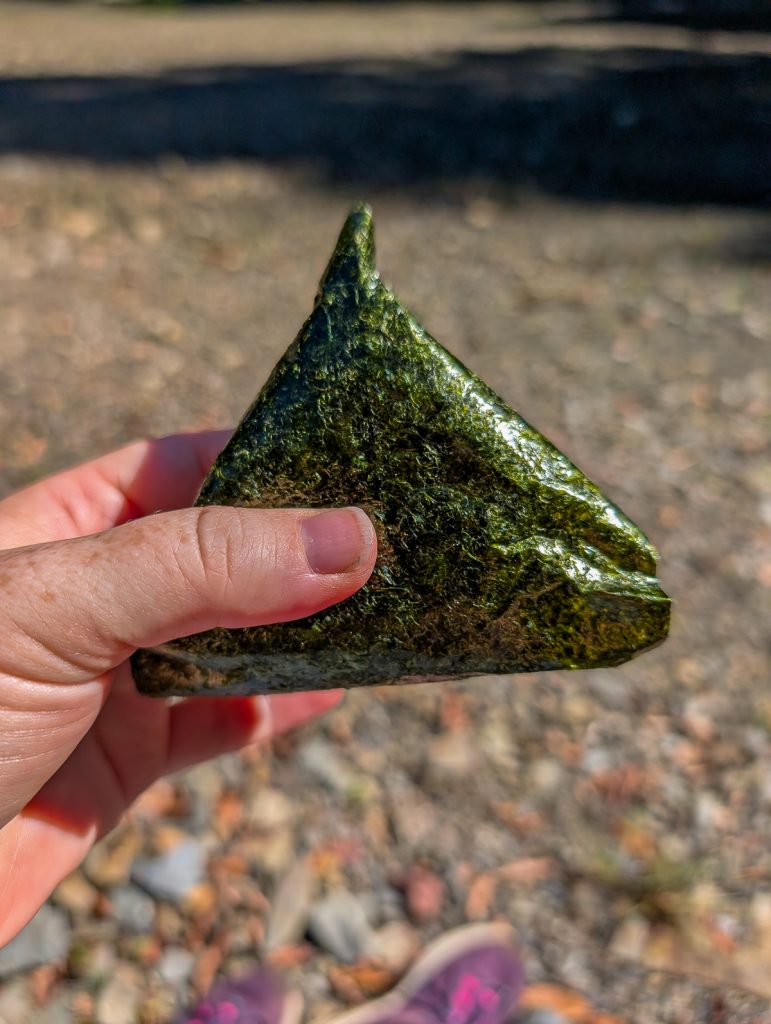
For lunch, we visited supermarkets in places like Kii-Tanabe or Chikatsuyu. We bought a few things to take on the road: plain vegetarian rice, seaweed-wrapped onigiri, nuts, crackers, and other snacks. We brought these in our backpacks and ate on the trails.
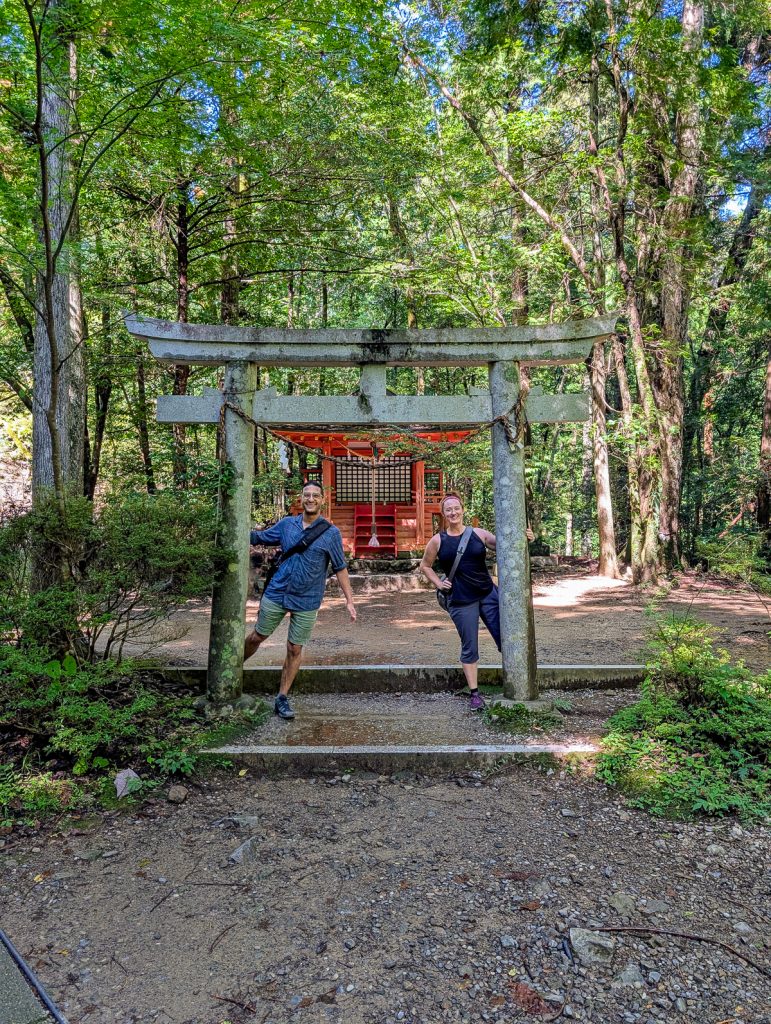
Along the way, there are a few villages or tea huts serving refreshments, like a cup of noodles (vegetarian, not guaranteed), and juice. Your trekking map for the route you’ve chosen will highlight refreshment stops.
Stamps on the Kumano Kodo
Like many places in Japan, collecting stamps is a fun and interactive way to take home a souvenir and learn about the places you visit. There are stamp booths scattered throughout the Kumano Kodo, especially at small shrines, certain villages, historical sites, and major shrines and temples.
To pick up your stamp book, visit the Kumano Kodo Kan Pilgrimage Center in Takijiri. Here you can find the Nakahechi Stamp Book for hiking the main route. There is space for 41 stamps collected on the route, and it costs 100 yen.
Other stamp books include Koyasan, Kohechi, and Ohechi.
For those who have done or are working on the Dual Pilgrimage (Kumano Kodo and Camino de Santiago), there is a separate book for this as well.
Always make sure to replace the stamp and ink bad in its wooden housing, and close the ink pad to avoid it from drying out.
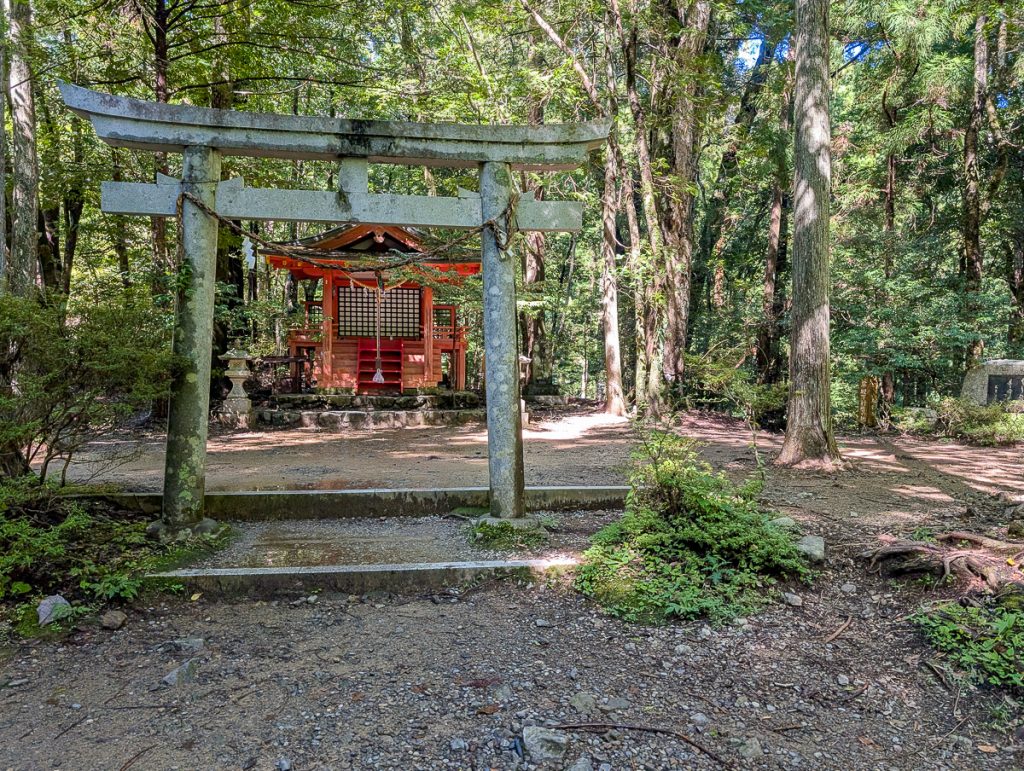
We did not collect stamps for a few reasons. The stamps are typically for those hiking the entire Kumano Kodo traditional route and staying in traditional inns. We took a slightly modern approach and hiked a portion and stayed in a self-service mountain hut.
How to Navigate the Kumano Kodo
OK, so you’ve selected a route, reserved your accommodation, and are packed for outdoor activities in all weather, and you are ready to hit the trail! You might be wondering how to navigate so you don’t end up lost like Emperor Jiummu.
The trails have ancient and old signposts, indicating you are on an officially designated Kumano Kodo route, or showing you to a trailhead. We found that these signs on the Nakahechi subroutes were often in English, but not always. They were every 500m to 1km.
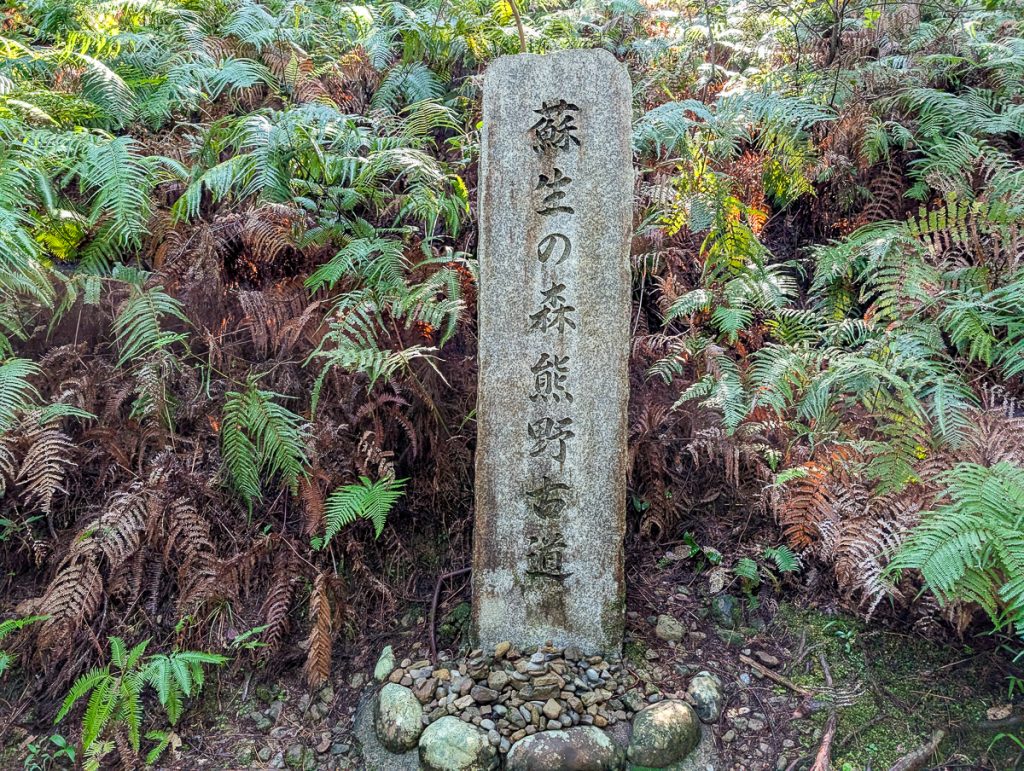
Due to many English-speaking tourists getting lost, it was also common to see a trail offshoot, but a sign saying “NOT KUMANO.” So, at least you usually know when you are going the wrong way.
However, you should not rely on these signposts solely. Nor should you rely on Google Maps.
We picked up an official paper map from the Kii Tanabe visitor center. This map had details about elevation, terrain, shrines, cultural sites, tea house locations, sacred sites, and other important information we would not get from Google Maps alone.
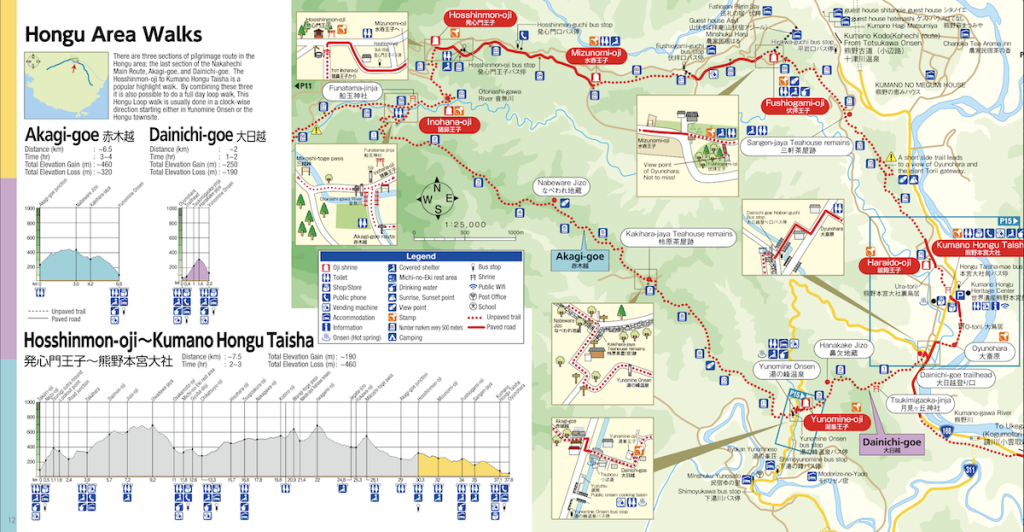
You can also study and download maps from the Kumano Travel website.
Safety on the Kumano Kodo
The Kumano is not something you can just walk up to and start hiking on a whim. We intentionally packed, knowing we would be doing this hike.
You should have ample water (we each had a 2-liter Platypus), hiking shoes, hiking clothing, rain gear, food, a first aid kit, and other safety measures.
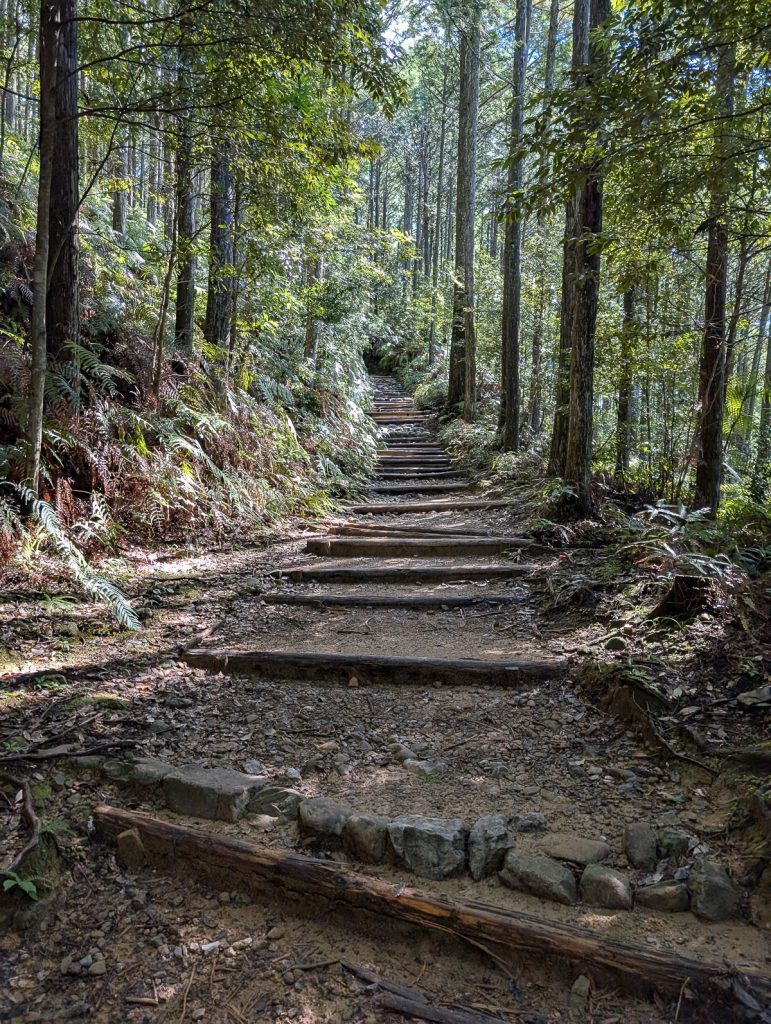
Certain portions are proper hiking on a dirt trail with steep, rocky inclines. You should be able to physically walk or hike 15-20 km in a single day. You should be able to climb steep stairs and inclines.
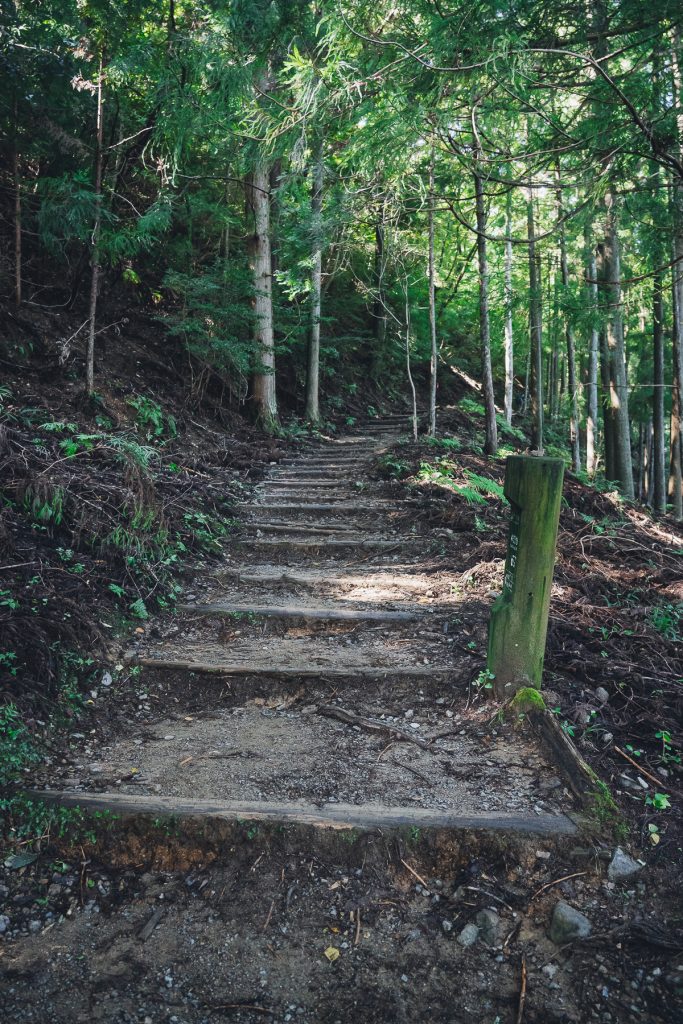
You are sharing the trail with:
- poisonous pit vipers (gray and reddish-brown, with a triangle on their head)
- ticks
- asian giant hornets
- giant centipedes
- land leeches
- Asiatic bears
Check your body and shoes daily. Hike with a bear bell.
If you find yourself in an emergency situation, call 119 from your phone. You should always have travel insurance before heading out into rural mountain terrain in a foreign country.
Trail closures and detours due to mudslides, other natural disasters, or maintence is not uncommon. Check for all current updates.
- Pace yourself. Listen to your body and do not approach the Kumano Kodo as a race.
- The trail is varied and can be slippery.
- Pack food and water to keep hydrated and your energy up.
- Pass other walkers in a wide, safe section of the trail, letting them know you are passing
- Stay close to the trail on steeper sections.
- Use walking poles for balance if needed.
- Prepare with the right gear, equipment, and clothing for mountain weather and conditions
- Be aware of where you are and travel with a map
- Travel with a buddy and ensure someone knows where you are at all times
- Choose the right trail for your ability
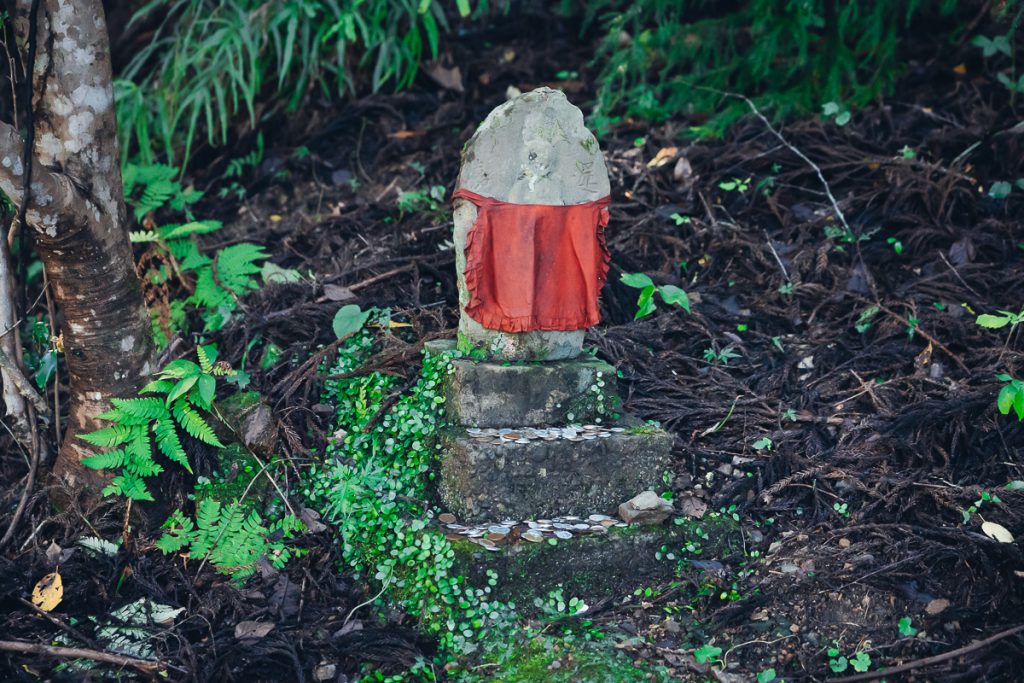
How Fit Should You Be to Hike the Kumano?
The Kumano has varied terrain. Expect:
- Paved roads through villages
- Narrow paved and steep paths
- Steep stone staircases
- Unpaved, muddy, and rock-filled hiking trails, including steep inclines
- Cobblestone paths that can get slippery
That said, I wouldn’t say the Kumano is particularly challenging. You should be physically able to:
- Hiking or walking up to 20km a day (or more)
- Get up early to hike long stretches, carrying enough food and water for the day. Carrying your bags if you do not have luggage service.
- Walk up and down steep, long staircases
- Stable on potentially muddy or slippery surfaces
We saw people of all ages, kids to seniors, hiking in the Kumano. We saw an elderly man with a cane and several heavy-set people taking it slow. With the right timing, planning, and dedication, as long as you have the safety equipment you need, I think most people can get through one way or another.
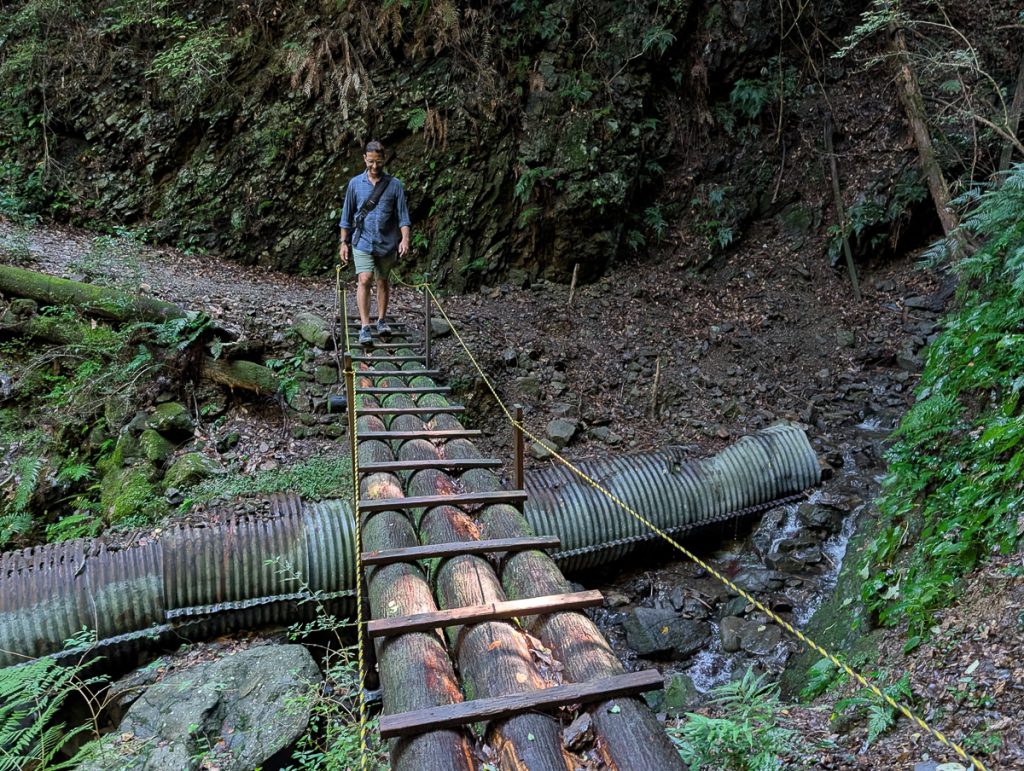
Sustainability and Responsibility on the Kumano
The Kumano Kodo is an ancient and sacred place. It is entrenched in religious, spiritual, and traditional Japanese culture. Recognized by UNESCO and the Japanese government as a cherished place for all humanity to appreciate, it demands the very best of us as visitors.
As you travel to, from, and along the Kumano, you should do so with purpose, intent, and deep respect for the natural environment, your fellow travelers, and the locals of the region.
Trail Etiquette on the Kumano
There are few, if any, trash or rubbish bins along the trail. The ones that are there are for local use only. I didn’t see a single piece of trash on the trail, and certainly no toilet paper.
You should always pack out what you carry in, including all waste and food byproducts. We brought small reusable bags to put our trash in after we ate, which can be easily washed. You should never litter food or trash on the trail.
- Leave no Trace.
- Pack out all garbage. The local bins along the trail are for locals only.
- Walk with intent. This is not a bucket-list item to check off. Understand the cultural and historical significance of your location.
- Preserve the area as the “heritage of all humankind”.
- Protect the local flora and fauna—do not remove or introduce animals or vegetation.
- Stay on the routes to prevent erosion
- No open fires to prevent forest fires
- No camping outside of campsites to protect the ecosystems
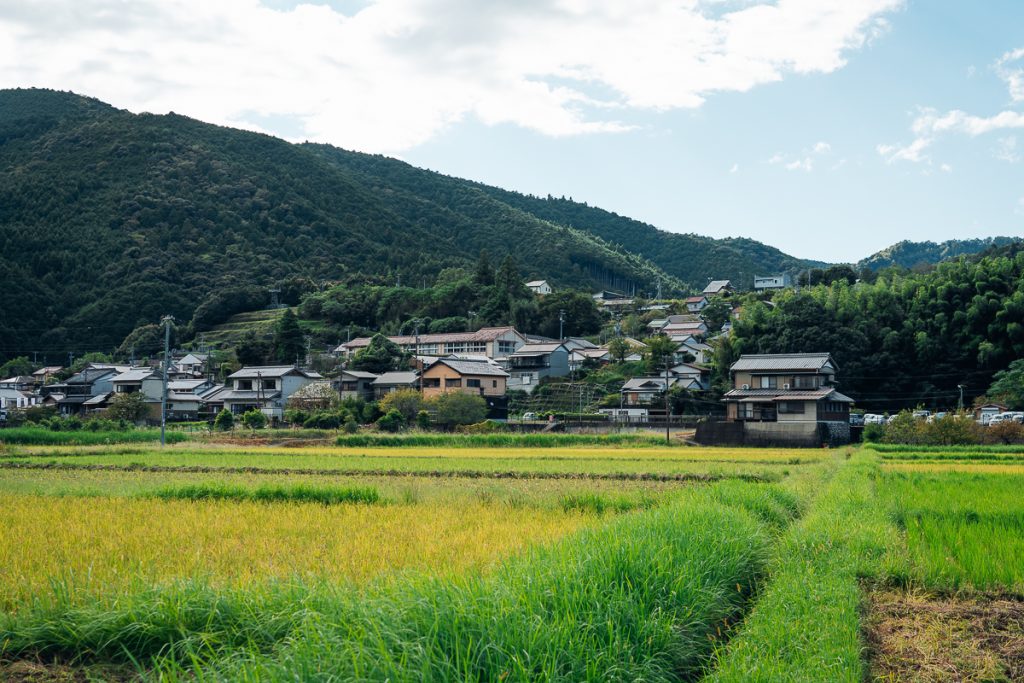
Cultural Etiquette and Respect
The other part of this is respect and cultural sensitivity. Again, with traditions and sacred shrines along this route, you should always be mindful.
- English is not widely spoken. Learn Japanese phrases, and bring a translation tool.
- Break out the smile and bow to show respect in someone else’s home
- It is disrespectful to show up late to a guest house for dinner, without a reservation, or to expect dietary needs to be met without prior communication.
- Respect the faith of past and present worshipers
- Brush up on Japanese traditions and cultural expectations
More Resources for Planning Your Kumano Kodo Pilgrimage
If you are looking for more help, including with logistics and accommodation, visit the Kumano Travel website and create an account.
For help with itineraries and maps, visit the Tanabe-Kumano Visitor Site
Make sure you visit the visitor centers in
Comment and Share Planning for the Kumano Pilgrimage in Japan
If you are considering trekking the Kumano Kodo, make sure you save this comprehensive guide to planning. I put a ridiculous amount of effort into planning our Japan itinerary, and the Kumano was no exception. While we hiked only a small portion, I spent countless hours researching and reviewing.
I hope this guide makes your planning and pilgrimage on the UNESCO Kumano Kodo a little easier. Whether you are looking to hike the entire Nakahechi Route, or just enjoy a day hike with an overnight, I’ve got you covered with routes, resources, and everything you ned to know before heading out on the Kumano.
Happy hiking!
Curiosity Saves Travel Recommends
Accommodation: Booking.com to find accommodation with a Genius Discount and clear third-party sustainable certifications like Green Key. Look for local hotels.
Tours and Excursions: GetYourGuide and Viator for tours, excursions, and tickets. Never book wildlife experiences through these vendors.
Travel: Omio for booking buses and trains in English across Europe. After reducing the number of flights I take annually, I use Google Flights’ carbon comparison tool.
Car Rental: Rentalcars for the best rates in English globally. It is easy to find hybrids and EVs, and there are resources for finding chargers.
Packing Essentials: REI or your local Co-op has great essentials like reusable water bottles and cutlery sets. Patagonia for regenerative clothing. Farm to Feet for socks made with regenerative practices! Pistil Designs for cold-weather essentials. Osprey for bags that last 10+ years, like the day bag for hiking or my favorite carry-on.
eSIM: Airalo eSIM. Reduces waste from single-use SIMs. A total game-changer.
For Bloggers and Content Creators
Earn Ad Revenue with Journey by Mediavine
Earn with Stay22 Travel Partnership (my biggest source of income!)
Earn with TravelPayouts recommending tours and activities.



Great tips, thanks for the info!