
Haida Gwaii Responsible Travel Tips: Things to Know Before Visiting Haida Gwaii
I may earn income from affiliate links or partnerships in this post. I spend time to curate tours or products that align with my values. Thanks for supporting my work, at no additional cost to you. All words and images on this website are created by real people.
Are you curious about everything you need to know before visiting Haida Gwaii? Haida Gwaii is an incredible place to visit, but logistically, it is a challenging trip. It is a special place for intrepid travelers with open minds and hearts. Planning ahead, embracing responsible travel principles, and preparing for the unique circumstances you’ll encounter on your travels are key to ensuring you have a smooth and meaningful trip.
I’ve got you covered, though. As a resident of British Columbia, I recently traveled to Haida Gwaii with my electric vehicle via ferry, and I’ll share my tips, resources, and must-know information for anyone planning a visit.
There are two ways to visit Haida Gwaii: either with a fully guided multi-day experience provided by a certified operator or by independently exploring on your own and booking a few tours with local guides as needed.
We did the latter, but these essential tips for planning a meaningful trip to Haida Gwaii are must-knows for everyone before they travel to Haida Gwaii.
This is an educational and practical resource for planning a trip to Haida Gwaii. We will cover the culture and ecology of Haida Gwaii, history, and tips for being a responsible traveler in a culturally and ecologically sensitive area.
Then we get into practical travel information, such as logistics, essential planning tips, where to stay, what to pack, and more!
This post complements my regenerative itinerary for Haida Gwaii. Both of these guides are essential for traveling to Haida Gwaii safely, responsibly, and making sure you are prepared and have the best time.
Don’t miss: regenerative itinerary and things to do on Haida Gwaii.
About Haida Gwaii
Haida Gwaii is a remote archipelago off the coast of Western British Columbia, Canada, just below Southeast Alaska, accessible only by ferry or plane. Its two main islands are Kiis Gwaay (Graham Island) in the north, and Gwaii Haanas (Moresby Island) to the south, with dozens of smaller islands scattered throughout.
Haida Gwaii is a place shaped by extreme weather and violent geological events. Volcanic-formed agates are strewn across wind-battered beaches to the north, while to the south, incredible old-growth forests still stand with the Haida watchmen as their stewards.
Glaciers have come and gone, and throughout these changes, the Haida people have adapted, living in harmony with the land. Visiting Haida Gwaii is not just about visiting a place; it is also about getting to know the people who call it home.
Prefer Video Content? Head over and watch my complete YouTube video covering all these responsible travel tips and more!
About the Haida Nation
Please visit the Haida Heritage Center to learn more; however, here is a brief overview.
History
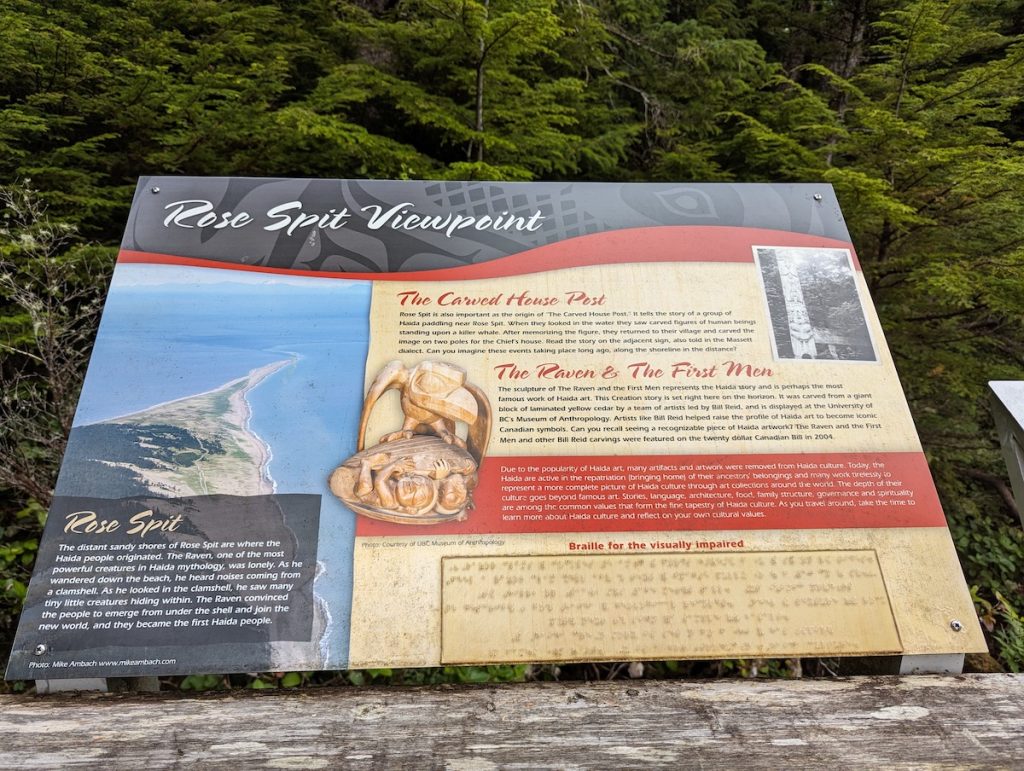
The Haida people can trace their roots back at least 16,000 years. Their origin stories tell of Raven, who plucked people from a clamshell on the beach. Raven welcomed them to inhabit the land created by many Supernatural Beings. These beings take many forms, whether as animals or plant spirits, various genders, or otherworldly, inhuman beings.
As you travel, you will learn stories of creation and of these supernaturals.
The Haida people have lived with and cared for the land for tens of thousands of years, adapting to change and developing complex languages, culture, and social structures.
Over the years, they established numerous village sites across Haida Gwaii and traded with various Indigenous peoples across coastal North America, as well as with Japanese and Polynesian peoples.
The Haida once had hundreds of clans and villages with a population in the tens of thousands.
Colonization
Colonization of the Haida land and people was so devastating that it is widely recognized as genocide.
Smallpox was intentionally spread (verified through written records). A smallpox vaccine was available, though it was not offered to the Haida. The disease killed 95% of the Haida people in the mid-1800s.
Of those who survived, the Indian Act segregated people, forcing kids into residential schools off Haida Gwaii, where many died or never returned. Canada forced adults into reservations, and they were not allowed to practice their ceremonies or speak their language.
Much of the Haida culture was lost, and many areas lost 99% of their population from both smallpox and outcomes of the Indian Act.

Reconciliation
Through very long and hard-fought battles with the Canadian Government, the Haida people have, over time, slowly claimed autonomy over their land and governance.
Only in 2025 did Canada recognize the Haida land claim. The Haida people are primarily self-governing under their unique clan law with the Haida Council Nation. Much of the land is managed by the Haida Nation or co-managed with Canada.
They have taken a stand against colonial bear hunting lodges and old-growth logging in Gwaii Haanas.
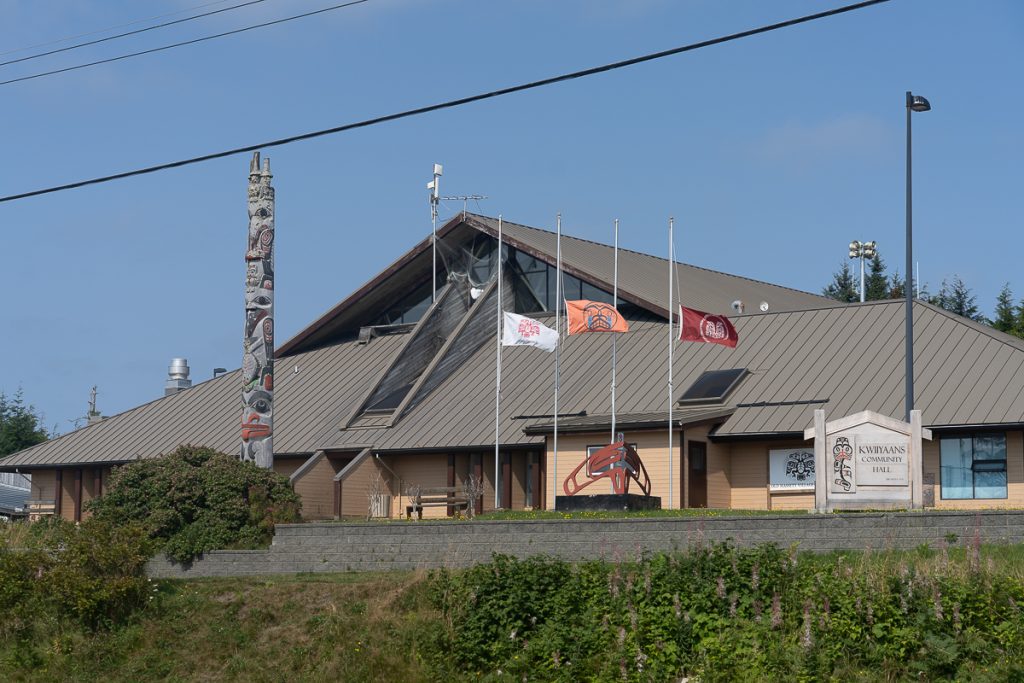
Many tourism assets are owned and operated by the Haida Nation or their allies, and Gwaii Haanas stands protected as a UNESCO World Heritage Site and National Park. It is co-managed by Parks Canada and the Haida, although the Haida people rightfully claim full ownership of the land in an “agree to disagree” situation, as long as it remains protected.
The Haida Watchmen, important members of their community, act as stewards of the ancient and abandoned villages. On tours to this area, you can meet these watchmen and learn more about their work protecting culture and nature.
Ecology of Haida Gwaii
The North and South Islands are very different.
The northern island, Kiis Gwaay, has experienced more industrial activity over the years. Much of it comes from historical colonial exploitation. Today, many of these industries are better managed by the Haida with a more sustainable approach. Most of the settlements, restaurants, small villages, and accommodations are in the northern part of the islands.
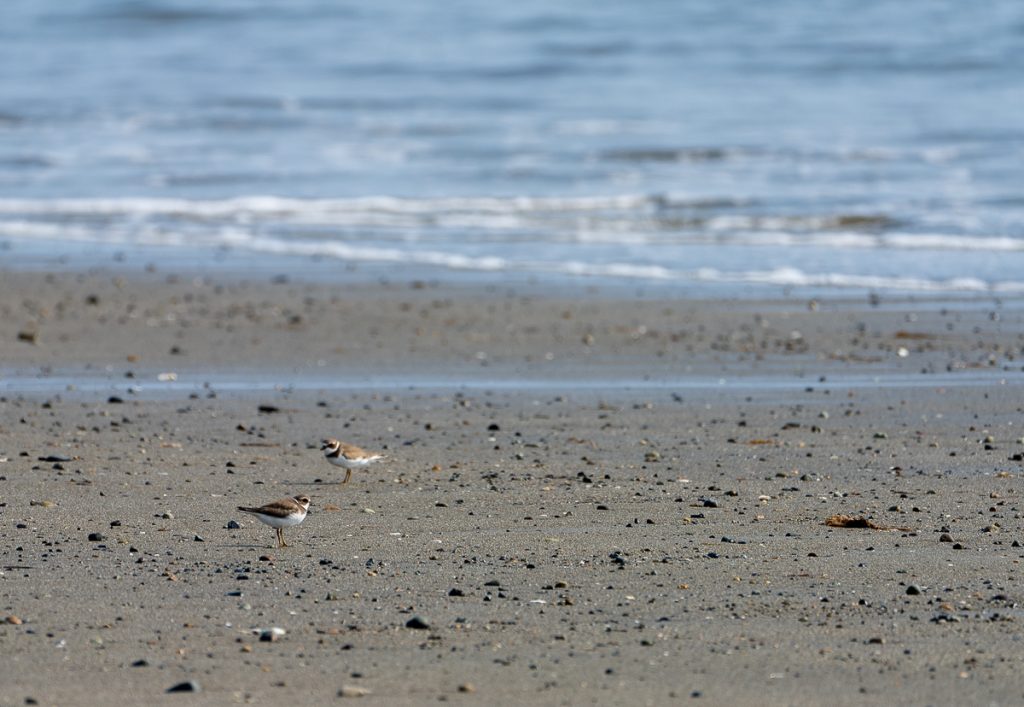
There is also plenty of nature here; you can hike through second-growth forest and pockets of old-growth Sitka spruce to learn about the impacts of logging and pick native berries, but be wary of black bears and deer. Walk along seemingly endless beaches with seals and albatrosses bobbing out to sea with clams deep in the sand.
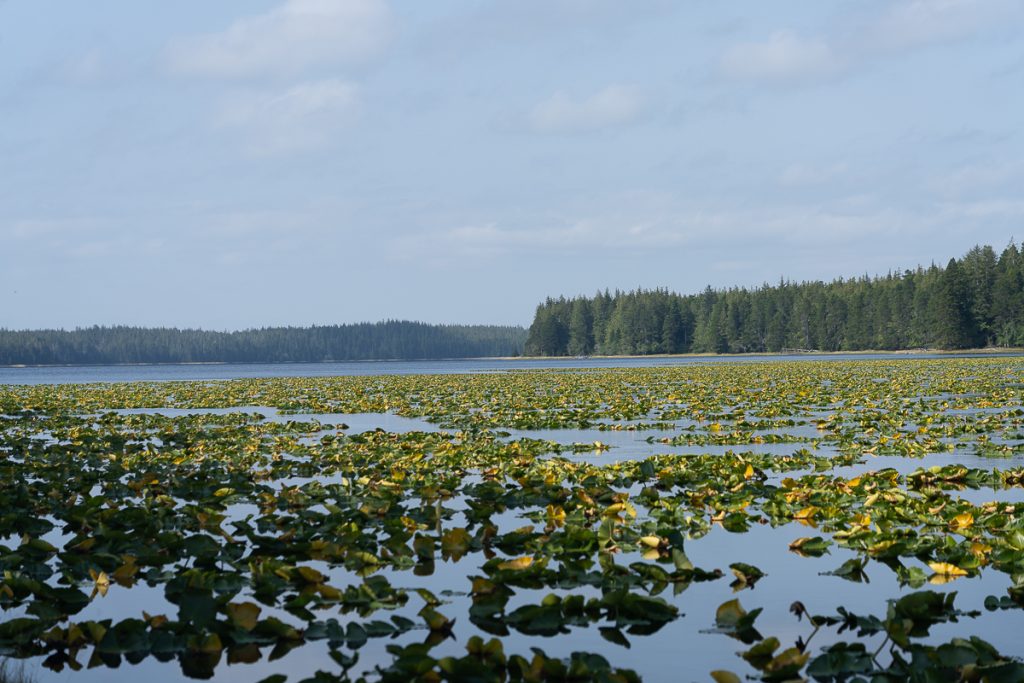
Enjoy paddling on provincial park lakes with reeds, lilies, and aquatic creatures.
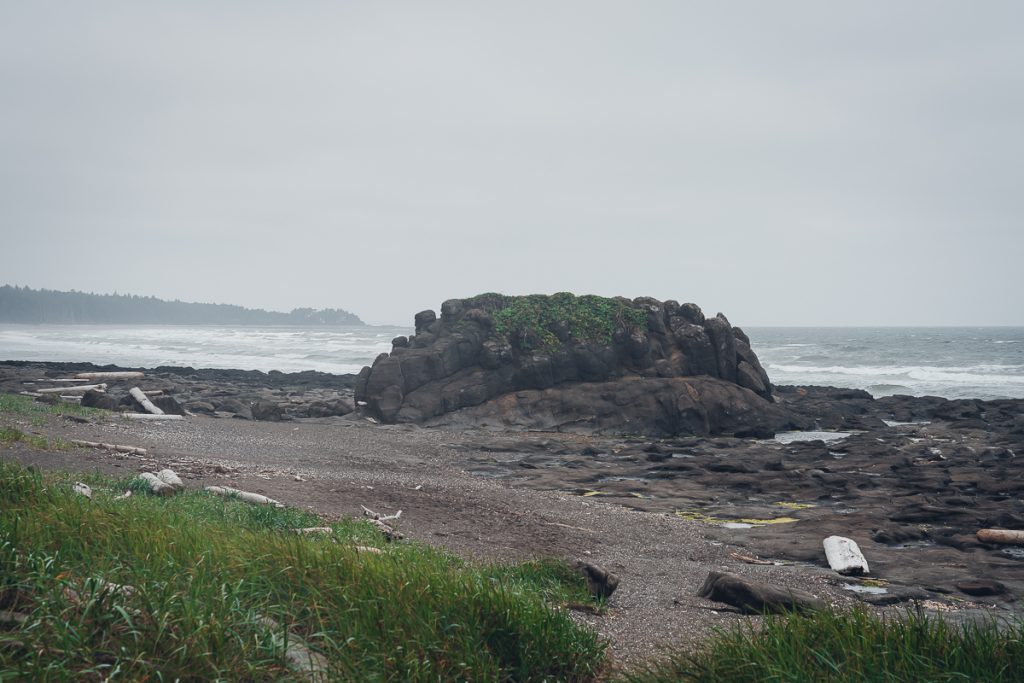
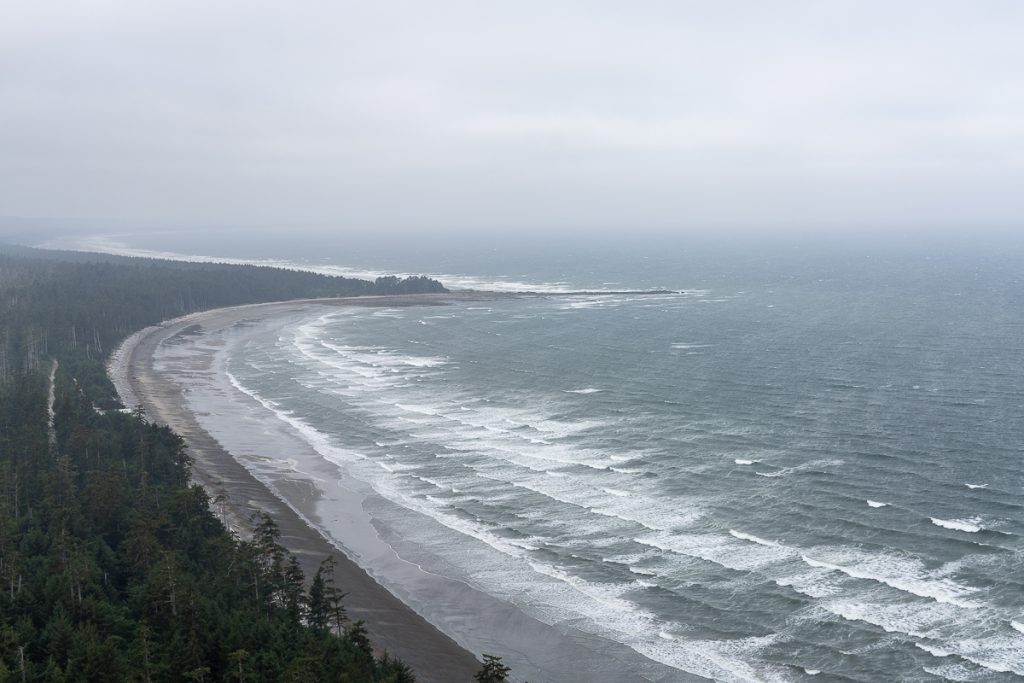
Hike up old volcanic formations with views overlooking angry, windy beaches lined with agates.
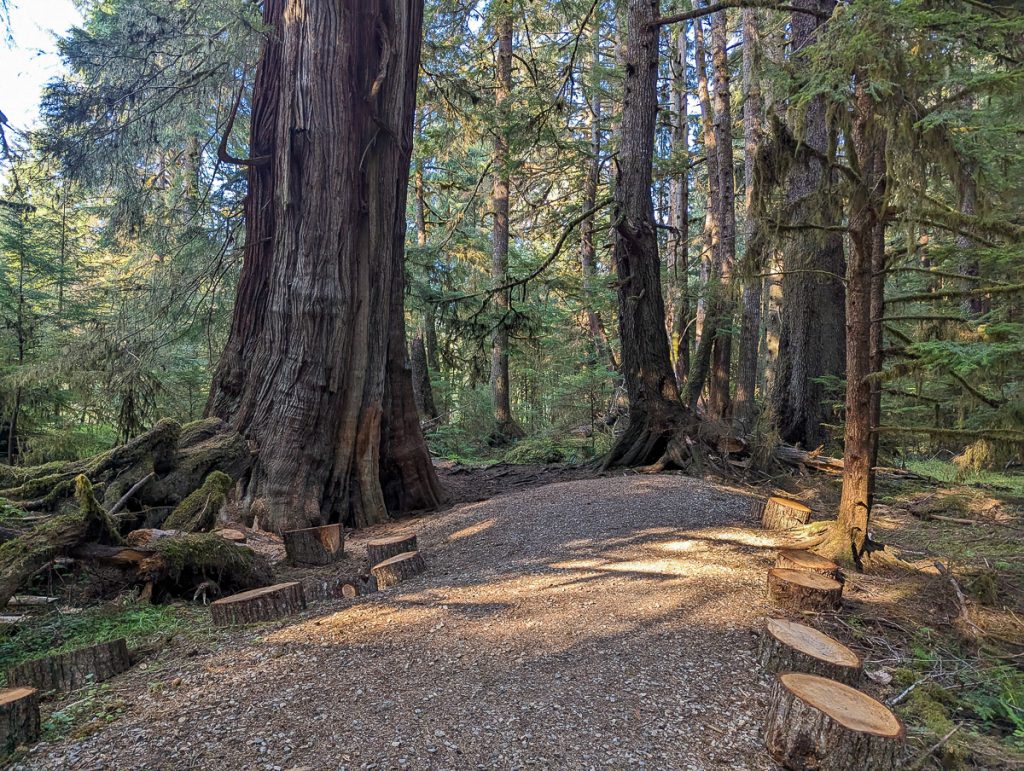
Gwaii Haanas to the south is primarily the National Park and UNESCO site. The very northern part of this island has some logging access roads, an airport, a ferry terminal, and small settlements. However, much of the southern part of the island is accessible only with a permit on a guided expedition.
Here you will find an old-growth forest with the remains of ancient, long-abandoned Haida villages. Traveling here requires a permit and a guided expedition. There are no roads.
The waters are full of whales, seals, and seabirds. Hot spring pools are signs of volcanic activity, and the mysterious old-growth forests are some of the most biodiverse places on the planet.
Unfortunately, colonization had devastating impacts on Haida Gwaii’s ecology, from logging to the extirpation of the sea otter (harvested for fur) to the introduction of many invasive species.
Species such as the beaver and black-tailed deer were introduced for hunting purposes. While beavers typically are beneficial in ecosystems where they are native, they have had negative impacts on the Haida lands, where they didn’t exist until late colonization.
Forest ecosystems have had a harder time recovering post-logging, with deer populations booming, as there are no natural predators for deer on Haida Gwaii. In contrast, the mainland has cougars, brown bears, and wolves.
Gwaii Haanas National Park and many of the co-managed provincial parks are managed holistically in a novel approach. Guided by the Haida Way of being, they are among the few protected areas worldwide that are managed from the sea floor to the mountain tops.
Tips for Responsible Travel on Haida Gwaii
Haida Gwaii is a culturally and environmentally sensitive place that demands the very best of us as humans when exploring. Setting foot on these shores requires responsible travel from everyone, whether you think that is your thing or not.
By visiting, we agree to adopt and embrace the Haida way of being. It is not a place for those unwilling to open their hearts and minds to learning and growing.
However, for those open to embracing this way of life and the inherently regenerative tourism that stems from Haida beliefs, it is a rewarding experience. Here’s what you need to know before visiting Haida Gwaii.
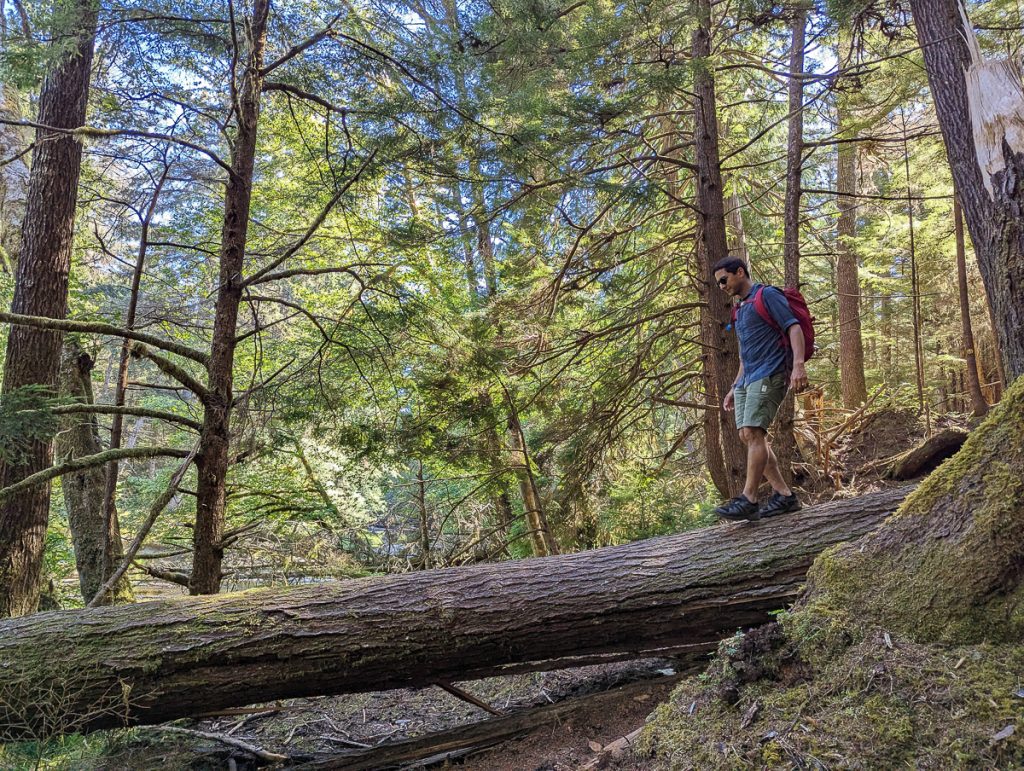
1. Embrace The Haida Way of Being
The Haida Way of Being is a fundamental principle of Haida culture. It is the belief that everything is connected. We are all part of the same ecosystem where humans, plants, animals, water, air, mountains, and fungi, from the depths of the ocean to the tops of mountains, are all connected.
Everything has a role to play, and everything is to be respected.
As you visit, you must embrace this principle. Respect not only yourself, but every plant, animal, rock, insect, the water, the air, and the people you meet along the way.
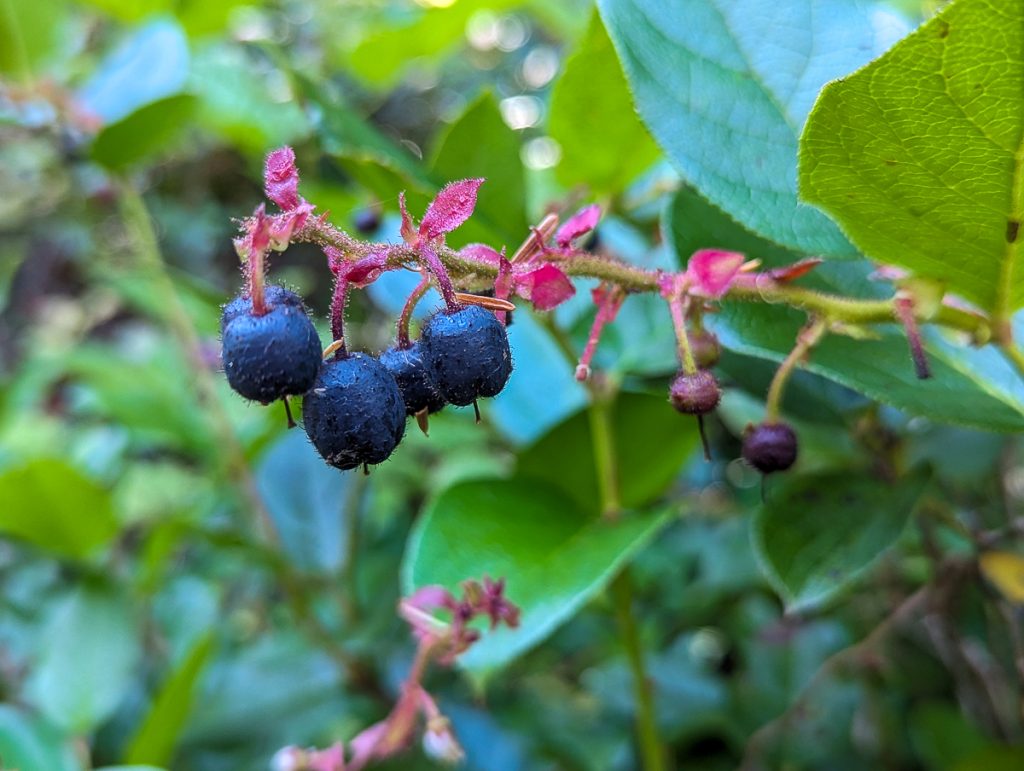
- Never cut, collect, or pick anything (except tasty native and edible berries)
- Leave everything better than when you arrived.
- Don’t disrespect the Haida people or culture, or any local.
- Respect all laws, tribal and provincial.
- Do no harm to animals.
- Minimize air, water, and solid waste pollution.
Don’t Collect Agates
It is worth noting: do not collect agate rocks from any beach. The Haida have asked you not to collect these rocks. Unfortunately, many non-Indigenous businesses and travel blogs encourage you to take agates.
After years of people taking buckets of agates home, the sources are depleted. According to the Haida Way of Being, these agates have a role in the ecosystem on Haida Gwaii and should remain for years to come.
2. Take the Haida Pledge
The Haida People have graciously created an easy-to-follow pledge that we, as travelers, can take to align our visit with their way of being. This pledge helps us understand which behaviors are culturally acceptable, how to protect the environment, and how to be responsible travelers.
Learning about a destination’s culture and customs before visiting is a foundational pillar for many travelers. Pledges are an increasingly common way to learn about a region and commit to upholding existing values and norms of the destinations we visit.
The pledge consists of four steps, outlined in the Haida Gwaii Pledge, which I’ll cover below. I took this pledge before visiting, and it was so helpful when planning a responsible trip.
- Learn about Haida culture, history, language, and practices. There is a document to read and a video to watch. I recommend both.
- Take and sign the pledge that walks you through 4 critical principles and beliefs for responsible travel, rooted in Haida culture.
- Donate 1% of your total trip cost to the Haida Stewardship Fund. Money goes toward Haida-led infrastructure to support tourism.
- Learn more. Vow to learn more as you travel, visiting the Haida Heritage Center, listening to Haida voices, and supporting local Haida businesses.
3. Support Cultural Ecotourism
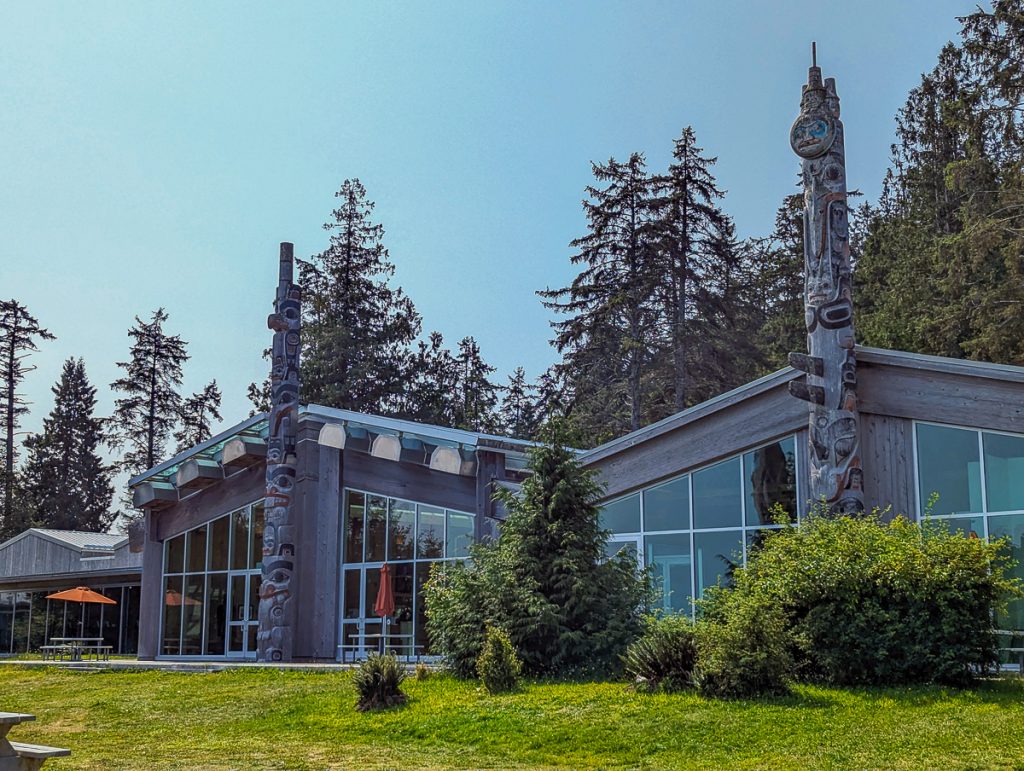
Take time to support Haida-led cultural ecotourism. Whether you book a multi-day package with a Haida tour operator, visit the heritage center, or stay at the Haida House, you are supporting Haida-led tourism initiatives.
Indigenous-led tourism is synonymous with regenerative tourism. That means your travels are mutually beneficial, giving back to the Haida people, the land, and yourself in ways that foster equitable economic, social, and ecological restoration.
4. Remember, You’re Visiting a Community
Haida Gwaii is more than a place; you’ll hear me say this a lot because it is a community. The Haida Nation and the local non-Indigenous community graciously host you on the islands as their guest.
This isn’t a one-way transactional vacation. You are visiting a close-knit community. You can be part of this community if you take the time to be a respectful and gracious guest.
Here on Haida Gwaii, culture and community come first; you, as the visitor, work around that. If a specific beach is closed for subsistence clam harvesting, that beach is closed to protect food resources for the community.
This can be a challenging concept for some people, but if you read my regenerative tourism guide, you will get tips on how to decenter yourself from the experience. In return, you will have a much better experience, knowing that you are actually helping to foster a happy local community.
5. Follow the Law
I know this makes me sound like a nanny blog, but in remote island communities with minimal medical and law enforcement infrastructure, following the law is important.
Accidents or damage to infrastructure in remote areas puts immense pressure on the resources allocated to residents.
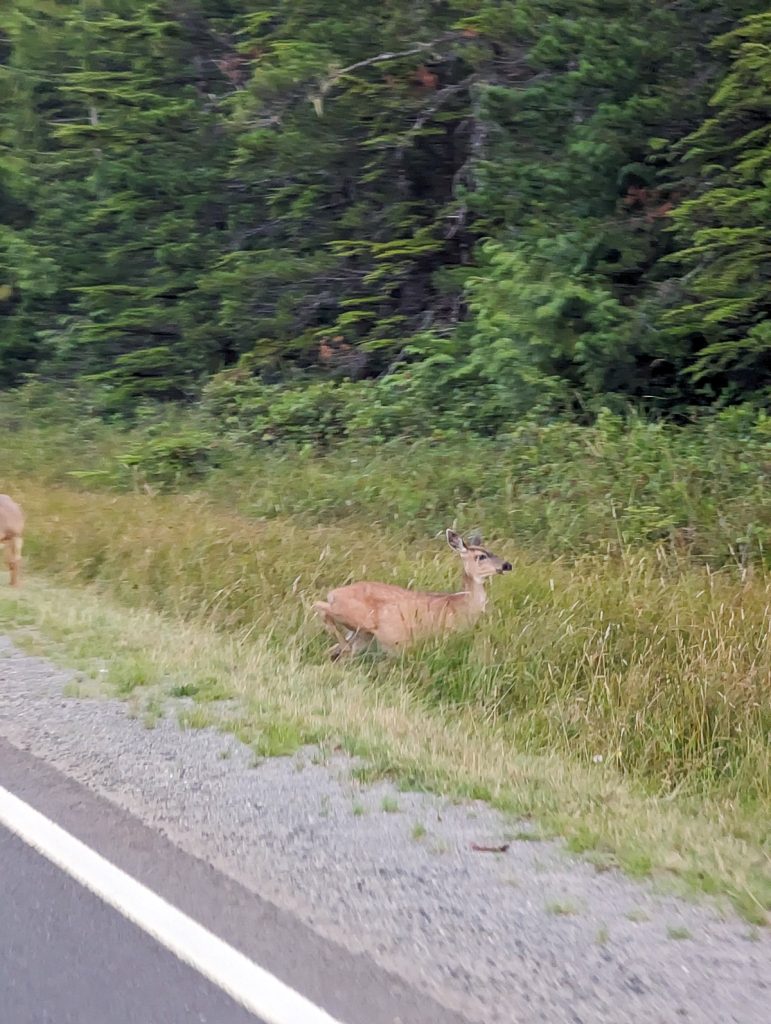
Residents on Haida Gwaii take things like the speed limit very seriously. This is to protect wildlife and reduce collisions, which put pressure on their medical system.
Never cross into places that are closed off for ecosystem or infrastructure reasons. This is to protect nature and yourself from harm.
There are two types of law on the island you need to consider, follow, and respect.
Tribal Law
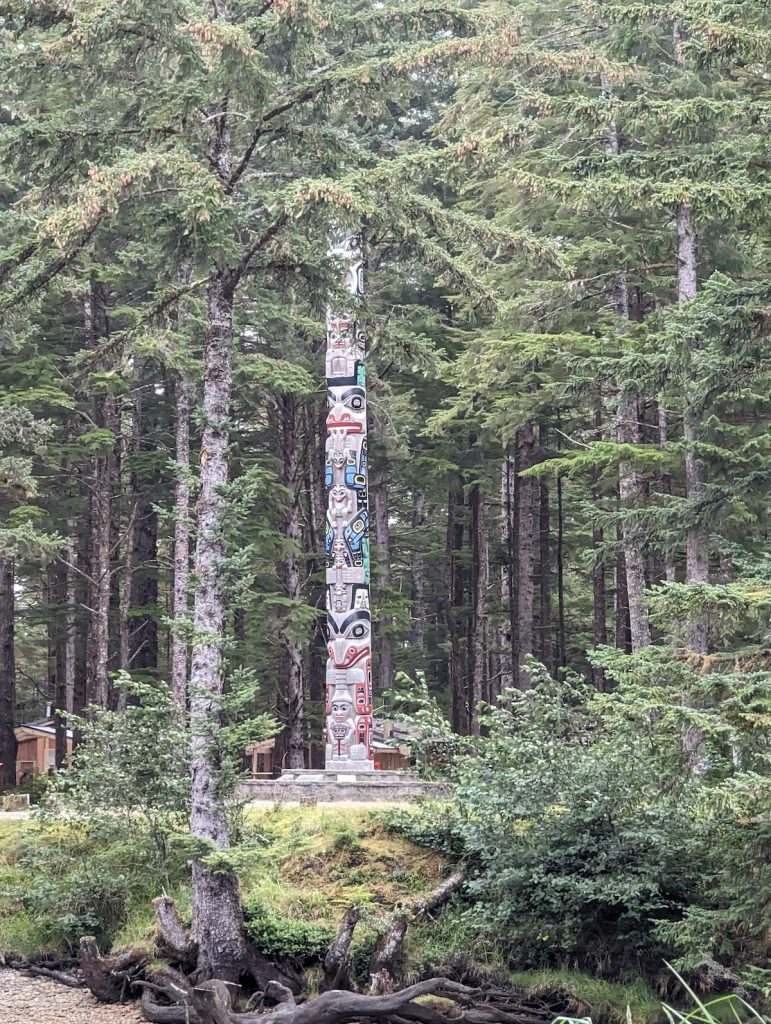
Because the Haida Nation is largely self-governing under its tribal law and council, it can adopt its own laws. The rules aren’t overly complicated; they are very good at communicating what you can and can’t do.
It is common to see certain Haida villages or sacred sites closed to all outside visitors. This is to protect their privacy, safety, and peace after colonization, as well as the integrity of cultural sites.
If a sign says “village closed to visitors,” don’t visit.
If a sign says “please wear a mask,” put one on. After surviving smallpox, Indigenous people take health and safety measures seriously, so don’t come in with outside political division and just put on the mask.
If you find a Haida artifact, it is against all laws to take it from the land. You must document and report the item without moving it.

Federal and Provincial Laws
Of course, all federal and provincial laws, such as speed limits, the proper purchase and payment of permits, and more, should be followed at all times.
6. Learn Haida Phrases and Names
The Haida language is complex with several dialects, but learning a few phrases early will be greatly appreciated.
- Thank you – Hawa’a (Hah-waw) is the easiest to learn, and we used this everywhere!
- Hey – jáh (jah)
The other phrases are complex, so I suggest asking locals or picking up a word guide on your travels!
You should also refrain from calling any of the islands or towns by their colonial name. While older generations may know Haida Gwaii as The Queen Charlotte Islands, this name is highly offensive to the Haida, who fought to have their place names formally returned and recognized.
Many of the Indigenous place names are federally recognized, and even if they are not, it is respectful to make an effort to learn them.
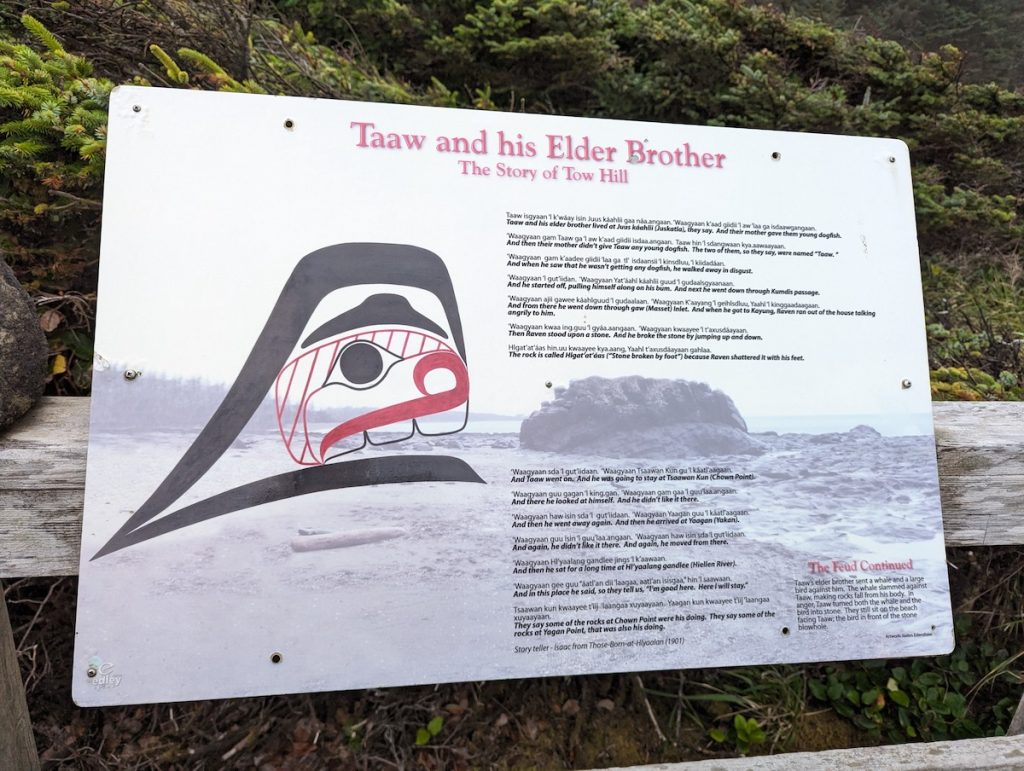
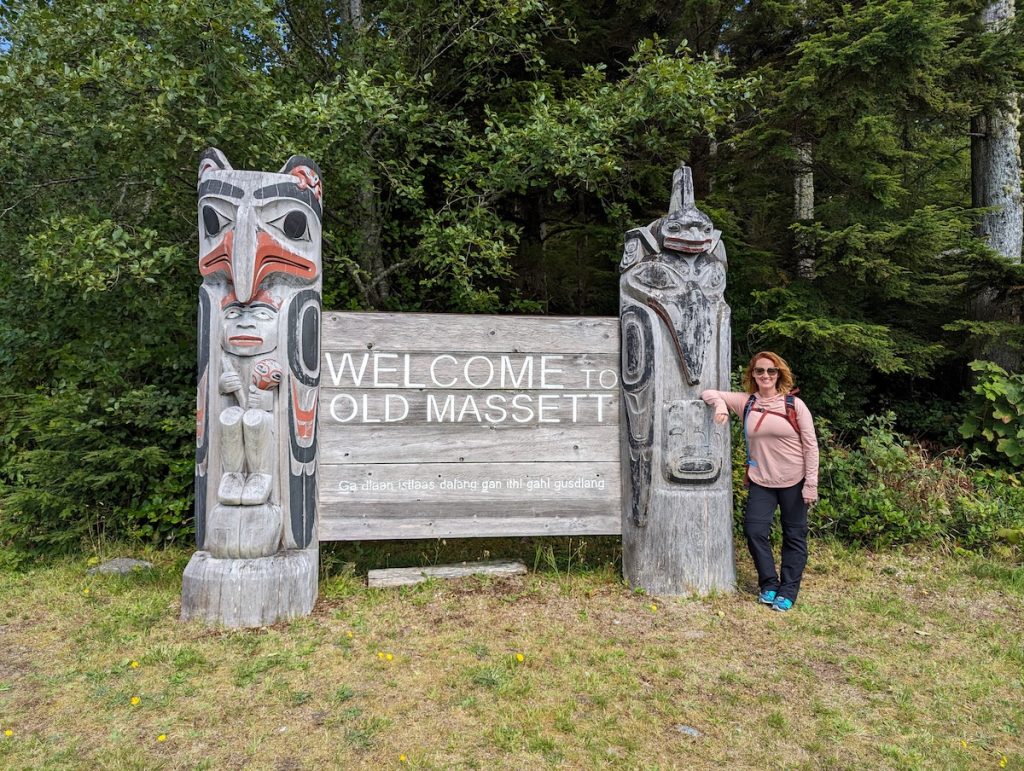
Queen Charlotte Islands– Haida GwaiiQueen Charlotte Village– Daajing Giids (say like Dodging Geese)Sandspit– K’il KunTlell– Tll.aalOld Masset– Gaw TlagéeTow Hill– Taaw Tldáawee
7. Get “This is Haida Gwaii” Free Magazine
Every year at the start of the tourism season, Haida Gwaii, in partnership with the Haida Council, BC Tourism Board, and the local community, prints a seasonal magazine.
It should be one of the first things you pick up, as it includes a language and place-name guide, cultural information, tour suggestions, events, and businesses to support.
You can find this magazine at the visitor center, most accommodations, your ferry, and other tourist points.
8. Come With A Robust Budget
Traveling to Haida Gwaii is not always the most budget-friendly experience. Of course, there are ways to minimize costs, but as with many islands, the cost of goods and services can be higher than on the mainland.
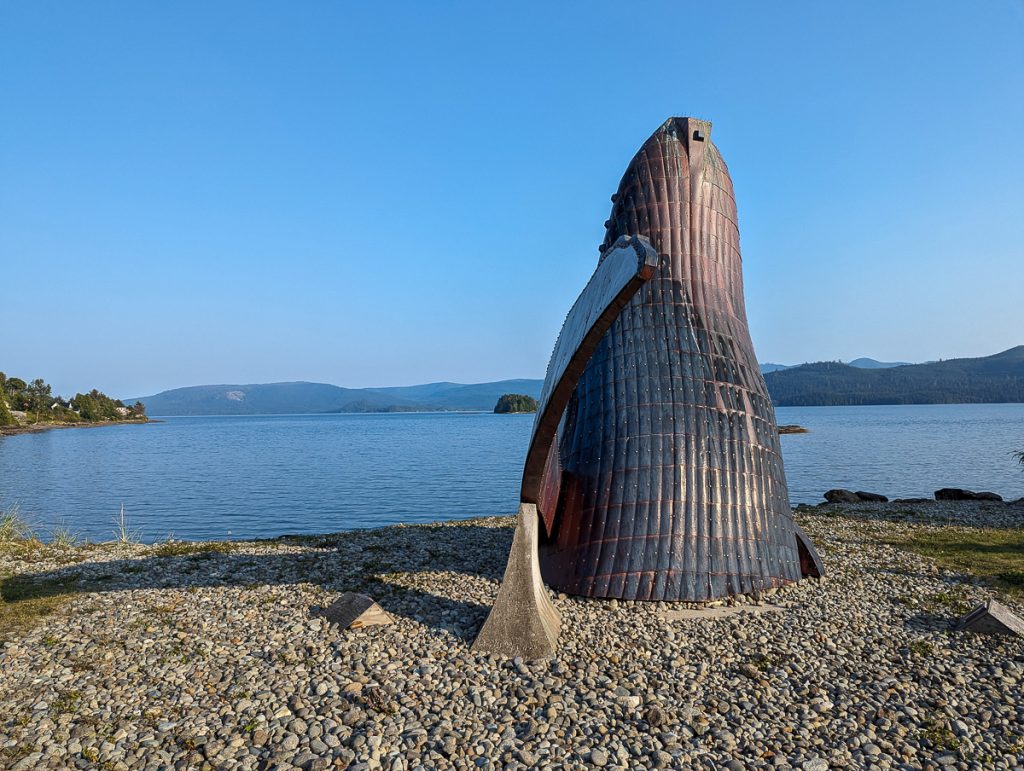
In my humble opinion, you should factor in support for Indigenous artists, small-business creatives, and local products. It might be tempting to save money where you can, but if you are visiting Haida Gwaii, I strongly urge you to set aside some money to purchase handicrafts.
We bought a beautiful piece of Indigenous art from April White’s gallery, and it was worth the splurge.
The 1% Haida Stewardship fund should also be factored into your budget.
9. Hire Local Guides
Your budget should also include local guides. Whether you book multi-day excursions or just one-off tours, as we did, a local guide can offer you an immersive experience that connects you to the land.
Guides are also available to enhance the educational experience at the Haida Heritage Center. We paid extra for a guide, and it was 1000000% worth it! Our guide was incredible as she shared her Haida culture in such a beautiful way—there were tears.

I suggest booking at least one tour down to Gwaii Haanas with Indigenous-owned Haida Style Expeditions, or another licensed guide. There are also plenty of non-Indigenous local guides who are invested in giving back to the community.
As long as you hire local, licensed guides, you will have a great time!
10. Embrace the Slow Travel Mentality
You’re on “Island Time“ when you land on Haida Gwaii. Both Indigenous culture and the island communities of British Columbia operate outside the hustle culture.
Here, you can expect slow mornings with businesses opening later, slow drivers, and the occasional unexpected shop closure.
Enjoy this slow pace of life and channel that slow travel mentality. We spent our mornings with coffee down on the beach, just enjoying the cadence of the waves, shorebirds, and slow-moving clouds.
11. Be Patient, Kind, and Respectful
With that slow-travel mentality, remember to be patient and kind, both in person and in your reviews.
Don’t expect fast food service, on-demand coffee, or quick convenience stores. If a business says it’s open, but the sole employee has to pop out for an emergency, be kind.
Remember to be kind to employees. Things operate differently here; reset your mindset.

12. Open Heart Open Mind
Come to learn with an open mind and open heart. Haida Gwaii was the most rewarding place I’ve had the honor of visiting. But at times, it was hard. Hearing about Canada’s racist and colonial past and how it destroyed families and the culture on Haida Gwaii brought me to tears many times. But their resilience and perseverance are so beautiful and special.
Hearing these truths is essential, but we must listen, respect, and honor the Haida stories and people as they tell their narrative.
Take time to listen to people, visit cultural sites and centers with an openness, and leave your white fragility at home.
Read the signs and absorb the messages. Doing all of this will be so rewarding and make meaningful strides toward reconciliation and understanding.
Practical Things to Know Before Visiting Haida Gwaii
1. Plan and Book Ahead
Haida Gwaii requires advanced planning. As islands with limited resources, infrastructure, and accommodation options, you will need to plan and book many things in advance.
Before you visit, you should have booked your hotel, ferry or transportation, car rental (if needed), major tours, and experiences. Of course, leave open time for unplanned solo exploration.
Visiting Gwaii Haanas, in particular, requires advanced planning and booking.
We visited during a reasonably quiet shoulder season, but this is not the norm. Most ferries and hotels can book MONTHS in advance. Don’t sleep on booking things and having them secured for your trip.
2. But Be Ready for Anything: Like Weather Disruptions
That being said, be ready for anything. Just because you booked in advance doesn’t mean there won’t be delays or cancellations of tours and ferries.
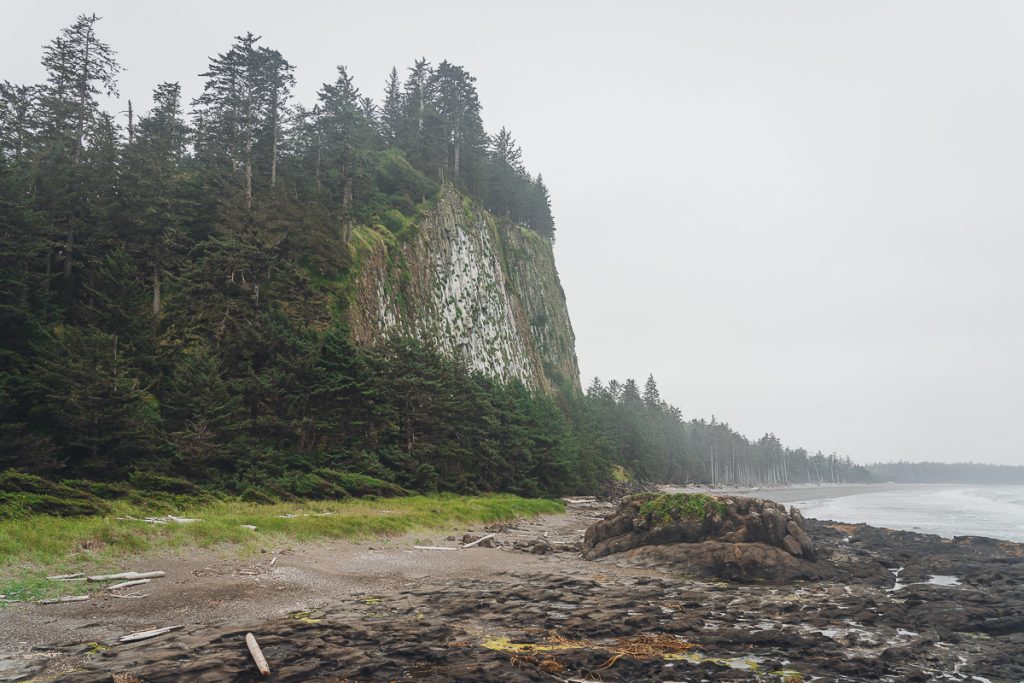
Haida Gwaii has extreme weather patterns, and the Hecate Strait is a very rough body of water.
We had a booking to Gwaii Haanas, which, sadly, was canceled after three rescheduling attempts. We were devastated, but completely understand that it’s not safe to travel across water in a small boat in a storm. It is helpful to have a plan B if plans are canceled.
I also suggest booking your guided tours or experiences to Gwaii Haanas on one of the first days you arrive. That way, if it cancels due to bad weather, you have several days to make it up.
Ferry delays are common, and in extreme cases (mainly in winter), they can get canceled, but you should still have your hotel booked and secured.
3. Permits and National Park Passes
If you plan to visit Gwaii Haanas, you will need a permit and a national park pass. If you book a guided tour (highly recommended), your permit will be included in your experience. Otherwise, ask your guide if you need additional licenses.
4. Limited Hours of Operation
Many restaurants and businesses are only open on certain days of the week, and many operate with limited hours.
Restaurants seem to sort of have a rotation that complements each other. Some are open Thur-Sun, while others might be Mon-Sat. Always check the business hours of operation before you drive across the island for dinner.
We built our itinerary and dinner plans based on which restaurants were open on which days, prioritizing reservations at our heart-set-on restaurants for specific nights.

5. Vegetarian Food?
Vegetarian options are available, but limited on the island. Indigneous cuisine is not always the most plant-based-friendly, as living off the land and Haida culture go hand-in-hand. Haida foods are salmon, game meat, berries, clams, muscles, and other foraged or hunted foods.
If you do eat meat, Indigneous caught foods are some of the most sustainable and ethical choices.
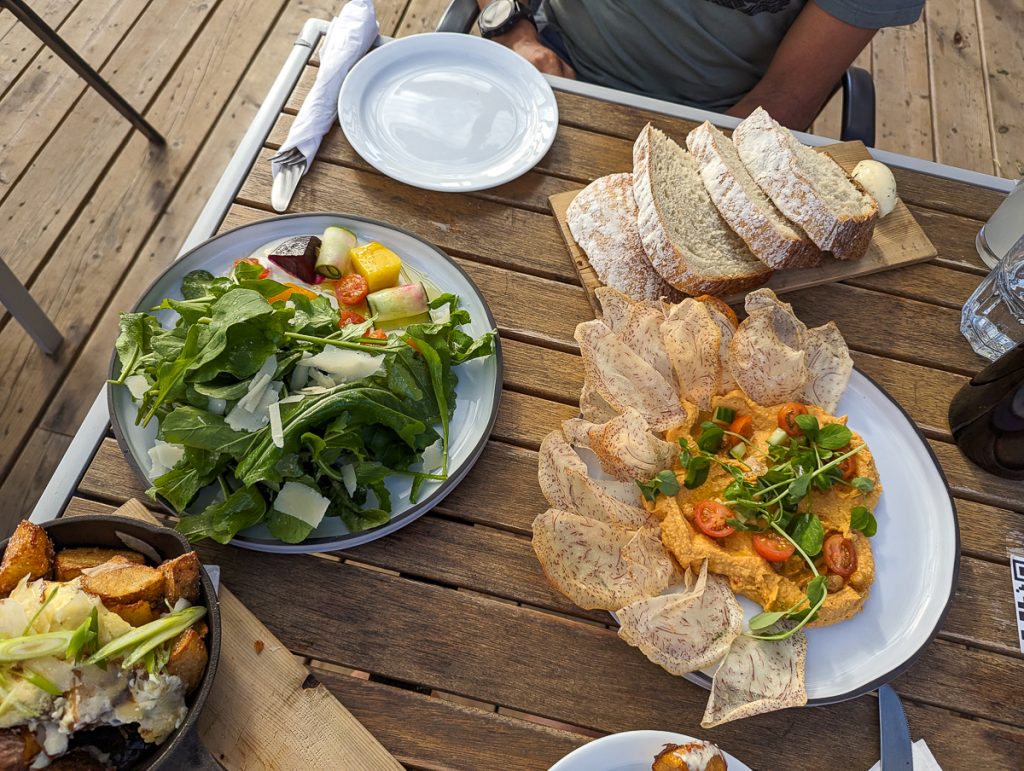
However, for my vegan and vegetarian travelers, do plan ahead. Most restaurants have at least one vegetarian item, but some require advance notice to prepare vegetarian food. We let the Haid House know we were vegetarians, and they had one option available for us. Considering some restaurants are closed on certain days, always have snacks on hand, and make reservations at veggie-friendly places if you can.
6. Check the Tide Schedule
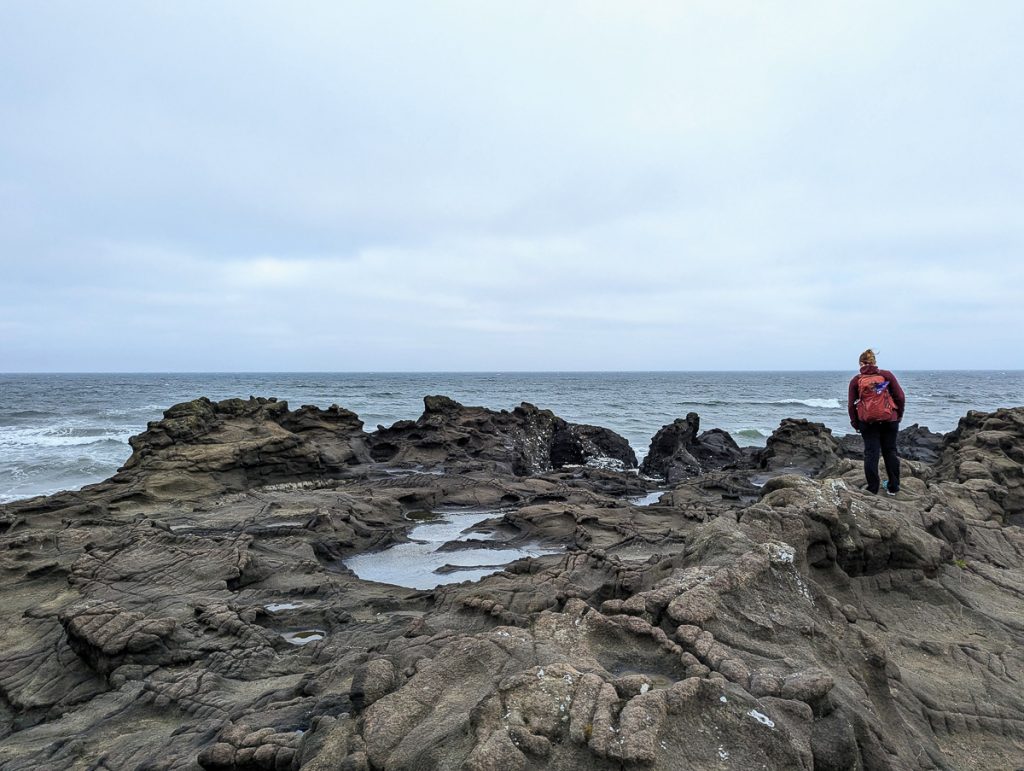
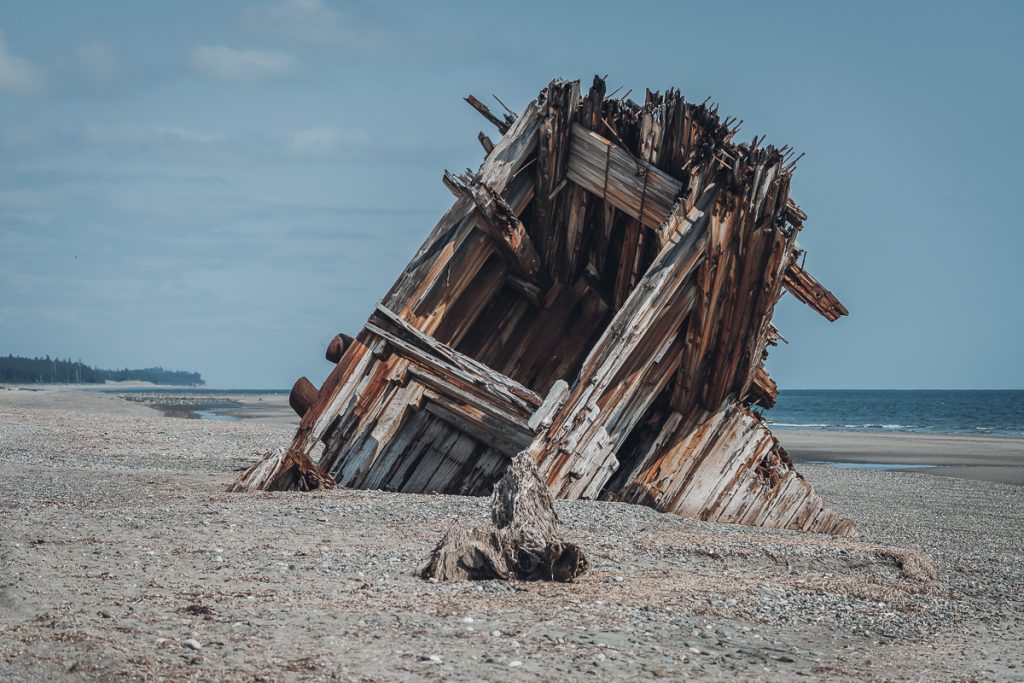
Many of the hikes, like the Pesuta Shipwreck, are along the beach. They are only accessible during low tide windows. I recommend downloading the Tides app and keeping an eye on the tide. Ask your hotel or visitor center for more details if you are unsure when a good time to hike is based on the tides.
Tides can change quickly, and for safety reasons, you should always be aware of whether the shoreline is moving up, down, and how fast.
Where to Stay
There are many choices for accommodation on Haida Gwaii, whether you are looking for a cozy guest house or B&B, a glamping experience, or an Indigenous lodge.
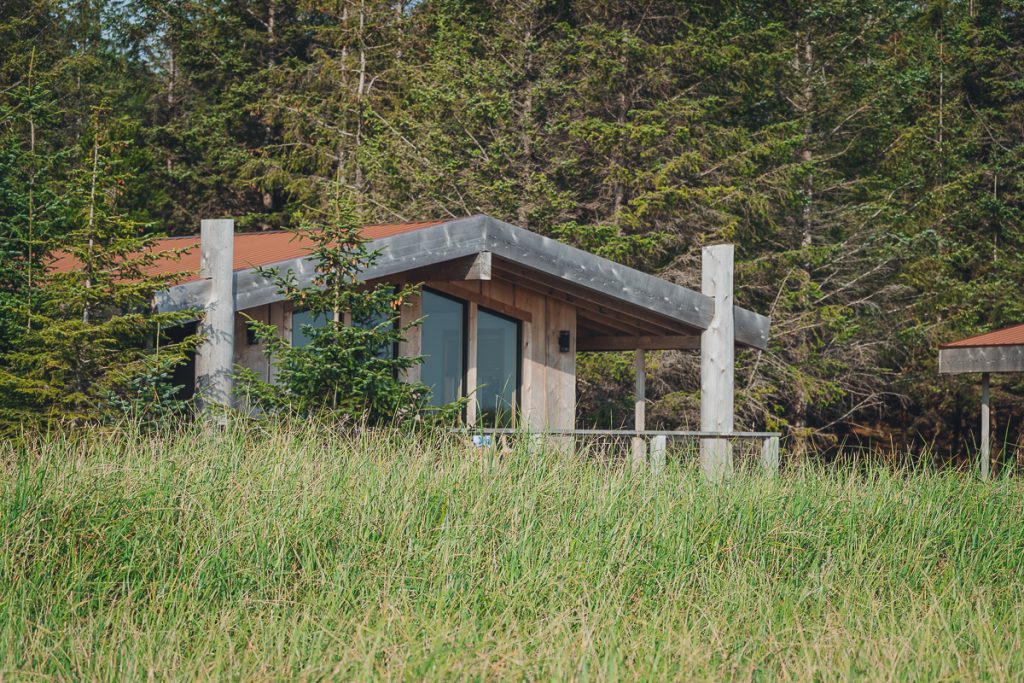
I can’t recommend where we stayed enough. We booked one of the newly opened cabins at the Haida House at Tll.aal.
Haida House was once a bear hunting lodge. As the Haida people fought to end commercial bear hunting, they were able to purchase the lodge. Under their stewardship, they transformed the lodge from an extractive bear-hunting lodge into a regenerative experience.
They maintain their beachfront property to focus on healthy beach and forest ecosystems rather than ocean views.
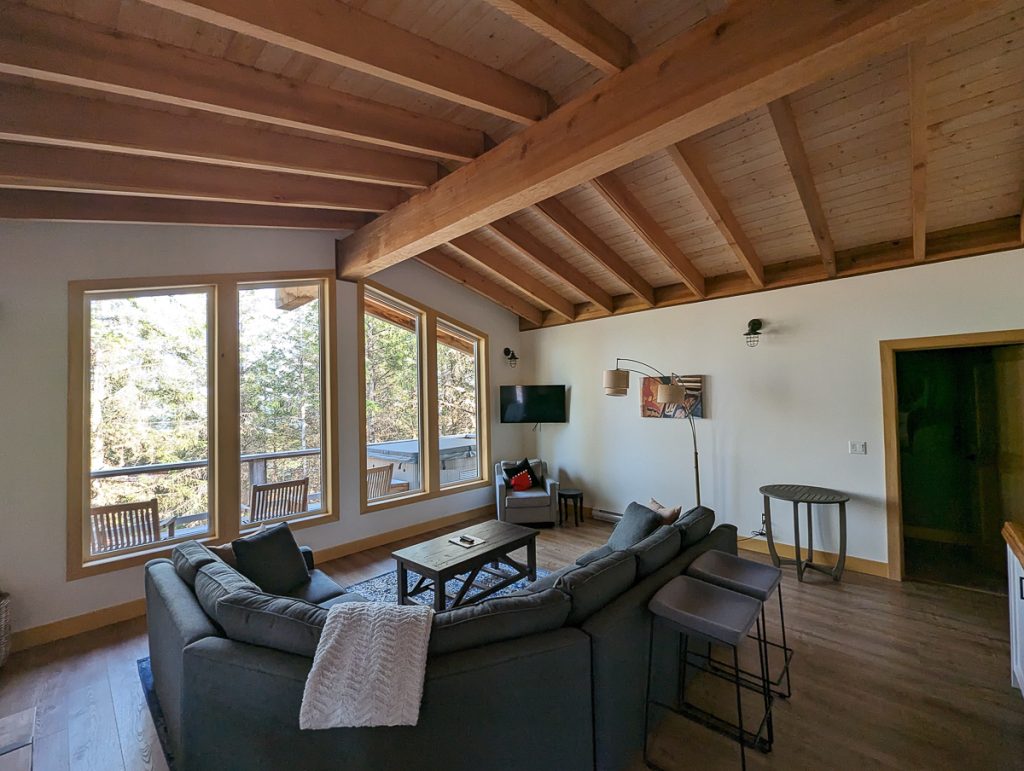
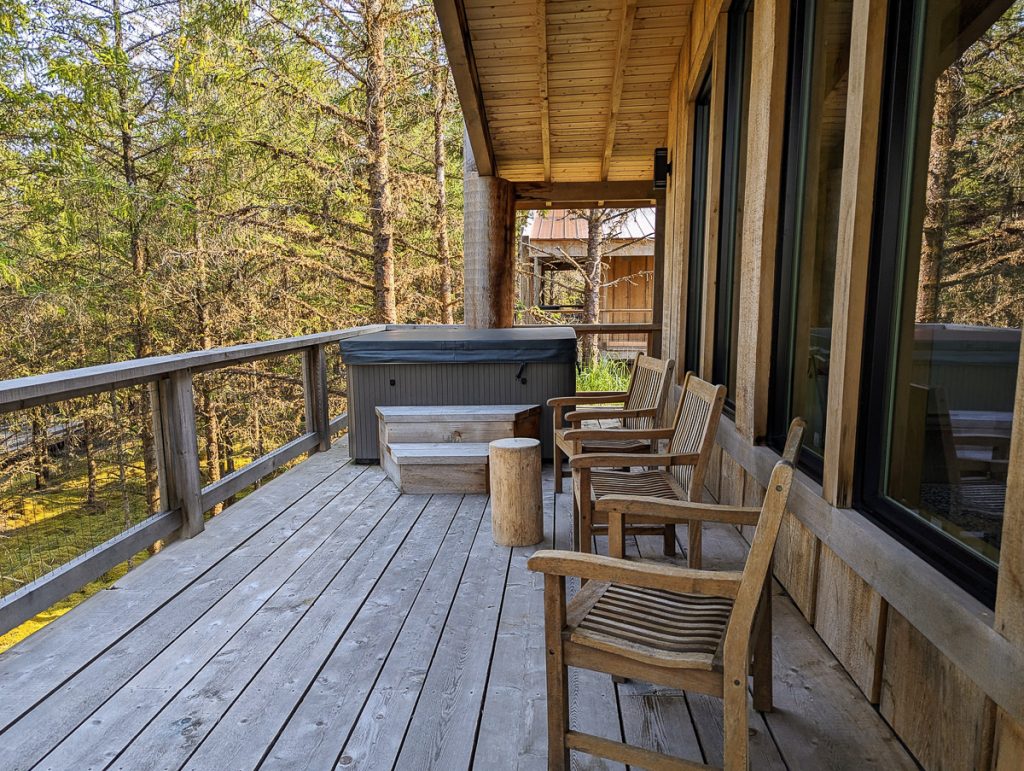
There are two options for stays here: you can book the cabins as we did. The cabin is designed like a long house and has two bedrooms, a small kitchenette, a hot tub on the deck, and cozy furnishings.
The other option in the main lodge is more rustic, with traditional rooms in the main house. They have Haida tour guides on staff, and even offer multi-day packages with their lodge rooms.
There is a bar and restaurant on site (open only a few days a week), a front desk, and options to book all-inclusive packages. Haida people work at the restaurant that serves Indigenous-inspired food.
I could talk about this property all day, but you just have to see it for yourself.
Other options to consider if they are fully booked:
- Haida Gwaii Glamping for an eco glamping experience
- Alaska View Lodge for views of Alaska from a rustic beachfront bed and breakfast
- Chateau Norm Vacation Rentals
When to Visit
The best time to visit is during the peak summer season, when ferry crossings from Prince Rupert to Haida Gwaii are frequent. Most businesses, accommodations, and restaurants are open and operating at full capacity. You can enjoy most outdoor activities with relatively stable weather.
The summer ferry sailing season and recommended time to visit is from June 1 to September 30th.
While I am often a big fan of shoulder or off-season travel, Haida Gwaii in winter is not for most. While it certainly has some winter charm for the right traveler, many places will be closed for the season or operating on minimal schedules.
If you plan on visiting in winter, expect temperamental weather, unpredictable ferry sailings, and limited access to goods and services.
Getting Around the Island
Haida Gwaii’s main islands are large. Though getting to the main sights on Kiis Gwaay (Graham Island) is pretty straightforward. The main roads are paved and easy to drive. We made it from the main ferry terminal to the top of the island and back to our accommodation on a full-day adventure.
If you want to visit the areas accessible by road on the southern island, like K’il Kun (Sandspit), you will need to take a small ferry. The roads on the South Island are smaller and narrower, and a little rougher, but still paved.
Gwaii Haanas is roadless and requires a boat or plane to access.
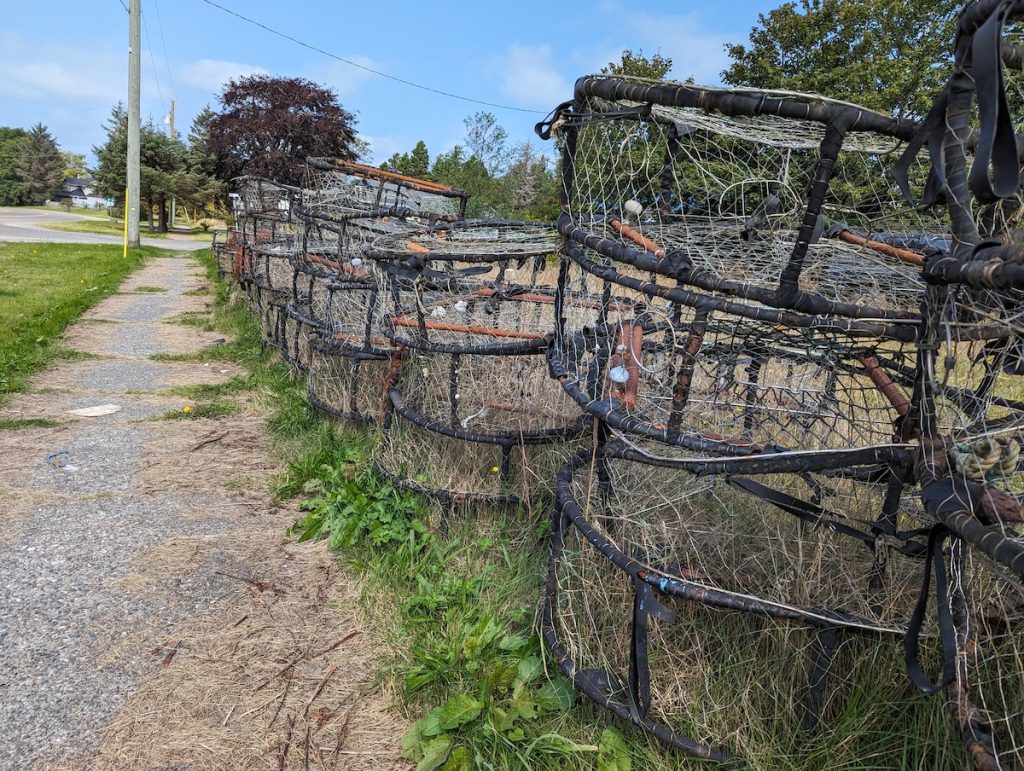
Logging Roads
Outside the few main roads, most roads are logging roads. Logging roads are unpaved, pot-hole-filled, rough roads. These roads are shared with giant logging trucks.
Most logging roads will take you to rural areas, remote hiking trails, or backcountry hiking.
To access logging roads, you should have an appropriate car (4×4) or high-clearance AWD, know how to change a tire, always tell someone where you are going, have extra food, water, and supplies, an overnight kit, and a satellite phone.
To reach some places like the Golden Spruce Trail, you will only need to drive down a short stretch of logging road, which can be done in most vehicles.
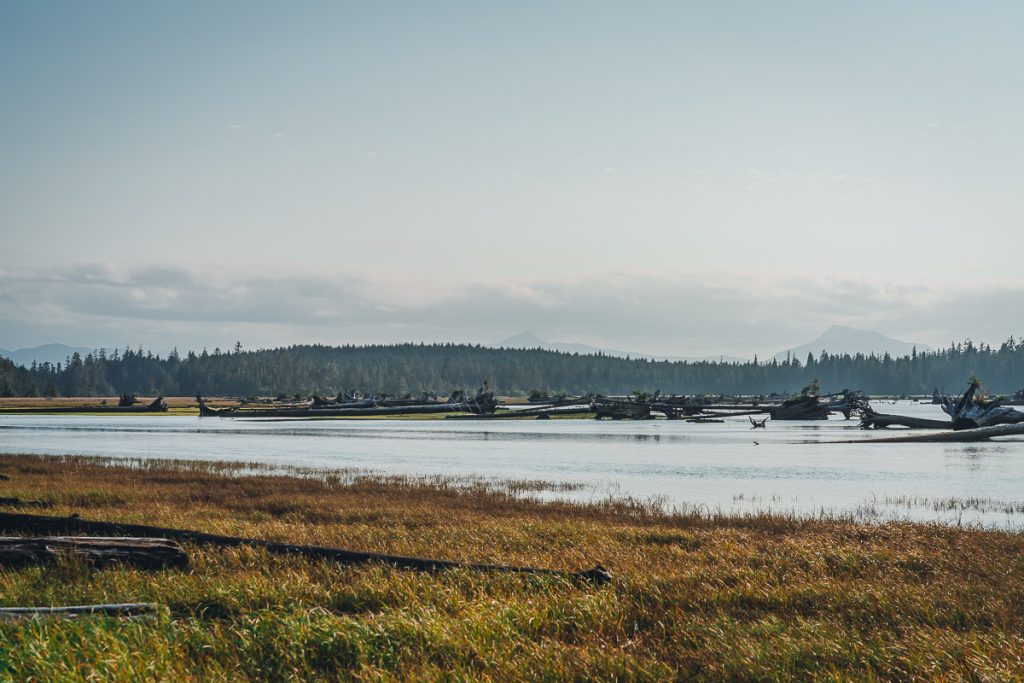
Car Rental
Unless you have booked a multi-day all-inclusive tour, you will need a car. It is best to drive your car or rental from the mainland and take the BC Ferry from Prince Rupert to Haida Gwaii.
However, if you choose to fly and rent a car, be aware that car rentals on the island are scarce, have terrible reviews, and are expensive. I do not recommend this unless you have no other option.

Public Transportation
There is no public transportation. There are limited taxi services only around the small towns, but they should not be part of your transportation plan.
Bringing Your Electric Vehicle
You can bring your EV! We got our Polestar and drove it from Vancouver.
There are only 3 slow chargers on the island, and your accommodation may also offer an option.
There is a charger in Masset, The Heritage Center, Haida House at Tll.aal for guests, and one on the South Island, I believe.
Bringing your EV to Haida Gwaii requires advanced planning, patience, and the ability to enjoy yourself in small towns for 5-6 hours while you charge! We had the best 6-hour adventure around Masset while we waited for a slow charger. Embrace the unexpected.

How to Get to Haida Gwaii
Taking the ferry from Prince Rupert to Haida Gwaii is, in my opinion, the best way to reach the islands. You can drive from Vancouver as we did on an epic month-long road trip across BC, starting in the Comox Valley, taking the Inside Passage Ferry, visiting Prince Rupert, and then sailing to Haida Gwaii.
Or you can make your way to Prince Rupert, rent a car, and then take the ferry over. The ferry requires advanced reservations and planning.
I have an entire guide to taking the ferry, which you can find here.
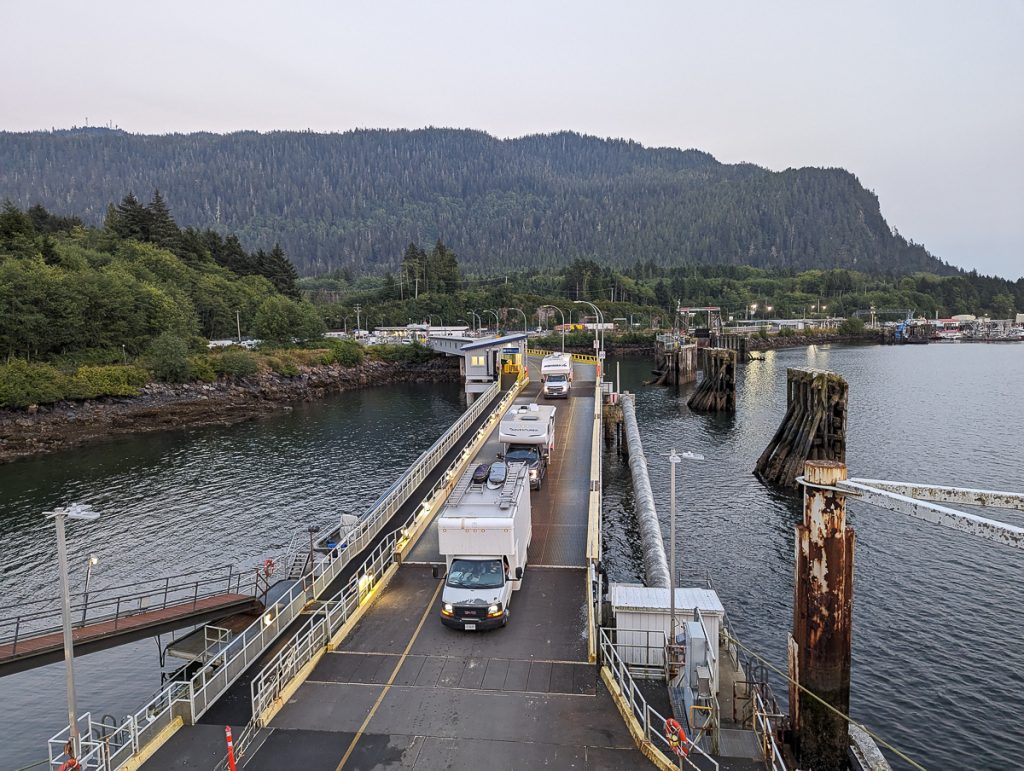
Your alternative is to fly and rent a car, but make note of the rental car situation first.
What To Pack
You need layers for this trip. It can be hot and sunny in the direct summer sun, warm enough for shorts and a T-shirt in midday.
However, you’ll experience a range of weather:
- Shaded forest areas
- Windy storm-prone beaches
- Cloudy, cool weather
- Rain
- Warm, sunny moments
You need the essentials, including rain gear, outdoor and athletic attire, good shoes, and casual attire.
My husband and I swear by our 3-in-1 jackets. They are great because they provide extra insulation in colder weather, or you can use the shell in warmer temperatures.
- For women, I own and recommend the North Face 3-1 Eco Tri-Climate jacket. You can easily layer this with a technical fleece to stay nice and cozy.
- I also recommend the Patagonia 3-in-1.
- For the guys, Ganesh has had his Patagonia 3-in-1 for almost 10 years, and he sent it back to Patagonia once for repair during his 9th year of ownership; it is as good as new.
If you are not on a budget and seeking a quality rain jacket that will last for years, I highly recommend Arc’teryx waterproof products. I have an Arc’teryx jacket for multi-day backpacking and hiking tours.
I would pair this shell with a nano puff for women or men, and maybe keep a technical fleece on hand for women or men.
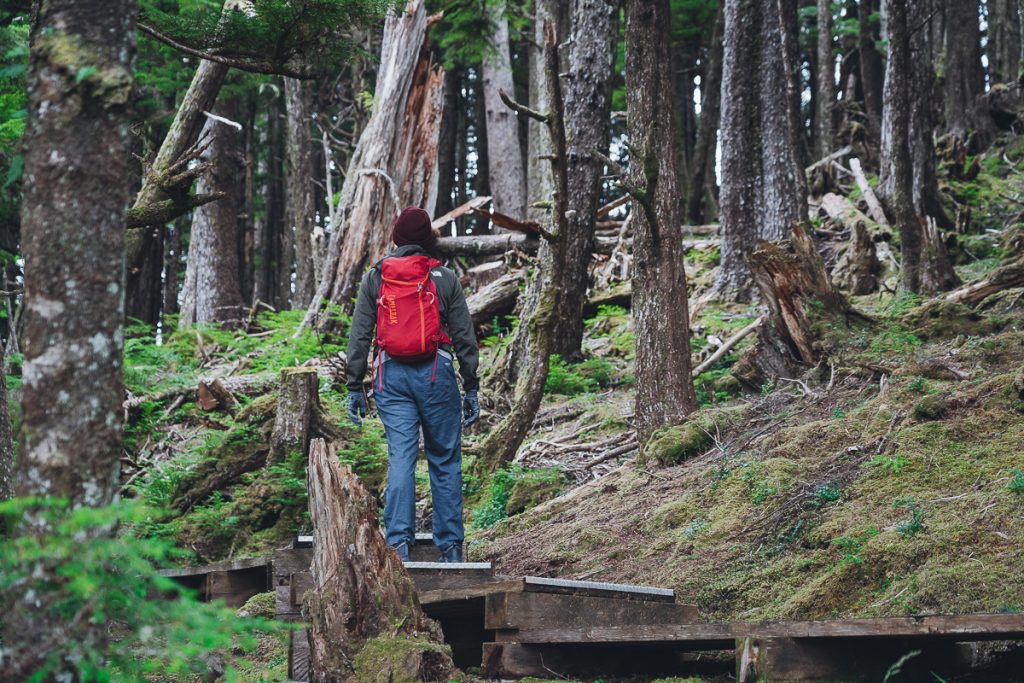
Waterproof Shoes
- For women, I have a deck-style bootie. These Bogs booties will keep you dry!
- For active adventures, such as light hikes in the rain, I recommend my Salomon waterproof trail runners.
- For men, Ganesh loves Keen, which offers stylish, waterproof boots and trail runners.
Other Essentials
- Your favorite casual clothing and layers you own. I love PrAna basics for their comfort and commitment to sustainability.
- Wool socks are a must to keep feet warm and dry.
- Reusable coffee cup, and water bottle
- Hiking day backpack for men and a hiking day bag for women
- Don’t forget the water reservoir
- Hiking pants, SPF hiking hoodie, and a shirt for men (we love the Sahara line!)
- Hiking pants, SPF hiking hoodie, and a shirt for women (we love the Sahara line!)
- Binoculars
- Camera
- Reusable tote for shopping
- Snacks, there’s no 24/7 convenience store if you get the munchies
- Battery pack

Comment and Share
Traveling to Haida Gwaii is such a memorable once-in-a-lifetime trip. However, you need to plan and prepare for your trip methodically with the planning tips I’ve outlined above. With limited facilities and resources on the island, you will need to book things in advance, but also practice a go-with-the-flow and slow-travel mentality to prepare for unexpected weather and closures.
As you explore Haida Gwaii, it is essential to take time to get to know the people as well as the place, and these travel tips for Haida Gwaii will help you get to know the Haida people, culture, and be a respectful and responsible traveler.
This guide covers essential things to know before visiting Haida Gwaii to ensure you have a great time and travel respectfully.
Is Hadia Gwaii on your dream travel list? Let me know in the comments if you need any more tips before you plan to travel to beautiful Haida Gwaii in Canada.
Related Posts:
- Sustainable 24-Hours in Prince Rupert
- Canada’s Inside Passage with BC Ferries
- Prince Rupert to Haida Gwaii with BC Ferries
- Haida Gwaii Regenerative Itinerary

Curiosity Saves Travel Recommends
Accommodation: Booking.com to find accommodation with a Genius Discount and clear third-party sustainable certifications like Green Key. Look for local hotels.
Tours and Excursions: GetYourGuide and Viator for tours, excursions, and tickets. Never book wildlife experiences through these vendors.
Travel: Omio for booking buses and trains in English across Europe. After reducing the number of flights I take annually, I use Google Flights’ carbon comparison tool.
Car Rental: Rentalcars for the best rates in English globally. It is easy to find hybrids and EVs, and there are resources for finding chargers.
Packing Essentials: REI or your local Co-op has great essentials like reusable water bottles and cutlery sets. Patagonia for regenerative clothing. Farm to Feet for socks made with regenerative practices! Pistil Designs for cold-weather essentials. Osprey for bags that last 10+ years, like the day bag for hiking or my favorite carry-on.
eSIM: Airalo eSIM. Reduces waste from single-use SIMs. A total game-changer.
For Bloggers and Content Creators
Earn Ad Revenue with Journey by Mediavine
Earn with Stay22 Travel Partnership (my biggest source of income!)
Earn with TravelPayouts recommending tours and activities.






It was so great to come across this post. Now that we have moved to the Sunshine Coast, we definitely have Haida Gwaii on our list for “local” travels. Good to read the tips on how to visit more responsibly. Thanks for sharing so much history of this unique spot in BC. Great to read about the pledge. I wonder if most people take it? Saved for our travel planning.
Hey Leigh, that is so great you are just across the Howe Sound from me here in North Vancouver. I love the Sunshine Coast. Haida Gwaii is a great addition to your local travels. When we moved to BC 3 years ago, we set out to explore our home region, and were so happy we added Haida Gwaii to this list. I am seeing pledges as an increasingly common tourism initiative especially in places on treaty and tribal land. A few travelers we met along the way had heard of this pledge, and it is in the Haida Gwaii travel magazine and tourism brochures. I hope people are taking it before visiting as it really adds to the experience for everyone.
-Susanna
I hadn’t heard of Haida Gwaii before, though it looks like a spot we’d truly enjoy exploring. Learning about the indigenous history and culture and hiking around the islands sounds like an ideal combination.
Haida Gwaii is such a special place, and with that it is so important to visit responsibly for both the nature and culture. I hope you are able to make it up here sometime!
-Sooz