
Vegetarian and Vegan Guide for Japan: 18+ Tips for Plant-Based Travels
I may earn income from affiliate links or partnerships in this post. I spend time to curate tours or products that align with my values. Thanks for supporting my work, at no additional cost to you. All words and images on this website are created by real people.
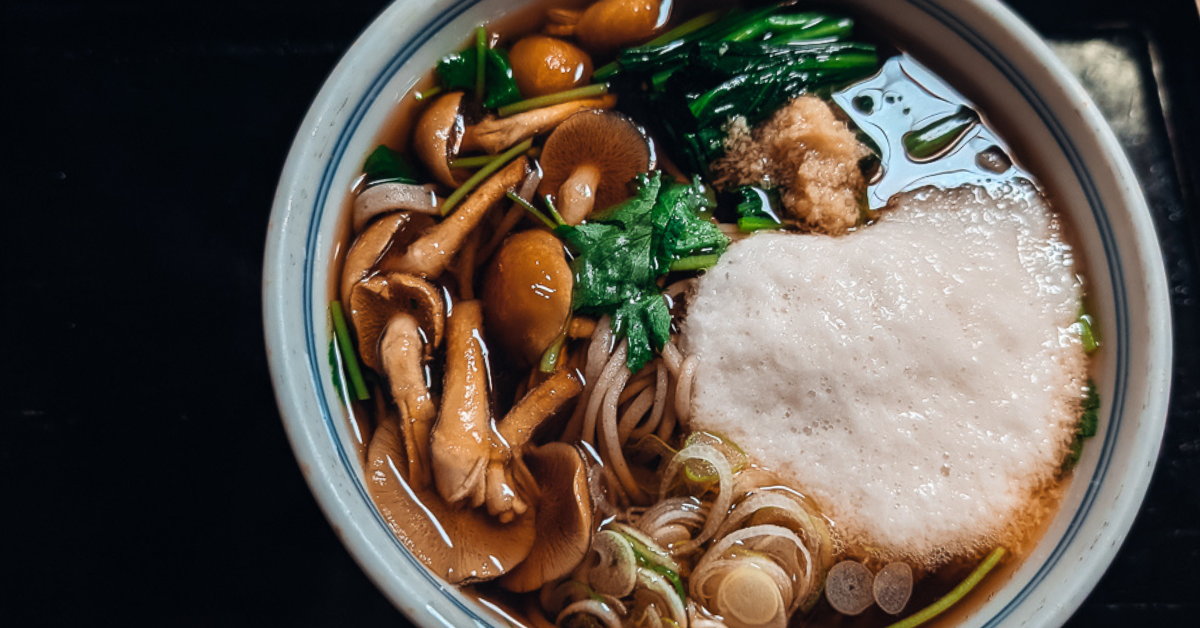
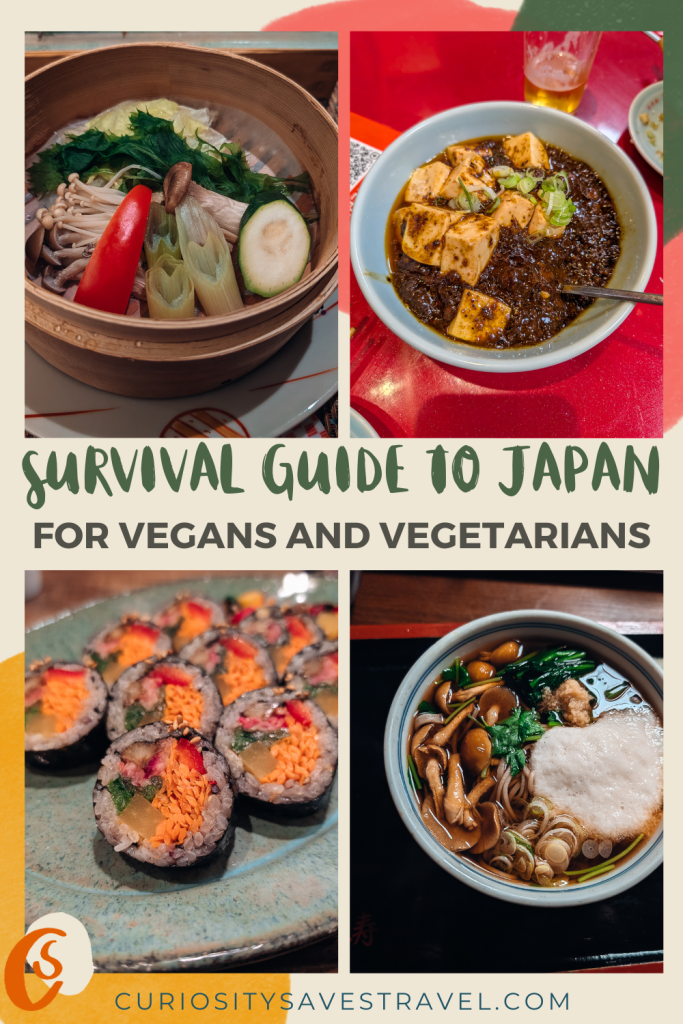
Are you a vegetarian or vegan and curious about what it’s like to travel throughout Japan? You might think navigating plant-based travel in Japan would be a culinary minefield. After all, the country is renowned for its seafood and meat dishes. But surprisingly, Japan is emerging as a more accessible place for vegan and vegetarian foods. From flavor-packed vegan ramen to traditional temple cuisine, Japan offers a unique and delicious journey for vegetarians and vegans.
These 18 essential travel tips for vegans and vegetarians in Japan will keep you fueled and eating drool-worthy foods.
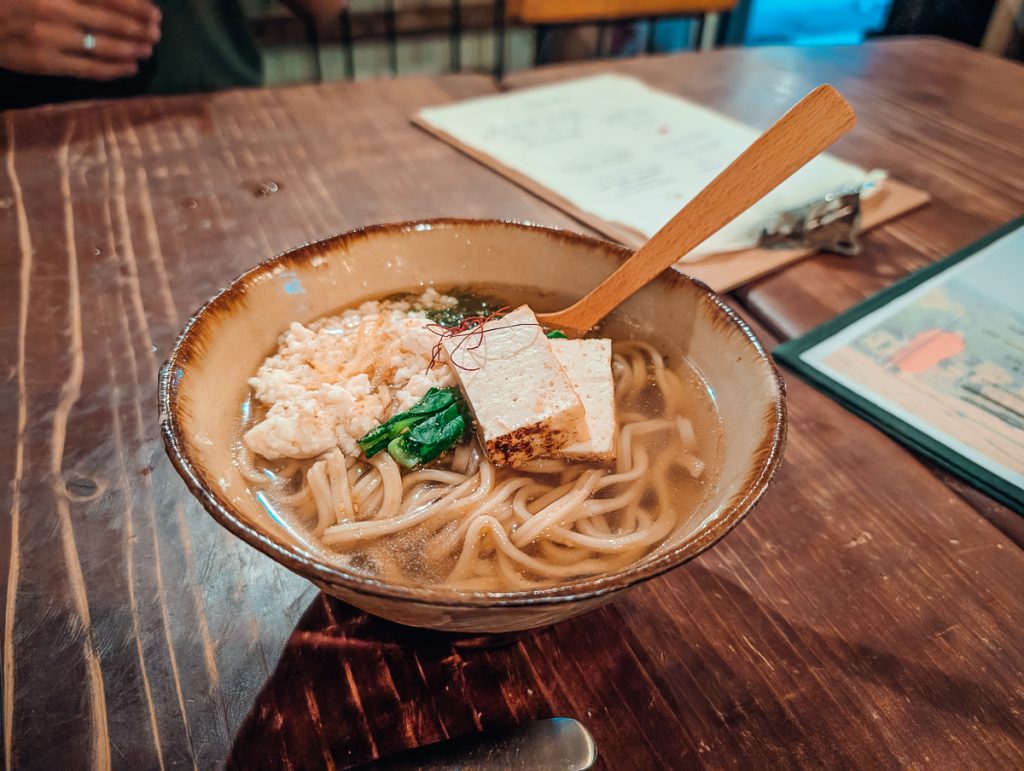
I spent a month traveling to Japan, visiting the urban sprawl of Tokyo, Nikkō National Park, a cozy homestay in the Japanese Alps, places off the tourist track, and the forests and beaches of Okinawa. While I didn’t struggle to find quality vegetarian and vegan food, eating plant-based food in Japan, especially in rural areas, required additional planning, communication, research, going without, and sometimes an extra charge.
Don’t worry, though. In this vegan and vegetarian survival travel guide to Japan, I’ve curated my top tips for vegans and vegetarians traveling there. I’ve also included some information about plant-based foods in Japan, why skipping meat and seafood might be a good idea, and other helpful advice for plant-based adventures. I also throw in some sustainability tips about food and dining experiences.

Some of the most challenging places I’ve traveled to as a vegetarian (who prefers vegan foods) are Norway, the Australian outback, rural France, rural Kazakhstan and Kyrgyzstan, and even parts of Canada. Surprisingly, Japan doesn’t make my top 5 list.
Japan can be an excellent country for vegans and vegetarians. It offers traditional vegan food, innovative vegan meat alternatives, and a commitment to hospitality that can make travel easier than expected for them.
However, Japan lacks transparency and offers no certified vegan labeling, which can make some aspects more challenging.
Japan Emerges as Vegetarian-Friendly Destination
Japan has a bad rep when it comes to vegetarian and vegan dining, and rightly so. My father-in-law, a practicing Hindu from India, went to Japan in the 1980s during a work trip and was not offered dietary accommodations.
As I told friends and family about my upcoming trip to Japan, they all started talking about Japanese food, raving about fresh-caught sushi or wagyu beef, or having just heard tales about Japanese cuisine.
Several asked me if I would give up being vegetarian in Japan, assuming that the “traditional” Japanese foods would be too good to pass up or that travel would be too challenging.
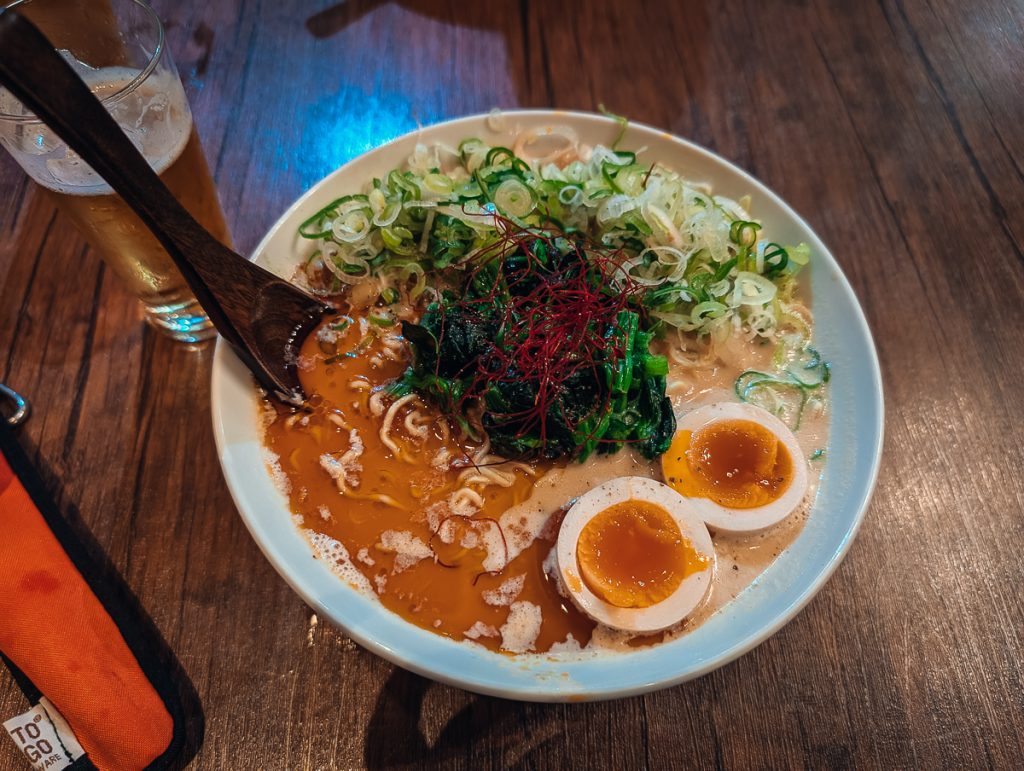
All this made me a little nervous, as Ganesh and I started planning our trip to Japan. I thought we would miss out on iconic Japanese experiences, eat bland and unexciting foods, or be offered meat dishes like Ganesh’s father.
Thankfully, the times are changing, and I’m not kidding when I say that in my nearly 10 years of vegetarian travel, Japan ranks as one of my top foodie spots! One of the best parts about traveling to Japan is that I didn’t feel we missed anything. We still ate at cafes, izakaya bars, fine dining, historic restaurants, and homestays that accommodated our dietary needs.
There were certainly some challenges, of course, and one accidental meal that was poorly labeled.
Reasons Why Japan is Great for Vegetarians
Japan was Traditionally a Plant-Based Culture!
From 600 CE to 1800 CE, meat consumption in Japan was restricted. Emperor Tenmu, before the Edo period, imposed a ban on chicken, beef, dogs, horses, and monkeys. For 1,200 years, meat consumption in Japan was almost entirely non-existent.
Only those who were societal outcasts openly consumed and processed meat such as beef. There was some flexibility regarding game meat, so deer and boar were not quite as taboo.
As a primarily Buddhist culture, Japanese monks taught that eating meat destroyed the souls of Japanese people. So, in many ways, consuming meat went against the very fabric and beliefs of many Japanese people. Furthermore, with little additional land for livestock, a plant-based diet protected the culture and land.
To westernize Japan, in 1869, Emperor Meiji fostered a culture of meat consumption. Meat consumption increased rapidly, reaching a modern boom post-WWII. Plant-based diets are more traditionally Japanese than Wagyu beef in many ways!
Hospitality and Commitment to Excellence
I occasionally like to splurge on luxury eco packages when I travel. When I pay a decent amount for sustainable experiences, I expect vegan and vegetarian accommodation to be part of that package, especially when communicated in advance. However, I’ve learned that that is not always the case.
At Bamurru Plains in Australia, I confirmed our vegetarian preferences several times in advance. They did well with the main meals, but forgot to prepare food for us during our day excursions.
We repeatedly confirmed our dietary needs at a luxury lodge in Norway before arriving. Yet, when we sat down to dinner, the restaurant had no clue we had booked vegetarian meals. With no vegetarian options on the menu, they delivered a sad afterthought of kitchen veggies.
I do not expect these experiences when paying thousands and confirming in advance.
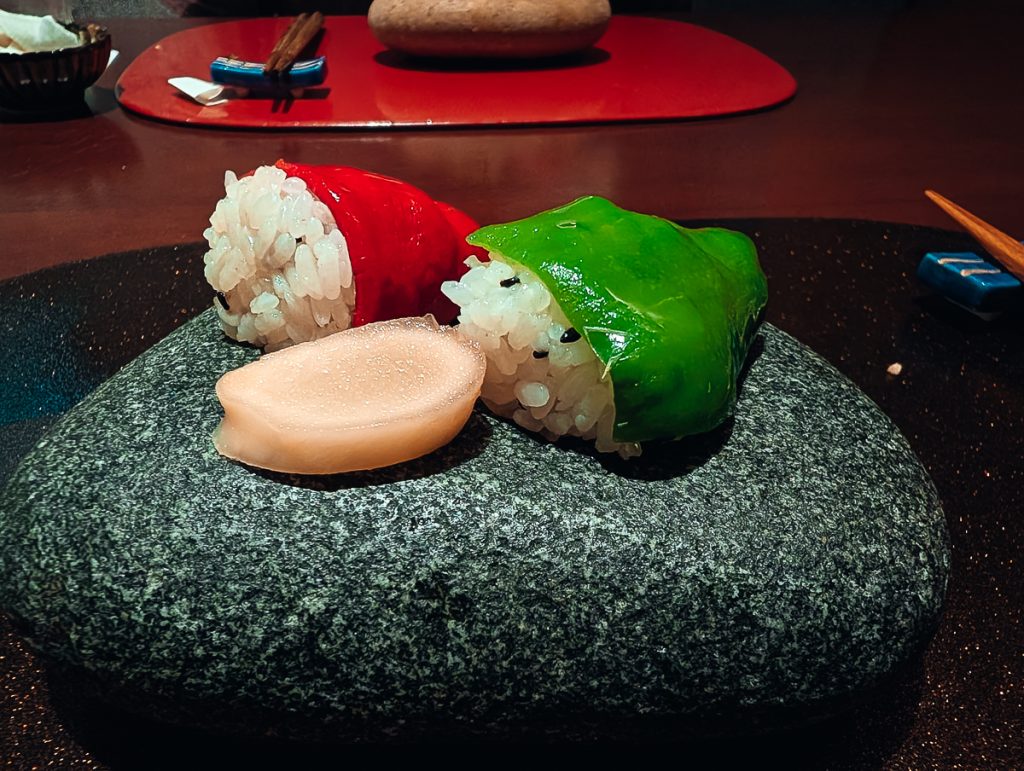
Thankfully, no one dropped the ball in Japan. Once we had confirmed our dietary preferences beforehand, there were no mistakes, no slip-ups, and no one forgot. The accommodations in Japan, which included meals, were thorough in asking us questions to ensure everything was right, and from there, it was a given.
Everyone went above and beyond to meet our dietary needs, a testament to Japanese hospitality.
Diversity in Foods and Options
I also stupidly assumed that when traveling through Japan as a vegetarian, I would be eating bland or plain tofu and rice for every meal. Quite the opposite was true; we barely ate the same foods twice for the entire month, though there was a lot of tofu, haha.
We were served something different daily at hotels where vegetarian/vegan meals were included for breakfast and dinner. Vegan ramen restaurants offered a variety of ramen options, and vegan izakaya bars featured pages of dishes, each unique and different.
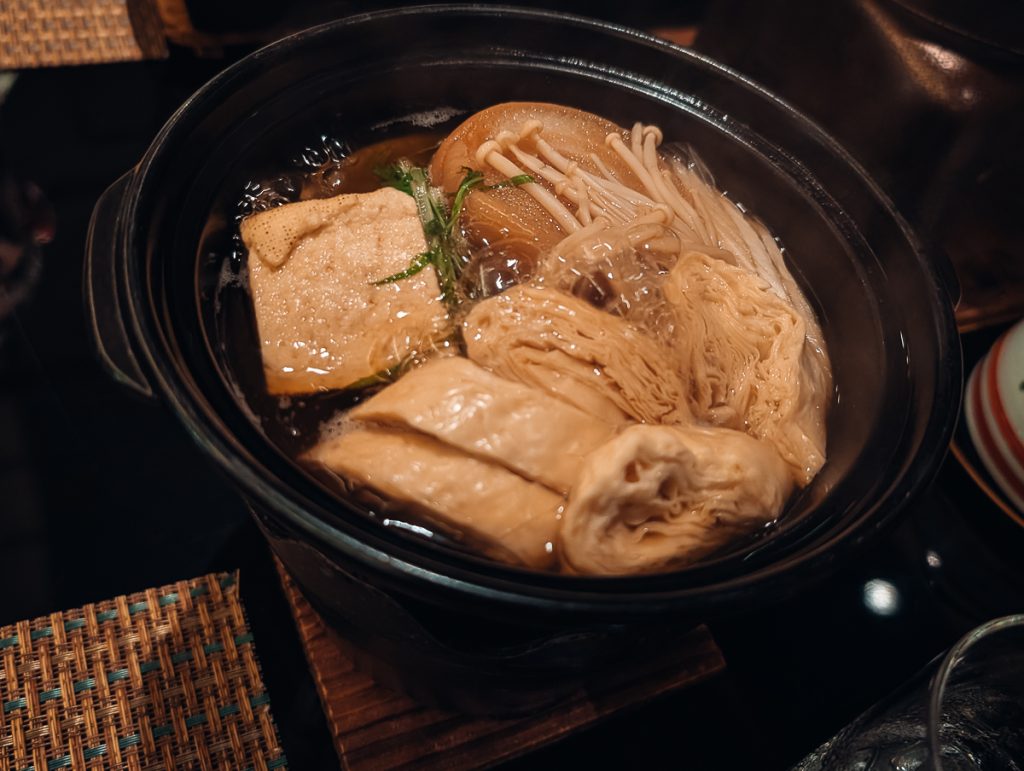
Japan’s vegan and vegetarian food is diverse, and as you travel through the cities, mountains, coastlines, and islands, every place has regional variations for countless plant-based dishes. Even the meals full of tofu offered a variety of textures, flavors, and methods of preparing tofu for variety.
Reasons Why Japan Can Still Be Challenging for Plant-Based
It is not all perfect, though. Navigating Japan as a vegetarian, especially a vegan, can still be challenging.
Not Great With Labeling
Japan struggles with proper labeling. So, you won’t see that standard vegan or vegetarian label on most packaged foods that is common across the EU, Canada, Australia, the UK, and the United States.
Certain menus and plant-based-specific restaurants have dedicated vegan and vegetarian sections, but finding packaged food at 7-Eleven was more challenging. Some of our hotel breakfast buffets lacked clear labeling for vegan/vegetarian options. In times like this, we stuck to rice and pickled vegetables for breakfast or asked.
The lack of transparent labeling can make it more difficult. Throughout our travels, I used Google Translate on ingredient packages, and while ingredient lists indicated no presence of animal products, it is hard to be 100% certain without that label.
This guide might help you navigate labels and ingredient lists, especially at supermarkets, where you struggle the most.
Sneaky Ingredients
I discuss this later in my guide as a dedicated tip, but it’s worth mentioning here. Although many things may appear vegetarian or vegan, Japan uses animal-based products in broths, sugar, curries, sauces, stocks, and seasonings.
Vegetable noodles and rice, unless clearly labeled as vegan, will likely have meat or fish seasoning; many broths are not vegan.
Bone char is sometimes used in sugar. You can look for natural sweets in macrobiotic settings that focus on natural and nourishing ingredients, and sugars will typically be raw or unrefined.
Unless specified as vegan, always double-check before consuming something you think is vegan. This is why we preferred to stay at vegan—and vegetarian-friendly accommodations that prepared breakfast and dinner for us or places with a dedicated veggie option on the menu. It took some of the guesswork out of things.
Beer, Wine, Sake?
As any vegan knows, finding certified vegan alcoholic libations can be challenging. We found that a few vegan restaurants didn’t even serve alcohol, I assume for this reason. While a few vegan shojin ryori restaurants served alcohol, I could not confirm if they were certified vegan. If you are very strict about vegan-certified alcohol, make sure you verify the vegan status before you consume.
- A few beers, including Kirin and Sapporo beer, have confirmed they are vegan in Japan.
- Meanwhile, stouts in Japan are often made with milk.
- Sake is often, but not always, vegan.
Why Go Plant-Based in Japan? Ethical Concerns with Japanese Meats and Seafoods
Beyond the culinary delights, choosing a vegetarian diet in Japan aligns with ethical and environmental concerns.
Sadly, Japan is one of the only countries still engaged in mass commercial whaling and dolphin hunting. Its fishing practices are extractive, unsustainable, cruel, and unethical.
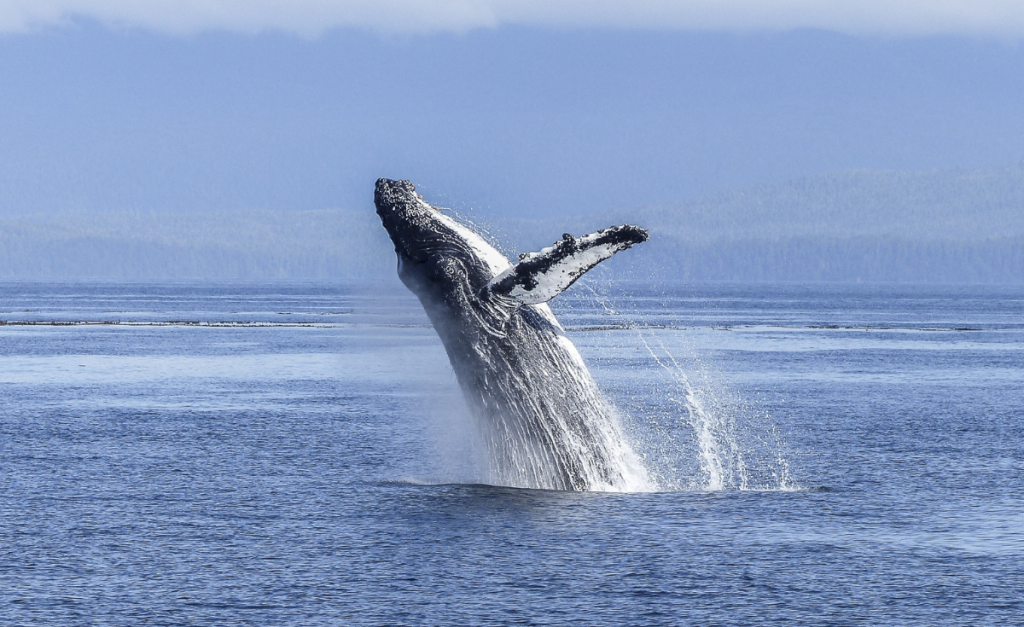
Commercial whaling at this scale is linked to the direct endangered listing of species like the Humpback whale and the Cook Inlet Beluga. You should never eat or try whale meat in Japan (or anywhere); instead, engage in conservation-based activities like snorkeling in Keramashoto National Park or just exploring Japan’s National Parks on foot. However, exercise caution as Japan is riddled with unethical wildlife encounters.
Finally, while Japan is known for its famed Kobe and Wagyu, producing this type of beef is problematic. Contrary to common myth, Japanese cows aren’t massaged. Instead, due to limited land, they cannot roam freely and graze on grass, which causes vitamin deficiencies and vision problems.
They are confined to feedlots, limiting natural movement and behavior, and fed large amounts of grain to increase their fat. Some argue these practices are better for land management, but they come at the cost of serious welfare concerns.
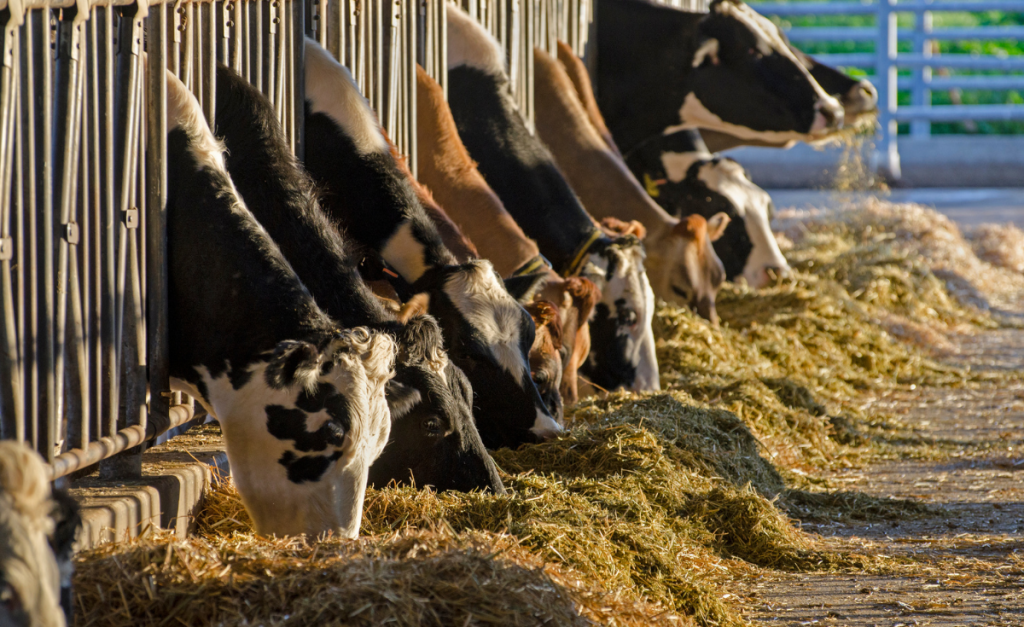
Beef is one of the highest carbon emitters in the food sector, with the cattle industry producing at least 14% of GHG, including high amounts of methane.
All this makes cutting beef from your Japan trip one of the best things you can do as a responsible traveler.
By embracing vegetarian cuisine, you can still immerse yourself in the country’s traditions while preserving marine ecosystems and animal welfare.
Tips for Vegan and Vegetarian Travel in Japan
Now comes the time for practical tips to help you plan and ensure your trip to Japan goes smoothly as a vegetarian or vegan. While you will not want for options, diversity, and traditional foods, you do need to take initiative and plan.
1. Look for Traditional Vegan Japanese Foods
While Japan might be known globally for surf and turf, many traditional and ancient foods and cuisine styles are vegan.
Yuba is a typical traditional dish made by heating soy milk to create sheets of tofu. This meal is interactive and fun. As a heat source (like a candle) starts to cook the soymilk, you use your chopsticks to peel off thin layers of a tofu sheet and dip that into a tasty sauce. Once you get 3-4 layers, add an X and stir precisely 8-10 times, turning the mixture into soft tofu.
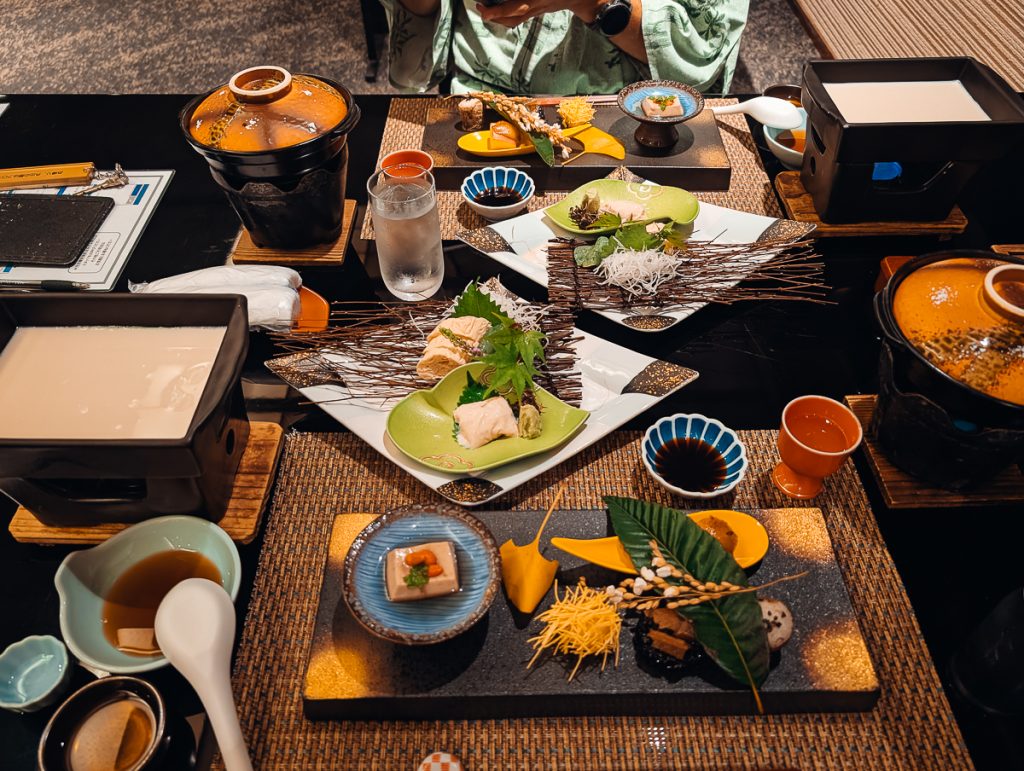
Of course, this is just one of many traditional tofu dishes. During our month in Japan, we ate tofu dozens of times, but I never got bored! Japanese cook tofu in many different ways in many dishes, so whether it is stewed, fried, soft, crunchy, marinated, or slathered in a curry, you won’t be bored eating all types of tofu.
Japanese Buddhist monks eat a vegan diet called shojin ryori. This cuisine style is one of the most authentic options, as Buddhist monks have eaten it for thousands of years. The foods in shojin ryori cuisine are clean, pure, and simple.
Dishes don’t contain intense flavors like garlic and onion, but are still tasty, fresh, healthy, and flavorful. One of our favorite meals in Japan was shojin ryori.
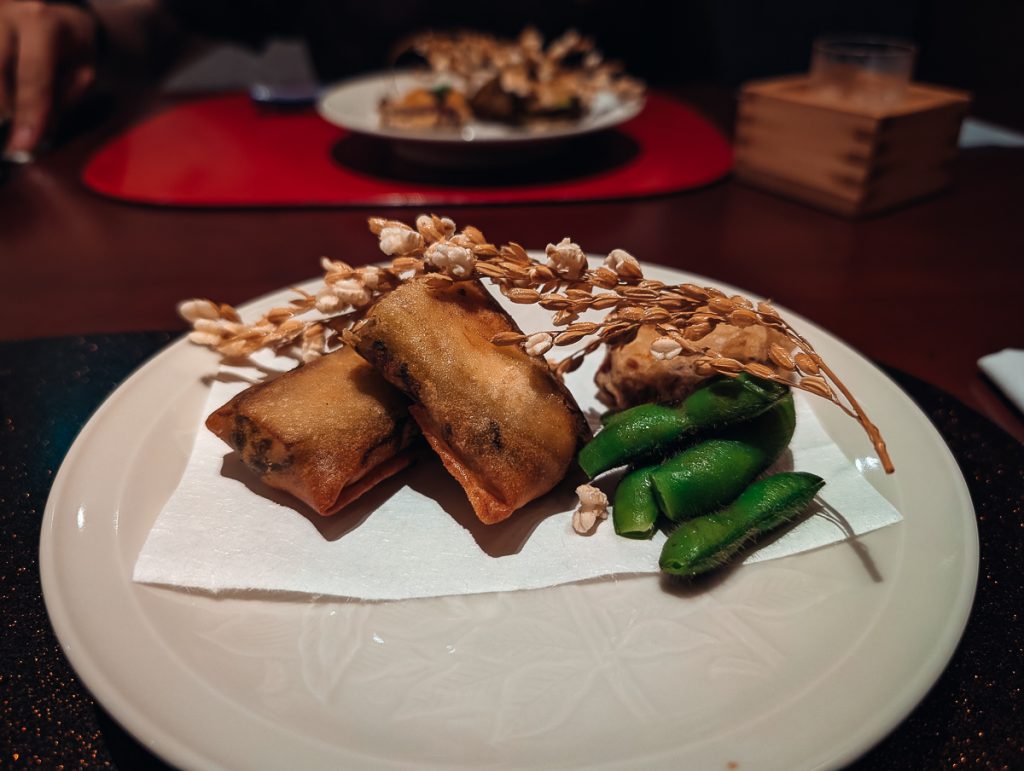
If you’re struggling to communicate with hotels or restaurants about your dietary needs, mention that you prefer shojin ryori to ensure your food is free of animal products.
Sansai are “mountain vegetables” that have been foraged and consumed for centuries. They include fiddlehead ferns, mushrooms, native root vegetables, and others. As part of a traditional Japanese diet, enjoy them as tempura, grilled, steamed, or stewed.
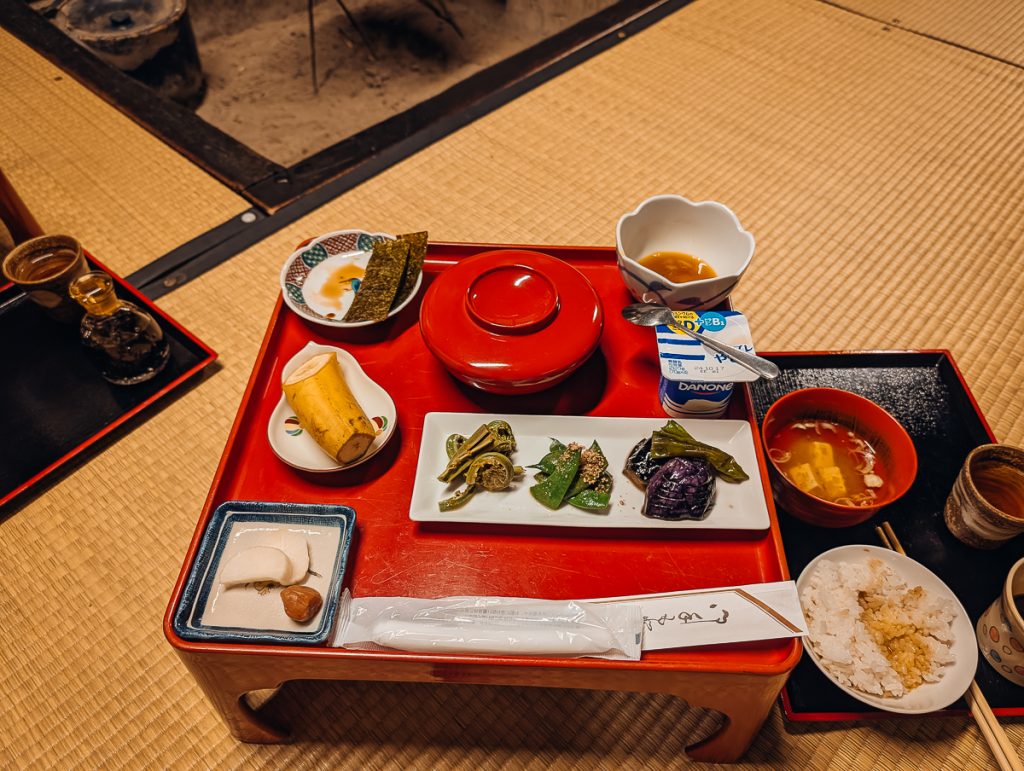
Traditional Japanese cuisine includes tofu, soybean products, seaweed, vegetables, rice, dumplings, and many other vegan and vegetarian foods that are just as traditional, if not more, than wagyu.
Oyuo is a rice porridge that is often served at hotels across Japan. The base is just rice and water, so you can keep it vegan by adding various pickled vegetables and leaving out the sardines and fish flakes.
2. Enjoy Vegan Meat Alternatives
Since I became a vegetarian who primarily eats vegan, I haven’t enjoyed most vegan meat alternatives. I find their texture, flavor, and nutritional quality lacking, especially as someone who never loved meat. Instead, I prefer patties made from black beans or eating products made with chickpeas, lentils, vegetables, tofu, and such.
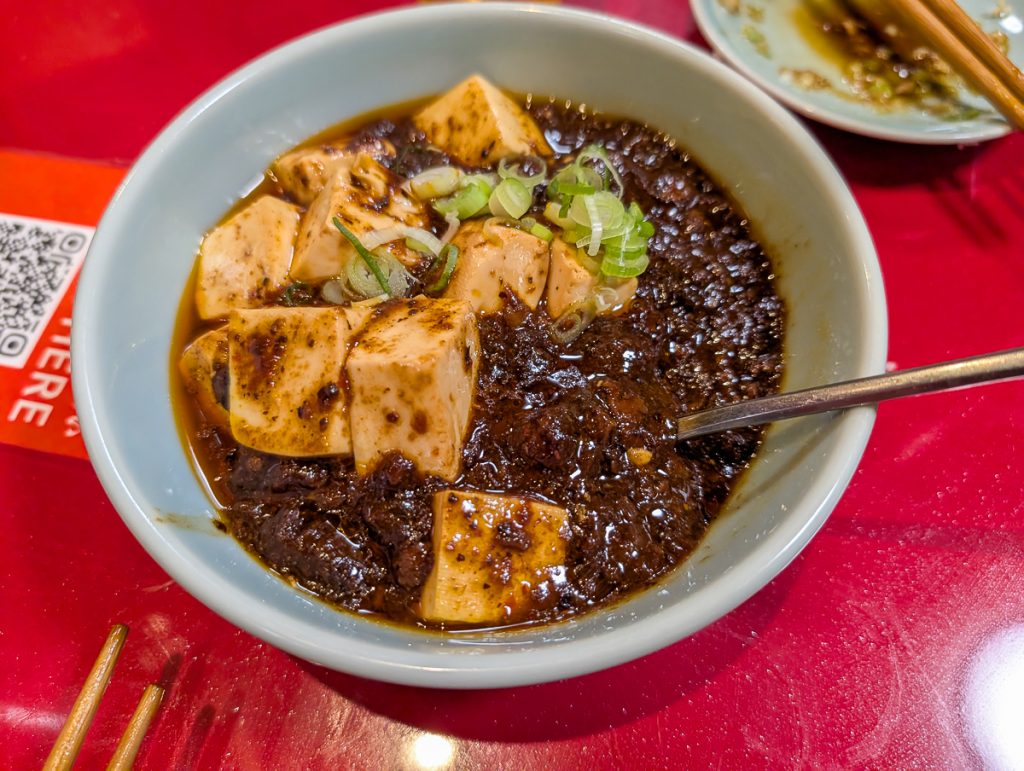
Coming to Japan was a game-changer for vegan meat alternatives. I genuinely didn’t know what I was eating a lot of the time, as big-name brands like Beyond or Impossible aren’t prominent. However, the Japanese take great pride in their work, and making suitable alternatives is no exception.
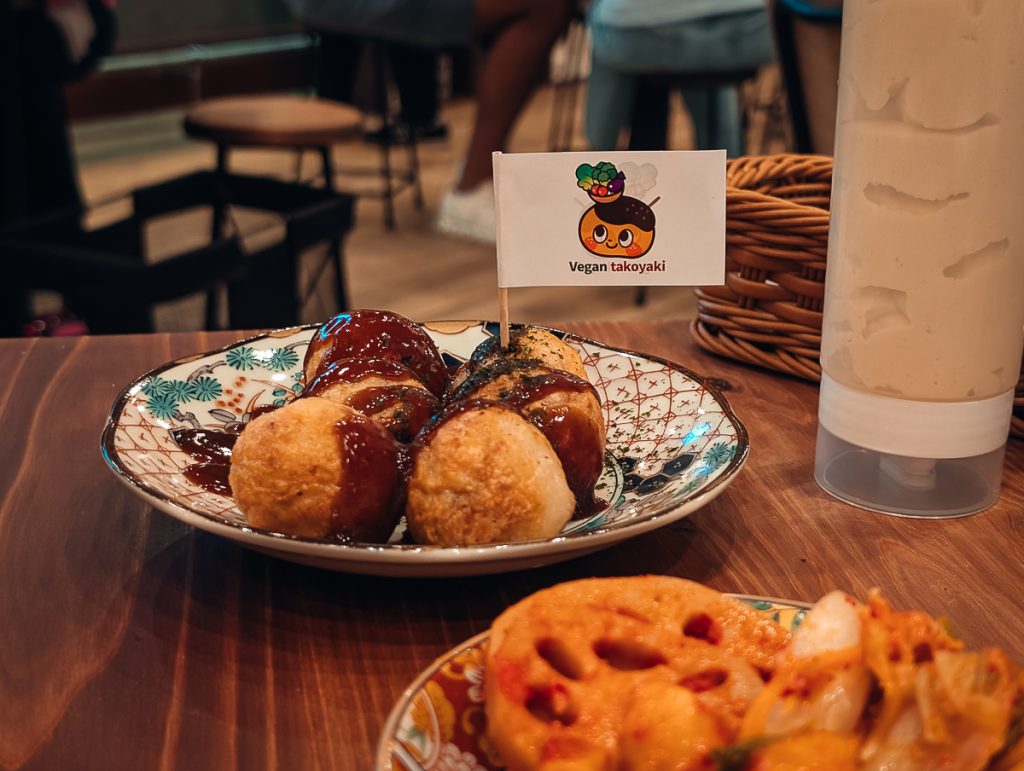
I thoroughly enjoyed the mapo curry with a vegan meat alternative or the vegan takoyaki balls with an octopus alternative. And don’t even get me started on the vegan karaage… like, what on earth? It was so good and not too meat-like in a good way, if you know what I mean.
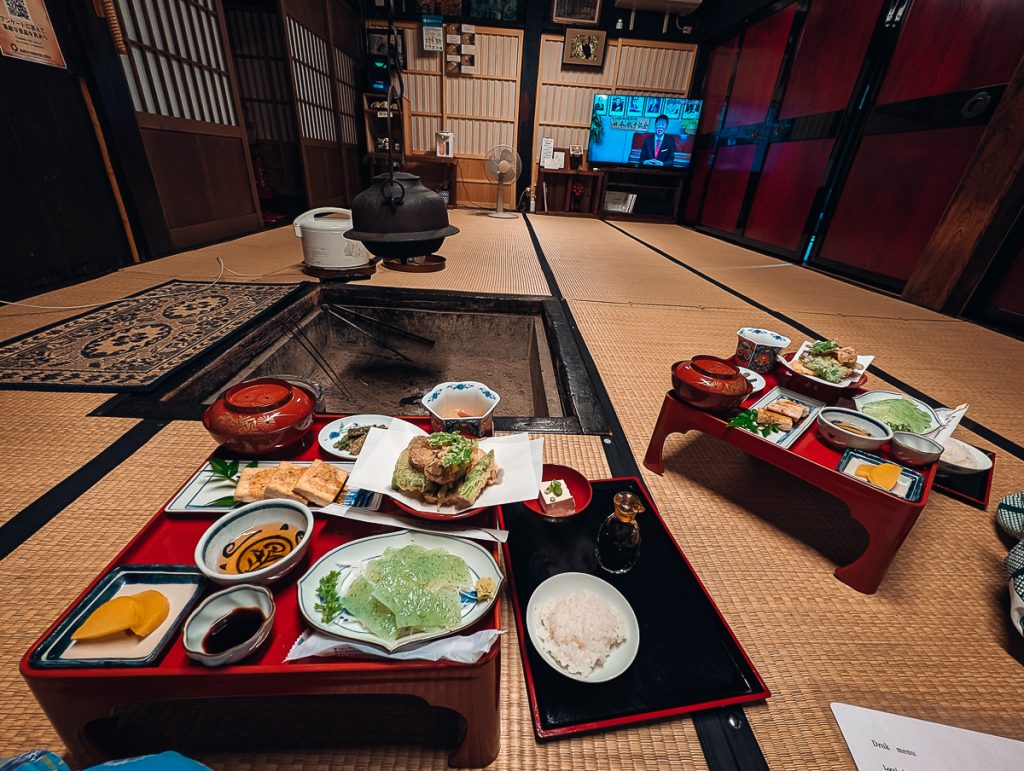
Vegan sashimi? It’s just as slippery and savory as the real thing.
So, if you’re not a fan of the vegan meat alternatives you are familiar with in North America and Europe, Japan may change your mind, too. These aren’t sad excuses for alternatives, so indulge and enjoy!
3. Take Advantage of Cities
Cities across Japan are generally easy for vegetarians, with plenty of vegan and vegetarian restaurants serving variations on traditional foods. Cities are also more international, and it is easy to find vegan Indian food, cheese pizzas, and more. Enjoy many vegan and vegetarian restaurants with little advanced communication or planning.
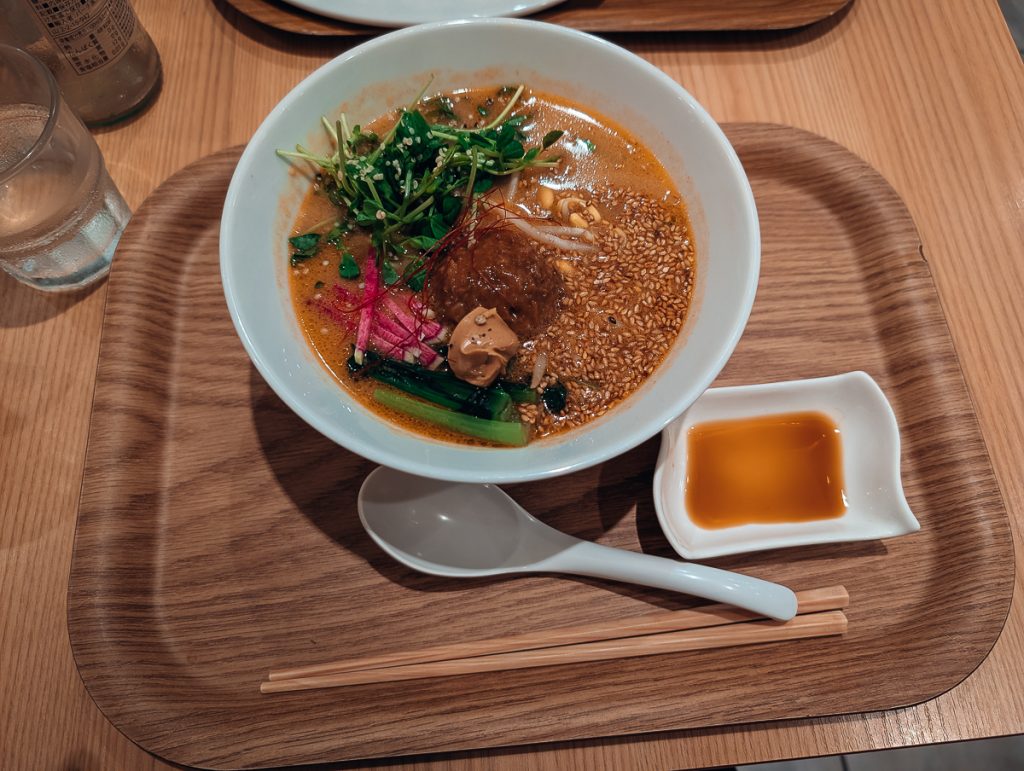
You don’t need to book meal packages in cities like some rural areas. However, breakfast is the most challenging meal to source for vegan dining. Many cafes didn’t open until later or had baked goods without great vegan labeling.
Booking a hotel that serves a vegan-friendly Japanese and Western-style breakfast, like the Prince Sakura, was a lifesaver. We would enjoy our Oyuo porridge with pickled vegan toppings every morning before heading out to enjoy the city’s vegan culinary delights.
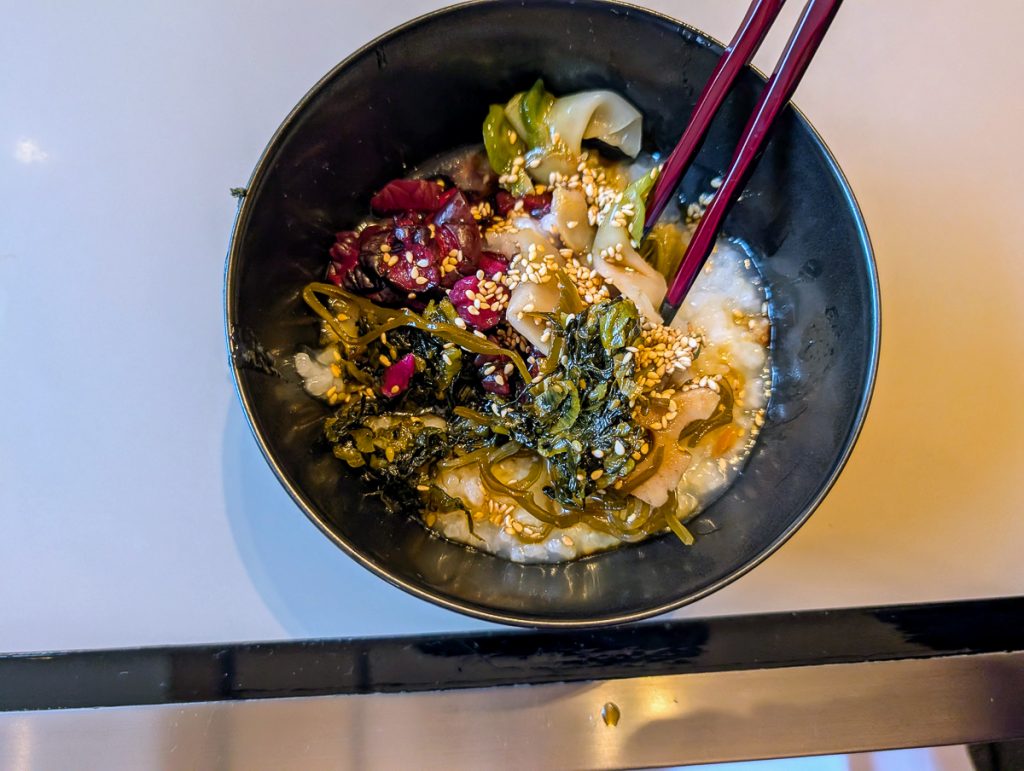
Prince Sakura also has vegetarian food in its restaurant. If you need emergency room service, you can get veggie pizza or pasta. Vegan pizza can be ordered without cheese.
4. Download Happy Cow & Offline Maps
Before we went to any new destination, I used a combination of Google Maps and Happy Cow. Both are great tools for vegetarian and vegan travelers and work well in Japan.
Most vegans prefer to use Happy Cow as it has more transparency and guidelines for strict dietary needs. Happy Cow is reliable in Japan, and some of our top eats were sourced using this app. It is also great to support a smaller app with a great mission.
However, I also use Google Maps. Google Maps is an increasingly valuable tool that allows users to add notes on vegetarian dining. The only downside is that when you search for vegetarian keywords, sometimes restaurant reviews generate phrases like “no vegetarian food,” so you must do some extra work.
I found the best combination to be using both apps, as we found places on Happy Cow, not Maps, and vice versa.
5. Book Plant-Based Meal Packages
Some of our best vegan foodie experiences happened at restaurants at our accommodations. We booked veggie-friendly meal packages that included breakfast and dinner. Our hosts understood vegan dining preferences and cooked us incredible meals.
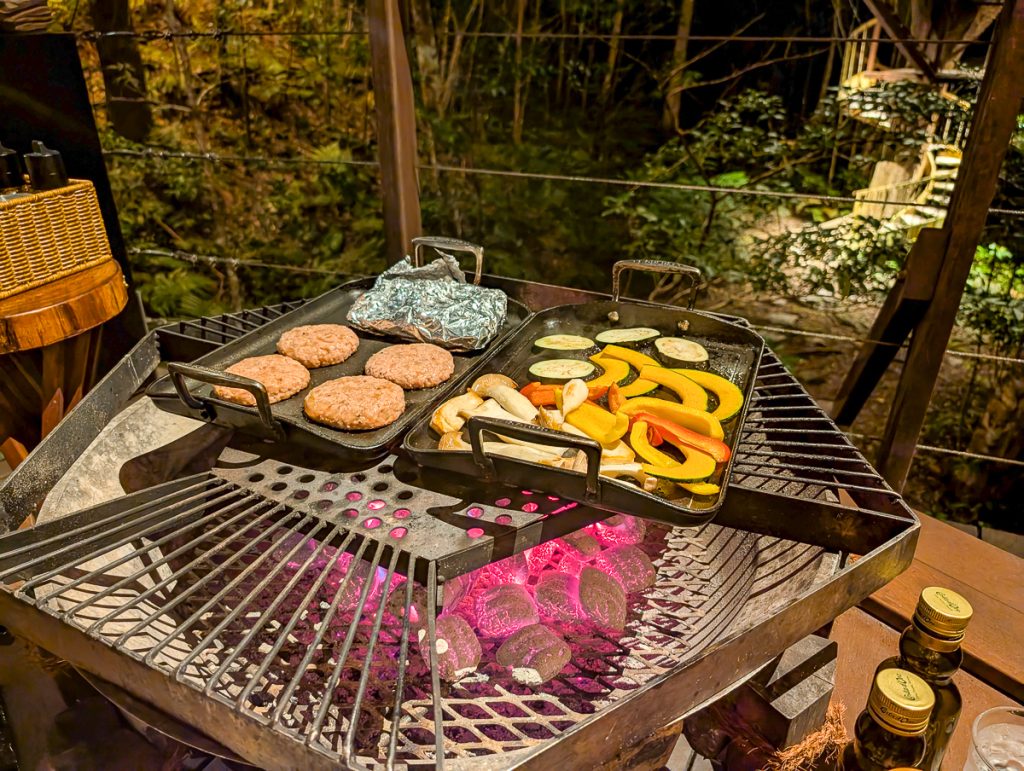
The top awards go:
- The traditional Ryokan in Nikkō served us decadent and over-the-top meals. The quality, presentation, and variety blew us away.*
- A rustic homestay in Ainokoura with a gracious and kind host who prepared us vegan food sourced from their garden and local mountains.*
- Treefuls Treehouse Sustainable Resort in Okinawa was a luxurious forest retreat that offered excellent vegan food!*
*All meal packages had to be booked separately, cost extra, and were vegan only on request.
Having breakfast and dinner prepared for us without any worry or stress in finding plant-based meals in rural areas was a total lifesaver for us. We could relax, enjoy being pampered, and not worry about ingredients.
These more rural areas have limited restaurant and dining options, so finding vegan—and vegetarian-friendly places to stay was key.
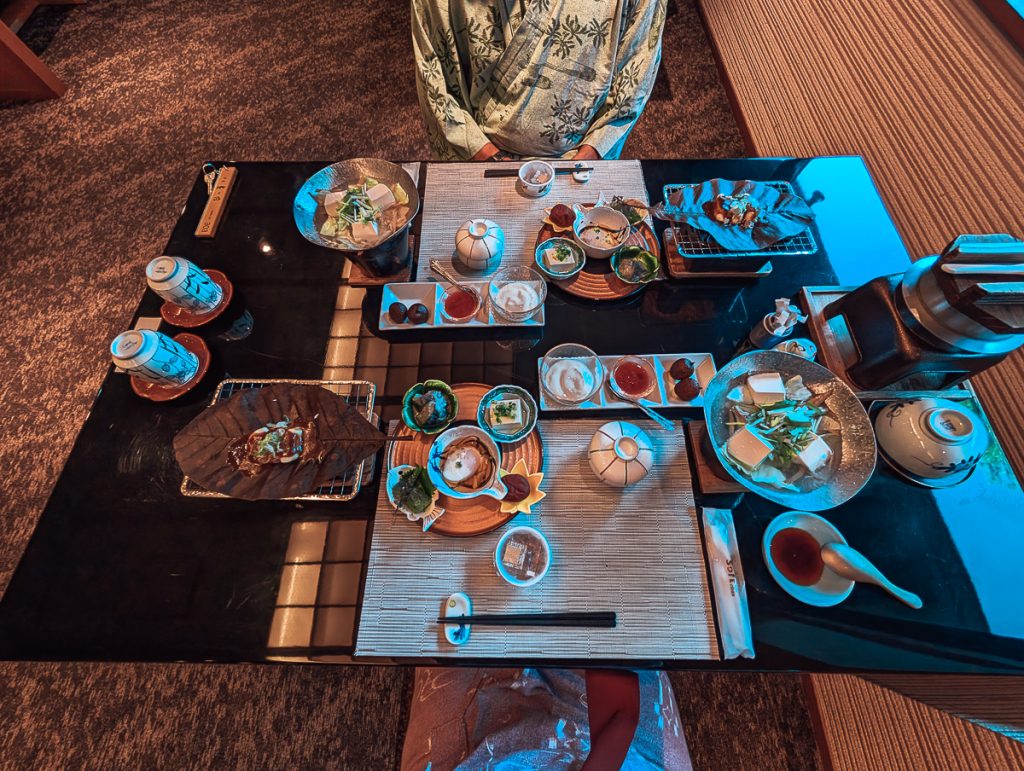
Lunch may not always be included, so you will have one meal per day to try the local restaurants and see what kind of local vegetarian foods you can find in more rural areas.
6. Not Everyone Accommodates Vegans
We found this vegetarian-friendly Ryokan in Nikkō, a Homestay in UNESCO Ainokura, and this luxurious hotel in Takayama by translating about pages, using the desktop search function for vegetarians on their menu/restaurant pages, and using booking.com and Google Maps to filter for keywords like vegetarian and vegan.
We found a few places we were interested in booking online, like a nice hotel in Nikkō. But, based on their websites, reviews, and information on their restaurant pages, we got no indication that they would accommodate vegetarians. In these situations, we didn’t even bother contacting the hotel, as I thought communication would be challenging or they might not understand our dietary needs.
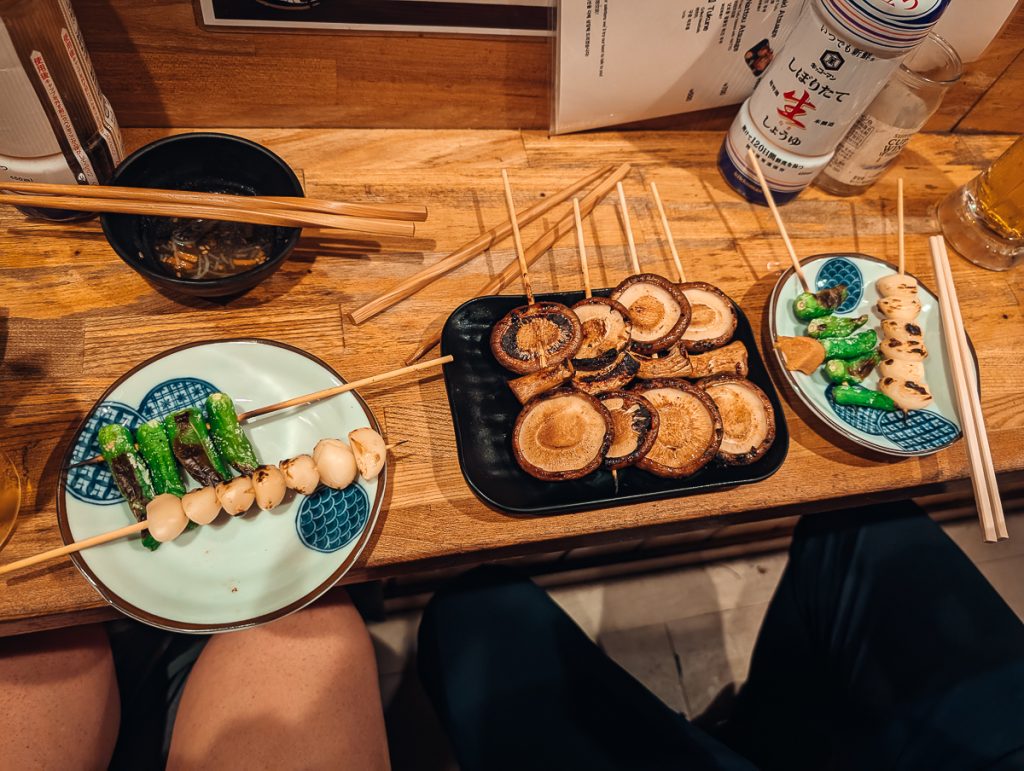
Though you can find vegan food in unexpected places! We even found vegan skewers in Omoide Yokocho, which is primarily a place known for grilled meats!
7. Advanced Notice is Required
Vegetarian-friendly accommodation does not equal vegetarian food on the regular menu by default.
If you are booking a more traditional accommodation with meal services or plan to dine at a place that requires special accommodations for vegetarians, you will need to give them advance notice.
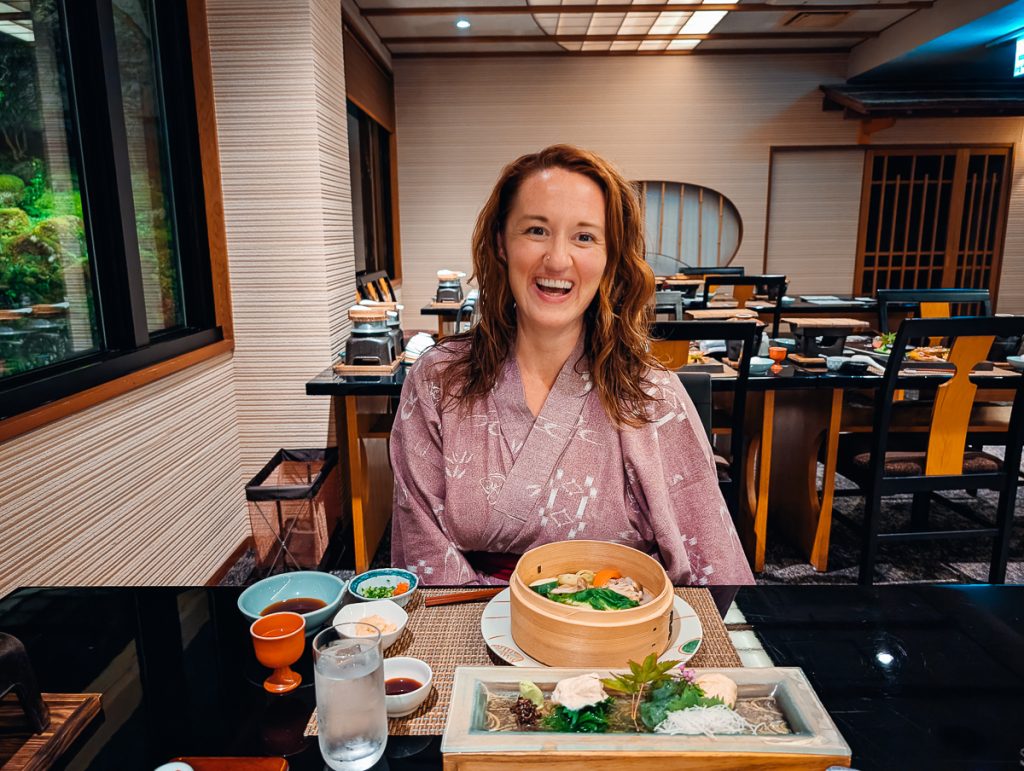
Even vegetarian-friendly accommodations require at least 10 days of advance notice. e gave most places a months notice. Advanced notice is vital as they often have to make a special mushroom broth for soups and stocks ahead of time or source different ingredients they don’t traditionally carry or order.
Showing up at a hotel and expecting them to have these ingredients on hand and have vegetarian-based soup ready to go is a big no-no.
Since hotels, especially vegetarian-friendly hotels in Japan, book up quickly, we booked most of our hotels at least a month in advance. When booking, we contacted every property by email or through the Booking.com platform to immediately inform them of our dietary needs.
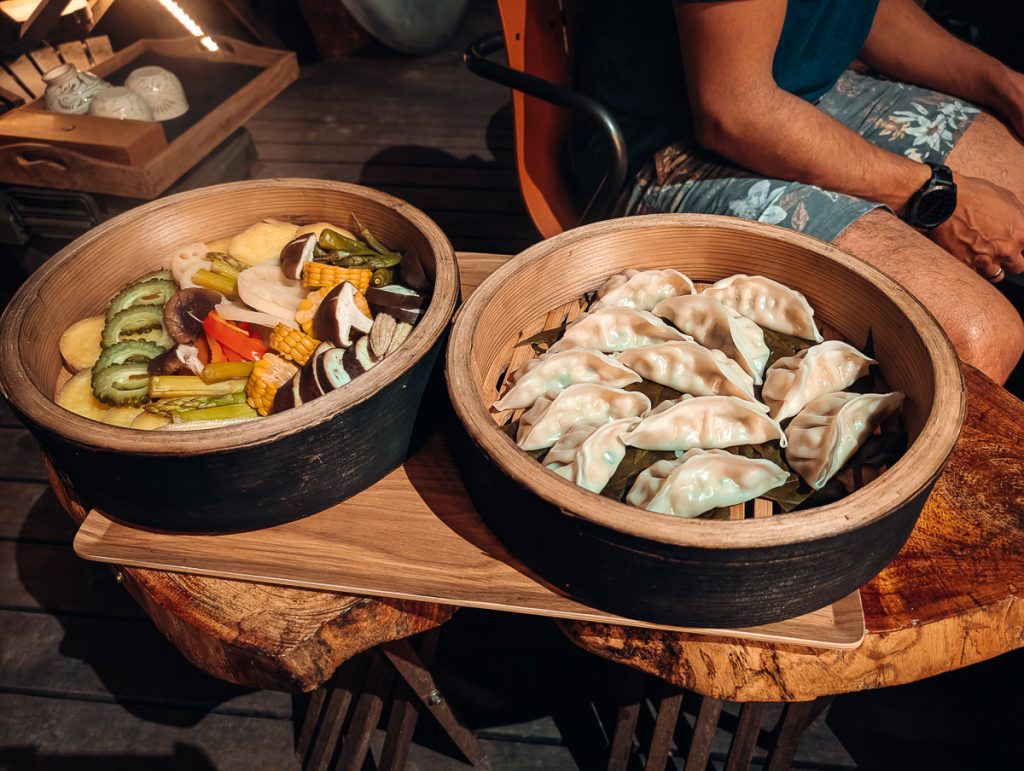
Most had follow-up questions about our specific dietary needs (like whether we are okay with gelatin, eggs, dairy, or fish stock). Some even had forms for us to fill out to ensure they organized and prepared our precise dietary needs in advance.
8. Expect to Pay Extra
Vegetarian and vegan food may cost a little more when traveling to Japan. The extra cost comes from the additional work of preparing vegetarian and vegan food separately from the regular meals (mushroom soup base stock prepared in small quantities just for you, separate from the group pork soup stock).
Smaller accommodations may also need to source ingredients not typically found in their inventory. These added orders may incur additional costs and necessitate alternative suppliers or deliveries.
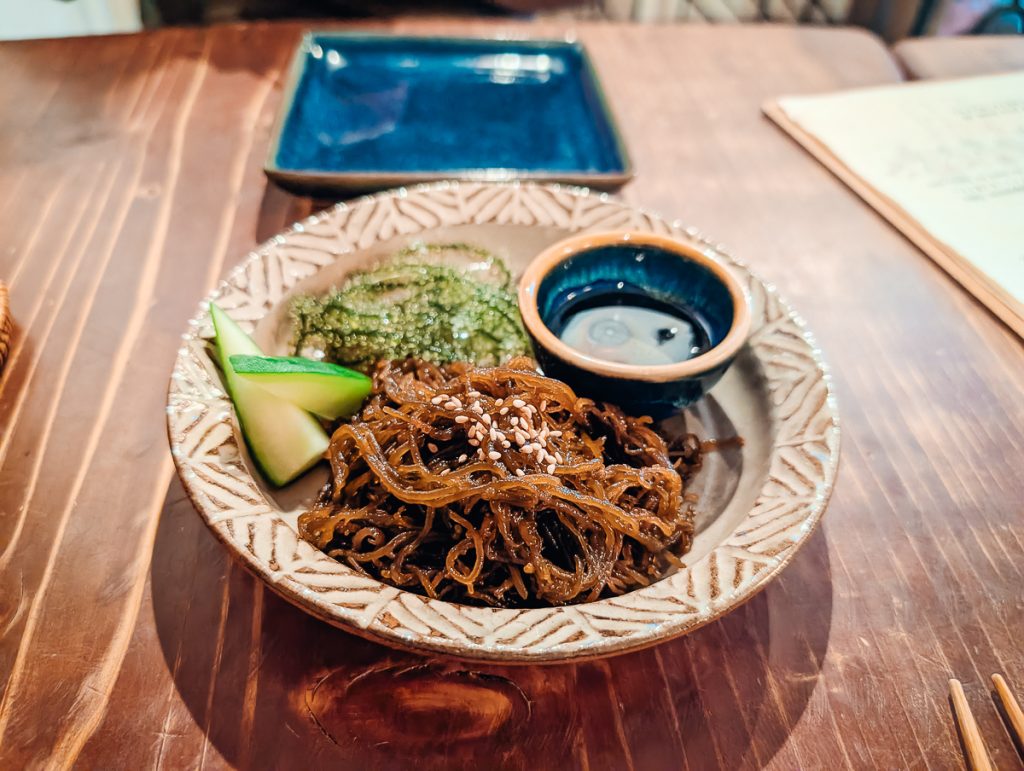
We typically noticed this slight additional fee at the ryokans, homestays, or places where we booked meal packages in addition to our nightly room rate. It was common to see a few hundred yen added to the nightly meal charge.
However, most standard hotels or restaurants with vegetarian food as part of their core menu will not charge you extra.
9. Make Reservations
In Japan, people tend to make reservations if they have their heart set on dining at specific places, especially in cities like Kyoto and Tokyo.
On several occasions in Kyoto, Takayama, and Tokyo, we found ourselves at a vegan—and vegetarian-friendly restaurant only to be turned away because they were booked with reservations for the night. Other times, we were part of a long line with an hour-plus wait to be seated.
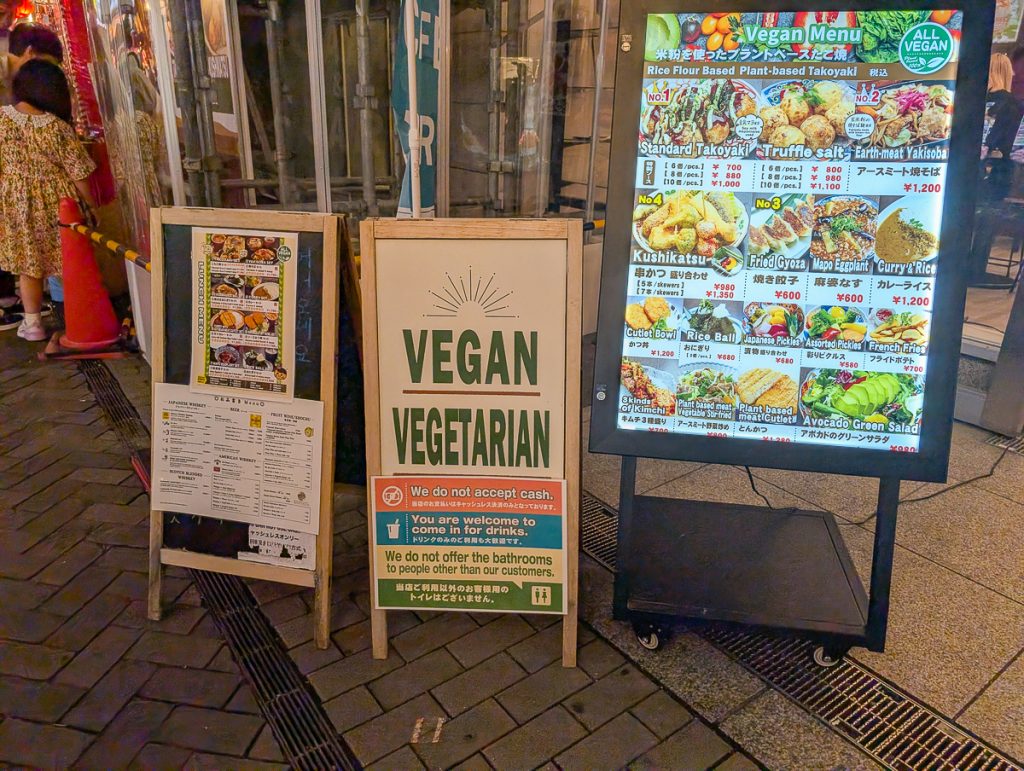
It usually wasn’t a problem as we would pivot and find another spot in these bigger cities. However, one night in Kyoto, we wandered aimlessly, hangry, and frustrated after being turned away from several restaurants. This led to a very sad and bland dinner at a low-quality restaurant.
We learned to make advanced reservations in busier cities to enjoy a vegetarian meal at our first-choice restaurant at a time that worked with our schedule.
Most booking platforms like Tok and OpenTable aren’t as big there, but you might have luck. Instead, I found that emailing, messaging on Instagram, and even WhatsApp were effective in making reservations.
10. Proceed with Caution – Confusing Labeling
Traveling in Japan as a vegetarian was generally straightforward. However, in more rural areas, the word “vegetable” indicated a primary ingredient, not necessarily meat-free.
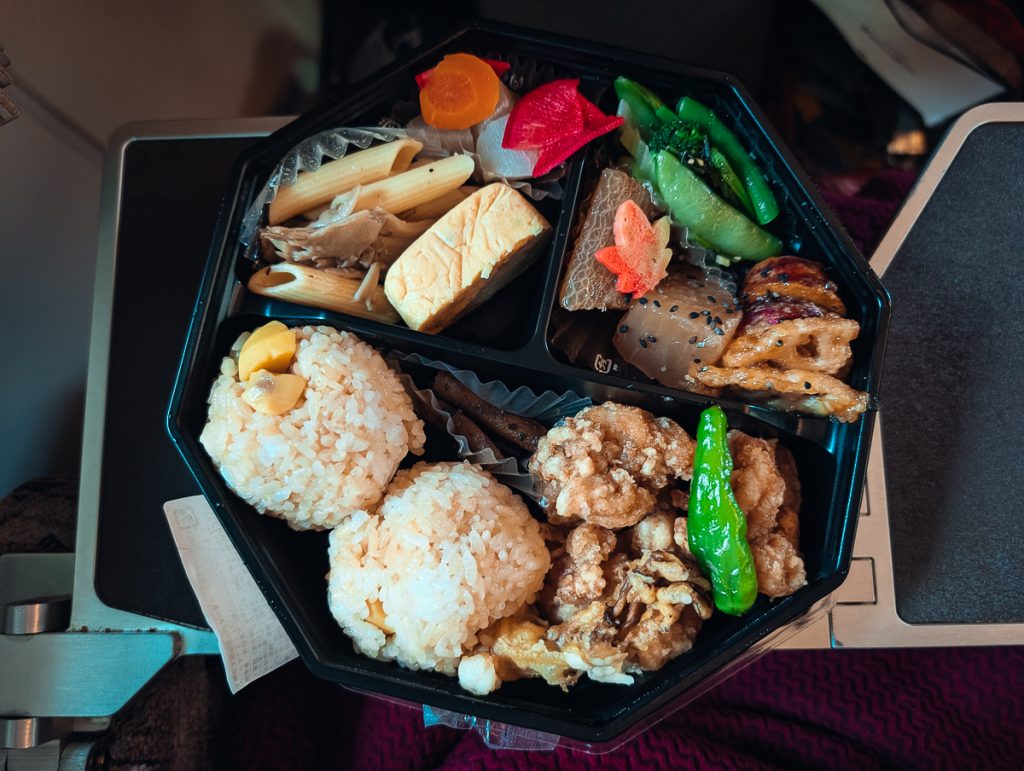
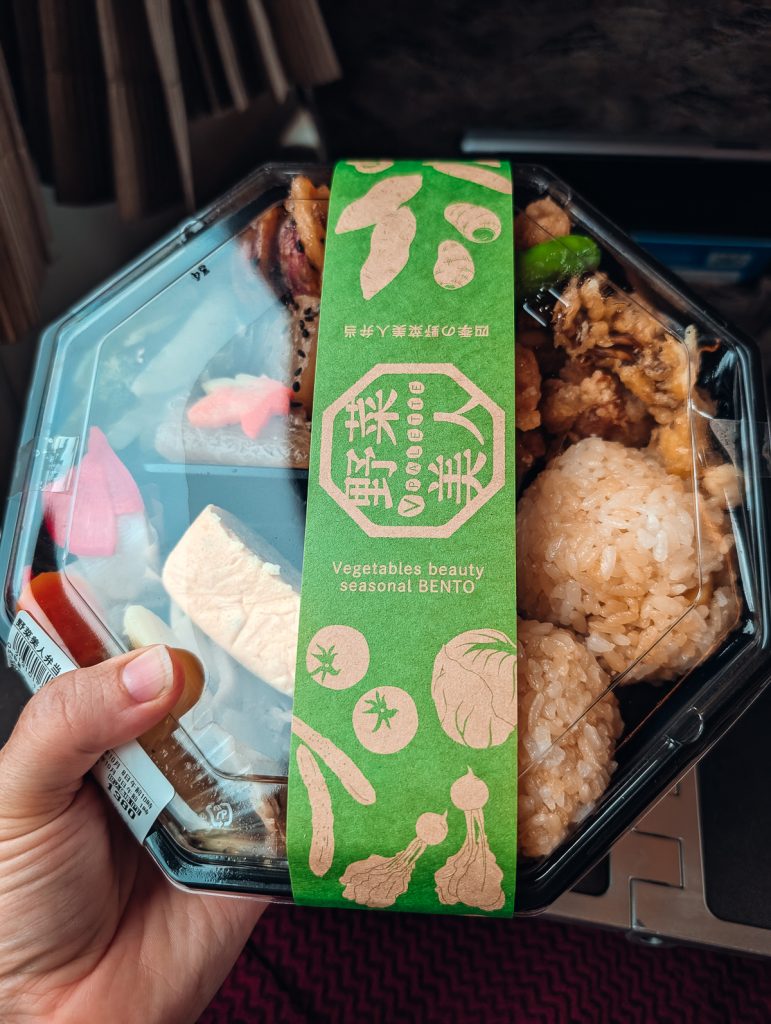
One of our most disappointing experiences was during a day of transit from Kyoto to Kii Tanabe to hike the Kumano Kodo. We picked up what we thought were two vegetarian “vegetable bento boxes.” They had green labels, pictures of vegetables, and a list of ingredients that didn’t indicate any meat.
Unfortunately, two pieces of chicken tempura were hidden at the bottom despite 99% of the box being vegetarian.
Another time, we asked and learned that a roadside vegetable soba came with fish sauce. Most rural roadside cafes serve soups, curries, and rice dishes, using their default pork and fish base. It is best to go on a road trip with your own snacks.
A lack of complete ingredient lists in pre-packaged food at places like 7-11 made it difficult to determine if the food was technically vegan.
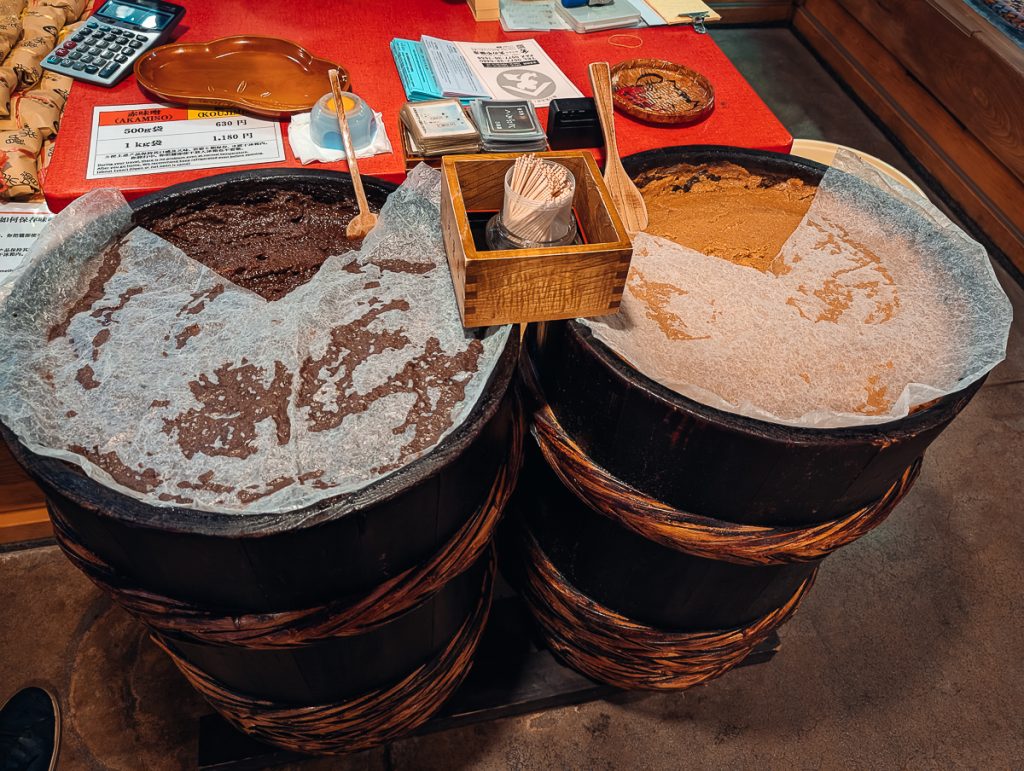
These are the key things to look out for regarding vegetarian foods:
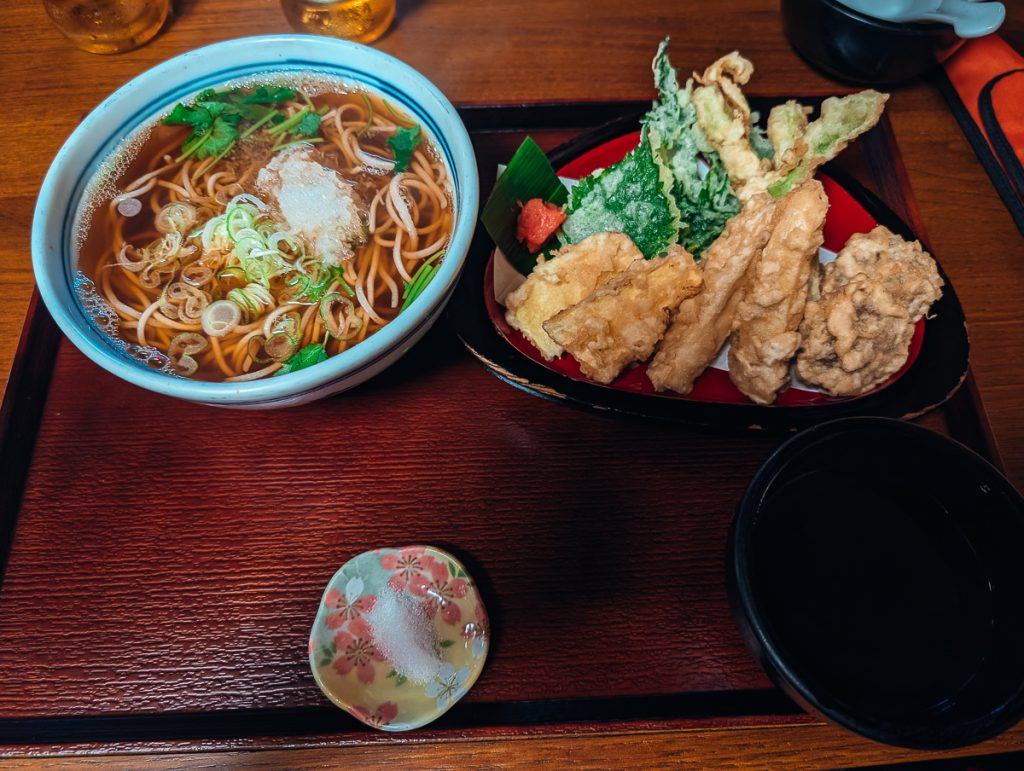
Soup stocks are often meat—or fish-based. Even the most basic noodle, soba, that appears to be vegetarian, will have fish stock as a base unless otherwise indicated. Mushroom soup stock requires extra effort, so skip the soups unless they are labeled as vegan/vegetarian. You can also ask for plain soba noodles with no sauce on the side at a rural cafe!
Fish sauce is a common ingredient in seemingly vegetarian noodles and rice dishes. Again, eating or requesting vegan sauces is best to ensure they are made without fish.
Furikake, or dried fish flakes, is a common seasoning in snacks and other dishes. Double-check your bag of chips, onigiri, seaweed snacks, crackers, and other snacks for a light dusting of fish seasoning.
Bone Char is still used for many white sugars. It is hard to identify if sweets are made with vegan sugar. Look for macrobiotic foods in Japan that are likely to have more organic and raw sugars, as the principle aims not to eat processed foods and sugars.
11. Pack Your Favorite Snacks From Home
While we didn’t encounter many issues during our travels, we did have a few moments, like the train where our bento box had hidden chicken, or that roadside cafe with a fish-based soup sock. In times like these, having snacks in our bags that we knew were plant-based from home was very helpful.
It saves you in a pinch and staves off hunger!
12. Pack Your Chopsticks
Japan wastes 24 billion pairs of reusable chopsticks annually. The best way to enjoy all this delicious vegan and vegetarian food in Japan is with your own chopsticks.
We packed personal chopsticks and whipped them out on trains, at restaurants that didn’t have reusable, cafes, and more! I’m proud to say we didn’t use a single, single-use chopstick during our entire travels.
I also started a trend when someone sat next to me at a restaurant said they would do the same next time they went out to eat!

All restaurants and cafes were okay with this behavior, and we felt comfortable doing it in various situations.
13. Non-Dairy for Your Personal Coffee Cup?
Non-dairy milk was more challenging to find in coffee shops in more rural areas. However, larger cafes had non-dairy alternatives. If you don’t want dairy and there isn’t a suitable alternative, you can always get an Americano or black coffee.
One thing I appreciated is the slow coffee culture in Japan. Japanese coffee shops take great pride in selecting their beans, roasting processes, and brew methods, all of which contribute to great-tasting plain old black coffee.
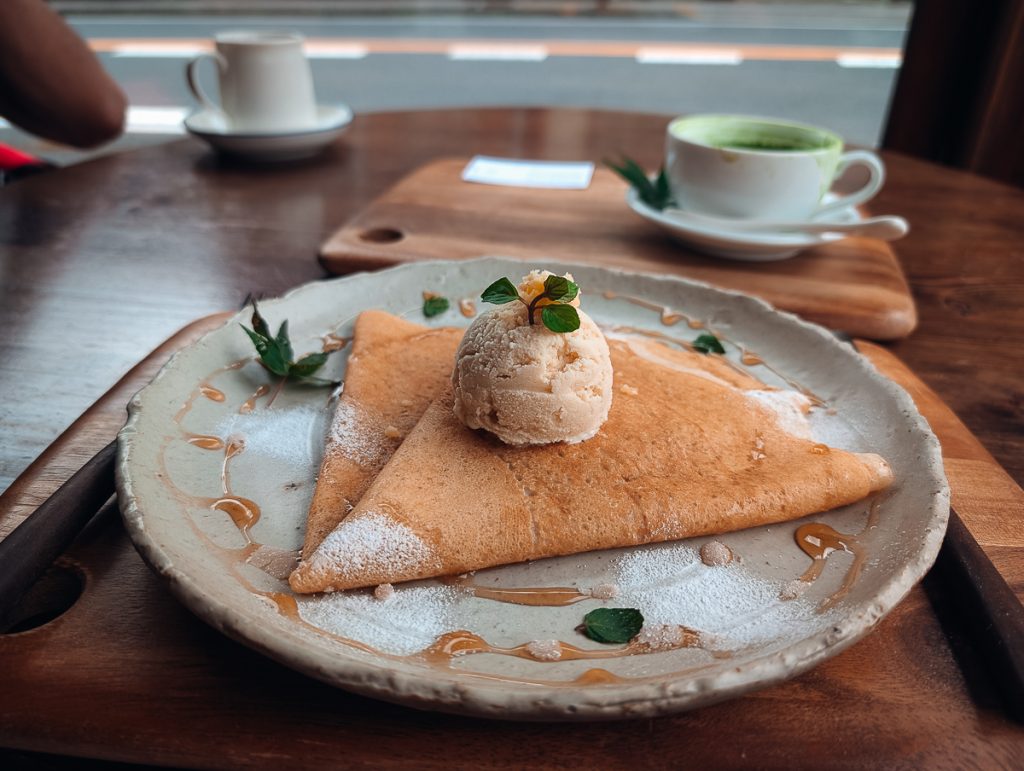
If you don’t love black coffee but want to ditch the dairy, head to a slow cafe where you can get a pour-over, a Chemex that brings out the subtle and gentle flavors of coffee that make drinking black coffee more enjoyable.
Don’t forget that personal coffee cup! We brought ours to every cafe, and if we got to-go coffee, we asked to have it put in our cups. No one had an issue with this or worried about hygiene. Our Kinto tumblers are light and small and keep our coffees warm for hours—perfect for taking on trains.
14. Eat In Restaurants and Eat Local
The to-go food and food from grocery stores and shops are completely covered in plastic packaging. The labeling is also confusing—many chips and snacks had sneaky seafood seasoning.
By eating out at restaurants identified by Happy Cow or Google Maps as having vegetarian and vegan options, you guarantee there are vegan or vegetarian options and save a ton of waste. Plus, you get to support small local restaurants in their vegan efforts!
The vegan food in Japan is so good; you’re missing out if all you eat is the 7-Eleven food.
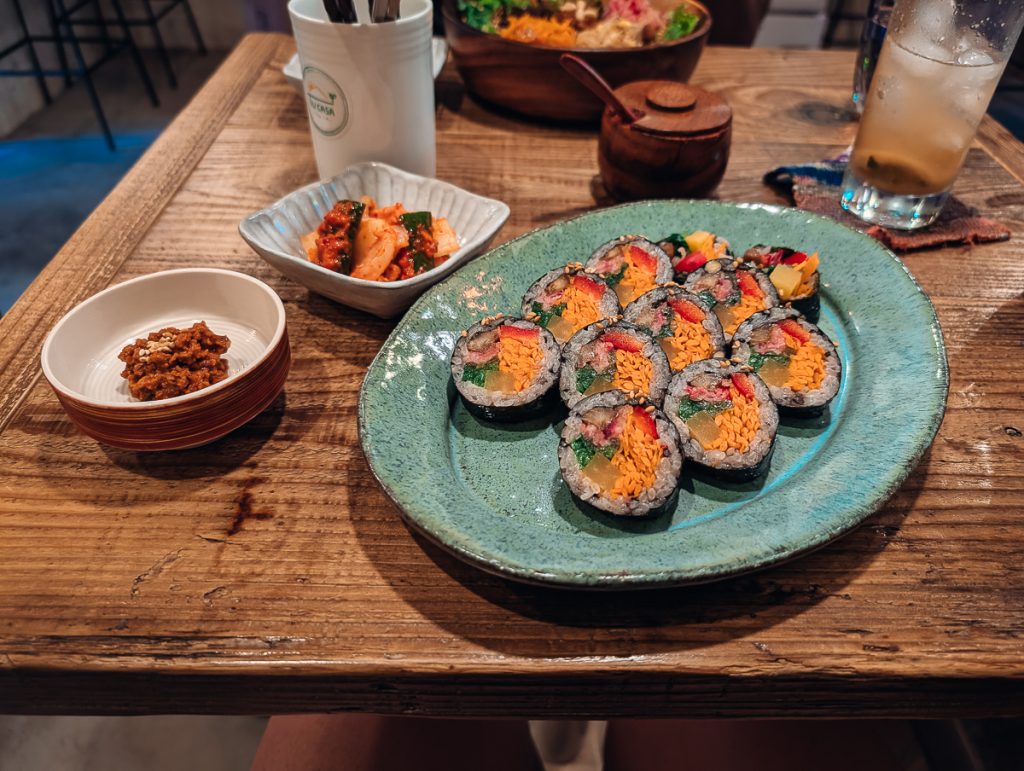
Of course, we sometimes grabbed vegetarian 7-Eleven prepackaged food in a pinch or some bananas to increase our fiber and fruit intake, but we tried to keep this to a minimum.
When you do that, make sure you’ve packed your tote. Grocery stores and shops now charge for takeaway bags, another way to reduce waste.
15. Leave Reviews and Feedback
One of the things I made sure to do for every restaurant in Japan dedicated to vegan or vegetarian food was to leave detailed 5-star reviews. This gave those trying to accommodate our dietary needs a little extra boost.
Even in the few places where the vegan options were only okay, I left a constructive review to encourage them.
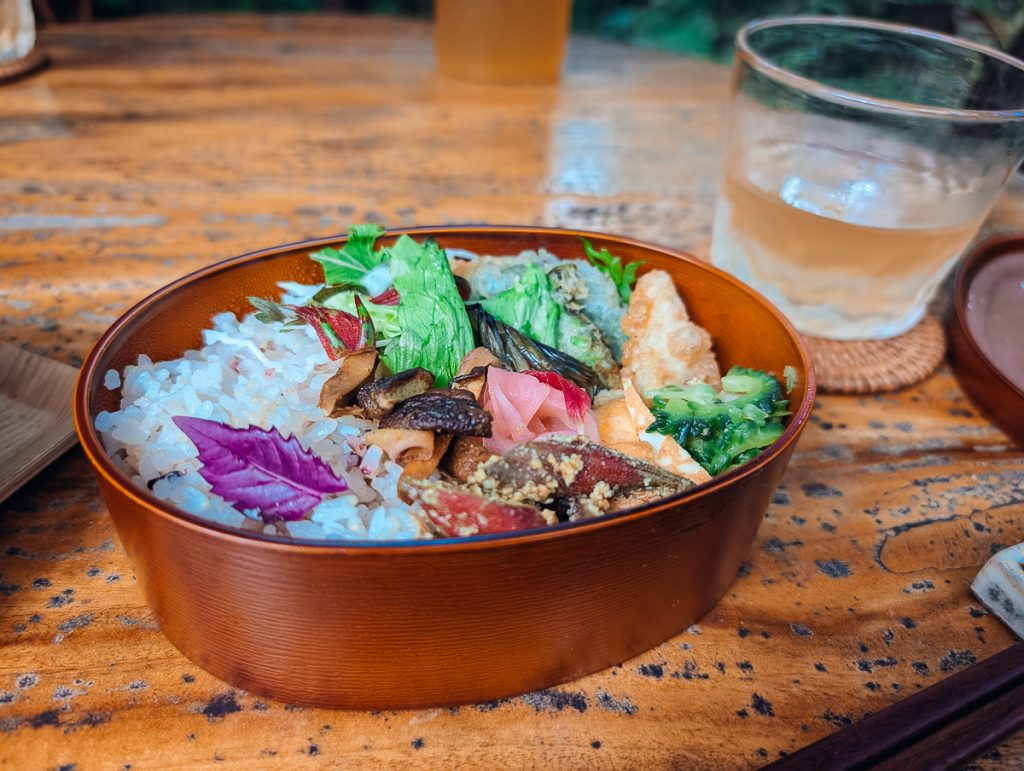
For the few hotels we stayed at, there could have been improved labeling of vegetarian and vegan breakfast items. We left constructive feedback, letting the hotel know how to improve their offers for plant-based travelers in Japan.
Leaving positive or constructive reviews and offering feedback is a great way to let hotels, restaurants, and tour operators in Japan know there is a demand for vegetarian food and that people are ready to take advantage of these offerings.
16. Read the Fine Print for Food Tours
There are many food and drink tours in Tokyo, Osaka, and Japan. These are rarely vegan—or vegetarian-friendly. Most food tours in Japan include stops at fish markets, where you can try beef and other street foods that contain animal products.
If you think a drink tour sounds harmless, unfortunately, Japan has a culture where people make spirits with animals, like snake liquor. I talked to one primarily vegetarian traveler, and she said she joined a drink tour, and the host all but shamed her into drinking snake liquor.
Thankfully, you can join a few vegan food tours in Japan to ensure you are safe!
17. Mostly Vegan, Except For…
While I typically make vegan choices when available, I consider myself a vegetarian. When we were putting in our requests for food choices, I listed us as vegetarians.
I was pleased that most of the meals prepared for us were vegan. Traditional Japanese dishes don’t use much cream or dairy, and cheese isn’t all that common. Nearly every dinner as part of our accommodation packages was vegan, even though we selected vegetarian choices.
However, when it came time for breakfast, we noticed that breakfast often included an egg and some yogurt. If you are sticking to vegan dining, ensure your breakfast choices do not include these items and fill out the forms according to your dietary needs.
18. Have a Plan B
Always have a list of several restaurants in an area that can cater to vegetarians or vegans. We found Google Maps and Happy Cow’s hours of operation and addresses unreliable.
Occasionally, we came to a closed vegan restaurant, despite Maps saying it was open. Other times, we could not find a restaurant hidden in the alleyways or on the upper floors of malls.
Others had a line wrapping around the block and back, which wasn’t ideal when we were tired and hungry.
In these situations, we would go down the list and move forward with our plan B. Having a backup plan means you will always have a vegan or vegetarian meal, even in chaotic stress or panic when your first choice falls through.
19. What’s “Vegan” in Japanese?
Of course, we learned basic Japanese pleasantries for hellos, thank yous, and compliments, but I’ll be honest: we didn’t learn a complete set of plant-based Japanese words.
Nowadays, most menus have English translations and/or plant-based sections, so we got by by pointing to our order. Of course, you can go above and beyond and learn the words vegan or vegetarian. But, in places where it mattered, we communicated in advance by email using translation assistance.
Having Google Translate for English to Japanese downloaded is helpful, especially in more rural areas, where you can use it to ask about foods if you are uncertain.
For very strict vegans, I suggest traveling with a Translation Card indicating your dietary preferences. I admit that there were a few times when this could have come in handy at more rural and roadside cafes.
Shivya, a vegan Indian travel blogger I admire, has a great example of a card she used on her travels.
20. Download the Paykey App
As much as I love Google Translate, it doesn’t always offer the most logical translations. Rather than using Translate on tiny Japanese lettering on the back of 7-Eleven packages, download the Paykey App.
This app allows you to scan barcodes and get descriptions of the products, which may help you identify ingredients or learn more before you purchase.
Bonus: Try Cutting Back
If you found this page and are not a vegetarian or vegan, challenge yourself to visit one vegan or vegetarian restaurant daily to try what is out there without the added pressure of looking through meat options.
If you’ve always wanted to try a particular meat or seafood dish, look for a vegan alternative and try that first. Maybe try the authentic dish, but only once!
Almost every restaurant we visited had a page or menu item dedicated to vegetarian or vegan options. Before diving into the meat and seafood section, start there and see if anything piques your interest.
You can also relieve stress and worry by booking vegetarian meals at a hotel. Even if you aren’t a vegetarian, the quality and meal selection are fantastic, and it’s a great way to try dishes without worrying about where or what to eat.

Comment, Save, Share Vegan and Vegetarian Tips for Japan
If you are vegan or vegetarian planning a trip to Japan, rest assured that it is much easier than it used to be, thanks to increasing awareness, the availability of tasty foods, and some traditionally vegan options.
However, advanced planning and preparation are essential to avoid unfortunate situations. These 18 crucial tips for vegan and vegetarian travel in Japan will allow you to relax, eat fantastic foods, and travel without significant issues.
After spending a month in Japan, we only had a few minor concerns about plant-based dining. Still, I left, considering Japan one of my favorite destinations for incredible and creative vegetarian foods.
Save, share, and pin this guide always to have it on hand when planning your dream trip to Japan.
Comment if you have any questions or to share your favorite vegan dish from Japan.

Curiosity Saves Travel Recommends
Accommodation: Booking.com to find accommodation with a Genius Discount and clear third-party sustainable certifications like Green Key. Look for local hotels.
Tours and Excursions: GetYourGuide and Viator for tours, excursions, and tickets. Never book wildlife experiences through these vendors.
Travel: Omio for booking buses and trains in English across Europe. After reducing the number of flights I take annually, I use Google Flights’ carbon comparison tool.
Car Rental: Rentalcars for the best rates in English globally. It is easy to find hybrids and EVs, and there are resources for finding chargers.
Packing Essentials: REI or your local Co-op has great essentials like reusable water bottles and cutlery sets. Patagonia for regenerative clothing. Farm to Feet for socks made with regenerative practices! Pistil Designs for cold-weather essentials. Osprey for bags that last 10+ years, like the day bag for hiking or my favorite carry-on.
eSIM: Airalo eSIM. Reduces waste from single-use SIMs. A total game-changer.
For Bloggers and Content Creators
Earn Ad Revenue with Journey by Mediavine
Earn with Stay22 Travel Partnership (my biggest source of income!)
Earn with TravelPayouts recommending tours and activities.





I was vegetarian for 10 years. Although I’ve gone back to eating meat, I regularly eat at plant-based restaurants in my travels. The cooks and staff are usually so friendly and accommodating! They can also help you learn common phrases that might make more sense in the local language.
That is a great tip for navigating Japan as a vegetarian – to ask the staff!
How dare you say Japan is a gem for vegan and vegetarian foods? In Tokyo, a city of more than 14M you will find less than 10 vegetarian restaurants and none of the other are vegetarian friendly. I wonder if you ever travelled this country yourself. If you really ask questions, nothing is what it seems. Even the wine at the few vegan restaurants is not vegan.
Hey there, I personally had an incredible and unexpected food experience enjoying wonderful vegetarian and often vegan food across Japan. I hope that with this post sharing the tips and and suggestions I used to get by I can help others plan in advance so they too can have a similar experience. Across Japan we stayed at many accommodations that provided dedicated vegan and vegetarian meals for breakfast and dinner, and we ate at many dedicated plant-based cafes, and found other restaurants with menus that had a dedicated option for at least one plant-based option meal. As always, it is great to check the labels for wine and beer when traveling as a vegan; a few dedicated vegan cafes we visited didn’t have alcohol on the menu, while others did. It is also always a good idea to double check with the restaurant/ accommodation that your definition of vegan is the same as theirs. In a few cases we were given forms by our accommodation to complete to ensure we were on the same page. We had a few moments where we struggled with lack of options, which I talk about in the guide and admittedly, Japan still has some work to do regarding better labeling and more options. But, overall we had a great time and ate some great food! If you are looking for additional resources I found https://isitveganjapan.com/ to be a great resource. There is also a book called Vegan Guide to Tokyo that may be helpful. Cheers.
It is not so surprising that you only have 2 comments, if you decline every critical comment.
Understand that real people read your articles and use the data to make choices.
If you want to bring something good to the world, make sure the data is correct!
Hey again, is there something specific that is inaccurate in this guide? If so, please do let me know and I will look into it. Cheers.