Calgary to Drumheller Valley Badlands: Dinosaur Trail and Hoodoos
I may earn income from affiliate links or partnerships in this post. I spend time to curate tours or products that align with my values. Thanks for supporting my work, at no additional cost to you. All words and images on this website are created by real people.
Are you curious about the amazing landscapes in Alberta, Canada? While most people think of the spectacular Rockies or Banff National Park, Alberta is also home to one of the world’s most incredible badlands in the Drumheller Valley.
Take a day trip from Calgary to the Drumheller Valley to drive the Dinosaur and Hoodoos Trails, see the world’s largest dinosaur, the Royal Tyrrell Palaeontology Museum, Midland Provincial Park, hoodoos, and more. All just a short drive from Calgary, you can spend the day in the Drumheller Valley and explore these attractions along Alberta’s Dinosaur Trail.
This day trip from Calgary to Drumheller allows you to step back to the Jurassic period, learning about dinosaurs and fossils. But there are also modern elements to explore, learning about mining sites, now abandoned. But the badlands geology and hoodoos might be one of the coolest aspects.
Drive through the arid landscape, looking at mining sites and ghost towns. Tourism and palaeontology work keep the provincial parks and the towns alive. The Canadian Badlands is a MUST-visit. It is an unbelievable experience.
Quick Look Calgary to Drumheller Valley Dinosaur Trail
In less than 2 hours, you can drive from Calgary to one of Canada’s most unique landscapes, the Drumheller Badlands. From downtown Drumheller, start your drive along the Dinosaur Trail to see top sights from the world’s largest dinosaur to the natural sites in Midland Provincial Park, and historical sites.
The Dinosaur Trail is a 48-kilometer scenic drive. To make a full day out of your road trip, visit downtown Drumheller and see more sights in the valley like Hoodoos and Atlas Mine, with lots of options to extend your trip.
Top Must-Dos in Drumheller Valley
- Drive the Dinosaur Trail: One of the main attractions in the Drumheller Valley. The Dinosaur Trail is a nearly 50km circuit to see the top attractions in the valley, including the Royal Tyrrell Dinosaur Museum, Horsethief Canyon, and Midland Provincial Park.
- Drive the Hoodoo Trail: Just south of Drumheller is the Hoodoo Trail. This drive takes you to the most impressive Hoodoos in the Drumheller badlands, like Willow Creek Hoodoos, and historic sites like the Atlas Coal Mine Museum.
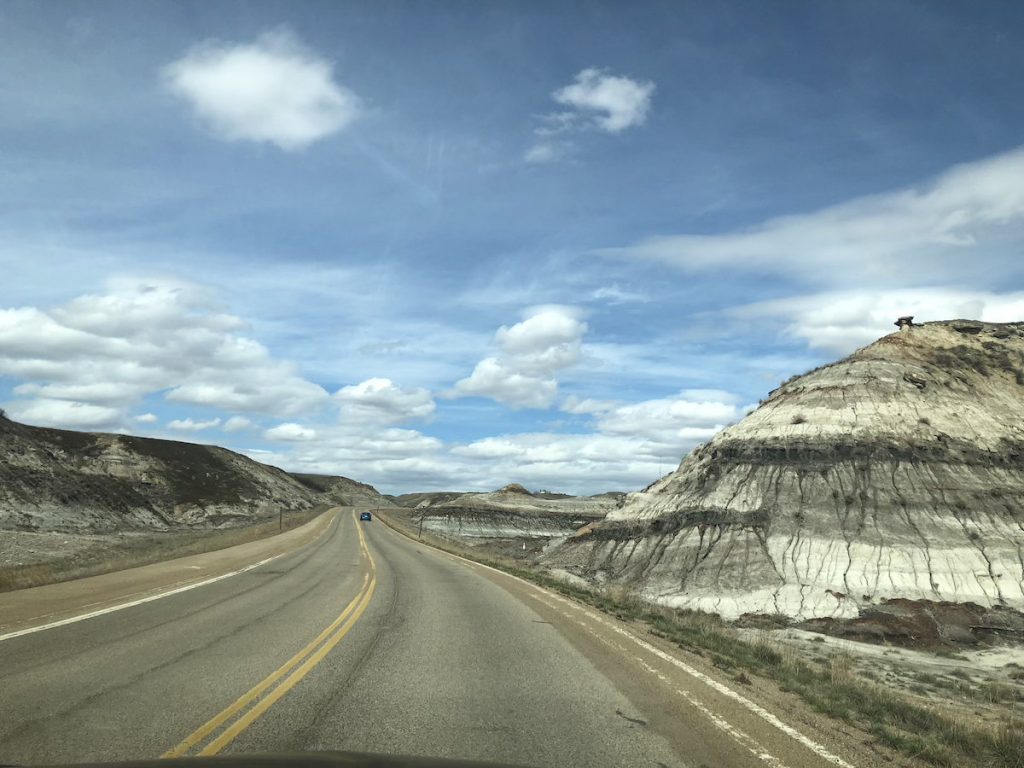
- Horseshoe Canyon: On the drive over from Calgary, don’t miss Horseshoe Canyon. This stunning geological feature is a grand entrance and sample of what is to come in the Drumheller Valley.
Is A Day Trip to the Drumheller Valley Worth It?
Yes, absolutely. This is an easy day trip and well worth the drive. A day trip to the Drumheller Valley is great for everyone, from families with kids to palaeontology and geology enthusiasts. There is lots to see and do, from outdoor activities to educational museums.
How to get from Calgary to Drumheller
Start your day bright and early from Calgary. It takes about an hour and 20 minutes to get to Horseshoe Canyon, and 1.5 hours to downtown Drumheller. All the attractions are located in the Drumheller Valley. It is a town in the Red Deer River valley, 110 kilometers northeast of Calgary.
As you drive, you will pass through the town of Beisekar, with a small population of 800. It is a great small town in Alberta to visit, but be mindful of the speed limit in this little village as you enter the community.
Driving from Calgary to Drumheller
The best way to reach Drumheller from Calgary is by car. If you need to rent a car, you will find a variety of car rental agencies in Calgary.
Guided Tours to Drumheller
To sit back and relax with a local expert, book a guided tour. The best guided tour takes you to major sites all through the Drumheller Valley, including BOTH the Dinosaur and Hoodoos Trails. You’ll get local context with a guide and get to explore much of the valley without any stress of renting a car or driving yourself.
There are plenty of other tours too, so pick one that appeals to you. Here are a few that are highly rated and visit most attractions.
There is also an Indigenous-operated company, Wild West Badlands Tours, that takes you across the Drumheller Valley with a guide who shares stories through an Indigenous lens.
Buses from Calgary to Drumheller
Flixbus operates a bus from downtown Calgary to downtown Drumheller, with an additional stop at the Royal Tyrrell Museum of Palaeontology. While you won’t be able to do the full Dinosaur Trail road trip, it will at least allow people who are on a tight budget or without a car to see some of the highlights of the Drumheller Valley.
About Drumheller Valley
Prehistory: Dinosaurs & Geology
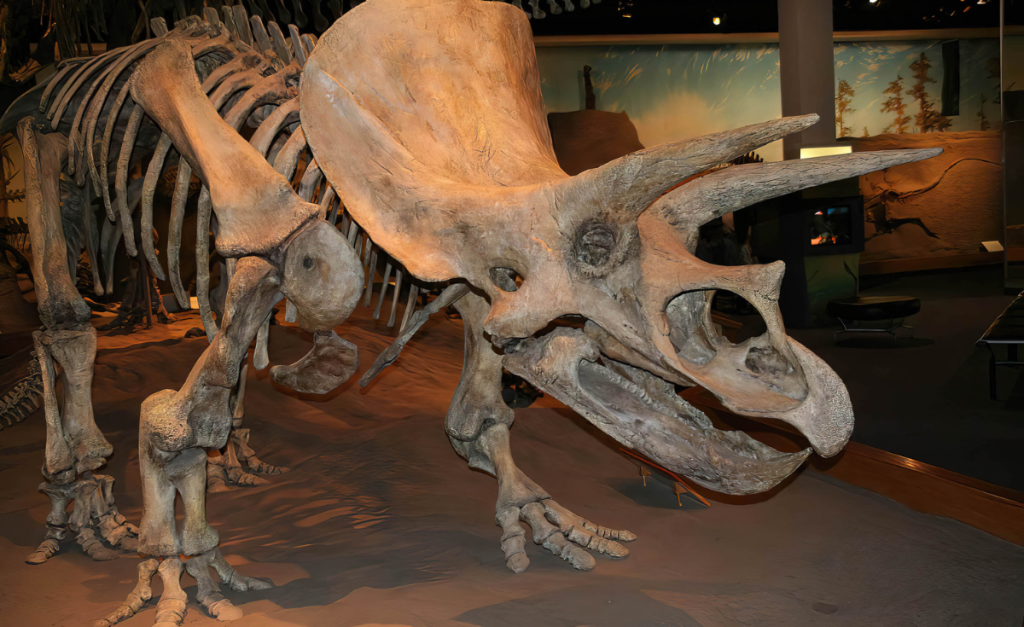
During the Late Cretaceous period, 100 million years ago, the area that is now known as the Drumheller Valley was a warm sea surrounded by tropical forests. This lush landscape was perfect for plants and dinosaurs to thrive. After the dinosaurs died, the conditions here were also perfect for preserving their remains, which is why so many fossils have been found in the area.
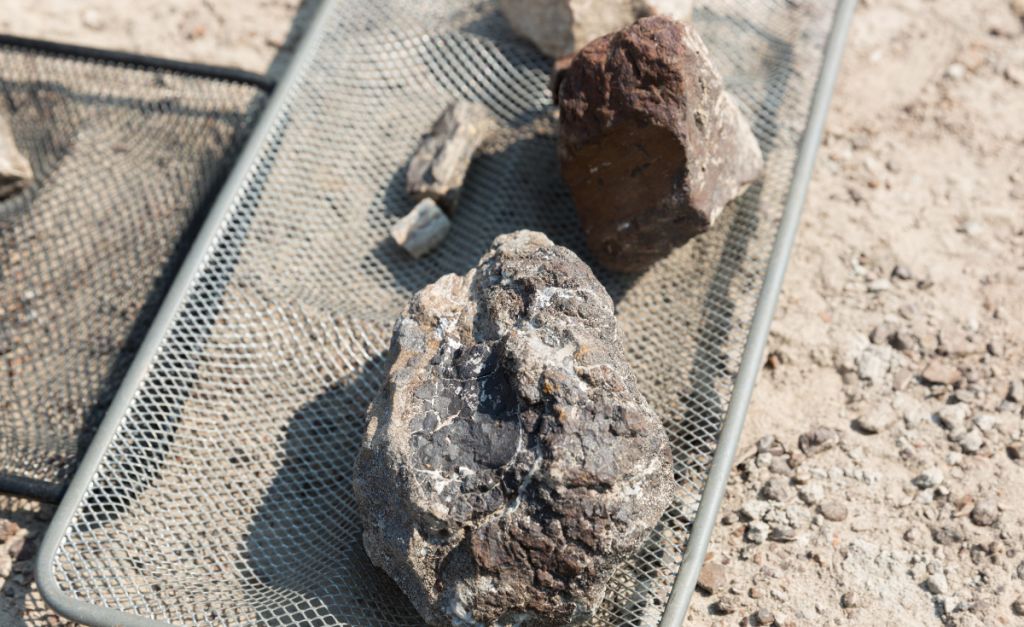
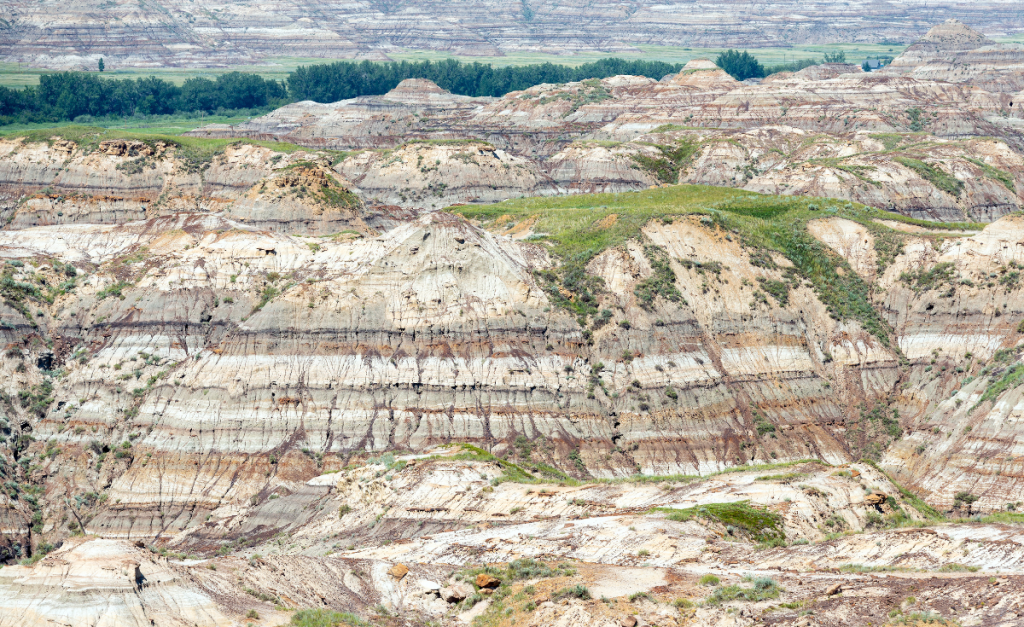
At the end of the last ice age, around 10,000 years ago, the melting ice sheets caused the famous coulees, canyons, and hoodoos to form. The waters exposed layers of sedimentary rock, along with the decayed remains of plant life, which had become coal, and dinosaur fossils.
Indigenous History of Drumheller Valley
Before European settlement, this area was inhabited by the Siksika (Blackfoot) and Cree peoples. During the summer, groups would meet up on the plains to camp, celebrate, and hunt bison.
They were also aware of the dinosaur fossils, assuming that the area was a graveyard for giant “grandfathers of the bison,” and treated it as sacred.
Drumheller Mining & Colonial History
Europeans arrived in the region in 1884 and immediately discovered both the coal deposits and dinosaur remains. Thomas Greentree built the first house in Drumheller in 1902 (although it wasn’t called Drumheller yet). Samuel Drumheller bought Greentree’s land in 1910 and decided to build a town. The town name was famously chosen by a coin toss between Drumheller and Greentree, which Drumheller obviously won.
Today, it is a valley uplifted by tourism and research. As visitors, we get to step back in time in awe at the age of the dinosaurs, as well as enjoy modern historic sites and the otherworldly landscapes that remain.
Things to do in Drumheller Valley: Dinosaur and Hoodoos Trails
Nearly all of the things to do in the Drumheller Valley can be found along two tourist driving routes.
- The Dinosaur Trail follows the Red Deer River northwest from downtown Drumheller and includes the Royal Tyrrell Museum, Midland Provincial Park, Horsethief Canyon and the Bleriot Ferry.
- The Hoodoos Trail follows the Red Deer River southeast and includes the hoodoos and Atlas Mine, with a detour to the town of Wayne.
You should be able to see nearly everything in a full-day trip from Calgary. Most places are quick stops or roadside attractions. Others, like the museum, could easily eat up 3 hours of your day.
1. Horseshoe Canyon
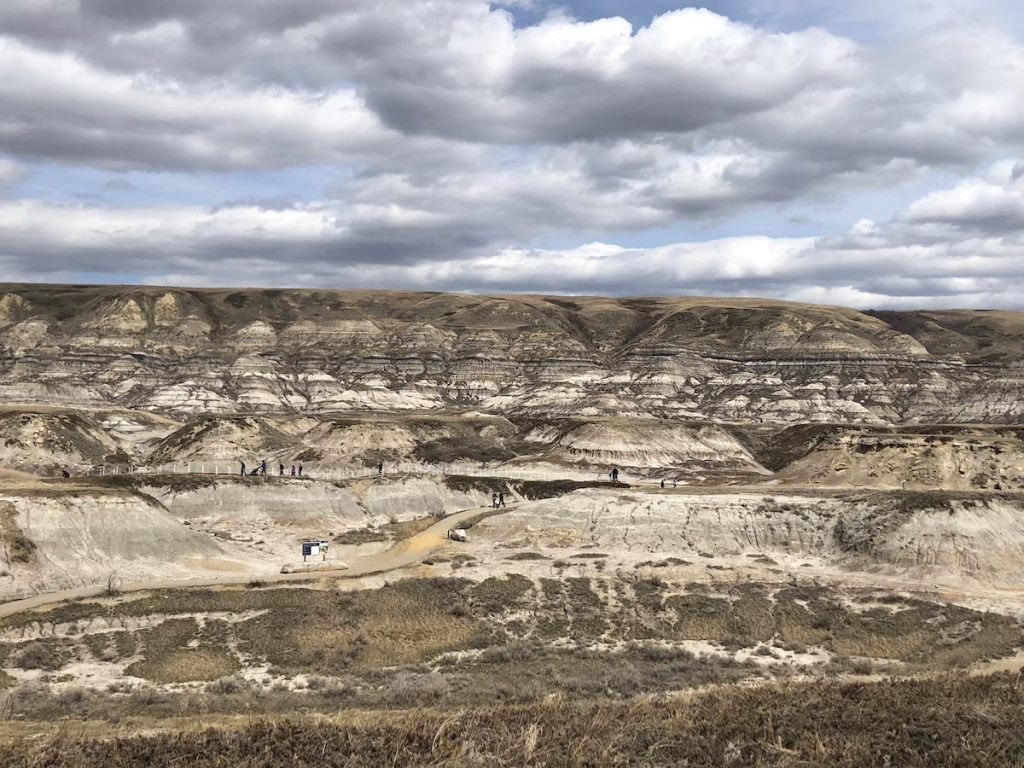
But… before you reach Drumheller Valley, the first attraction is Horseshoe Canyon. Located just 17 km before Drumheller, along Highway 9, this is one of the main roads coming in from Calgary—you can’t miss it.
Horseshoe Canyon is a taste of what is to come and your first introduction to the amazing geology here. This is like a mini Grand Canyon, that is much younger and much greener.
The Horseshoe Canyon got its name from the horseshoe shape, which is defined by two coulees that flow into the Kneehill Creek (a tributary of the Red Deer River).
If you want a quick stop: You can stand on the edge of this huge U-shaped canyon and take in the beauty of the Canadian badlands. Photography enthusiasts can use the viewing areas/platforms to capture the beauty of the canyon.
If you want to spend some time: Enjoy a scenic hike in the canyon, but bring lots of water. The canyon’s two arms are 5 kilometres long each, and it extends from Highway 9 to Kneehill Creek, at the site of two mining communities – Dunphy and Gatine.
Dinosaur Trail Highlights
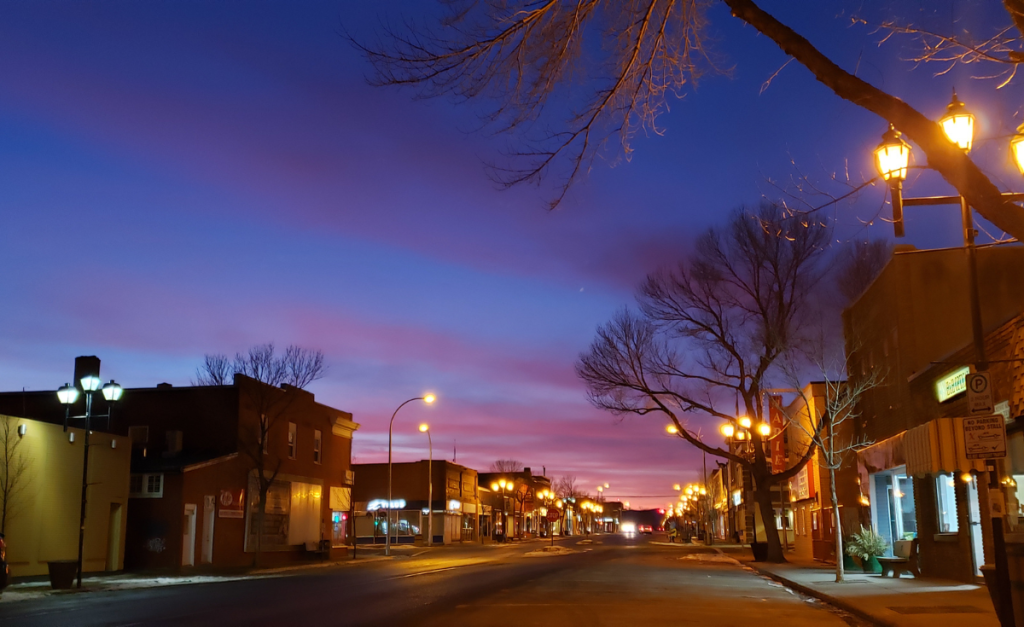
Once you reach Downtown Drumheller, grab a coffee at Black Mountain Roasters. Head to the World’s Largest Dinosaur and Visitor Information Centre for parking.
Note: There is a lot of colonial heritage on the Dinosaur Trail, so it’s not all palaeontology and fossils.
2. World’s Largest Dinosaur – Dinosaur Park
Arriving in Drumheller, the sight of the 25-metre-tall dinosaur is hard to miss.
The Drumheller Dinosaur Park is a great place for families to enjoy. The World’s Largest Dinosaur is located here, at #60, 1st Avenue West in Drumheller.
Now, this isn’t a real skeleton, but a manufactured dinosaur. It is a famous roadside attraction.
For an entry fee of $5 CAD (or $10.50 CAD for the Family Rate of 1-2 adults, children between the ages of 6-17), you can head to the HEAD of the dinosaur to view the town of Drumheller and the Canadian Badlands.
There is also a rather nice park here; you can picnic or take a stroll on the lawns in front of the dinosaur. Enjoy the small-town joy of an ice cream stand or a splash park in the hot weather. If you want to stretch your legs, you can walk along the river following a trail.
Within proximity of the large dinosaur, there are a few more sights to explore before you leave downtown Drumheller. The Fossil Discovery Centre is a great place for families with kids who are dino-obsessed to visit and explore.
Once you’ve explored Drumheller, you will leave the town across the bridge, driving along a road called “North Dinosaur Trail.”
Note: Dinosaur Provincial Park is a different site from the Drumheller Dinosaur Park. The Dinosaur Provincial Park is where more than 150 full dinosaur skeletons have been unearthed. Dinosaur Provincial Park is a UNESCO World Heritage Site and is a 170 km drive from Drumheller.
3. Homestead Antique Museum
Your first stop isn’t far. The Homestead Antique Museum is an entire home that was purchased in 1919 from an Eaton catalogue. Within the home, you will find 10,000 antiques from Canadian pioneer life during the Victorian and Edwardian eras.
For a $12 admission fee, you’ll be able to browse a selection of old cars, carriages, dresses, suits, medical equipment, instruments, currency, cameras, clocks, and so much more.
It’s open seasonally in May, June, and September on weekends only. In July and August, it’s open 7 days a week.
4. Midland Provincial Park
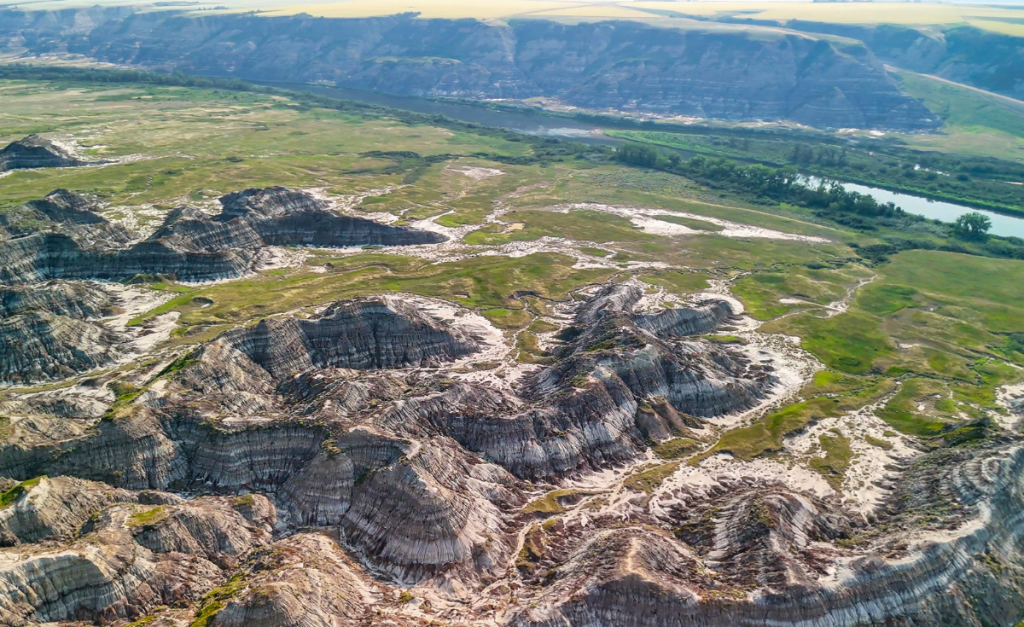
As soon as you enter Midland Provincial Park, you will notice that the landscape is changing as you enter the heart of the badlands.
The Midland Provincial Park was initially established to preserve Alberta’s mining history. The Midland Coal Mine was located here. Today, the park protects many rare and unique plants and animals, from scrubby brush, cacti, and cougars that live in the badlands ecosystem.
Make sure to visit:
- Midland Coal Mine Site to see the old heritage headquarters.
- Midland Coal Interpretive Trail, which features many signs and artifacts that tell the region’s mining history.
- Badlands Interpretive Trail to learn about the badlands ecosystem. This starts near the Royal Tyrrell Dinosaur Museum. Budget 1 hour or more for this walk, and bring lots of water.
- Don’t miss McMullen Island, a beautiful lookout and a picnic site, located inside Midlands Provincial Park. It is a day-use only facility with picnic tables, a freshwater pump, and toilet facilities.
- Other activities include birding, geocaching, cycling and picnicking in the park.
McCullen Island is named after Mr Seneca McMullen, who established the Midland Coal Mine Company in 1912 and served as a company principal for many years. He also contributed to the prosperity of the community and the province.
5. Royal Tyrrell Dinosaur Museum
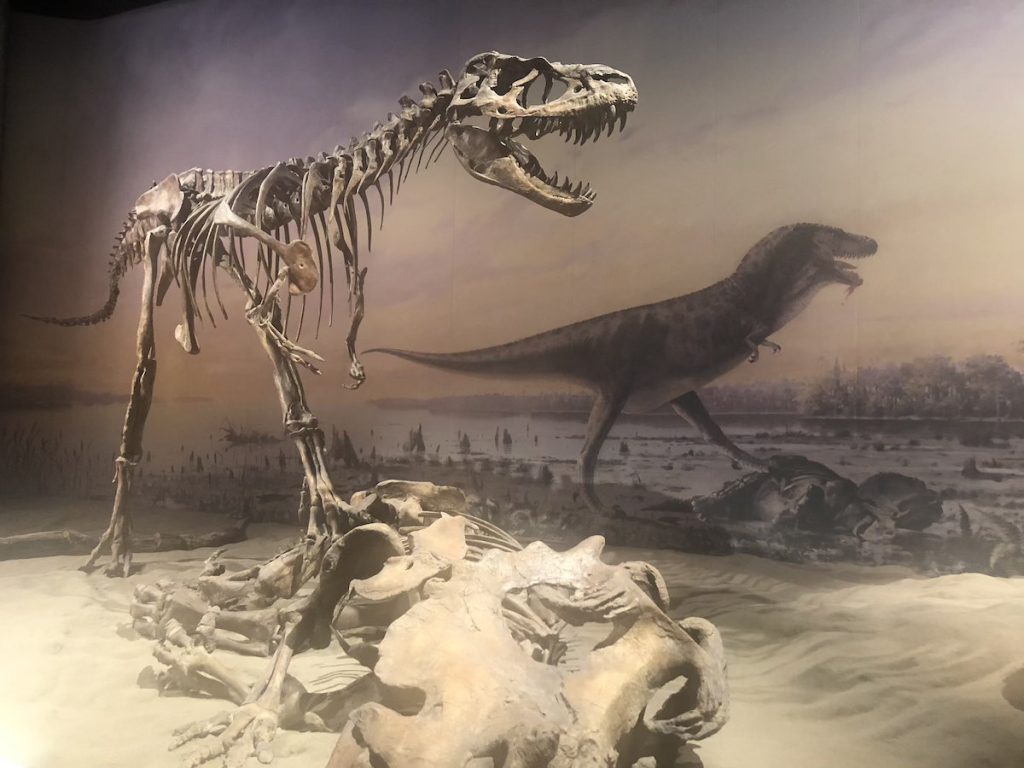
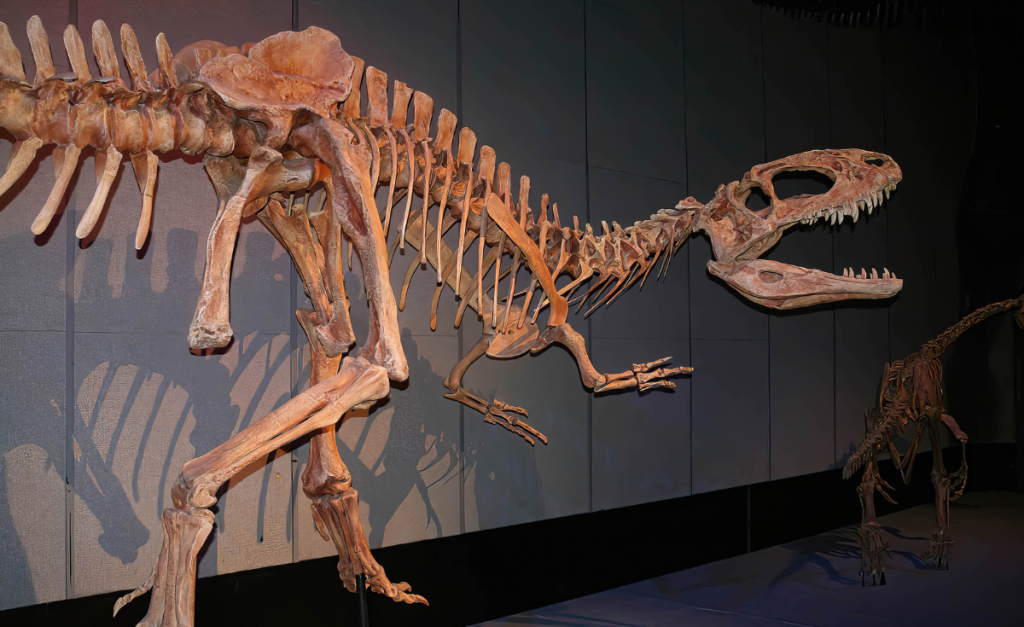
The Royal Tyrrell Museum is the major tourist attraction in Drumheller and a center of palaeontological research. It is known for its collection of more than 130,000 fossils. This museum is situated in the middle of the fossil-bearing strata of the Late Cretaceous Horseshoe Canyon Formation, and is home to the Devil’s Coulee Dinosaur Egg Site.
The museum is named in honor of Joseph Burr Tyrrell, a geologist who accidentally discovered the first dinosaur fossil in the Red Deer River valley in 1884. The carnivorous dinosaur was later named Albertosaurus sarcophagus.
You can easily spend 2- 3 hours on the museum grounds. Parking is available on site. There are souvenir shops and cafes inside the museum.
There are at least 13 exhibits covering fossils, excavation, and different periods from the Palaeozoic to the Cenozoic. You will be amazed at what was discovered in Alberta while digging for coal. A lot of the displays inside the museum are original, and some are casts.
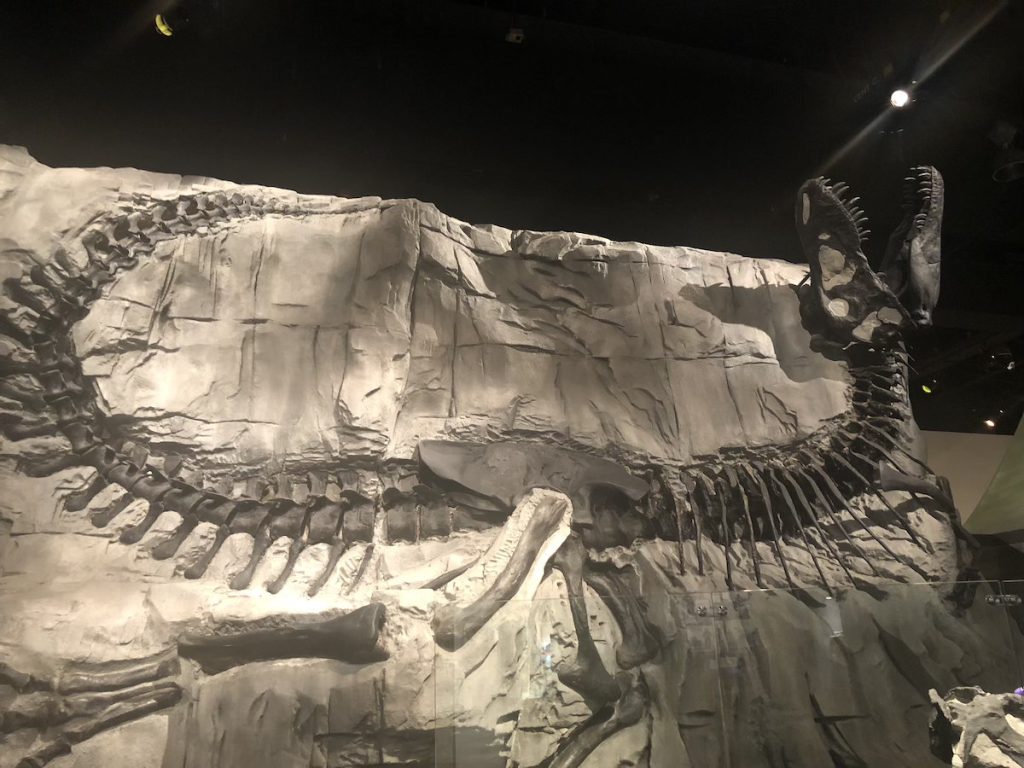
Depending on the time of year and day you visit, you may be able to take part in activities like adult badland hikes or dig experiences, as well as activities for kids.
Entrance fees to the museum are $25 CAD per adult and $12.00 CAD for youth (7-17 years, and kids under 7 years go in for free). Tickets can be purchased at the visitor center.
6. The Little Church
Located just a few minutes from the Royal Tyrrell is the Little Church – a place of meditation and worship. It is a pretty little sight to see the church amidst the badlands landscape.
It is free and open to the public and makes for a quick stop along the Dinosaur Trail.
7. Horsethief Canyon
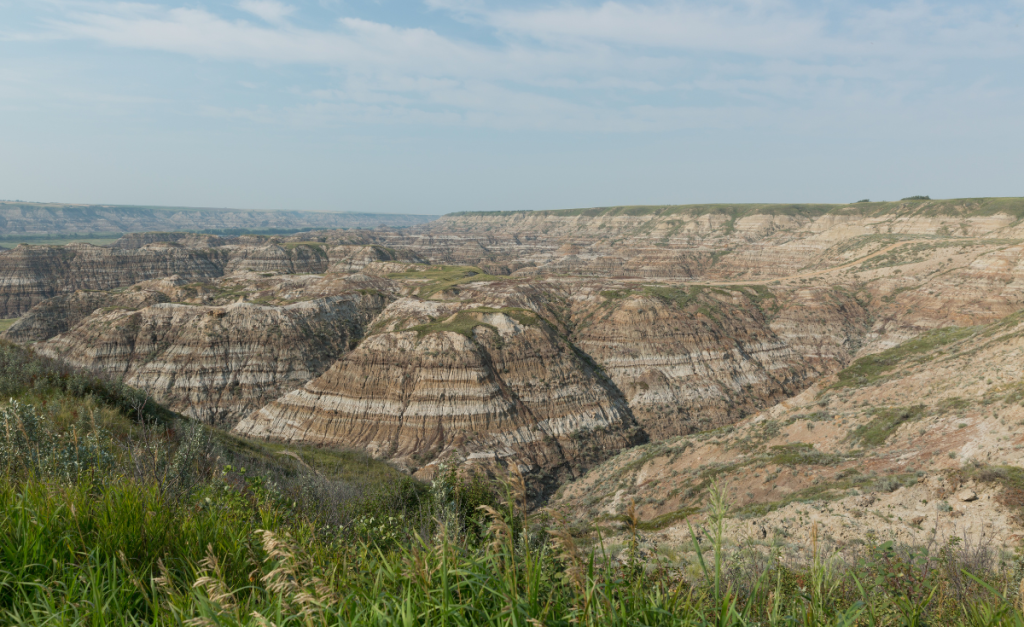
Horsethief Canyon is a picturesque valley that is the ideal example of a badlands ecosystem. The name comes from a time when outlaws would steal horses and leave them in the canyon, where they would not be seen until they could be moved around illegally.
Horsethief Canyon is on private property, and you can stand on the edge to soak in dramatic landscape views and walk for a bit, but otherwise, you are asked not to hike in and out of the canyon.
8. Bleriot Ferry
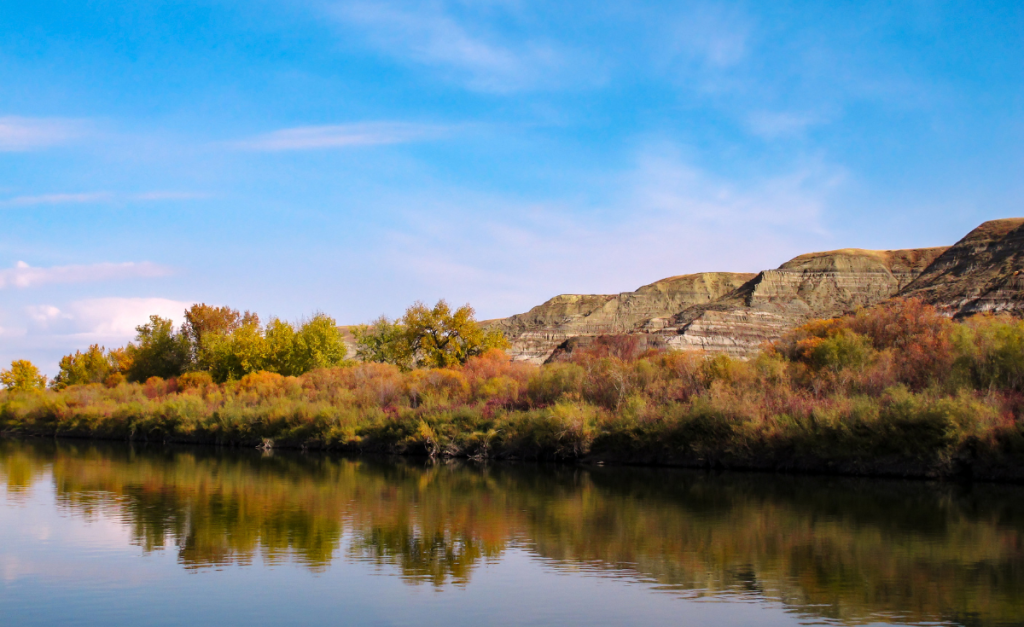
As you continue on the North Dinosaur Trail, you will eventually need to cross the Red Deer River that you’ve been following. Crossing the river is half the fun of this drive.
The small ferry was commissioned by a Frenchman, Andre Bleriot, in 1913. The unique thing about this ferry is that it is a small, movable bridge, which you can use to drive across the river (in less than eight minutes).
The ride is free, but the ferry can only hold a small number of cars at one time. There are audio guides, stories, and anecdotes from the informative ferryman. This is a cool attraction to see and will connect you to the South Dinosaur Trail, as you begin to follow the Red Deer River once again in the direction of Drumheller.
9. Orkney Viewpoint
Orkney Viewpoint is a natural lookout point situated above the Red Deer River. It provides scenic views of the Red Deer Valley along the South Dinosaur Trail.
Continue along the South Dinosaur Trail until you pass Drumheller. There are no major attractions or views.
Hoodoos Trail
After passing the town of Drumheller once again, keep driving straight to connect with the Hoodoos Trail. The ecosystem transforms from your classic badlands to incredible areas full of hoodoo geological formations.
10. Rosedale Star Mine Suspension Bridge
On your way, you will pass the small town of Rosedale while on your way to the Drumheller hoodoos. Take a left turn to enter the town and park to find the Star Mine Suspension Bridge. It is a 117-metre-long pedestrian suspension bridge built across the Red Deer River. It was built in 1931 for the coal workers of Star Mine.
You can cross the suspension bridge. Only a maximum of 20 people are allowed at a time. Once you cross the bridge, at the north end, you will see the badlands again. You can hike to the top or take a stroll down to the Red Deer River banks.
There are no entry fees at the site. Parking is available.
11. Detour: 11 Bridges to Wayne and Last Chance Saloon
Take a detour to head toward Wayne. On your way, you will cross 11 bridges as the road crosses a winding river that feeds into the Red Deer River.
After 9 bridges, you will enter Wayne, a historical mining town. Stop at the Last Chance Saloon for a bite to eat. This rustic pub and bar grill was established in 1913 and offers burgers & other comfort food with live music.
Explore Wayne with interpretive signs at sites like Jewel Mine Historical Site. If you want to cross all 11 bridges, keep going after lunch and turn around to head back to the main Highway 10.
12. Drumheller Hoodoos
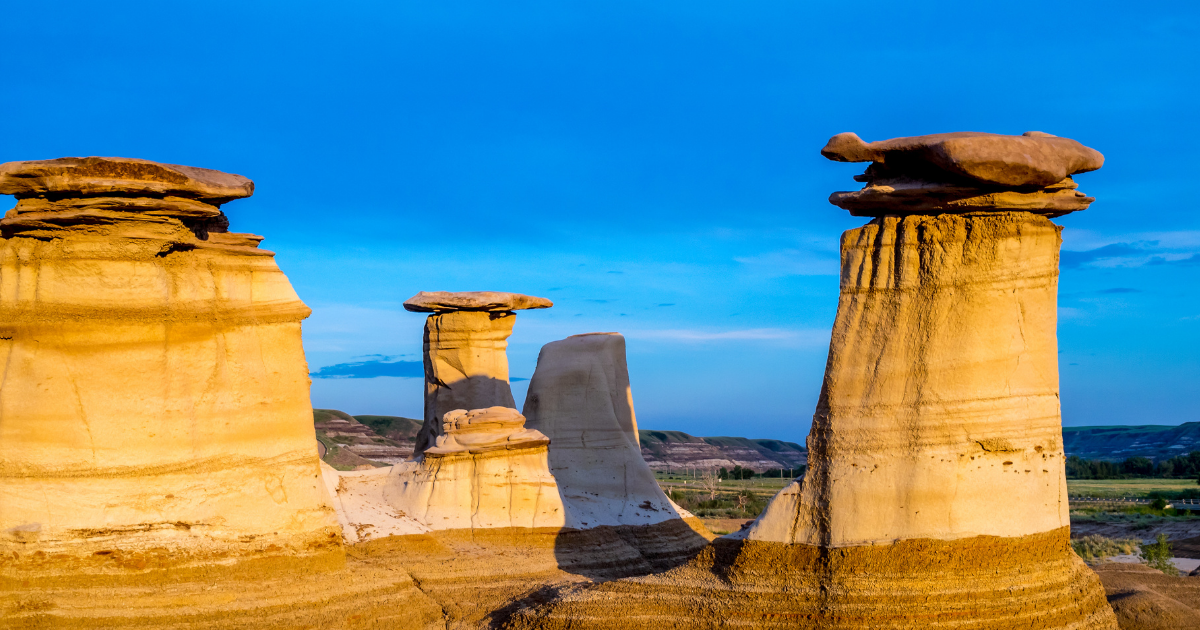
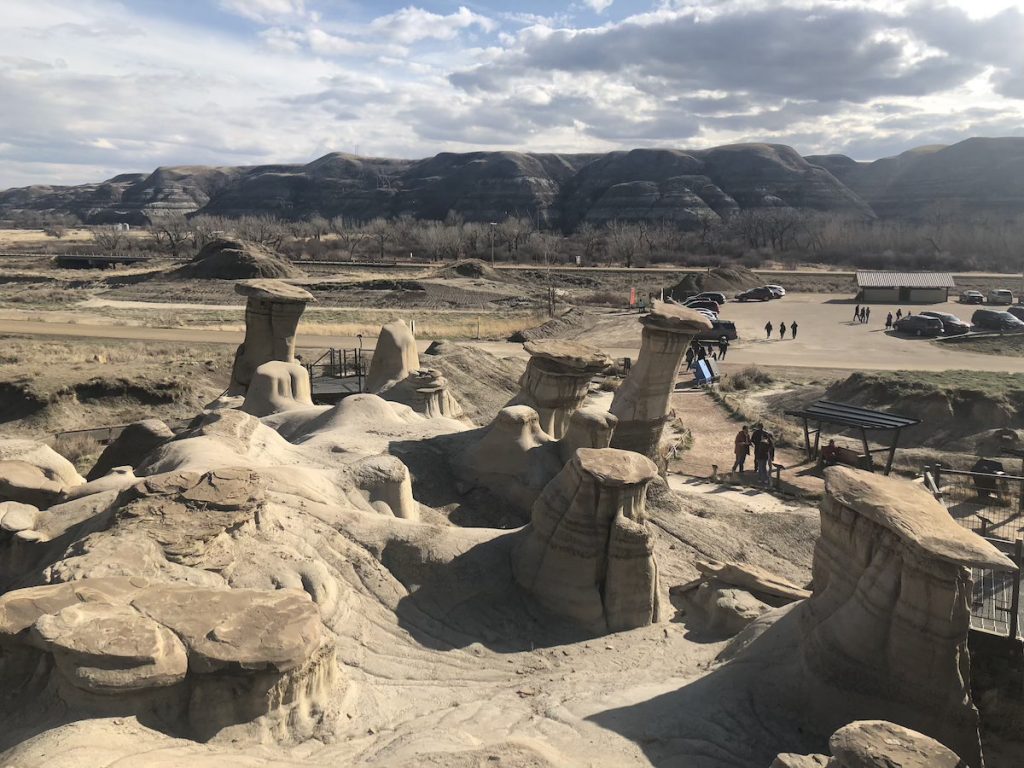
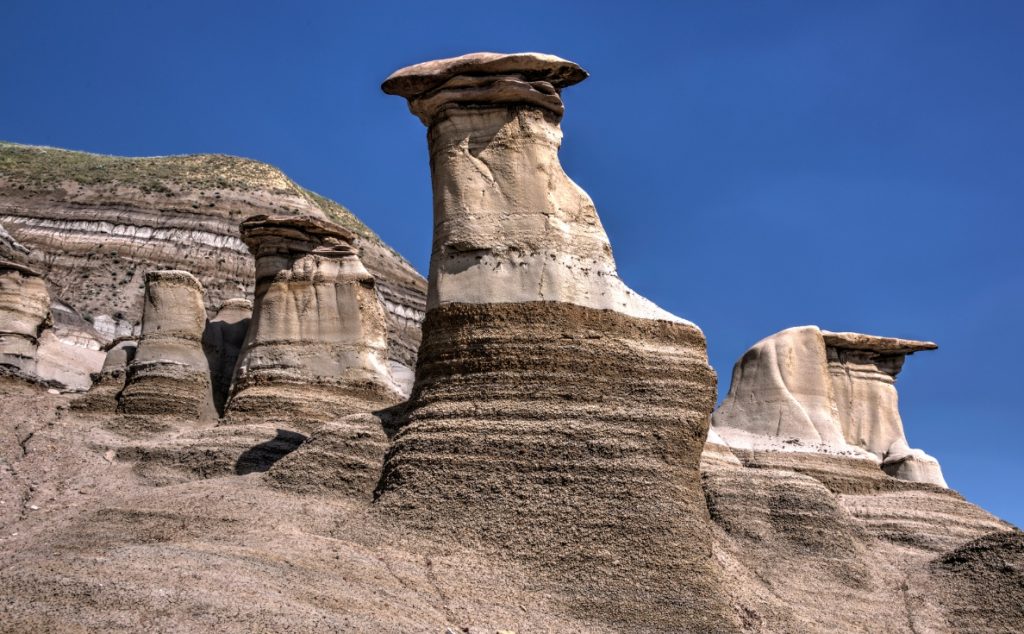
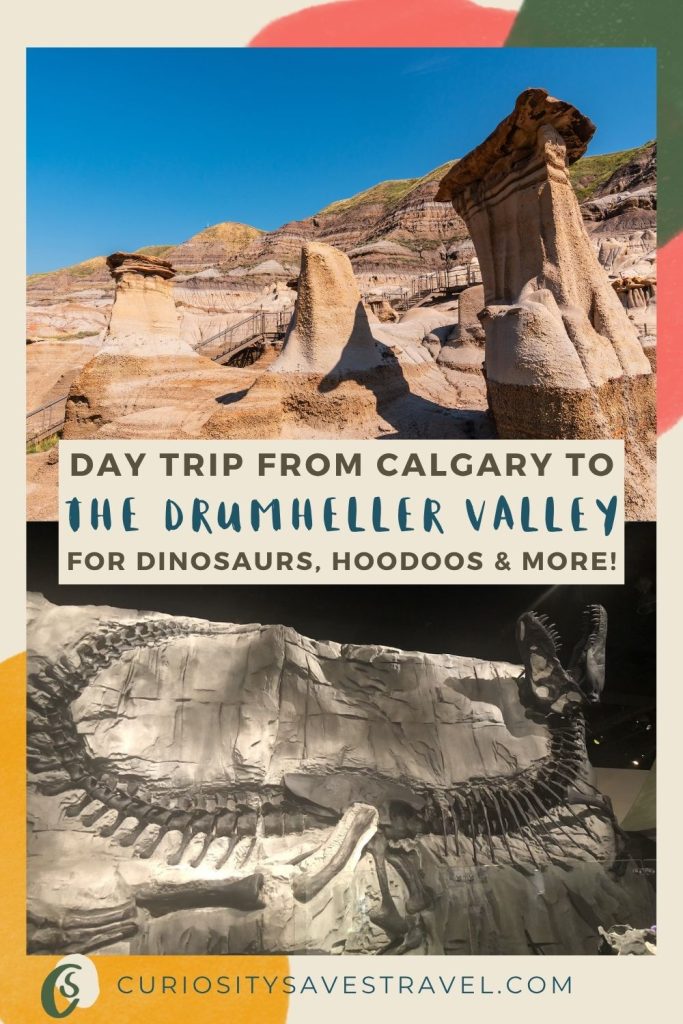
The Drumheller hoodoos might be one of the best sites along both the Dinosaur and Hoodoos Trails. Hoodoos are geological formations created through the deposit of materials during the Cretaceous Period between 70 and 75 million years ago. They consist of sand and clay from the nearby Horseshoe Canyon.
The Hoodoo Trail is located midway between Rosedale and East Coulee.
The solid and strong capstones protect the softer underlying base, creating their unique mushroom-like shape. Entry to the hoodoos area is completely free. There is a free parking area right in front of the Hoodoos.
There are designated pathways to walk and reach different platforms on site.
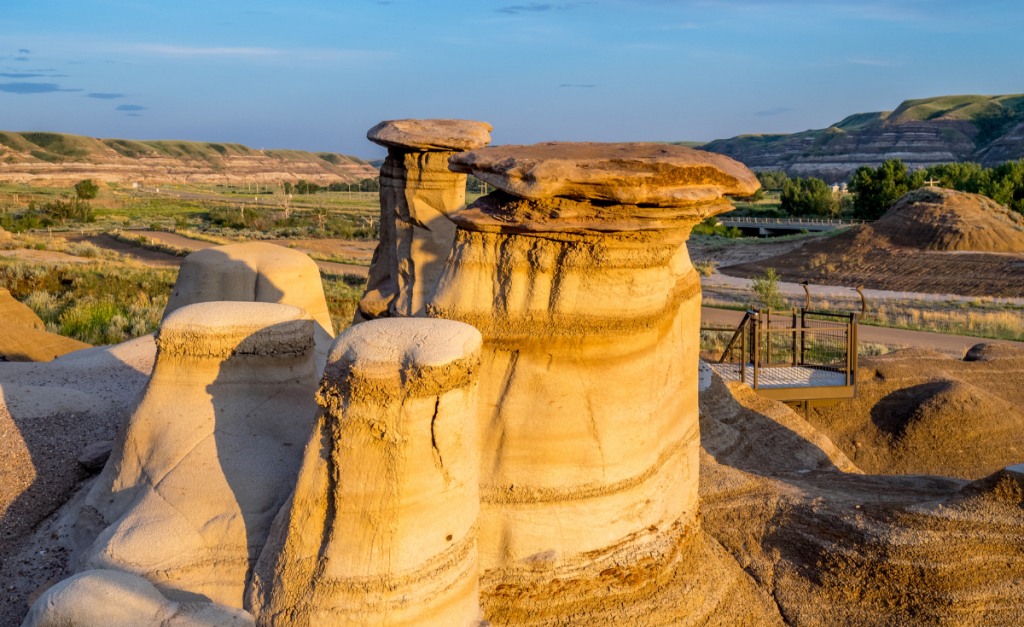
Tip: On your way to the Hoodoos, you will come across Hoodoo RV Resort & Campground – this place is a very serene spot, and perfect if you are looking for RV or camping options at the Midland Provincial Park.
13. East Coulee, a Ghost Town
East Coulee is a boom-and-bust town in Alberta. It used to be a settlement of about 3000 inhabitants (1928 – 1955) working at nearby coal mines.
While not a complete ghost town, 200 residents still live here today, but there are the remains of abandoned mines, boarded-up buildings, and infrastructure left to decay over the years. It is interesting to visit and see the cycles of boom and bust towns.
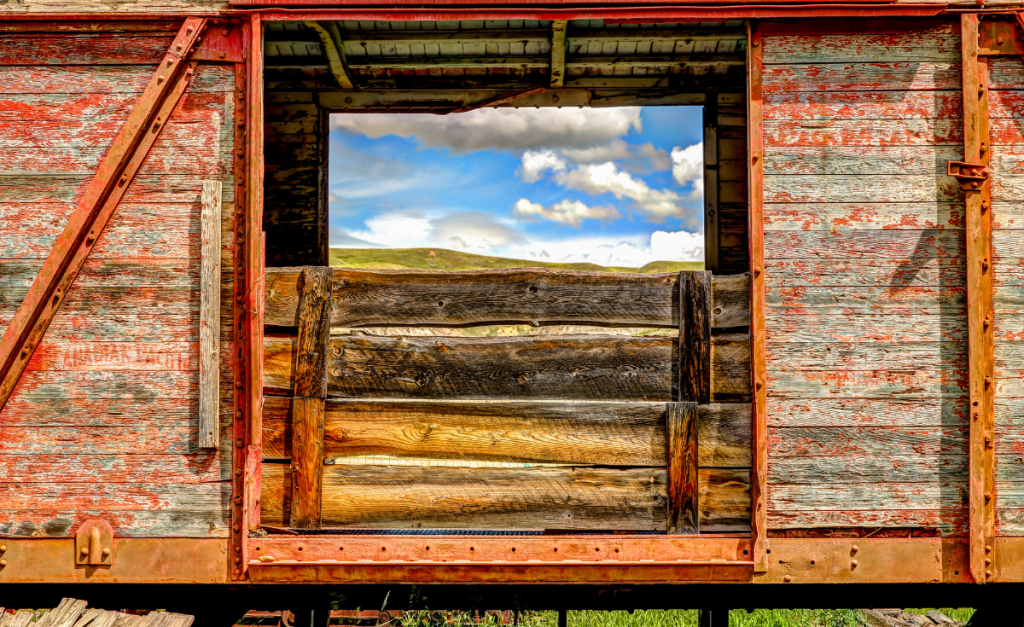
14. East Coulee School Museum
If, during this whole drive, you’ve been wondering what life was like for children out here, then the East Coulee School Museum is the perfect stop for you. This is a former 1930s 11-room schoolhouse built for the families of coal miners. It operated for about 40 years and was eventually turned into a museum.
The classrooms also include miners’ artifacts and hundreds of photos of the miners and their families.
It is open daily in July and August. Bookings are required September – April. Explore the museum or stop in for tea at the Willow Cafe.
Admission is $15.
15. Atlas Coal Mine National Historic Site
The Atlas Coal Mine National Historic Site is popular for its coal mine tours and history. The coal mine is surrounded by the Canadian Badlands and pulls tourists to view the original mine buildings, exhibits, and mining machinery.
The site is considered to be one of the OLDEST coal mines in Canada (now inactive). It was operational from 1936 to 1979. Coal was used to power the steam locomotives of the Canadian National and Canadian Pacific Railways on the prairies.
Coal mining was very lucrative in those years. And with growing business and need for mine workers (and jobs) led to the establishment of many small towns and villages.
The site preserves the stories and artifacts of men who once worked in the mines. The Atlas is the last of 139 mines that once dominated the Badlands valley. Today, you will only see abandoned villages and ghost towns.
It is believed that around 13 people have died during the mine’s operation, including the devastating explosion on June 24, 1941, which claimed the lives of 4 miners.
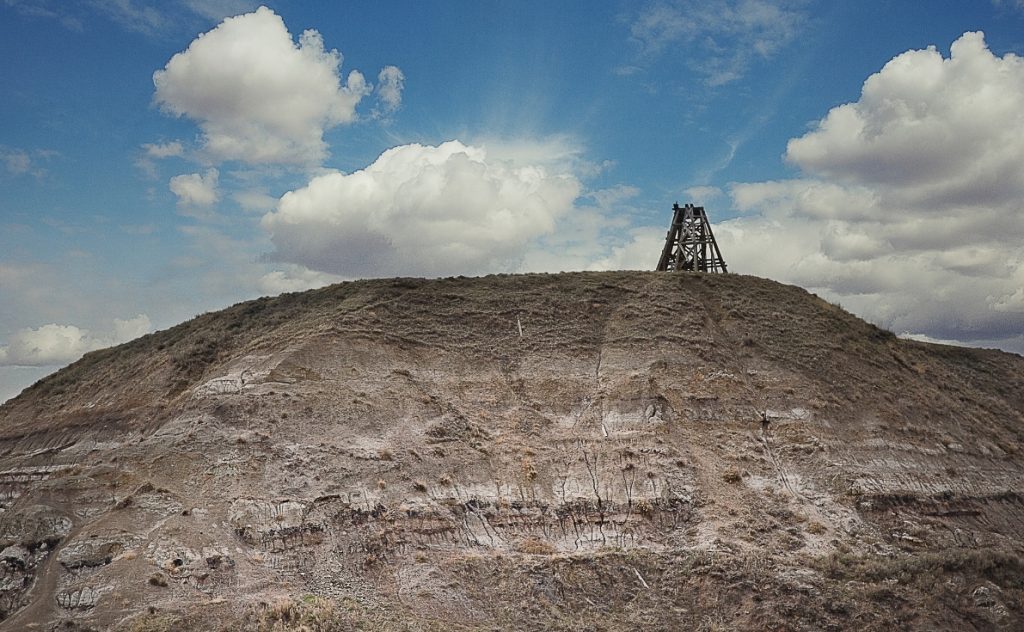
The wooden tipple is a coal loading and sorting machine – it is the only ONE of its kind left in Canada.
The entrance fee is $12 CAD per person or $35 CAD for a family. Guided tour and site access are seasonal. They have quite a variety of tours on-site. It includes photography tours, access to the coal mine on a 90-year-old locomotive train, tunnel tours, a wooden tipple climb tour, etc.
Travel Tips for Drumheller Valley
Nearest Airport to Drumheller, Canada
Calgary International Airport is the closest hub. It makes for an excellent add-on to your time in Calgary,
Tip: If you are heading to Banff National Park and arriving in Calgary, then add an extra day trip to Drumheller.
Best Time to Visit Drumheller
The best time to visit Drumheller is during the summer. Most of the Drumheller attractions are seasonally open daily in July and August and are best explored when the weather is warm.
Prime summer months are from late June to early September. During those months, the weather will be hot and could be rainy on some days too.
Visiting in late April – May may be an ideal time, as the weather will be warm enough for a hike and outdoor activity, but not scorching hot that it’s unbearable.
The Royal Tyrell Museum is open all year round. Summer hours at the museum are long, but also expect long wait times. The museum is very popular with kids, and you wouldn’t believe we had a hard time finding a parking spot in early April. Avoid visiting during Easter or spring break, if possible, unless you have kids wanting to go on an Easter Egg Hunt.
Where to stay in Drumheller? Drumheller Hotels
In our humble opinion, staying in Calgary will be the best option. Visiting Drumheller as a day trip from Calgary is ideal. Unless you are planning to camp and spend a night or two camping at Midland Provincial Park or the Hoodoos RV Park, or continuing your road trip to Dinosaur Provincial Park for a night and then pack to Calgary.
The options in Drumheller are mostly bed-and-breakfast types of hotels, and they are quite pricey for the service and value they provide. Also, during the summer months, getting a hotel in Drumheller could be a pain.
If you must stay in Drumheller, here are some options for you
- Ramada by Wyndham Hotel – Located about 8 km from the Royal Tyrell Museum, Ramada Hotel is a clean 2-star hotel offering free breakfast. The hotel is pet-friendly.
- Canalta Hotel Jurassic – A 2-star hotel, located by the roadside – Canalta has an indoor pool and provides free breakfast.
- SureStay Plus Hotel by Best Western Drumheller – Another 2-star hotel in Drumheller, SureStay is a budget option accommodation offering an indoor pool and free breakfast as well.
- Read: 10-day itinerary for Canada that includes Drumheller and Dinosaur Provincial Park
- Read: Best day trips from Calgary
- Read: Best small towns in Alberta
- Read: Where to stay in Calgary
Comment & Share Day Trip to Drumheller Valley
The Drumheller Valley is a truly unique and spectacular place to visit. Whether you’re interested in palaeontology, geography, or ecology, there is so much to experience in this area.
What’s more, it’s so convenient to visit as a day trip from Calgary, so that you can see dinosaur fossils, the beauty of the badlands, and the wonder of the hoodoos, just a short journey from the city on different driving trails.
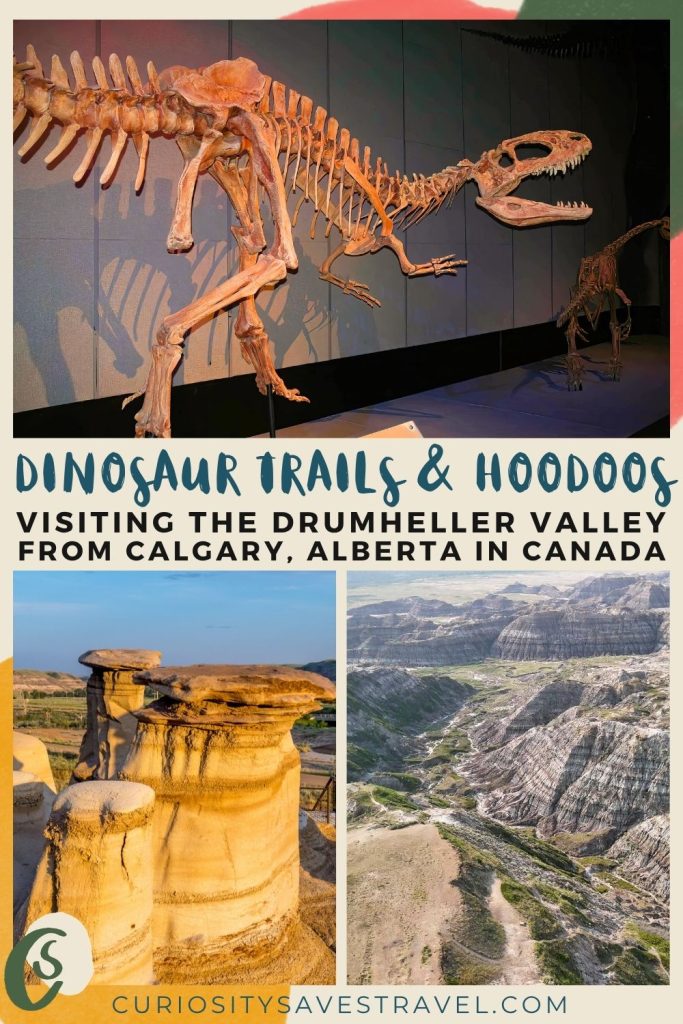
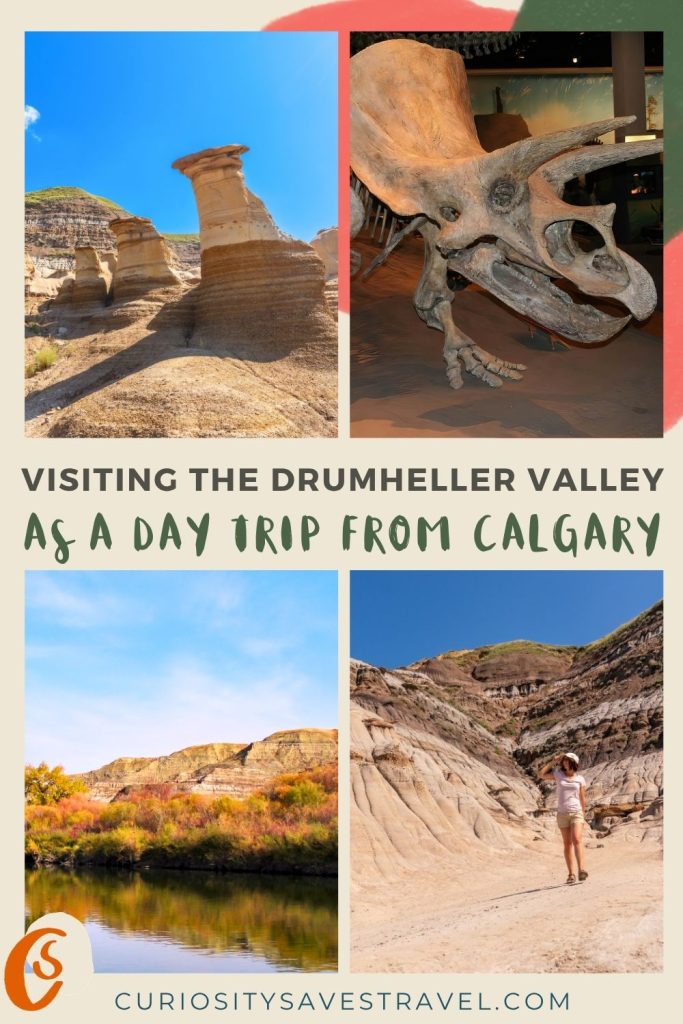
Which part of the Drumheller Valley are you most interested in? Tell me in the comments, and don’t forget to pin one of these to your Alberta travel planning boards!
Curiosity Saves Travel Recommends
Accommodation: Booking.com to find accommodation with a Genius Discount and clear third-party sustainable certifications like Green Key. Look for local hotels.
Tours and Excursions: GetYourGuide and Viator for tours, excursions, and tickets. Never book wildlife experiences through these vendors.
Travel: Omio for booking buses and trains in English across Europe. After reducing the number of flights I take annually, I use Google Flights’ carbon comparison tool.
Car Rental: Rentalcars for the best rates in English globally. It is easy to find hybrids and EVs, and there are resources for finding chargers.
Packing Essentials: REI or your local Co-op has great essentials like reusable water bottles and cutlery sets. Patagonia for regenerative clothing. Farm to Feet for socks made with regenerative practices! Pistil Designs for cold-weather essentials. Osprey for bags that last 10+ years, like the day bag for hiking or my favorite carry-on.
eSIM: Airalo eSIM. Reduces waste from single-use SIMs. A total game-changer.
For Bloggers and Content Creators
Earn Ad Revenue with Journey by Mediavine
Earn with Stay22 Travel Partnership (my biggest source of income!)
Earn with TravelPayouts recommending tours and activities.