
Taipei 4 Day Responsible Itinerary and Sustainable Things to Do
I may earn income from affiliate links or partnerships in this post. I spend time to curate tours or products that align with my values. Thanks for supporting my work, at no additional cost to you. All words and images on this website are created by real people.
Are you curious about visiting Taipei, Taiwan, and want to put together a responsible itinerary? Taipei is the ideal city for conscious travelers, those interested in sustainability, design, urban nature, fantastic (plant-based) Chinese-fusion cuisine, and culture, all topped off with great public transportation and attractions.
When crafting an itinerary in Taipei, we prioritized balancing sustainability and seeing highlights with a few lesser-known gems for a wonderful four days in the city.
Following in our footsteps, this 4-day itinerary and things to do in Taipei are the perfect guide for responsible travelers who want to maximize their time and impact. Our itinerary will take you to local cocktail and coffee bars, traditional plant-based restaurants, cultural sites, national and geo-parks, and creative collectives with a side of “getting lost” and enjoying moments down random side streets.
We visited Taipei after a month in Japan for a long weekend, and it quickly became one of our favorite Asian cities. Taipei has the life and lights of a big Asian city as well as deep-rooted cultural traditions, but with an unexpected twist of sustainability, modernism, urban nature, and easy-goingness.
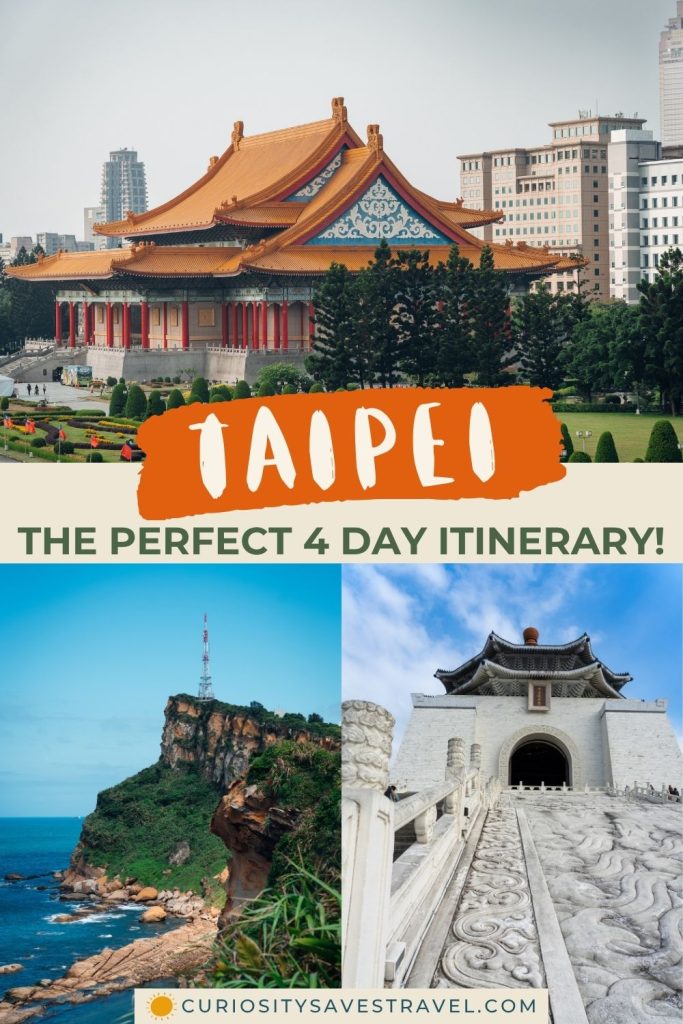
Let’s explore Taipei responsibly with this amazing itinerary and things to do in Taiwan’s capital city.
Quick Look: Taipei Itinerary Highlights
Taipei is worth exploring properly. I would say 4 days is the bare minimum of what you need in the city, and you could easily spend more than a week here.
To cover some of the highlights and our favorite things over four days:
Day 1: Arrival, getting settled into our boutique hotel, exploring the neighborhood around our hotel with walks to take it all in. Vegan Cantonese dinner, cultural sights, cocktail bars, and nighttime strolls.
Day 2: Creative parks, veggie bao bun, iconic monuments, urban parks, cultural sights, Taipei 101, bubble tea, hiking, and plant-based northern Chinese cuisine, and more!
Day 3: Day trip to hike in national parks and geoparks. Fresh plant-based soups for dinner and Ximending Walking District to enjoy the neon lights at night.
Day 4: Another creative park. Temples and exploring on foot. Seeing Dihua Street historic center before a red-eye flight out.
Our Travel Style Guiding This Itinerary
If you’re wondering if this itinerary fits your vibe, here is a quick look at our travel style.
Conscious & Sustainable Finds: We love seeking out artisanal small businesses, choosing plastic-free options, and finding great local coffee shops. For us, this means supporting small, local-owned, and diverse businesses while intentionally skipping mass over-consumerism and exploitative animal experiences.
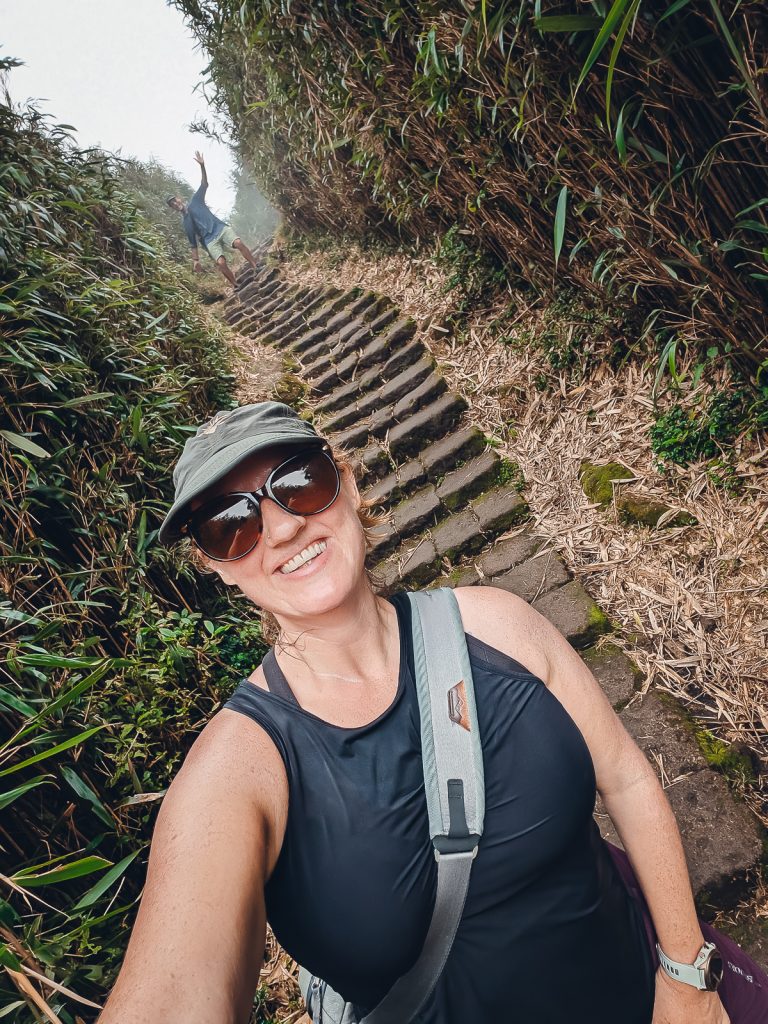
Nature & Active Experiences: I like to enjoy green spaces, parks, and get some sweat in with a little activity, from hiking to day trips out to national parks.
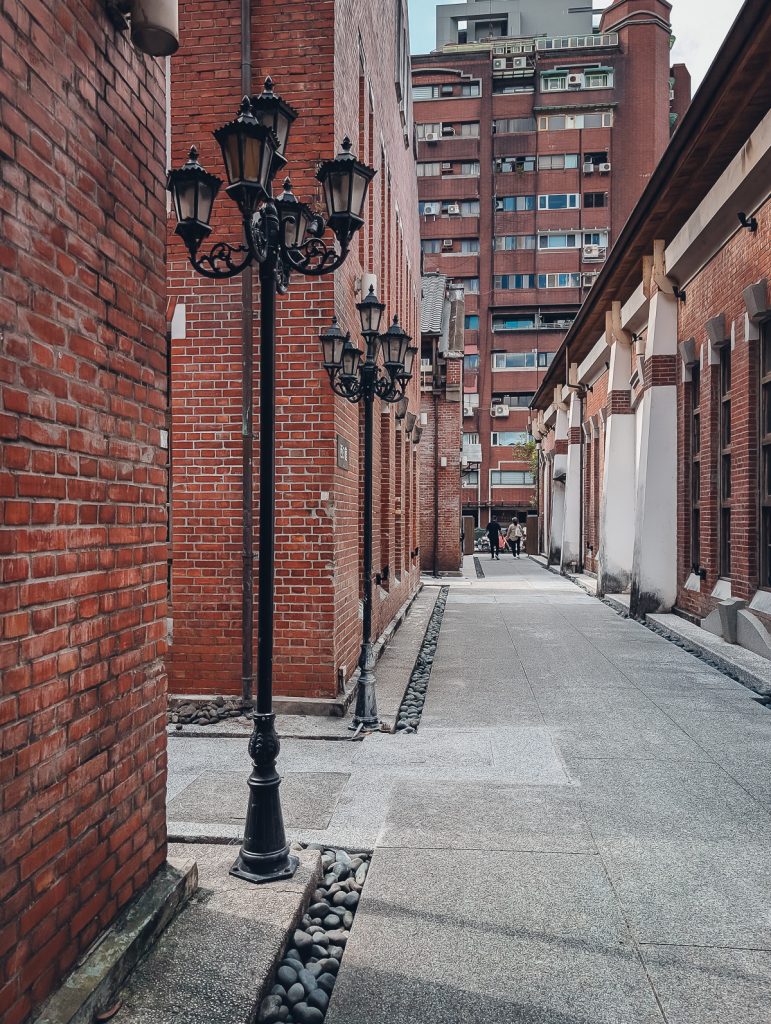
A Good Balance: I like seeing iconic sights that define a city, but I won’t wait in overly long lines for overhyped sights or food. I like to have just enough flexibility to go on random side quests and enjoy unexpected finds without stressing about doing and seeing it all.
Lots of Walking: We are big walkers and will happily walk 20,000 steps in a day, enjoying seeing the sights as we move from place to place. We supplement walking with public transportation.
Plant-Based Dining: I am a vegetarian who prefers vegan when possible. Every single restaurant selection in this guide is vegetarian, with many vegan options. Before you write this off, Taipei is a haven for traditional plant-based foods. You don’t need to compromise on trying all the local traditional dishes.
Why We Loved Taipei
I had no idea what to expect before arriving in Taipei. As soon as we landed in Taipei after a month in Japan, there was a collective sense of release with people more comfortable expressing themselves—queer couples embracing, women working more types of jobs, and open, genuine conversations.
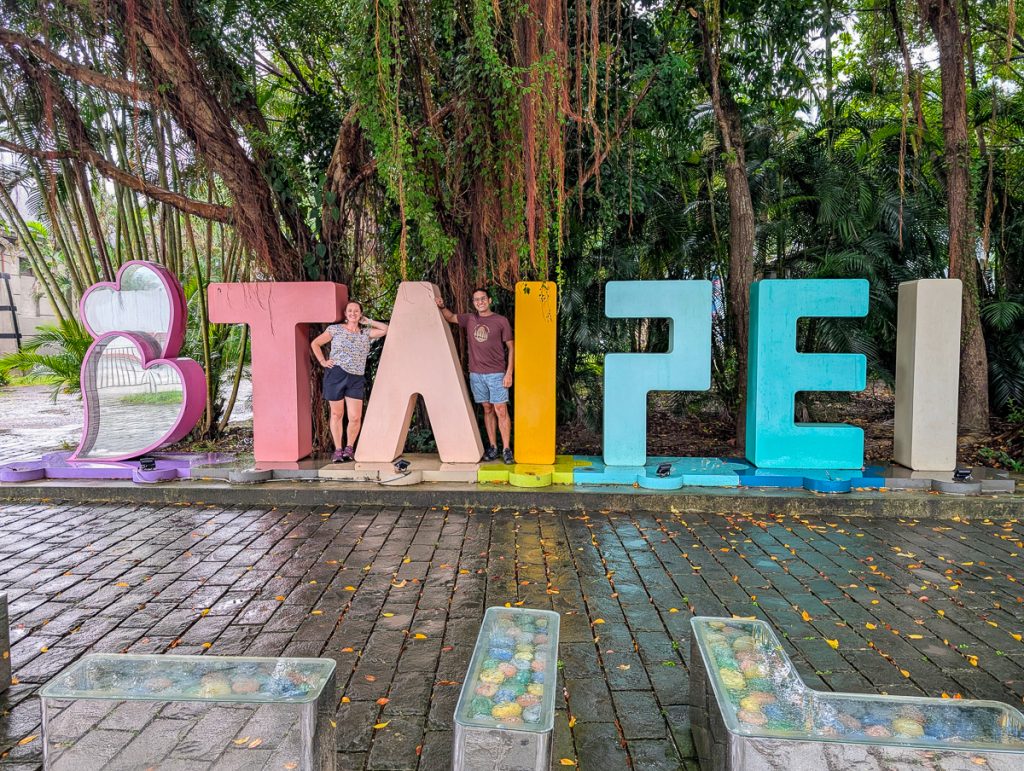
Rather than a city where people just rushed from A to B, we noticed more people out enjoying community spaces together, connecting.
I instantly noticed less plastic compared to Japan. Many city scooters were electric, with battery-swapping stations throughout. The sustainability initiatives were noticeable and even pushed my limits on what I expected from sustainability in travel.
Taipei has creative parks converted from industrial buildings, a great way to convert former sites of pollution into spaces for green parks, people, and small businesses. We loved the innovative, local, and sustainable design concepts, shopping more in Taipei than Tokyo, supporting local designers and Indigenous businesses.
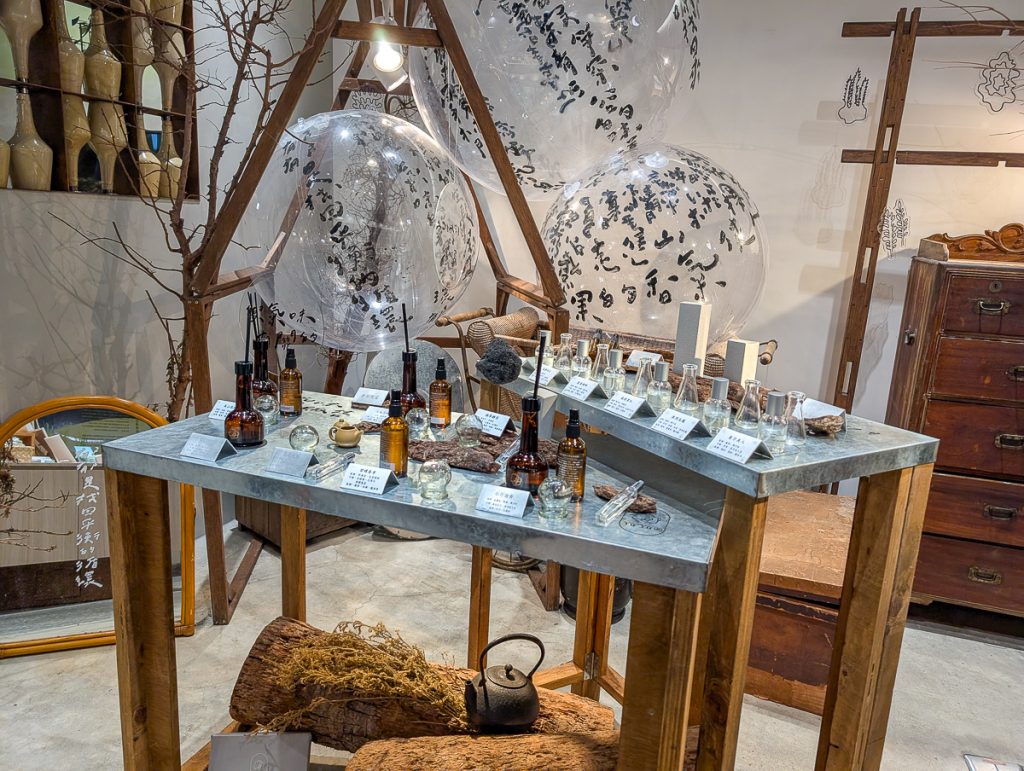
And don’t even get me started on the food… I have never had such good Asian vegan food in my life! We got to try vegan versions of China’s 4 major cuisine regions, along with creative fusion takes. 10/10 would eat it all again.
Hiking trails surround Taipei; you can start right from the city streets. We spent our nights trying to escape the daytime heat, only to hike in the night’s humidity with stunning city views.
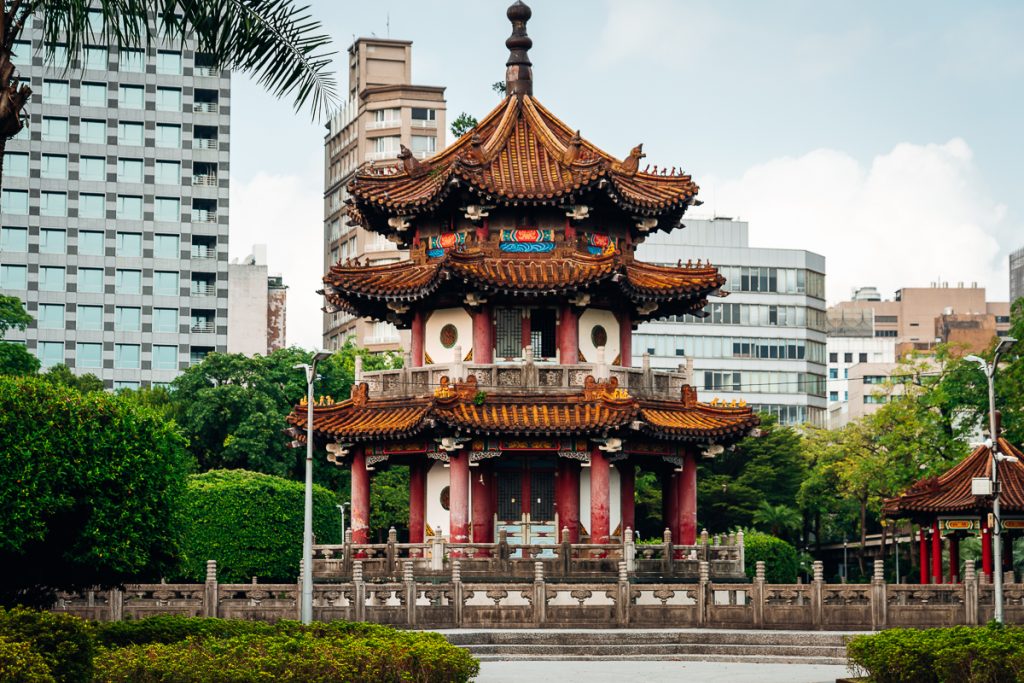
There is even more hiking in nearby Yangmingshan National Park, where we enjoyed friendly exchanges with fellow hikers at the summit. The coastal geology park was amazing with more coastal trail hiking opportunities and fascinating geology.
The landmarks were big, grand, well-maintained, and intricate with minimal crowds in October. The public transit was clean, accessible, and easy to navigate.
Of course, Taipei isn’t perfect. We had people recommend we visit dolphin parks, which are a major problem here. But I was able to have conversations about why these weren’t for us. Our guide was quick to understand and suggest alternatives for our travel style.
We noticed some economic inequality and other concerns with animal welfare. There was some ignorance about the Indigenous groups here before people came from China, but we noticed some reconciliation efforts too.
But all in all, wow, we fell in love with Taipei and can’t wait to come back and see more of Taiwan.
Here is the itinerary that made us fall in love with Taipei.
Day 1: Arrival, Check-in, Dinner, Cocktails, and Evening Exploration
- Express train from airport to city
- Check into Hotel Proverbs and settle into room
- Dinner at Chao Vegan Restaurant
- Explore the surrounding neighborhood on foot at night. Take in atmosphere, sights, sounds, neon lights, and full moon
- Oak cocktails at the bar
- Visit Liaoning Street Night Market or another night market
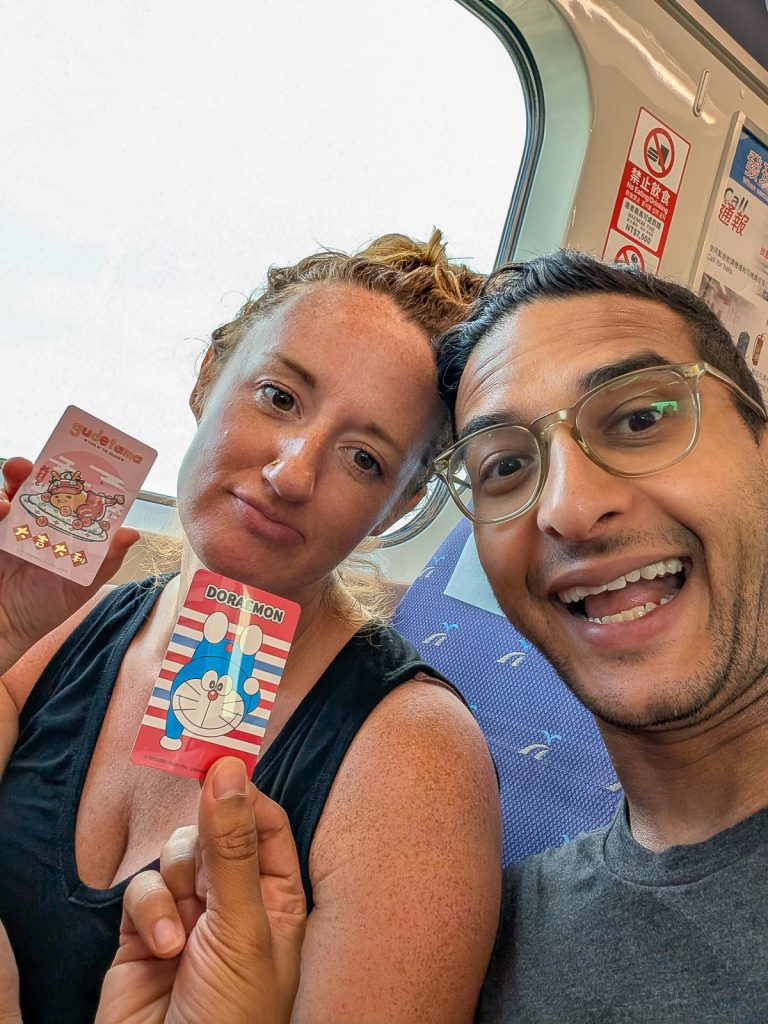
Arriving in Taipei, getting from the airport into the city center was a total breeze. Before heading to the platforms, we stopped at the airport help desk to grab custom EasyCards for the metro, which we reloaded as needed throughout our trip. I picked Gudetama—because I am, in fact, an apathetic egg (unless I am chronically overthinking and overempathetic)—while Ganesh chose Doraemon, because he is a happy robot kitty!
We caught the Airport Line Express train straight from the airport into the city. The scenery on the train into the city was stunning. The greenery and extensive nature that eventually gave way to the towering skyscrapers of downtown Taipei made the ride enjoyable. Then we transferred onto the local Bannan Line to reach our hotel.
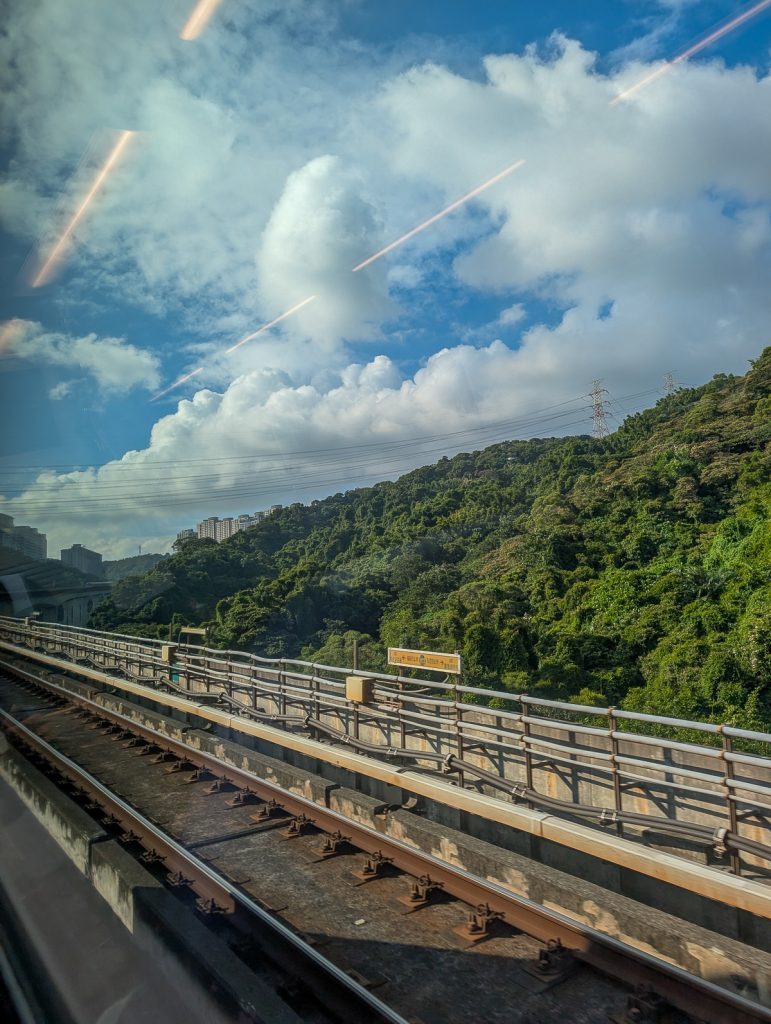
Taipei’s public transit system is fast, efficient, safe, comfortable, easy to navigate, and one of the best ways to move around. There really is no need to take a taxi or Uber from the airport.
Our home base for the stay was Hotel Proverbs, a luxury boutique hotel located right in the heart of Da’an District. While you can get Marriott Points for the hotel stay, it remains an independent and boutique hotel.
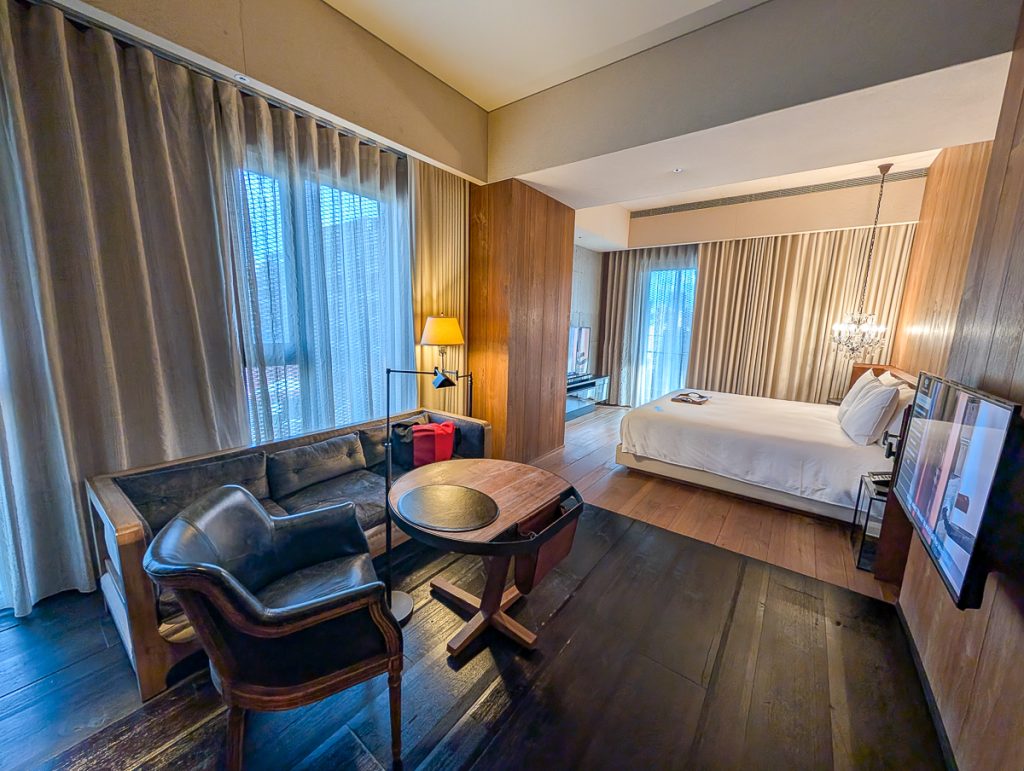
The room was spacious, equipped with an incredible bathtub and workstation, so we could slowly ease back into work after a month off. The property featured a rooftop pool, a great bar, and warm, accommodating front desk staff.
While the hotel restaurant only offered one vegetarian option for breakfast, the location more than made up for it by putting us within walking distance of dozens of traditional plant-based restaurants.
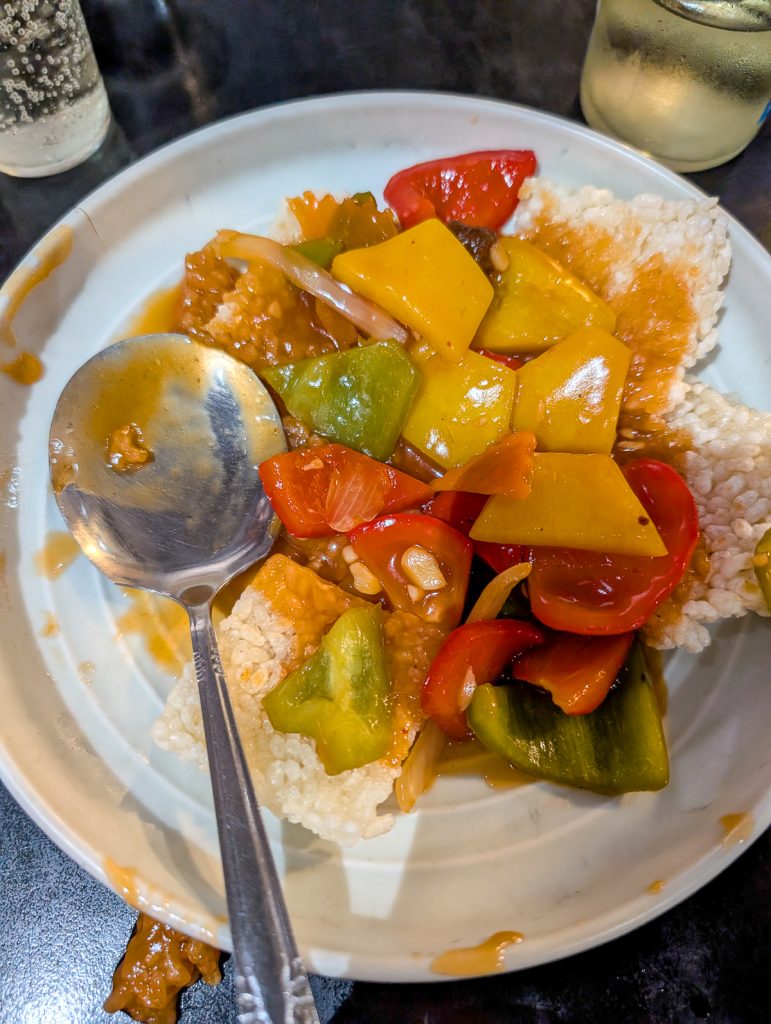
After checking in and settling into our room, we headed out to explore the neighborhood. First on the agenda was dinner at Chao Vegan Restaurant, which serves an all-vegan menu of traditional Cantonese and Chinese dishes. It was hands-down one of the best plant-based meals I have had in years.
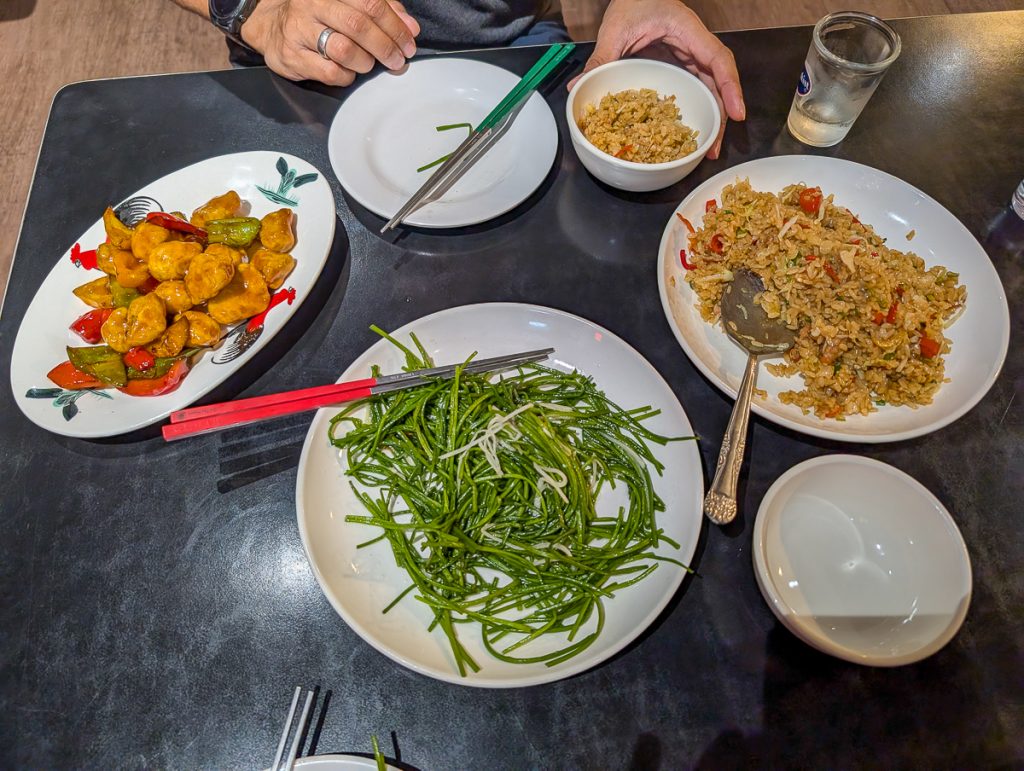
We ordered far too much food, as each dish was served family-style, and it was just the two of us. But for the first time in a decade, I got to enjoy orange “chicken” that genuinely tasted and felt like the real deal.
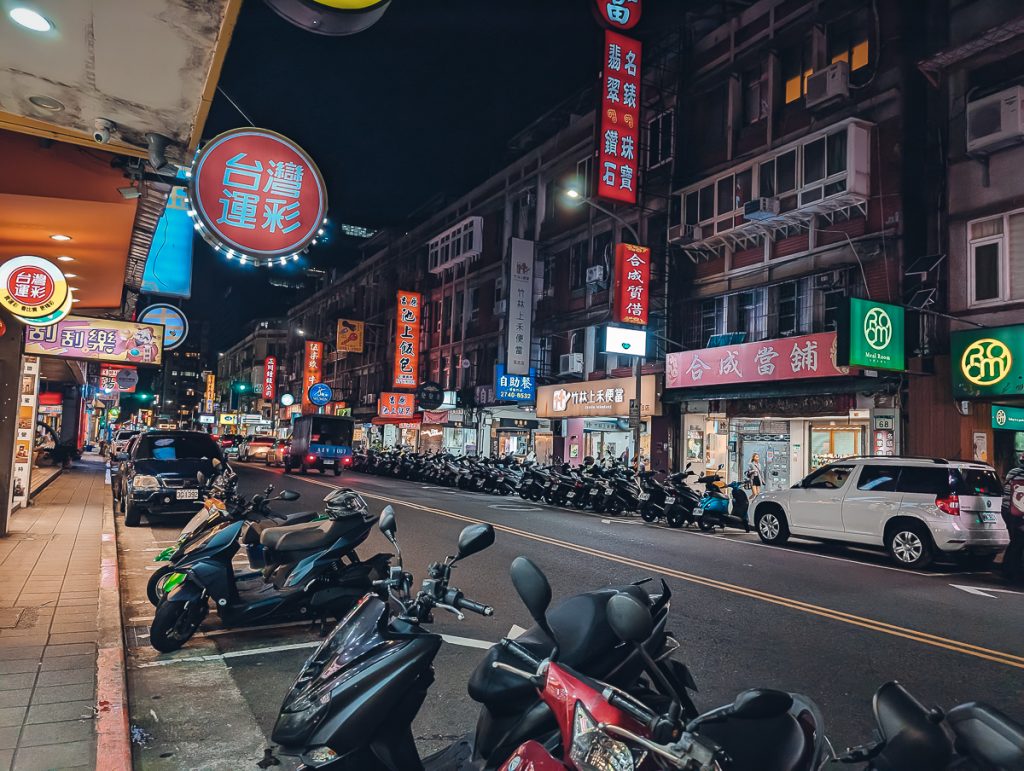
With dinner finished, we spent the rest of the evening wandering through the surrounding streets, soaking in the city’s night-time energy. Taipei at night is energetic. The traffic, buzzing electric scooters, historic temples, and street food vendors—a unique sensory mix that feels like a cross between all the best parts and regions of Asia.
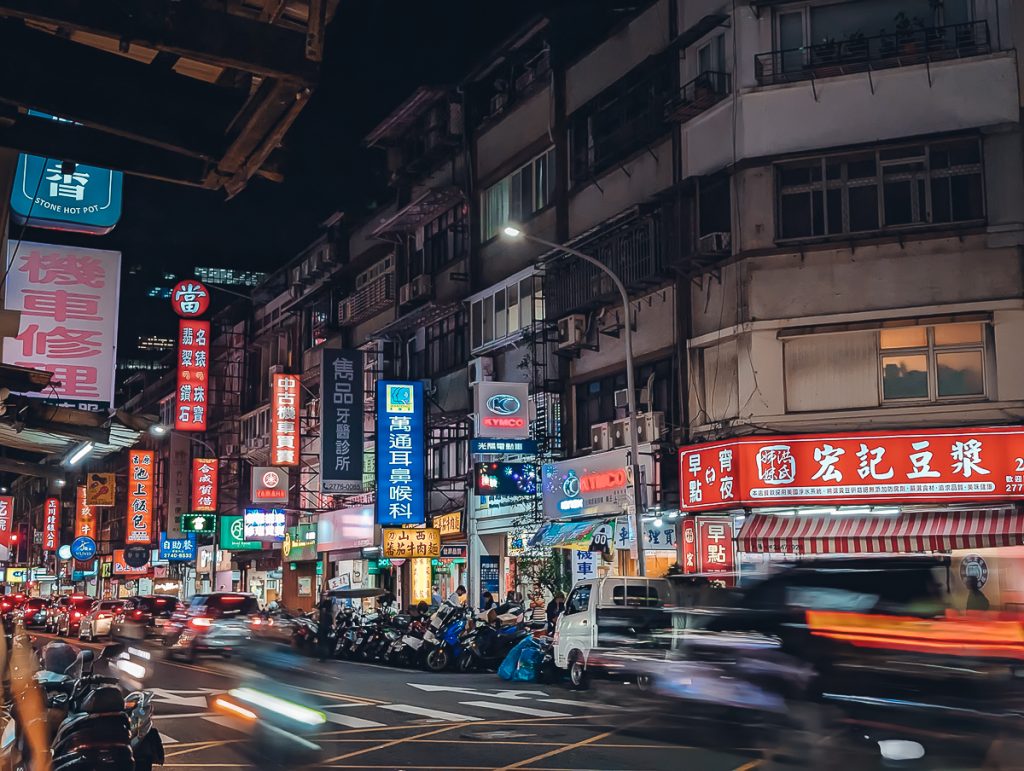
Instead of following a strict itinerary, the best way to experience it is to embrace the art of getting lost and let your feet lead the way. Under a bright full moon framed by glowing neon signs, it was a fantastic introduction to getting a feel for the city without any agenda or expectations.
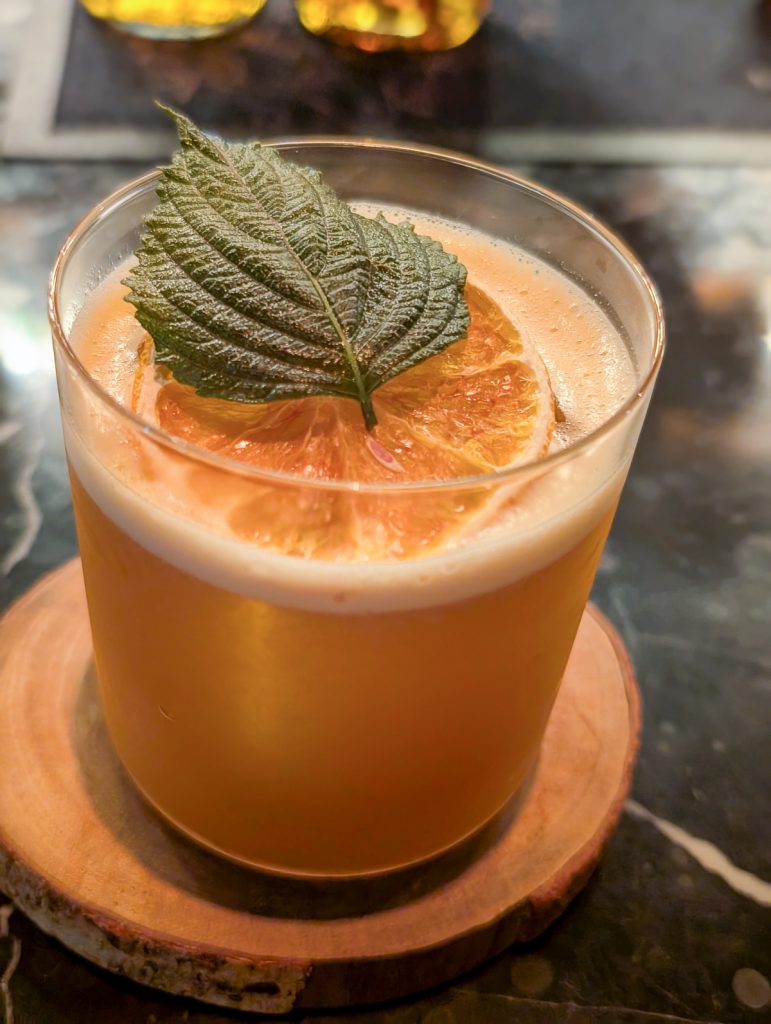
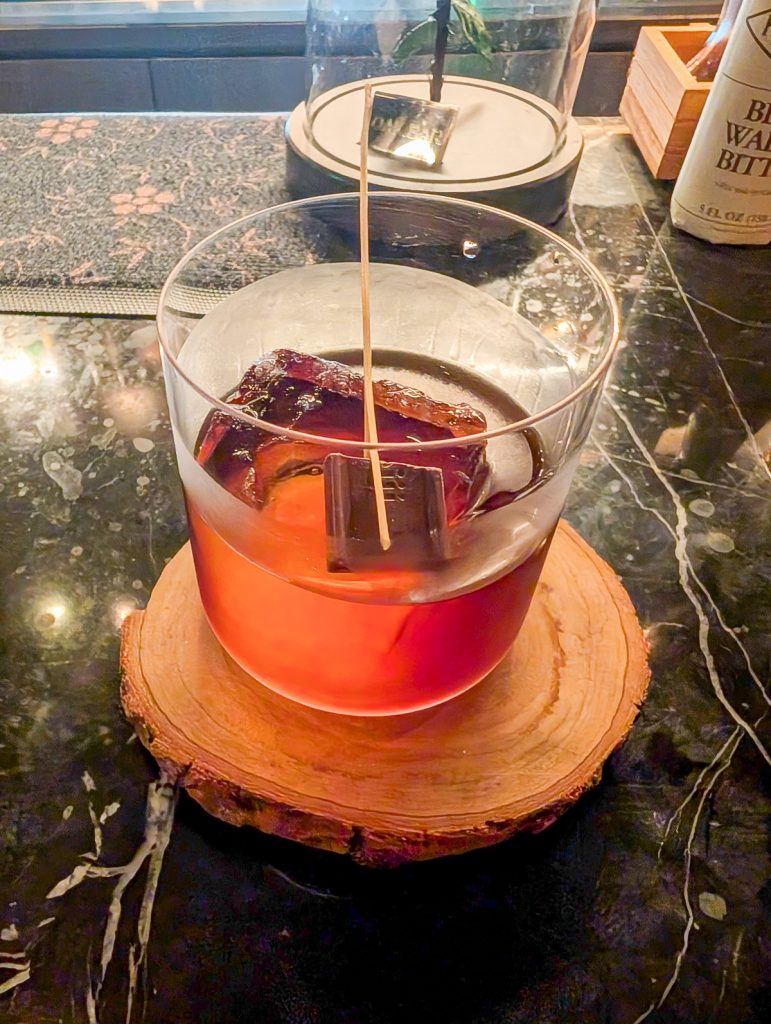
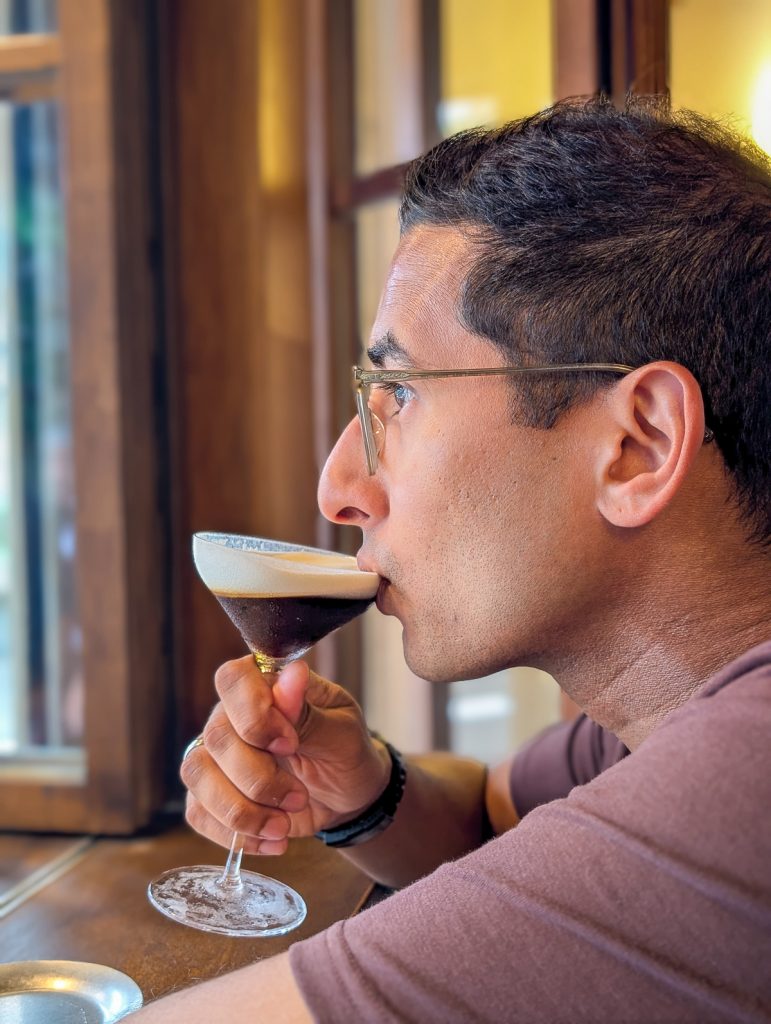
Later in the night, we stepped into Oak, a sleek cocktail bar with creative mixology. We sat right at the bar and spent time chatting with the bartenders while trying a few drinks.
Before calling it a night, we made sure to check out Liaoning Street Night Market near our hotel. There are night markets around the city, so if you aren’t staying at Hotel Proverbs, I suggest finding one in your local district neighborhood and taking in all the energy from the markets.
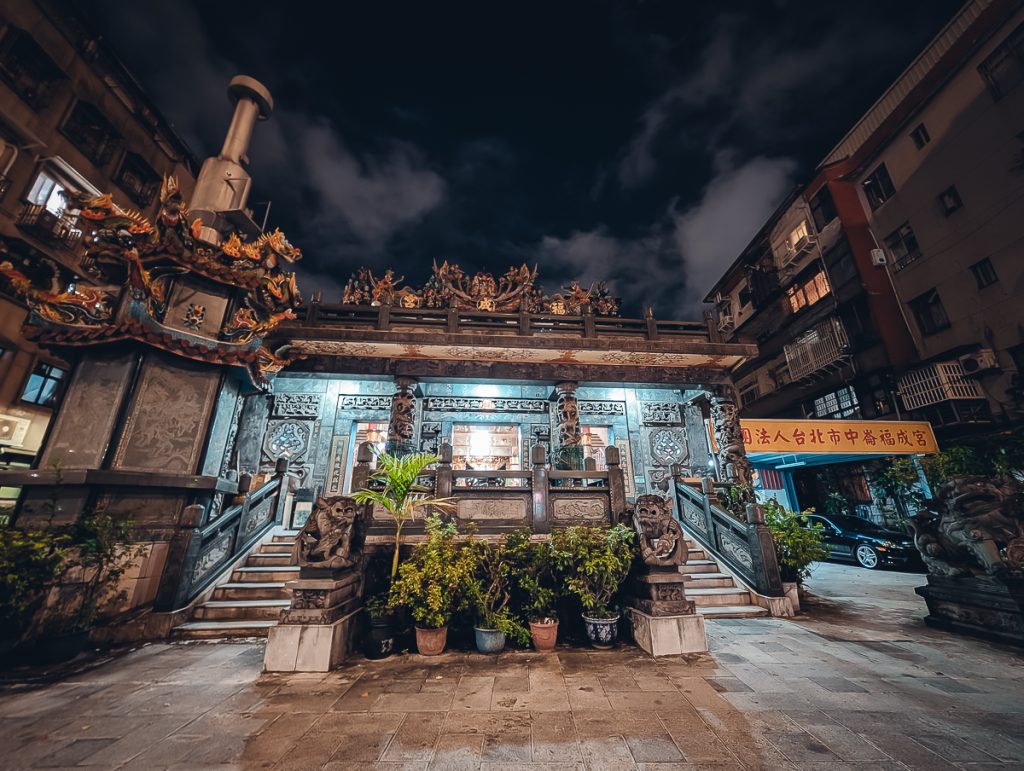
There are lots of food stalls and shops at the night markets. I also suggest grabbing dessert; Taiwanese ice cream is drool-worthy.
Day 2: Coffee, Creative Park, Taipei 101, Landmarks, and Hiking
- Coffee at Beam Coastal Coffee
- Huashan 1914 Creative Park to shop local makers
- Taiwanese gua bao for lunch
- Visit Chiang Kai-shek Memorial Hall
- Strolled through 228 Peace Park
- Taipei 101 for city views
- Hiked Elephant Mountain after dark to escape the heat and see the city lights
- Plant-based dinner of Taiwanese dishes at DeliSoys
- Rooftop cocktails
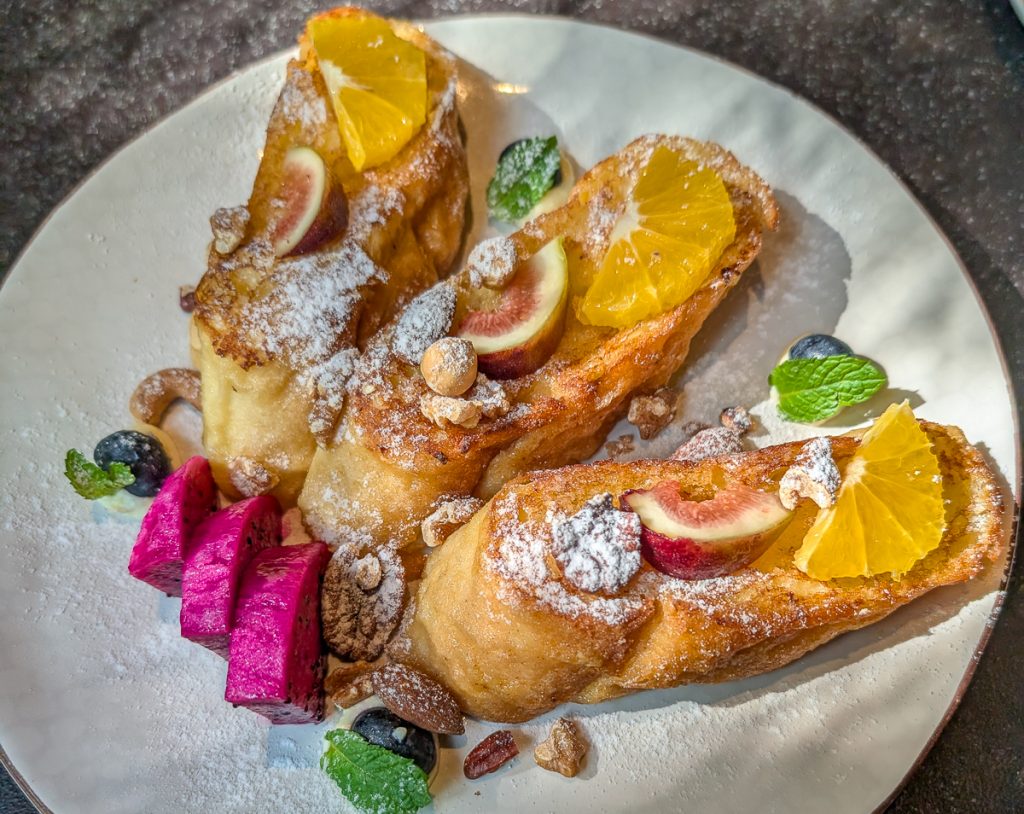
We started our second day with breakfast at the hotel, though plant-based choices were pretty limited. We had to ask for some customization on the French toast to make it vegetarian, but the result was delicious.
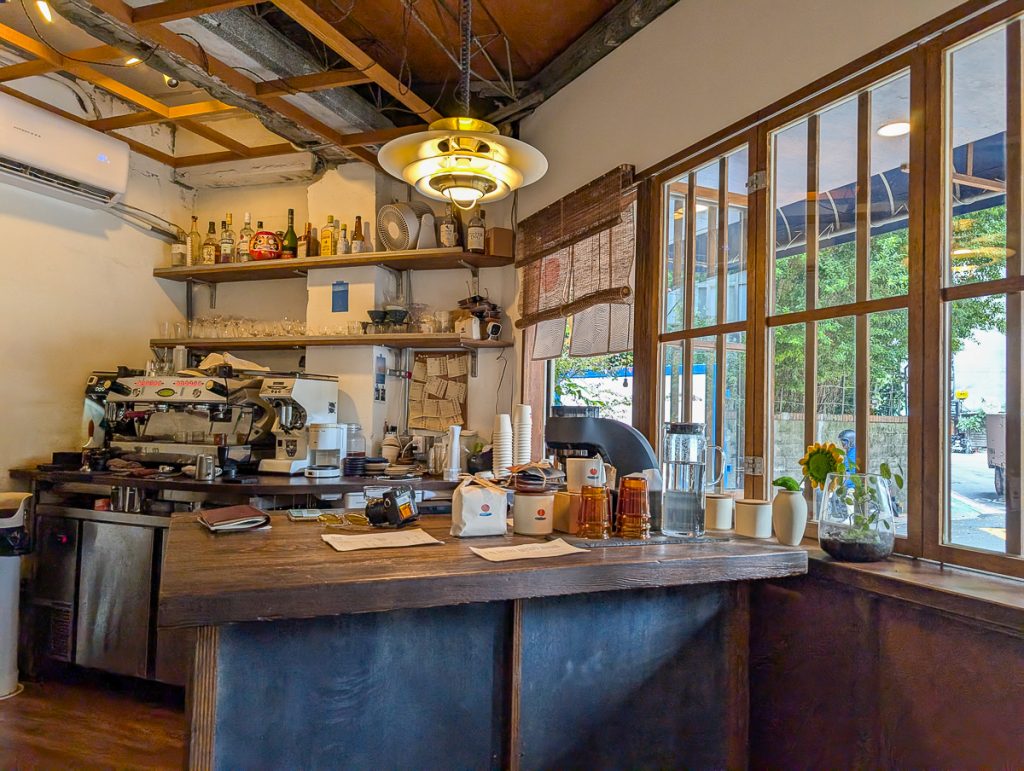
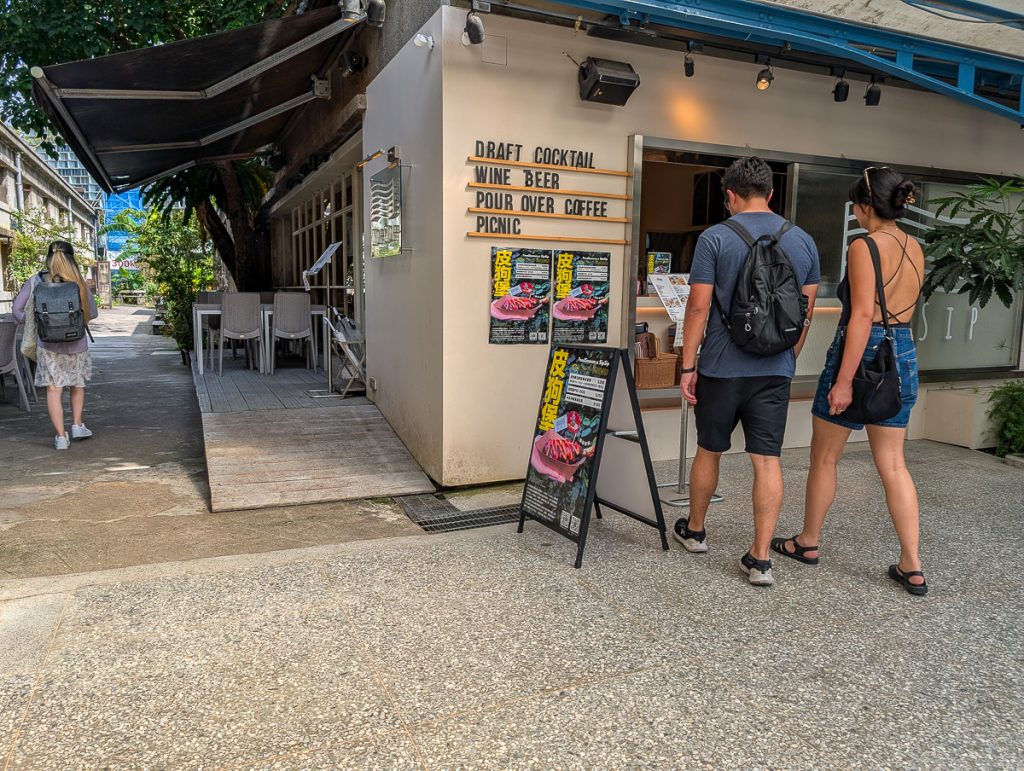
Afterwards, we made a point to head out to find a local coffee shop. Taipei is known for exceptional coffee, and the small independent joints do not disappoint.
We ended up at Baem Coast Coffee, a tiny hole-in-the-wall spot with a classic wooden interior and just a handful of stool seats inside. The iced coffee was easily a 10 out of 10, and we liked it so much that we came back every single morning for the rest of our stay.
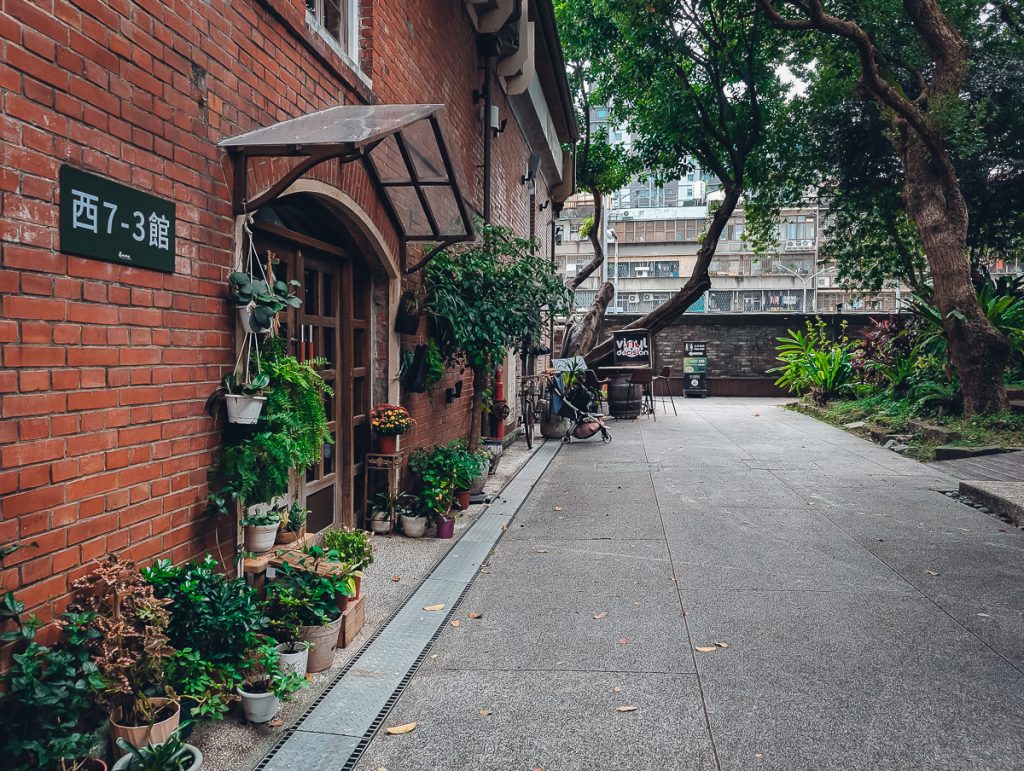
Fully caffeinated, we hopped on public transit and headed over to Huashan 1914 Creative Park. Originally an old industrial sake winery, the complex was repurposed into a vibrant community space for locals, making it an inspiring example of urban sustainability.
The grounds house live music spaces, theaters, pop-up bars, and cafes, but the highlight is the dozens of small local artisans selling their work. I picked up a pair of handmade traditional Taiwanese embroidery earrings, while Ganesh bought a bag crafted by a local Indigenous designer. It was a great opportunity to learn a bit more about Taiwan’s Indigenous peoples, their artistic styles, and the stories behind their crafts.
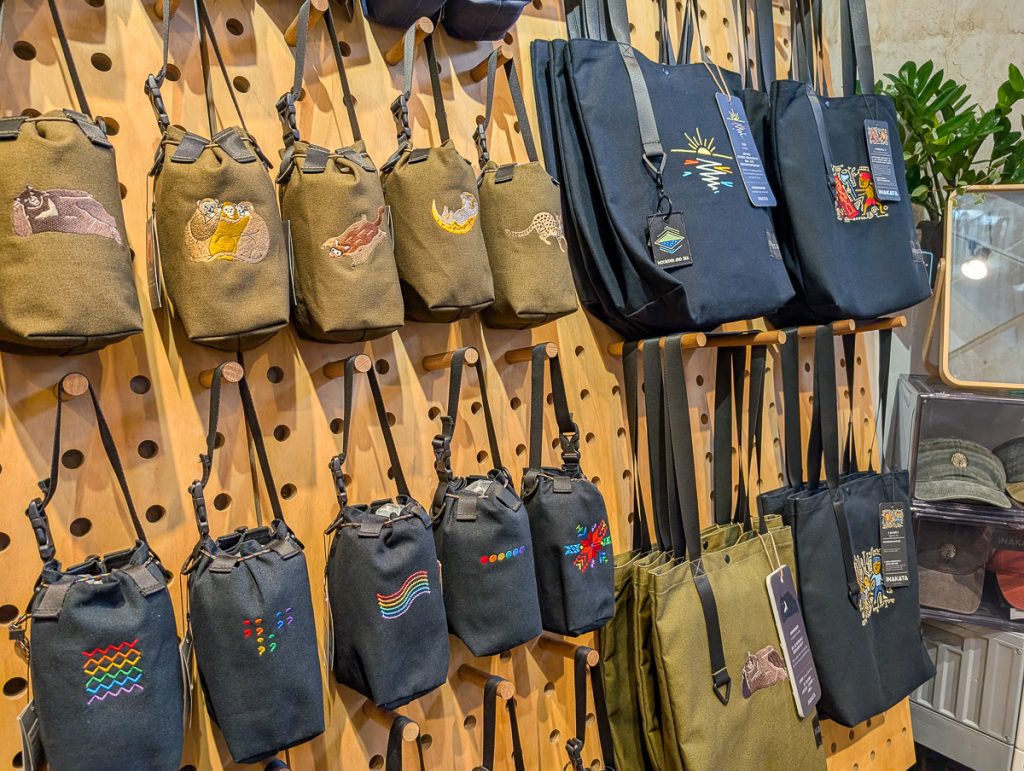
Huashan quickly became one of our favorite places in the city, and we were happy to support local makers while we were there.
With stomachs grumbling, we went searching for another small neighborhood spot based on a tip of where to find a vegetarian version of a Taiwanese gua bao—a steamed bao bun traditionally filled with pork and spiced, sugary, peanut sauce.
Located under a green awning on a lively street, Si-liang Taiwanese Gua Bao is a small, family-owned bun shop. The woman running the counter did not speak English, but between Google Translate and her help with the menu, we got two vegetarian bao.
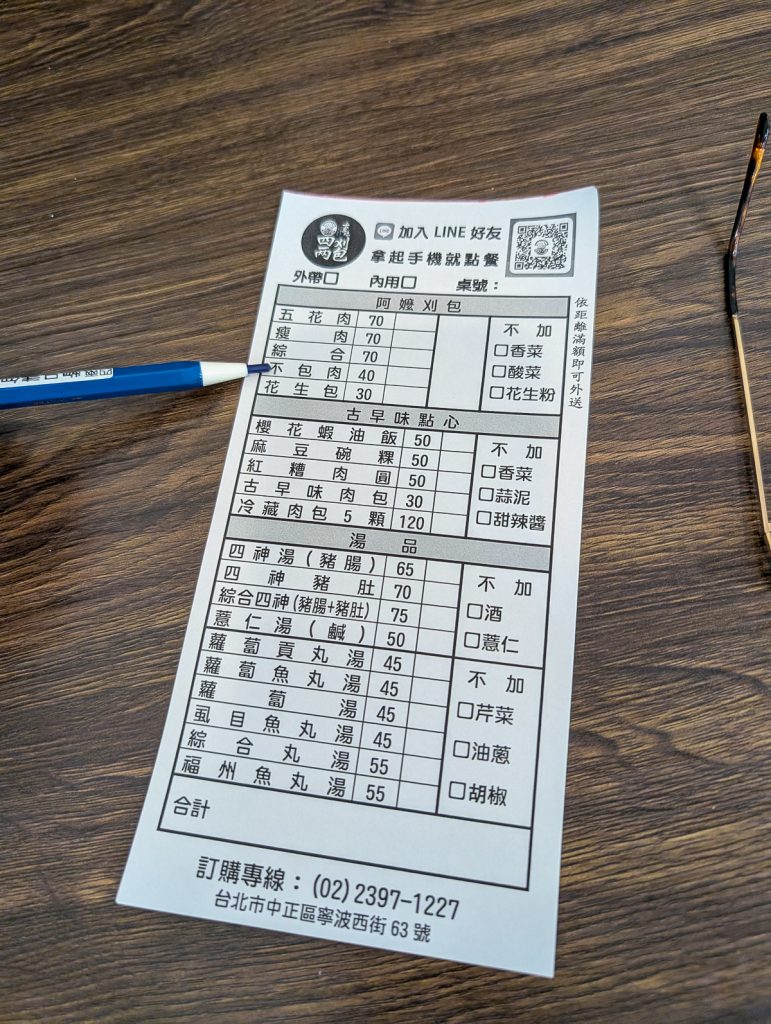
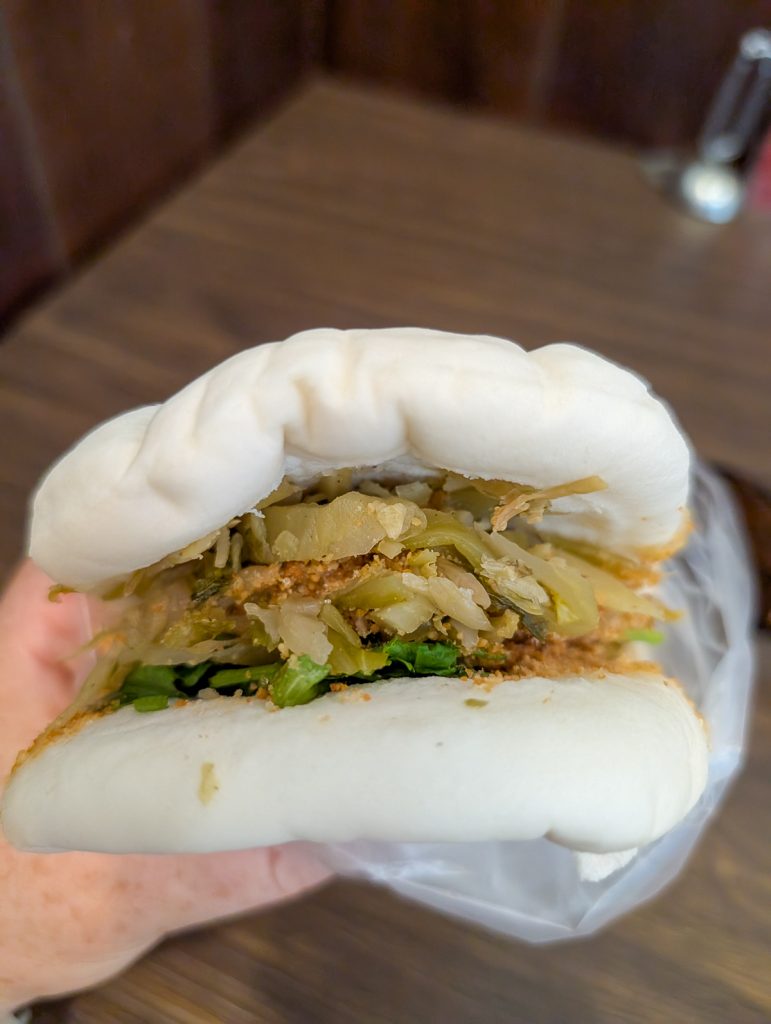
These are steamed buns filled with classic Taiwanese crushed peanuts, pickled greens, and fresh herbs without the meat, and it was ridiculously good.
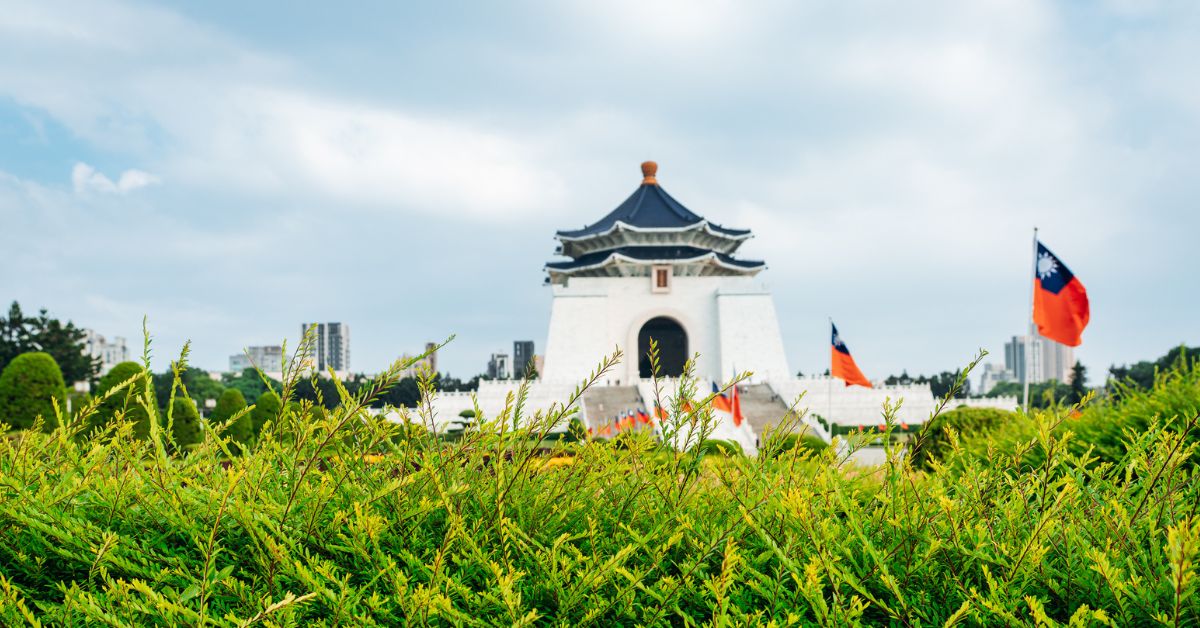
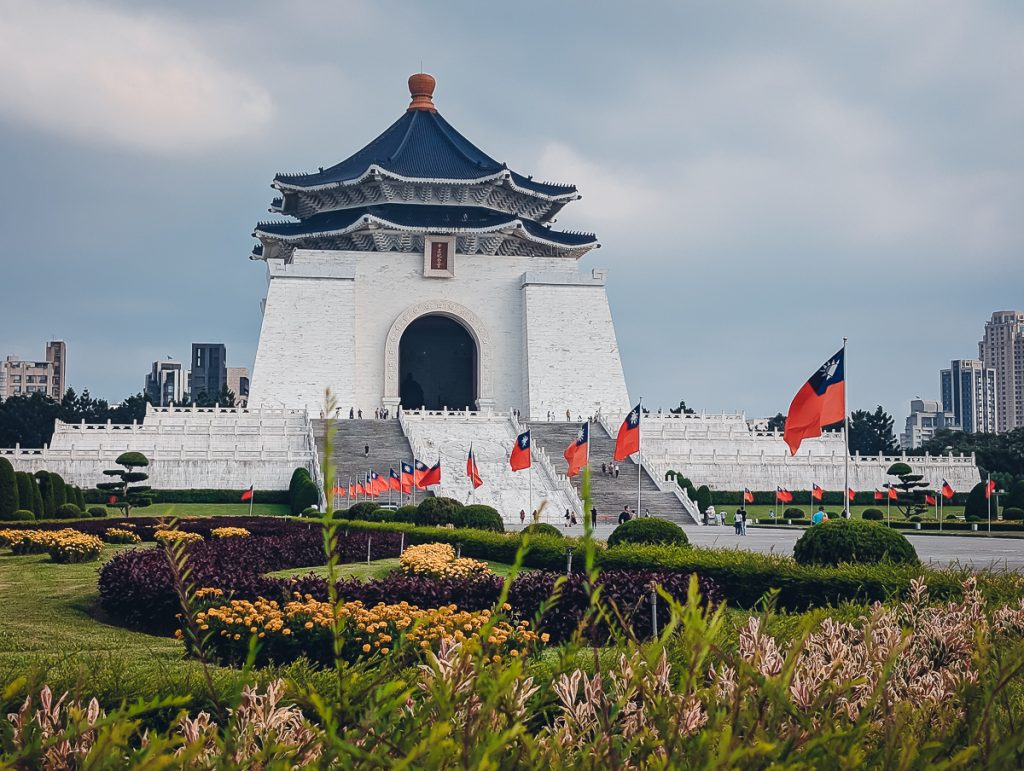
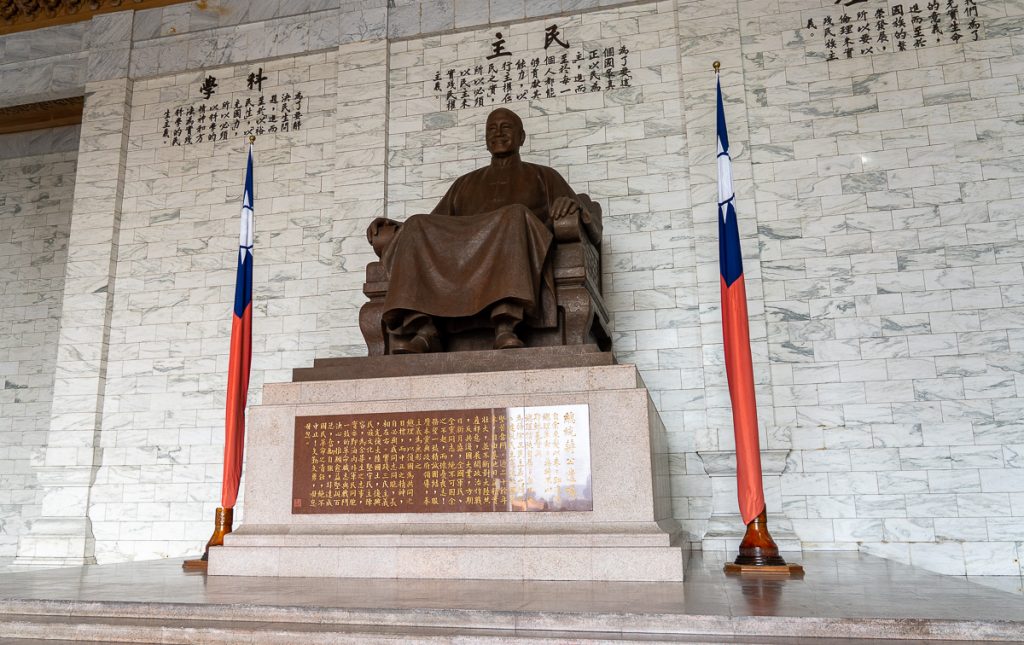
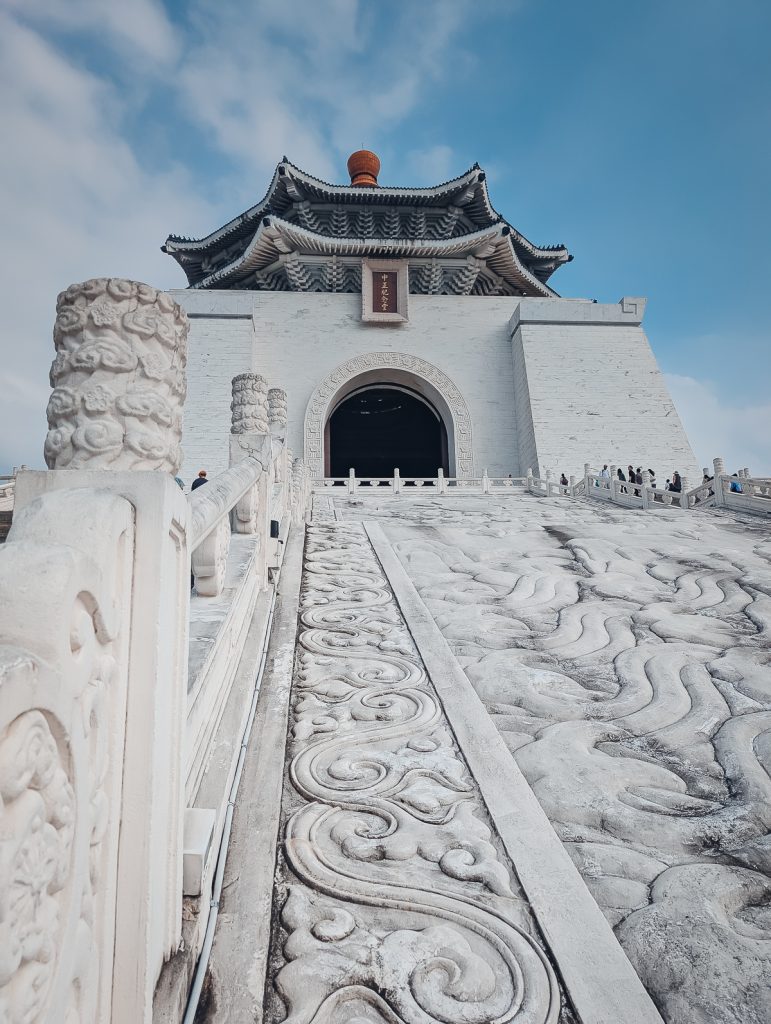
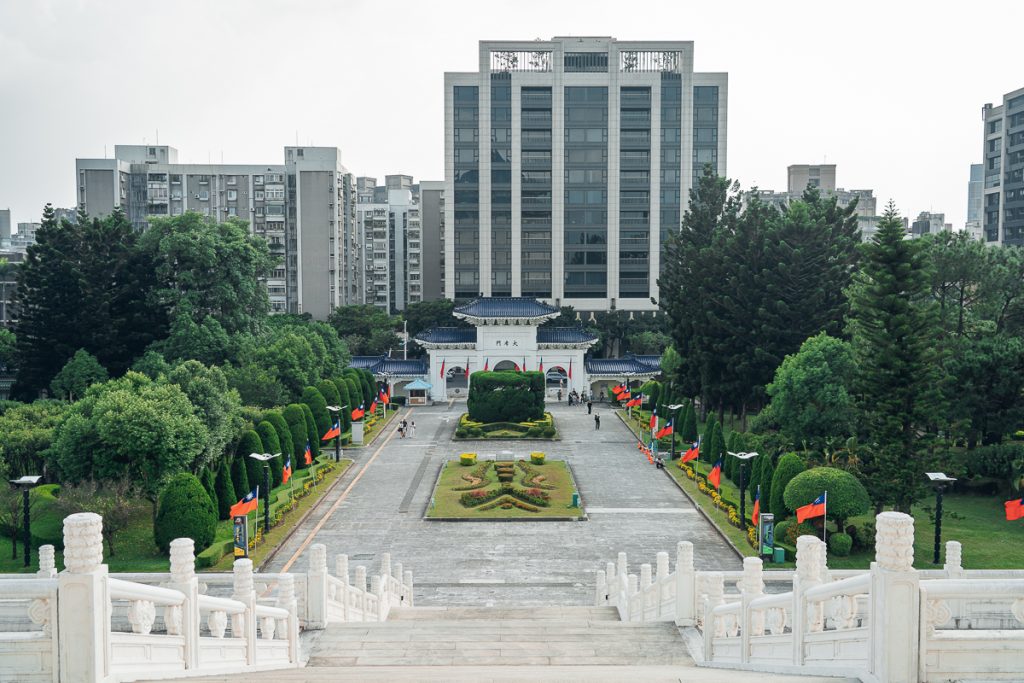
After lunch, we set out to visit some of Taipei’s major sights, starting with Chiang Kai-shek Memorial Hall. Built in memory of the former President of the Republic of China following his death in 1975, the massive landmark is in a complex with stunning architecture.
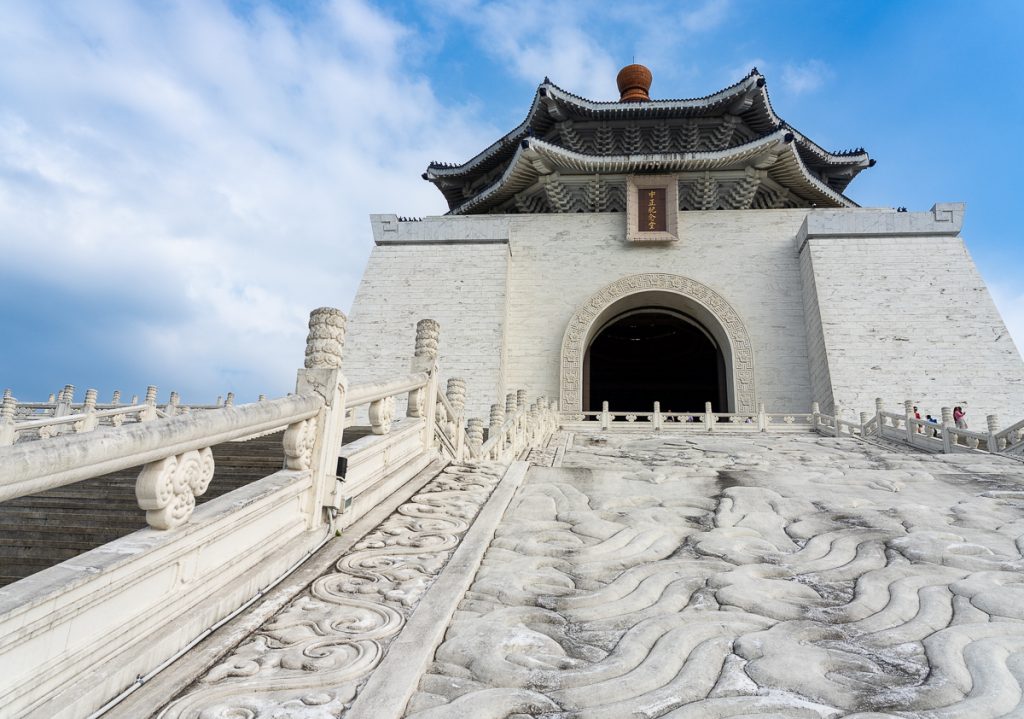
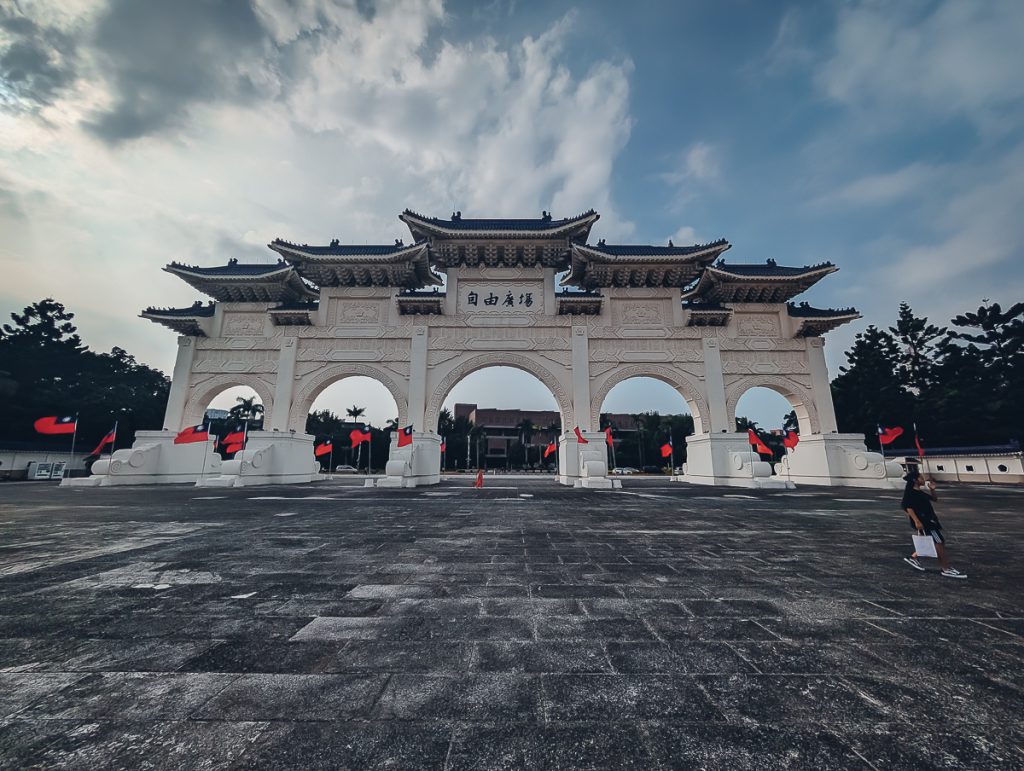
The white marble detail with a blue octagonal roof has 89 steps leading up to a large bronze statue of Chiang Kai-shek—each step representing a year of his life.
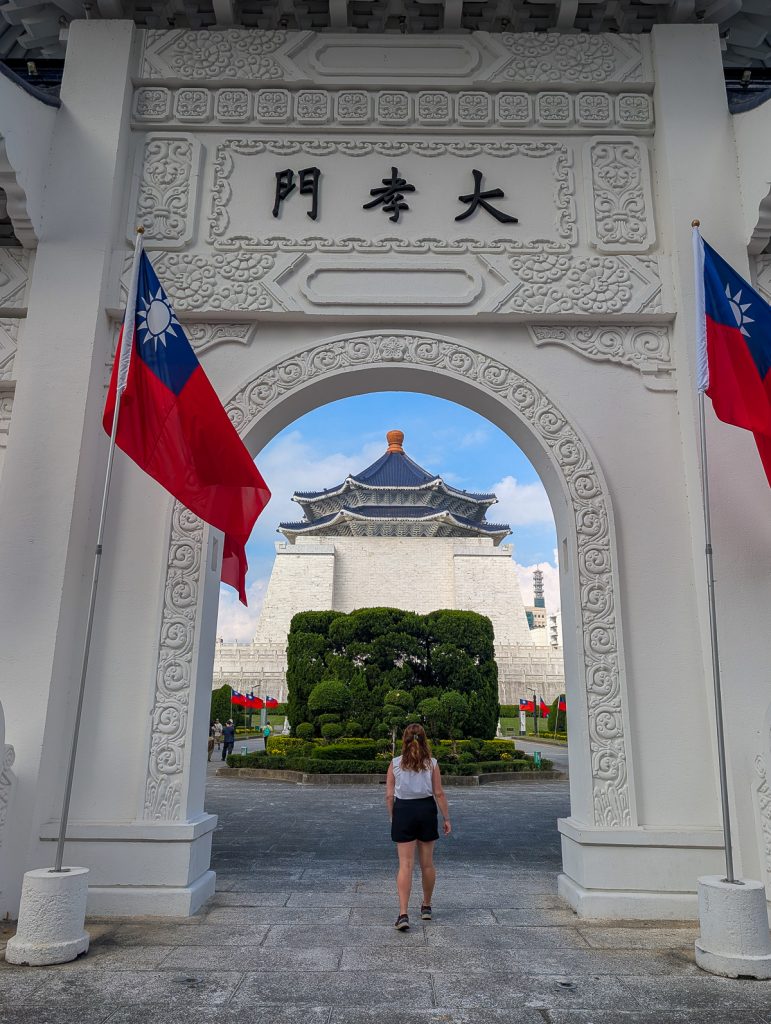
The surrounding plaza, Liberty Square, was surprisingly quiet when we visited in late October. Walking through the manicured grounds, it hit us that Taipei feels like it is right on the cusp of a major tourism boom.
The infrastructure, transit, and city care are already well in place, and we felt lucky to wander around without the massive tourist crowds.
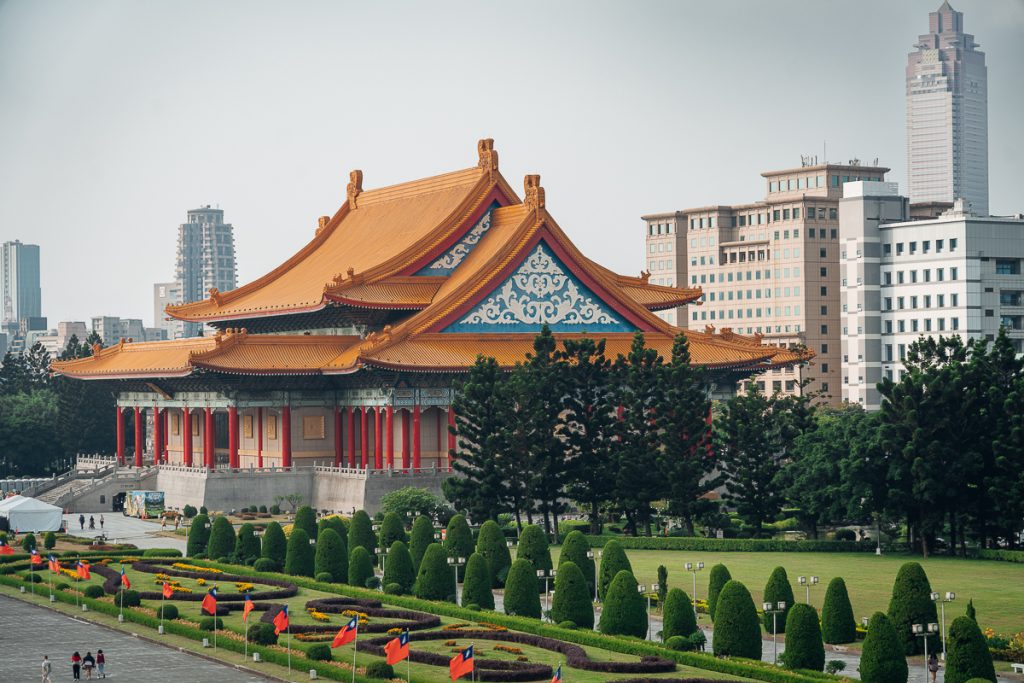
From the plaza, we continued walking through the city, taking in the sights and enjoying how easy and safe Taipei is to navigate on foot. We eventually reached 228 Peace Park, a green space that offered much-needed shade from the afternoon sun.
Along with pagodas and the National Taiwan Museum, the park has a stone foot reflexology path meant to stimulate pressure points based on traditional Chinese medicine. I could barely take two steps on the stones without wincing, but Ganesh walked right across it without any issue.
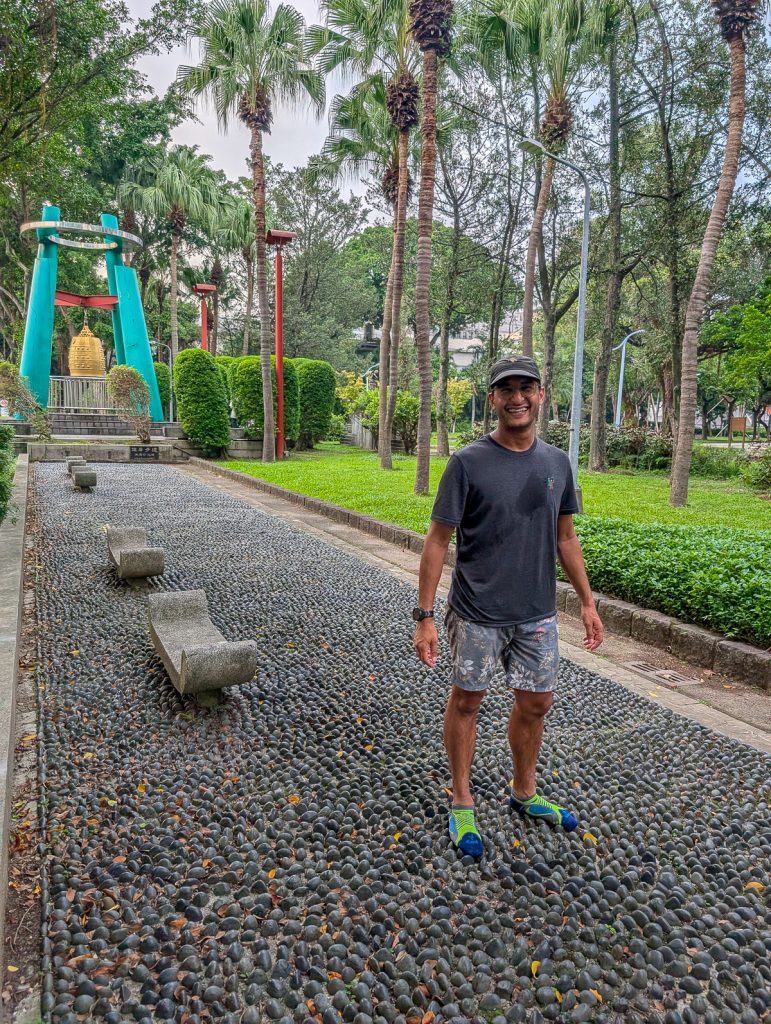
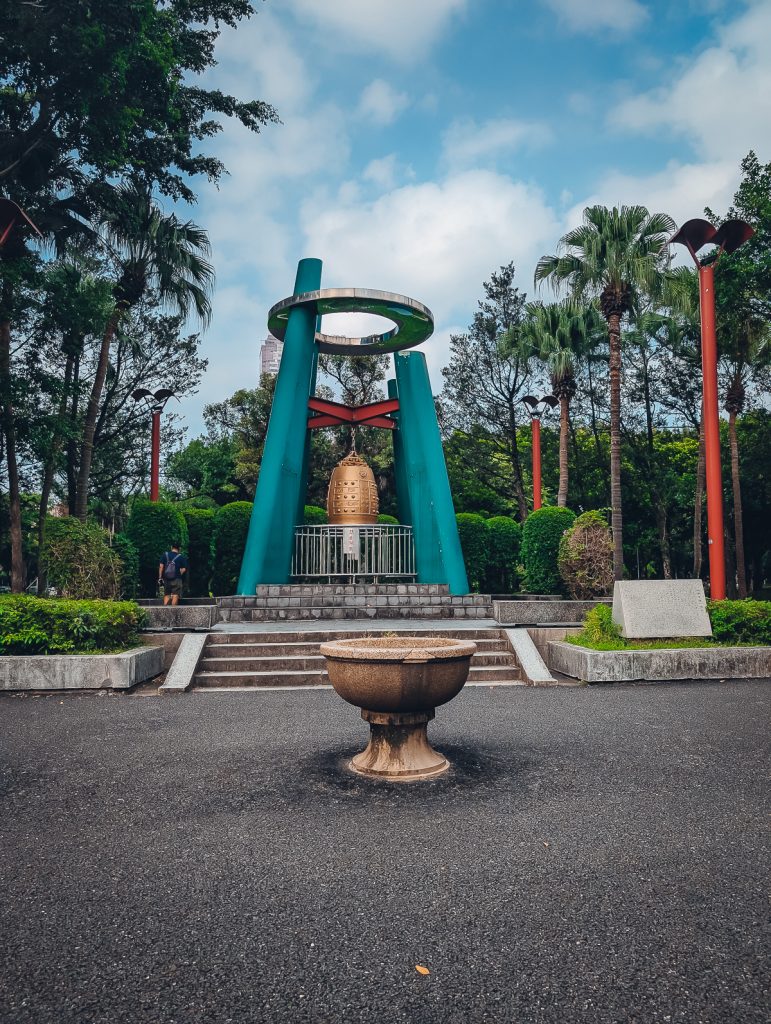
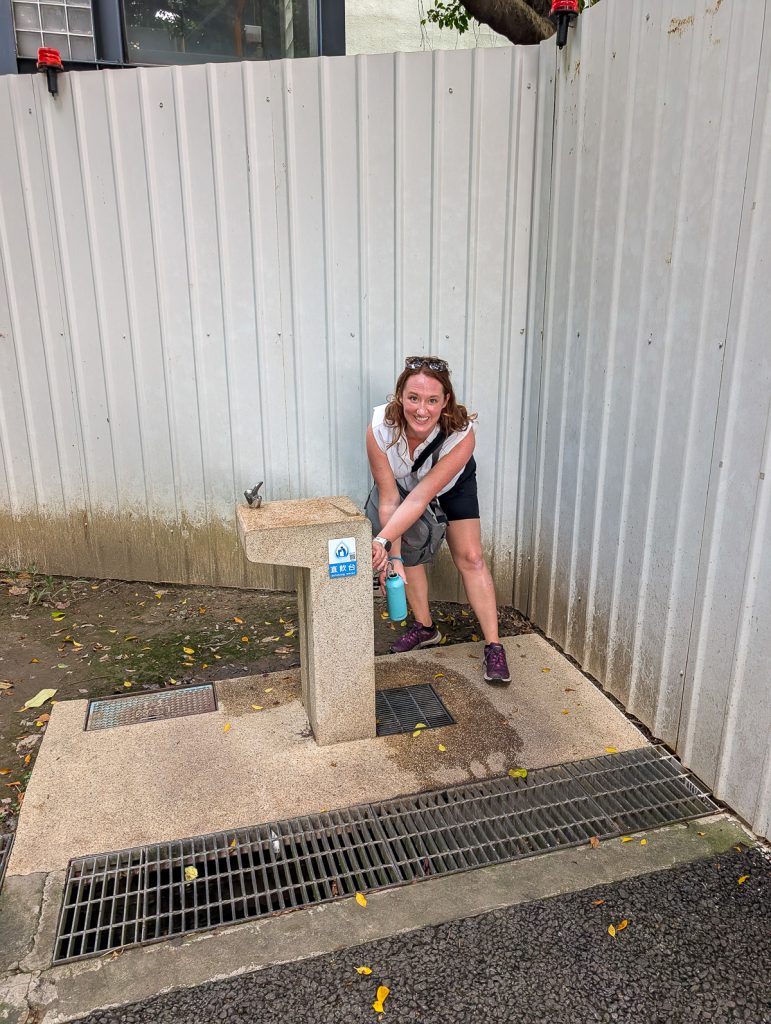
We noticed the park had free water refilling stations. We filled up our bottles, grateful for the opportunity to top up in the heat. Another reminder that Taipei really embraces sustainability and plastic-free concepts, especially compared to Japan.
Later in the afternoon, we caught the MRT over to Taipei 101. We took the elevator up for sweeping views of the city, but better views are actually coming in the evening with a hike.
Back on the ground, we caffeinated with local Taiwanese bubble tea from a small stand and grabbed a snack. As the sun set, we made our way over to the start of the Elephant Mountain trail. Taipei does urban nature so well; the hiking trail starts from the end of the street where we got bubble tea.
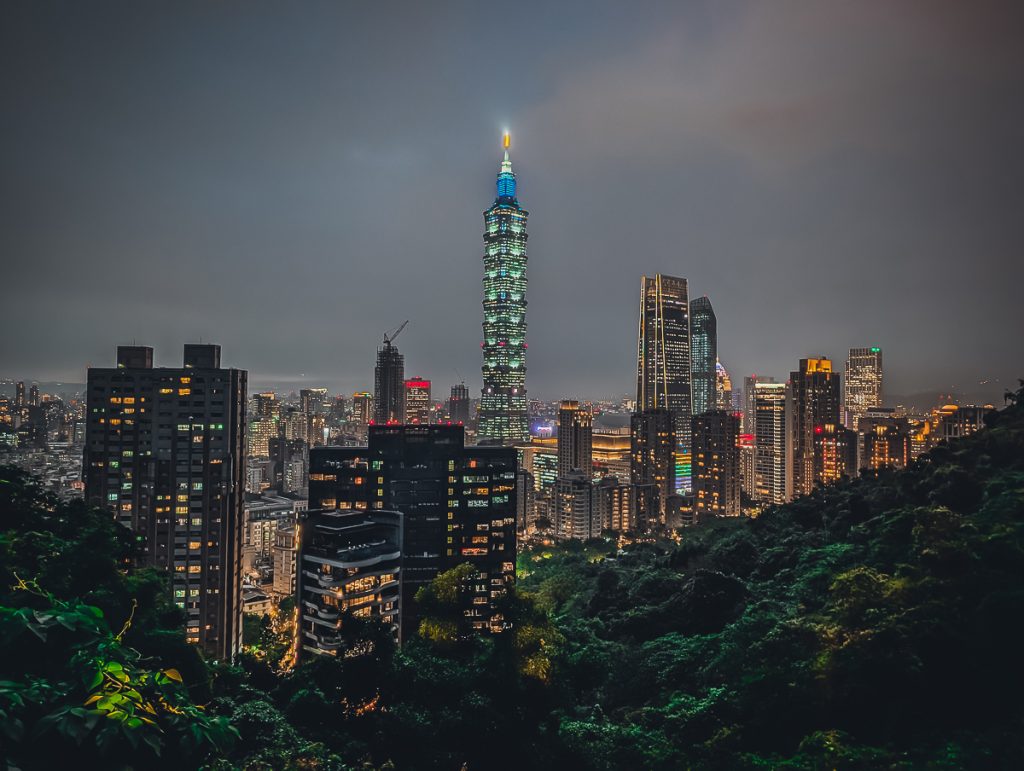
Tackling the trail at night is the best way to dodge the scorching daytime heat and humidity. The trail leads up through a lush nature park where we even spotted a monkey in the trees along the path.
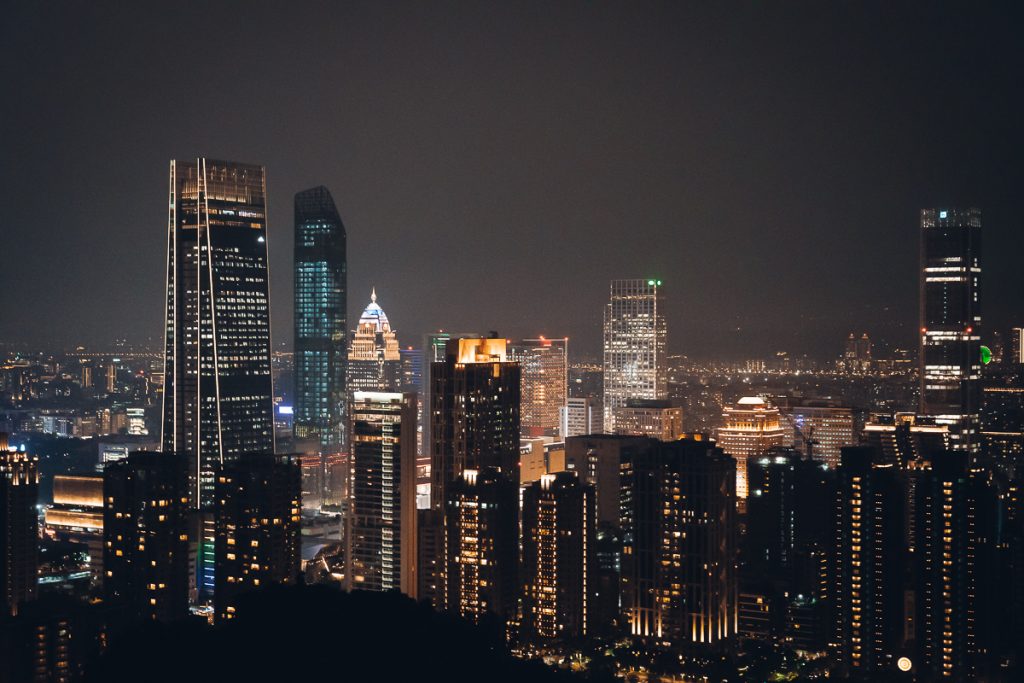
The climb is essentially a non-stop stair workout, so you definitely want good shoes, plenty of water, and a steady pace. Once you reach the top, you are rewarded with incredible panoramic views of the Taipei skyline illuminated against the dark.
There are a few opportunities for photo stops, and people were very kind, willing to take each other’s photos.
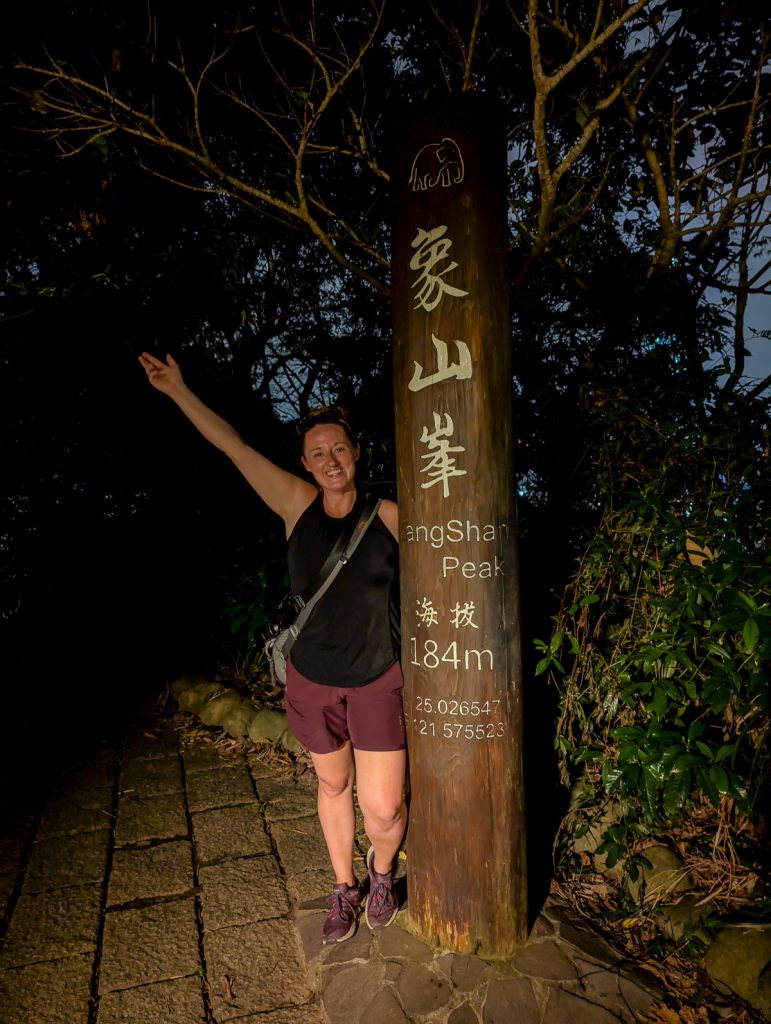
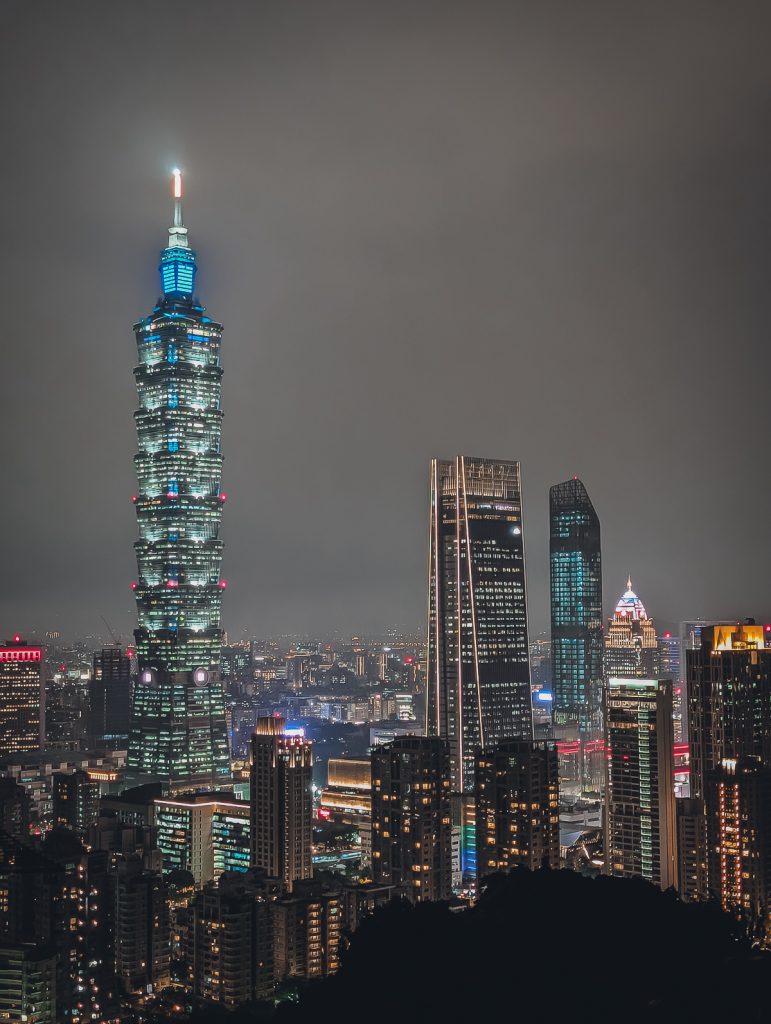
Elephant Mountain is rightly one of the most popular hiking trails with stunning night-time views. It connects with an entire network of trails, called the four beasts. We did a little extra, but you can easily spend hours here hiking the Lion, Leopard, Tiger, and Elephant trails.
Having worked up an appetite on the mountain, we headed straight to DeliSoys Taipei Branch for an all-vegan dinner. They have buffet-style options offering endless soup and salad, along with a full menu of plant-based dishes.
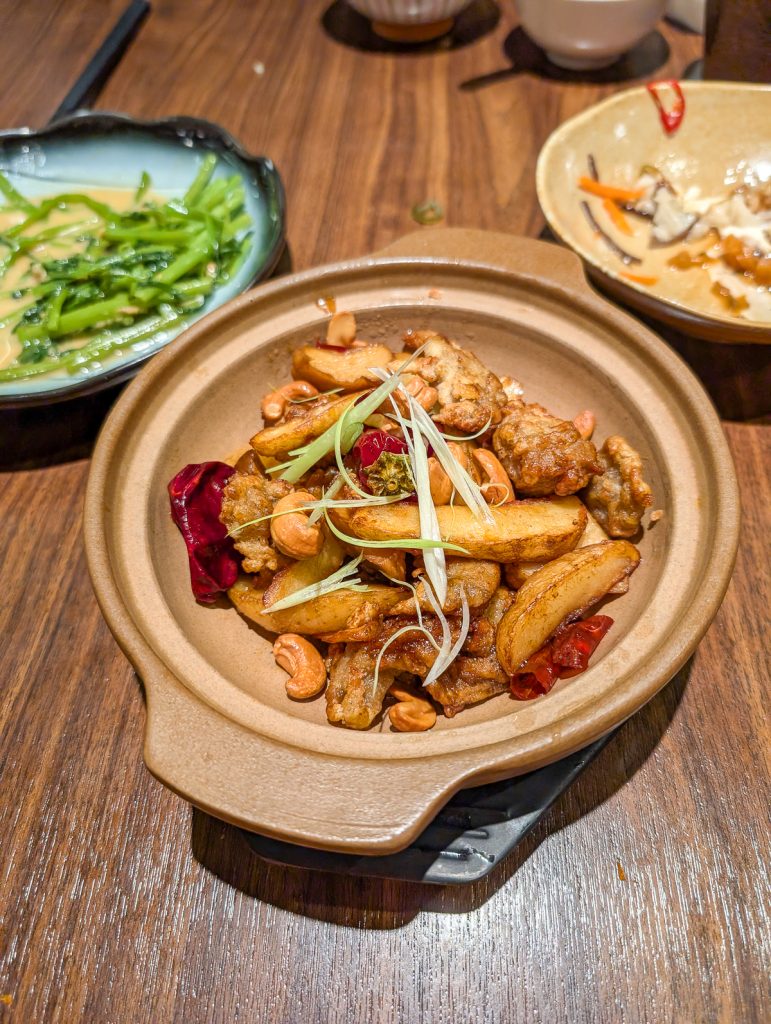
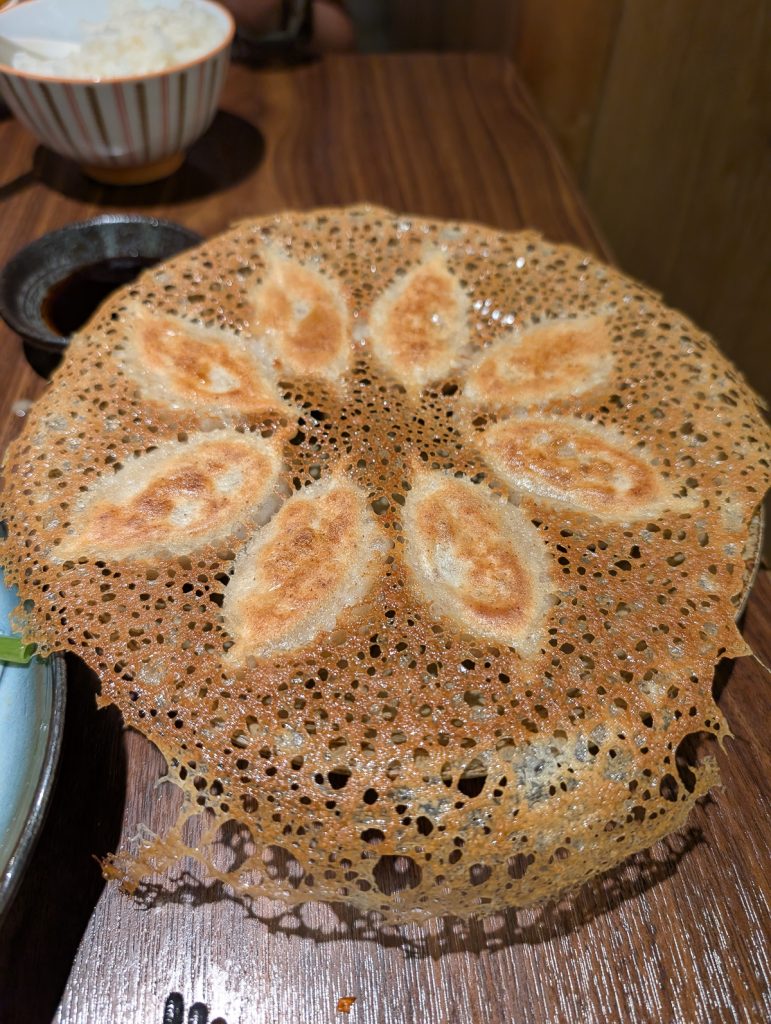
We went all out and ordered a table full of steamed snowflake dumplings and spicy Szechuan-style plates, which tasted amazing after the long hike. Taipei is a haven for vegetarians, and once again we were in foodie heaven!
To wrap up the night, we headed back to Hotel Proverbs and took the elevator up to the rooftop bar for cocktails with a view of the city. If you end up visiting, just keep in mind to skip the complimentary bar snacks if you do not eat seafood, as they contain shrimp. The drinks and night views were the perfect wrap-up to a full day.
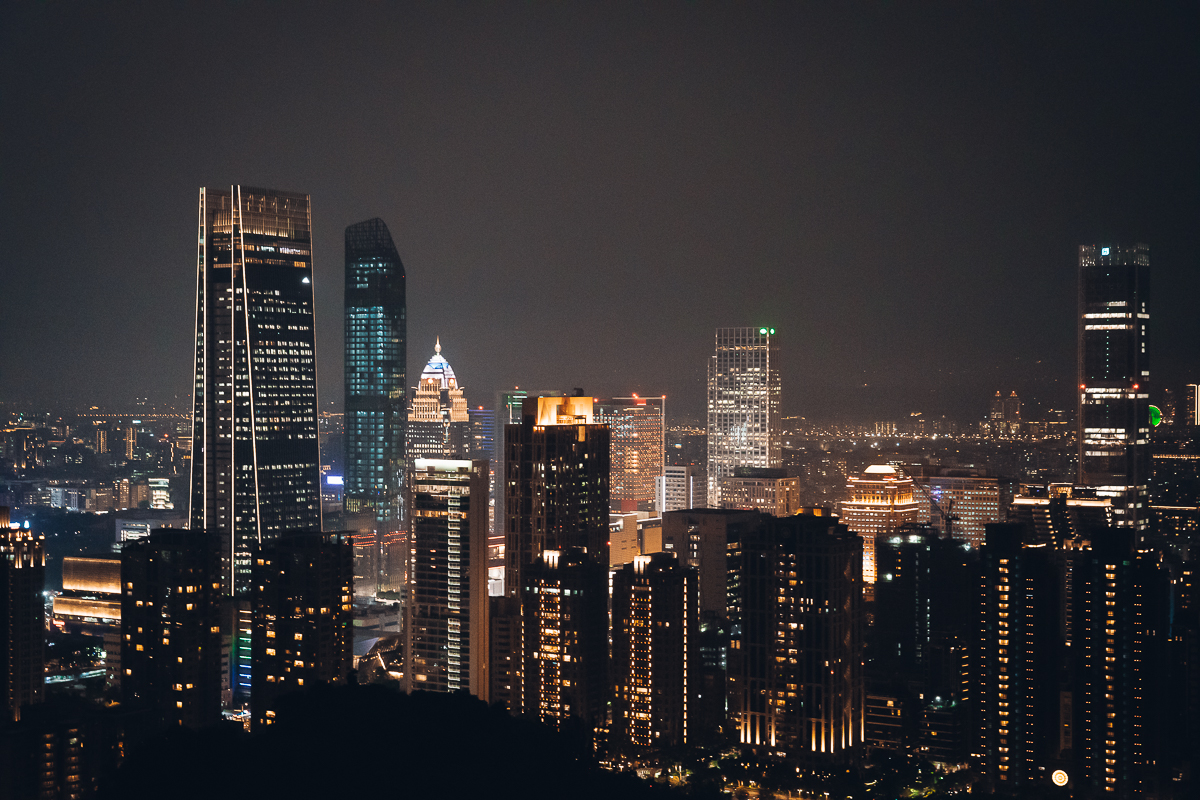
Alternative: Not into hiking at night? There is a gondola called the Maokong Gondola. You can take a scenic ride for a bird’s-eye view without the sweat. This Gondola is near the Taipei Zoo, which I recommend not visiting due to poor animal welfare. But, the gondola is a great choice!
Day 3: Day Trip Hiking Yangmingshan National Park and Geopark
- Day trip to Yangmingshan National Park and Yehliu Geopark for hiking and geology
- Plant-based dinner at Vege Creek
- Exploring Ximending Walking District
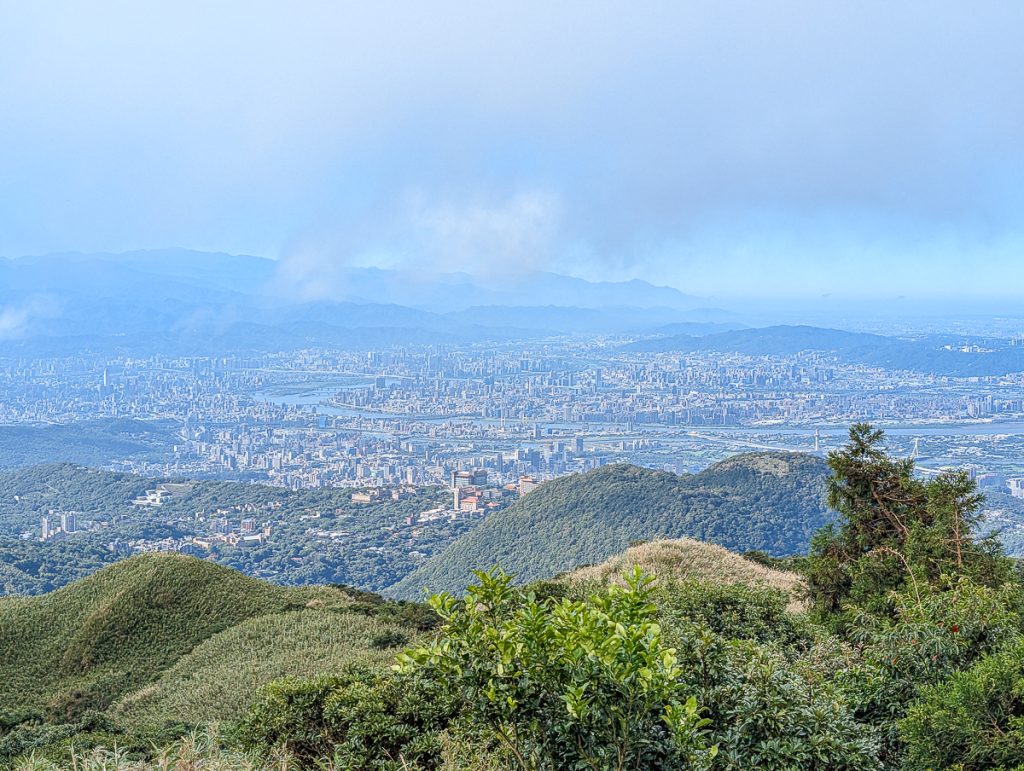
For our third day, we planned a half-day trip outside Taipei to explore a nearby national park and a coastal geopark. We booked a private guide and transfer through Klook. We were able to book a pre-set tour that we then worked with a guide to customize.
Our guide was great, sharing a lot of local insights into Taiwan’s history, culture, and progressive democratic views. We planned a hike in Yangmingshan National Park to Mount Qixing Main Peak, so our guide took us to a parking lot at the start of the trailhead.
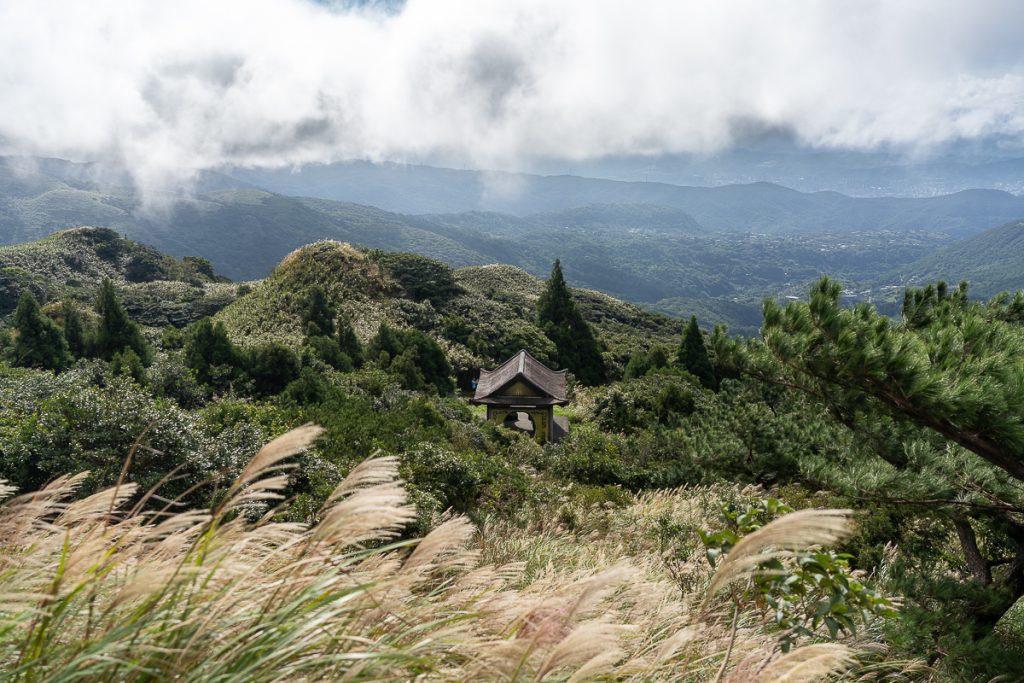
Located just north of the city, Yangmingshan is a dormant volcanic mountain range known for rich ecology, sulfur vents, steaming fumaroles, and natural hot springs created by lingering underground thermal heat.
The park has a vast ecology and mixed use for humans and biodiversity. From dry grasslands to wetlands and geothermal activity, this national park is amazing!
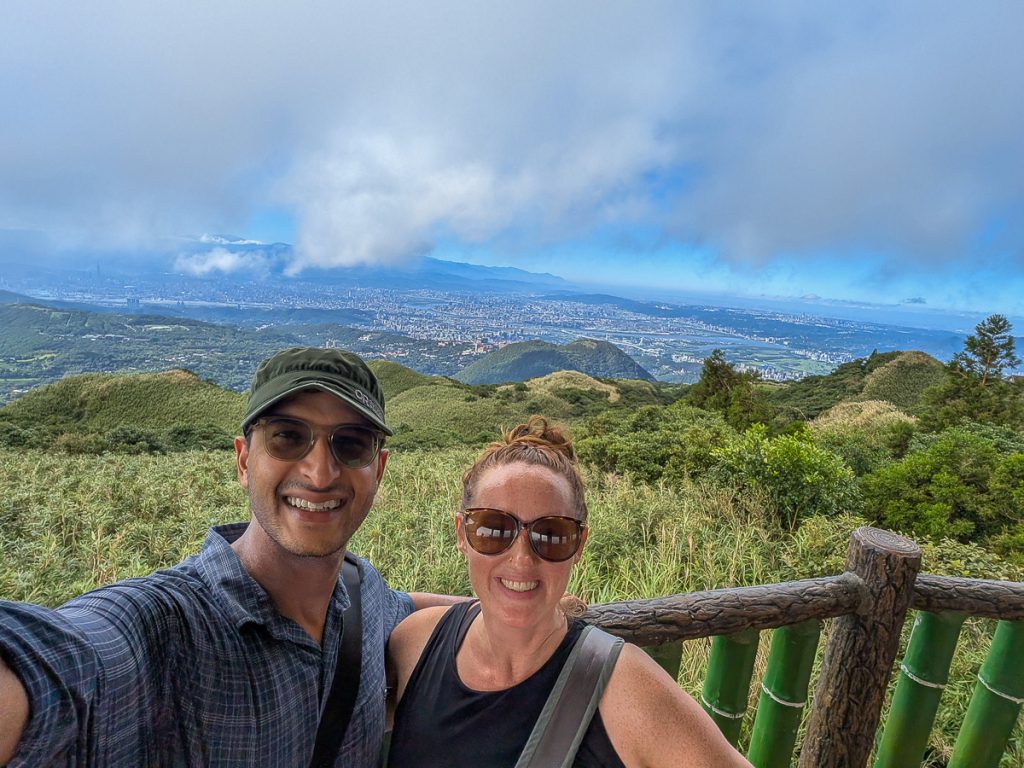
Mount Qixing is the highest peak in the Taipei Basin at 1,120m, and the hike took us about two hours along a moderate trail cutting through tall silvergrass meadow and rocky terrain.
You definitely need proper hiking shoes, sun protection, and plenty of water, but getting photos at the summit marker makes the steep climb worth it.
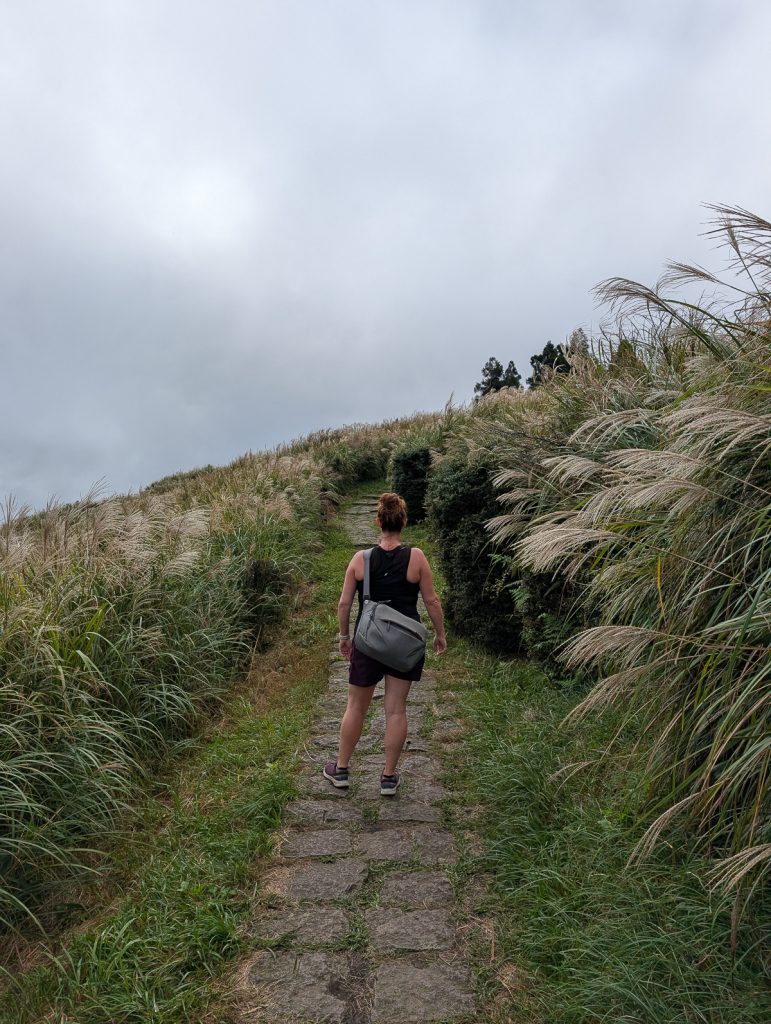
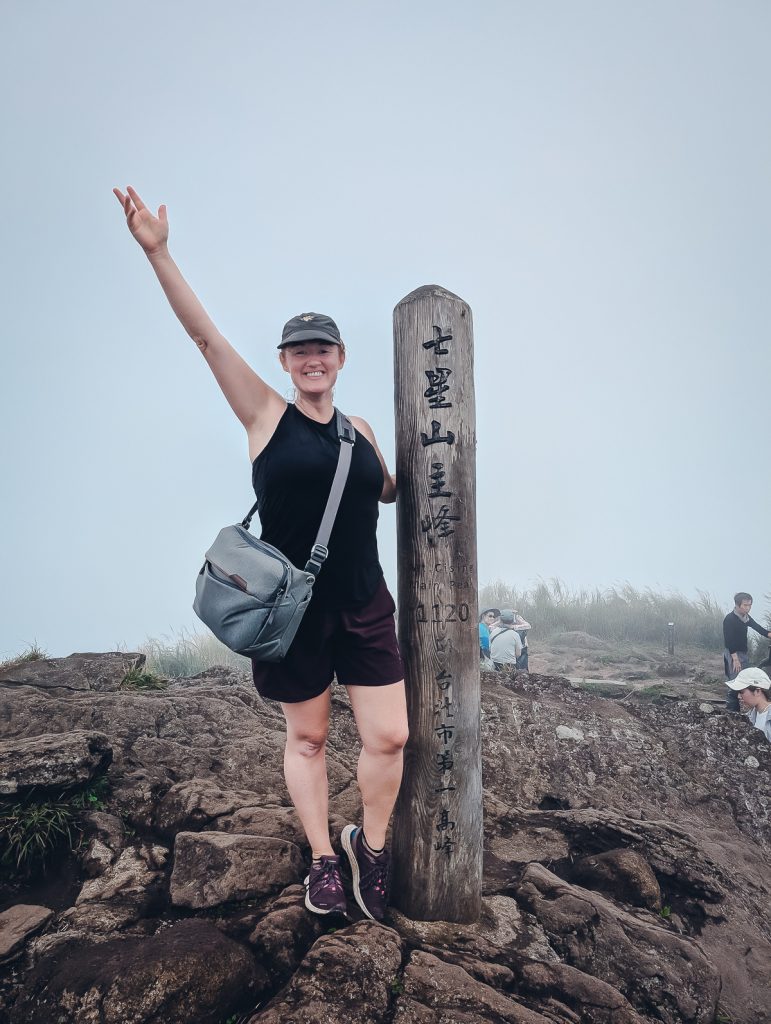
Our driver waited down in the parking lot while we hiked, and before heading back to the car, we took advantage of the nearby geothermal foot-soaking pools, which felt amazing on our feet after the humid hike descent.
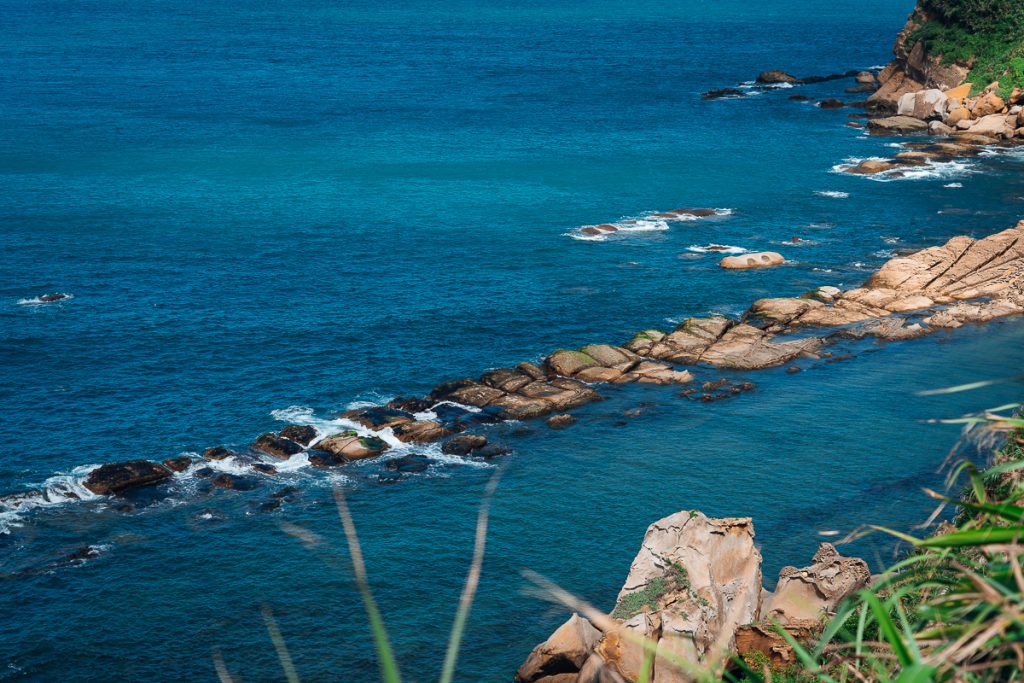
From the mountains, our driver took us over to the coast to visit Yehliu Geopark. This narrow cape was formed as part of the Datun Mountain range reaching into the sea, where thousands of years of waves and wind carved the sandstone and limestone into a landscape garden of unique formations.
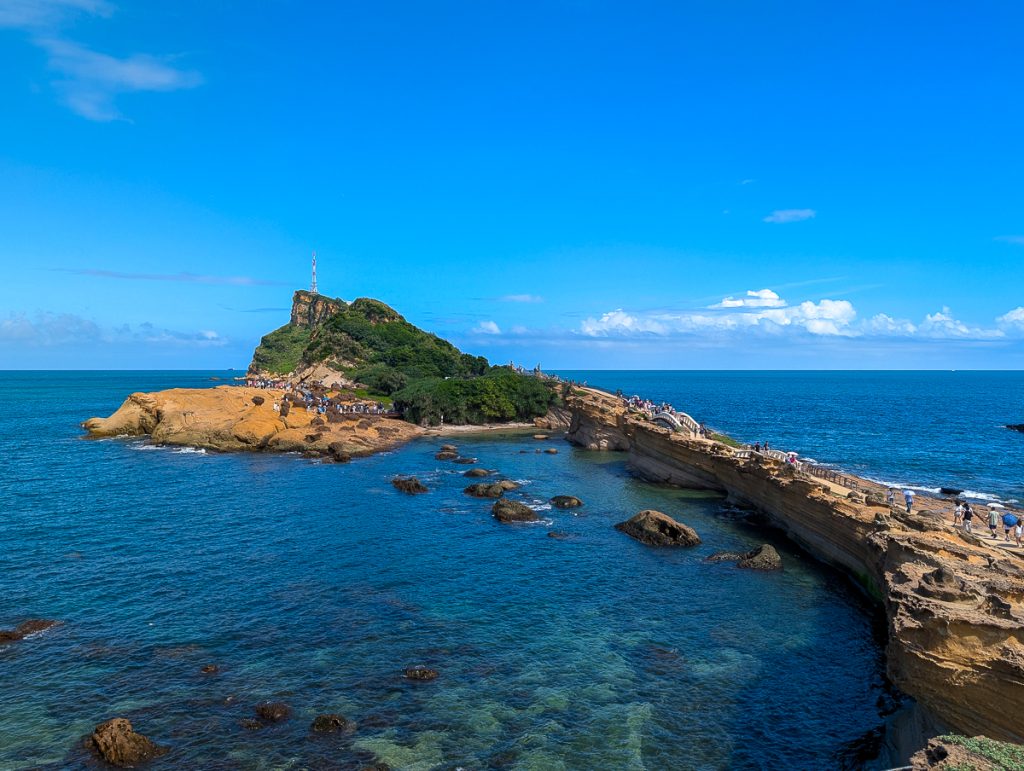
We felt a bit rushed here since our driver was anxious to get back into the city to beat traffic, but we still managed to squeeze in all the major highlights.
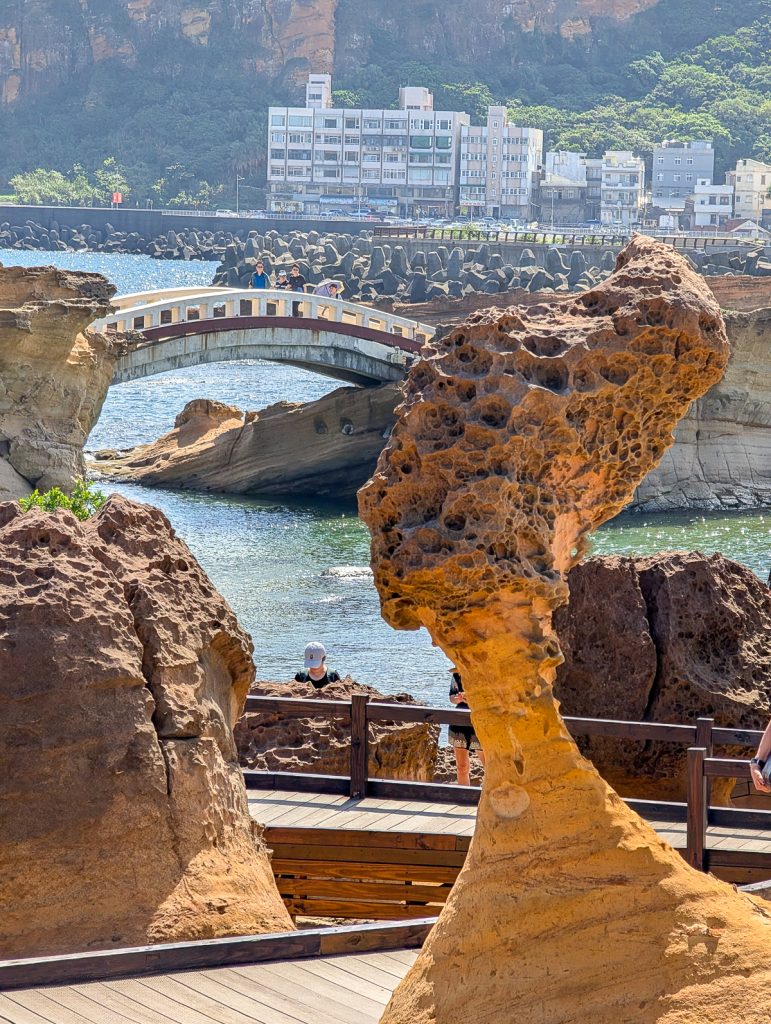
The sandstone formations all have names, so we walked to see the famous Queen’s Head, an iconic mushroom rock shaped like the silhouette of Queen Elizabeth I that is slowly eroding over time, along with the Fairy’s Shoe and other strange sandstone structures.
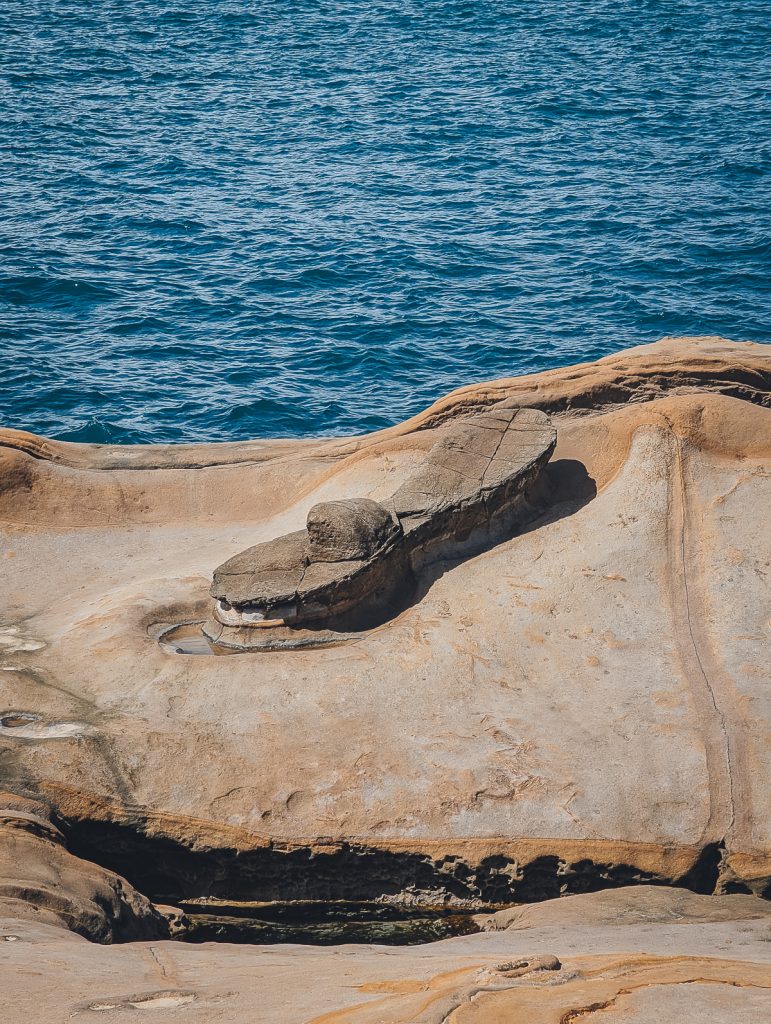
We also hiked farther down the cape toward the lighthouse to view the grid-patterned Tofu Rocks, which look like neatly sliced blocks of tofu formed by intersecting erosion joints in the rock.
They are very strict about following proper behavior here, so don’t cross any lines or climb on the sandstone features. The hike follows the winding coast through a forested area with stairs and a boardwalk.
Another popular day trip includes Jiufen, a historic town that looks totally Instagramable and dreamy in photos. We decided to skip this, and here’s why.
I almost had Instagram convincing me this was a must-do, but after doing some research, it seems like most people visit a historic street that sadly has been utterly ruined by mass tourism.
I read a lot of honest reviews saying that while cute, it is crowded, chaotic, and vendors are selling low-quality food and products. This isn’t the type of experience we are looking for, so we enjoyed the GeoPark and National Park.
While the GeoPark was crowded, it was easy to escape the crowds, and as soon as we started the coastal walk, the crowds completely dropped.


Once we made it back into Taipei, we stopped at Vege Creek for dinner. It is a fantastic spot for a clean, light plant-based meal where you pick out your own fresh vegetables, herbs, and noodles into a basket, which they then flash-cook in a flavorful, seasoned broth.
They also offer healthy veggie burgers and sides, making for a super comforting dinner after an active day outdoors.
To wrap up the night, we headed over to the bustling Ximending Walking District. The entire area was packed with glowing neon signs, street performers, and lively evening crowds, offering an energetic, sensory-filled end to the day that was a contrast with the quiet mountain and coastal views from earlier.
This wasn’t my favorite place in Taipei, but it was nice to see for a bit before calling it a night.
Day 4: Creative Park, Temples, and Historic Streets
- Explore Songshan Cultural and Creative Park
- Plant-based lunch of soups, noodles, and tofu at Miao Guan Yin
- Visit Taipei Confucius Temple and Dalongdong Baoan Temple to appreciate local architecture and traditions
- Stroll historic Dihua Street for some final sightseeing
- Red-eye flight home
Since our flight home was not until midnight, we had a full final day to spend in Taipei without feeling rushed. We started the morning by heading back to Baem Coast Coffee to savor one last iced coffee from our favorite neighborhood hole-in-the-wall.
From there, we took transit over to Songshan Cultural and Creative Park. While we personally preferred Huashan 1914 Creative Park overall, Songshan is still well worth a visit. Housed in a converted 1930s tobacco factory, the complex is packed with sleek design shops, cultural pop-up stores, and a local artisan market.
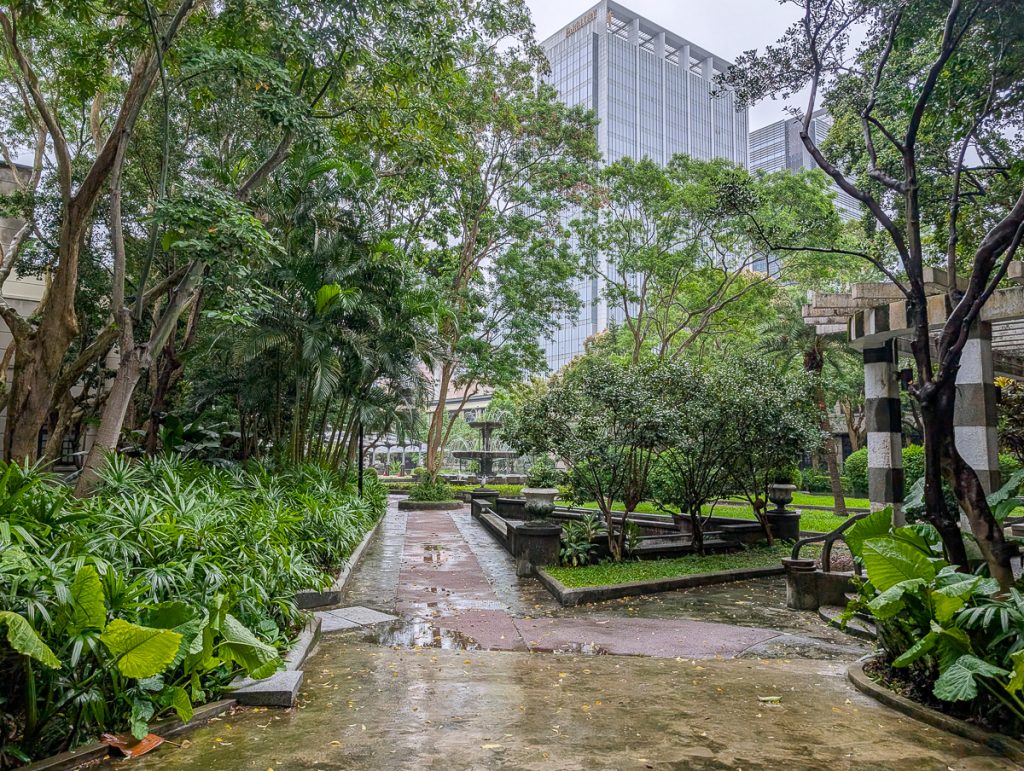
The real highlights, though, were the outdoor spaces—a lush central courtyard centered around a Baroque fountain, along with a quiet eco-pond surrounded by greenery.
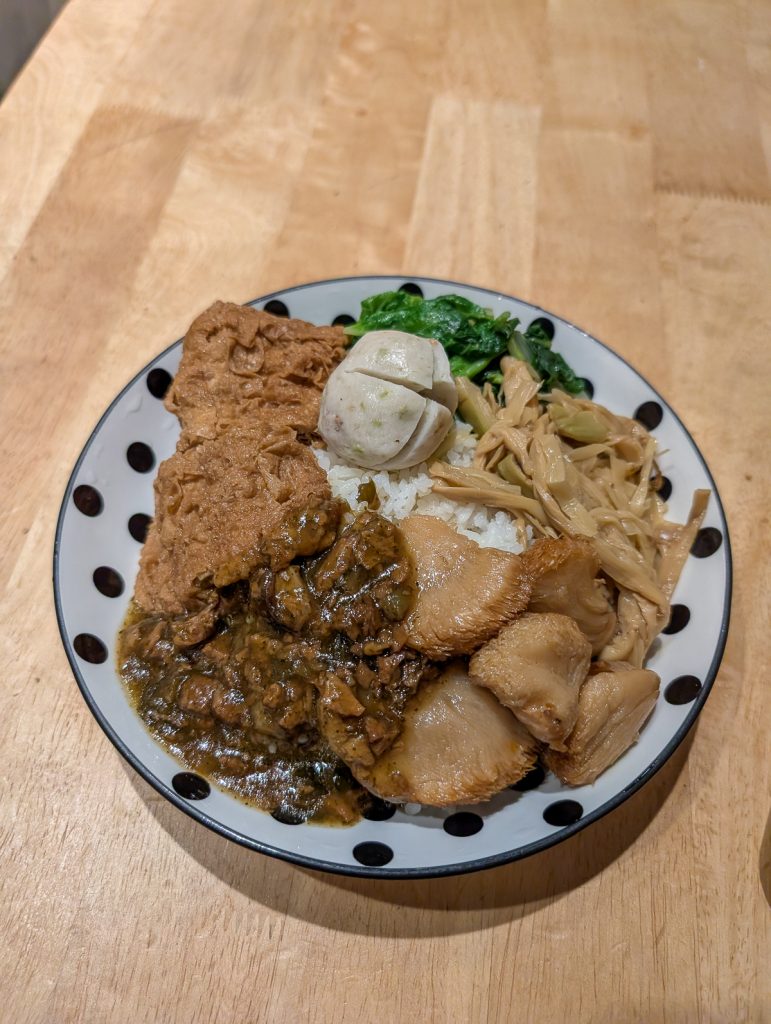
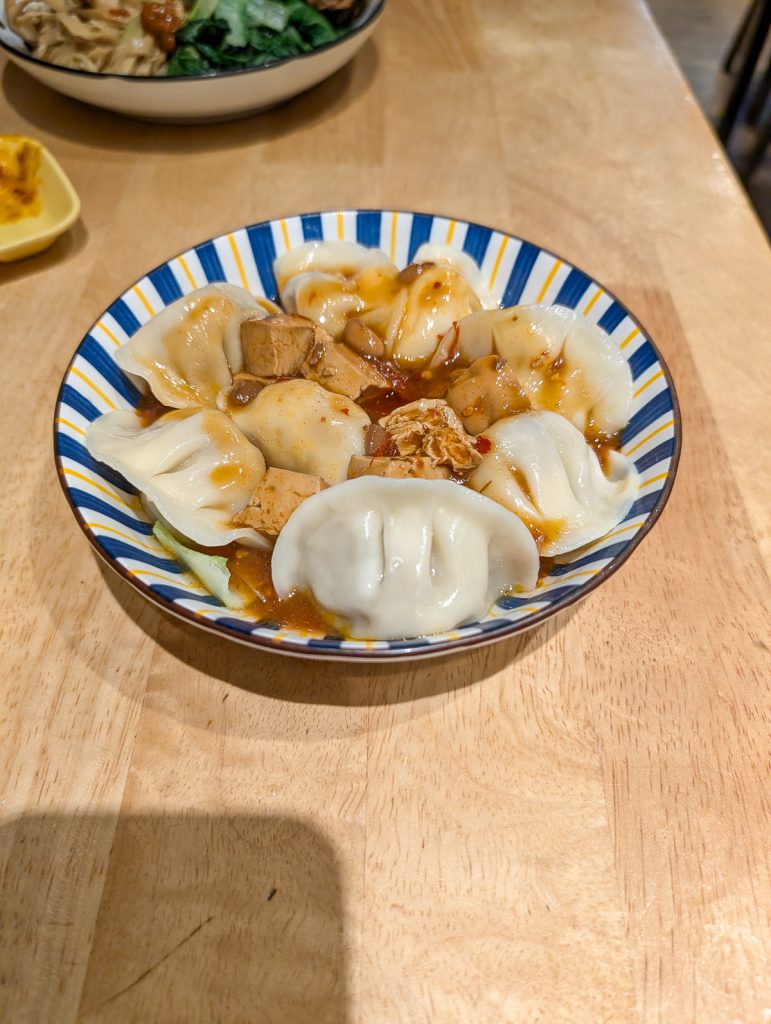
For lunch, we headed toward Taipei Main Station and got wholly lost in the station trying to find food. Finally, we found Miao Guan Yin Vegetarian. It was a classic local spot offering a fast, fresh spread of Taiwanese plant-based comfort food, including rich noodle soups, savory braised tofu, dumplings, and various small plates of seasoned vegetables.
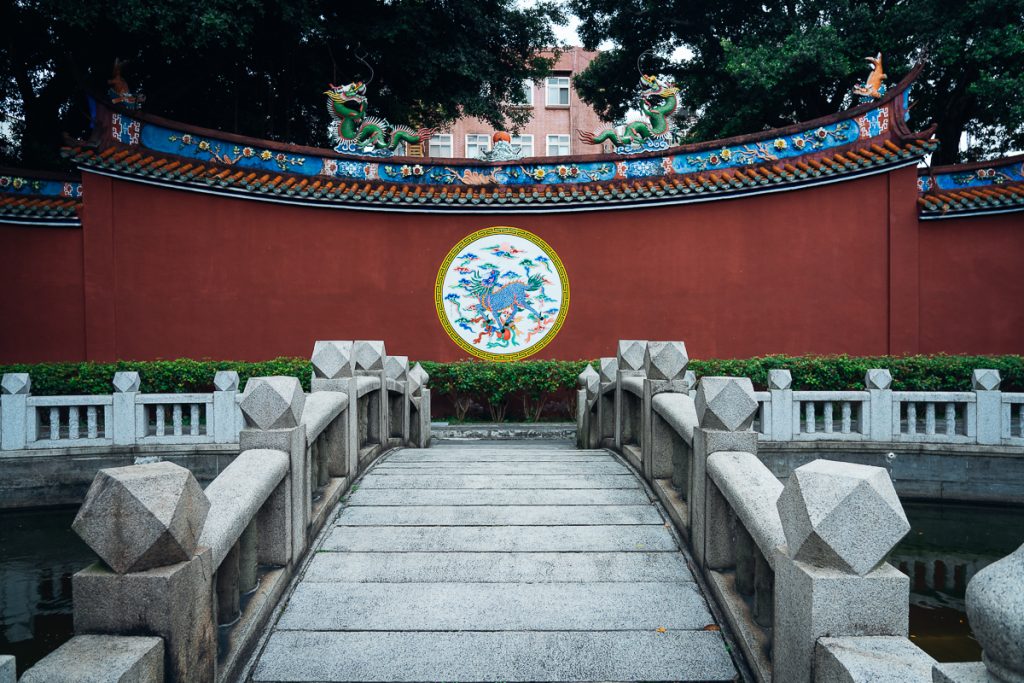
After eating, we made our way to Datong District to visit two major spiritual sites in proximity, the Taipei Confucius Temple and Dalongdong Baoan Temple.
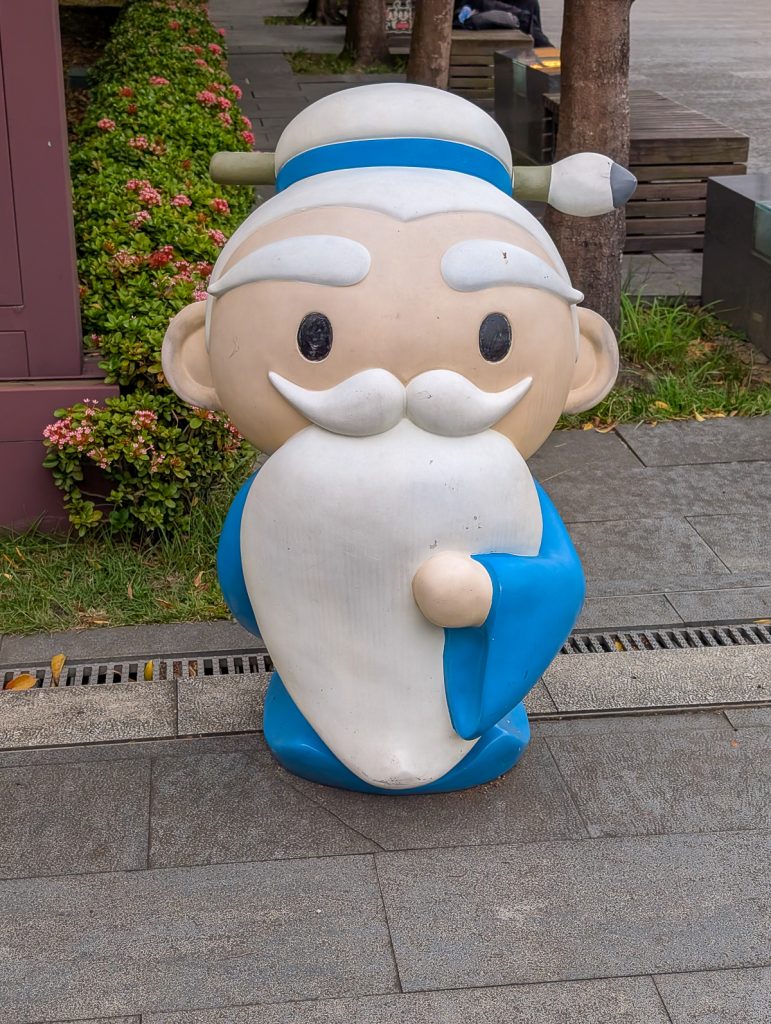
The Confucius Temple is understated, elegant, and peaceful, reflecting Confucian philosophy through simple architectural lines, minimal ornamentation, and quiet courtyards dedicated to learning and self-reflection. Plus, there are super cute, mini cartoon Confucius’ around the complex!
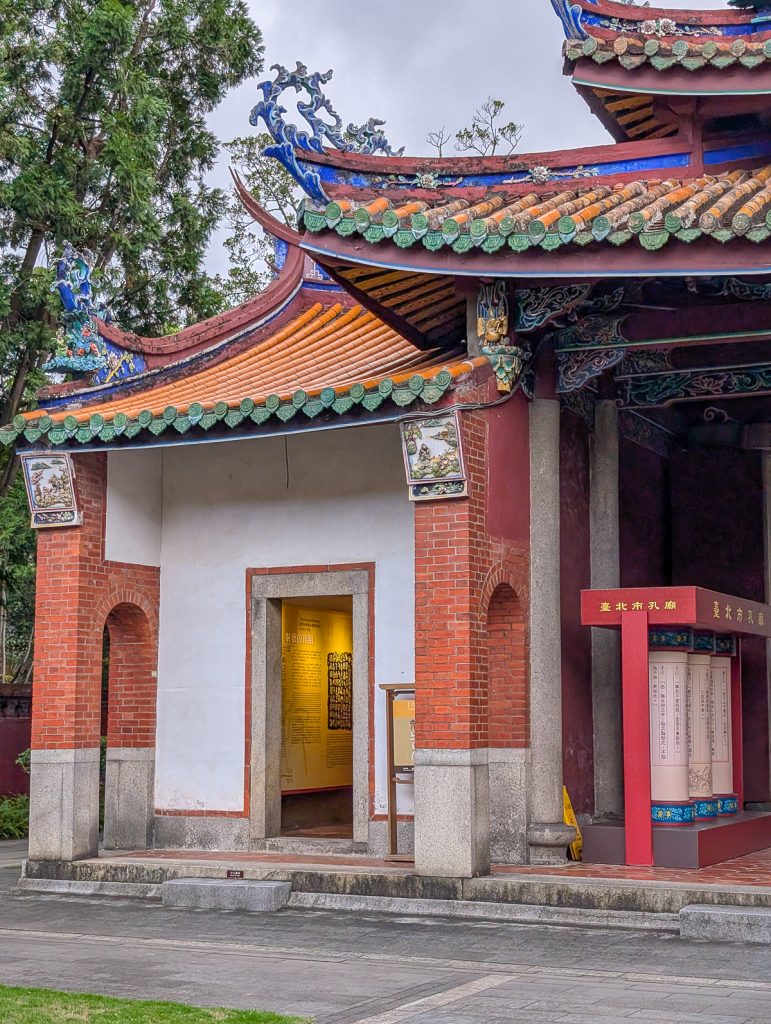
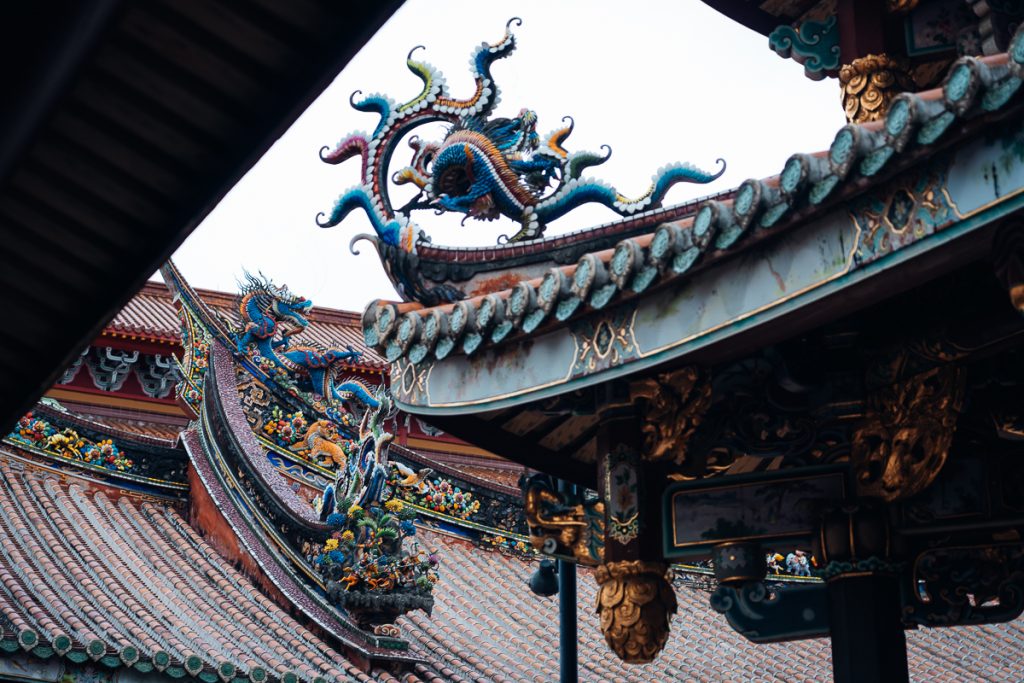
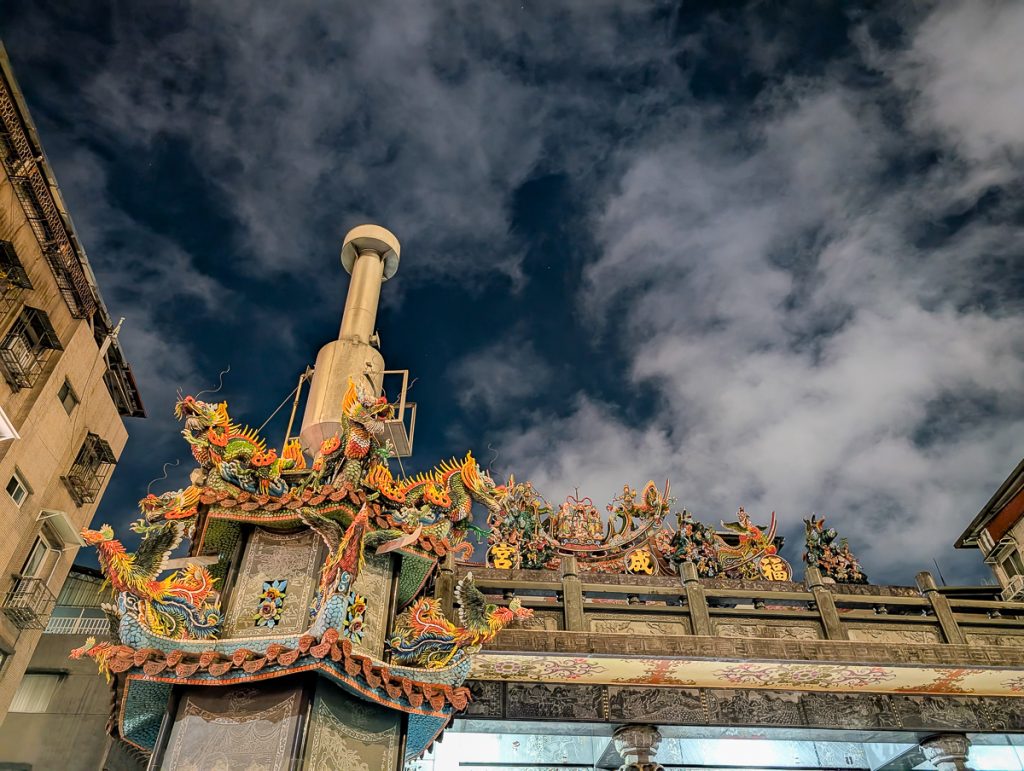
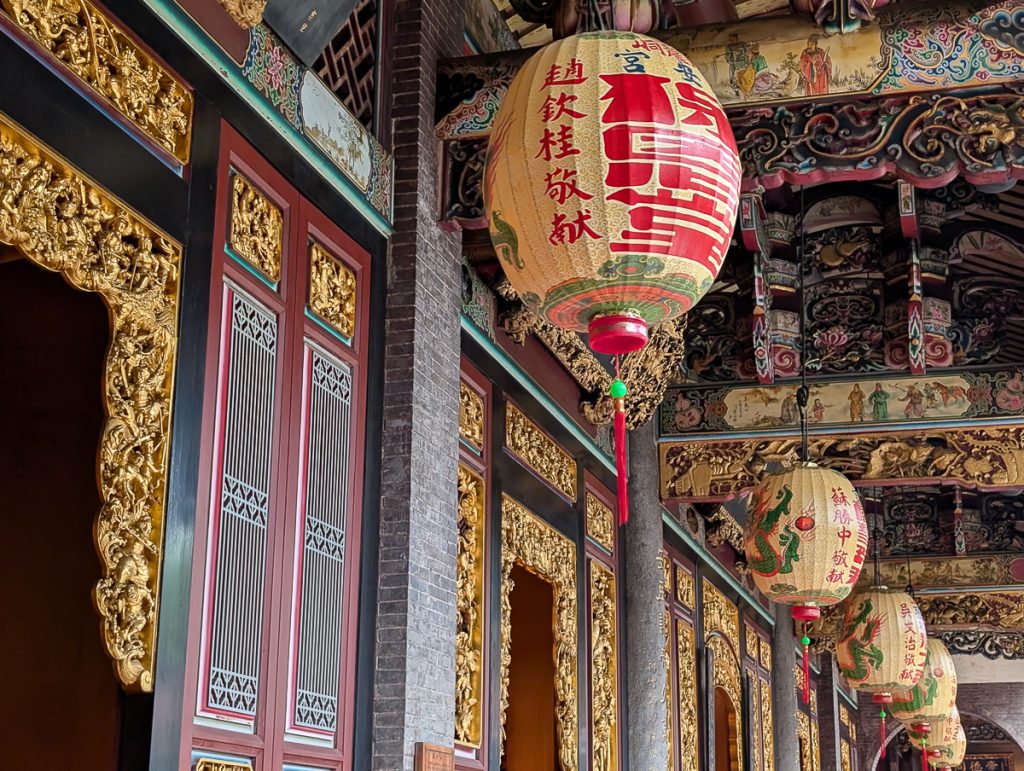
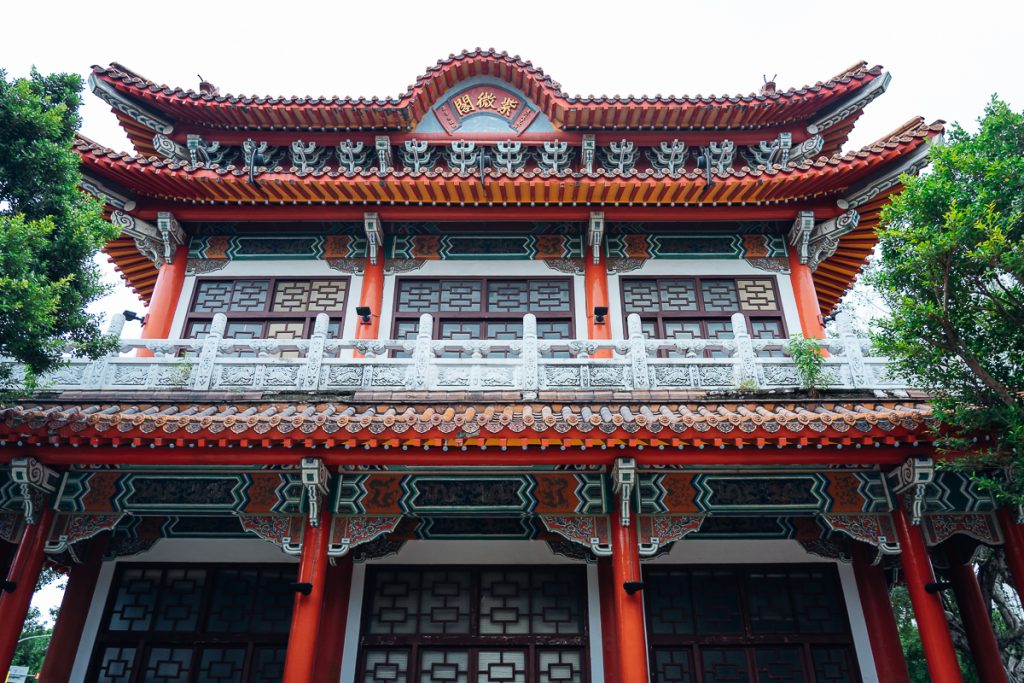
Just down the road, Dalongdong Baoan Temple offers a striking contrast with its elaborate roof ridges, detailed wood carvings, and colorful murals dedicated to the deity of medicine.
Watching locals light incense and offer prayers against the backdrop of traditional Taiwanese folk art was a nice way to take in the island’s religious heritage.


We spent our final remaining hours in the city wandering down Dihua Street, one of Taipei’s oldest commercial thoroughfares.
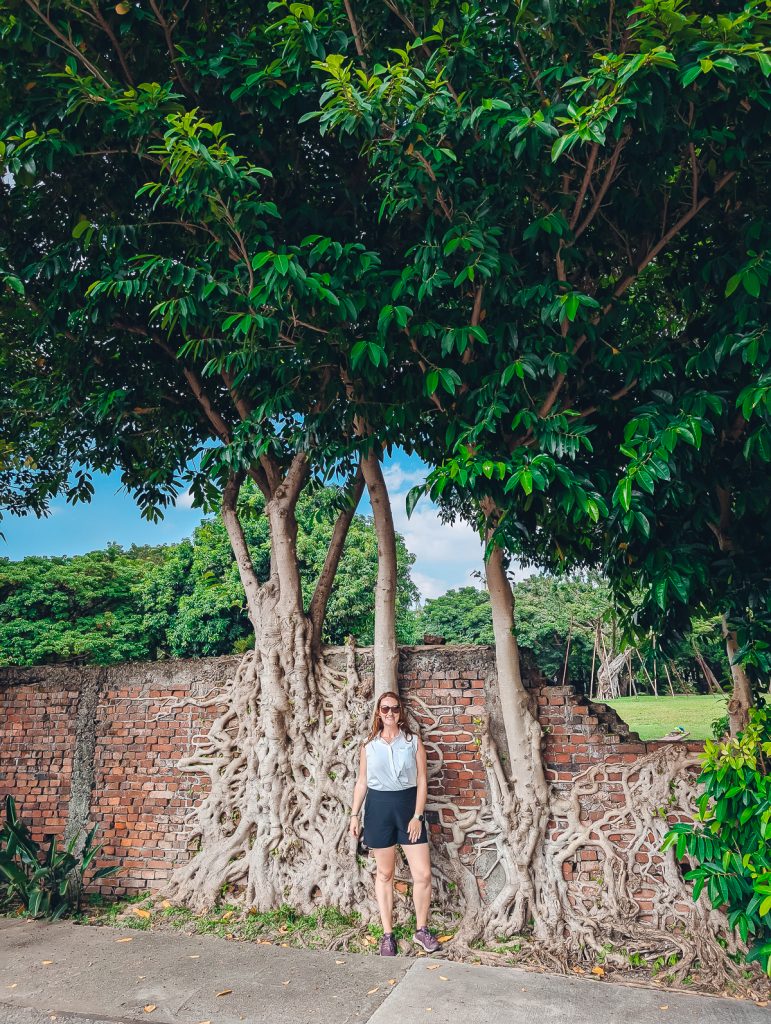
Dating back to the 1850s, the street is lined with historic Fujianese and Japanese-era brick shop-houses selling dried fruits, Chinese herbal medicine, tea, and hand-woven crafts alongside modern cafes. It was a great place to soak up the historic ambiance one last time.
We soon had to head back to the hotel to grab our luggage. From there, it was back on the airport express line to head to the airport, bringing our trip to Taipei to a satisfying close. But we stopped in the Duty Free to grab some Taiwanese whiskey to bring home!
Sustainable Travel Tips and Info for Taipei
Vegan & Plant-Based Dining
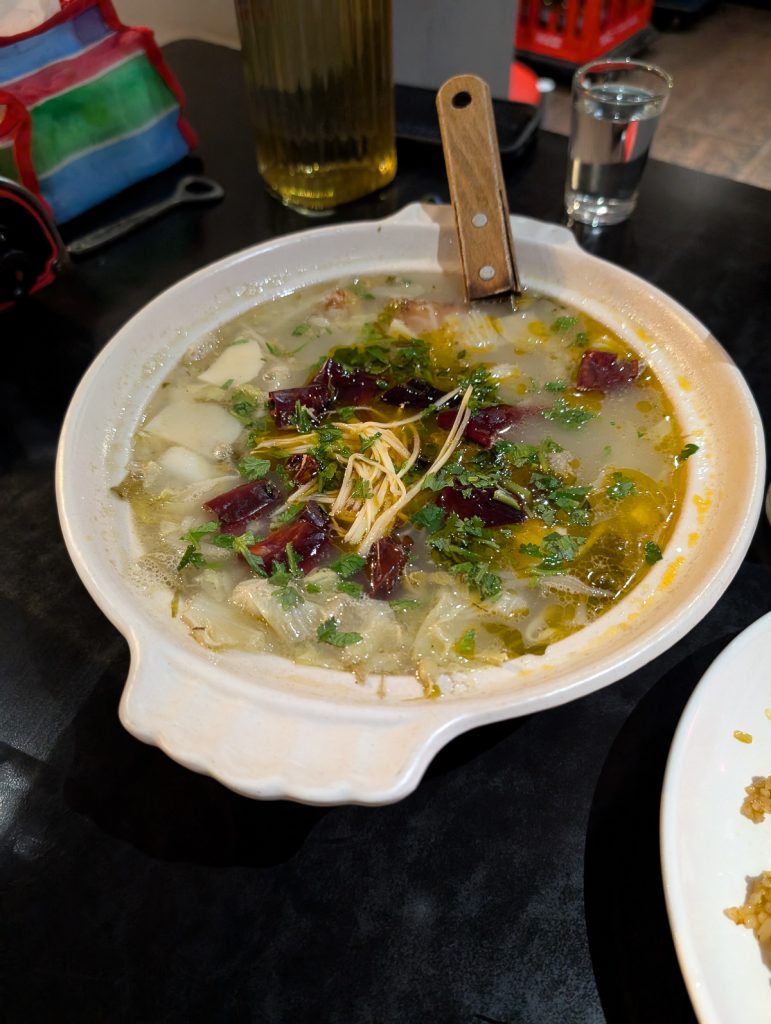
Eating plant-based in Taipei is easy! Thanks to a deep-rooted Buddhist vegetarian tradition, you do not have to settle for basic side salads or compromise on authentic local flavors.
Taipei has numerous small family-run eateries, night market stalls, and dedicated vegan spots that serve traditional Taiwanese and regional Chinese dishes. There are plenty of traditional dishes veganized, so you don’t have to compromise on any of the taste, texture, or Chinese regional cuisine.
Public Transportation
Taipei’s public transit network is world-class, making it easy to keep your carbon footprint low while navigating the city. Between the MRT subway, light rail lines, and an extensive city bus network, you can reach nearly every landmark without relying on taxis or private cars.
Grabbing an EasyCard at any station allows for seamless tap-and-go travel across the entire system.
Single-Use Plastics & Reusable Initiatives
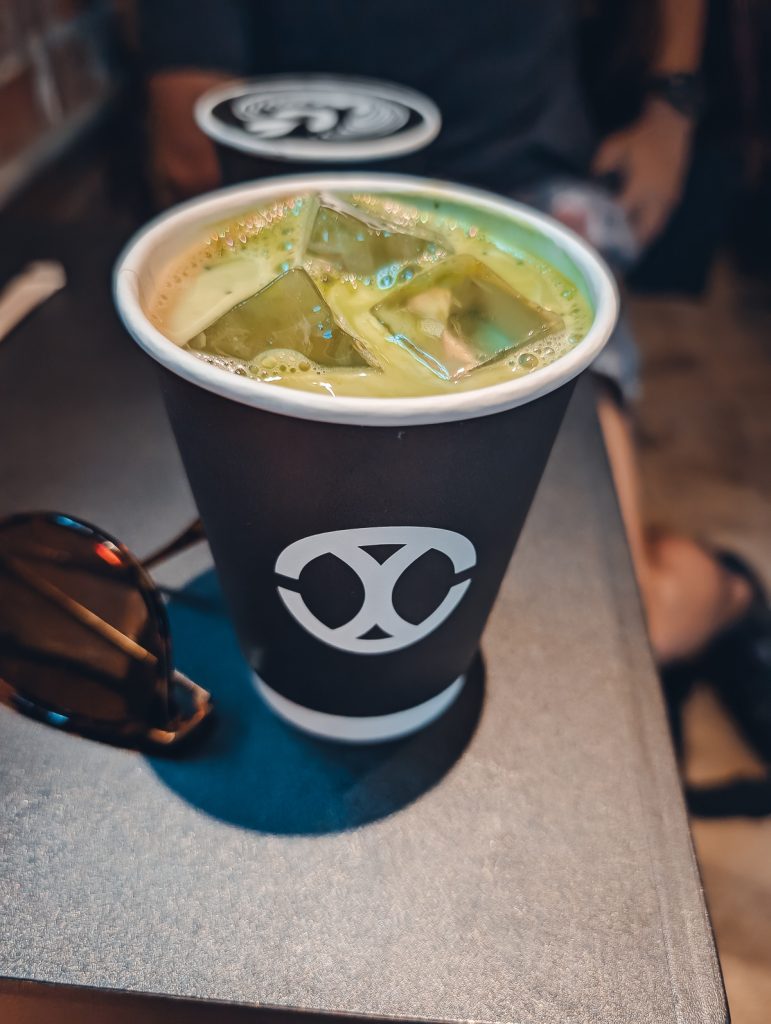
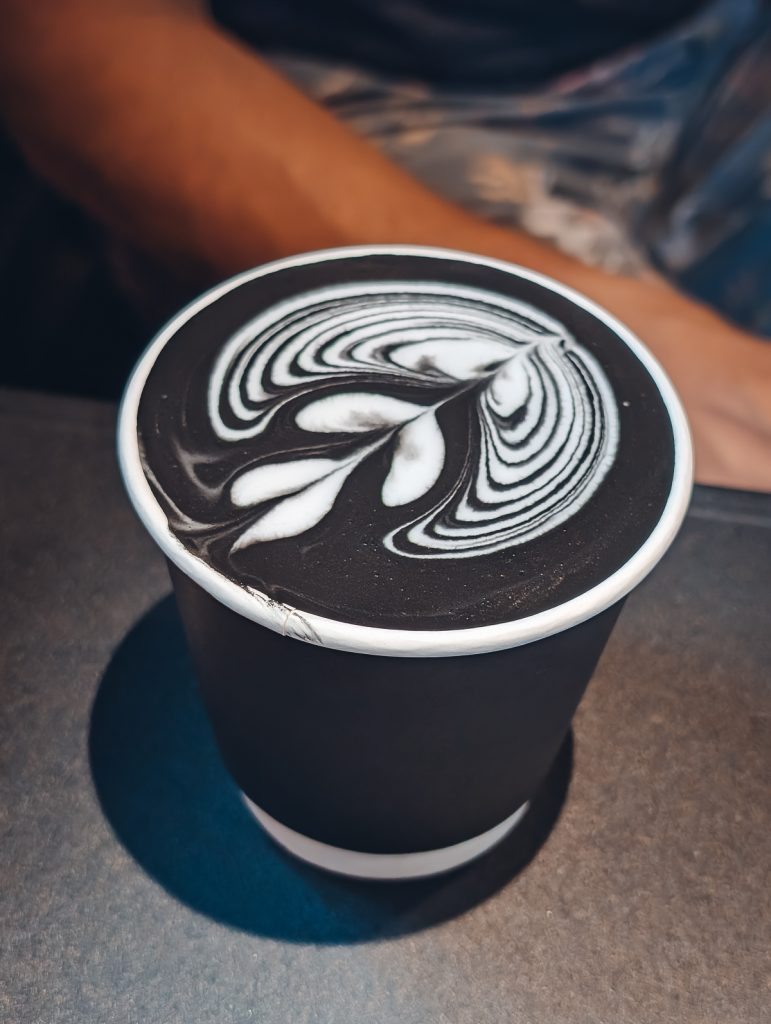
Taiwan is exceptionally proactive with waste reduction and plastic-free initiatives. Government regulations restrict single-use plastic beverage cups at drink shops and convenience stores nationwide, and even major chains like Starbucks actively use reusable cups in-store and paper cups for their cold drinks. You all… Starbucks is making waves here.
You will find that many cafes offer discounts if you bring your own container, so carrying a reusable bottle or cup is an easy way to align with local sustainability practices. We didn’t encounter any single-use plastic, but bring your tote and coffee mug to make it easy.
Indigenous Peoples of Taiwan
Long before the arrival of Han Chinese settlers in the seventeenth century, Taiwan was home to diverse Indigenous peoples belonging to the Austronesian language family.
Today, there are sixteen officially recognized tribes, including the Amis, Atayal, and Paiwan, each with distinct linguistic, artistic, and cultural traditions. There is a lot of cultural erasure of the Indigenous people whose lands were taken by Chinese expansion into Taiwan, and culture is becoming homogeneous with cultural integration.
Supporting Indigenous designers, visiting cultural hubs like Huashan 1914 Creative Park, and learning about their history offers a meaningful way to engage with Taiwan’s living heritage.
Free Water Refill Stations
Staying hydrated while walking around Taipei does not require buying bottled water. Free water refill stations are widely available throughout public transit stations, parks, temples, and visitor centers across the city. Carrying a refillable water bottle is a simple, cost-effective way to avoid single-use plastic waste while exploring in the heat.
Responsible Animal Tourism
When traveling through Taiwan, be mindful of animal welfare and skip marine parks or commercial zoos that hold wild animals in captivity or force them to perform tricks.
Attractions that feature captive dolphin shows or cramped marine tanks prioritize entertainment over animal well-being. Choosing to appreciate Taiwan’s native wildlife responsibly in national parks like Yangmingshan is a far better alternative.
Respecting Sacred Places & Culture
Taipei’s temples, such as Dalongdong Baoan, are active places of worship and reflection rather than tourist attractions.
Visiting them respectfully means speaking softly, dressing modestly, and asking permission before photographing people praying. Observing local customs, such as walking through temple doors on the right side and exiting on the left, shows appreciation for local traditions.
Creative & Cultural Parks & Small Businesses
Taipei has repurposed historic industrial sites—like old sake wineries and tobacco factories—into vibrant creative hubs like Huashan 1914 and Songshan. These parks foster sustainable urban reuse while supporting small local makers, independent designers, and local artisans.
Shopping here keeps your travel dollars directly in the local creative economy. Bring your wallet and tote bag!
Electric Scooters & Micro-Mobility
While Taipei’s streets are famous for heavy scooter traffic, electric scooters and shared micro-mobility options are becoming the norm. Shared electric scooters and YouBike bicycle-sharing docks are stationed all over the city, offering a low-emission, flexible way to cover short distances between subway stops or neighborhood side streets.
If you have time, you can engage in the bike-sharing program.
Outside of Taipei
While the city of Taipei is super clean, as soon as you leave the city, you start to notice a lot of coastal and marine debris and trash. Whether this washes up from outside, or smaller communities have a more challenging time with waste management, I’m unsure.
Outside the city, there are also more stray dogs and poverty. The sustainability wins in Taipei aren’t necessarily country-wide.
Practical Travel Tips and FAQ
What currency is used in Taiwan?
Taiwan uses the New Taiwan Dollar (NTD or TWD). While credit cards are widely accepted at hotels, department stores, and sit-down restaurants, cash remains king for night markets, small street vendors, local bun shops, and topping up transit cards.
What language is spoken and is communication easy?
The official language is Mandarin Chinese, written using Traditional Chinese characters. English signage is prevalent in many tourist sites and bigger restaurants. While older local shop owners or market vendors may not speak English, people are extremely patient, and translation apps bridge any gap.
We found people more willing to engage in conversation with broken English than we did in Japan. But try to learn a few Mandarin phrases to sweeten the conversation.
Regional Chinese Culinary Scene
Because of historical migrations, Taipei is one of the world’s best cities for experiencing regional Chinese cuisines—including Taiwanese, Cantonese, Szechuan, and Northern Chinese traditions.
Finding plant-based versions of these regional specialties is surprisingly simple thanks to clear menu labeling, local vegetarian iconography, and helpful staff.
Is Taipei safe?
Taipei consistently ranks among the safest cities in the world. Violent crime is extremely low, and it is completely safe to walk through night markets, neighborhood alleys, and city parks late into the evening. Standard common-sense precautions apply, but as a traveler, you can feel comfortable exploring day or night.
I was visiting with my husband, but I never felt harassed or unsafe. Taipei is a progressive city, with queer people and women openly working in a variety of jobs and comfortable expressing themselves.
Is Taipei worth visiting?
Absolutely. Taipei offers a compelling mix of rich history, world-class public transit, incredible street food, vibrant creative parks, and rapid access to surrounding nature. It delivers the dynamic energy of a major East Asian metropolis alongside an approachable, welcoming atmosphere.
How long should I stay in Taipei?
Plan for a minimum of four full days to get a solid introduction to Taipei. Four days allows you to cover the major neighborhood hubs, historic temples, night markets, and iconic landmarks like Taipei 101, while leaving time for a half-day escape to surrounding nature spots like Yangmingshan or Elephant Mountain.
What is the weather like and best time to visit?
The best time to visit Taipei is during autumn (October through December), when the weather is mild, dry, and pleasant for walking. Spring (March to May) is also enjoyable, while summer brings intense heat, high humidity, crowds, and afternoon downpours during typhoon season.
Winters are generally cool and overcast, making fall the sweet spot for travel.
Comment and Share 4 Day Itinerary for Taipei
As you can see, Taipei is an amazing city that definitely warrants at least four days to explore properly! With excellent sustainability initiatives, delicious plant-based food and efficient public transport, it’s also perfect for the eco-conscious traveler.
This 4-day itinerary is the perfect way to get a taste of the best that Taipei has to offer, although you could easily find enough to do if staying longer.
Tell me, which aspects of Taipei would you be most interested in experiencing for yourself? Don’t forget to save one of these to your Taiwan/Taipei travel planning boards!
Curiosity Saves Travel Recommends
Accommodation: Booking.com to find accommodation with a Genius Discount and clear third-party sustainable certifications like Green Key. Look for local hotels.
Tours and Excursions: GetYourGuide and Viator for tours, excursions, and tickets. Never book wildlife experiences through these vendors.
Travel: Omio for booking buses and trains in English across Europe. After reducing the number of flights I take annually, I use Google Flights’ carbon comparison tool.
Car Rental: Rentalcars for the best rates in English globally. It is easy to find hybrids and EVs, and there are resources for finding chargers.
Packing Essentials: REI or your local Co-op has great essentials like reusable water bottles and cutlery sets. Patagonia for regenerative clothing. Farm to Feet for socks made with regenerative practices! Pistil Designs for cold-weather essentials. Osprey for bags that last 10+ years, like the day bag for hiking or my favorite carry-on.
eSIM: Airalo eSIM. Reduces waste from single-use SIMs. A total game-changer.
For Bloggers and Content Creators
Earn Ad Revenue with Journey by Mediavine
Earn with Stay22 Travel Partnership (my biggest source of income!)
Earn with TravelPayouts recommending tours and activities.


Thank you for giving the responsible animal tourism section the attention it deserves; everyone needs to know. Great post, your trip sounds amazing!
Yes, animal welfare and wildlife ethics are so important! I also have a complete guide to animal ethics and cafes in Asia on my site if you are ever interested: https://curiositysavestravel.com/are-animal-cafes-in-japan-and-asia-ethical/ Taipei does a great job with plastic and sustainability initiatives, but Taiwan as a whole still has work to do on animal ethics.
Great tips! I’ve always wanted to visit Taipei. Love how they focus on less plastic, and that there are some great hikes to do. Yangmingshan National Park looks incredible.
Yes, it was so nice to see such a large city in Asia really tackling plastic waste and prioritizing sustainability while maintaining a lot of traditional cultural elements. And yes, the surrounding nature is just stunning! Taipei is the perfect city break.